Exp Ther Med 24:[Related article:] 545, 2022; DOI:
10.3892/etm.2022.11482
Following the publication of the above article, a
concerned reader drew to the Editor’s attention that one of the
antibodies the authors had used in their study was apparently
selected inappropriately: The antibody (cat. no. ab51243) that the
authors reported to have used is specific for the protein known as
p16-ARC (or ARPC5), not the apoptosis-associated protein p16-INK4a,
as was intended.
Upon re-examining reagent records, the authors
identified an annotation issue regarding the anti-p16 antibody
(cat. no. ab51243) used for western blot detection. This antibody
was intended to detect p16-INK4a (encoded by CDKN2A);
however, as noted above, this antibody targets p16-ARC (encoded by
ARPC5), a distinct protein with a similar name. Therefore, all
original western blot data labelled p16-INK4a in this paper are
invalid. However, the authors wished to point out that their
conclusions regarding endothelial senescence in this study were
supported by multiple independent valid datasets obtained from
well-validated assays: SA-β-gal senescence staining, p21 western
blotting, along with the expression analysis of AMPK, SIRT3 and
p53. These measurements constituted the primary evidence supporting
the proposed mechanism linked to the AMPK/SIRT3/p53 signalling
axis. In addition, previously published studies utilizing the
ox-LDL-treated HUVEC model (for example, the paper by Gerard
Karsenty and colleagues entitled “Inhibition of leptin regulation
of parasympathetic signaling as a cause of extreme body
weight-associated asthma.” Cell Metab. vol. 17.1 (2013); p. 35-48)
have demonstrated that cellular senescence and its underlying
mechanisms can be adequately characterized by senescence staining
combined with p21- and p53-associated signalling measurements. In
view of this, the authors considered that removing the p16 data
from the paper would not compromise the conclusions drawn in this
study. All other experimental datasets, including SA-β-gal
senescence staining, p21 western blotting, apoptosis detection,
oxidative stress measurement and AMPK/SIRT3/p53 pathway analysis,
were generated with fully validated reagents, and remain
scientifically valid.
After considering this appeal, the Editor has
approved the authors’ request that the p16 data be omitted from
this study. Therefore, all references to “p16” in this study (as
were featured in the Materials and methods, Results and Discussion
sections) should be considered to be eliminated from this paper.
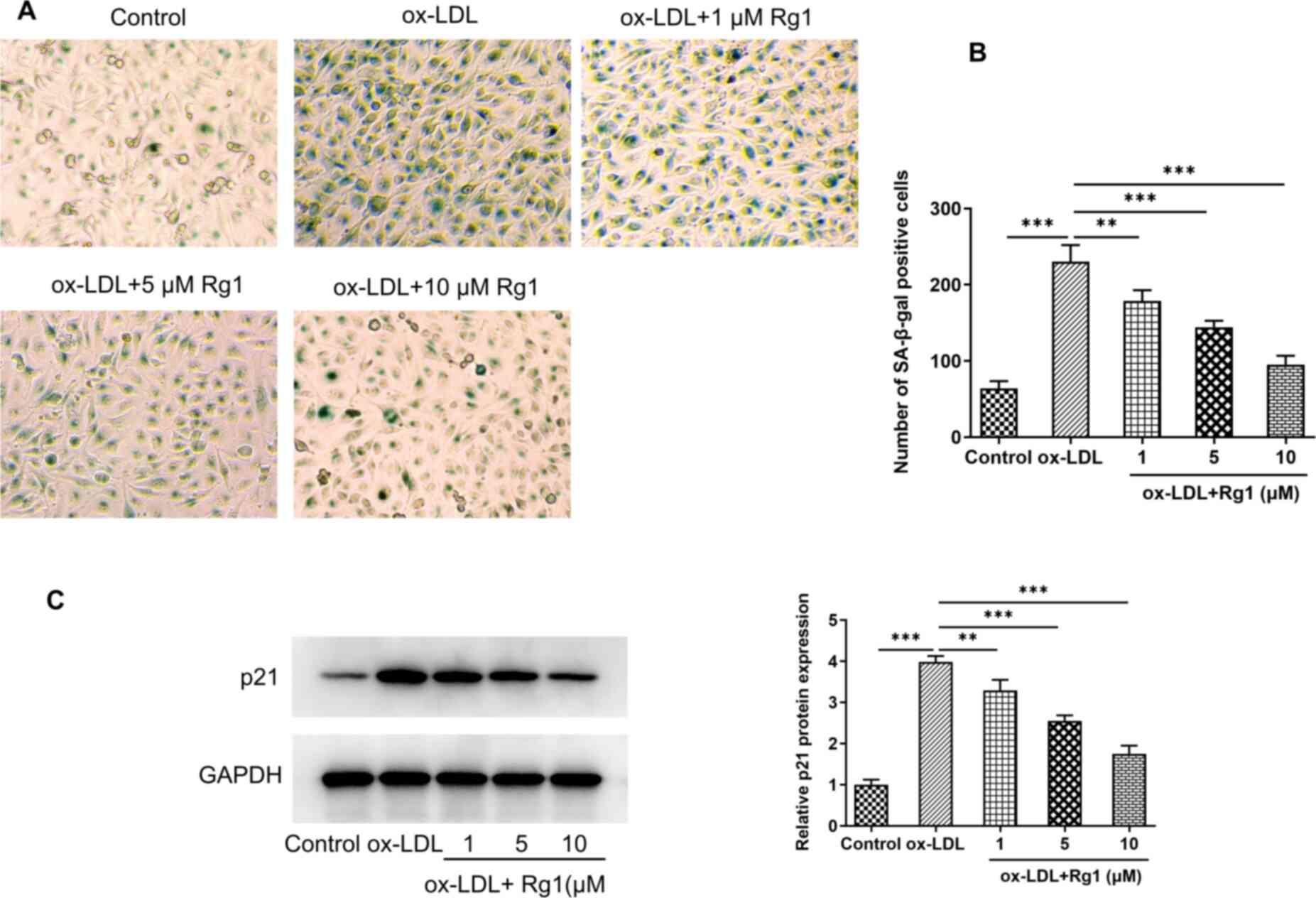
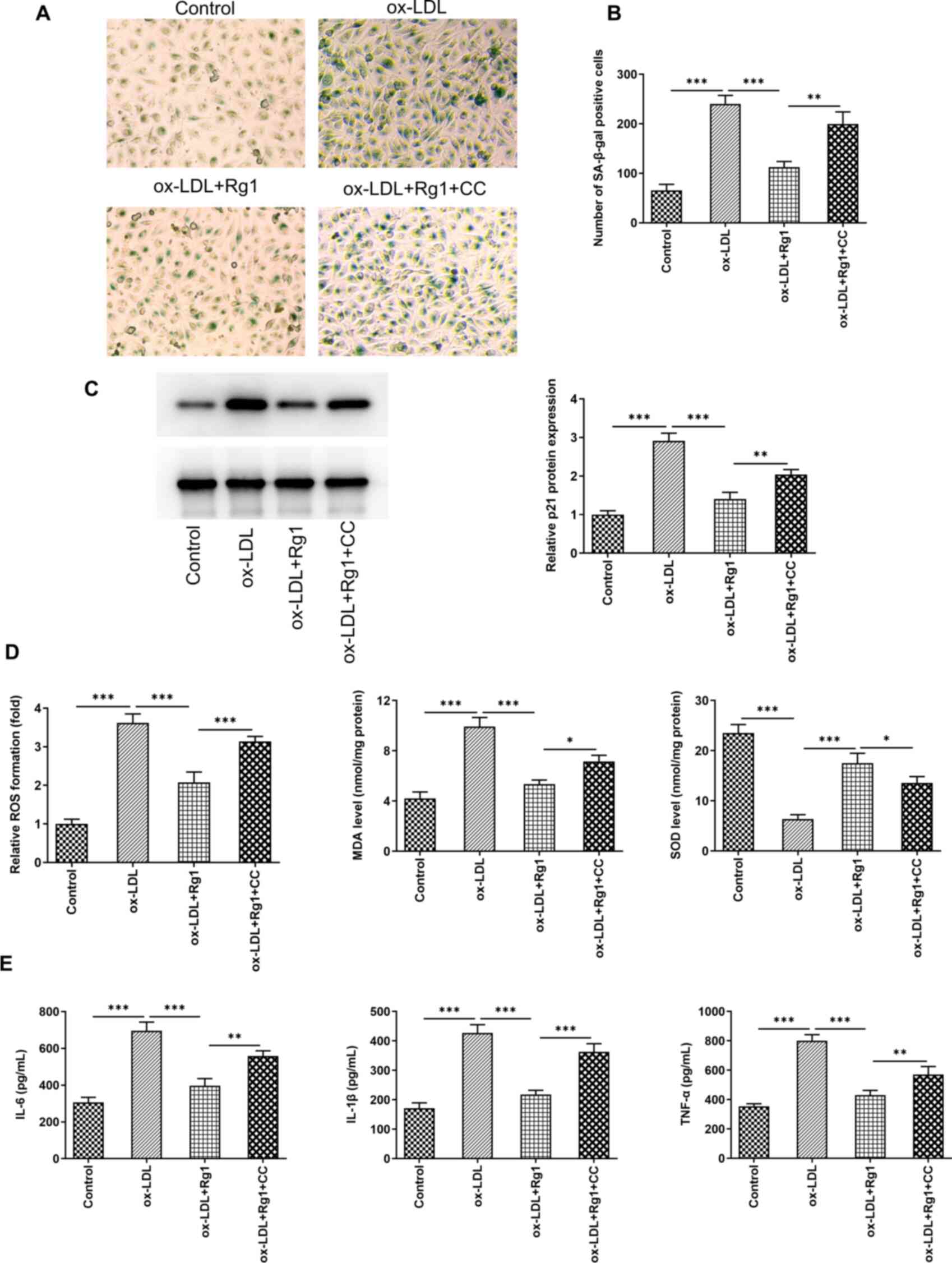
Revised versions of Fig. 3 and
7 have been provided, with the p16
data relating to the western blot analyses removed from Fig. 3C and 7C respectively, and these are featured on
the next two pages. Revised figure legends, omitting all references
to p16, have also been provided.
Note that the omission of the data relating to p16
does not affect the overall conclusions reported in the paper. The
authors express their thanks to the Editor of Experimental and
Therapeutic Medicine for allowing them the opportunity to
publish this corrigendum. All the authors have agreed to the
publication of this corrigendum, and wish to apologize to the
readership for any inconvenience caused.