


High-sensitivity C-reactive protein and liver enzymes in individuals with Metabolic Syndrome in Talca, Chile
- Authors:
- Published online on: January 1, 2010 https://doi.org/10.3892/etm_00000028
- Pages: 175-179
Abstract
Introduction
Metabolic syndrome (MS) is a collection of disorders that includes abdominal obesity, dyslipidemia, hypertension and hypertriglyceridemia, which combined predict type 2 diabetes and cardiovascular disease (1). Authors previously proposed non-traditional components of MS, such as subclinical inflammation, microalbuminuria and more recently, the non-alcoholic fatty liver disease (NAFLD) which also predicts cardiometabolic risk (2,3).
NAFLD describes a clinical pathologic condition characterized by a significant deposit of fat in the liver parenchyma and spectrum disorders ranging from a simple steatosis to more severe forms that include a non-alcoholic steatohepatitis (NASH) which may progress to fibrosis and hepatic cirrhosis (4).
The histological characteristics of NAFLD are very similar to those described for the alcoholic liver disease (5). Thus, both are responsible for the metabolic imbalance that exceeds the ability of the liver to adapt to injury (6). This disease is often associated with obesity (7), diabetes mellitus type 2 (8,9), dyslipidemia (10) and hypertension (11). Each of these abnormalities carries a risk of cardiovascular disease and together defines the syndrome of insulin resistance (SIR) or MS (11). The syndrome of insulin resistance and oxidative stress play a crucial role in the pathogenesis of NAFLD and progression from impaired glucose tolerance to diabetes. Predictors of the progression to fibrosis in patients with NASH, such as age (>45 years), obesity (BMI >30 kg/m2), cirrhosis (ASAT/ALAT >1) and diabetes are associated with an increase in insulin resistance (IR) (12,13). Even though it is believed that NASH is a multifactorial disease, IR appears to be the main factor responsible for the progression of a simple steatosis to steatohepatitis (14).
Obese and overweight individuals with NAFLD present with high levels of markers of liver disease such as aspartate-aminotrasferase (ASAT), alanine-aminotransferase (ALAT) and γ-glutamyl transferase (GGT) (15).
It should be considered that the adipocytes not only store energy but also respond to metabolic signals by releasing free fatty acids, secreting hormones and cytokines which exert a local (adipose tissue), central (nerve tissue) and peripheral effect (organs such as liver, muscles, pancreas) (16). Cytokines are substances released from adipose tissue, with a significant impact on the general homeostasis of the body, eating habits and insulin sensitivity (17). Besides high levels of free fatty acids being closely associated with IR, they appear to be cytotoxic and may lead to peroxisomal oxidation generating hydrogen peroxide as a source of oxidative stress (18–20).
The main adipocytokines are leptin, adiponectin and resistin, while other molecules that include tumor necrosis factor α (TNF-α), interleukin 6 (IL-6), plasminogen activator inhibitor 1 (PAI-1), complement proteins, proteins of the renin-angiotensin system also act as adipocytokines (21–23).
In contrast, studies showed that IL-6 and TNF-α are significant co-stimulators of C-reactive protein (CRP) in the liver. Consequently, we proposed that due to its easy accessibility, the measurement of the high-sensitivity CRP (hs-CRP), may be used in conjunction with the measurement of liver enzymes as an adjunct to the diagnosis and evaluation of NAFLD and its relationship with MS (1).
Patients and methods
Patients
Patients with previous informed consent were selected from the Research Program for Cardiovascular Disease Risk Factors from the Universidad de Talca. Patients comprised a total of 510 adults between 40–65 years of age, and were classified into those who had MS (n=264) and those without MS (n=246), according to adult treatment panel III (ATP III) criteria (23). Blood pressure, waist index, height and weight were measured in all patients, and a blood sample after fasting was extracted for biochemical tests such as glucose, lipid profile, uricemia, liver enzymes and hs-PCR.
Methods
Blood pressure, height and weight were measured according to the World Health Organization recommendations (24,25). The venous blood samples from each patient were extracted after a 12-h fast. The biochemical characterization such as glucose, uric acid, lipid profile [total cholesterol, high density lipoprotein (HDL) cholesterol, triglycerides] was measured enzymatically. hs-PCR was conducted using the immunochemical method and the ASAT, ALAT and GGT enzymes were measured using the kinetic-spectrophotometric methodology. For all determinations, reagents from Roche Laboratories (Mannheim, Germany) were used with a Hitachi 711 auto analyzer. Human serum Biosystems (Barcelona, Spain) was used as a control.
Statistical analysis
Since measured variables were not normally distributed, median and interquartile ranges (IQR = 75th percentile-25th percentile) were used for description. The non-parametric Mann-Whitney U test was used to compare the variables of MS for men and women. To evaluate the effect of hs-CRP (log-transformed) in the liver enzymes as response variables, a multivariate regression analysis was used, controlled by MS, age and gender. A 0.05 level was considered to be significant.
Results
We studied 510 adults of whom 264, with an average age of 52.3±6.5 years, presented MS and a significantly higher BMI than adults without MS (31.2, 26.5, respectively) (p<0.001). The general characteristics of patients studied are shown in Table I, and it can be seen that there are significantly higher levels of liver enzymes in women with MS with respect to those without the syndrome, while in males these enzymes show no significant differences. In relation to hs-PCR, it is observed that both men and women with MS have significantly higher levels than those without MS (p<0.001, males and females, respectively).

Results of the multivariate linear regression on the ASAT and GGT enzymes showed that the enzyme levels are significantly higher among patients with MS than those who do not present it (p<0.01, p<0.001, respectively).
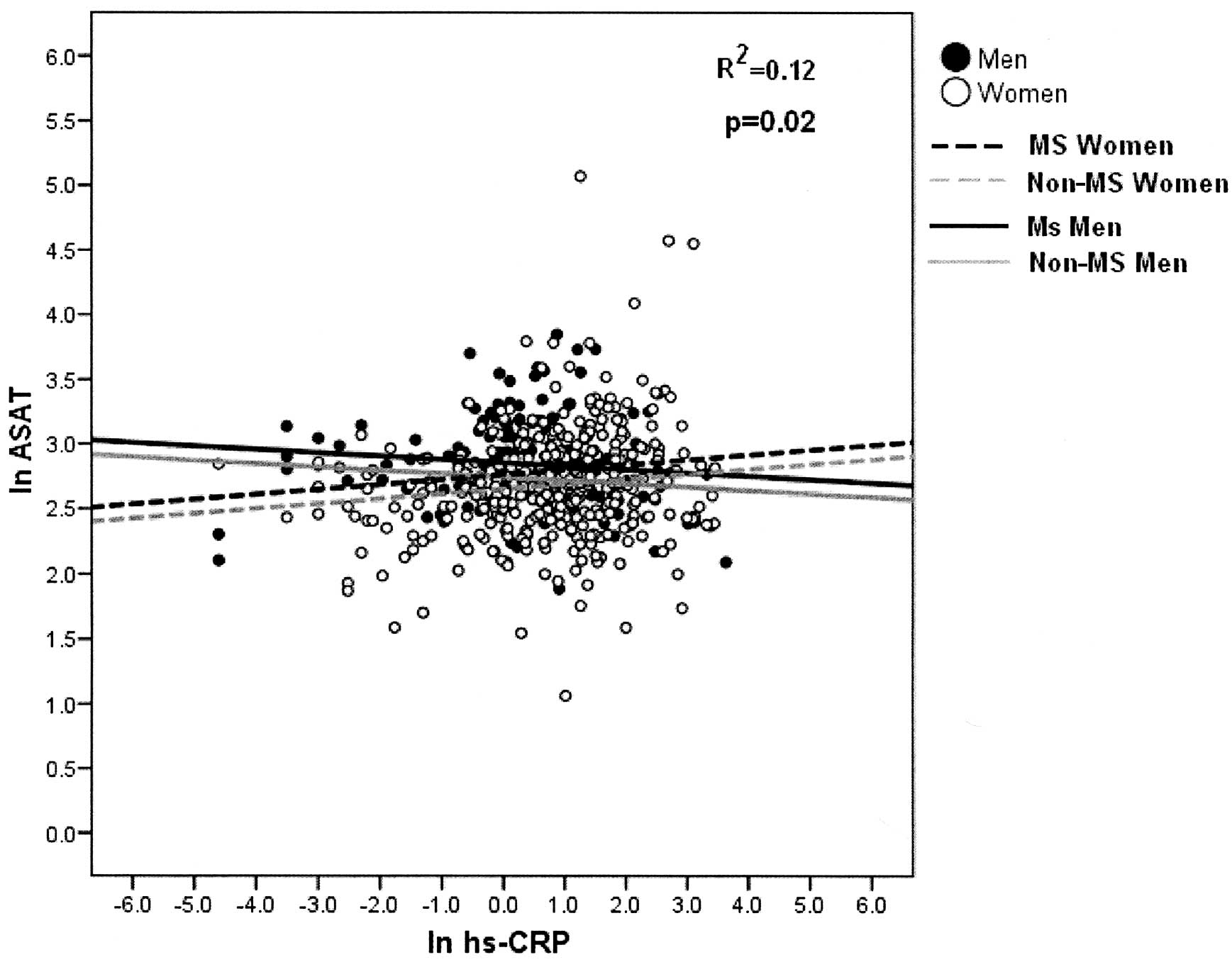
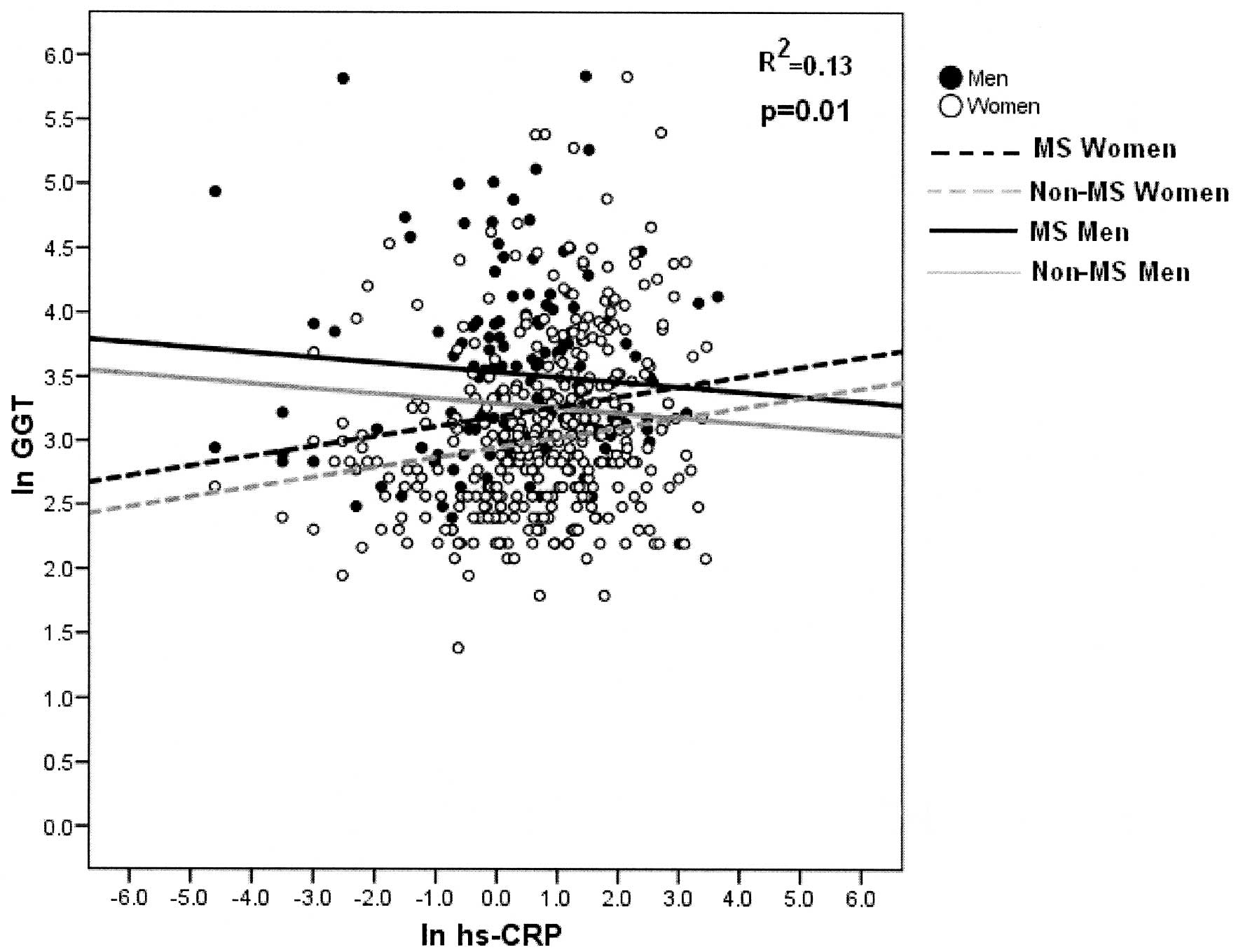
The multivariate analysis on the ASAT and GGT enzymes shows that there is a significant linear regression with hs-CRP, and the slope is modified by gender; positive in women and negative in men (p<0.013, p<0.014, respectively). There are also significant differences between MS and non-MS subjects (p<0.001, p<0.0001, respectively). The adjusted determination coefficient was 8.3 and 12.5% for each model (Figs. 1 and 2).
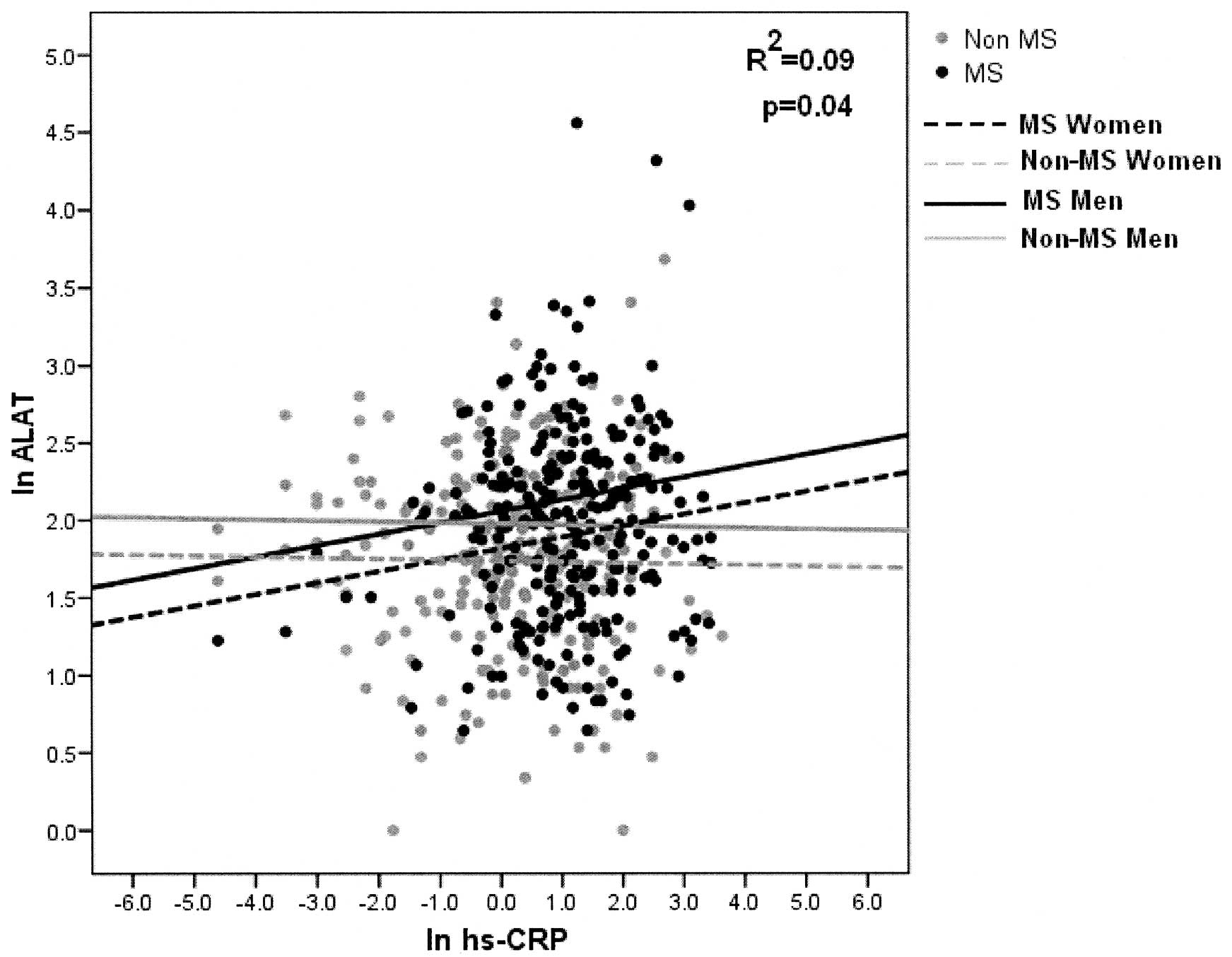
With regard to the linear relationship between the ALAT enzyme and hs-CRP, it can be seen that the slope increases significantly in patients with MS, while there is a negative relationship with non-MS subjects (p=0.045) (Fig. 3). Finally, there is a statistically significant difference between men and women. Men have higher ALAT levels than women (p<0.0001). The adjusted determination coefficient was 8.5% for the ALAT enzyme model (Fig. 3).
Increased levels of hs-CRP variably affect men and women, increasing ASAT and GGT enzyme levels in women and decreasing them in the case of men (p=0.02 and p=0.013, respectively) (Figs. 1 and 2).
With regard to the ALAT enzyme, a significant increase was observed in patients with MS, in accordance with the increase in the levels of hs-PCR (p=0.048) (Fig. 3). A statistically significant difference in the levels of this enzyme between men and women was also noted (p<0.001).
Discussion
The present study investigated the relationship of the levels of liver enzymes ALAT, ASAT and GGT in the presence of MS, and the levels of hs-PCR. The most relevant results were: a) we found higher levels of liver enzymes and hs-PCR in patients with MS compared to those without MS and b) from the multivariate analysis linear regression it was observed in women with and without MS that increased levels of hs-CRP induce an increased level of ASAT and GGT, exhibiting significantly higher levels of these enzymes in women with MS.
The finding of elevated liver enzymes in MS patients is somewhat expected as they have higher levels of obesity that determine, to a large extent, this alteration in liver enzymes. However, the pathogenic significance of these relations requires in-depth investigation. Several studies showed a relationship between high levels of ASAT, ALAT and GGT with impaired glucose tolerance and diabetes (26–29), although there is no clarity on the possible consequences of this interaction.
It was previously shown that adipocytokines act in hepatocytes and Küppfer cells initiating liver fibrosis. Peripheral IR in patients with NASH leads to an increase in the transport of fatty acids from adipose tissue to the liver. Thus, the fat metabolism routes are overloaded in the hepatocytes, which along with the increase of oxidative stress and/or mitochondrial dysfunction cause an increase in the adipocytokines, which begin a vicious cycle ending with the development of NASH (13,18,30).
Assuming that oxidative stress plays a critical role in the pathogenesis of NAFLD (3), as well as in the progression of the alteration of fasting glucose to diabetes, it is noteworthy that Nannipieri et al (29) found that GGT was an independent predictor of progression to glucose intolerance or diabetes. Similarly, we noted that the positive relationship between hs-PCR and levels of liver enzymes in patients with MS is important in identifying a subpopulation that possibly has more inflammatory and oxidative activity, which would have a higher risk of progressing to diabetes and/or towards NASH. Other studies that support this idea are those that have linked higher levels of GGT with the development of various diseases, including diabetes, Alzheimer's and atherosclerosis (15,31). The evidence supporting this hypothesis is based on previous studies indicating that GGT is an oxidative stress marker because of its importance in the transport of glutathione in cells (32).
Our study also showed significant gender differences (Table I and in Figs. 1 and 2). Although there are higher levels of hs-PCR in individuals with MS in relation to those without MS, it is interesting that the levels of women are superior to men with and without MS.
In light of the results that allow us to establish the relationships detailed above, we believe that future monitoring of these or other groups of patients with similar characteristics, with the aim of identifying groups most at risk, is significant.
Acknowledgements
Supported by the Research Program for Cardiovascular Disease Risk Factors (PIFRECV) Universidad de Talca, Chile and Roche Chile.
References
|
Hanley AJ, Williams K, Festa A, Wagenknecht LE, D'Agostino RB Jr and Haffner SM: Liver markers and development of the metabolic syndrome: the insulin resistance atherosclerosis study. Diabetes. 54:3140–3147. 2005. View Article : Google Scholar : PubMed/NCBI | |
|
Mulhall BP, Ong JP and Younossi ZM: Non-alcoholic fatty liver disease: an overview. J Gastroenterol Hepatol. 17:1136–1143. 2002. View Article : Google Scholar : PubMed/NCBI | |
|
Angulo P and Lindor KD: Non-alcoholic fatty liver disease. J Gastroenterol Hepatol. 17:S186–S190. 2002. View Article : Google Scholar : PubMed/NCBI | |
|
Grant LM and Lisker-Melman M: Nonalcoholic fatty liver disease. Ann Hepatol. 3:93–99. 2004.PubMed/NCBI | |
|
Diehl AM, Goodman Z and Ishak KG: Alcohollike liver disease in nonalcoholics. A clinical and histologic comparison with alcohol-induced liver injury. Gastroenterology. 95:1056–1062. 1988.PubMed/NCBI | |
|
Bellentani S, Saccoccio G, Masutti F, et al: Prevalence of and risk factors for hepatic steatosis in Northern Italy. Ann Intern Med. 132:112–117. 2000. View Article : Google Scholar : PubMed/NCBI | |
|
Akbar DH and Kawther AH: Nonalcoholic fatty liver disease in Saudi type 2 diabetic subjects attending a medical outpatient clinic: prevalence and general characteristics. Diabetes Care. 26:3351–3352. 2003. View Article : Google Scholar | |
|
Gupte P, Amarapurkar D, Agal S, et al: Non-alcoholic steatohepatitis in type 2 diabetes mellitus. J Gastroenterol Hepatol. 19:854–858. 2004. View Article : Google Scholar : PubMed/NCBI | |
|
Assy N, Kaita K, Mymin D, Levy C, Rosser B and Minuk G: Fatty infiltration of liver in hyperlipidemic patients. Dig Dis Sci. 45:1929–1934. 2000. View Article : Google Scholar | |
|
Donati G, Stagni B, Piscaglia F, et al: Increased prevalence of fatty liver in arterial hypertensive patients with normal liver enzymes: role of insulin resistance. Gut. 53:1020–1023. 2004. View Article : Google Scholar : PubMed/NCBI | |
|
Reaven GM: Banting lecture 1988. Role of insulin resistance in human disease. Diabetes. 37:1595–1607. 1988. View Article : Google Scholar : PubMed/NCBI | |
|
Neuschwander-Tetri BA and Caldwell SH: Nonalcoholic steatohepatitis: summary of an AASLD Single Topic Conference. Hepatology. 37:1202–1219. 2003. View Article : Google Scholar : PubMed/NCBI | |
|
Preuss HG: Effects of glucose/insulin perturbations on aging and chronic disorders of aging: the evidence. J Am Coll Nutr. 16:397–403. 1997. View Article : Google Scholar : PubMed/NCBI | |
|
Balaban YH, Sumer H, Simsek H, Us D and Tatar G: Metabolic syndrome, non-alcoholic steatohepatitis (NASH), and hepatocyte growth factor (HGF). Ann Hepatol. 5:109–114. 2006.PubMed/NCBI | |
|
Lee DH, Ha MH, Kim JH, et al: Gamma-glutamyltransferase and diabetes – a 4 year follow-up study. Diabetologia. 46:359–364. 2003. | |
|
Czaja MJ: Liver injury in the setting of steatosis: crosstalk between adipokine and cytokine. Hepatology. 40:19–22. 2004. View Article : Google Scholar : PubMed/NCBI | |
|
Matsuzawa Y, Funahashi T and Nakamura T: Molecular mechanism of metabolic syndrome X: contribution of adipocytokines adipocyte-derived bioactive substances. Ann NY Acad Sci. 892:146–154. 1999. View Article : Google Scholar : PubMed/NCBI | |
|
Day CP and James OF: Steatohepatitis: a tale of two ‘hits’? Gastroenterology. 114:842–845. 1998. | |
|
Gentile CL and Pagliassotti MJ: The role of fatty acids in the development and progression of nonalcoholic fatty liver disease. J Nutr Biochem. 19:567–576. 2008. View Article : Google Scholar : PubMed/NCBI | |
|
Mehta K, van Thiel DH, Shah N and Mobarhan S: Non-alcoholic fatty liver disease: pathogenesis and the role of antioxidants. Nutr Rev. 60:289–293. 2002. View Article : Google Scholar : PubMed/NCBI | |
|
Fain JN, Madan AK, Hiler ML, Cheema P and Bahouth SW: Comparison of the release of adipokines by adipose tissue, adipose tissue matrix, and adipocytes from visceral and subcutaneous abdominal adipose tissues of obese humans. Endocrinology. 145:2273–2282. 2004. View Article : Google Scholar : PubMed/NCBI | |
|
Kershaw EE and Flier JS: Adipose tissue as an endocrine organ. J Clin Endocrinol Metab. 89:2548–2556. 2004. View Article : Google Scholar : PubMed/NCBI | |
|
Executive summary of the third report of the National Cholesterol Education Program (NCEP) expert panel on detection, evaluation, and treatment of high blood cholesterol in adults (Adult Treatment Panel III). Jama. 285:2486–2497. 2001. View Article : Google Scholar | |
|
Clinical guidelines on the identification, evaluation, and treatment of overweight and obesity in adults - the evidence report. National Institutes of Health. Obes Res. 6(Suppl 2): S51–S209. 1998.PubMed/NCBI | |
|
The sixth report of the Joint National Committee on prevention, detection, evaluation, and treatment of high blood pressure. Arch Intern Med. 157:2413–2446. 1997. View Article : Google Scholar | |
|
Marchesini G, Avagnina S, Barantani EG, et al: Aminotransferase and gamma-glutamyltranspeptidase levels in obesity are associated with insulin resistance and the metabolic syndrome. J Endocrinol Invest. 28:333–339. 2005. View Article : Google Scholar : PubMed/NCBI | |
|
James OF and Day CP: Non-alcoholic steatohepatitis (NASH): a disease of emerging identity and importance. J Hepatol. 29:495–501. 1998. View Article : Google Scholar : PubMed/NCBI | |
|
Lee YS, Kek BL, Poh LK, Saw SM and Loke KY: Association of raised liver transaminases with physical inactivity, increased waist-hip ratio, and other metabolic morbidities in severely obese children. J Pediatr Gastroenterol Nutr. 47:172–178. 2008. View Article : Google Scholar : PubMed/NCBI | |
|
Nannipieri M, Gonzales C, Baldi S, et al: Liver enzymes, the metabolic syndrome, and incident diabetes: the Mexico City diabetes study. Diabetes Care. 28:1757–1762. 2005. View Article : Google Scholar : PubMed/NCBI | |
|
Medina J, Fernandez-Salazar LI, Garcia-Buey L and Moreno-Otero R: Approach to the pathogenesis and treatment of non-alcoholic steatohepatitis. Diabetes Care. 27:2057–2066. 2004. View Article : Google Scholar : PubMed/NCBI | |
|
Yavuz BB, Yavuz B, Halil M, et al: Serum elevated gamma glutamyltransferase levels may be a marker for oxidative stress in Alzheimer's disease. Int Psychogeriatr. 20:815–823. 2008.PubMed/NCBI | |
|
Karp DR, Shimooku K and Lipsky PE: Expression of gamma-glutamyl transpeptidase protects ramos B cells from oxidation-induced cell death. J Biol Chem. 276:3798–3804. 2001. View Article : Google Scholar : PubMed/NCBI |