Spandidos Publications Logo
  • About
    • About Spandidos
    • Aims and Scopes
    • Abstracting and Indexing
    • Editorial Policies
    • Reprints and Permissions
    • Job Opportunities
    • Terms and Conditions
    • Contact
  • Journals
    • All Journals
    • Oncology Letters
      • Oncology Letters
      • Information for Authors
      • Editorial Policies
      • Editorial Board
      • Aims and Scope
      • Abstracting and Indexing
      • Bibliographic Information
      • Archive
    • International Journal of Oncology
      • International Journal of Oncology
      • Information for Authors
      • Editorial Policies
      • Editorial Board
      • Aims and Scope
      • Abstracting and Indexing
      • Bibliographic Information
      • Archive
    • Molecular and Clinical Oncology
      • Molecular and Clinical Oncology
      • Information for Authors
      • Editorial Policies
      • Editorial Board
      • Aims and Scope
      • Abstracting and Indexing
      • Bibliographic Information
      • Archive
    • Experimental and Therapeutic Medicine
      • Experimental and Therapeutic Medicine
      • Information for Authors
      • Editorial Policies
      • Editorial Board
      • Aims and Scope
      • Abstracting and Indexing
      • Bibliographic Information
      • Archive
    • International Journal of Molecular Medicine
      • International Journal of Molecular Medicine
      • Information for Authors
      • Editorial Policies
      • Editorial Board
      • Aims and Scope
      • Abstracting and Indexing
      • Bibliographic Information
      • Archive
    • Biomedical Reports
      • Biomedical Reports
      • Information for Authors
      • Editorial Policies
      • Editorial Board
      • Aims and Scope
      • Abstracting and Indexing
      • Bibliographic Information
      • Archive
    • Oncology Reports
      • Oncology Reports
      • Information for Authors
      • Editorial Policies
      • Editorial Board
      • Aims and Scope
      • Abstracting and Indexing
      • Bibliographic Information
      • Archive
    • Molecular Medicine Reports
      • Molecular Medicine Reports
      • Information for Authors
      • Editorial Policies
      • Editorial Board
      • Aims and Scope
      • Abstracting and Indexing
      • Bibliographic Information
      • Archive
    • World Academy of Sciences Journal
      • World Academy of Sciences Journal
      • Information for Authors
      • Editorial Policies
      • Editorial Board
      • Aims and Scope
      • Abstracting and Indexing
      • Bibliographic Information
      • Archive
    • International Journal of Functional Nutrition
      • International Journal of Functional Nutrition
      • Information for Authors
      • Editorial Policies
      • Editorial Board
      • Aims and Scope
      • Abstracting and Indexing
      • Bibliographic Information
      • Archive
    • International Journal of Epigenetics
      • International Journal of Epigenetics
      • Information for Authors
      • Editorial Policies
      • Editorial Board
      • Aims and Scope
      • Abstracting and Indexing
      • Bibliographic Information
      • Archive
    • Medicine International
      • Medicine International
      • Information for Authors
      • Editorial Policies
      • Editorial Board
      • Aims and Scope
      • Abstracting and Indexing
      • Bibliographic Information
      • Archive
  • Articles
  • Information
    • Information for Authors
    • Information for Reviewers
    • Information for Librarians
    • Information for Advertisers
    • Conferences
  • Language Editing
Spandidos Publications Logo
  • About
    • About Spandidos
    • Aims and Scopes
    • Abstracting and Indexing
    • Editorial Policies
    • Reprints and Permissions
    • Job Opportunities
    • Terms and Conditions
    • Contact
  • Journals
    • All Journals
    • Biomedical Reports
      • Information for Authors
      • Editorial Policies
      • Editorial Board
      • Aims and Scope
      • Abstracting and Indexing
      • Bibliographic Information
      • Archive
    • Experimental and Therapeutic Medicine
      • Information for Authors
      • Editorial Policies
      • Editorial Board
      • Aims and Scope
      • Abstracting and Indexing
      • Bibliographic Information
      • Archive
    • International Journal of Epigenetics
      • Information for Authors
      • Editorial Policies
      • Editorial Board
      • Aims and Scope
      • Abstracting and Indexing
      • Bibliographic Information
      • Archive
    • International Journal of Functional Nutrition
      • Information for Authors
      • Editorial Policies
      • Editorial Board
      • Aims and Scope
      • Abstracting and Indexing
      • Bibliographic Information
      • Archive
    • International Journal of Molecular Medicine
      • Information for Authors
      • Editorial Policies
      • Editorial Board
      • Aims and Scope
      • Abstracting and Indexing
      • Bibliographic Information
      • Archive
    • International Journal of Oncology
      • Information for Authors
      • Editorial Policies
      • Editorial Board
      • Aims and Scope
      • Abstracting and Indexing
      • Bibliographic Information
      • Archive
    • Medicine International
      • Information for Authors
      • Editorial Policies
      • Editorial Board
      • Aims and Scope
      • Abstracting and Indexing
      • Bibliographic Information
      • Archive
    • Molecular and Clinical Oncology
      • Information for Authors
      • Editorial Policies
      • Editorial Board
      • Aims and Scope
      • Abstracting and Indexing
      • Bibliographic Information
      • Archive
    • Molecular Medicine Reports
      • Information for Authors
      • Editorial Policies
      • Editorial Board
      • Aims and Scope
      • Abstracting and Indexing
      • Bibliographic Information
      • Archive
    • Oncology Letters
      • Information for Authors
      • Editorial Policies
      • Editorial Board
      • Aims and Scope
      • Abstracting and Indexing
      • Bibliographic Information
      • Archive
    • Oncology Reports
      • Information for Authors
      • Editorial Policies
      • Editorial Board
      • Aims and Scope
      • Abstracting and Indexing
      • Bibliographic Information
      • Archive
    • World Academy of Sciences Journal
      • Information for Authors
      • Editorial Policies
      • Editorial Board
      • Aims and Scope
      • Abstracting and Indexing
      • Bibliographic Information
      • Archive
  • Articles
  • Information
    • For Authors
    • For Reviewers
    • For Librarians
    • For Advertisers
    • Conferences
  • Language Editing
Login Register Submit
  • This site uses cookies
  • You can change your cookie settings at any time by following the instructions in our Cookie Policy. To find out more, you may read our Privacy Policy.

    I agree
Search articles by DOI, keyword, author or affiliation
Search
Advanced Search
presentation
Molecular Medicine Reports
Join Editorial Board Propose a Special Issue
Print ISSN: 1791-2997 Online ISSN: 1791-3004
Journal Cover
2014-January Volume 9 Issue 1

Full Size Image

Sign up for eToc alerts
Recommend to Library

Journals

International Journal of Molecular Medicine

International Journal of Molecular Medicine

International Journal of Molecular Medicine is an international journal devoted to molecular mechanisms of human disease.

International Journal of Oncology

International Journal of Oncology

International Journal of Oncology is an international journal devoted to oncology research and cancer treatment.

Molecular Medicine Reports

Molecular Medicine Reports

Covers molecular medicine topics such as pharmacology, pathology, genetics, neuroscience, infectious diseases, molecular cardiology, and molecular surgery.

Oncology Reports

Oncology Reports

Oncology Reports is an international journal devoted to fundamental and applied research in Oncology.

Experimental and Therapeutic Medicine

Experimental and Therapeutic Medicine

Experimental and Therapeutic Medicine is an international journal devoted to laboratory and clinical medicine.

Oncology Letters

Oncology Letters

Oncology Letters is an international journal devoted to Experimental and Clinical Oncology.

Biomedical Reports

Biomedical Reports

Explores a wide range of biological and medical fields, including pharmacology, genetics, microbiology, neuroscience, and molecular cardiology.

Molecular and Clinical Oncology

Molecular and Clinical Oncology

International journal addressing all aspects of oncology research, from tumorigenesis and oncogenes to chemotherapy and metastasis.

World Academy of Sciences Journal

World Academy of Sciences Journal

Multidisciplinary open-access journal spanning biochemistry, genetics, neuroscience, environmental health, and synthetic biology.

International Journal of Functional Nutrition

International Journal of Functional Nutrition

Open-access journal combining biochemistry, pharmacology, immunology, and genetics to advance health through functional nutrition.

International Journal of Epigenetics

International Journal of Epigenetics

Publishes open-access research on using epigenetics to advance understanding and treatment of human disease.

Medicine International

Medicine International

An International Open Access Journal Devoted to General Medicine.

Journal Cover
2014-January Volume 9 Issue 1

Full Size Image

Sign up for eToc alerts
Recommend to Library

  • Article
  • Citations
    • Cite This Article
    • Download Citation
    • Create Citation Alert
    • Remove Citation Alert
    • Cited By
  • Similar Articles
    • Related Articles (in Spandidos Publications)
    • Similar Articles (Google Scholar)
    • Similar Articles (PubMed)
  • Download PDF
  • Download XML
  • View XML
Article

P2X7 blockade attenuates mouse liver fibrosis

  • Authors:
    • Changshan Huang
    • Wei Yu
    • Hong Cui
    • Yunjian Wang
    • Ling Zhang
    • Feng Han
    • Tao Huang
  • View Affiliations / Copyright

    Affiliations: Department of Hepatobiliary Surgery, Henan Provincial Cancer Hospital, Zhengzhou, Henan 450008, P.R. China
  • Pages: 57-62
    |
    Published online on: November 18, 2013
       https://doi.org/10.3892/mmr.2013.1807
  • Expand metrics +
Metrics: Total Views: 0 (Spandidos Publications: | PMC Statistics: )
Metrics: Total PDF Downloads: 0 (Spandidos Publications: | PMC Statistics: )
Cited By (CrossRef): 0 citations Loading Articles...

This article is mentioned in:


Abstract

P2X7 is important in inflammation and tissue injury. The aim of the present study was to investigate the effect of P2X7 inhibition, using a specific inhibitor (A438079) to prevent the development of liver injury and fibrosis in a mouse model of liver fibrosis. The mouse liver fibrosis model was induced by carbon tetrachloride (CCl4). Mice received subcutaneous administration of vehicle (saline/olive oil), CCl4 or subcutaneous CCl4 and A438079. The pro‑inflammatory and pro‑fibrotic factors were determined by western blot analysis. The biochemistry, histopathology, collagen deposition and nuclear factor‑κB (NF‑κB) activity were also analyzed. Chronic CCl4 treatment resulted in liver injury and collagen accumulation. The expression levels of P2X7, pro‑inflammatory and pro‑fibrotic mediators, and the activity of NF‑κB were markedly increased. Treatment with A438079 significantly inhibited CCl4‑induced P2X7 expression, and attenuated CCl4‑induced liver injury and the inflammatory response. P2X7 blockade also significantly reduced the formation of collagen in the liver and the expression of α-smooth muscle actin and transforming growth factor‑β1. This study demonstrated that P2X7 inhibition attenuated liver injury and fibrosis in a mouse model. Thus, P2X7 is a potential novel therapeutic target for liver injury and fibrosis.

Introduction

Liver fibrogenesis is often present in various types of chronic liver disease. Hepatic fibrosis, characterized by the excessive generation of extracellular matrix constituents (particularly collagens), is a precursor of cirrhosis (1). The mortality of patients with liver fibrosis is gradually increasing (2) and long-term liver fibrosis contributes to the development of hepatocellular carcinoma, which is a malignancy of global importance that is difficult to treat (3). Although numerous agents have been used in the treatment of hepatic fibrosis, these are rarely effective (4). Therefore, an effective therapy is urgently required.

P2X7 is a member of the ionotropic purinergic receptor family that is activated by ATP (5). P2X7 activity is demonstrated to be readily detectable in cells of hemopoietic lineage, including monocytes, macrophages, dendritic cells and lymphocytes (6,7). The key involvement of P2X7 activation in inflammation and interleukin-1β (IL-1β) maturation has been previously confirmed (8). In addition, during chronic inflammation, P2X7 is significantly upregulated in macrophages (9,10). Studies have demonstrated that the absence or inhibition of P2X7 is associated with less severe chronic inflammation, indicating that P2X7 functions as an integral component of an in vivo pro-inflammatory mechanism (11,12). Notably, it has recently been shown that P2X7 is involved in lung fibrosis by promoting IL-1β maturation (13). However, it remains to be determined whether P2X7 contributes to hepatic fibrosis. The aim of the present study was to investigate whether specific inhibition of P2X7 attenuated the progression of chronic liver injury and fibrosis in a mouse liver fibrotic model induced by carbon tetrachloride (CCl4).

Materials and methods

Liver fibrosis induction and treatment

Procedures were reviewed and approved by the Ethics Committee of the Henan Provincial Cancer Hospital. Male C57BL/6 mice (age, 6 weeks) from Henan Provincial Animal Center were used in this study. Mice were maintained under specific pathogen-free conditions. Hepatic fibrosis was induced by subcutaneously injecting a 1:1 solution of CCl4 in olive oil (Chemical Agent Company of Shanghai, Shanghai, China). The solution was administered three times a week for four weeks. At the end of the first week, CCl4-injected mice were divided into two groups: CCl4 alone and CCl4 plus A438079 (subcutaneous infusion) once daily. The usage of A438079 was based on a previous study (14). In brief, A-438079 was diluted at 3 mg/ml in vehicle solution (saline). A-438079 (34.2 mg/kg) was then administered subcutaneously to mice every 24 h.

The animals were divided into three groups (n=12 per group): i) normal control with vehicle (saline/olive oil) alone administered by subcutaneous injection; ii) CCl4 (dissolved in olive oil) alone, administered by subcutaneous injection; iii) CCl4 + A438079, administered by subcutaneous injection.

Histopathological analysis

Mice were sacrificed by carbon dioxide asphyxiation at the end of the fourth week subsequent to the initial injection (24 h following final injection). Blood was collected by cardiac puncture, and serum was obtained by centrifugation of blood at 600 × g for 10 min, and stored at −20°C. Liver tissues were fixed in 10% phosphate-buffered formalin and embedded in paraffin. The paraffin blocks were cut into 4-μm tissue sections. The sections were stained with hematoxylin and eosin. The collagen that had accumulated in the liver sections was stained with 0.1% Picro-Sirius Red (Polysciences Inc., Warrington, PA, USA) and quantified by an image analyzer (Leica Microsystems Ltd., Buffalo Grove, IL, USA). The percentage area of the total quantity of collagen was determined by the total of the areas of Sirius Red positive stain divided by the reference field multiplied by 100. The percentage positive area of the central veins was determined by the total of the areas of Sirius Red positive stain in the central veins divided by the reference field multiplied by 100. The percentage positive of the perihepatic region was calculated by subtracting the percentage positive of total area and the percentage of the central vein.

Determination of serum alanine aminotransferase (ALT) activity

Increased serum ALT level is a common indicator of hepatic injury. The ALT assay was conducted using a commercially available kit according to the manufacturer’s instructions (Wako Pure Chemical, Tokyo, Japan).

RNA extraction and reverse transcriptase-polymerase chain reaction (RT-PCR)

Total RNA was extracted from liver tissue using TRIzol (Life Technologies, Carlsbad, CA, USA). The preparation of the first-strand cDNA was performed by using the SuperScript™ First-Strand Synthesis System (Invitrogen Life Technologies, Carlsbad, CA, USA), according to the manufacturer’s instructions. The mRNA expression levels of P2X7 were measured by RT-PCR. The primers forward: 5′-GTGCCATTCTGACCAGGGTTGTATAAA-3′ and reverse: 5′-GCCACCTCTGTAAAGTTCTCTCCGAT-3′ were used for P2X7; and glyceraldehyde 3-phosphate dehydrogenase was amplified as an internal control.

Measurement of tumor necrosis factor-α (TNF-α), IL-1β and CCL2 in the sera

The sera were collected for the measurement of TNF-α, IL-1β and CCL2 by enzyme-linked immunosorbent assay (ELISA; R&D Systems, Minneapolis, MN, USA), according to the manufacturer’s instructions.

Western blot analysis

The liver tissues were lysed at 4°C in RIPA buffer (Qiagen, Valencia, CA, USA) and extracts were clarified at 12,000 × g for 25 min. Following separation by sodium dodecyl sulfate-polyacrylamide gel electrophoresis, proteins were assessed using the bicinchoninic acid assay protein concentration assay kit (Pierce Biochemicals, Rockford, IL, USA). Aliquots (60–90 μg protein) were electrophoretically separated, transferred to nitrocellulose membranes and incubated overnight with the following specific primary antibodies: anti-TGF-β1, 1:2,000, anti-α-SMA antibody, 1:1,000; anti-P2X7 antibody, 1:500; anti-β-tubulin antibody, 1:5,000 (Abcam, Cambridge, MA, USA). Following three washes, primary antibodies were detected with horseradish peroxidase-labeled secondary antibody (1:5,000; Abcam). The activity of nuclear factor-κB (NF-κB) was determined by the active NF-κBp65 (1:2,000; Abcam) using western blot analysis. Histone H3 (1:3,000; Abcam) was used as nuclear internal control. Immunoreactive proteins were visualized with an enhanced chemiluminescence reagent (Amersham Biosciences, Piscataway, NJ, USA) and quantitated by densitometry (GE Healthcare, Little Chalfont, UK).

Statistical analysis

Data from each group are expressed as the mean ± SD. Statistical comparisons between the groups were conducted using the Kruskal-Wallis test followed by Dunn’s post hoc test to compare all the groups. P<0.05 was considered to indicate a statistically significant difference.

Results

Enhanced P2X7 expression in CCl4-induced liver fibrosis

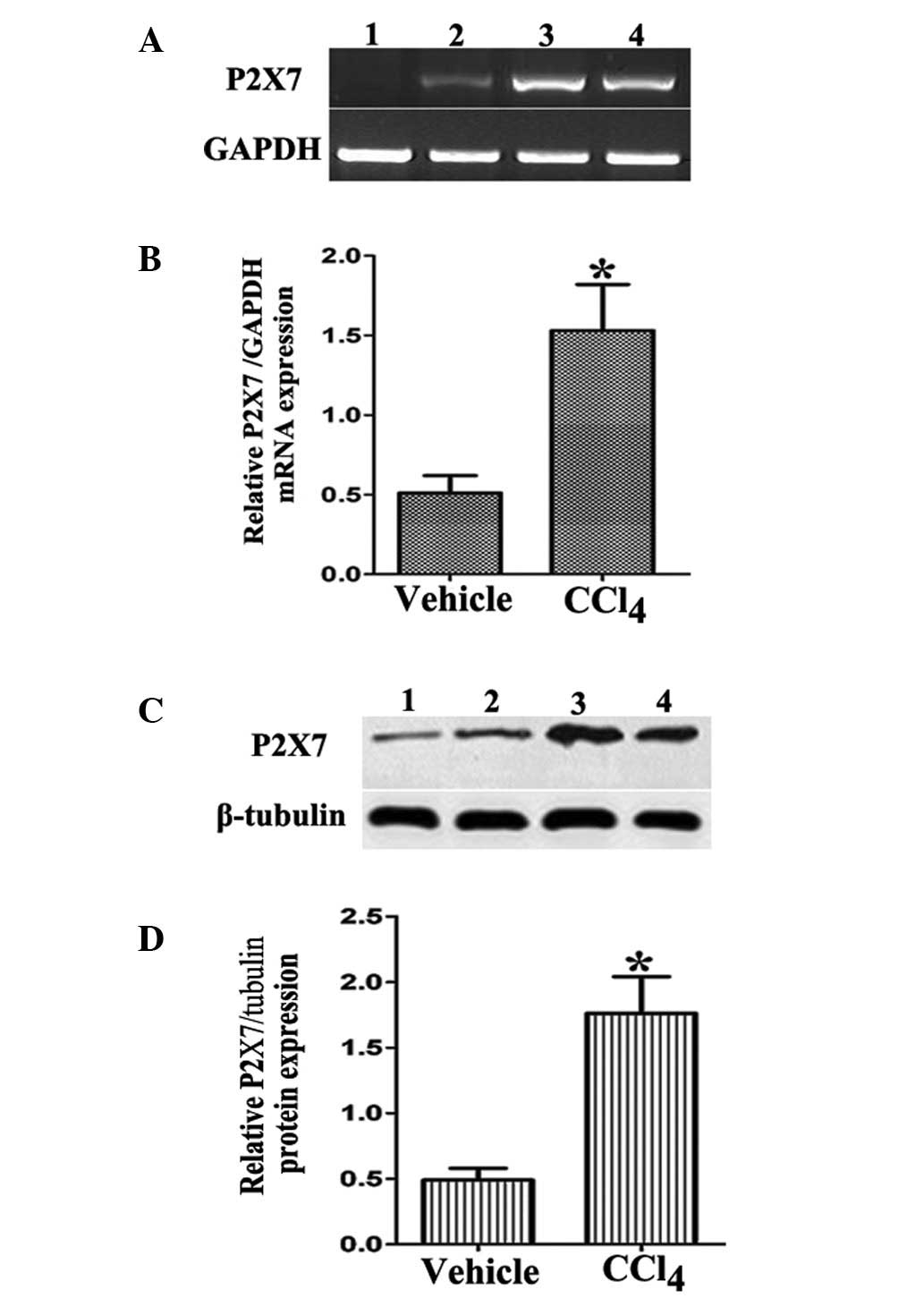
The P2X7 expression in liver tissues from the CCl4-induced liver fibrosis model and from vehicle-treated normal controls was analyzed. As expected, livers from CCl4-treated mice exhibited increased mRNA and protein levels of P2X7 compared with vehicle-treated normal mice (Fig. 1).

Figure 1

P2X7 expression in livers following carbon tetrachloride (CCl4) induction. The mRNA and protein were extracted and subjected to (A and B) reverse transcription-polymerase chain reaction (RT-PCR) analysis and (C and D) western blot analysis. The relative mRNA and protein expression levels were expressed as the ratio of band intensity for P2X7 relative to that for internal controls, glyceraldehyde 3-phosphate dehydrogenase (GAPDH) or β-tubulin. Values are expressed as the mean ± SD, n=12 mice per group. *P<0.01, compared with vehicle-treated normal control. Lane 1 and 2, vehicle (saline/olive oil)-treated normal mice; lane 3 and 4, CCl4 administered by subcutaneous injection.

A438079 reduces CCl4-induced necrosis, inflammatory infiltration and cell injury

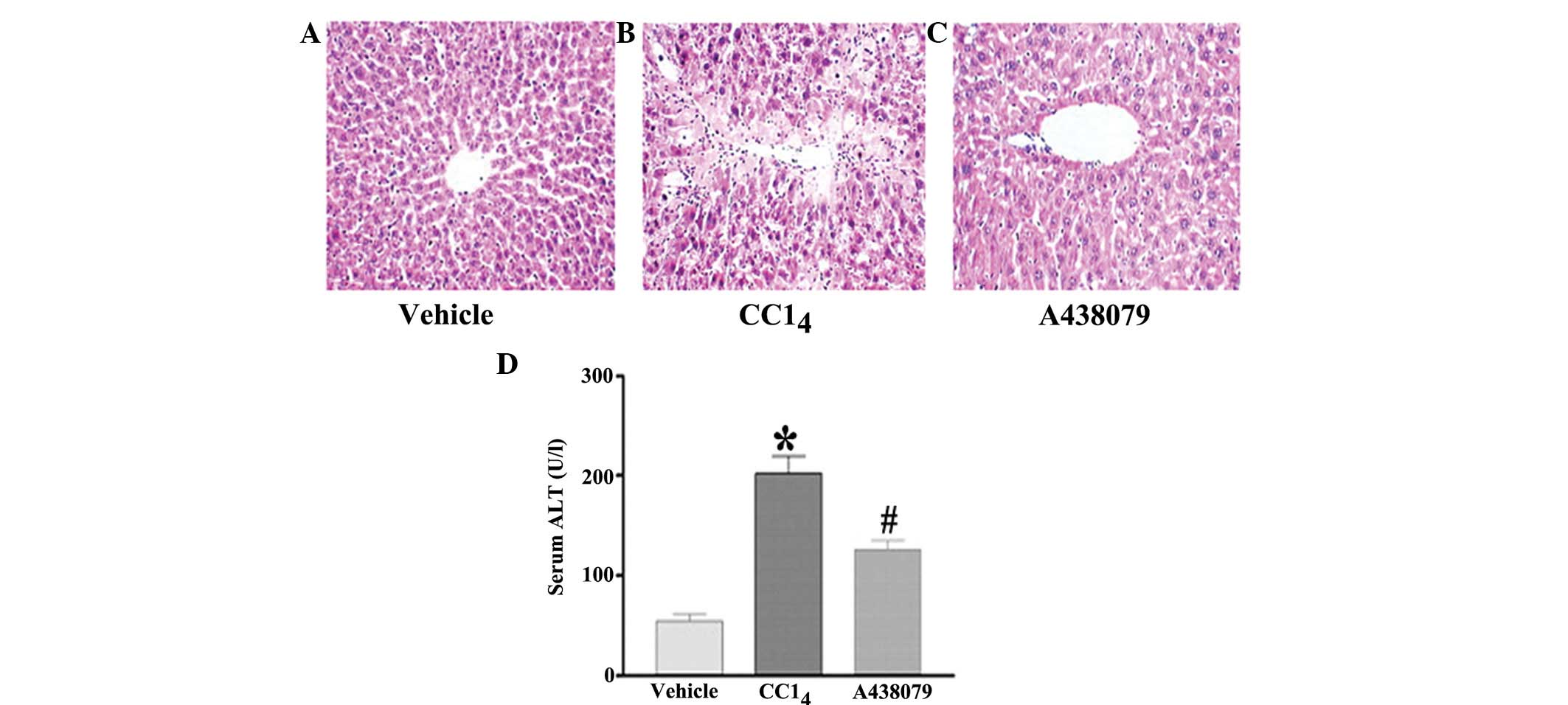
It was identified that CCl4 treatment was found to induce the formation of necrosis in the liver with inflammatory infiltration surrounding the centrilobular veins (Fig. 2B). The A438079 treatment significantly attenuated the severity of necrosis (Fig. 2C). CCl4 also increased the level of serum alanine aminotransferase (ALT), indicative of cellular injury compared with the normal control group (P<0.01) (Fig. 2D). Mice treated with A438079 and CCl4 showed a significant reduction in serum ALT and histopathological damage compared with the CCl4-treated group (P<0.01).

Figure 2

Representative images of hematoxylin and eosin staining. (A) Vehicle-treated normal control, (B) carbon tetrachloride (CCl4)-treated and (C) CCl4 + A438079-treated groups. A necrotic area was present in CCl4-treated mice with significantly large quantities of inflammatory cell infiltration surrounding the centrilobular veins. No significant necrosis was observed in the A438079 and CCl4-treated group. (D) CCl4 treatment resulted in significantly increased serum alanine aminotransferase (ALT) levels. *P<0.01, vs. the vehicle-treated normal control and #P<0.01, vs. the CCl4-treated group (n=10–12 per group). Magnification, ×200.

A438079 reduces CCl4-induced collagen accumulation in the liver

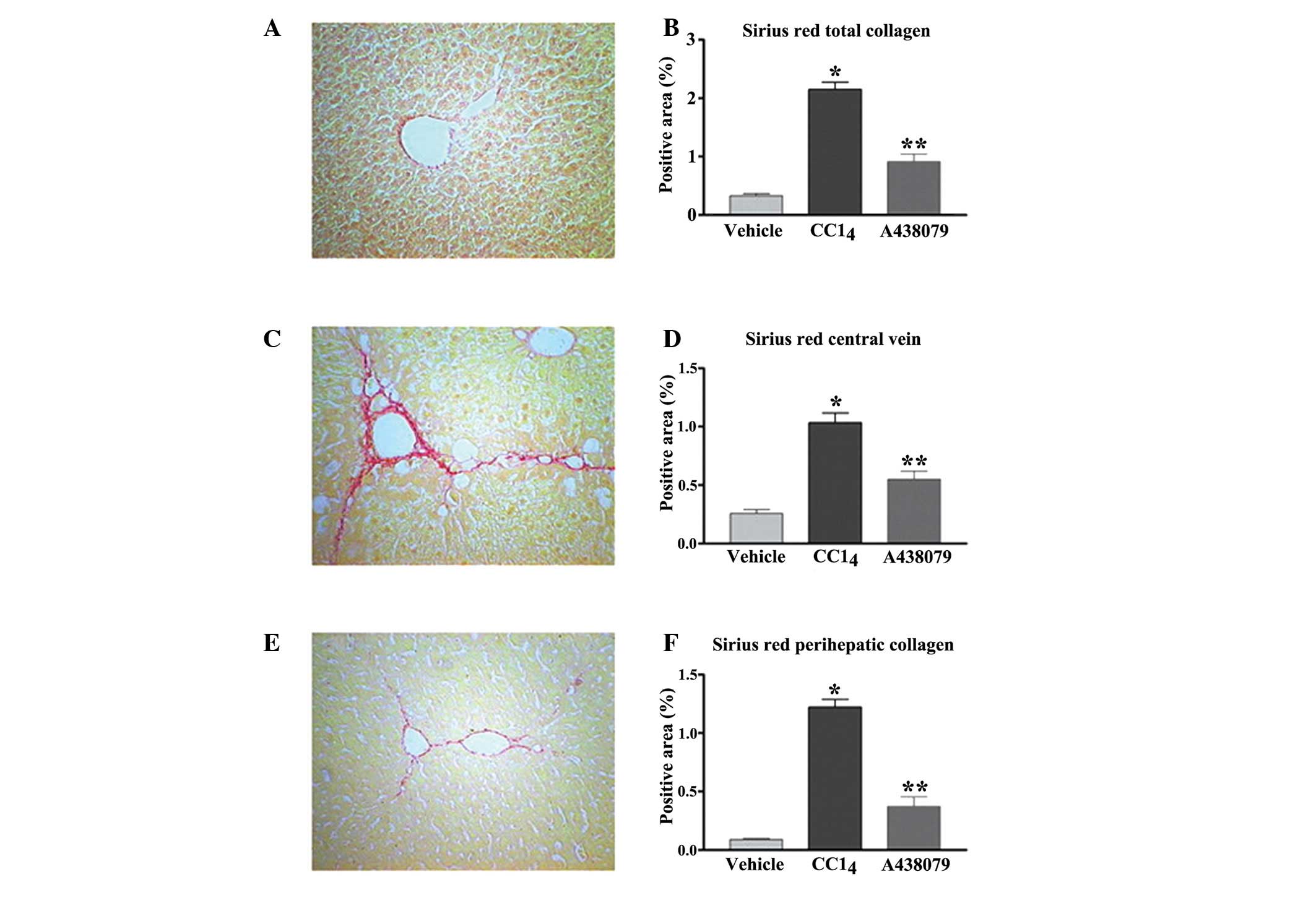
Chronic CCl4 treatment showed a significant increase in collagen accumulation in the liver (Fig. 3B). The deposition of collagen in the pericellular area and along the central vein was significantly elevated, respectively (P<0.01) (Fig. 3D and F). Overall, the total quantity of collagen was markedly increased in the CCl4-treated mice. Treatment with A438079 resulted in a significant reduction of collagen accumulation within the liver compared with the CCl4-treated group (P<0.01).

Figure 3

Sirius Red staining of (A) vehicle-treated normal control, (C) carbon tetrachloride (CCl4)-treated and (E) CCl4 + A438079-treated groups. A thin lining of collagen was observed along the central vein. In the CCl4-treated group, there was an increase in the collagen accumulation along the central vein and collagen was observed in the pericellular area. A438079 treatment reduced CCl4-induced collagen accumulation. Histograms show the percentage area of Sirius Red staining of collagen in (B) the whole liver section, (D) along the central vein and (F) the pericellular area. CCl4 treatment increased collagen deposition in the central vein and pericellular area. A438079 significantly reduced collagen formation and accumulation induced by chronic CCl4 treatment. *P<0.01, vs. the vehicle-treated normal control and **P<0.01 compared with the CCl4-treated group (n=10–12 per group).

A438079 treatment reduces the production of pro-inflammatory cytokines

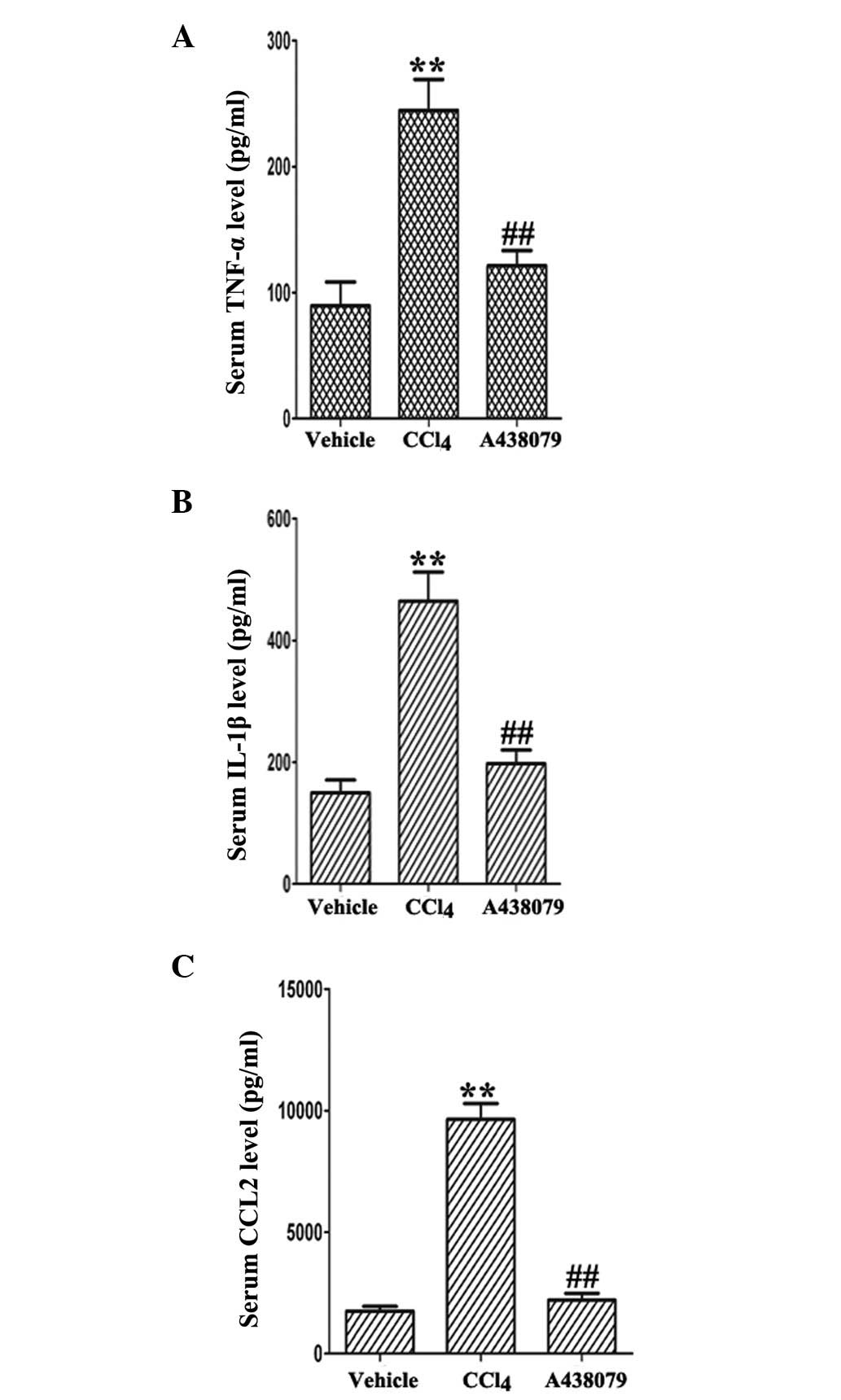
Serum levels of TNF-α, IL-1β and CCL2 were significantly elevated by >4-fold, respectively, compared with the vehicle-treated control group (P<0.01; Fig. 4). Notably, the A438079-treated group showed markedly reduced serum levels of TNF-α, IL-1β and CCL2 (all P<0.01), as indicated by ELISA. These data indicated that A438079 treatment also significantly reduced the CCl4-induced inflammatory response.

Figure 4

A438079 treatment reduced the production of serum (A) tumor necrosis factor-α (TNF-α), (B) interleukin-1β (IL-1β) and (C) CCL2. Chronic carbon tetrachloride (CCl4) treatment significantly induced the production of TNF-α, IL-1β and CCL2 in the sera, which were all reduced by A438079 treatment. Values are expressed as the mean ± SD, n=12 mice per group. **P<0.01, compared with the vehicle-treated normal control and ##P<0.01, compared with the carbon tetrachloride (CCl4)-treated group. (n=10–12 per group).

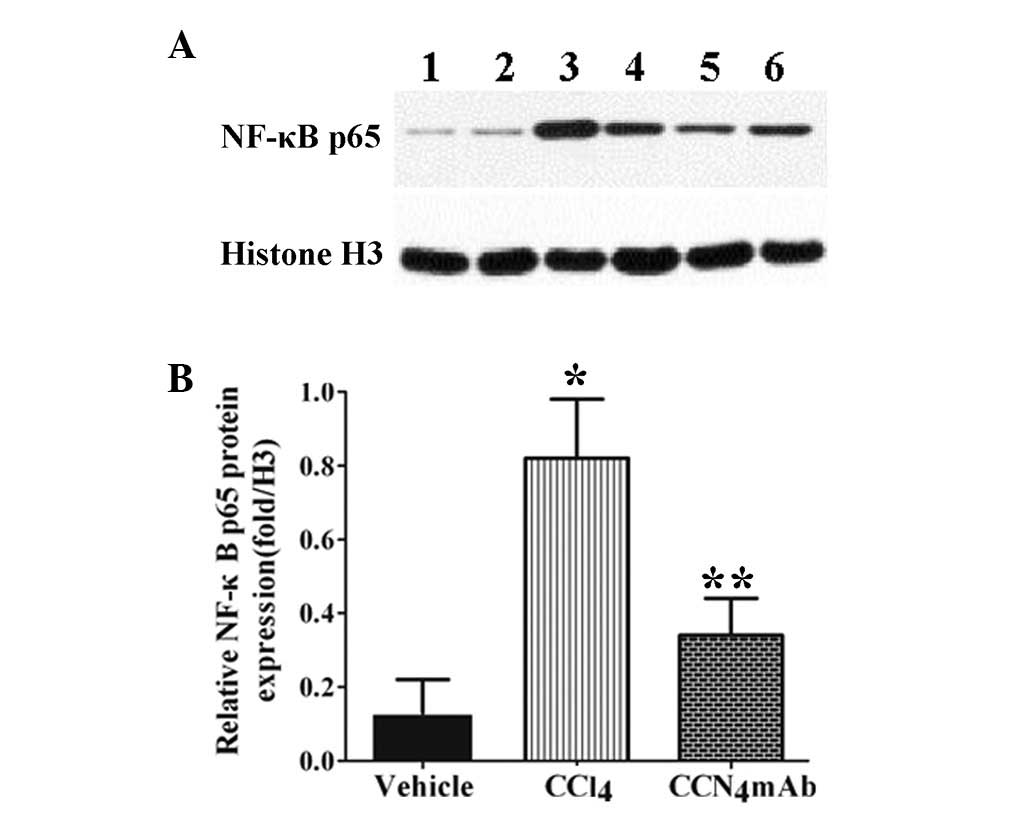
A438079 inhibits the activity of NF-κB induced by CCl4

Chronic CCl4 administration increased the activity of NF-κB to 4-fold relative to that of the normal control (P<0.01) (Fig. 5). The activity level of NF-κB was significantly reduced via treatment with A438079, compared with that in the CCl4-treated group (P<0.01).

Figure 5

Nuclear factor-κB (NF-κB) activity shown by western blot analysis. (A) NF-κBp65 protein expression in vehicle-treated (lanes 1 and 2), carbon tetrachloride (CCl4)-treated (lanes 3 and 4) and A438079-treated (lanes 5 and 6) mice. (B) Relative NF-κB p65 protein expression relative to internal control Histone H3. *P<0.01 vs. vehicle-treated group and **P<0.01 vs. CCl4-treated group, n=10 per group. Bars are the mean ± SD.

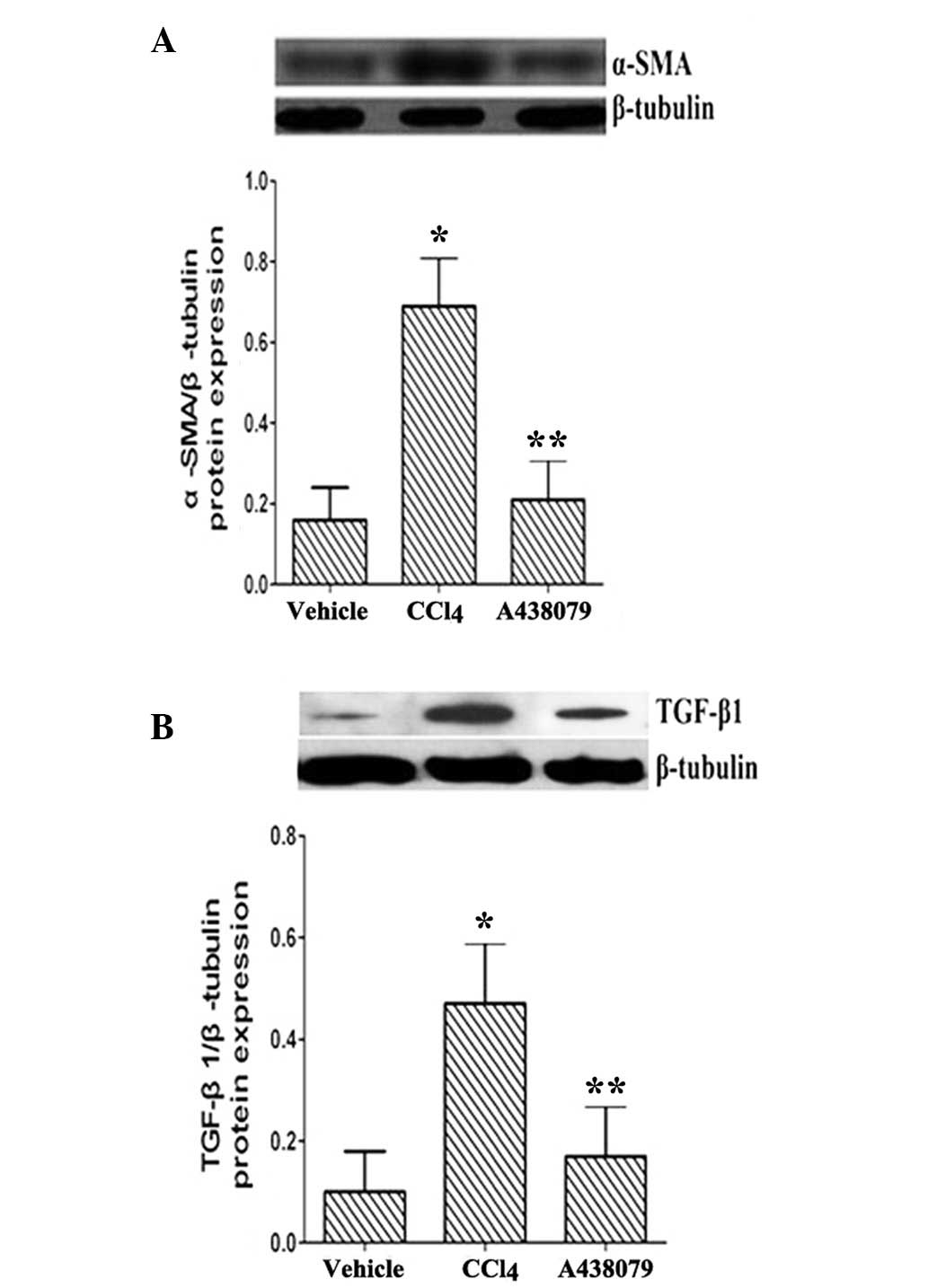
A438079 inhibits the protein expression of pro-fibrotic factors

Chronic treatment with CCl4 enhanced the protein expression levels of α-SMA and TGF-β1 compared with the normal control (P<0.01; Fig. 6). A438079 treatment significantly downregulated the expression levels of these pro-fibrotic markers (P<0.01).

Figure 6

Protein expression levels of pro-fibrotic factors (A) α-smooth muscle actin (α-SMA) and (B) tumor growth factor-β1 TGF-β1. Chronic CCl4 treatment upregulated the protein expression of α-SMA and TGF-β1 (*P<0.001). Following treatment with A438079, the expression level of α-SMA and TGF-β1 was significantly suppressed near to that of the control level. The protein expression levels were expressed as the ratio of band intensity for target protein relative to that for the internal control (β-tubulin). Values are expressed as the mean ± SD, n=12 mice per group. *P<0.01, compared with the vehicle-treated normal control and **P<0.01 compared with the CCl4-treated group.

Discussion

In the present study, it was demonstrated that chronic CCl4 treatment resulted in necrosis, increased accumulation of collagen in the liver and a marked increase in the production of various pro-inflammatory and pro-fibrotic mediators, indicating the successful fibrosis model induction. Furthermore, the effects of P2X7 inhibition on liver injury and fibrosis were investigated using the specific P2X7 inhibitor, A438079. As a result, A438079 administration effectively attenuated the CCl4-induced liver injury and fibrosis.

Results of recent studies have shown that P2X7 may contribute to organ fibrosis (13,15,16). P2X7 promotes macrophage infiltration and collagen deposition contributing to the inflammation and fibrosis of unilateral ureteral obstruction in mice (15). P2X7-deficient mice exhibited markedly reduced lung inflammation, with reduced fibrosis (13). Subsequent data demonstrated that P2X7 may be a potential target for the treatment of pancreatic fibrosis (16). In accordance, the results suggested that P2X7 activity was present in CCl4-induced liver injury and fibrosis and contributed to fibrogenesis.

Hepatic inflammation was correlated with liver fibrosis (17). NF-κB is a nuclear transcriptional activator that is central in stress responses and inflammation. Activation of NF-κB promotes the production of collagen and inflammatory chemokines in the process of liver fibrosis (18). In addition, it is indicated that monocyte infiltration into the liver is a predominant pathogenic factor for chronic hepatic inflammation and fibrosis (19). In the present study, administration of A438079 reduced the CCl4-induced expression of pro-inflammatory mediators, such as TNF-α, IL-1β and CCL2. In addition, A438079 reduced the activity of NF-κB during inflammation. These data demonstrated the pro-inflammatory effect of P2X7. It is suggested that the anti-inflammatory effect of A438079 may in part be regulated by NF-κB, TNF-α, IL-1β and CCL2, which are involved in the inflammatory process.

TGF-β1 is a well-established fibrogenic cytokine, predominantly produced by α-SMA-positive myofibroblasts (20). It is now known that subsequent to binding to its receptors, TGF-β1 activates its downstream signaling pathway to mediate fibrosis, which is negatively regulated via the ubiquitin-proteasome degradation mechanism (21). Studies of liver biopsy samples have shown that α-SMA may be a valuable marker in the evaluation of fibrosis progression and an early indicator of the development of fibrosis (22). In the present study, it was demonstrated that the CCl4-induced increase in the expression levels of TGF-β1 and α-SMA was reduced by A438079. Thus, it is suggested that the protective effect of A438079 is a result of decreased activation of various pro-fibrotic factors and the accumulation of collagen.

The results offer novel insights into the potential importance of P2X7 in hepatic fibrosis. It was demonstrated that P2X7 was upregulated in the injured livers. Furthermore, P2X7 blockade via A438079 exhibits protective effects, attenuating CCl4-induced liver injury and fibrosis. In conclusion, the protective effect of A438079 may be due to its ability to modulate the inflammatory process. However, the precise mechanism underlying the involvement of P2X7 in liver fibrosis remains unclear and requires further investigation.

References

1 

Poli G: Pathogenesis of liver fibrosis: role of oxidative stress. Mol Aspects Med. 21:49–98. 2000. View Article : Google Scholar : PubMed/NCBI

2 

Brenner DA: Molecular pathogenesis of liver fibrosis. Trans Am Clin Climatol Assoc. 120:361–368. 2009.PubMed/NCBI

3 

Cabibbo G, Maida M, Genco C, Antonucci M and Cammà C: Causes of and prevention strategies for hepatocellular carcinoma. Semin Oncol. 39:374–383. 2012. View Article : Google Scholar : PubMed/NCBI

4 

Rosenbloom J, Castro SV and Jimenez SA: Narrative review: fibrotic diseases: cellular and molecular mechanisms and novel therapies. Ann Intern Med. 152:159–166. 2010. View Article : Google Scholar : PubMed/NCBI

5 

Surprenant A, Rassendren F, Kawashima E, North RA and Buell G: The cytolytic P2Z receptor for extracellular ATP identified as a P2X receptor (P2X7). Science. 272:735–738. 1996. View Article : Google Scholar : PubMed/NCBI

6 

Di Virgilio F, Chiozzi P, Ferrari D, et al: Nucleotide receptors: an emerging family of regulatory molecules in blood cells. Blood. 97:587–600. 2001.PubMed/NCBI

7 

Coutinho-Silva R, Persechini PM, Bisaggio RC, et al: P2Z/P2X7 receptor-dependent apoptosis of dendritic cells. Am J Physiol. 276:C1139–C1147. 1999.PubMed/NCBI

8 

Pelegrin P: Targeting interleukin-1 signaling in chronic inflammation: focus on P2X(7) receptor and Pannexin-1. Drug News Perspect. 21:424–433. 2008.PubMed/NCBI

9 

Colomar A, Marty V, Médina C, et al: Maturation and release of interleukin-1beta by lipopolysaccharide-primed mouse Schwann cells require the stimulation of P2X7 receptors. J Biol Chem. 278:30732–30740. 2003. View Article : Google Scholar : PubMed/NCBI

10 

Derks R and Beaman K: Regeneration and tolerance factor modulates the effect of adenosine triphosphate-induced interleukin 1 beta secretion in human macrophages. Hum Immunol. 65:676–682. 2004. View Article : Google Scholar

11 

Labasi JM, Petrushova N, Donovan C, et al: Absence of the P2X7 receptor alters leukocyte function and attenuates an inflammatory response. J Immunol. 168:6436–6445. 2002. View Article : Google Scholar : PubMed/NCBI

12 

Chessell IP, Hatcher JP, Bountra C, et al: Disruption of the P2X7 purinoceptor gene abolishes chronic inflammatory and neuropathic pain. Pain. 114:386–396. 2005. View Article : Google Scholar : PubMed/NCBI

13 

Riteau N, Gasse P, Fauconnier L, et al: Extracellular ATP is a danger signal activating P2X7 receptor in lung inflammation and fibrosis. Am J Respir Crit Care Med. 182:774–783. 2010. View Article : Google Scholar : PubMed/NCBI

14 

Díaz-Hernández M, Díez-Zaera M, Sánchez-Nogueiro J, et al: Altered P2X7-receptor level and function in mouse models of Huntington’s disease and therapeutic efficacy of antagonist administration. FASEB J. 23:1893–1906. 2009.PubMed/NCBI

15 

Gonçalves RG, Gabrich L, Rosário A Jr, et al: The role of purinergic P2X7 receptors in the inflammation and fibrosis of unilateral ureteral obstruction in mice. Kidney Int. 70:1599–1606. 2006.PubMed/NCBI

16 

Haanes KA, Schwab A and Novak I: The P2X7 receptor supports both life and death in fibrogenic pancreatic stellate cells. PLoS One. 7:e511642012. View Article : Google Scholar : PubMed/NCBI

17 

Zimmermann HW, Seidler S, Nattermann J, et al: Functional contribution of elevated circulating and hepatic non-classical CD14CD16 monocytes to inflammation and human liver fibrosis. PLoS One. 5:e110492010. View Article : Google Scholar : PubMed/NCBI

18 

Yang H, Zhao LF, Zhao ZF, et al: Heme oxygenase-1 prevents liver fibrosis in rats by regulating the expression of PPARγ and NF-κB. World J Gastroenterol. 18:1680–1688. 2010.PubMed/NCBI

19 

Wasmuth HE, Tacke F and Trautwein C: Chemokines in liver inflammation and fibrosis. Semin Liver Dis. 30:215–225. 2010. View Article : Google Scholar : PubMed/NCBI

20 

Ueberham E, Löw R, Ueberham U, et al: Conditional tetracycline-regulated expression of TGF-beta1 in liver of transgenic mice leads to reversible intermediary fibrosis. Hepatology. 37:1067–1078. 2003. View Article : Google Scholar : PubMed/NCBI

21 

Derynck R and Zhang YE: Smad-dependent and Smad-independent pathways in TGF-beta family signalling. Nature. 425:577–584. 2003. View Article : Google Scholar : PubMed/NCBI

22 

Akpolat N, Yahsi S, Godekmerdan A, Yalniz M and Demirbag K: The value of alpha-SMA in the evaluation of hepatic fibrosis severity in hepatitis B infection and cirrhosis development: a histopathological and immunohistochemical study. Histopathology. 47:276–280. 2005. View Article : Google Scholar : PubMed/NCBI

Related Articles

  • Abstract
  • View
  • Download
  • Twitter
Copy and paste a formatted citation
Spandidos Publications style
Huang C, Yu W, Cui H, Wang Y, Zhang L, Han F and Huang T: P2X7 blockade attenuates mouse liver fibrosis. Mol Med Rep 9: 57-62, 2014.
APA
Huang, C., Yu, W., Cui, H., Wang, Y., Zhang, L., Han, F., & Huang, T. (2014). P2X7 blockade attenuates mouse liver fibrosis. Molecular Medicine Reports, 9, 57-62. https://doi.org/10.3892/mmr.2013.1807
MLA
Huang, C., Yu, W., Cui, H., Wang, Y., Zhang, L., Han, F., Huang, T."P2X7 blockade attenuates mouse liver fibrosis". Molecular Medicine Reports 9.1 (2014): 57-62.
Chicago
Huang, C., Yu, W., Cui, H., Wang, Y., Zhang, L., Han, F., Huang, T."P2X7 blockade attenuates mouse liver fibrosis". Molecular Medicine Reports 9, no. 1 (2014): 57-62. https://doi.org/10.3892/mmr.2013.1807
Copy and paste a formatted citation
x
Spandidos Publications style
Huang C, Yu W, Cui H, Wang Y, Zhang L, Han F and Huang T: P2X7 blockade attenuates mouse liver fibrosis. Mol Med Rep 9: 57-62, 2014.
APA
Huang, C., Yu, W., Cui, H., Wang, Y., Zhang, L., Han, F., & Huang, T. (2014). P2X7 blockade attenuates mouse liver fibrosis. Molecular Medicine Reports, 9, 57-62. https://doi.org/10.3892/mmr.2013.1807
MLA
Huang, C., Yu, W., Cui, H., Wang, Y., Zhang, L., Han, F., Huang, T."P2X7 blockade attenuates mouse liver fibrosis". Molecular Medicine Reports 9.1 (2014): 57-62.
Chicago
Huang, C., Yu, W., Cui, H., Wang, Y., Zhang, L., Han, F., Huang, T."P2X7 blockade attenuates mouse liver fibrosis". Molecular Medicine Reports 9, no. 1 (2014): 57-62. https://doi.org/10.3892/mmr.2013.1807
Follow us
  • Twitter
  • LinkedIn
  • Facebook
About
  • Spandidos Publications
  • Careers
  • Cookie Policy
  • Privacy Policy
How can we help?
  • Help
  • Live Chat
  • Contact
  • Email to our Support Team