Spandidos Publications Logo
  • About
    • About Spandidos
    • Aims and Scopes
    • Abstracting and Indexing
    • Editorial Policies
    • Reprints and Permissions
    • Job Opportunities
    • Terms and Conditions
    • Contact
  • Journals
    • All Journals
    • Oncology Letters
      • Oncology Letters
      • Information for Authors
      • Editorial Policies
      • Editorial Board
      • Aims and Scope
      • Abstracting and Indexing
      • Bibliographic Information
      • Archive
    • International Journal of Oncology
      • International Journal of Oncology
      • Information for Authors
      • Editorial Policies
      • Editorial Board
      • Aims and Scope
      • Abstracting and Indexing
      • Bibliographic Information
      • Archive
    • Molecular and Clinical Oncology
      • Molecular and Clinical Oncology
      • Information for Authors
      • Editorial Policies
      • Editorial Board
      • Aims and Scope
      • Abstracting and Indexing
      • Bibliographic Information
      • Archive
    • Experimental and Therapeutic Medicine
      • Experimental and Therapeutic Medicine
      • Information for Authors
      • Editorial Policies
      • Editorial Board
      • Aims and Scope
      • Abstracting and Indexing
      • Bibliographic Information
      • Archive
    • International Journal of Molecular Medicine
      • International Journal of Molecular Medicine
      • Information for Authors
      • Editorial Policies
      • Editorial Board
      • Aims and Scope
      • Abstracting and Indexing
      • Bibliographic Information
      • Archive
    • Biomedical Reports
      • Biomedical Reports
      • Information for Authors
      • Editorial Policies
      • Editorial Board
      • Aims and Scope
      • Abstracting and Indexing
      • Bibliographic Information
      • Archive
    • Oncology Reports
      • Oncology Reports
      • Information for Authors
      • Editorial Policies
      • Editorial Board
      • Aims and Scope
      • Abstracting and Indexing
      • Bibliographic Information
      • Archive
    • Molecular Medicine Reports
      • Molecular Medicine Reports
      • Information for Authors
      • Editorial Policies
      • Editorial Board
      • Aims and Scope
      • Abstracting and Indexing
      • Bibliographic Information
      • Archive
    • World Academy of Sciences Journal
      • World Academy of Sciences Journal
      • Information for Authors
      • Editorial Policies
      • Editorial Board
      • Aims and Scope
      • Abstracting and Indexing
      • Bibliographic Information
      • Archive
    • International Journal of Functional Nutrition
      • International Journal of Functional Nutrition
      • Information for Authors
      • Editorial Policies
      • Editorial Board
      • Aims and Scope
      • Abstracting and Indexing
      • Bibliographic Information
      • Archive
    • International Journal of Epigenetics
      • International Journal of Epigenetics
      • Information for Authors
      • Editorial Policies
      • Editorial Board
      • Aims and Scope
      • Abstracting and Indexing
      • Bibliographic Information
      • Archive
    • Medicine International
      • Medicine International
      • Information for Authors
      • Editorial Policies
      • Editorial Board
      • Aims and Scope
      • Abstracting and Indexing
      • Bibliographic Information
      • Archive
  • Articles
  • Information
    • Information for Authors
    • Information for Reviewers
    • Information for Librarians
    • Information for Advertisers
    • Conferences
  • Language Editing
Spandidos Publications Logo
  • About
    • About Spandidos
    • Aims and Scopes
    • Abstracting and Indexing
    • Editorial Policies
    • Reprints and Permissions
    • Job Opportunities
    • Terms and Conditions
    • Contact
  • Journals
    • All Journals
    • Biomedical Reports
      • Information for Authors
      • Editorial Policies
      • Editorial Board
      • Aims and Scope
      • Abstracting and Indexing
      • Bibliographic Information
      • Archive
    • Experimental and Therapeutic Medicine
      • Information for Authors
      • Editorial Policies
      • Editorial Board
      • Aims and Scope
      • Abstracting and Indexing
      • Bibliographic Information
      • Archive
    • International Journal of Epigenetics
      • Information for Authors
      • Editorial Policies
      • Editorial Board
      • Aims and Scope
      • Abstracting and Indexing
      • Bibliographic Information
      • Archive
    • International Journal of Functional Nutrition
      • Information for Authors
      • Editorial Policies
      • Editorial Board
      • Aims and Scope
      • Abstracting and Indexing
      • Bibliographic Information
      • Archive
    • International Journal of Molecular Medicine
      • Information for Authors
      • Editorial Policies
      • Editorial Board
      • Aims and Scope
      • Abstracting and Indexing
      • Bibliographic Information
      • Archive
    • International Journal of Oncology
      • Information for Authors
      • Editorial Policies
      • Editorial Board
      • Aims and Scope
      • Abstracting and Indexing
      • Bibliographic Information
      • Archive
    • Medicine International
      • Information for Authors
      • Editorial Policies
      • Editorial Board
      • Aims and Scope
      • Abstracting and Indexing
      • Bibliographic Information
      • Archive
    • Molecular and Clinical Oncology
      • Information for Authors
      • Editorial Policies
      • Editorial Board
      • Aims and Scope
      • Abstracting and Indexing
      • Bibliographic Information
      • Archive
    • Molecular Medicine Reports
      • Information for Authors
      • Editorial Policies
      • Editorial Board
      • Aims and Scope
      • Abstracting and Indexing
      • Bibliographic Information
      • Archive
    • Oncology Letters
      • Information for Authors
      • Editorial Policies
      • Editorial Board
      • Aims and Scope
      • Abstracting and Indexing
      • Bibliographic Information
      • Archive
    • Oncology Reports
      • Information for Authors
      • Editorial Policies
      • Editorial Board
      • Aims and Scope
      • Abstracting and Indexing
      • Bibliographic Information
      • Archive
    • World Academy of Sciences Journal
      • Information for Authors
      • Editorial Policies
      • Editorial Board
      • Aims and Scope
      • Abstracting and Indexing
      • Bibliographic Information
      • Archive
  • Articles
  • Information
    • For Authors
    • For Reviewers
    • For Librarians
    • For Advertisers
    • Conferences
  • Language Editing
Login Register Submit
  • This site uses cookies
  • You can change your cookie settings at any time by following the instructions in our Cookie Policy. To find out more, you may read our Privacy Policy.

    I agree
Search articles by DOI, keyword, author or affiliation
Search
Advanced Search
presentation
Molecular and Clinical Oncology
Join Editorial Board Propose a Special Issue
Print ISSN: 2049-9450 Online ISSN: 2049-9469
Journal Cover
September-2020 Volume 13 Issue 3

Full Size Image

Sign up for eToc alerts
Recommend to Library

Journals

International Journal of Molecular Medicine

International Journal of Molecular Medicine

International Journal of Molecular Medicine is an international journal devoted to molecular mechanisms of human disease.

International Journal of Oncology

International Journal of Oncology

International Journal of Oncology is an international journal devoted to oncology research and cancer treatment.

Molecular Medicine Reports

Molecular Medicine Reports

Covers molecular medicine topics such as pharmacology, pathology, genetics, neuroscience, infectious diseases, molecular cardiology, and molecular surgery.

Oncology Reports

Oncology Reports

Oncology Reports is an international journal devoted to fundamental and applied research in Oncology.

Experimental and Therapeutic Medicine

Experimental and Therapeutic Medicine

Experimental and Therapeutic Medicine is an international journal devoted to laboratory and clinical medicine.

Oncology Letters

Oncology Letters

Oncology Letters is an international journal devoted to Experimental and Clinical Oncology.

Biomedical Reports

Biomedical Reports

Explores a wide range of biological and medical fields, including pharmacology, genetics, microbiology, neuroscience, and molecular cardiology.

Molecular and Clinical Oncology

Molecular and Clinical Oncology

International journal addressing all aspects of oncology research, from tumorigenesis and oncogenes to chemotherapy and metastasis.

World Academy of Sciences Journal

World Academy of Sciences Journal

Multidisciplinary open-access journal spanning biochemistry, genetics, neuroscience, environmental health, and synthetic biology.

International Journal of Functional Nutrition

International Journal of Functional Nutrition

Open-access journal combining biochemistry, pharmacology, immunology, and genetics to advance health through functional nutrition.

International Journal of Epigenetics

International Journal of Epigenetics

Publishes open-access research on using epigenetics to advance understanding and treatment of human disease.

Medicine International

Medicine International

An International Open Access Journal Devoted to General Medicine.

Journal Cover
September-2020 Volume 13 Issue 3

Full Size Image

Sign up for eToc alerts
Recommend to Library

  • Article
  • Citations
    • Cite This Article
    • Download Citation
    • Create Citation Alert
    • Remove Citation Alert
    • Cited By
  • Similar Articles
    • Related Articles (in Spandidos Publications)
    • Similar Articles (Google Scholar)
    • Similar Articles (PubMed)
  • Download PDF
  • Download XML
  • View XML
Case Report

Recurrent vaginal intraepithelial neoplasia successfully treated with topical imiquimod: A case report

  • Authors:
    • Nanayo Sasagasako
    • Kenzo Kosaka
    • Yusuke Sagae
    • Kunitoshi Itoh
    • Junichi Aratake
    • Kaori Yamada
    • Yoshihide Inayama
    • Rei Gou
    • Atsuko Kawamura
    • Megumi Yamanishi
    • Yukio Yamanishi
    • Makoto Suzuki
    • Kazumori Arai
  • View Affiliations / Copyright

    Affiliations: Department of Obstetrics and Gynecology, Shizuoka General Hospital, Shizuoka 420‑8527, Japan, Department of Pathology, Shizuoka General Hospital, Shizuoka 420‑8527, Japan
  • Article Number: 19
    |
    Published online on: July 13, 2020
       https://doi.org/10.3892/mco.2020.2089
  • Expand metrics +
Metrics: Total Views: 0 (Spandidos Publications: | PMC Statistics: )
Metrics: Total PDF Downloads: 0 (Spandidos Publications: | PMC Statistics: )
Cited By (CrossRef): 0 citations Loading Articles...

This article is mentioned in:


Abstract

Vaginal intraepithelial neoplasia (VAIN) is a rare disease associated with human papillomavirus infection. High‑grade VAIN is typically treated with either excisional or ablative therapy. However, recurrent VAIN lesions are common and these treatments cause vaginal scarring. Recent studies have indicated that 5% imiquimod is an effective treatment for VAIN. The present report describes a case of a woman diagnosed with recurrent VAIN 3 who was treated with a 5% topical imiquimod cream and achieved a complete response after excision and CO2 laser vaporization. A 53‑year‑old, gravida 5, para 2 postmenopausal woman who was diagnosed with papillary squamous cell carcinoma by biopsy underwent conization, total abdominal hysterectomy and bilateral salpingo‑oophorectomy. A histological examination revealed grade 3 cervical intraepithelial neoplasia with free surgical margins. At 3 years after the hysterectomy, the vaginal smear revealed atypical squamous cells, leading to a pathological diagnosis of VAIN 3. Partial vaginectomy was performed, and VAIN 3 was detected in the lesion with positive margins. At 4 months into follow‑up, the vaginal smear revealed a high‑grade squamous intraepithelial lesion (HSIL), and subsequent biopsy during colposcopy revealed a pathological diagnosis of VAIN 3. At 3 months after CO2 laser vaporization, the vaginal smear revealed HSIL with suspected recurrence and imiquimod treatment was initiated. One sachet of 5% imiquimod cream (0.25 g) was placed in the entire vagina three times per week for 14 weeks with no apparent complications. At 3 years after the treatment, there has been no recurrence. This case demonstrated that topical imiquimod with careful follow‑up is an effective treatment for VAIN and is well‑tolerated. Further clinical evidence of the effectiveness and safety of imiquimod in patients diagnosed with VAIN is required.

Introduction

Vaginal intraepithelial neoplasia (VAIN) is a rare disease associated with human papillomavirus (HPV) infection. The incidence of VAIN has been reported at approximately 0.2-0.3 per 100,000 women and is considered to be a precursor of vaginal carcinoma (1). In the World Health Organization (WHO) 2014 classification, VAIN lesions are graded as vaginal low-grade and high-grade squamous intraepithelial lesions (LSIL and HSIL, respectively) with LSIL including VAIN 1 and HSIL including VAIN 2 and VAIN 3. VAIN 1 can also be considered a form of productive HPV infection, which can be expectantly managed with a spontaneous regression rate of over 50% (2). VAIN 2 and 3 are considered precancerous lesions, so treatment is required for high-grade VAIN. Especially, VAIN 3 owes to the high risk of progression to carcinoma in approximately 11-13% of cases (3). However, current treatment recommendations vary, and there is no universally accepted standard of care as the best treatment modality (4).

High-grade VAIN is usually treated with either excisional or ablative therapy, however recurrent VAIN lesions are common and require repeat treatments which may be mutilating and cause vaginal scarring (3). Imiquimod is a toll-like receptor 7 (TLR7) agonist which modulates an immune response by inducing secretion of interferon-α and interferon-γ, and is used for the treatment of condylomas and other HPV-related neoplasias including VAIN (5). Recently some studies have reported that 5% imiquimod is an effective treatment for VAIN (5,6).

We here report a case of a woman who was diagnosed with recurrent VAIN 3 and treated with 5% topical imiquimod cream after surgical treatment and achieved a complete response. This case thus provides further evidence for the clinical efficacy and safety of 5% topical imiquimod in the treatment of recurrent VAIN.

Case report

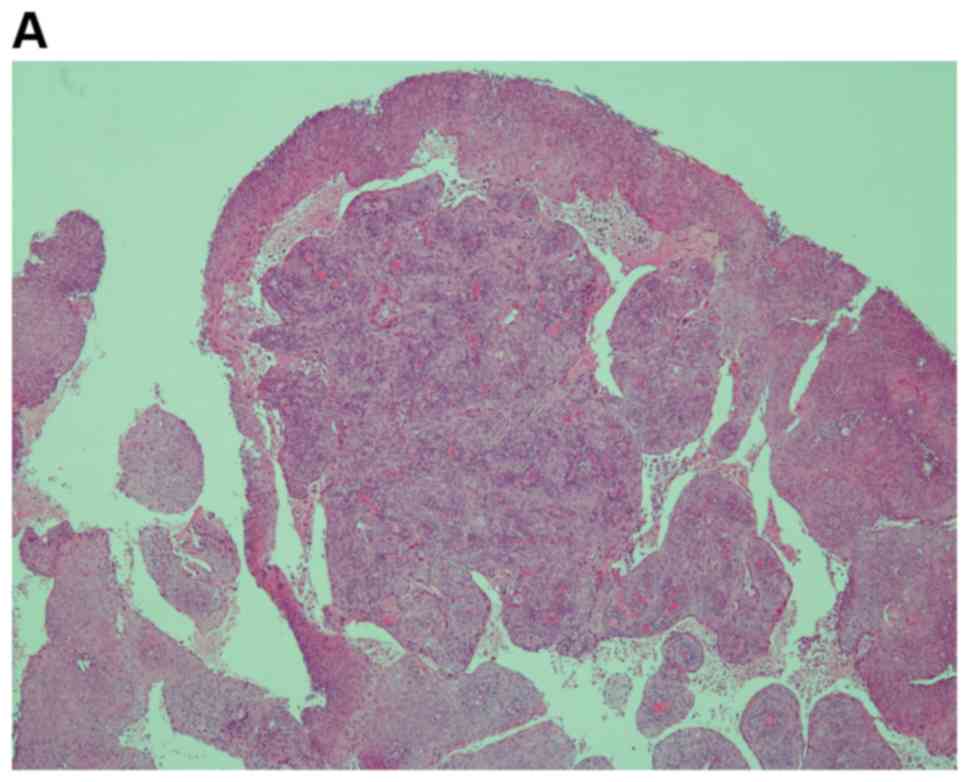
A 53-year-old, gravida 5, para 2 postmenopausal woman with no past medical history was diagnosed with papillary squamous cell carcinoma by biopsy (Fig. 1) and underwent conization, resulting in a pathological diagnosis of grade 3 cervical intraepithelial neoplasia (CIN). Total abdominal hysterectomy and bilateral salpingo-oophorectomy were performed and a histological examination revealed CIN 3 with free surgical margins.

Figure 1

Biopsy of the cervical tumor. Papillary squamous cell carcinoma was observed. (A) Hematoxylin and eosin staining. Magnification, x4. (B) Hematoxylin and eosin staining. Magnification, x10.

Eight months after the hysterectomy, a vaginal smear revealed atypical squamous cells, cannot exclude HSIL (ASC-H). Because no abnormal mitosis was observed in the biopsy, p16 was negative and Mib-1 index was 0.1-1%, atrophy or maturation arrest of squamous epithelia was suspected. Cytology further revealed ASC-H in succession with no apparent finding related to invasive carcinoma; therefore, careful follow-up was decided with no further treatment.

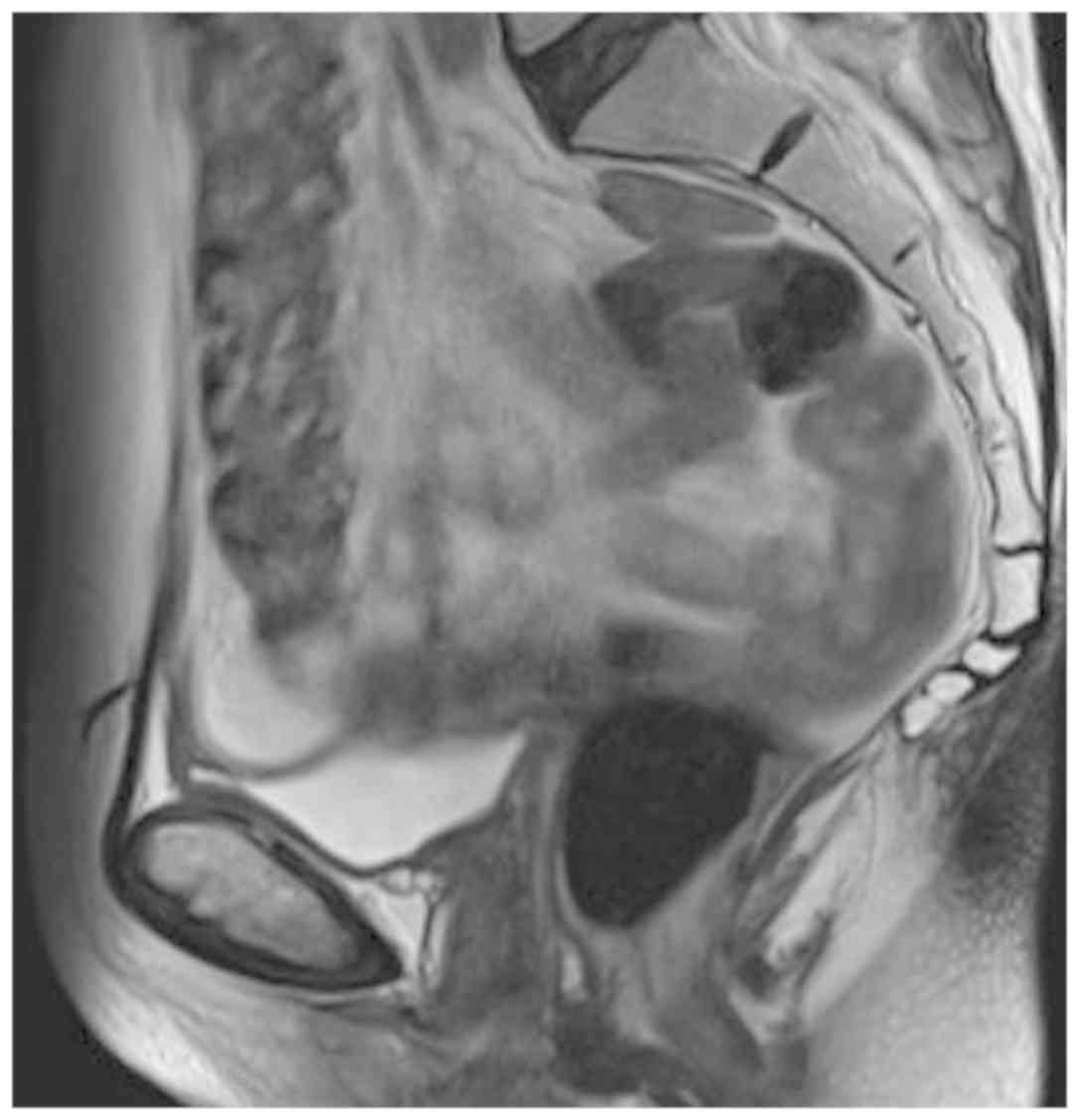
Three years after the hysterectomy, a follow-up vaginal smear revealed ASC-H, and vaginoscopy after the application of acetic acid showed increased vascularity; therefore, biopsy was performed. On microscopic examination, atypia was observed in all layers of the epithelium with no interstitial infiltration, leading to a pathological diagnosis of VAIN 3. No lesion was detected on contrast magnetic resonance imaging (Fig. 2).

Figure 2

Sagittal T2-weighted MRI imaging of the pelvis. No lesion was identified.

Partial vaginectomy with a loop electrosurgical excision procedure (LEEP) was performed under spinal anesthesia. However, it was difficult to perform the appropriate peeling operation on the right and left sides of the stump, and a lesion at the 3-o'clock position remained. The lesion was additionally peeled. The resected specimen was 5.4x3.8 cm in size. Microscopic examination demonstrated a VAIN 3 lesion measuring 3.5x2.5 cm within the specimen. Neoplastic cells were confined to the epithelium, but the surgical margin was positive. There were also neoplastic cells in the additionally resected specimen. Neither postoperative radiation therapy nor chemotherapy was planned, opting instead for careful follow-up.

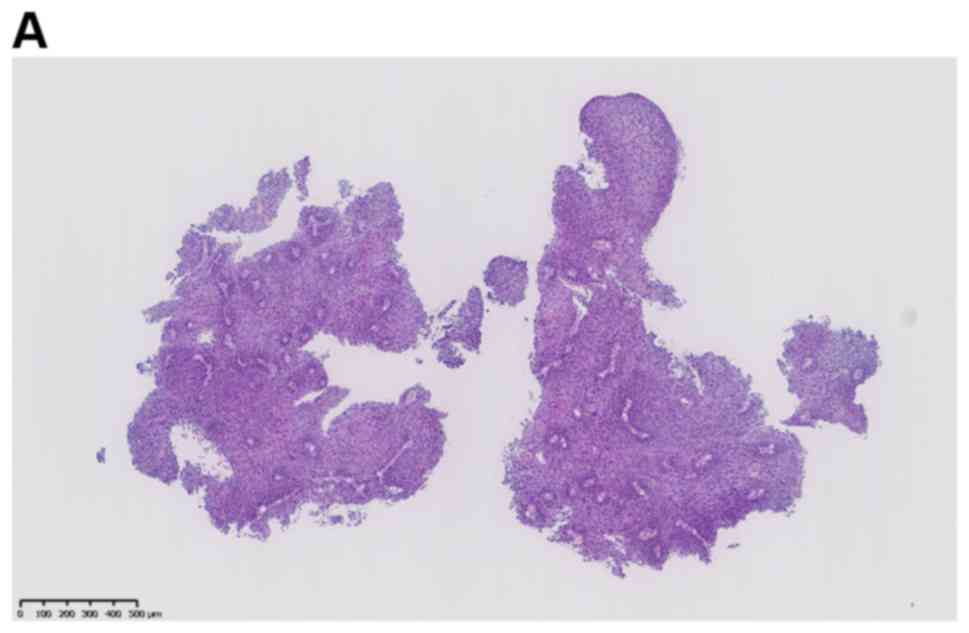
Four months after the vaginectomy, a vaginal smear revealed HSIL. Vaginal biopsy was performed 1 month later on the lesion at the 8-o'clock position during colposcopy, resulting in a pathological diagnosis of VAIN 3 (Fig. 3). Eight months after the vaginectomy, CO2 laser vaporization was performed under spinal anesthesia. A small mass at the 7 o'clock position of the vaginal wall was resected using a scalpel. Microscopic examination demonstrated atypia in almost all layers of the epithelium, and the pathological diagnosis was VAIN 3 with a positive margin.

Figure 3

Vaginal biopsy revealing atypical cells of vaginal intraepithelial neoplasia 3. (A) Hematoxylin and eosin staining in a low magnification image. Scale bar, 500 µm. (B) Hematoxylin and eosin staining in a high magnification image. Scale bar, 100 µm.

Three months after CO2 laser excision, the vaginal smear revealed HSIL with suspected recurrence. Imiquimod treatment was then initiated by placing a sachet of 5% imiquimod cream (0.25 g) in the entire vagina three times weekly. The institutional review board approved the use of imiquimod for VAIN (SGHIRB#2019049). As imiquimod is not a standard treatment for VAIN, follow-up vaginal smear was conducted monthly after the start of imiquimod treatment to evaluate the efficacy of the treatment. At 53 days and 74 days after the treatment, the vaginal smear revealed ASC-H and was negative for intraepithelial lesion or malignancy (NILM). A vaginal smear 1 month later further confirmed the NILM status (Table I). The treatment was continued for 14 weeks with no apparent complication. As of 3 years after the treatment, there has been no recurrence.

Table I

Results of pathological examination.

Table I

Results of pathological examination.

Months post-operation Intervention/specimenResult
0TAH+BSOCIN 3, cut end negative
2CytologyNILM
4CytologyASC-US
6CytologyNILM
8CytologyASC-H
10Vaginal biopsyAtypical squamous epitheliaa
12,15,18CytologyASC-H
22CytologyNILM
25,29,33CytologyASC-H
36BiopsyVAIN 3
39Partial vaginectomy by LEEPVAIN 3, cut end positive
40CytologyNILM
41CytologySCC
43CytologyHSIL
45Vaginal biopsyVAIN 3
47CO2 laser vaporization, resectionVAIN 3, cut end positive
48CytologyNILM
48CytologyASC-H
50CytologyHSIL
51Administration of 5% imiquimod cream
51CytologyASC-H
52-90CytologyNILM

[i] aNo abnormal mitosis was observed. ASC-H, atypical squamous cells, cannot exclude HSIL; ASC-US, atypical squamous cells of undetermined significance; CIN, cervical intraepithelial neoplasia; HSIL, high-grade squamous intraepithelial lesion; LEEP, loop electrosurgical excision procedure; NILM, negative for intraepithelial lesion or malignancy; SCC, squamous cell carcinoma; TAH + BSO, total abdominal hysterectomy + bilateral salpingo-oophorectomy.

Discussion

Surgical treatment modalities for high-grade VAIN include partial vaginectomy, wide local excision, a LEEP, and CO2 laser vaporization. High-grade VAIN is typically treated with either excisional or ablative therapy; however, the VAIN lesions often recur, requiring repeated treatments that may cause severe damage to the tissue and vaginal scarring (3). Moreover, surgical treatments require anesthesia and can cause complications such as bleeding, infection, scarring, and injury of neighboring anatomical structures as well as high recurrence rates (4). Therefore, alternative treatments are desired.

Non-surgical treatment modalities include imiquimod, 5-fluorouracil, and vaginal estrogens as well as radiotherapy (4). Imiquimod is a TLR7 agonist, which is used for the treatment of condylomas and other HPV-related neoplasias, including VAIN. Imiquimod triggers the innate immune response via TLR7-Myd88-dependent signaling by interacting with TLR7 that is expressed by myeloid dendritic cells (DCs), plasmacytoid DCs, monocytes, and macrophages. Subsequently, TLR7 activation induces the secretion of various pro-inflammatory cytokines, such as interferon-α and interferon-γ, to in turn induce a Th1 response leading to the apoptosis of cancer cells (4,7). Imiquimod has been shown to promote histological clearance of basal cell carcinoma (BCC) in clinical studies and is approved for the treatment of BCC by Food and Drug Administration (8,9). Moreover, imiquimod has been used in combination with chemotherapy to treat breast cancer patients in a phase II clinical trial (10). Several studies reported promising results with the use of imiquimod for the treatment of patients with vulvar intra-epithelial neoplasia (VIN), CIN, and VAIN (5,6,11-14). A meta-analysis including 94 patients with VAIN treated with 5% imiquimod showed a complete response, HPV clearance, and non-recurrence in 76.5, 52.5, and 94.3% of patients, respectively (4).

Imiquimod has emerged as a potentially useful treatment for CIN, VIN, and VAIN; however, further clinical data are required to evaluate the safety profile. Some physicians reported systemic and local adverse effects after imiquimod treatment for CIN, including headache, fever, fatigue, myalgia, vaginal discharge, vaginal bleeding, vulvar pruritus, vulvar pain, and vaginal edema (15). Wouters et al (16) reported serious adverse events in three patients who received imiquimod intravaginally for CIN: Two of the patients were hospitalized with headache, nausea, diarrhea, malaise, leukopenia, and hyponatremia, and the other patient exhibited systemic symptoms and erosion of the cornea. Although none of these adverse effects was directly proven to be caused by imiquimod, all of the symptoms disappeared after discontinuation of imiquimod. Such systemic adverse effects could be caused by the imiquimod-induced peripheral Th1 immune response (15). Tainio et al (3) reported that all 10 patients with VAIN, who received imiquimod in a randomized control study developed side effects such as flu-like symptoms, local irritation in the vagina and vulva, and lower abdominal pain. In one patient, the dosage was reduced by half, but no patient required discontinuation of the treatment. Moreover, one study concluded that non-steroidal anti-inflammatory drugs can safely be used to reduce side effects in usual type VIN (17). The same could apply to VAIN. Overall, the side effects of imiquimod are considered to be well-tolerated, and patients can be treated through outpatient management. However, clinicians prescribing this treatment should monitor patients closely for potential severe side effects.

In the present case, a patient with recurrence of VAIN after surgical treatments received imiquimod with no apparent adverse events, and the lesion ultimately disappeared. This case therefore provides further support that topical imiquimod with careful follow-up is effective and well-tolerated for the treatment of recurrent VAIN. Nevertheless, more studies should be accumulated on the clinical experience with imiquimod in patients with VAIN. In conclusion, imiquimod can be considered as one of the options for treatment of refractory VAIN.

Acknowledgements

Not applicable.

Funding

No funding was received.

Availability of data and materials

The datasets used and/or analyzed during the current study are available from the author on reasonable request.

Authors' contributions

NS, KK and YI interpreted the case and reviewed the patient's clinical information, and drafted the manuscript and revised it critically for important intellectual content. YS and KI were responsible for the patient's treatment and management decisions. JA, KY, RG, AK, MY and YY revised the manuscript critically for important intellectual content. MS and KA were responsible for the pathological diagnosis. All authors read and approved the final manuscript.

Ethics approval and consent to participate

The Institutional Review Board of Shizuoka General Hospital approved the use of imiquimod for VAIN (SGHIRB#2019049).

Patient consent for publication

Informed consent for publication was obtained from the patient.

Competing interests

The authors declare that they have no competing interests.

References

1 

De Vuyst H, Clifford GM, Nascimento MC, Madeleine MM and Franceschi S: Prevalence and type distribution of human papillomavirus in carcinoma and intraepithelial neoplasia of the vulva, vagina and anus: A meta-analysis. Int J Cancer. 124:1626–1636. 2009.PubMed/NCBI View Article : Google Scholar

2 

Aho M, Vesterinen E, Meyer B, Purola E and Paavonen J: Natural history of vaginal intraepithelial neoplasia. Cancer. 68:195–197. 1991.PubMed/NCBI View Article : Google Scholar

3 

Tainio K, Jakobsson M, Louvanto K, Kalliala I, Paavonen J, Nieminen P and Riska A: Randomised trial on treatment of vaginal intraepithelial neoplasia-Imiquimod, laser vaporisation and expectant management. Int J Cancer. 139:2353–2358. 2016.PubMed/NCBI View Article : Google Scholar

4 

Tranoulis A, Laios A, Mitsopoulos V, Lutchman-Singh K and Thomakos N: Efficacy of 5% imiquimod for the treatment of Vaginal intraepithelial neoplasia-A systematic review of the literature and a meta-analysis. Eur J Obstet Gynecol Reprod Biol. 218:129–136. 2017.PubMed/NCBI View Article : Google Scholar

5 

De Witte CJ, Van De Sande AJM, Van Beekhuizen HJ, Koeneman MM, Kruse AJ and Gerestein CG: Imiquimod in cervical, vaginal and vulvar intraepithelial neoplasia: A review. Gynecol Oncol. 139:377–384. 2015.PubMed/NCBI View Article : Google Scholar

6 

Policiano ACF, Lopes JPM, Barata SAM, Colaço AM and Calhaz-Jorge C: Topical therapy with imiquimod for vaginal intraepithelial neoplasia: A Case Series. J Low Genit Tract Dis. 20:e34–e36. 2016.PubMed/NCBI View Article : Google Scholar

7 

Chi H, Li C, Zhao FS, Zhang L, Ng TB, Jin G and Sha O: Anti-tumor activity of toll-like receptor 7 agonists. Front Pharmacol. 8(304)2017.PubMed/NCBI View Article : Google Scholar

8 

Geisse J, Caro I, Lindholm J, Golitz L, Stampone P and Owens M: Imiquimod 5% cream for the treatment of superficial basal cell carcinoma: Results from two phase III, randomized, vehicle-controlled studies. J Am Acad Dermatol. 50:722–733. 2004.PubMed/NCBI View Article : Google Scholar

9 

Hanna E, Abadi R and Abbas O: Imiquimod in dermatology: An overview. Int J Dermatol. 55:831–44. 2016.PubMed/NCBI View Article : Google Scholar

10 

Salazar LG, Lu H, Reichow JL, Childs JS, Coveler AL, Higgins DM, Waisman J, Allison KH, Dang Y and Disis ML: Topical imiquimod plus nab-paclitaxel for breast cancer cutaneous metastases. JAMA Oncol. 3(969)2017.PubMed/NCBI View Article : Google Scholar

11 

Terlou A, van Seters M, Ewing PC, Aaronson NK, Gundy CM, Heijmans-Antonissen C, Quint WGV, Blok LJ, van Beurden M and Helmerhorst TJM: Treatment of vulvar intraepithelial neoplasia with topical imiquimod: Seven years median follow-up of a randomized clinical trial. Gynecol Oncol. 121:157–162. 2011.PubMed/NCBI View Article : Google Scholar

12 

Buck HW and Guth KJ: Treatment of vaginal intraepithelial neoplasia (primarily low grade) with imiquimod 5% cream. J Low Genit Tract Dis. 7:290–293. 2003.PubMed/NCBI View Article : Google Scholar

13 

Diaz-Arrastia C, Arany I, Robazetti SC, Dinh TV, Gatalica Z, Tyring SK and Hannigan E: Clinical and molecular responses in high-grade intraepithelial neoplasia treated with topical imiquimod 5%. Clin Cancer Res. 7:3031–3033. 2001.PubMed/NCBI

14 

Haidopoulos D, Diakomanolis E, Rodolakis A, Voulgaris Z, Vlachos G and Intsaklis A: Can local application of imiquimod cream be an alternative mode of therapy for patients with high-grade intraepithelial lesions of the vagina? Int J Gynecol Cancer. 15:898–902. 2005.PubMed/NCBI View Article : Google Scholar

15 

Koeneman MM, van de Sande AJ, van Beekhuizen HJ, Gerestein KG, van de Laar R, Kruitwagen RF and Kruse AJ: Physicians' awareness, attitudes, and experiences regarding imiquimod treatment of vaginal and cervical intraepithelial neoplasia. J Low Genit Tract Dis. 20:75–79. 2016.PubMed/NCBI View Article : Google Scholar

16 

Wouters T, Hendriks N, Koeneman M, Kruse AJ, van de Sande A, van Beekhuizen HJ, Gerestein KG, Bekkers RLM and Piek JMJ: Systemic adverse events in imiquimod use for cervical intraepithelial neoplasia - A case series. Case Reports Women's Heal. 21(e00105)2019.PubMed/NCBI View Article : Google Scholar

17 

Terlou A, Kleinjan A, Beckmann I, Heijmans-Antonissen C, van Seters M, Santegoets LAM, van Beurden M, Helmerhorst TJM and Blok LJ: Nonsteroidal anti-inflammatory drugs do not interfere with imiquimod treatment for usual type vulvar intraepithelial neoplasia. Int J Cancer. 128:2463–2469. 2011.PubMed/NCBI View Article : Google Scholar

Related Articles

  • Abstract
  • View
  • Download
  • Twitter
Copy and paste a formatted citation
Spandidos Publications style
Sasagasako N, Kosaka K, Sagae Y, Itoh K, Aratake J, Yamada K, Inayama Y, Gou R, Kawamura A, Yamanishi M, Yamanishi M, et al: Recurrent vaginal intraepithelial neoplasia successfully treated with topical imiquimod: A case report. Mol Clin Oncol 13: 19, 2020.
APA
Sasagasako, N., Kosaka, K., Sagae, Y., Itoh, K., Aratake, J., Yamada, K. ... Arai, K. (2020). Recurrent vaginal intraepithelial neoplasia successfully treated with topical imiquimod: A case report. Molecular and Clinical Oncology, 13, 19. https://doi.org/10.3892/mco.2020.2089
MLA
Sasagasako, N., Kosaka, K., Sagae, Y., Itoh, K., Aratake, J., Yamada, K., Inayama, Y., Gou, R., Kawamura, A., Yamanishi, M., Yamanishi, Y., Suzuki, M., Arai, K."Recurrent vaginal intraepithelial neoplasia successfully treated with topical imiquimod: A case report". Molecular and Clinical Oncology 13.3 (2020): 19.
Chicago
Sasagasako, N., Kosaka, K., Sagae, Y., Itoh, K., Aratake, J., Yamada, K., Inayama, Y., Gou, R., Kawamura, A., Yamanishi, M., Yamanishi, Y., Suzuki, M., Arai, K."Recurrent vaginal intraepithelial neoplasia successfully treated with topical imiquimod: A case report". Molecular and Clinical Oncology 13, no. 3 (2020): 19. https://doi.org/10.3892/mco.2020.2089
Copy and paste a formatted citation
x
Spandidos Publications style
Sasagasako N, Kosaka K, Sagae Y, Itoh K, Aratake J, Yamada K, Inayama Y, Gou R, Kawamura A, Yamanishi M, Yamanishi M, et al: Recurrent vaginal intraepithelial neoplasia successfully treated with topical imiquimod: A case report. Mol Clin Oncol 13: 19, 2020.
APA
Sasagasako, N., Kosaka, K., Sagae, Y., Itoh, K., Aratake, J., Yamada, K. ... Arai, K. (2020). Recurrent vaginal intraepithelial neoplasia successfully treated with topical imiquimod: A case report. Molecular and Clinical Oncology, 13, 19. https://doi.org/10.3892/mco.2020.2089
MLA
Sasagasako, N., Kosaka, K., Sagae, Y., Itoh, K., Aratake, J., Yamada, K., Inayama, Y., Gou, R., Kawamura, A., Yamanishi, M., Yamanishi, Y., Suzuki, M., Arai, K."Recurrent vaginal intraepithelial neoplasia successfully treated with topical imiquimod: A case report". Molecular and Clinical Oncology 13.3 (2020): 19.
Chicago
Sasagasako, N., Kosaka, K., Sagae, Y., Itoh, K., Aratake, J., Yamada, K., Inayama, Y., Gou, R., Kawamura, A., Yamanishi, M., Yamanishi, Y., Suzuki, M., Arai, K."Recurrent vaginal intraepithelial neoplasia successfully treated with topical imiquimod: A case report". Molecular and Clinical Oncology 13, no. 3 (2020): 19. https://doi.org/10.3892/mco.2020.2089
Follow us
  • Twitter
  • LinkedIn
  • Facebook
About
  • Spandidos Publications
  • Careers
  • Cookie Policy
  • Privacy Policy
How can we help?
  • Help
  • Live Chat
  • Contact
  • Email to our Support Team