Spandidos Publications Logo
  • About
    • About Spandidos
    • Aims and Scopes
    • Abstracting and Indexing
    • Editorial Policies
    • Reprints and Permissions
    • Job Opportunities
    • Terms and Conditions
    • Contact
  • Journals
    • All Journals
    • Oncology Letters
      • Oncology Letters
      • Information for Authors
      • Editorial Policies
      • Editorial Board
      • Aims and Scope
      • Abstracting and Indexing
      • Bibliographic Information
      • Archive
    • International Journal of Oncology
      • International Journal of Oncology
      • Information for Authors
      • Editorial Policies
      • Editorial Board
      • Aims and Scope
      • Abstracting and Indexing
      • Bibliographic Information
      • Archive
    • Molecular and Clinical Oncology
      • Molecular and Clinical Oncology
      • Information for Authors
      • Editorial Policies
      • Editorial Board
      • Aims and Scope
      • Abstracting and Indexing
      • Bibliographic Information
      • Archive
    • Experimental and Therapeutic Medicine
      • Experimental and Therapeutic Medicine
      • Information for Authors
      • Editorial Policies
      • Editorial Board
      • Aims and Scope
      • Abstracting and Indexing
      • Bibliographic Information
      • Archive
    • International Journal of Molecular Medicine
      • International Journal of Molecular Medicine
      • Information for Authors
      • Editorial Policies
      • Editorial Board
      • Aims and Scope
      • Abstracting and Indexing
      • Bibliographic Information
      • Archive
    • Biomedical Reports
      • Biomedical Reports
      • Information for Authors
      • Editorial Policies
      • Editorial Board
      • Aims and Scope
      • Abstracting and Indexing
      • Bibliographic Information
      • Archive
    • Oncology Reports
      • Oncology Reports
      • Information for Authors
      • Editorial Policies
      • Editorial Board
      • Aims and Scope
      • Abstracting and Indexing
      • Bibliographic Information
      • Archive
    • Molecular Medicine Reports
      • Molecular Medicine Reports
      • Information for Authors
      • Editorial Policies
      • Editorial Board
      • Aims and Scope
      • Abstracting and Indexing
      • Bibliographic Information
      • Archive
    • World Academy of Sciences Journal
      • World Academy of Sciences Journal
      • Information for Authors
      • Editorial Policies
      • Editorial Board
      • Aims and Scope
      • Abstracting and Indexing
      • Bibliographic Information
      • Archive
    • International Journal of Functional Nutrition
      • International Journal of Functional Nutrition
      • Information for Authors
      • Editorial Policies
      • Editorial Board
      • Aims and Scope
      • Abstracting and Indexing
      • Bibliographic Information
      • Archive
    • International Journal of Epigenetics
      • International Journal of Epigenetics
      • Information for Authors
      • Editorial Policies
      • Editorial Board
      • Aims and Scope
      • Abstracting and Indexing
      • Bibliographic Information
      • Archive
    • Medicine International
      • Medicine International
      • Information for Authors
      • Editorial Policies
      • Editorial Board
      • Aims and Scope
      • Abstracting and Indexing
      • Bibliographic Information
      • Archive
  • Articles
  • Information
    • Information for Authors
    • Information for Reviewers
    • Information for Librarians
    • Information for Advertisers
    • Conferences
  • Language Editing
Spandidos Publications Logo
  • About
    • About Spandidos
    • Aims and Scopes
    • Abstracting and Indexing
    • Editorial Policies
    • Reprints and Permissions
    • Job Opportunities
    • Terms and Conditions
    • Contact
  • Journals
    • All Journals
    • Biomedical Reports
      • Information for Authors
      • Editorial Policies
      • Editorial Board
      • Aims and Scope
      • Abstracting and Indexing
      • Bibliographic Information
      • Archive
    • Experimental and Therapeutic Medicine
      • Information for Authors
      • Editorial Policies
      • Editorial Board
      • Aims and Scope
      • Abstracting and Indexing
      • Bibliographic Information
      • Archive
    • International Journal of Epigenetics
      • Information for Authors
      • Editorial Policies
      • Editorial Board
      • Aims and Scope
      • Abstracting and Indexing
      • Bibliographic Information
      • Archive
    • International Journal of Functional Nutrition
      • Information for Authors
      • Editorial Policies
      • Editorial Board
      • Aims and Scope
      • Abstracting and Indexing
      • Bibliographic Information
      • Archive
    • International Journal of Molecular Medicine
      • Information for Authors
      • Editorial Policies
      • Editorial Board
      • Aims and Scope
      • Abstracting and Indexing
      • Bibliographic Information
      • Archive
    • International Journal of Oncology
      • Information for Authors
      • Editorial Policies
      • Editorial Board
      • Aims and Scope
      • Abstracting and Indexing
      • Bibliographic Information
      • Archive
    • Medicine International
      • Information for Authors
      • Editorial Policies
      • Editorial Board
      • Aims and Scope
      • Abstracting and Indexing
      • Bibliographic Information
      • Archive
    • Molecular and Clinical Oncology
      • Information for Authors
      • Editorial Policies
      • Editorial Board
      • Aims and Scope
      • Abstracting and Indexing
      • Bibliographic Information
      • Archive
    • Molecular Medicine Reports
      • Information for Authors
      • Editorial Policies
      • Editorial Board
      • Aims and Scope
      • Abstracting and Indexing
      • Bibliographic Information
      • Archive
    • Oncology Letters
      • Information for Authors
      • Editorial Policies
      • Editorial Board
      • Aims and Scope
      • Abstracting and Indexing
      • Bibliographic Information
      • Archive
    • Oncology Reports
      • Information for Authors
      • Editorial Policies
      • Editorial Board
      • Aims and Scope
      • Abstracting and Indexing
      • Bibliographic Information
      • Archive
    • World Academy of Sciences Journal
      • Information for Authors
      • Editorial Policies
      • Editorial Board
      • Aims and Scope
      • Abstracting and Indexing
      • Bibliographic Information
      • Archive
  • Articles
  • Information
    • For Authors
    • For Reviewers
    • For Librarians
    • For Advertisers
    • Conferences
  • Language Editing
Login Register Submit
  • This site uses cookies
  • You can change your cookie settings at any time by following the instructions in our Cookie Policy. To find out more, you may read our Privacy Policy.

    I agree
Search articles by DOI, keyword, author or affiliation
Search
Advanced Search
presentation
Biomedical Reports
Join Editorial Board Propose a Special Issue
Print ISSN: 2049-9434 Online ISSN: 2049-9442
Journal Cover
November-December 2013 Volume 1 Issue 6

Full Size Image

Sign up for eToc alerts
Recommend to Library

Journals

International Journal of Molecular Medicine

International Journal of Molecular Medicine

International Journal of Molecular Medicine is an international journal devoted to molecular mechanisms of human disease.

International Journal of Oncology

International Journal of Oncology

International Journal of Oncology is an international journal devoted to oncology research and cancer treatment.

Molecular Medicine Reports

Molecular Medicine Reports

Covers molecular medicine topics such as pharmacology, pathology, genetics, neuroscience, infectious diseases, molecular cardiology, and molecular surgery.

Oncology Reports

Oncology Reports

Oncology Reports is an international journal devoted to fundamental and applied research in Oncology.

Experimental and Therapeutic Medicine

Experimental and Therapeutic Medicine

Experimental and Therapeutic Medicine is an international journal devoted to laboratory and clinical medicine.

Oncology Letters

Oncology Letters

Oncology Letters is an international journal devoted to Experimental and Clinical Oncology.

Biomedical Reports

Biomedical Reports

Explores a wide range of biological and medical fields, including pharmacology, genetics, microbiology, neuroscience, and molecular cardiology.

Molecular and Clinical Oncology

Molecular and Clinical Oncology

International journal addressing all aspects of oncology research, from tumorigenesis and oncogenes to chemotherapy and metastasis.

World Academy of Sciences Journal

World Academy of Sciences Journal

Multidisciplinary open-access journal spanning biochemistry, genetics, neuroscience, environmental health, and synthetic biology.

International Journal of Functional Nutrition

International Journal of Functional Nutrition

Open-access journal combining biochemistry, pharmacology, immunology, and genetics to advance health through functional nutrition.

International Journal of Epigenetics

International Journal of Epigenetics

Publishes open-access research on using epigenetics to advance understanding and treatment of human disease.

Medicine International

Medicine International

An International Open Access Journal Devoted to General Medicine.

Journal Cover
November-December 2013 Volume 1 Issue 6

Full Size Image

Sign up for eToc alerts
Recommend to Library

  • Article
  • Citations
    • Cite This Article
    • Download Citation
    • Create Citation Alert
    • Remove Citation Alert
    • Cited By
  • Similar Articles
    • Related Articles (in Spandidos Publications)
    • Similar Articles (Google Scholar)
    • Similar Articles (PubMed)
  • Download PDF
  • Download XML
  • View XML
Article

Aspirin attenuates angiotensin II‑induced inflammation in bone marrow mesenchymal stem cells via the inhibition of ERK1/2 and NF‑κB activation

  • Authors:
    • Fenxi Zhang
    • Ming Lu
    • Huaibin Wang
    • Tongming Ren
  • View Affiliations / Copyright

    Affiliations: Department of Anatomy, Sanquan College, Xinxiang Medical University, Xinxiang, Henan 453003, P.R. China
  • Pages: 930-934
    |
    Published online on: August 23, 2013
       https://doi.org/10.3892/br.2013.160
  • Expand metrics +
Metrics: Total Views: 0 (Spandidos Publications: | PMC Statistics: )
Metrics: Total PDF Downloads: 0 (Spandidos Publications: | PMC Statistics: )
Cited By (CrossRef): 0 citations Loading Articles...

This article is mentioned in:


Abstract

Angiotensin II (Ang II) is a peptide hormone that plays a critical role in numerous physiological and pathophysiological processes. It is also commonly used as an inducer for the directional differentiation of bone marrow mesenchymal stem cells (bmMSCs). Previous studies demonstrated that Ang II induces inflammatory responses in endothelial cells, smooth muscle cells and fibroblasts. Aspirin is generally used as analgesic, antipyretic and occasionally anti‑inflammatory medication. Whether aspirin suppresses inflammatory responses in bmMSCs has not been elucidated. In this study, we investigated the effect of aspirin on Ang II‑induced inflammation in bmMSCs. Our results demonstrated that Ang II (10 nM‑10 µM) increased the secretion of tumor necrosis factor (TNF)‑α and interleukin (IL)‑6 from bmMSCs in a dose‑dependent manner. This result was further confirmed by a reverse transcription‑polymerase chain reaction (RT‑PCR) assay, which demonstrated a dose‑dependent increase in the mRNA expression of TNF‑α, IL‑6, IL‑1β and monocyte chemotactic protein‑1 (MCP‑1) in bmMSCs following exposure to Ang II. Furthermore, it was also observed that Ang II increased the expression of phospho‑extracellular signal‑regulated kinase 1/2 (ERK1/2) and phospho‑nuclear factor κ‑light‑chain‑enhancer of activated B cells (NF‑κB)‑p65 in bmMSCs. The application of aspirin (0.1 mM) significantly inhibited the activation of ERK1/2 and NF‑κB, the expression of TNF‑α, IL‑6, IL‑1β and MCP‑1 genes and the secretion of TNF‑α and IL‑6. Our findings indicated that aspirin may attenuate Ang II‑induced inflammation in bmMSCs via the inhibition of ERK1/2 and NF‑κB activation.

Introduction

Bone marrow mesenchymal stem cells (bmMSCs) are a type of multipotent stem cells that are derived from the adult bone marrow and are able to differentiate into a variety of cell types, such as osteoblasts, chondrocytes, adipocytes and cardiomyocytes (1,2). Angiotensin II (Ang II) is a peptide hormone that plays a critical role in a series of physiological and pathophysiological processes, including cell proliferation, differentiation, apoptosis and inflammation (3). Recently, Ang II was used to induce the differentiation of bmMSCs to other functional cell lineages, such as cardiomyocytes, adipocytes and smooth muscle-like cells (4–6). It was demonstrated that Ang II induces inflammatory responses in vitro in several types of cells, including endothelial cells, smooth muscle cells, fibroblasts and kidney tubule epithelial cells (7–9).

Aspirin is a drug commonly used as analgesic, antipyretic and occasionally anti-inflammatory medication (8). Recent studies demonstrated that aspirin may suppress inflammatory responses in cultured endothelial cells, fibroblasts and other cell lines, via the inhibition of reactive oxygen species (ROS) generation (8,10,11). Ang II, as a strong inducer of ROS generation, may induce inflammatory responses in bmMSCs and aspirin may attenuate these inflammatory responses. The purpose of the present study was to investigate the effects of aspirin on Ang II-induced inflammation in bmMSCs and the possible underlying mechanisms.

Materials and methods

Materials and reagents

Aspirin, Ang II and 2X PCR Reaction mix were purchased from Sigma-Aldrich (St. Louis, MO, USA). The mouse tumor necrosis factor α (TNF-α) Quantikine ELISA kit and the mouse interleukin (IL)-6 Quantikine ELISA kit were purchased from R&D Systems Inc. (Minneapolis, MN, USA). DNase I, RNeasy Mini kit and SuperScript II First-Strand cDNA Synthesis kit were purchased from Invitrogen Life Technologies (Carlsbad, CA, USA). Rabbit anti-mouse phospho-extracellular signal-regulated protein 1/2 (ERK1/2), ERK1/2, phospho-nuclear factor κ-light-chain-enhancer of activated B cells (NF-κB)-p65 and NF-κB-p65 antibodies were obtained from Cell Signaling Technology, Inc. (Danvers, MA, USA). β-actin antibody and horseradish peroxidase (HRP)-conjugated goat anti-rabbit secondary antibody were purchased from Abcam (Cambridge, MA, USA). ECL Western Blotting Substrate was purchased from Thermo Scientific (Rockford, IL, USA). The polyvinylidene fluoride (PVDF) membranes were obtained from GE Healthcare (Pittsburgh, PA, USA).

Cell culture and study protocol

BmMSCs were obtained as previously described (12,13). In brief, bone marrow was harvested from the mouse tibia and femur, washed and cultured in Dulbecco’s modified Eagle’s medium supplemented with 15% fetal bovine serum for 3 h. Subsequently, the non-adherent cells were removed and the medium was replaced. A purified population of bmMSCs was obtained after 3 weeks of culture. The cells were plated in 6- and 12-well plates and treated with 0, 10 nM, 100 nM, 1 μM and 10 μM Ang II for 12 h. In other experiments, the cells were pretreated with 0.1 mM aspirin for 30 min and then exposed to 1 μM Ang II for an additional 12 h.

Enzyme-linked immunosorbent assay (ELISA)

Following treatment with Ang II and aspirin, the supernatants of the growth medium were collected by centrifugation and frozen at −80°C until use. The levels of TNF-α and IL-6 were measured using the mouse TNF-α Quantikine ELISA kit and the mouse IL-6 Quantikine ELISA kit, according to the manufacturer’s instructions. Absorbance at 450 nm was read by a microplate reader.

Western blot assay

Proteins were extracted from the treated bmMSCs and separated by 12% sodium dodecyl sulphate-polyacrylamide gel electrophoresis. Following electrophoresis, the proteins were transferred to the PVDF membranes. The membranes were blocked with 5% bovine serum albumin in Tris-buffered saline with Tween-20 (TBS-T) and then incubated with phospho-ERK1/2, ERK1/2, phospho-NF-κB-p65, NF-κB-p65 and β-actin antibodies at 4°C overnight. Subsequently, the blots were washed with TBS-T and incubated with HRP-conjugated secondary antibody for 1 h at room temperature. The immunoreactive bands were visualized by enhanced chemiluminescence.

Reverse transcription-polymerase chain reaction (RT-PCR) assay

Total RNA was extracted from the treated bmMSCs with a RNeasy Mini kit and complementary DNA (cDNA) was synthesized with a SuperScript II First-Strand cDNA Synthesis kit. To eliminate contamination of the genomic DNA, RNA was pretreated with DNase I prior to the synthesis of cDNA. RT-PCR was performed using 2X PCR reaction solution with 100 ng cDNA and 0.3 μM primers. The primer sequences and reaction cycles are listed in Table I.

Table I

Primers for reverse transcription-polymerase chain reaction.

Table I

Primers for reverse transcription-polymerase chain reaction.

PrimerSequenceProduct size (bp)Reaction cycles
TNF-αSense: 5′-CCGATGGGTTGTACCTTGTC-3′
Antisense: 5′-GGGCTGGGTAGAGAATGGAT-3′
35232
MCP-1Sense 5′-GGAGCATCCACGTGTTGGC-‘3
Antisense: 5′-GTAGGAGTGACCAGTGTGACAGT-3′
39133
IL-6Sense: 5′-GATGCTACCAAACTGGATATAATC-3′
Antisense: 5′-GGTCCTTAGCCACTCCTTCTGTG-3′
26937
IL-1βSense: 5′-GAAATGCCACCTTTTGACAGTG-3′
Antisense: 5′-GAAGGTCCACGGGAAAGACAC-3′
22538
β-actinSense: 5′-TTCTTTGCAGCTCCTTCGTTGCCG-3′
Antisense: 5′-TGGATGGCTACGTACATGGCTGGG-3′
45832

[i] TNF-α, tumor necrosis factor α; MCP-1, monocyte chemotactic protein-1; IL, interleukin.

Statistical analysis

Statistical analysis was performed with SPSS software, version 11.5 (SPSS Inc., Chicago, IL, USA). Data are presented as means ± standard deviation (SD) from 4 independent experiments. Univariate comparisons of the means were evaluated using the Student’s t-test and/or one-way analysis of variance with Tukey’s post hoc adjustment for multiple comparisons when appropriate. P<0.05 was considered to indicate a statistically significant difference.

Results

Ang II induces inflammation in bmMSCs

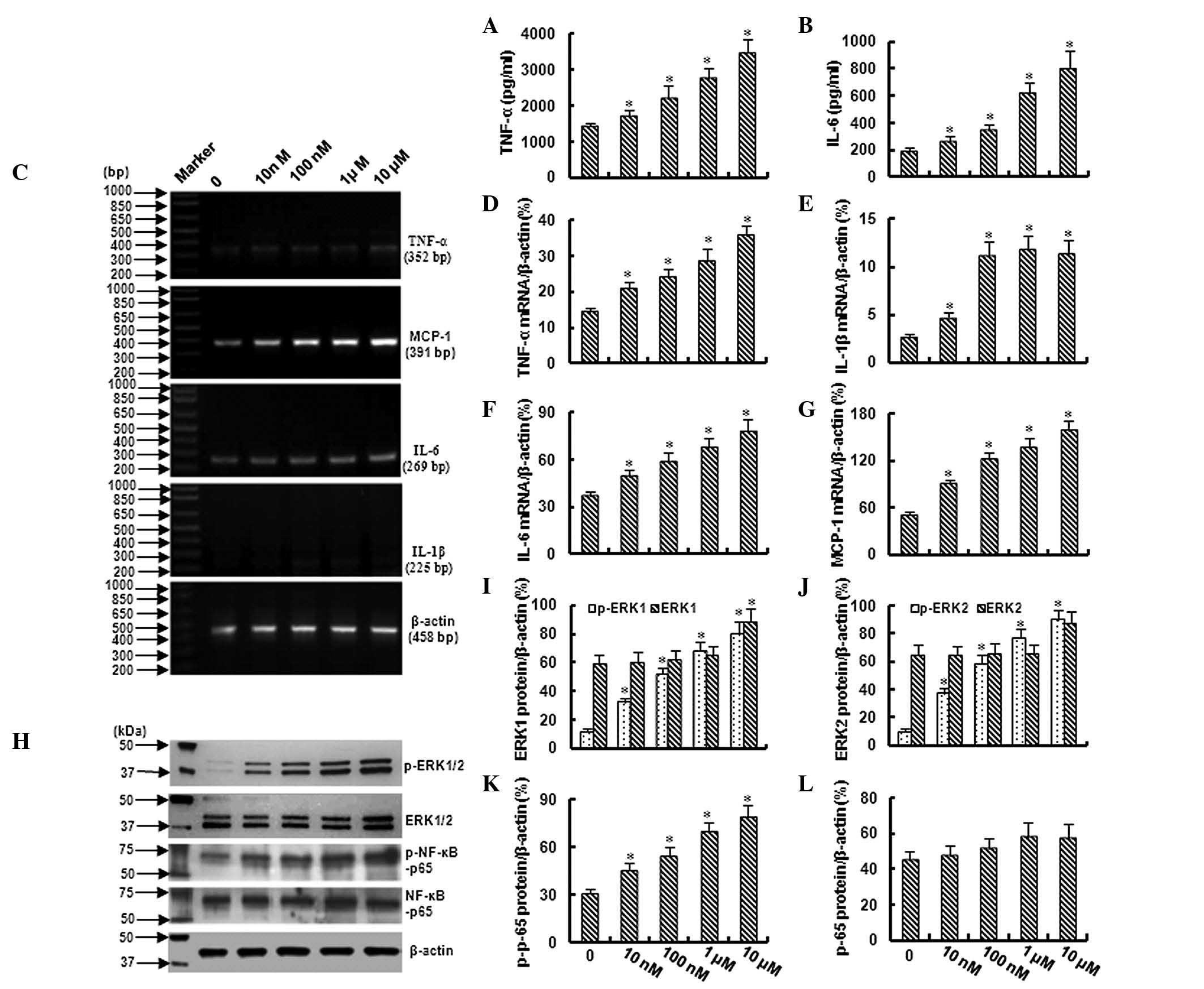
In this study, the levels of TNF-α and IL-6 were evaluated by ELISA. As shown in Fig. 1A and B, TNF-α and IL-6 were increased in a dose-dependent manner in the growth medium with the cultured bmMSCs as the cells were exposed to 10 nM-10 μM Ang II. These data were further confirmed by an RT-PCR assay, which demonstrated a dose-dependent increase in TNF-α and IL-6 mRNA in the bmMSCs following exposure to 10 nM-10 μM Ang II (Fig. 1C,D and F). In addition, a significant increase in IL-1β and monocyte chemotactic protein-1 (MCP-1) mRNA was also observed in the bmMSCs following exposure to different concentrations of Ang II (Fig. 1C,E and G).

Figure 1

Angiotensin II (Ang II) induces inflammation in bone marrow mesenchymal stem cells (bmMSCs). (A,B) The ELISA demonstrated the levels of tumor necrosis factor α (TNF-α) and interleukin (IL)-6 in the medium with the cultured bmMSCs. (C–G) The reverse transcription-polymerase chain reaction assay demonstrated the expression of TNF-α, IL-6, IL-1β and monocyte chemotactic protein-1 (MCP-1) in bmMSCs exposed to 10 nM-10 μM Ang II for 12 h. (H–L) Western blotting demonstrated the expression of extracellular signal-regulated protein-1/-2 (ERK1/2), nuclear factor κ-light-chain-enhancer of activated B cells (NF-κB)-p65, phospho-ERK1/2 (p-ERK1/2) and phospho-NF-κB-p65 (p-NF-κB-p65) in bmMSCs following exposure to 10 nM-10 μM Ang II for 12 h. The bar graphs represent means ± SD (4 independent experiments/group). *P<0.05 vs. control.

Ang II activates ERK1/2 and NF-κB signals in bmMSCs

Western blotting demonstrated that treatment with Ang II (10 nM-10 μM) increased the expression of phospho-ERK1/2 and phospho-NF-κB-p65 in bmMSCs in a dose-dependent manner; however, Ang II did not significantly affect the total expression of ERK1/2 and NF-κB-p65 (Fig. 1H–L). These data demonstrated that ERK1/2 and NF-κB are activated in bmMSCs following exposure to different concentrations of Ang II.

Aspirin inhibits the activation of ERK1/2 and NF-κB

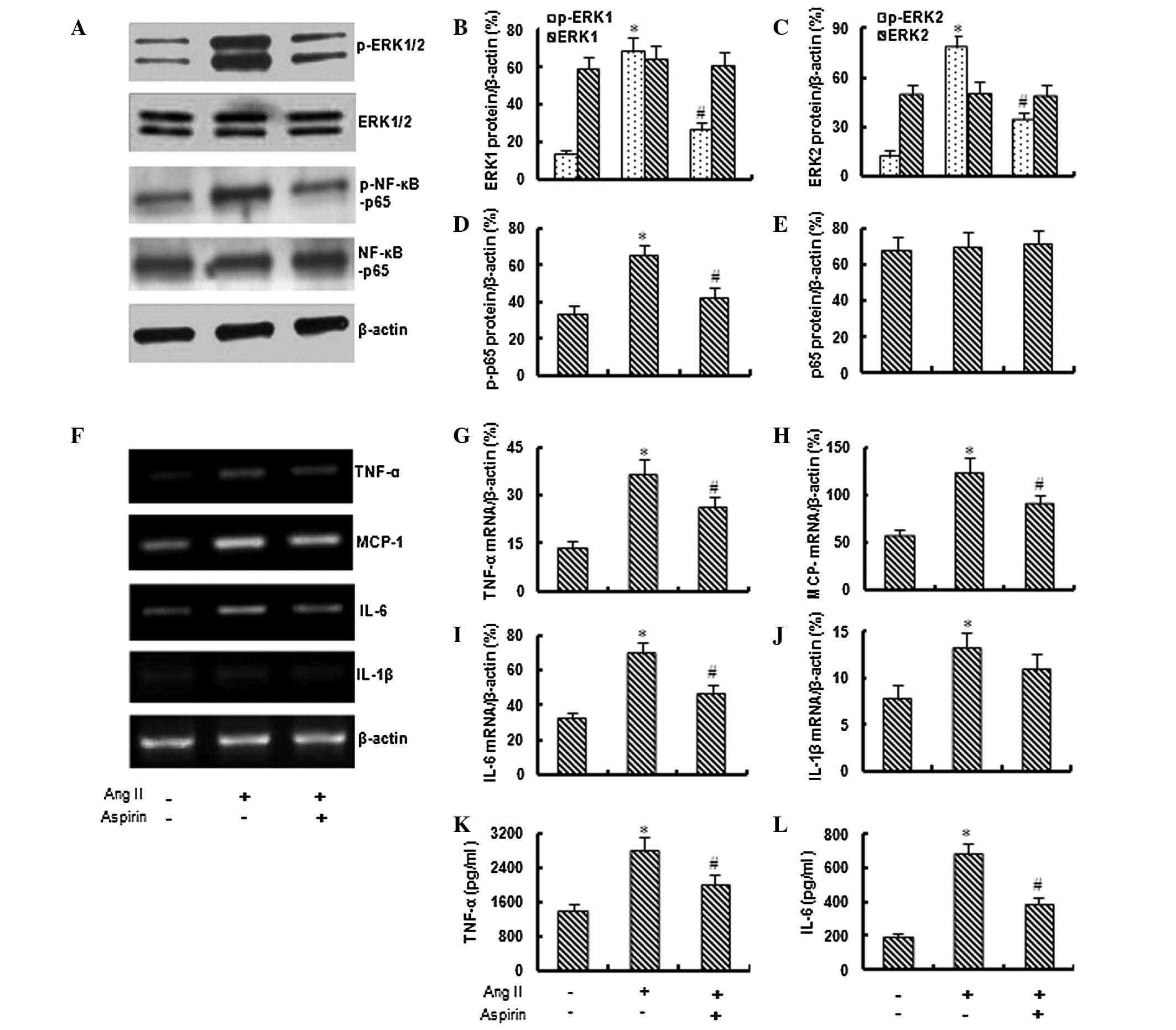
Based on preliminary data, 1 μM Ang II was used in the following experiments to investigate the effect of aspirin on Ang II-induced inflammation. As shown in Fig. 2A–E, the application of aspirin (0.1 mM) significantly inhibited the Ang II-induced expression of phospho-ERK1/2 and phospho-NF-κB-p65, although it did not significantly affect the total expression of ERK1/2 and NF-κB-p65.

Figure 2

Aspirin inhibits angiotensin II (Ang II)-induced inflammation in bone marrow mesenchymal stem cells (bmMSCs). (A–E) Western blotting demonstrated that aspirin (0.1 mM) inhibits the Ang II (1 μM)-induced expression of phospho-extracellular signal-regulated protein-1/-2 (p-ERK1/2) and phospho-nuclear factor κ-light-chain-enhancer of activated B cells (p-NF-κB) in bmMSCs. (F–J) The reverse transcription-polymerase chain reaction assay demonstrated that aspirin inhibits the Ang II-induced expression of tumor necrosis factor α (TNF-α), interleukin (IL)-6, IL-1β and monocyte chemotactic protein-1 (MCP-1) in bmMSCs. (K,L) The ELISA demonstrated that aspirin inhibits the Ang II-induced secretion of TNF-α and IL-6 from bmMSCs. The bar graphs represent means ± SD (4 independent experiments/group). *P<0.05 vs. control and #P<0.05 vs. Ang II.

Aspirin suppresses Ang II-induced inflammation

The RT-PCR assay demonstrated that the application of aspirin significantly inhibited the Ang II-induced expression of TNF-α, MCP-1, IL-6 and IL-1β genes (Fig. 2F–J). In addition, the ELISA revealed that aspirin (0.1 mM) significantly inhibited the Ang II-induced secretion of TNF-α and IL-6 from bmMSCs (Fig. 2K and L).

Discussion

The present study demonstrated that Ang II induces inflammatory responses and the activation of ERK1/2 and NF-κB in bmMSCs and that the application of aspirin inhibits the Ang II-induced activation of ERK1/2 and NF-κB and inflammatory responses, indicating that aspirin may inhibit Ang II-induced inflammation in bmMSCs via the inhibition of ERK1/2 and NF-κB activation.

BmMSCs are the most promising source of stem cells for cell transplantation therapy and have been widely used in tissue regenerative medicine. Generally, bmMSCs must be induced in vitro by chemical or biological reagents for directional differentiation prior to transplantation. Ang II is one of the most commonly used inducers of MSC differentiation. It was demonstrated that Ang II is able to induce the differentiation of bmMSCs to cardiomyocytes, adipocytes and smooth muscle cells (4–6). The present study demonstrated that treatment with Ang II may also induce inflammatory responses in bmMSCs.

It is known that the inflammatory responses in bmMSCs limit their clinical use. Treatment with anti-inflammatory and anti-immune rejection drugs may promote the survival of bmMSCs in recipient organs following transplantation (14). Previous studies demonstrated that aspirin inhibits the inflammatory responses in several cell lines, including endothelial cells and fibroblasts, via the inhibition of NADPH oxidase activity and ROS generation (8,10). In the present study, we also observed that aspirin inhibited Ang II-induced inflammatory responses in bmMSCs.

ERK1/2 are members of the mitogen-activated protein kinase superfamily that is implicated in the development of acute and chronic inflammatory disorders (15,16). It was reported that aspirin inhibits the activation of ERK1/2 and inflammatory responses in a series of pathophysiological conditions (17,18). In the present study, we observed that aspirin (0.1 mM) significantly inhibited the AngII-induced activation of ERK1/2 in bmMSCs. In addition, we also observed that aspirin markedly inhibited the Ang II-induced activation of NF-κB. NF-κB is another important factor involved in inflammation (19). Previous studies demonstrated that aspirin inhibits the activation of NF-κB pathway in certain chronic inflammatory conditions, protecting organs and tissues from inflammation and damage (20–22). In this study, the inhibitory effects of aspirin on the Ang II-induced inflammation in bmMSCs may be attributed to its role in the regulation of the ERK1/2 and NF-κB activity.

In summary, we demonstrated that Ang II induces inflammatory responses and activation of ERK1/2 and NF-κB in bmMSCs in a dose-dependent manner and that the application of aspirin inhibits the Ang II-induced activation of ERK1/2, NF-κB and inflammatory responses. These findings suggest that aspirin may be effective in attenuating Ang II-induced inflammation in cultured bmMSCs and may serve as an alternative drug to suppress inflammatory responses when the cells are exposed to Ang II for directional differentiation.

References

1 

Rostovskaya M and Anastassiadis K: Differential expression of surface markers in mouse bone marrow mesenchymal stromal cell subpopulations with distinct lineage commitment. PLoS One. 7:e512212012. View Article : Google Scholar

2 

Jackson L, Jones DR, Scotting P, et al: Adult mesenchymal stem cells: differentiation potential and therapeutic applications. J Postgrad Med. 53:121–127. 2007. View Article : Google Scholar : PubMed/NCBI

3 

Mehta PK and Griendling KK: Angiotensin II cell signaling: physiological and pathological effects in the cardiovascular system. Am J Physiol Cell Physiol. 292:C82–C97. 2007. View Article : Google Scholar : PubMed/NCBI

4 

Xing Y, Lv A, Wang L, et al: The combination of angiotensin II and 5-azacytidine promotes cardiomyocyte differentiation of rat bone marrow mesenchymal stem cells. Mol Cell Biochem. 360:279–287. 2012. View Article : Google Scholar : PubMed/NCBI

5 

Matsushita K, Wu Y, Okamoto Y, et al: Local renin angiotensin expression regulates human mesenchymal stem cell differentiation to adipocytes. Hypertension. 48:1095–1102. 2006. View Article : Google Scholar : PubMed/NCBI

6 

Kim YM, Jeon ES, Kim MR, et al: Angiotensin II-induced differentiation of adipose tissue-derived mesenchymal stem cells to smooth muscle-like cells. Int J Biochem Cell Biol. 40:2482–2491. 2008. View Article : Google Scholar : PubMed/NCBI

7 

Zhan Y, Brown C, Maynard E, et al: Ets-1 is a critical regulator of Ang II-mediated vascular inflammation and remodeling. J Clin Invest. 115:2508–2516. 2005. View Article : Google Scholar

8 

Wang X, Lu J, Khaidakov M, et al: Aspirin suppresses cardiac fibroblast proliferation and collagen formation through downregulation of angiotensin type 1 receptor transcription. Toxicol Appl Pharmacol. 259:346–354. 2012. View Article : Google Scholar

9 

Wolak T, Kim H, Ren Y, et al: Osteopontin modulates angiotensin II-induced inflammation, oxidative stress, and fibrosis of the kidney. Kidney Int. 76:32–43. 2009. View Article : Google Scholar : PubMed/NCBI

10 

Chen JW, Zhou SB and Tan ZM: Aspirin and pravastatin reduce lectin-like oxidized low density lipoprotein receptor-1 expression, adhesion molecules and oxidative stress in human coronary artery endothelial cells. Chin Med J (Engl). 123:1553–1556. 2010.

11 

Wu Y, Zhai H, Wang Y, et al: Aspirin-triggered lipoxin A4attenuates lipopolysaccharide-induced intracellular ROS in BV2 microglia cells by inhibiting the function of NADPH oxidase. Neurochem Res. 37:1690–1696. 2012.

12 

Zhang F, Wang C, Jing S, et al: Lectin-like oxidized LDL receptor-1 expresses in mouse bone marrow-derived mesenchymal stem cells and stimulates their proliferation. Exp Cell Res. 319:1054–1059. 2013. View Article : Google Scholar : PubMed/NCBI

13 

Zhang F, Jing S, Ren T, et al: microRNA-10b promotes the migration of mouse bone marrow-derived mesenchymal stem cells and downregulates the expression of E-cadherin. Mol Med Rep. Aug 6–2013.(Epub ahead of print). View Article : Google Scholar

14 

van Velthoven CT, Kavelaars A and Heijnen CJ: Mesenchymal stem cells as a treatment for neonatal ischemic brain damage. Pediatr Res. 71:474–481. 2012.PubMed/NCBI

15 

Pastore S, Mascia F, Mariotti F, et al: ERK1/2 regulates epidermal chemokine expression and skin inflammation. J Immunol. 174:5047–5056. 2005. View Article : Google Scholar : PubMed/NCBI

16 

Lee WK, Chung KW, Kim GH, et al: Gallotannin causes differentiation and inflammation via ERK-1/-2 and p38 kinase pathways in rabbit articular chondrocytes. Mol Med Rep. 7:701–707. 2013.PubMed/NCBI

17 

Vartiainen N, Goldsteins G, Keksa-Goldsteine V, et al: Aspirin inhibits p44/42 mitogen-activated protein kinase and is protective against hypoxia/reoxygenation neuronal damage. Stroke. 34:752–757. 2003. View Article : Google Scholar

18 

Wang YP, Wu Y, Li LY, et al: Aspirin-triggered lipoxin A4 attenuates LPS-induced pro-inflammatory responses by inhibiting activation of NF-κB and MAPKs in BV-2 microglial cells. J Neuroinflammation. 8:952011.PubMed/NCBI

19 

Ke X, Chen J, Zhang X, et al: Qing Hua Chang Yin attenuates lipopolysaccharide-induced inflammatory response in human intestinal cells by inhibiting NF-κB activation. Exp Ther Med. 6:189–193. 2013.PubMed/NCBI

20 

Yamamoto Y and Gaynor RB: Therapeutic potential of inhibition of the NF-kappaB pathway in the treatment of inflammation and cancer. J Clin Invest. 107:135–142. 2001. View Article : Google Scholar : PubMed/NCBI

21 

Muller DN, Heissmeyer V, Dechend R, et al: Aspirin inhibits NF-kappaB and protects from angiotensin II-induced organ damage. FASEB J. 15:1822–1824. 2001.PubMed/NCBI

22 

Akyazi I, Eraslan E, Gulcubuk A, et al: Long-term aspirin pretreatment in the prevention of cerulein-induced acute pancreatitis in rats. World J Gastroenterol. 19:2894–2903. 2013.PubMed/NCBI

Related Articles

  • Abstract
  • View
  • Download
  • Twitter
Copy and paste a formatted citation
Spandidos Publications style
Zhang F, Lu M, Wang H and Ren T: Aspirin attenuates angiotensin II‑induced inflammation in bone marrow mesenchymal stem cells via the inhibition of ERK1/2 and NF‑κB activation. Biomed Rep 1: 930-934, 2013.
APA
Zhang, F., Lu, M., Wang, H., & Ren, T. (2013). Aspirin attenuates angiotensin II‑induced inflammation in bone marrow mesenchymal stem cells via the inhibition of ERK1/2 and NF‑κB activation. Biomedical Reports, 1, 930-934. https://doi.org/10.3892/br.2013.160
MLA
Zhang, F., Lu, M., Wang, H., Ren, T."Aspirin attenuates angiotensin II‑induced inflammation in bone marrow mesenchymal stem cells via the inhibition of ERK1/2 and NF‑κB activation". Biomedical Reports 1.6 (2013): 930-934.
Chicago
Zhang, F., Lu, M., Wang, H., Ren, T."Aspirin attenuates angiotensin II‑induced inflammation in bone marrow mesenchymal stem cells via the inhibition of ERK1/2 and NF‑κB activation". Biomedical Reports 1, no. 6 (2013): 930-934. https://doi.org/10.3892/br.2013.160
Copy and paste a formatted citation
x
Spandidos Publications style
Zhang F, Lu M, Wang H and Ren T: Aspirin attenuates angiotensin II‑induced inflammation in bone marrow mesenchymal stem cells via the inhibition of ERK1/2 and NF‑κB activation. Biomed Rep 1: 930-934, 2013.
APA
Zhang, F., Lu, M., Wang, H., & Ren, T. (2013). Aspirin attenuates angiotensin II‑induced inflammation in bone marrow mesenchymal stem cells via the inhibition of ERK1/2 and NF‑κB activation. Biomedical Reports, 1, 930-934. https://doi.org/10.3892/br.2013.160
MLA
Zhang, F., Lu, M., Wang, H., Ren, T."Aspirin attenuates angiotensin II‑induced inflammation in bone marrow mesenchymal stem cells via the inhibition of ERK1/2 and NF‑κB activation". Biomedical Reports 1.6 (2013): 930-934.
Chicago
Zhang, F., Lu, M., Wang, H., Ren, T."Aspirin attenuates angiotensin II‑induced inflammation in bone marrow mesenchymal stem cells via the inhibition of ERK1/2 and NF‑κB activation". Biomedical Reports 1, no. 6 (2013): 930-934. https://doi.org/10.3892/br.2013.160
Follow us
  • Twitter
  • LinkedIn
  • Facebook
About
  • Spandidos Publications
  • Careers
  • Cookie Policy
  • Privacy Policy
How can we help?
  • Help
  • Live Chat
  • Contact
  • Email to our Support Team