Spandidos Publications Logo
  • About
    • About Spandidos
    • Aims and Scopes
    • Abstracting and Indexing
    • Editorial Policies
    • Reprints and Permissions
    • Job Opportunities
    • Terms and Conditions
    • Contact
  • Journals
    • All Journals
    • Oncology Letters
      • Oncology Letters
      • Information for Authors
      • Editorial Policies
      • Editorial Board
      • Aims and Scope
      • Abstracting and Indexing
      • Bibliographic Information
      • Archive
    • International Journal of Oncology
      • International Journal of Oncology
      • Information for Authors
      • Editorial Policies
      • Editorial Board
      • Aims and Scope
      • Abstracting and Indexing
      • Bibliographic Information
      • Archive
    • Molecular and Clinical Oncology
      • Molecular and Clinical Oncology
      • Information for Authors
      • Editorial Policies
      • Editorial Board
      • Aims and Scope
      • Abstracting and Indexing
      • Bibliographic Information
      • Archive
    • Experimental and Therapeutic Medicine
      • Experimental and Therapeutic Medicine
      • Information for Authors
      • Editorial Policies
      • Editorial Board
      • Aims and Scope
      • Abstracting and Indexing
      • Bibliographic Information
      • Archive
    • International Journal of Molecular Medicine
      • International Journal of Molecular Medicine
      • Information for Authors
      • Editorial Policies
      • Editorial Board
      • Aims and Scope
      • Abstracting and Indexing
      • Bibliographic Information
      • Archive
    • Biomedical Reports
      • Biomedical Reports
      • Information for Authors
      • Editorial Policies
      • Editorial Board
      • Aims and Scope
      • Abstracting and Indexing
      • Bibliographic Information
      • Archive
    • Oncology Reports
      • Oncology Reports
      • Information for Authors
      • Editorial Policies
      • Editorial Board
      • Aims and Scope
      • Abstracting and Indexing
      • Bibliographic Information
      • Archive
    • Molecular Medicine Reports
      • Molecular Medicine Reports
      • Information for Authors
      • Editorial Policies
      • Editorial Board
      • Aims and Scope
      • Abstracting and Indexing
      • Bibliographic Information
      • Archive
    • World Academy of Sciences Journal
      • World Academy of Sciences Journal
      • Information for Authors
      • Editorial Policies
      • Editorial Board
      • Aims and Scope
      • Abstracting and Indexing
      • Bibliographic Information
      • Archive
    • International Journal of Functional Nutrition
      • International Journal of Functional Nutrition
      • Information for Authors
      • Editorial Policies
      • Editorial Board
      • Aims and Scope
      • Abstracting and Indexing
      • Bibliographic Information
      • Archive
    • International Journal of Epigenetics
      • International Journal of Epigenetics
      • Information for Authors
      • Editorial Policies
      • Editorial Board
      • Aims and Scope
      • Abstracting and Indexing
      • Bibliographic Information
      • Archive
    • Medicine International
      • Medicine International
      • Information for Authors
      • Editorial Policies
      • Editorial Board
      • Aims and Scope
      • Abstracting and Indexing
      • Bibliographic Information
      • Archive
  • Articles
  • Information
    • Information for Authors
    • Information for Reviewers
    • Information for Librarians
    • Information for Advertisers
    • Conferences
  • Language Editing
Spandidos Publications Logo
  • About
    • About Spandidos
    • Aims and Scopes
    • Abstracting and Indexing
    • Editorial Policies
    • Reprints and Permissions
    • Job Opportunities
    • Terms and Conditions
    • Contact
  • Journals
    • All Journals
    • Biomedical Reports
      • Information for Authors
      • Editorial Policies
      • Editorial Board
      • Aims and Scope
      • Abstracting and Indexing
      • Bibliographic Information
      • Archive
    • Experimental and Therapeutic Medicine
      • Information for Authors
      • Editorial Policies
      • Editorial Board
      • Aims and Scope
      • Abstracting and Indexing
      • Bibliographic Information
      • Archive
    • International Journal of Epigenetics
      • Information for Authors
      • Editorial Policies
      • Editorial Board
      • Aims and Scope
      • Abstracting and Indexing
      • Bibliographic Information
      • Archive
    • International Journal of Functional Nutrition
      • Information for Authors
      • Editorial Policies
      • Editorial Board
      • Aims and Scope
      • Abstracting and Indexing
      • Bibliographic Information
      • Archive
    • International Journal of Molecular Medicine
      • Information for Authors
      • Editorial Policies
      • Editorial Board
      • Aims and Scope
      • Abstracting and Indexing
      • Bibliographic Information
      • Archive
    • International Journal of Oncology
      • Information for Authors
      • Editorial Policies
      • Editorial Board
      • Aims and Scope
      • Abstracting and Indexing
      • Bibliographic Information
      • Archive
    • Medicine International
      • Information for Authors
      • Editorial Policies
      • Editorial Board
      • Aims and Scope
      • Abstracting and Indexing
      • Bibliographic Information
      • Archive
    • Molecular and Clinical Oncology
      • Information for Authors
      • Editorial Policies
      • Editorial Board
      • Aims and Scope
      • Abstracting and Indexing
      • Bibliographic Information
      • Archive
    • Molecular Medicine Reports
      • Information for Authors
      • Editorial Policies
      • Editorial Board
      • Aims and Scope
      • Abstracting and Indexing
      • Bibliographic Information
      • Archive
    • Oncology Letters
      • Information for Authors
      • Editorial Policies
      • Editorial Board
      • Aims and Scope
      • Abstracting and Indexing
      • Bibliographic Information
      • Archive
    • Oncology Reports
      • Information for Authors
      • Editorial Policies
      • Editorial Board
      • Aims and Scope
      • Abstracting and Indexing
      • Bibliographic Information
      • Archive
    • World Academy of Sciences Journal
      • Information for Authors
      • Editorial Policies
      • Editorial Board
      • Aims and Scope
      • Abstracting and Indexing
      • Bibliographic Information
      • Archive
  • Articles
  • Information
    • For Authors
    • For Reviewers
    • For Librarians
    • For Advertisers
    • Conferences
  • Language Editing
Login Register Submit
  • This site uses cookies
  • You can change your cookie settings at any time by following the instructions in our Cookie Policy. To find out more, you may read our Privacy Policy.

    I agree
Search articles by DOI, keyword, author or affiliation
Search
Advanced Search
presentation
Biomedical Reports
Join Editorial Board Propose a Special Issue
Print ISSN: 2049-9434 Online ISSN: 2049-9442
Journal Cover
September-2015 Volume 3 Issue 5

Full Size Image

Sign up for eToc alerts
Recommend to Library

Journals

International Journal of Molecular Medicine

International Journal of Molecular Medicine

International Journal of Molecular Medicine is an international journal devoted to molecular mechanisms of human disease.

International Journal of Oncology

International Journal of Oncology

International Journal of Oncology is an international journal devoted to oncology research and cancer treatment.

Molecular Medicine Reports

Molecular Medicine Reports

Covers molecular medicine topics such as pharmacology, pathology, genetics, neuroscience, infectious diseases, molecular cardiology, and molecular surgery.

Oncology Reports

Oncology Reports

Oncology Reports is an international journal devoted to fundamental and applied research in Oncology.

Experimental and Therapeutic Medicine

Experimental and Therapeutic Medicine

Experimental and Therapeutic Medicine is an international journal devoted to laboratory and clinical medicine.

Oncology Letters

Oncology Letters

Oncology Letters is an international journal devoted to Experimental and Clinical Oncology.

Biomedical Reports

Biomedical Reports

Explores a wide range of biological and medical fields, including pharmacology, genetics, microbiology, neuroscience, and molecular cardiology.

Molecular and Clinical Oncology

Molecular and Clinical Oncology

International journal addressing all aspects of oncology research, from tumorigenesis and oncogenes to chemotherapy and metastasis.

World Academy of Sciences Journal

World Academy of Sciences Journal

Multidisciplinary open-access journal spanning biochemistry, genetics, neuroscience, environmental health, and synthetic biology.

International Journal of Functional Nutrition

International Journal of Functional Nutrition

Open-access journal combining biochemistry, pharmacology, immunology, and genetics to advance health through functional nutrition.

International Journal of Epigenetics

International Journal of Epigenetics

Publishes open-access research on using epigenetics to advance understanding and treatment of human disease.

Medicine International

Medicine International

An International Open Access Journal Devoted to General Medicine.

Journal Cover
September-2015 Volume 3 Issue 5

Full Size Image

Sign up for eToc alerts
Recommend to Library

  • Article
  • Citations
    • Cite This Article
    • Download Citation
    • Create Citation Alert
    • Remove Citation Alert
    • Cited By
  • Similar Articles
    • Related Articles (in Spandidos Publications)
    • Similar Articles (Google Scholar)
    • Similar Articles (PubMed)
  • Download PDF
  • Download XML
  • View XML
Article

Detection of natural antisense non-coding RNAs transcribed from Ncam1 in mice tissues at several developmental stages

  • Authors:
    • Mitsuru Chiba
  • View Affiliations / Copyright

    Affiliations: Department of Biomedical Sciences, Division of Medical Life Sciences, Hirosaki University Graduate School of Health Sciences, Hirosaki, Aomori 036‑8564, Japan
  • Pages: 663-667
    |
    Published online on: June 29, 2015
       https://doi.org/10.3892/br.2015.482
  • Expand metrics +
Metrics: Total Views: 0 (Spandidos Publications: | PMC Statistics: )
Metrics: Total PDF Downloads: 0 (Spandidos Publications: | PMC Statistics: )
Cited By (CrossRef): 0 citations Loading Articles...

This article is mentioned in:


Abstract

Natural antisense ribonucleic acids (RNAs) are transcribed from a large number of genes in various species, including humans and mice. The expression of neural cell adhesion molecule 1 (Ncam1) antisense non‑coding RNAs (ncRNAs) in mice has been demonstrated by functional annotation of the mammalian genome project, but the localization of Ncam1 antisense ncRNAs has not been reported in mice tissues. In the present study, the localization of Ncam1 antisense ncRNAs was examined in tissues at several developmental stages by in situ hybridization. At days 14 and 17 of embryonic development, Ncam1 antisense ncRNAs were found in the heart, liver, lung, kidney, thymus and nerve regions including the brain (cerebral cortex, olfactory bulb, hippocampus and cerebellum) and spinal cord. In newborn mice, Ncam1 antisense ncRNAs were detected in the brain, kidney and thymus, but was not detected in other tissues. In 8‑week‑old mice, Ncam1 antisense ncRNAs were detected in the lung, kidney, thymus, pancreas, cornea, stomach and nerve regions including the brain. These results indicate that Ncam1 antisense ncRNAs are expressed in mice tissues. Notably, Ncam1 messenger RNAs (mRNAs), antisense ncRNAs co‑localized in the Purkinje cells of the cerebellum and the levels of antisense ncRNAs appeared to be higher than those of mRNAs, suggesting that Ncam1 antisense ncRNAs may regulate the expression of Ncam1 mRNAs in the same cells.

Introduction

Natural antisense ribonucleic acids (RNAs) are transcripts that contain sequences complementary to other endogenous RNAs including messenger RNAs (mRNAs). Kiyosawa et al (1,2) identified ~2,500 complementary deoxyribonucleic acid (cDNA) pairs originating from opposite strands of the same genomic loci by mapping these cDNAs to the draft mouse genome sequence. The functional annotation of the mammalian genome (FANTOM) cDNA dataset contained numerous non-coding RNAs (ncRNAs) (1–3). More than 70% of the antisense pairs identified by Kiyosawa et al (1,2) included ncRNAs as one of the members in the pair. To date, a number of mammalian antisense ncRNAs have been found, indicating that antisense transcription may be a commonly employed mechanism to regulate gene expression in human cells (1–5). Faghihi et al (6) reviewed the functions of known antisense ncRNAs, such as transcriptional interference, genomic imprinting, X chromosome inactivation and alternative splicing. Certain investigators have reported that the gene expression of antisense ncRNAs was up- or downregulated under conditions of physiological change, such as the development of various types of cancer (7,8). However, it is difficult to elucidate the function of antisense ncRNAs via gene expression analyses, such as microarrays.

The neural cell adhesion molecule 1 (Ncam1, also known as CD56) gene encodes a cell adhesion protein and is a member of the immunoglobulin superfamily. The encoded protein is involved in cell-to-cell and cell-matrix interactions during development and differentiation, as well as nervous system development (9,10). Antisense ncRNAs from opposite strands of the Ncam1 loci in mice have been registered in the NCBI database (http://www.ncbi.nlm.nih.gov/gene/100036537) and antisense viewer (http://genome.gsc.riken.jp/m/antisense). In addition, the expression of antisense ncRNAs from Ncam1 loci in the brain has been proven using microarray analysis by Kiyosawa et al (2). However, the expression and localization of this ncRNAs in other tissues remains unclear.

It is necessary to examine the cells and/or tissues from which the ncRNAs are expressed in order to understand the role of Ncam1 antisense ncRNAs. In the present study, the expression of Ncam1 antisense ncRNAs was examined in mice tissues at different developmental stages by in situ hybridization.

Materials and methods

Sections of the embryo and tissues

C57BL/6J mice at different developmental stages (at day 14 of mouse embryo development, E14; day 17 of development, E17; and newborn mice; 8-week-old mice) were obtained from the RIKEN BioResource Center (Ibaraki, Japan).

For in situ hybridization, tissues from mice at different developmental stages were first fixed in situ by perfusion with 4% (w/v) ice-cold paraformaldehyde solution in phosphate-buffered saline (PBS). The resulting tissues were excised and further fixed overnight in the paraformaldehyde solution. The fixed tissues were embedded in paraffin and 4 µm sections were cut. Sections were placed on glass slides and subjected to in situ hybridization.

Complementary RNA (cRNA) probe

For Ncam1 antisense ncRNAs and mRNAs, probes with a specific sequence: 5′-ATCTGGTCAAGTACAGAGCGCTCGCCTCTGAGTGGAAACCGGAAATCAGGCTCCCATCCGGCAGTGACGACCACGTCATGCTCAAGTCCCTGGACTGGAACGCAGAGTATGAAGTCTATG T-3′; and a size of 118 nucleotides were designed in the mRNAs of Ncam1. As a control RNA probe, a 120-nucleotide λ-phage sequence that had no similarity with any of the mammalian sequences registered in the DNA Data Bank of Japan (www.ddbj.nig.ac.jp/index-j.html) was used in all the in situ hybridization experiments to verify that the hybridization system did not emit any non-specific hybridization signals. Digoxigenin (DIG)-labeled cRNA probes were provided by Tsukuba GeneTech Laboratories (Ibaraki, Japan).

In situ hybridization

Sections of embryos and tissues on glass slides were deparrafinized with xylene and ethanol, washed in PBS and incubated in PBS containing 1.0 µg/ml proteinase K, at 37°C for 15 min. The slides were washed in PBS and treated with 0.1 M triethanolamine in 0.25% acetic anhydride for 15 min. Slides were subsequently washed with 0.1 M triethanolamine and 4X standard saline citrate (SSC), and incubated in prehybridization solution (50% formamide, 2X SSC) at 42°C for 30 min. Hybridization was performed in a solution containing 50% formamide, 2X SSC, 1.0 mg/ml transfer RNA (tRNA), 1.0 mg/ml salmon DNA, 1.0 mg/ml bovine serum albumin, 1.0% sodium dodecyl sulfate and 3.0 µg/ml DIG-labeled sense or antisense cRNA probes, at 42°C for 16 h.

The resulting slides were successively washed with prehybridization solution, 0.2X SSC and 0.1X SSC, at 42°C, followed by treatment with NT buffer [150 mmol/l NaCl and 100 mmol/l Tris-HCl (pH 7.5)] containing 10% fetal bovine serum, 1% blocking reagent (Roche Diagnostics, Basel, Switzerland) and 1 mg/ml tRNA, for 30 min. Subsequently, hybridization signals were visualized using the alkaline phosphatase-labeled anti-DIG antibody/nitro blue tetrazolium chloride 5-bromo-4-chloro-3-indolyl-phosphate system (Roche Diagnostics).

Results and Discussion

Recently, antisense ncRNAs from a number of genes have been identified in mice and humans using bioinformatic and microarray analyses. Antisense ncRNAs have been inferred to be involved in the control of trait expression in mammals, including humans, mice and livestock. Study of the sites of antisense ncRNA expression in tissues would provide important information regarding the functions of antisense ncRNAs in mice. Therefore, mice were used in the present study to investigate the expression sites of previously described antisense ncRNAs from Ncam1.

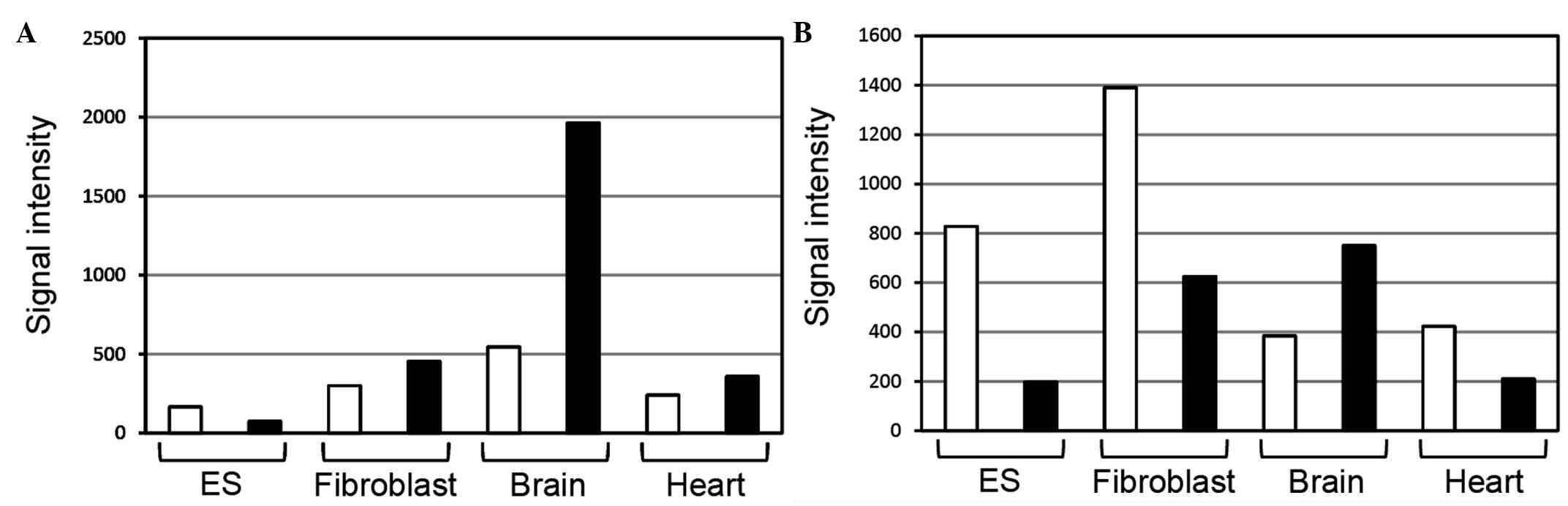
Kiyosawa et al (2) examined sense/antisense expression using a custom microarray with different cDNA priming methods. Ncam1 antisense ncRNAs in the brain were more strongly expressed than those mRNAs in the microarray analysis using oligo(dT) or random nonamer primers (Fig. 1). Microarray analysis using oligo(dT) primers is assumed to detect RNAs (transcripts) with poly(A) tails, whereas microarray analysis using random nonamer primers is assumed to detect RNAs with and without poly(A) tails. This information suggests that Ncam1 antisense ncRNAs may have poly(A) tails.

Figure 1.

Expression of neural cell adhesion molecule 1 (Ncam1) messenger RNAs (mRNAs) and antisense non-coding RNAs (ncRNAs), according to microarray analysis. (A) Microarray signal intensity obtained with samples labeled by oligo(dT) priming. (B) Microarray signal intensity obtained with samples labeled by random nonamer priming. White bars represent the signal intensity of Ncam1 mRNAs, whereas black bars represent the signal intensity of Ncam1 antisense ncRNAs.

To date, the open reading frame, or protein-coding region, of Ncam1 antisense RNAs has not been confirmed in several databases, including FANTOM. Therefore, Ncam1 antisense RNAs are ncRNAs. To examine the expression and localization of Ncam1 antisense ncRNAs at different developmental stages, in situ hybridization was performed. In situ hybridization is known to detect RNAs with and without poly(A) tails. Therefore, it is generally considered that the signal intensity patterns of in situ hybridization are the same as those of microarray analysis using random nonamer primers.

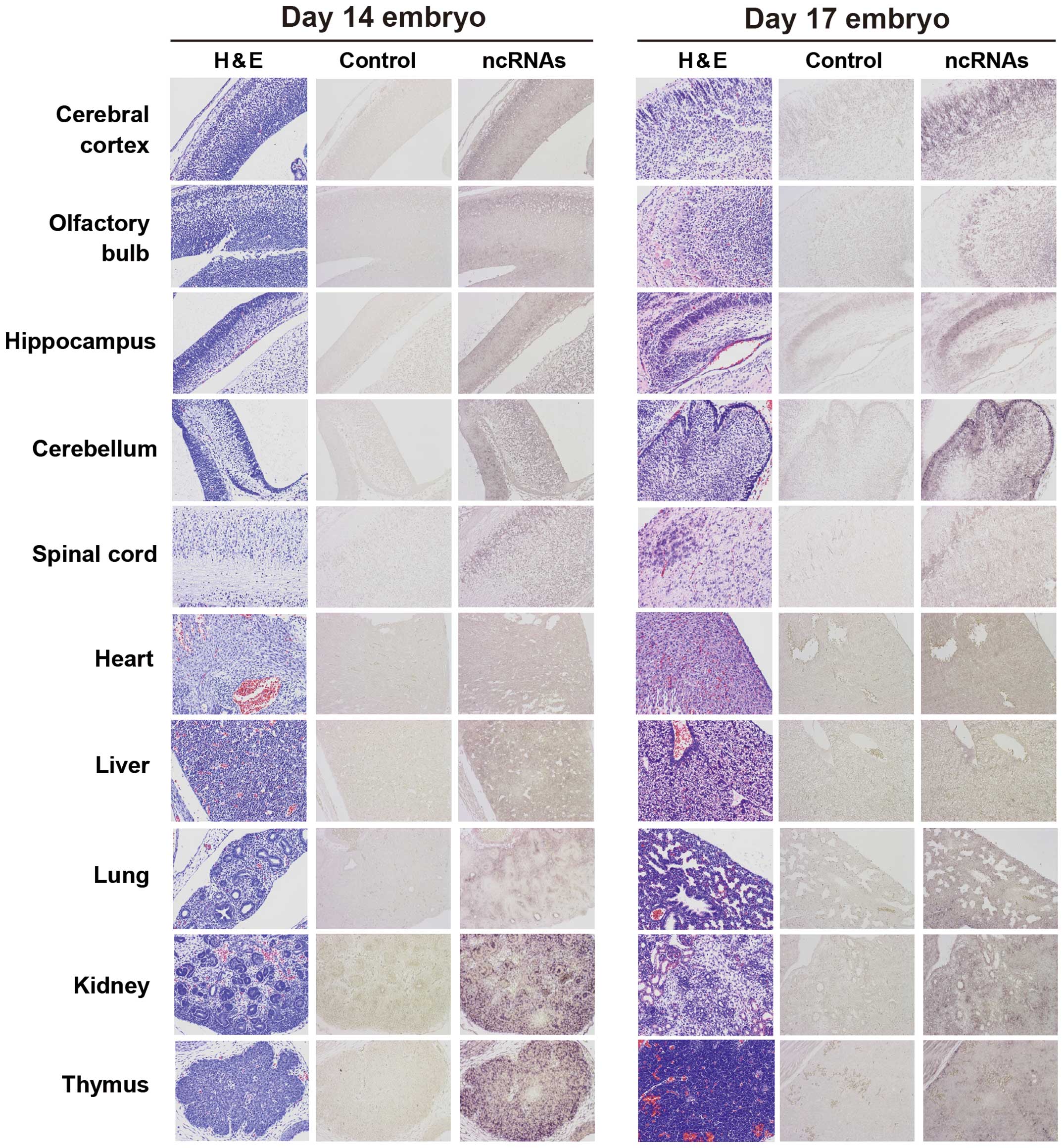
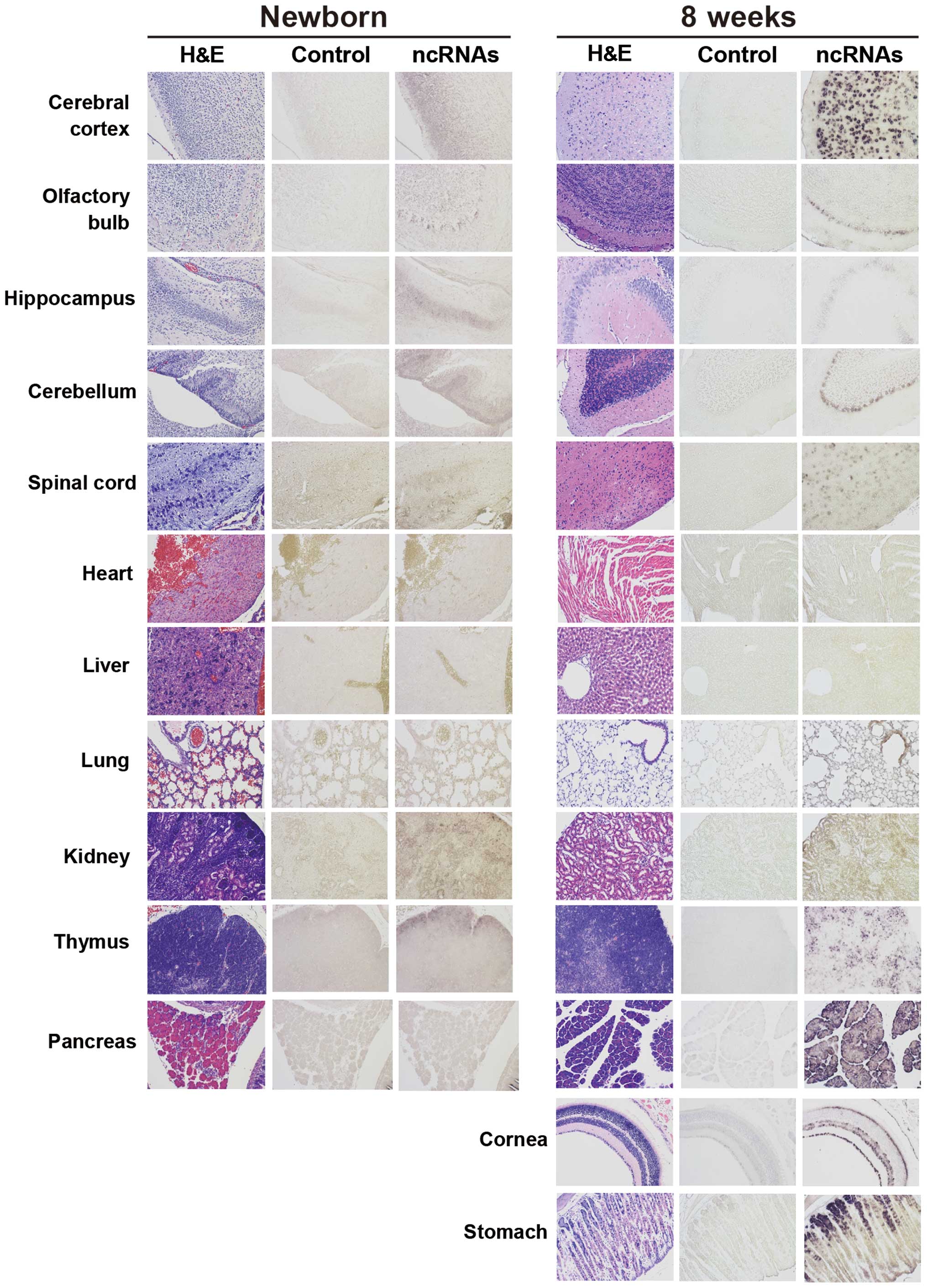
In E14 embryos, Ncam1 antisense ncRNAs were uniformly detected in the heart, liver and nervous system regions, including the brain, and were detected at high levels in certain regions of the lung, kidney and thymus (Fig. 2). In E17 embryos, Ncam1 antisense ncRNAs were detected at high levels in specific cells of the brain, whereas they were uniformly detected in other tissues (heart, liver, lung, kidney and thymus). In newborn mice, Ncam1 antisense ncRNAs were weakly detected in the brain, kidney and thymus. The transcription pattern of NB mice was similar to that of E17 embryos, except that the signals in organs other than the brain were weaker than those of the E17 embryos (Figs. 2 and 3). In the 8-week-old mice, Ncam1 antisense ncRNAs were detected at high levels in limited regions of the brain, stomach, cornea and all the regions of the pancreas. Contrastingly, they were detected at low levels in the remaining organs that were examined, excluding the liver. With regards to the liver, negligible amounts of Ncam1 antisense ncRNA expression was detected (Fig. 3). These results indicate that Ncam1 antisense ncRNAs are expressed in mice tissues.

Figure 2.

Detection of neural cell adhesion molecule 1 (Ncam1) antisense non-coding RNAs (ncRNAs) in mice tissues at embryonic development day 14 (E14) and 17 (E17). Ncam1 antisense ncRNAs were detected by in situ hybridization with a digoxigenin (DIG)-labeled sense complementary-RNA probe. As a negative control, DIG-labeled control probes were used for in situ hybridization. Hematoxylin and eosin (H&E) staining was performed to visualize the fine structures of the tissues.

Figure 3.

Detection of neural cell adhesion molecule 1 (Ncam1) antisense non-coding RNAs (ncRNAs) in newborn and 8-week-old mice. Ncam1 antisense ncRNAs were detected by in situ hybridization with a digoxigenin (DIG)-labeled sense complementary-RNA probe. As a negative control, DIG-labeled control probes were used for in situ hybridization. Hematoxylin and eosin (H&E) staining was performed to visualize the fine structures of tissues.

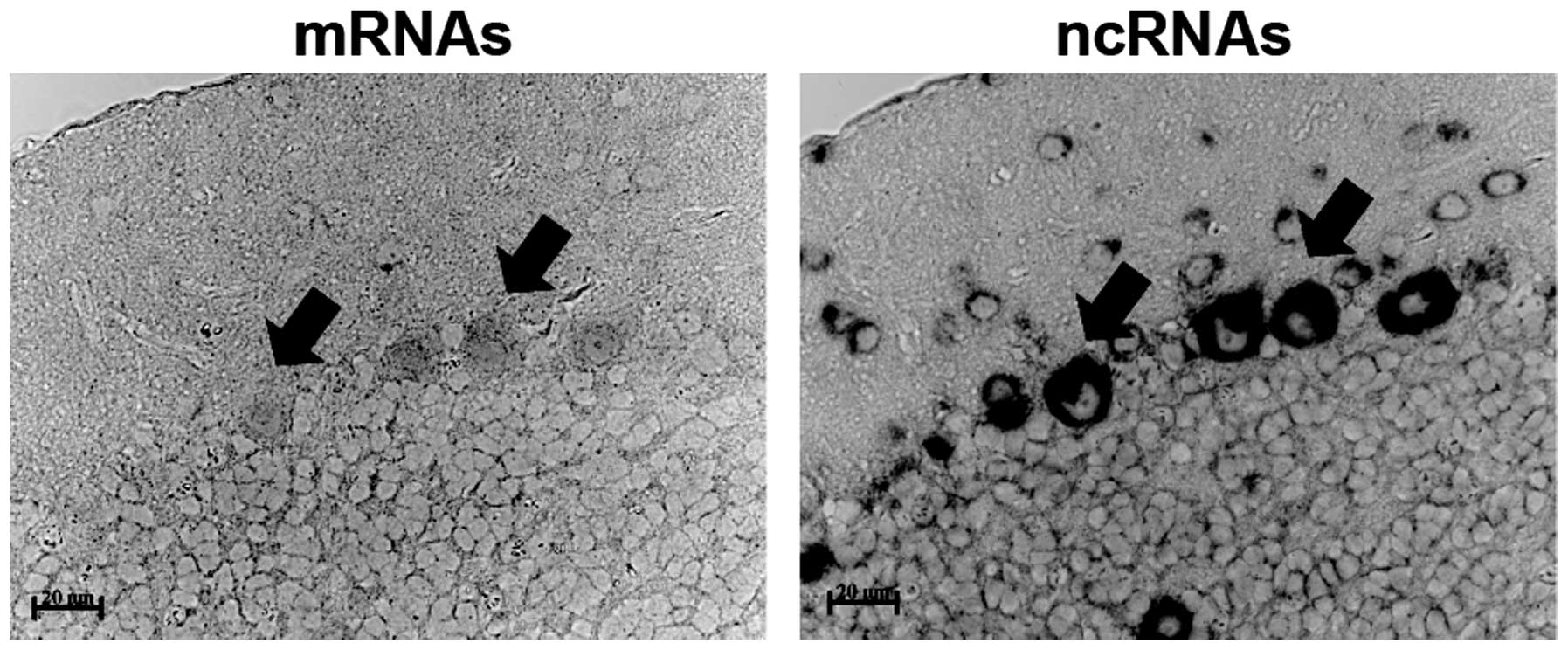
Of note, Ncam1 mRNAs and antisense ncRNAs co-localized in Purkinje cells of the cerebellum and the levels of antisense ncRNAs appeared to be higher than those of mRNAs (Fig. 4). Based on the patterns of the in situ hybridization signals for Ncam1 antisense ncRNAs detected in tissues, some potential functions were identified for Ncam1 antisense ncRNAs. In the analysis of the adjacent sections, Ncam1 mRNAs were detected in some of the brain cells found to produce Ncam1 antisense ncRNAs. This indicates that Ncam1 antisense ncRNAs may control the function of Ncam1 mRNAs, as previously proposed in reviews on other antisense ncRNAs (6,11). Currently, the exact function of Ncam1 antisense ncRNAs in each tissue is unknown. However, the expression patterns of Ncam1 antisense ncRNAs may provide information for understanding their function. In future studies, the interactions between Ncam1 mRNAs and antisense ncRNAs should be examined.

Figure 4.

Co-localization of neural cell adhesion molecule 1 (Ncam1) messenger RNAs (mRNAs) and antisense non-coding RNAs (ncRNAs) in Purkinje cells of 8-week-old mice. Murine cerebellum tissue embedded in paraffin was serially sectioned at 1.5-µm, which allowed one Purkinje cell to be split into ≥2 consecutive sections. In situ hybridization was performed using a digoxigenin-labeled sense complementary-RNA probe. Ncam1 mRNAs and antisense ncRNAs existed in the same Purkinje cells, as indicated by black arrows. Scale bar represents 20 µm.

Acknowledgements

The author would like to thank Dr Hiroshi Yasue of Tsukuba GeneTech Laboratories (Ibaraki, Japan) for the provision of DIG-labeled cRNA probes and Ms. Noriko Hiraiwa of RIKEN BioResource Center for offering the samples. The present study was supported in part by the Grants in Aid from the Ministry of Education, Culture, Sports, Science and Technology of Japan and the Hirosaki University Grant for Exploratory Research by Young Scientists.

References

1 

Kiyosawa H, Yamanaka I, Osato N, Kondo S and Hayashizaki YRIKEN GER Group: Role: GSL MembersAntisense transcripts with FANTOM2 clone set and their implications for gene regulation. Genome Res. 13((6B)): 1324–1334. 2003. View Article : Google Scholar : PubMed/NCBI

2 

Kiyosawa H, Mise N, Iwase S, Hayashizaki Y and Abe K: Disclosing hidden transcripts: Mouse natural sense-antisense transcripts tend to be poly(A) negative and nuclear localized. Genome Res. 15:463–474. 2005. View Article : Google Scholar : PubMed/NCBI

3 

Okazaki Y, Furuno M, Kasukawa T, Adachi J, Bono H, Kondo S, Nikaido I, Osato N, Saito R, Suzuki H, et al FANTOM Consortium; RIKEN Genome Exploration Research Group Phase I & II Team: Analysis of the mouse transcriptome based on functional annotation of 60,770 full-length cDNAs. Nature. 420:563–573. 2002. View Article : Google Scholar : PubMed/NCBI

4 

Katayama S, Tomaru Y, Kasukawa T, Waki K, Nakanishi M, Nakamura M, Nishida H, Yap CC, Suzuki M, Kawai J, et al FANTOM Consortium: Antisense transcription in the mammalian transcriptome. Science. 309:1564–1566. 2005. View Article : Google Scholar : PubMed/NCBI

5 

Lehner B, Williams G, Campbell RD and Sanderson CM: Antisense transcripts in the human genome. Trends Genet. 18:63–65. 2002. View Article : Google Scholar : PubMed/NCBI

6 

Faghihi MA and Wahlestedt C: Regulatory roles of natural antisense transcripts. Nat Rev Mol Cell Biol. 10:637–643. 2009. View Article : Google Scholar : PubMed/NCBI

7 

Kohno K, Chiba M, Murata S, Pak S, Nagai K, Yamamoto M, Yanagisawa K, Kobayashi A, Yasue H and Ohkohchi N: Identification of natural antisense transcripts involved in human colorectal cancer development. Int J Oncol. 37:1425–1432. 2010.PubMed/NCBI

8 

Grigoriadis A, Oliver GR, Tanney A, Kendrick H, Smalley MJ, Jat P and Neville AM: Identification of differentially expressed sense and antisense transcript pairs in breast epithelial tissues. BMC Genomics. 10:3242009. View Article : Google Scholar : PubMed/NCBI

9 

Cremer H, Lange R, Christoph A, Plomann M, Vopper G, Roes J, Brown R, Baldwin S, Kraemer P, Scheff S, et al: Inactivation of the N-CAM gene in mice results in size reduction of the olfactory bulb and deficits in spatial learning. Nature. 367:455–459. 1994. View Article : Google Scholar : PubMed/NCBI

10 

Dityatev A, Dityateva G, Sytnyk V, Delling M, Toni N, Nikonenko I, Muller D and Schachner M: Polysialylated neural cell adhesion molecule promotes remodeling and formation of hippocampal synapses. J Neurosci. 24:9372–9382. 2004. View Article : Google Scholar : PubMed/NCBI

11 

Lavorgna G, Dahary D, Lehner B, Sorek R, Sanderson CM and Casari G: In search of antisense. Trends Biochem Sci. 29:88–94. 2004. View Article : Google Scholar : PubMed/NCBI

Related Articles

  • Abstract
  • View
  • Download
  • Twitter
Copy and paste a formatted citation
Spandidos Publications style
Chiba M: Detection of natural antisense non-coding RNAs transcribed from Ncam1 in mice tissues at several developmental stages. Biomed Rep 3: 663-667, 2015.
APA
Chiba, M. (2015). Detection of natural antisense non-coding RNAs transcribed from Ncam1 in mice tissues at several developmental stages. Biomedical Reports, 3, 663-667. https://doi.org/10.3892/br.2015.482
MLA
Chiba, M."Detection of natural antisense non-coding RNAs transcribed from Ncam1 in mice tissues at several developmental stages". Biomedical Reports 3.5 (2015): 663-667.
Chicago
Chiba, M."Detection of natural antisense non-coding RNAs transcribed from Ncam1 in mice tissues at several developmental stages". Biomedical Reports 3, no. 5 (2015): 663-667. https://doi.org/10.3892/br.2015.482
Copy and paste a formatted citation
x
Spandidos Publications style
Chiba M: Detection of natural antisense non-coding RNAs transcribed from Ncam1 in mice tissues at several developmental stages. Biomed Rep 3: 663-667, 2015.
APA
Chiba, M. (2015). Detection of natural antisense non-coding RNAs transcribed from Ncam1 in mice tissues at several developmental stages. Biomedical Reports, 3, 663-667. https://doi.org/10.3892/br.2015.482
MLA
Chiba, M."Detection of natural antisense non-coding RNAs transcribed from Ncam1 in mice tissues at several developmental stages". Biomedical Reports 3.5 (2015): 663-667.
Chicago
Chiba, M."Detection of natural antisense non-coding RNAs transcribed from Ncam1 in mice tissues at several developmental stages". Biomedical Reports 3, no. 5 (2015): 663-667. https://doi.org/10.3892/br.2015.482
Follow us
  • Twitter
  • LinkedIn
  • Facebook
About
  • Spandidos Publications
  • Careers
  • Cookie Policy
  • Privacy Policy
How can we help?
  • Help
  • Live Chat
  • Contact
  • Email to our Support Team