Spandidos Publications Logo
  • About
    • About Spandidos
    • Aims and Scopes
    • Abstracting and Indexing
    • Editorial Policies
    • Reprints and Permissions
    • Job Opportunities
    • Terms and Conditions
    • Contact
  • Journals
    • All Journals
    • Oncology Letters
      • Oncology Letters
      • Information for Authors
      • Editorial Policies
      • Editorial Board
      • Aims and Scope
      • Abstracting and Indexing
      • Bibliographic Information
      • Archive
    • International Journal of Oncology
      • International Journal of Oncology
      • Information for Authors
      • Editorial Policies
      • Editorial Board
      • Aims and Scope
      • Abstracting and Indexing
      • Bibliographic Information
      • Archive
    • Molecular and Clinical Oncology
      • Molecular and Clinical Oncology
      • Information for Authors
      • Editorial Policies
      • Editorial Board
      • Aims and Scope
      • Abstracting and Indexing
      • Bibliographic Information
      • Archive
    • Experimental and Therapeutic Medicine
      • Experimental and Therapeutic Medicine
      • Information for Authors
      • Editorial Policies
      • Editorial Board
      • Aims and Scope
      • Abstracting and Indexing
      • Bibliographic Information
      • Archive
    • International Journal of Molecular Medicine
      • International Journal of Molecular Medicine
      • Information for Authors
      • Editorial Policies
      • Editorial Board
      • Aims and Scope
      • Abstracting and Indexing
      • Bibliographic Information
      • Archive
    • Biomedical Reports
      • Biomedical Reports
      • Information for Authors
      • Editorial Policies
      • Editorial Board
      • Aims and Scope
      • Abstracting and Indexing
      • Bibliographic Information
      • Archive
    • Oncology Reports
      • Oncology Reports
      • Information for Authors
      • Editorial Policies
      • Editorial Board
      • Aims and Scope
      • Abstracting and Indexing
      • Bibliographic Information
      • Archive
    • Molecular Medicine Reports
      • Molecular Medicine Reports
      • Information for Authors
      • Editorial Policies
      • Editorial Board
      • Aims and Scope
      • Abstracting and Indexing
      • Bibliographic Information
      • Archive
    • World Academy of Sciences Journal
      • World Academy of Sciences Journal
      • Information for Authors
      • Editorial Policies
      • Editorial Board
      • Aims and Scope
      • Abstracting and Indexing
      • Bibliographic Information
      • Archive
    • International Journal of Functional Nutrition
      • International Journal of Functional Nutrition
      • Information for Authors
      • Editorial Policies
      • Editorial Board
      • Aims and Scope
      • Abstracting and Indexing
      • Bibliographic Information
      • Archive
    • International Journal of Epigenetics
      • International Journal of Epigenetics
      • Information for Authors
      • Editorial Policies
      • Editorial Board
      • Aims and Scope
      • Abstracting and Indexing
      • Bibliographic Information
      • Archive
    • Medicine International
      • Medicine International
      • Information for Authors
      • Editorial Policies
      • Editorial Board
      • Aims and Scope
      • Abstracting and Indexing
      • Bibliographic Information
      • Archive
  • Articles
  • Information
    • Information for Authors
    • Information for Reviewers
    • Information for Librarians
    • Information for Advertisers
    • Conferences
  • Language Editing
Spandidos Publications Logo
  • About
    • About Spandidos
    • Aims and Scopes
    • Abstracting and Indexing
    • Editorial Policies
    • Reprints and Permissions
    • Job Opportunities
    • Terms and Conditions
    • Contact
  • Journals
    • All Journals
    • Biomedical Reports
      • Information for Authors
      • Editorial Policies
      • Editorial Board
      • Aims and Scope
      • Abstracting and Indexing
      • Bibliographic Information
      • Archive
    • Experimental and Therapeutic Medicine
      • Information for Authors
      • Editorial Policies
      • Editorial Board
      • Aims and Scope
      • Abstracting and Indexing
      • Bibliographic Information
      • Archive
    • International Journal of Epigenetics
      • Information for Authors
      • Editorial Policies
      • Editorial Board
      • Aims and Scope
      • Abstracting and Indexing
      • Bibliographic Information
      • Archive
    • International Journal of Functional Nutrition
      • Information for Authors
      • Editorial Policies
      • Editorial Board
      • Aims and Scope
      • Abstracting and Indexing
      • Bibliographic Information
      • Archive
    • International Journal of Molecular Medicine
      • Information for Authors
      • Editorial Policies
      • Editorial Board
      • Aims and Scope
      • Abstracting and Indexing
      • Bibliographic Information
      • Archive
    • International Journal of Oncology
      • Information for Authors
      • Editorial Policies
      • Editorial Board
      • Aims and Scope
      • Abstracting and Indexing
      • Bibliographic Information
      • Archive
    • Medicine International
      • Information for Authors
      • Editorial Policies
      • Editorial Board
      • Aims and Scope
      • Abstracting and Indexing
      • Bibliographic Information
      • Archive
    • Molecular and Clinical Oncology
      • Information for Authors
      • Editorial Policies
      • Editorial Board
      • Aims and Scope
      • Abstracting and Indexing
      • Bibliographic Information
      • Archive
    • Molecular Medicine Reports
      • Information for Authors
      • Editorial Policies
      • Editorial Board
      • Aims and Scope
      • Abstracting and Indexing
      • Bibliographic Information
      • Archive
    • Oncology Letters
      • Information for Authors
      • Editorial Policies
      • Editorial Board
      • Aims and Scope
      • Abstracting and Indexing
      • Bibliographic Information
      • Archive
    • Oncology Reports
      • Information for Authors
      • Editorial Policies
      • Editorial Board
      • Aims and Scope
      • Abstracting and Indexing
      • Bibliographic Information
      • Archive
    • World Academy of Sciences Journal
      • Information for Authors
      • Editorial Policies
      • Editorial Board
      • Aims and Scope
      • Abstracting and Indexing
      • Bibliographic Information
      • Archive
  • Articles
  • Information
    • For Authors
    • For Reviewers
    • For Librarians
    • For Advertisers
    • Conferences
  • Language Editing
Login Register Submit
  • This site uses cookies
  • You can change your cookie settings at any time by following the instructions in our Cookie Policy. To find out more, you may read our Privacy Policy.

    I agree
Search articles by DOI, keyword, author or affiliation
Search
Advanced Search
presentation
Experimental and Therapeutic Medicine
Join Editorial Board Propose a Special Issue
Print ISSN: 1792-0981 Online ISSN: 1792-1015
Journal Cover
November-December 2010 Volume 1 Issue 6

Full Size Image

Sign up for eToc alerts
Recommend to Library

Journals

International Journal of Molecular Medicine

International Journal of Molecular Medicine

International Journal of Molecular Medicine is an international journal devoted to molecular mechanisms of human disease.

International Journal of Oncology

International Journal of Oncology

International Journal of Oncology is an international journal devoted to oncology research and cancer treatment.

Molecular Medicine Reports

Molecular Medicine Reports

Covers molecular medicine topics such as pharmacology, pathology, genetics, neuroscience, infectious diseases, molecular cardiology, and molecular surgery.

Oncology Reports

Oncology Reports

Oncology Reports is an international journal devoted to fundamental and applied research in Oncology.

Experimental and Therapeutic Medicine

Experimental and Therapeutic Medicine

Experimental and Therapeutic Medicine is an international journal devoted to laboratory and clinical medicine.

Oncology Letters

Oncology Letters

Oncology Letters is an international journal devoted to Experimental and Clinical Oncology.

Biomedical Reports

Biomedical Reports

Explores a wide range of biological and medical fields, including pharmacology, genetics, microbiology, neuroscience, and molecular cardiology.

Molecular and Clinical Oncology

Molecular and Clinical Oncology

International journal addressing all aspects of oncology research, from tumorigenesis and oncogenes to chemotherapy and metastasis.

World Academy of Sciences Journal

World Academy of Sciences Journal

Multidisciplinary open-access journal spanning biochemistry, genetics, neuroscience, environmental health, and synthetic biology.

International Journal of Functional Nutrition

International Journal of Functional Nutrition

Open-access journal combining biochemistry, pharmacology, immunology, and genetics to advance health through functional nutrition.

International Journal of Epigenetics

International Journal of Epigenetics

Publishes open-access research on using epigenetics to advance understanding and treatment of human disease.

Medicine International

Medicine International

An International Open Access Journal Devoted to General Medicine.

Journal Cover
November-December 2010 Volume 1 Issue 6

Full Size Image

Sign up for eToc alerts
Recommend to Library

  • Article
  • Citations
    • Cite This Article
    • Download Citation
    • Create Citation Alert
    • Remove Citation Alert
    • Cited By
  • Similar Articles
    • Related Articles (in Spandidos Publications)
    • Similar Articles (Google Scholar)
    • Similar Articles (PubMed)
  • Download PDF
  • Download XML
  • View XML
Article

Schedule-dependent synergistic effect of rituximab on methotrexate chemotherapy against lymphoma of the central nervous system

  • Authors:
    • Juyoun Jin
    • Kyeung Min Joo
    • YoonHee Nam
    • Dae Hyun Kim
    • Se Jeong Lee
    • Mi-young Jo
    • Younggeon Jin
    • Hyeong-Seok Kim
    • Soo Won Seo
    • Seok Jin Kim
    • Do-Hyun Nam
    • Won Seog Kim
  • View Affiliations / Copyright

    Affiliations: Department of Neurosurgery, Samsung Medical Center and Samsung Biomedical Research Institute, Sungkyunkwan University School of Medicine, Gangnam-gu, Seoul 135-710, Korea, Cancer Stem Cell Research Center, Samsung Medical Center and Samsung Biomedical Research Institute, Sungkyunkwan University School of Medicine, Gangnam-gu, Seoul 135-710, Korea, Gwacheon Foreign Language High School, Gwacheon-si, Gyeonggi-do 427-805, Korea, Korean Minjok Leadership Academy, Anheung-myeon, Hoengseong-gun, Gangwon-do 225-823, Korea, Department of Biomedical Engineering, Samsung Medical Center and Samsung Biomedical Research Institute, Sungkyunkwan University School of Medicine, Gangnam-gu, Seoul 135-710, Korea, Department of Hematology-Oncology, Samsung Medical Center and Samsung Biomedical Research Institute, Sungkyunkwan University School of Medicine, Gangnam-gu, Seoul 135-710, Korea
  • Pages: 943-946
    |
    Published online on: August 26, 2010
       https://doi.org/10.3892/etm.2010.143
  • Expand metrics +
Metrics: Total Views: 0 (Spandidos Publications: | PMC Statistics: )
Metrics: Total PDF Downloads: 0 (Spandidos Publications: | PMC Statistics: )
Cited By (CrossRef): 0 citations Loading Articles...

This article is mentioned in:


Abstract

We hypothesized that methotrexate (MTX) normalizes the increased permeability of the blood-tumor barrier and thus reduces the accessibility of rituximab (RTX) to central nervous system (CNS) lymphoma. Here, we evaluated the combinational treatment capability of RTX and MTX using an alternative treatment schedule against CNS lymphoma. We developed a CNS lymphoma animal model that closely mimics the morphological and molecular characteristics of human CNS lymphoma by injecting Raji human Burkitt lymphoma cells into the brains of immune-compromised mice and tested a novel combinational treatment schedule by which penetration of RTX was not influenced by MTX administration. RTX was conjugated with Alexa Fluor 680, and its distribution in the brain was analyzed by in vivo imaging. When MTX treatment was followed by a 3-day post RTX administration, RTX was scarcely distributed in the brain, and there were only modest statistically insignificant therapeutic effects compared with the control mice which received sham injections. In contrast, RTX administration followed by a 3-day post MTX treatment showed significantly increased distribution of RTX and significantly reduced tumor volume in the brain. Collectively, our data demonstrate that RTX can be successfully combined with MTX using an alternative treatment schedule that allows increased distribution of RTX in CNS lymphoma.

Introduction

Rituximab (RTX), a monoclonal antibody targeting the B-cell-specific CD20 antigen, is an effective treatment agent for B-cell non-Hodgkin's lymphoma (NHL) (1,2). However, its application for the treatment of central nervous system (CNS) lymphoma is still controversial since the blood-brain barrier (BBB) is relatively impermeable to antibodies with high molecular weights (3,4). Conversely, RTX could exhibit therapeutic effects on CNS lymphoma when the permeability of the blood-tumor barrier increases.

The primary therapeutic option for CNS lymphoma is intravenous high-dose methotrexate (MTX)-based chemotherapy (5–7). Previously, RTX and temozolomide showed significant therapeutic effects against relapsed primary CNS lymphoma (8,9). However, there are no indisputable data showing successful combination of MTX with RTX. We hypothesized that MTX normalizes the increased permeability of the blood-tumor barrier and thus reduces the accessibility of RTX to CNS lymphoma (10). In the present study, we administered RTX to a CNS lymphoma animal model prior to MTX treatment to avoid the normalizing effects of MTX on the blood-tumor barrier, and our novel treatment modality conferred synergistic therapeutic effects against CNS lymphoma.

Materials and methods

Cell culture and reagents

Raji human Burkitt lymphoma cells (American Type Culture Collection, Manassas, VA) were grown in RPMI-1640 (Gibco BRL, Grand Island, NY) supplemented with 10% FBS, 2 mM L-glutamine, penicillin (100 U/ml), and streptomycin (100 μg/ml). MTX and RTX (Mabthera) were purchased from Mayne Pharmaceuticals and Roche Pharmaceuticals, respectively.

Primary CNS lymphoma animal model

Anesthetized 6-week-old male Balb/c-nu mice were secured in a rodent stereotactic frame, a hollow guide screw was implanted into a small drill hole made 2 mm right and 1 mm anterior to the bregma, and 5×10⁴, 5×10⁵ and 5×10⁶ Raji cells in 5 μl HBSS were injected through this guide screw into the white matter at a depth of 3 mm [anterior/posterior (AP) +1.0 mm, medial/lateral (ML) −1.7 mm, dorsal/ventral (DV) −3.2 mm]. All of the experiments where mice received antitumor therapy were performed using an inoculum of 5×10⁵ Raji cells. Animal experiments were approved by the appropriate Institutional Review Boards of the Samsung Medical Center, Seoul, Korea and conducted in accordance with the ‘National Institute of Health Guide for the Care and Use of Laboratory Animals’ (NIH publication no. 80-23, revised in 1996).

Evaluation of antitumor activity

Twelve days after the intracerebral injections of Raji cells, mice were randomly assigned to receive sham treatment (Group A), MTX administration followed by RTX treatment (Group B), or RTX administration followed by MTX treatment (Group C) (Fig. 3A). Twenty-one days after the injection of Raji cells, the mice were sacrificed. Brains were harvested and processed for paraffin embedding. The tumor volume was calculated by measuring the section with the largest tumor portion applying the formula: (width)2 × length × 0.5.

Figure 3.

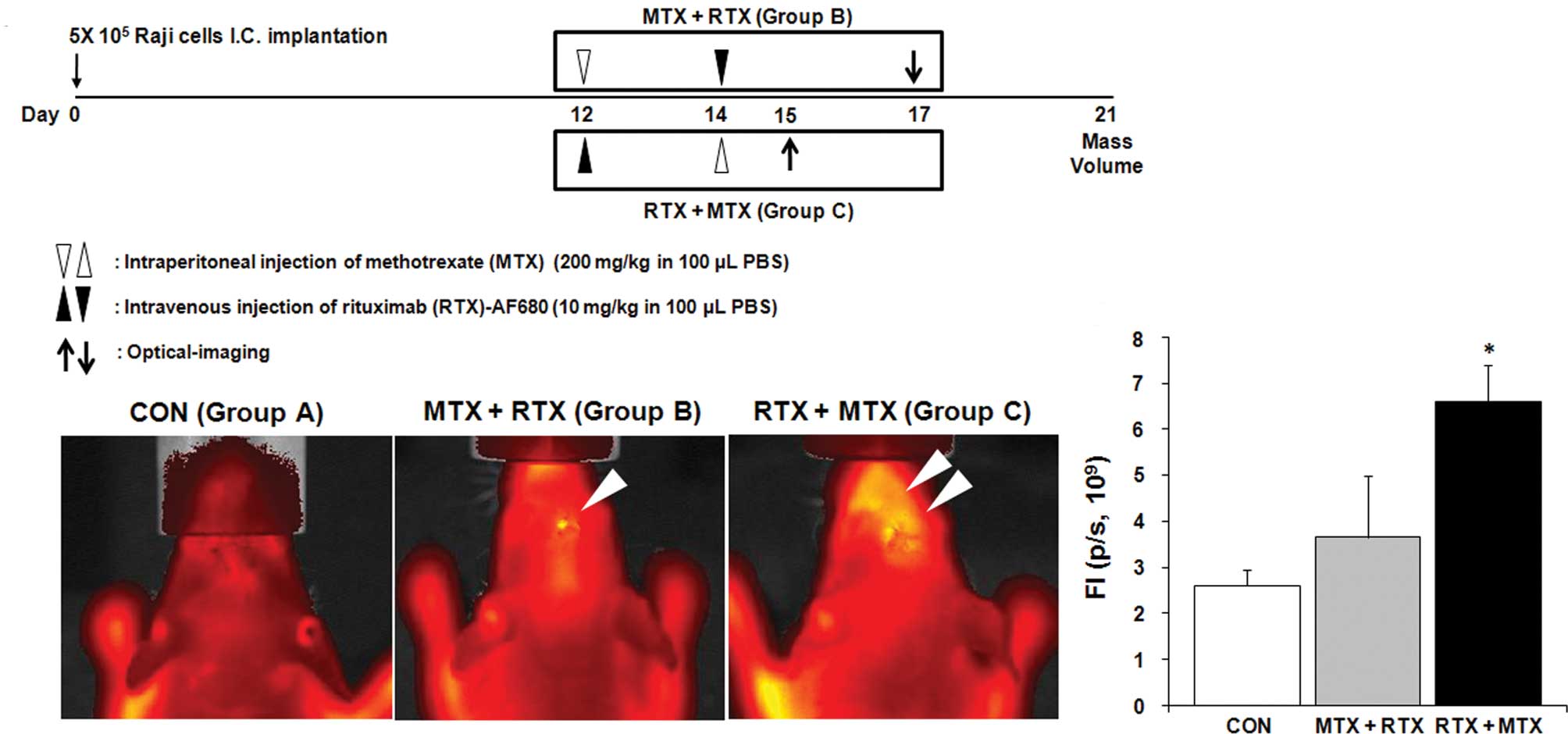
Effects of MTX treatment on the RTX penetration across the blood-tumor barrier. (A) Detailed experimental schedules using the CNS lymphoma animal model are illustrated. (B) Distribution of AF680-labeled RTX in brains bearing lymphoma cells was visualized by in vivo fluorescent optical imaging 3 days after RTX administration. Group A (CON), Sham injection of PBS (Day 12, 14); Group B, (MTX + RTX) = MTX (Day 12) + RTX (Day 14); and Group C (RTX + MTX) = MTX (Day 12) + RTX (Day 14). n=5 for each group. (C) Fluorescence intensity (FI) was analyzed and compared. Mean ± SE. *P<0.05 vs. Group A or B.

In vivo quantification of the penetration of RTX into the CNS lymphoma

To evaluate the penetration of RTX into the mouse brains bearing CNS lymphoma, RTX conjugated with Alexa Fluor 680 (RTX-AF680) was utilized. RTX was conjugated with Alexa Fluor 680 according to the manufacturer's protocol (SAIVI Alexa Fluor 680 antibody/protein 1 mg labeling kit; Invitrogen, CA, USA). Three days after i.v. injection of RTX-AF680 (Fig. 3A), mice were anesthetized with 2–3% isoflurane. The signal from RTX-AF680 was detected in the region of the brain using a prototype Xenogen IVIS® Spectrum in vivo imaging system (Caliper Life Science). Fluorescence intensity was analyzed as photons per second (p/s) by Living Image 3.1 software (Caliper Life Science).

Statistical analyses

Statistical comparisons of the RTX penetration and tumor regression between groups were analyzed by one-way analysis of variance (ANOVA) followed by the least significant difference (LSD) test. All data were presented as means ± SEM. A values of P<0.05 was considered statistically significant.

Results

CNS lymphoma animal model

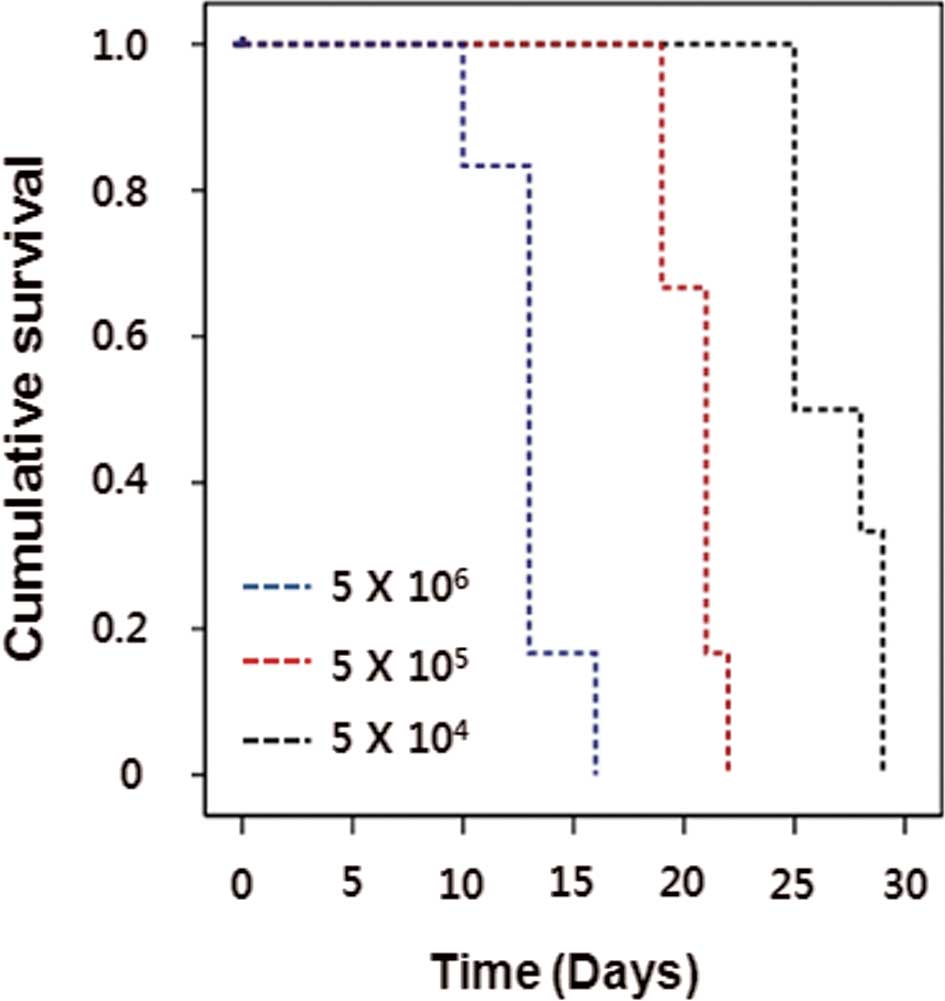
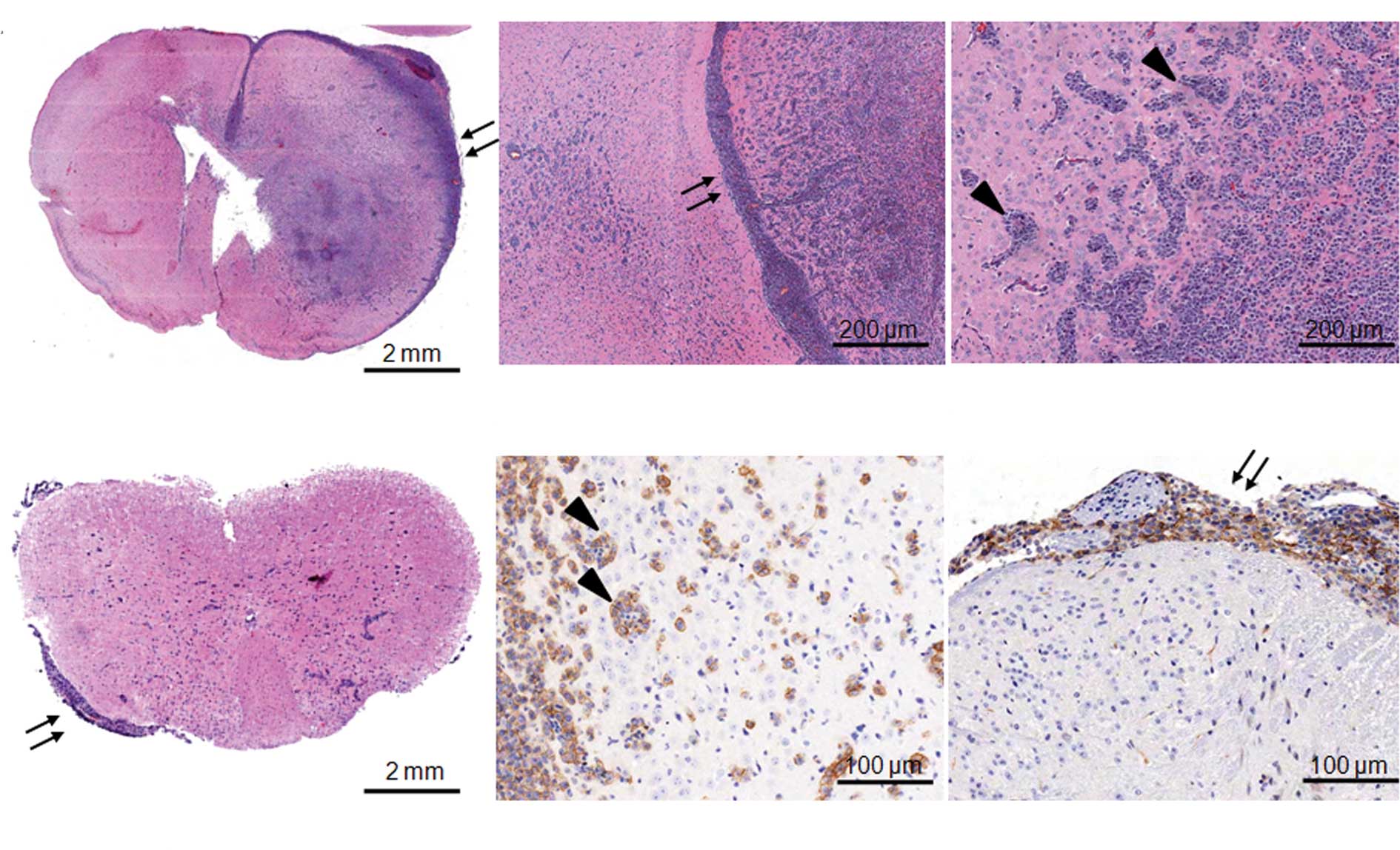
To establish the CNS lymphoma animal model, Raji human Burkitt lymphoma cells were stereotactically injected into the brains of immune compromised Balb/c-nu mice with a range of cell doses (0.5, 5 and 50×105 cells/mouse), and mice were observed for the development of irreversible neurological symptoms before euthanization. Nude mouse survival times were dependent on the cell dose (Fig. 1). The optimal cell dose of Raji cells was determined by the length of survival. A cell dose of 5×10⁵ resulted in 100% mortality within 21 days (19–23 days) after implantation and was used in all of the subsequent in vivo experiments. Huge infiltrative intracerebral tumors were observed in the brain three weeks after the tumor cell injection (Fig. 2A). Pathologic characteristics of CNS lymphoma such as extensive leptomeningeal seeding (arrows in Fig. 2A) and perivascular cuffing at the periphery of tumors (arrow heads in Fig. 2A) were obvious. In addition to cerebral involvement, lymphoma cells were clearly observed in the leptomeninges of the spinal cord but not in the parenchyma (arrows in Fig. 2B and D, thoracic spinal cord). Most lymphoma cells highly expressed CD20, a B-cell marker (Fig. 2C for perivascular cuffing in the brain, Fig. 2D for leptomeningeal seeding in the spinal cord).

Figure 1.

Survival curves of the nude mouse CNS lymphoma model. Nude mice were injected with lymphoma cells (0.5, 5, and 50×105 cells/mouse) and sacrificed upon development of neurological symptoms or a 25% weight loss.

Figure 2.

CNS lymphoma animal model. Brain tumors derived from implanted Raji lymphoma cells were obtained for pathologic analysis 21 days after tumor cell implantation. Sections were stained with H&E (A and B), or immunohistochemistry against CD20 was performed (C and D). (A) Lymphoma cells were mainly localized in the injected hemisphere and invaded the contralateral hemisphere (arrows, leptomeningeal seeding; arrow heads, perivascular cuffing). (B) Lymphoma cells were also observed in the leptomeninges of the spinal cord (arrows, leptomeningeal seeding). Lymphoma cells from the perivascular cuffing in the brain (C) and leptomeningeal seeding in the spinal cord (D) expressed high levels of CD20.

Effects of MTX treatment on the RTX penetration across the blood-tumor barrier

To evaluate our hypothesis, we administrated MTX and RTX to the mice bearing lymphoma cells in their brains according to different schedules (Fig. 3A). Administered RTX was labeled with AF680 to visualize the distribution in the brain in vivo. Each mouse was examined 3 days after RTX treatment (Group B; Day 17, Group C; Day 15), while mice from Group A were examined twice at Day 15 and 17 (Fig. 3A). We did not observe fluorescent signals from the brains of the mice not administered RTX (Group A, Fig. 3B). When mice received MTX treatment followed by RTX (Group B), RTX was not accumulated in the brain (Group B, Fig. 3B). In contrast, penetration of RTX across the BBB or the blood-tumor barrier was significantly increased by changing the treatment order from MTX + RTX to RTX + MTX (Group C, Fig. 3B and C).

Therapeutic effects of RTX and MTX combination treatments on CNS lymphoma

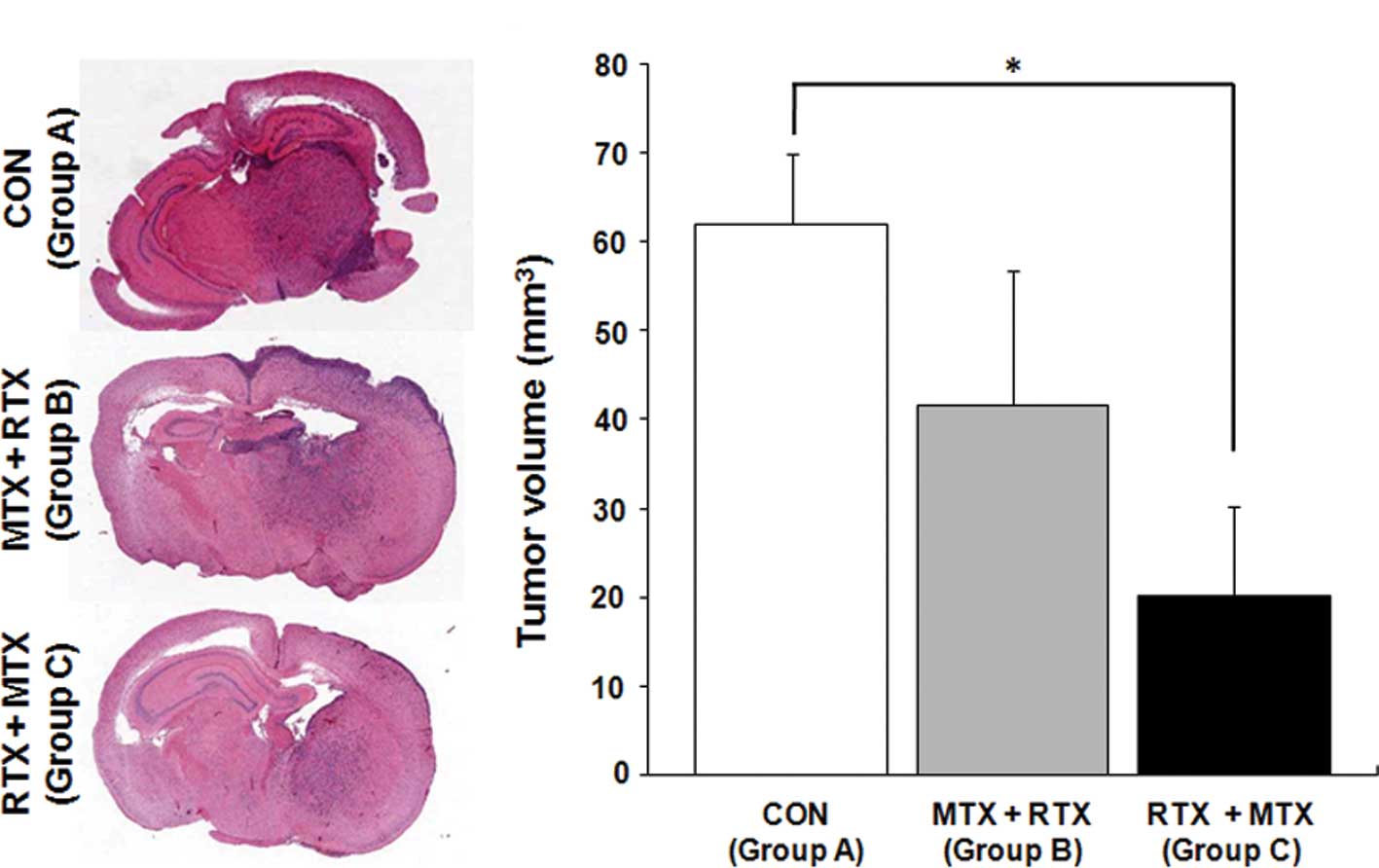
Next, we analyzed whether RTX penetration is associated with therapeutic effects by measuring tumor volumes at Day 21 (Fig. 3A). The RTX and MTX combination treatment, in which MTX administration was followed by RTX injection (Group B), reduced tumor volume by 32%, but this was not statistically significant (Fig. 4A and B; Group A, 62±8.0 mm3; Group B, 41.7±15.1 mm3). In contrast, mice that received RTX treatment followed by MTX administration showed a significantly reduced tumor volume (Fig. 4A and B; Group C, 20.1±10.2 mm3, 68% tumor volume reduction; P<0.05).

Figure 4.

Therapeutic effects of RTX and MTX combination treatments on CNS lymphoma. (A) Brain tumors derived from implanted Raji lymphoma cells were obtained 21 days after tumor cell implantation. Sections were stained with H&E. (B) The average tumor volumes of each group (n=5 for each group) were determined and compared. Group A (CON), Sham injection of PBS (Day 12, 14); Group B, (MTX + RTX) = MTX (Day 12) + RTX (Day 14); and Group C, (RTX + MTX) = MTX (Day 12) + RTX (Day 14). Mean ± SE. *P<0.05 vs. CON.

Discussion

The investigation of CNS lymphoma treatment, biology, pathophysiology, and pathology in humans is troublesome, mainly due to the rarity of the disorder. Our data demonstrated that the intracerebral implantation of Raji cells into immune-compromised mouse brain provides an animal model that closely mimics the morphological and molecular characteristics of human CNS lymphoma (11). Here, we demonstrated that RTX can be successfully combined with MTX using an alternative treatment schedule that allows increased distribution of RTX in CNS lymphoma.

The BBB is relatively impermeable to high molecular weight antibodies (3,4). However, the blood-tumor barrier of brain tumors is more permissive to the penetration of antibodies into tumors, which would enable the application of therapeutic antibodies to brain tumors (12,13). We hypothesized that prior MTX treatment reverses the permissive characteristics of the tumor-blood barrier as there are massive tumor cell apoptosis and normalization of brain tissue structure caused by MTX. By in vivo imaging of RTX distribution, we provided data showing that the treatment schedule significantly alters the accessibility of therapeutic antibodies to brain tumors.

Due to the different mechanisms of action of MTX and RTX, a synergistic effect with improved response rate could be postulated by the combination. However, previous studies have failed to demonstrate the superiority of MTX and RTX combination treatment over MTX or RTX monotherapy (10). In the present study, we demonstrated that MTX influences the penetration of RTX across the blood-tumor barrier, which consequently abolishes the expected synergistic effects. In addition, we developed a novel combination method in which RTX treatment was followed by MTX administration. By applying the altered combination therapy, both accumulation of RTX in the brains bearing CNS lymphoma and strengthening of therapeutic effects of MTX chemotherapy on CNS lymphoma were achieved.

We report the successful combination of MTX and RTX for the treatment of CNS lymphoma in the translational setting. Clinical relevance of this strategy needs to be further elucidated through clinical trials.

Acknowledgements

This study was supported by a grant of the Korea Healthcare Technology R&D Project, Ministry for Health and Welfare Affairs, Republic of Korea (A092255) (D.-H. Nam) and the Ministry of Health and Welfare of Korea (0405-MNO1-0604-0007) (S.W. Seo).

References

1. 

McLaughlin P, Grillo-Lopez AJ, Link BK, et al: Rituximab chimeric anti-CD20 monoclonal antibody therapy for relapsed indolent lymphoma: half of patients respond to a four-dose treatment program. J Clin Oncol. 16:2825–2833. 1998.

2. 

Maloney DG, Grillo-Lopez AJ, Bodkin DJ, et al: IDEC-C2B8: results of a phase I multiple-dose trial in patients with relapsed non-Hodgkin's lymphoma. J Clin Oncol. 15:3266–3274. 1997.PubMed/NCBI

3. 

Neuwelt EA, Barnett PA, McCormick CI, Remsen LG, Kroll RA and Sexton G: Differential permeability of a human brain tumor xenograft in the nude rat: impact of tumor size and method of administration on optimizing delivery of biologically diverse agents. Clin Cancer Res. 4:1549–1555. 1998.

4. 

Neuwelt EA: Mechanisms of disease: the blood-brain barrier. Neurosurgery. 54:131–142. 2004. View Article : Google Scholar : PubMed/NCBI

5. 

Herrlinger U, Kuker W, Uhl M, et al: NOA-03 trial of high-dose methotrexate in primary central nervous system lymphoma: final report. Ann Neurol. 57:843–847. 2005. View Article : Google Scholar : PubMed/NCBI

6. 

Abrey LE, Yahalom J and DeAngelis LM: Treatment for primary CNS lymphoma: the next step. J Clin Oncol. 18:3144–3150. 2000.PubMed/NCBI

7. 

DeAngelis LM, Seiferheld W, Schold SC, Fisher B and Schultz CJ: Combination chemotherapy and radiotherapy for primary central nervous system lymphoma: Radiation Therapy Oncology Group Study 93-10. J Clin Oncol. 20:4643–4648. 2002. View Article : Google Scholar : PubMed/NCBI

8. 

Enting RH, Demopoulos A, DeAngelis LM and Abrey LE: Salvage therapy for primary CNS lymphoma with a combination of rituximab and temozolomide. Neurology. 63:901–903. 2004. View Article : Google Scholar : PubMed/NCBI

9. 

Wong ET, Tishler R, Barron L and Wu JK: Immunochemotherapy with rituximab and temozolomide for central nervous system lymphomas. Cancer. 101:139–145. 2004. View Article : Google Scholar : PubMed/NCBI

10. 

Jahnke K, Muldoon LL, Varallyay CG, et al: Efficacy and MRI of rituximab and methotrexate treatment in a nude rat model of CNS lymphoma. Neuro Oncol. 11:503–513. 2009. View Article : Google Scholar : PubMed/NCBI

11. 

Wang W, Kardosh A, Su YS, Schonthal AH and Chen TC: Efficacy of celecoxib in the treatment of CNS lymphomas: an in vivo model. Neurosurg Focus. 21:E142006. View Article : Google Scholar : PubMed/NCBI

12. 

Barnett PA, Roman-Goldstein S, Ramsey F, et al: Differential permeability and quantitative MR imaging of a human lung carcinoma brain xenograft in the nude rat. Am J Pathol. 146:436–449. 1995.PubMed/NCBI

13. 

Neuwelt EA, Barnett PA, Hellstrom KE, Hellstrom I, McCormick CI and Ramsey FL: Effect of blood-brain barrier disruption on intact and fragmented monoclonal antibody localization in intracerebral lung carcinoma xenografts. J Nucl Med. 35:1831–1841. 1994.

Related Articles

  • Abstract
  • View
  • Download
  • Twitter
Copy and paste a formatted citation
Spandidos Publications style
Jin J, Joo KM, Nam Y, Kim DH, Lee SJ, Jo M, Jin Y, Kim H, Seo SW, Kim SJ, Kim SJ, et al: Schedule-dependent synergistic effect of rituximab on methotrexate chemotherapy against lymphoma of the central nervous system. Exp Ther Med 1: 943-946, 2010.
APA
Jin, J., Joo, K.M., Nam, Y., Kim, D.H., Lee, S.J., Jo, M. ... Kim, W.S. (2010). Schedule-dependent synergistic effect of rituximab on methotrexate chemotherapy against lymphoma of the central nervous system. Experimental and Therapeutic Medicine, 1, 943-946. https://doi.org/10.3892/etm.2010.143
MLA
Jin, J., Joo, K. M., Nam, Y., Kim, D. H., Lee, S. J., Jo, M., Jin, Y., Kim, H., Seo, S. W., Kim, S. J., Nam, D., Kim, W. S."Schedule-dependent synergistic effect of rituximab on methotrexate chemotherapy against lymphoma of the central nervous system". Experimental and Therapeutic Medicine 1.6 (2010): 943-946.
Chicago
Jin, J., Joo, K. M., Nam, Y., Kim, D. H., Lee, S. J., Jo, M., Jin, Y., Kim, H., Seo, S. W., Kim, S. J., Nam, D., Kim, W. S."Schedule-dependent synergistic effect of rituximab on methotrexate chemotherapy against lymphoma of the central nervous system". Experimental and Therapeutic Medicine 1, no. 6 (2010): 943-946. https://doi.org/10.3892/etm.2010.143
Copy and paste a formatted citation
x
Spandidos Publications style
Jin J, Joo KM, Nam Y, Kim DH, Lee SJ, Jo M, Jin Y, Kim H, Seo SW, Kim SJ, Kim SJ, et al: Schedule-dependent synergistic effect of rituximab on methotrexate chemotherapy against lymphoma of the central nervous system. Exp Ther Med 1: 943-946, 2010.
APA
Jin, J., Joo, K.M., Nam, Y., Kim, D.H., Lee, S.J., Jo, M. ... Kim, W.S. (2010). Schedule-dependent synergistic effect of rituximab on methotrexate chemotherapy against lymphoma of the central nervous system. Experimental and Therapeutic Medicine, 1, 943-946. https://doi.org/10.3892/etm.2010.143
MLA
Jin, J., Joo, K. M., Nam, Y., Kim, D. H., Lee, S. J., Jo, M., Jin, Y., Kim, H., Seo, S. W., Kim, S. J., Nam, D., Kim, W. S."Schedule-dependent synergistic effect of rituximab on methotrexate chemotherapy against lymphoma of the central nervous system". Experimental and Therapeutic Medicine 1.6 (2010): 943-946.
Chicago
Jin, J., Joo, K. M., Nam, Y., Kim, D. H., Lee, S. J., Jo, M., Jin, Y., Kim, H., Seo, S. W., Kim, S. J., Nam, D., Kim, W. S."Schedule-dependent synergistic effect of rituximab on methotrexate chemotherapy against lymphoma of the central nervous system". Experimental and Therapeutic Medicine 1, no. 6 (2010): 943-946. https://doi.org/10.3892/etm.2010.143
Follow us
  • Twitter
  • LinkedIn
  • Facebook
About
  • Spandidos Publications
  • Careers
  • Cookie Policy
  • Privacy Policy
How can we help?
  • Help
  • Live Chat
  • Contact
  • Email to our Support Team