Spandidos Publications Logo
  • About
    • About Spandidos
    • Aims and Scopes
    • Abstracting and Indexing
    • Editorial Policies
    • Reprints and Permissions
    • Job Opportunities
    • Terms and Conditions
    • Contact
  • Journals
    • All Journals
    • Oncology Letters
      • Oncology Letters
      • Information for Authors
      • Editorial Policies
      • Editorial Board
      • Aims and Scope
      • Abstracting and Indexing
      • Bibliographic Information
      • Archive
    • International Journal of Oncology
      • International Journal of Oncology
      • Information for Authors
      • Editorial Policies
      • Editorial Board
      • Aims and Scope
      • Abstracting and Indexing
      • Bibliographic Information
      • Archive
    • Molecular and Clinical Oncology
      • Molecular and Clinical Oncology
      • Information for Authors
      • Editorial Policies
      • Editorial Board
      • Aims and Scope
      • Abstracting and Indexing
      • Bibliographic Information
      • Archive
    • Experimental and Therapeutic Medicine
      • Experimental and Therapeutic Medicine
      • Information for Authors
      • Editorial Policies
      • Editorial Board
      • Aims and Scope
      • Abstracting and Indexing
      • Bibliographic Information
      • Archive
    • International Journal of Molecular Medicine
      • International Journal of Molecular Medicine
      • Information for Authors
      • Editorial Policies
      • Editorial Board
      • Aims and Scope
      • Abstracting and Indexing
      • Bibliographic Information
      • Archive
    • Biomedical Reports
      • Biomedical Reports
      • Information for Authors
      • Editorial Policies
      • Editorial Board
      • Aims and Scope
      • Abstracting and Indexing
      • Bibliographic Information
      • Archive
    • Oncology Reports
      • Oncology Reports
      • Information for Authors
      • Editorial Policies
      • Editorial Board
      • Aims and Scope
      • Abstracting and Indexing
      • Bibliographic Information
      • Archive
    • Molecular Medicine Reports
      • Molecular Medicine Reports
      • Information for Authors
      • Editorial Policies
      • Editorial Board
      • Aims and Scope
      • Abstracting and Indexing
      • Bibliographic Information
      • Archive
    • World Academy of Sciences Journal
      • World Academy of Sciences Journal
      • Information for Authors
      • Editorial Policies
      • Editorial Board
      • Aims and Scope
      • Abstracting and Indexing
      • Bibliographic Information
      • Archive
    • International Journal of Functional Nutrition
      • International Journal of Functional Nutrition
      • Information for Authors
      • Editorial Policies
      • Editorial Board
      • Aims and Scope
      • Abstracting and Indexing
      • Bibliographic Information
      • Archive
    • International Journal of Epigenetics
      • International Journal of Epigenetics
      • Information for Authors
      • Editorial Policies
      • Editorial Board
      • Aims and Scope
      • Abstracting and Indexing
      • Bibliographic Information
      • Archive
    • Medicine International
      • Medicine International
      • Information for Authors
      • Editorial Policies
      • Editorial Board
      • Aims and Scope
      • Abstracting and Indexing
      • Bibliographic Information
      • Archive
  • Articles
  • Information
    • Information for Authors
    • Information for Reviewers
    • Information for Librarians
    • Information for Advertisers
    • Conferences
  • Language Editing
Spandidos Publications Logo
  • About
    • About Spandidos
    • Aims and Scopes
    • Abstracting and Indexing
    • Editorial Policies
    • Reprints and Permissions
    • Job Opportunities
    • Terms and Conditions
    • Contact
  • Journals
    • All Journals
    • Biomedical Reports
      • Information for Authors
      • Editorial Policies
      • Editorial Board
      • Aims and Scope
      • Abstracting and Indexing
      • Bibliographic Information
      • Archive
    • Experimental and Therapeutic Medicine
      • Information for Authors
      • Editorial Policies
      • Editorial Board
      • Aims and Scope
      • Abstracting and Indexing
      • Bibliographic Information
      • Archive
    • International Journal of Epigenetics
      • Information for Authors
      • Editorial Policies
      • Editorial Board
      • Aims and Scope
      • Abstracting and Indexing
      • Bibliographic Information
      • Archive
    • International Journal of Functional Nutrition
      • Information for Authors
      • Editorial Policies
      • Editorial Board
      • Aims and Scope
      • Abstracting and Indexing
      • Bibliographic Information
      • Archive
    • International Journal of Molecular Medicine
      • Information for Authors
      • Editorial Policies
      • Editorial Board
      • Aims and Scope
      • Abstracting and Indexing
      • Bibliographic Information
      • Archive
    • International Journal of Oncology
      • Information for Authors
      • Editorial Policies
      • Editorial Board
      • Aims and Scope
      • Abstracting and Indexing
      • Bibliographic Information
      • Archive
    • Medicine International
      • Information for Authors
      • Editorial Policies
      • Editorial Board
      • Aims and Scope
      • Abstracting and Indexing
      • Bibliographic Information
      • Archive
    • Molecular and Clinical Oncology
      • Information for Authors
      • Editorial Policies
      • Editorial Board
      • Aims and Scope
      • Abstracting and Indexing
      • Bibliographic Information
      • Archive
    • Molecular Medicine Reports
      • Information for Authors
      • Editorial Policies
      • Editorial Board
      • Aims and Scope
      • Abstracting and Indexing
      • Bibliographic Information
      • Archive
    • Oncology Letters
      • Information for Authors
      • Editorial Policies
      • Editorial Board
      • Aims and Scope
      • Abstracting and Indexing
      • Bibliographic Information
      • Archive
    • Oncology Reports
      • Information for Authors
      • Editorial Policies
      • Editorial Board
      • Aims and Scope
      • Abstracting and Indexing
      • Bibliographic Information
      • Archive
    • World Academy of Sciences Journal
      • Information for Authors
      • Editorial Policies
      • Editorial Board
      • Aims and Scope
      • Abstracting and Indexing
      • Bibliographic Information
      • Archive
  • Articles
  • Information
    • For Authors
    • For Reviewers
    • For Librarians
    • For Advertisers
    • Conferences
  • Language Editing
Login Register Submit
  • This site uses cookies
  • You can change your cookie settings at any time by following the instructions in our Cookie Policy. To find out more, you may read our Privacy Policy.

    I agree
Search articles by DOI, keyword, author or affiliation
Search
Advanced Search
presentation
Experimental and Therapeutic Medicine
Join Editorial Board Propose a Special Issue
Print ISSN: 1792-0981 Online ISSN: 1792-1015
Journal Cover
2014-February Volume 7 Issue 2

Full Size Image

Sign up for eToc alerts
Recommend to Library

Journals

International Journal of Molecular Medicine

International Journal of Molecular Medicine

International Journal of Molecular Medicine is an international journal devoted to molecular mechanisms of human disease.

International Journal of Oncology

International Journal of Oncology

International Journal of Oncology is an international journal devoted to oncology research and cancer treatment.

Molecular Medicine Reports

Molecular Medicine Reports

Covers molecular medicine topics such as pharmacology, pathology, genetics, neuroscience, infectious diseases, molecular cardiology, and molecular surgery.

Oncology Reports

Oncology Reports

Oncology Reports is an international journal devoted to fundamental and applied research in Oncology.

Experimental and Therapeutic Medicine

Experimental and Therapeutic Medicine

Experimental and Therapeutic Medicine is an international journal devoted to laboratory and clinical medicine.

Oncology Letters

Oncology Letters

Oncology Letters is an international journal devoted to Experimental and Clinical Oncology.

Biomedical Reports

Biomedical Reports

Explores a wide range of biological and medical fields, including pharmacology, genetics, microbiology, neuroscience, and molecular cardiology.

Molecular and Clinical Oncology

Molecular and Clinical Oncology

International journal addressing all aspects of oncology research, from tumorigenesis and oncogenes to chemotherapy and metastasis.

World Academy of Sciences Journal

World Academy of Sciences Journal

Multidisciplinary open-access journal spanning biochemistry, genetics, neuroscience, environmental health, and synthetic biology.

International Journal of Functional Nutrition

International Journal of Functional Nutrition

Open-access journal combining biochemistry, pharmacology, immunology, and genetics to advance health through functional nutrition.

International Journal of Epigenetics

International Journal of Epigenetics

Publishes open-access research on using epigenetics to advance understanding and treatment of human disease.

Medicine International

Medicine International

An International Open Access Journal Devoted to General Medicine.

Journal Cover
2014-February Volume 7 Issue 2

Full Size Image

Sign up for eToc alerts
Recommend to Library

  • Article
  • Citations
    • Cite This Article
    • Download Citation
    • Create Citation Alert
    • Remove Citation Alert
    • Cited By
  • Similar Articles
    • Related Articles (in Spandidos Publications)
    • Similar Articles (Google Scholar)
    • Similar Articles (PubMed)
  • Download PDF
  • Download XML
  • View XML
Article

Metformin inhibits proliferation of human keratinocytes through a mechanism associated with activation of the MAPK signaling pathway

  • Authors:
    • Weining Li
    • Weiyuan Ma
    • Hua Zhong
    • Wenbin Liu
    • Qing Sun
  • View Affiliations / Copyright

    Affiliations: Department of Dermatology, Qilu Hospital, Shandong University, Jinan, Shandong 250012, P.R. China
  • Pages: 389-392
    |
    Published online on: November 19, 2013
       https://doi.org/10.3892/etm.2013.1416
  • Expand metrics +
Metrics: Total Views: 0 (Spandidos Publications: | PMC Statistics: )
Metrics: Total PDF Downloads: 0 (Spandidos Publications: | PMC Statistics: )
Cited By (CrossRef): 0 citations Loading Articles...

This article is mentioned in:


Abstract

In the present study, the effects of metformin on the proliferation of human immortalized keratinocytes (HaCaTs) and the underlying mechanisms were investigated. HaCaT cells in the logarithmic growth phase were treated with 50 mM metformin for 24, 48 and 72 h. Cell morphology after 24 h of treatment was observed under a microscope. Cell proliferation was detected using a colorimetric cell proliferation and cytotoxicity assay kit. Western blot analyses were performed to detect the protein phosphorylation levels of adenosine monophosphate‑activated protein kinase (AMPK) and extracellular signal‑related kinase 1/2 (ERK1/2). Metformin treatment resulted in morphological changes of the HaCaT cells. The survival rates of HaCaT cells treated with metformin were 36.18, 12.70 and 10.12% at 24, 48 and 72 h, respectively. As the treatment time extended, the survival rates of HaCaT cells decreased. Western blot analysis results showed that the mean level of phosphorylated (p)‑AMPK in the HaCaT cells without metformin treatment was 2.856±0.323. However, the mean p‑AMPK level following metformin treatment for 24 h increased to 5.198±0.625, indicating a significant difference between these two groups (P<0.05). The mean absorbance ratio of p‑ERK1/2 was 7.550±1.087 for the untreated cells, but the levels in cells following metformin treatment for 24 h increased to 10.430±1.217, indicating a significant difference between the two groups (P<0.05). In conclusion, metformin treatment upregulated the levels of p‑AMPK and p‑ERK1/2 in HaCaT cells, and significantly inhibited HaCaT cell proliferation in vitro by a mechanism associated with activation of the mitogen‑activated protein kinase signaling pathway.

Introduction

Psoriasis is a chronic inflammatory skin disease with genetic predisposition (1–4), characterized by the hyperproliferation and abnormal differentiation of epidermal keratinocytes (5). Inhibition of the excessive proliferation of keratinocytes is the main treatment method of psoriasis (6). HaCaTs are immortalized cell lines derived from keratinocytes in normal adult skin and the excessive proliferation of these keratinocytes results in psoriatic lesions (7). Therefore, HaCaT cells have been widely used as an in vitro model for the study of anti-psoriasis agents (8,9).

Metformin is an insulin sensitizer, it is the first-line treatment method for type II diabetes and was recommended by the American Diabetes Association in 2012 for its hypoglycemic effects and ability to reduce cardiovascular morbidity and mortality. In addition, metformin rarely causes lactic acidosis (10,11). Previous studies have shown that metformin inhibits cell growth and proliferation of a number of types of cancer, including liver, colon and prostate cancer (12–14). However, whether metformin inhibits the proliferation of HaCaT cells has, to the best of our knowledge, not been studied.

The mitogen-activated protein kinase (MAPK) signaling pathway is important for the proliferation of HaCaT cells. It has been reported that metformin activates adenosine monophosphate-activated protein kinase (AMPK) in breast cancer MCF-7 cells, inhibits the mTOR signaling pathway to reduce protein translation initiation and decreases cell proliferation (15). Following metformin treatment in ovarian cancer cells, the AMPK signaling pathway is activated and phosphorylated (p)-AMPK protein expression is increased. This results in the inhibition of proliferation-associated protein molecule synthesis and thus suppression of ovarian cancer cell proliferation (16). Metformin also activates AMPK to reduce proliferative signaling in tumor cells and provide direct anti-tumor effects (17).

In the present study, the effects of metformin on HaCaT cell proliferation and the regulatory protein expression were evaluated and the molecular mechanisms of action of metformin in the treatment of psoriasis were investigated.

Materials and methods

Cells and reagents

The HaCaT cell line was purchased from the American Type Culture Collection (Manassas, VA, USA). Metformin hydrochloride was purchased from Sigma-Aldrich (St. Louis, MO, USA). The cell proliferation and cytotoxicity assay kit (Cell Counting Kit-8; CCK-8) was purchased from Dojindo (Kunamoto, Japan). p-AMPK α1 and p-MAPK 1/2 antibodies were purchased from Abcam (Cambridge, MA, USA). The quantitative automatic microplate reader (model no., 2010) was purchased from Anthos Labtec Co., Ltd. (Salzburg Austria). The study was approved by the ethics committee of Shandong University (Jinan, China).

Metformin treatment

HaCaT cells were cultured in Dulbecco’s modified Eagle’s medium (DMEM) with 10% fetal bovine serum, 100 U/ml penicillin and 100 μg/ml streptomycin at 37°C in a 5% CO2 humidified and sterile environment. HaCaT cells during the logarithmic growth phase were collected and inoculated in 96-well (1×10⁴ cells/well) or 6-well plates (3×10⁵ cells/well). Two groups, specifically, control (without metformin) and metformin (50 mM metformin) were established. After 24 h of inoculation, the culture medium in the metformin group was replaced with DMEM containing metformin to maintain the metformin concentration at 50 mM. An equal volume of phosphate-buffered saline (PBS) was added to the control group.

Cell morphology observation

Following 24 h of 50 mM metformin treatment, the morphology of HaCaT cells was observed under an inverted microscope (Olympus BX-51; Olympus optical Co., Ltd., Tokyo, Japan).

CCK-8 assay

Following 3–5 stable passages, HaCaT cells in the logarithmic phase were inoculated in 96-well plates. Cell culture medium (100 μl DMEM; Invitrogen, Carlsbad, CA, USA) and 100 μl metformin were added to the center of 60 wells. Following cross mixing, cells were cultured at 37°C in 5% CO2 for 24, 48 and 72 h. CCK-8 solution was added and the optical density (OD) values were detected at 450 nm using a quantitative automatic microplate reader (model no. 2010; Anthos Labtec Co., Ltd.). Cell survival rates at the various treatment times were calculated and the cell survival curve was drawn. The cell survival rate (%) was calculated using the following formula: (ODmetformin - ODcontrol)/(ODcontrol - ODmetformin) × 100.

Western blot analyses

Total protein was extracted from each sample and antibody incubation was performed according to the instructions of the manufacturer of the one-step rapid WB kit (rabbit; Shanghai Biological Engineering Co., Ltd., Shanghai, China) using antibodies against p-AMPK (1:200) and p-extracellular signal-regulated kinase (ERK1/2; 1:250). The ultra-sensitive enhanced chemiluminescence kit (Biyuntian Biotechnology Institute, Beijing, China) was used for color development. The membrane was incubated with the ECL Plus A and Plus B reagents for 2 min at room temperature. The membrane was developed in the dark. The developed films were scanned using the AlphaImager gel imaging systems (AlphaImager, Santa Clara, CA, USA). The western blot images were then analyzed using Quantity One software (Bio-Rad Laboratories, Hercules, CA, USA). β-actin was used as an internal control. The relative absorbance ratios of p-AMPK to β-actin and p-ERK1/2 to β-actin were defined as the relative values of p-AMPK and p-ERK1/2, respectively.

Statistical analyses

All experimental data are presented as the mean ± standard deviation. SPSS statistical software (v13.0; SPSS, Inc., Chicago, IL, USA) was used for analysis. One-way analysis of variance was used for mean comparisons. P<0.05 was considered to indicate a statistically significant difference.

Results

Effect of metformin on HaCaT cells

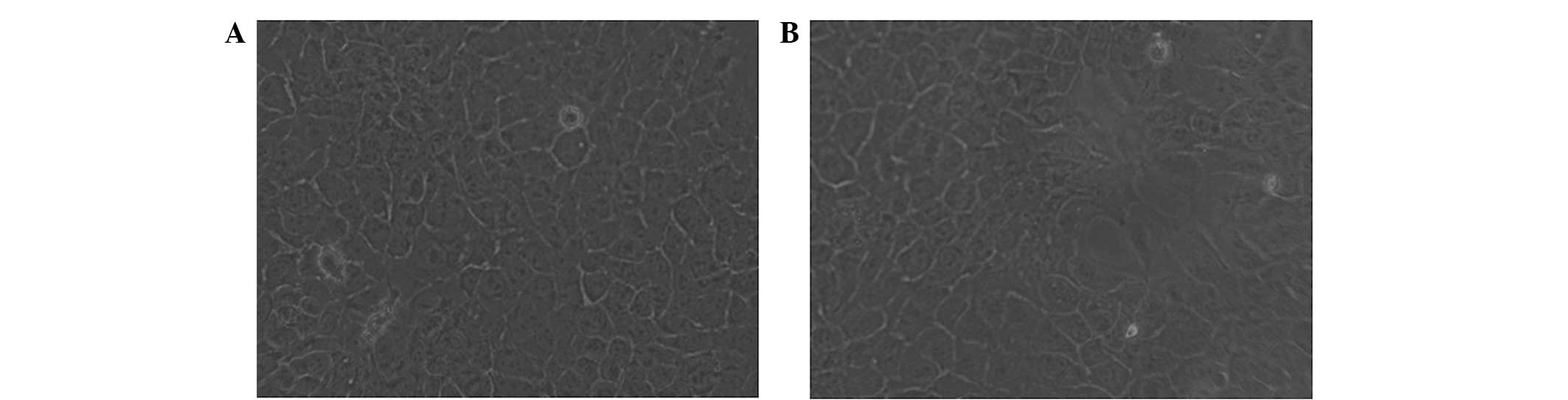
To determine the effects of metformin treatment on the morphology of HaCaT cells, cells were observed under an inverted microscope after 24 h of treatment. The untreated HaCaT cells were in adherent growth and arranged in cobblestone and mosaic shapes. Cells were flat and polygonal with a clear boundary, abundant cytoplasm, and a round or oval nucleus (Fig. 1A). The cells in the metformin group were treated with 50 mM metformin for 24 h. The sizes of treated cells were slightly smaller compared with those of the untreated cells (Fig. 1B). The sizes of cell granules and vacuoles were increased and a number of cells had been killed by the treatment (Fig. 1B).

Figure 1

Morphology analysis of HaCaT cells following metformin treatment. Cells were observed under an inverted microscope (magnification, ×200). (A) Untreated HaCaT cells and (B) HaCaT cells treated with 50 mM metformin for 24 h. HaCat, human immortalized keratinocytes.

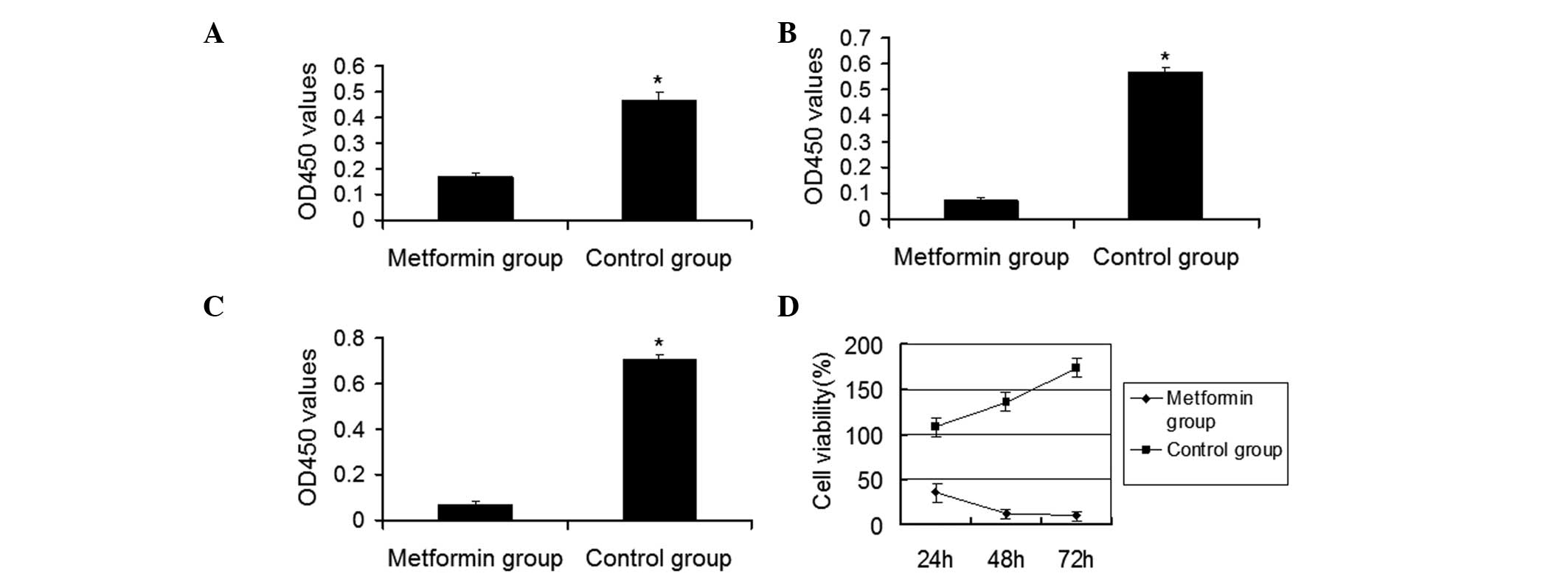
To investigate cell proliferation following metformin treatment, the CCK-8 cell viability assay was performed. As shown in Fig. 2, the survival fractions of HaCaT cells treated with metformin were 36.18, 12.70 and 10.12% at 24, 48 and 72 h, respectively, and were significantly lower compared with those of the untreated control (P<0.05). With extended metformin treatment time, HaCaT cell survival rates gradually decreased.

Figure 2

Cell proliferation analysis of HaCaT cells following metformin treatment. After treatment with 50 mM metformin for 24, 48 and 72 h, cell viability was detected by a CCK-8 kit. The OD values at 450 nm of each group were measured and the cell viability was calculated. OD value at 450 nm of each group at (A) 24, (B) 48 and (C) 72 h. (D) Cell viability of each group at 24, 48 and 72 h following metformin treatment. Cell survival rate (%) was calculated using the following formula: (ODmetformin - ODcontrol)/(ODcontrol - ODmetformin) × 100. Experiments were conducted three times and data are expressed as the mean ± standard deviation. *P<0.05, vs. metformin group. HaCat, human immortalized keratinocytes; OD, optical density; CCK-8, cell proliferation and cytotoxicity assay kit-8.

Collectively, these results suggest that metformin induces changes in HaCaT cell morphology and inhibits HaCaT cell proliferation in vitro.

Effect of metformin on AMPK and ERK1/2 protein expression in HaCaT cells

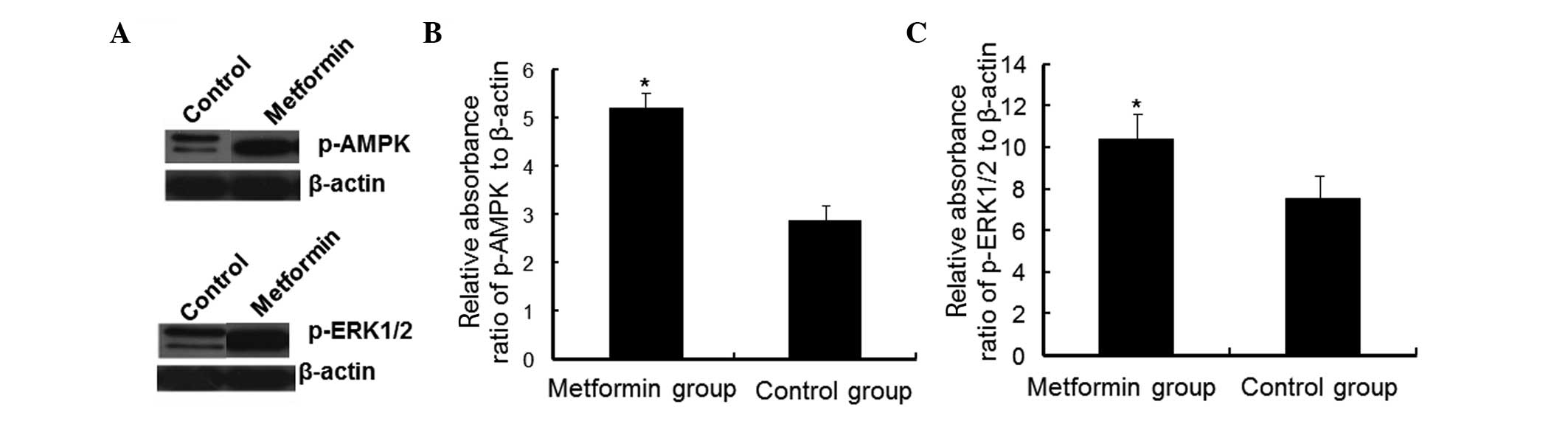
To determine whether the MAPK signaling pathway was activated by metformin, the levels of p-AMPK and p-ERK1/2 were detected by western blot analysis. As shown in Fig. 3A and B, in the cells treated with PBS, the mean absorbance ratio of p-AMPK relative to β-actin in HaCaT cells was 2.856±0.323. However the mean absorbance ratio of the cells treated with metformin was 5.198±0.625. The expression levels of p-AMPK between these two groups were identified to be significantly different (P<0.05; Fig. 3).

Figure 3

Analysis of p-AMPK and p-ERK1/2 expression in HaCaT cells following metformin treatment. Expression of p-AMPK and p-ERK1/2 in HaCaT cells was evaluated by western blot analysis 24 h after metformin treatment. β-actin was used as the internal control. (A) Western blot analysis results of p-AMPK and p-ERK1/2 expression levels and the relative absorbance ratio of (B) p-AMPK to β-actin of each group and (C) p-ERK1/2 to β-actin of each group. Data are presented the mean ± standard deviation of three independent experiments. *P<0.05, vs. the control group. p, phosphorylated; HaCat, human immortalized keratinocytes; AMPK, adenosine monophosphate-activated protein kinase; ERK1/2, extracellular signal-related kinase 1/2.

As shown in Fig. 3A and C, the mean absorbance ratio of p-ERK1/2 relative to β-actin in the untreated HaCaT cells was 7.550±1.087, but the ratio in the cells treated with metformin was 10.430±1.217, with a significant difference between the two groups (P<0.05). These results indicated that the above proteins were activated following metformin treatment for 24 h. After 24 h of metformin treatment, the expression levels of p-AMPK and p-ERK1/2 markedly increased. This suggests that AMPK and ERK1/2 proteins were phosphorylated due to metformin treatment. Therefore, metformin inhibited HaCaT cell proliferation, possibly via a mechanism associated with the activation of the MAPK signaling pathway.

Discussion

In the present study, HaCaT cells were used as an in vitro model of psoriatic keratinocyte proliferation to analyze the effects of metformin on HaCaT cell proliferation and investigate the possible mechanisms of its treatment for psoriasis. The CCK-8 assay showed that metformin significantly inhibited the proliferation of HaCaT cells in vitro. Western blot analysis results suggested that metformin stimulated AMPK and ERK1/2 phosphorylation in HaCaT cells. These observations indicate that metformin activates AMPK in the ERK1/2 signaling pathway and regulates its downstream gene expression to inhibit cell proliferation. In addition, following metformin treatment, the levels of p-AMPK protein were significantly increased.

ERK1/2 is an important signaling pathway in the MAPK family that regulates cell growth and differentiation. The ERK1/2 signaling pathway is closely associated with psoriasis, but whether there is phosphorylation of ERK1/2 in psoriasis lesions remains controversial. ERK1/2 activation is dependent upon stimulus intensity, thus the intensity of ERK activation is likely to affect the response (18). It has been previously reported that the ERK1/2 signaling pathway exhibits dual effects in promoting HaCaT cell proliferation through epidermal growth factors whose effects on HaCaT cell proliferation and activation are associated with ERK signal intensity (19). However, overactivation of the ERK signal inhibits cell proliferation. For example, Pumiglia et al(20) reported that activation of ERK inhibits CDK activity and induces cell cycle arrest through induction of the CDK inhibitor p21Cip1/WAF1. Wang et al (21) also observed that persistent activation of ERK lead to cell cycle arrest. Tang et al(22) showed that ERK activation partially contributed to p21Cip1/WAF1 induction. In the present study, we found that after metformin treatment, HaCaT cell proliferation was inhibited while p-ERK was upregulated. Therefore we suggest that the inhibition of metformin on HaCaT cells is mediated by ERK activation.

In conclusion, the MAPK signal transduction pathway is important in mammalian cells. In the present study, metformin enhanced the expression of p-ERK1/2, suggesting that the mechanism by which metformin inhibits cell proliferation may be associated with activation of the MAPK signaling pathway. However, the mechanisms associated with the transduction of stimulus signals via the ERK1/2 signaling pathway and whether other signaling pathways are involved, requires further study.

Acknowledgements

This study was supported by the National Natural Science Foundation of China (grant no. 81071291).

References

1 

Vestergaard C, Deleuran M, Gesser B and Grønhøj Larsen C: Expression of the T-helper 2-specific chemokine receptor CCR4 on CCR10-positive lymphocytes in atopic dermatitis skin but not in psoriasis skin. Br J Dermato1. 149:457–463. 2003. View Article : Google Scholar : PubMed/NCBI

2 

Bowcock AM and Krueger JG: Getting under the skin: the immunogenetics of psoriasis. Nat Rev Immunol. 5:699–711. 2005. View Article : Google Scholar : PubMed/NCBI

3 

Bhalerao J and Bowcock AM: The genetics of psoriasis: a complex disorder of the skin and immune system. Hum Mol Genet. 7:1537–1545. 1998. View Article : Google Scholar : PubMed/NCBI

4 

Bowcock AM and Cookson WO: The genetics of psoriasis, psoriatic arthritis and atopic dermatitis. Hum Mol Genet. 13:R43–R55. 2004. View Article : Google Scholar : PubMed/NCBI

5 

Abdou AG and Hanout HM: Evaluation of survivin and NF-kappaB in psoriasis, an immunohistochemical study. J Cutan Pathol. 35:445–451. 2008. View Article : Google Scholar : PubMed/NCBI

6 

Rahman M, Alam K, Ahmad MZ, et al: Classical to current approach for treatment of psoriasis: a review. Endocr Metab Immune Disord Drug Targets. 12:287–302. 2012. View Article : Google Scholar : PubMed/NCBI

7 

Fusenig NE and Boukamp P: Multiple stages and genetic alterations in immortalization, malignant transformation, and tumor progression of human skin keratinocytes. Mol Carcinog. 23:144–158. 1998. View Article : Google Scholar : PubMed/NCBI

8 

Stein M, Bernd A, Ramirez-Bosca A, Kippenberger S and Holzmann H: Measurement of anti-inflammatory effects of glucocorticoids on human keratinocytes in vitro. Comparison of normal human keratinocytes with the keratinocyte cell line HaCaT. Arzneimittelforschung. 47:1266–1270. 1997.PubMed/NCBI

9 

Müller K and Prinz H: Antipsoriatic anthrones with modulated redox properties. 4. Synthesis and biological activity of novel 9, 10-dihydro-1,8-dihydroxy-9-oxo-2-anthracenecarboxylic and -hydroxamic acids. J Med Chem. 40:2780–2787. 1997.PubMed/NCBI

10 

Kahn BB, Alquier T, Caning D and Hardie DG: AMP-activated protein kinase: ancient energy gauge provides clues to modern understanding of metabolism. Cell Metab. 1:15–25. 2005. View Article : Google Scholar : PubMed/NCBI

11 

Witters LA: The blooming of the French lilac. J Clin Invest. 108:1105–1107. 2001. View Article : Google Scholar : PubMed/NCBI

12 

Zhang ZJ, Zheng ZJ, Shi R, Su Q, Jiang Q and Kip KE: Metformin for liver cancer prevention in patients with type 2 diabetes: a systematic review and meta-analysis. J Clin Endocrinol Metab. 97:2347–2353. 2012. View Article : Google Scholar : PubMed/NCBI

13 

Buzzai M, Jones RG, Amaravadi RK, Lum JJ, DeBerardinis RJ, Zhao F, Viollet B and Thompson CB: Systemic treatment with the antidiabetic drug metformin selectively impairs p53-deficient tumor cell growth. Cancer Res. 67:6745–6752. 2007. View Article : Google Scholar : PubMed/NCBI

14 

Ben Sahra I, Laurent K, Loubat A, et al: The antidiabetic drug metformin exerts an antitumoral effect in vitro and in vivo through a decrease of cyclin D1 level. Oncogene. 27:3576–3586. 2008.PubMed/NCBI

15 

Dowling RJ, Zakikhani M, Fantus IG, Pollak M and Sonenberg N: Metformin inhibits mammalian target of rapamycin-dependent translation initiation in breast cancer cells. Cancer Res. 67:10804–10812. 2007. View Article : Google Scholar : PubMed/NCBI

16 

Rattan R, Giri S, Hattmann L and Shridhar V: Metformin attenuates ovarian cancer cell growth in an AMP-kinase dispensable manner. J Cell Mol Med. 15:166–178. 2011. View Article : Google Scholar : PubMed/NCBI

17 

Zakikhani M, Dowling R, Fantus IG, Sonenberg N and Pollak M: Metformin is an AMP kinase-dependent growth inhibitor for breast cancer cells. Cancer Res. 66:10269–10273. 2006. View Article : Google Scholar : PubMed/NCBI

18 

Bosch M, Gil J, Bachs O and Agell N: Calmodulin inhibitor W13 induces sustained activation of ERK2 and expression of p21(cip1). J Biol Chem. 273:22145–22150. 1998. View Article : Google Scholar : PubMed/NCBI

19 

Wang H, Zeng Y, Ji Y and Xing F: Two-sided effect of ERK signal pathway on HaCaT cell proliferation induced by EGF. Basic & Clinical Medicine. 26:471–475. 2006.(In Chinese).

20 

Pumiglia KM and Decker SJ: Cell cycle arrest mediated by the MEK/mitogen-activated protein kinase pathway. Proc Natl Acad Sci USA. 94:448–452. 1997. View Article : Google Scholar : PubMed/NCBI

21 

Wang Z, Zhang B, Wang M and Carr BI: Persistent ERK phosphorylation negatively regulates cAMP response element-binding (CREB) activity via recruitment of CREB-binding protein to pp90RSK. J Biol Chem. 278:11138–11144. 2003. View Article : Google Scholar : PubMed/NCBI

22 

Tang D, Wu D, Hirao A, et al: ERK activation mediates cell cycle arrest and apoptosis after DNA damage independently of p53. J Biol Chem. 277:12710–12717. 2002. View Article : Google Scholar : PubMed/NCBI

Related Articles

  • Abstract
  • View
  • Download
  • Twitter
Copy and paste a formatted citation
Spandidos Publications style
Li W, Ma W, Zhong H, Liu W and Sun Q: Metformin inhibits proliferation of human keratinocytes through a mechanism associated with activation of the MAPK signaling pathway. Exp Ther Med 7: 389-392, 2014.
APA
Li, W., Ma, W., Zhong, H., Liu, W., & Sun, Q. (2014). Metformin inhibits proliferation of human keratinocytes through a mechanism associated with activation of the MAPK signaling pathway. Experimental and Therapeutic Medicine, 7, 389-392. https://doi.org/10.3892/etm.2013.1416
MLA
Li, W., Ma, W., Zhong, H., Liu, W., Sun, Q."Metformin inhibits proliferation of human keratinocytes through a mechanism associated with activation of the MAPK signaling pathway". Experimental and Therapeutic Medicine 7.2 (2014): 389-392.
Chicago
Li, W., Ma, W., Zhong, H., Liu, W., Sun, Q."Metformin inhibits proliferation of human keratinocytes through a mechanism associated with activation of the MAPK signaling pathway". Experimental and Therapeutic Medicine 7, no. 2 (2014): 389-392. https://doi.org/10.3892/etm.2013.1416
Copy and paste a formatted citation
x
Spandidos Publications style
Li W, Ma W, Zhong H, Liu W and Sun Q: Metformin inhibits proliferation of human keratinocytes through a mechanism associated with activation of the MAPK signaling pathway. Exp Ther Med 7: 389-392, 2014.
APA
Li, W., Ma, W., Zhong, H., Liu, W., & Sun, Q. (2014). Metformin inhibits proliferation of human keratinocytes through a mechanism associated with activation of the MAPK signaling pathway. Experimental and Therapeutic Medicine, 7, 389-392. https://doi.org/10.3892/etm.2013.1416
MLA
Li, W., Ma, W., Zhong, H., Liu, W., Sun, Q."Metformin inhibits proliferation of human keratinocytes through a mechanism associated with activation of the MAPK signaling pathway". Experimental and Therapeutic Medicine 7.2 (2014): 389-392.
Chicago
Li, W., Ma, W., Zhong, H., Liu, W., Sun, Q."Metformin inhibits proliferation of human keratinocytes through a mechanism associated with activation of the MAPK signaling pathway". Experimental and Therapeutic Medicine 7, no. 2 (2014): 389-392. https://doi.org/10.3892/etm.2013.1416
Follow us
  • Twitter
  • LinkedIn
  • Facebook
About
  • Spandidos Publications
  • Careers
  • Cookie Policy
  • Privacy Policy
How can we help?
  • Help
  • Live Chat
  • Contact
  • Email to our Support Team