Introduction
Stroke is a leading cause of disability and death
world-wide and it is lack of effective treatments for acute stroke.
Cerebral small vessel disease (CSVD) contributes to only 20–30% of
all strokes (1), and it
substantially increases the risk of stroke in the future (2) and accounts for about 45% of dementia
cases (3). Progressive CSVD and
stroke lead to decline of cognition, causing a major burden on the
individual and the healthcare system (4,5). One in
three U.S. adults-67 million people-is estimated to have high blood
pressure, which if not controlled can result in CSVD and cause
cerebral stroke (6). Stroke-prone
spontaneously hypertensive (SHRsp) rats, derived from Wistar-Kyoto
(WKY) rats, serve as a widely-used model of severe hypertension,
given that the rats naturally progress to hypertension starting
from 4 weeks to 12 weeks of age (7,8) and more
than 95% of rats die of stroke (9).
In SHRsp rats, cerebral blood flow could be reduced by severe
hypertension and monocyte adhesion to the cerebral artery
endothelium can be increased (10).
The increased blood pressure induces cerebral vasogenic oedema
(11).
D-Limonene, a common natural monocyclic monoterpene,
also known as 1-methyl-4-(1-methyl ethenyl) cyclohexene, which is
widely distributed as a natural nonnutritive constituent in a
variety of foods, including fruits (citrus fruits, especially lemon
and orange) (12), vegetables
(carrots) (13), coffee, beverages,
meat, and spices (nutmeg) (14). It
is found naturally in orange juice at an average concentration of
100 mg/l (15). D-Limonene is
usually used as a lemon fragrance in soaps, lotions, creams,
detergents, and perfumes and as a flavoring agent in foods,
beverages, and chewing gum (15). In
the last years, numerous studies have found that D-limonene
possesses powerful antioxidative properties and protects organisms
from oxidative damage (16,17). In addition, D-limonene exhibits
antitumorigenic, hepatoprotective, immunomodulatory, and
anti-inflammatory properties (18–22). In
particular, D-limonene has been shown to attenuate stress-induced
hypertension and stress responses in SHRsp rats (23,24).
However, the effect of D-limonene on cognitive and memory function
and ischemic injury in SHRsp rats is not clear.
The present study aimed to evaluate the therapeutic
efficacy of D-limonene against the ischemia-resulted injury of
cognitive and memory and behavioral function and vascular
remodeling. We showed that D-limonene substantially attenuated the
decline of cognitive and memory and behavioral function and
ischemic injury in SHRsp rats.
Materials and methods
Animals and treatment
WKY and SHRsp rats were purchased from SLK
(Shanghai, China) and then maintained in rooms under conditions of
controlled temperature (21±2°C), humidity (60±10%), and a 12 h
light/dark cycle (exposed to artificial light from 7:00 am to 7:00
pm) and air ventilation (15 min/h). The rats were fed with a
standard rodent laboratory diet and water ad libitum. Adequate
measures were taken to minimize pain or discomfort, and the
experiments were carried out in accordance with the conventional
guidelines for experimentation with animals (National Institute of
Health, Publication no. 85-23, revised 1996). All animal procedures
were approved by the Review Board of Puai Hospital of Tongji
Medical College, Huazhong University of Science and Technology.
After 1 week acclimatization, male 15-week old rats
with stroke surgery were randomly allocated the following groups:
(1) WKY: sham control (n=16);
(2) SHRsp: hypertensive sham (SHRSP
alone, n=16); (3) SHRSP undergoing
transient middle cerebral artery occlusion (tMCAO) for 60 min and
receiving vehicle (SHRSP + tMCAO, n=16); (4) SHRSP undergoing tMCAO and treated with
D-limonene (SHRSP + tMCAO + D-limonene, n=16). 1 h after the
induction of tMCAO, animals were treated with 20 mg/kg of
D-limonene (97%; Sigma-Aldrich, St. Louis, MO, USA)
intraperitoneally once daily for 14 days. The dose of D-limonene
used in the study was selected according to our preliminary results
and previous studies (25,26). We have observed mild liver toxicity
of 50 mg/kg D-limonene in mice.
Transient cerebral ischemia induced by occlusion of
the right middle cerebral artery (MCA) was performed as previous
described (27,28). A midline incision was cut on the
ventral surface of the neck to expose the right common carotid
arteries which were ligated with 6.0 silk suture. The internal
carotid and pterygopalatine artery were temporarily occluded for 60
min using a microvascular cliRelative cerebral blood flow (CBF) was
monitored during the process of occlusion. After the 60 min of
tMCAO, reperfusion was allowed by withdrawing the occluding
filament back into the common carotid artery. Relative CBF was then
monitored for 5 min and then the wound was sutured and the rats
were then permitted to recover from anesthesia. Drug treatment was
performed 5 min before the reperfusion. Sham-operated WKY and SHRSP
rats were subjected only to exposure of the carotid arteries but
not the occlusion.
Blood pressure measurement
Systolic blood pressure was determined in quiet
conditions by means of the tail-cuff method after warming up the
apparatus platform to 37°C for 10 min. Each rat was introduced into
a restrainer and a blood pressure tail-cuff was affixed to the base
of the tail.
Morris water maze test
The Morris water maze test was conducted to evaluate
the memory and cognitive function in rats. The Morris water maze
test was performed as previously. In brief, a circular pool (1.3 m
in diameter, 50 cm in depth) was filled with room-temperature
water. 1 cm below the surface of the water, a transparent platform
was placed in the southeastern quadrant. On the first day, the rats
were put into the pool without the platform for 2 min to get used
to the experimental environment. Over the next 4 days, the platform
acquisition test was conducted 4 times per day. The rats were
released from different starting points and allowed to swim for 60
s to search for the platform. The escape latency time was defined
by the time spent to find the hidden platform by the rats and times
longer than 60 s were recorded as 60 s. 24 h later, the rats were
released from a new start position in the pool without the
platform, which was termed the probe trial. The amount of time
spent in the southeastern quadrant was recorded.
Novel object recognition test
The rats were individually placed into a plastic box
with two objects with different forms. The rats were allowed to
freely move in the box for 5 min. This adaptive training was
conducted again after 180 min. In the short-term memory test, we
replace one of the objects 180 min after the second training. The
time spent by each animal with the novel object and the familiar
object was recorded during a 10 min test period. In the long-term
memory test, we replace the novel object 24 h after the second
training. The time spent by each rat with the novel object and the
familiar object was again recorded during a 10 min test period. In
the tests, exploration was defined as sniffing or touching the
object with the nose or foreleg. the objects were washed after each
test to to avoid olfactory perception by the next rat.
Behavioral tests
Grip strength
The degree of force necessary to make the animal
release a pull grid assembly with its forepaw was evaluated using a
grip strength meter (Columbus Instruments, Columbus, OH, USA) as
previously described (28). For each
rat, a digital reading (in Newtons) of two successive trials was
recorded and analyzed.
Somatosensory neglect test
The sensory impairments were detected by measurement
of the detection of, and reaction to, small pieces of adhesive tape
applied to the forelimbs after MCAO. We place a removable sticky
tape on the ventral side of the animal's paw contralateral to the
induced stroke. The time spent by each rat to contact or sense the
tape and the time spent to remove it was recorded for 180 s. Two
successful trials for each animal were recorded for averaged
analysis.
Spontaneous locomotor activity
Spontaneous motor activity was examined by Digiscan
activity-monitoring boxes (AccuScan Instruments, Columbus, OH,
USA). Each test was performed under red-light condition and lasted
5 min.
Measurement of infarct volume
Rats were deeply anesthetized using isoflurane.
Transcardial perfusion was conducted using cold saline followed by
10% buffered formalin. Brains were collected and then fixed in
gradient sucrose solution, and cut coronally into 20-µm sections as
previously described (29).
Quantitative real-time PCR
Total RNA was extracted from brains using a RNA
isolation kit and then reversely transcribed into cDNA using an
miScript II RT Kit (Thermo Fisher Scientific Inc., Waltham, MA,
USA), according to the manufacturer's instructions. cDNA was used
as a template in PCR reactions using gene-specific primer pairs.
Real-time PCR was performed using an miScript SYBR Green PCR Kit
(Thermo Fisher Scientific Inc., Waltham, MA, USA). β-actin was used
as endogenous control. The fold changes of target gene expression
were determined with the ΔΔCt method, and the relative expression
of these genes was calculated by the 2−ΔCT method and
normalized to β-actin. IL-1 β forward primer:
5′-CAGGCTTCGAGATGAACAACAA-3′, and reverse primer:
5′-GTCCATTGAGGTGGAGAGCTTT-3′. MCP-1 forward primer:
5′-CTGTCACGCTTCTGGGCCTGT-3′, and reverse primer:
5′-GCAGCAGGTGAGTGGGGCAT-3′. COX-2 forward primer:
5′-CCAGAGCAGAGAGATGAAATACCA-3′, and reverse primer:
5′-GCAGGGCGGGATACAGTTC-3′. VEGF forward primer:
5′-GATGAGATAGAGTATATCTTCAAGCCGT-3′, and reverse primer:
5′-TCTATCTTTCTTTGGTCTGCATTCAC-3′. β-actin forward primer,
5′CTCCTGCTTGCTGATCCACATC-3′, and reverse primer:
5′-CCACTGCCGCATCCTCTT-3′.
Oxidative stress
Superoxide dismutase (SOD) and catalase (CAT) and
the levels of glutathione (GSH) and malondialdehyde (MDA) were
determined using assay kits purchased from Nanjing Jiancheng
Company (Jiangsu, China) as per the manufacturer's protocols. 20-µm
thick frozen brain sections were incubated with dihydroethidium
(DHE) (10 µM) (Invitrogen, Carlsbad, CA) in PBS for 30 min at 37°C
in a humidified chamber in dark environment. The DHE-positive cells
were observed under a fluorescence microscope and the positive
cells were counted using with Image J software and expressed as
percentage of control.
Statistical analysis
Data were expressed as mean ± SEM. Data was analyzed
using Graph Pad Prism software by one-way analysis of variance
followed by a Turkey test for multiple comparisons. P<0.05 was
considered to be statistically significant.
Results
D-Limonene reduces blood pressure in
SHRsp rats after stroke
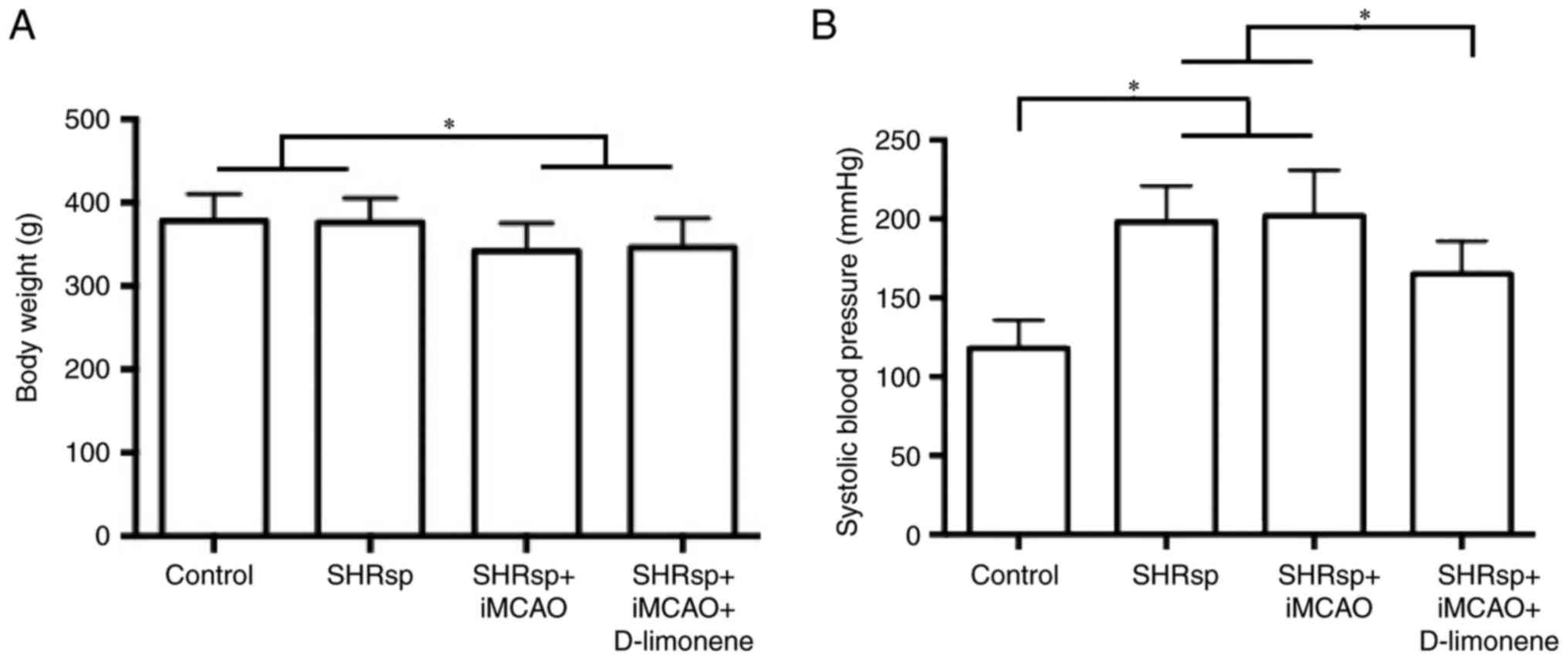
Body weights were not significantly different
between WKY and SHRsp rats (Fig.
1A). Stroke resulted in a marked decrease of body weight
(Fig. 1A). D-Limonene did not
significantly alter the body in SHRsp rats after stroke (Fig. 1A). The systolic blood pressure in
SHRsp rats was significantly higher than that in WKY rats (Fig. 1B). Stroke did not result in a
remarkable increase of systolic blood pressure in SHRsp rats
(Fig. 1B). D-Limonene protected
against the increase of systolic blood pressure SHRsp rats after
stroke (Fig. 1B).
D-Limonene attenuates memory and
cognitive impairment in SHRsp rats after stroke
The function of memory and cognition was evaluated
by means of Morris water maze test and novel object recognition
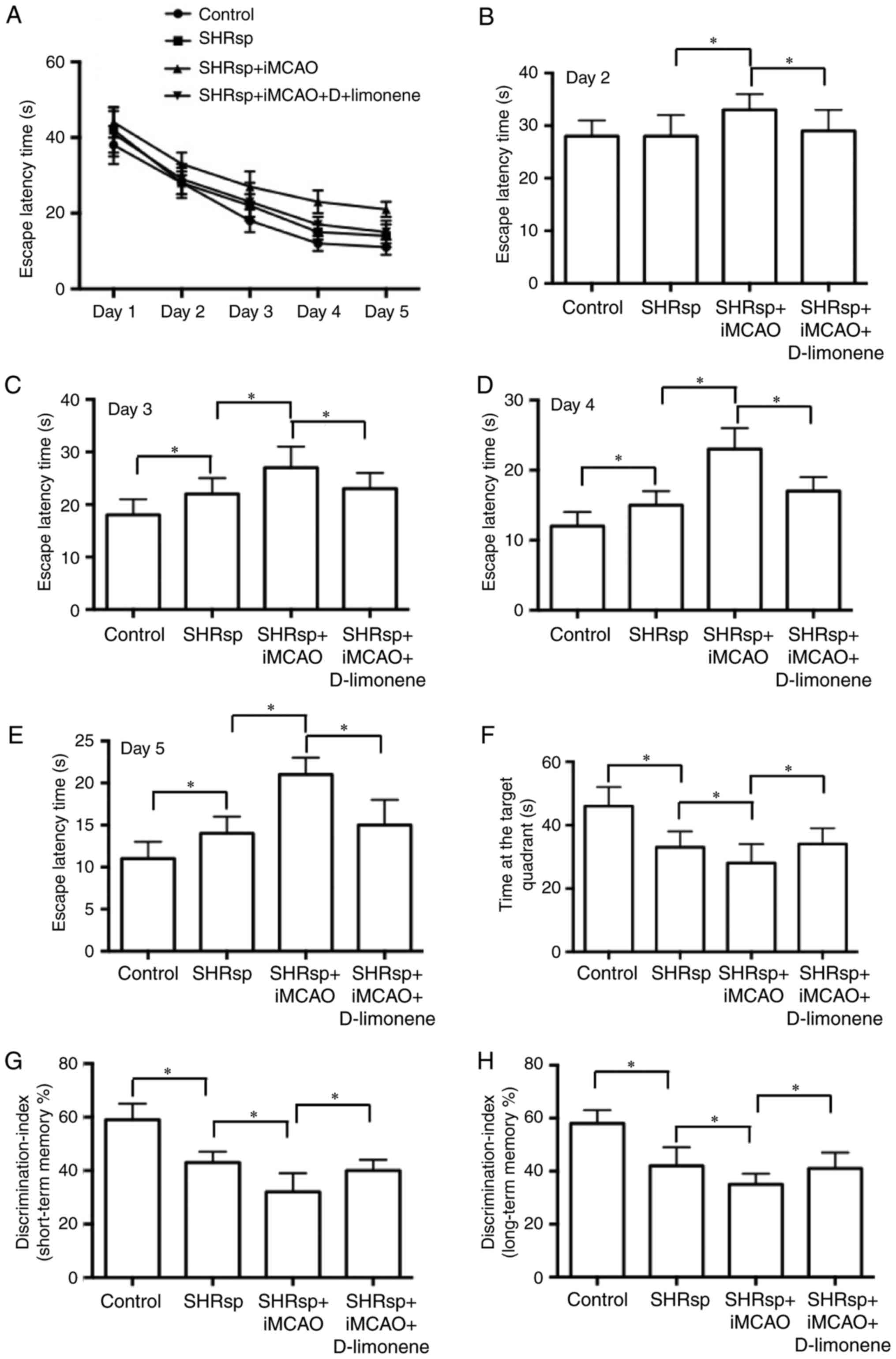
test. On the first day, no significant difference was observed in
the hidden platform acquisition test among different groups. On the
3–5 days, the escape latency time in SHRsp rats was remarkably
longer, compared with the WKY rats (Fig.
2A-E). Stroke resulted in a significant increase of escape
latency time in SHRsp rats (Fig.
2A-E). The administration of D-Limonene markedly decreased the
escape latency time in SHRsp rats after stroke (Fig. 2A-E). SHRsp rats spent less time in
the target quadrant in the probe trial than that in WKY rats
(Fig. 2F). Stroke resulted in a
significant decrease of time spent in the target quadrant in the
probe trial in SHRsp rats (Fig. 2F).
The administration of D-Limonene markedly increased the time spent
in the target quadrant in the probe trial in SHRsp rats after
stroke (Fig. 2F).
In the novel object recognition tests, there was a
marked decrease in the capacity to distinguish between familiar
objects and novel objects in the SHRsp rats, compared with that in
WKY rats (Fig. 2G and H). Stroke
resulted in a significant decrease of in the capacity to
distinguish between familiar objects and novel objects in the SHRsp
rats (Fig. 2G and H). The
administration of D-Limonene markedly increased the capacity to
distinguish between familiar objects and novel objects in the SHRsp
rats in the short and long term memory tests (Fig. 2G and H).
D-Limonene attenuates behavioral
impairment and infarct size in SHRsp rats after stroke
The behavioral tests were performed to evaluate the
effect of D-Limonene on behavioral impairment in SHRsp rats after
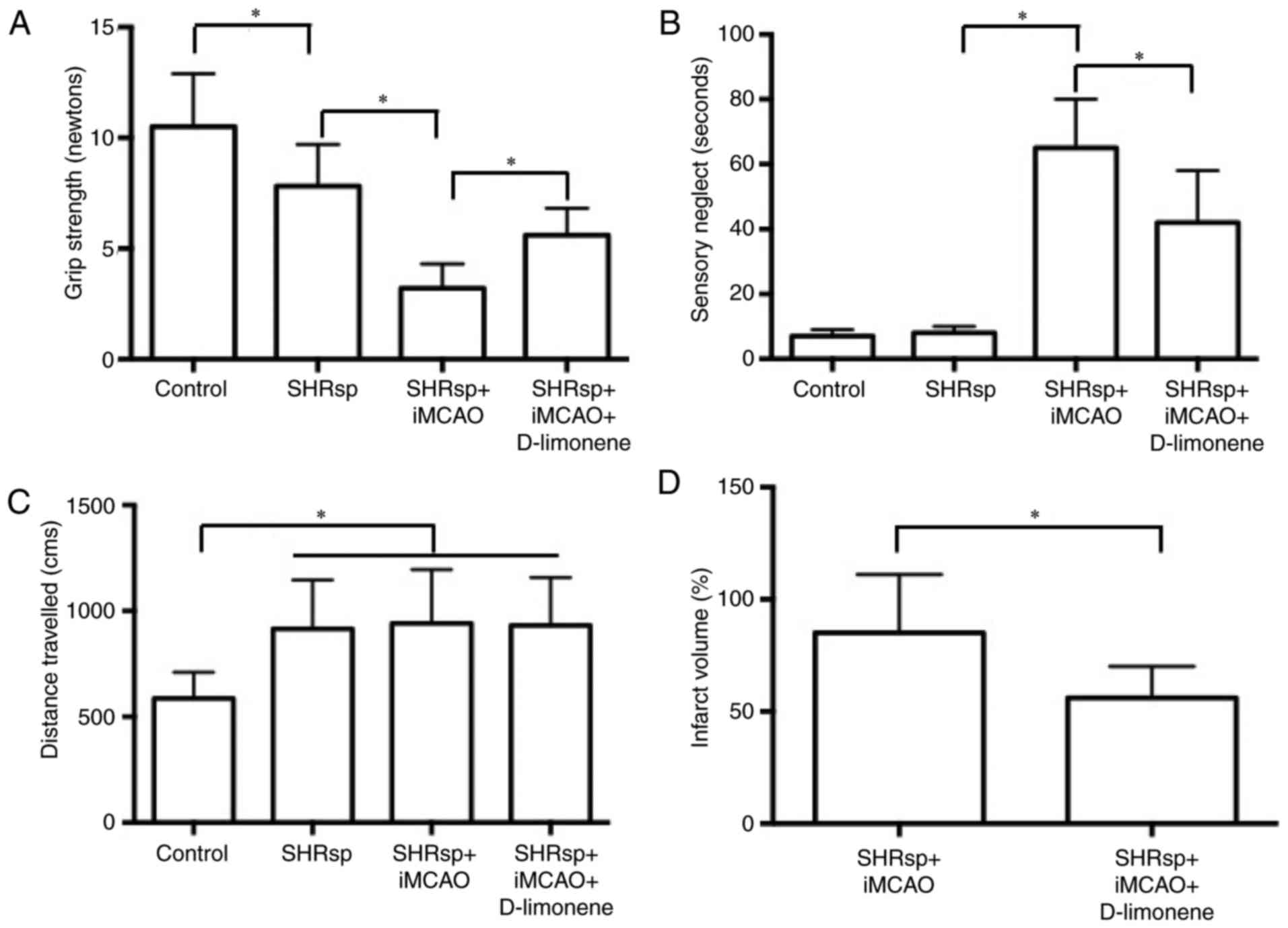
stroke. Grip strength in SHRsp rats was lower than that in WKY rats
(Fig. 3A). Stroke resulted in a
significant decrease of grip strength in the SHRsp rats (Fig. 3A). The administration of D-Limonene
markedly increased grip strength in SHRsp rats after stroke
(Fig. 3A). There was no significant
difference of sensory neglect between SHRsp and WKY rats (Fig. 3B). Stroke resulted in a significant
increase of sensory neglect in the SHRsp rats (Fig. 3B). The administration of D-Limonene
markedly decreased sensory neglect in SHRsp rats after stroke
(Fig. 3B). In the test of
spontaneous motor activity, the distance travelled by SHRsp rats
was significantly increased (Fig.
3C). However, stroke and D-Limonene had no significant effect
on the distance travelled by the rats in SHRsp group (Fig. 3C). Ischemia-induced infarct volume in
SHRsp rats was evaluated. As shown in Fig. 3D, the infarct volume induced by
ischemia was significantly reduced by D-Limonene
administration.
D-Limonene attenuates inflammation and
increases angiogenesis in SHRsp rats after stroke
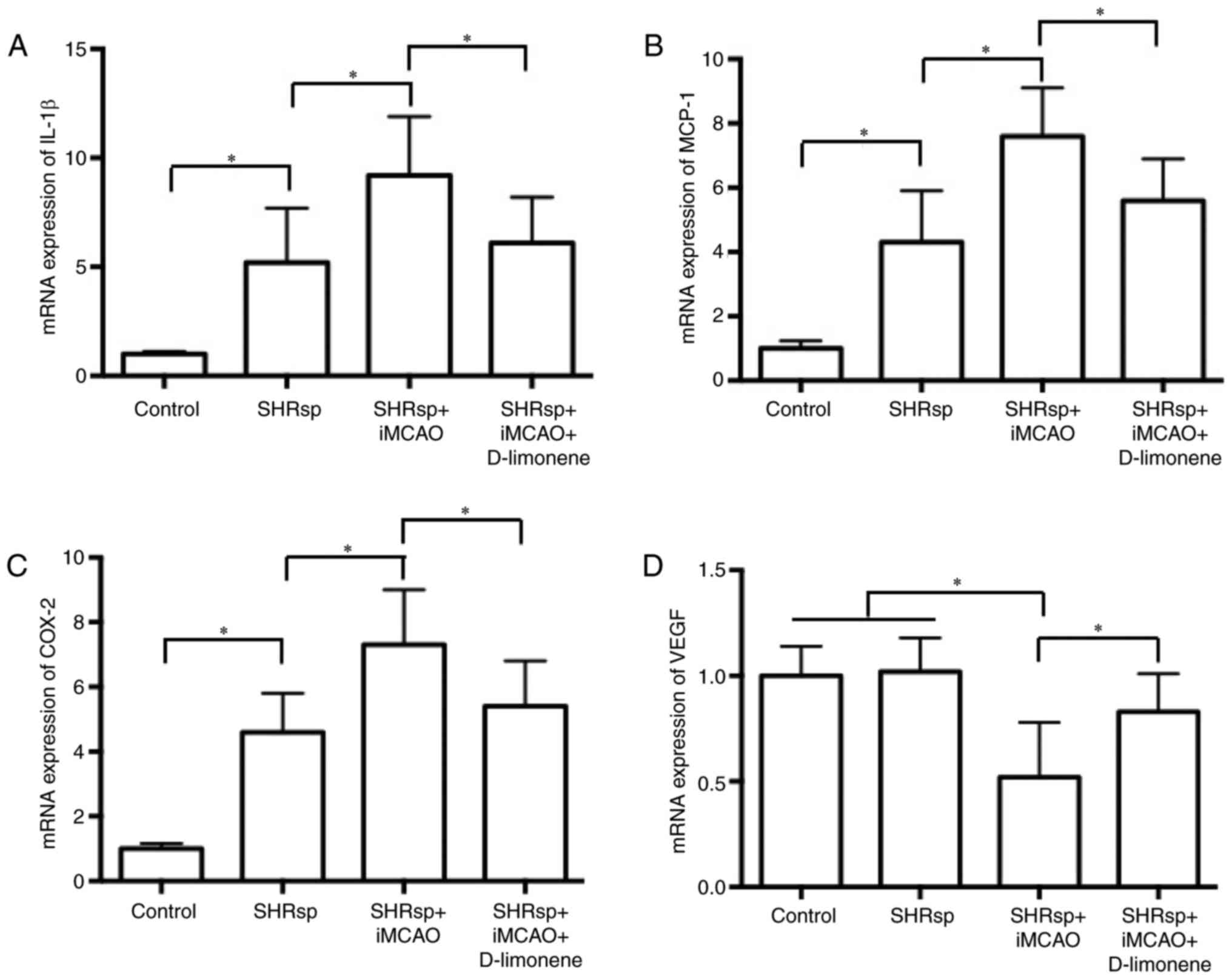
As shown in Fig.
4A-C, the mRNA expression of IL-1β, monocyte chemoattractant
protein-1 (MCP-1) and cyclooxygenase-2 (COX-2) was significantly
higher in the brain of SHRsp rats compared with that of WKY rats.
Stroke resulted in a significant increase in the mRNA expression of
IL-1β, MCP-1 and COX-2 in the SHRsp rats (Fig. 4A-C). The administration of D-Limonene
markedly decreased the mRNA expression of IL-1β, MCP-1 and COX-2 in
SHRsp rats after stroke (Fig. 4A-C).
As shown in Fig. 4D, the mRNA
expression of vascular endothelial growth factor (VEGF) was
significantly decreased in the brain of SHRsp rats compared with
that of WKY rats. Stroke resulted in a significant decrease in the
mRNA expression of VEGF in the SHRsp rats (Fig. 4D). The administration of D-Limonene
markedly increased the mRNA expression of VEGF in SHRsp rats after
stroke (Fig. 4D).
D-Limonene attenuates oxidative stress
in SHRsp rats after stroke
The effect of D-Limonene on oxidative stress under
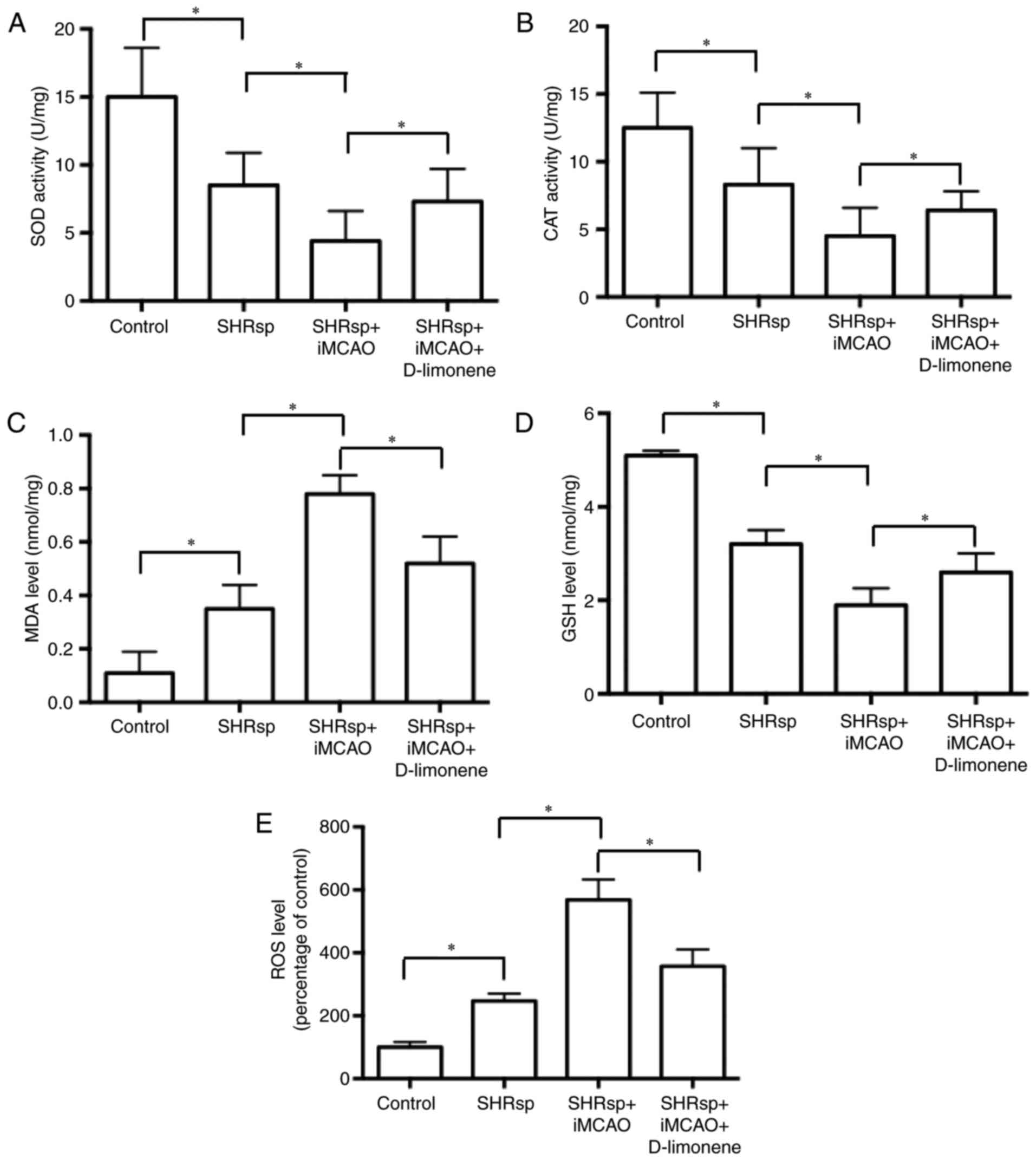
stroke condition was determined. As shown in Fig. 5, in SHRsp rats, the activities of
antioxidant enzymes, including SOD (A) and CAT (B), was decreased,
the level of MDA (C) was increased, the level of GSH (D) was
decreased, and DHE-staining (E) was increased. Stroke resulted in a
decrease of the activities of SOD and CAT, an increase of MDA, a
decrease of GSH and an increase of DHE-staining (Fig. 5). The administration of D-Limonene
markedly increased the activities of SOD and CAT, decreased the
levels of MDA, increased the GSH level and decreased the
DHE-staining in SHRsp rats after stroke (Fig. 5).
Discussion
Previous studies have showed that D-Limonene can
reduce monocrotaline-induced pulmonary hypertension (30). Natural products containing D-Limonene
have been shown to attenuate stress-induced hypertension and stress
responses in SHRsp rats (23,24). In
our study, we examined the effect of D-Limonene on changes of
hypertension and ischemia-resulted neurological and vascular
impairment in SHRsp rats. We showed that although the systolic
blood pressure was not altered by ischemia operation, D-Limonene
significantly decreased the systolic blood pressure in SHRsp rats
after stroke. The administration of D-Limonene notably decreased
the escape latency time and increased the time spent in the target
quadrant in the probe trial in Morris water maze test, and markedly
increased the capacity to distinguish between familiar objects and
novel objects in the SHRsp rats in the short and long term memory
tests. The results suggested that D-Limonene protected against
ischemia-induced memory and cognitive impairment under the
condition of hypertension.
It has been shown that D-Limonene may inhibit
stimulant-induced behavioral changes via regulating dopamine levels
and 5-HT receptor function (31). In
the current study, we also evaluated the effect of D-Limonene on
behavioral changes in SHRsp rats after stroke. We found that the
administration of D-Limonene markedly increased grip strength and
decreased sensory neglect in SHRsp rats after stroke, indicating
that D-Limonene protected against ischemia-induced behavioral
impairment under the condition of hypertension. The improvement of
functional deficits could be attributed to the attenuation of
infarct size after stroke.
Although the exact mechanisms and signaling pathways
not clear, cerebral inflammation is implicated in the pathogenesis
of hypertension and stroke. After transient cerebral ischemia,
macrophages could be activated and produced IL-1β, which is an
important mediator of neurodegeneration. Increase of cytokines and
regulators play critical roles in cerebral vascular damage and
stroke injury. In the study, we found that D-Limonene inhibited the
increase of IL-1β, MCP-1 and COX-2 in SHRsp rats after stroke,
indicating the amelioration of cerebral inflammation.
Vascular remodeling after stroke is an important
process for neural regeneration (32,33).
Under the condition of hypertension, VEGF expression is reduced,
resulting in reduction of nitric oxide production and leading to
vascular constriction and reduction in sodium ion renal excretion
(34). We found that stroke-resulted
reduction of VEGF expression was significantly inhibited by
D-Limonene. We speculated that D-Limonene may promote vascular
remodeling through upregulation of VEGF expression.
SHRsp rats can produce more hydroxyl radicals than
WKY rats, making them more vulnerable to oxidant damage after
transient ischemic stroke (9).
Attenuation of ROS levels has been shown to promote hypertensive
cerebral vessel remodeling (35).
Increase of ROS production, resulting in oxidative stress and
playing critical roles in a variety of brain and neurological
diseases. Previous studies have shown that D-Limonene have
potential antioxidant activities under different conditions. In the
current study, we also found that D-Limonene exhibited potent
antioxidant effects through increasing SOD and CAT activities,
decreasing MDA levels, increasing GSH levels and decreasing ROS
levels. The results suggested that the antioxidant role of
D-Limonene may be involved in the protective effects against
neurological and vascular impairment in SHRsp rats after
stroke.
In conclusion, we found that D-Limonene decreased
blood pressure in ischemia-treated SHRsp rats and protected against
memory and cognitive and behavioral impairment in SHRsp rats after
stroke. Inhibition of cerebral inflammation, vascular remodeling
and antioxidant activities of D-Limonene may be involved in the
protective effects against ischemia-induced damage in SHRsp rats.
In future studies, more attention should be paid to explore the
molecular mechanism and find the target of D-Limonene. Overall, our
study identified D-Limonene as a potential therapeutic candidate
for treatment of stroke-resulted cerebral and vascular damage under
the condition of hypertension.
References
|
1
|
Pantoni L: Cerebral small vessel disease:
From pathogenesis and clinical characteristics to therapeutic
challenges. Lancet Neurol. 9:689–701. 2010. View Article : Google Scholar : PubMed/NCBI
|
|
2
|
Debette S and Markus HS: The clinical
importance of white matter hyperintensities on brain magnetic
resonance imaging: Systematic review and meta-analysis. BMJ.
341:c36662010. View Article : Google Scholar : PubMed/NCBI
|
|
3
|
Madigan JB, Wilcock DM and Hainsworth AH:
Vascular contributions to cognitive impairment and dementia:
Topical review of animal models. Stroke. 47:1953–1959. 2016.
View Article : Google Scholar : PubMed/NCBI
|
|
4
|
Jokinen H, Kalska H, Ylikoski R, Madureira
S, Verdelho A, van der Flier WM, Scheltens P, Barkhof F, Visser MC,
Fazekas F, et al: Longitudinal cognitive decline in subcortical
ischemic vascular disease-the LADIS Study. Cerebrovasc Dis.
27:384–391. 2009. View Article : Google Scholar : PubMed/NCBI
|
|
5
|
Gouw AA, van der Flier WM, Pantoni L,
Inzitari D, Erkinjuntti T, Wahlund LO, Waldemar G, Schmidt R,
Fazekas F, Scheltens P, et al: On the etiology of incident brain
lacunes: Longitudinal observations from the LADIS study. Stroke.
39:3083–3085. 2008. View Article : Google Scholar : PubMed/NCBI
|
|
6
|
Centers for Disease Control and Prevention
(CDC), . Prevalence of stroke-United States, 2006–2010. MMWR Morb
Mortal Wkly Rep. 61:379–82. 2012.PubMed/NCBI
|
|
7
|
Yamori Y: Importance of genetic factors in
stroke: An evidence obtained by selective breeding of stroke-prone
and -resistant SHR. Jpn Circ J. 38:1095–1000. 1974. View Article : Google Scholar : PubMed/NCBI
|
|
8
|
Rubattu S, Lee-Kirsch MA, DePaolis P,
Giliberti R, Gigante B, Lombardi A, Volpe M and Lindpaintner K:
Altered structure, regulation, and function of the gene encoding
the atrial natriuretic peptide in the stroke-prone spontaneously
hypertensive rat. Circ Res. 85:900–905. 1999. View Article : Google Scholar : PubMed/NCBI
|
|
9
|
Yamagata K, Kitazawa T, Shinoda M, Tagawa
C, Chino M and Matsufuji H: Stroke status evoked adhesion molecule
genetic alterations in astrocytes isolated from stroke-prone
spontaneously hypertensive rats and the apigenin inhibition of
their expression. Stroke Res Treat. 2010:pii: 3863892010.
|
|
10
|
Tagami M, Ikeda K, Yamagata K, Nara Y,
Fujino H, Kubota A, Numano F and Yamori Y: Vitamin E prevents
apoptosis in hippocampal neurons caused by cerebral ischemia and
reperfusion in stroke-prone spontaneously hypertensive rats. Lab
Invest. 79:609–615. 1999.PubMed/NCBI
|
|
11
|
Mărgăritescu O, Pirici D and Mărgăritescu
C: VEGF expression in human brain tissue after acute ischemic
stroke. Rom J Morphol Embryol. 52:1283–1292. 2011.PubMed/NCBI
|
|
12
|
Banthorpe DV, Charlwood BV and Francis MJ:
The biosynthesis of monoterpenes. Chem Rev. 72:115–155. 1972.
View Article : Google Scholar : PubMed/NCBI
|
|
13
|
Wattenberg LW: Inhibition of
carcinogenesis by minor anutrient constituents of the diet. Proc
Nutr Soc. 49:pp. 173–183. 1990; View Article : Google Scholar : PubMed/NCBI
|
|
14
|
Marshall JR: Improving Americans'
diet-setting public policy with limited knowledge. Am J Public
Health. 85:1609–1611. 1995. View Article : Google Scholar : PubMed/NCBI
|
|
15
|
National Toxicology Program, . NTP
Toxicology and Carcinogenesis Studies of d-Limonene (CAS No.
5989-27-5) in F344/N Rats and B6C3F1 Mice (Gavage Studies). Natl
Toxicol Program Tech Rep Ser. 347:1–165. 1990.PubMed/NCBI
|
|
16
|
Chaudhary SC, Siddiqui MS, Athar M and
Alam MS: D-Limonene modulates inflammation, oxidative stress and
Ras-ERK pathway to inhibit murine skin tumorigenesis. Hum Exp
Toxicol. 31:798–811. 2012. View Article : Google Scholar : PubMed/NCBI
|
|
17
|
Tounsi MS, Wannes WA, Ouerghemmi I, Jegham
S, Ben Njima Y, Hamdaoui G, Zemni H and Marzouk B: Juice components
and antioxidant capacity of four Tunisian Citrus varieties. J Sci
Food Agric. 91:142–151. 2011. View Article : Google Scholar : PubMed/NCBI
|
|
18
|
Roberto D, Micucci P, Sebastian T,
Graciela F and Anesini C: Antioxidant activity of limonene on
normal murine lymphocytes: Relation to H2O2 modulation and cell
proliferation. Basic Clin Pharmacol Toxicol. 106:38–44.
2010.PubMed/NCBI
|
|
19
|
Lu XG, Zhan LB, Feng BA, Qu MY, Yu LH and
Xie JH: Inhibition of growth and metastasis of human gastric cancer
implanted in nude mice by d-limonene. World J Gastroenterol.
10:2140–2144. 2004. View Article : Google Scholar : PubMed/NCBI
|
|
20
|
Manuele MG, Barreiro Arcos ML, Davicino R,
Ferraro G, Cremaschi G and Anesini C: Limonene exerts
antiproliferative effects and increases nitric oxide levels on a
lymphoma cell line by dual mechanism of the ERK pathway:
Relationship with oxidative stress. Cancer Invest. 28:135–145.
2010. View Article : Google Scholar : PubMed/NCBI
|
|
21
|
Bodake HB, Panicker KN, Kailaje VV and Rao
KV: Chemopreventive effect of orange oil on the development of
hepatic preneoplastic lesions induced by N-nitrosodiethylamine in
rats: An ultrastructural study. Indian J Exp Biol. 40:245–251.
2002.PubMed/NCBI
|
|
22
|
Del T, oro-Arreola S, Flores-Torales E,
Torres-Lozano C, Del Toro-Arreola A, Tostado-Pelayo K, Guadalupe
Ramirez-Dueñas M and Daneri-Navarro A: Effect of D-limonene on
immune response in BALB/c mice with lymphoma. Int Immunopharmacol.
5:829–838. 2005. View Article : Google Scholar : PubMed/NCBI
|
|
23
|
Shibata H, Fujiwara R, Iwamoto M, Matsuoka
H and Yokoyama MM: Immunological and behavioral effects of
fragrance in mice. Int J Neurosci. 57:151–159. 1991. View Article : Google Scholar : PubMed/NCBI
|
|
24
|
Kawakami K, Kawamoto M, Nomura M, Otani H,
Nabika T and Gonda T: Effects of phytoncides on blood pressure
under restraint stress in SHRS. Clin Exp Pharmacol Physiol. 31
Suppl 2:S27–S28. 2004. View Article : Google Scholar : PubMed/NCBI
|
|
25
|
Rehman MU, Tahir M, Khan AQ, Khan R,
Oday-O-Hamiza, Lateef A, Hassan SK, Rashid S, Ali N, Zeeshan M and
Sultana S: D-limonene suppresses doxorubicin-induced oxidative
stress and inflammation via repression of COX-2, iNOS, and NFκB in
kidneys of Wistar rats. Exp Biol Med (Maywood). 239:465–476. 2014.
View Article : Google Scholar : PubMed/NCBI
|
|
26
|
Victor Antony, Santiago J, Jayachitra J,
Shenbagam M and Nalini N: Dietary d-limonene alleviates insulin
resistance and oxidative stress-induced liver injury in high-fat
diet and L-NAME-treated rats. Eur J Nutr. 51:57–68. 2012.
View Article : Google Scholar : PubMed/NCBI
|
|
27
|
Longa EZ, Weinstein PR, Carlson S and
Cummins R: Reversible middle cerebral artery occlusion without
craniectomy in rats. Stroke. 20:84–91. 1989. View Article : Google Scholar : PubMed/NCBI
|
|
28
|
Yousuf S, Atif F, Sayeed I, Wang J and
Stein DG: Neuroprotection by progesterone after transient cerebral
ischemia in stroke-prone spontaneously hypertensive rats. Horm
Behav. 84:29–40. 2016. View Article : Google Scholar : PubMed/NCBI
|
|
29
|
Yousuf S, Sayeed I, Atif F, Tang H, Wang J
and Stein DG: Delayed progesterone treatment reduces brain
infarction and improves functional outcomes after ischemic stroke:
A time-window study in middle-aged rats. J Cereb Blood Flow Metab.
34:297–306. 2014. View Article : Google Scholar : PubMed/NCBI
|
|
30
|
Touvay C, Vilain B, Carré C, Mencia-Huerta
JM and Braquet P: Effect of limonene and sobrerol on
monocrotaline-induced lung alterations and pulmonary hypertension.
Int Arch Allergy Immunol. 107:272–274. 1995. View Article : Google Scholar : PubMed/NCBI
|
|
31
|
Yun J: Limonene inhibits
methamphetamine-induced locomotor activity via regulation of 5-HT
neuronal function and dopamine release. Phytomedicine. 21:883–887.
2014. View Article : Google Scholar : PubMed/NCBI
|
|
32
|
Li Z, Wang B, Kan Z, Zhang B, Yang Z, Chen
J, Wang D, Wei H, Zhang JN and Jiang R: Progesterone increases
circulating endothelial progenitor cells and induces neural
regeneration after traumatic brain injury in aged rats. J
Neurotrauma. 29:343–353. 2012. View Article : Google Scholar : PubMed/NCBI
|
|
33
|
Liu J, Wang Y, Akamatsu Y, Lee CC, Stetler
RA, Lawton MT and Yang GY: Vascular remodeling after ischemic
stroke: Mechanisms and therapeutic potentials. Prog Neurobiol.
115:138–156. 2014. View Article : Google Scholar : PubMed/NCBI
|
|
34
|
Lankhorst S, Saleh L, Danser AJ and van
den Meiracker AH: Etiology of angiogenesis inhibition-related
hypertension. Curr Opin Pharmacol. 21:7–13. 2015. View Article : Google Scholar : PubMed/NCBI
|
|
35
|
Iadecola C and Davisson RL: Hypertension
and cerebrovascular dysfunction. Cell Metab. 7:476–484. 2008.
View Article : Google Scholar : PubMed/NCBI
|