Spandidos Publications Logo
  • About
    • About Spandidos
    • Aims and Scopes
    • Abstracting and Indexing
    • Editorial Policies
    • Reprints and Permissions
    • Job Opportunities
    • Terms and Conditions
    • Contact
  • Journals
    • All Journals
    • Oncology Letters
      • Oncology Letters
      • Information for Authors
      • Editorial Policies
      • Editorial Board
      • Aims and Scope
      • Abstracting and Indexing
      • Bibliographic Information
      • Archive
    • International Journal of Oncology
      • International Journal of Oncology
      • Information for Authors
      • Editorial Policies
      • Editorial Board
      • Aims and Scope
      • Abstracting and Indexing
      • Bibliographic Information
      • Archive
    • Molecular and Clinical Oncology
      • Molecular and Clinical Oncology
      • Information for Authors
      • Editorial Policies
      • Editorial Board
      • Aims and Scope
      • Abstracting and Indexing
      • Bibliographic Information
      • Archive
    • Experimental and Therapeutic Medicine
      • Experimental and Therapeutic Medicine
      • Information for Authors
      • Editorial Policies
      • Editorial Board
      • Aims and Scope
      • Abstracting and Indexing
      • Bibliographic Information
      • Archive
    • International Journal of Molecular Medicine
      • International Journal of Molecular Medicine
      • Information for Authors
      • Editorial Policies
      • Editorial Board
      • Aims and Scope
      • Abstracting and Indexing
      • Bibliographic Information
      • Archive
    • Biomedical Reports
      • Biomedical Reports
      • Information for Authors
      • Editorial Policies
      • Editorial Board
      • Aims and Scope
      • Abstracting and Indexing
      • Bibliographic Information
      • Archive
    • Oncology Reports
      • Oncology Reports
      • Information for Authors
      • Editorial Policies
      • Editorial Board
      • Aims and Scope
      • Abstracting and Indexing
      • Bibliographic Information
      • Archive
    • Molecular Medicine Reports
      • Molecular Medicine Reports
      • Information for Authors
      • Editorial Policies
      • Editorial Board
      • Aims and Scope
      • Abstracting and Indexing
      • Bibliographic Information
      • Archive
    • World Academy of Sciences Journal
      • World Academy of Sciences Journal
      • Information for Authors
      • Editorial Policies
      • Editorial Board
      • Aims and Scope
      • Abstracting and Indexing
      • Bibliographic Information
      • Archive
    • International Journal of Functional Nutrition
      • International Journal of Functional Nutrition
      • Information for Authors
      • Editorial Policies
      • Editorial Board
      • Aims and Scope
      • Abstracting and Indexing
      • Bibliographic Information
      • Archive
    • International Journal of Epigenetics
      • International Journal of Epigenetics
      • Information for Authors
      • Editorial Policies
      • Editorial Board
      • Aims and Scope
      • Abstracting and Indexing
      • Bibliographic Information
      • Archive
    • Medicine International
      • Medicine International
      • Information for Authors
      • Editorial Policies
      • Editorial Board
      • Aims and Scope
      • Abstracting and Indexing
      • Bibliographic Information
      • Archive
  • Articles
  • Information
    • Information for Authors
    • Information for Reviewers
    • Information for Librarians
    • Information for Advertisers
    • Conferences
  • Language Editing
Spandidos Publications Logo
  • About
    • About Spandidos
    • Aims and Scopes
    • Abstracting and Indexing
    • Editorial Policies
    • Reprints and Permissions
    • Job Opportunities
    • Terms and Conditions
    • Contact
  • Journals
    • All Journals
    • Biomedical Reports
      • Information for Authors
      • Editorial Policies
      • Editorial Board
      • Aims and Scope
      • Abstracting and Indexing
      • Bibliographic Information
      • Archive
    • Experimental and Therapeutic Medicine
      • Information for Authors
      • Editorial Policies
      • Editorial Board
      • Aims and Scope
      • Abstracting and Indexing
      • Bibliographic Information
      • Archive
    • International Journal of Epigenetics
      • Information for Authors
      • Editorial Policies
      • Editorial Board
      • Aims and Scope
      • Abstracting and Indexing
      • Bibliographic Information
      • Archive
    • International Journal of Functional Nutrition
      • Information for Authors
      • Editorial Policies
      • Editorial Board
      • Aims and Scope
      • Abstracting and Indexing
      • Bibliographic Information
      • Archive
    • International Journal of Molecular Medicine
      • Information for Authors
      • Editorial Policies
      • Editorial Board
      • Aims and Scope
      • Abstracting and Indexing
      • Bibliographic Information
      • Archive
    • International Journal of Oncology
      • Information for Authors
      • Editorial Policies
      • Editorial Board
      • Aims and Scope
      • Abstracting and Indexing
      • Bibliographic Information
      • Archive
    • Medicine International
      • Information for Authors
      • Editorial Policies
      • Editorial Board
      • Aims and Scope
      • Abstracting and Indexing
      • Bibliographic Information
      • Archive
    • Molecular and Clinical Oncology
      • Information for Authors
      • Editorial Policies
      • Editorial Board
      • Aims and Scope
      • Abstracting and Indexing
      • Bibliographic Information
      • Archive
    • Molecular Medicine Reports
      • Information for Authors
      • Editorial Policies
      • Editorial Board
      • Aims and Scope
      • Abstracting and Indexing
      • Bibliographic Information
      • Archive
    • Oncology Letters
      • Information for Authors
      • Editorial Policies
      • Editorial Board
      • Aims and Scope
      • Abstracting and Indexing
      • Bibliographic Information
      • Archive
    • Oncology Reports
      • Information for Authors
      • Editorial Policies
      • Editorial Board
      • Aims and Scope
      • Abstracting and Indexing
      • Bibliographic Information
      • Archive
    • World Academy of Sciences Journal
      • Information for Authors
      • Editorial Policies
      • Editorial Board
      • Aims and Scope
      • Abstracting and Indexing
      • Bibliographic Information
      • Archive
  • Articles
  • Information
    • For Authors
    • For Reviewers
    • For Librarians
    • For Advertisers
    • Conferences
  • Language Editing
Login Register Submit
  • This site uses cookies
  • You can change your cookie settings at any time by following the instructions in our Cookie Policy. To find out more, you may read our Privacy Policy.

    I agree
Search articles by DOI, keyword, author or affiliation
Search
Advanced Search
presentation
Molecular and Clinical Oncology
Join Editorial Board Propose a Special Issue
Print ISSN: 2049-9450 Online ISSN: 2049-9469
Journal Cover
July-2016 Volume 5 Issue 1

Full Size Image

Sign up for eToc alerts
Recommend to Library

Journals

International Journal of Molecular Medicine

International Journal of Molecular Medicine

International Journal of Molecular Medicine is an international journal devoted to molecular mechanisms of human disease.

International Journal of Oncology

International Journal of Oncology

International Journal of Oncology is an international journal devoted to oncology research and cancer treatment.

Molecular Medicine Reports

Molecular Medicine Reports

Covers molecular medicine topics such as pharmacology, pathology, genetics, neuroscience, infectious diseases, molecular cardiology, and molecular surgery.

Oncology Reports

Oncology Reports

Oncology Reports is an international journal devoted to fundamental and applied research in Oncology.

Experimental and Therapeutic Medicine

Experimental and Therapeutic Medicine

Experimental and Therapeutic Medicine is an international journal devoted to laboratory and clinical medicine.

Oncology Letters

Oncology Letters

Oncology Letters is an international journal devoted to Experimental and Clinical Oncology.

Biomedical Reports

Biomedical Reports

Explores a wide range of biological and medical fields, including pharmacology, genetics, microbiology, neuroscience, and molecular cardiology.

Molecular and Clinical Oncology

Molecular and Clinical Oncology

International journal addressing all aspects of oncology research, from tumorigenesis and oncogenes to chemotherapy and metastasis.

World Academy of Sciences Journal

World Academy of Sciences Journal

Multidisciplinary open-access journal spanning biochemistry, genetics, neuroscience, environmental health, and synthetic biology.

International Journal of Functional Nutrition

International Journal of Functional Nutrition

Open-access journal combining biochemistry, pharmacology, immunology, and genetics to advance health through functional nutrition.

International Journal of Epigenetics

International Journal of Epigenetics

Publishes open-access research on using epigenetics to advance understanding and treatment of human disease.

Medicine International

Medicine International

An International Open Access Journal Devoted to General Medicine.

Journal Cover
July-2016 Volume 5 Issue 1

Full Size Image

Sign up for eToc alerts
Recommend to Library

  • Article
  • Citations
    • Cite This Article
    • Download Citation
    • Create Citation Alert
    • Remove Citation Alert
    • Cited By
  • Similar Articles
    • Related Articles (in Spandidos Publications)
    • Similar Articles (Google Scholar)
    • Similar Articles (PubMed)
  • Download PDF
  • Download XML
  • View XML
Case Report

Mixed adenoneuroendocrine carcinoma of the ampulla of Vater: A case report

  • Authors:
    • Nicole Max
    • Alexander Rothe
    • Cord Langner
  • View Affiliations / Copyright

    Affiliations: Institute of Pathology, Medical University, A‑8036 Graz, Austria, Department of Surgery, General Hospital, A‑4020 Linz, Austria
  • Pages: 95-98
    |
    Published online on: April 14, 2016
       https://doi.org/10.3892/mco.2016.858
  • Expand metrics +
Metrics: Total Views: 0 (Spandidos Publications: | PMC Statistics: )
Metrics: Total PDF Downloads: 0 (Spandidos Publications: | PMC Statistics: )
Cited By (CrossRef): 0 citations Loading Articles...

This article is mentioned in:


Abstract

Mixed adenoneuroendocrine carcinomas (MANECs) are rare biphasic tumour types, which are morphologically recognisable as both gland-forming and neuroendocrine neoplasms. Within the gastrointestinal tract, MANECs occur predominantly in the stomach or colorectum. The present study described a case of a MANEC originating from the ampullary region. The patient presented with widespread metastatic disease. Biopsy samples obtained from the ampullary primary tumour disclosed a complex lesion with adenocarcinoma and neuroendocrine small cell carcinoma components, positive for the intestinal transcription factor caudal type homeobox-2 and for neuroendocrine markers, including chromogranin A, synaptophysin, cluster of differentiation 56/neural cell adhesion molecule. By contrast, biopsy samples obtained from metastatic tissue revealed pure neuroendocrine carcinoma. As exemplified by this true mixed tumour, tumour heterogeneity evolves as the major challenge in oncology today, with potentially severe implications for the choice of chemotherapy. The assessment of metastatic sites may render valuable diagnostic information that is crucial for clinical decision‑making and patient management.

Introduction

Ampullary carcinomas represent 0.5% of all gastrointestinal malignancies. They are more common in men compared with in women, and are normally diagnosed in patients between 60 and 80-years old (1).

The vast majority of lesions reveal a glandular growth pattern. Among these, two predominant subtypes of adenocarcinoma have been identified, which show either pancreaticobiliary (15–20%) or intestinal differentiation (50–80%) (2,3). Subclassification is clinically relevant, since in addition to advanced tumour stage and poor differentiation, the pancreaticobiliary subtype has been identified as an adverse prognostic factor (2,4–6). Tumours with neuroendocrine differentiation, including neuroendocrine tumours and neuroendocrine carcinomas (NECs) are only rarely observed at this site (4,7,8).

Mixed adenoneuroendocrine carcinomas (MANECs) are rare biphasic tumour types, which have only anecdotally been reported in the ampullary region (7,9–12). The current report described a patient with ampullary MANEC, presenting with widespread metastatic dissemination. Both primary and metastatic tissues are assessed by histology, which has not been previously well-described.

Case report

Clinical presentation

A 66-year-old female presented with painless jaundice for 2 days, unspecific abdominal pain and weight loss of 5 kg within the last three months, and was admitted to the Department of Surgery, General Hospital (Linz, Austria). Laboratory analysis revealed pathological liver function tests, with predominant cholestatic profile, including hyperbilirubinemia.

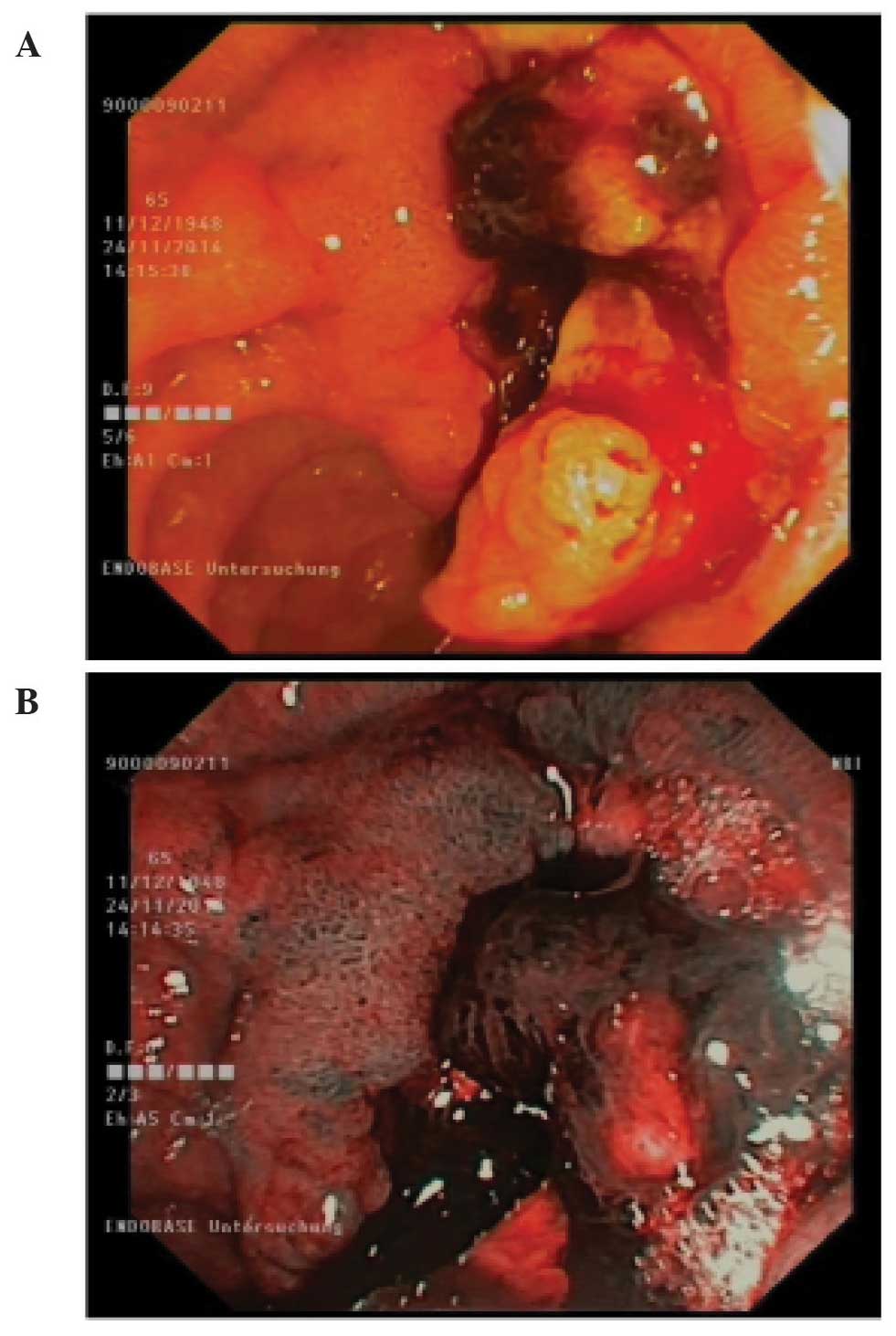
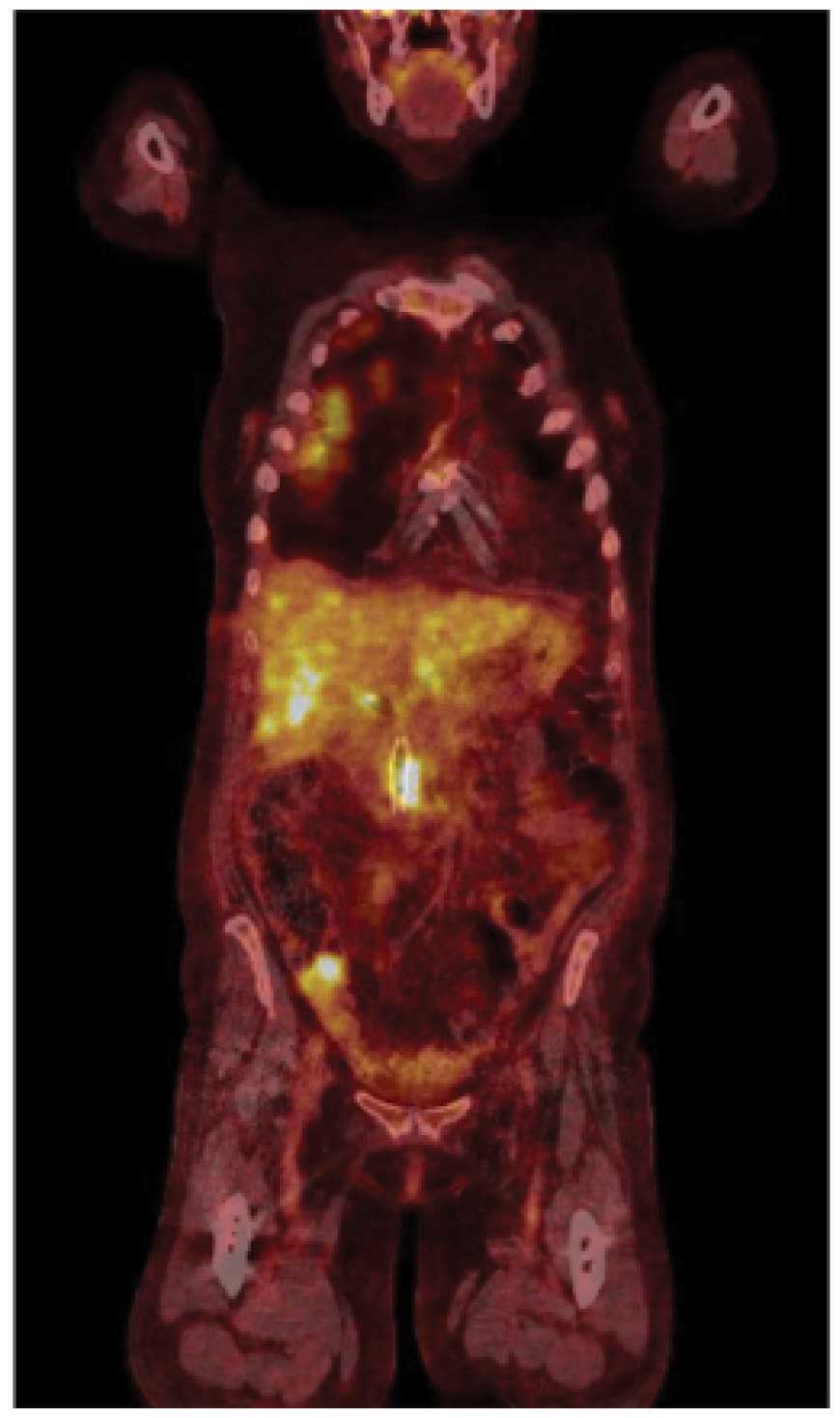
Upon endoscopy, an irregular tumour mass was detected in the ampullary region, measuring ~4 cm in the largest diameter (Fig. 1). Whole-body 18F-fluorodeoxyglucose positron emission tomography was performed, which revealed multiple metastases to liver, spine, retroperitoneal lymph nodes and lungs (Fig. 2).

Figure 1.

Large irregular polypoid tumour mass in the peri-ampullary region. The tumor was observed by (A) white light endoscopy and (B) narrow band imaging.

Figure 2.

Whole-body 18F-fluorodeoxyglucose positron emission tomography. Multiple metastases (yellow/white) were observed in the liver, spine, retroperitoneal lymph nodes and lungs.

Histopathological analysis

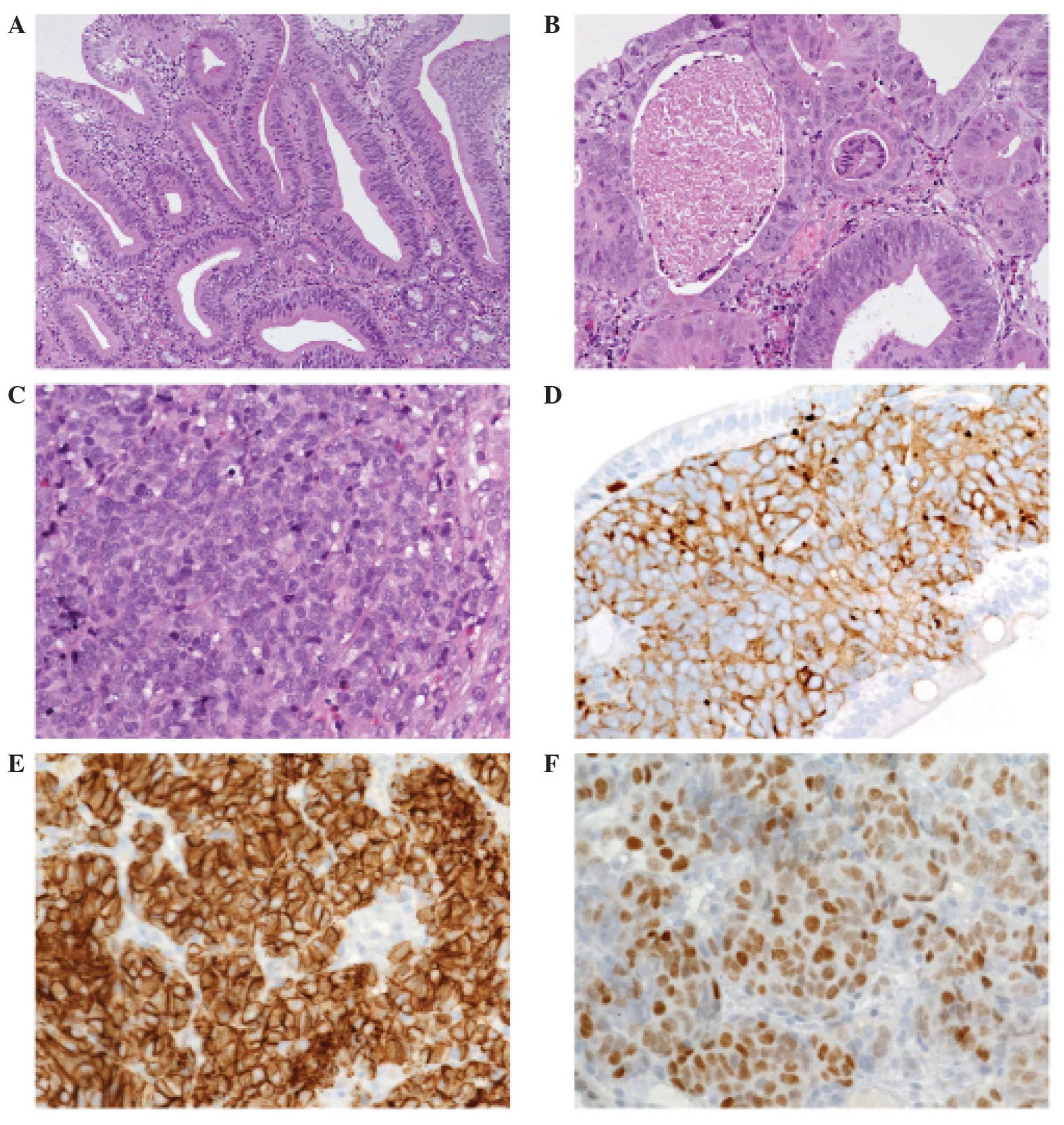
Biopsy material of the ampullary lesion disclosed a complex malignant epithelial lesion with a non-invasive adenoma component progressing into invasive intestinal-type adenocarcinoma. Other parts of the lesion consisted of typical neuroendocrine small cell carcinoma with diffuse growth pattern, composed of small to medium sized cells with minimal cytoplasm and fusiform nuclei with finely granular chromatin and inconspicuous nucleoli (Fig. 3). The mitotic rate was high and necrosis occurred frequently. Upon immunohistochemical staining, the tumour was positive for neuroendocrine markers, including chromogranin A, synaptophysin and cluster of differentiation (CD)56/neural cell adhesion molecule (NCAM). The intestinal transcription factor, caudal type homeobox (CDX)-2, was positive for both exocrine and endocrine tumour components (Fig. 3). Based upon these findings, a diagnosis of MANEC of the ampulla was made.

Figure 3.

Histology of the primary tumour. (A) A non-invasive adenomatous precursor lesion (magnification, ×100), gradually progressing into (B) an invasive adenocarcinoma of intestinal type (magnification, ×150). (C) Other areas of the lesion correspond to poorly differentiated neuroendocrine small cell carcinoma (magnification, ×200). The neuroendocrine component was positive for (D) synaptophysin (magnification, ×200) and (E) Cluster of differentiation 56/neural cell adhesion molecule (magnification, ×200), while (F) caudal type homeobox-2 was expressed in both exocrine and neuroendocrine sections of the tumour (magnification, ×200).

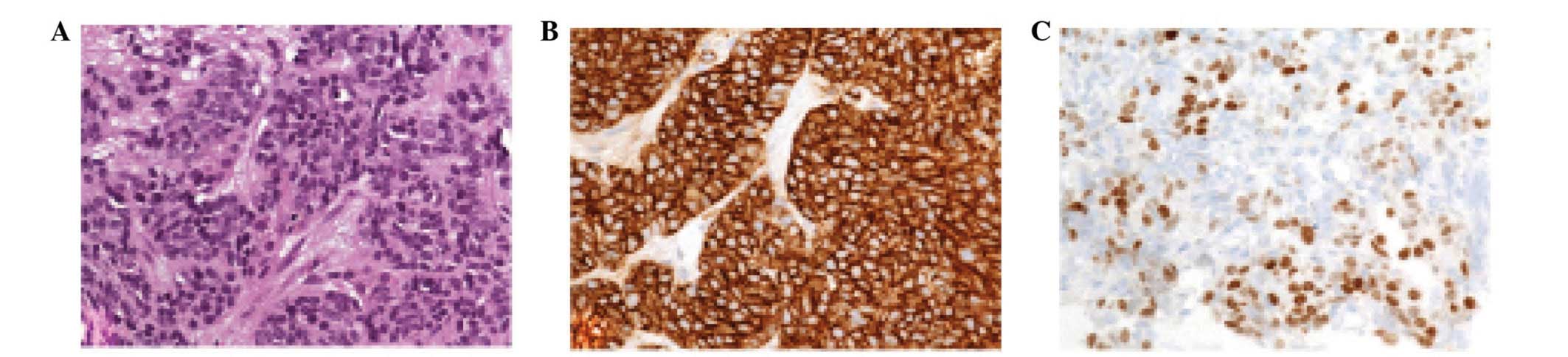
Histology obtained from a liver lesion revealed pure neuroendocrine small cell cancer, which was positive for neuroendocrine markers and for CDX-2, thereby proving its gastrointestinal/ampullary origin (Fig. 4).

Figure 4.

Immunohistochemistry of the liver biopsy. Biopsy of the liver revealed (A) metastatic neuroendocrine small cell carcinoma (magnification, ×200), which is, comparable to the primary tumour. The liver biopsy was positive for (B) cluster of differentiation 56/neural cell adhesion molecule (magnification, ×200) and for (C) caudal type homeobox-2 (magnification, ×200), thereby proving its gastrointestinal/ampullary origin.

Discussion

The first description of a gastrointestinal tumour exhibiting both exocrine and neuroendocrine differentiation was published in 1924 by Cordier (13). The widespread use of immunohistochemical techniques in the last decades has led to the recognition that neuroendocrine cells are present rather frequently in exocrine malignancies of the gastrointestinal tract (14). True mixed tumour types, including MANECs, are relatively uncommon, occurring predominantly in the stomach and colorectum.

According to the World Health Organisation definition, MANECs are morphologically recognisable as both gland-forming and neuroendocrine neoplasms with an arbitrary requirement of at least 30% of either component (15). They are defined as carcinomas since both components are histologically malignant. MANECs must be differentiated from collision tumour types (16) or so-called amphicrine tumour types (17), which are characterized by usually monomorphic growth of cells exhibiting both exocrine and endocrine differentiation.

Patients with gastrointestinal MANECs appear to exhibit an improved median overall survival compared with patients with pure NECs, and this finding may be associated with the higher stage at the time of diagnosis of the latter (14). In a previous investigation of colorectal MANECs, no different patient survival was observed between NECs and MANECs (18), suggesting that certain clinical differences between NECs and MANECs may be site-associated (19). In general, MANECs are highly aggressive tumour types with a high risk for distant metastasis, and prognosis is often dismal. It is largely unclear whether the glandular or the neuroendocrine component is the major driving force of disease progression and thus crucial for metastatic cancer spread (11,20,21).

In oncological practice, distant metastases are not normally assessed by histology, when the responsible primary tumour is known (22). The presented case exhibited widespread dissemination of the neuroendocrine small cell carcinoma, however, not of the adenocarcinoma component with potentially severe implications for the choice of chemotherapy. The present study determined that the time has come to reconsider the indication for testing metastatic sites in standard oncology practice.

In conclusion, the present report presented a rare case of a MANEC originating from the ampulla of Vater. The tumour tissue from the present patient was biopsied and assessed at both primary and metastatic sites, proving discordant results. As exemplified by this true mixed tumour type, tumour heterogeneity evolves as the major challenge in oncology today. The assessment of metastatic sites may render valuable diagnostic information that is crucial for clinical decision-making and patient management.

References

1 

Albores-Saavedra J, Hruban RH, Klimstra DS and Zamboni G: Invasive adenocarcinoma of the ampullary region. Bosman FT, Carneiro F, Hruban RH and Theise ND: World health organization classification of tumours of the digestive system. IARC Press. (Lyon). 87–91. 2010.

2 

Kumari N, Prabha K, Singh RK, Baitha DK and Krishnani N: Intestinal and pancreatobiliary differentiation in periampullary carcinoma: The role of immunohistochemistry. Hum Pathol. 44:2213–2219. 2013. View Article : Google Scholar : PubMed/NCBI

3 

Ang DC, Shia J, Tang LH, Katabi N and Klimstra DS: The utility of immunohistochemistry in subtyping adenocarcinoma of the ampulla of vater. Am J Surg Pathol. 38:1371–1379. 2014. View Article : Google Scholar : PubMed/NCBI

4 

Carter JT, Grenert JP, Rubenstein L, Stewart L and Way LW: Tumors of the ampulla of vater: Histopathologic classification and predictors of survival. J Am Coll Surg. 207:210–218. 2008. View Article : Google Scholar : PubMed/NCBI

5 

Kim WS, Choi DW, Choi SH, Heo JS, You DD and Lee HG: Clinical significance of pathologic subtype in curatively resected ampulla of vater cancer. J Surg Oncol. 105:266–272. 2012. View Article : Google Scholar : PubMed/NCBI

6 

Robert PE, Leux C, Ouaissi M, Miguet M, Paye F, Merdrignac A, Delpero JR, Schwarz L, Carrere N, Muscari F, et al: Predictors of long-term survival following resection for ampullary carcinoma: A large retrospective French multicentric study. Pancreas. 43:692–697. 2014. View Article : Google Scholar : PubMed/NCBI

7 

Nassar H, Albores-Saavedra J and Klimstra DS: High-grade neuroendocrine carcinoma of the ampulla of vater: A clinicopathologic and immunohistochemical analysis of 14 cases. Am J Surg Pathol. 29:588–594. 2005. View Article : Google Scholar : PubMed/NCBI

8 

Carter JT, Grenert JP, Rubenstein L, Stewart L and Way LW: Neuroendocrine tumors of the ampulla of Vater: Biological behavior and surgical management. Arch Surg. 144:527–531. 2009. View Article : Google Scholar : PubMed/NCBI

9 

Moncur JT, Lacy BE and Longnecker DS: Mixed acinar-endocrine carcinoma arising in the ampulla of Vater. Hum Pathol. 33:449–451. 2002. View Article : Google Scholar : PubMed/NCBI

10 

Musialik JA, Kohut MJ, Marek T, Wodołazski A and Hartleb M: Composite neuroendocrine and adenomatous carcinoma of the papilla of Vater. World J Gastroenterol. 15:4199–4200. 2009. View Article : Google Scholar : PubMed/NCBI

11 

Zhang L and DeMay RM: Cytological features of mixed adenoneuroendocrine carcinoma of the ampulla: Two case reports with review of literature. Diagn Cytopathol. 42:1075–1084. 2014. View Article : Google Scholar : PubMed/NCBI

12 

Huang Z, Xiao WD, Li Y, Huang S, Cai J and Ao J: Mixed adenoneuroendocrine carcinoma of the ampulla: Two case reports. World J Gastroenterol. 21:2254–2259. 2015.PubMed/NCBI

13 

Cordier R: Les cellules argentaffines dans les tumeurs intestinales. Arch Int Med Exp. 1:59–63. 1924.

14 

La Rosa S, Marando A, Sessa F and Capella C: Mixed adenoneuroendocrine carcinomas (MANECs) of the gastrointestinal tract: An update. Cancers (Basel). 4:11–30. 2012. View Article : Google Scholar : PubMed/NCBI

15 

Rindi G, Arnold R, Bosman FT, Capella C, Klimstra DS, Klöppel Komminoth P and Solcia E: Nomenclature and classification of neuroendocrine neoplasms of the digestive system. Bosman FT, Carneiro F, Hruban RH and Theise ND: World health organization classification of tumours of the digestive system. IARC Press. (Lyon). 13–14. 2010.

16 

Khurana A, Sharma A, Gupta G and Gandhi JS: Peri-ampullary collision tumor-high grade neuroendocrine carcinoma and signet ring cell carcinoma: A case report and review of literature. Indian J Pathol Microbiol. 54:161–163. 2011. View Article : Google Scholar : PubMed/NCBI

17 

Ginori A, Lo Bello G, Vassallo L and Tripodi SA: Amphicrine carcinoma of the ampullary region. Tumori. 101:e70–e72. 2015.PubMed/NCBI

18 

La Rosa S, Marando A, Furlan D, Sahnane N and Capella C: Colorectal poorly differentiated neuroendocrine carcinomas and mixed adenoneuroendocrine carcinomas: Insights into the diagnostic immunophenotype, assessment of methylation profile and search for prognostic markers. Am J Surg Pathol. 36:601–611. 2012. View Article : Google Scholar : PubMed/NCBI

19 

Klöppel G, Rindi G, Anlauf M, Perren A and Komminoth P: Site-specific biology and pathology of gastroenteropancreatic neuroendocrine tumors. Virchows Arch. 451(Suppl 1): S9–S27. 2007. View Article : Google Scholar : PubMed/NCBI

20 

Harada K, Sato Y, Ikeda H, Maylee H, Igarashi S, Okamura A, Masuda S and Nakanuma Y: Clinicopathologic study of mixed adenoneuroendocrine carcinomas of hepatobiliary organs. Virchows Arch. 460:281–289. 2012. View Article : Google Scholar : PubMed/NCBI

21 

Gurzu S, Kadar Z, Bara T, Bara T Jr, Tamasi A, Azamfirei L and Jung I: Mixed adenoneuroendocrine carcinoma of gastrointestinal tract: Report of two cases. World J Gastroenterol. 21:1329–1333. 2015. View Article : Google Scholar : PubMed/NCBI

22 

van Krieken JH, Jung A, Kirchner T, Carneiro F, Seruca R, Bosman FT, Quirke P, Fléjou JF, Plato Hansen T, de Hertogh G, et al: KRAS mutation testing for predicting response to anti-EGFR therapy for colorectal carcinoma: Proposal for an European quality assurance program. Virchows Arch. 453:417–431. 2008. View Article : Google Scholar : PubMed/NCBI

Related Articles

  • Abstract
  • View
  • Download
  • Twitter
Copy and paste a formatted citation
Spandidos Publications style
Max N, Rothe A and Langner C: Mixed adenoneuroendocrine carcinoma of the ampulla of Vater: A case report. Mol Clin Oncol 5: 95-98, 2016.
APA
Max, N., Rothe, A., & Langner, C. (2016). Mixed adenoneuroendocrine carcinoma of the ampulla of Vater: A case report. Molecular and Clinical Oncology, 5, 95-98. https://doi.org/10.3892/mco.2016.858
MLA
Max, N., Rothe, A., Langner, C."Mixed adenoneuroendocrine carcinoma of the ampulla of Vater: A case report". Molecular and Clinical Oncology 5.1 (2016): 95-98.
Chicago
Max, N., Rothe, A., Langner, C."Mixed adenoneuroendocrine carcinoma of the ampulla of Vater: A case report". Molecular and Clinical Oncology 5, no. 1 (2016): 95-98. https://doi.org/10.3892/mco.2016.858
Copy and paste a formatted citation
x
Spandidos Publications style
Max N, Rothe A and Langner C: Mixed adenoneuroendocrine carcinoma of the ampulla of Vater: A case report. Mol Clin Oncol 5: 95-98, 2016.
APA
Max, N., Rothe, A., & Langner, C. (2016). Mixed adenoneuroendocrine carcinoma of the ampulla of Vater: A case report. Molecular and Clinical Oncology, 5, 95-98. https://doi.org/10.3892/mco.2016.858
MLA
Max, N., Rothe, A., Langner, C."Mixed adenoneuroendocrine carcinoma of the ampulla of Vater: A case report". Molecular and Clinical Oncology 5.1 (2016): 95-98.
Chicago
Max, N., Rothe, A., Langner, C."Mixed adenoneuroendocrine carcinoma of the ampulla of Vater: A case report". Molecular and Clinical Oncology 5, no. 1 (2016): 95-98. https://doi.org/10.3892/mco.2016.858
Follow us
  • Twitter
  • LinkedIn
  • Facebook
About
  • Spandidos Publications
  • Careers
  • Cookie Policy
  • Privacy Policy
How can we help?
  • Help
  • Live Chat
  • Contact
  • Email to our Support Team