Spandidos Publications Logo
  • About
    • About Spandidos
    • Aims and Scopes
    • Abstracting and Indexing
    • Editorial Policies
    • Reprints and Permissions
    • Job Opportunities
    • Terms and Conditions
    • Contact
  • Journals
    • All Journals
    • Oncology Letters
      • Oncology Letters
      • Information for Authors
      • Editorial Policies
      • Editorial Board
      • Aims and Scope
      • Abstracting and Indexing
      • Bibliographic Information
      • Archive
    • International Journal of Oncology
      • International Journal of Oncology
      • Information for Authors
      • Editorial Policies
      • Editorial Board
      • Aims and Scope
      • Abstracting and Indexing
      • Bibliographic Information
      • Archive
    • Molecular and Clinical Oncology
      • Molecular and Clinical Oncology
      • Information for Authors
      • Editorial Policies
      • Editorial Board
      • Aims and Scope
      • Abstracting and Indexing
      • Bibliographic Information
      • Archive
    • Experimental and Therapeutic Medicine
      • Experimental and Therapeutic Medicine
      • Information for Authors
      • Editorial Policies
      • Editorial Board
      • Aims and Scope
      • Abstracting and Indexing
      • Bibliographic Information
      • Archive
    • International Journal of Molecular Medicine
      • International Journal of Molecular Medicine
      • Information for Authors
      • Editorial Policies
      • Editorial Board
      • Aims and Scope
      • Abstracting and Indexing
      • Bibliographic Information
      • Archive
    • Biomedical Reports
      • Biomedical Reports
      • Information for Authors
      • Editorial Policies
      • Editorial Board
      • Aims and Scope
      • Abstracting and Indexing
      • Bibliographic Information
      • Archive
    • Oncology Reports
      • Oncology Reports
      • Information for Authors
      • Editorial Policies
      • Editorial Board
      • Aims and Scope
      • Abstracting and Indexing
      • Bibliographic Information
      • Archive
    • Molecular Medicine Reports
      • Molecular Medicine Reports
      • Information for Authors
      • Editorial Policies
      • Editorial Board
      • Aims and Scope
      • Abstracting and Indexing
      • Bibliographic Information
      • Archive
    • World Academy of Sciences Journal
      • World Academy of Sciences Journal
      • Information for Authors
      • Editorial Policies
      • Editorial Board
      • Aims and Scope
      • Abstracting and Indexing
      • Bibliographic Information
      • Archive
    • International Journal of Functional Nutrition
      • International Journal of Functional Nutrition
      • Information for Authors
      • Editorial Policies
      • Editorial Board
      • Aims and Scope
      • Abstracting and Indexing
      • Bibliographic Information
      • Archive
    • International Journal of Epigenetics
      • International Journal of Epigenetics
      • Information for Authors
      • Editorial Policies
      • Editorial Board
      • Aims and Scope
      • Abstracting and Indexing
      • Bibliographic Information
      • Archive
    • Medicine International
      • Medicine International
      • Information for Authors
      • Editorial Policies
      • Editorial Board
      • Aims and Scope
      • Abstracting and Indexing
      • Bibliographic Information
      • Archive
  • Articles
  • Information
    • Information for Authors
    • Information for Reviewers
    • Information for Librarians
    • Information for Advertisers
    • Conferences
  • Language Editing
Spandidos Publications Logo
  • About
    • About Spandidos
    • Aims and Scopes
    • Abstracting and Indexing
    • Editorial Policies
    • Reprints and Permissions
    • Job Opportunities
    • Terms and Conditions
    • Contact
  • Journals
    • All Journals
    • Biomedical Reports
      • Information for Authors
      • Editorial Policies
      • Editorial Board
      • Aims and Scope
      • Abstracting and Indexing
      • Bibliographic Information
      • Archive
    • Experimental and Therapeutic Medicine
      • Information for Authors
      • Editorial Policies
      • Editorial Board
      • Aims and Scope
      • Abstracting and Indexing
      • Bibliographic Information
      • Archive
    • International Journal of Epigenetics
      • Information for Authors
      • Editorial Policies
      • Editorial Board
      • Aims and Scope
      • Abstracting and Indexing
      • Bibliographic Information
      • Archive
    • International Journal of Functional Nutrition
      • Information for Authors
      • Editorial Policies
      • Editorial Board
      • Aims and Scope
      • Abstracting and Indexing
      • Bibliographic Information
      • Archive
    • International Journal of Molecular Medicine
      • Information for Authors
      • Editorial Policies
      • Editorial Board
      • Aims and Scope
      • Abstracting and Indexing
      • Bibliographic Information
      • Archive
    • International Journal of Oncology
      • Information for Authors
      • Editorial Policies
      • Editorial Board
      • Aims and Scope
      • Abstracting and Indexing
      • Bibliographic Information
      • Archive
    • Medicine International
      • Information for Authors
      • Editorial Policies
      • Editorial Board
      • Aims and Scope
      • Abstracting and Indexing
      • Bibliographic Information
      • Archive
    • Molecular and Clinical Oncology
      • Information for Authors
      • Editorial Policies
      • Editorial Board
      • Aims and Scope
      • Abstracting and Indexing
      • Bibliographic Information
      • Archive
    • Molecular Medicine Reports
      • Information for Authors
      • Editorial Policies
      • Editorial Board
      • Aims and Scope
      • Abstracting and Indexing
      • Bibliographic Information
      • Archive
    • Oncology Letters
      • Information for Authors
      • Editorial Policies
      • Editorial Board
      • Aims and Scope
      • Abstracting and Indexing
      • Bibliographic Information
      • Archive
    • Oncology Reports
      • Information for Authors
      • Editorial Policies
      • Editorial Board
      • Aims and Scope
      • Abstracting and Indexing
      • Bibliographic Information
      • Archive
    • World Academy of Sciences Journal
      • Information for Authors
      • Editorial Policies
      • Editorial Board
      • Aims and Scope
      • Abstracting and Indexing
      • Bibliographic Information
      • Archive
  • Articles
  • Information
    • For Authors
    • For Reviewers
    • For Librarians
    • For Advertisers
    • Conferences
  • Language Editing
Login Register Submit
  • This site uses cookies
  • You can change your cookie settings at any time by following the instructions in our Cookie Policy. To find out more, you may read our Privacy Policy.

    I agree
Search articles by DOI, keyword, author or affiliation
Search
Advanced Search
presentation
Molecular and Clinical Oncology
Join Editorial Board Propose a Special Issue
Print ISSN: 2049-9450 Online ISSN: 2049-9469
Journal Cover
July-2016 Volume 5 Issue 1

Full Size Image

Sign up for eToc alerts
Recommend to Library

Journals

International Journal of Molecular Medicine

International Journal of Molecular Medicine

International Journal of Molecular Medicine is an international journal devoted to molecular mechanisms of human disease.

International Journal of Oncology

International Journal of Oncology

International Journal of Oncology is an international journal devoted to oncology research and cancer treatment.

Molecular Medicine Reports

Molecular Medicine Reports

Covers molecular medicine topics such as pharmacology, pathology, genetics, neuroscience, infectious diseases, molecular cardiology, and molecular surgery.

Oncology Reports

Oncology Reports

Oncology Reports is an international journal devoted to fundamental and applied research in Oncology.

Experimental and Therapeutic Medicine

Experimental and Therapeutic Medicine

Experimental and Therapeutic Medicine is an international journal devoted to laboratory and clinical medicine.

Oncology Letters

Oncology Letters

Oncology Letters is an international journal devoted to Experimental and Clinical Oncology.

Biomedical Reports

Biomedical Reports

Explores a wide range of biological and medical fields, including pharmacology, genetics, microbiology, neuroscience, and molecular cardiology.

Molecular and Clinical Oncology

Molecular and Clinical Oncology

International journal addressing all aspects of oncology research, from tumorigenesis and oncogenes to chemotherapy and metastasis.

World Academy of Sciences Journal

World Academy of Sciences Journal

Multidisciplinary open-access journal spanning biochemistry, genetics, neuroscience, environmental health, and synthetic biology.

International Journal of Functional Nutrition

International Journal of Functional Nutrition

Open-access journal combining biochemistry, pharmacology, immunology, and genetics to advance health through functional nutrition.

International Journal of Epigenetics

International Journal of Epigenetics

Publishes open-access research on using epigenetics to advance understanding and treatment of human disease.

Medicine International

Medicine International

An International Open Access Journal Devoted to General Medicine.

Journal Cover
July-2016 Volume 5 Issue 1

Full Size Image

Sign up for eToc alerts
Recommend to Library

  • Article
  • Citations
    • Cite This Article
    • Download Citation
    • Create Citation Alert
    • Remove Citation Alert
    • Cited By
  • Similar Articles
    • Related Articles (in Spandidos Publications)
    • Similar Articles (Google Scholar)
    • Similar Articles (PubMed)
  • Download PDF
  • Download XML
  • View XML
Article Open Access

A case of Langerhans' cell histiocytosis following Hodgkin's disease

  • Authors:
    • Xin Li
    • Qi Deng
    • Yu‑Ming Li
  • View Affiliations / Copyright

    Affiliations: Department of Hematology, The First Central Hospital of Tianjin, Tianjin 300192, P.R. China
    Copyright: © Li et al. This is an open access article distributed under the terms of Creative Commons Attribution License.
  • Pages: 27-30
    |
    Published online on: April 19, 2016
       https://doi.org/10.3892/mco.2016.860
  • Expand metrics +
Metrics: Total Views: 0 (Spandidos Publications: | PMC Statistics: )
Metrics: Total PDF Downloads: 0 (Spandidos Publications: | PMC Statistics: )
Cited By (CrossRef): 0 citations Loading Articles...

This article is mentioned in:


Abstract

Langerhans' cell histiocytosis (LCH) is a group of disorders in various tissues characterized by the proliferation of Langerhans cells. It is rarely observed in adults. Langerhans cells are dendritic cells that express cluster of differentiation 1a (CD1a) and S100 protein, and contain Birbeck granules. Its etiopathogenesis remains to be elucidated. One possible etiological cause is a reactive proliferation of Langerhans cells following chemotherapy or radiotherapy for Hodgkin's disease (HD). A number of cases of LCH associated with malignant lymphoma have been reported previously. It may follow after the malignant lymphoma, or occur with it. However, fewer cases have been reported where the LCH followed after HD. In the present case report, a patient was diagnosed with HD following chemotherapy for LCH. As LCH was diagnosed, the patient was treated with a combination of various chemotherapeutic agents in two cycles of cyclophosphamide, vincristine, and prednisolone (COP), and eight cycles of cyclophosphamide, doxorubicin, vincristine, and prednisolone (CHOP). The patient went into a successful clinical remission. One year later, computed tomographic (CT) scans of the thorax and abdomen revealed augmentation of the tumor mass in the mediastinum. An excisional biopsy of the right inguinal lymph node was performed. The patient was diagnosed with nodular sclerosing Hodgkin's disease. Following four cycles of doxorubicin (Adriamycin), bleomycin, vinblastine and dacarbazine (ABVD) chemotherapy, a whole‑body positron emission tomographic CT scan revealed a decrease in tumor mass in the mediastinum. At present, the patient remains in treatment, and the prognosis has yet to be fully determined.

Introduction

Langerhans' cell histiocytosis (LCH) is a group of disorders in various tissues characterized by the proliferation of Langerhans cells, and its etiopathogenesis is unknown. Although LCH has been known for approximately a century, its etiology has yet to be elucidated. It is rarely observed in adults (1). Langerhans cells are dendritic cells that express cluster of differentiation 1a (CD1a) and S100 protein, and contain Birbeck granules. One possible etiological cause is a reactive proliferation of Langerhans cells following chemotherapy or radiotherapy for Hodgkin's disease (HD). Eosinophilic granuloma is the benign accumulation of histiocytes located primarily in the bones, but which also affects other organs, including the skin, lungs and lymph nodes. A number of cases of LCH associated with malignant lymphoma have been reported previously: It may follow after the malignant lymphoma (2–8) or occur with it (9). However, fewer cases have been reported in which LCH followed after Hodgkin's lymphoma (HL). In the present report, we present one case patient who was diagnosed with HD following chemotherapy for LCH.

Case report

Diagnosis of LCH

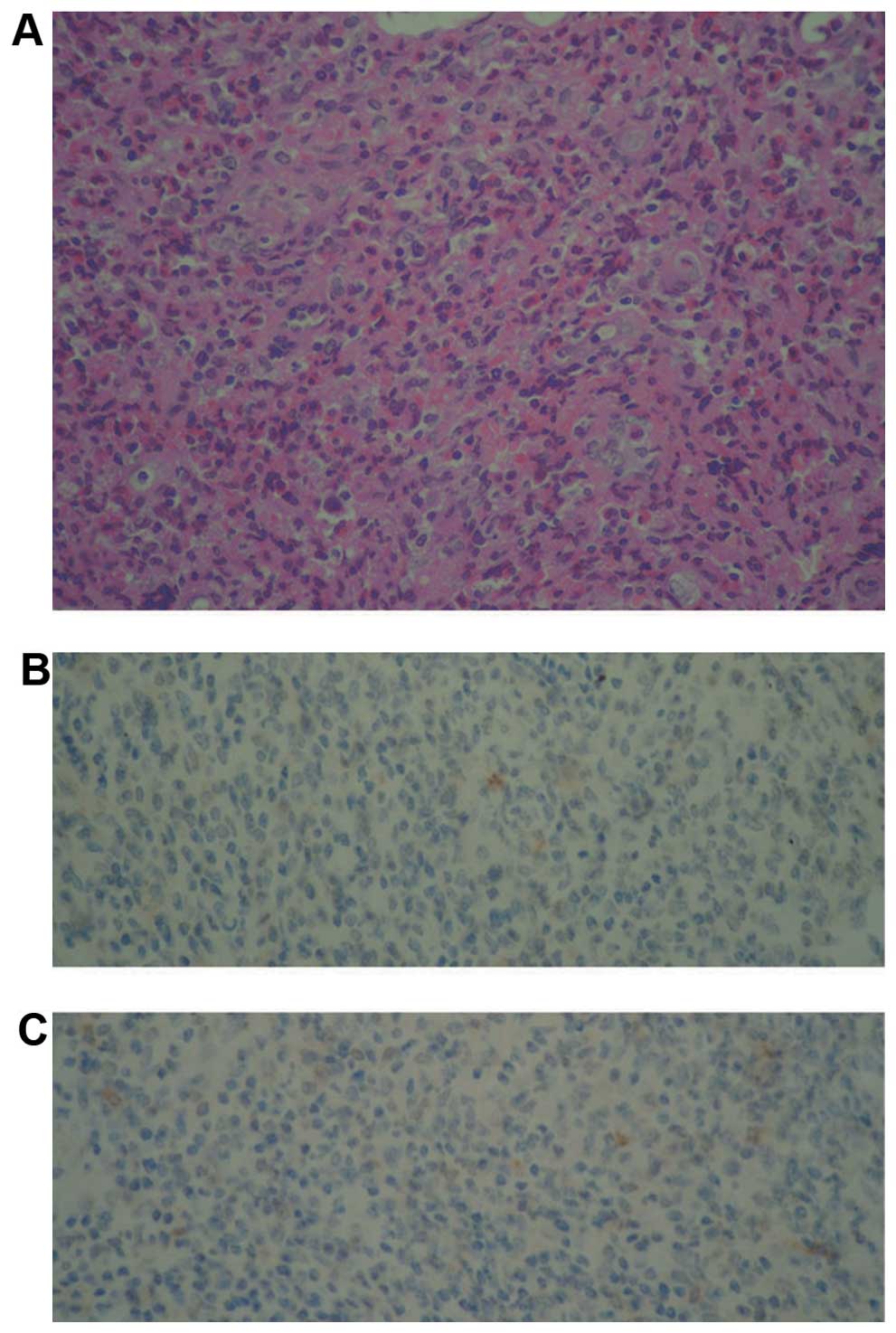
In March 2013, a 31-year-old man presented with a one year history of fever, pruritus and left flank bone pain. The patient's medical history indicated no abnormalities. He was referred to another clinic hospital for an assessment of the flank bone diseases. Computed tomographic (CT) scans of the left flank bone revealed a bone-destructive lesion. The patient underwent surgery to obtain a diagnosis and to excise the destructive bone. The tissue that was removed during surgery exhibited a histiocytic cell population, intermixed with eosinophils, neutrophils, multinuclear giant cells and foamy macrophages, which were observed in the background. In addition, certain fibrotic bands existed in this background. The histiocytic cells were positive for CD1a and CD30 marker proteins, as revealed by immunohistochemistry staining. However, S100 as a marker was not available for immunohistochemical analysis (Fig. 1). On the basis of the morphology and immunohistochemical staining profiles, the patient was diagnosed with LCH. The patient's treatment commenced with analgesia, and clinical remission was achieved.

Figure 1.

(A) Diffuse infiltrate by the Langerhans cells (large cells with eosinophilic cytoplasm, reniform nucleus and evident nucleoli), permeated by lymphocytes, neutrophils and eosinophils (hematoxylin and eosin staining; magnification, ×400). (B) The Langerhans cells stained positively with CD1a on immunohistochemistical staining (magnification, ×400). (C) The Langerhans cells stained positively with CD30 on immunohistochemistry staining (magnification, ×400).

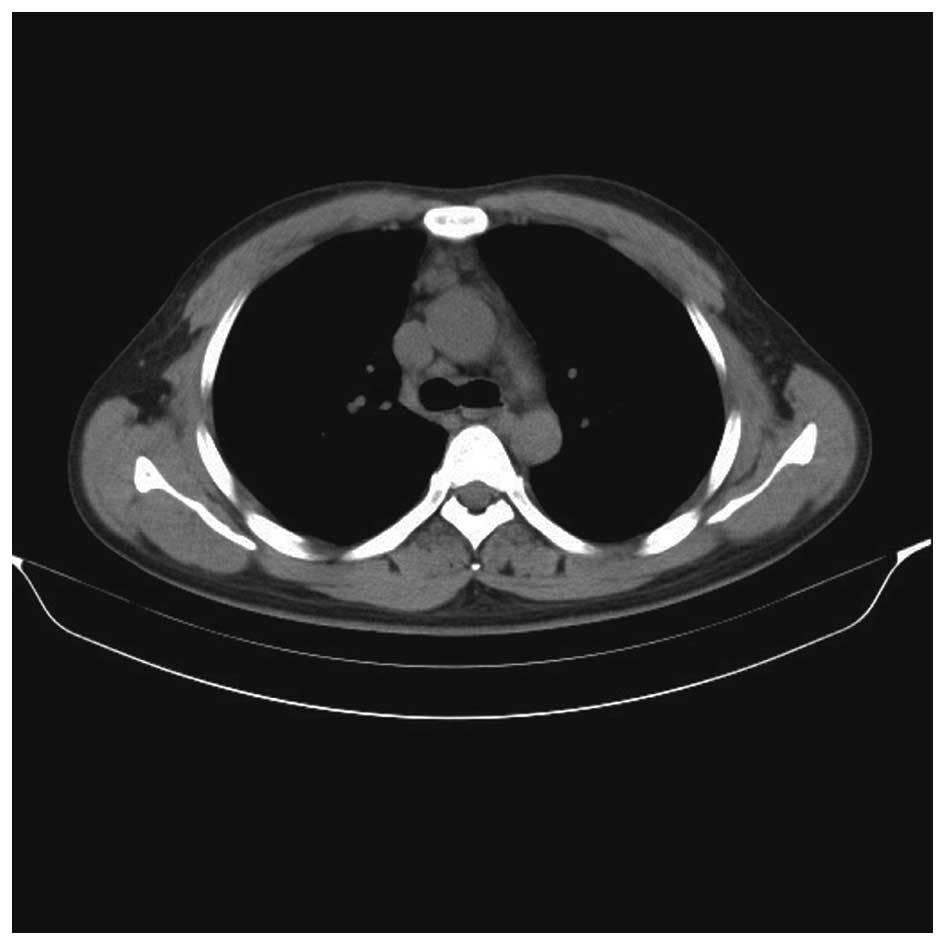
In June 2013, the patient presented to The First Central Hospital of Tianjin (Tianjin, China) with two sides of flank bone pain and pruritus, which had been apparent for one week. Upon admission, a physical examination revealed a rash on his epipodites. Neither peripheral lymphadenopathy nor hepatosplenomegaly were detected. The patient had no other B symptoms. The laboratory tests revealed normal levels of the blood cell count, C reactive protein, lactate dehydrogenase, hepatic and renal functions. The results of bone marrow aspirate examination, biopsy and flow cytometric analysis were normal. CT scans of the thorax and abdomen revealed lymph nodes and a large mass in the anterior and middle mediastinum (Fig. 2). A magnetic resonance imaging scan demonstrated the destroyed sclerotin in the left flank bone and two sides of the acetabular bones, and soft tissue in the left articulatio sacroiliaca. The anterior mediastinum biopsy by CT-guided needle puncture revealed the presence of lymphocytes, epithelial cell nests (cytokeratin-positive), fibrous tissue and adipose tissue, indicating thoracic gland tissue.

Figure 2.

Computed tomographic scans of the thorax and abdomen, revealing the lymph nodes and a large mass in anterior and middle mediastinum.

As previously, the patient was diagnosed with LCH and treated with a combination of chemotherapeutic agents in two cycles of cyclophosphamide, vincristine and prednisolone (COP). However, the bone pain and fever continued. A CT scan of the thorax revealed that the tumor mass in the mediastinum was unchanged. Subsequently, the patient was treated with a combination of various chemotherapeutic agents in two cycles of cyclophosphamide, doxorubicin, vincristine, and prednisolone (CHOP). The patient went into remission as far as the bone pain and fever were concerned, and the CT scan of the thorax revealed a marked reduction in the size of the tumor mass in the mediastinum. Following six cycles of treatment with CHOP as a maintenance therapy, the patient achieved a successful clinical remission.

Diagnosis of HD

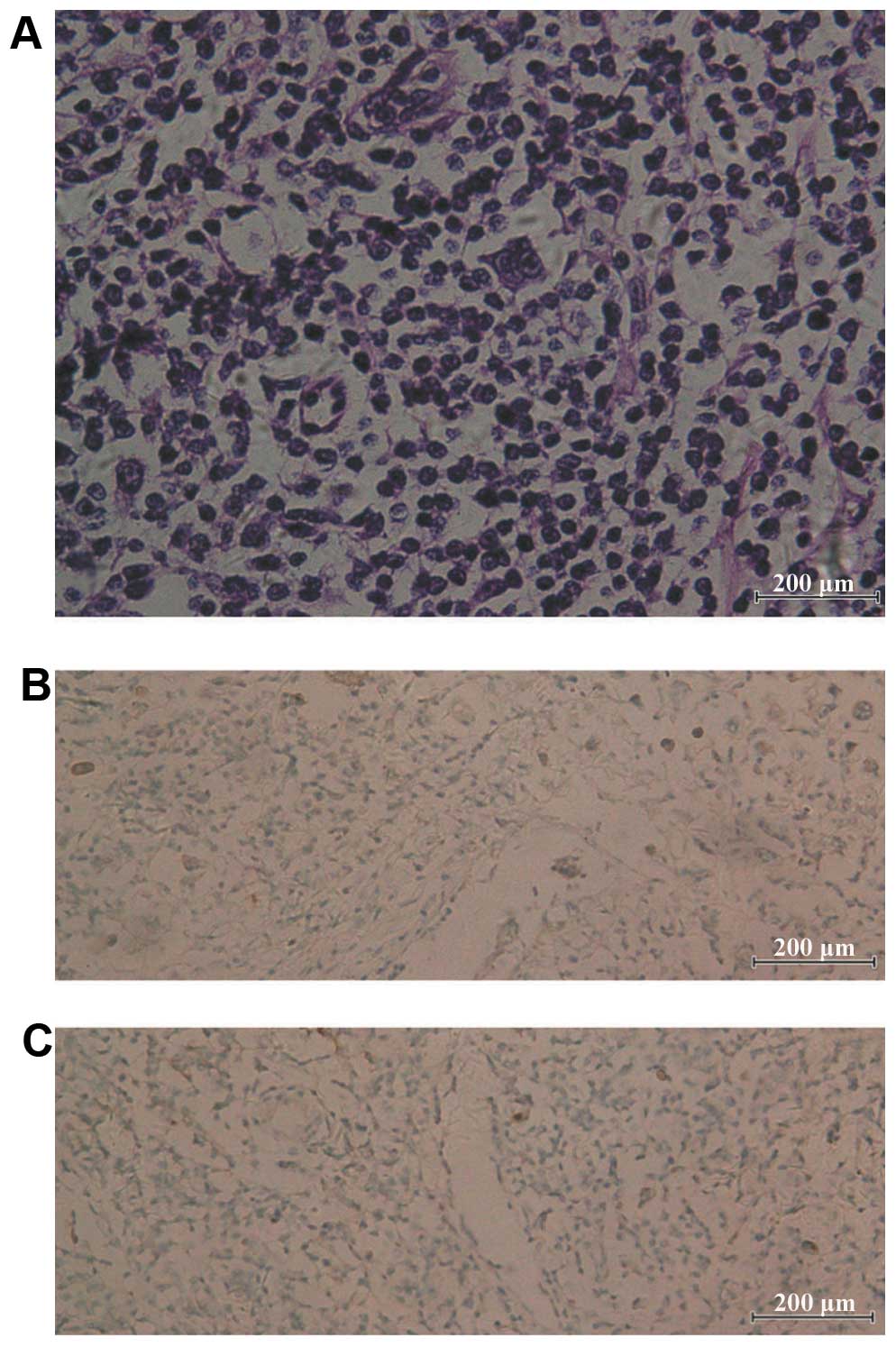
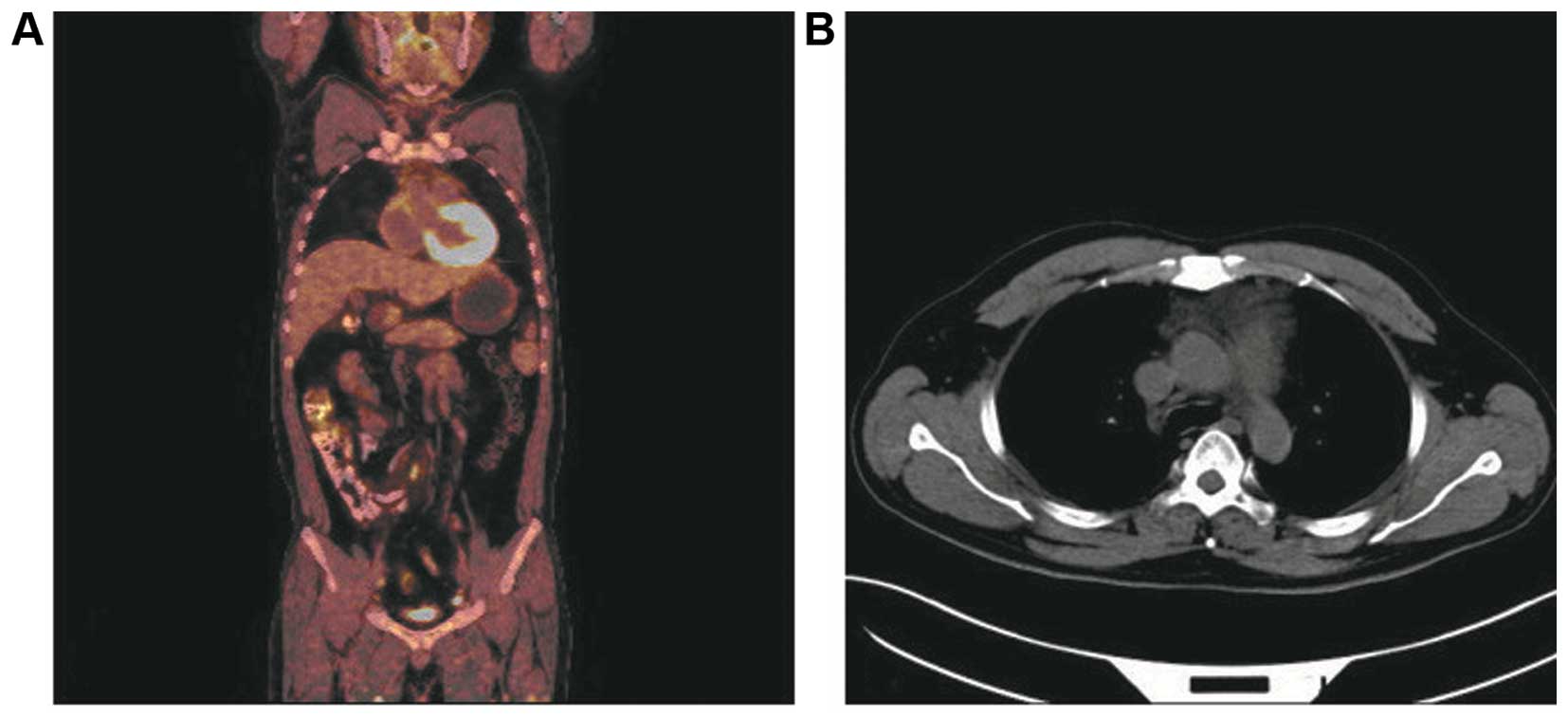
One year after the patient entered clinical remission, the patient once again developed bone pain and fever. A physical examination revealed peripheral lymph node enlargement, although no hepatosplenomegaly. The laboratory tests were normal, as identified previously. CT scans of the thorax and abdomen revealed augmentation of the tumor mass in the mediastinum. An excisional biopsy of the right inguinal lymph node was performed. Microscopic examination revealed that the atypical cells were either mononucleated or binucleated, composed of lymphocytes, plasma cells and a few eosinophils. Immunohistochemical staining revealed CD30- and CD15-positive cells. Immunostaining for CD1a protein was positive, as determined previously (Fig. 3). The patient was diagnosed with nodular sclerosing HD (stage IIIA, with spleen involvement), secondary to LCH. Subsequently, the patient was treated with a combination of various chemotherapeutic agents of adriamycin, bleomycin, vinblastine and dacarbazine (ABVD). The patient received four cycles of ABVD chemotherapy. Following the chemotherapy, the patient obtained a remission of the bone pain, fever and pruritus, and a whole-body positron emission tomographic (PET) CT scan revealed a decrease in the tumor mass in the mediastinum (Fig. 4). To date, the patient remains in treatment, and the prognosis has yet to be fully determined.

Figure 3.

(A) RS cells in a background of a mixed cellularity composed of lymphocytes, plasma cells and a few eosinophils (hematoxylin and eosin staining; magnification, ×400). (B) RS cells stained positively with CD1a on immunohistochemical staining. (C) RS cells stained positively with CD30 on immunohistochemical staining. RS, Reed-Sternberg.

Figure 4.

(A) FDG PET/CT scan, revealing a high FDG uptake around the left lilac crest. Other areas that revealed a high FDG uptake included the neck, glutes, left side of the pelvis and bilateral inguinal. (B) FDG PET/CT scan, revealing a high FDG uptake in mediastinal lymph nodes, although they were reduced compared with the previous assessment. FDG, fluorodeoxyglucose; PET, positron emission tomographic; CT, computed tomographic.

Discussion

LCH is a group of disorders, with the proliferation of Langerhans cells accumulating in various tissues. LCH is a rare disease that may occur at any age (10). Due to having identical clinicopathological features, it is a group of disorders characterized by a clonal neoplastic proliferation of Langerhans-type cells that express CD1a, langerin and S100 protein, and show evidence of Birbeck granules on ultrastructural examination. LCH is also known as a histiocytosis X, a term proposed by Lichtenstein in 1953 (11). It has been classified into three clinical variants: Eosinophilic granuloma, Hand-Schüller-Christian disease and Letterer-Siwe disease (12). Most organs or systems of the body may be affected, however, the skeleton, skin and pituitary are involved more frequently. Other organs involved are the liver, spleen, lymph nodes, lungs, the hematopoietic system and mucocutaneous tissues, and the central nervous system.

The etiology of LCH remains unknown, although viral causes, reactive immunological responses and genetic factors have been suggested (4). However, the progressive characteristics of the disease and its response to cancer therapies depict its neoplastic nature (13). An association between LCH and a variety of other tumor types has been recognized, and LCH has been described in association with a variety of other tumor types. The malignancies may precede, occur concurrently with, or follow the diagnosis of LCH. The most common associations are with malignant lymphoma and acute lymphoblastic leukemia (ALL) (14). Lymphoma and ALL more often occur prior to the diagnosis of LCH, although they may be diagnosed within 5 years following LCH (15). Solid tumors may occur concurrently, or follow the diagnosis of LCH. Most of those that followed LCH developed in a previous radiation field. The association between tumor formation and LCH has yet to be fully elucidated. Shin et al (16) discussed the association between the conditions of LCH and HD, and proposed various possibilities: i) HD induces LCH; ii) radiotherapy and/or chemotherapy for HD leads to the development of LCH; iii) LCH may represent a specific cell-mediated immune response to HD; and iv) a common etiological agent induces HD and LCH.

Egeler et al (15) reported their experience of 39 patients with LCH and malignant neoplasia. That study revealed that there was an association between the two conditions. A total of 25 patients were diagnosed with LCH and HL. The conclusion was that LCH is associated with lymphoma. In certain cases, histological examination revealed lymphoid cells and Langerhans cells in the same lymph node. Furthermore, the year-long interval between the development of LCH and HL suggested an association between the two diseases that is independent of chemotherapy or radiation treatments. Such an association may involve a malignant change, or modulation of the monocyte-histiocyte system. For example, Langerhans cells may themselves be premalignant, or may provide an immunological environment conducive to the development, growth and promotion of malignant cells.

In the present case study, the patient was diagnosed with LCH on the first occasion, although it was regrettable that multiple lymph nodes were observed in the mediastinum at that time, located in the anterior mediastinum and the middle mediastinum. Effective pathological tissues could not be obtained by fine needle aspiration, and the damage was too extensive for chest surgery, so no pathology was performed on the lymph node. The patient was treated with COP and CHOP chemotherapy. The B symptoms were controlled, and the diameter of the mediastina lymph nodes was reduced. A retrospective analysis determined that the COP and CHOP chemotherapies were not an effective treatment for HL; however, the B symptoms of the patient were controlled and the diameter of the lymph nodes was reduced. Perhaps at that time, HD may not have appeared. One year later, the right inguinal lymph node was observed to be enlarged in the patient. The diagnosis of HD was confirmed by a pathological biopsy of the lymph node. Following six cycles of ABVD, a PET CT scan revealed a decrease in tumor mass in the mediastinum. However, it was difficult to identify LCH and HD from a PET CT scan (17,18), therefore it is possible that HD may appear following LCH.

Acknowledgments

The present study was supported by grants from the Tianjin Municipal Health Bureau of Science and Technology Fund (2014KZ021).

References

1 

Pan Z, Sharma S and Sharma P: Primary langerhans cell histiocytosis of the vulva: Report of a case and brief review of the literature. Indian J Pathol Microbiol. 52:65–68. 2009. View Article : Google Scholar : PubMed/NCBI

2 

Shanley DJ, Lerud KS and Luetkehans TJ: Development of pulmonary histiocytosis X after chemotherapy for Hodgkin disease. AJR Am J Roentgenol. 155:741–742. 1990. View Article : Google Scholar : PubMed/NCBI

3 

L'Hoste RJ Jr, Arrowsmith WR, Leonard GL and McGaw H: Eosinophilic granuloma occurring in a patient with Hodgkin disease. Hum Pathol. 13:592–595. 1982. View Article : Google Scholar : PubMed/NCBI

4 

Adu-Poku K, Thomas DW, Khan MK, Holgate CS and Smith ME: Langerhans cell histiocytosis in sequential discordant lymphoma. J Clin Pathol. 58:104–106. 2005. View Article : Google Scholar : PubMed/NCBI

5 

Dehkordi NR, Rajabi P, Naimi A and Heidarpour M: Langerhans cell histiocytosis following Hodgkin lymphoma: A case report from Iran. J Res Med Sci. 15:58–61. 2010.PubMed/NCBI

6 

Lee JS, Ko GH, Kim HC, Jang IS, Jeon KN and Lee JH: Langerhans cell sarcoma arising from Langerhans cell histiocytosis: A case report. J Korean Med Sci. 21:577–580. 2006. View Article : Google Scholar : PubMed/NCBI

7 

Egeler RM, Neglia JP, Puccetti DM, Brennan CA and Nesbit ME: Association of Langerhans cell histiocytosis with malignant neoplasms. Cancer. 71:865–873. 1993. View Article : Google Scholar : PubMed/NCBI

8 

de Ibarrola Andrés C, Toscano R, Lahuerta JJ and Martínez-González MA: Simultaneous occurrence of Hodgkin's disease, nodal Langerhans' cell histiocytosis and multiple myeloma IgA(kappa). Virchows Arch. 434:259–262. 1999. View Article : Google Scholar : PubMed/NCBI

9 

Neumann MP and Frizzera G: The coexistence of Langerhans' cell granulomatosis and malignant lymphoma may take different forms: Report of seven cases with a review of the literature. Hum Pathol. 17:1060–1065. 1986. View Article : Google Scholar : PubMed/NCBI

10 

Ardekian L, Peled M, Rosen D, Rachmiel A, Abu el-Naaj I and Laufer D: Clinical and radiographic features of eosinophilic granuloma in the jaws: Review of 41 lesions treated by surgery and low-dose radiotherapy. Oral Surg Oral Med Oral Pathol Oral Radiol Endod. 87:238–242. 1999. View Article : Google Scholar : PubMed/NCBI

11 

Lichtenstein L: Histiocytosis X; integration of eosinophilic granuloma of bone, Letterer-Siwe disease, and Schüller-Christian disease as related manifestations of a single nosologic entity. AMA Arch Pathol. 56:84–102. 1953.PubMed/NCBI

12 

Piattelli A and Paolantonio M: Eosinophilic granuloma of the mandible involving the periodontal tissues. A case report. J Periodontol. 66:731–736. 1995. View Article : Google Scholar : PubMed/NCBI

13 

Haupt R, Minkov M, Astigarraga I, Schäfer E, Nanduri V, Jubran R, Egeler RM, Janka G, Micic D, Rodriguez-Galindo C, et al: Langerhans cell histiocytosis (LCH): Guidelines for diagnosis, clinical work-up, and treatment for patients till the age of 18 years. Pediatr Blood Cancer. 60:175–184. 2013. View Article : Google Scholar : PubMed/NCBI

14 

Willman CL: Detection of clonal histiocytes in Langerhans cell histiocytosis: Biology and clinical significance. Br J Cancer Suppl. 23:S29–S33. 1994.PubMed/NCBI

15 

Egeler RM, Neglia JP, Aricò M, Favara BE, Heitger A, Nesbit ME and Nicholson HS: The relation of Langerhans cell histiocytosis to acute leukemia, lymphomas, and other solid tumors. The LCH-malignancy study group of the histiocyte society. Hematol Oncol Clin North Am. 12:369–378. 1998. View Article : Google Scholar : PubMed/NCBI

16 

Shin MS, Buchalter SE and Ho KJ: Langerhans' cell histiocytosis associated with Hodgkin's disease: A case report. J Natl Med Assoc. 86:65–69. 1994.PubMed/NCBI

17 

Naumann R, Beuthien-Baumann B, Fischer R, Kittner T, Bredow J, Kropp J, Ockert D and Ehninger G: Simultaneous occurrence of Hodgkin's lymphoma and eosinophilic granuloma: A potential pitfall in positron emission tomography imaging. Clin Lymphoma. 3:121–124. 2002. View Article : Google Scholar : PubMed/NCBI

18 

Fotos JS, Flemming DJ and Tulchinsky M: False-positive PET/CT for lymphoma recurrence secondary to Langerhans cell. Clin Nucl Med. 36:717–719. 2011. View Article : Google Scholar : PubMed/NCBI

Related Articles

  • Abstract
  • View
  • Download
  • Twitter
Copy and paste a formatted citation
Spandidos Publications style
Li X, Deng Q and Li YM: A case of Langerhans' cell histiocytosis following Hodgkin's disease. Mol Clin Oncol 5: 27-30, 2016.
APA
Li, X., Deng, Q., & Li, Y. (2016). A case of Langerhans' cell histiocytosis following Hodgkin's disease. Molecular and Clinical Oncology, 5, 27-30. https://doi.org/10.3892/mco.2016.860
MLA
Li, X., Deng, Q., Li, Y."A case of Langerhans' cell histiocytosis following Hodgkin's disease". Molecular and Clinical Oncology 5.1 (2016): 27-30.
Chicago
Li, X., Deng, Q., Li, Y."A case of Langerhans' cell histiocytosis following Hodgkin's disease". Molecular and Clinical Oncology 5, no. 1 (2016): 27-30. https://doi.org/10.3892/mco.2016.860
Copy and paste a formatted citation
x
Spandidos Publications style
Li X, Deng Q and Li YM: A case of Langerhans' cell histiocytosis following Hodgkin's disease. Mol Clin Oncol 5: 27-30, 2016.
APA
Li, X., Deng, Q., & Li, Y. (2016). A case of Langerhans' cell histiocytosis following Hodgkin's disease. Molecular and Clinical Oncology, 5, 27-30. https://doi.org/10.3892/mco.2016.860
MLA
Li, X., Deng, Q., Li, Y."A case of Langerhans' cell histiocytosis following Hodgkin's disease". Molecular and Clinical Oncology 5.1 (2016): 27-30.
Chicago
Li, X., Deng, Q., Li, Y."A case of Langerhans' cell histiocytosis following Hodgkin's disease". Molecular and Clinical Oncology 5, no. 1 (2016): 27-30. https://doi.org/10.3892/mco.2016.860
Follow us
  • Twitter
  • LinkedIn
  • Facebook
About
  • Spandidos Publications
  • Careers
  • Cookie Policy
  • Privacy Policy
How can we help?
  • Help
  • Live Chat
  • Contact
  • Email to our Support Team