Spandidos Publications Logo
  • About
    • About Spandidos
    • Aims and Scopes
    • Abstracting and Indexing
    • Editorial Policies
    • Reprints and Permissions
    • Job Opportunities
    • Terms and Conditions
    • Contact
  • Journals
    • All Journals
    • Oncology Letters
      • Oncology Letters
      • Information for Authors
      • Editorial Policies
      • Editorial Board
      • Aims and Scope
      • Abstracting and Indexing
      • Bibliographic Information
      • Archive
    • International Journal of Oncology
      • International Journal of Oncology
      • Information for Authors
      • Editorial Policies
      • Editorial Board
      • Aims and Scope
      • Abstracting and Indexing
      • Bibliographic Information
      • Archive
    • Molecular and Clinical Oncology
      • Molecular and Clinical Oncology
      • Information for Authors
      • Editorial Policies
      • Editorial Board
      • Aims and Scope
      • Abstracting and Indexing
      • Bibliographic Information
      • Archive
    • Experimental and Therapeutic Medicine
      • Experimental and Therapeutic Medicine
      • Information for Authors
      • Editorial Policies
      • Editorial Board
      • Aims and Scope
      • Abstracting and Indexing
      • Bibliographic Information
      • Archive
    • International Journal of Molecular Medicine
      • International Journal of Molecular Medicine
      • Information for Authors
      • Editorial Policies
      • Editorial Board
      • Aims and Scope
      • Abstracting and Indexing
      • Bibliographic Information
      • Archive
    • Biomedical Reports
      • Biomedical Reports
      • Information for Authors
      • Editorial Policies
      • Editorial Board
      • Aims and Scope
      • Abstracting and Indexing
      • Bibliographic Information
      • Archive
    • Oncology Reports
      • Oncology Reports
      • Information for Authors
      • Editorial Policies
      • Editorial Board
      • Aims and Scope
      • Abstracting and Indexing
      • Bibliographic Information
      • Archive
    • Molecular Medicine Reports
      • Molecular Medicine Reports
      • Information for Authors
      • Editorial Policies
      • Editorial Board
      • Aims and Scope
      • Abstracting and Indexing
      • Bibliographic Information
      • Archive
    • World Academy of Sciences Journal
      • World Academy of Sciences Journal
      • Information for Authors
      • Editorial Policies
      • Editorial Board
      • Aims and Scope
      • Abstracting and Indexing
      • Bibliographic Information
      • Archive
    • International Journal of Functional Nutrition
      • International Journal of Functional Nutrition
      • Information for Authors
      • Editorial Policies
      • Editorial Board
      • Aims and Scope
      • Abstracting and Indexing
      • Bibliographic Information
      • Archive
    • International Journal of Epigenetics
      • International Journal of Epigenetics
      • Information for Authors
      • Editorial Policies
      • Editorial Board
      • Aims and Scope
      • Abstracting and Indexing
      • Bibliographic Information
      • Archive
    • Medicine International
      • Medicine International
      • Information for Authors
      • Editorial Policies
      • Editorial Board
      • Aims and Scope
      • Abstracting and Indexing
      • Bibliographic Information
      • Archive
  • Articles
  • Information
    • Information for Authors
    • Information for Reviewers
    • Information for Librarians
    • Information for Advertisers
    • Conferences
  • Language Editing
Spandidos Publications Logo
  • About
    • About Spandidos
    • Aims and Scopes
    • Abstracting and Indexing
    • Editorial Policies
    • Reprints and Permissions
    • Job Opportunities
    • Terms and Conditions
    • Contact
  • Journals
    • All Journals
    • Biomedical Reports
      • Information for Authors
      • Editorial Policies
      • Editorial Board
      • Aims and Scope
      • Abstracting and Indexing
      • Bibliographic Information
      • Archive
    • Experimental and Therapeutic Medicine
      • Information for Authors
      • Editorial Policies
      • Editorial Board
      • Aims and Scope
      • Abstracting and Indexing
      • Bibliographic Information
      • Archive
    • International Journal of Epigenetics
      • Information for Authors
      • Editorial Policies
      • Editorial Board
      • Aims and Scope
      • Abstracting and Indexing
      • Bibliographic Information
      • Archive
    • International Journal of Functional Nutrition
      • Information for Authors
      • Editorial Policies
      • Editorial Board
      • Aims and Scope
      • Abstracting and Indexing
      • Bibliographic Information
      • Archive
    • International Journal of Molecular Medicine
      • Information for Authors
      • Editorial Policies
      • Editorial Board
      • Aims and Scope
      • Abstracting and Indexing
      • Bibliographic Information
      • Archive
    • International Journal of Oncology
      • Information for Authors
      • Editorial Policies
      • Editorial Board
      • Aims and Scope
      • Abstracting and Indexing
      • Bibliographic Information
      • Archive
    • Medicine International
      • Information for Authors
      • Editorial Policies
      • Editorial Board
      • Aims and Scope
      • Abstracting and Indexing
      • Bibliographic Information
      • Archive
    • Molecular and Clinical Oncology
      • Information for Authors
      • Editorial Policies
      • Editorial Board
      • Aims and Scope
      • Abstracting and Indexing
      • Bibliographic Information
      • Archive
    • Molecular Medicine Reports
      • Information for Authors
      • Editorial Policies
      • Editorial Board
      • Aims and Scope
      • Abstracting and Indexing
      • Bibliographic Information
      • Archive
    • Oncology Letters
      • Information for Authors
      • Editorial Policies
      • Editorial Board
      • Aims and Scope
      • Abstracting and Indexing
      • Bibliographic Information
      • Archive
    • Oncology Reports
      • Information for Authors
      • Editorial Policies
      • Editorial Board
      • Aims and Scope
      • Abstracting and Indexing
      • Bibliographic Information
      • Archive
    • World Academy of Sciences Journal
      • Information for Authors
      • Editorial Policies
      • Editorial Board
      • Aims and Scope
      • Abstracting and Indexing
      • Bibliographic Information
      • Archive
  • Articles
  • Information
    • For Authors
    • For Reviewers
    • For Librarians
    • For Advertisers
    • Conferences
  • Language Editing
Login Register Submit
  • This site uses cookies
  • You can change your cookie settings at any time by following the instructions in our Cookie Policy. To find out more, you may read our Privacy Policy.

    I agree
Search articles by DOI, keyword, author or affiliation
Search
Advanced Search
presentation
Molecular and Clinical Oncology
Join Editorial Board Propose a Special Issue
Print ISSN: 2049-9450 Online ISSN: 2049-9469
Journal Cover
January-2018 Volume 8 Issue 1

Full Size Image

Sign up for eToc alerts
Recommend to Library

Journals

International Journal of Molecular Medicine

International Journal of Molecular Medicine

International Journal of Molecular Medicine is an international journal devoted to molecular mechanisms of human disease.

International Journal of Oncology

International Journal of Oncology

International Journal of Oncology is an international journal devoted to oncology research and cancer treatment.

Molecular Medicine Reports

Molecular Medicine Reports

Covers molecular medicine topics such as pharmacology, pathology, genetics, neuroscience, infectious diseases, molecular cardiology, and molecular surgery.

Oncology Reports

Oncology Reports

Oncology Reports is an international journal devoted to fundamental and applied research in Oncology.

Experimental and Therapeutic Medicine

Experimental and Therapeutic Medicine

Experimental and Therapeutic Medicine is an international journal devoted to laboratory and clinical medicine.

Oncology Letters

Oncology Letters

Oncology Letters is an international journal devoted to Experimental and Clinical Oncology.

Biomedical Reports

Biomedical Reports

Explores a wide range of biological and medical fields, including pharmacology, genetics, microbiology, neuroscience, and molecular cardiology.

Molecular and Clinical Oncology

Molecular and Clinical Oncology

International journal addressing all aspects of oncology research, from tumorigenesis and oncogenes to chemotherapy and metastasis.

World Academy of Sciences Journal

World Academy of Sciences Journal

Multidisciplinary open-access journal spanning biochemistry, genetics, neuroscience, environmental health, and synthetic biology.

International Journal of Functional Nutrition

International Journal of Functional Nutrition

Open-access journal combining biochemistry, pharmacology, immunology, and genetics to advance health through functional nutrition.

International Journal of Epigenetics

International Journal of Epigenetics

Publishes open-access research on using epigenetics to advance understanding and treatment of human disease.

Medicine International

Medicine International

An International Open Access Journal Devoted to General Medicine.

Journal Cover
January-2018 Volume 8 Issue 1

Full Size Image

Sign up for eToc alerts
Recommend to Library

  • Article
  • Citations
    • Cite This Article
    • Download Citation
    • Create Citation Alert
    • Remove Citation Alert
    • Cited By
  • Similar Articles
    • Related Articles (in Spandidos Publications)
    • Similar Articles (Google Scholar)
    • Similar Articles (PubMed)
  • Download PDF
  • Download XML
  • View XML
Case Report Open Access

Denosumab as a potential therapeutic option for leiomyosarcoma with osteoclast‑like giant cells: A case report

  • Authors:
    • Taro Sasaki
    • Hiroyuki Kawashima
    • Takashi Ariizumi
    • Tetsuro Yamagishi
    • Naoki Oike
    • Hajime Umezu
    • Shyoichi Inagawa
    • Tetsuo Hotta
    • Naoto Endo
    • Akira Ogose
  • View Affiliations / Copyright

    Affiliations: Department of Orthopedic Surgery, Niigata Cancer Center Hospital, Niigata, Niigata 951‑8510, Japan, Division of Orthopedic Surgery, Niigata University Graduate School of Medical and Dental Sciences, Niigata, Niigata 951‑8510, Japan, Division of Pathology, Niigata University Medical and Dental Hospital, Niigata, Niigata 951‑8510, Japan, Division of Radiology, Niigata University Medical and Dental Hospital, Niigata, Niigata 951‑8510, Japan, Department of Orthopedic Surgery, Uonuma Institute of Community Medicine, Niigata University Medical and Dental Hospital, Niigata, Niigata 951‑8510, Japan
    Copyright: © Sasaki et al. This is an open access article distributed under the terms of Creative Commons Attribution License.
  • Pages: 30-33
    |
    Published online on: November 6, 2017
       https://doi.org/10.3892/mco.2017.1489
  • Expand metrics +
Metrics: Total Views: 0 (Spandidos Publications: | PMC Statistics: )
Metrics: Total PDF Downloads: 0 (Spandidos Publications: | PMC Statistics: )
Cited By (CrossRef): 0 citations Loading Articles...

This article is mentioned in:


Abstract

Bone leiomyosarcoma is a rare primary osseous malignant tumor with a high metastatic potential. Similar to other bone sarcomas, high histological grade and tumor stage are predictive of a poor outcome. We herein present our experience with treating a 64‑year‑old woman with bone leiomyosarcoma accompanied by multiple bone metastases. A biopsy revealed occasional osteoclast‑like giant cells. In addition to radiation therapy, the osteoclastogenesis inhibitor denosumab was administered but the patient did not undergo adjuvant chemotherapy or surgery. Good clinical and short‑term radiological responses to denosumab have been observed for 2 years. Therefore, denosumab may represent a viable treatment option without the need for adjuvant chemotherapy.

Introduction

Leiomyosarcomas are typically malignant soft tissue tumors composed of spindle cells that exhibit distinct smooth muscle differentiation. Leiomyosarcomas usually occur in the uterus, retroperitoneum, skin, or soft tissues; however, in exceedingly rare cases, they may present as primary bone tumors. Bone leiomyosarcomatous tumors tend to develop at a median age of 47 years (range, 9–87 years) (1), with a minor predominance in men. Patients typically complain of pain and occasionally present with pathological fractures (1). Characteristic plain radiographs show an osteolytic lesion involving the cortical and medullary bone (2).

We herein present the case of a patient with bone leiomyosarcoma displaying osteoclast-like giant cells and report the significant therapeutic effect of denosumab, a receptor-activator of nuclear κB ligand (RANKL) inhibitor that blocks osteoclastogenesis.

Case report

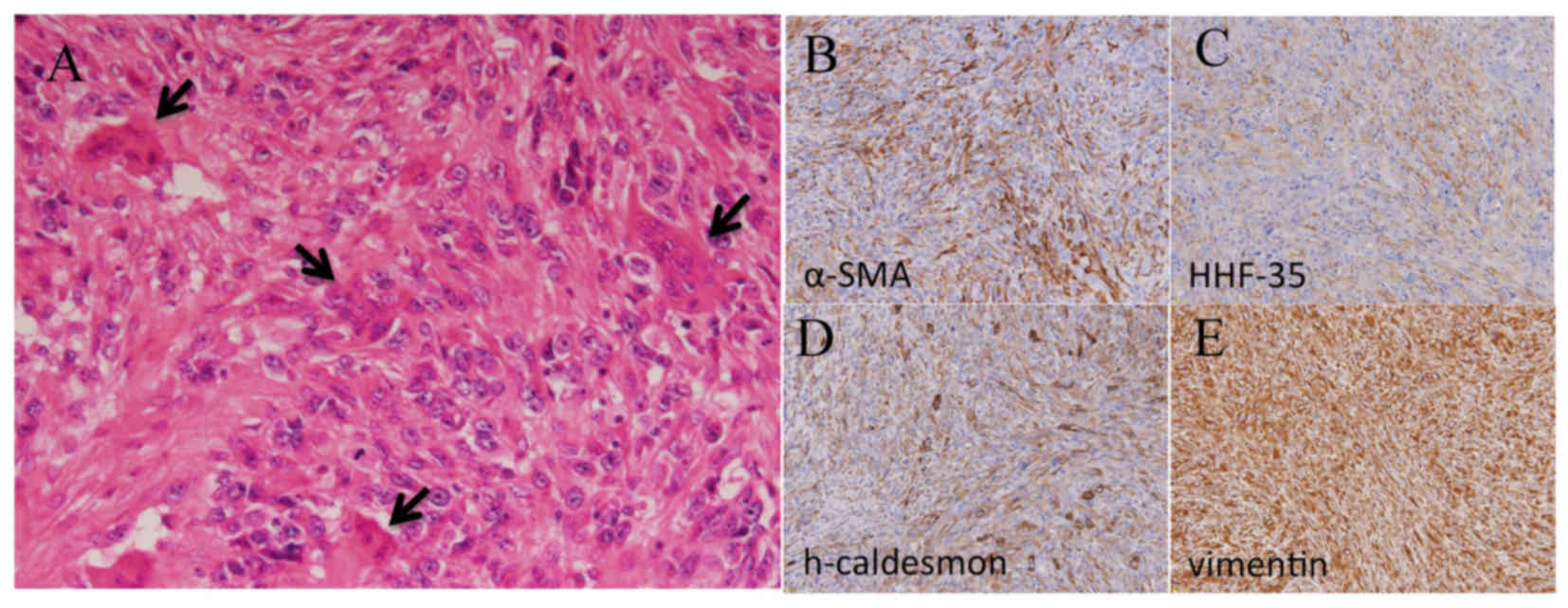
A 64-year-old woman complaining of left shoulder pain with resulting impairment in daily activities underwent radiography and computed tomography. The imaging examinations revealed an expanding lytic lesion of the left clavicle along with multiple osteolytic lesions in other regions, including the skull, right scapula, humeri, ribs, cervical and thoracic vertebra, right ilium and femora. On tumor staging studies, there was no evidence of pulmonary metastasis or other primary tumors. The patient became increasingly bed-confined due to multifocal bone pain. An iliac bone tumor biopsy revealed atypical spindle cell proliferation with active mitosis (>20/10 high-power fields) and partial necrosis. Osteoclast-like giant cells were occasionally observed (Fig. 1). Immunohistochemical analyses revealed expression of α-smooth muscle actin (smooth muscle-specific actin), h-caldesmon and vimentin (Fig. 1). These observations confirmed the diagnosis of bone leiomyosarcoma.

Figure 1.

Histological examination of a biopsy specimen revealed atypical spindle cell proliferation with active mitosis, partial tumor necrosis and occasional osteoclast-like giant cells (arrows). (A) Hematoxylin and eosin staining; magnification, ×400. Immunohistochemical staining was positive for (B) α-smooth muscle actin (SMA), (C) anti-actin monoclonal antibody (HHF-35), (D) h-caldesmon and (E) vimentin; magnification, ×100.

Denosumab (120 mg/day) was administered subcutaneously for 4 weeks, in addition to daily supplementation with calcium and vitamin D. Furthermore, the right scapula, cervical and thoracic vertebrae, left clavicle, femora and right humerus were subjected to standard radiation therapy as palliative care. The patient did not undergo adjuvant chemotherapy or surgery.

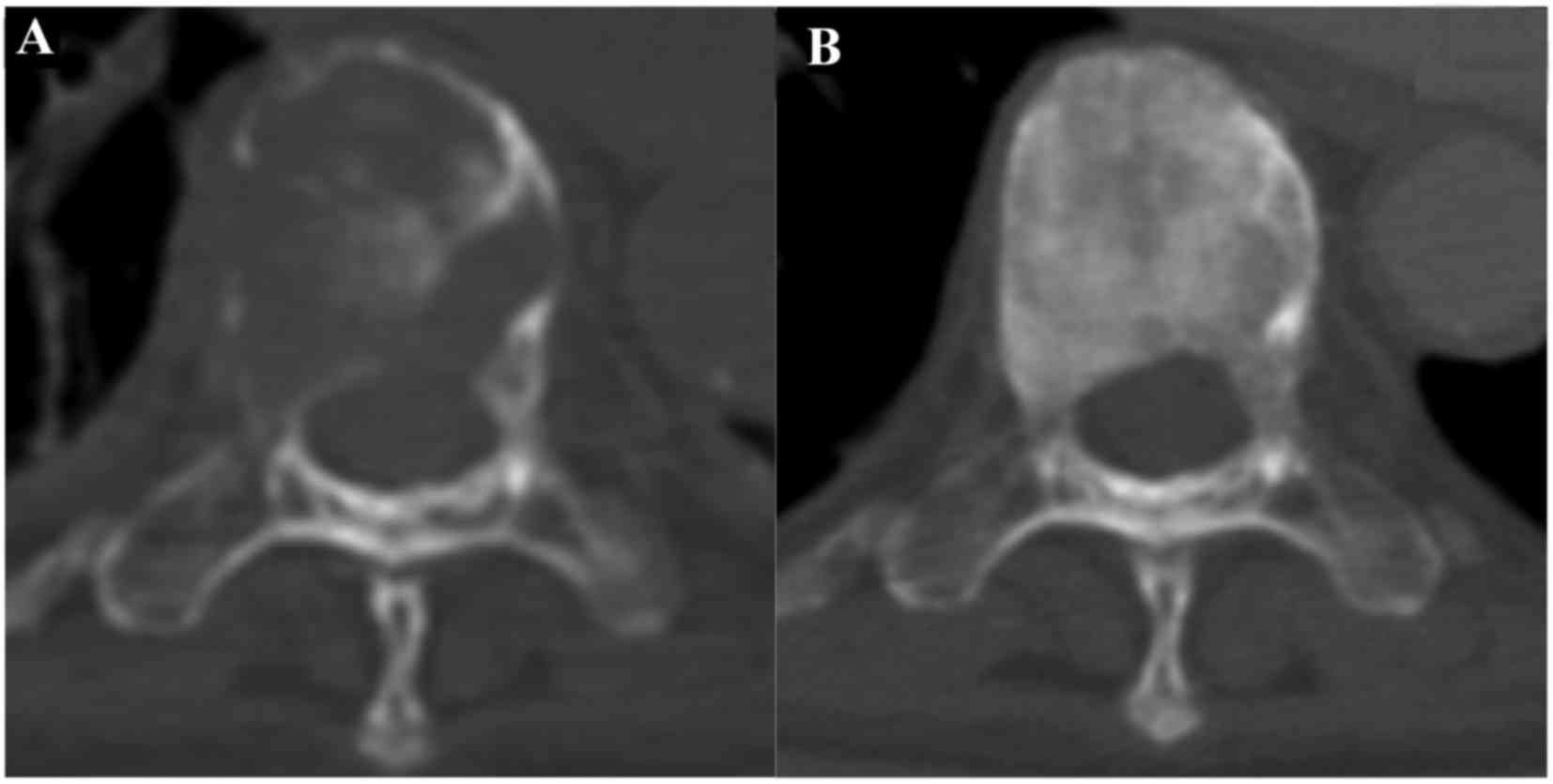
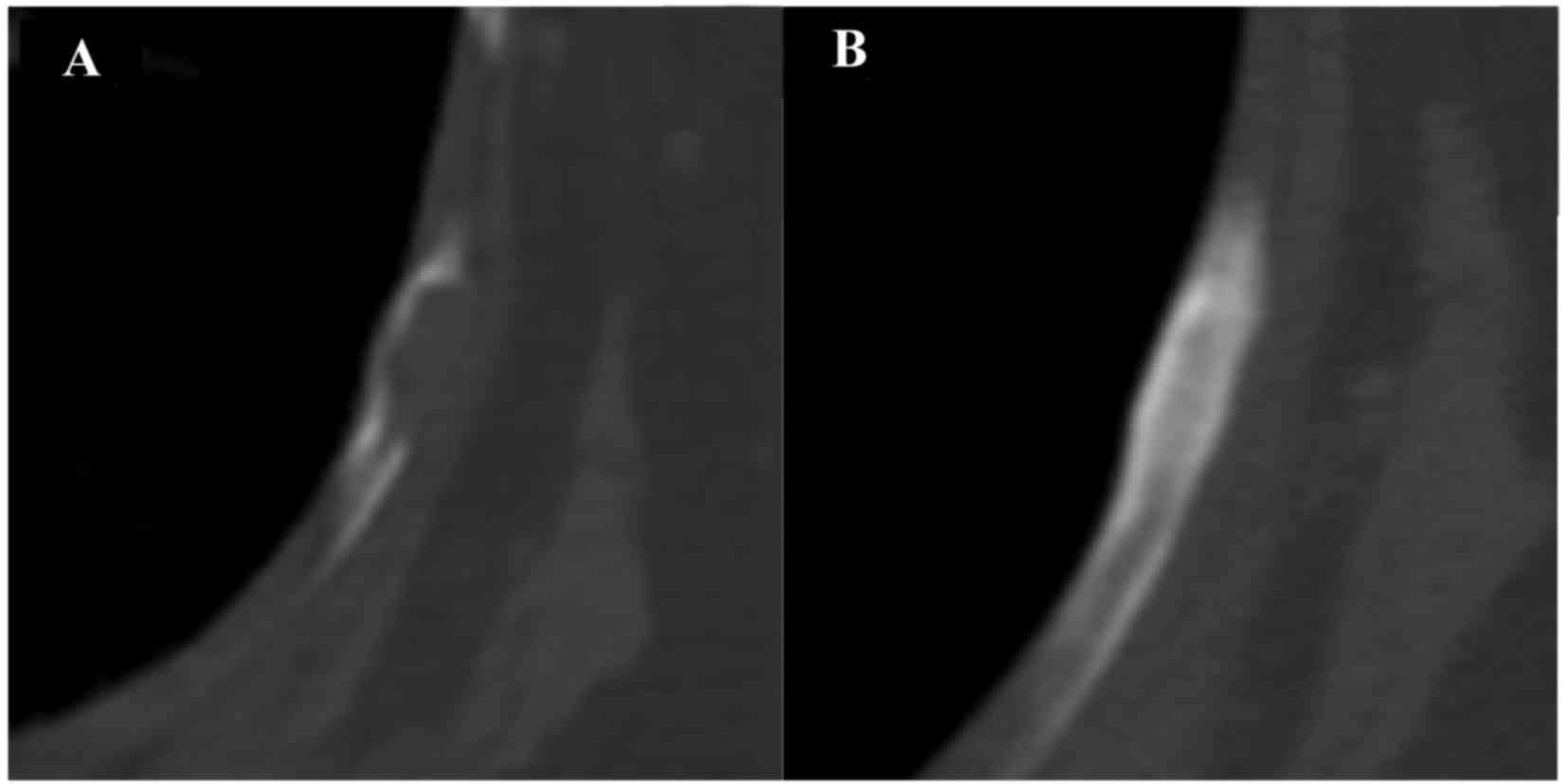
After 10 weeks of denosumab administration, the pain symptoms resolved and the patient recovered from the bedridden status. There were no reported denosumab-related side effects. The first follow-up computed tomography examination, performed 2 months post-denosumab treatment, revealed that all tumor growth had stabilized. Osteosclerotic changes were observed in multiple osteolytic lesions following denosumab and radiation combination therapy and denosumab therapy alone (Figs. 2 and 3). However, after 14 months of denosumab administration, a new lumbar vertebral metastasis was detected. At 56 months since denosumab administration, the patient had developed multiple metastases that had led to multiple organ failure, and finally succumbed to gastrointentinal bleeding.

Figure 2.

Thoracic vertebra (A) prior to treatment and (B) 2 months after treatment with denosumab and radiation therapy.

Figure 3.

Costal lesion (A) prior to treatment and (B) 2 months after treatment with denosumab alone.

RANKL expression

RANKL gene expression was evaluated in a biopsy of the iliac bone metastasis in the present case, and in surgically resected samples from giant cell tumors of bone (GCTB, n=6), aneurysmal bone cysts (ABC, n=2), fibrous dysplasia (FD, n=6) and bone metastases from breast cancer (BC; n=3).

Total RNA was prepared from iliac bone biopsies using ISOGEN reagent (Nippon Gene; Tokyo, Japan) according to the manufacturer's recommendations. cDNA synthesis was performed using the PrimeScript™ RT reagent kit (TaKaRa Bio; Tokyo, Japan). Quantitative polymerase chain reaction analysis was performed using SYBR Premix Ex Taq II in a Thermal Cycler Dice Real-Time System TP800 (TaKaRa Bio; Otsu, Japan). RANKL was selected as the target gene (forward primer: 5′-GCCTTTCAAGGAGCTGTGCAA−3′, reverse primer: 5′-ATCTAACCATGAGCCATCCACCAT-3′) and GAPDH was selected as the reference gene (forward primer: 5′-GCACCGTCAAGGCTGAGAAC-3′, reverse primer: 5′-TGGTGAAGACGCCAGTGGA-3′). A standard curve was generated using the SaOS2 osteosarcoma cell line, and was used to calculate gene copy numbers. RPMI8226, a myeloma cell line, was used as the calibrator. The target gene expression level was calculated as the ratio of the copy number of the target gene to that of the reference gene. Finally, the relative level of expression was calculated as [copy number of the target gene (RANKL)/copy number of the reference gene (GAPDH)]/copy number of the target gene (RANKL) in the RPMI8226 cell line.

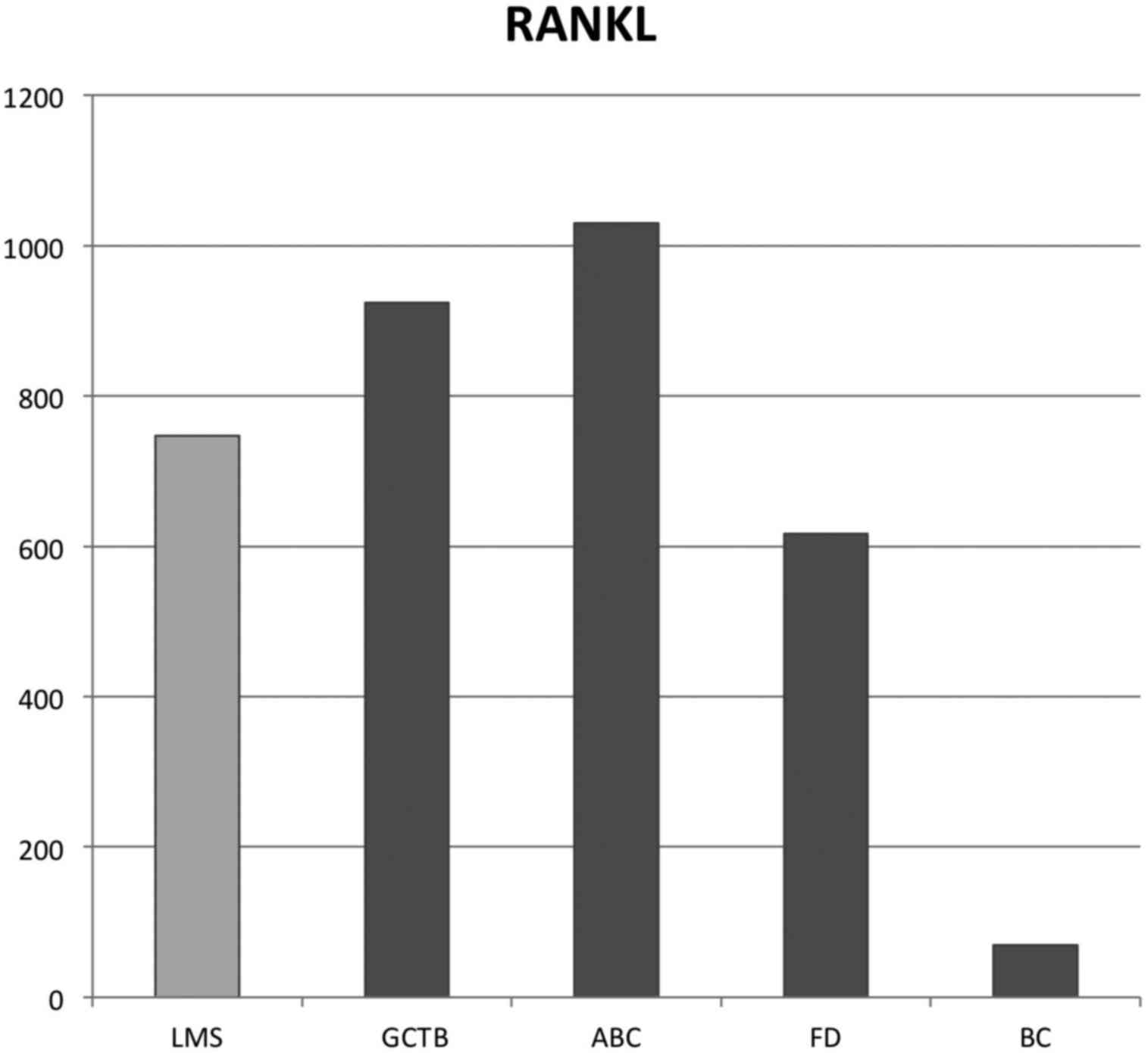
In the present case, RANKL gene expression was 747-fold higher compared with that of the calibrator. The results for the other tumor types are shown in Table I. The median fold changes for RANKL relative expression levels were 994-, 1,030-, 616- and 69-fold for GCTB, ABC, FD and bone metastasis from BC, respectively (Fig. 4).

Figure 4.

Quantitative polymerase chain reaction analysis of receptor-activator of nuclear κB ligand (RANKL) expression in bone leiomyosarcoma (LMS), giant cell tumor of bone (GCTB), aneurysmal bone cyst (ABC), fibrous dysplasia (FD) and bone metastasis from breast cancer (BC). Relative gene expression is calculated as copy number of the target gene (RANKL)/copy number of the reference gene (GAPDH)/copy number of the target gene (RANKL) in the RPMI-8226 myeloma cell line.

Table I.

Clinical characteristics and RANKL expression of each tumor sample.

Table I.

Clinical characteristics and RANKL expression of each tumor sample.

DiagnosisAge, yearsAnatomical locationRANKL relative expression levels
LMS64Ilium  747
GCTB146Radius1,531
GCTB235Femur  243
GCTB370Tibia  318
GCTB453Tibia2,047
GCTB516Humerus4,831
GCTB622Femur  298
ABC120Humerus  441
ABC223Femur1,618
FD137Tibia  281
FD258Rib  952
FD3  8Femur  186
FD458Ilium3,737
FD523Fibula1,122
FD629Femur  215
BC160Humerus     69
BC263Vertebra  117
BC364Femur       6

[i] RANK, receptor-activator of nuclear κB ligand; LMS, bone leiomyosarcoma; GCTTB, giant cell tumor of bone; ABC, aneurysmal bone cyst; FD, fibrous dysplasia; BC, bone metastasis from breast cancer.

All the procedures were conducted following international and national regulations, in accordance with the Declaration of Helsinki.

Informed consent was obtained from all subjects for participation in the study, the use of their tissue and publication of the data.

Discussion

Bone leiomyosarcoma is a rare primary malignant bone tumor. In 1965, Evans and Sanerkin were the first to describe primary bone leiomyosarcoma in the proximal tibia of a 73-year-old man (3). Bone leiomyosarcoma is a smooth muscle tumor composed of spindle cells characterized immunohistochemically by smooth muscle cell differentiation and the expression of desmin, h-caldesmon and α-smooth muscle actin. Osteoclast-like giant cells may be occasionally observed (3,4). Fletcher reported that other sarcoma types may also display osteoclast-like giant cells, but that such cells are more commonly seen in leiomyosarcoma (5). Therapeutically, surgical excision with wide margins remains the gold standard for curative management. Although leiomyosarcomas appear to be radioresistant (1), the use of chemotherapy for bone leiomyosarcoma is controversial. The reported 5-year overall survival rate for bone leiomyosarcoma is 62% (6).

Denosumab is a monoclonal antibody that binds RANKL and directly inhibits osteoclastogenesis. A phase 2 study demonstrated the safety and efficacy of denosumab administration in adults and skeletally mature adolescent patients with GCTB (7). Following exposure to denosumab in vitro, RANKL expression in the tumor cells of GCTB was almost entirely eliminated (8). Moreover, Lange et al reported that the therapeutic administration of denosumab in 2 patients with spinal ABC resulted in good clinical responses (9).

In the present case of bone leiomyosarcoma, good clinical and radiological responses to denosumab were observed for ~2 years in the absence of chemotherapy. Pelle et al demonstrated that RANKL expression in ABC resembled that in GCTB (10). In the present case, RANKL expression was higher compared with that observed in BC, but similar compared with that in GCTB, ABC and FD (Fig. 4). Therefore, in the absence of chemotherapy, the therapeutic effect of denosumab in the present case may be explained by the mitigation of the progression of rich osteoclast-like cell tumors by RANKL-targeted therapy.

In conclusion, denosumab may be a suitable treatment option for leiomyosarcoma with osteoclast-like giant cells and other untreatable tumors or cancers rich in osteoclast-like giant cells, such as GCTB, ABC and FD.

Glossary

Abbreviations

Abbreviations:

ABC

aneurysmal bone cyst

BC

bone metastasis from breast cancer

FD

fibrous dysplasia

GCTB

giant cell tumor of bone

RANKL

receptor-activator of nuclear κB ligand

References

1 

Adelani MA, Schultenover SJ, Holt GE and Cates JM: Primary leiomyosarcoma of extragnathic bone: Clinicopathologic features and reevaluation of prognosis. Arch Pathol Lab Med. 133:1448–1456. 2009.PubMed/NCBI

2 

Berlin O, Angervall L, Kindblom LG, Berlin IC and Stener B: Primary leiomyosarcoma of bone. A clinical, radiographic, pathologic-anatomic, and prognostic study of 16 cases. Skeletal Radiol. 16:364–376. 1987. View Article : Google Scholar : PubMed/NCBI

3 

Evans DM and Sanerkin NG: Primary leiomyosarcoma of bone. J Pathol Bacteriol. 90:348–350. 1965. View Article : Google Scholar : PubMed/NCBI

4 

Wilkinson N, Fitzmaurice RJ, Turner PG and Freemont AJ: Leiomyosarcoma with osteoclast-like giant cells. Histopathology. 20:446–449. 1992. View Article : Google Scholar : PubMed/NCBI

5 

Fletcher CD: Leiomyosarcoma with osteoclast-like giant cells. Histopathology. 22:94–95. 1993. View Article : Google Scholar : PubMed/NCBI

6 

Brewer P, Sumathi V, Grimer RJ, Carter SR, Tillman RM, Abudu A and Jeys L: Primary leiomyosarcoma of bone: Analysis of prognosis. Sarcoma. 2012:6368492012. View Article : Google Scholar : PubMed/NCBI

7 

Chawla S, Henshaw R, Seeger L, Choy E, Blay JY, Ferrari S, Kroep J, Grimer R, Reichardt P, Rutkowski P, et al: Safety and efficacy of denosumab for adults and skeletally mature adolescents with giant cell tumour of bone: Interim analysis of an open-label, parallel-group, phase 2 study. Lancet Oncol. 14:901–908. 2013. View Article : Google Scholar : PubMed/NCBI

8 

Mak IW, Evaniew N, Popovic S, Tozer R and Ghert M: A translational study of the neoplastic cells of giant cell tumor of bone following neoadjuvant denosumab. J Bone Joint Surg Am. 96:e1272014. View Article : Google Scholar : PubMed/NCBI

9 

Lange T, Stehling C, Fröhlich B, Klingenhöfer M, Kunkel P, Schneppenheim R, Escherich G, Gosheger G, Hardes J, Jürgens H and Schulte TL: Denosumab: A potential new and innovative treatment option for aneurysmal bone cysts. Eur Spine J. 22:1417–1422. 2013. View Article : Google Scholar : PubMed/NCBI

10 

Pelle DW, Ringler JW, Peacock JD, Kampfschulte K, Scholten DJ II, Davis MM, Mitchell DS and Steensma MR: Targeting receptor-activator of nuclear kappaB ligand in aneurysmal bone cysts: Verification of target and therapeutic response. Transl Res. 164:139–148. 2014. View Article : Google Scholar : PubMed/NCBI

Related Articles

  • Abstract
  • View
  • Download
  • Twitter
Copy and paste a formatted citation
Spandidos Publications style
Sasaki T, Kawashima H, Ariizumi T, Yamagishi T, Oike N, Umezu H, Inagawa S, Hotta T, Endo N, Ogose A, Ogose A, et al: Denosumab as a potential therapeutic option for leiomyosarcoma with osteoclast‑like giant cells: A case report. Mol Clin Oncol 8: 30-33, 2018.
APA
Sasaki, T., Kawashima, H., Ariizumi, T., Yamagishi, T., Oike, N., Umezu, H. ... Ogose, A. (2018). Denosumab as a potential therapeutic option for leiomyosarcoma with osteoclast‑like giant cells: A case report. Molecular and Clinical Oncology, 8, 30-33. https://doi.org/10.3892/mco.2017.1489
MLA
Sasaki, T., Kawashima, H., Ariizumi, T., Yamagishi, T., Oike, N., Umezu, H., Inagawa, S., Hotta, T., Endo, N., Ogose, A."Denosumab as a potential therapeutic option for leiomyosarcoma with osteoclast‑like giant cells: A case report". Molecular and Clinical Oncology 8.1 (2018): 30-33.
Chicago
Sasaki, T., Kawashima, H., Ariizumi, T., Yamagishi, T., Oike, N., Umezu, H., Inagawa, S., Hotta, T., Endo, N., Ogose, A."Denosumab as a potential therapeutic option for leiomyosarcoma with osteoclast‑like giant cells: A case report". Molecular and Clinical Oncology 8, no. 1 (2018): 30-33. https://doi.org/10.3892/mco.2017.1489
Copy and paste a formatted citation
x
Spandidos Publications style
Sasaki T, Kawashima H, Ariizumi T, Yamagishi T, Oike N, Umezu H, Inagawa S, Hotta T, Endo N, Ogose A, Ogose A, et al: Denosumab as a potential therapeutic option for leiomyosarcoma with osteoclast‑like giant cells: A case report. Mol Clin Oncol 8: 30-33, 2018.
APA
Sasaki, T., Kawashima, H., Ariizumi, T., Yamagishi, T., Oike, N., Umezu, H. ... Ogose, A. (2018). Denosumab as a potential therapeutic option for leiomyosarcoma with osteoclast‑like giant cells: A case report. Molecular and Clinical Oncology, 8, 30-33. https://doi.org/10.3892/mco.2017.1489
MLA
Sasaki, T., Kawashima, H., Ariizumi, T., Yamagishi, T., Oike, N., Umezu, H., Inagawa, S., Hotta, T., Endo, N., Ogose, A."Denosumab as a potential therapeutic option for leiomyosarcoma with osteoclast‑like giant cells: A case report". Molecular and Clinical Oncology 8.1 (2018): 30-33.
Chicago
Sasaki, T., Kawashima, H., Ariizumi, T., Yamagishi, T., Oike, N., Umezu, H., Inagawa, S., Hotta, T., Endo, N., Ogose, A."Denosumab as a potential therapeutic option for leiomyosarcoma with osteoclast‑like giant cells: A case report". Molecular and Clinical Oncology 8, no. 1 (2018): 30-33. https://doi.org/10.3892/mco.2017.1489
Follow us
  • Twitter
  • LinkedIn
  • Facebook
About
  • Spandidos Publications
  • Careers
  • Cookie Policy
  • Privacy Policy
How can we help?
  • Help
  • Live Chat
  • Contact
  • Email to our Support Team