Spandidos Publications Logo
  • About
    • About Spandidos
    • Aims and Scopes
    • Abstracting and Indexing
    • Editorial Policies
    • Reprints and Permissions
    • Job Opportunities
    • Terms and Conditions
    • Contact
  • Journals
    • All Journals
    • Oncology Letters
      • Oncology Letters
      • Information for Authors
      • Editorial Policies
      • Editorial Board
      • Aims and Scope
      • Abstracting and Indexing
      • Bibliographic Information
      • Archive
    • International Journal of Oncology
      • International Journal of Oncology
      • Information for Authors
      • Editorial Policies
      • Editorial Board
      • Aims and Scope
      • Abstracting and Indexing
      • Bibliographic Information
      • Archive
    • Molecular and Clinical Oncology
      • Molecular and Clinical Oncology
      • Information for Authors
      • Editorial Policies
      • Editorial Board
      • Aims and Scope
      • Abstracting and Indexing
      • Bibliographic Information
      • Archive
    • Experimental and Therapeutic Medicine
      • Experimental and Therapeutic Medicine
      • Information for Authors
      • Editorial Policies
      • Editorial Board
      • Aims and Scope
      • Abstracting and Indexing
      • Bibliographic Information
      • Archive
    • International Journal of Molecular Medicine
      • International Journal of Molecular Medicine
      • Information for Authors
      • Editorial Policies
      • Editorial Board
      • Aims and Scope
      • Abstracting and Indexing
      • Bibliographic Information
      • Archive
    • Biomedical Reports
      • Biomedical Reports
      • Information for Authors
      • Editorial Policies
      • Editorial Board
      • Aims and Scope
      • Abstracting and Indexing
      • Bibliographic Information
      • Archive
    • Oncology Reports
      • Oncology Reports
      • Information for Authors
      • Editorial Policies
      • Editorial Board
      • Aims and Scope
      • Abstracting and Indexing
      • Bibliographic Information
      • Archive
    • Molecular Medicine Reports
      • Molecular Medicine Reports
      • Information for Authors
      • Editorial Policies
      • Editorial Board
      • Aims and Scope
      • Abstracting and Indexing
      • Bibliographic Information
      • Archive
    • World Academy of Sciences Journal
      • World Academy of Sciences Journal
      • Information for Authors
      • Editorial Policies
      • Editorial Board
      • Aims and Scope
      • Abstracting and Indexing
      • Bibliographic Information
      • Archive
    • International Journal of Functional Nutrition
      • International Journal of Functional Nutrition
      • Information for Authors
      • Editorial Policies
      • Editorial Board
      • Aims and Scope
      • Abstracting and Indexing
      • Bibliographic Information
      • Archive
    • International Journal of Epigenetics
      • International Journal of Epigenetics
      • Information for Authors
      • Editorial Policies
      • Editorial Board
      • Aims and Scope
      • Abstracting and Indexing
      • Bibliographic Information
      • Archive
    • Medicine International
      • Medicine International
      • Information for Authors
      • Editorial Policies
      • Editorial Board
      • Aims and Scope
      • Abstracting and Indexing
      • Bibliographic Information
      • Archive
  • Articles
  • Information
    • Information for Authors
    • Information for Reviewers
    • Information for Librarians
    • Information for Advertisers
    • Conferences
  • Language Editing
Spandidos Publications Logo
  • About
    • About Spandidos
    • Aims and Scopes
    • Abstracting and Indexing
    • Editorial Policies
    • Reprints and Permissions
    • Job Opportunities
    • Terms and Conditions
    • Contact
  • Journals
    • All Journals
    • Biomedical Reports
      • Information for Authors
      • Editorial Policies
      • Editorial Board
      • Aims and Scope
      • Abstracting and Indexing
      • Bibliographic Information
      • Archive
    • Experimental and Therapeutic Medicine
      • Information for Authors
      • Editorial Policies
      • Editorial Board
      • Aims and Scope
      • Abstracting and Indexing
      • Bibliographic Information
      • Archive
    • International Journal of Epigenetics
      • Information for Authors
      • Editorial Policies
      • Editorial Board
      • Aims and Scope
      • Abstracting and Indexing
      • Bibliographic Information
      • Archive
    • International Journal of Functional Nutrition
      • Information for Authors
      • Editorial Policies
      • Editorial Board
      • Aims and Scope
      • Abstracting and Indexing
      • Bibliographic Information
      • Archive
    • International Journal of Molecular Medicine
      • Information for Authors
      • Editorial Policies
      • Editorial Board
      • Aims and Scope
      • Abstracting and Indexing
      • Bibliographic Information
      • Archive
    • International Journal of Oncology
      • Information for Authors
      • Editorial Policies
      • Editorial Board
      • Aims and Scope
      • Abstracting and Indexing
      • Bibliographic Information
      • Archive
    • Medicine International
      • Information for Authors
      • Editorial Policies
      • Editorial Board
      • Aims and Scope
      • Abstracting and Indexing
      • Bibliographic Information
      • Archive
    • Molecular and Clinical Oncology
      • Information for Authors
      • Editorial Policies
      • Editorial Board
      • Aims and Scope
      • Abstracting and Indexing
      • Bibliographic Information
      • Archive
    • Molecular Medicine Reports
      • Information for Authors
      • Editorial Policies
      • Editorial Board
      • Aims and Scope
      • Abstracting and Indexing
      • Bibliographic Information
      • Archive
    • Oncology Letters
      • Information for Authors
      • Editorial Policies
      • Editorial Board
      • Aims and Scope
      • Abstracting and Indexing
      • Bibliographic Information
      • Archive
    • Oncology Reports
      • Information for Authors
      • Editorial Policies
      • Editorial Board
      • Aims and Scope
      • Abstracting and Indexing
      • Bibliographic Information
      • Archive
    • World Academy of Sciences Journal
      • Information for Authors
      • Editorial Policies
      • Editorial Board
      • Aims and Scope
      • Abstracting and Indexing
      • Bibliographic Information
      • Archive
  • Articles
  • Information
    • For Authors
    • For Reviewers
    • For Librarians
    • For Advertisers
    • Conferences
  • Language Editing
Login Register Submit
  • This site uses cookies
  • You can change your cookie settings at any time by following the instructions in our Cookie Policy. To find out more, you may read our Privacy Policy.

    I agree
Search articles by DOI, keyword, author or affiliation
Search
Advanced Search
presentation
Molecular and Clinical Oncology
Join Editorial Board Propose a Special Issue
Print ISSN: 2049-9450 Online ISSN: 2049-9469
Journal Cover
July-2018 Volume 9 Issue 1

Full Size Image

Sign up for eToc alerts
Recommend to Library

Journals

International Journal of Molecular Medicine

International Journal of Molecular Medicine

International Journal of Molecular Medicine is an international journal devoted to molecular mechanisms of human disease.

International Journal of Oncology

International Journal of Oncology

International Journal of Oncology is an international journal devoted to oncology research and cancer treatment.

Molecular Medicine Reports

Molecular Medicine Reports

Covers molecular medicine topics such as pharmacology, pathology, genetics, neuroscience, infectious diseases, molecular cardiology, and molecular surgery.

Oncology Reports

Oncology Reports

Oncology Reports is an international journal devoted to fundamental and applied research in Oncology.

Experimental and Therapeutic Medicine

Experimental and Therapeutic Medicine

Experimental and Therapeutic Medicine is an international journal devoted to laboratory and clinical medicine.

Oncology Letters

Oncology Letters

Oncology Letters is an international journal devoted to Experimental and Clinical Oncology.

Biomedical Reports

Biomedical Reports

Explores a wide range of biological and medical fields, including pharmacology, genetics, microbiology, neuroscience, and molecular cardiology.

Molecular and Clinical Oncology

Molecular and Clinical Oncology

International journal addressing all aspects of oncology research, from tumorigenesis and oncogenes to chemotherapy and metastasis.

World Academy of Sciences Journal

World Academy of Sciences Journal

Multidisciplinary open-access journal spanning biochemistry, genetics, neuroscience, environmental health, and synthetic biology.

International Journal of Functional Nutrition

International Journal of Functional Nutrition

Open-access journal combining biochemistry, pharmacology, immunology, and genetics to advance health through functional nutrition.

International Journal of Epigenetics

International Journal of Epigenetics

Publishes open-access research on using epigenetics to advance understanding and treatment of human disease.

Medicine International

Medicine International

An International Open Access Journal Devoted to General Medicine.

Journal Cover
July-2018 Volume 9 Issue 1

Full Size Image

Sign up for eToc alerts
Recommend to Library

  • Article
  • Citations
    • Cite This Article
    • Download Citation
    • Create Citation Alert
    • Remove Citation Alert
    • Cited By
  • Similar Articles
    • Related Articles (in Spandidos Publications)
    • Similar Articles (Google Scholar)
    • Similar Articles (PubMed)
  • Download PDF
  • Download XML
  • View XML
Case Report Open Access

Cytological characteristics of meningeal solitary fibrous tumor metastatic to the lung: A case report with immunocytochemical analysis

  • Authors:
    • Kaori Sandoh
    • Mitsuaki Ishida
    • Kimiaki Okano
    • Yusuke Ebisu
    • Kento Fukumoto
    • Tomohito Saito
    • Tomohiro Murakawa
    • Tokiko Nakai
    • Kinta Hatakeyama
    • Chiho Ohbayashi
    • Koji Tsuta
  • View Affiliations / Copyright

    Affiliations: Department of Pathology and Laboratory Medicine, Kansai Medical University, Hirakata, Osaka 573‑1010, Japan, Department of Thoracic Surgery, Kansai Medical University, Hirakata, Osaka 573‑1010, Japan, Department of Diagnostic Pathology, Nara Medical University, Kashihara, Nara 634‑0813, Japan
    Copyright: © Sandoh et al. This is an open access article distributed under the terms of Creative Commons Attribution License.
  • Pages: 17-20
    |
    Published online on: May 14, 2018
       https://doi.org/10.3892/mco.2018.1625
  • Expand metrics +
Metrics: Total Views: 0 (Spandidos Publications: | PMC Statistics: )
Metrics: Total PDF Downloads: 0 (Spandidos Publications: | PMC Statistics: )
Cited By (CrossRef): 0 citations Loading Articles...

This article is mentioned in:


Abstract

Solitary fibrous tumor (SFT) is a relatively uncommon mesenchymal tumor, and its occurrence in the meninges is rare. We herein report what is, to the best of our knowledge, the first cytological case of meningeal SFT metastatic to the lung with immunocytochemical analysis for signal transducer and activator of transcription 6 (STAT6), and compare the cytological characteristics to those of pleuropulmonary SFT. A 58‑year‑old Japanese male patient was found to have multiple nodules in the bilateral lungs after surgery for meningeal SFT. Partial resection of the nodules was performed, and touch smears were obtained. The Papanicolaou smear revealed cohesive hypercellular clusters of polygonal to elongated neoplastic cells with scant cytoplasm and oval to short spindle‑shaped nuclei with nucleoli containing coarse chromatin. Mild‑to‑moderate nuclear pleomorphism was observed. No collagenous stroma was noted. Immunocytochemical analysis revealed that the neoplastic cells diffusely expressed STAT6. Histopathological and immunohistochemical studies confirmed the diagnosis of meningeal SFT metastatic to the lung. Moreover, reverse transcription‑polymerase chain reaction analysis revealed that the lung tumor harbored NAB2ex6‑STAT6ex16 fusion. Recent studies demonstrated that there is a clinicopathological difference among NAB2‑STAT6 fusion variants in SFT. As reflected in fusion variants, meningeal SFT occasionally lacks collagenous stroma, as in the present case, although the most characteristic cytological feature of SFT is the presence of spindle‑shaped neoplastic cells embedded in dense collagenous stroma. Thus, immunocytochemical analysis for STAT6 is very useful for diagnosing SFT.

Introduction

Solitary fibrous tumor (SFT) is a relatively rare mesenchymal tumor. SFT and hemangiopericytoma (HPC) were previously considered to be distinct disease entities; however, the discovery of NAB2-STAT6 gene fusion in the majority of SFT and HPC cases resulted in the recognition of these two entities as a single clinicopathological disease entity referred to as SFT (1,2). SFT can affect virtually any site in the body; however, it occurs preferentially in the pleural cavity. Meningeal SFT is rare, accounting for <1% of all central nervous system tumors (3). This type of tumor occasionally develops extracranial metastases, such as to the lung and liver (3). To the best of our knowledge, this is the first cytological report of primary meningeal SFT metastatic to the lung with an immunocytochemical analysis of signal transducer and activator of transcription 6 (STAT6), with a comparison of the cytological characteristics to those of pleuropulmonary SFT.

Case report

On February 2017, a 58-year-old Japanese male patient was found to have multiple nodules in the bilateral lungs by thoracic computed tomography at Kansai Medical University Hospital 6 years following surgery for right meningeal SFT. Partial resection of the right lung nodules (2 lesions from the upper lobe, and 1 lesion each from the middle and lower lobes) was performed following a clinical diagnosis of metastatic SFT. Touch smears of the lung nodules were performed. Specimens of the tumor touch smears were stained with Papanicolaou stain.

Formalin-fixed and paraffin-embedded specimens of the resected tumors were processed for routine histological examination and immunohistochemical analyses.

In this report, immunohistochemical and immunocytochemical analyses were performed using an autostainer (XT System Benchmark, Roche Diagnostics, Basel, Switzerland, and Autostainer link 48; DAKO Cytomation, Glostrup, Denmark). The primary antibodies used in this report were mouse monoclonal antibody against B-cell lymphoma 2 (Bcl-2; 124), mouse monoclonal antibody against CD34 (QBEnd10), mouse monoclonal antibody against Ki-67 (MIB1) (all from DAKO) and mouse monoclonal antibody against STAT6 (D-1, Santa Cruz Biotechnology, Dallas, TX, USA).

For detection of NAB2-STAT6 fusion, reverse transcription-polymerase chain reaction (RT-PCR) analysis was performed.

Cytological findings of the tumor touch smears

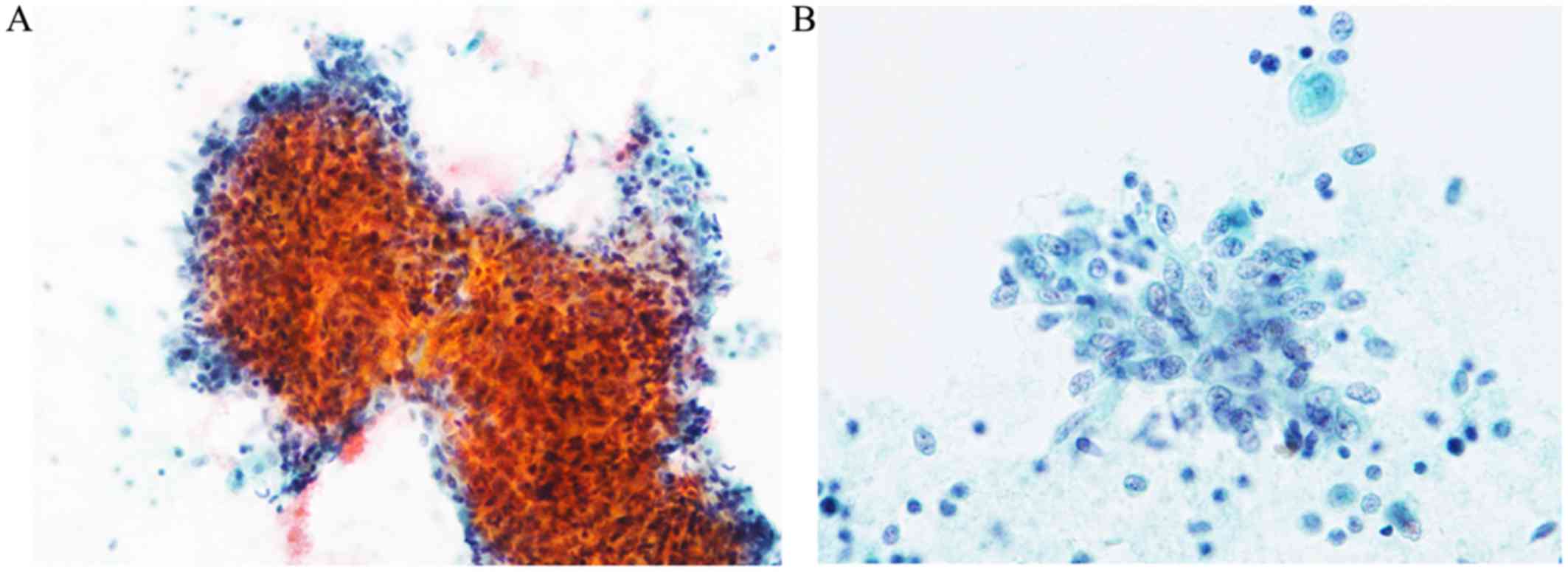
The Papanicolaou smear revealed cohesive hypercellular clusters or sheets of polygonal to elongated neoplastic cells in an inflammatory background (Fig. 1A). These neoplastic cells had scant cytoplasm and oval to short spindle-shaped nuclei with small nucleoli containing coarse chromatin (Fig. 1B). Mild-to-moderate nuclear pleomorphism was observed (Fig. 1B). Neither collagenous stroma nor dilated vascular structures were noted. Mitotic figures were not found.

Figure 1.

Cytological findings of the touch smear of the lung nodule. (A) Cohesive hypercellular cluster of polygonal to elongated neoplastic cells without collagenous stroma and dilated vessel structure (Papanicolaou stain; magnification, ×100). (B) The neoplastic cells had oval to short spindle-shaped nuclei and scant cytoplasm. Mild-to-moderate nuclear pleomorphism was observed (Papanicolaou stain; magnification, ×400).

Immunocytochemical findings

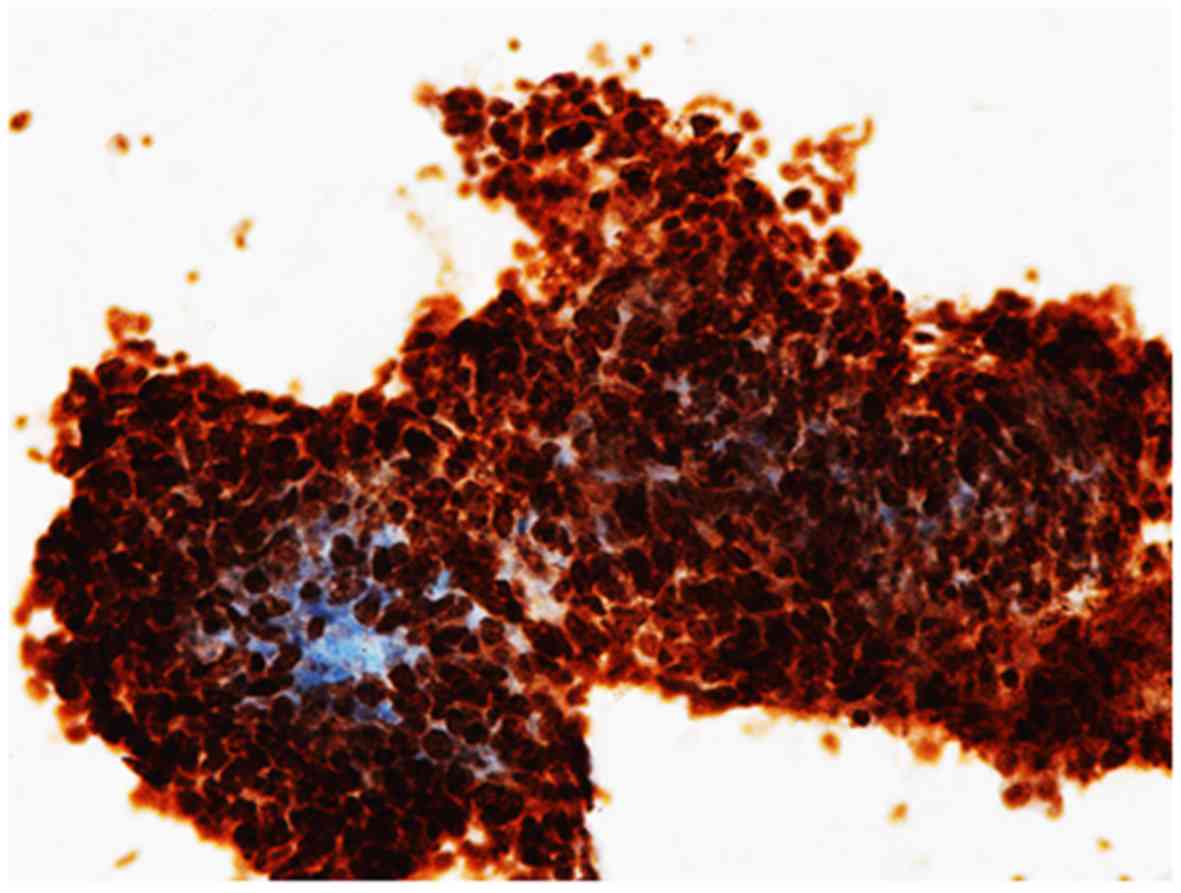
STAT6 was diffusely expressed in the nuclei of the neoplastic cells (Fig. 2). Accordingly, metastatic SFT was suspected.

Figure 2.

Immunocytochemical findings. STAT6 is diffusely expressed (magnification, ×400). STAT6, signal transducer and activator of transcription 6.

Histopathological findings

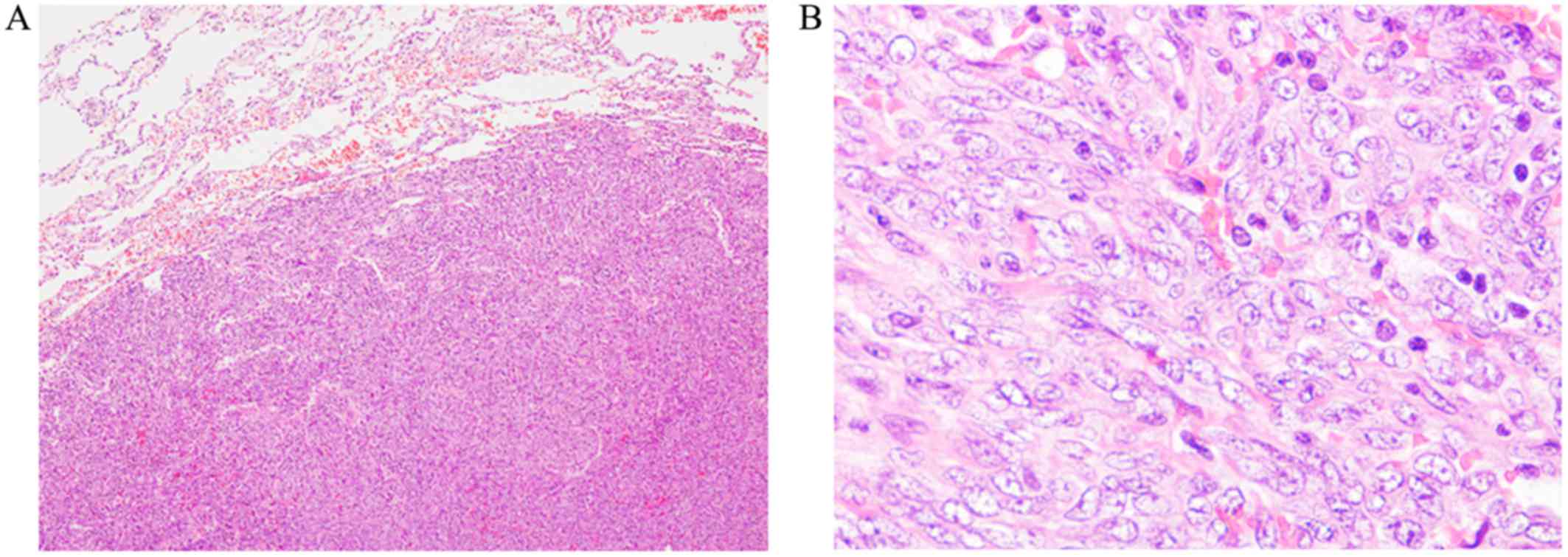
The four resected pulmonary lesions exhibited fundamentally the same characteristics. The tumors were composed of sheet-like proliferations of polygonal to short spindle-shaped neoplastic cells (Fig. 3A). These neoplastic cells had scant cytoplasm and oval to short spindle-shaped nuclei with small nucleoli containing coarse chromatin (Fig. 3B). Slit-like vessels were focally observed; however, fibrous stroma was absent.

Figure 3.

Histopathological characteristics of the lung nodule. (A) Sheet-like proliferation of polygonal to short spindle-shaped neoplastic cells without fibrous stroma and dilated vessel structure [hematoxylin and eosin (H&E) stain; magnification, ×100]. (B) The neoplastic cells had oval to short spindle-shaped nuclei and scant cytoplasm (H&E stain; magnification, ×400).

A review of the slides revealed that the histopathological characteristics of the meningeal tumor were identical to those of the lung lesions.

Immunohistochemical findings

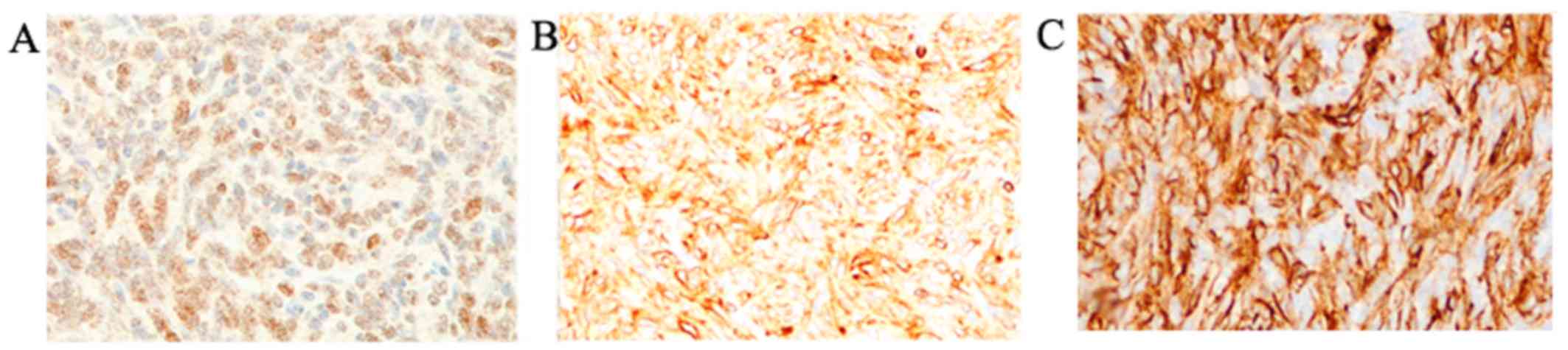
The neoplastic cells in the lung diffusely expressed STAT6, Bcl-2 and CD34 (Fig. 4). The meningeal tumor displayed the same immunohistochemical characteristics, and the Ki-67 labeling index was 1%. Accordingly, the diagnosis of meningeal SFT metastatic to the lung was confirmed.

Figure 4.

Immunohistochemical characteristics of the lung nodule. (A) STAT6, (B) Bcl-2 and (C) CD34 are diffusely expressed (magnification, ×400). STAT6, signal transducer and activator of transcription 6; Bcl-2, B-cell lymphoma 2.

RT-PCR

The lung tumor exhibited NAB2ex6-STAT6ex16 fusion.

Discussion

In this article, we described the first cytological report of meningeal SFT metastatic to the lung. The characteristic cytological features of extracranial SFT are as follows: i) Presence of hypercellular clusters, ii) oval, elongated, round, or stellate neoplastic cells with limited nuclear pleomorphism, iii) neoplastic cells with wispy cytoplasm or naked nuclei and iv) presence of pink collagenous intercellular stroma and occasional vessel-like structures (4). In particular, the presence of collagenous intercellular stroma is characteristic for this type of tumor, and this finding is observed in almost all cases of benign SFTs (99.5%) (4). Moreover, it has been reported that cytological characteristics indicative of malignant SFT are the presence of moderate to extensive nuclear pleomorphism, mitotic figures and necrosis (4). In the present case, the presence of hypercellular clusters composed of polygonal to elongated neoplastic cells with scant cytoplasm and oval to short spindle-shaped nuclei corresponded to the above mentioned cytological characteristics. The striking cytological finding in the present case was the absence of collagenous stroma, which is noted in 14% of malignant SFTs, and this makes it difficult to diagnose SFT. Thus, immunocytochemical analysis for STAT6 is required to confirm the diagnosis of SFT (described below).

SFT displays a spectrum of histopathological characteristics. Conventional (typical) SFT exhibits proliferation of spindle cells with scant cytoplasm and uniform oval to spindled nuclei within a prominent fibrous stroma and staghorn vessels. This paucicellular type is classified as fibrous SFT. Tumors with higher cellularity and more rounded cells, but with prominent perivascular fibrosis, are referred to as cellular SFT, whereas highly cellular tumors with well-developed thin-walled or dilated vessels without perivascular fibrosis are classified as HPC (5). Interestingly, Barthelmess et al reported that there is a clinicopathological difference among NAB2-STAT6 fusion variants (5). NAB2ex4-STAT6ex2/3 corresponds to the classical thoracic SFT with fibrous histology and better prognosis. By contrast, NAB2ex6-STAT6ex16/17 represents the cellular SFT and HPC histology, with more aggressive behavior and extrathoracic occurrence (5). Moreover, it has been documented that over half of the cases of meningeal SFT harbor NAB2ex6-STAT6ex16/17 fusion, and the histopathological characteristics also reflect the fusion variant in the meningeal SFT, as well as non-meningeal SFT (6). In the present case, the metastatic tumor harbored NAB2ex6-STAT6ex16 fusion, consistently with the histopathological and cytological characteristics of HPC-type SFT.

STAT6 has been recognized as a useful immunohistochemical marker for both meningeal and non-meningeal SFTs, without regard for fusion variants (5–8). Moreover, the usefulness of the immunocytochemical analysis for STAT6 in formalin-fixed fine-needle aspiration specimens has also been reported (4). In the present case, immunocytochemical staining for STAT6 led to cytodiagnosis of metastatic SFT, although the cytological characteristics were not typical of conventional SFT, including the absence of collagenous stroma. Therefore, immunocytochemical analysis for STAT6 is recommended when SFT is suspected clinically and cytologically.

Acknowledgements

Not applicable.

Funding

No funding was received.

Availability of data and materials

Not applicable.

Authors' contributions

KS, MI and KO contributed to cytological diagnosis and manuscript preparation. YE performed immunocytochemical and immunohistochemical staining. MI and KT performed histopathological diagnosis. KF, TS and TM contributed to patient data collection. TN, KH and CO performed RT-PCR. The final version of the manuscript has been read and approved by all authors.

Ethics approval and consent to participate

Not applicable.

Consent for publication

The authors obtained the consent of the patient to the publication of the case details.

Competing interests

The authors declare that they have no competing interests.

References

1 

Chmielecki J, Crago AM, Rosenberg M, O'Connor R, Walker SR, Ambrogio L, Auclair D, McKenna A, Heinrich MC, Frank DA and Meyerson M: Whole-exome sequencing identifies a recurrent NAB2-STAT6 fusion in solitary fibrous tumors. Nat Genet. 45:131–132. 2013. View Article : Google Scholar : PubMed/NCBI

2 

Robinson DR, Wu YM, Kalyana-Sundaram S, Cao X, Lonigro RJ, Sung YS, Chen CL, Zhang L, Wang R, Su F, et al: Identification of recurrent NAB2-STAT6 gene fusions in solitary fibrous tumor by integrative sequencing. Nat Genet. 45:180–185. 2013. View Article : Google Scholar : PubMed/NCBI

3 

Giannini C, Rushing EJ, Hainfellner JA, Bouvier C, Figarella-Branger D, von Deimling A, Wesseling P and Antonescu CR: Solitary fibrous tumour/haemangiopericytomaWHO Classification of Tumours of the Central Nervous System. Revised 4th edition. Louis D, Ohgaki H, Wiestler OD and Cavenee WK: IARC; Lyon: pp. 249–254. 2016

4 

Tani E, Wejde J, Åström K, Wingmo IL, Larsson O and Haglund F: FNA cytology of solitary fibrous tumors and the diagnostic value of STAT6 immunocytochemistry. Cancer Cytopathol. 126:36–43. 2018. View Article : Google Scholar : PubMed/NCBI

5 

Barthelmess S, Geddert H, Boltze C, Moskalev EA, Bieg M, Sirbu H, Brors B, Wiemann S, Hartmann A, Agaimy A and Haller F: Solitary fibrous tumors/hemangiopericytomas with different variants of the NAB2-STAT6 gene fusion are characterized by specific histomorphology and distinct clinicopathological features. Am J Pathol. 184:1209–1218. 2014. View Article : Google Scholar : PubMed/NCBI

6 

Yuzawa S, Nishihara H, Wang L, Tsuda M, Kimura T, Tanino M and Tanaka S: Analysis of NAB2-STAT6 gene fusion in 17 cases of meningeal solitary fibrous tumor/hemangiopericytoma: Review of the literature. Am J Surg Pathol. 40:1031–1040. 2016. View Article : Google Scholar : PubMed/NCBI

7 

Schweizer L, Koelsche C, Sahm F, Piro RM, Capper D, Reuss DE, Pusch S, Habel A, Meyer J, Göck T, et al: Meningeal hemangiopericytoma and solitary fibrous tumors carry the NAB2-STAT6 fusion and can be diagnosed by nuclear expression of STAT6 protein. Acta Neuropathol. 125:651–658. 2013. View Article : Google Scholar : PubMed/NCBI

8 

Koelsche C, Schweizer L, Renner M, Warth A, Jones DT, Sahm F, Reuss DE, Capper D, Knösel T, Schulz B, et al: Nuclear relocation of STAT6 reliably predicts NAB2-STAT6 fusion for the diagnosis of solitary fibrous tumour. Histopathology. 65:613–622. 2014. View Article : Google Scholar : PubMed/NCBI

Related Articles

  • Abstract
  • View
  • Download
  • Twitter
Copy and paste a formatted citation
Spandidos Publications style
Sandoh K, Ishida M, Okano K, Ebisu Y, Fukumoto K, Saito T, Murakawa T, Nakai T, Hatakeyama K, Ohbayashi C, Ohbayashi C, et al: Cytological characteristics of meningeal solitary fibrous tumor metastatic to the lung: A case report with immunocytochemical analysis. Mol Clin Oncol 9: 17-20, 2018.
APA
Sandoh, K., Ishida, M., Okano, K., Ebisu, Y., Fukumoto, K., Saito, T. ... Tsuta, K. (2018). Cytological characteristics of meningeal solitary fibrous tumor metastatic to the lung: A case report with immunocytochemical analysis. Molecular and Clinical Oncology, 9, 17-20. https://doi.org/10.3892/mco.2018.1625
MLA
Sandoh, K., Ishida, M., Okano, K., Ebisu, Y., Fukumoto, K., Saito, T., Murakawa, T., Nakai, T., Hatakeyama, K., Ohbayashi, C., Tsuta, K."Cytological characteristics of meningeal solitary fibrous tumor metastatic to the lung: A case report with immunocytochemical analysis". Molecular and Clinical Oncology 9.1 (2018): 17-20.
Chicago
Sandoh, K., Ishida, M., Okano, K., Ebisu, Y., Fukumoto, K., Saito, T., Murakawa, T., Nakai, T., Hatakeyama, K., Ohbayashi, C., Tsuta, K."Cytological characteristics of meningeal solitary fibrous tumor metastatic to the lung: A case report with immunocytochemical analysis". Molecular and Clinical Oncology 9, no. 1 (2018): 17-20. https://doi.org/10.3892/mco.2018.1625
Copy and paste a formatted citation
x
Spandidos Publications style
Sandoh K, Ishida M, Okano K, Ebisu Y, Fukumoto K, Saito T, Murakawa T, Nakai T, Hatakeyama K, Ohbayashi C, Ohbayashi C, et al: Cytological characteristics of meningeal solitary fibrous tumor metastatic to the lung: A case report with immunocytochemical analysis. Mol Clin Oncol 9: 17-20, 2018.
APA
Sandoh, K., Ishida, M., Okano, K., Ebisu, Y., Fukumoto, K., Saito, T. ... Tsuta, K. (2018). Cytological characteristics of meningeal solitary fibrous tumor metastatic to the lung: A case report with immunocytochemical analysis. Molecular and Clinical Oncology, 9, 17-20. https://doi.org/10.3892/mco.2018.1625
MLA
Sandoh, K., Ishida, M., Okano, K., Ebisu, Y., Fukumoto, K., Saito, T., Murakawa, T., Nakai, T., Hatakeyama, K., Ohbayashi, C., Tsuta, K."Cytological characteristics of meningeal solitary fibrous tumor metastatic to the lung: A case report with immunocytochemical analysis". Molecular and Clinical Oncology 9.1 (2018): 17-20.
Chicago
Sandoh, K., Ishida, M., Okano, K., Ebisu, Y., Fukumoto, K., Saito, T., Murakawa, T., Nakai, T., Hatakeyama, K., Ohbayashi, C., Tsuta, K."Cytological characteristics of meningeal solitary fibrous tumor metastatic to the lung: A case report with immunocytochemical analysis". Molecular and Clinical Oncology 9, no. 1 (2018): 17-20. https://doi.org/10.3892/mco.2018.1625
Follow us
  • Twitter
  • LinkedIn
  • Facebook
About
  • Spandidos Publications
  • Careers
  • Cookie Policy
  • Privacy Policy
How can we help?
  • Help
  • Live Chat
  • Contact
  • Email to our Support Team