Introduction
True hermaphroditism refers to the simultaneous
presence of two types of gonadal tissue (testicular and ovarian),
regardless of the patient's karyotype (1). The degree of external genitalia varies
between males and females. The etiology and pathogenesis of true
hermaphroditism have not yet been fully elucidated. Seminoma is a
low-grade tumor that originates from testicular primordial germ
cells, and it is the most common tumor of the testes (2). However, cases of true hermaphroditism
with seminoma are rare. In the present case, the clinical
manifestations, histological morphology and immunophenotype of an
adult patient with true hermaphroditism combined with seminoma
treated in our hospital are analyzed, and the diagnosis and
treatment are discussed along with a literature search.
Case report
The patient was a 35-year-old man who was diagnosed
with a retractable mass in the left inguinal region for 20 years
and was admitted to Peking University Shenzhen Hospital (Shenzhen,
China) on September 7, 2017. The patient did not complain of any
specific discomfort and his past medical history was unremarkable.
There is no blood relationship between parents. The patient's
mother denied receiving sex hormones and exposure to radioactive
substances during pregnancy, and there was no related history in
the family. The patient was married with one child, reported normal
sexual function and had normal growth and development. On physical
examination the pubic hair exhibited male distribution, the
appearance of the external genitalia was male and of normal size,
the urethral orifice was normal and there were no hypospadias; on
palpation, the left testis was present and of normal size, but the
right scrotum was empty. Following admission, blood tests,
coagulation function tests, liver and renal function tests, and
infectious disease were all normal. The β-human chorionic
gonadotropin level was <0.5 IU/l (normal range, 0–2.67 IU/l),
the carbohydrate antigen (CA) 125 level was 8.5 U/ml (normal range,
0–35.0 U/ml), the CA15-3 level was 4.7 U/ml (normal range, 0–31.3
U/ml), the CA19-9 level was <2.00 U/ml (normal range, 0–37.0
U/ml), the α-fetoprotein (AFP) level was 2.6 ng/ml (normal range,
0–13.4 ng/ml) and the carcinoembryonic antigen level was 1.1 ng/ml
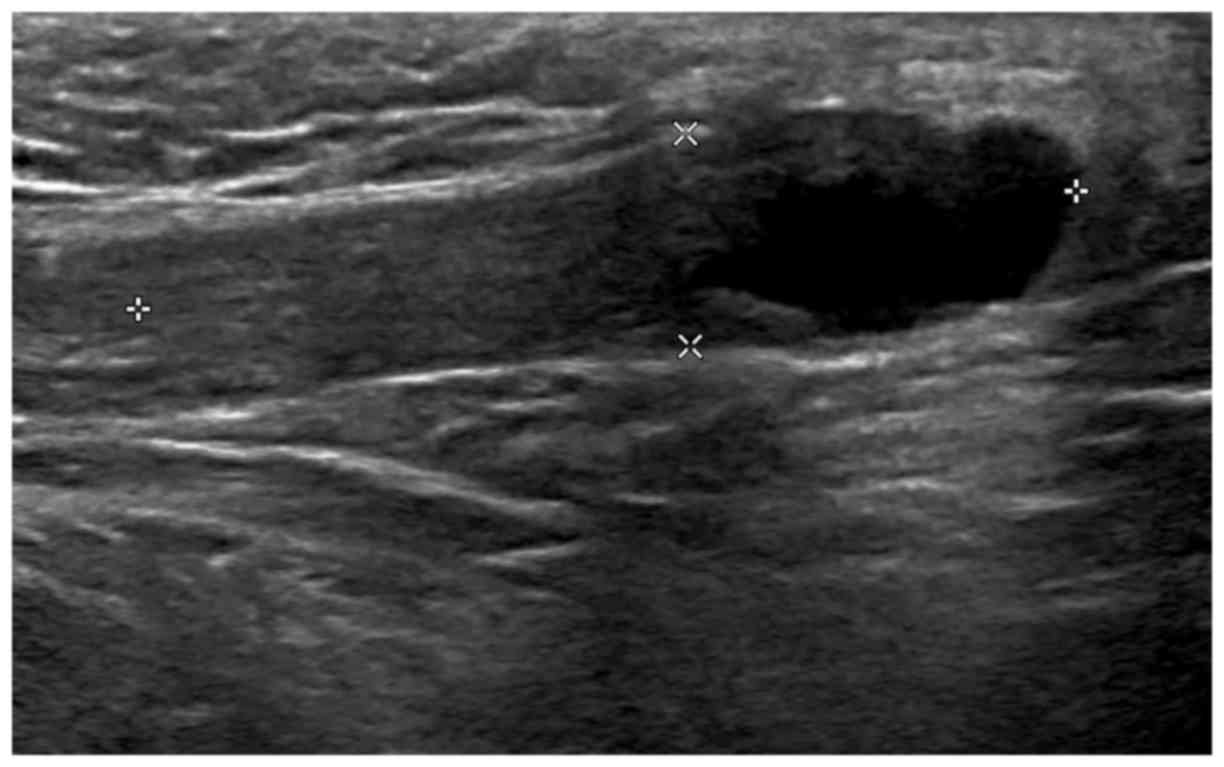
(normal range, 0–5.0 ng/ml). Color Doppler ultrasound in the
inguinal region indicated that the right cryptorchidism was likely
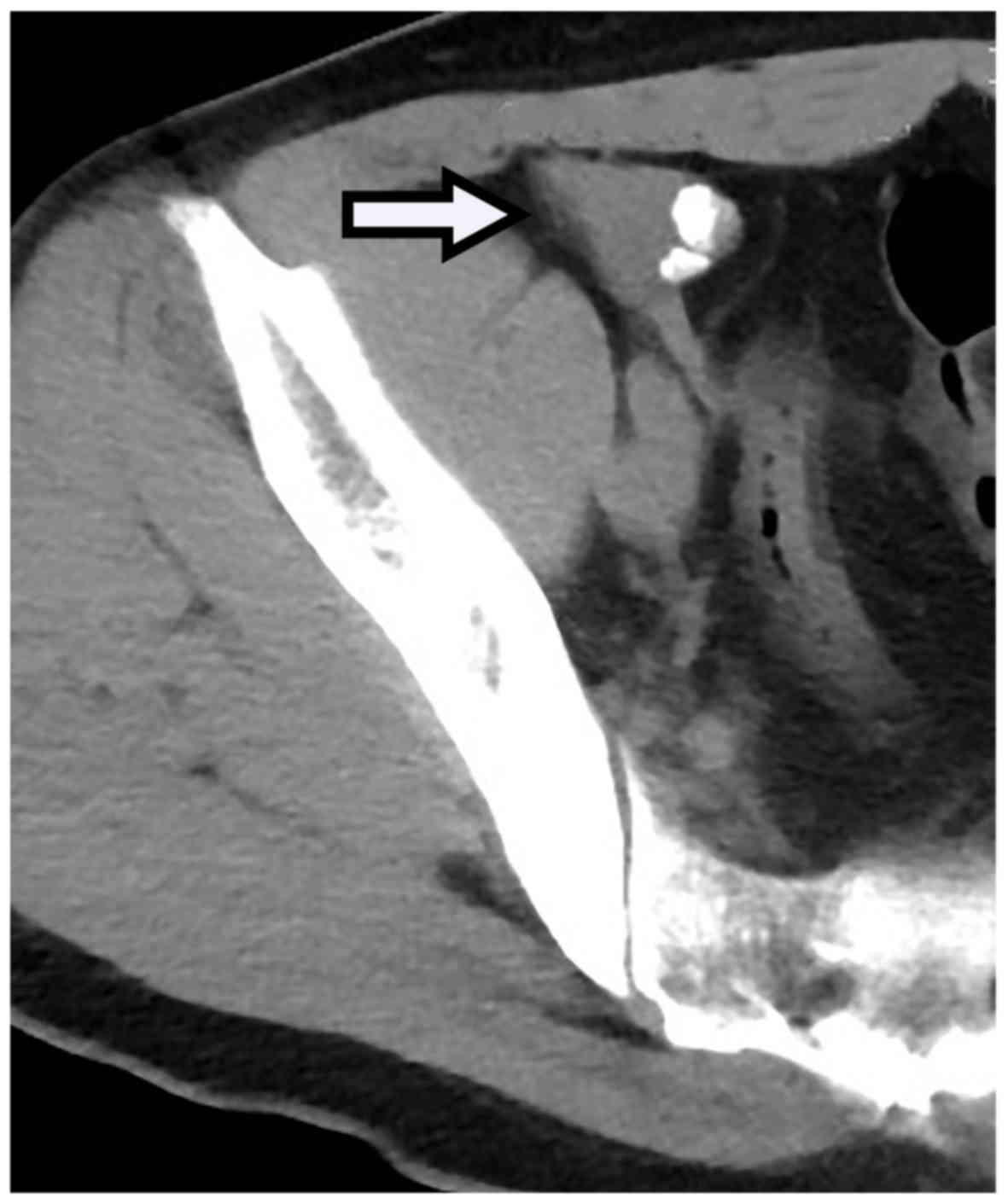
associated with liquefaction and calcification (Fig. 1). An enhanced pelvic computed
tomography (CT) scan (Fig. 2)
demonstrated that the right scrotum did not contain a testicle, and
revealed a nodular shadow of abnormal density in the right iliac
fossa. The boundary was clear and the size was ~33.0×18.0 cm, with
spotted and nodular calcifications in the periphery. No obvious
enhancement, and cryptorchidism was considered as a possible
diagnosis. Mixed scrotal density was observed on the left side, and
the presence of a left inguinal hernia was considered. Therefore,
the diagnosis on admission was: i) Left inguinal hernia and ii)
right cryptorchidism. Laparoscopic total extraperitoneal inguinal
hernia repair and laparoscopic cryptorchidectomy were successfully
performed. After surgery, the patient was discharged without
complications. The findings of the postoperative pathological
examination of the right testicular specimen were consistent with
development of a seminoma in an ovotestis (Fig. 3). The results of the
immunohistochemical examination were as follows: Sal-like protein
4+ (partially weak); octamer-binding transcription factor 4+
(partially weak); CD117+; cytokeratin+; CD30-, α-fetoprotein-,
inhibin-α-.
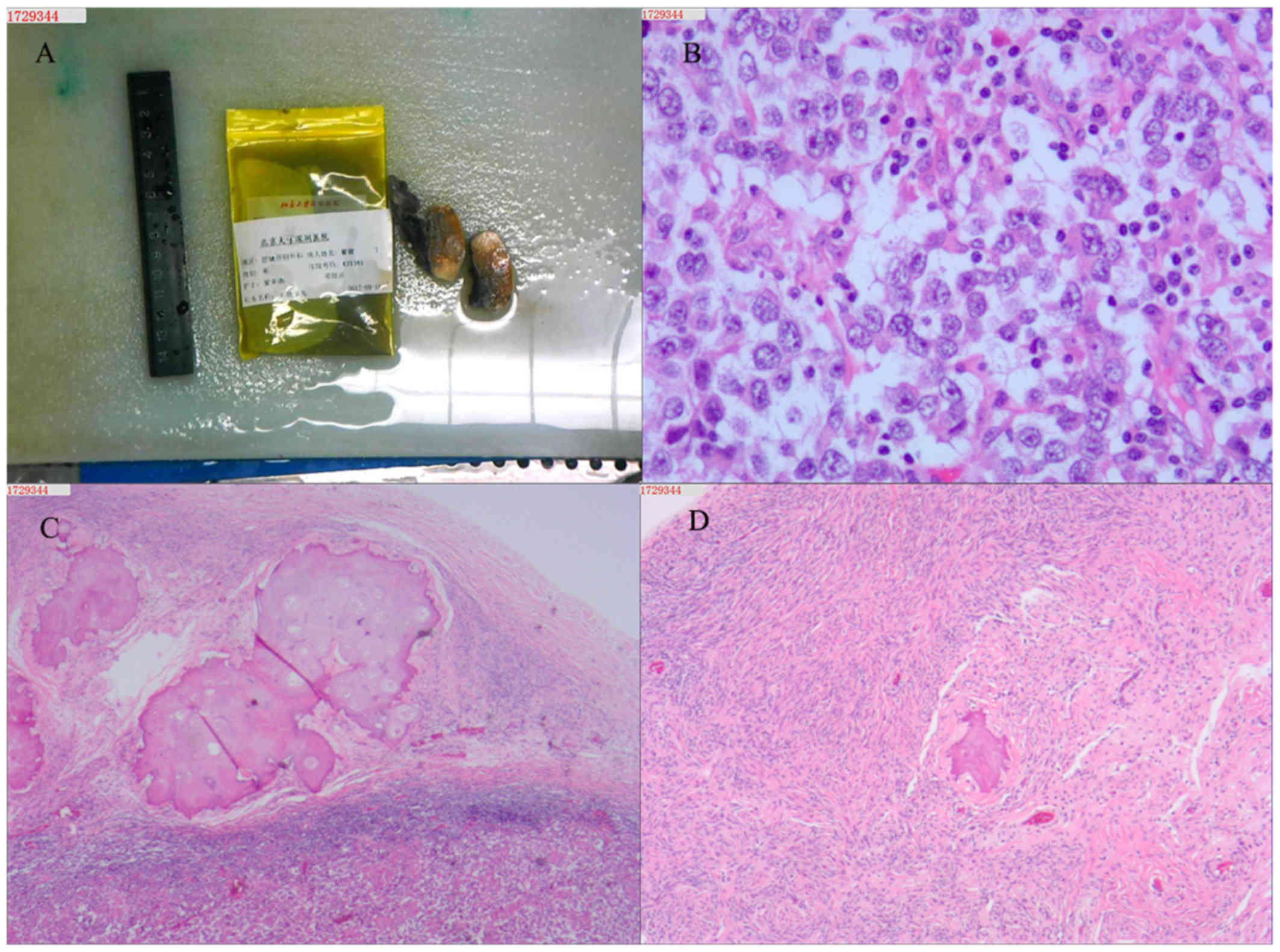 | Figure 3.(A) Gross examination of removed
testicular tissue, sized 4.0×2.5×1.2 cm. The cut surface was
yellowish-brown and soft, and included a grey mass, slightly harder
in texture. The size of the epididymis was 4.0×1.5×1.0 cm. (B) In
testicular tissue, spermatogenic cells in the seminiferous tubules
were highly atrophic or absent, the basement membrane was
significantly thickened, and hyalinization was observed, along with
stromal cell proliferation. (C) Ovarian-like tissue was detected in
an area of the testicular tissue. (D) In the testicular tissue,
more irregularly shaped large cells were arranged in a nodular
pattern, with scattered interstitial lymphocytes. Combined with
immunohistochemistry, the findings were consistent with
seminoma. |
Discussion
True hermaphroditism is a gonadal abnormality
characterized by the simultaneous presence of testicular and
ovarian tissue in the same patient. The incidence rate is ~1/20,000
(1). At present, the etiology and
pathogenesis of this condition remain obscure, but sex chromosome
abnormalities, abnormal gonadal development and related endocrine
disorders and other factors during embryonic development may be
implicated (2). Studies have shown
that sexual differentiation and gonadal development require the
involvement of sex-determining region Y (SRY), steroidogenesis
factor-1, anti-Müllerian hormone gene, sex-determining region Y box
protein 9, Wilms' tumor-1, dose-sensitive sex reversal-congenital
adrenal dysplasia gene 1 and other genes involved in the
development of hereditary disorders (3–5). Among
those, the SRY gene is the best candidate as a testis-determining
factor, and ~66.7% of true hermaphroditism cases are found on
genetic analysis to have SRY mutations (6). In addition, exogenous hormones,
particularly pregnant women exposed to estrogen and progesterone
during the early and middle pregnancy, may affect the normal
differentiation of fetal gonads and increase the risk of sexual
development abnormalities (7).
The testis and ovaries of patients with true
hermaphroditism may be combined to form ovotestes, or they may
exist separately. In true hermaphroditism patients, the presence of
an ovotestis is the most common, followed by the presence of an
ovary, whereas the presence of a testis is the least common
(8). The karyotypes of patients with
true hermaphroditism are mainly 46XX, 46XY, and 46XX/46XY, 46XY/45X
and other chimeras (9). The
karyotype analysis result for this patient was 46XY. Regarding
genital development in patients with true hermaphroditism, studies
have found that it is associated with ipsilateral gonads, and
changes in the accessory renal tube determine genital development.
If the patient's gonad is the testis, the accessory renal tubular
inhibitory factor produced by the patient degenerates the accessory
renal tube; if the gonad is the ovary, it does not produce the
accessory renal tubular suppressor, and the accessory renal tube
eventually develops into the uterus, fallopian tubes and vagina.
The majority of the patients with true hermaphroditism exhibit a
range of different external genitalia. Most patients exhibit
clitoral enlargement or a small penis. Study data indicate that
~2/3's of true hermaphroditism patients live as men. If the
patient's androgen secretion is insufficient during embryonic
development and the scrotum and penis are not developed at birth,
the patient often leads life as a woman (10). In the present case, the patient lived
as a male, exhibited male secondary sexual characteristics, had no
evident abnormalities in the external genitalia, and there was no
mammary gland development. This may indicate that the patient's
androgen secretion during the embryonic stage was sufficient to
drive the development of the scrotum and penis. In terms of
diagnosis, sex hormone testing, Doppler ultrasound, CT and magnetic
resonance imaging, among other tests, play an important auxiliary
role and help determine the status of hormone secretion and the
structure of the gonads and internal genitalia. However, surgical
exploration and histopathological examination confirm that the
presence of both types of gonads in the body remains the gold
standard for the diagnosis of true hermaphroditism (11). In the present case, pathological
examination revealed ovarian tissue in a region of the testis. The
karyotype was 46XY, and the diagnosis of true hermaphroditism was
confirmed.
Seminomas originate from testicular primordial germ
cells, are low-grade, and are the most common type of testicular
tumor, accounting for ~30–40% of all cases (12). Seminoma mostly occurs in middle-aged
patients, is often unilateral, and slightly more common on the
right. The disease is more likely to metastasize through the
lymphatic pathway, and extensive hematogenous metastases may occur
at the advanced stage, even to the skin (13,14). In
the diagnosis of this disease, pathology and immunohistochemistry
are of important reference value. Placental alkaline phosphatase
(PLAP) and CD117 are currently recognized and widely used as tumor
markers for the diagnosis of seminoma (15,16).
However, PLAP positivity cannot exclude other germ cell tumors.
CD117 is a type III transmembrane protein tyrosine kinase growth
factor receptor, of which >90% of testicular seminomas are
positive, but embryogenic cancer is negative. Therefore, it is
commonly used in the identification of spermatogonial tumor
(16). Biermann et al
(17) found that M2A and AP-2γ have
higher diagnostic sensitivity. In addition, Ying et al
(18) demonstrated that the positive
expression rates of M2A and AP-2γ in seminoma were 95 and 87.5%,
respectively, while the positive expression rates of PLAP and CD117
were 67.5 and 75%, respectively. The expression of M2A and AP-2γ
was significantly different from that of PLAP and CD117, suggesting
that the positive expression of M2A and AP-2γ is valuable in the
diagnosis of seminoma. In recent years, the discovery of new tumor
markers, such as MAGEC2 and CAGCMTM2, have enabled early diagnosis
of seminomas (19–21). The immunohistochemistry results in
our patient revealed that CD117 was positive, whereas AFP and CD30
were negative. Combined with the clinical characteristics and
histopathological examination, the diagnosis of seminoma was
confirmed.
Seminoma in adult cryptorchidism combined with true
hermaphroditism is rarely reported in clinical practice. The
patient in the present case was a 35-year-old male with right
cryptorchidism for over 30 years. Pathological examination revealed
the presence of both types of gonads and the karyotype was 46XY,
which is a typical true hermaphroditism. Seminoma in cryptorchidism
is significantly more common compared with normal testes (22) and it may be associated with the
location of cryptorchidism, the high temperature in the abdominal
cavity, endocrine disorders, local blood circulation disorders,
gene mutations and other factors (23–25). In
terms of treatment, patients with true hermaphroditism must be
treated as men or women based on factors such as age, sex, gender,
stability of the sex gonads, reproductive tract and external
genitalia, and the consent of the parents/guardians. After weighing
the abovementioned factors, surgical treatment and hormone
replacement therapy are selectively used according to the
circumstances; in cases of gonad-associated malignancies, the
gonads should be immediately removed and regional lymph node
dissection and postoperative radiotherapy and chemotherapy should
be performed according to the tumor stage (26). The incidence of seminoma in patients
with cryptorchidism was significantly higher compared with that in
normal subjects. Early correct intervention is crucial for
preventing malignant transformation of the undescended testis.
Corrective surgery is recommended for children with cryptorchidism
aged <2 years. However, if the patient is aged ≥2 years, the
undescended testicles should be surgically removed. If malignant
change has occurred, the treatment of testicular neoplasms is
carried out in accordance with the general principles of treatment
of testicular tumors (27). Since
seminoma originates from primordial germ cells, it is highly
sensitive to radiotherapy and chemotherapy. Surgery combined with
radiotherapy and chemotherapy can significantly improve the
prognosis. The clinical stage of the tumor and the presence of
hematogenous and/or lymphatic metastasis are the main factors
affecting the prognosis of seminoma (28,29).
Acknowledgements
Not applicable.
Funding
The present study was supported by the National
Natural Science Foundation of China (grant no. 81101922), the
Science and Technology Development Fund Project of Shenzhen (grant
nos. JCYJ20150403091443329 and JCYJ20170307111334308), the fund of
‘San-ming’ Project of Medicine in Shenzhen and the fund of
Guangdong Key Medical Subject.
Availability of data and materials
Not applicable.
Authors' contributions
LN and LZ conceived and designed the study. YL, PT
and JX collected literature data and clinical information. YL and
JX drafted and edited the manuscript. All the authors have read and
approved the final version of the manuscript.
Ethics approval and consent to
participate
The patient provided written informed consent
preoperatively.
Patient consent for publication
The reported case has been approved by the patient
for academic exchange only.
Competing interests
The authors declare that they have no competing
interests.
References
|
1
|
Liang YF: The hermaphroditism of human.
Biologic Teach. 29:51–52. 2004.
|
|
2
|
Jing H, Xinhua T and Baosheng Z: 46,XX
male syndrome genetic diagnosis and clinical analysis. Chin J
Androl. 17:68–72. 2011.(In Chinese).
|
|
3
|
Mendonca BB, Domenice S, Arnhold IJ and
Costa EM: 46, XY disorders of sex development (DSD). Clin
Endocrinol (Oxf). 70:173–187. 2009. View Article : Google Scholar : PubMed/NCBI
|
|
4
|
Yanqin Y and Xiaoping L: Diagnosis and
differentiation program of sexual development disorder. J Clin
Pediatr. 25:965–970. 2007.
|
|
5
|
Xiaoyu C and Shulan Z: Research progress
of the correlation between Y-box protein 2 and gynecologic
malignancy in sex determination area. Chin J Pract Gynecol Obst.
31:1048–1051. 2015.
|
|
6
|
Xia XY, Cui YX, Lu HY, Yang B, Wang GH,
Pan LJ, Hou BS, Ge YF, Shao Y, Yao B and Huang YF: Clinical,
molecular and cytogenetic studies on 4 patients with 46,XX (SRY
positive) male syndrome. Zhonghua Nan Ke Xue. 13:1094–1097.
2007.(In Chinese). PubMed/NCBI
|
|
7
|
Martin OV, Shialis T, Lester JN, Scrimshaw
MD, Boobis AR and Voulvoulis N: Testicular dysgenesis syndrome and
the estrogen hypothesis: A quantitative meta-analysis. Environ
Health Perspect. 116:149–157. 2008. View Article : Google Scholar : PubMed/NCBI
|
|
8
|
Enhao G: Modern plastic surgery. Beijing:
People's Military Medical Press; pp. 921–933. 2002
|
|
9
|
Deng M, Zhao H, Che Z, Wang R, Qi H and
Nie W: Report of 1 case of true hermaphroditism and literature
review. Chin J Androl. 26:55–56. 2012.(In Chinese).
|
|
10
|
Zeyi C: Chinese obstetrics and gynecology.
Beijing: People's Medical Publishing House; 2014
|
|
11
|
Cui J, Dou JT, Yang GG, Gu WJ, Zang L, Jin
N, Wang XL, Yang LJ, Lu ZH, Ba JM, et al: Diagnosis and management
of ovotesticular disorders of sex development: A clinical study of
14 cases. Chin J Pract Int Med. 4:346–350. 2015.
|
|
12
|
Boujelbene N, Cosinschi A, Boujelbene N,
Khanfir K, Bhagwati S, Herrmann E, Mirimanoff RO, Ozsahin M and
Zouhair A: Pure semiuoma: A review and update. Radiat Oneol.
6:902011. View Article : Google Scholar
|
|
13
|
Tickoo SK, Hutchinson B, Bacik J, Mazumdar
M, Motzer RJ, Bajorin DF, Bosl GJ and Reuter VE: Testicular
seminoma: A clinicopathologic and immunohistechemical study of 105
cases with special reference to seminomas with atypical features.
Int J Surg Pathol. 10:23–32. 2002. View Article : Google Scholar : PubMed/NCBI
|
|
14
|
Tazi H, Badraoui M, Qasmi S and Hassam B:
Metastatie pure testicular seminoma of the skin. Prog Urol.
21:76–78. 2011.(In French). View Article : Google Scholar : PubMed/NCBI
|
|
15
|
Yinghao Y: Immunohistochemical diagnosis
and differential diagnosis of testicular tumors. Chin J
Misdiagnosis. 543–546. 2006.
|
|
16
|
Liu DL, Lu YP, Shi HY, Zhu SX, Lü JW, Li
WF and Rong X: Expression of CD117 in human testicular germ cell
tumors and its diagnostic value for seminoma and nonseminoma.
Zhonghua Nan Ke Xue. 14:38–41. 2008.(In Chinese). PubMed/NCBI
|
|
17
|
Biermann K, Klingmüller D, Koch A, Pietsch
T, Schorle H, Büttner R and Zhou H: Diagnostic value of markers
M2A, OCT3/4, AP-2gamma, PLAP and c-KIT in the detection of
extragonadal seminomas. Histopathology. 49:290–297. 2006.
View Article : Google Scholar : PubMed/NCBI
|
|
18
|
Ying T, Yuanhua C and Anzhi W: Expression
and significance of M2A,AP-2γ,OCT3/4, PLAP and CD117 in seminoma. J
Pract Med. 27:1338–1340. 2011.
|
|
19
|
Bode PK, Barghorn A, Fritzsche FR, Riener
MO, Kristiansen G, Knuth A and Moch H: MAGEC2 is a sensitive and
novel marker for seminoma: A tissue microarray an analysis of 325
testicular germ cell tumors. Mod Pathol. 24:829–835. 2011.
View Article : Google Scholar : PubMed/NCBI
|
|
20
|
Davis-Dao CA, Siegmund KD, Vandenberg DJ,
Skinner EC, Coetzee GA, Thomas DC, Pike MC and Cortessis VK:
Heteregenous effect of androgen receptor CAG tract length on
testicular germ cell tumor risk: Shorter repeats associated with
seminoma but not other histology types. Carcinogenesis.
32:1238–1243. 2011. View Article : Google Scholar : PubMed/NCBI
|
|
21
|
Zhenhua L, Tao X and Yunbei X: Tissue
microarray technique was used to detect the expression of CMTM2 in
human testicular tumor tissues. Chin J Male Sci. 23:3–6. 2011.(In
Chinese).
|
|
22
|
Gang L, Bo Y and Yongsheng S: Clinical
analysis of 15 cases of secondary malignant transformation of
cryptorchidism. J Beihua Univ (Nat Sci). 13:557–559. 2012.(In
Chinese).
|
|
23
|
Bigot P, Droupy S, Houlgatte A, De
Crevoisier R and Fléchon A: Stage I seminoms: Therapeutic strategy:
Surveillance, radiotherapy, chemotherapy. A case-report. Prog Urol.
21 Suppl 2:S453–S457. 2011.
|
|
24
|
Yang Z and Daguang W: Pelvic tumor
characteristics and diagnosis and treatment. Chin J Pract Surg.
31:533–535. 2011.(In Chinese).
|
|
25
|
Zhiyu W, Jian C, Lichang L, et al:
Bilateral cryptorchidism complicated with unilateral malignant
seminoma: A case report. Chin J Androl. 16:662–663. 2010.(In
Chinese).
|
|
26
|
Yu L and Xin X: Report of a case of true
glandular malignant glandular malignant transformation. Chin J
Aesthetic Med. 3:326–327. 2004.(In Chinese).
|
|
27
|
Hua X, Liu SJ, Lu L, Li CX and Yu LN:
Clinicopathological characterization of true hermaphroditism
complicated with seminoma and review of the literature. Chin J
Androl. 18:719–722. 2012.(In Chinese).
|
|
28
|
Eble JN, Sauter G, Epstein JI and
Sesterhenn IA: World Health Organization Classification of
TumoursPathology and genetics of tumours of Urinary system and male
genital organs. Lyon: IARCP Press; pp. 260–261. 2004
|
|
29
|
Qiao B and Wen Z: The diagnostic criteria
and treatment plan of cryptorchidism in children. Pract J Pediatr.
27:1847–1848. 2012.
|