Introduction
Intracranial aneurysms (IAs) can be found in ~2% of
the general population and are revealed in 85% of subarachnoid
hemorrhage cases (1-3).
More commonly, patients between 40 and 60 years of age are more
prone to IA rupture with an unfavorable outcome. It has been found
that ~50% of cases succumb and another 20% remain with disability
after management (4-7).
Several investigators have inspected the expansion
of IAs, which are usually considered to be caused by the
interactivity among environmental and hereditary causes (8-10).
For example, environmental factors, such as alcohol consumption,
smoking and hypertension are suggested to be common risk factors
for IAs (8-10).
On the other hand, hereditary causes cannot be eliminated as a risk
factor for IAs. Hereditary susceptibility is the main risk
parameter for the formation of IA, with an up to seven-fold
increased risk of rupture (11).
Another study also stated a five-fold increased risk of IA rupture
in a first-degree individual among families with a prevalence of
IAs (12). Furthermore, genes cause
alterations in the vascular extracellular matrix (ECM), which may
also be a significant cause for IAs to be hereditary entities
(13,14). ECM modification (disruption or
remodeling) plays a crucial role in preserving the composition and
integrity of the arterial wall. ECM degradation is a key
characteristic of IAs (13,14).
The Versican (VCAN) gene [also known as
chondroitin sulfate proteoglycan 2 (CSPG2)] has multiple
functions in preserving ECM roles (13,14).
Previous research has indicated that the three single nucleotide
polymorphisms (SNPs), rs2287926, rs173686 and rs251124 of the
VCAN gene, are related to the development of IAs (3,13,14).
Nevertheless, replication research has stated a lack of an
association among the CSPG2 variants (rs251124 and rs173686)
and the presence of aneurysms (15,16).
The purpose of the present meta-analysis was to
evaluate the involvement of the VCAN gene variants in the
development of IAs and its importance as a screening global marker
for the pathogenesis of IAs. The findings presented herein may help
clinicians identify the exact risk of their development.
Data and methods
Study identification and
selection
To investigate all eligible articles involving IAs
in the literature written in the English language on the
association with germ-line SNPs of DNA repair genes and IAs through
electronic databases, including the Cochrane Library, PubMed (up to
January, 2024), Embase (up to January, 2024) and MEDLINE (up to
January, 2024) via combinations of the following terms:
Intracranial aneurysms; aneurysms; gene associations; SNPs;
CSPG2 gene. For the study protocol creation and design, the
Preferred Reporting Items for Systematic Reviews and Meta-Analyses
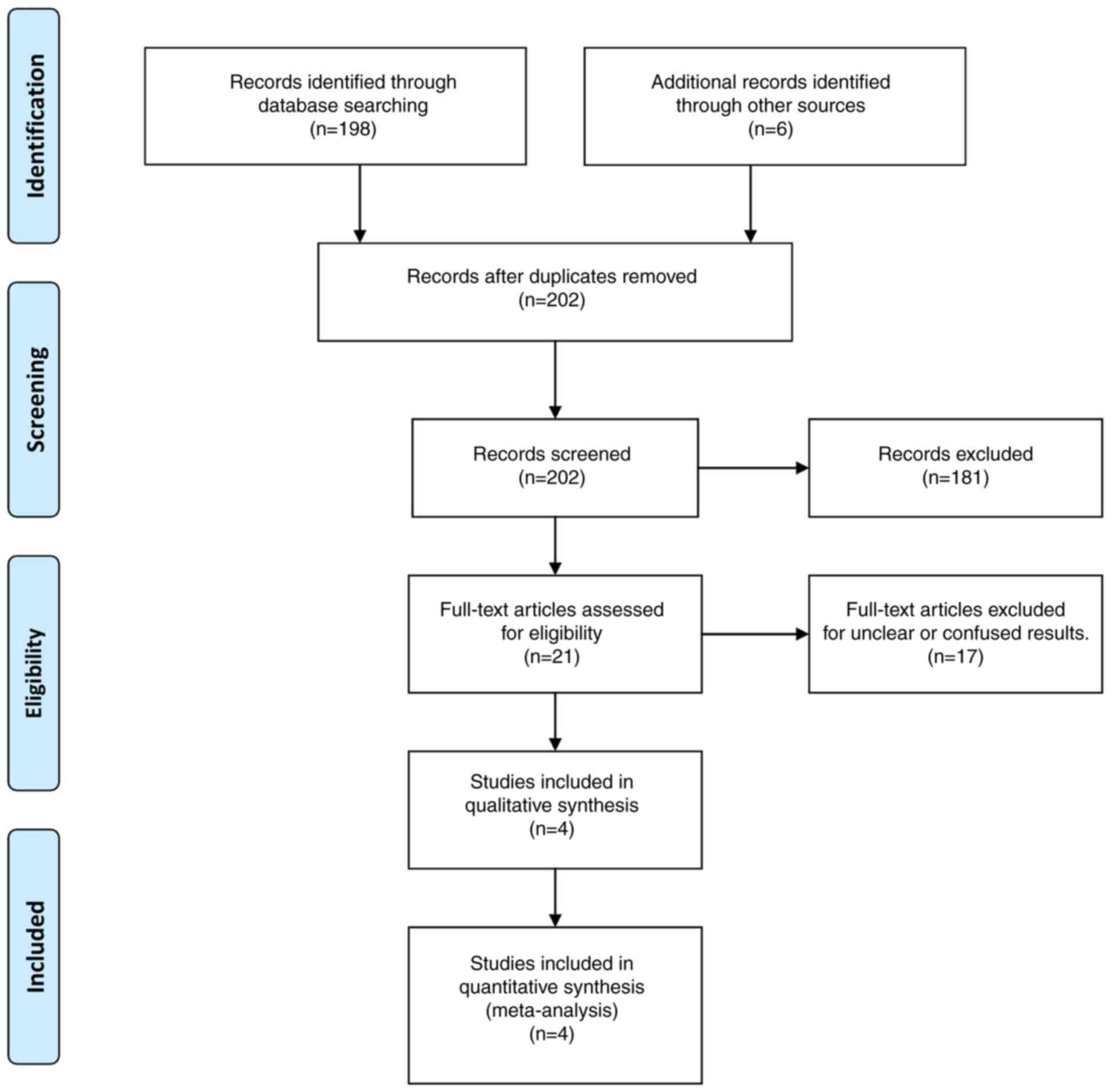
(PRISMA) guidelines were applied. The flowchart with the collection
process of the enclosed articles is illustrated in Fig. 1. The present study integrated
articles published between 1980 and 2023.
The subsequent information was inserted from the
article pool: The authors' names and year of publication, the
sample of total cases and controls, the mean age and sex of cases
and controls, the DNA polymorphisms and DNA repair genes inspected
in the study, genotyping techniques, the polymorphism's genotype,
the number of cases and controls, the chromosome position, and the
possible mechanisms of function were considered qualified. For the
CSPG2 rs188703, rs2287926, rs251124 and rs173686 SNPs,
meta-analyses were carried out (Table
I). Of note, data from genome-wide association studies were not
included in any phases, but only data from candidate gene
association studies were included. All genetic models (dominant,
recessive and additive) were evaluated in studies recording
genotype frequencies. The alleles and the SNP IDs are presented in
Table I.
 | Table IGene, chromosome position, possible
mechanisms of function, and number of studies included in the
present meta-analysis. |
Table I
Gene, chromosome position, possible
mechanisms of function, and number of studies included in the
present meta-analysis.
| Gene | Allele (SNP ID) | SNP | Chromosome
position | Possible mechanisms
of function | Total no. of studies
included |
|---|
| CSPG2 | G>A
(rs188703) | R1826H | 5q14.2 | protein_coding
splicing_regulation transcriptional_regulation
post_translation | 2 |
| CSPG2 | G>A Additive
(rs2287926) | G428D | 5q14.2 | protein_coding
splicing_regulation transcriptional_regulation
post_translation | 2 |
| CSPG2 | C>T Additive
(rs251124) | (Gly428Asp) | 5q14.2 |
transcriptional_regulation | 3 |
| CSPG2 | A>G Additive
(rs173686) | - | 5q14.2 |
transcriptional_regulation | 4 |
Statistical analysis and assessment of
heterogeneity
All analyses were performed using Review Manager
Software (RevMan), version 5.4 (https://training.cochrane.org/onlinelearning/coresoftware/revman).
A fixed- and random-effects model meta-analysis was used [according
to the Cochrane Handbook for Systematic Reviews of Interventions
(version 5.1.0) (17)] for the
evaluation of the proportion estimate for every outcome
independently, as the I2 statistic calculated the
heterogeneity. A value of I2 in an amount <50% was considered as
low heterogeneity, and a value >50% as high heterogeneity. Or
else, the fixed-effect model was performed. The continuous outcomes
were stated as a weighted mean difference with 95% confidence
intervals (CIs). For discontinuous variables, odds ratios (ORs)
with 95% CIs were used for the evaluation. A P-value <0.05 was
considered to indicate a statistically significant difference.
Results
Included articles
In total, four articles (15,16,18,19)
fulfilled the eligibility criteria. The total number of patients
was 2,308 [987 cases (poor outcomes) and 1,321 controls (good
outcomes)]. The study sample was based on four studies (15,16,18,19)
(Table II).
| Table IIDesign and baseline characteristics
of the trials included in the present meta-analysis. |
Table II
Design and baseline characteristics
of the trials included in the present meta-analysis.
| | Cases, sex | Controls sex | |
|---|
| Authors, year of
publication | Gene | SNPs ID | Cases Sample | Controls
Sample | Cases Mean age | Controls, Mean
age | M | F | M | F | (Refs.) |
|---|
| Sun et al,
2007 | CSPG2 | rs173688 and
rs251126 | 240 | 240 | 45.14±11.66 | 41.82±8.96 | 104 | 136 | 116 | 124 | (16) |
| Baas et al,
2010 | CSPG2 | rs173689 and
rs188703 | 376 | 648 | 72.1 | - | 337 | 39 | - | - | (18) |
| Sathyan et
al, 2014 | CSPG2 | rs173687, rs251125,
rs2287926 and rs188703 | 220 | 250 | 51.17±11.37 | 51.0±14.1 | 123 | 97 | 122 | 128 | (15) |
| Zhu et al,
2021 | CSPG2 | rs173686, rs251124,
and rs2287926 | 162 | 182 | 58.08±11.93 | 60.25±11.80 | 60 | 102 | 92 | 90 | (19) |
Epidemiological and clinical
features
The authors, publication year, genes, SNP ID, mean
age of the patients, and sample of males and females between the
cases and controls among the studies are presented in Table II.
CSPG2-rs188703
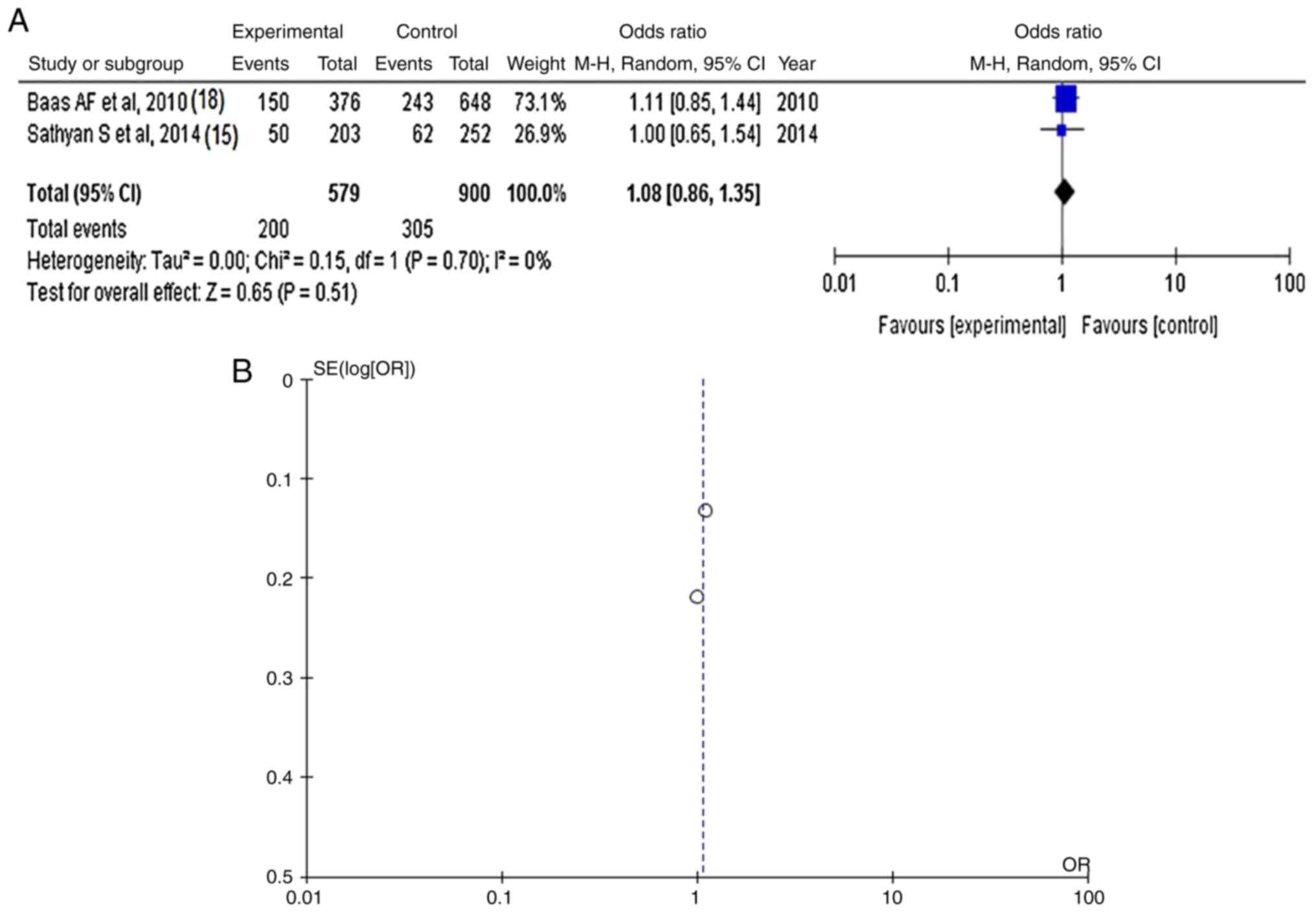
Information regarding the SNP rs188703 was available
in two articles (15,18) and demonstrated no statistically
significant difference between the patients with IAs (cases with
poor outcomes) and the controls (OR, 1.08; 95% CI, 0.86-1.35;
P=0.51) (Fig. 2A and Table III). SNP rs188703 was found in 305
of 900 (33.8%) control patients and in 200 of 579 (34.5%) cases.
When investigating the funnel plot, it was established that there
was no heterogeneity (P=0.70 and I2=0%) and no
publication bias (Fig. 2B).
| Table IIIResults from the meta-analyses of the
CSPG2 rs188703, rs2287926, rs251124 and rs173686 for association
with IAs. |
Table III
Results from the meta-analyses of the
CSPG2 rs188703, rs2287926, rs251124 and rs173686 for association
with IAs.
| | Heterogeneity | | Test for overall
effect | |
|---|
| Gene | Polymorphism | No. of Included
studies | Population | I2
(%) | P-value | Meta-analysis
model | OR (95% CI) | P-value | (Refs.) |
|---|
| CSPG2 | rs188703 | 2 | Mixed | 0 | 0.70 | Random |
1.08(0.86-1.35) | 0.51 | (15,18) |
| CSPG2 | rs2287926 | 2 | Mixed | 45 | 0.18 | Fixed |
1.37(0.99-1.91) | 0.05 | (15,19) |
| CSPG2 | rs251124 | 3 | Mixed | 0 | 0.48 | Random |
1.34(1.05-1.70) | 0.02 | (15,16,19) |
| CSPG2 | rs173686 | 4 | Mixed | 36 | 0.19 | Random |
-0.00[(-0.04)-0.04)] | 0.93 | (15,16,18,19) |
CSPG2-rs2287926
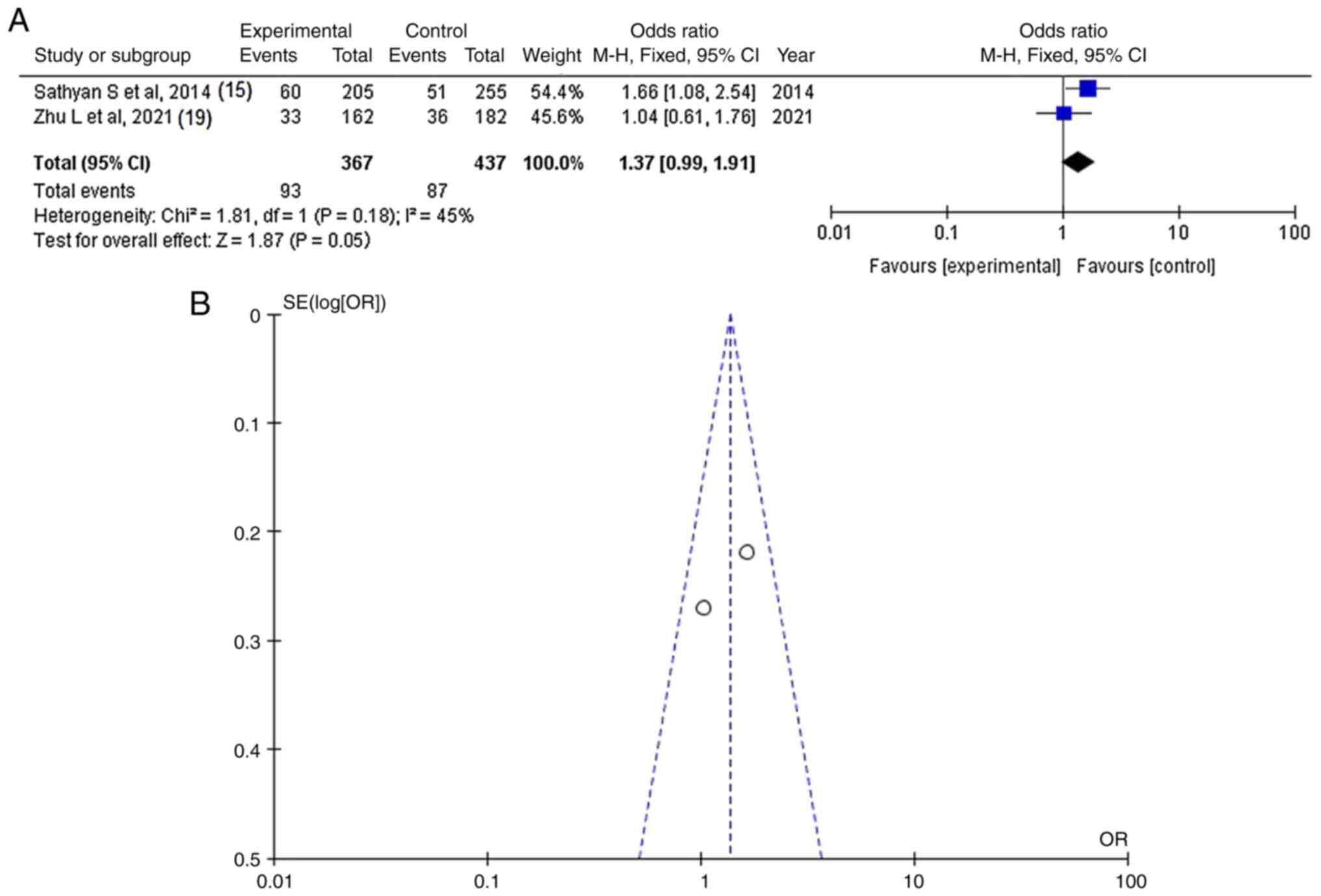
As regards SNP rs2287926, information was available
in two articles (15,19) and demonstrated a statistically
significant difference between the patients with IAs (cases with
poor outcomes) and the controls (OR, 1.37; 95% CI, 0.99-1.91;
P=0.0500) (Fig. 3A and Table III). SNP rs2287926 was found in 87
of 437 (19.9%) control patients and in 93 of 367 (25.3%) cases.
When investigating the funnel plot, it was established that there
was low heterogeneity (P=0.18 and I2=45%) and low
publication bias (Fig. 3B).
CSPG2-rs251124
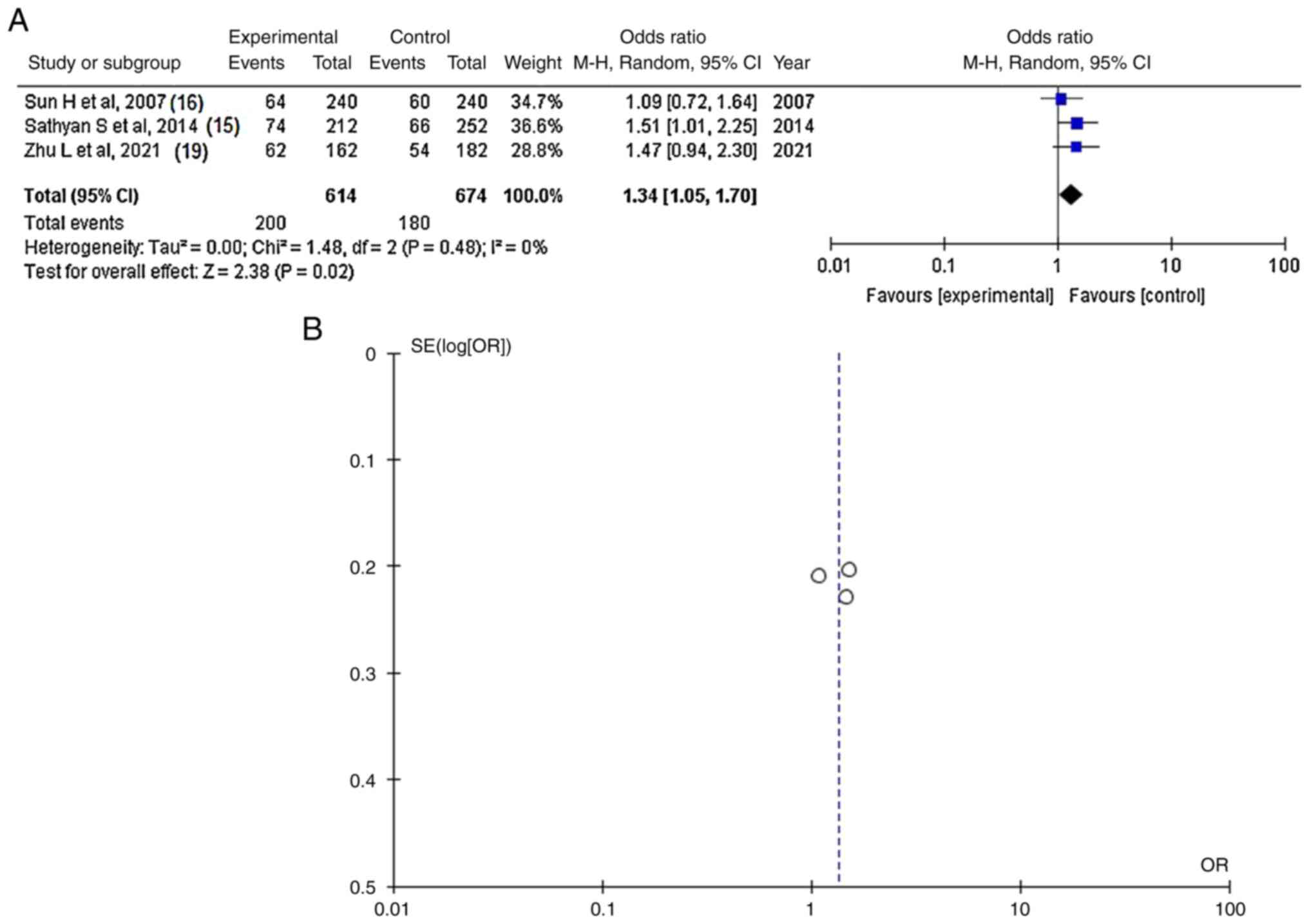
Information regarding the SNP rs251124 was available
in three articles (15,16,19) and
demonstrated a statistically significant difference between the
patients with IAs (cases with poor outcomes) and the controls (OR,
1.34; 95% CI, 1.05-1.70; P=0.02) (Fig.
4A and Table III). SNP
rs251124 was found in 180 of 674 (26.7%) control patients and in
200 of 614 (32.5%) cases. When investigating the funnel plot, it
was established that there was no heterogeneity (P=0.48 and
I2=0%) and no publication bias (Fig. 4B).
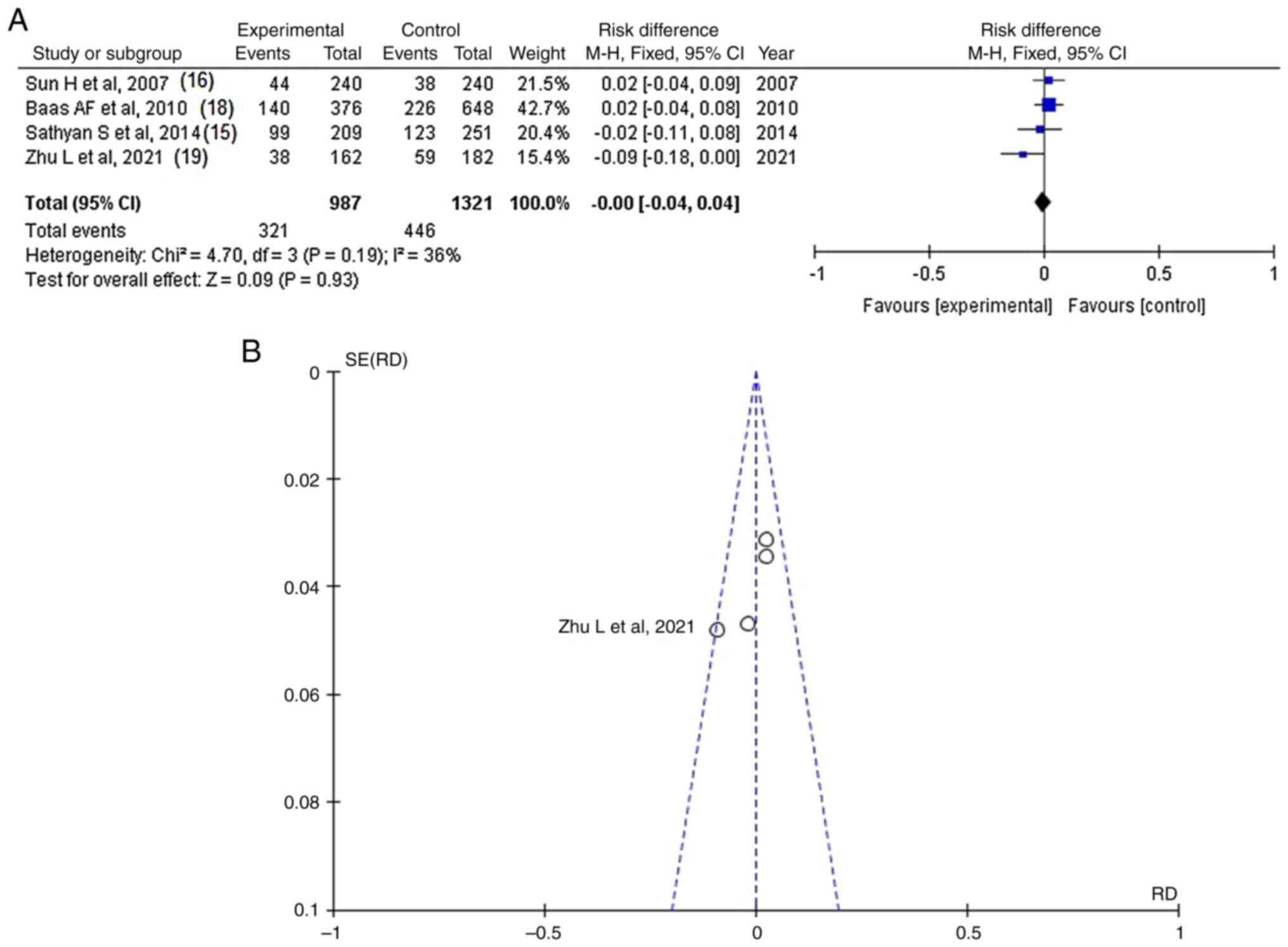
CSPG2-rs173686
As regards SNP rs173686, information was available
in four articles (15,16,18,19) and
demonstrated no statistically significant difference between the
patients with IAs (cases with poor outcomes) and the controls [OR,
-0.00; 95% CI, (-0.04)-0.04; and P=0.93] (Fig. 5A and Table III). SNP rs173686 was found in 446
of 1,321 (33.7%) control patients and in 321 of 987 (32.5%) cases.
When investigating the funnel plot, it was established that there
was low heterogeneity (P=0.19 and I2=36%) and low
publication bias (Fig. 5B).
Discussion
There are different hypotheses about the formation
of aneurysms, most of which involve inappropriate ECM modification
(19). The VCAN gene plays
several roles in preserving ECM processes (13,14). It
has been shown that individuals with the rs251124 polymorphism T
allele are at an increased risk of developing IAs, and the CT
genotype has been found to be distinct as a risk factor for the
incidence of aneurysms in a southern Indian population (20). Overall, there has been an association
between the development of IAs in the European population and the
rs173686 polymorphism (19).
Specifically, it has been shown that the rs173686 G/G genotype and
G allele are associated with an increased risk of IA formation
(13,19). The present meta-analysis investigated
the associations among four SNPs in the VCAN gene
polymorphism and IA susceptibility. The results revealed that the
rs2287926 G/G genotype and G allele, and rs251124 T/T genotype and
minor T allele increased the risk of developing IAs. No significant
differences in allele or genotype frequencies among the control and
case groups were noted with the rs188703 and rs173686 SNPs.
Additional results revealed the VCAN gene to be involved in
the development of IAs.
In the literature, it has been mentioned that the CT
genotype is involved in the evolution of aneurysms in a few
populations (19). Additionally,
there is no evidence of an association between the rs173686
polymorphism in both genotypic and allelic levels and IA in the
South Indian population (15). The
present meta-analysis, based on a pool of 2,308 cases, identified
the minor T allele of the rs251124 T/T genotype and the rs2287926
G/G genotype and G allele.
In the literature, researchers have verified the
association between VCAN (CSPG2) genes and the risk of developing
IAs (13,14). On the contrary, according to certain
studies, there is no confirmed association between the CSPG2
variants (rs173686 and rs251124 polymorphisms) and IA
susceptibility (3,16,19).
These studies report that geographical and racial reasons may
affect the aforementioned conflicting results. However, the
heterogeneity of the population and the small number of cases may
be the reasons for these different results compared with the
present meta-analysis.
In addition, similar to the results of previous
studies, members of the same ethnic group also have diverse
susceptibilities (3,14,15). Sun
et al (16) reported that the
two rs25112 and four rs173686 SNPs of the CSPG2 gene were not
associated with IAs in the Northern Chinese (Beijing) Han
population. It is known that the incidence of IAs may be the
consequence of complex results from both hereditary and
environmental aspects. The primary explanation for this discrepancy
may be topographical variations (19). Other environmental reasons, including
sex, cigarettes and alcohol consumption, hypertension and hormonal
profiles have been proposed to be associated with the development
of IAs (9,10,21,22). On
the other hand, ECM-related genes can also undergo alterations from
various environmental factors, such as radiation, provoking a
remodeling or disruption of the ECM of the arterial wall (13).
The present study had certain limitations which
should be mentioned. The present meta-analysis pool was performed
from proportionately small samples; consequently, the results
require authentication from a large-scale participant. Another
limitation was the heterogeneity between populations. It has been
hypothesized that hereditary heterogeneity between different
populations can lead to paradoxical results. In addition, the
majority of enrolled articles included patients with ruptured and
unruptured IAs; thus, aneurysm rapture may not be associated with
SNP variation.
In conclusion, the present meta-analysis revealed
that rs2287926 G/G genotype and minor allele G, rs251124 T/T
genotype and minor T allele were associated with an increased risk
of developing IAs. The results presented herein suggest that the
VCAN (CSPG2) gene is an IA-predisposed gene and merits
further investigation as a screening global marker for IAs. Thus,
VCAN is a key candidate gene involved in the pathogenesis of
IAs. This may help clinicians indentify the exact risk factors
associated with the development of IAs. Future studies are required
however, to examine these gene polymorphisms as screening markers
for IAs.
Acknowledgements
Not applicable.
Funding
Funding: No funding was received.
Availability of data and materials
The datasets used and/or analyzed during the current
study are available from the corresponding author on reasonable
request.
Authors' contributions
GF and MMM conceptualized the present meta-analysis.
VEG, MMM, GF, OF, NT, PS and KNF analyzed the data, and wrote and
prepared the draft of the manuscript. MMM and GF provided notable
reconsiderations. All authors contributed to manuscript revision
and have read and approved the final version of the manuscript. GF
and VEG confirm the authenticity of all the raw data.
Ethics approval and consent to
participate
Not applicable.
Patient consent for publication
Not applicable.
Competing interests
The authors declare that they have no competing
interests.
References
|
1
|
van Gijn J, Kerr RS and Rinkel GJ:
Subarachnoid haemorrhage. Lancet. 369:306–318. 2007.PubMed/NCBI View Article : Google Scholar
|
|
2
|
Fotakopoulos G, Tsianaka E, Fountas K,
Makris D, Spyrou M and Hernesniemi J: Clipping versus coiling in
anterior circulation ruptured intracranial aneurysms: A
meta-analysis. World Neurosurg. 104:482–488. 2017.PubMed/NCBI View Article : Google Scholar
|
|
3
|
Zholdybayeva EV, Medetov YZ, Aitkulova AM,
Makhambetov YT, Akshulakov SK, Kaliyev AB, Talzhanov YA,
Kulmambetova GN, Iskakova AN and Ramankulov YM: Genetic risk
factors for intracranial aneurysm in the Kazakh population. J Mol
Neurosci. 66:135–145. 2018.PubMed/NCBI View Article : Google Scholar
|
|
4
|
Fotakopoulos G, Andrade-Barazarte H,
Tjahjadi M, Goehre F and Hernesniemi J: Clipping versus coiling in
ruptured basilar apex aneurysms: A meta-analysis. Turk Neurosurg.
31:301–309. 2021.PubMed/NCBI View Article : Google Scholar
|
|
5
|
White AC, Kumpe DA, Roark CD, Case DE and
Seinfeld J: Patterns, predictors, and outcomes of postprocedure
delayed hemorrhage following flow diversion for intracranial
aneurysm treatment. World Neurosurg. 115:e97–e104. 2018.PubMed/NCBI View Article : Google Scholar
|
|
6
|
Can A, Castro VM, Dligach D, Finan S, Yu
S, Gainer V, Shadick NA, Savova G, Murphy S, Cai T, et al:
Lipid-lowering agents and high HDL (high-density lipoprotein) are
inversely associated with intracranial aneurysm rupture. Stroke.
49:1148–1154. 2018.PubMed/NCBI View Article : Google Scholar
|
|
7
|
Zhou S, Gan-Or Z, Ambalavanan A, Lai D,
Xie P, Bourassa CV, Strong S, Ross JP, Dionne-Laporte A, Spiegelman
D, et al: Genome-wide association analysis identifies new candidate
risk loci for familial intracranial aneurysm in the French-Canadian
population. Sci Rep. 8(4356)2018.PubMed/NCBI View Article : Google Scholar
|
|
8
|
Mathioudakis N, Georgakopoulou VE,
Paterakis K, Papalexis P, Sklapani P, Trakas N, Spandidos DA and
Fotakopoulos G: Effect of circulating miR-126 levels on
intracranial aneurysms and their predictive value for the rupture
of aneurysms: A systematic review and meta-analysis. Exp Ther Med.
26(411)2023.PubMed/NCBI View Article : Google Scholar
|
|
9
|
Cho SM, Marquardt RJ, Rice CJ, Buletko AB,
Zhang LQ, Khoury J, Thatikunta P, Hardman J, Wisco D and Uchino K:
Cerebral microbleeds predict infectious intracranial aneurysm in
infective endocarditis. Eur J Neurol. 25:970–975. 2018.PubMed/NCBI View Article : Google Scholar
|
|
10
|
Chen Y, Zhang Y, Chao YJ, Gao G, Ni CS, Fu
XM, Wei JJ, Gu DQ and Yu J: Stent-assisted coiling embolization of
middle cerebral artery trifurcation wide-necked aneurysms. Eur Rev
Med Pharmacol Sci. 21:4346–4349. 2017.PubMed/NCBI
|
|
11
|
Feigin VL, Rinkel GJ, Lawes CM, Algra A,
Bennett DA, van Gijn J and Anderson CS: Risk factors for
subarachnoid hemorrhage: An updated systematic review of
epidemiological studies. Stroke. 36:2773–2780. 2005.PubMed/NCBI View Article : Google Scholar
|
|
12
|
Krischek B and Inoue I: The genetics of
intracranial aneurysms. J Hum Genet. 51:587–594. 2006.PubMed/NCBI View Article : Google Scholar
|
|
13
|
Ruigrok YM, Rinkel GJ and Wijmenga C: The
versican gene and the risk of intracranial aneurysms. Stroke.
37:2372–2374. 2006.PubMed/NCBI View Article : Google Scholar
|
|
14
|
Ruigrok YM, Rinkel GJ, van't Slot R, Wolfs
M, Tang S and Wijmenga C: Evidence in favor of the contribution of
genes involved in the maintenance of the extracellular matrix of
the arterial wall to the development of intracranial aneurysms. Hum
Mol Genet. 15:3361–3368. 2006.PubMed/NCBI View Article : Google Scholar
|
|
15
|
Sathyan S, Koshy LV, Balan S, Easwer HV,
Premkumar S, Nair S, Bhattacharya RN, Alapatt JP and Banerjee M:
Association of versican (VCAN) gene polymorphisms rs251124 and
rs2287926 (G428D), with intracranial aneurysm. Meta Gene.
2:651–660. 2014.PubMed/NCBI View Article : Google Scholar
|
|
16
|
Sun H, Zhang D and Zhao J: Chondroitin
sulfate proteoglycan 2 (CSPG2) gene polymorphisms rs173686 and
rs251124 are not associated with intracranial aneurysms in Chinese
Han nationality. Ups J Med Sci. 112:289–295. 2007.PubMed/NCBI View Article : Google Scholar
|
|
17
|
Higgins JP and Green S (eds): Cochrane
handbook for systematic reviews of interventions version 5.1.0
(updated March 2011). The Cochrane Collaboration, 2011. www.handbook.cochrane.org.
|
|
18
|
Baas AF, Medic J, van't Slot R, de Vries
JP, van Sambeek MR, Verhoeven EL, Boll BP, Grobbee DE, Wijmenga C,
Blankensteijn JD and Ruigrok YM: The intracranial aneurysm
susceptibility genes HSPG2 and CSPG2 are not associated with
abdominal aortic aneurysm. Angiology. 61:238–242. 2010.PubMed/NCBI View Article : Google Scholar
|
|
19
|
Zhu L, Yu C, Zhou S, Xue M, Chen J, Wu M,
Dong S, Huang G, Chang Y and Zhang M: Association of versican gene
polymorphisms with intracranial aneurysm susceptibility in the
eastern Chinese population. Neuropsychiatr Dis Treat. 17:3531–3537.
2021.PubMed/NCBI View Article : Google Scholar
|
|
20
|
Alg VS, Sofat R, Houlden H and Werring DJ:
Genetic risk factors for intracranial aneurysms: A meta-analysis in
more than 116,000 individuals. Neurology. 80:2154–2165.
2013.PubMed/NCBI View Article : Google Scholar
|
|
21
|
Boehme AK, Esenwa C and Elkind MS: Stroke
risk factors, genetics, and prevention. Circ Res. 120:472–495.
2017.PubMed/NCBI View Article : Google Scholar
|
|
22
|
Ruigrok YM and Rinkel GJ: From GWAS to the
clinic: Risk factors for intracranial aneurysms. Genome Med.
2(61)2010.PubMed/NCBI View
Article : Google Scholar
|