Introduction
Non-steroidal anti-inflammatory drugs (NSAIDs),
acknowledged for their pivotal role in modern medicine, are widely
used globally. Their effectiveness in providing analgesic,
anti-inflammatory and antipyretic benefits is well-established,
with ongoing discussions on their potential protective roles
against colorectal cancer and cardiovascular conditions (1). Globally, ~30 million individuals use
NSAIDs daily, often available over-the-counter (OTC) (2). In Georgia, the NSAID market is
extensive, comprising >800 types, with 85% offered OTC, and the
remaining 15%, although prescription-only, are readily
accessible.
The existence of the ample amount NSAID-containing
products and the ready availability of OTC medications have
unfortunately contributed to their misuse (3). The World Health Organization highlights
a concerning trend of inappropriate prescription and dispensation
of medications worldwide, resulting in misuse by almost half of the
patients, thereby escalating morbidity and mortality rates
(4). Further, pharmacoepidemiologic
analyses indicate a growing NSAID usage, potentially contributing
to increased toxicity incidents (2).
While NSAIDs provide substantial therapeutic advantages, their
inappropriate use, such as incorrect dosing, prolonged use, the
combined use of multiple NSAIDs, or neglecting proper timing, can
lead to various side-effects, ranging from dyspepsia to
gastrointestinal ulcerations and bleeding, acute and chronic renal
failure, hypertension, myocardial infarction and hemorrhagic stroke
(5,6).
The awareness of the use of NSAIDs among consumers
has been evaluated throughout the years by several extensive survey
studies carried out globally. These studies have consistently
demonstrated the widespread usage of NSAIDs, often inappropriately,
with consumers largely unaware or unconcerned about potential the
NSAID-related toxicities (7-13).
The existing evidence suggests a lack of knowledge regarding
current patterns of NSAID use and consumer perceptions, markedly
affecting medication use behaviors. Despite these global studies,
Georgia has not been previously explored in this context. It is
crucial to conduct a comprehensive assessment of the public
awareness of the use of NSAIDs in Georgia, a developing Eastern
European country with an evolving healthcare system facing various
challenges.
Through the identification of knowledge and attitude
gaps and risk groups for NSAID misuse in Georgia, the present study
aimed to provide insight into the healthcare landscape and
potential areas for improvement. Additionally, the present study
aimed to guide the establishment of impactful public awareness
programs that could lessen the hazards related to the use of
NSAIDs. This exploration is essential for enhancing healthcare
outcomes and preventing complications arising from inadequate
awareness.
The present study is novel in its approach, focusing
on Georgia, a country with an evolving healthcare system and unique
regional challenges, unlike previous studies conducted globally
(9-18).
The use of large-scale survey data, which were analyzed through
robust statistical methods, provides valuable insight into public
awareness and attitudes towards the use of NSAIDs, a critical area
for improving healthcare interventions. The present study provides
new evidence on the knowledge and attitudes towards the use of
NSAIDs in Georgia, filling an important gap in the existing
literature. The findings, supported by robust data analysis, hold
the potential to inform public health policies and interventions,
fitting well within the realm of big data applications in
healthcare, where large datasets are analyzed to uncover trends,
behaviors and actionable insights for improving health
outcomes.
Subjects and methods
Study subjects and data
collection
The Tbilisi State Medical University Biomedical
Research Ethics Committee reviewed the protocol prior to data
collection and issued ethical authorization in compliance with the
principles of the Declaration of Helsinki, on July 21, 2023. The
present study adopted a non-randomized, cross-sectional,
descriptive and comparative observational approach, with data
collected prospectively using a structured questionnaire. The
present study focused on Georgian citizens aged ≥18 years, who had
used at least one NSAID for any reason during the previous year,
examining their awareness and self-reported usage patterns without
directly evaluating adherence to standard clinical practice.
The sample size of 385 subjects was calculated using
Raosoft Sample Size Calculator (Raosoft, Inc.), an online tool,
based on an error margin of 5%, a power of 50%, a confidence
interval of 95%, and a Georgian population size of 3,736,400
subjects. Confidence intervals were not included in the tables.
Inclusion criteria required participants to be Georgian citizens
aged ≥18 years and to have used NSAIDs during the past year, while
exclusion criteria included incomplete responses.
A 33-item questionnaire was developed to assess
NSAID awareness. It was divided into sections covering
sociodemographic details, NSAID use, sources of information,
knowledge, attitudes and satisfaction with current NSAID knowledge.
The questionnaire items were initially developed in English based
on similar studies and then translated into Georgian. A bilingual
expert reviewed both versions to ensure linguistic and conceptual
accuracy. As the study was conducted in Georgia and targeted a
Georgian-speaking population, only the Georgian version was used
during data collection. The questionnaire was validated through a
pilot study involving 10 medical and 10 non-medical participants,
and feedback from this process was used to refine the final
version.
The finalized questionnaire was distributed
digitally via Google Forms, (Google LLC), an online survey tool, on
various social media platforms. Participant recruitment occurred
from August 1, 2023, to October 30, 2023. Data were collected in
Google Sheets, (Google LLC), an online spreadsheet tool. where
responses were anonymized, and access was restricted to the
research team to ensure data confidentiality.
The questionnaire included instructions detailing
the aims of the study and clarified that it focused exclusively on
NSAIDs, explicitly excluding aspirin, paracetamol and other
analgesics. The introductory section provided informed consent,
explaining the aim, features, future use of the data,
confidentiality, potential risks and benefits, and included the
contact information of the principal investigator. It also included
a checkbox, and by agreeing to the statement ‘I agree to the terms
and conditions’, participants provided their consent to participate
in the study.
The knowledge section included 14 multiple-choice
questions, each with one correct answer contributing one point to
the overall knowledge score (range, 0-14). No partial credit was
given, and incorrect answers received zero points. The attitude
section comprised nine statements assessed using a 5-point Likert
scale (always, often, sometimes, rarely and never), with scores
ranging from 0 to 4 per item. For positively framed statements
(e.g., consulting a doctor prior to NSAID use), higher frequency
responses received higher scores. For negatively framed statements
(e.g., taking NSAIDs without reading instructions), responses were
reverse-scored so that a higher frequency of undesirable behaviors
resulted in lower scores. The total attitude score ranged from 0 to
36. A threshold of 60% of the maximum score (i.e., ≥9 for knowledge
and ≥22 for attitude) was used to define satisfactory scores.
Statistical analysis
Statistical analysis was performed using IBM SPSS
Statistics 23.0 (IBM Corp.), a statistical software package.
Skewness and kurtosis were calculated to assess the normality of
the data, and the Shapiro-Wilk test was employed to further
evaluate distribution fit. Categorical variables were expressed as
frequencies and percentages, while continuous variables were
summarized as the mean, median and standard deviations. The
unpaired Student's t-test was applied to compare knowledge and
attitude scores (presented as the mean ± standard deviation)
between males and females, participants with and without chronic
disease, and participants with and without medical education, with
all comparisons derived from continuous variables. Pearson's
correlation analysis was used to assess the correlations between
continuous variables, such as knowledge and attitude scores.
One-way ANOVA was used to compare scores across different age
groups, education levels, and regional residents, followed by
Tukey's test as a post hoc analysis to identify specific group
differences. A value of P<0.05 was considered to indicate a
statistically significant difference.
Results
Sociodemographics
A total of 385 completed questionnaires were
collected and analyzed (Table I).
The participant cohort had an age range of 18-85 years, with a mean
age of 43.26 years and a median age of 43 years. A marked
proportion of those surveyed were female, comprising up 66.8% of
the study sample. Geographically, the majority resided in the
largest cities of Georgia, with 22.3% of the subjects residing in
Batumi and 37.3% of the subjects residing in Tbilisi, the capital.
As regarding the level of education, a notable portion of the
subjects, accounting for 36.6%, held a bachelor's degree. The
survey also revealed that 25.2% of the participants had a medical
background, including MDs, medical students, nurses, dentists,
pharmacists and public health workers. Finally, 111 participants
(28.8%) reported having a chronic disease.
 | Table ISociodemographic data of the study
participants (n=385). |
Table I
Sociodemographic data of the study
participants (n=385).
|
Characteristics | Frequency (%) |
|---|
| Age (years) | |
|
18-25 | 69 (17.9) |
|
26-35 | 83 (21.6) |
|
36-45 | 88 (22.9) |
|
46-55 | 75 (19.5) |
|
56-65 | 41 (10.6) |
|
>65 | 29 (7.5) |
| Sex | |
|
Male | 128 (33.2) |
|
Female | 257 (66.8) |
| Educational
status | |
|
Primary-secondary | 77(20) |
|
Bachelor | 141 (36.6) |
|
Master | 94 (24.4) |
|
PhD | 14 (3.6) |
|
Professional
education | 59 (15.3) |
|
Medical
background | 97 (25.2) |
|
Without a
medical background | 288 (74.8) |
| Area of
residence | |
|
Tbilisi | 145 (37.3) |
|
Batumi | 86 (22.3) |
|
Other
regions | 154(40) |
Reasons for using NSAIDs
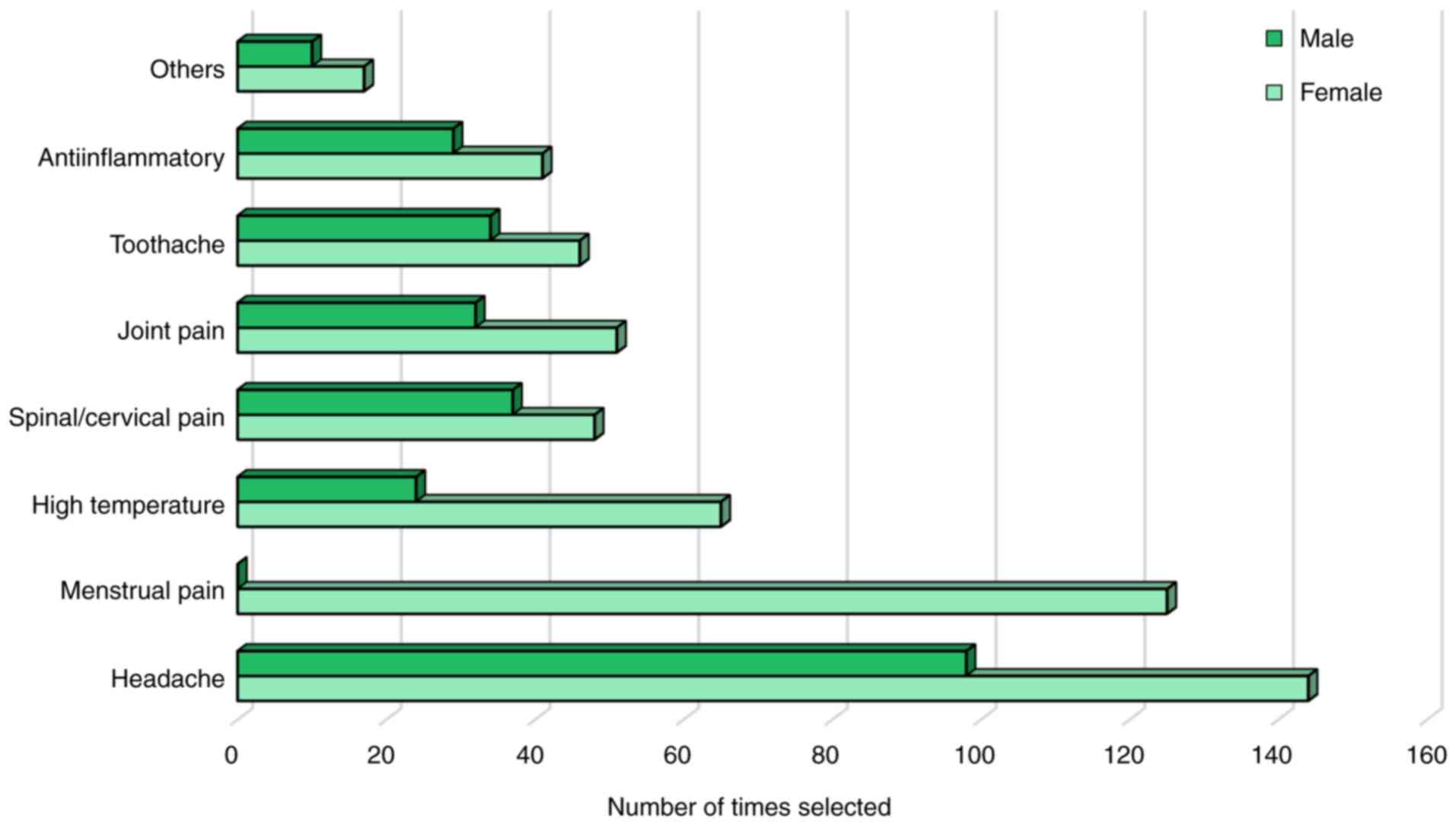
The reasons for the use of NSAIDs among the Georgian
population were diverse (Fig. 1).
The most commonly reported reason was headache, selected by 242
participants (62.9%), including 144 females (59.5% of those who
reported headache) and 98 males (40.5%). Menstrual pain was the
second most common reason overall, reported by 125 females (48.6%
of all females). Notably, among the female participants, headache
was more frequently cited than menstrual pain (63.0 vs. 48.6%).
Other frequent indications included a high body temperature (n=89;
65 females, 24 males), cervical/spinal pain (n=85; 48 females, 37
males), joint pain (n=83; 51 females, 32 males), toothache (n=80;
46 females, 34 males) and anti-inflammatory purposes (n=70; 41
females, 29 males) (Fig. 1). A
sex-based comparison of the shared reasons for the use of NSAIDs
(i.e., all indications apart from menstrual pain) did not reveal
any statistically significant differences (data not shown). Of all
the participants, 173 (44.9%) subjects stated they used NSAIDs for
a single reason, 170 (44.2%) for two to three reasons and 42
(10.9%) for more than three reasons.
Commonly used NSAIDs
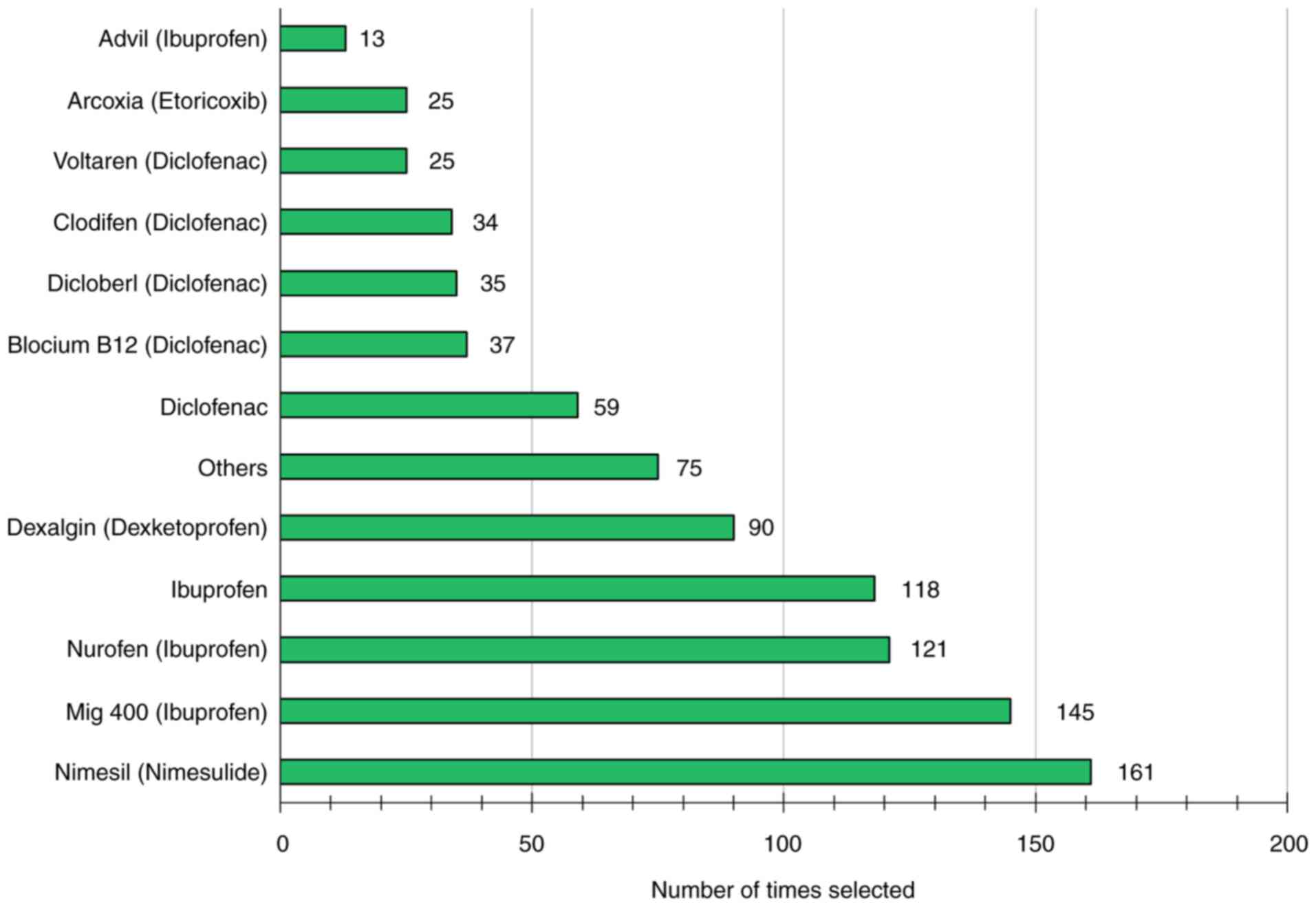
The patterns of NSAID usage in Georgia revealed
distinct preferences for specific brands and generics (Fig. 2). The most widely used brand-name
NSAID was Nimesil (nimesulide), closely followed by Nurofen
(ibuprofen) and Mig 400 (ibuprofen). Dexalgin (dexketoprofen) was
also very popular on the list.
In terms of generic NSAIDs, the data revealed that
ibuprofen was selected 397 times (42.3% of all selections),
diclofenac 190 times (20.2%), nimesulide 161 times (17.1%) and
dexketoprofen 90 times (9.5%) (Fig.
2). These numbers indicate the frequency of the selection of
each generic NSAID, not distinct individual choices. It is crucial
to note that these percentages were calculated based on the total
instances of selections, which amounted to 938. Participants had
the option to select multiple choices, including various brands of
ibuprofen. This element is essential for understanding the study's
trends in drug selection.
A total of 145 participants (37.7%) reported having
used a single type of NSAID, 163 participants (42.3%) reported
using two to three types, and 77 participants (20%) reported using
more than three types of NSAIDs throughout their lives.
Sources of information on NSAIDs
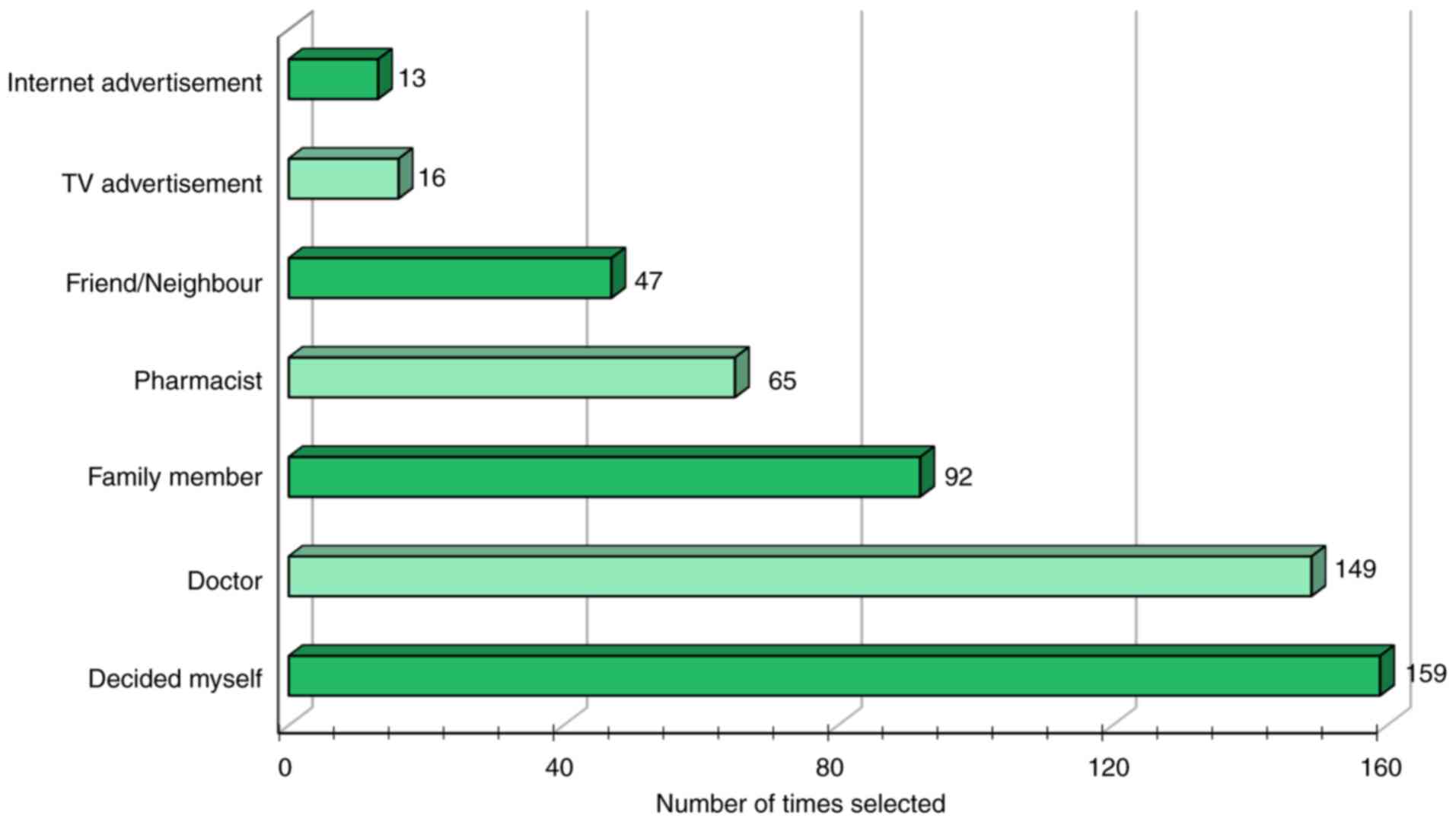
Primary sources of information and advice on NSAIDs
exhibited variability among the study subjects (Fig. 3). A substantial number of the
participants, amounting to 159 (41.2%), engaged in self-medication
practices by selecting NSAIDs based on their discretion. It should
be noted that only 54 (34%) of the participants had a medical
background. On the other hand, 149 (38.7%) of the participants
complied with the advice provided by physicians. The selection of
NSAIDs was also impacted by family members' advice for 92
participants (23.8%). Furthermore, less common sources of influence
included pharmacists, media outlets, and suggestions from friends
and neighbors.
Knowledge regarding the use of
NSAIDs
The knowledge level regarding NSAIDs varied among
Georgian NSAID users (Table II).
Notably, ~70.6% of the study subjects accurately recognized key
information, such as taking NSAIDs after a meal and the potential
for oral NSAIDs to cause peptic ulcers and gastric irritation.
Additionally, a majority displayed an understanding of appropriate
timing and storage conditions, while over half of the participants
were knowledgeable about the cautionary use of NSAIDs in specific
patient categories (pregnant, lactating, asthmatic and
hypertensive).
| Table IIDistribution of the responses of
participants to overall knowledge score parameters. |
Table II
Distribution of the responses of
participants to overall knowledge score parameters.
| Parameters that
determine the overall knowledge score | Frequency (%) of
correct answers given |
|---|
| Timing | |
|
Can NSAIDs
be taken every 2-3 h when experiencing pain? | 267 (69.3) |
|
Can NSAIDs
be taken before, during, or after meals? | 272 (70.6) |
| Storage | |
|
Where do
NSAIDs need to be stored? | 260 (67.5) |
| Adverse
effects | |
|
Do NSAIDs
have the potential to cause kidney failure? | 188 (48.8) |
|
Do oral
NSAIDs cause gastric irritation or peptic ulcer disease? | 272 (70.6) |
|
Are NSAIDs
administered by injection safe for the stomach? | 151 (39.2) |
|
Do NSAIDs
have the potential to cause liver failure? | 149 (38.7) |
|
Do NSAIDs
increase the risk of heart attack? | 118 (30.6) |
|
Do NSAIDs
increase the risk of brain stroke? | 114 (29.6) |
|
Can NSAIDs
cause skin rash, itching, swelling, or redness? | 224 (58.1) |
| Cautions | |
|
Is it safe
for patients with hypertension to take NSAIDs? | 218 (56.6) |
|
Are NSAIDs
safe during pregnancy and breastfeeding? | 236 (61.3) |
|
Is it safe
for asthma patients to take NSAIDs? | 195 (50.6) |
| Drug
interactions | |
|
Do NSAIDs
interact with certain other drugs when taken together? | 182 (47.2) |
| NSAIDs,
non-steroidal anti-inflammatory drugs. | |
On the other hand, it was noted that the
participants knew less about the potential adverse effects of
NSAIDs. Only 29.6 and 30.6% recognized the elevated risk of stroke
and myocardial infarction, respectively. Furthermore, 39.2% were
misinformed about injectable NSAIDs being safer for the stomach,
and 47.2% believed NSAIDs could be taken safely alongside other
medications.
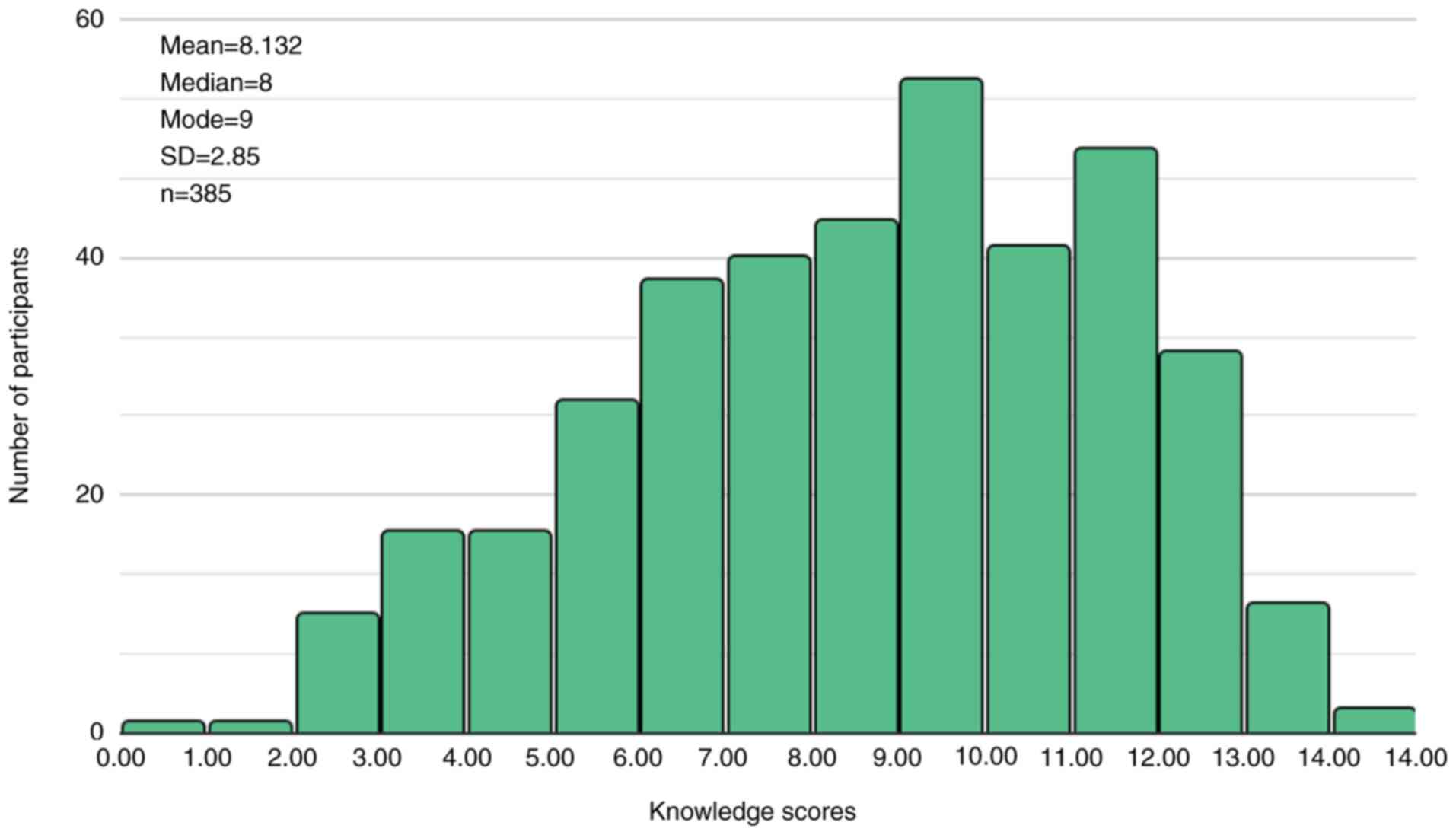
The mean knowledge score was calculated as
8.132±2.87 points, falling below the satisfactory threshold, with a
distribution exhibiting normality (Fig.
4). The statistical analysis yielded significant outcomes. The
mean total knowledge score of the female participants was
significantly higher (8.87±2.34) than that of the male participants
(6.47±3.18; P<0.001) (Table
III). Additionally, participants in the age groups of 26-35 and
36-45 years demonstrated mean knowledge scores of 8.81±2.81 and
8.48±2.89, respectively, which were significantly higher than those
in the 65+ age group (6.59±2.04) (P<0.05,) (Tables IV and V). The mean knowledge score for
participants with chronic diseases (8.75±2.94), compared to those
without chronic diseases (7.88±2.78), was statistically
insignificant (P=0.224) (Table
III).
| Table IIIComparison of knowledge and attitude
scores across participant groups. |
Table III
Comparison of knowledge and attitude
scores across participant groups.
| Participant
group | Knowledge score
(mean ± SD) | P-value | Attitude score
(mean ± SD) | P-value |
|---|
| Sex | | | | |
|
Female | 8.87±2.34 | <0.001 | 22.6±4.37 | 0.717 |
|
Male | 6.47±3.18 | | 22.1±4.34 | |
| Chronic
disease | | | | |
|
With chronic
disease | 8.75±2.94 | 0.224 | 22.6±4.55 | 0.708 |
|
Without
chronic disease | 7.88±2.78 | | 22.3±4.29 | |
| Medical
education | | | | |
|
With medical
education | 9.29±2.45 | <0.001 | 22.7±4.38 | 0.690 |
|
Without
medical education | 7.74±2.88 | | 22.34±4.35 | |
| Table IVKnowledge score distribution among
different age groups. |
Table IV
Knowledge score distribution among
different age groups.
| Age groups,
years | N | Mean | SD | SE |
|---|
| 56-65 | 41 | 7.37 | 3.03 | 0.473 |
| 46-55 | 75 | 8.09 | 2.75 | 0.317 |
| 36-45 | 88 | 8.48 | 2.89 | 0.308 |
| 65+ | 29 | 6.59 | 2.04 | 0.380 |
| 26-35 | 83 | 8.81 | 2.81 | 0.308 |
| 18-25 | 69 | 8.03 | 2.88 | 0.347 |
| Table VTukey's post hoc test analysis for
knowledge score distribution among different age groups. |
Table V
Tukey's post hoc test analysis for
knowledge score distribution among different age groups.
| | Age groups,
years |
|---|
| Age groups,
years | Difference and
P-value | 56-65 | 46-55 | 36-45 | 65+ | 26-35 | 18-25 |
|---|
| 56-65 | Mean
difference | - | -0.727 | -1.111 | 0.780 | -1.441 | -0.6631 |
| | P-value | - | 0.797 | 0.371 | 0.792 | 0.123 | 0.868 |
| 46-55 | Mean
difference | | - | -0.384 | 1.507a | -0.714 | 0.0643 |
| | P-value | | - | 0.954 | 0.037 | 0.591 | 0.999 |
| 36-45 | Mean
difference | | | - | 1.891b | -0.330 | 0.4483 |
| | P-value | | | - | 0.003 | 0.974 | 0.928 |
| 65+ | Mean
difference | | | | - | -2.221c | -1.4428 |
| | P-value | | | | - | <0.001 | 0.068 |
| 26-35 | Mean
difference | | | | | - | 0.7782 |
|
| P-value | | | | | - | 0.550 |
| 18-25 | Mean
difference | | | | | | - |
|
| P-value | | | | | | - |
Educational qualifications played a role, with
participants holding a Bachelor's degree (8.13±2.88) and PhD
(9.36±1.74) exhibiting significantly greater knowledge scores than
those with basic or secondary education (6.92±2.71) (P<0.05).
Additionally, participants with a Master's degree (8.99±2.44) also
demonstrated significantly higher knowledge scores compared to
those with basic or secondary education (6.92±2.71) (P<0.001)
(Tables VI and VII). Furthermore, those with a medical
background scored considerably higher on the knowledge assessment
(9.29±2.45) than non-medical participants (7.74±2.88) (P<0.001)
(Table III).
| Table VIKnowledge score distribution among
different educational levels. |
Table VI
Knowledge score distribution among
different educational levels.
| Education
level | N | Mean | SD | SE |
|---|
| Bachelor | 141 | 8.13 | 2.88 | 0.243 |
| Secondary
education | 77 | 6.92 | 2.71 | 0.309 |
| Professional
education | 59 | 8.07 | 3.24 | 0.421 |
| PhD | 14 | 9.36 | 1.74 | 0.464 |
| Master | 94 | 8.99 | 2.44 | 0.252 |
| Table VIITukey's post hoc test analysis for
knowledge score distribution among different educational
levels. |
Table VII
Tukey's post hoc test analysis for
knowledge score distribution among different educational
levels.
| | Education
level |
|---|
| Education
level | Difference and
P-value | Bachelor | Secondary
education | Professional
education | PhD | Master's |
|---|
| Bachelor | Mean
difference | - | 1.21a | 0.0599 | -1.23 | -0.862 |
| | P-value | - | 0.019 | 0.999 | 0.510 | 0.137 |
| Basic and secondary
education | Mean
difference | | - | -1.1457 | -2.44a | -2.067b |
| | P-value | | - | 0.121 | 0.022 | <0.001 |
| Professional
education | Mean
difference | | | - | -1.29 | -0.922 |
| | P-value | | | - | 0.522 | 0.268 |
| PhD | Mean
difference | | | | - | 0.368 |
| | P-value | | | | - | 0.991 |
| Master's | Mean
difference | | | | | - |
| | P-value | | | | | - |
Attitudes and behaviors regarding the
use of NSAIDs
The study subjects displayed diverse attitudes and
behavioral patterns concerning the use of NSAIDs (Table VIII). A substantial number of
participants stated always (49.9%) or often (22.1%) consuming
NSAIDs for new types of pain without seeking a doctor's
consultation. In addition, 77.9% of the participants purchased
NSAIDs from pharmacies over the counter. Although 169 (43.9%) of
those surveyed stated they always took NSAIDs after meals, very few
of them regularly also took gastroprotectors. Encouragingly, the
majority of the participants stated that they always or often
checked the expiration date and read the instructions provided for
NSAIDs prior to use, respectively. Furthermore, almost half of the
interviewees said they always or often carried NSAIDs with
them.
| Table VIIIDistribution of participants'
responses to overall attitude score parameters. |
Table VIII
Distribution of participants'
responses to overall attitude score parameters.
| Parameters that
determine the overall attitude Score | Always, frequency
(%) | Often, frequency
(%) | Sometimes,
frequency (%) | Rarely, frequency
(%) | Never, frequency
(%) |
|---|
| I take NSAIDs for
new pain or discomfort without consulting a doctor | 192 (49.9) | 85 (22.1) | 45 (11.7) | 49 (12.7) | 14 (3.6) |
| I carry NSAIDs with
me | 116 (30.1) | 83 (21.6) | 42 (10.9) | 55 (14.3) | 89 (23.1) |
| I take NSAIDs after
a meal | 169 (43.9) | 88 (22.9) | 86 (22.3) | 32 (8.3) | 10 (2.6) |
| Before using
NSAIDs, I check their expiration date | 231(60) | 47 (12.3) | 39 (10.1) | 44 (11.4) | 24 (6.2) |
| Before using a new
NSAID, I read the instructions | 159 (41.3) | 70 (18.2) | 49 (12.7) | 57 (14.8) | 50(13) |
| I take NSAIDs with
herbal or food supplements | 44 (11.4) | 94 (24.4) | 41 (10.6) | 70 (18.2) | 136 (35.3) |
| In case one NSAID
is ineffective, I add a second, different NSAID | 51 (13.3) | 97 (25.2) | 61 (15.8) | 76 (19.7) | 100(26) |
| I take a
gastroprotection when using NSAIDs | 89 (23.1) | 88 (22.9) | 49 (12.7) | 64 (16.6) | 95 (24.7) |
| I buy painkillers
over the counter at the pharmacy | 300 (77.9) | 47 (12.2) | 14 (3.6) | 13 (3.4) | 11 (2.9) |
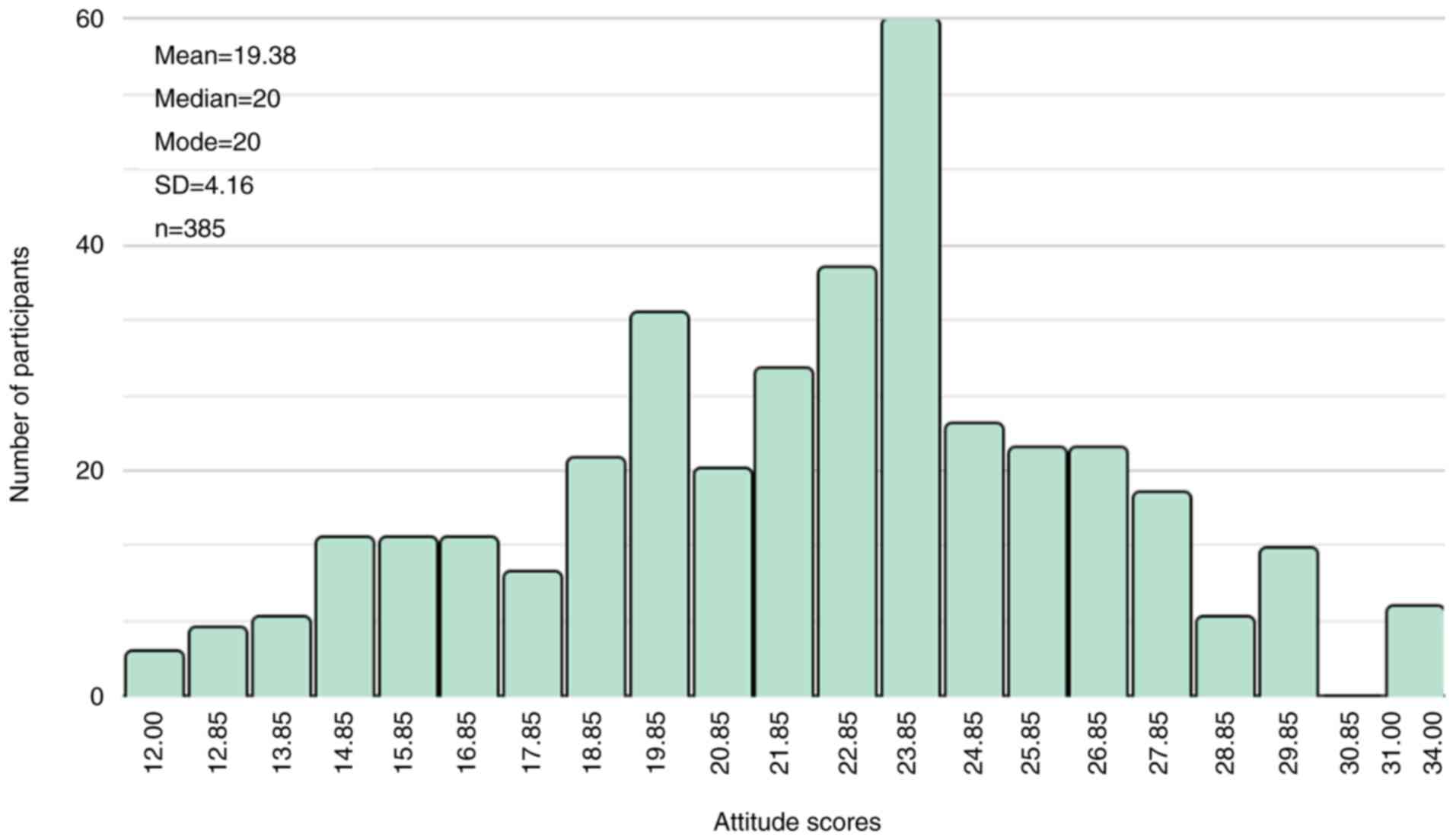
The mean attitude score of the participants was
calculated as 19.38±4.16 points, with a range from 0 to 36, which
also falls below the satisfactory threshold. The distribution of
attitude scores among the study subjects exhibited a normal
distribution (Fig. 5).
While statistically significant associations were
observed for knowledge scores, no such associations were found
between attitude scores and other factors. The mean attitude score
for participants with chronic diseases (22.6±4.55) was similar to
that of participants without chronic diseases (22.3±4.29)
(P=0.708,) (Table III).
Participants with a medical education had a mean attitude score of
(22.7±4.38), while those without a medical education scored
(22.34±4.35) (P=0.690,) (Table
III). For sex comparisons, the mean attitude score for females
was (22.6±4.37), compared to (22.1±4.34) for males (P=0.717,
(Table III). These differences
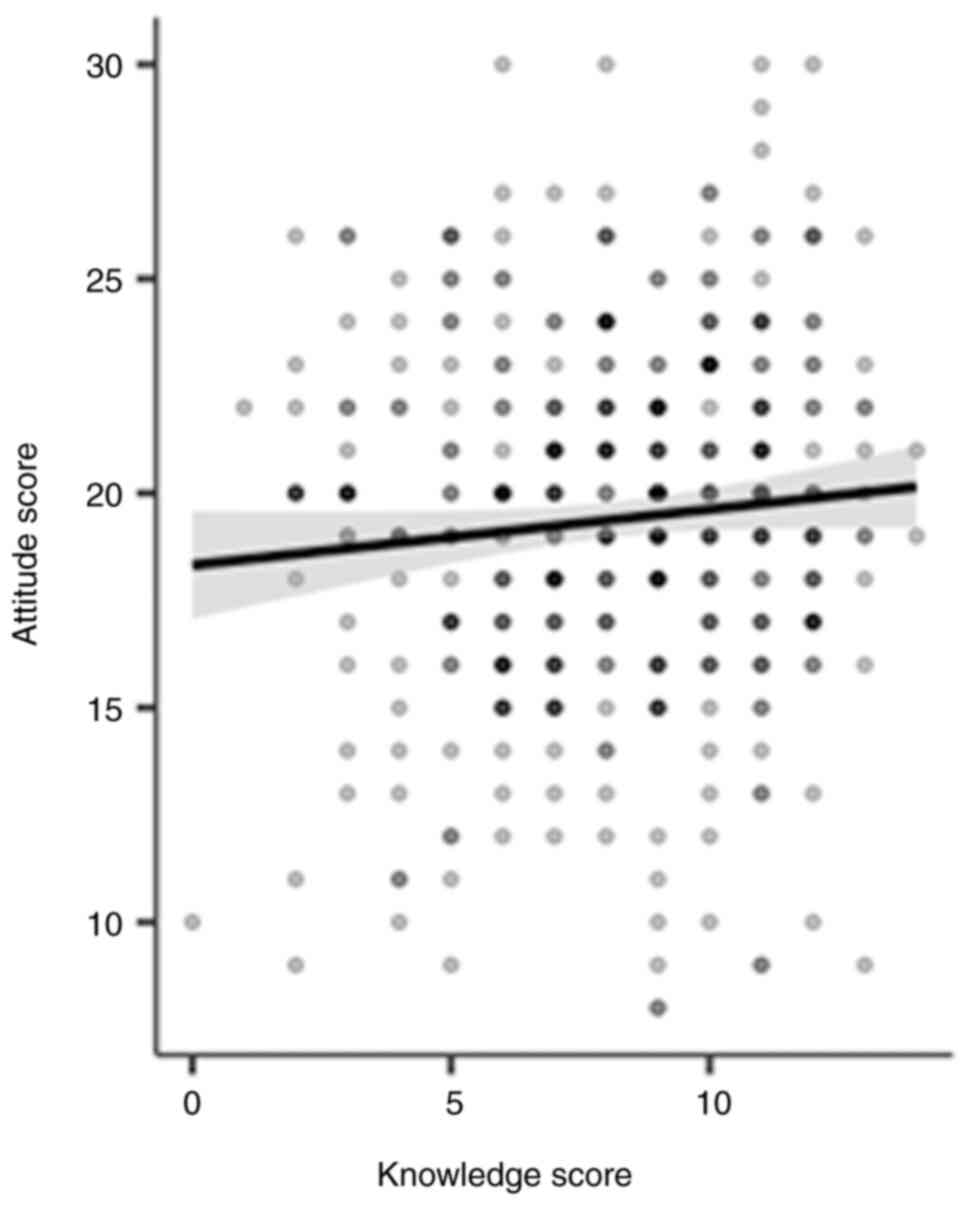
were not statistically significant. Additionally, Pearson's
correlation analysis revealed a weak positive correlation between
knowledge and attitude scores (P<0.05,), suggesting that as
participants' knowledge of the use of NSAIDs, their attitudes
toward their use tends to improve slightly (Table IX and Fig. 6).
| Table IXPearson's correlation analysis for
knowledge and attitude scores. |
Table IX
Pearson's correlation analysis for
knowledge and attitude scores.
| | Attitude score |
|---|
| Knowledge
score | Pearson's R | 0.089a |
|---|
| | P-value | 0.040 |
| | N | 385 |
Lastly, a substantial proportion of the study
participants, 296 (76.9%), stated dissatisfaction with their
current NSAID knowledge and exhibited a willingness to learn
more.
Discussion
The present study provided valuable insight into the
awareness of NSAIDs among Georgians in 2023, marking the first
study of its kind to assess knowledge, attitude, and behavioral
specificities towards the use of NSAID in this developing Eastern
European country. Online surveys were employed to ensure that the
study sample was not limited to any particular subgroup by allowing
a wide geographic reach throughout Georgia. Notably, only a few
international studies have utilized similar online methods so far
(7-14).
The present study, as with numerous other similar studies conducted
globally, predominantly involved female participants (8-10,14-17).
In order to overcome the limitations observed in previous studies,
characterized by the inadequate representation of diverse age
groups and educational levels, the present study strategically
shared the survey across various social media groups to enhance
visibility and involvement across all demographics. Consequently,
these aspects contributed to a higher degree of generalizability to
our study's findings.
The findings of the present study indicated
ibuprofen as the most frequently selected generic medication,
representing 42.3% of all instances of selection. This observation
aligns with patterns identified in comparable international studies
(7,8,10,14,16,18,19).
Diclofenac and dexketoprofen closely followed, which also exhibit
popularity in studies conducted in various countries (10,11,16,18).
However, ketoprofen was less popular in Georgia, while it is
popular in Albania and Italy (9,16).
While ibuprofen stood out as the dominant generic
NSAID, Nimesil (nimesulide) emerged as the dominant brand of NSAIDs
in Georgia, a unique observation not found in similar international
studies. Nimesulide is distinct due to its basic sulfonanilide
structure, providing prompt analgesic, antipyretic and
anti-inflammatory effects by selective COX-2 inhibition (20). However, it is crucial to recognize
that the global usage of nimesulide is limited due to concerns
about hepatotoxicity compared to other NSAIDs (21,22).
Notably, it has never undergone evaluation by the FDA and is
unavailable in the USA, UK, Canada, Australia, New Zealand, Japan,
Finland, Spain, Ireland and Singapore (23,24). The
European Medicines Agency acknowledged the potential risks,
assessed its benefit-risk balance, and permitted its restricted
use, mainly for acute pain and primary dysmenorrhea, excluding
osteoarthritis treatment (25).
Local regulations in Georgia require a doctor's prescription for
purchasing Nimesil. Nevertheless, the results of the present study
demonstrate extensive over-the-counter availability, which may be
attributed to the commercial interests of pharmacies and inadequate
governmental oversight. Notably, Nimesil in Georgia is available in
100 mg/2 g granule packets, frequently sold individually, usually
without accompanying written instructions, leaving consumers
without adequate guidance and potentially at risk of misuse.
Leaving the issue of the over-the-counter availability if
nimesulide and the misuse unaddressed in Georgia could lead to
severe public health consequences, necessitating urgent and
decisive action.
While the present study did not assess the factors
influencing NSAID brand preference, it is likely that multiple
variables contribute to the preferences of patients. These may
include drug pricing, availability across pharmacies, promotional
discounts, advertising, route of administration, perceived efficacy
and onset of action. For example, the popularity of Nimesil may be
partially attributed to its oral granule formulation, rapid symptom
relief and widespread availability in single-dose sachets. Overall,
NSAID selection in Georgia appears to be multifactorial, and
understanding the weight of each factor warrants further
investigation.
In the present study, the most common reason for the
use of NSAIDs was headache (62.9%). By contrast, studies conducted
in Turkey found that while the prevalence of headache was similarly
high, musculoskeletal complaints were more common (11,26). In
another study in Bahrain, almost 90% of the participants utilized
NSAIDs for headaches, and a notable 64% for flu, a pattern not
observed in the present study (10).
By contrast, in Albanian statistics, flu was the most common cause
(21.6%), with headaches being less common (18.1%) (9). The majority of international studies,
predominantly involving reproductive-age females, seldom report
menstrual pain as a prevalent reason for the use of NSAIDs. In the
present study, the online survey revealed a 32.4% use of NSAIDs for
menstrual cramps, similar to another study in Saudi Arabia (32%)
(14). By contrast, Jordan (23%)
(15) and Bahrain (24.7%) (10) reported lower rates through
self-administered surveys. Other face-to-face or paper-based
interviews often omitted menstrual pain, even though NSAIDs are
objectively popular and effective for dysmenorrhea (27,28).
This may imply a hesitance to discuss menstrual pain in direct
interviews, emphasizing the suitability of online or
self-administered surveys for sensitive topics. These results
reveal key regional differences in the use of NSAIDs, underlining
the need to tailor patient education and healthcare practices
accordingly.
The present study in Georgia revealed that 41.2% of
the participants self-medicated, similar to Italian (44.7%)
Albanian (56.3%), Saudi Arabian (71%), and numerous other
international studies (9,14,16,29-31).
Doctors as a source of advice/information on NSAID were almost
identical in Georgia (38.7%) and Bahrain (38%), in contrast to
lower rates in Saudi Arabia (21.2%) and Albania (14%) (9,10,12).
Family members were mentioned as a source of information by 23.8%
of the Georgian participants, which was greater than Albania (10%),
but lower than Australia (32.2%) (9,17).
Compared to Georgia (16.8%), Bahrain, Australia, Italy and Saudi
Arabia have higher levels of reliance on pharmacists' guidance
(10,12,16,17).
Unlike other countries, internet advertisements were less popular
in Georgia, which was surprising, as there is an increased tendency
to use the internet as a source of medical information observed
worldwide (12,17,32,33). It
may reflect mistrust in online sources or a lack of internet
proficiency among the Georgian population, warranting further
investigation. This information underscores the importance of
considering regional variations in healthcare behaviors and the
potential influence of cultural factors.
The present study demonstrated that Georgians have a
solid understanding of proper use and storage, with 70.6% correctly
identifying the necessity of post-meal NSAID consumption, as in the
case of Saudi Arabia (14). By
contrast, awareness of this fact was noted in only 31.5% of the
participants in studies conducted in Amman, Jordan and 42.4% in
Urbana, IL, USA (8,12). Additionally, Georgians displayed
better awareness of the potential asthma exacerbations and skin
allergies due to NSAIDs, compared to Jordan, Saudi Arabia and
Turkey (11,14,15). In
addition, the present study revealed a marked awareness of oral
NSAID-related gastrointestinal side-effects among Georgian
participants, mirroring findings from a number of international
studies (7,8,10,11,13,15).
This increased awareness of gastrointestinal side effects may be
due to individual encounters with symptoms, such as heartburn and
epigastric discomfort, as noted in Turkish studies, as well as the
high prevalence of these side-effects overall (6,11). While
the present study did not delve into personal NSAID side-effect
experiences, future research on this prevalence in Georgia could
illuminate the reasons behind such informed awareness. Of note, a
notable misconception among 39.2% of the participants, believing
injectable NSAIDs to be safer for the stomach, was identified. This
disparity highlights a specific area for improvement in public
understanding.
Awareness of NSAID-induced nephrotoxicity in the
present study was relatively low at 48.8%, similar to various
nations, but less than Thailand (60%) and Urbana, IL, USA (79.9%)
(7-13).
The survey also identified knowledge gaps about the risks of
strokes (29.6%) heart attacks (30.6%) and NSAID drug-to-drug
interactions (47.2%), similar to international pattern (11,12,14,15).
Conversely, participants from Georgia had a greater awareness of
the hazards associated with hypertension (56.6%), as in Urbana, IL,
USA (57.9%) and higher than that of Albania (31.7%) and Turkey
(7.1%) (8,9,11).
These findings may indicate a narrower understanding
of NSAID dangers in the Georgian population, implying that the
seriousness of NSAIDs may have been underestimated. Similar to
findings in previous international studies, the present study
revealed that the overall knowledge about NSAIDs among Georgians is
inadequate, particularly about side-effects (7,8,12-14,30).
Females exhibited a better understanding of NSAIDs compared to
males, coordinating with findings from various study findings from
Norway, the USA, Italy, the UK, Saudi Arabia, and Thailand
(13,14,34-37).
Sex differences in pain perception may account for this disparity
in NSAID knowledge, with women maybe needing more analgesics
(38,39). Generally, males are less likely to
ask doctors or pharmacists questions, take painkillers, or inquire
about drugs (8,16,40,41). On
the other hand, women become more accustomed to NSAIDs when they
take them for menstrual cramps monthly. Exploring the impact of
women's caregiving roles on their NSAID familiarity could be a
compelling avenue for future research.
According to the present study, the age group of
26-45 years had the greatest knowledge about NSAIDs, significantly
surpassing the 65+ age group, which had the lowest knowledge. Few
studies included a sufficient amount of 55+ age groups to make
comparisons. Elderly individuals who were relatively younger were
shown to be more knowledgeable in a Czech study that focused on
members of retirement communities (19). By contrast, a Saudi Arabian study
found that individuals <35 years of had less knowledge (14). It is crucial to examinet the reasons
behind this knowledge disparity between nations. It could be
influenced by differences in healthcare system structure and
accessibility, varying emphases on health education, or reliance on
diverse information sources such as the internet or healthcare
professionals. Given the 96% prevalence of NSAID use in geriatric
patients in general practice, the low knowledge of NSAIDs in
Georgia is alarming (42). This age
group is more susceptible to NSAID-related side-effects due to
altered pharmacokinetics, polymorbidity and polypharmacy,
increasing the risk of adverse effects and drug interactions
compared to younger adults. To address this, focused educational
programs and clearer NSAID labeling and regulations may aid in
increasing awareness and reducing risks for the elderly (43).
A significant correlation between NSAID knowledge
and level of education was found in the present study; those with
Bachelor's, Master's, or PhD degrees scored higher than those with
only primary or secondary education. This pattern is consistent
with research from the Czech Republic, Thailand and Turkey
(11,13,19). The
gap in NSAID knowledge is particularly concerning as 51% of
Georgians only have an elementary or intermediate education,
meaning they may have a higher chance of NSAID misuse (44).
In the present study, the overall attitude score
concerning NSAID use was below the satisfactory threshold. This
aligns with the observed high rate of over-the-counter NSAID
consumption and limited consultation with doctors. Notably, the
majority of participants reported always or often reading drug
instructions and expiration dates, albeit at a lower rate than in
Australia, Italy, Saudi Arabia, and Urbana, Illinois, USA (8,14,16,17).
The discrepancy between a high frequency of reading instructions
and a low level of knowledge regarding NSAIDs may indicate
misunderstandings about their adverse effects due to inadequate
conversations with healthcare professionals and insufficient
attention to label information. Although a majority of participants
took NSAIDs after meals and acknowledged the potential for serious
gastrointestinal side effects, the notable observation of low usage
of gastroprotective agents aligns with findings in the USA, where a
significant portion of participants do not take preventive measures
to avoid NSAID side-effects (7). A
weak yet statistically significant positive correlation was found
between knowledge and attitude scores, suggesting that a greater
knowledge was associated with a slightly more favorable attitudes.
This in contrast to with findings from Turkey, where a stronger
alignment between knowledge and attitude was reported (11).
The relatively weak correlation observed in the
present study may be attributed to several factors. The knowledge
items assessed objective, fact-based understanding, such as timing,
side-effects and interactions, whereas attitude items reflected
self-reported behavior and beliefs, including consulting doctors or
reading instructions. The latter were rated using a Likert scale
and may be influenced by social desirability or recall bias,
reducing their objectivity. Participants may overreport positive
health behaviors or struggle to accurately recall NSAID-related
habits. Additionally, this result may reflect a broader behavioral
trend in which knowledge does not automatically translate into
improved attitudes or responsible use, particularly in habitual or
culturally normalized practices such as self-medication with
NSAIDs. These findings emphasize the importance of targeted
educational interventions that go beyond information delivery and
address behavioral motivation and risk perception.
To enhance NSAID awareness in Georgia, focused
interventions are necessary. These include comprehensive
educational campaigns focusing on proper use, potential adverse
reactions, and the necessity of consulting medical professionals,
targeting all demographics, with special attention to males,
geriatric patients, and individuals with lower education levels.
Doctors and pharmacists in particular should take a proactive role
in educating patients about the use of NSAIDs and associated risks.
With the prevalence of over-the-counter consumption and reliance on
product instructions, it is imperative to emphasize digital and
alternative information sources. Additionally, regulatory measures
for stricter NSAID sales control and clearer labeling, particularly
for products with higher misuse risks, are vital. Moreover, the
majority of research participants indicated a desire to learn more
about NSAIDs, which underscores the necessity of the previously
described awareness-raising activities.
The present study has inherent limitations
associated with its online survey approach. First, the requirement
for internet access and basic digital literacy may have excluded
individuals lacking these resources, potentially skewing the sample
toward more technologically engaged participants. Additionally, the
non-randomized, voluntary nature of the survey introduces the
possibility of self-selection bias, as individuals who chose to
participate may differ systematically from the broader population.
The absence of an interviewer may have led to misinterpretation of
certain questions, as participants were unable to seek
clarification. Furthermore, the online format carries the risk that
participants may have searched for answers while completing the
questionnaire, potentially affecting the accuracy and honesty of
their responses. Lastly, while the study focused exclusively on
Georgian citizens to address a specific gap in local data, this
national focus may limit the generalizability of the findings to
other populations or settings.
In conclusion, the present study, which represents a
noteworthy first in examining knowledge, attitudes, and behavioral
patterns toward NSAIDs in Georgia, provides crucial insight into
NSAID awareness in this region. The results underscore the
necessity of tailored educational approaches and healthcare
interventions, particularly given the variations in NSAID awareness
among different demographics. On the regulatory level, we recommend
stricter enforcement of existing prescription-only rules for
NSAIDs, mandatory inclusion of printed instructions even for
single-dose sales, and standardized risk warnings on packaging.
Further oversight of pharmacy-level dispensing practices is also
needed to limit unsupervised access to high-risk NSAIDs. To ensure
safer NSAID use in Georgia, our research emphasizes the
significance of raising public health awareness and implementing
regulatory measures.
Acknowledgements
The authors would like to acknowledge Dr Giorgi
Gegelashvili of the Health Institution for his invaluable
contributions to this research, including the development of the
questionnaire, guidance in study planning, and critical review of
the manuscript. His expertise and support were essential to the
successful completion of this work.
Funding
Funding: No funding was received.
Availability of data and materials
The data generated in the present study may be
requested from the corresponding author.
Authors' contributions
LC served as the principal investigator, overseeing
the entire research process. LC played a key role in survey
development and modification, deployed the survey, collected data
and performed score calculations. LC transferred data from Google
Sheets to SPSS, conducted the analysis, and contributed
significantly to manuscript writing, specifically in the methods,
results, and discussion sections. EC assisted in survey preparation
and modification contributed to survey deployment and data
collection, and translated the database from Georgian to English.
EC provided valuable insights for biostatistical data analysis,
assisted in the discussion writing, and offered suggestions on data
visualization methods. NH made significant contributions by
verifying the raw data, providing suggestions on biostatistical
data analysis, writing the introduction, and conducting a thorough
literature review for the introduction section. AO played a crucial
role in verifying the raw data database calculations and
preparation for SPSS, meticulously assigning numerical values to
each variable. Additionally, AO conducted a thorough literature
review for the discussion section, actively participated in writing
the abstract, and performed a detailed grammar check on the final
manuscript. SMA also made substantial contributions to the
research, particularly in database calculations and preparation for
SPSS, where he assigned numerical values to each variable. His
involvement extended to literature review for the discussion
section and active participation in writing both the results and
abstract.
Ethics approval and consent to
participate
Ethical approval for the study was obtained from the
Biomedical Research Ethics Committee of Tbilisi State Medical
University (Meeting/Protocol #4-2023/105).
Patient consent for publication
Not applicable.
Competing interests
The authors declare that they have no competing
interests.
Use of artificial intelligence tools
During the preparation of this work, AI tools were
used to improve the readability and language of the manuscript or
to generate images, and subsequently, the authors revised and
edited the content produced by the AI tools as necessary, taking
full responsibility for the ultimate content of the present
manuscript.
References
|
1
|
Maniewska J and Jeżewska D: Non-steroidal
anti-inflammatory drugs in colorectal cancer chemoprevention.
Cancers (Basel). 13(594)2021.PubMed/NCBI View Article : Google Scholar
|
|
2
|
Panchal NK and Prince Sabina E:
Non-steroidal anti-inflammatory drugs (NSAIDs): A current insight
into its molecular mechanism eliciting organ toxicities. Food Chem
Toxicol. 172(113598)2023.PubMed/NCBI View Article : Google Scholar
|
|
3
|
US Food and Drug Adminsration: Nutrition C
for FS and A. Food Code 2022. FDA 2023. Available from: https://www.fda.gov/food/fda-food-code/food-code-2022.
|
|
4
|
Albarqouni L, Palagama S, Chai J,
Sivananthajothy P, Pathirana T, Bakhit M, Arab-Zozani M, Ranakusuma
R, Cardona M, Scott A, et al: Overuse of medications in low- and
middle-income countries: A scoping review. Bull World Health Organ.
101:36D–61D. 2023.PubMed/NCBI View Article : Google Scholar
|
|
5
|
Harirforoosh S, Asghar W and Jamali F:
Adverse effects of nonsteroidal antiinflammatory drugs: An update
of gastrointestinal, cardiovascular and renal complications. J
Pharm Pharm Sci. 16:821–847. 2013.PubMed/NCBI View
Article : Google Scholar
|
|
6
|
Bjarnason I, Scarpignato C, Holmgren E,
Olszewski M, Rainsford KD and Lanas A: Mechanisms of damage to the
gastrointestinal tract from nonsteroidal anti-inflammatory drugs.
Gastroenterology. 154:500–514. 2018.PubMed/NCBI View Article : Google Scholar
|
|
7
|
Cryer B, Barnett MA, Wagner J and Wilcox
CM: Overuse and misperceptions of nonsteroidal anti-inflammatory
drugs in the United States. Am J Med Sci. 352:472–480.
2016.PubMed/NCBI View Article : Google Scholar
|
|
8
|
Arain A, Rasheed M, Sallam N, Sarwar Z and
Khan M: Patient's knowledge and use of oral non-steroidal
anti-inflammatory drugs in a rheumatology clinic. Kans J Med.
12:132–135. 2019.PubMed/NCBI
|
|
9
|
Roshi D, Toçi E, Burazeri G, Schröder-Bäck
P, Malaj L and Brand H: Users' knowledge about adverse effects of
non-steroidal anti-inflammatory drugs in Tirana, Albania. Mater
Sociomed. 29:138–142. 2017.PubMed/NCBI View Article : Google Scholar
|
|
10
|
Al-qallaf SM: Evaluating knowledge of
over-the-counter analgesics among bahraini people. Asian J Pharm
Clin Res. 8:266–270. 2015.
|
|
11
|
Coşkuner İ and Yilmaz TE: Awareness among
patients taking oral non-steroidal anti-inflammatory drugs as
analgesics: A cross-sectional study. J Health Sci Med. 4:63–70.
2021.
|
|
12
|
AL-Samydai A, Al-Elaime LA, Abbadi SH and
Khareisha LA: Measuring awareness of over the counter analgesics
use and risks associated with it among Jordanian population in
Amman. Asian J Pharm Res Dev. 6:9–15. 2018.
|
|
13
|
Saengcharoen W, Buasri N, Khantapokha B
and Lerkiatbundit S: Public knowledge and factors associated with
inappropriate analgesic use: A survey in Thailand. Int J Pharm
Pract. 24:22–29. 2016.PubMed/NCBI View Article : Google Scholar
|
|
14
|
Magadmi RM, Kamel FO, Hagras MM, Alhmied
HI, Aljumaiy WH, Saqat DF and Magadmi MM: Knowledge and attitudes
regarding the self-use of pain medications in Saudi Arabia: A
cross-sectional study. J Microsc Ultrastruct. 10:15–19.
2021.PubMed/NCBI View Article : Google Scholar
|
|
15
|
Farah RI, Khatib AE, Abu Ziyad HJ, Jiad
DK, Al Qusous LR, Ababneh AJ and Ajarmeh S: Pattern of use and
awareness of side-effects of non-steroidal anti-inflammatory drugs
in the Jordanian population. Ann Med. 55(2242248)2023.PubMed/NCBI View Article : Google Scholar
|
|
16
|
Cuzzolin L and Benoni G: Safety of
non-prescription medicines: Knowledge and attitudes of Italian
pharmacy customers. Pharm World Sci. 32:97–102. 2010.PubMed/NCBI View Article : Google Scholar
|
|
17
|
Ngo SNT, Stupans I, Leong WS and Osman M:
Appropriate use of non-prescription ibuprofen: A survey of
patients' perceptions and understanding. Int J Pharm Pract.
18:63–65. 2010.PubMed/NCBI View Article : Google Scholar
|
|
18
|
Karakitsiou M, Varga Z, Kriska M and
Kristova V: Risk perception of NSAIDs in hospitalized patients in
Greece. Bratisl Lek Listy. 118:427–430. 2017.PubMed/NCBI View Article : Google Scholar
|
|
19
|
Matoulková P, Dosedel M, Růzková B and
Kubena A: Information and awareness concerning ibuprofen as an
ingredient in over the counter analgesics: A questionnaire-based
survey of residents of retirement communities. Acta Pol Pharm.
70:333–338. 2013.PubMed/NCBI
|
|
20
|
Caiazzo E, Ialenti A and Cicala C: The
relatively selective cyclooxygenase-2 inhibitor nimesulide: What's
going on? Eur J Pharmacol. 848:105–111. 2019.PubMed/NCBI View Article : Google Scholar
|
|
21
|
Kwon J, Kim S, Yoo H and Lee E:
Nimesulide-induced hepatotoxicity: A systematic review and
meta-analysis. PLoS One. 14(e0209264)2019.PubMed/NCBI View Article : Google Scholar
|
|
22
|
Bessone F, Hernandez N, Mendizabal M,
Ridruejo E, Gualano G, Fassio E, Peralta M, Fainboim H, Anders M,
Tanno H, et al: Serious liver injury induced by Nimesulide: An
international collaborative study. Arch Toxicol. 95:1475–1487.
2021.PubMed/NCBI View Article : Google Scholar
|
|
23
|
McNaughton R, Huet G and Shakir S: An
investigation into drug products withdrawn from the EU market
between 2002 and 2011 for safety reasons and the evidence used to
support the decision-making. BMJ Open. 4(e004221)2014.PubMed/NCBI View Article : Google Scholar
|
|
24
|
Rainsford KD (ed): Nimesulide-Actions and
Uses. Springer Science & Business Media, Basel, 2006.
|
|
25
|
European Medicines Agency:
Nimesulide-Referral. Available from: https://www.ema.europa.eu/en/medicines/human/referrals/nimesulide-1.
|
|
26
|
Öksüz A, Atadağ Y, Aydın A and Kaya D: The
frequency of analgesic drug use and causes in 65 years old and
above; A family medicine unit experience. J Surg Med. 1:12–14.
2017.
|
|
27
|
Oladosu FA, Tu FF and Hellman KM:
Nonsteroidal antiinflammatory drug resistance in dysmenorrhea:
Epidemiology, causes, and treatment. Am J Obstet Gynecol.
218:390–400. 2018.PubMed/NCBI View Article : Google Scholar
|
|
28
|
Karout S, Soubra L, Rahme D, Karout L,
Khojah HMJ and Itani R: Prevalence, risk factors, and management
practices of primary dysmenorrhea among young females. BMC Womens
Health. 21(392)2021.PubMed/NCBI View Article : Google Scholar
|
|
29
|
Sarahroodi S, Maleki-Jamshid A, Sawalha
AF, Mikaili P and Safaeian L: Pattern of self-medication with
analgesics among Iranian University students in central Iran. J Fam
Community Med. 19:125–129. 2012.PubMed/NCBI View Article : Google Scholar
|
|
30
|
Ibrahim NK, Alamoudi BM, Baamer WO and
Al-Raddadi RM: Self-medication with analgesics among medical
students and interns in King Abdulaziz University, Jeddah, Saudi
Arabia. Pak J Med Sci. 31:14–18. 2015.PubMed/NCBI View Article : Google Scholar
|
|
31
|
Sarganas G, Buttery AK, Zhuang W, Wolf IK,
Grams D, Rosario AS, Scheidt-Nave C and Knopf H: Prevalence,
trends, patterns and associations of analgesic use in Germany. BMC
Pharmacol Toxicol. 16(28)2015.PubMed/NCBI View Article : Google Scholar
|
|
32
|
Bergmo TS, Sandsdalen V, Manskow US,
Småbrekke L and Waaseth M: Internet use for obtaining medicine
information: Cross-sectional survey. JMIR Form Res.
7(e40466)2023.PubMed/NCBI View
Article : Google Scholar
|
|
33
|
Mononen N, Airaksinen MSA, Hämeen-Anttila
K, Helakorpi S and Pohjanoksa-Mäntylä M: Trends in the receipt of
medicines information among Finnish adults in 1999-2014: A
nationwide repeated cross-sectional survey. BMJ Open.
9(e026377)2019.PubMed/NCBI View Article : Google Scholar
|
|
34
|
Paulose-Ram R, Hirsch R, Dillon C,
Losonczy K, Cooper M and Ostchega Y: Prescription and
non-prescription analgesic use among the US adult population:
Results from the third national health and nutrition examination
survey (NHANES III). Pharmacoepidemiol Drug Saf. 12:315–326.
2003.PubMed/NCBI View Article : Google Scholar
|
|
35
|
Dale O, Borchgrevink PC, Fredheim OMS,
Mahic M, Romundstad P and Skurtveit S: Prevalence of use of
non-prescription analgesics in the Norwegian HUNT3 population:
Impact of gender, age, exercise and prescription of opioids. BMC
Public Health. 15(461)2015.PubMed/NCBI View Article : Google Scholar
|
|
36
|
Calamusa A, Di Marzio A, Cristofani R,
Arrighetti P, Santaniello V, Alfani S and Carducci A: Factors that
influence Italian consumers' understanding of over-the-counter
medicines and risk perception. Patient Educ Couns. 87:395–401.
2012.PubMed/NCBI View Article : Google Scholar
|
|
37
|
Wood DM, English E, Butt S, Ovaska H,
Garnham F and Dargan PI: Patient knowledge of the paracetamol
content of over-the-counter (OTC) analgesics, cough/cold remedies
and prescription medications. Emerg Med J. 27:8290–833.
2010.PubMed/NCBI View Article : Google Scholar
|
|
38
|
Bartley EJ and Fillingim RB: Sex
differences in pain: A brief review of clinical and experimental
findings. Br J Anaesth. 111:52–58. 2013.PubMed/NCBI View Article : Google Scholar
|
|
39
|
Pieretti S, Di Giannuario A, Di
Giovannandrea R, Marzoli F, Piccaro G, Minosi P and Aloisi AM:
Gender differences in pain and its relief. Ann Ist Super Sanita.
52:184–189. 2016.PubMed/NCBI View Article : Google Scholar
|
|
40
|
Stosic R, Dunagan F, Palmer H, Fowler T
and Adams I: Responsible self-medication: Perceived risks and
benefits of over-the-counter analgesic use. Int J Pharm Pract.
19:236–245. 2011.PubMed/NCBI View Article : Google Scholar
|
|
41
|
Bassols A, Bosch F and Baños JE: How does
the general population treat their pain? A survey in Catalonia,
Spain. J Pain Symptom Manage. 23:318–328. 2002.PubMed/NCBI View Article : Google Scholar
|
|
42
|
Wongrakpanich S, Wongrakpanich A, Melhado
K and Rangaswami J: A comprehensive review of non-steroidal
anti-inflammatory drug use in the elderly. Aging Dis. 9:143–150.
2018.PubMed/NCBI View Article : Google Scholar
|
|
43
|
Roumie CL and Griffin MR: Over-the-counter
analgesics in older adults: A call for improved labelling and
consumer education. Drugs Aging. 21:485–498. 2004.PubMed/NCBI View Article : Google Scholar
|
|
44
|
National Statistics Office of Georgia:
Education. Available from: https://www.geostat.ge/en/modules/categories/193/education.
Accessed January 25, 2024.
|