Spandidos Publications Logo
  • About
    • About Spandidos
    • Aims and Scopes
    • Abstracting and Indexing
    • Editorial Policies
    • Reprints and Permissions
    • Job Opportunities
    • Terms and Conditions
    • Contact
  • Journals
    • All Journals
    • Oncology Letters
      • Oncology Letters
      • Information for Authors
      • Editorial Policies
      • Editorial Board
      • Aims and Scope
      • Abstracting and Indexing
      • Bibliographic Information
      • Archive
    • International Journal of Oncology
      • International Journal of Oncology
      • Information for Authors
      • Editorial Policies
      • Editorial Board
      • Aims and Scope
      • Abstracting and Indexing
      • Bibliographic Information
      • Archive
    • Molecular and Clinical Oncology
      • Molecular and Clinical Oncology
      • Information for Authors
      • Editorial Policies
      • Editorial Board
      • Aims and Scope
      • Abstracting and Indexing
      • Bibliographic Information
      • Archive
    • Experimental and Therapeutic Medicine
      • Experimental and Therapeutic Medicine
      • Information for Authors
      • Editorial Policies
      • Editorial Board
      • Aims and Scope
      • Abstracting and Indexing
      • Bibliographic Information
      • Archive
    • International Journal of Molecular Medicine
      • International Journal of Molecular Medicine
      • Information for Authors
      • Editorial Policies
      • Editorial Board
      • Aims and Scope
      • Abstracting and Indexing
      • Bibliographic Information
      • Archive
    • Biomedical Reports
      • Biomedical Reports
      • Information for Authors
      • Editorial Policies
      • Editorial Board
      • Aims and Scope
      • Abstracting and Indexing
      • Bibliographic Information
      • Archive
    • Oncology Reports
      • Oncology Reports
      • Information for Authors
      • Editorial Policies
      • Editorial Board
      • Aims and Scope
      • Abstracting and Indexing
      • Bibliographic Information
      • Archive
    • Molecular Medicine Reports
      • Molecular Medicine Reports
      • Information for Authors
      • Editorial Policies
      • Editorial Board
      • Aims and Scope
      • Abstracting and Indexing
      • Bibliographic Information
      • Archive
    • World Academy of Sciences Journal
      • World Academy of Sciences Journal
      • Information for Authors
      • Editorial Policies
      • Editorial Board
      • Aims and Scope
      • Abstracting and Indexing
      • Bibliographic Information
      • Archive
    • International Journal of Functional Nutrition
      • International Journal of Functional Nutrition
      • Information for Authors
      • Editorial Policies
      • Editorial Board
      • Aims and Scope
      • Abstracting and Indexing
      • Bibliographic Information
      • Archive
    • International Journal of Epigenetics
      • International Journal of Epigenetics
      • Information for Authors
      • Editorial Policies
      • Editorial Board
      • Aims and Scope
      • Abstracting and Indexing
      • Bibliographic Information
      • Archive
    • Medicine International
      • Medicine International
      • Information for Authors
      • Editorial Policies
      • Editorial Board
      • Aims and Scope
      • Abstracting and Indexing
      • Bibliographic Information
      • Archive
  • Articles
  • Information
    • Information for Authors
    • Information for Reviewers
    • Information for Librarians
    • Information for Advertisers
    • Conferences
  • Language Editing
Spandidos Publications Logo
  • About
    • About Spandidos
    • Aims and Scopes
    • Abstracting and Indexing
    • Editorial Policies
    • Reprints and Permissions
    • Job Opportunities
    • Terms and Conditions
    • Contact
  • Journals
    • All Journals
    • Biomedical Reports
      • Information for Authors
      • Editorial Policies
      • Editorial Board
      • Aims and Scope
      • Abstracting and Indexing
      • Bibliographic Information
      • Archive
    • Experimental and Therapeutic Medicine
      • Information for Authors
      • Editorial Policies
      • Editorial Board
      • Aims and Scope
      • Abstracting and Indexing
      • Bibliographic Information
      • Archive
    • International Journal of Epigenetics
      • Information for Authors
      • Editorial Policies
      • Editorial Board
      • Aims and Scope
      • Abstracting and Indexing
      • Bibliographic Information
      • Archive
    • International Journal of Functional Nutrition
      • Information for Authors
      • Editorial Policies
      • Editorial Board
      • Aims and Scope
      • Abstracting and Indexing
      • Bibliographic Information
      • Archive
    • International Journal of Molecular Medicine
      • Information for Authors
      • Editorial Policies
      • Editorial Board
      • Aims and Scope
      • Abstracting and Indexing
      • Bibliographic Information
      • Archive
    • International Journal of Oncology
      • Information for Authors
      • Editorial Policies
      • Editorial Board
      • Aims and Scope
      • Abstracting and Indexing
      • Bibliographic Information
      • Archive
    • Medicine International
      • Information for Authors
      • Editorial Policies
      • Editorial Board
      • Aims and Scope
      • Abstracting and Indexing
      • Bibliographic Information
      • Archive
    • Molecular and Clinical Oncology
      • Information for Authors
      • Editorial Policies
      • Editorial Board
      • Aims and Scope
      • Abstracting and Indexing
      • Bibliographic Information
      • Archive
    • Molecular Medicine Reports
      • Information for Authors
      • Editorial Policies
      • Editorial Board
      • Aims and Scope
      • Abstracting and Indexing
      • Bibliographic Information
      • Archive
    • Oncology Letters
      • Information for Authors
      • Editorial Policies
      • Editorial Board
      • Aims and Scope
      • Abstracting and Indexing
      • Bibliographic Information
      • Archive
    • Oncology Reports
      • Information for Authors
      • Editorial Policies
      • Editorial Board
      • Aims and Scope
      • Abstracting and Indexing
      • Bibliographic Information
      • Archive
    • World Academy of Sciences Journal
      • Information for Authors
      • Editorial Policies
      • Editorial Board
      • Aims and Scope
      • Abstracting and Indexing
      • Bibliographic Information
      • Archive
  • Articles
  • Information
    • For Authors
    • For Reviewers
    • For Librarians
    • For Advertisers
    • Conferences
  • Language Editing
Login Register Submit
  • This site uses cookies
  • You can change your cookie settings at any time by following the instructions in our Cookie Policy. To find out more, you may read our Privacy Policy.

    I agree
Search articles by DOI, keyword, author or affiliation
Search
Advanced Search
presentation
Molecular Medicine Reports
Join Editorial Board Propose a Special Issue
Print ISSN: 1791-2997 Online ISSN: 1791-3004
Journal Cover
February 2013 Volume 7 Issue 2

Full Size Image

Sign up for eToc alerts
Recommend to Library

Journals

International Journal of Molecular Medicine

International Journal of Molecular Medicine

International Journal of Molecular Medicine is an international journal devoted to molecular mechanisms of human disease.

International Journal of Oncology

International Journal of Oncology

International Journal of Oncology is an international journal devoted to oncology research and cancer treatment.

Molecular Medicine Reports

Molecular Medicine Reports

Covers molecular medicine topics such as pharmacology, pathology, genetics, neuroscience, infectious diseases, molecular cardiology, and molecular surgery.

Oncology Reports

Oncology Reports

Oncology Reports is an international journal devoted to fundamental and applied research in Oncology.

Experimental and Therapeutic Medicine

Experimental and Therapeutic Medicine

Experimental and Therapeutic Medicine is an international journal devoted to laboratory and clinical medicine.

Oncology Letters

Oncology Letters

Oncology Letters is an international journal devoted to Experimental and Clinical Oncology.

Biomedical Reports

Biomedical Reports

Explores a wide range of biological and medical fields, including pharmacology, genetics, microbiology, neuroscience, and molecular cardiology.

Molecular and Clinical Oncology

Molecular and Clinical Oncology

International journal addressing all aspects of oncology research, from tumorigenesis and oncogenes to chemotherapy and metastasis.

World Academy of Sciences Journal

World Academy of Sciences Journal

Multidisciplinary open-access journal spanning biochemistry, genetics, neuroscience, environmental health, and synthetic biology.

International Journal of Functional Nutrition

International Journal of Functional Nutrition

Open-access journal combining biochemistry, pharmacology, immunology, and genetics to advance health through functional nutrition.

International Journal of Epigenetics

International Journal of Epigenetics

Publishes open-access research on using epigenetics to advance understanding and treatment of human disease.

Medicine International

Medicine International

An International Open Access Journal Devoted to General Medicine.

Journal Cover
February 2013 Volume 7 Issue 2

Full Size Image

Sign up for eToc alerts
Recommend to Library

  • Article
  • Citations
    • Cite This Article
    • Download Citation
    • Create Citation Alert
    • Remove Citation Alert
    • Cited By
  • Similar Articles
    • Related Articles (in Spandidos Publications)
    • Similar Articles (Google Scholar)
    • Similar Articles (PubMed)
  • Download PDF
  • Download XML
  • View XML
Article

Novel method for culturing Schwann cells from adult mouse sciatic nerve in vitro

  • Authors:
    • Hai-Bin Wang
    • Xiao-Pan Wang
    • Shi-Zhen Zhong
    • Zun-Li Shen
  • View Affiliations / Copyright

    Affiliations: Department of Anatomy, Nanfang Medical University, Guangzhou 510515, P.R. China, Department Of Plastic Surgery, First Affiliated People's Hospital of Shanghai Jiaotong University, Shanghai 200080, P.R. China
  • Pages: 449-453
    |
    Published online on: November 12, 2012
       https://doi.org/10.3892/mmr.2012.1177
  • Expand metrics +
Metrics: Total Views: 0 (Spandidos Publications: | PMC Statistics: )
Metrics: Total PDF Downloads: 0 (Spandidos Publications: | PMC Statistics: )
Cited By (CrossRef): 0 citations Loading Articles...

This article is mentioned in:


Abstract

Schwann cells (SCs) are important in the recovery of peripheral nerve injury and are valuable cells for the tissue engineering of artificial neurons. Clinical applications that require pure SCs in large quantities are limited since human and mouse SCs do not attach well to the wall of the culture dish and have low proliferative potential. To obtain high quantities of highly pure SCs, we developed a new method for culturing SCs from the mouse sciatic nerve in vitro. Approximately 1.5 cm of the bilateral sciatic nerve of a c57 adult mouse was surgically removed and pre-cultured in DMEM containing either 10% FBS or growth factors. One week later, the in vitro SC culture was observed using light microscopy following enzyme digestion. Cell numbers and cell attachment were examined. The purity of the SCs was determined using s100β and p75NTR staining. Sciatic nerves that had not been pre-cultured were used as the control group. When the excised tissue was pre-cultured in vitro, high yields of SCs were obtained. The SCs were more likely to adhere and the purity was approximately 98% at the p1 generation following simple purification steps, which was significantly higher than the purity obtained from the control group. The pre-culturing of the sciatic nerve prior to in vitro tissue culturing significantly increased the quantity and quality of the SCs.

Introduction

Schwann cells (SCs) are the principal cells of the peripheral nervous system. They often serve as the seed cells for the tissue engineering of artificial neurons and contribute significantly to the recovery from peripheral nerve injury (1,2). SCs ensure favorable conditions for the regeneration of axons and guide the distal growth of axons by secreting the corresponding nerve growth factors and extracellular matrix (3). However, as end-stage cells, directly derived SC lines do not attach well and have low proliferative potential; therefore, clinical applications that require pure SCs in large quantities are limited. It has been shown that SCs express various markers during different stages of development and injury repair processes, indicating that SCs have proliferative potential that varies according to context and are not functionally and structurally homogeneous. In this regard, to further expand the scope of the clinical applications of SCs, we introduce in this study a new approach for the culturing of SCs from the adult mouse in vitro.

Materials and methods

Animals

A total of 15 clean 6- to 8-week-old c57 mice were provided by the Shanghai Silaike Experimental Animal Center. The study was approved by the ethics committee of Shanghai Jiaotong University

Reagents and equipment

DMEM and FBS were purchased from Hyclone (Shanghai, China). Forskolin was obtained from Sigma (St. Louis, MO, USA). Heregulin-β-1 and basic-FGF (b-FGF) were from Peprotech, Inc. (Rocky Hill, NJ, USA). Collagenase NB4 (neutral protease, grade II) was from Roche Diagnostics GmbH (Mannheim, Germany). Dispase was purchased from Serva (Heidelberg, Germany). The multiclonal s100β rabbit antibody and fluorescent mounting medium were from Dako (Ely, UK). The multiclonal p75NTR rabbit antibody was from Abcam (Cambridge, UK). The multiclonal goat anti-rabbit IgG-rhodamine was from Santa Cruz Biotechnology, Inc. (Santa Cruz, CA, USA).

Medium containing growth factors

Schwann cell culture medium (SCCM) was prepared by supplementing DMEM with 10% FBS, 2 μM forskolin, 10 ng/ml heregulin-β-1 and 50 ng/ml b-FGF.

Poly-lysine coating

Culture dishes were covered with 0.1 mg/ml poly-lysine working solution, incubated at 37°C for 1 h, washed with double-distilled water and refrigerated at 4°C until use.

Animal surgery and in vitro tissue culture

Adult c57 mice were sacrificed by cervical dislocation and surface sterilized in 75% ethanol for 10 min. Both sides of the sciatic nerves were surgically exposed on a clean bench and a 1.5-cm fragment was removed for use. The skin was stripped under a dissection scope (Motic, Xiameng, China) and the sciatic nerves were rinsed with PBS and placed in DMEM supplemented with 10% FBS or SCCM in a 6-well plate. The plate was incubated at 37°C under 5% CO2 in a CO2 incubator (Forma Scientific, Inc., Marietta, OH, USA) for one week. The media were changed once every two days.

Cell culture and purification

Fresh sciatic nerves and the sciatic nerves that had been incubated in DMEM with 10% FBS or SCCM were rinsed with PBS, cut into 2-mm pieces and digested with a mixture of 0.2% collagenase NB4 and 0.2% dispase at 37°C. The digested materials were then centrifuged at 1,500 rpm for 5 min and the supernatants were discarded. The pellets were resuspended in SCCM and replated in poly-lysine coated dishes following cell counting. The dishes were incubated at 37°C under 5% CO2. The cells obtained from the SCCM cultured nerves were purified following 48 h of incubation (4).

Immunostaining with s100β and p75NTR

S100β and p75NTR immunostaining was performed for p0 and p1 cells as follows. The cells were fixed with 4% paraformaldehyde and membranes were permeabilized with 0.3% Triton X-100. The samples were then blocked with goat serum at 37°C for 30 min, incubated with primary antibody at 37°C for 1 h, washed for 5 min with PBS three times and incubated with secondary antibody at 37°C for 30 min. Finally, the cell nuclei were stained with DAPI. Images were captured under a fluorescent microscope (Nikon, Tokyo, Japan). Cells in three randomly selected fields were counted for SC purity calculations.

Frozen section and s100β immunostaining

Fresh sciatic nerves and the sciatic nerves that had been incubated in DMEM with 10% FBS or SCCM were fixed, dehydrated and frozen-sliced into 8-μm sections. Immunostaining and DAPI staining were performed as described in the previous section. Samples were observed and images captured under a confocal microscope.

Statistical analysis

All data are expressed as the average ± standard deviation (x±s). Statistical analyses were performed using the SPSS 13.0 software. Comparisons between the averages of the groups were evaluated using the Student’s t-test. P<0.05 was considered to indicate a statistically significant result.

Results

Cell counting

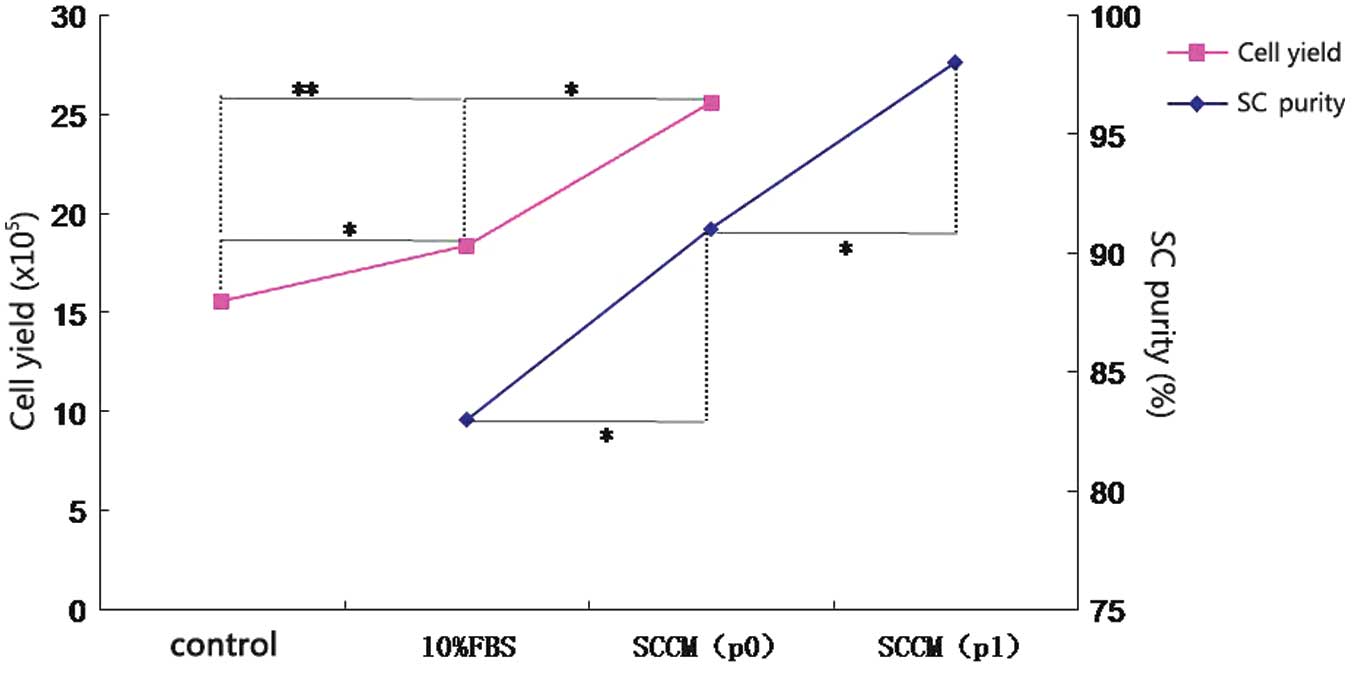
Cell suspensions (20 μl) for the various groups were counted using a hemacytometer prior to inoculation. The cell count for the SCCM group (2.56×10⁶/3N) was significantly higher than the counts for the control (1.56×10⁶/3N) and the DMEM with 10% FBS groups (1.84×10⁶/3N) (Fig. 1).

Figure 1

Cell number before inoculation in various groups and the cell purities of primary, SCCM p0 and SCCM p1 (after purification) generations. SCs, Schwann cells; SCCM, SC-conditioned medium.

Observation of cell growth

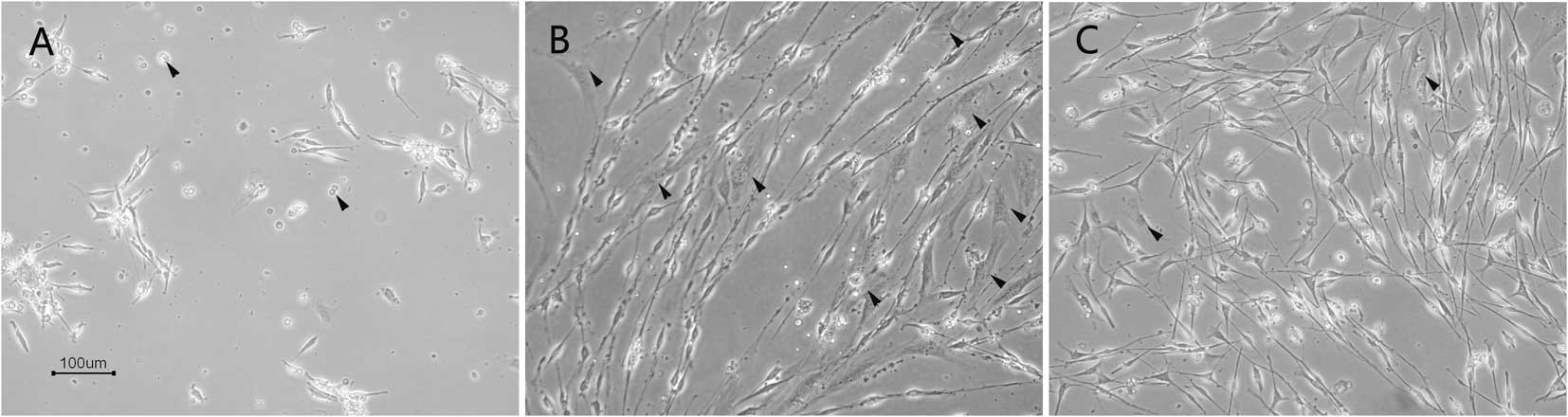
At 48 h after inoculation, the attachment of the cells was observed under an inverse microscope. Two types of cells with different morphologies were obtained. SCs were small and appeared in long fusiform, bipolar or tripolar shapes with strong refraction while fibroblasts were large and appeared in flat multilateral or irregular shapes with weak refraction. The uncultured cells which remained suspended were dead. Only a small fraction of the cells attached and proliferated. The majority of the cells derived from the sciatic nerves cultured in DMEM with 10% FBS were observed to be attached, however a high percentage of the cells were fibroblasts. The cells derived from the sciatic nerves cultured in SCCM attached and only a few of them were fibroblasts (Fig. 2).

Figure 2

Primary cells in various groups following 48 h of incubation (magnification, ×100). (A) Cells derived from uncultured sciatic nerves. The arrow indicates a suspended dead cell. (B) Cells derived from sciatic nerves cultured in DMEM with 10% FBS. The majority of the cells attached, but a high percentage of the cells were fibroblasts (indicated by arrows). (C) Cells derived from sciatic nerves cultured in SCCM. Cells were attached and only a few cells were fibroblasts. SCCM, Schwann cell-conditioned medium.

Immunostaining and cell purity determination

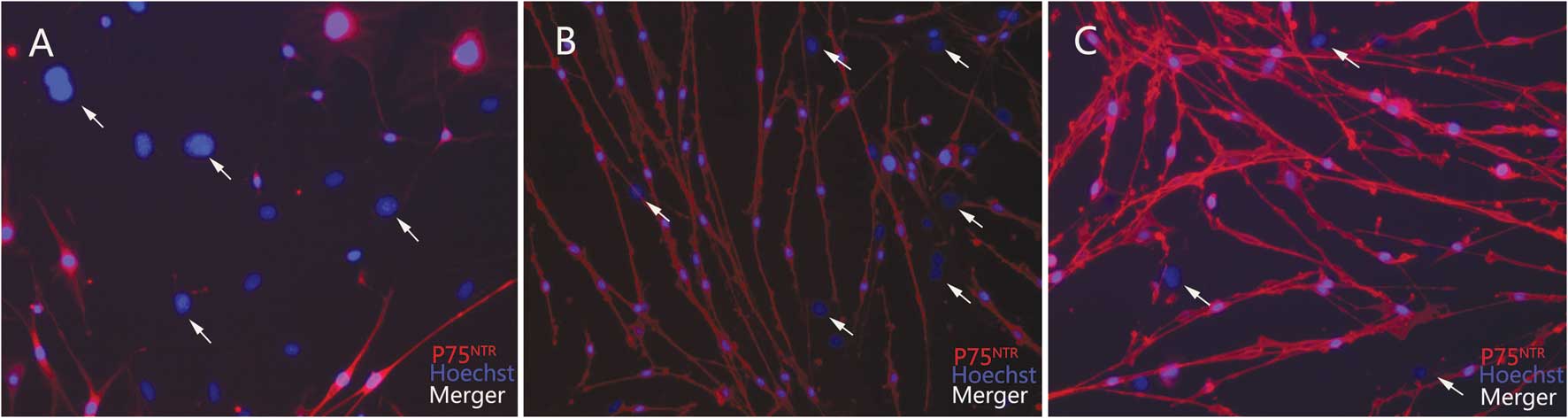
After 48 h of incubation, cells from the various groups were stained with anti-p75NTR antibody. Almost all bipolar or tripolar cells stained positive, while the fibroblasts stained negative (Fig. 3). The purities of the SCs from the DMEM with 10% FBS group and the SCCM group were 83 and 91%, respectively (Fig. 1). The purity of the SCs was not determined for cells derived from fresh sciatic nerves since the cells were not attached, even following 72 h of incubation.

Figure 3

p75NTR immunostaining of primary cells in various groups 48 h after cultivation (magnification, ×100). The bipolar and tripolar SCs in (A and B) were all stained positive for p75NTR. (A) Cells derived from uncultured sciatic nerves. Few cells were SCs and the majority of cells were fibroblasts that stained negative. (B) Cells derived from sciatic nerves cultured in DMEM with 10% FBS. Both SCs and fibroblasts were abundant. (C) Cells derived from sciatic nerves cultured in SCCM. Few fibroblasts were present. Arrows indicate fibroblasts that were stained negative for p75NTR. SCs, Schwann cells; SCCM, SC-conditioned medium.

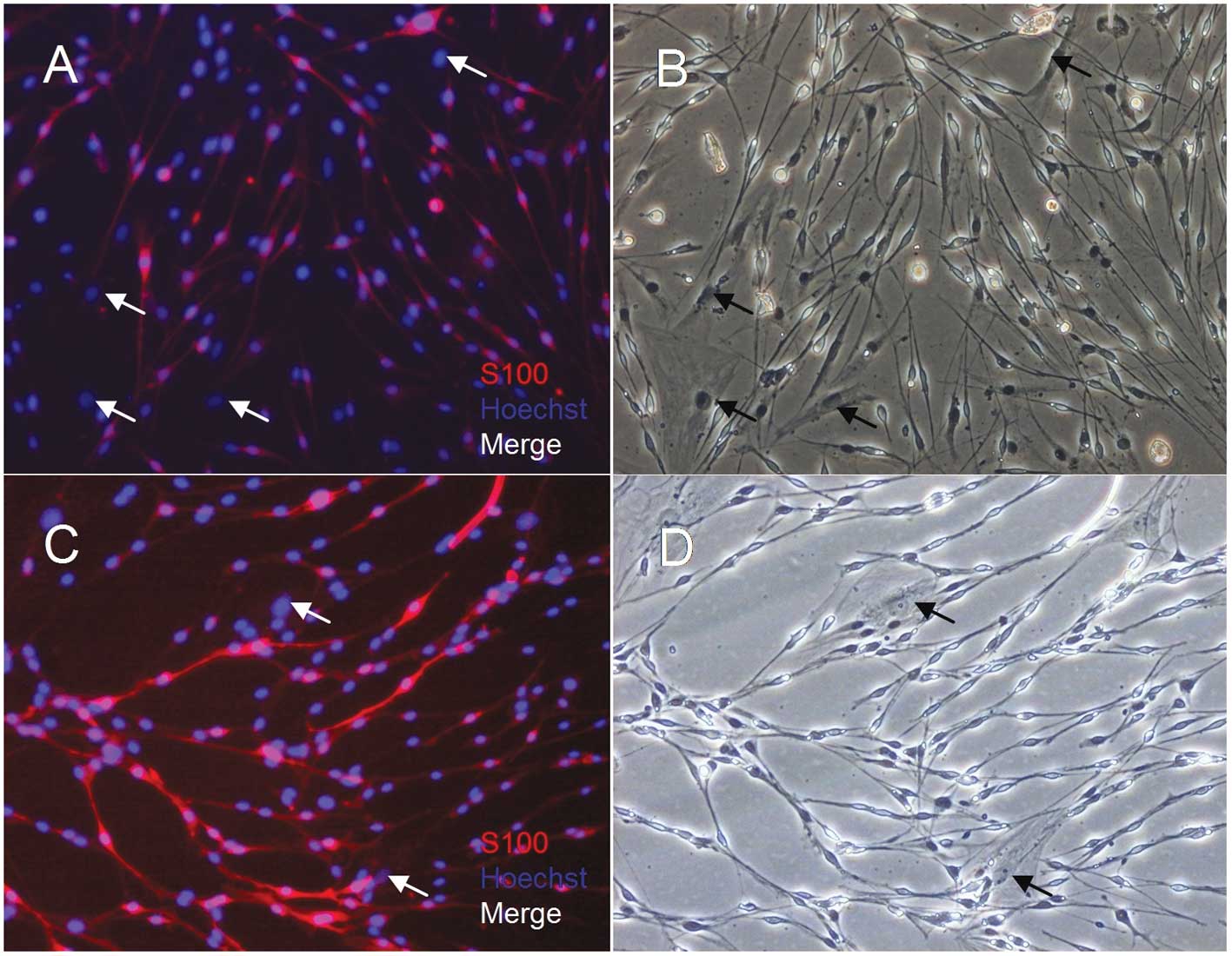
Following one simple purification (p1) step for the cells derived from the sciatic nerves cultured in SCCM, almost all bipolar and tripolar cells were stained positive for s100β (Fig. 4). The purity of the SCs was 98% (Fig. 1).

Figure 4

s100β immunostaining of cells derived from sciatic nerves cultured in SCCM (p0) and cells after purification (p1) (magnification, ×100). The bipolar and tripolar SCs in p0 (A) and p1 (C) were all stained positive, while irregular and flat fibroblasts were stained negative for s100β. Few fibroblasts were present in p1 and the purity of the SCs was high. (B and D) are corresponding bright field pictures of (A and C), respectively. SCs, Schwann cells; SCCM, SC-conditioned medium.

Histological section of s100β immunostaining samples

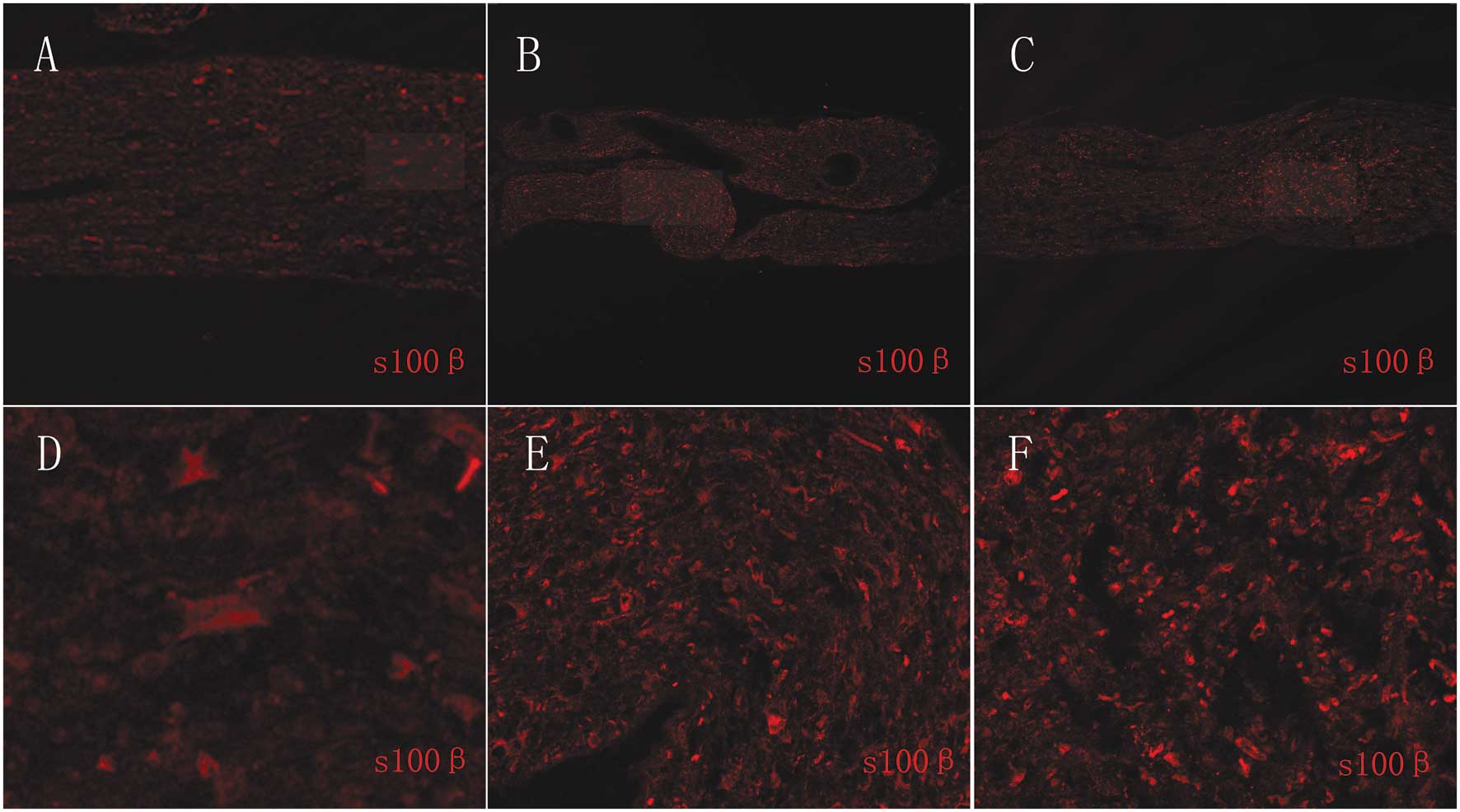
Cells derived from the sciatic nerves cultured in SCCM attached well and resulted in high yields of highly pure SCs. Therefore, we investigated the changes in the SCs at the tissue level. The SCs from the sciatic nerves cultured in SCCM proliferated and formed bands of Büngner, which is similar to the Wallerian degeneration process following nerve injury. The SCs from sciatic nerves cultured in DMEM with 10% FBS proliferated but did not form bands of Büngner. The SCs from fresh sciatic nerves did not proliferate (Fig. 5).

Figure 5

Histological section of s100β immunostaining samples of various groups observed under a confocal microsope. (A-C) are cells derived from fresh sciatic nerves, sciatic nerves cultured in DMEM with 10% FBS and sciatic nerves cultured in SCCM, respectively. (D-F) are enlargements of the shadowed areas in (A-C), respectively. SCs derived from sciatic nerves cultured in SCCM proliferated and formed bands of Büngner. SCs, Schwann cells; SCCM, SC-conditioned medium.

Discussion

The development of neural tissue engineering provides a new route for peripheral nerve repair. SCs are seed cells for neural tissue engineering and contribute significantly to the repair of injured peripheral nerves. However, as end-stage cells, SCs are difficult to culture and are usually obtained in poor yields and low purities. In addition, despite the efforts of many scientists to induce Schwann-like cells from stem cells (5–7), further applications of these methods are limited due to low induction rates, dedifferentiation following the removal of the inducing agents and the tumor-prone properties of the induced cells (8).

To obtain high quantities of high quality SCs, the in vitro culturing and proliferation of SCs has been extensively used. Previous studies have shown that SCs have different proliferative potentials at different developmental stages and are not functionally and structurally homogeneous. During the Wallerian degeneration of nerve injury, SCs dedifferentiate, express neurotrophic factors, cell adhesion molecules (9,10) and the immature SC marker glial fibrillary acidic protein (GFAP) and upregulate p75NTR (11–13). These may facilitate SC proliferation and attachment and promote nerve regeneration. In 1999, Keilhoff et al(14) obtained large quantities of SCs with high proliferative potential following in vivo pre-degeneration (Wallerian degeneration) for a week and in vitro recultivation. However, in vivo pre-degeneration requires two surgical procedures, is time-consuming and causes a delay in treatment. The clinical applications of this approach are also limited due to individual differences and the resulting difficulties in estimating the timing of the desired pre-degeneration effect. In our study, the sciatic nerves of adult mice were pre-degenerated in vitro in media that mimicked in vivo conditions. In 2010, Kraus et al(15) reported an in vitro pre-degeneration process in which sciatic nerves were incubated in DMEM with 10% FBS for one week and large quantities of pure SCs were obtained. Based on these advances, we included in our medium forskolin, heregulin-β-1 and b-FGF (SCCM) to promote the growth of the SCs. The experimental conditions used by Kraus et al were used for our positive control. After one week, the SC count in the SCCM group was 2.56×10⁶/3N, which was significantly higher than the counts in the DMEM with 10% FBS group and the uncultured group (Fig. 1). When viewed 48 h post-inoculation, many cells attached and these cells were confirmed to be SCs by immunostaining. Only small amounts of fibroblasts were present. The purity of the SCs in p0 was 91%, compared with 83% purity in the DMEM with 10% FBS group. Following one simple purification step, the purity reached 98%. In 1995, Dong et al(16) described the concentration-dependent death of in vitro cultured cells - the cells died more readily at low concentrations. Cells cultured in vitro secrete mitosis-promoting growth factors (17) and cell-cell contacts not only further enhance the release of these factors to induce cell division and proliferation (18) but also suppress the growth of fibroblasts.

We also investigated the proliferation of SCs induced by forskolin, heregulin-β-1 and b-FGF at the tissue level. Forskolin, heregulin-β-1 and b-FGF stimulated the proliferation of SCs, which formed bands of Büngner and promoted the dedifferentiation of SCs. These effects were not significant in the uncultured and the DMEM with 10% FBS groups.

We have developed, in this study, a method for cultivating a large number of pure SCs in vitro. This finding helps to fulfill the need to develop artificial neurons and further enriches SC research and the possible clinical applications of SCs.

References

1 

Meek MF and Coert JH: Clinical use of nerve conduits in peripheral nerve repair:reiew of literature. J Reconstr Microsurg. 18:97–109. 2002. View Article : Google Scholar : PubMed/NCBI

2 

Shen ZL, Berger A, Hierner R, et al: A Schwann cell-seeded intrinsic framework and its satisfactory biocompatibility for a bioartificial nerve graft. Microsurgery. 21:6–11. 2001. View Article : Google Scholar : PubMed/NCBI

3 

Frostick SP, Yin Q and Kemp GJ: Schwann cells, neurotrophic factors, and peripheral nerve regeneration. Microsurgery. 18:397–405. 1998. View Article : Google Scholar : PubMed/NCBI

4 

Jin YQ, Liu W, Hong TH and Cao Y: Efficient Schwann cell purification by differential cell detachment using multiplex collagenase treatment. J Neurosci Methods. 170:140–148. 2008. View Article : Google Scholar : PubMed/NCBI

5 

Dezawa M, Takahashi I, Esaki M, et al: Sciatic nerve regeneration in rats induced by transplantation of in vitro differentiated bone-marrow stromal cells. Eur J Neurosci. 14:1771–1776. 2001. View Article : Google Scholar : PubMed/NCBI

6 

Kingham PJ, Kalbermatten DF, Mahay D, et al: Adipose-derived stem cells differentiate into a Schwann cell phenotype and promote neurite outgrowth in vitro. Exp Neurol. 207:267–274. 2007. View Article : Google Scholar : PubMed/NCBI

7 

Jiang L, Zhu JK, Liu XL, et al: Phenotypic and functional characteristics of rat adipose tissue-derived stromal cells differentiated into Schwann-like cells in vitro. Chin J Microsurgery. 30:430–432. 2007.(In Chinese).

8 

Cogle CR, Theise ND, Fu D, et al: Bone marrow contributes to epithelial cancers in mice and humans as developmental mimicry. Stem Cells. 25:1881–1887. 2007. View Article : Google Scholar : PubMed/NCBI

9 

Bolin LM, Iismaa TP and Shooter EM: Isolation of activated adult Schwann cells and a spontaneously immortal Schwann cell clone. J Neurosci Res. 33:231–238. 1992. View Article : Google Scholar : PubMed/NCBI

10 

Fannon AM, Sherman DL, Ilyina-Gragerova G, et al: Novel E-cadherin mediated adhesion in peripheral nerve: Schwann cell architecture is stabilized by autotypic adherens junctions. J Cell Biol. 129:189–202. 1995.PubMed/NCBI

11 

Jessen KR and Mirsky R: Negative regulation of myelination: Relevance for development, injury, and demyelinating disease. Glia. 56:1552–1565. 2008. View Article : Google Scholar : PubMed/NCBI

12 

Lee HK, Seo IA, Suh DJ, et al: Interleukin-6 is required for the early induction of glial fibrillary acidic protein in Schwann cells during Wallerian degeneration. J Neurochem. 108:776–786. 2009. View Article : Google Scholar : PubMed/NCBI

13 

Lemke G and Chao M: Axons regulate Schwann cell expression of the major myelin and NGF receptor genes. Development. 102:499–504. 1988.PubMed/NCBI

14 

Keilhoff G, Fansa H, Schneider W, et al: In vivo predegeneration of peripheral nerves: an effective technique to obtain activated Schwann cells for nerve conduits. J Neurosci Methods. 89:17–24. 1999. View Article : Google Scholar : PubMed/NCBI

15 

Kraus A, Täger J, Kohler K, et al: Efficacy of various durations of in vitro predegeneration on the cell count and purity of rat Schwann-cell cultures. J Neurotrauma. 27:197–203. 2010. View Article : Google Scholar : PubMed/NCBI

16 

Dong Z, Brennan A, Liu N, et al: Neu differentiation factor is a neuron-glia signal and regulates survival, proliferation, and maturation of rat Schwann cell precursors. Neuron. 15:585–596. 1995. View Article : Google Scholar : PubMed/NCBI

17 

Eccleston PA, Collarini EJ, Jessen KR, et al: Schwann cells secrete a PDGF-like factor: evidence for an autocrine growth mechanism involving PDGF. Eur J Neurosci. 2:985–992. 1990. View Article : Google Scholar : PubMed/NCBI

18 

Sasagasako N, Toda K, Hollis M and Quarles RH: Myelin gene expression in immortalized Schwann cells: relationship to cell density and proliferation. J Neurochem. 66:1432–1439. 1996. View Article : Google Scholar : PubMed/NCBI

Related Articles

  • Abstract
  • View
  • Download
  • Twitter
Copy and paste a formatted citation
Spandidos Publications style
Wang H, Wang X, Zhong S and Shen Z: Novel method for culturing Schwann cells from adult mouse sciatic nerve in vitro. Mol Med Rep 7: 449-453, 2013.
APA
Wang, H., Wang, X., Zhong, S., & Shen, Z. (2013). Novel method for culturing Schwann cells from adult mouse sciatic nerve in vitro. Molecular Medicine Reports, 7, 449-453. https://doi.org/10.3892/mmr.2012.1177
MLA
Wang, H., Wang, X., Zhong, S., Shen, Z."Novel method for culturing Schwann cells from adult mouse sciatic nerve in vitro". Molecular Medicine Reports 7.2 (2013): 449-453.
Chicago
Wang, H., Wang, X., Zhong, S., Shen, Z."Novel method for culturing Schwann cells from adult mouse sciatic nerve in vitro". Molecular Medicine Reports 7, no. 2 (2013): 449-453. https://doi.org/10.3892/mmr.2012.1177
Copy and paste a formatted citation
x
Spandidos Publications style
Wang H, Wang X, Zhong S and Shen Z: Novel method for culturing Schwann cells from adult mouse sciatic nerve in vitro. Mol Med Rep 7: 449-453, 2013.
APA
Wang, H., Wang, X., Zhong, S., & Shen, Z. (2013). Novel method for culturing Schwann cells from adult mouse sciatic nerve in vitro. Molecular Medicine Reports, 7, 449-453. https://doi.org/10.3892/mmr.2012.1177
MLA
Wang, H., Wang, X., Zhong, S., Shen, Z."Novel method for culturing Schwann cells from adult mouse sciatic nerve in vitro". Molecular Medicine Reports 7.2 (2013): 449-453.
Chicago
Wang, H., Wang, X., Zhong, S., Shen, Z."Novel method for culturing Schwann cells from adult mouse sciatic nerve in vitro". Molecular Medicine Reports 7, no. 2 (2013): 449-453. https://doi.org/10.3892/mmr.2012.1177
Follow us
  • Twitter
  • LinkedIn
  • Facebook
About
  • Spandidos Publications
  • Careers
  • Cookie Policy
  • Privacy Policy
How can we help?
  • Help
  • Live Chat
  • Contact
  • Email to our Support Team