Spandidos Publications Logo
  • About
    • About Spandidos
    • Aims and Scopes
    • Abstracting and Indexing
    • Editorial Policies
    • Reprints and Permissions
    • Job Opportunities
    • Terms and Conditions
    • Contact
  • Journals
    • All Journals
    • Oncology Letters
      • Oncology Letters
      • Information for Authors
      • Editorial Policies
      • Editorial Board
      • Aims and Scope
      • Abstracting and Indexing
      • Bibliographic Information
      • Archive
    • International Journal of Oncology
      • International Journal of Oncology
      • Information for Authors
      • Editorial Policies
      • Editorial Board
      • Aims and Scope
      • Abstracting and Indexing
      • Bibliographic Information
      • Archive
    • Molecular and Clinical Oncology
      • Molecular and Clinical Oncology
      • Information for Authors
      • Editorial Policies
      • Editorial Board
      • Aims and Scope
      • Abstracting and Indexing
      • Bibliographic Information
      • Archive
    • Experimental and Therapeutic Medicine
      • Experimental and Therapeutic Medicine
      • Information for Authors
      • Editorial Policies
      • Editorial Board
      • Aims and Scope
      • Abstracting and Indexing
      • Bibliographic Information
      • Archive
    • International Journal of Molecular Medicine
      • International Journal of Molecular Medicine
      • Information for Authors
      • Editorial Policies
      • Editorial Board
      • Aims and Scope
      • Abstracting and Indexing
      • Bibliographic Information
      • Archive
    • Biomedical Reports
      • Biomedical Reports
      • Information for Authors
      • Editorial Policies
      • Editorial Board
      • Aims and Scope
      • Abstracting and Indexing
      • Bibliographic Information
      • Archive
    • Oncology Reports
      • Oncology Reports
      • Information for Authors
      • Editorial Policies
      • Editorial Board
      • Aims and Scope
      • Abstracting and Indexing
      • Bibliographic Information
      • Archive
    • Molecular Medicine Reports
      • Molecular Medicine Reports
      • Information for Authors
      • Editorial Policies
      • Editorial Board
      • Aims and Scope
      • Abstracting and Indexing
      • Bibliographic Information
      • Archive
    • World Academy of Sciences Journal
      • World Academy of Sciences Journal
      • Information for Authors
      • Editorial Policies
      • Editorial Board
      • Aims and Scope
      • Abstracting and Indexing
      • Bibliographic Information
      • Archive
    • International Journal of Functional Nutrition
      • International Journal of Functional Nutrition
      • Information for Authors
      • Editorial Policies
      • Editorial Board
      • Aims and Scope
      • Abstracting and Indexing
      • Bibliographic Information
      • Archive
    • International Journal of Epigenetics
      • International Journal of Epigenetics
      • Information for Authors
      • Editorial Policies
      • Editorial Board
      • Aims and Scope
      • Abstracting and Indexing
      • Bibliographic Information
      • Archive
    • Medicine International
      • Medicine International
      • Information for Authors
      • Editorial Policies
      • Editorial Board
      • Aims and Scope
      • Abstracting and Indexing
      • Bibliographic Information
      • Archive
  • Articles
  • Information
    • Information for Authors
    • Information for Reviewers
    • Information for Librarians
    • Information for Advertisers
    • Conferences
  • Language Editing
Spandidos Publications Logo
  • About
    • About Spandidos
    • Aims and Scopes
    • Abstracting and Indexing
    • Editorial Policies
    • Reprints and Permissions
    • Job Opportunities
    • Terms and Conditions
    • Contact
  • Journals
    • All Journals
    • Biomedical Reports
      • Information for Authors
      • Editorial Policies
      • Editorial Board
      • Aims and Scope
      • Abstracting and Indexing
      • Bibliographic Information
      • Archive
    • Experimental and Therapeutic Medicine
      • Information for Authors
      • Editorial Policies
      • Editorial Board
      • Aims and Scope
      • Abstracting and Indexing
      • Bibliographic Information
      • Archive
    • International Journal of Epigenetics
      • Information for Authors
      • Editorial Policies
      • Editorial Board
      • Aims and Scope
      • Abstracting and Indexing
      • Bibliographic Information
      • Archive
    • International Journal of Functional Nutrition
      • Information for Authors
      • Editorial Policies
      • Editorial Board
      • Aims and Scope
      • Abstracting and Indexing
      • Bibliographic Information
      • Archive
    • International Journal of Molecular Medicine
      • Information for Authors
      • Editorial Policies
      • Editorial Board
      • Aims and Scope
      • Abstracting and Indexing
      • Bibliographic Information
      • Archive
    • International Journal of Oncology
      • Information for Authors
      • Editorial Policies
      • Editorial Board
      • Aims and Scope
      • Abstracting and Indexing
      • Bibliographic Information
      • Archive
    • Medicine International
      • Information for Authors
      • Editorial Policies
      • Editorial Board
      • Aims and Scope
      • Abstracting and Indexing
      • Bibliographic Information
      • Archive
    • Molecular and Clinical Oncology
      • Information for Authors
      • Editorial Policies
      • Editorial Board
      • Aims and Scope
      • Abstracting and Indexing
      • Bibliographic Information
      • Archive
    • Molecular Medicine Reports
      • Information for Authors
      • Editorial Policies
      • Editorial Board
      • Aims and Scope
      • Abstracting and Indexing
      • Bibliographic Information
      • Archive
    • Oncology Letters
      • Information for Authors
      • Editorial Policies
      • Editorial Board
      • Aims and Scope
      • Abstracting and Indexing
      • Bibliographic Information
      • Archive
    • Oncology Reports
      • Information for Authors
      • Editorial Policies
      • Editorial Board
      • Aims and Scope
      • Abstracting and Indexing
      • Bibliographic Information
      • Archive
    • World Academy of Sciences Journal
      • Information for Authors
      • Editorial Policies
      • Editorial Board
      • Aims and Scope
      • Abstracting and Indexing
      • Bibliographic Information
      • Archive
  • Articles
  • Information
    • For Authors
    • For Reviewers
    • For Librarians
    • For Advertisers
    • Conferences
  • Language Editing
Login Register Submit
  • This site uses cookies
  • You can change your cookie settings at any time by following the instructions in our Cookie Policy. To find out more, you may read our Privacy Policy.

    I agree
Search articles by DOI, keyword, author or affiliation
Search
Advanced Search
presentation
Molecular Medicine Reports
Join Editorial Board Propose a Special Issue
Print ISSN: 1791-2997 Online ISSN: 1791-3004
Journal Cover
June 2013 Volume 7 Issue 6

Full Size Image

Sign up for eToc alerts
Recommend to Library

Journals

International Journal of Molecular Medicine

International Journal of Molecular Medicine

International Journal of Molecular Medicine is an international journal devoted to molecular mechanisms of human disease.

International Journal of Oncology

International Journal of Oncology

International Journal of Oncology is an international journal devoted to oncology research and cancer treatment.

Molecular Medicine Reports

Molecular Medicine Reports

Covers molecular medicine topics such as pharmacology, pathology, genetics, neuroscience, infectious diseases, molecular cardiology, and molecular surgery.

Oncology Reports

Oncology Reports

Oncology Reports is an international journal devoted to fundamental and applied research in Oncology.

Experimental and Therapeutic Medicine

Experimental and Therapeutic Medicine

Experimental and Therapeutic Medicine is an international journal devoted to laboratory and clinical medicine.

Oncology Letters

Oncology Letters

Oncology Letters is an international journal devoted to Experimental and Clinical Oncology.

Biomedical Reports

Biomedical Reports

Explores a wide range of biological and medical fields, including pharmacology, genetics, microbiology, neuroscience, and molecular cardiology.

Molecular and Clinical Oncology

Molecular and Clinical Oncology

International journal addressing all aspects of oncology research, from tumorigenesis and oncogenes to chemotherapy and metastasis.

World Academy of Sciences Journal

World Academy of Sciences Journal

Multidisciplinary open-access journal spanning biochemistry, genetics, neuroscience, environmental health, and synthetic biology.

International Journal of Functional Nutrition

International Journal of Functional Nutrition

Open-access journal combining biochemistry, pharmacology, immunology, and genetics to advance health through functional nutrition.

International Journal of Epigenetics

International Journal of Epigenetics

Publishes open-access research on using epigenetics to advance understanding and treatment of human disease.

Medicine International

Medicine International

An International Open Access Journal Devoted to General Medicine.

Journal Cover
June 2013 Volume 7 Issue 6

Full Size Image

Sign up for eToc alerts
Recommend to Library

  • Article
  • Citations
    • Cite This Article
    • Download Citation
    • Create Citation Alert
    • Remove Citation Alert
    • Cited By
  • Similar Articles
    • Related Articles (in Spandidos Publications)
    • Similar Articles (Google Scholar)
    • Similar Articles (PubMed)
  • Download PDF
  • Download XML
  • View XML
Article

Expression and purification of SenX3 from the Mycobacterium tuberculosis strain H37Rv in Escherichia coli

  • Authors:
    • Huoyang Lv
    • Liqing Hu
    • Qingfeng Hu
    • Quhao Wei
    • Peiqiong Shen
  • View Affiliations / Copyright

    Affiliations: Center of Laboratory Medicine, Zhejiang Provincial People's Hospital, Hangzhou, Zhejiang 310014, P.R. China, Department of Laboratory Medicine, The First Ningbo Hospital, Ningbo, Zhejiang 315000, P.R. China
  • Pages: 1960-1964
    |
    Published online on: April 26, 2013
       https://doi.org/10.3892/mmr.2013.1449
  • Expand metrics +
Metrics: Total Views: 0 (Spandidos Publications: | PMC Statistics: )
Metrics: Total PDF Downloads: 0 (Spandidos Publications: | PMC Statistics: )
Cited By (CrossRef): 0 citations Loading Articles...

This article is mentioned in:


Abstract

Infection with the bacterium Mycobacterium tuberculosis (MTB) causes tuberculosis, a pulmonary infection that may be fatal if left untreated. Misuse or mismanagement of tuberculosis drugs may lead to drug-resistant pathogen forms that are difficult to treat and contribute to a global health problem. The MTB SenX3/RegX3 signal transduction system allows bacteria to externally sense the environment and mediate an appropriate internal response; SenX3 is also associated with MTB virulence, suggesting that this protein may provide a potential therapeutic target. To investigate the role of SenX3 and MTB drug resistance, SenX3 was cloned, expressed and purified in Escherichia coli. SenX3 was cloned from the genome of the MTB strain H37Rv by polymerase chain reaction and an internal NcoI restriction site was destroyed by site-directed mutagenesis to allow cloning into the pET-28b prokaryotic expression vector. SenX3 expression from the resulting pET‑28b-mSenX3 plasmid was induced with isopropyl β-D-thiogalactoside and the protein was purified using Ni-NTA agarose affinity chromatography. A pure protein of the expected size was identified. The examination of purified SenX3 protein is considered to enable the in‑depth investigation of SenX3-mediated drug resistance.

Introduction

Tuberculosis is a chronic infectious disease caused by Mycobacterium tuberculosis (MTB) infection (1,2). Although drugs are capable of effectively treating tuberculosis, misuse or mismanagement of drug courses may lead to drug-resistant tuberculosis (DR-TB) or multidrug-resistant tuberculosis (MDR-TB). These drug-resistant disease forms are difficult to treat and underlie a new global prevalence of tuberculosis (3,4). A better understanding of MTB pathogenesis is required to ameliorate this threat.

Two-component signal transduction systems (TCSSs) are pathogen junction systems that monitor external environmental stimuli and coordinate cellular responses, particularly the modulation of gene expression. TCSSs are important bacterial mechanisms for pathogenesis (5) and typically consist of two proteins; a transmembrane histidine kinase and a corresponding cytoplasmic response regulator. The MTB genome encodes 30 TCSS proteins (6), several of which are strongly associated with MTB drug resistance (4,5). Thus, inhibiting TCSSs of resistant bacteria may be an effective strategy to combat DR-TB and MDR-TB. SenX3/RegX3 was the first MTB TCSS to be reported, where SenX3 is a transmembrane histidine kinase and RegX3 is the corresponding DNA-binding response regulator (6). SenX3 is associated with MTB virulence and, thus, its investigation may further elucidate the molecular mechanisms of MTB drug resistance (7–9).

In the present study, we purified the MTB strain H37Rv recombinant SenX3 following expression in Escherichia coli (E. coli) in order to provide reagents for the future investigation of SenX3 and its role in MTB pathogenesis.

Materials and methods

Cloning of MTB strain H37Rv SenX3 into pMD18-T

According to the published sequence (GenBank accession no. Y13628.1), the primers were designed to incorporate an NcoI restriction site upstream and an XhoI restriction site downstream of SenX3 in the genomic DNA of the MTB strain H37Rv, which was provided by Dr Wen-Tao Shen (Chinese Academy of Tropical Agricultural Sciences, Hainan, China). The primers were synthesized by Yingjun Life Technologies (Shanghai, China) and the following sequences were used, with the restriction sites underlined: P1, 5′-CA CCATGGCAACTGTGTTCTCGGCGCTGTTGC-3′ and P2, 5′-TCCTCGAGTCGGCTCAGCTCTTCCTCTCGTTG-3′. SenX3 was amplified from the genomic DNA of the MTB strain H37Rv by polymerase chain reaction (PCR) using Pyrobest DNA polymerase (Takara Biotechnology, Dalian, China) as well as forward and reverse primers. PCR cycling conditions were as follows: 94°C for 2 min; 30 cycles at 94°C for 30 sec, 55°C for 30 sec, 72°C for 90 sec and 72°C for 10 min. The amplicon was separated by gel electrophoresis. Correctly sized products were excised and purified with a gel extraction kit (CoWin Biotech Co., Ltd., Beijing, China). The purified and confirmed PCR product was ligated into the pMD18-T vector using a DNA ligation kit (D6023; Takara Biotechnology). The resulting pMD18-T-SenX3 construct was transformed into E. coli DH5α-competent cells. The cells were then cultured at 37°C overnight on LB-ampicillin (100 mg/l) plates. Individual colonies were selected and screened by colony PCR using a vector sequencing primer.

Site-directed mutagenesis of an internal NcoI site in SenX3

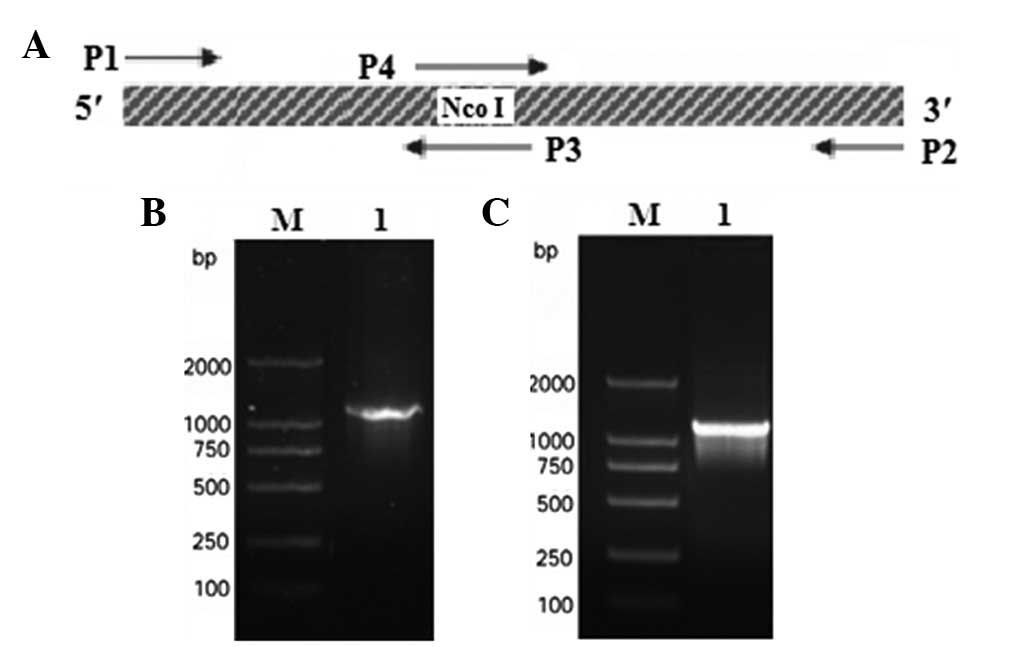
Site-directed mutagenesis was used as previously described (10) to mutate an internal NcoI site within SenX3 (Fig. 1A). The primers were synthesized by Yingjun Life Technologies and the sequences used were as follows: P3, 5′-GAGTAGAGCCATCGCACCGACGGG-3′ and P4, 5′-CCCGTCGGTGCGATGGCTCTACTC-3′. The PCR cycling conditions for P1–P3 primer amplification from pMD18-T-SenX3 were as follows: 94°C for 2 min; 30 cycles at 94°C for 30 sec, 55°C for 30 sec, 72°C for 30 sec and 72°C for 10 min. The cycling conditions for P2–P4 primer amplification from pMD18-T-SenX3 were as follows: 30 cycles of 94°C for 30 sec, 55°C for 30 sec, 72°C for 35 sec and 72°C for 10 min. The P1–P2 primers were then used to amplify a 1:1 mixture of the P1–P3/P2–P4 PCR products in the following conditions: 94°C for 2 min; 30 cycles at 94°C for 30 sec, 55°C for 30 sec, 72°C for 90 sec and 72°C for 10 min. The final PCR products were separated by gel electrophoresis and purified with a gel extraction kit (CoWin Biotech Co., Ltd.). The purified product was ligated back into pMD18-T to yield pMD18-T-mSenX3, which was then transformed into E. coli DH5α-competent cells (11). Individual colonies were screened by colony PCR.

Figure 1

PCR amplification of SenX3. (A) Schematic overview of site-directed mutagenesis of SenX3 by PCR overlap extension. (B) PCR amplification of SenX3. (C) PCR amplification of SenX3 by overlap extension. M, DL2000 marker; 1, PCR product. PCR, polymerase chain reaction.

Cloning SenX3 into the prokaryotic expression vector pET-28b

pMD18-T-mSenX3 and the prokaryotic expression vector pET-28b(+) were digested with NcoI and XhoI restriction endonucleases (Takara Biotechnology) to produce compatible ends. The products were separated by gel electrophoresis, purified with a gel extraction kit (CoWin Biotech Co., Ltd.) and ligated together with T4 DNA ligase (Takara Biotechnology) at 16°C overnight. The ligated vector was transformed into E. coli DH5α-competent cells and grown overnight on LB-kanamycin (50 mg/l) plates at 37°C. Individual colonies were selected and the recombinant pET-28b-mSenX3 plasmid was purified and confirmed by restriction digestion. Following identification, pET-28b-mSenX3 was transformed into E. coli BL21 (DE3) and grown overnight on LB-kanamycin (50 mg/l) plates at 37°C. Individual colonies were selected and confirmed by PCR with P1 and P2 primers (11).

Expression of recombinant SenX3

Recombinant expression strains were inoculated in 20 ml of LB-kanamycin (50 mg/l) broth and grown at 37°C overnight. Overnight cultures were diluted 1:100 in 50 ml of fresh LB-kanamycin (50 mg/l) broth and cultured with agitation at 37°C until the OD600 was 0.6–0.8. The cultures were then divided: Protein expression was induced in one half with 0.1 mM isopropyl β-D-thiogalactoside (IPTG) the other half was an uninduced control. The cultures were induced at either 28 or 37°C to optimize protein expression. For the analysis of protein induction, 1-ml samples were collected after 2 h and centrifuged at 5,000 × g at room temperature for 5 min. Pellets were resuspended in buffer [50 mM Tris-HCl, 5 mM EDTA, 100 mM NaCl (pH 8.0)] and the cells were lysed by ultrasonic homogenization. The lysates were centrifuged at 12,000 × g at 4°C for 10 min. The supernatant and precipitate were collected, denatured at 100°C for 5 min and analyzed by SDS-PAGE and Coomassie Blue.

Purification of recombinant SenX3

For protein purification, pellets were resuspended in buffer [20 mM Tris-HCl, 150 mM NaCl (pH 7.4)] and the cells were lysed by ultrasonic homogenization. Inclusion bodies were collected by high-speed centrifugation (12,000 rpm) and dissolved in 8 M carbamide buffer, followed by centrifugation at 12,000 rpm for 1 h. The supernatant was removed and purified using Ni-NTA affinity chromatography (Invitrogen Life Technologies, Carlsbad, CA, USA). The proteins were eluted with 50, 150 or 250 mM imidazole and fractions were collected and analyzed by SDS-PAGE to determine the optimal elution conditions. Eluted proteins were diluted in renaturation buffer [50 mM Tris-HCl, 200 mM carbamide, 1% glycerol, 0.5 mM EDTA (pH 7.9)], incubated at 4°C overnight and centrifuged at 12,000 rpm for 10 min. Precipitates were removed and the solution was concentrated by ultrafiltration.

Western blot analysis

Purified recombinant SenX3 was separated by SDS-PAGE and transferred onto nitrocellulose membranes for western blot analysis with an anti-6X His Tag primary antibody (CoWin Biotech Co., Ltd.). Signals were detected by conjugation to a horseradish peroxidase (HRP)-labeled goat anti-mouse IgG secondary antibody (CoWin Biotech Co., Ltd.) and visualized with an HRP-3,3′-diaminobenzidine tetrahydrochloride (DAB) substrate chromogenic kit (CoWin Biotech Co., Ltd.).

Results

Site-directed mutagenesis to eliminate an internal NcoI site within SenX3

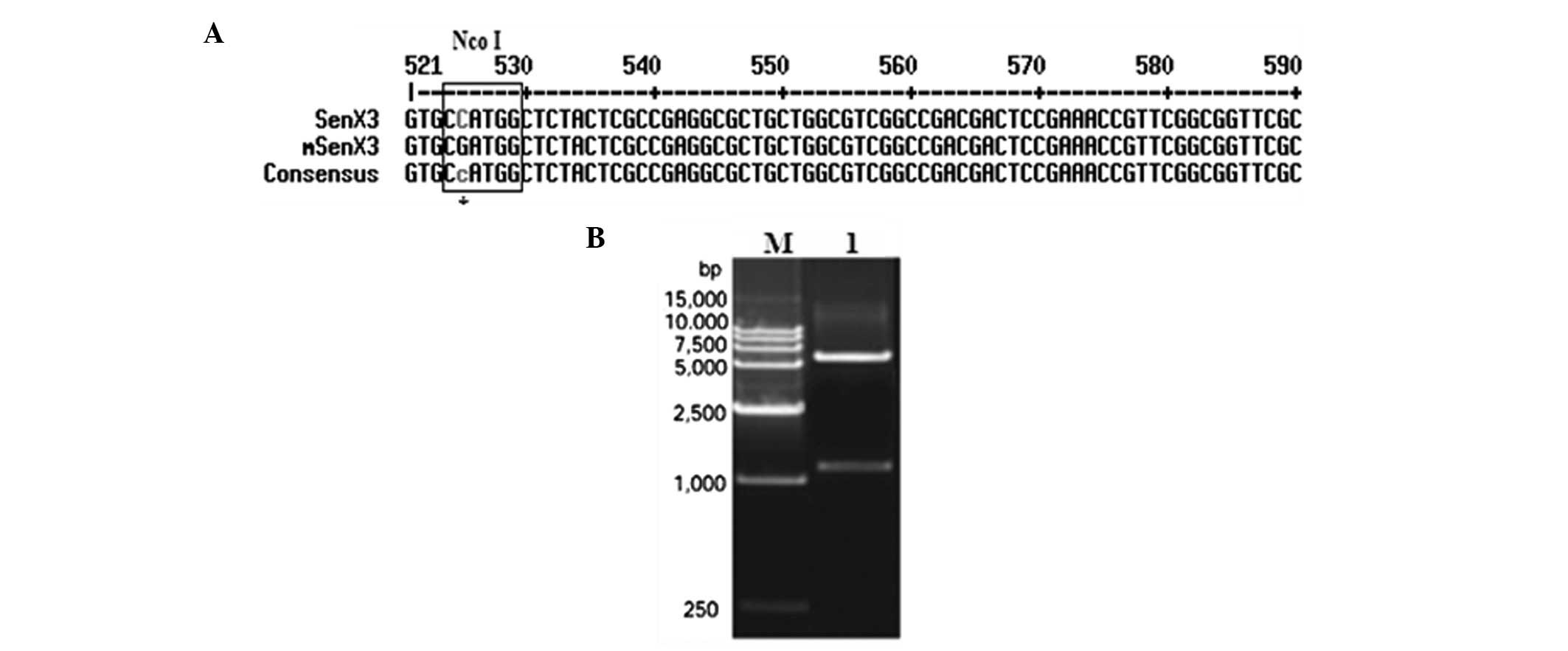
In accordance with GenBank (accession no. Y13628.1), PCR amplification of the genomic DNA of the MTB strain H37Rv generated a 1,233-bp SenX3 DNA fragment (Fig. 1B). This product was cloned into the pMD-18T vector to generate pMD18-T-SenX3, which was confirmed by colony PCR identification and sequencing. Analysis of the SenX3 fragment with Vector NIT 9 software revealed an NcoI restriction site at 524–529 bp; to clone the SenX3 fragment within the pET-28b(+) NcoI and XhoI sites, the internal NcoI site within SenX3 had to be destroyed by site-directed mutagenesis. Overlapping PCRs were designed to induce a synonymous mutation into the internal NcoI site (Fig. 1C). Diagnostic cloning and sequencing results demonstrated that the restriction site was mutated (Fig. 2A); the mutated vector was named pMD18-T-mSenX3.

Figure 2

Restriction digestion analysis of pET-28b-mSenX3 with NcoI and XhoI. (A) Sequence alignment of SenX3 and mSenX3 with the NcoI restriction site boxed. (B) Restriction digestion analysis of pET-28b-mSenX3 with NcoI and XhoI. M, DL15000 marker; 1, restriction-digested pET-28b-mSenX3.

Identification of the prokaryotic expression vector pET-28b-mSenX3

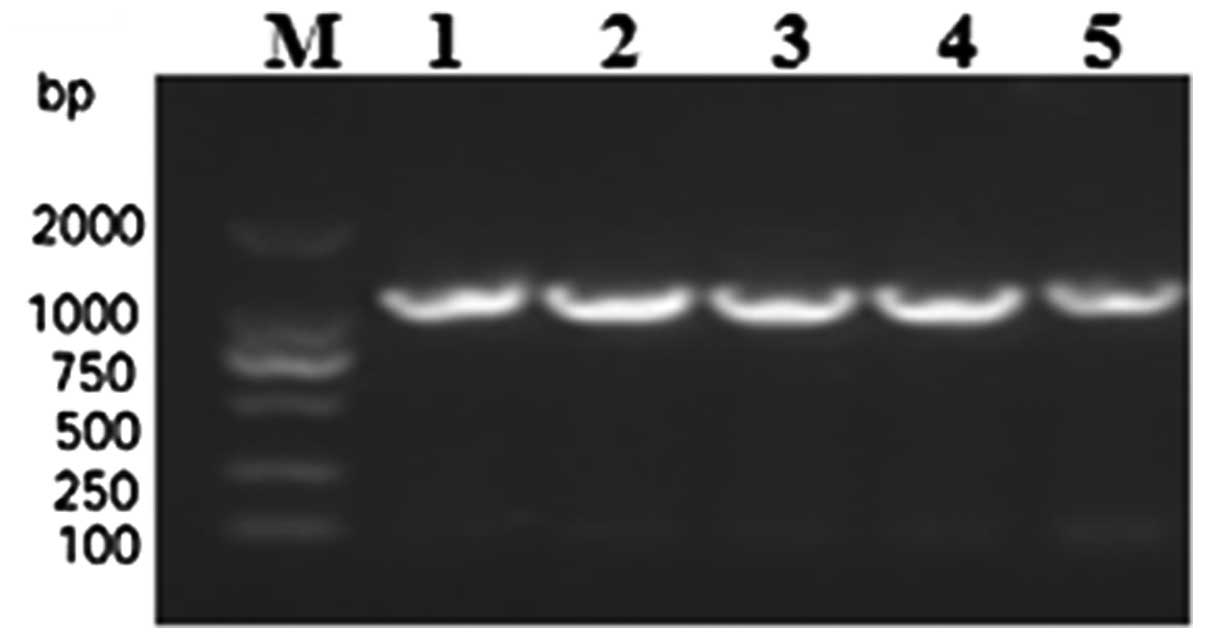
After mutating the internal NcoI site, mSenX3 was digested from the pMD18-T-mSenX3 vector by double digestion with NcoI and XhoI restriction endonucleases. The isolated fragment was then ligated into the prokaryotic expression vector pET-28b(+) following similar digestion with NcoI and XhoI to create compatible ends, generating pET-28b-mSenX3. Diagnostic digestion with NcoI and XhoI confirmed this construct (Fig. 2B). Sequencing results also confirmed that the open reading frame of mSenX3 was correct. Finally, the confirmed pET-28b-mSenX3 vector was transformed into E. coli BL21 (DE3) and confirmed by colony PCR identification (Fig. 3).

Figure 3

Clone confirmation of pET-28b-mSenX3 by colony PCR. M, DL2000 marker; 1–5, positive clones. PCR, polymerase chain reaction.

Expression of recombinant SenX3

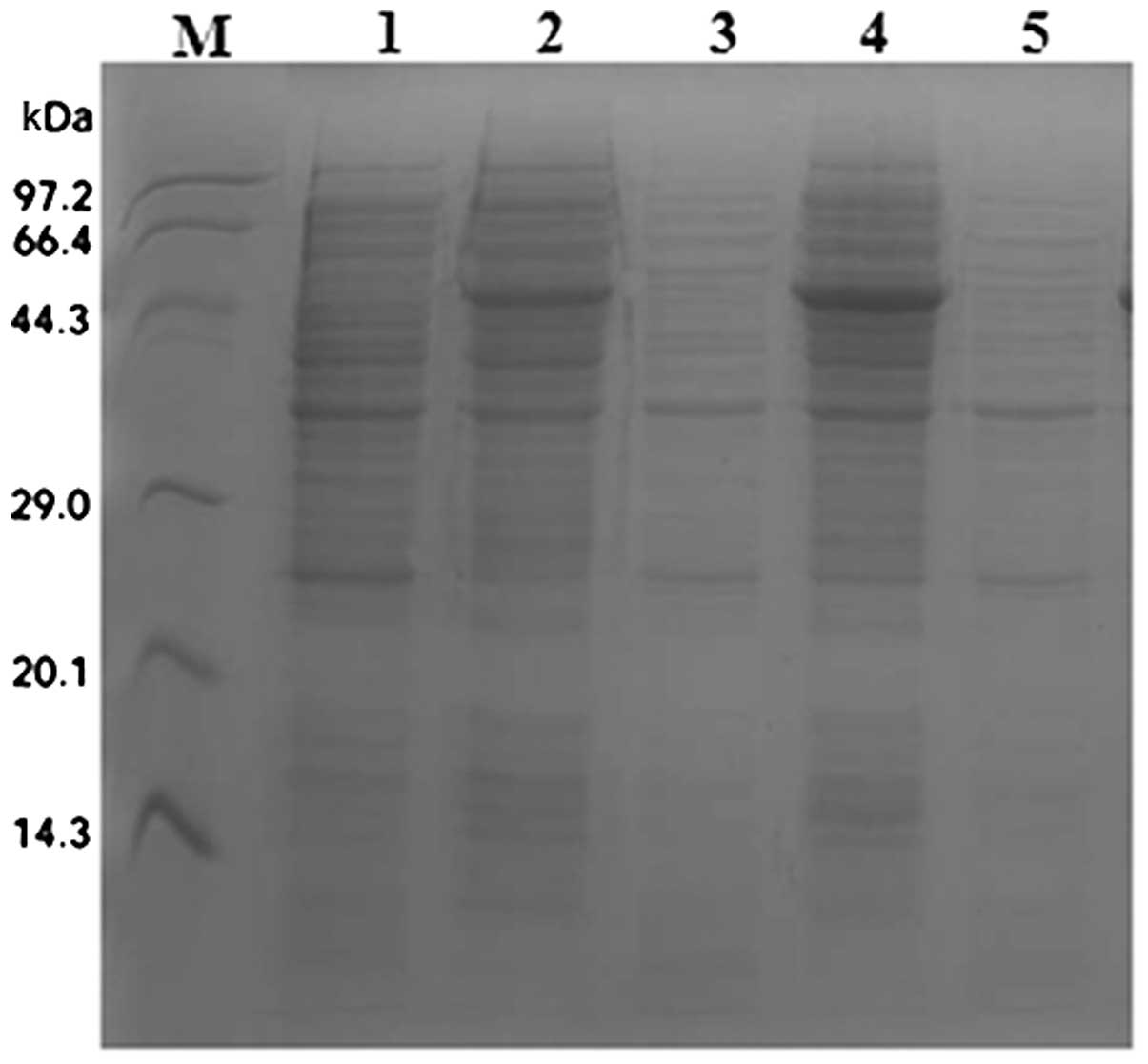
Expression of SenX3 was induced from E. coli by treatment with IPTG, and soluble (supernatant) and insoluble (precipitate) proteins were separated by ultrasonication. Analysis by SDS-PAGE and Coomassie staining indicated the appearance of a band ~46 kDa (expected size) following IPTG induction in the precipitate lanes only (Fig. 4).

Figure 4

SDS-PAGE analysis of SenX3 induction from E. coli using Coomassie Blue. M, low molecular weight protein marker; 1, pre-induction sample; 2, ultrasonic precipitate post-induction at 28°C; 3, ultrasonic supernatant post-induction at 28°C; 4, ultrasonic precipitate post-induction at 37°C; 5, ultrasonic supernatant post-induction at 37°C. E. coli, Escherichia coli.

Purification of recombinant SenX3

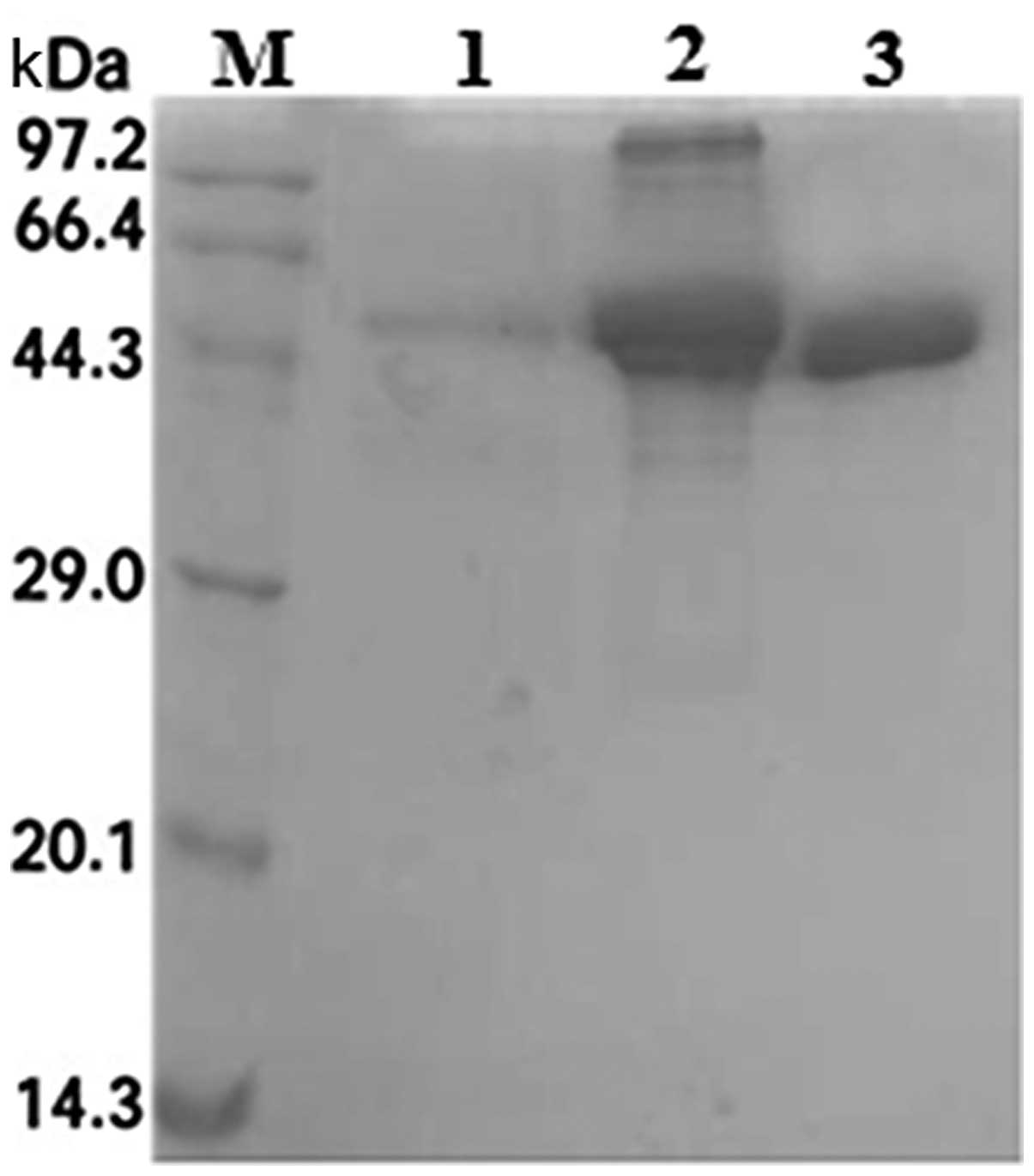
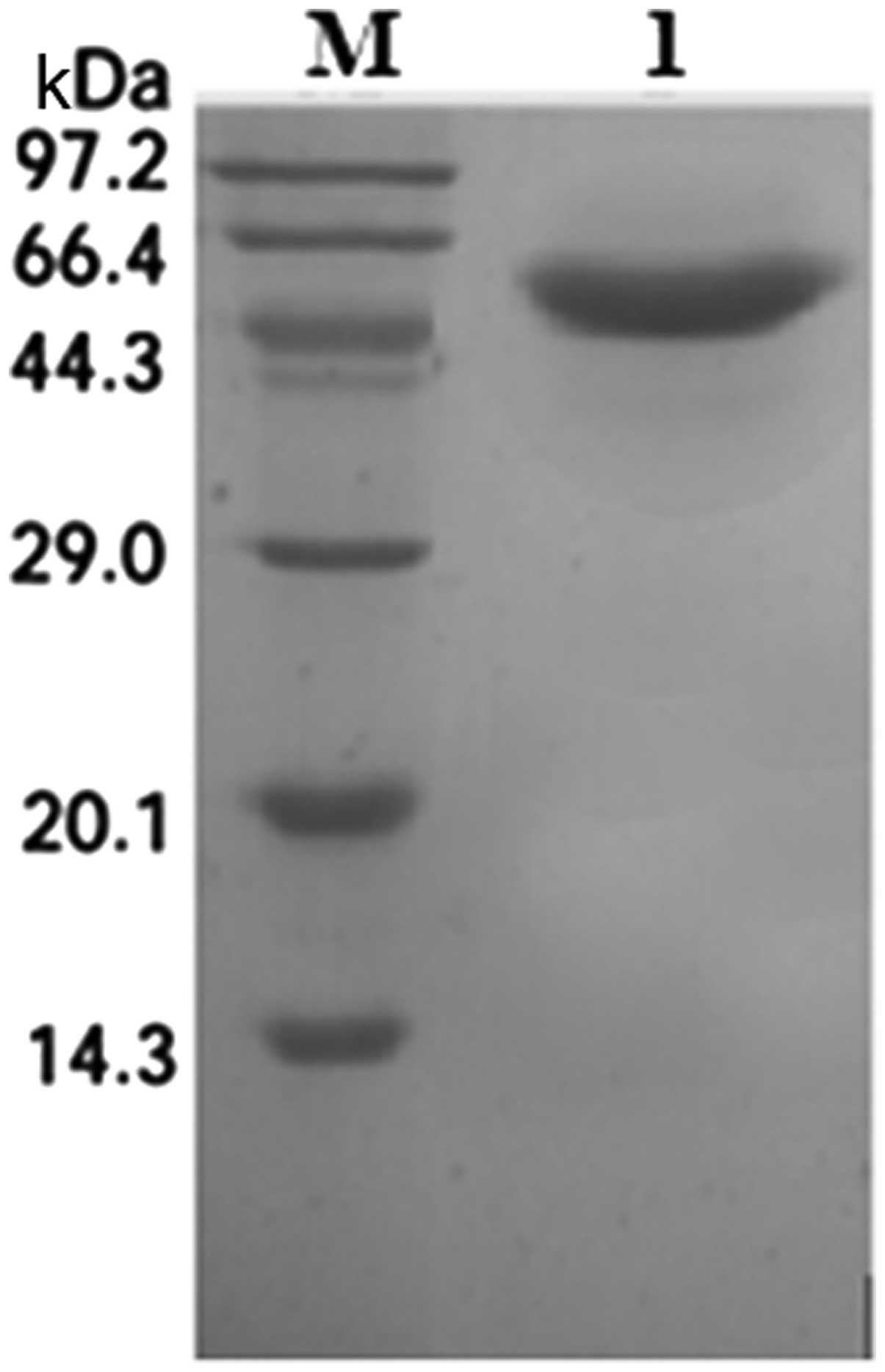
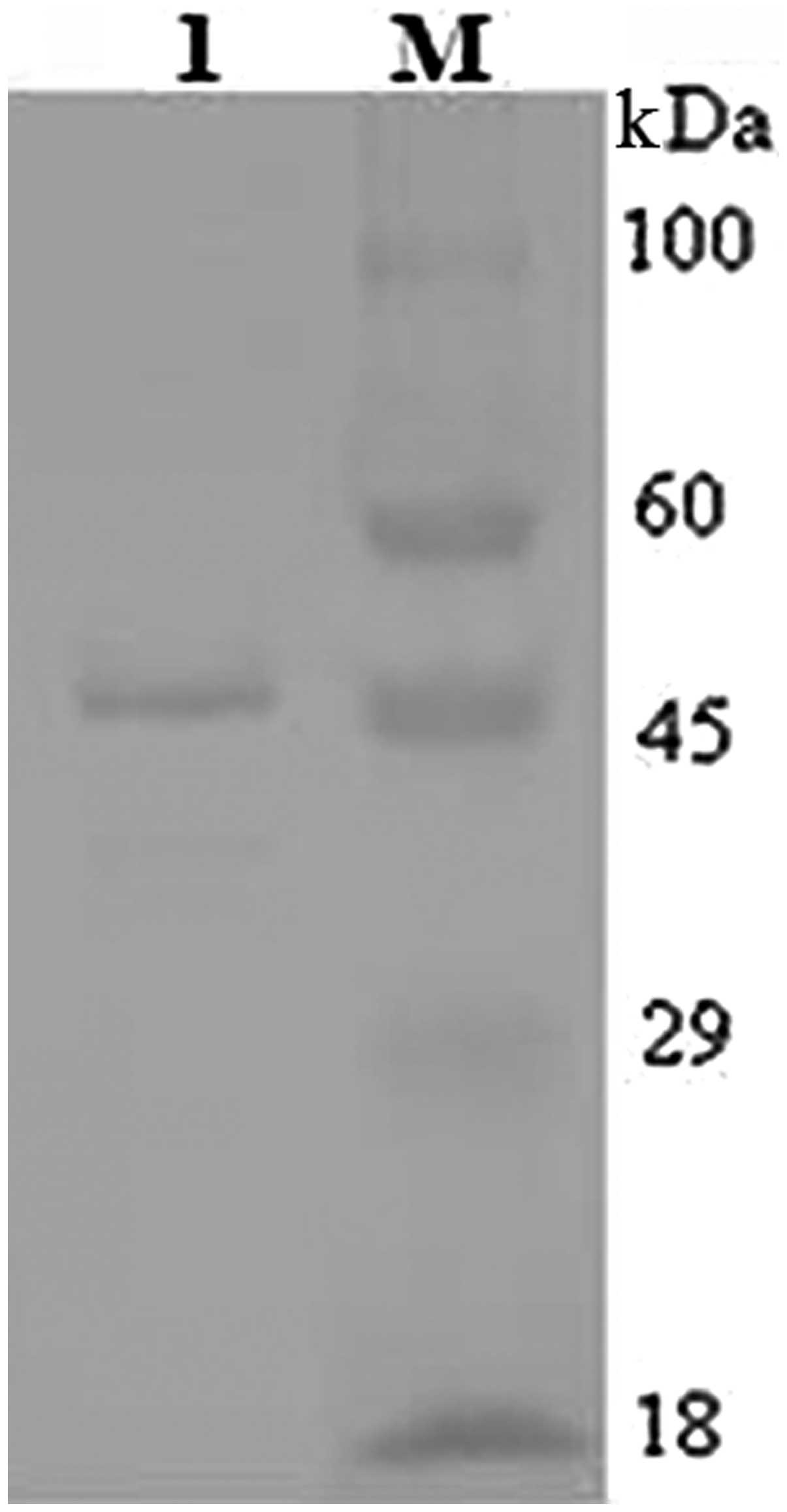
Following induction, the ultrasonicated precipitate was collected, solubilized and purified by Ni-sepharose affinity chromatography, from which protein fractions were collected and analyzed by SDS-PAGE. SenX3 was eluted at an optimal concentration of 250 mM imidazole (Fig. 5). SDS-PAGE analysis and Coomassie staining indicated one band of the expected size of 46 kDa (Fig. 6). Western blot analysis with an anti-6X His Tag antibody also detected a band of ~46 kDa (Fig. 7).

Figure 5

SDS-PAGE analysis following purification of recombinant SenX3 by Ni-sepharose affinity chromatography using Coomassie Blue. M, low molecular weight protein marker; 1–3, fractions eluted with 50, 150 or 250 mM imidazole, respectively.

Figure 6

SDS-PAGE analysis of concentrated and refolded SenX3 using Coomassie Blue. M, low molecular weight protein marker; 1, concentrated and refolded SenX3.

Figure 7

Western blot analysis of purified SenX3 using an anti-6X His Tag antibody. 1, Purified SenX3; M, prestained protein marker.

Discussion

SenX3/RegX3 is a TCSS transmembrane sensor that coordinates pathogen environmental responses. Parish et al(7) constructed MTB strains mutated for SenX3/RegX3 that were shown to infect human THP-1 macrophage-like cells and to gradually grow in γ-interferon-activated, bone marrow-derived murine macrophages. These strains were also shown to infect the lungs of mice and significantly decrease splenic function.

MTB strains mutated for either SenX3 or RegX3 have been shown to exhibit decreased virulence similar to MTB strains mutated for SenX3 and RegX3 (8), suggesting that regulatory mechanisms of the SenX3/RegX3 signaling pathway are important for MTB virulence. Furthermore, understanding the functions of SenX3/RegX3 and additional MTB TCSS proteins is of great significance for enabling the identification of the underlying molecular mechanisms of MTB resistance, the clinical treatment of tuberculosis, the identification of novel drugs and controlling the prevalence of drug-resistant strains (12,13). According to Himpens et al(13), cytoplasmic SenX3 from Mycobacterium smegmatis was expressed using the pQE30 prokaryotic expression system. To the best of our knowledge, this was the first study to report the exogenous expression of MTB SenX3.

In the present study, PCR techniques were used to clone the genomic sequence of MTB SenX3, and SenX3 was purified from E. coli using affinity chromatography. The results of the present study provide important data for the future investigation of SenX3 and the molecular mechanisms of MTB resistance.

Acknowledgements

This study was supported by the Zhejiang Provincial Natural Science Foundation (grant no. Y2100445).

References

1 

Maxmen A: TB drugs chalk up rare win. Nature. 487:413–414. 2012. View Article : Google Scholar : PubMed/NCBI

2 

World Health Organization. Multidrug and extensively drug-resistant TB (M/XDR-TB): 2010 global report on surveillance and response. World Health Organization; Geneva, Switzerland: 2010

3 

Crunkhorn S: Trial watch: Novel antimicrobial fights TB resistance. Nat Rev Drug Discov. 11:5902012. View Article : Google Scholar : PubMed/NCBI

4 

Kalokhe AS, Shafiq M, Lee JC, Ray SM, Wang YF, Metchock B, Anderson AM and Nguyen ML: Multidrug-resistant tuberculosis drug susceptibility and molecular diagnostic testing. Am J Med Sci. 345:143–148. 2013. View Article : Google Scholar : PubMed/NCBI

5 

Bretl DJ, Demetriadou C and Zahrt TC: Adaptation to environmental stimuli within the host: two-component signal transduction systems of Mycobacterium tuberculosis. Microbiol Mol Biol Rev. 75:566–582. 2011. View Article : Google Scholar : PubMed/NCBI

6 

Cole ST, Brosch R, Parkhill J, et al: Deciphering the biology of Mycobacterium tuberculosis from the complete genome sequence. Nature. 393:537–544. 1998.

7 

Parish T, Smith DA, Roberts G, Betts J and Stoker NG: The senX3-regX3 two-component regulatory system of Mycobacterium tuberculosis is required for virulence. Microbiology. 149:1423–1435. 2003. View Article : Google Scholar : PubMed/NCBI

8 

Rickman L, Saldanha JW, Hunt DM, et al: A two-component signal transduction system with a PAS domain-containing sensor is required for virulence of Mycobacterium tuberculosis in mice. Biochem Biophys Res Commun. 314:259–267. 2004. View Article : Google Scholar : PubMed/NCBI

9 

Rifat D, Bishai WR and Karakousis PC: Phosphate depletion: a novel trigger for Mycobacterium tuberculosis persistence. J Infect Dis. 200:1126–1135. 2009. View Article : Google Scholar : PubMed/NCBI

10 

An Y, Ji J, Wu W, Lv A, Huang R and Wei Y: A rapid and efficient method for multiple-site mutagenesis with a modified overlap extension PCR. Appl Microbiol Biotechnol. 68:774–778. 2005. View Article : Google Scholar : PubMed/NCBI

11 

Green MR and Sambrook J: Molecular Cloning: A Laboratory Manual. 4th edition. Cold Spring Harbor Laboratory Press; Cold Spring Harbor, New York: 2012

12 

Carroll P, Faray-Kele MC and Parish T: Identifying vulnerable pathways in Mycobacterium tuberculosis by using a knockdown approach. Appl Environ Microbiol. 77:5040–5043. 2011.PubMed/NCBI

13 

Himpens S, Locht C and Supply P: Molecular characterization of the mycobacterial SenX3-RegX3 two-component system: evidence for autoregulation. Microbiology. 146:3091–3098. 2000.PubMed/NCBI

Related Articles

  • Abstract
  • View
  • Download
  • Twitter
Copy and paste a formatted citation
Spandidos Publications style
Lv H, Hu L, Hu Q, Wei Q and Shen P: Expression and purification of SenX3 from the Mycobacterium tuberculosis strain H37Rv in Escherichia coli. Mol Med Rep 7: 1960-1964, 2013.
APA
Lv, H., Hu, L., Hu, Q., Wei, Q., & Shen, P. (2013). Expression and purification of SenX3 from the Mycobacterium tuberculosis strain H37Rv in Escherichia coli. Molecular Medicine Reports, 7, 1960-1964. https://doi.org/10.3892/mmr.2013.1449
MLA
Lv, H., Hu, L., Hu, Q., Wei, Q., Shen, P."Expression and purification of SenX3 from the Mycobacterium tuberculosis strain H37Rv in Escherichia coli". Molecular Medicine Reports 7.6 (2013): 1960-1964.
Chicago
Lv, H., Hu, L., Hu, Q., Wei, Q., Shen, P."Expression and purification of SenX3 from the Mycobacterium tuberculosis strain H37Rv in Escherichia coli". Molecular Medicine Reports 7, no. 6 (2013): 1960-1964. https://doi.org/10.3892/mmr.2013.1449
Copy and paste a formatted citation
x
Spandidos Publications style
Lv H, Hu L, Hu Q, Wei Q and Shen P: Expression and purification of SenX3 from the Mycobacterium tuberculosis strain H37Rv in Escherichia coli. Mol Med Rep 7: 1960-1964, 2013.
APA
Lv, H., Hu, L., Hu, Q., Wei, Q., & Shen, P. (2013). Expression and purification of SenX3 from the Mycobacterium tuberculosis strain H37Rv in Escherichia coli. Molecular Medicine Reports, 7, 1960-1964. https://doi.org/10.3892/mmr.2013.1449
MLA
Lv, H., Hu, L., Hu, Q., Wei, Q., Shen, P."Expression and purification of SenX3 from the Mycobacterium tuberculosis strain H37Rv in Escherichia coli". Molecular Medicine Reports 7.6 (2013): 1960-1964.
Chicago
Lv, H., Hu, L., Hu, Q., Wei, Q., Shen, P."Expression and purification of SenX3 from the Mycobacterium tuberculosis strain H37Rv in Escherichia coli". Molecular Medicine Reports 7, no. 6 (2013): 1960-1964. https://doi.org/10.3892/mmr.2013.1449
Follow us
  • Twitter
  • LinkedIn
  • Facebook
About
  • Spandidos Publications
  • Careers
  • Cookie Policy
  • Privacy Policy
How can we help?
  • Help
  • Live Chat
  • Contact
  • Email to our Support Team