Spandidos Publications Logo
  • About
    • About Spandidos
    • Aims and Scopes
    • Abstracting and Indexing
    • Editorial Policies
    • Reprints and Permissions
    • Job Opportunities
    • Terms and Conditions
    • Contact
  • Journals
    • All Journals
    • Oncology Letters
      • Oncology Letters
      • Information for Authors
      • Editorial Policies
      • Editorial Board
      • Aims and Scope
      • Abstracting and Indexing
      • Bibliographic Information
      • Archive
    • International Journal of Oncology
      • International Journal of Oncology
      • Information for Authors
      • Editorial Policies
      • Editorial Board
      • Aims and Scope
      • Abstracting and Indexing
      • Bibliographic Information
      • Archive
    • Molecular and Clinical Oncology
      • Molecular and Clinical Oncology
      • Information for Authors
      • Editorial Policies
      • Editorial Board
      • Aims and Scope
      • Abstracting and Indexing
      • Bibliographic Information
      • Archive
    • Experimental and Therapeutic Medicine
      • Experimental and Therapeutic Medicine
      • Information for Authors
      • Editorial Policies
      • Editorial Board
      • Aims and Scope
      • Abstracting and Indexing
      • Bibliographic Information
      • Archive
    • International Journal of Molecular Medicine
      • International Journal of Molecular Medicine
      • Information for Authors
      • Editorial Policies
      • Editorial Board
      • Aims and Scope
      • Abstracting and Indexing
      • Bibliographic Information
      • Archive
    • Biomedical Reports
      • Biomedical Reports
      • Information for Authors
      • Editorial Policies
      • Editorial Board
      • Aims and Scope
      • Abstracting and Indexing
      • Bibliographic Information
      • Archive
    • Oncology Reports
      • Oncology Reports
      • Information for Authors
      • Editorial Policies
      • Editorial Board
      • Aims and Scope
      • Abstracting and Indexing
      • Bibliographic Information
      • Archive
    • Molecular Medicine Reports
      • Molecular Medicine Reports
      • Information for Authors
      • Editorial Policies
      • Editorial Board
      • Aims and Scope
      • Abstracting and Indexing
      • Bibliographic Information
      • Archive
    • World Academy of Sciences Journal
      • World Academy of Sciences Journal
      • Information for Authors
      • Editorial Policies
      • Editorial Board
      • Aims and Scope
      • Abstracting and Indexing
      • Bibliographic Information
      • Archive
    • International Journal of Functional Nutrition
      • International Journal of Functional Nutrition
      • Information for Authors
      • Editorial Policies
      • Editorial Board
      • Aims and Scope
      • Abstracting and Indexing
      • Bibliographic Information
      • Archive
    • International Journal of Epigenetics
      • International Journal of Epigenetics
      • Information for Authors
      • Editorial Policies
      • Editorial Board
      • Aims and Scope
      • Abstracting and Indexing
      • Bibliographic Information
      • Archive
    • Medicine International
      • Medicine International
      • Information for Authors
      • Editorial Policies
      • Editorial Board
      • Aims and Scope
      • Abstracting and Indexing
      • Bibliographic Information
      • Archive
  • Articles
  • Information
    • Information for Authors
    • Information for Reviewers
    • Information for Librarians
    • Information for Advertisers
    • Conferences
  • Language Editing
Spandidos Publications Logo
  • About
    • About Spandidos
    • Aims and Scopes
    • Abstracting and Indexing
    • Editorial Policies
    • Reprints and Permissions
    • Job Opportunities
    • Terms and Conditions
    • Contact
  • Journals
    • All Journals
    • Biomedical Reports
      • Information for Authors
      • Editorial Policies
      • Editorial Board
      • Aims and Scope
      • Abstracting and Indexing
      • Bibliographic Information
      • Archive
    • Experimental and Therapeutic Medicine
      • Information for Authors
      • Editorial Policies
      • Editorial Board
      • Aims and Scope
      • Abstracting and Indexing
      • Bibliographic Information
      • Archive
    • International Journal of Epigenetics
      • Information for Authors
      • Editorial Policies
      • Editorial Board
      • Aims and Scope
      • Abstracting and Indexing
      • Bibliographic Information
      • Archive
    • International Journal of Functional Nutrition
      • Information for Authors
      • Editorial Policies
      • Editorial Board
      • Aims and Scope
      • Abstracting and Indexing
      • Bibliographic Information
      • Archive
    • International Journal of Molecular Medicine
      • Information for Authors
      • Editorial Policies
      • Editorial Board
      • Aims and Scope
      • Abstracting and Indexing
      • Bibliographic Information
      • Archive
    • International Journal of Oncology
      • Information for Authors
      • Editorial Policies
      • Editorial Board
      • Aims and Scope
      • Abstracting and Indexing
      • Bibliographic Information
      • Archive
    • Medicine International
      • Information for Authors
      • Editorial Policies
      • Editorial Board
      • Aims and Scope
      • Abstracting and Indexing
      • Bibliographic Information
      • Archive
    • Molecular and Clinical Oncology
      • Information for Authors
      • Editorial Policies
      • Editorial Board
      • Aims and Scope
      • Abstracting and Indexing
      • Bibliographic Information
      • Archive
    • Molecular Medicine Reports
      • Information for Authors
      • Editorial Policies
      • Editorial Board
      • Aims and Scope
      • Abstracting and Indexing
      • Bibliographic Information
      • Archive
    • Oncology Letters
      • Information for Authors
      • Editorial Policies
      • Editorial Board
      • Aims and Scope
      • Abstracting and Indexing
      • Bibliographic Information
      • Archive
    • Oncology Reports
      • Information for Authors
      • Editorial Policies
      • Editorial Board
      • Aims and Scope
      • Abstracting and Indexing
      • Bibliographic Information
      • Archive
    • World Academy of Sciences Journal
      • Information for Authors
      • Editorial Policies
      • Editorial Board
      • Aims and Scope
      • Abstracting and Indexing
      • Bibliographic Information
      • Archive
  • Articles
  • Information
    • For Authors
    • For Reviewers
    • For Librarians
    • For Advertisers
    • Conferences
  • Language Editing
Login Register Submit
  • This site uses cookies
  • You can change your cookie settings at any time by following the instructions in our Cookie Policy. To find out more, you may read our Privacy Policy.

    I agree
Search articles by DOI, keyword, author or affiliation
Search
Advanced Search
presentation
Molecular Medicine Reports
Join Editorial Board Propose a Special Issue
Print ISSN: 1791-2997 Online ISSN: 1791-3004
Journal Cover
December-2017 Volume 16 Issue 6

Full Size Image

Sign up for eToc alerts
Recommend to Library

Journals

International Journal of Molecular Medicine

International Journal of Molecular Medicine

International Journal of Molecular Medicine is an international journal devoted to molecular mechanisms of human disease.

International Journal of Oncology

International Journal of Oncology

International Journal of Oncology is an international journal devoted to oncology research and cancer treatment.

Molecular Medicine Reports

Molecular Medicine Reports

Covers molecular medicine topics such as pharmacology, pathology, genetics, neuroscience, infectious diseases, molecular cardiology, and molecular surgery.

Oncology Reports

Oncology Reports

Oncology Reports is an international journal devoted to fundamental and applied research in Oncology.

Experimental and Therapeutic Medicine

Experimental and Therapeutic Medicine

Experimental and Therapeutic Medicine is an international journal devoted to laboratory and clinical medicine.

Oncology Letters

Oncology Letters

Oncology Letters is an international journal devoted to Experimental and Clinical Oncology.

Biomedical Reports

Biomedical Reports

Explores a wide range of biological and medical fields, including pharmacology, genetics, microbiology, neuroscience, and molecular cardiology.

Molecular and Clinical Oncology

Molecular and Clinical Oncology

International journal addressing all aspects of oncology research, from tumorigenesis and oncogenes to chemotherapy and metastasis.

World Academy of Sciences Journal

World Academy of Sciences Journal

Multidisciplinary open-access journal spanning biochemistry, genetics, neuroscience, environmental health, and synthetic biology.

International Journal of Functional Nutrition

International Journal of Functional Nutrition

Open-access journal combining biochemistry, pharmacology, immunology, and genetics to advance health through functional nutrition.

International Journal of Epigenetics

International Journal of Epigenetics

Publishes open-access research on using epigenetics to advance understanding and treatment of human disease.

Medicine International

Medicine International

An International Open Access Journal Devoted to General Medicine.

Journal Cover
December-2017 Volume 16 Issue 6

Full Size Image

Sign up for eToc alerts
Recommend to Library

  • Article
  • Citations
    • Cite This Article
    • Download Citation
    • Create Citation Alert
    • Remove Citation Alert
    • Cited By
  • Similar Articles
    • Related Articles (in Spandidos Publications)
    • Similar Articles (Google Scholar)
    • Similar Articles (PubMed)
  • Download PDF
  • Download XML
  • View XML
Article

Analysis of MEN1 c.482G>A (p.Gly161Asp) mutation in a pedigree with familial multiple endocrine neoplasia type 1

  • Authors:
    • Yuanyuan Luo
    • Yongxiang Sun
    • Xiaofan Zhu
    • Xialian Li
  • View Affiliations / Copyright

    Affiliations: Department of Endocrinology and Metabolism, Genetic and Prenatal Diagnosis Center, The First Affiliated Hospital of Zhengzhou University, Zhengzhou, Henan 450052, P.R. China, Department of Endocrinology and Geriatrics, The Medical Group of Zhengzhou First People's Hospital, Zhengzhou, Henan 450000, P.R. China
  • Pages: 8973-8976
    |
    Published online on: October 10, 2017
       https://doi.org/10.3892/mmr.2017.7749
  • Expand metrics +
Metrics: Total Views: 0 (Spandidos Publications: | PMC Statistics: )
Metrics: Total PDF Downloads: 0 (Spandidos Publications: | PMC Statistics: )
Cited By (CrossRef): 0 citations Loading Articles...

This article is mentioned in:


Abstract

Multiple endocrine neoplasia type 1 (MEN1) is an autosomal dominant disorder characterized by the development of neuroendocrine tumors, which in turn are caused by mutations in the MEN1 gene. In the present study, a case of a 46‑year‑old woman who was clinically diagnosed with MEN1 based on the presence of prolactinoma and bilateral parathyroid adenoma was reported. The patient's serum prolactin (PRL) levels were successfully controlled via bromocriptine therapy, and the serum levels of calcium and intact parathyroid hormone (PTH) reduced one day following parathyroidectomy. Genetic testing revealed a missense mutation c.482G>A (p.Gly161Asp) in exon 3 of the MEN1 gene, and it led to the identification of two carriers in the pedigree (patient's elder sister and brother). Both of the carriers revealed to have high blood calcium, PTH and PRL. The mutation identified in this pedigree has never been reported in China. The sequence alignments and tertiary structure of menin protein were made by Polyphen2, SNPs3D, and SIFT, which were used to predict the function of mutant menin. Since the mutant menin may interfere with the menin‑JunD or menin‑Smad3 interactions, further investigations are necessary to explore the function of mutant protein. In view of that, identification of mutations and longtime follow‑up are important for patients with a pedigree clearly indicating MEN1.

Introduction

Multiple endocrine neoplasia type 1 (MEN1) is an autosomal dominant disorder characterized by the occurrence of tumors of the parathyroids, anterior pituitary and neuroendocrine tumors of the pancreas and duodenum. It is furthermore associated with germline mutations of the MEN1 tumor suppressor gene. Parathyroid tumors, which lead to hypercalcemia are the most common feature of MEN1 occurring in about 95% of patients. Pancreatic islet cell tumors occur in approximately 40% of patients, while anterior pituitary tumors occur in around 30% of patients (1). The MEN1 gene, which was identified in 1997 by Chandrasekharappa et al (2), consists of 10 exons that encode the protein referred to as menin. A comprehensive review and analysis of 38 years of data related to 613 MEN1 mutations found that frameshift mutations represent the highest rate (42%), while missense mutations show a frequency of 25.5%. Nonsense mutations represent 14%, splice-site mutations 10.5%; in-frame del/ins 5.5% and gross deletions represent the remaining 2.5% (3). Furthermore, the most mutations resulted in the 2, 9 and 10 exons, but thus far the genotype-phenotype correlation has not been established (4). Therefore, DNA testing for MEN1 gene is an established and useful tool for the diagnosis of MEN1. In the present study we report a familial MEN1 case with prolactinoma and parathyroid adenoma, and a missense mutation c.482G>A in exon 3 of MEN1 gene, which has been shown to change the 161st amino acid from glycine to aspartate.

Case report

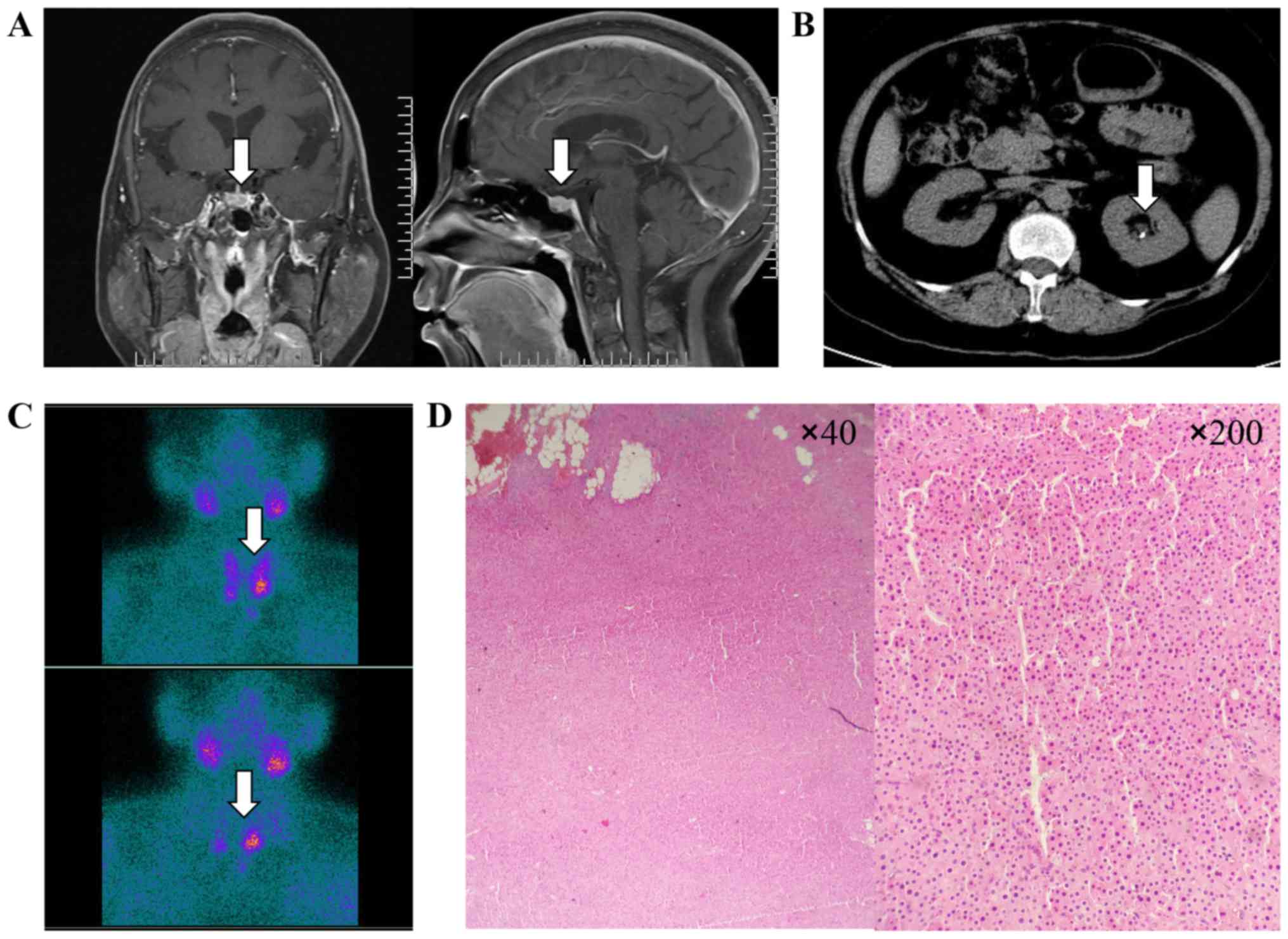
A 46-year-old woman was admitted to our hospital because of malaise and gastrointestinal discomfort. For the past 6 years she has been receiving bromocriptine treatment for prolactinoma, and she had a month old fracture in the left leg. Her mother died of ‘gastric cancer’ 6 years ago, and her brother was diagnosed with multiple kidney calculus 4 years ago. The rest of the family history was noncontributory. Her body mass index (BMI) was 31.1 kg/m2. The patient's initial laboratory examinations are listed in Table I. Pituitary magnetic resonance imaging (MRI) scanning showed an adenoma in the pituitary (Fig. 1A). Abdominal computed tomography (CT) revealed multiple small calculi in the left kidney (Fig. 1B), while bone mineral density showed severe osteoporosis (Hologic Inc., Waltham, MA, USA). Dual-phase 99mTechnetium-Sestamibi (99mTc-MIBI) scintigraphy revealed a significant uptake in the parathyroid gland located in the inferior side of bilateral thyroid, which was suggestive of parathyroid adenoma (Fig. 1C). The blood calcium decreased gradually after using bisphosphonate and salmon calcitonin. The postoperative pathology confirmed the bilateral parathyroid adenoma (Fig. 1D), and on day after parathyroidectomy, the levels of serum calcium (2.4 mmol/l) and parathyroid hormone (PTH) (92.2 ng/ml) were immediately reduced.

Figure 1.

Real-time imaging and pathology examination of the proband. (A) Pituitary MRI showed adenoma in the pituitary. (B) Abdominal CT revealed multiple small calculi in the left kidney. (C) At early and late phase, dual-phase 99mTc-MIBI scintigraphy revealed a significant uptake in the parathyroid gland located in the both inferior thyroid (D) Postoperative pathology confirmed the bilateral parathyroid adenoma (H&E staining; x40 and x200). MRI, magnetic resonance imaging; CT, computed tomography; 99mTc-MIBI, 99mTechnetium-Sestamibi.

Table I.

Laboratory results of the proband.

Table I.

Laboratory results of the proband.

VariableLaboratory dataNormal range
PTH (ng/ml)426.615–65
Calcium (mmol/l)3.082.2–2.7
24-h urine Ca (mmol/day)8.92.5–7.5
Phosphate (mmol/l)0.680.81–1.9
PRL (ng/ml)35.75.18–26.53
GH (ng/ml)0.50.06–5
IGF-1 (ng/ml)16694–252
HbA1c (%)5.14.0–6.5
ACTH (8:00 am) (pg/ml)45.67.2–63.3
Cortisol (8:00 am) (ng/ml)511171–536

[i] PTH, intact parathyroid hormone; Ca, calcium; PRL, prolactin; GH, growth hormone; IGF-1, insulin-like growth factor 1; HbA1c, haemoglobin A1C; ACTH, adrenocorticotropic hormone.

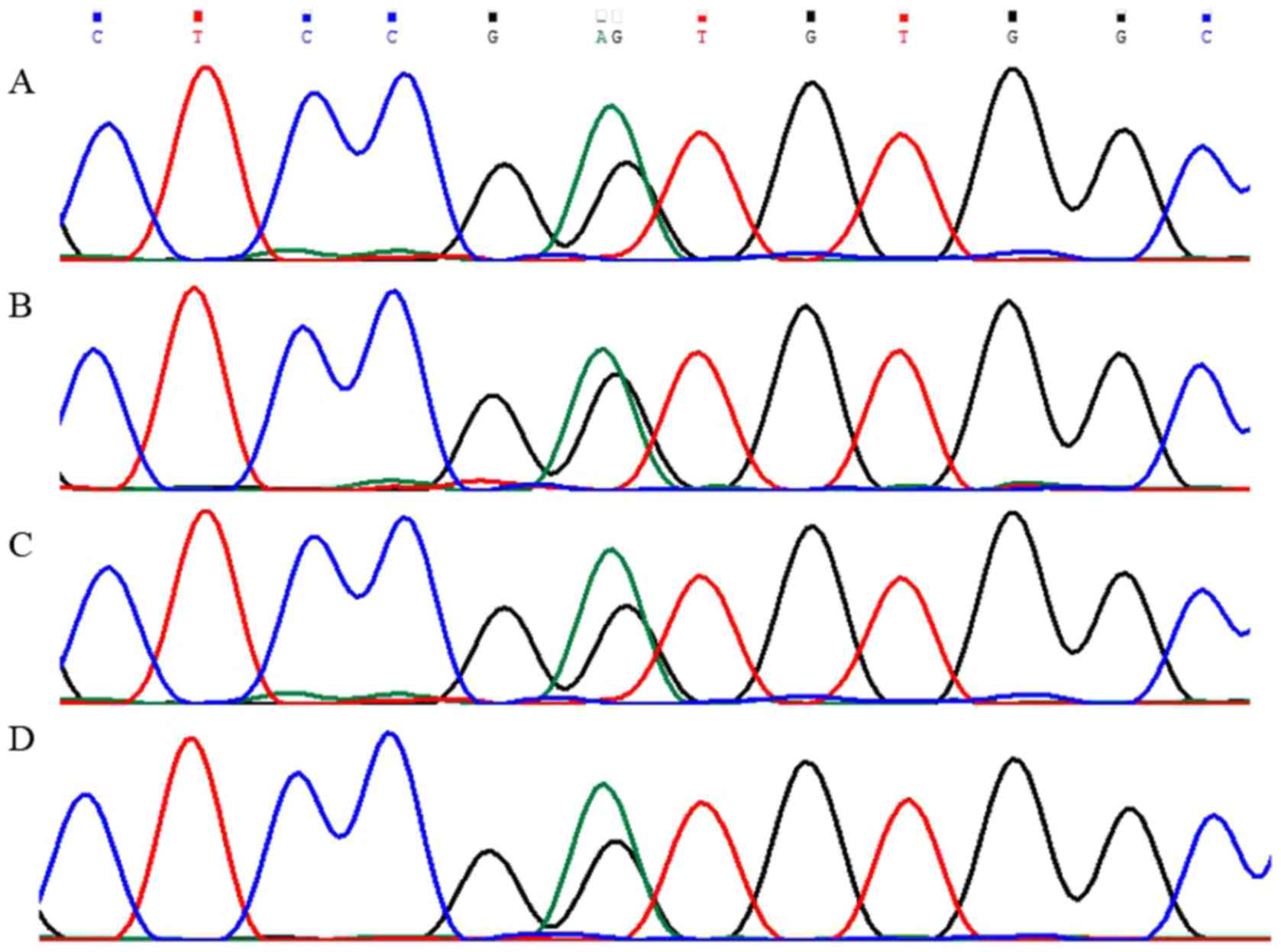
DNA was extracted from peripheral blood and resected parathyroid tissue samples of the proband. The samples were taken from her father, two elder sisters, brother and son after they signed a written informed consent. Simultaneously, their serum calcium, PTH and prolactin (PRL) were tested. We found the mutation c.482G>A (p.Gly161Asp) in the third exon of MEN1 gene in both peripheral blood and resected parathyroid tissue of the proband (Fig. 2A). Patient's brother and one of the elder sisters revealed the same mutation (Fig. 2B), as well as high blood calcium, PTH and PRL. Other family members tested normal, in both gene testing and related laboratory examination (Fig. 2C and D). The identified mutation has previously been reported (5); nevertheless previous studies did not clearly illustrate pathogenicity of this mutation and the function of the mutant protein. Polyphen2, SNPs3D and SIFT were used to predict the function of the 161st amino acid substitute from glycine to aspartate. Polyphen2 predicted result score was 1.00 (i.e., score closer to 1.00 was interpreted as the greater mutation damage; score closer to 0 was interpreted as the smaller damage); SNPs3D predicted result score was −1.97 (positive score was interpreted as harmless; negative score was interpreted as harmful); SIFT predicted result score was 0.00 (<0.05 was interpreted as having the ability to affect protein function). All the obtained results revealed that mutation may be harmful for the menin protein. Gene sequencing was performed by Sangon Biotech Co., Ltd. (Shanghai, China). The seqman of DNAstar package was used for alignment of sequenced and normal genes. The name of mutation referenced the cDNA sequence NM_00244.3 of Genbank. The tertiary structure of menin protein was predicted using Swiss-model (6).

Figure 2.

Genetic analysis in the pedigree. Heterozygous mutation c.482G>A (p.Gly161Asp) in the third exon of MEN1 gene in both peripheral blood (A) and resected parathyroid tissue (B) of the proband. The patient's elder sister (C) and brother (D) had the same mutation. MEN1, multiple endocrine neoplasia type 1.

Discussion

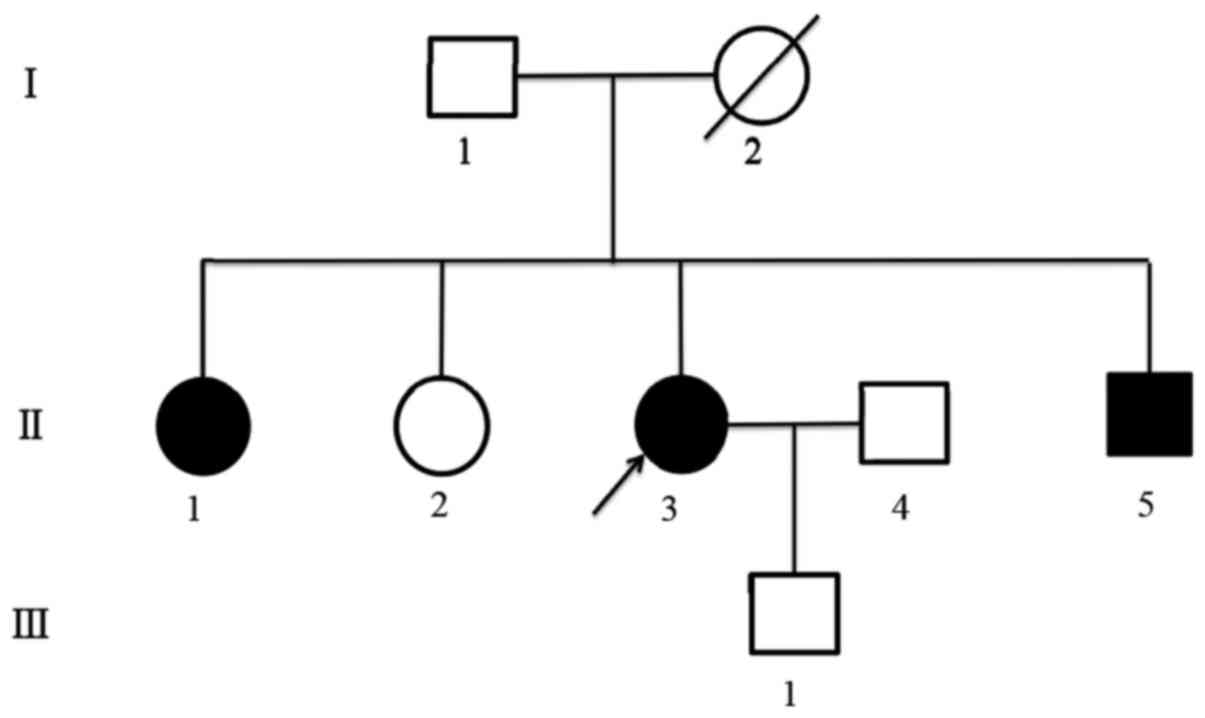
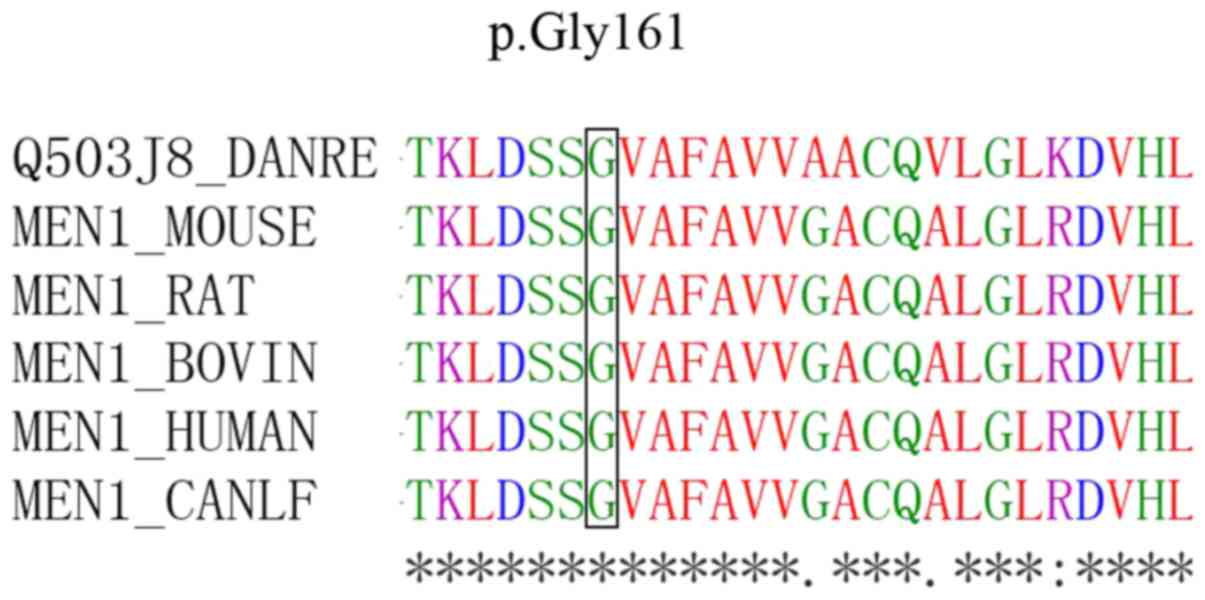
The clinical diagnosis of MEN1 depends on the identification of neoplastic disease in at least two of the commonly affected organs, i.e., the parathyroid gland, endocrine pancreas, and anterior pituitary (7). In the present case, the diagnosis of MEN1 was demonstrated by prolactinoma and primary hyperparathyroidism with bilateral parathyroid adenoma. Genetic testing of the patient and family members revealed a missense mutation c.482G>A (p.Gly161Asp) in patients and patient's elder sister and brother. The sequencing peak pattern revealed additional peak confirming the heterozygous mutation, and suggesting the patient's mother might had the same mutation in the pedigree, while other familiars tested normal (Fig. 3). Sequence alignments revealed that the glycine residues were highly conserved among menin proteins from different species (Fig. 4).

Figure 3.

Pedigree diagram of the proband's family. Family members are indicated by generations (Roman numbers) and individuals (Arabic numbers). Circles indicate women and squares indicate men. Black symbol, mutation carriers and all heterozygous genotype, and white symbol, normal. Slash indicates a deceased individual at the time of the investigation, and the arrow indicates the presence of a proband.

Figure 4.

Amino acid sequence alignments of human menin and other homologous proteins. The figure represents partial alignment of menin sequences of human, mouse, rat, bovine, dog and zebrafish around the position of missence mutation (p.Gly161), which is denoted by a frame (the asterisk revealed highly conserved from different mammalia species). MEN1, multiple endocrine neoplasia type 1.

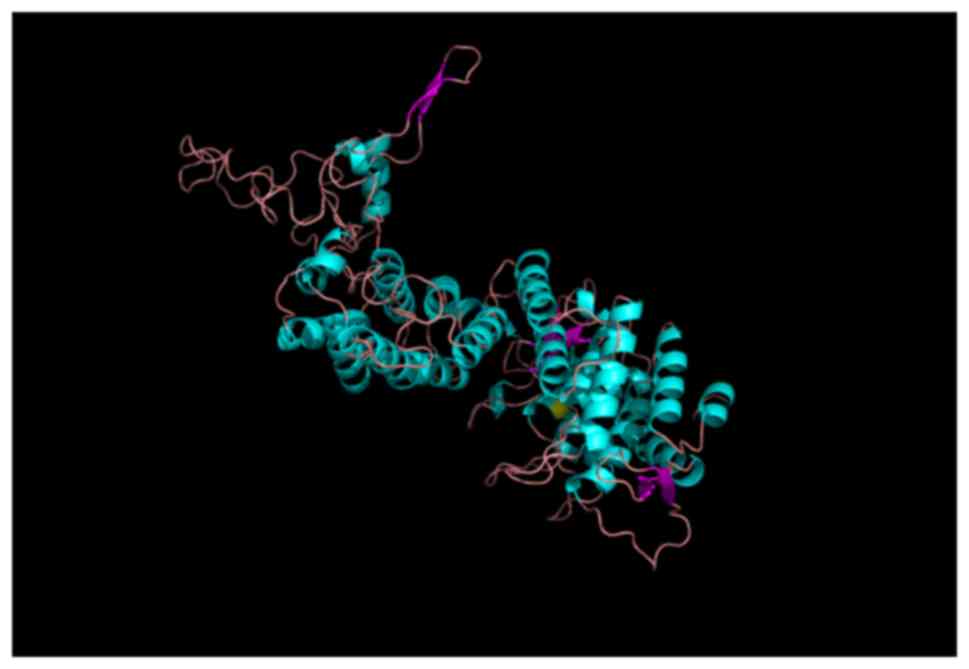
The product of the MEN1 gene, menin, is a nuclear protein (8) and it is believed to function as a tumor suppressor having a number of potential roles in maintaining normal cell function. Some of the more researched menin functions indicated by direct interactions with many proteins and other molecules are: 3 JunD-interacting domains at codons 1–40, 139–242, and 323–428, Smad family at codons 40–278, and 477–610, and 3 nuclear localization signals at codons 479–497, 546–572, and 588–608 (1). The missense mutation c.482G>A (p.Gly161Asp) was identified at codon 161 which involved menin-JunD or menin-Smad3 interactions regions. Menin contains a deep pocket that can bind mixed-lineage leukemia 1 (MLL1 or KMT2A) protein or the transcription factor (TF) JunD, with opposite effects on gene transcription (9). In transcriptional regulation, menin has been shown to interact with the activating protein-1 (AP-1) and TF JunD (10), and to suppress Jun-mediated transcriptional activation (11). Thevenon et al (12) reported that patients with mutations affecting the JunD interacting domain had a higher risk of death secondary to a MEN1 tumor. In addition, members of the Smad family, Smad3 and the Smad 1/5 complex have been shown to be involved in the transforming growth factor-β (TGF-β) (13) and the bone morphogenetic protein-2 (BMP-2) signaling pathways (14), respectively. For the tertiary structure, the mutation p.Gly161Asp changes the location of hydrogen bands (Fig. 5). The substitution of glycine, a neutral amino acid for aspartate, an acidic amino acid, might interfere with the menin-JunD or menin-Smad3 interactions. In the present case of the Gly161Asp mutation, the Polyphen2, SNPs3D and SIFT results, all supported the damage function of menin. Further studies are necessary to explore the function of mutant protein in vivo and in vitro.

Figure 5.

The tertiary structure of mutant menin was predicted using Swiss-model. Mutant amino acid p.Gly161Asp is presented in yellow.

Knudson's two-hit theory with a loss of heterozygosity (LOH) in the MEN1 gene is commonly used to explain tumorigenesis in the MEN1 patients (15). In the present study, the identified miscellaneous peak of the proband's resected parathyroid tissue confirmed a heterozygous missense mutation without LOH, implying LOH might not be a unique condition. Luzi et al (16) found that microRNA24-1 (miR-24-1) has ability to bind to the untranslated region (3′UTR) of MEN1 mRNA. Also, the negative feedback-loop between the oncomir miR-24-1 and menin, existing in MEN1 parathyroid adenoma without LOH, modulates the MEN1 tumorigenesis by mimicking the ‘Knudson's second hit’.

In summary, we herein reported a case of MEN1 with a missense mutation c.482G>A (p.Gly161Asp) of the MEN1 gene, which appeared to be responsible for MEN1. The proband and two family members had the same mutation and abnormal laboratory examinations. This suggests that identification of mutations might be very important for prompt diagnosis and monitoring of at-risk family members in MEN1 pedigrees (17).

Acknowledgements

This study was supported by the the Joint Project of Medical Science and Technology of Henan Province, China (grant no. 201201015).

Glossary

Abbreviations

Abbreviations:

MEN1

multiple endocrine neoplasia type 1

BMI

body mass index

MRI

magnetic resonance imaging

CT

computed tomography

BMD

bone mineral density

References

1 

Lemos MC and Thakker RV: Multiple endocrine neoplasia type 1 (MEN1): Analysis of 1336 mutations reported in the first decade following identification of the gene. Hum Mutat. 29:22–32. 2008. View Article : Google Scholar : PubMed/NCBI

2 

Chandrasekharappa SC, Guru SC, Manickam P, Olufemi SE, Collins FS, Emmert-Buck MR, Debelenko LV, Zhuang Z, Lubensky IA, Liotta LA, et al: Positional cloning of the gene for multiple endocrine neoplasia-type 1. Science. 276:404–407. 1997. View Article : Google Scholar : PubMed/NCBI

3 

Concolino P, Costella A and Capoluongo E: Multiple endocrine neoplasia type 1 (MEN1): An update of 208 new germline variants reported in the last nine years. Cancer Genet. 209:36–41. 2016. View Article : Google Scholar : PubMed/NCBI

4 

Stewart C, Parente F, Piehl F, Farnebo F, Quincey D, Silins G, Bergman L, Carle GF, Lemmens I, Grimmond S, et al: Characterization of the mouse Men1 gene and its expression during development. Oncogene. 17:2485–2493. 1998. View Article : Google Scholar : PubMed/NCBI

5 

Mutch MG, Dilley WG, Sanjurjo F, DeBenedetti MK, Doherty GM, Wells SA Jr, Goodfellow PJ and Lairmore TC: Germline mutations in the multiple endocrine neoplasia type 1 gene: Evidence for frequent splicing defects. Hum Mutat. 13:175–185. 1999. View Article : Google Scholar : PubMed/NCBI

6 

Guex N, Peitsch MC and Schwede T: Automated comparative protein structure modeling with SWISS-MODEL and Swiss-PdbViewer: A historical perspective. Electrophoresis. 30 Suppl 1:S162–S173. 2009. View Article : Google Scholar : PubMed/NCBI

7 

Thakker RV, Newey PJ, Walls GV, Bilezikian J, Dralle H, Ebeling PR, Melmed S, Sakurai A, Tonelli F and Brandi ML: Endocrine Society: Clinical practice guidelines for multiple endocrine neoplasia type 1 (MEN1). J Clin Endocrinol Metab. 97:2990–3011. 2012. View Article : Google Scholar : PubMed/NCBI

8 

Guru SC, Goldsmith PK, Burns AL, Marx SJ, Spiegel AM, Collins FS and Chandrasekharappa SC: Menin, the product of the MEN1 gene, is a nuclear protein. Proc Natl Acad Sci USA. 95:pp. 1630–1634. 1998; View Article : Google Scholar : PubMed/NCBI

9 

Huang J, Gurung B, Wan B, Matkar S, Veniaminova NA, Wan K, Merchant JL, Hua X and Lei M: The same pocket in menin binds both MLL and JUND but has opposite effects on transcription. Nature. 482:542–546. 2012. View Article : Google Scholar : PubMed/NCBI

10 

Agarwal SK, Guru SC, Heppner C, Erdos MR, Collins RM, Park SY, Saggar S, Chandrasekharappa SC, Collins FS, Spiegel AM, et al: Menin interacts with the AP1 transcription factor JunD and represses JunD-activated transcription. Cell. 96:143–152. 1999. View Article : Google Scholar : PubMed/NCBI

11 

Pfarr CM, Mechta F, Spyrou G, Lallemand D, Carillo S and Yaniv M: Mouse JunD negatively regulates fibroblast growth and antagonizes transformation by ras. Cell. 76:747–760. 1994. View Article : Google Scholar : PubMed/NCBI

12 

Thevenon J, Bourredjem A, Faivre L, Cardot-Bauters C, Calender A, Murat A, Giraud S, Niccoli P, Odou MF, Borson-Chazot F, et al: Higher risk of death among MEN1 patients with mutations in the JunD interacting domain: A Groupe d'Εtude des Tumeurs Endocrines (GTE) cohort study. Hum Mol Genet. 22:1940–1948. 2013. View Article : Google Scholar : PubMed/NCBI

13 

Kaji H, Canaff L, Lebrun JJ, Goltzman D and Hendy GN: Inactivation of menin, a Smad3-interacting protein, blocks transforming growth factor type beta signaling. Proc Natl Acad Sci USA. 98:pp. 3837–3842. 2001; View Article : Google Scholar : PubMed/NCBI

14 

Sowa H, Kaji H, Canaff L, Hendy GN, Tsukamoto T, Yamaguchi T, Miyazono K, Sugimoto T and Chihara K: Inactivation of menin, the product of the multiple endocrine neoplasia type 1 gene, inhibits the commitment of multipotential mesenchymal stem cells into the osteoblast lineage. J Biol Chem. 278:21058–21069. 2003. View Article : Google Scholar : PubMed/NCBI

15 

Knudson AG Jr: Mutation and cancer: Statistical study of retinoblastoma. Proc Natl Acad Sci USA. 68:pp. 820–823. 1971; View Article : Google Scholar : PubMed/NCBI

16 

Luzi E, Marini F, Giusti F, Galli G, Cavalli L and Brandi ML: The negative feedback-loop between the oncomir Mir-24-1 and menin modulates the Men1 tumorigenesis by mimicking the ‘Knudson's second hit’. PLoS One. 7:e397672012. View Article : Google Scholar : PubMed/NCBI

17 

Falchetti A: Genetic screening for multiple endocrine neoplasia syndrome type 1 (MEN-1): When and how. F1000 Med Rep. 2:pii: 142010.

Related Articles

  • Abstract
  • View
  • Download
  • Twitter
Copy and paste a formatted citation
Spandidos Publications style
Luo Y, Sun Y, Zhu X and Li X: Analysis of MEN1 c.482G>A (p.Gly161Asp) mutation in a pedigree with familial multiple endocrine neoplasia type 1. Mol Med Rep 16: 8973-8976, 2017.
APA
Luo, Y., Sun, Y., Zhu, X., & Li, X. (2017). Analysis of MEN1 c.482G>A (p.Gly161Asp) mutation in a pedigree with familial multiple endocrine neoplasia type 1. Molecular Medicine Reports, 16, 8973-8976. https://doi.org/10.3892/mmr.2017.7749
MLA
Luo, Y., Sun, Y., Zhu, X., Li, X."Analysis of MEN1 c.482G>A (p.Gly161Asp) mutation in a pedigree with familial multiple endocrine neoplasia type 1". Molecular Medicine Reports 16.6 (2017): 8973-8976.
Chicago
Luo, Y., Sun, Y., Zhu, X., Li, X."Analysis of MEN1 c.482G>A (p.Gly161Asp) mutation in a pedigree with familial multiple endocrine neoplasia type 1". Molecular Medicine Reports 16, no. 6 (2017): 8973-8976. https://doi.org/10.3892/mmr.2017.7749
Copy and paste a formatted citation
x
Spandidos Publications style
Luo Y, Sun Y, Zhu X and Li X: Analysis of MEN1 c.482G>A (p.Gly161Asp) mutation in a pedigree with familial multiple endocrine neoplasia type 1. Mol Med Rep 16: 8973-8976, 2017.
APA
Luo, Y., Sun, Y., Zhu, X., & Li, X. (2017). Analysis of MEN1 c.482G>A (p.Gly161Asp) mutation in a pedigree with familial multiple endocrine neoplasia type 1. Molecular Medicine Reports, 16, 8973-8976. https://doi.org/10.3892/mmr.2017.7749
MLA
Luo, Y., Sun, Y., Zhu, X., Li, X."Analysis of MEN1 c.482G>A (p.Gly161Asp) mutation in a pedigree with familial multiple endocrine neoplasia type 1". Molecular Medicine Reports 16.6 (2017): 8973-8976.
Chicago
Luo, Y., Sun, Y., Zhu, X., Li, X."Analysis of MEN1 c.482G>A (p.Gly161Asp) mutation in a pedigree with familial multiple endocrine neoplasia type 1". Molecular Medicine Reports 16, no. 6 (2017): 8973-8976. https://doi.org/10.3892/mmr.2017.7749
Follow us
  • Twitter
  • LinkedIn
  • Facebook
About
  • Spandidos Publications
  • Careers
  • Cookie Policy
  • Privacy Policy
How can we help?
  • Help
  • Live Chat
  • Contact
  • Email to our Support Team