International Journal of Molecular Medicine is an international journal devoted to molecular mechanisms of human disease.
International Journal of Oncology is an international journal devoted to oncology research and cancer treatment.
Covers molecular medicine topics such as pharmacology, pathology, genetics, neuroscience, infectious diseases, molecular cardiology, and molecular surgery.
Oncology Reports is an international journal devoted to fundamental and applied research in Oncology.
Experimental and Therapeutic Medicine is an international journal devoted to laboratory and clinical medicine.
Oncology Letters is an international journal devoted to Experimental and Clinical Oncology.
Explores a wide range of biological and medical fields, including pharmacology, genetics, microbiology, neuroscience, and molecular cardiology.
International journal addressing all aspects of oncology research, from tumorigenesis and oncogenes to chemotherapy and metastasis.
Multidisciplinary open-access journal spanning biochemistry, genetics, neuroscience, environmental health, and synthetic biology.
Open-access journal combining biochemistry, pharmacology, immunology, and genetics to advance health through functional nutrition.
Publishes open-access research on using epigenetics to advance understanding and treatment of human disease.
An International Open Access Journal Devoted to General Medicine.
Mol Med Rep 20: [Related article:] 2783–2795, 2019; DOI: 10.3892/mmr.2019.10528
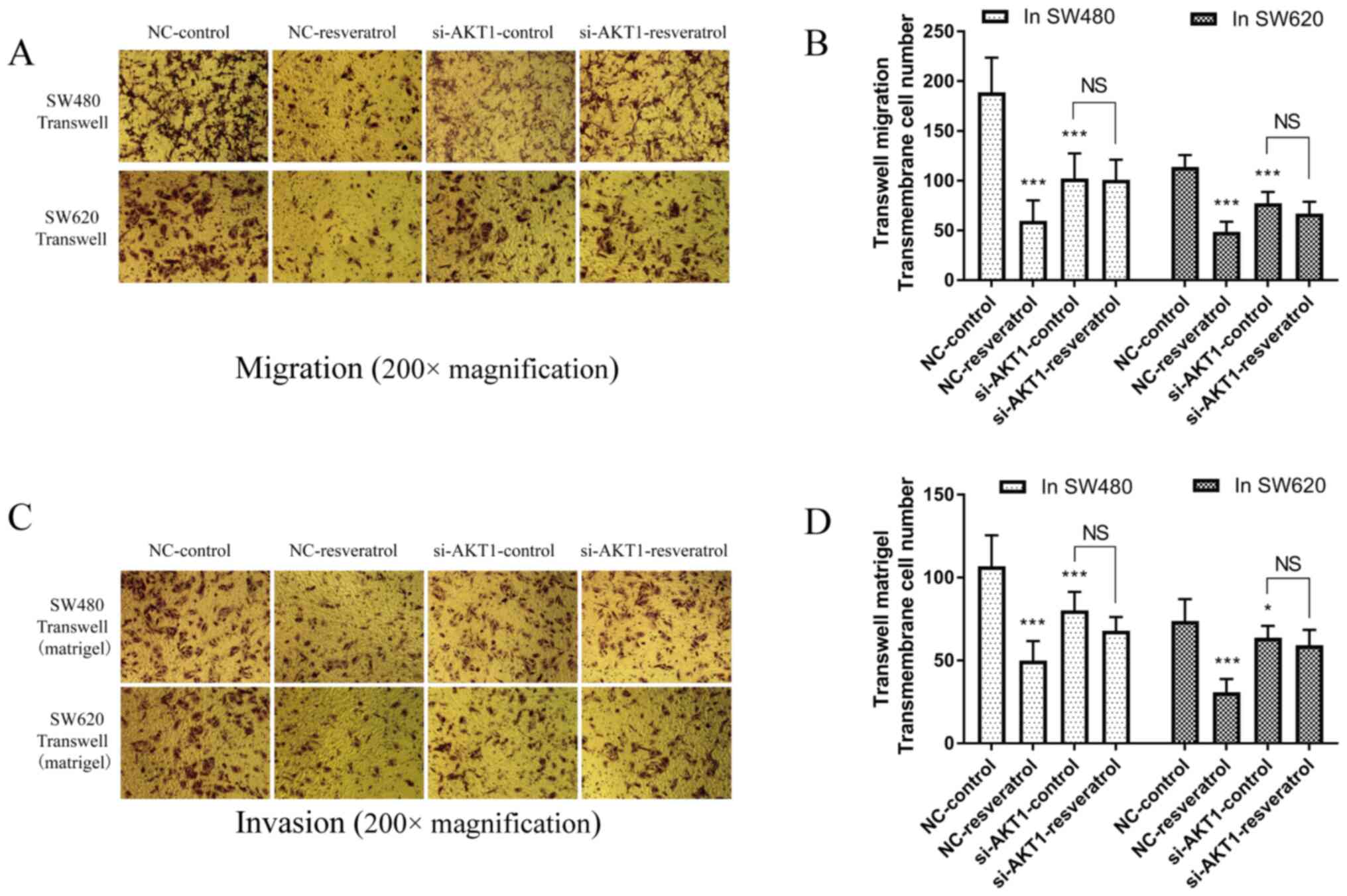
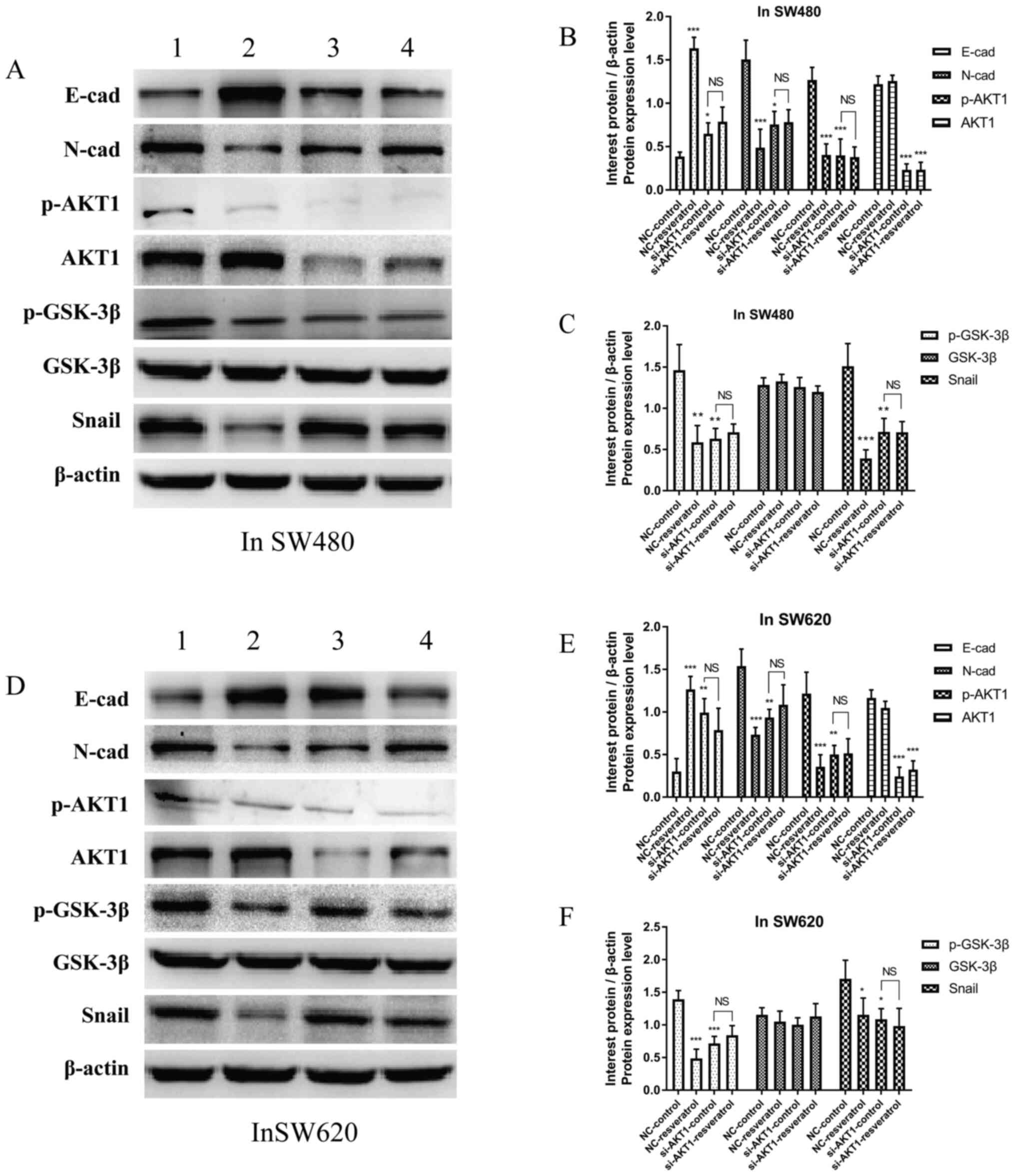
Subsequently to the publication of the above article, an interested reader drew to the authors’ attention that the Nc-control and si-AKT1-control data panels featured in Fig. 4A for the SW480 Transwell assay experiments on p. 2788 appeared to contain overlapping data, such that the data, which were intended to show the results from experiments performed under different experimental conditions, may have been derived from the same original source. Furthermore, in Fig. 5 on p. 2789, there appeared to be some overlapping data comparing the AKT1 western blotting data with the p-AKT1 data, and the same data also appeared in Fig. 4D for the p-AKT1 data presented there.
The authors have re-examined their original data, and have realized that these figures were assembled incorrectly; essentially, the si-AKT1-control data panel was selected incorrectly for Fig. 4A, and the authors were able to retrieve the original data for the western blots presented in Fig. 5. The corrected versions of Figs. 4 and 5 are shown on the next page. The authors confirm that these errors did not have any major impact on the conclusions reported in their paper, and are grateful to the Editor of Molecular Medicine Reports for allowing them this opportunity to publish a Corrigendum. Furthermore, the authors apologize to the readership for any inconvenience caused.