Spandidos Publications Logo
  • About
    • About Spandidos
    • Aims and Scopes
    • Abstracting and Indexing
    • Editorial Policies
    • Reprints and Permissions
    • Job Opportunities
    • Terms and Conditions
    • Contact
  • Journals
    • All Journals
    • Oncology Letters
      • Oncology Letters
      • Information for Authors
      • Editorial Policies
      • Editorial Board
      • Aims and Scope
      • Abstracting and Indexing
      • Bibliographic Information
      • Archive
    • International Journal of Oncology
      • International Journal of Oncology
      • Information for Authors
      • Editorial Policies
      • Editorial Board
      • Aims and Scope
      • Abstracting and Indexing
      • Bibliographic Information
      • Archive
    • Molecular and Clinical Oncology
      • Molecular and Clinical Oncology
      • Information for Authors
      • Editorial Policies
      • Editorial Board
      • Aims and Scope
      • Abstracting and Indexing
      • Bibliographic Information
      • Archive
    • Experimental and Therapeutic Medicine
      • Experimental and Therapeutic Medicine
      • Information for Authors
      • Editorial Policies
      • Editorial Board
      • Aims and Scope
      • Abstracting and Indexing
      • Bibliographic Information
      • Archive
    • International Journal of Molecular Medicine
      • International Journal of Molecular Medicine
      • Information for Authors
      • Editorial Policies
      • Editorial Board
      • Aims and Scope
      • Abstracting and Indexing
      • Bibliographic Information
      • Archive
    • Biomedical Reports
      • Biomedical Reports
      • Information for Authors
      • Editorial Policies
      • Editorial Board
      • Aims and Scope
      • Abstracting and Indexing
      • Bibliographic Information
      • Archive
    • Oncology Reports
      • Oncology Reports
      • Information for Authors
      • Editorial Policies
      • Editorial Board
      • Aims and Scope
      • Abstracting and Indexing
      • Bibliographic Information
      • Archive
    • Molecular Medicine Reports
      • Molecular Medicine Reports
      • Information for Authors
      • Editorial Policies
      • Editorial Board
      • Aims and Scope
      • Abstracting and Indexing
      • Bibliographic Information
      • Archive
    • World Academy of Sciences Journal
      • World Academy of Sciences Journal
      • Information for Authors
      • Editorial Policies
      • Editorial Board
      • Aims and Scope
      • Abstracting and Indexing
      • Bibliographic Information
      • Archive
    • International Journal of Functional Nutrition
      • International Journal of Functional Nutrition
      • Information for Authors
      • Editorial Policies
      • Editorial Board
      • Aims and Scope
      • Abstracting and Indexing
      • Bibliographic Information
      • Archive
    • International Journal of Epigenetics
      • International Journal of Epigenetics
      • Information for Authors
      • Editorial Policies
      • Editorial Board
      • Aims and Scope
      • Abstracting and Indexing
      • Bibliographic Information
      • Archive
    • Medicine International
      • Medicine International
      • Information for Authors
      • Editorial Policies
      • Editorial Board
      • Aims and Scope
      • Abstracting and Indexing
      • Bibliographic Information
      • Archive
  • Articles
  • Information
    • Information for Authors
    • Information for Reviewers
    • Information for Librarians
    • Information for Advertisers
    • Conferences
  • Language Editing
Spandidos Publications Logo
  • About
    • About Spandidos
    • Aims and Scopes
    • Abstracting and Indexing
    • Editorial Policies
    • Reprints and Permissions
    • Job Opportunities
    • Terms and Conditions
    • Contact
  • Journals
    • All Journals
    • Biomedical Reports
      • Information for Authors
      • Editorial Policies
      • Editorial Board
      • Aims and Scope
      • Abstracting and Indexing
      • Bibliographic Information
      • Archive
    • Experimental and Therapeutic Medicine
      • Information for Authors
      • Editorial Policies
      • Editorial Board
      • Aims and Scope
      • Abstracting and Indexing
      • Bibliographic Information
      • Archive
    • International Journal of Epigenetics
      • Information for Authors
      • Editorial Policies
      • Editorial Board
      • Aims and Scope
      • Abstracting and Indexing
      • Bibliographic Information
      • Archive
    • International Journal of Functional Nutrition
      • Information for Authors
      • Editorial Policies
      • Editorial Board
      • Aims and Scope
      • Abstracting and Indexing
      • Bibliographic Information
      • Archive
    • International Journal of Molecular Medicine
      • Information for Authors
      • Editorial Policies
      • Editorial Board
      • Aims and Scope
      • Abstracting and Indexing
      • Bibliographic Information
      • Archive
    • International Journal of Oncology
      • Information for Authors
      • Editorial Policies
      • Editorial Board
      • Aims and Scope
      • Abstracting and Indexing
      • Bibliographic Information
      • Archive
    • Medicine International
      • Information for Authors
      • Editorial Policies
      • Editorial Board
      • Aims and Scope
      • Abstracting and Indexing
      • Bibliographic Information
      • Archive
    • Molecular and Clinical Oncology
      • Information for Authors
      • Editorial Policies
      • Editorial Board
      • Aims and Scope
      • Abstracting and Indexing
      • Bibliographic Information
      • Archive
    • Molecular Medicine Reports
      • Information for Authors
      • Editorial Policies
      • Editorial Board
      • Aims and Scope
      • Abstracting and Indexing
      • Bibliographic Information
      • Archive
    • Oncology Letters
      • Information for Authors
      • Editorial Policies
      • Editorial Board
      • Aims and Scope
      • Abstracting and Indexing
      • Bibliographic Information
      • Archive
    • Oncology Reports
      • Information for Authors
      • Editorial Policies
      • Editorial Board
      • Aims and Scope
      • Abstracting and Indexing
      • Bibliographic Information
      • Archive
    • World Academy of Sciences Journal
      • Information for Authors
      • Editorial Policies
      • Editorial Board
      • Aims and Scope
      • Abstracting and Indexing
      • Bibliographic Information
      • Archive
  • Articles
  • Information
    • For Authors
    • For Reviewers
    • For Librarians
    • For Advertisers
    • Conferences
  • Language Editing
Login Register Submit
  • This site uses cookies
  • You can change your cookie settings at any time by following the instructions in our Cookie Policy. To find out more, you may read our Privacy Policy.

    I agree
Search articles by DOI, keyword, author or affiliation
Search
Advanced Search
presentation
Oncology Letters
Join Editorial Board Propose a Special Issue
Print ISSN: 1792-1074 Online ISSN: 1792-1082
Journal Cover
January-February 2011 Volume 2 Issue 1

Full Size Image

Sign up for eToc alerts
Recommend to Library

Journals

International Journal of Molecular Medicine

International Journal of Molecular Medicine

International Journal of Molecular Medicine is an international journal devoted to molecular mechanisms of human disease.

International Journal of Oncology

International Journal of Oncology

International Journal of Oncology is an international journal devoted to oncology research and cancer treatment.

Molecular Medicine Reports

Molecular Medicine Reports

Covers molecular medicine topics such as pharmacology, pathology, genetics, neuroscience, infectious diseases, molecular cardiology, and molecular surgery.

Oncology Reports

Oncology Reports

Oncology Reports is an international journal devoted to fundamental and applied research in Oncology.

Experimental and Therapeutic Medicine

Experimental and Therapeutic Medicine

Experimental and Therapeutic Medicine is an international journal devoted to laboratory and clinical medicine.

Oncology Letters

Oncology Letters

Oncology Letters is an international journal devoted to Experimental and Clinical Oncology.

Biomedical Reports

Biomedical Reports

Explores a wide range of biological and medical fields, including pharmacology, genetics, microbiology, neuroscience, and molecular cardiology.

Molecular and Clinical Oncology

Molecular and Clinical Oncology

International journal addressing all aspects of oncology research, from tumorigenesis and oncogenes to chemotherapy and metastasis.

World Academy of Sciences Journal

World Academy of Sciences Journal

Multidisciplinary open-access journal spanning biochemistry, genetics, neuroscience, environmental health, and synthetic biology.

International Journal of Functional Nutrition

International Journal of Functional Nutrition

Open-access journal combining biochemistry, pharmacology, immunology, and genetics to advance health through functional nutrition.

International Journal of Epigenetics

International Journal of Epigenetics

Publishes open-access research on using epigenetics to advance understanding and treatment of human disease.

Medicine International

Medicine International

An International Open Access Journal Devoted to General Medicine.

Journal Cover
January-February 2011 Volume 2 Issue 1

Full Size Image

Sign up for eToc alerts
Recommend to Library

  • Article
  • Citations
    • Cite This Article
    • Download Citation
    • Create Citation Alert
    • Remove Citation Alert
    • Cited By
  • Similar Articles
    • Related Articles (in Spandidos Publications)
    • Similar Articles (Google Scholar)
    • Similar Articles (PubMed)
  • Download PDF
  • Download XML
  • View XML
Article

Cribriform adenocarcinoma of the base of the tongue and low-grade, polymorphic adenocarcinomas of the salivary glands

  • Authors:
    • Aleš Čoček
    • Klára Hronková
    • Jana Voldánová
    • Josef Šach
    • Alena Skálová
    • Miloslav Ambruš
    • Jana Vránová
    • Aleš Hahn
  • View Affiliations / Copyright

    Affiliations: Department of Otorhinolaryngology, Third Faculty of Medicine, Charles University in Prague, Faculty Hospital Královské Vinohrady, 10034, Prague 10, Czech Republic, Department of Pathology, Third Faculty of Medicine, Charles University in Prague, Faculty Hospital Královské Vinohrady, 10034, Prague 10, Czech Republic, Laboratory of Biopsy, Ltd., Pilsen, Czech Republic, Department of Radiotherapy and Oncology, Third Faculty of Medicine, Charles University in Prague, Faculty Hospital Královské Vinohrady, 10034, Prague 10, Czech Republic, Department of Medical Biophysics and Medical Informatics, Third Faculty of Medicine, Charles University in Prague, Faculty Hospital Královské Vinohrady, 10034, Prague 10, Czech Republic
  • Pages: 135-138
    |
    Published online on: November 23, 2010
       https://doi.org/10.3892/ol.2010.213
  • Expand metrics +
Metrics: Total Views: 0 (Spandidos Publications: | PMC Statistics: )
Metrics: Total PDF Downloads: 0 (Spandidos Publications: | PMC Statistics: )
Cited By (CrossRef): 0 citations Loading Articles...

This article is mentioned in:


Abstract

Low-grade, polymorphic adenocarcinomas occur mainly in females and are usually associated with the small salivary glands of the palate. The tumors are malignant, but not aggressive. Regional neck as well as distant metastasis is rare and the mortality rate is low. Cribriform adenocarcinoma of the salivary glands is a rare tumor, currently ranked among low-grade, polymorphic adenocarcinomas of the salivary glands. However, it differs from carcinomas in this group as it metastasizes to the cervical lymph nodes and exhibits frequent primary localization in the small salivary glands at the base of the tongue. Despite the tendency to metastasize, patient prognosis remains favorable. A case of a 72-year-old woman with neck metastases of cribriform adenocarcinoma, of unknown primary origin, is reported. The primary tumor origin was ultimately determined using nuclear magnetic resonance, histological verification was difficult due to the presence of an intact mucosal cover over the tumor. Cribriform adenocarcinoma is known to have a number of characteristics in common with a typical low-grade, salivary gland adenocarcinoma. However, in contrast to low-grade adenocarcinomas, the tumor presented with neck lymph node metastasis.

Introduction

Cribriform adenocarcinoma of the small salivary glands is defined as a low-grade, polymorphic adenocarcinoma based on the World Health Organization histopathological classification of carcinomas of the salivary glands (2005, Table I). The expression ‘low-grade, polymorphic adenocarcinoma’, originally termed ‘terminal duct carcinoma’, was introduced by Batsakis and Evans in 1983 (1,2). It occurs primarily in females (70%), usually older than 60 years of age, and more often in Africans and African-Americans. It is a tumor that usually arises from the small salivary glands of the palate and is microscopically unconfined (3). Tumor architecture is varied in that cells have a regular round, elongated or ovoid nucleus with a benign appearance. The nucleus is frequently vacualized, causing it to resemble a papillary carcinoma of the thyroid gland, particularly in tumors associated with the small salivary glands at the base of tongue (4). Tumors generally exhibit a low mitotic activity without an atypical appearance. Immunohistochemically, the tumors are positive for epithelial tumor markers, particularly cytokeratin and epithelial membrane antigen, S-100 and α-SMA. The MIB 1 proliferative index is low. The oncoprotein BCL-2 is expressed, but the expression of tumor protein p53 is lacking (5). The tumors are malignant, but not aggressive. Regional neck as well as distant metastasis is rare and the mortality rate is low. For these reasons, the accepted therapeutic method is radical surgical removal without elective neck dissection or post-operative actinotherapy (6).

Table I

World Health Organisation histopathological classification of carcinomas of the salivary glands (2005).

Table I

World Health Organisation histopathological classification of carcinomas of the salivary glands (2005).

Acinic cell carcinoma8550/3
Mucoepidermoid carcinoma8430/3
Adenoid cystic carcinoma8200/3
Polymorphous low-grade adenocarcinoma8525/3
Epithelial-myoepithelial carcinoma8562/3
Clear cell carcinoma, not otherwise specified8310/3
Basal cell adenocarcinoma8147/3
Sebaceous carcinoma8410/3
Sebaceous lymphadenocarcinoma8410/3
Cystadenocarcinoma8440/3
Low-grade cribriform cystadenocarcinoma
Mucinous adenocarcinoma8480/3
Oncocytic carcinoma8290/3
Salivary duct carcinoma8500/3
Adenocarcinoma, not otherwise specified8140/3
Myoepithelial carcinoma8982/3
Carcinoma ex pleomorphic adenoma8941/3
Carcinosarcoma8980/3
Metastasizing pleomorphic adenoma8940/1
Squamous cell carcinoma8070/3
Small cell carcinoma8041/3
Large cell carcinoma8012/3
Lymphoepithelial carcinoma8082/3
Sialoblastoma8974/1

Cribriform adenocarcinoma of the small salivary glands at the base of the tongue, as well as low-grade polymorphic cancers, are unbounded tumors that are strongly S100-positive. These tumors exhibit negative staining for the thyroid gland markers TTF1 and TG. However, they differ from low-grade polymorphic adenocarcinomas in that they metastasize to the lymph nodes of the neck. While metastasis is already present at the time of diagnosis, the prognosis remains positive.

Case Report

Patient

A 72-year-old female was examined at the ENT clinic for a level II, right-side neck mass that had been present for 1 year, but without recent progression. Neck ultrasonography showed a cystic formation of 4×3×1.5 cm. The patient underwent thyroid gland surgery in 1991, in another clinic, and sonography showed residue in the bed of the right lobe of the gland. The patient had also undergone a childhood tonsillectomy for recurrent tonsillitis. The cystic mass was extirpated; macroscopically it appeared cystic with dark contents.

Methods

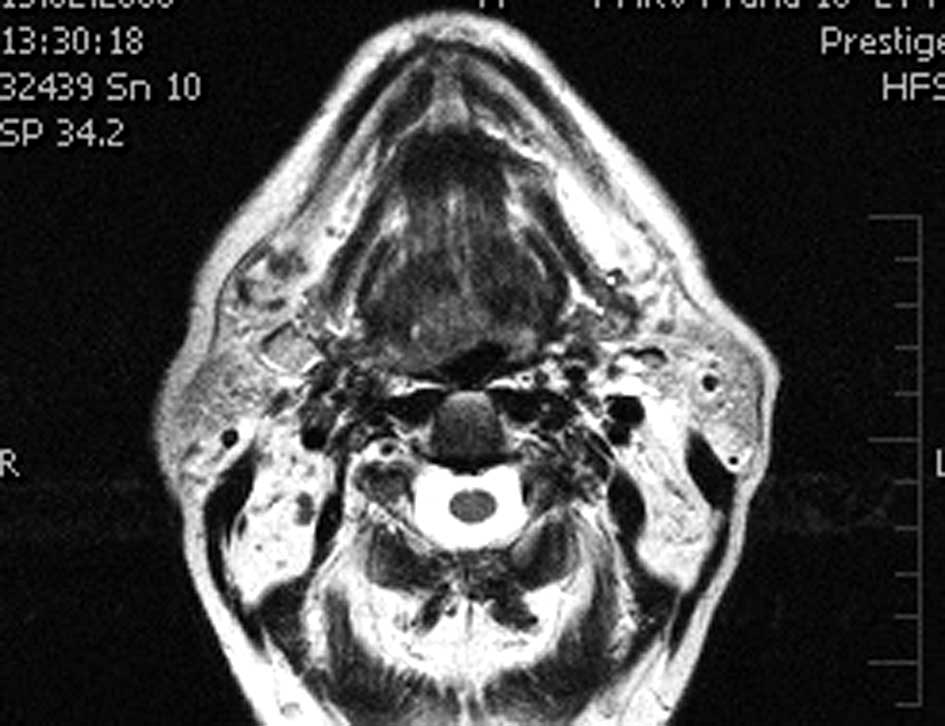
Initial histology suggested a well-differentiated metastasis of a myoepithelial cancer of the salivary glands. Tissue was sent for further histological examination to a laboratory specializing in the histological examination of salivary glands. Nuclear magnetic resonance was carried out, where an unconfined, poorly differentiable infiltration was found at the base of the right half of the tongue (Fig. 1). An endoscopic examination was performed and multiple biopsies were removed from the right side of the tongue base; however, the biopsies were histologically negative. A second endoscopic biopsy was performed, and again the histological findings were negative. Given the circumstances, a right side neck dissection of cervical lymph nodes, sparing cranial nerve XI, and a lateral pharyngotomy with repeated preoperative biopsies, from the base of the tongue, was performed. The results revealed an adenocarcinoma at the base of the tongue. A resection of the tumor at the base of the tongue was performed together with a temporary tracheostomy. The tracheostomy was discontinued post-operatively and the patient was scheduled for post-operative radiotherapy due to the neck metastasis. Further histological investigation of the peroperative biopsies together with the neck metastases confirmed the diagnosis of rare cribriform adenocarcinoma of the small salivary glands at the base of the tongue. The patient is currently 3 years post-radiotherapy without any local or regional recurrence of the disease.

Figure 1

Nuclear magnetic resonance scan of the base of the tongue. Poorly-differentiable infiltration is visible at the base of the right half of the tongue.

Results

Histological findings

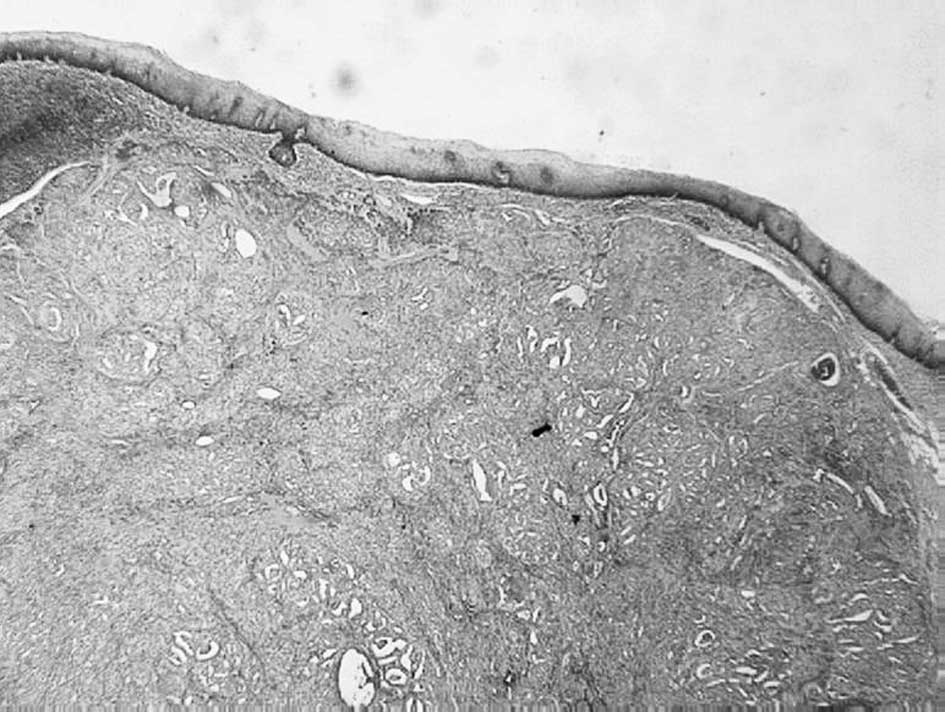
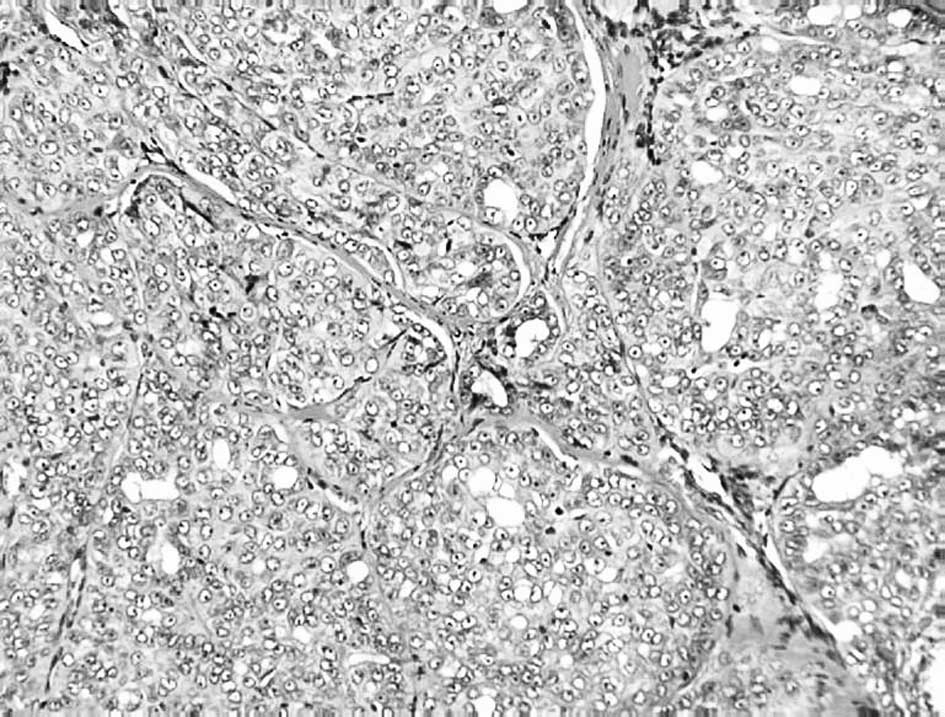
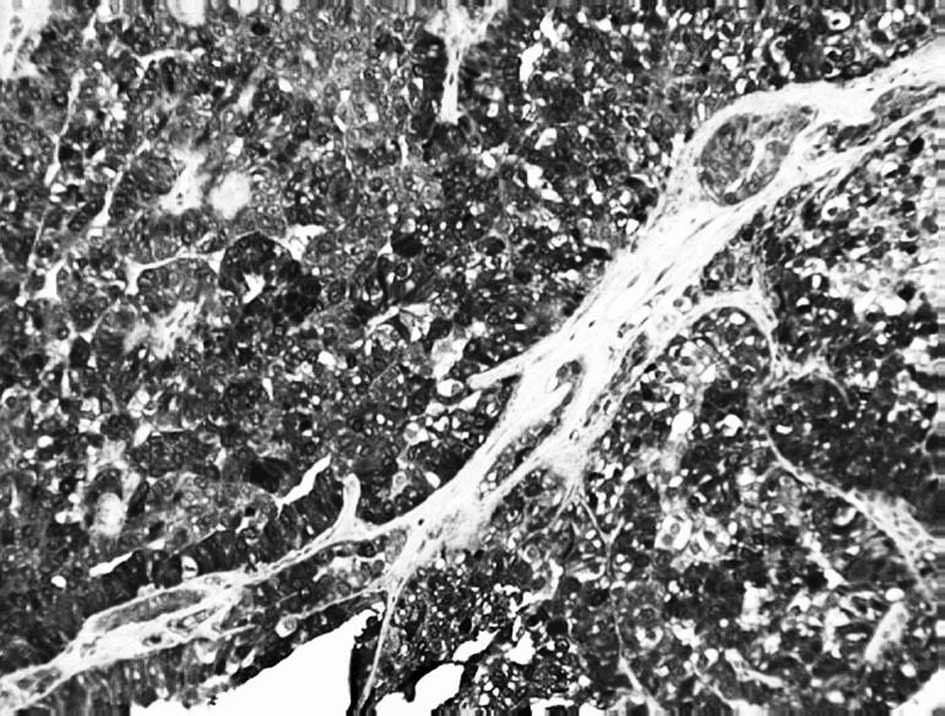
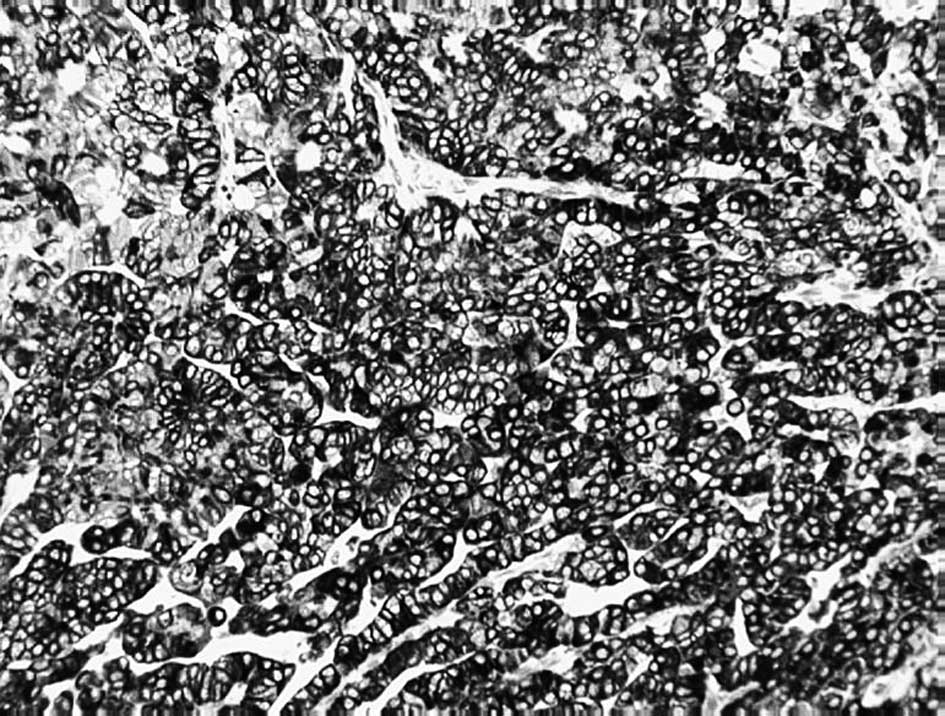
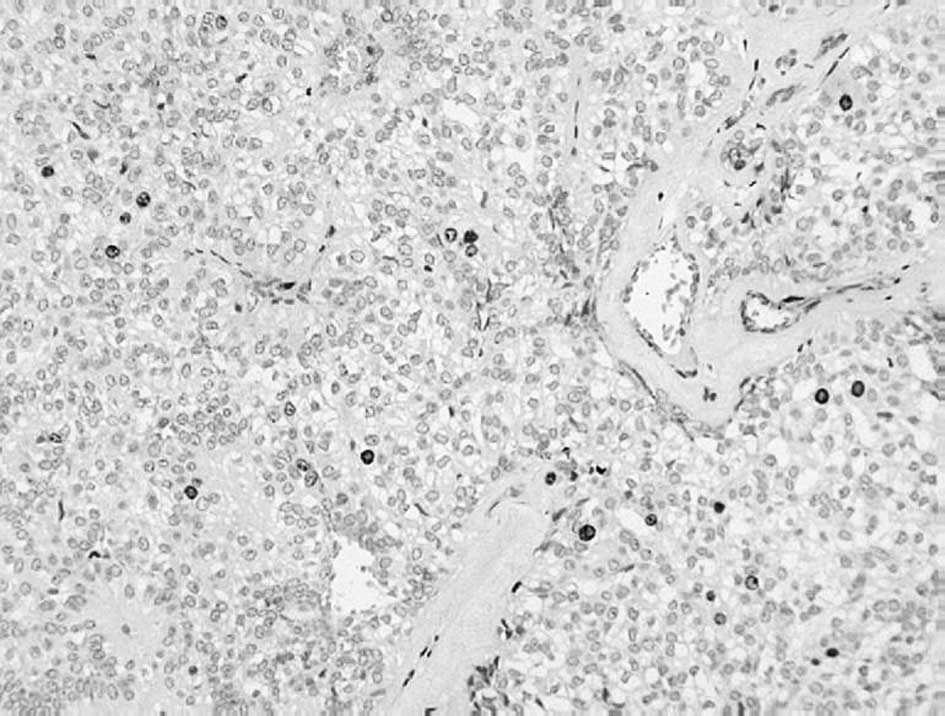
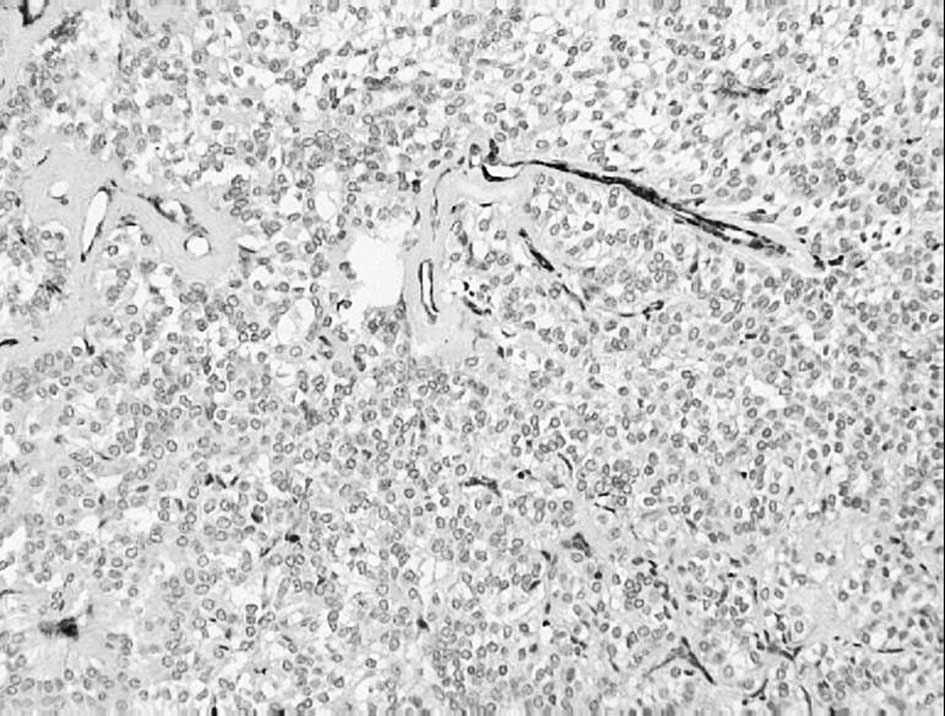
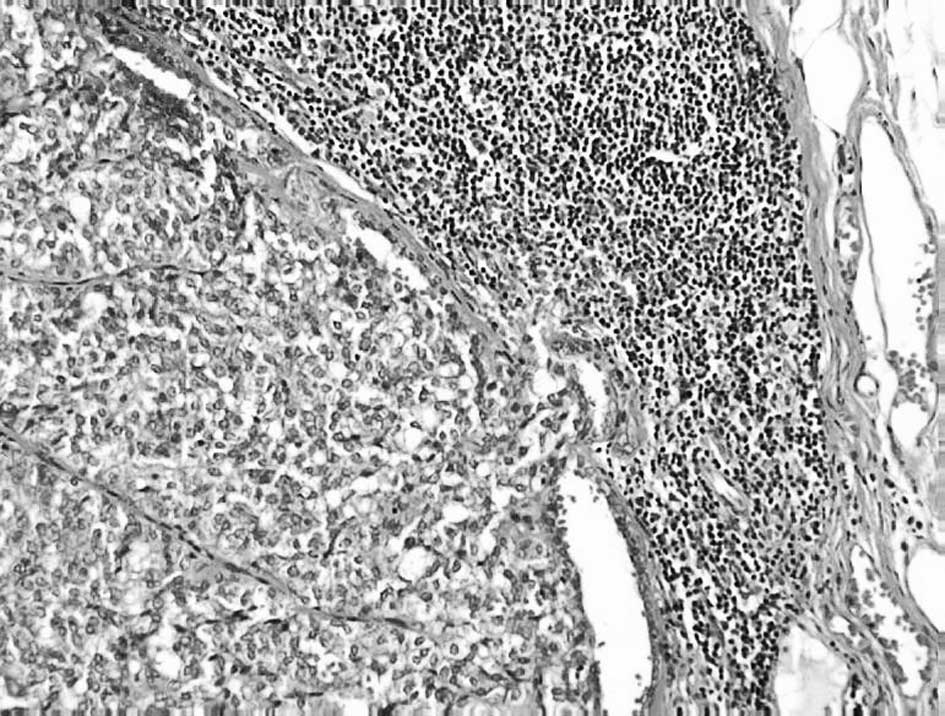
Findings from the histological examinations are shown in Figs. 1–8. The cribriform arrangement of the tumor is shown in Fig. 2. The tumor was highly positive for the S100 protein (Fig. 3) and the epithelial marker cytokeratin CK 7 (Fig. 4). Proliferative activity of the tumor was low [proliferative marker MIB 1 (Ki-67)] (Fig. 5). The tumor stained negative for actin (Fig. 6) and thyroid tumor markers TTF1 and TG were also negative. Fig. 7 shows the histology of the neck lymph node metastases. Fig. 8 shows the intact epithelial surface of the base of the tongue where the unconfined tumor developed, rendering the imaging examinations a challenge.

Figure 8

Intact epithelial surface of the base of tongue. Paraffin section, H&E stain, magnification, ×12.5.

Figure 2

Cribriform arrangement of the tumor. Paraffin section, H&E stain, magnification, ×125.

Figure 3

High positivity for the S100 protein. Paraffin section, magnification, ×125.

Figure 4

High positivity for the epithelial marker cytokeratin CK7. Paraffin section, magnification, ×125.

Figure 5

Proliferative marker MIB 1 (Ki-67). Paraffin section, magnification, ×125.

Figure 6

Negativity for actin. Paraffin section, magnification, ×125.

Figure 7

Histology of the neck lymph node metastases. Paraffin section, H&E stain, magnification, ×125.

Discussion

Cribriform adenocarcinoma of small salivary glands is a rare tumor. According to the current WHO classification (2005), these tumors are included among low-grade polymorphic carcinomas, despite a strong tendency to metastasize to the cervical nodes, as shown in our case study and noted in the literature (4). While low-grade polymorphic carcinomas usually arise from small salivary glands of the palate, cribriform adenocarcinomas often arise from the small salivary glands at the base of tongue. This is highly significant in cases where the patient presents with neck metastasis from a tumor of unknown origin. If a diagnosis of metastasis from a cribriform adenocarcinoma is established by histopathological examination, it is reasonable and prudent to assume that the primary tumor is located at the base of the tongue and focus attention on this region. However, as noted in our case report, obtaining a positive histological result from the base of the tongue is challenging since the tumor grows unconfined under an intact epithelial surface (Fig. 8). Insufficiently deep excisions explain the negative histology. Additionally, the unconfined infiltration of the tumor renders imaging examinations challenging.

In conclusion, cribriform adenocarcinoma is currently included in a group with low-grade, polymorphic adenocarcinomas of the salivary glands. Cribriform adenocarcinoma has numerous characteristics in common with typical low-grade, polymorphic adenocarcinomas, including unlimited growth, low mitotic activity (low proliferative index of MIB 1), positive epithelial markers (particularly S-100 and cytokeratin), a resemblance to papillary carcinoma of the thyroid gland (although TTF1 and TG markers are negative), expression of the BCL-2 oncoprotein, without expression of tumor protein p53 and an equally favorable prognosis. Cribriform adenocarcinomas differ, however, as they metastasize to the cervical lymph nodes and exhibit frequent primary localization in the small salivary glands at the base of the tongue. This tendency is in contrast to low-grade, polymorphic adenocarcinomas that are associated with the small salivary glands of the palate and a negligible tendency towards neck lymph node metastasis. In light of neck metastasis, neck dissection and post-operative radiotherapy for cribriform adenocarcinoma are imperative. The magnitude and implications of the differences between the above-mentioned conditions may result in the removal of this tumor from the group of low-grade polymorphic adenocarcinomas and its reclassification as a separate entity with distinctive biological attributes.

References

1 

Batsakis JG, Pinkston GR, Luna M, et al: Adenocarcinomas of the oral cavity: a clinicopathologic study of terminal duct carcinomas. J Laryngol Otol. 97:825–835. 1983. View Article : Google Scholar : PubMed/NCBI

2 

Evans HL and Batsakis JG: Polymorphous low-grade adenocarcinoma of minor salivary glands: a study of 14 cases of a distinctive neoplasm. Cancer. 53:935–942. 1984. View Article : Google Scholar : PubMed/NCBI

3 

Ellis GL and Auclair PL: Tumors of the salivary glands. Atlas of Tumor Pathology. Ellis GL: AFIP; Washington, DC: pp. 216–228. 1996

4 

Michal M, Skálová A, Simpson RH, et al: Cribriform adenocarcinoma of the tongue: a hitherto unrecognized type of adenocarcinoma characteristically occurring in the tongue. Histopathology. 35:495–501. 1999. View Article : Google Scholar : PubMed/NCBI

5 

Perez-Ordonez B, Linkov I and Huvos AG: Polymorphous low-grade adenocarcinome of minor salivary glands: a study of 17 causes with emphasis on cell differentiation. Histopathology. 32:521–529. 1998. View Article : Google Scholar : PubMed/NCBI

6 

Wenig BM and Gnepp DR: Polymorphous low-grade adenocarcinoma of minor salivary glands. Surgical Pathology of the Salivary Glands. Ellis GL, Auclair PL and Gnepp DR: Saunderes; Philadelphia: pp. 390–411. 1999

Related Articles

  • Abstract
  • View
  • Download
  • Twitter
Copy and paste a formatted citation
Spandidos Publications style
Čoček A, Hronková K, Voldánová J, Šach J, Skálová A, Ambruš M, Vránová J and Hahn A: Cribriform adenocarcinoma of the base of the tongue and low-grade, polymorphic adenocarcinomas of the salivary glands. Oncol Lett 2: 135-138, 2011.
APA
Čoček, A., Hronková, K., Voldánová, J., Šach, J., Skálová, A., Ambruš, M. ... Hahn, A. (2011). Cribriform adenocarcinoma of the base of the tongue and low-grade, polymorphic adenocarcinomas of the salivary glands. Oncology Letters, 2, 135-138. https://doi.org/10.3892/ol.2010.213
MLA
Čoček, A., Hronková, K., Voldánová, J., Šach, J., Skálová, A., Ambruš, M., Vránová, J., Hahn, A."Cribriform adenocarcinoma of the base of the tongue and low-grade, polymorphic adenocarcinomas of the salivary glands". Oncology Letters 2.1 (2011): 135-138.
Chicago
Čoček, A., Hronková, K., Voldánová, J., Šach, J., Skálová, A., Ambruš, M., Vránová, J., Hahn, A."Cribriform adenocarcinoma of the base of the tongue and low-grade, polymorphic adenocarcinomas of the salivary glands". Oncology Letters 2, no. 1 (2011): 135-138. https://doi.org/10.3892/ol.2010.213
Copy and paste a formatted citation
x
Spandidos Publications style
Čoček A, Hronková K, Voldánová J, Šach J, Skálová A, Ambruš M, Vránová J and Hahn A: Cribriform adenocarcinoma of the base of the tongue and low-grade, polymorphic adenocarcinomas of the salivary glands. Oncol Lett 2: 135-138, 2011.
APA
Čoček, A., Hronková, K., Voldánová, J., Šach, J., Skálová, A., Ambruš, M. ... Hahn, A. (2011). Cribriform adenocarcinoma of the base of the tongue and low-grade, polymorphic adenocarcinomas of the salivary glands. Oncology Letters, 2, 135-138. https://doi.org/10.3892/ol.2010.213
MLA
Čoček, A., Hronková, K., Voldánová, J., Šach, J., Skálová, A., Ambruš, M., Vránová, J., Hahn, A."Cribriform adenocarcinoma of the base of the tongue and low-grade, polymorphic adenocarcinomas of the salivary glands". Oncology Letters 2.1 (2011): 135-138.
Chicago
Čoček, A., Hronková, K., Voldánová, J., Šach, J., Skálová, A., Ambruš, M., Vránová, J., Hahn, A."Cribriform adenocarcinoma of the base of the tongue and low-grade, polymorphic adenocarcinomas of the salivary glands". Oncology Letters 2, no. 1 (2011): 135-138. https://doi.org/10.3892/ol.2010.213
Follow us
  • Twitter
  • LinkedIn
  • Facebook
About
  • Spandidos Publications
  • Careers
  • Cookie Policy
  • Privacy Policy
How can we help?
  • Help
  • Live Chat
  • Contact
  • Email to our Support Team