Spandidos Publications Logo
  • About
    • About Spandidos
    • Aims and Scopes
    • Abstracting and Indexing
    • Editorial Policies
    • Reprints and Permissions
    • Job Opportunities
    • Terms and Conditions
    • Contact
  • Journals
    • All Journals
    • Oncology Letters
      • Oncology Letters
      • Information for Authors
      • Editorial Policies
      • Editorial Board
      • Aims and Scope
      • Abstracting and Indexing
      • Bibliographic Information
      • Archive
    • International Journal of Oncology
      • International Journal of Oncology
      • Information for Authors
      • Editorial Policies
      • Editorial Board
      • Aims and Scope
      • Abstracting and Indexing
      • Bibliographic Information
      • Archive
    • Molecular and Clinical Oncology
      • Molecular and Clinical Oncology
      • Information for Authors
      • Editorial Policies
      • Editorial Board
      • Aims and Scope
      • Abstracting and Indexing
      • Bibliographic Information
      • Archive
    • Experimental and Therapeutic Medicine
      • Experimental and Therapeutic Medicine
      • Information for Authors
      • Editorial Policies
      • Editorial Board
      • Aims and Scope
      • Abstracting and Indexing
      • Bibliographic Information
      • Archive
    • International Journal of Molecular Medicine
      • International Journal of Molecular Medicine
      • Information for Authors
      • Editorial Policies
      • Editorial Board
      • Aims and Scope
      • Abstracting and Indexing
      • Bibliographic Information
      • Archive
    • Biomedical Reports
      • Biomedical Reports
      • Information for Authors
      • Editorial Policies
      • Editorial Board
      • Aims and Scope
      • Abstracting and Indexing
      • Bibliographic Information
      • Archive
    • Oncology Reports
      • Oncology Reports
      • Information for Authors
      • Editorial Policies
      • Editorial Board
      • Aims and Scope
      • Abstracting and Indexing
      • Bibliographic Information
      • Archive
    • Molecular Medicine Reports
      • Molecular Medicine Reports
      • Information for Authors
      • Editorial Policies
      • Editorial Board
      • Aims and Scope
      • Abstracting and Indexing
      • Bibliographic Information
      • Archive
    • World Academy of Sciences Journal
      • World Academy of Sciences Journal
      • Information for Authors
      • Editorial Policies
      • Editorial Board
      • Aims and Scope
      • Abstracting and Indexing
      • Bibliographic Information
      • Archive
    • International Journal of Functional Nutrition
      • International Journal of Functional Nutrition
      • Information for Authors
      • Editorial Policies
      • Editorial Board
      • Aims and Scope
      • Abstracting and Indexing
      • Bibliographic Information
      • Archive
    • International Journal of Epigenetics
      • International Journal of Epigenetics
      • Information for Authors
      • Editorial Policies
      • Editorial Board
      • Aims and Scope
      • Abstracting and Indexing
      • Bibliographic Information
      • Archive
    • Medicine International
      • Medicine International
      • Information for Authors
      • Editorial Policies
      • Editorial Board
      • Aims and Scope
      • Abstracting and Indexing
      • Bibliographic Information
      • Archive
  • Articles
  • Information
    • Information for Authors
    • Information for Reviewers
    • Information for Librarians
    • Information for Advertisers
    • Conferences
  • Language Editing
Spandidos Publications Logo
  • About
    • About Spandidos
    • Aims and Scopes
    • Abstracting and Indexing
    • Editorial Policies
    • Reprints and Permissions
    • Job Opportunities
    • Terms and Conditions
    • Contact
  • Journals
    • All Journals
    • Biomedical Reports
      • Information for Authors
      • Editorial Policies
      • Editorial Board
      • Aims and Scope
      • Abstracting and Indexing
      • Bibliographic Information
      • Archive
    • Experimental and Therapeutic Medicine
      • Information for Authors
      • Editorial Policies
      • Editorial Board
      • Aims and Scope
      • Abstracting and Indexing
      • Bibliographic Information
      • Archive
    • International Journal of Epigenetics
      • Information for Authors
      • Editorial Policies
      • Editorial Board
      • Aims and Scope
      • Abstracting and Indexing
      • Bibliographic Information
      • Archive
    • International Journal of Functional Nutrition
      • Information for Authors
      • Editorial Policies
      • Editorial Board
      • Aims and Scope
      • Abstracting and Indexing
      • Bibliographic Information
      • Archive
    • International Journal of Molecular Medicine
      • Information for Authors
      • Editorial Policies
      • Editorial Board
      • Aims and Scope
      • Abstracting and Indexing
      • Bibliographic Information
      • Archive
    • International Journal of Oncology
      • Information for Authors
      • Editorial Policies
      • Editorial Board
      • Aims and Scope
      • Abstracting and Indexing
      • Bibliographic Information
      • Archive
    • Medicine International
      • Information for Authors
      • Editorial Policies
      • Editorial Board
      • Aims and Scope
      • Abstracting and Indexing
      • Bibliographic Information
      • Archive
    • Molecular and Clinical Oncology
      • Information for Authors
      • Editorial Policies
      • Editorial Board
      • Aims and Scope
      • Abstracting and Indexing
      • Bibliographic Information
      • Archive
    • Molecular Medicine Reports
      • Information for Authors
      • Editorial Policies
      • Editorial Board
      • Aims and Scope
      • Abstracting and Indexing
      • Bibliographic Information
      • Archive
    • Oncology Letters
      • Information for Authors
      • Editorial Policies
      • Editorial Board
      • Aims and Scope
      • Abstracting and Indexing
      • Bibliographic Information
      • Archive
    • Oncology Reports
      • Information for Authors
      • Editorial Policies
      • Editorial Board
      • Aims and Scope
      • Abstracting and Indexing
      • Bibliographic Information
      • Archive
    • World Academy of Sciences Journal
      • Information for Authors
      • Editorial Policies
      • Editorial Board
      • Aims and Scope
      • Abstracting and Indexing
      • Bibliographic Information
      • Archive
  • Articles
  • Information
    • For Authors
    • For Reviewers
    • For Librarians
    • For Advertisers
    • Conferences
  • Language Editing
Login Register Submit
  • This site uses cookies
  • You can change your cookie settings at any time by following the instructions in our Cookie Policy. To find out more, you may read our Privacy Policy.

    I agree
Search articles by DOI, keyword, author or affiliation
Search
Advanced Search
presentation
Oncology Letters
Join Editorial Board Propose a Special Issue
Print ISSN: 1792-1074 Online ISSN: 1792-1082
Journal Cover
August 2012 Volume 4 Issue 2

Full Size Image

Sign up for eToc alerts
Recommend to Library

Journals

International Journal of Molecular Medicine

International Journal of Molecular Medicine

International Journal of Molecular Medicine is an international journal devoted to molecular mechanisms of human disease.

International Journal of Oncology

International Journal of Oncology

International Journal of Oncology is an international journal devoted to oncology research and cancer treatment.

Molecular Medicine Reports

Molecular Medicine Reports

Covers molecular medicine topics such as pharmacology, pathology, genetics, neuroscience, infectious diseases, molecular cardiology, and molecular surgery.

Oncology Reports

Oncology Reports

Oncology Reports is an international journal devoted to fundamental and applied research in Oncology.

Experimental and Therapeutic Medicine

Experimental and Therapeutic Medicine

Experimental and Therapeutic Medicine is an international journal devoted to laboratory and clinical medicine.

Oncology Letters

Oncology Letters

Oncology Letters is an international journal devoted to Experimental and Clinical Oncology.

Biomedical Reports

Biomedical Reports

Explores a wide range of biological and medical fields, including pharmacology, genetics, microbiology, neuroscience, and molecular cardiology.

Molecular and Clinical Oncology

Molecular and Clinical Oncology

International journal addressing all aspects of oncology research, from tumorigenesis and oncogenes to chemotherapy and metastasis.

World Academy of Sciences Journal

World Academy of Sciences Journal

Multidisciplinary open-access journal spanning biochemistry, genetics, neuroscience, environmental health, and synthetic biology.

International Journal of Functional Nutrition

International Journal of Functional Nutrition

Open-access journal combining biochemistry, pharmacology, immunology, and genetics to advance health through functional nutrition.

International Journal of Epigenetics

International Journal of Epigenetics

Publishes open-access research on using epigenetics to advance understanding and treatment of human disease.

Medicine International

Medicine International

An International Open Access Journal Devoted to General Medicine.

Journal Cover
August 2012 Volume 4 Issue 2

Full Size Image

Sign up for eToc alerts
Recommend to Library

  • Article
  • Citations
    • Cite This Article
    • Download Citation
    • Create Citation Alert
    • Remove Citation Alert
    • Cited By
  • Similar Articles
    • Related Articles (in Spandidos Publications)
    • Similar Articles (Google Scholar)
    • Similar Articles (PubMed)
  • Download PDF
  • Download XML
  • View XML
Article

A unique cytogenetic abnormality, t(2;7)(p13.1;p21.3), in a Philadelphia-positive chronic myeloid leukemia

  • Authors:
    • Walid Al-Achkar
    • Abdulsamad Wafa
    • Faten Moassass
    • Thomas Liehr
  • View Affiliations / Copyright

    Affiliations: Department of Molecular Biology and Biotechnology, Human Genetics Division, Atomic Energy Commission, Damascus, Syria, Institute of Human Genetics, Jena University Hospital, Jena, Germany
  • Pages: 209-212
    |
    Published online on: May 17, 2012
       https://doi.org/10.3892/ol.2012.720
  • Expand metrics +
Metrics: Total Views: 0 (Spandidos Publications: | PMC Statistics: )
Metrics: Total PDF Downloads: 0 (Spandidos Publications: | PMC Statistics: )
Cited By (CrossRef): 0 citations Loading Articles...

This article is mentioned in:


Abstract

The Philadelphia (Ph) chromosome is present in more than 90% of patients suffering from chronic myeloid leukemia (CML). It is the product of a reciprocal translocation between the long arms of chromosomes 9 and 22, resulting in the transfer of the 3' portion of the proto-oncogene ABL from 9q34 to the 5' portion of the breakpoint cluster region (BCR) on 22q11. Currently, most CML cases are treated with Imatinib and variant rearrangements are thought to have no specific prognostic significance, although the events of therapy resistance have not yet been studied. In this study we report a novel case of CML exhibiting an uncommon t(2;7)(p13.1;p21.3) besides t(9;22)(q34;q11). This unusual translocation has been characterized by fluorescence in situ hybridization (FISH) and array-proven multicolor banding (aMCB), the latter being extremely significant in characterizing breakpoint regions in detail. The underlying mechanisms and prognostic implications of this cytogenetic abnormality are discussed in this study.

Introduction

Chronic myeloid leukemia (CML) is a clonal malignant disorder of pluripotent hematopoietic stem cells, characterized by the presence of the Philadelphia (Ph) chromosome in more than 90% of patients. The Ph chromosome results from a reciprocal translocation of chromosomes 9 and 22, which leads to the transfer of the 3′ portion of the proto-oncogene ABL from 9q34 to the 5′ portion of the breakpoint cluster region (BCR) on 22q11. This results in a fused BCR/ABL gene and the production of an abnormal tyrosine kinase protein that causes the altered and disease-causing myelopoiesis found in CML. Since tyrosine kinase activity is required for the transforming function of the BCR/ABL fusion protein, the specific inhibitor of the kinase Imatinib is an effective treatment for CML patients. In a previous study, the 5-year estimated overall survival rate of 89% for patients who received Imatinib as an initial therapy was higher than that reported in any previously published prospective study of the treatment of CML and only 7% of all patients progressed to the accelerated phase or blast crisis (1).

In this study, we present a previously unreported translocation of chromosomes 2 and 7 being present with the Ph chromosome in a CML patient successfully treated with Imatinib. The additional rearrangement was characterized in detail by fluorescence in situ hybridization (FISH) and high resolution array-proven multicolor banding (aMCB) as t(2;7)(p13.1;p21.3).

Materials and methods

Case report

A 45-year-old female was diagnosed as suffering from CML in chronic phase (CP). In December 2008, the white blood cell count (WBC) was 15.3×10⁹/l with 58.3% neutrophils, 34.8% lymphocytes, 5.2% monocytes, 0.8% eosinophiles and 0.9% basophiles. The platelet count was 978×109/l and the hemoglobin level was 11.5g/dl. The previous physical examination revealed hepatosplenomegaly. The patient was treated with imatinib mesylate at 400 mg/day for eight months and the relevant symptoms disappeared. In July 2009, she passed away under the treatment due to unknown reasons. The study was approved by the ethics committee of the Atomic Energy Commission of Syria and patient consent was obtained.

Cytogenetic analysis

Chromosome analysis using GTG-banding was performed according to standard procedures (2). A total of 20 metaphases derived from the unstimulated bone marrow of the patient were analyzed. Karyotypes were described according to the international system for human cytogenetic nomenclature (3).

Molecular cytogenetics

FISH using a whole chromosome painting (WCP) probe for chromosomes 2 and 7 (MetaSystems, Altlussheim, Germany) and subtelomeric probes for 7pter and 7qter (Abbott Molecular/Vysis, Des Plaines, IL, USA) were applied according to the manufacturer’s instructions together with a chromosome enumeration probe (CEP) for chromosome 2 (Abbott Molecular/Vysis) (2). aMCB sets based on microdissection-derived region-specific libraries for chromosomes 2 and 7 were applied as previously described (4). Twenty metaphase spreads were analyzed using a fluorescence microscope (AxioImager.Z1 mot, Carl Zeiss Ltd., Hertfordshire, UK) equipped with appropriate filter sets to discriminate between a maximum of five fluorochromes and the counterstain DAPI (4′,6-diamino-2-phenylindole). Image capturing and processing were carried out using an ISIS mFISH imaging system (MetaSystems) for the evaluation of the MCB.

Results

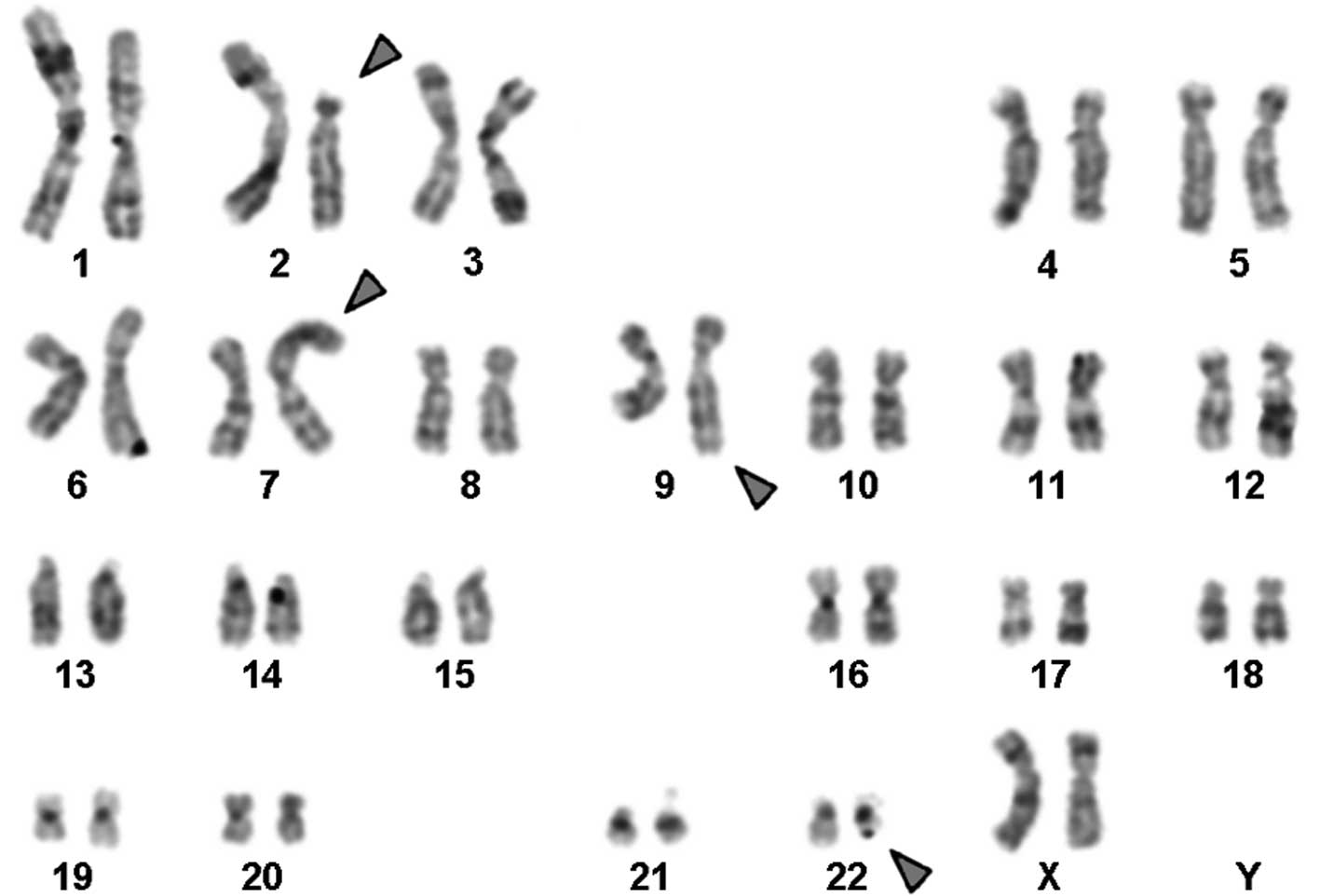
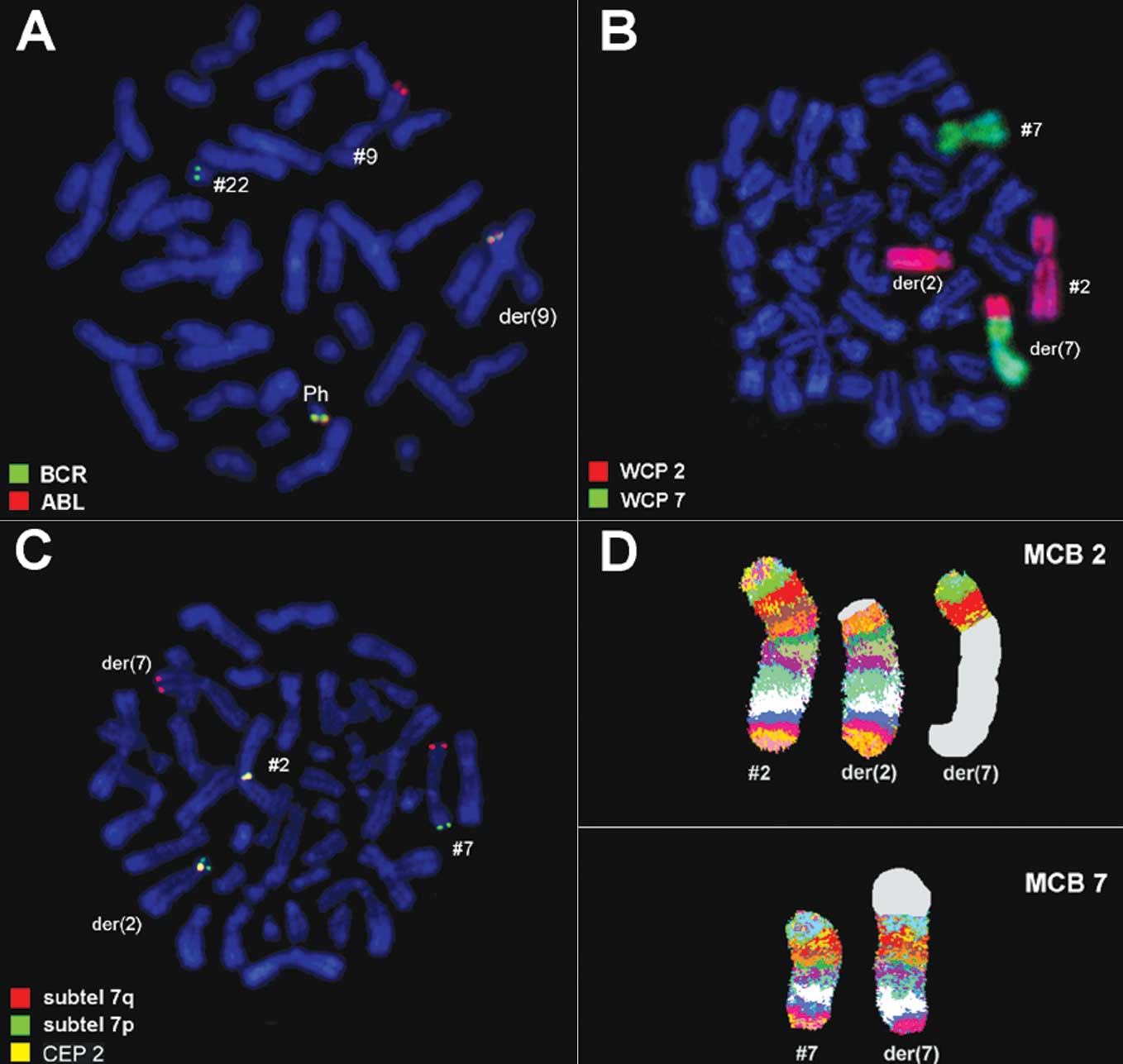
Karyotyping was performed prior to and following the initiation of chemotherapy treatment. The result prior to chemotherapy was 46,XX,t(9;22)[18]/46,XX[2] and following therapy it was 46,XX,t(2;7),t(9;22)[20] in GTG-banding (Fig. 1). It was further specified by molecular cytogenetic studies (Fig. 2). A dual-color-FISH applying probes specific to BCR and ABL revealed a typical Ph chromosome with a BCR/ABL fusion gene (Fig. 2A). The corresponding WCP probes confirmed a Ph-independent translocation between chromosomes 2 and 7 (Fig. 2B), also substantiated by subtelomeric probes for 7pter and 7qter (Fig. 2C). aMCB narrowed down the breakpoints to 2p13.1 and 7p21.3.

Figure 1

GTG-banding revealed an abnormality involving one further chromosome besides chromosomes 9 and 22. Derivative chromosomes are indicated by the arrowheads.

Figure 2

Karyotype and chromosomal aberrations were confirmed using molecular cytogenetic approaches. (A) Fluorescence in situ hybridization (FISH) using probes for BCR (green) and ABL (red) confirmed the presence of the BCR/ABL translocation and the Philadelphia (Ph) chromosome. (B) The application of FISH analysis using WCP probes for chromosomes 2 and 7 is shown. (C) The application of FISH analysis using subtelomeric and CEP probes for chromosomes 2 and 7 is shown. (D) Array-proven multicolor banding (aMCB) was applied to determine which chromosomes were involved in the complex rearrangement. Each lane shows the results of aMCB analysis using probe sets for chromosomes 2 and 7. The normal chromosomes are shown in the first column and the derivative of two chromosomes in the subsequent ones. The aMCB-probes unstained regions on the derivative chromosomes are shown in gray. #, chromosome; der, derivative chromosome; WCP, whole chromosome painting; CEP, chromosome enumeration probe.

Discussion

The present study identified one additional chromosomal alteration in a Ph-positive CML-CP case as t(2;7)(p13.1;p21.3). To the best of our knowledge, this translocation has not been previously observed in CML (5). Moreover, neither breakpoint has been reported to be involved in variant Ph-rearrangement in CML (6).

The breakpoint 2p13 has been reported in patients with acute bilineal leukemia (7,8) and B-cell chronic lymphocytic leukemia (9,10). The gene BCL11A may be involved in these diseases (10,11). However, in Hodgkin’s lymphoma, breaks at 2p13 (12) have been reported to be associated with the oncogene REL (13). Finally, 2p13 has previously been reported in a translocation t(2;14) in a Ph-positive acute lymphoblastic lymphoma (ALL) case (14).

The 7p21.3 region also merits further study. This region includes the ETS variant gene 1 (ETV1), which encodes an ETS translocation variant 1 protein in humans (15,16). The ETS genes (including FLI, ERG, ETV4 and ETV1) encode a family of eukaryotic transcription factors that includes more than 30 members that are found in organisms from sponges to humans (17). The ETS genes are involved in multiple processes, including cell proliferation and cancer cell invasion (18). Some of these genes become oncogenic by retroviral insertional mutagenesis (17) [as in gastric cancer (18), prostate cancer (19) and breast cancer metastasis (18)] or by chromosomal translocations [as in myeloid leukemia and Ewing’s sarcomas (17)]. For example, ETV1 has been mapped at position 7p21.3 and has been found to be subject to a translocation between chromosomes 7 and 22 in a human Ewing’s sarcoma (17).

The 2p13.1 region includes the Anthrax toxin receptor 1 gene (ATR1) (20). ATR1 is a transmembrane protein and a tumor-specific endothelial marker (TEM) that is involved in colorectal cancer (21).

TEM-8 belongs to a family of TEMs that were identified as being predominantly expressed in tumor endothelium (22). Moreover, a high TEM-8 expression appears to be correlated with advanced tumor stage in breast and colorectal cancer (23). An overexpression of ATR1 has also been found in several neuroblastoma (NB) cell lines (24).

TEM-8 has been shown to function as a cell surface TEM that is highly conserved in mice and human tumor endothelium, thus making TEM-8 an attractive marker for the establishment of an in vivo model system in an attempt to assess anti-angiogenic strategies in combating tumor growth (22).

In conclusion, in this study we reported a unique case of a Ph chromosome-positive CML in CP with a new translocation, possibly therapy-initiated, involving the two chromosomal aberrations 2p13.1 and 7p21.3, which has not previously been described. Notably, the reported patient had a good response to Imatinib.

Acknowledgements

We thank Professor I. Othman, the Director General of the Atomic Energy Commission of SYRIA (AECS), and Dr N. Mirali, the Head of Molecular Biology and Biotechnology Department, for their support. This study was supported by the AECS and in parts by the Stefan-Morsch-Stiftung, Monika-Kutzner-Stiftung and the DAAD (D/07/09624).

References

1 

O’Brien S, Thall PF and Siciliano MJ: Cytogenetics of chronic myelogeneous leukemia. Baillieres Clin Hematol. 10:259–276. 1997.

2 

Al-Achkar W, Wafa A and Nweder MS: A complex translocation t(5;9;22) in Philadelphia cells involving the short arm of chromosome 5 in a case of chronic myelogenous leukemia. J Exp Clin Cancer Res. 26:411–415. 2007.PubMed/NCBI

3 

Shaffer L, Slovak M and Campbell L: An International System for Human Cytogenetic Nomenclature. S Karger; Basel: 2009

4 

Liehr T, Heller A, Starke H, Rubtsov N, Trifonov V, Mrasek K, Weise A, Kuechler A and Claussen U: Microdissection based high resolution multicolor banding for all 24 human chromosomes. Int J Mol Med. 9:335–339. 2002.PubMed/NCBI

5 

Mitelman F, Johansson B and Mertens F: Mitelman Database of Chromosome Aberrations in Cancer. 2009, http://cgap.nci.nih.gov/Chromosomes/Mitelman.

6 

Johansson B, Fioretos T and Mitelman F: Cytogenetic and molecular genetic evolution of chronic myeloid leukemia. Acta Haematol. 107:76–94. 2002. View Article : Google Scholar : PubMed/NCBI

7 

Gale RP and Ben-Bassat I: Hybrid acute leukaemia. Br J Haematol. 65:261–264. 1987. View Article : Google Scholar

8 

Weir EG, Ali Ansari-Lari M, Batista DA, Griffin CA, Fuller S, Smith BD and Borowitz MJ: Acute bilineal leukemia: a rare disease with poor outcome. Leukemia. 21:2264–2270. 2007. View Article : Google Scholar : PubMed/NCBI

9 

Richardson AL, Humphries CG and Tucker PW: Molecular cloning and characterization of the t(2;14) translocation associated with childhood chronic lymphocytic leukemia. Oncogene. 7:961–970. 1992.PubMed/NCBI

10 

Satterwhite E, Sonoki T, Willis TG, Harder L, Nowak R, Arriola EL, Liu H, Price HP, Gesk S, Steinemann D, et al: The BCL11 gene family: involvement of BCL11A in lymphoid malignancies. Blood. 98:3413–3420. 2001. View Article : Google Scholar : PubMed/NCBI

11 

Bezrookove V, van Zelderen-Bhola SL, Brink A, Szuhai K, Raap AK, Barge R, Beverstock GC and Rosenberg C: A novel t(6;14)(q25-q27;q32) in acute myelocytic leukemia involves the BCL11B gene. Cancer Genet Cytogenet. 149:72–76. 2004. View Article : Google Scholar : PubMed/NCBI

12 

Gozzetti A, Davis EM, Espinosa R III, Fernald AA, Anastasi J and Le Beau MM: Identification of novel cryptic translocations involving IGH in B-cell non-Hodgkin’s lymphomas. Cancer Res. 62:5523–5527. 2002.PubMed/NCBI

13 

Barth TF, Martin-Subero JI, Joos S, Menz CK, Hasel C, Mechtersheimer G, Parwaresch RM, Lichter P, Siebert R and Möoller P: Gains of 2p involving the REL locus correlate with nuclear c-Rel protein accumulation in neoplastic cells of classical Hodgkin lymphoma. Blood. 101:3681–3686. 2003. View Article : Google Scholar

14 

Inaba T, Oku N, Gotoh H, Murakami S, Oku N, Itoh K, Ura Y, Nakanishi S, Shimazaki C, Nakagawa M, et al: Philadelphia chromosome positive precursor B-cell acute lymphoblastic leukemia with a translocation t(2;14)(p13;q32). Leukemia. 5:719–722. 1991.PubMed/NCBI

15 

Brown TA and McKnight SL: Specificities of protein-protein and protein-DNA interaction of GABP alpha and two newly defined ets-related proteins. Genes Dev. 6:2502–2512. 1993. View Article : Google Scholar : PubMed/NCBI

16 

Nambiar M, Kari V and Raghavan SC: Chromosomal translocations in cancer. Biochim Biophys Acta. 1786:139–152. 2008.PubMed/NCBI

17 

Coutte L, Monté D, Imai K, Pouilly L, Dewitte F, Vidaud M, Adamski J, Baert JL and de Launoit Y: Characterization of the human and mouse ETV1/ER81 transcription factor genes: role of the two alternatively spliced isoforms in the human. Oncogene. 18:6278–6286. 1999. View Article : Google Scholar : PubMed/NCBI

18 

Cai C, Hsieh CL, Omwancha J, Zheng Z, Chen SY, Baert JL and Shemshedini L: ETV1 is a novel androgen receptor-regulated gene that mediates prostate cancer cell invasion. Mol Endocrinol. 21:1835–1846. 2007. View Article : Google Scholar : PubMed/NCBI

19 

King JC, Xu J, Wongvipat J, Hieronymus H, Carver BS, Leung DH, Taylor BS, Sander C, Cardiff RD, Couto SS, et al: Cooperativity of TMPRSS2-ERG with PI3-kinase pathway activation in prostate oncogenesis. Nat Genet. 41:524–526. 2009. View Article : Google Scholar : PubMed/NCBI

20 

Oberthuer A, Skowron M, Spitz R, Kahlert Y, Westermann F, Mehler K, Berthold F and Fischer M: Characterization of a complex genomic alteration on chromosome 2p that leads to four alternatively spliced fusion transcripts in the neuroblastoma cell lines IMR-5, IMR-5/75 and IMR-32. Gene. 363:41–50. 2005. View Article : Google Scholar : PubMed/NCBI

21 

Carson-Walter EB, Watkins DN, Nanda A, Vogelstein B, Kinzler KW and St Croix B: Cell surface tumor endothelial markers are conserved in mice and humans. Cancer Res. 61:6649–6655. 2001.PubMed/NCBI

22 

Davies G, Rmali KA, Watkins G, Mansel RE, Mason MD and Jiang WG: Elevated levels of tumour endothelial marker-8 in human breast cancer and its clinical significance. Int J Oncol. 29:1311–1317. 2006.PubMed/NCBI

23 

Venanzi FM, Petrini M, Fiammenghi L, Bolli E, Granato AM, Ridolfi L, Gabrielli F, Barucca A, Concetti A, Ridolfi R and Riccobon A: Tumor endothelial marker 8 expression levels in dendritic cell-based cancer vaccines are related to clinical outcome. Cancer Immunol Immunother. 59:27–34. 2010. View Article : Google Scholar : PubMed/NCBI

24 

Chen QR, Bilke S, Wei JS, Whiteford CC, Cenacchi N, Krasnoselsky AL, Greer BT, Son CG, Westermann F, Berthold F, et al: cDNA array-CGH profiling identifies genomic alterations specific to stage and MYCN-amplification in neuroblastoma. BMC Genomics. 5:702004. View Article : Google Scholar : PubMed/NCBI

Related Articles

  • Abstract
  • View
  • Download
  • Twitter
Copy and paste a formatted citation
Spandidos Publications style
Al-Achkar W, Wafa A, Moassass F and Liehr T: A unique cytogenetic abnormality, t(2;7)(p13.1;p21.3), in a Philadelphia-positive chronic myeloid leukemia. Oncol Lett 4: 209-212, 2012.
APA
Al-Achkar, W., Wafa, A., Moassass, F., & Liehr, T. (2012). A unique cytogenetic abnormality, t(2;7)(p13.1;p21.3), in a Philadelphia-positive chronic myeloid leukemia. Oncology Letters, 4, 209-212. https://doi.org/10.3892/ol.2012.720
MLA
Al-Achkar, W., Wafa, A., Moassass, F., Liehr, T."A unique cytogenetic abnormality, t(2;7)(p13.1;p21.3), in a Philadelphia-positive chronic myeloid leukemia". Oncology Letters 4.2 (2012): 209-212.
Chicago
Al-Achkar, W., Wafa, A., Moassass, F., Liehr, T."A unique cytogenetic abnormality, t(2;7)(p13.1;p21.3), in a Philadelphia-positive chronic myeloid leukemia". Oncology Letters 4, no. 2 (2012): 209-212. https://doi.org/10.3892/ol.2012.720
Copy and paste a formatted citation
x
Spandidos Publications style
Al-Achkar W, Wafa A, Moassass F and Liehr T: A unique cytogenetic abnormality, t(2;7)(p13.1;p21.3), in a Philadelphia-positive chronic myeloid leukemia. Oncol Lett 4: 209-212, 2012.
APA
Al-Achkar, W., Wafa, A., Moassass, F., & Liehr, T. (2012). A unique cytogenetic abnormality, t(2;7)(p13.1;p21.3), in a Philadelphia-positive chronic myeloid leukemia. Oncology Letters, 4, 209-212. https://doi.org/10.3892/ol.2012.720
MLA
Al-Achkar, W., Wafa, A., Moassass, F., Liehr, T."A unique cytogenetic abnormality, t(2;7)(p13.1;p21.3), in a Philadelphia-positive chronic myeloid leukemia". Oncology Letters 4.2 (2012): 209-212.
Chicago
Al-Achkar, W., Wafa, A., Moassass, F., Liehr, T."A unique cytogenetic abnormality, t(2;7)(p13.1;p21.3), in a Philadelphia-positive chronic myeloid leukemia". Oncology Letters 4, no. 2 (2012): 209-212. https://doi.org/10.3892/ol.2012.720
Follow us
  • Twitter
  • LinkedIn
  • Facebook
About
  • Spandidos Publications
  • Careers
  • Cookie Policy
  • Privacy Policy
How can we help?
  • Help
  • Live Chat
  • Contact
  • Email to our Support Team