Spandidos Publications Logo
  • About
    • About Spandidos
    • Aims and Scopes
    • Abstracting and Indexing
    • Editorial Policies
    • Reprints and Permissions
    • Job Opportunities
    • Terms and Conditions
    • Contact
  • Journals
    • All Journals
    • Oncology Letters
      • Oncology Letters
      • Information for Authors
      • Editorial Policies
      • Editorial Board
      • Aims and Scope
      • Abstracting and Indexing
      • Bibliographic Information
      • Archive
    • International Journal of Oncology
      • International Journal of Oncology
      • Information for Authors
      • Editorial Policies
      • Editorial Board
      • Aims and Scope
      • Abstracting and Indexing
      • Bibliographic Information
      • Archive
    • Molecular and Clinical Oncology
      • Molecular and Clinical Oncology
      • Information for Authors
      • Editorial Policies
      • Editorial Board
      • Aims and Scope
      • Abstracting and Indexing
      • Bibliographic Information
      • Archive
    • Experimental and Therapeutic Medicine
      • Experimental and Therapeutic Medicine
      • Information for Authors
      • Editorial Policies
      • Editorial Board
      • Aims and Scope
      • Abstracting and Indexing
      • Bibliographic Information
      • Archive
    • International Journal of Molecular Medicine
      • International Journal of Molecular Medicine
      • Information for Authors
      • Editorial Policies
      • Editorial Board
      • Aims and Scope
      • Abstracting and Indexing
      • Bibliographic Information
      • Archive
    • Biomedical Reports
      • Biomedical Reports
      • Information for Authors
      • Editorial Policies
      • Editorial Board
      • Aims and Scope
      • Abstracting and Indexing
      • Bibliographic Information
      • Archive
    • Oncology Reports
      • Oncology Reports
      • Information for Authors
      • Editorial Policies
      • Editorial Board
      • Aims and Scope
      • Abstracting and Indexing
      • Bibliographic Information
      • Archive
    • Molecular Medicine Reports
      • Molecular Medicine Reports
      • Information for Authors
      • Editorial Policies
      • Editorial Board
      • Aims and Scope
      • Abstracting and Indexing
      • Bibliographic Information
      • Archive
    • World Academy of Sciences Journal
      • World Academy of Sciences Journal
      • Information for Authors
      • Editorial Policies
      • Editorial Board
      • Aims and Scope
      • Abstracting and Indexing
      • Bibliographic Information
      • Archive
    • International Journal of Functional Nutrition
      • International Journal of Functional Nutrition
      • Information for Authors
      • Editorial Policies
      • Editorial Board
      • Aims and Scope
      • Abstracting and Indexing
      • Bibliographic Information
      • Archive
    • International Journal of Epigenetics
      • International Journal of Epigenetics
      • Information for Authors
      • Editorial Policies
      • Editorial Board
      • Aims and Scope
      • Abstracting and Indexing
      • Bibliographic Information
      • Archive
    • Medicine International
      • Medicine International
      • Information for Authors
      • Editorial Policies
      • Editorial Board
      • Aims and Scope
      • Abstracting and Indexing
      • Bibliographic Information
      • Archive
  • Articles
  • Information
    • Information for Authors
    • Information for Reviewers
    • Information for Librarians
    • Information for Advertisers
    • Conferences
  • Language Editing
Spandidos Publications Logo
  • About
    • About Spandidos
    • Aims and Scopes
    • Abstracting and Indexing
    • Editorial Policies
    • Reprints and Permissions
    • Job Opportunities
    • Terms and Conditions
    • Contact
  • Journals
    • All Journals
    • Biomedical Reports
      • Information for Authors
      • Editorial Policies
      • Editorial Board
      • Aims and Scope
      • Abstracting and Indexing
      • Bibliographic Information
      • Archive
    • Experimental and Therapeutic Medicine
      • Information for Authors
      • Editorial Policies
      • Editorial Board
      • Aims and Scope
      • Abstracting and Indexing
      • Bibliographic Information
      • Archive
    • International Journal of Epigenetics
      • Information for Authors
      • Editorial Policies
      • Editorial Board
      • Aims and Scope
      • Abstracting and Indexing
      • Bibliographic Information
      • Archive
    • International Journal of Functional Nutrition
      • Information for Authors
      • Editorial Policies
      • Editorial Board
      • Aims and Scope
      • Abstracting and Indexing
      • Bibliographic Information
      • Archive
    • International Journal of Molecular Medicine
      • Information for Authors
      • Editorial Policies
      • Editorial Board
      • Aims and Scope
      • Abstracting and Indexing
      • Bibliographic Information
      • Archive
    • International Journal of Oncology
      • Information for Authors
      • Editorial Policies
      • Editorial Board
      • Aims and Scope
      • Abstracting and Indexing
      • Bibliographic Information
      • Archive
    • Medicine International
      • Information for Authors
      • Editorial Policies
      • Editorial Board
      • Aims and Scope
      • Abstracting and Indexing
      • Bibliographic Information
      • Archive
    • Molecular and Clinical Oncology
      • Information for Authors
      • Editorial Policies
      • Editorial Board
      • Aims and Scope
      • Abstracting and Indexing
      • Bibliographic Information
      • Archive
    • Molecular Medicine Reports
      • Information for Authors
      • Editorial Policies
      • Editorial Board
      • Aims and Scope
      • Abstracting and Indexing
      • Bibliographic Information
      • Archive
    • Oncology Letters
      • Information for Authors
      • Editorial Policies
      • Editorial Board
      • Aims and Scope
      • Abstracting and Indexing
      • Bibliographic Information
      • Archive
    • Oncology Reports
      • Information for Authors
      • Editorial Policies
      • Editorial Board
      • Aims and Scope
      • Abstracting and Indexing
      • Bibliographic Information
      • Archive
    • World Academy of Sciences Journal
      • Information for Authors
      • Editorial Policies
      • Editorial Board
      • Aims and Scope
      • Abstracting and Indexing
      • Bibliographic Information
      • Archive
  • Articles
  • Information
    • For Authors
    • For Reviewers
    • For Librarians
    • For Advertisers
    • Conferences
  • Language Editing
Login Register Submit
  • This site uses cookies
  • You can change your cookie settings at any time by following the instructions in our Cookie Policy. To find out more, you may read our Privacy Policy.

    I agree
Search articles by DOI, keyword, author or affiliation
Search
Advanced Search
presentation
Oncology Letters
Join Editorial Board Propose a Special Issue
Print ISSN: 1792-1074 Online ISSN: 1792-1082
Journal Cover
June 2013 Volume 5 Issue 6

Full Size Image

Sign up for eToc alerts
Recommend to Library

Journals

International Journal of Molecular Medicine

International Journal of Molecular Medicine

International Journal of Molecular Medicine is an international journal devoted to molecular mechanisms of human disease.

International Journal of Oncology

International Journal of Oncology

International Journal of Oncology is an international journal devoted to oncology research and cancer treatment.

Molecular Medicine Reports

Molecular Medicine Reports

Covers molecular medicine topics such as pharmacology, pathology, genetics, neuroscience, infectious diseases, molecular cardiology, and molecular surgery.

Oncology Reports

Oncology Reports

Oncology Reports is an international journal devoted to fundamental and applied research in Oncology.

Experimental and Therapeutic Medicine

Experimental and Therapeutic Medicine

Experimental and Therapeutic Medicine is an international journal devoted to laboratory and clinical medicine.

Oncology Letters

Oncology Letters

Oncology Letters is an international journal devoted to Experimental and Clinical Oncology.

Biomedical Reports

Biomedical Reports

Explores a wide range of biological and medical fields, including pharmacology, genetics, microbiology, neuroscience, and molecular cardiology.

Molecular and Clinical Oncology

Molecular and Clinical Oncology

International journal addressing all aspects of oncology research, from tumorigenesis and oncogenes to chemotherapy and metastasis.

World Academy of Sciences Journal

World Academy of Sciences Journal

Multidisciplinary open-access journal spanning biochemistry, genetics, neuroscience, environmental health, and synthetic biology.

International Journal of Functional Nutrition

International Journal of Functional Nutrition

Open-access journal combining biochemistry, pharmacology, immunology, and genetics to advance health through functional nutrition.

International Journal of Epigenetics

International Journal of Epigenetics

Publishes open-access research on using epigenetics to advance understanding and treatment of human disease.

Medicine International

Medicine International

An International Open Access Journal Devoted to General Medicine.

Journal Cover
June 2013 Volume 5 Issue 6

Full Size Image

Sign up for eToc alerts
Recommend to Library

  • Article
  • Citations
    • Cite This Article
    • Download Citation
    • Create Citation Alert
    • Remove Citation Alert
    • Cited By
  • Similar Articles
    • Related Articles (in Spandidos Publications)
    • Similar Articles (Google Scholar)
    • Similar Articles (PubMed)
  • Download PDF
  • Download XML
  • View XML
Article

Biological characteristics of Rh123high stem‑like cells in a side population of 786‑O renal carcinoma cells

  • Authors:
    • Jianzhong Lu
    • Yong Cui
    • Jiayun Zhu
    • Jinpeng He
    • Guangming Zhou
    • Zhongjin Yue
  • View Affiliations / Copyright

    Affiliations: Institute of Urology, The Second Hospital of Lanzhou University, Key Laboratory of Urological Diseases in Gansu Province, Gansu Nephro-Urological Clinical Center, Lanzhou, Gansu 730030, P.R. China, Institute of Modern Physics, Radiobiological Effects Group, Chinese Academy of Sciences, Lanzhou, Gansu 730000, P.R. China
  • Pages: 1903-1908
    |
    Published online on: March 26, 2013
       https://doi.org/10.3892/ol.2013.1270
  • Expand metrics +
Metrics: Total Views: 0 (Spandidos Publications: | PMC Statistics: )
Metrics: Total PDF Downloads: 0 (Spandidos Publications: | PMC Statistics: )
Cited By (CrossRef): 0 citations Loading Articles...

This article is mentioned in:


Abstract

The aim of the present study was to investigate the differences in biological characteristics between the rhodamine 123 (Rh123)high and Rh123low subpopulations of the renal cancer cell line 786‑O and to identify evidence for the existence of cancer stem cells in renal cell carcinoma (RCC) cells. In vitro cultured RCC 786‑O cells were stained with Rh123, analyzed and sorted with flow cytometry. The differences in proliferative activity, long‑term differentiation and radiation sensitivity between the two subpopulations were measured and the oncogenicity of each subpopulation was evaluated according to their neoplastic growth ability in soft agar and tumor‑forming ability in NOD/SCID immunodeficient mice. There were two subpopulations in the cultured 786‑O cells, Rh123high and Rh123low cells. Rh123low cells were the majority among 786‑O renal carcinoma cells and barely formed solid tumors in NOD/SCID mice and colonies in soft agar. By contrast, the Rh123high cells were the minority, exhibited high proliferative activity, differentiation ability and resistance to radiation and showed high tumorigenesis potential and colony forming efficiency. The Rh123high cells had stem‑like characteristics in cultured RCC 786‑O cells in vitro.

Introduction

Cancer stem cells (CSC), which have the ability to self-renew and differentiate, may contribute to tumor proliferation and recurrence following chemotherapy and radiotherapy. Currently, CSCs have become a key focus of tumor studies since they are expected to reveal biomarkers which may be de novo targets for tumor therapy. CSCs have already been identified in numerous tumor types, including breast (1), brain (2), colon (3,4) and prostate cancers (5).

The ability of stem cells to efflux chemotherapeutic drugs and certain dyes, such as Hoechst 33342 and rhodamine 123 (Rh123) (6), may be used to isolate cells with progenitor characteristics (7,8). Cells stained with such fluorescent dyes may present distinguishable subpopulations in flow cytometry profiles, allowing sorting for further biological studies. This technique provides an alternative approach to isolating progenitor cells through the use of specific surface markers and a feasible method for identifying putative tumor-initiating cells.

Rh123, a low toxicity fluorescent dye, is a mitochondrial dye that stains mitochondria with increasing intensity as cells become activated. It is able to detect reduced mitochondrial activation states in long-term quiescent cells. Decreased intracellular accumulations of Rh123 result from the efflux of the dye (9).

Renal cell carcinoma (RCC) is a kidney cancer that originates from the proximal convoluted tubule. It is the most common type of kidney cancer in adults, responsible for ∼80% of cases (10). It is also known to be the most lethal of all the genitourinary tumors. RCC is resistant to radiation therapy and chemotherapy (11). Thus, it is necessary to identify a CSC subpopulation in RCC, since screening and identifying RCC stem cells is likely to be of significance for prognosis and treatment. However, it is not yet clear whether there are CSCs in renal carcinoma. The aim of the present study was to isolate cancer stem-like cells from the renal carcinoma cell line 786-O using Rh123 staining and flow cytometry, and compare the various biological characteristics between subpopulations.

Materials and methods

Cell line and culture

The human renal cancer cell line 786-O was purchased from the Shanghai Cell Bank of Type Culture Collection (Chinese Academy of Sciences, Shanghai, China) and maintained in RPMI-1640 medium (Gibco, Grand Island, NY, USA) containing 10% heat-inactivated fetal bovine serum (FBS; Hyclone, Waltham, MA, USA), 100 U/ml penicillin G and 100 μg/ml streptomycin in a humidified 5% CO2 incubator at 37°C.

Sorting side population (SP) cells

Once the 786-O cells had reached the logarithmic growth phase, they were harvested for flow cytometry. Briefly, cells were digested with 0.25% trypsin (Sigma-Aldrich, St. Louis, MO, USA), washed twice with calcium/magnesium-free phosphate-buffered saline (PBS), resuspended in ice-cold RPMI-1640 supplemented with 5% FBS at a concentration of 1×10⁶ cells/ml and incubated at 37°C in a 5% CO2 incubator for 10 min. The fluorescent dye, Rh123 (Sigma-Aldrich), was then added at a final concentration of 10 μg/ml and incubated for 20 min in the dark with periodic mixing. The cells were washed twice with PBS, then kept at 4°C in the dark before being subjected to the flow cytometery assay and sorting using a FACSCalibur flow cytometer (BD Biosciences, Mountain View, CA, USA). The Rh123high and Rh123low cells were collected to evaluate the sorting purity and perform further experiments.

Cell growth

Freshly sorted Rh123high and Rh123low cells were incubated at 2×10³ cells per well in 12-well plates and cultured in complete RPMI-1640 medium to observe the growth rate. During the 10 days, the cells were photographed and the numbers of cells were counted using a hemacytometer.

Colony formation

Freshly sorted cells (1×10³; Rh123high and Rh123low cells) were suspended in 2 ml of 0.35% melted agar in RPMI-1640 medium with 10% FBS and plated in 60-mm dishes containing a solidified bottom layer of 1.25% agar in the same medium. After 3 weeks, the number of colonies containing >50 cells was counted. The colony-forming efficiency (CFE) was calculated as the ratio of the colony number to the original number of cells seeded. The experiments were independently performed three times.

Long-term differentiation of Rh123high and Rh123low cells

The Rh123high and Rh123low cells were subcultured for 18 days after cell sorting. The cells were then stained separately with Rh123 and analyzed with a flow cytometer to quantitate the proportion of the Rh123high subpopulation in each sorted group.

Radiation sensitivity assay

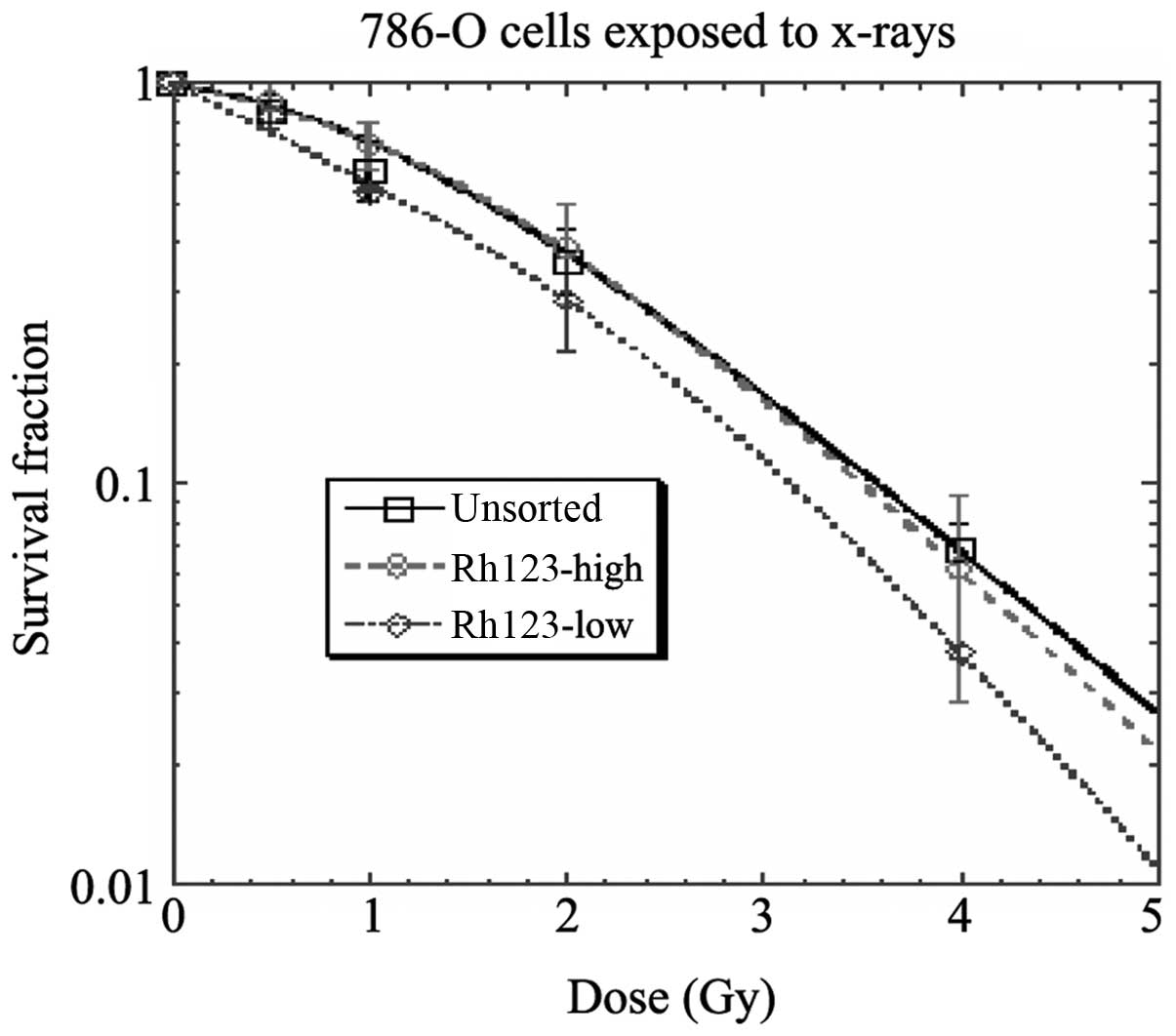
Freshly sorted Rh123high and Rh123low cells (2×10⁵) were seeded in five culture flasks and the cells were irradiated with 0, 0.5, 1, 2 and 4 Gy of X-rays, The next day after radiation treatment, the cells were then harvested and seeded at various low densities into 35-mm dishes. All the cells were cultured under normal culture conditions (humidified 5% CO2 incubator at 37°C). After 10 days, when the majority of cell clones in the sham control group reached >50 cells, the dishes were stained with crystal violet to determine the plating efficiency. The experiments were independently performed three times.

Xenograft tumor

The nonobese diabetic/severe combined immunodeficient (NOD/SCID) mice were purchased from Shanghai Slac Laboratory Animal Co. Ltd. (Shanghai, China) and maintained in micro isolator cages. All experiments were approved by the animal care committee of the Second Hospital of Lanzhou University. Freshly sorted Rh123high and Rh123low cells (1×10⁷, 1×10⁶ or 1×10⁵ cells/ml) were suspended in 200 μl PBS and then inoculated into the axillary fossa of six-week-old male NOD/SCID mice immediately after cell sorting. The mice were monitored twice a week for palpable tumor formation and euthanized when the tumors grew to appropriate sizes. Tumors were measured using a vernier caliper, weighed and photographed.

Cell surface marker screening

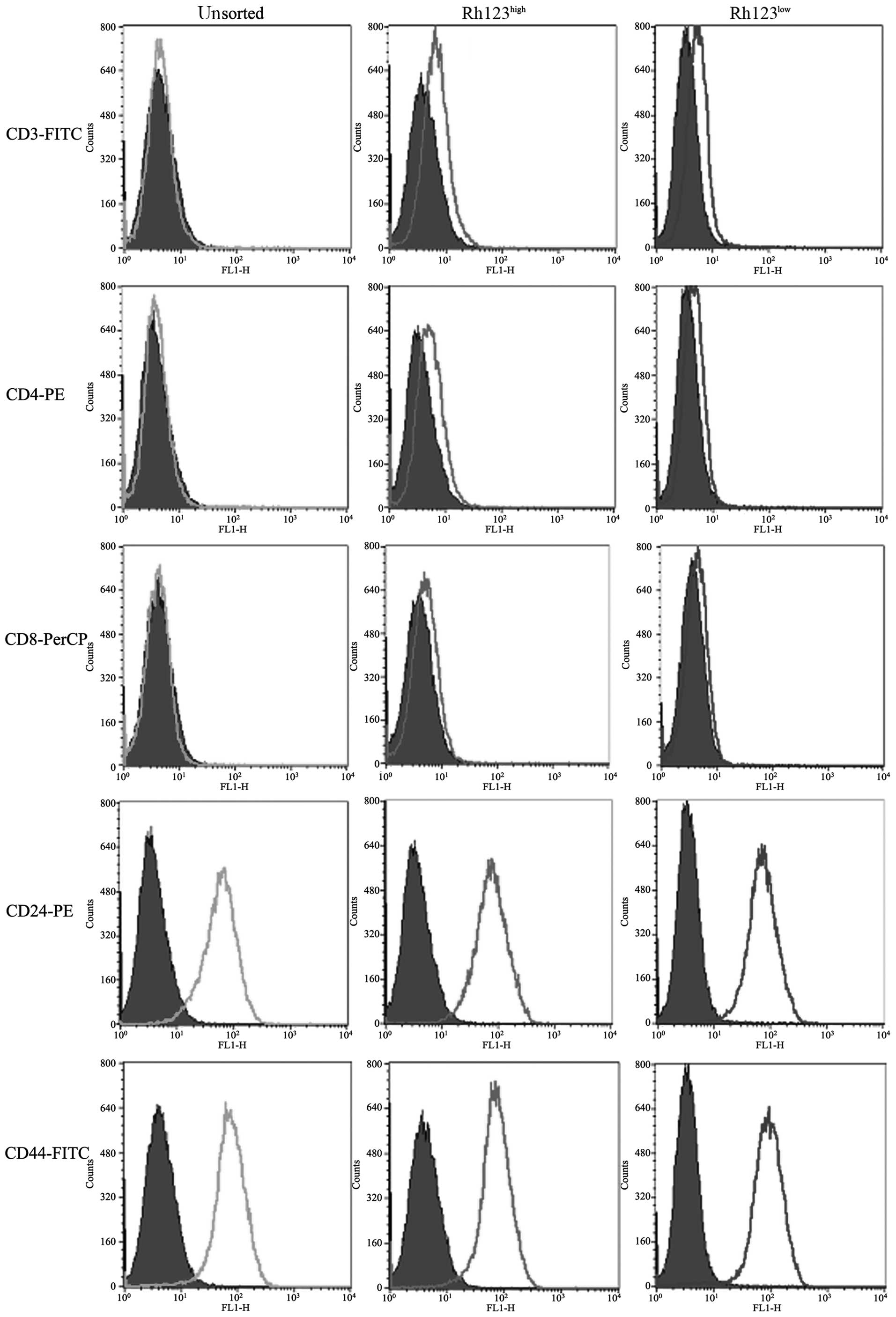
Freshly sorted Rh123high and Rh123low cells were incubated in RPMI-1640 for 2 days to reach the desired cell number. Then, the cultured cells were harvested and diluted to 1×10⁶ cells/ml with PBS containing 5% FBS, and stained with Rh123 for 20 mins. The Rh123 positive staining cells were divided into multiple vials and each was probed with CD3-FITC, CD4-PE, CD8-PerCP, CD24-PE and CD44-FITC antibody for 30 min in the dark, then analyzed by FACS to quantitate the proportion of positive cells.

Statistical analysis

The SPSS 12.0 statistical software (SPSS Inc., Chicago, IL, USA) was used for the data processing and analyzing the significance of differences between the Rh123high and Rh123low cells using unpaired t-tests. P<0.05 was considered to indicate statistically significant differences. Data were expressed as the mean ± SD from at least three independent experiments.

Results

Rh123 staining and sorting of 786-O cells

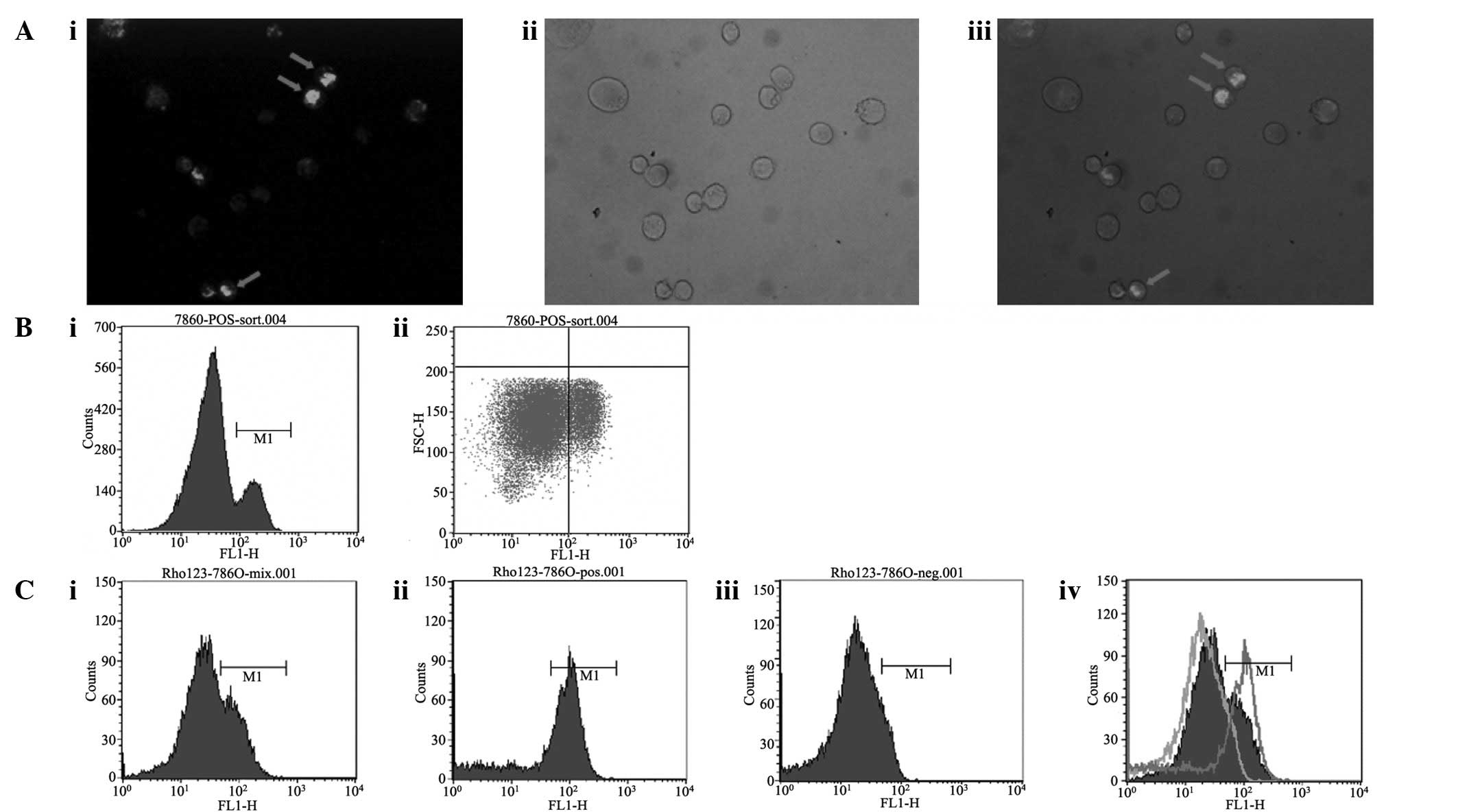
786-O cells stained with Rh123 were observed under a fluorescence microscope. It was observed that a small fraction of the cells were stained green, namely the Rh123high cells, while the majority presented no or extremely weak fluorescence, namely the Rh123low cells (Fig. 1A). In the flow cytometry profile, two distinguishable subpopulations were observed, Rh123high and Rh123low (Fig. 1B). The proportion of Rh123high cells was 25.17±3.88%. Gate M1 was set up to sort the Rh123high cells and the results are shown in Fig. 1C. The Rh123low and Rh123high cells were each collected for subsequent experiments. The purity of the Rh123high cells was 67.40% and the purity of the Rh123low cells was 91.12%.

Figure 1

786-O cells were stained with Rh123 and sorted by flow cytometry. (A) After staining, 786-O cells were observed under a fluorescence microscope.The Rh123high cells were markedly stained (arrows). (i) Rh123 staining; (ii) phase-contrast image; (iii) merged image of (i) and (ii). (B) Analysis with FACSCalibur flow cytometry with the FL1 channel. Cells were separated into two distinguishable sub-populations: (i) histogram profile; (ii) dot profile. Gate M1 was set up to sort Rh123high cells. (C) 786-O cells were sorted following Rh123 staining and two distinguishable sub-populations (Rh123high and Rh123low) were observed in the flow cytometry profile and collected separately. Immediately after sorting, the purity of each sorted population was verified by flow cytometry analysis. (i) Fluorescence distribution prior to sorting; (ii) sorted Rh123high cells; (iii) sorted Rh123low cells; (iv) overlay of sorted and unsorted cells. Rh123, rhodamine 123.

Cell growth and colony formation

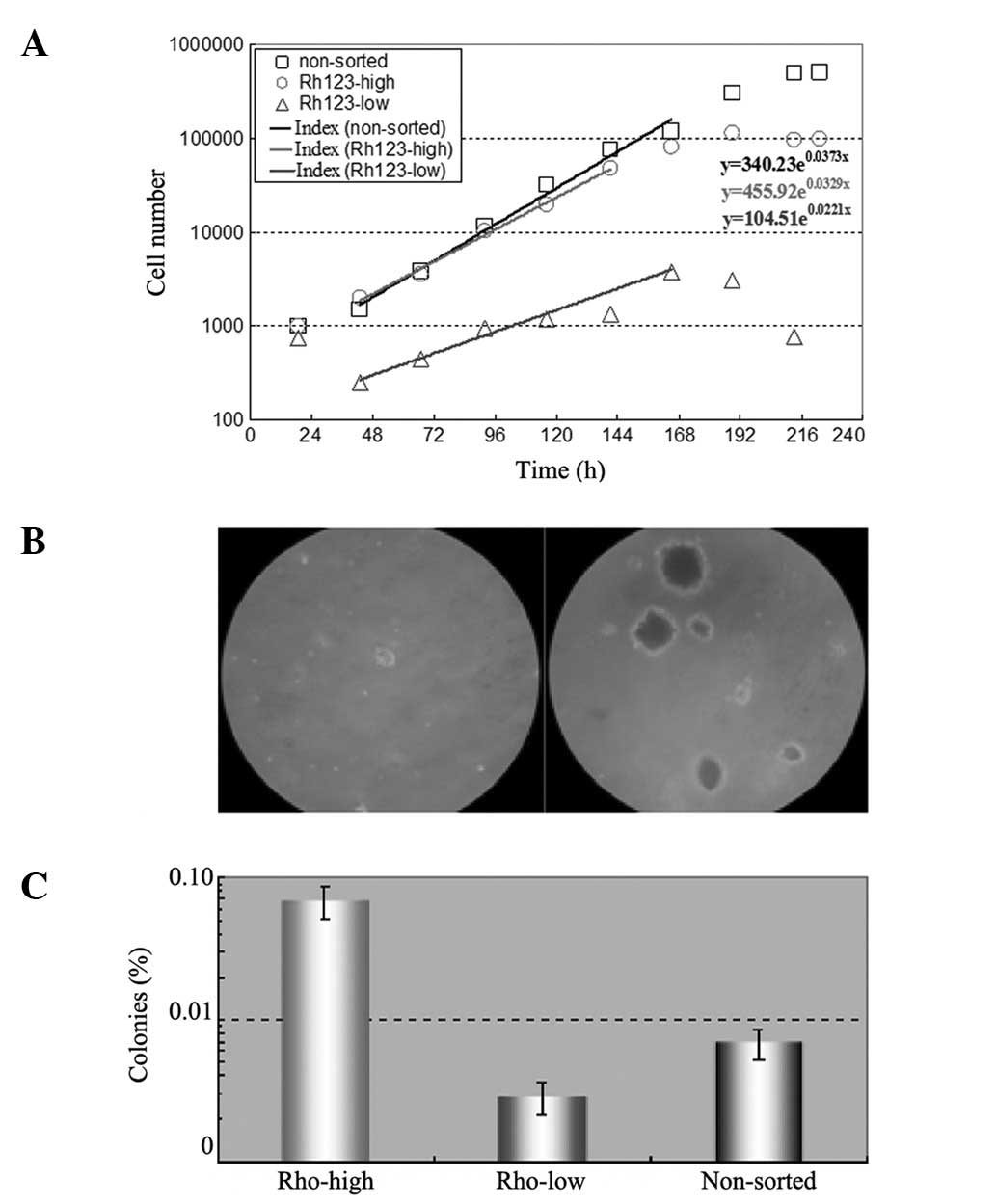
The same number of sorted Rh123low and Rh123high cells and unsorted cells were seeded in 12-well plates and counted each day for up to 12 days. The results are shown in Fig. 2A. The Rh123high cells exhibited a similar proliferation rate to the unsorted cells and their doubling times were 21 and 18 h, respectively. However, the Rh123low cells grew slowly and with a doubling time of 36 h.

Figure 2

Growth curve and clone formation of Rh123high, Rh123low and unsorted 786-O cells. (A) Growth curve of Rh123high, Rh123low and unsorted 786-O cells. (B) Sorted colonies of Rh123low cells (Left) and Rh123high cells (Right) in soft agar. (C) Colony formation efficiency of Rh123high, Rh123low and unsorted 786-O cells. Rh123, rhodamine 123.

In the colony formation assay, the same number of the three types of cells were seeded in soft agar and cultured for >3 weeks prior to colony counting. The results are shown in Fig. 2B and C. The majority of Rh123high cell colonies were mulberry-like in appearance and the colony-forming efficiency (CFE) was 0.687±0.177%, while the Rh123low cells did not produce significant cell colonies and their CFE was only 0.029±0.007%.

Long-term differentiation ability

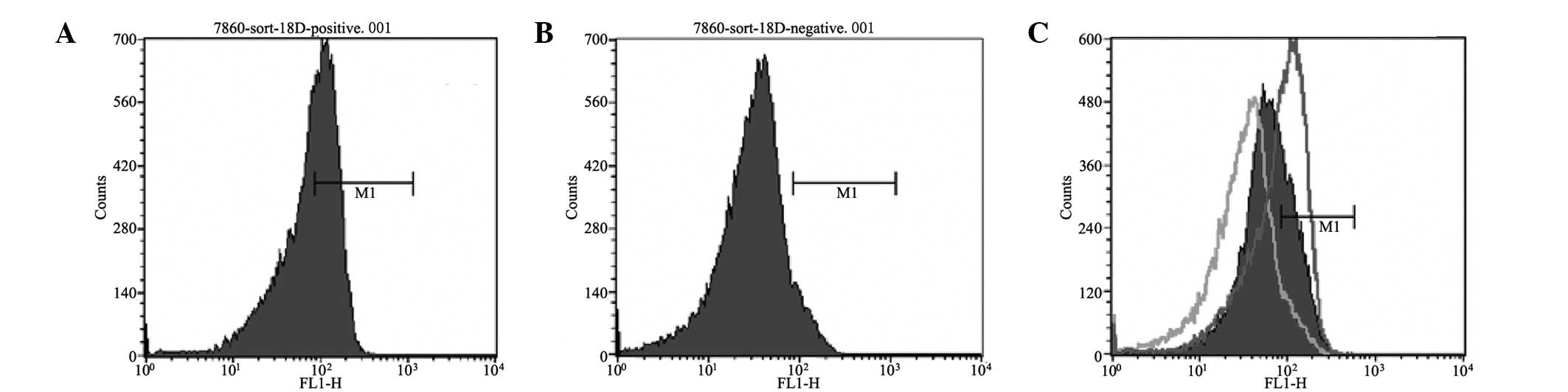
The Rh123high cells had a higher differentiation potential than the Rh123low cells. As shown in Fig. 3, the proportion of Rh123high cells in the sorted Rh123high subpopulation decreased with subculture time following sorting, while there was no Rh123high subpopulation among the subcultured Rh123low cells.

Figure 3

Cell differentiation potential and self-renewal ability. Sorted cells were subsequentially cultured for up to 18 days, then subjected to Rh123 staining and flow cytometry analysis. (A) Proportion of Rh123high cells declined although a considerable number of the Rh123high cells remained. (B) After continued subculture of Rh123low cells, only Rh123low cells were observed. (C) Combination of A, B and unsorted cells. Rh123, rhodamine 123.

Tumor formation

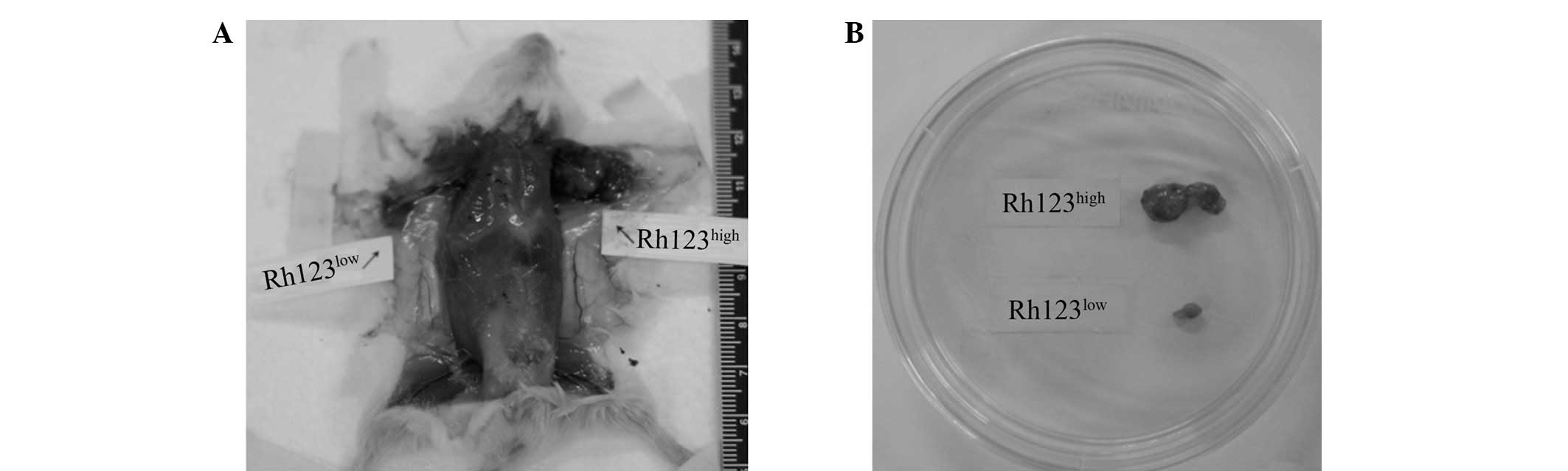
Solid tumors in NOD/SCID immunodeficient mice implanted with 1×10⁷, 1×10⁶ or 1×10⁵ Rh123high and Rh123low cells were examined twice a week. Tumors were observed in 12 out of 12 mice injected with 1×10⁷, 1×10⁶ and 1×10⁵ Rh123high cells at days 8, 20 and 90. However, almost no visible tumors were observed in the mice implanted with corresponding amounts of Rh123low cells and only one out of the 12 mice injected with Rh123low cells developed a tumor (Fig. 4).

Figure 4

Tumor formation in NOD/SCID mice. Rh123, rhodamine 123; NOD/SCID, nonobese diabetic/severe combined immunodeficient.

Radiosensitivity

When exposed to X-rays, the Rh123high cells behaved similarly to unsorted cells and showed noticeably larger survival fractions compared with the Rh123low cells (Fig. 5).

Figure 5

Sorted and unsorted cells were treated with 6 MV X-ray irradiation. Cells were collected, diluted and plated at low density into 35-mm dishes. After 10 days, the cells were fixed, stained and counted. Each experiment was independently repeated three times. Rh123, rhodamine 123.

Screening of surface markers

As shown in Fig. 6, the two cell subpopulations and unsorted cells were positive for CD24 and CD44, but negative for CD3, CD4 and CD8. These cell surface markers were clearly not specific markers for RCC stem cells.

Figure 6

Screening for cell surface markers. Sorted and unsorted cells were stained with various fluorescence-labelled antibodies and analyzed with FACS. The light grey line in each plot was the unlabeled control. FACS, fluorescence-activated cell sorting; FITC, fluorescein isothiocyanate; Rh123, rhodamine 123.

Discussion

RCC is a difficult malignancy to treat due to its ability to spread asymptomatically and its inherent resistance to radiotherapy and chemotherapy (12). The identification of RCC stem cells is expected to provide a novel approach to solving this problem.

In the present study, cancer stem-like SPs were successfully derived from the human renal cancer cell line 786-O, using rhodamine 123 staining and sorting by flow cytometry. Notably, the Rh123high SP cells were observed to have the basic characteristics of CSCs. It is generally considered that CSCs exist in Rh123low subgroups (13,14), although the present results demonstrated the opposite of this. By using flow cytometry after Rh123 staining, human cervical carcinoma HeLa, hepatoma HepG2, melanoma OCM-1 and gastric cancer MGC-803 cells were analyzed and the results were consistent with the published literature. The proportion of Rh123low cells in each cell line was <5% (data not shown). However, human renal cancer cells were different from these tumors. In in vitro cultured RCC 786-O cells, the Rh123high SP cells were less common than the Rh123low subgroup and the tumorigenic capacity of Rh123low SP cells was less than that of the Rh123high cells. These results suggest that the biological characteristics of RCC may differ from carcinomas originating from other tissues.

CSCs theoretically have unlimited proliferative ability, self-renewal capacity and multi-differentiation potential, which drives tumor formation and growth (13). In the present study, the Rh123high subpopulation of RCC 786-O cells was demonstrated to be capable of driving tumor formation and growth. The growth characteristics (Fig. 2), tumorigenesis (Fig. 3), differentiation potential (Fig. 4) and radiotherapy resistance (Fig. 5) suggested that the Rh123high subpopulation has RCC stem cell-like characteristics.

Bussolati et al(15) observed that the mesenchymal stem cell marker CD105-positive cells present in human renal carcinomas were the renal tumor-initiating cell population. However, CD105 expression was not observed on the surface of 786-O cells (data not shown). Pode-Shakked (16) observed that NCAM was a putative marker for the Wilms’ tumor stem/progenitor cell population, although we have not studied whether NCAM is expressed in RCC cells. In the present study, the cell surface markers CD3, CD4, CD8, CD24 and CD44 were excluded as stem cell markers for RCC (Fig. 6).

Further characterization of the RCC Rh123high cells, by studying clinical RCC specimens and screening for surface markers, is likely to have an impact on their clinical application.

Acknowledgements

The present study was supported by the National Natural Science Foundation of China (No. 30571860).

References

1 

Al-Hajj M, Wicha MS, Benito-Hernandez A, Morrison SJ and Clarke MF: Prospective identification of tumorigenic breast cancer cells. Proc Natl Acad Sci USA. 100:3983–3988. 2003. View Article : Google Scholar : PubMed/NCBI

2 

Singh SK, Clarke ID, Terasaki M, et al: Identification of a cancer stem cell in human brain tumors. Cancer Res. 63:5821–5828. 2003.PubMed/NCBI

3 

O’Brien CA, Pollett A, Gallinger S and Dick JE: A human colon cancer cell capable of initiating tumour growth in immunodeficient mice. Nature. 445:106–110. 2007.PubMed/NCBI

4 

Ricci-Vitiani L, Lombardi DG, Pilozzi E, et al: Identification and expansion of human colon-cancer-initiating cells. Nature. 445:111–115. 2007. View Article : Google Scholar : PubMed/NCBI

5 

Collins AT, Berry PA, Hyde C, Stower MJ and Maitland NJ: Prospective identification of tumorigenic prostate cancer stem cells. Cancer Res. 65:10946–10951. 2005. View Article : Google Scholar : PubMed/NCBI

6 

Huls M, Russel FG and Masereeuw R: The role of ATP binding cassette transporters in tissue defense and organ regeneration. J Pharmacol Exp Ther. 328:3–9. 2009. View Article : Google Scholar : PubMed/NCBI

7 

Dean M, Fojo T and Bates S: Tumour stem cells and drug resistance. Nat Rev Cancer. 5:275–284. 2005. View Article : Google Scholar

8 

Challen GA and Little MH: A side order of stem cells: the SP phenotype. Stem Cells. 24:3–12. 2006. View Article : Google Scholar : PubMed/NCBI

9 

Ronot X, Benel L, Adolphe M and Mounolou JC: Mitochondrial analysis in living cells: the use of rhodamine 123 and flow cytometry. Biol Cell. 57:1–7. 1986. View Article : Google Scholar : PubMed/NCBI

10 

Mulders PF, Brouwers AH, Hulsbergen-van der Kaa CA, et al: Guideline ‘Renal cell carcinoma’. Ned Tijdschr Geneeskd. 152:376–380. 2008.(In Dutch).

11 

Wessels JT, Busse AC, Rave-Fränk M, et al: Photosensitizing and radiosensitizing effects of hypericin on human renal carcinoma cells in vitro. Photochem Photobiol. 84:228–235. 2008.PubMed/NCBI

12 

Godley P and Kim SW: Renal cell carcinoma. Curr Opin Oncol. 14:280–285. 2002. View Article : Google Scholar

13 

McKenzie JL, Takenaka K, Gan OI, Doedens M and Dick JE: Low rhodamine 123 retention identifies long-term human hematopoietic stem cells within the Lin−CD34+CD38− population. Blood. 109:543–545. 2007. View Article : Google Scholar : PubMed/NCBI

14 

Wagner-Souza K, Diamond HR, Ornellas MH, et al: Rhodamine 123 efflux in human subpopulations of hematopoietic stem cells: Comparison between bone marrow, umbilical cord blood and mobilized peripheral blood CD34+ cells. Int J Mol Med. 22:237–242. 2008.PubMed/NCBI

15 

Bussolati B, Bruno S, Grange C, Ferrando U and Camussi G: Identification of a tumor-initiating stem cell population in human renal carcinomas. FASEB J. 22:3696–3705. 2008. View Article : Google Scholar : PubMed/NCBI

16 

Pode-Shakked N, Metsuyanim S, Rom-Gross E, et al: Developmental tumourigenesis: NCAM as a putative marker for the malignant renal stem/progenitor cell population. J Cell Mol Med. 13:1792–1808. 2009. View Article : Google Scholar : PubMed/NCBI

Related Articles

  • Abstract
  • View
  • Download
  • Twitter
Copy and paste a formatted citation
Spandidos Publications style
Lu J, Cui Y, Zhu J, He J, Zhou G and Yue Z: Biological characteristics of Rh123high stem‑like cells in a side population of 786‑O renal carcinoma cells. Oncol Lett 5: 1903-1908, 2013.
APA
Lu, J., Cui, Y., Zhu, J., He, J., Zhou, G., & Yue, Z. (2013). Biological characteristics of Rh123high stem‑like cells in a side population of 786‑O renal carcinoma cells. Oncology Letters, 5, 1903-1908. https://doi.org/10.3892/ol.2013.1270
MLA
Lu, J., Cui, Y., Zhu, J., He, J., Zhou, G., Yue, Z."Biological characteristics of Rh123high stem‑like cells in a side population of 786‑O renal carcinoma cells". Oncology Letters 5.6 (2013): 1903-1908.
Chicago
Lu, J., Cui, Y., Zhu, J., He, J., Zhou, G., Yue, Z."Biological characteristics of Rh123high stem‑like cells in a side population of 786‑O renal carcinoma cells". Oncology Letters 5, no. 6 (2013): 1903-1908. https://doi.org/10.3892/ol.2013.1270
Copy and paste a formatted citation
x
Spandidos Publications style
Lu J, Cui Y, Zhu J, He J, Zhou G and Yue Z: Biological characteristics of Rh123high stem‑like cells in a side population of 786‑O renal carcinoma cells. Oncol Lett 5: 1903-1908, 2013.
APA
Lu, J., Cui, Y., Zhu, J., He, J., Zhou, G., & Yue, Z. (2013). Biological characteristics of Rh123high stem‑like cells in a side population of 786‑O renal carcinoma cells. Oncology Letters, 5, 1903-1908. https://doi.org/10.3892/ol.2013.1270
MLA
Lu, J., Cui, Y., Zhu, J., He, J., Zhou, G., Yue, Z."Biological characteristics of Rh123high stem‑like cells in a side population of 786‑O renal carcinoma cells". Oncology Letters 5.6 (2013): 1903-1908.
Chicago
Lu, J., Cui, Y., Zhu, J., He, J., Zhou, G., Yue, Z."Biological characteristics of Rh123high stem‑like cells in a side population of 786‑O renal carcinoma cells". Oncology Letters 5, no. 6 (2013): 1903-1908. https://doi.org/10.3892/ol.2013.1270
Follow us
  • Twitter
  • LinkedIn
  • Facebook
About
  • Spandidos Publications
  • Careers
  • Cookie Policy
  • Privacy Policy
How can we help?
  • Help
  • Live Chat
  • Contact
  • Email to our Support Team