Spandidos Publications Logo
  • About
    • About Spandidos
    • Aims and Scopes
    • Abstracting and Indexing
    • Editorial Policies
    • Reprints and Permissions
    • Job Opportunities
    • Terms and Conditions
    • Contact
  • Journals
    • All Journals
    • Oncology Letters
      • Oncology Letters
      • Information for Authors
      • Editorial Policies
      • Editorial Board
      • Aims and Scope
      • Abstracting and Indexing
      • Bibliographic Information
      • Archive
    • International Journal of Oncology
      • International Journal of Oncology
      • Information for Authors
      • Editorial Policies
      • Editorial Board
      • Aims and Scope
      • Abstracting and Indexing
      • Bibliographic Information
      • Archive
    • Molecular and Clinical Oncology
      • Molecular and Clinical Oncology
      • Information for Authors
      • Editorial Policies
      • Editorial Board
      • Aims and Scope
      • Abstracting and Indexing
      • Bibliographic Information
      • Archive
    • Experimental and Therapeutic Medicine
      • Experimental and Therapeutic Medicine
      • Information for Authors
      • Editorial Policies
      • Editorial Board
      • Aims and Scope
      • Abstracting and Indexing
      • Bibliographic Information
      • Archive
    • International Journal of Molecular Medicine
      • International Journal of Molecular Medicine
      • Information for Authors
      • Editorial Policies
      • Editorial Board
      • Aims and Scope
      • Abstracting and Indexing
      • Bibliographic Information
      • Archive
    • Biomedical Reports
      • Biomedical Reports
      • Information for Authors
      • Editorial Policies
      • Editorial Board
      • Aims and Scope
      • Abstracting and Indexing
      • Bibliographic Information
      • Archive
    • Oncology Reports
      • Oncology Reports
      • Information for Authors
      • Editorial Policies
      • Editorial Board
      • Aims and Scope
      • Abstracting and Indexing
      • Bibliographic Information
      • Archive
    • Molecular Medicine Reports
      • Molecular Medicine Reports
      • Information for Authors
      • Editorial Policies
      • Editorial Board
      • Aims and Scope
      • Abstracting and Indexing
      • Bibliographic Information
      • Archive
    • World Academy of Sciences Journal
      • World Academy of Sciences Journal
      • Information for Authors
      • Editorial Policies
      • Editorial Board
      • Aims and Scope
      • Abstracting and Indexing
      • Bibliographic Information
      • Archive
    • International Journal of Functional Nutrition
      • International Journal of Functional Nutrition
      • Information for Authors
      • Editorial Policies
      • Editorial Board
      • Aims and Scope
      • Abstracting and Indexing
      • Bibliographic Information
      • Archive
    • International Journal of Epigenetics
      • International Journal of Epigenetics
      • Information for Authors
      • Editorial Policies
      • Editorial Board
      • Aims and Scope
      • Abstracting and Indexing
      • Bibliographic Information
      • Archive
    • Medicine International
      • Medicine International
      • Information for Authors
      • Editorial Policies
      • Editorial Board
      • Aims and Scope
      • Abstracting and Indexing
      • Bibliographic Information
      • Archive
  • Articles
  • Information
    • Information for Authors
    • Information for Reviewers
    • Information for Librarians
    • Information for Advertisers
    • Conferences
  • Language Editing
Spandidos Publications Logo
  • About
    • About Spandidos
    • Aims and Scopes
    • Abstracting and Indexing
    • Editorial Policies
    • Reprints and Permissions
    • Job Opportunities
    • Terms and Conditions
    • Contact
  • Journals
    • All Journals
    • Biomedical Reports
      • Information for Authors
      • Editorial Policies
      • Editorial Board
      • Aims and Scope
      • Abstracting and Indexing
      • Bibliographic Information
      • Archive
    • Experimental and Therapeutic Medicine
      • Information for Authors
      • Editorial Policies
      • Editorial Board
      • Aims and Scope
      • Abstracting and Indexing
      • Bibliographic Information
      • Archive
    • International Journal of Epigenetics
      • Information for Authors
      • Editorial Policies
      • Editorial Board
      • Aims and Scope
      • Abstracting and Indexing
      • Bibliographic Information
      • Archive
    • International Journal of Functional Nutrition
      • Information for Authors
      • Editorial Policies
      • Editorial Board
      • Aims and Scope
      • Abstracting and Indexing
      • Bibliographic Information
      • Archive
    • International Journal of Molecular Medicine
      • Information for Authors
      • Editorial Policies
      • Editorial Board
      • Aims and Scope
      • Abstracting and Indexing
      • Bibliographic Information
      • Archive
    • International Journal of Oncology
      • Information for Authors
      • Editorial Policies
      • Editorial Board
      • Aims and Scope
      • Abstracting and Indexing
      • Bibliographic Information
      • Archive
    • Medicine International
      • Information for Authors
      • Editorial Policies
      • Editorial Board
      • Aims and Scope
      • Abstracting and Indexing
      • Bibliographic Information
      • Archive
    • Molecular and Clinical Oncology
      • Information for Authors
      • Editorial Policies
      • Editorial Board
      • Aims and Scope
      • Abstracting and Indexing
      • Bibliographic Information
      • Archive
    • Molecular Medicine Reports
      • Information for Authors
      • Editorial Policies
      • Editorial Board
      • Aims and Scope
      • Abstracting and Indexing
      • Bibliographic Information
      • Archive
    • Oncology Letters
      • Information for Authors
      • Editorial Policies
      • Editorial Board
      • Aims and Scope
      • Abstracting and Indexing
      • Bibliographic Information
      • Archive
    • Oncology Reports
      • Information for Authors
      • Editorial Policies
      • Editorial Board
      • Aims and Scope
      • Abstracting and Indexing
      • Bibliographic Information
      • Archive
    • World Academy of Sciences Journal
      • Information for Authors
      • Editorial Policies
      • Editorial Board
      • Aims and Scope
      • Abstracting and Indexing
      • Bibliographic Information
      • Archive
  • Articles
  • Information
    • For Authors
    • For Reviewers
    • For Librarians
    • For Advertisers
    • Conferences
  • Language Editing
Login Register Submit
  • This site uses cookies
  • You can change your cookie settings at any time by following the instructions in our Cookie Policy. To find out more, you may read our Privacy Policy.

    I agree
Search articles by DOI, keyword, author or affiliation
Search
Advanced Search
presentation
Oncology Letters
Join Editorial Board Propose a Special Issue
Print ISSN: 1792-1074 Online ISSN: 1792-1082
Journal Cover
October 2013 Volume 6 Issue 4

Full Size Image

Sign up for eToc alerts
Recommend to Library

Journals

International Journal of Molecular Medicine

International Journal of Molecular Medicine

International Journal of Molecular Medicine is an international journal devoted to molecular mechanisms of human disease.

International Journal of Oncology

International Journal of Oncology

International Journal of Oncology is an international journal devoted to oncology research and cancer treatment.

Molecular Medicine Reports

Molecular Medicine Reports

Covers molecular medicine topics such as pharmacology, pathology, genetics, neuroscience, infectious diseases, molecular cardiology, and molecular surgery.

Oncology Reports

Oncology Reports

Oncology Reports is an international journal devoted to fundamental and applied research in Oncology.

Experimental and Therapeutic Medicine

Experimental and Therapeutic Medicine

Experimental and Therapeutic Medicine is an international journal devoted to laboratory and clinical medicine.

Oncology Letters

Oncology Letters

Oncology Letters is an international journal devoted to Experimental and Clinical Oncology.

Biomedical Reports

Biomedical Reports

Explores a wide range of biological and medical fields, including pharmacology, genetics, microbiology, neuroscience, and molecular cardiology.

Molecular and Clinical Oncology

Molecular and Clinical Oncology

International journal addressing all aspects of oncology research, from tumorigenesis and oncogenes to chemotherapy and metastasis.

World Academy of Sciences Journal

World Academy of Sciences Journal

Multidisciplinary open-access journal spanning biochemistry, genetics, neuroscience, environmental health, and synthetic biology.

International Journal of Functional Nutrition

International Journal of Functional Nutrition

Open-access journal combining biochemistry, pharmacology, immunology, and genetics to advance health through functional nutrition.

International Journal of Epigenetics

International Journal of Epigenetics

Publishes open-access research on using epigenetics to advance understanding and treatment of human disease.

Medicine International

Medicine International

An International Open Access Journal Devoted to General Medicine.

Journal Cover
October 2013 Volume 6 Issue 4

Full Size Image

Sign up for eToc alerts
Recommend to Library

  • Article
  • Citations
    • Cite This Article
    • Download Citation
    • Create Citation Alert
    • Remove Citation Alert
    • Cited By
  • Similar Articles
    • Related Articles (in Spandidos Publications)
    • Similar Articles (Google Scholar)
    • Similar Articles (PubMed)
  • Download PDF
  • Download XML
  • View XML
Article

Cetuximab as salvage monotherapy in chemotherapy‑refractory metastatic colorectal cancer: A single‑center report

  • Authors:
    • Eiji Mekata
    • Yoshihiro Endo
    • Hiromichi Sonoda
    • Tomoharu Shimizu
    • Yuki Kawai
    • Tomoko Umeda
    • Hisanori Shiomi
    • Shigeyuki Naka
    • Yoshihiro  Kubota
    • Satoshi Murata
    • Hiroshi Yamamoto
    • Hajime Abe
    • Tohru Tani
  • View Affiliations / Copyright

    Affiliations: Department of Surgery, Shiga University of Medical Science, Otsu, Shiga 520‑2192, Japan, Department of Clinical Nursing, Shiga University of Medical Science, Otsu, Shiga 520‑2192, Japan
  • Pages: 1011-1014
    |
    Published online on: July 19, 2013
       https://doi.org/10.3892/ol.2013.1477
  • Expand metrics +
Metrics: Total Views: 0 (Spandidos Publications: | PMC Statistics: )
Metrics: Total PDF Downloads: 0 (Spandidos Publications: | PMC Statistics: )
Cited By (CrossRef): 0 citations Loading Articles...

This article is mentioned in:


Abstract

In July 2008, cetuximab, a monoclonal antibody against epidermal growth factor receptor (EGFR), was approved in Japan for clinical use against chemotherapy‑refractory metastatic colorectal cancer (mCRC). At Shiga University of Medical Science, between December 2007 and April 2012, a total of 24 EGFR‑positive mCRC cases were administered immunohistochemistry with cetuximab as salvage monotherapy. The safety, side‑effects and clinical efficacy of the treatment, including response rate, time to treatment failure, progression‑free and overall survival, K‑ras mutation status and impact on outcome, were investigated. The patient tumor growth control rate (TCR) was 38%, the mean time to progression (TTP) was 9.8 weeks [95% confidence interval (CI), 7.2‑12.4] and the mean overall survival (OS) was 49.4 weeks (95% CI, 30.1‑68.8). The most common adverse reactions reported were skin reactions, including acne (67%), hand‑foot syndrome (16.7%) and paronychia (16.7%), followed by hypocalcemia (50%), hypomagnesemia (16%), stomatitis (20%) and gastrointestinal disorders (12%). The results of the present single‑center study demonstrated that cetuximab monotherapy is beneficial for the treatment of chemotherapy‑refractory patients with mCRC and that it has an acceptable level of safety and manageable side‑effects.

Introduction

Globally, colorectal cancer (CRC) is the second most common type of cancer diagnosed in females and the third most common in males, with >1.2 million new cases and 608,700 mortalities estimated to have occurred in 2008 (1). According to the Japanese cancer statistics of 2009, CRC was the third most common cause of cancer mortality in males, following lung and gastric cancer, and the first most common cause in females (2). While the cytotoxic agents, irinotecan, oxaliplatin and the fluoropyrimidines, and the monoclonal antibody, bevacizumab, have increased the median survival of patients with metastatic (m)CRC, with the exception of a minority of patients with resectable metastases, the disease remains incurable.

The monoclonal antibody, cetuximab, is directed against epidermal growth factor receptor (EGFR) and has exhibited beneficial activities in patients diagnosed with advanced CRC (3,4). Cetuximab was approved in Japan for clinical use in mCRC in July 2008. To date, only one study in Japan has analyzed the effects of cetuximab monotherapy on survival rate, progression-free survival and adverse effects (5). The present study aimed to investigate the outcome of using cetuximab as salvage monotherapy in 24 cases of patients with mCRC.

Patients and methods

Study design and eligibility criteria

In the current single-center study, cetuximab monotherapy was administered as salvage treatment. Eligibility requirements included histologically confirmed colorectal adenocarcinoma, surgically unresectable mCRC, advanced cancer refractory to fluoropyrimidine-, oxaliplatin- and irinotecan-based chemotherapies for which no other standard anticancer therapy was available and ≥1 unidimensionally measurable lesion. Patients were enrolled at Shiga University of Medical Science between December 2007 and April 2010 and had not received previous therapy directed against EGFR.

Treatment

An intravenous loading dose of cetuximab (400 mg/m2 body surface area) was administered over a period of 120 min on day 1 of treatment, followed by an infusion of 250 mg/m2 body surface area administered over a period of 60 min once weekly.

Assessments

Disease progression was documented by computed tomography or magnetic resonance imaging. Cetuximab therapy was continued until the disease progressed or until the patient was unable to tolerate the toxicity. Written informed consent was obtained from all participants.

Statistical analysis

P<0.05 was considered to indicate a statistically significant difference. All statistical analyses were performed using SPSS version 19.0 for Windows (SPSS, Inc., Chicago, IL, USA).

Results

Patient population

The baseline characteristics of the 24 enrolled patients were as follows: 15 males and 9 females; median age, 69 years old (range, 36–88 years old); primary colon and rectal cancer, present in 54.2 and 45.8% of patients, respectively; and performance status (PS) 0, 1, 2 and 3, for 29.2, 29.2, 8.3 and 33.3%, respectively. KRAS mutation analyses performed by direct sequencing revealed KRAS mutations in codon 12/13 in the tumor tissue of 8/24 patients (33%). The most common metastatic sites were the lung (54.2%), liver (45.8%), lymph nodes (20.8%), peritoneum (12.5%) and bone (8.3%; Table I).

Table I

Patient characteristics.

Table I

Patient characteristics.

CharacteristicsValue
Patients, n24
Gender, n (%)
 Male15 (62.5)
 Female9 (37.5)
Age, years
 Median69
 Range36–88
Performance status, n (%)
 07 (29.1)
 17 (29.1)
 22 (8.3)
 38 (33.3)
Primary tumor site, n (%)
 Colon13 (54)
 Rectum11 (46)
Sites of metastases, n (%)
 Liver11 (45.8)
 Lung13 (54.2)
 Lymph nodes5 (20.8)
 Peritoneum3 (12.5)
 Bone2 (8.3)
 Other2 (8.3)
Prior chemotherapy regimens, n (%)
 20 (0.0)
 311 (45.8)
 >413 (54.2)
Efficacy

The response rates to cetuximab are summarized in Table II. The median duration of follow up was 37 weeks. For all patients, the tumor growth control rate (TCR) was 38%, the mean time to progression (TTP) was 9.8 weeks [95% confidence interval (CI), 7.2–12.4] and the mean overall survival (OS) was 49.4 weeks (95% CI, 30.1–68.8).

Table II

Efficacy of cetuximab monotherapy.

Table II

Efficacy of cetuximab monotherapy.

KRAS status

Best responseWild-type (n=16)Mutant (n=8)Overall mean
CR, n00
PR, n30
SD, n33
PD, n74
NE, n31
Response, %18.80
Disease control, %37.537.5
Mean TTP, weeks10.78.39.8
Mean OS, weeks57.340.149.4

[i] CR, complete response; PR, partial response; SD, stable disease; PD, progression of disease; TTP, time to progression; OS, overall survival; NE, not evaluated.

In the wild-type KRAS subpopulation, 3 patients (19%) achieved a partial response (PR) and 6 patients (38%) achieved a PR or stable disease (SD). In the mutant KRAS subpopulation, 3 patients (38%) achieved a SD and no patients achieved a PR.

Survival rates

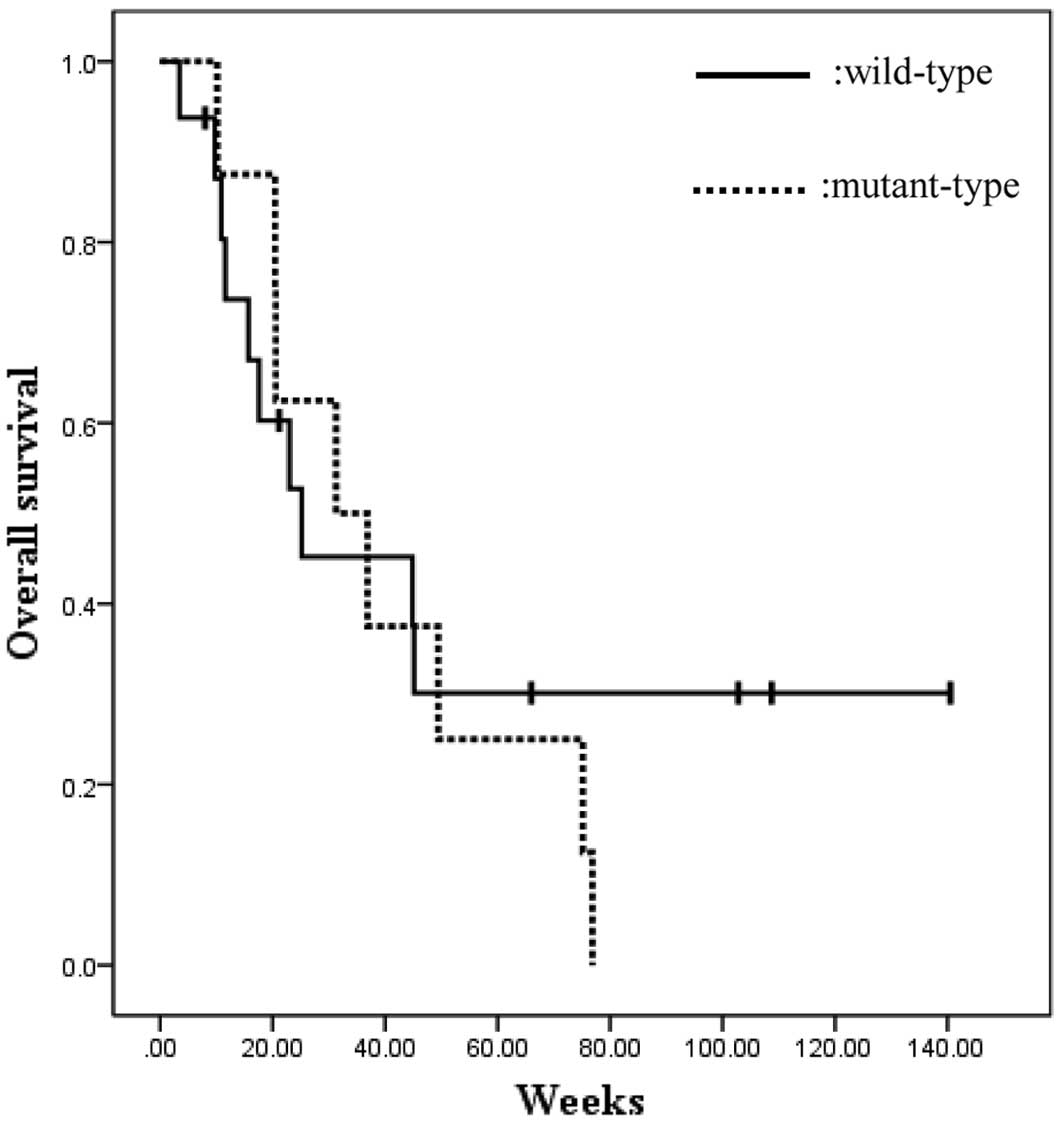
The mean OS times were 57.3 and 40.1 weeks for the wild-type KRAS and mutant KRAS groups, respectively. This difference was not statistically significant (P=0.584; log-rank test). However, 3 patients of the wild-type population survived >100 weeks (Fig. 1).

Figure 1

Kaplan-Meier survival plots for OS in advanced CRC treated with cetuximab monotherapy according to the KRAS type. OS, overall survival; CRC, colorectal cancer.

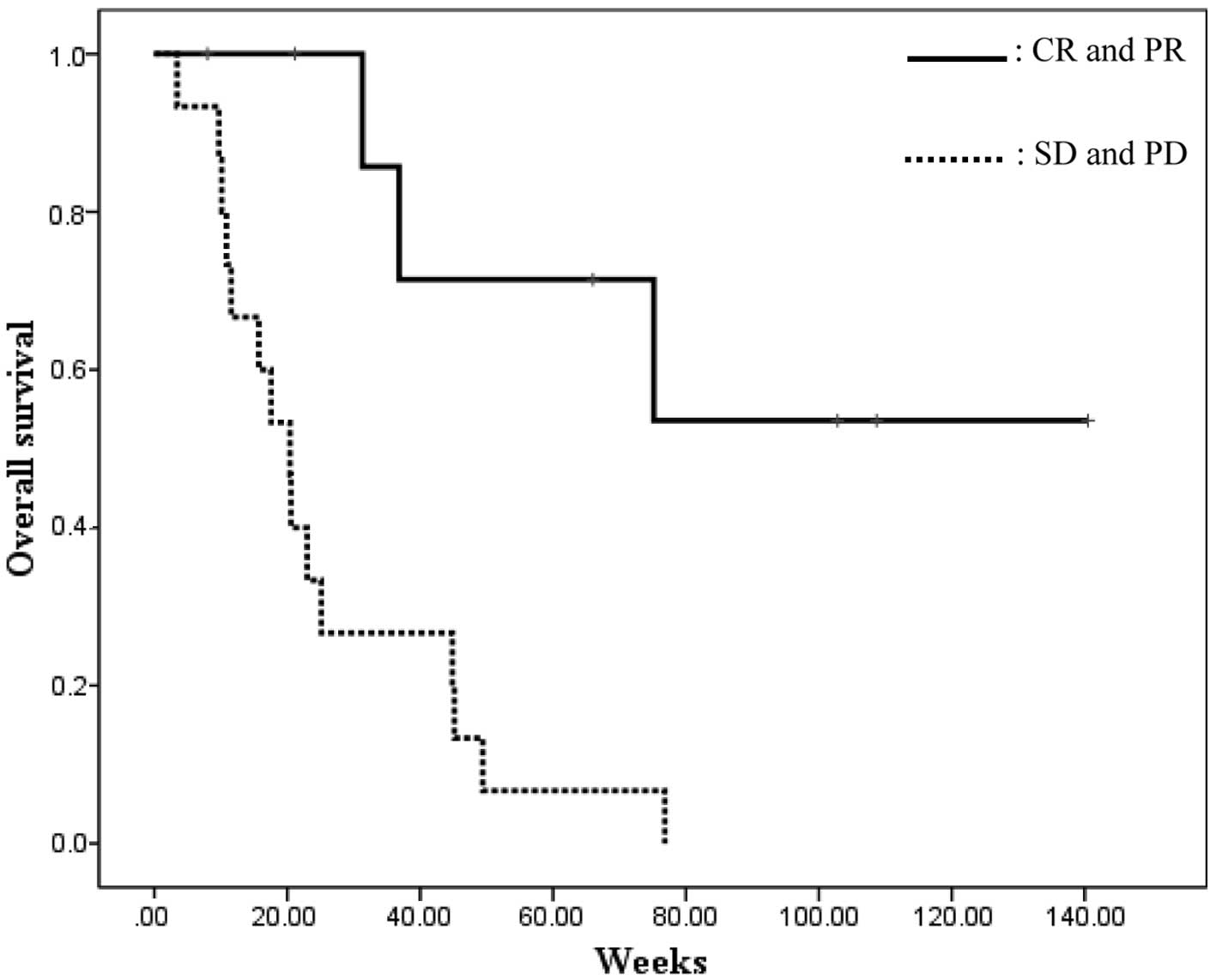
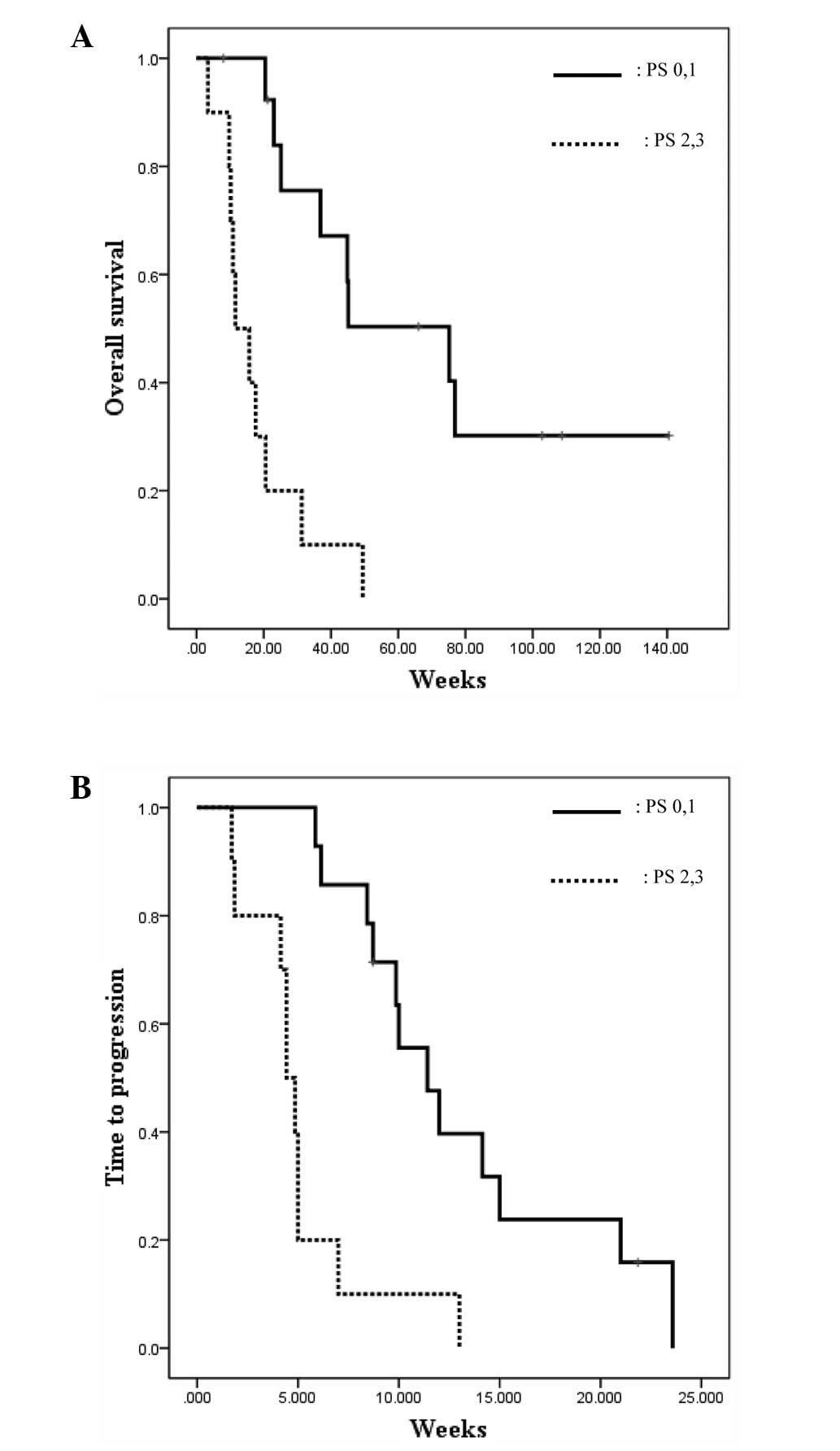
The mean OS of patients who exhibited a PR was higher compared with that of patients who did not (99.4 vs. 25.6 weeks; P=0.001; log-rank test; Fig. 2). The 1-year survival rate was >70% in the PR group, but <10% in the other survival groups. In addition, the median OS of patients who were PS0/1 was higher compared with that of patients who were not (74.0 vs. 18.0 weeks; P<0.001; log-rank test; Fig. 3A). PS was also the predictive factor of TTP (PS0/1 vs. PS2/3 groups, 13.2 vs. 5.1 weeks; P<0.001; log-rank test; Fig. 3B).

Figure 2

Kaplan-Meier survival plots for OS in advanced CRC treated with cetuximab monotherapy according to the evaluation of efficacy. OS, overall survival; CRC, colorectal cancer; CR, complete response; PR, partial response; SD, stable disease; PD, progressive disease.

Figure 3

(A) Kaplan-Meier survival plots for OS and (B) TTP in advanced CRC treated with cetuximab monotherapy according to the performance status. OS, overall survival; TTP, time to progression; CRC, colorectal cancer; PS, performance status.

Toxicity

With regard to toxicity the most common adverse effects reported were skin reactions, including acne (67%), hand-foot syndrome (16.7%) and paronychia (16.7%), followed by hypocalcemia (50%), hypomagnesemia (16%), stomatitis (20%) and gastrointestinal disorders (12%; Table III). One patient discontinued treatment due to grade 3 interstitial pneumonia. Additional grade 3 adverse effects were independent cases of stomatitis, acne and paronychia.

Table III

Adverse effects, (n=24).

Table III

Adverse effects, (n=24).

Grade, n (%)

Effects1 and 23 and 4
Non-hematological toxicities
 Gastrointestinal disorders3 (12.5)0 (0.0)
 Diarrhea2 (8.0)0 (0.0)
 Fatigue0 (0.0)1 (4.0)
 Stomatitis4 (16.7)0 (0.0)
 Hyperbilirubinemia0 (0.0)0 (0.0)
 Hypomagnesemia4 (16.7)0 (0.0)
 Hypocalcemia12 (50)0 (0.0)
 Alopecia0 (0.0)0 (0.0)
Skin reaction
 Acne16 (67)1 (4.0)
 Hand-foot syndrome4 (16.7)0 (0.0)
 Dry skin5 (20.8)0 (0.0)
 Paronychia4 (16.7)1 (4.0)
Peripheral neuropathy2 (8.0)0 (0.0)
Psychoneurotic disorder1 (4.0)0 (0.0)
Interstitial pneumonia0 (0.0)1 (4.0)
Ophthalmopathy1 (4.0)0 (0.0)
Infusion reaction4 (16.7)0 (0.0)

Discussion

In recent years, the outcome of unresectable CRC has been improved by treatment with irinotecan, oxaliplatin and molecular target drugs. However, there is currently no consensus on the combination of drugs to use or the timing of administration. In addition, following standard chemotherapy the physical status of numerous mCRC patients worsens, but hope is maintained that subsequent treatments will result in a positive outcome. In these cases, treatments with fewer side-effects must be available, and cetuximab represents a clear candidate for this since cetuximab monotherapy is recommended for patients unable to tolerate combination chemotherapy (6). Therefore, in the present study, the efficacy and toxicity of cetuximab monotherapy for refractory mCRC was examined in Japanese individuals.

A PR was obtained in 3/24 patients (12.5%), a significant result for a population of patients who were previously only eligible for best supportive care prior to the introduction of anti-EGFR antibody. The overall disease control rate, including that for SD cases, was 37.5%. All 3 patients who achieved a PR were in the wild-type KRAS subpopulation, indicating that the anti-EGFR antibody is effective against KRAS wild-type disease. In addition, 2 of these patients showed such marked responses to treatment that the liver metastases were able to be removed.

In the mutant KRAS subpopulation, 2/8 patients (25%) were identified with SD and showed a significant decrease in tumor marker expression. Notably, these patients showed marked skin reactions. There are two hypotheses for the efficacy of the antibody in mutant cases. The first hypothesis is that the patients have a mutation at codon 13; cetuximab has been shown to be effective in specific patients with a mutation at codon 13 (7). Of the 2 patients with SD in the present study, 1 had a mutation at codon 12 and the other had a mutation at codon 13. It should also be noted that the two patients exhibited extremely strong skin reactions. The second hypothesis is the involvement of antibody-dependent cell-mediated cytotoxicity (ADCC). A previous in vitro study using a lung cancer cell line reported ADCC with cetuximab and suggested a correlation between EGFR expression levels and the magnitude of ADCC (8). In addition, Fc receptor polymorphisms have also been reported to be clinically relevant in mutated KRAS mCRC (9).

In the present study, monotherapy with the anti-EGFR antibody, cetuximab, demonstrated efficacy in the third-line or subsequent treatment of patients who exhibited resistance to anticancer agents. An evaluation of the effect of treatment demonstrated that an improved prognosis is expected in patients who achieved SD or PR and in those classified as PS0/1. Prognostic factors have been identified, including the occurrence of skin toxicity on therapy (10), the previous number of chemotherapy lines and early tumor shrinkage (11). Therefore, the results of the present study indicate that patients must be of good physical status to receive cetuximab treatment and that evaluations must be made during the early stages.

The current NCCN Guidelines (6) recommend anti-EGFR antibody therapy for patients with any number of prior therapy lines. However, anti-EGFR antibody therapy exerts early tumor shrinkage and thus is hypothesized to represent a suitable choice for the treatment of patients with advanced mCRC and a poor PS. Therefore, we recommend that cetuximab therapy is used for non-first-line treatment. Previous studies in other populations have identified that the therapy may improve the response rate and prolong survival when used as the second-line (12), third-line or subsequent (13) treatments. Future studies are required to determine the efficacy of the therapy in the Japanese population.

In conclusion, the results of the present study demonstrated the efficacy of cetuximab as a third-line treatment for Japanese patients with mCRC, however, additional analyses must be performed in the Japanese population to establish the optimal usage of the drug for the treatment of CRC.

Abbreviations:

CR

complete response

CRC

colorectal cancer

ADCC

antibody-dependent cell-mediated cytotoxicity

EGFR

epidermal growth factor receptor

mCRC

metastatic colorectal cancer

OS

overall survival

PD

progessive disease

TTP

time to progression

PR

partial response

PS

performance status

SD

stable disease

References

1 

Jemal A, Bray F, Center MM, et al: Global cancer statistics. CA Cancer J Clin. 61:69–90. 2011. View Article : Google Scholar

2 

Tokyo Japan. Foundation for promotion of cancer research. Cancer statistics in Japan-2009. http://ganjoho.jp/data/public/statistics/backnumber/2011/files/cancer_statistics_2011.pdf. Accessed April 27, 2012

3 

Jonker DJ, O’Callaghan CJ, Karapetis CS, et al: Cetuximab for the treatment of colorectal cancer. N Engl J Med. 357:2040–2048. 2007. View Article : Google Scholar : PubMed/NCBI

4 

Au HJ, Karapetis CS, O’Callaghan CJ, et al: Health-related quality of life in patients with advanced colorectal cancer treated with cetuximab: overall and KRAS-specific results of the NCIC CTG and AGITG CO. 17 Trial. J Clin Oncol. 27:1822–1828. 2009. View Article : Google Scholar : PubMed/NCBI

5 

Mizota A, Shitara K, Kondo C, et al: Retrospective analysis of cetuximab monotherapy for patients with irinotecan-intolerant metastatic colorectal cancer. Int J Clin Oncol. 16:416–420. 2011. View Article : Google Scholar : PubMed/NCBI

6 

Engstrom PF, Arnoletti JP, Benson AB III, et al; National Comprehensive Cancer Network. NCCN clinical practice guidelines in oncology: colon cancer. J Natl Compr Canc Netw. 7:778–831. 2009.PubMed/NCBI

7 

De Roock W, Jonker DJ, Di Nicolantonio F, et al: Association of KRAS p.G13D mutation with outcome in patients with chemotherapy-refractory metastatic colorectal cancer treated with cetuximab. JAMA. 304:1812–1820. 2010.PubMed/NCBI

8 

Kimura H, Sakai K, Arao T, et al: Antibody-dependent cellular cytotoxicity of cetuximab against tumor cells with wild-type or mutant epidermal growth factor receptor. Cancer Sci. 98:1275–1280. 2007. View Article : Google Scholar

9 

Bibeau F, Lopez-Crapez E, Di Fiore F, et al: Impact of Fc{gamma}RIIa-Fc{gamma}RIIIa polymorphisms and KRAS mutations on the clinical outcome of patients with metastatic colorectal cancer treated with cetuximab plus irinotecan. J Clin Oncol. 27:1122–1129. 2009.

10 

Lièvre A, Bachet JB, Boige V, et al: KRAS mutations as an independent prognostic factor in patients with advanced colorectal cancer treated with cetuximab. J Clin Oncol. 26:374–379. 2008.

11 

Piessevaux H, Buyse M, De Roock W, et al: Radiological tumor size decrease at week 6 is a potent predictor of outcome in chemorefractory metastatic colorectal cancer treated with cetuximab (BOND trial). Ann Oncol. 20:1375–1382. 2009. View Article : Google Scholar

12 

Sobrero AF, Maurel J, Fehrenbacher L, et al: EPIC: phase III trial of cetuximab plus irinotecan after fluoropyrimidine and oxaliplatin failure in patients with metastatic colorectal cancer. J Clin Oncol. 26:2311–2319. 2008. View Article : Google Scholar : PubMed/NCBI

13 

Vincenzi B, Santini D, Rabitti C, et al: Cetuximab and irinotecan as third-line therapy in advanced colorectal cancer patients: a single centre phase II trial. Br J Cancer. 94:792–797. 2006. View Article : Google Scholar : PubMed/NCBI

Related Articles

  • Abstract
  • View
  • Download
  • Twitter
Copy and paste a formatted citation
Spandidos Publications style
Mekata E, Endo Y, Sonoda H, Shimizu T, Kawai Y, Umeda T, Shiomi H, Naka S, Kubota Y, Murata S, Murata S, et al: Cetuximab as salvage monotherapy in chemotherapy‑refractory metastatic colorectal cancer: A single‑center report. Oncol Lett 6: 1011-1014, 2013.
APA
Mekata, E., Endo, Y., Sonoda, H., Shimizu, T., Kawai, Y., Umeda, T. ... Tani, T. (2013). Cetuximab as salvage monotherapy in chemotherapy‑refractory metastatic colorectal cancer: A single‑center report. Oncology Letters, 6, 1011-1014. https://doi.org/10.3892/ol.2013.1477
MLA
Mekata, E., Endo, Y., Sonoda, H., Shimizu, T., Kawai, Y., Umeda, T., Shiomi, H., Naka, S., Kubota, Y., Murata, S., Yamamoto, H., Abe, H., Tani, T."Cetuximab as salvage monotherapy in chemotherapy‑refractory metastatic colorectal cancer: A single‑center report". Oncology Letters 6.4 (2013): 1011-1014.
Chicago
Mekata, E., Endo, Y., Sonoda, H., Shimizu, T., Kawai, Y., Umeda, T., Shiomi, H., Naka, S., Kubota, Y., Murata, S., Yamamoto, H., Abe, H., Tani, T."Cetuximab as salvage monotherapy in chemotherapy‑refractory metastatic colorectal cancer: A single‑center report". Oncology Letters 6, no. 4 (2013): 1011-1014. https://doi.org/10.3892/ol.2013.1477
Copy and paste a formatted citation
x
Spandidos Publications style
Mekata E, Endo Y, Sonoda H, Shimizu T, Kawai Y, Umeda T, Shiomi H, Naka S, Kubota Y, Murata S, Murata S, et al: Cetuximab as salvage monotherapy in chemotherapy‑refractory metastatic colorectal cancer: A single‑center report. Oncol Lett 6: 1011-1014, 2013.
APA
Mekata, E., Endo, Y., Sonoda, H., Shimizu, T., Kawai, Y., Umeda, T. ... Tani, T. (2013). Cetuximab as salvage monotherapy in chemotherapy‑refractory metastatic colorectal cancer: A single‑center report. Oncology Letters, 6, 1011-1014. https://doi.org/10.3892/ol.2013.1477
MLA
Mekata, E., Endo, Y., Sonoda, H., Shimizu, T., Kawai, Y., Umeda, T., Shiomi, H., Naka, S., Kubota, Y., Murata, S., Yamamoto, H., Abe, H., Tani, T."Cetuximab as salvage monotherapy in chemotherapy‑refractory metastatic colorectal cancer: A single‑center report". Oncology Letters 6.4 (2013): 1011-1014.
Chicago
Mekata, E., Endo, Y., Sonoda, H., Shimizu, T., Kawai, Y., Umeda, T., Shiomi, H., Naka, S., Kubota, Y., Murata, S., Yamamoto, H., Abe, H., Tani, T."Cetuximab as salvage monotherapy in chemotherapy‑refractory metastatic colorectal cancer: A single‑center report". Oncology Letters 6, no. 4 (2013): 1011-1014. https://doi.org/10.3892/ol.2013.1477
Follow us
  • Twitter
  • LinkedIn
  • Facebook
About
  • Spandidos Publications
  • Careers
  • Cookie Policy
  • Privacy Policy
How can we help?
  • Help
  • Live Chat
  • Contact
  • Email to our Support Team