Spandidos Publications Logo
  • About
    • About Spandidos
    • Aims and Scopes
    • Abstracting and Indexing
    • Editorial Policies
    • Reprints and Permissions
    • Job Opportunities
    • Terms and Conditions
    • Contact
  • Journals
    • All Journals
    • Oncology Letters
      • Oncology Letters
      • Information for Authors
      • Editorial Policies
      • Editorial Board
      • Aims and Scope
      • Abstracting and Indexing
      • Bibliographic Information
      • Archive
    • International Journal of Oncology
      • International Journal of Oncology
      • Information for Authors
      • Editorial Policies
      • Editorial Board
      • Aims and Scope
      • Abstracting and Indexing
      • Bibliographic Information
      • Archive
    • Molecular and Clinical Oncology
      • Molecular and Clinical Oncology
      • Information for Authors
      • Editorial Policies
      • Editorial Board
      • Aims and Scope
      • Abstracting and Indexing
      • Bibliographic Information
      • Archive
    • Experimental and Therapeutic Medicine
      • Experimental and Therapeutic Medicine
      • Information for Authors
      • Editorial Policies
      • Editorial Board
      • Aims and Scope
      • Abstracting and Indexing
      • Bibliographic Information
      • Archive
    • International Journal of Molecular Medicine
      • International Journal of Molecular Medicine
      • Information for Authors
      • Editorial Policies
      • Editorial Board
      • Aims and Scope
      • Abstracting and Indexing
      • Bibliographic Information
      • Archive
    • Biomedical Reports
      • Biomedical Reports
      • Information for Authors
      • Editorial Policies
      • Editorial Board
      • Aims and Scope
      • Abstracting and Indexing
      • Bibliographic Information
      • Archive
    • Oncology Reports
      • Oncology Reports
      • Information for Authors
      • Editorial Policies
      • Editorial Board
      • Aims and Scope
      • Abstracting and Indexing
      • Bibliographic Information
      • Archive
    • Molecular Medicine Reports
      • Molecular Medicine Reports
      • Information for Authors
      • Editorial Policies
      • Editorial Board
      • Aims and Scope
      • Abstracting and Indexing
      • Bibliographic Information
      • Archive
    • World Academy of Sciences Journal
      • World Academy of Sciences Journal
      • Information for Authors
      • Editorial Policies
      • Editorial Board
      • Aims and Scope
      • Abstracting and Indexing
      • Bibliographic Information
      • Archive
    • International Journal of Functional Nutrition
      • International Journal of Functional Nutrition
      • Information for Authors
      • Editorial Policies
      • Editorial Board
      • Aims and Scope
      • Abstracting and Indexing
      • Bibliographic Information
      • Archive
    • International Journal of Epigenetics
      • International Journal of Epigenetics
      • Information for Authors
      • Editorial Policies
      • Editorial Board
      • Aims and Scope
      • Abstracting and Indexing
      • Bibliographic Information
      • Archive
    • Medicine International
      • Medicine International
      • Information for Authors
      • Editorial Policies
      • Editorial Board
      • Aims and Scope
      • Abstracting and Indexing
      • Bibliographic Information
      • Archive
  • Articles
  • Information
    • Information for Authors
    • Information for Reviewers
    • Information for Librarians
    • Information for Advertisers
    • Conferences
  • Language Editing
Spandidos Publications Logo
  • About
    • About Spandidos
    • Aims and Scopes
    • Abstracting and Indexing
    • Editorial Policies
    • Reprints and Permissions
    • Job Opportunities
    • Terms and Conditions
    • Contact
  • Journals
    • All Journals
    • Biomedical Reports
      • Information for Authors
      • Editorial Policies
      • Editorial Board
      • Aims and Scope
      • Abstracting and Indexing
      • Bibliographic Information
      • Archive
    • Experimental and Therapeutic Medicine
      • Information for Authors
      • Editorial Policies
      • Editorial Board
      • Aims and Scope
      • Abstracting and Indexing
      • Bibliographic Information
      • Archive
    • International Journal of Epigenetics
      • Information for Authors
      • Editorial Policies
      • Editorial Board
      • Aims and Scope
      • Abstracting and Indexing
      • Bibliographic Information
      • Archive
    • International Journal of Functional Nutrition
      • Information for Authors
      • Editorial Policies
      • Editorial Board
      • Aims and Scope
      • Abstracting and Indexing
      • Bibliographic Information
      • Archive
    • International Journal of Molecular Medicine
      • Information for Authors
      • Editorial Policies
      • Editorial Board
      • Aims and Scope
      • Abstracting and Indexing
      • Bibliographic Information
      • Archive
    • International Journal of Oncology
      • Information for Authors
      • Editorial Policies
      • Editorial Board
      • Aims and Scope
      • Abstracting and Indexing
      • Bibliographic Information
      • Archive
    • Medicine International
      • Information for Authors
      • Editorial Policies
      • Editorial Board
      • Aims and Scope
      • Abstracting and Indexing
      • Bibliographic Information
      • Archive
    • Molecular and Clinical Oncology
      • Information for Authors
      • Editorial Policies
      • Editorial Board
      • Aims and Scope
      • Abstracting and Indexing
      • Bibliographic Information
      • Archive
    • Molecular Medicine Reports
      • Information for Authors
      • Editorial Policies
      • Editorial Board
      • Aims and Scope
      • Abstracting and Indexing
      • Bibliographic Information
      • Archive
    • Oncology Letters
      • Information for Authors
      • Editorial Policies
      • Editorial Board
      • Aims and Scope
      • Abstracting and Indexing
      • Bibliographic Information
      • Archive
    • Oncology Reports
      • Information for Authors
      • Editorial Policies
      • Editorial Board
      • Aims and Scope
      • Abstracting and Indexing
      • Bibliographic Information
      • Archive
    • World Academy of Sciences Journal
      • Information for Authors
      • Editorial Policies
      • Editorial Board
      • Aims and Scope
      • Abstracting and Indexing
      • Bibliographic Information
      • Archive
  • Articles
  • Information
    • For Authors
    • For Reviewers
    • For Librarians
    • For Advertisers
    • Conferences
  • Language Editing
Login Register Submit
  • This site uses cookies
  • You can change your cookie settings at any time by following the instructions in our Cookie Policy. To find out more, you may read our Privacy Policy.

    I agree
Search articles by DOI, keyword, author or affiliation
Search
Advanced Search
presentation
Oncology Letters
Join Editorial Board Propose a Special Issue
Print ISSN: 1792-1074 Online ISSN: 1792-1082
Journal Cover
April-2016 Volume 11 Issue 4

Full Size Image

Sign up for eToc alerts
Recommend to Library

Journals

International Journal of Molecular Medicine

International Journal of Molecular Medicine

International Journal of Molecular Medicine is an international journal devoted to molecular mechanisms of human disease.

International Journal of Oncology

International Journal of Oncology

International Journal of Oncology is an international journal devoted to oncology research and cancer treatment.

Molecular Medicine Reports

Molecular Medicine Reports

Covers molecular medicine topics such as pharmacology, pathology, genetics, neuroscience, infectious diseases, molecular cardiology, and molecular surgery.

Oncology Reports

Oncology Reports

Oncology Reports is an international journal devoted to fundamental and applied research in Oncology.

Experimental and Therapeutic Medicine

Experimental and Therapeutic Medicine

Experimental and Therapeutic Medicine is an international journal devoted to laboratory and clinical medicine.

Oncology Letters

Oncology Letters

Oncology Letters is an international journal devoted to Experimental and Clinical Oncology.

Biomedical Reports

Biomedical Reports

Explores a wide range of biological and medical fields, including pharmacology, genetics, microbiology, neuroscience, and molecular cardiology.

Molecular and Clinical Oncology

Molecular and Clinical Oncology

International journal addressing all aspects of oncology research, from tumorigenesis and oncogenes to chemotherapy and metastasis.

World Academy of Sciences Journal

World Academy of Sciences Journal

Multidisciplinary open-access journal spanning biochemistry, genetics, neuroscience, environmental health, and synthetic biology.

International Journal of Functional Nutrition

International Journal of Functional Nutrition

Open-access journal combining biochemistry, pharmacology, immunology, and genetics to advance health through functional nutrition.

International Journal of Epigenetics

International Journal of Epigenetics

Publishes open-access research on using epigenetics to advance understanding and treatment of human disease.

Medicine International

Medicine International

An International Open Access Journal Devoted to General Medicine.

Journal Cover
April-2016 Volume 11 Issue 4

Full Size Image

Sign up for eToc alerts
Recommend to Library

  • Article
  • Citations
    • Cite This Article
    • Download Citation
    • Create Citation Alert
    • Remove Citation Alert
    • Cited By
  • Similar Articles
    • Related Articles (in Spandidos Publications)
    • Similar Articles (Google Scholar)
    • Similar Articles (PubMed)
  • Download PDF
  • Download XML
  • View XML
Case Report

Langerhans' cell histiocytosis of the temporal fossa: A case report

  • Authors:
    • Chen Liang
    • Qianlei Liang
    • Changwang Du
    • Xiaodong Zhang
    • Shiwen Guo
  • View Affiliations / Copyright

    Affiliations: Department of Neurosurgery, The First Affiliated Hospital of Xi'an Jiaotong University, Xi'an, Shaanxi 710061, P.R. China, Department of Neurosurgery, China‑Japan Union Hospital of Jilin University, Changchun, Jilin 130033, P.R. China
  • Pages: 2625-2628
    |
    Published online on: February 22, 2016
       https://doi.org/10.3892/ol.2016.4256
  • Expand metrics +
Metrics: Total Views: 0 (Spandidos Publications: | PMC Statistics: )
Metrics: Total PDF Downloads: 0 (Spandidos Publications: | PMC Statistics: )
Cited By (CrossRef): 0 citations Loading Articles...

This article is mentioned in:


Abstract

Langerhans' cell histiocytosis (LCH) is a rare disease with a wide spectrum of clinical manifestations, varying from an isolated lesion to systemic involvement. The etiology of this disease remains to be elucidated. The present study reports a case of LCH with temporal fossa localization in an 8‑year‑old male patient, who had exhibited left temporal pain and headache for 1 month. Physical examination revealed slight exophthalmos and conjunctival hemorrhage in the patient's left eye, and non‑contrast computed tomography imaging of the head revealed a soft tissue mass with unclear margins located in the left temporal fossa, as well as a wide bony defect. Magnetic resonance imaging revealed a heterogeneously contrast‑enhanced mass near the left temporal pole, which eroded into the patient's left orbit and maxillary sinus. The lesion was totally excised and confirmed to be LCH through biopsy.

Introduction

Langerhans' cell histiocytosis (LCH) is a rare disease with a wide spectrum of clinical manifestations (1). The primary pathogenesis of this disease is an abnormal proliferation of Langerhans' cells, which are typically present only in the dermis (1). A total of three different terms, namely eosinophilic granuloma, Hand-Schüller-Christian disease and Letterer-Siwe disease, were used in the past to describe a group of disorders characterized by increased numbers of histiocytes (2). In 1953, Lichtenstein (3) summarized these disorders as histiocytosis X, due to their similar histopathologies, and in 1987, the term LCH was recommended by The Writing Group of the Histiocyte Society as the official definition for this syndrome (4). The clinical appearance of LCH is dependent on the location of the lesion. The abnormal accumulation of histiocytes may occur in almost every organ, including the central nervous system, skin, bone, bone marrow, lung, liver, spleen and lymph nodes, and may cause associated signs and symptoms (4). Therefore, LCH may be classified as monosystemic or plurisystemic, according to the number of organs involved (5). The diagnosis of LCH is based on pathological examination. Typical accumulation of histiocytes, electron microscopic observation of Birbeck granules and the presence of Langerhans' cell-associated markers, including cluster of differentiation (CD)1a and S-100 protein, are crucial for establishing a diagnosis of LCH (6). LCH is typically considered to be an extremely rare disease of childhood, with an incidence rate of ~2-5/1,000,000 children/year (7). There are no specific signs and symptoms associated with LCH involving the skull, and the most common presentation is a painful and immobile scalp mass, which may be palpable in certain cases (5,8). Epistaxis or otorrhagia may be exhibited when the lesion invades the paranasal sinuses or external ear canal (5,8).

The present study reports the case of an 8-year-old male patient with an LCH lesion in his left temporal fossa, and aims to provide clinical experience in the diagnosis and treatment of intracranial LCH.

Case report

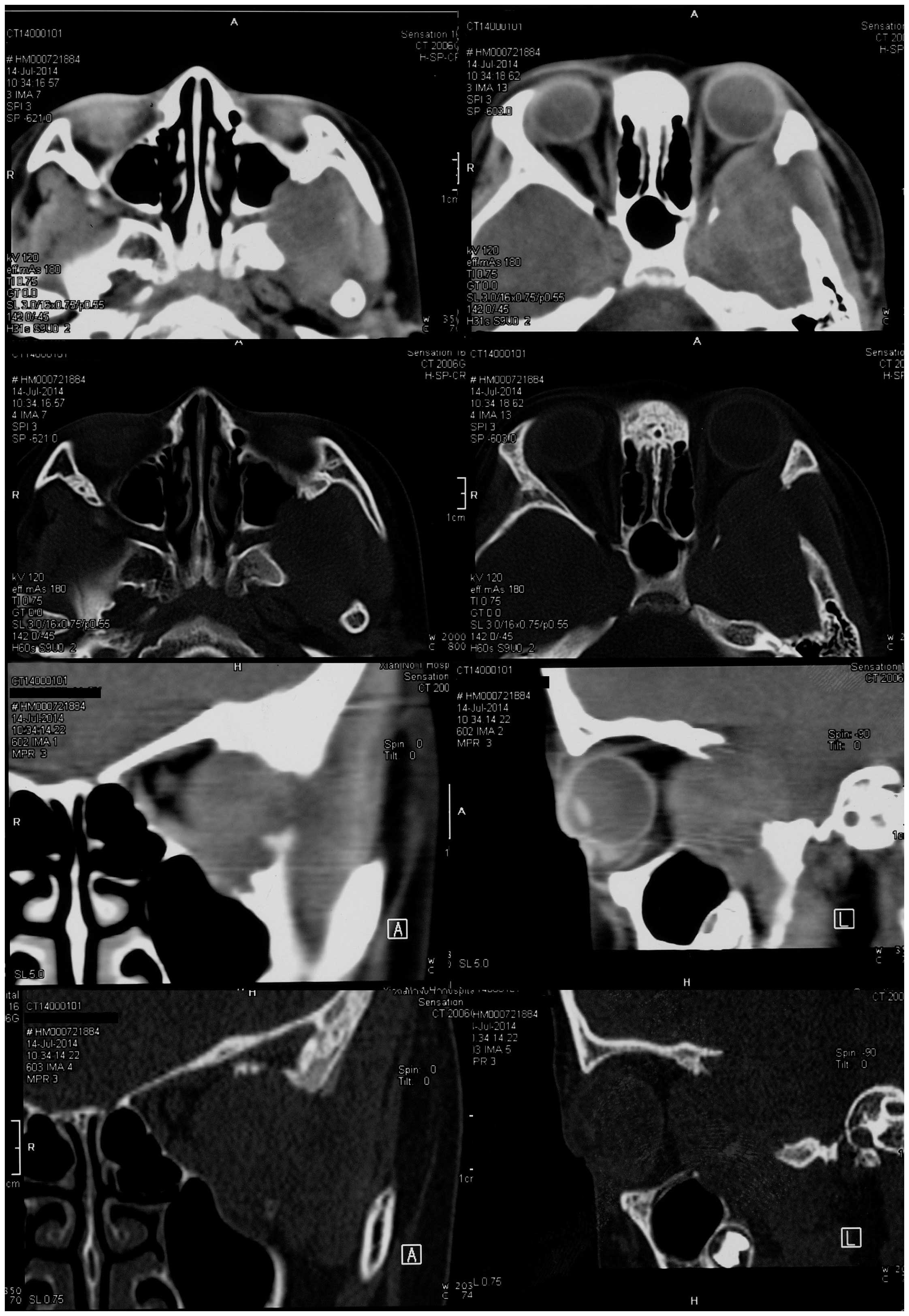
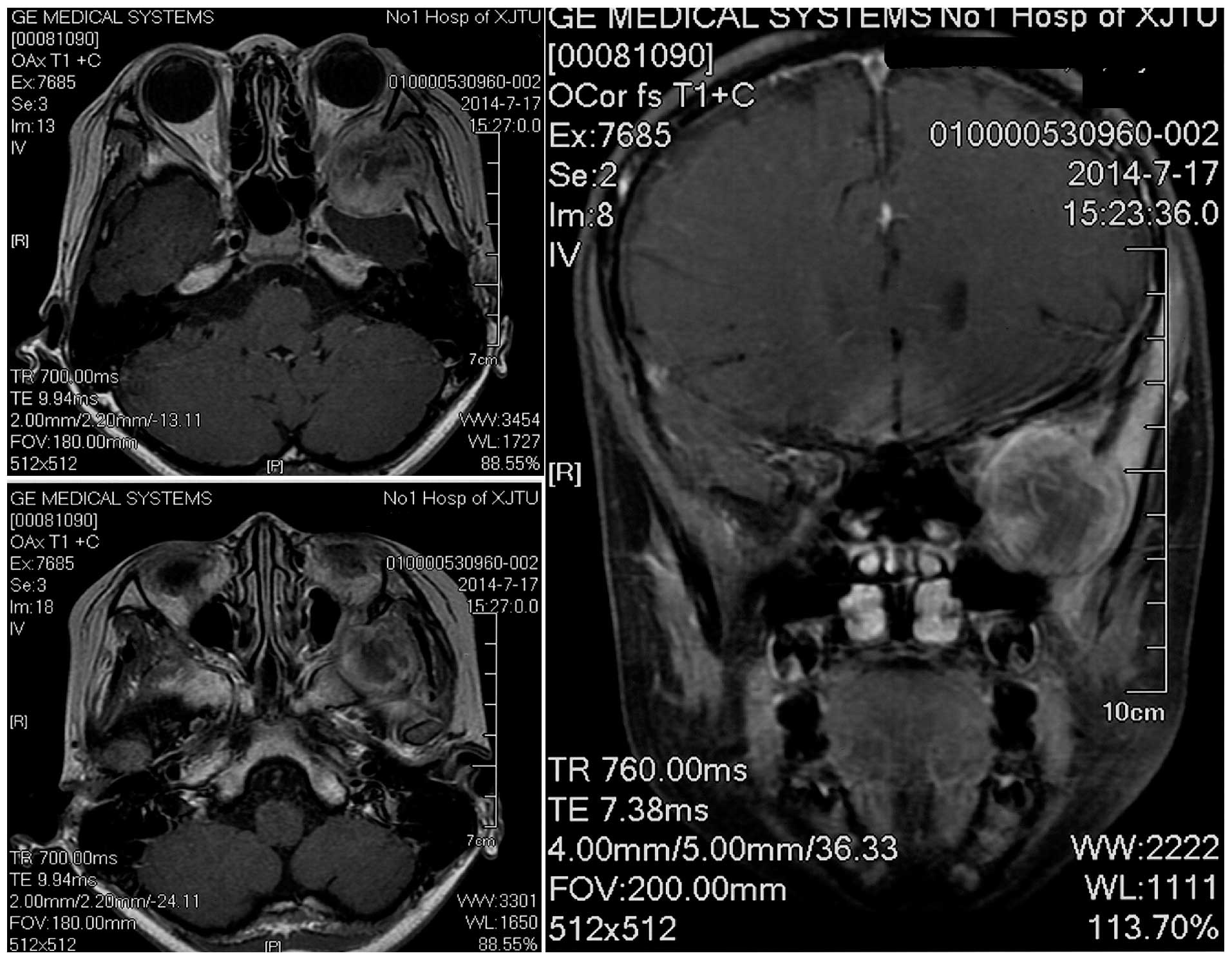
An 8-year-old male patient presented at the Department of Neurosurgery of the First Affiliated Hospital of Xi'an Jiaotong University (Xi'an, China) in July 2014 with a 1-month history of left temporal pain and headache. Physical examination revealed slight exophthalmos and conjunctival hemorrhage in the left eye, with no other positive signs. Non-contrast computed tomography (CT; Brilliance 64; Philips Medical Systems, Inc., Bothell, WA, USA) imaging of the head revealed a soft tissue mass with unclear margins located in the left temporal fossa. The mass extended into the patient's left orbit and maxillary sinus. Bone window CT imaging revealed a wide bony defect, including part of the greater wing of the left sphenoid bone, the left lateral orbit and the posterior wall of the left maxillary sinus (Fig. 1). Magnetic resonance imaging (MRI; Signa HDxt 3.0T; GE Healthcare Bio-Sciences, Pittsburgh, PA, USA) revealed a heterogeneously contrast-enhancing mass close to the patient's left temporal pole, eroding into the left orbit and maxillary sinus (Fig. 2). There was a clear plane between the mass and the left temporal pole. The imaging findings suggested a diagnosis of meningioma.

Figure 1.

Non-contrast computed tomography image revealing a soft tissue mass with unclear margins located in the left temporal fossa, and a wide bony defect including part of the greater wing of the left sphenoid bone, the left lateral orbit and the posterior wall of left maxillary sinus.

Figure 2.

Magnetic resonance imaging revealed a heterogeneously contrast-enhancing mass near the left temporal pole, which eroded into the left orbit and maxillary sinus.

The patient underwent resection of the tumor of the middle cranial fossa. A pterional craniotomy was performed. The bony defect of the sphenoid bone was observed, and the tumor extended outside the temporal fossa through this defect. Following removal of the bone flap, the tumor was revealed to be completely extradural, but adhered to the dura. Although the patient's left lateral orbit and the posterior wall of his left maxillary sinus were eroded by the tumor, the orbital fascia and the mucous membrane of the maxillary sinus remained complete, and did not adhere to the tumor. The tumor was removed from around the normal anatomical structures, and was completely resected under a surgical microscope (OPMI Pentero; Zeiss AG, Oberkochen, Germany).

Tissues were fixed with 10% formalin (Xi'an Chemical Reagent Factory, Xi'an, China) for 24 h at room temperature. The fixed tissues were trimmed and placed in embedding cassettes with paraffin (Shanghai Huayong Paraffin Wax Co., Ltd, Shanghai, China). The paraffin-embedded, trimmed blocks were cut into 4-µm sections and adhered to microscope slides. The paraffin sections were deparaffinized by xylene (Xi'an Chemical Reagent Factory) and hydrated routinely, then hematoxylin and eosin staining (ZSGB-BIO, Beijing, China) was performed.

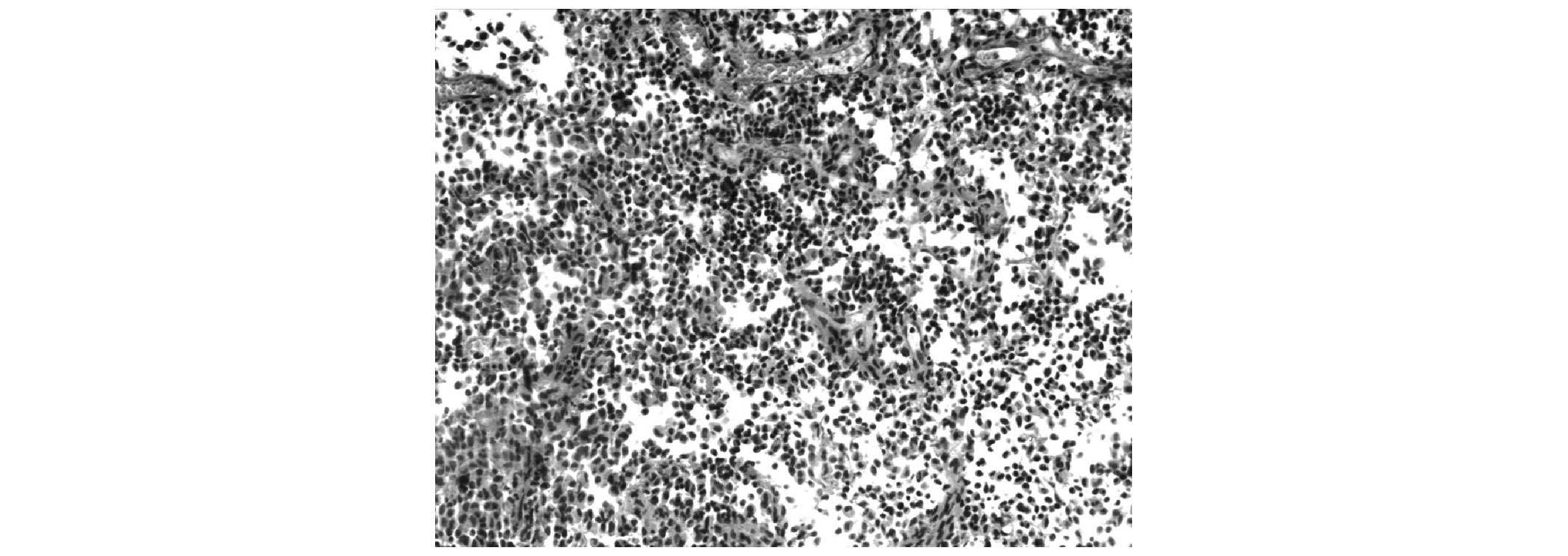
Histological section of the tumor tissue stained with hematoxylin and eosin revealed the presence of histocytes, with moderate amounts possessing eosinophilic cytoplasms and pale staining nuclei (Fig. 3). Immunohistochemistry of the tumor tissue revealed positivity for S-100 (monoclonal mouse anti-human; catalog no., ZM-0224; ZSGB-BIO, Beijing, China), CD1a (monoclonal rabbit anti-human; catalog no., ZA-0544; ZSGB-BIO), vimentin (monoclonal rabbit anti-human; catalog no., ZA-0511; ZSGB-BIO) and cytokeratin (monoclonal mouse anti-human; catalog no., ZM-0067; ZSGB-BIO), and negativity for epithelial membrane antigen (monoclonal mouse anti-human; catalog no., ZM-0095; ZSGB-BIO), desmin (monoclonal rabbit anti-human; catalog no., ZA-0610; ZSGB-BIO), CD68 (monoclonal mouse anti-human; catalog no., ZM-0060; ZSGB-BIO), glial fibrillary acidic protein (monoclonal rabbit anti-human; catalog no., ZA-0529; ZSGB-BIO), synaptophysin (monoclonal rabbit anti-human; catalog no., ZA-0236; ZSGB-BIO) and chromogranin A (monoclonal rabbit anti-human; catalog no., ZA-0507; ZSGB-BIO). The final pathological diagnosis of the tumor was LCH.

Figure 3.

Langerhans-like cells demonstrate diffuse distribution (hematoxylin and eosin staining; magnification, x10).

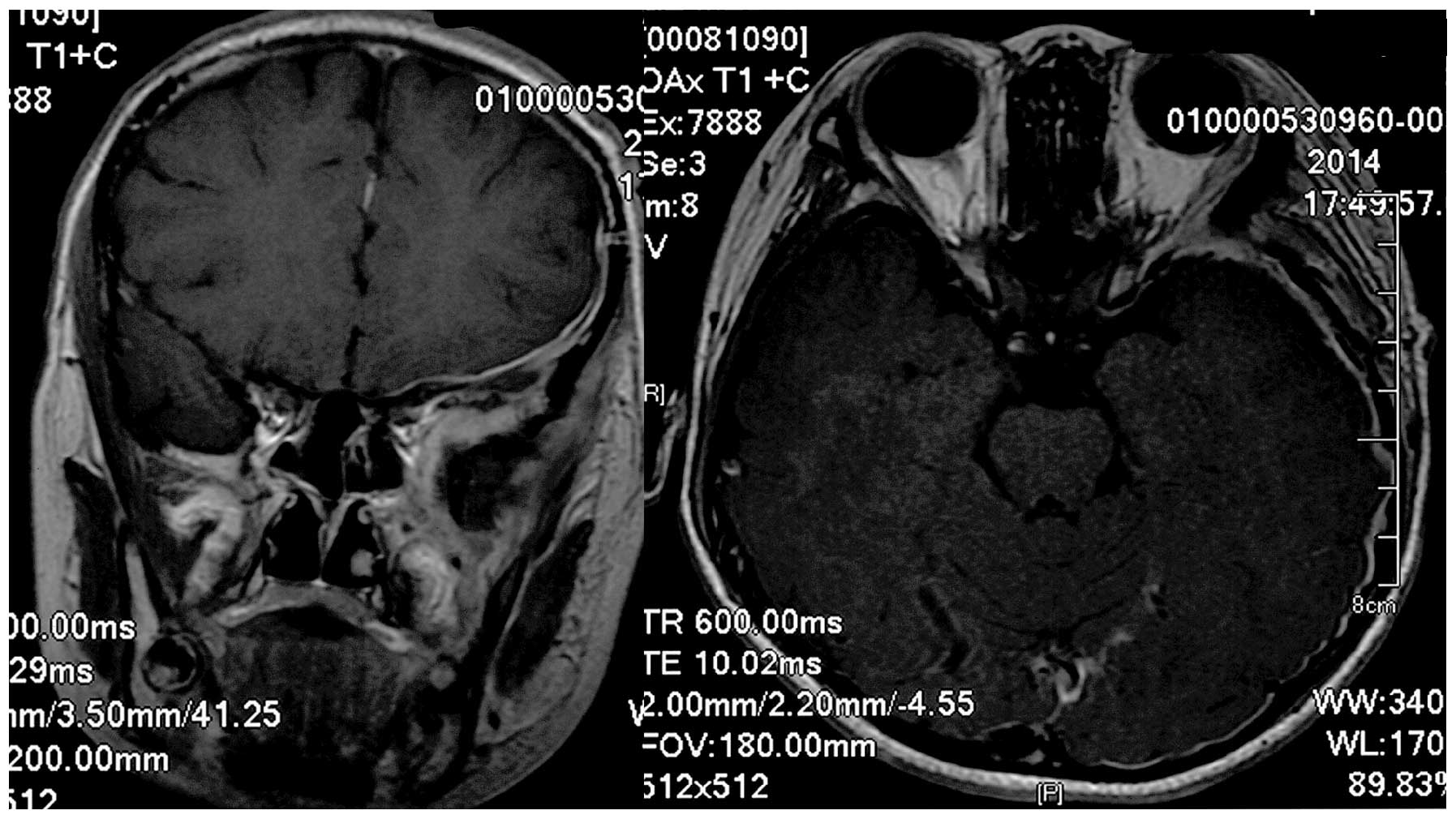
The patient experienced a good recovery with no neurological deficits following surgery, and was treated with chemotherapy (vinblastine 6 mg/m2 intravenously administered once a week for 6 weeks following surgery; prednisone 40 mg/m2 once a day administrated orally for 4 weeks following surgery and then gradually at a reduced dosage over 2 weeks) and radiation treatment (three dimensional-conformal radiotherapy; total dose, 15 Gy in 1.5 Gy increments). Follow-up MRI revealed no residual tumor matter or recurrence (Fig. 4). Written informed consent was obtained from the family of the patient for the publication of the present study.

Figure 4.

Follow-up magnetic resonance imaging revealed no residual tumor matter or recurrence.

Discussion

As mentioned previously, there are no specific signs and symptoms for LCH involving the skull, and the most common presentation is a painful and immobile scalp mass, which may be palpable in certain cases (5,8). In the present study, the patient experienced left temporal pain and headache, however, there was no obvious palpable mass. Therefore, imaging examinations of the cranium were essential in order to locate the lesion.

LCH lesions may develop in the diploic space and are round or oval-shaped with well-defined margins, which is described as a ‘punched-out’ image on an X-ray (6). CT scanning is useful for identifying bony defects that may be eroded by the lesion, while MRI may be used to identify the intracranial lesion (9). Due to the absence of LCH diagnostic criteria for imaging examination, meningioma, rhabdomyosarcoma and Ewing's sarcoma should be considered during differential diagnosis (9). In the present case, the lesion was located in the patient's left temporal fossa, and a wide bony defect was detected. As 60–80% of LCH cases have skull involvement (8), it was appropriate to hypothesize that the lesion originated from the skull. In recent years, positron emission tomography/CT has proven to be the most sensitive test available for the identification of LCH lesions and in the evaluation of patient responses to therapy (10,11).

Once the diagnosis of LCH has been confirmed, it is important to assess the involvement of other organs, as LCH is typically a systemic disease. According to the current guidelines, full blood count, liver function, electrolytes, erythrocyte sedimentation rate, abdominal ultrasound, coagulation studies, chest radiograph and skeletal radiographic survey should been performed during this phase (9). In the present case, all these tests were performed, which confirmed that no other organs were involved (data not shown).

Due to the potential for development of sequelae, according to the current guidelines, systemic therapy is recommended for the treatment of patients with lesions involving the skull base, orbits and temporal bone (9). Therefore, chemotherapy and radiation treatment were performed following surgery in the present case. The standard chemotherapy treatment is based on vinblastine and steroids, and the clinical response should be evaluated following the first 6 weeks of treatment (9).

There remains controversy regarding the use of radiotherapy to treat LCH patients. Certain experts no longer recommend radiotherapy due to the risk of long-term sequelae (12). However, other experts consider radiotherapy to be an effective and safe treatment option for LCH patients (13,14). Thus, the overall safety of radiotherapy to treat LCH patients requires additional investigation in future studies.

In conclusion, the rare case described in the present report highlights the importance of neurosurgeons to be familiar with LCH, as this disease frequently involves head tissues and organs. LCH should be considered during differential diagnosis in children with imaging examination results suggestive of an intracranial lesion associated with a bony defect.

References

1 

Saliba I, Sidani K, El Fata F, Arcand P, Quintal MC and Abela A: Langerhans' cell histiocytosis of the temporal bone in children. Int J Pediatr Otorhinolaryngol. 72:775–786. 2008. View Article : Google Scholar : PubMed/NCBI

2 

Kleinjung T, Woenckhaus M, Bachthaler M, Wolff JE and Wolf SR: Langerhans' cell histiocytosis with bilateral temporal bone involvement. Am J Otolaryngol. 24:265–270. 2003. View Article : Google Scholar : PubMed/NCBI

3 

Lichtenstein L: Histiocytosis X; integration of eosinophilic granuloma of bone, Letterer-Siwe disease, and Schüller-Christian disease as related manifestations of a single nosologic entity. AMA Arch Pathol. 56:84–102. 1953.PubMed/NCBI

4 

The Writing Group of the Histiocyte Society: Histiocytosis syndromes in children. Lancet. 1:208–209. 1987.PubMed/NCBI

5 

Martini A, Aimoni C, Trevisani M and Marangoni P: Langerhans' cell histiocytosis: Report of a case with temporal localization. Int J Pediatr Otorhinolaryngol. 55:51–56. 2000. View Article : Google Scholar : PubMed/NCBI

6 

Azouz EM, Saigal G, Rodriguez MM and Podda A: Langerhans' cell histiocytosis: Pathology, imaging and treatment of skeletal involvement. Pediatr Radiol. 35:103–115. 2005. View Article : Google Scholar : PubMed/NCBI

7 

Badalian-Very G, Vergilio JA, Degar BA, Rodriguez-Galindo C and Rollins BJ: Recent advances in the understanding of Langerhans cell histiocytosis. Br J Haematol. 156:163–172. 2012. View Article : Google Scholar : PubMed/NCBI

8 

Binning MJ and Brockmeyer DL: Novel multidisciplinary approach for treatment of langerhans cell histiocytosis of the skull base. Skull Base. 18:53–58. 2008. View Article : Google Scholar : PubMed/NCBI

9 

Haupt R, Minkov M, Astigarraga I, Schäfer E, Nanduri V, Jubran R, Egeler RM, Janka G, Micic D, Rodriguez-Galindo C, et al: Euro Histio Network: Langerhans cell histiocytosis (LCH): Guidelines for diagnosis, clinical work-up, and treatment for patients till the age of 18 years. Pediatr Blood Cancer. 60:175–184. 2013. View Article : Google Scholar : PubMed/NCBI

10 

Zhou W, Wu H, Han Y, Wang S, Dong Y and Wang Q: Preliminary study on the evaluation of Langerhans cell histiocytosis using F-18-fluoro-deoxy-glucose PET/CT. Chin Med J (Engl). 127:2458–2462. 2014.PubMed/NCBI

11 

Yamaki T, Kokubo Y, Saito Y, Matsuda K, Funiu H, Sakurada K, Sato S and Kayama T: A case of Langerhans cell histiocytosis of the skull in which preoperative methionine positron emission tomography was useful in comprehending the spreading of the lesion. Surg Neurol Int. 5:272014. View Article : Google Scholar : PubMed/NCBI

12 

The French Langerhans' Cell Histiocytosis Study Group: A multicentre retrospective survey of Langerhans' cell histiocytosis: 348 cases observed between 1983 and 1993. Arch Dis Child. 75:17–24. 1996. View Article : Google Scholar : PubMed/NCBI

13 

Meyer A, Stark M, Karstens JH, Christiansen H and Bruns F: Langerhans cell histiocytosis of the cranial base: Is low-dose radiotherapy effective? Case Rep Oncol Med. 2012:7896402012.PubMed/NCBI

14 

Kriz J, Eich HT, Bruns F, Heyd R, Schäfer U, Haverkamp U, Büntzel J, Seegenschmiedt H and Micke O: Radiotherapy in langerhans cell histiocytosis - a rare indication in a rare disease. Radiat Oncol. 8:2332013. View Article : Google Scholar : PubMed/NCBI

Related Articles

  • Abstract
  • View
  • Download
  • Twitter
Copy and paste a formatted citation
Spandidos Publications style
Liang C, Liang Q, Du C, Zhang X and Guo S: Langerhans' cell histiocytosis of the temporal fossa: A case report. Oncol Lett 11: 2625-2628, 2016.
APA
Liang, C., Liang, Q., Du, C., Zhang, X., & Guo, S. (2016). Langerhans' cell histiocytosis of the temporal fossa: A case report. Oncology Letters, 11, 2625-2628. https://doi.org/10.3892/ol.2016.4256
MLA
Liang, C., Liang, Q., Du, C., Zhang, X., Guo, S."Langerhans' cell histiocytosis of the temporal fossa: A case report". Oncology Letters 11.4 (2016): 2625-2628.
Chicago
Liang, C., Liang, Q., Du, C., Zhang, X., Guo, S."Langerhans' cell histiocytosis of the temporal fossa: A case report". Oncology Letters 11, no. 4 (2016): 2625-2628. https://doi.org/10.3892/ol.2016.4256
Copy and paste a formatted citation
x
Spandidos Publications style
Liang C, Liang Q, Du C, Zhang X and Guo S: Langerhans' cell histiocytosis of the temporal fossa: A case report. Oncol Lett 11: 2625-2628, 2016.
APA
Liang, C., Liang, Q., Du, C., Zhang, X., & Guo, S. (2016). Langerhans' cell histiocytosis of the temporal fossa: A case report. Oncology Letters, 11, 2625-2628. https://doi.org/10.3892/ol.2016.4256
MLA
Liang, C., Liang, Q., Du, C., Zhang, X., Guo, S."Langerhans' cell histiocytosis of the temporal fossa: A case report". Oncology Letters 11.4 (2016): 2625-2628.
Chicago
Liang, C., Liang, Q., Du, C., Zhang, X., Guo, S."Langerhans' cell histiocytosis of the temporal fossa: A case report". Oncology Letters 11, no. 4 (2016): 2625-2628. https://doi.org/10.3892/ol.2016.4256
Follow us
  • Twitter
  • LinkedIn
  • Facebook
About
  • Spandidos Publications
  • Careers
  • Cookie Policy
  • Privacy Policy
How can we help?
  • Help
  • Live Chat
  • Contact
  • Email to our Support Team