Spandidos Publications Logo
  • About
    • About Spandidos
    • Aims and Scopes
    • Abstracting and Indexing
    • Editorial Policies
    • Reprints and Permissions
    • Job Opportunities
    • Terms and Conditions
    • Contact
  • Journals
    • All Journals
    • Oncology Letters
      • Oncology Letters
      • Information for Authors
      • Editorial Policies
      • Editorial Board
      • Aims and Scope
      • Abstracting and Indexing
      • Bibliographic Information
      • Archive
    • International Journal of Oncology
      • International Journal of Oncology
      • Information for Authors
      • Editorial Policies
      • Editorial Board
      • Aims and Scope
      • Abstracting and Indexing
      • Bibliographic Information
      • Archive
    • Molecular and Clinical Oncology
      • Molecular and Clinical Oncology
      • Information for Authors
      • Editorial Policies
      • Editorial Board
      • Aims and Scope
      • Abstracting and Indexing
      • Bibliographic Information
      • Archive
    • Experimental and Therapeutic Medicine
      • Experimental and Therapeutic Medicine
      • Information for Authors
      • Editorial Policies
      • Editorial Board
      • Aims and Scope
      • Abstracting and Indexing
      • Bibliographic Information
      • Archive
    • International Journal of Molecular Medicine
      • International Journal of Molecular Medicine
      • Information for Authors
      • Editorial Policies
      • Editorial Board
      • Aims and Scope
      • Abstracting and Indexing
      • Bibliographic Information
      • Archive
    • Biomedical Reports
      • Biomedical Reports
      • Information for Authors
      • Editorial Policies
      • Editorial Board
      • Aims and Scope
      • Abstracting and Indexing
      • Bibliographic Information
      • Archive
    • Oncology Reports
      • Oncology Reports
      • Information for Authors
      • Editorial Policies
      • Editorial Board
      • Aims and Scope
      • Abstracting and Indexing
      • Bibliographic Information
      • Archive
    • Molecular Medicine Reports
      • Molecular Medicine Reports
      • Information for Authors
      • Editorial Policies
      • Editorial Board
      • Aims and Scope
      • Abstracting and Indexing
      • Bibliographic Information
      • Archive
    • World Academy of Sciences Journal
      • World Academy of Sciences Journal
      • Information for Authors
      • Editorial Policies
      • Editorial Board
      • Aims and Scope
      • Abstracting and Indexing
      • Bibliographic Information
      • Archive
    • International Journal of Functional Nutrition
      • International Journal of Functional Nutrition
      • Information for Authors
      • Editorial Policies
      • Editorial Board
      • Aims and Scope
      • Abstracting and Indexing
      • Bibliographic Information
      • Archive
    • International Journal of Epigenetics
      • International Journal of Epigenetics
      • Information for Authors
      • Editorial Policies
      • Editorial Board
      • Aims and Scope
      • Abstracting and Indexing
      • Bibliographic Information
      • Archive
    • Medicine International
      • Medicine International
      • Information for Authors
      • Editorial Policies
      • Editorial Board
      • Aims and Scope
      • Abstracting and Indexing
      • Bibliographic Information
      • Archive
  • Articles
  • Information
    • Information for Authors
    • Information for Reviewers
    • Information for Librarians
    • Information for Advertisers
    • Conferences
  • Language Editing
Spandidos Publications Logo
  • About
    • About Spandidos
    • Aims and Scopes
    • Abstracting and Indexing
    • Editorial Policies
    • Reprints and Permissions
    • Job Opportunities
    • Terms and Conditions
    • Contact
  • Journals
    • All Journals
    • Biomedical Reports
      • Information for Authors
      • Editorial Policies
      • Editorial Board
      • Aims and Scope
      • Abstracting and Indexing
      • Bibliographic Information
      • Archive
    • Experimental and Therapeutic Medicine
      • Information for Authors
      • Editorial Policies
      • Editorial Board
      • Aims and Scope
      • Abstracting and Indexing
      • Bibliographic Information
      • Archive
    • International Journal of Epigenetics
      • Information for Authors
      • Editorial Policies
      • Editorial Board
      • Aims and Scope
      • Abstracting and Indexing
      • Bibliographic Information
      • Archive
    • International Journal of Functional Nutrition
      • Information for Authors
      • Editorial Policies
      • Editorial Board
      • Aims and Scope
      • Abstracting and Indexing
      • Bibliographic Information
      • Archive
    • International Journal of Molecular Medicine
      • Information for Authors
      • Editorial Policies
      • Editorial Board
      • Aims and Scope
      • Abstracting and Indexing
      • Bibliographic Information
      • Archive
    • International Journal of Oncology
      • Information for Authors
      • Editorial Policies
      • Editorial Board
      • Aims and Scope
      • Abstracting and Indexing
      • Bibliographic Information
      • Archive
    • Medicine International
      • Information for Authors
      • Editorial Policies
      • Editorial Board
      • Aims and Scope
      • Abstracting and Indexing
      • Bibliographic Information
      • Archive
    • Molecular and Clinical Oncology
      • Information for Authors
      • Editorial Policies
      • Editorial Board
      • Aims and Scope
      • Abstracting and Indexing
      • Bibliographic Information
      • Archive
    • Molecular Medicine Reports
      • Information for Authors
      • Editorial Policies
      • Editorial Board
      • Aims and Scope
      • Abstracting and Indexing
      • Bibliographic Information
      • Archive
    • Oncology Letters
      • Information for Authors
      • Editorial Policies
      • Editorial Board
      • Aims and Scope
      • Abstracting and Indexing
      • Bibliographic Information
      • Archive
    • Oncology Reports
      • Information for Authors
      • Editorial Policies
      • Editorial Board
      • Aims and Scope
      • Abstracting and Indexing
      • Bibliographic Information
      • Archive
    • World Academy of Sciences Journal
      • Information for Authors
      • Editorial Policies
      • Editorial Board
      • Aims and Scope
      • Abstracting and Indexing
      • Bibliographic Information
      • Archive
  • Articles
  • Information
    • For Authors
    • For Reviewers
    • For Librarians
    • For Advertisers
    • Conferences
  • Language Editing
Login Register Submit
  • This site uses cookies
  • You can change your cookie settings at any time by following the instructions in our Cookie Policy. To find out more, you may read our Privacy Policy.

    I agree
Search articles by DOI, keyword, author or affiliation
Search
Advanced Search
presentation
Oncology Letters
Join Editorial Board Propose a Special Issue
Print ISSN: 1792-1074 Online ISSN: 1792-1082
Journal Cover
September-2016 Volume 12 Issue 3

Full Size Image

Sign up for eToc alerts
Recommend to Library

Journals

International Journal of Molecular Medicine

International Journal of Molecular Medicine

International Journal of Molecular Medicine is an international journal devoted to molecular mechanisms of human disease.

International Journal of Oncology

International Journal of Oncology

International Journal of Oncology is an international journal devoted to oncology research and cancer treatment.

Molecular Medicine Reports

Molecular Medicine Reports

Covers molecular medicine topics such as pharmacology, pathology, genetics, neuroscience, infectious diseases, molecular cardiology, and molecular surgery.

Oncology Reports

Oncology Reports

Oncology Reports is an international journal devoted to fundamental and applied research in Oncology.

Experimental and Therapeutic Medicine

Experimental and Therapeutic Medicine

Experimental and Therapeutic Medicine is an international journal devoted to laboratory and clinical medicine.

Oncology Letters

Oncology Letters

Oncology Letters is an international journal devoted to Experimental and Clinical Oncology.

Biomedical Reports

Biomedical Reports

Explores a wide range of biological and medical fields, including pharmacology, genetics, microbiology, neuroscience, and molecular cardiology.

Molecular and Clinical Oncology

Molecular and Clinical Oncology

International journal addressing all aspects of oncology research, from tumorigenesis and oncogenes to chemotherapy and metastasis.

World Academy of Sciences Journal

World Academy of Sciences Journal

Multidisciplinary open-access journal spanning biochemistry, genetics, neuroscience, environmental health, and synthetic biology.

International Journal of Functional Nutrition

International Journal of Functional Nutrition

Open-access journal combining biochemistry, pharmacology, immunology, and genetics to advance health through functional nutrition.

International Journal of Epigenetics

International Journal of Epigenetics

Publishes open-access research on using epigenetics to advance understanding and treatment of human disease.

Medicine International

Medicine International

An International Open Access Journal Devoted to General Medicine.

Journal Cover
September-2016 Volume 12 Issue 3

Full Size Image

Sign up for eToc alerts
Recommend to Library

  • Article
  • Citations
    • Cite This Article
    • Download Citation
    • Create Citation Alert
    • Remove Citation Alert
    • Cited By
  • Similar Articles
    • Related Articles (in Spandidos Publications)
    • Similar Articles (Google Scholar)
    • Similar Articles (PubMed)
  • Download PDF
  • Download XML
  • View XML
Article

Surgical case of intracranial osteoma arising from the falx

  • Authors:
    • Satoru Takeuchi
    • Rokuya Tanikawa
    • Toshiyuki Tsuboi
    • Kosumo Noda
    • Shiro Miyata
    • Nakao Ota
    • Fumihiro Hamada
    • Hiroyasu Kamiyama
  • View Affiliations / Copyright

    Affiliations: Department of Neurosurgery, National Defense Medical College, Saitama 359‑8513, Japan, Department of Neurosurgery, Teishinkai Hospital, Hokkaido 065-0033, Japan
  • Pages: 1949-1952
    |
    Published online on: July 8, 2016
       https://doi.org/10.3892/ol.2016.4833
  • Expand metrics +
Metrics: Total Views: 0 (Spandidos Publications: | PMC Statistics: )
Metrics: Total PDF Downloads: 0 (Spandidos Publications: | PMC Statistics: )
Cited By (CrossRef): 0 citations Loading Articles...

This article is mentioned in:


Abstract

Intracranial osteomas completely unrelated to osseous tissues are extremely rare. In the present study, the case of a 40-year-old female who presented with persistent headache is reported. Computed tomography (CT) and bone window CT revealed an ossified lesion in the frontal area. Fast imaging employing steady‑state acquisition (FIESTA)/CT venography fusion imaging demonstrated that the mass was located just below the superior sagittal sinus and cortical veins, and had adhered partially to these veins. Surgery achieved complete tumor removal with preservation of the cortical veins and superior sagittal sinus. The histological examination findings were compatible with osteoma. The present postoperative course was uneventful. The present rare case of intracranial osteoma originating from the falx was successfully treated surgically. Preoperative FIESTA/CT venography fusion imaging was very useful to demonstrate adhesion between the tumor mass and the superior sagittal sinus and cortical veins.

Introduction

Osteomas are benign neoplasms consisting of mature normal osseous tissue (1). Osteomas of the head often arise from the periosteum of the skull, sinuses and mandible (1). Intracranial osteomas are rare, and usually arise from the inner table of the skull (1). Intracranial osteomas completely unrelated to osseous tissues are extremely rare, and are classified into intraparenchymal osteomas and dural osteomas (1). Despite a series of 10 autopsy cases of dural osteomas, the clinical features and surgical strategy remain unclear (2). The present report describes a rare surgical case of intracranial osteoma arising from the falx, and discusses the clinical features, intraoperative findings and management strategy of this disease.

Case report

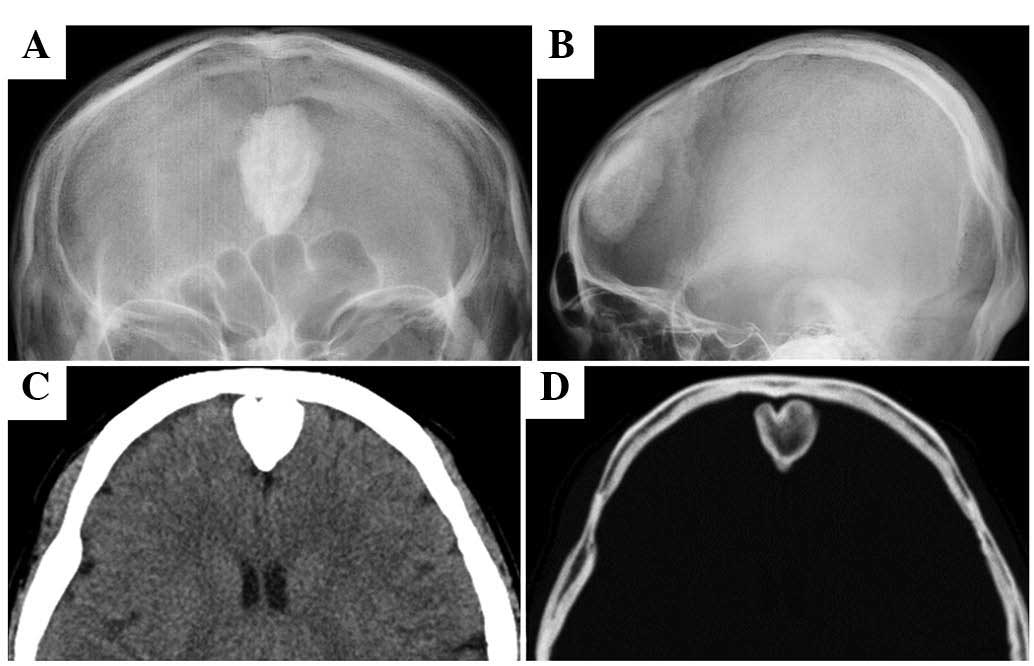
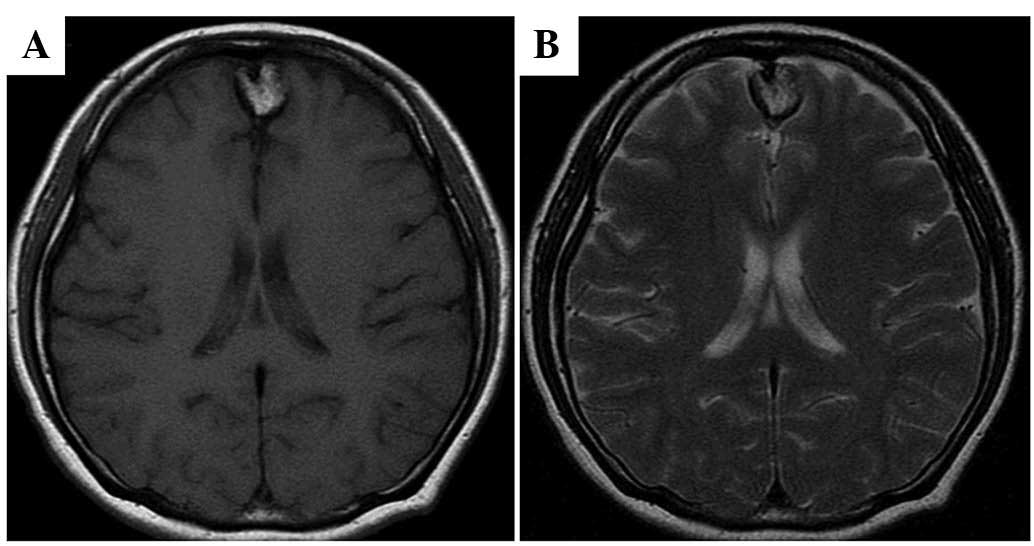
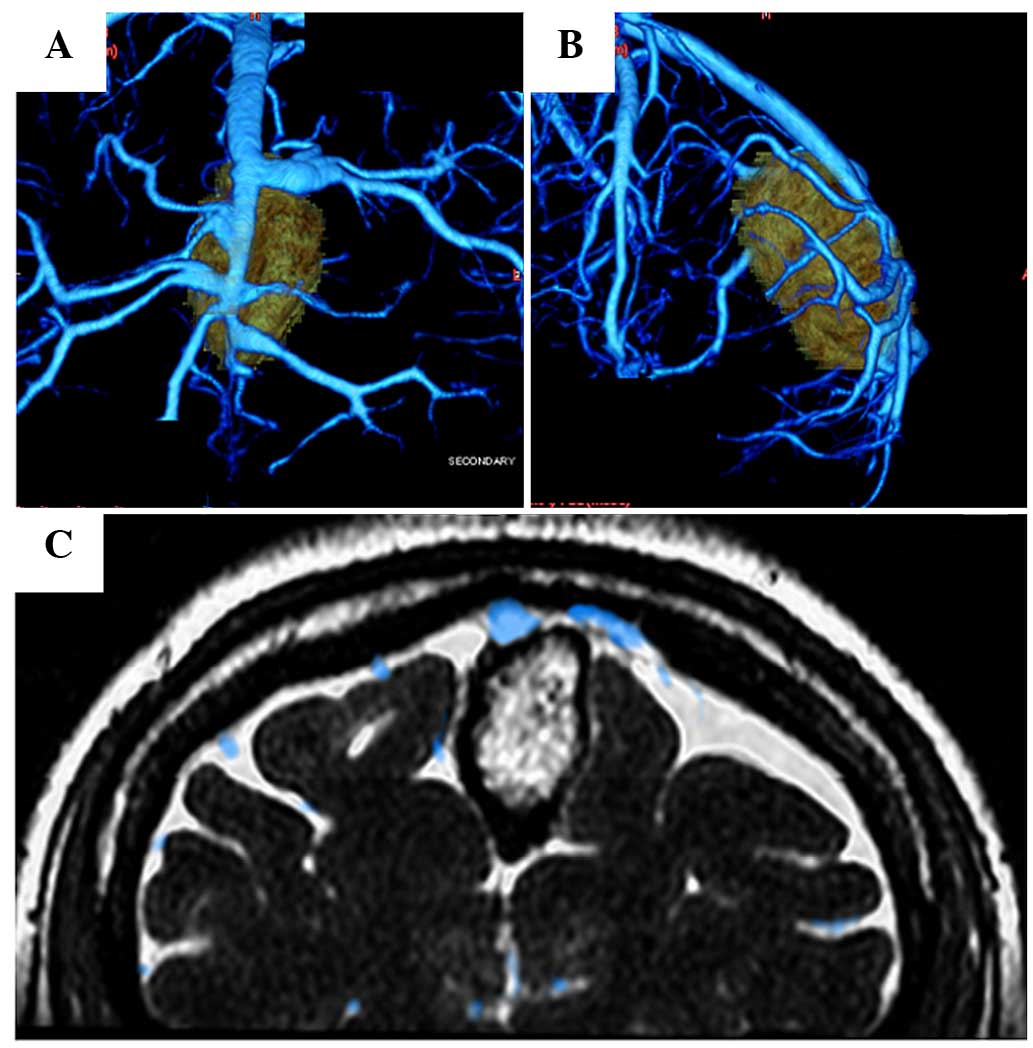
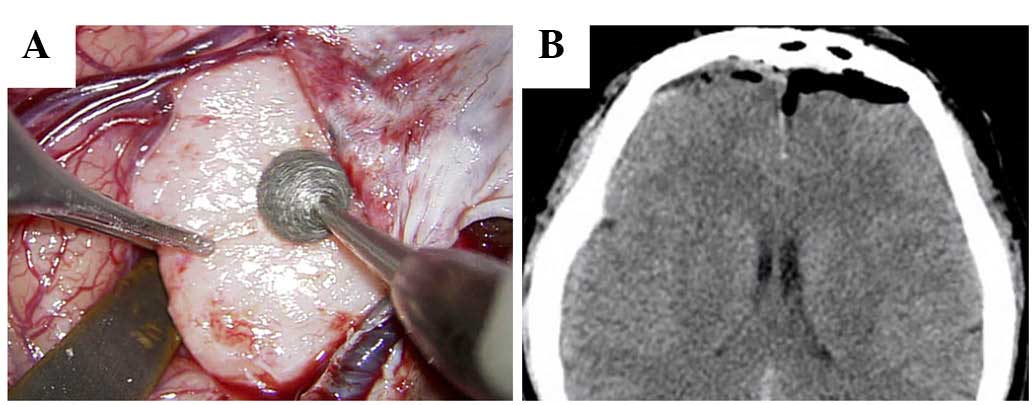
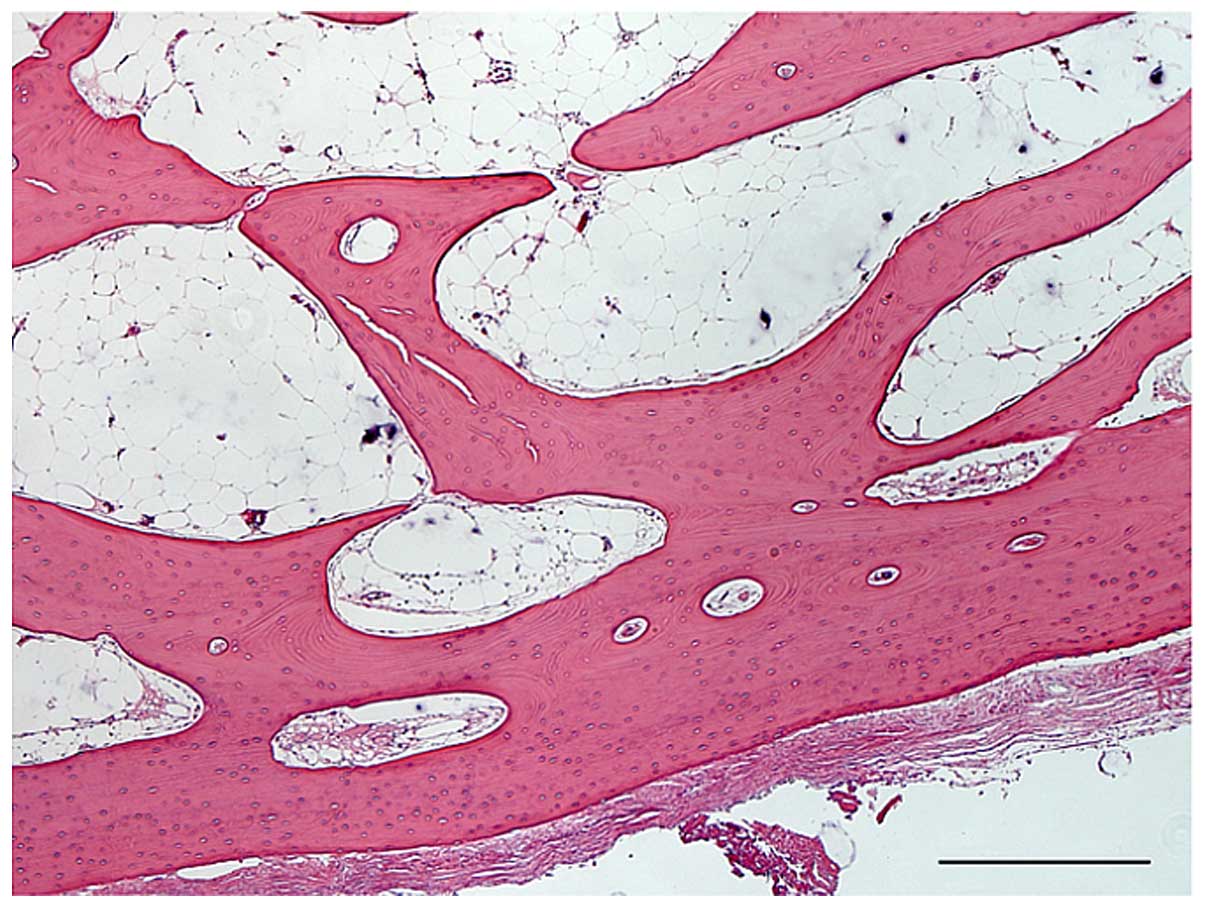
In March 2014, a 40-year-old female was admitted to Teishinkai Hospital (Hokkaido, Japan) due to persistent headache. On admission, neurological examination revealed no abnormalities. Skull radiography revealed a radiopaque lesion in the frontal area (Fig. 1A and B), while computed tomography (CT) and bone window CT revealed an ossified lesion in the frontal area (Fig. 1C and D). Magnetic resonance imaging revealed a mass appearing as hyperintense on both T1- and T2-weighted images (Fig. 2). Three-dimensional CT venography (Fig. 3A and B) and fast imaging employing steady-state acquisition (FIESTA)/CT venography fusion imaging (Fig. 3C) demonstrated that the mass was located just below the superior sagittal sinus and cortical veins, and had adhered partially to these veins. The provisional diagnosis was calcified falx meningioma or osteoma originating from the falx. Bilateral frontal craniotomy was performed. Opening of the dura revealed that the mass was attached to the falx in the mesial frontal lobes extra-axially, without dural attachment. The hard bony mass was removed with a drill and a rongeur (Fig. 4A). The cortical veins and superior sagittal sinus were preserved completely. Postoperative CT demonstrated complete tumor resection without complication (Fig. 4B). Histological examination (hematoxylin and eosin staining) revealed lamellated bony trabeculae lined with osteoblasts, and the intertrabecular marrow spaces occupied by adipose tissue. These findings are compatible with osteoma (Fig. 5). The postoperative course was uneventful, and the symptoms disappeared after surgery. The patient was discharged 12 days after surgery without neurological deficit. The patient was followed up for 12 months without any recurrence.

Figure 1.

Skull radiographs of (A) anteroposterior and (B) lateral view revealed a radiopaque lesion in the frontal area. (C) CT scan and (D) bone window CT imaging revealed an ossified lesion in the frontal area. CT, computed tomography.

Figure 2.

(A) T1- and (B) T2-weighted magnetic resonance images revealed a mass appearing as hyperintense.

Figure 3.

Three-dimensional CT venograms of (A) anteroposterior and (B) lateral view, and (C) fast imaging employing steady-state acquisition/CT venography fusion imaging demonstrated that the mass was located just below the superior sagittal sinus and cortical veins, and had adhered partially to these veins. CT, computed tomography.

Figure 4.

(A) Intraoperative image of the tumor attached to the falx, which was removed with a 4 mm diamond drill and a rongeur. The cortical veins and superior sagittal sinus were preserved completely. (B) Postoperative computed tomography scan demonstrated complete tumor resection without complications.

Figure 5.

Photomicrograph revealing lamellated bony trabeculae lined with osteoblasts and intertrabecular marrow spaces occupied by adipose tissue, which is compatible with osteoma. Hematoxylin and eosin staining; bar size, 100 µm.

Written informed consent was obtained from the patient for publication of the present case report and any accompanying images.

Discussion

Intracranial osteomas are rare, with only 12 surgical cases of osteomas without association with the bone being reported in the literature so far, including the present case, as summarized in Table I (3–13). The male to female ratio was 1:2, and the age of the patients was 16–64 years (mean, 39.8 years). The most common symptom was headache, which occurred in 8 of the 12 cases. The tumors were described as ‘completely surrounded by cerebral tissue’, with ‘no connections with the dura or the skull’, or ‘covered with the arachnoid membrane’ in 5 cases. The tumors were attached to the inner dural surface in 5 cases, and to the falx in 2 cases, indicating dural osteomas. Therefore, the present case is the second surgical case of intracranial osteoma originated from the falx. The outcome was good in 10 patients, whereas 1 patient succumbed to disease. Venous infarction developed in 1 case (10).

Table I.

Surgical cases of intracranial osteoma without connections with the skull.

Table I.

Surgical cases of intracranial osteoma without connections with the skull.

Author (year) (ref)Age, years/genderSymptomLocationSizeSurgical findingOutcome
Vakaet et al (1983) (3)16/FHeadache, seizureFrontal inter-callosum5.0×5.0×6.0 cm3Completely surrounded by cerebral tissueDead (postoperative hemorrhage)
Choudhury et al (1995) (4)20/FHeadacheRight frontal convexity1.0 cm in diameterAttached to the inner dural surfaceGood
Lee and Lui (1997) (5)28/FHeadacheLeft frontal convexity4.0×2.5×0.5 cm3Covered with arachnoid membraneGood
Aoki et al (1998) (6)51/FHeadacheRight frontal convexity1.1×1.5×0.7 cm3Partially adherent to the inner dural surfaceGood
Sugimoto et al (2001) (7)35/MVertigoRight frontal convexity5.0×5.0×2.0 cm3Attached to the inner dural surfaceNot described
Cheon et al (2002) (8)43/FHeadacheLeft frontal convexity1.2×2.0×0.7 cm3Attached to the inner dural surfaceGood
Pau et al (2003) (9)33/FNoneLeft frontal convexity3.0×2.0×2.0 cm3No connections with the duraGood
Akiyama et al (2005) (10)24/MHeadacheRight frontal convexityNot described (multiple)Covered with arachnoid membraneGood (venous infarction)
Jung et al (2007) (11)60/MHeadacheRight frontal convexityNot describedAttached to the inner dural surfaceGood
Barajas et al (2012) (12)63/FAltered mental statusRight middle cranial fossa4.5×3.7×2.5 cm3No connections with the duraGood
Chen et al (2013) (13)64/MTinnitus, dizzinessRight mesial frontal lobe2.5×2.0×2.0 cm3Attached to the falxGood
Present case (2016)40/FHeadacheInterhemispheric space2.2×1.7×2.5 cm3Attached to the falxGood

[i] M, male; F, female.

Intracranial osteoma usually has a wide base and grows inward as an expanding mass with a well-defined border (4). The present case occurred as a nodule with a narrow neck attached to the falx, similar to a previous case (13). The pathogenesis of osteoma without bone involvement is still unknown. In the present case, new bone generation from the falx is a possible cause, since the meninges may function as the periosteum of the inner table of the skull (2,5,8). A history of head trauma has been noted in patients with intracranial osteomas. Therefore, head trauma may be one of the trigger mechanisms of intracranial osteoma (14); however, the present patient had no such history.

No standardized treatment algorithm has been established for this condition. If the patient is asymptomatic, conservative therapy is one of the choices, since the natural history of intracranial osteomas is more benign than that of osteomas of the frontal sinuses (3). The present patient complained of intractable headache, which could be resolved by surgical tumor removal, since such pain is considered to be due to irritation and compression of the adjacent dural membrane (10). Therefore, surgery was performed in the present case, and the pain disappeared completely.

Surgeons should pay particular attention to possible adhesion of intracranial osteoma to the blood vessels. In a previous case, the osteoma had adhered tightly to the superficial cortical veins, which were sacrificed, thus leading to postoperative venous congestion (10). In the present case, preoperative FIESTA/CT venography fusion imaging was very useful to demonstrate that the mass was located just below the superior sagittal sinus and cortical veins, and had adhered partially to these veins. Complete preservation of these structures was carefully achieved during surgery. Reconstruction via saphenous vein graft and patch is recommended if the superior sagittal sinus or cortical vein is injured (15,16).

In conclusion, the present case of intracranial osteoma originating from the falx was successfully treated surgically. Preoperative FIESTA/CT venography fusion imaging was very useful to demonstrate adhesion between the mass and the superior sagittal sinus and cortical veins.

Glossary

Abbreviations

Abbreviations:

CT

computed tomography

FIESTA

fast imaging employing steady-state acquisition

References

1 

Haddad FS, Haddad GF and Zaatari G: Cranial osteomas: Their classification and management. Report on a giant osteoma and review of the literature. Surg Neurol. 48:143–147. 1997. View Article : Google Scholar : PubMed/NCBI

2 

Fallon MD, Ellerbrake D and Teitelbaum SL: Meningeal osteomas and chronic renal failure. Hum Pathol. 13:449–453. 1982. View Article : Google Scholar : PubMed/NCBI

3 

Vakaet A, De Reuck J, Thiery E and vander Eecken H: Intracerebral osteoma: A clinicopathologic and neuropsychologic case study. Childs Brain. 10:281–285. 1983.PubMed/NCBI

4 

Choudhury AR, Haleem A and Tjan GT: Solitary intradural intracranial osteoma. Br J Neurosurg. 9:557–559. 1995. View Article : Google Scholar : PubMed/NCBI

5 

Lee ST and Lui TN: Intracerebral osteoma: Case report. Br J Neurosurg. 11:250–252. 1997. View Article : Google Scholar : PubMed/NCBI

6 

Aoki H, Nakase H and Sakaki T: Subdural osteoma. Acta Neurochir (Wien). 140:727–728. 1998. View Article : Google Scholar : PubMed/NCBI

7 

Sugimoto K, Nakahara I, Nishikawa M, Tanaka M, Terashima T, Yanagihara H and Hayashi J: Osteoma originating in the dura: A case report. No Shinkei Geka. 29:993–996. 2001.(In Japanese). PubMed/NCBI

8 

Cheon JE, Kim JE and Yang HJ: CT and pathologic findings of a case of subdural osteoma. Korean J Radiol. 3:211–213. 2002. View Article : Google Scholar : PubMed/NCBI

9 

Pau A, Chiaramonte G, Ghio G and Pisani R: Solitary intracranial subdural osteoma: Case report and review of the literature. Tumori. 89:96–98. 2003.PubMed/NCBI

10 

Akiyama M, Tanaka T, Hasegawa Y, Chiba S and Abe T: Multiple intracranial subarachnoid osteomas. Acta Neurochir (Wien). 147:1085–1089. 2005. View Article : Google Scholar : PubMed/NCBI

11 

Jung TY, Jung S, Jin SG, Jin YH, Kim IY and Kang SS: Solitary intracranial subdural osteoma: Intraoperative findings and primary anastomosis of an involved cortical vein. J Clin Neurosci. 14:468–470. 2007. View Article : Google Scholar : PubMed/NCBI

12 

Barajas RF Jr, Perry A, Sughrue M, Aghi M and Cha S: Intracranial subdural osteoma: A rare benign tumor that can be differentiated from other calcified intracranial lesions utilizing MR imaging. J Neuroradiol. 39:263–266. 2012. View Article : Google Scholar : PubMed/NCBI

13 

Chen SM, Chuang CC, Toh CH, Jung SM and Lui TN: Solitary intracranial osteoma with attachment to the falx: A case report. World J Surg Oncol. 11:2212013. View Article : Google Scholar : PubMed/NCBI

14 

Dukes HT and Odom GL: Discrete intradural osteoma. Report of a case. J Neurosurg. 19:251–253. 1962. View Article : Google Scholar : PubMed/NCBI

15 

Hakuba A, Huh CW, Tsujikawa S and Nishimura S: Total removal of a parasagittal meningioma of the posterior third of the sagittal sinus and its repair by autogenous vein graft. Case report. J Neurosurg. 51:379–382. 1979. View Article : Google Scholar : PubMed/NCBI

16 

Murata J, Sawamura Y, Saito H and Abe H: Resection of a recurrent parasagittal meningioma with cortical vein anastomosis: Technical note. Surg Neurol. 48:592–595; discussion 595–597. 1997. View Article : Google Scholar : PubMed/NCBI

Related Articles

  • Abstract
  • View
  • Download
  • Twitter
Copy and paste a formatted citation
Spandidos Publications style
Takeuchi S, Tanikawa R, Tsuboi T, Noda K, Miyata S, Ota N, Hamada F and Kamiyama H: Surgical case of intracranial osteoma arising from the falx. Oncol Lett 12: 1949-1952, 2016.
APA
Takeuchi, S., Tanikawa, R., Tsuboi, T., Noda, K., Miyata, S., Ota, N. ... Kamiyama, H. (2016). Surgical case of intracranial osteoma arising from the falx. Oncology Letters, 12, 1949-1952. https://doi.org/10.3892/ol.2016.4833
MLA
Takeuchi, S., Tanikawa, R., Tsuboi, T., Noda, K., Miyata, S., Ota, N., Hamada, F., Kamiyama, H."Surgical case of intracranial osteoma arising from the falx". Oncology Letters 12.3 (2016): 1949-1952.
Chicago
Takeuchi, S., Tanikawa, R., Tsuboi, T., Noda, K., Miyata, S., Ota, N., Hamada, F., Kamiyama, H."Surgical case of intracranial osteoma arising from the falx". Oncology Letters 12, no. 3 (2016): 1949-1952. https://doi.org/10.3892/ol.2016.4833
Copy and paste a formatted citation
x
Spandidos Publications style
Takeuchi S, Tanikawa R, Tsuboi T, Noda K, Miyata S, Ota N, Hamada F and Kamiyama H: Surgical case of intracranial osteoma arising from the falx. Oncol Lett 12: 1949-1952, 2016.
APA
Takeuchi, S., Tanikawa, R., Tsuboi, T., Noda, K., Miyata, S., Ota, N. ... Kamiyama, H. (2016). Surgical case of intracranial osteoma arising from the falx. Oncology Letters, 12, 1949-1952. https://doi.org/10.3892/ol.2016.4833
MLA
Takeuchi, S., Tanikawa, R., Tsuboi, T., Noda, K., Miyata, S., Ota, N., Hamada, F., Kamiyama, H."Surgical case of intracranial osteoma arising from the falx". Oncology Letters 12.3 (2016): 1949-1952.
Chicago
Takeuchi, S., Tanikawa, R., Tsuboi, T., Noda, K., Miyata, S., Ota, N., Hamada, F., Kamiyama, H."Surgical case of intracranial osteoma arising from the falx". Oncology Letters 12, no. 3 (2016): 1949-1952. https://doi.org/10.3892/ol.2016.4833
Follow us
  • Twitter
  • LinkedIn
  • Facebook
About
  • Spandidos Publications
  • Careers
  • Cookie Policy
  • Privacy Policy
How can we help?
  • Help
  • Live Chat
  • Contact
  • Email to our Support Team