Spandidos Publications Logo
  • About
    • About Spandidos
    • Aims and Scopes
    • Abstracting and Indexing
    • Editorial Policies
    • Reprints and Permissions
    • Job Opportunities
    • Terms and Conditions
    • Contact
  • Journals
    • All Journals
    • Oncology Letters
      • Oncology Letters
      • Information for Authors
      • Editorial Policies
      • Editorial Board
      • Aims and Scope
      • Abstracting and Indexing
      • Bibliographic Information
      • Archive
    • International Journal of Oncology
      • International Journal of Oncology
      • Information for Authors
      • Editorial Policies
      • Editorial Board
      • Aims and Scope
      • Abstracting and Indexing
      • Bibliographic Information
      • Archive
    • Molecular and Clinical Oncology
      • Molecular and Clinical Oncology
      • Information for Authors
      • Editorial Policies
      • Editorial Board
      • Aims and Scope
      • Abstracting and Indexing
      • Bibliographic Information
      • Archive
    • Experimental and Therapeutic Medicine
      • Experimental and Therapeutic Medicine
      • Information for Authors
      • Editorial Policies
      • Editorial Board
      • Aims and Scope
      • Abstracting and Indexing
      • Bibliographic Information
      • Archive
    • International Journal of Molecular Medicine
      • International Journal of Molecular Medicine
      • Information for Authors
      • Editorial Policies
      • Editorial Board
      • Aims and Scope
      • Abstracting and Indexing
      • Bibliographic Information
      • Archive
    • Biomedical Reports
      • Biomedical Reports
      • Information for Authors
      • Editorial Policies
      • Editorial Board
      • Aims and Scope
      • Abstracting and Indexing
      • Bibliographic Information
      • Archive
    • Oncology Reports
      • Oncology Reports
      • Information for Authors
      • Editorial Policies
      • Editorial Board
      • Aims and Scope
      • Abstracting and Indexing
      • Bibliographic Information
      • Archive
    • Molecular Medicine Reports
      • Molecular Medicine Reports
      • Information for Authors
      • Editorial Policies
      • Editorial Board
      • Aims and Scope
      • Abstracting and Indexing
      • Bibliographic Information
      • Archive
    • World Academy of Sciences Journal
      • World Academy of Sciences Journal
      • Information for Authors
      • Editorial Policies
      • Editorial Board
      • Aims and Scope
      • Abstracting and Indexing
      • Bibliographic Information
      • Archive
    • International Journal of Functional Nutrition
      • International Journal of Functional Nutrition
      • Information for Authors
      • Editorial Policies
      • Editorial Board
      • Aims and Scope
      • Abstracting and Indexing
      • Bibliographic Information
      • Archive
    • International Journal of Epigenetics
      • International Journal of Epigenetics
      • Information for Authors
      • Editorial Policies
      • Editorial Board
      • Aims and Scope
      • Abstracting and Indexing
      • Bibliographic Information
      • Archive
    • Medicine International
      • Medicine International
      • Information for Authors
      • Editorial Policies
      • Editorial Board
      • Aims and Scope
      • Abstracting and Indexing
      • Bibliographic Information
      • Archive
  • Articles
  • Information
    • Information for Authors
    • Information for Reviewers
    • Information for Librarians
    • Information for Advertisers
    • Conferences
  • Language Editing
Spandidos Publications Logo
  • About
    • About Spandidos
    • Aims and Scopes
    • Abstracting and Indexing
    • Editorial Policies
    • Reprints and Permissions
    • Job Opportunities
    • Terms and Conditions
    • Contact
  • Journals
    • All Journals
    • Biomedical Reports
      • Information for Authors
      • Editorial Policies
      • Editorial Board
      • Aims and Scope
      • Abstracting and Indexing
      • Bibliographic Information
      • Archive
    • Experimental and Therapeutic Medicine
      • Information for Authors
      • Editorial Policies
      • Editorial Board
      • Aims and Scope
      • Abstracting and Indexing
      • Bibliographic Information
      • Archive
    • International Journal of Epigenetics
      • Information for Authors
      • Editorial Policies
      • Editorial Board
      • Aims and Scope
      • Abstracting and Indexing
      • Bibliographic Information
      • Archive
    • International Journal of Functional Nutrition
      • Information for Authors
      • Editorial Policies
      • Editorial Board
      • Aims and Scope
      • Abstracting and Indexing
      • Bibliographic Information
      • Archive
    • International Journal of Molecular Medicine
      • Information for Authors
      • Editorial Policies
      • Editorial Board
      • Aims and Scope
      • Abstracting and Indexing
      • Bibliographic Information
      • Archive
    • International Journal of Oncology
      • Information for Authors
      • Editorial Policies
      • Editorial Board
      • Aims and Scope
      • Abstracting and Indexing
      • Bibliographic Information
      • Archive
    • Medicine International
      • Information for Authors
      • Editorial Policies
      • Editorial Board
      • Aims and Scope
      • Abstracting and Indexing
      • Bibliographic Information
      • Archive
    • Molecular and Clinical Oncology
      • Information for Authors
      • Editorial Policies
      • Editorial Board
      • Aims and Scope
      • Abstracting and Indexing
      • Bibliographic Information
      • Archive
    • Molecular Medicine Reports
      • Information for Authors
      • Editorial Policies
      • Editorial Board
      • Aims and Scope
      • Abstracting and Indexing
      • Bibliographic Information
      • Archive
    • Oncology Letters
      • Information for Authors
      • Editorial Policies
      • Editorial Board
      • Aims and Scope
      • Abstracting and Indexing
      • Bibliographic Information
      • Archive
    • Oncology Reports
      • Information for Authors
      • Editorial Policies
      • Editorial Board
      • Aims and Scope
      • Abstracting and Indexing
      • Bibliographic Information
      • Archive
    • World Academy of Sciences Journal
      • Information for Authors
      • Editorial Policies
      • Editorial Board
      • Aims and Scope
      • Abstracting and Indexing
      • Bibliographic Information
      • Archive
  • Articles
  • Information
    • For Authors
    • For Reviewers
    • For Librarians
    • For Advertisers
    • Conferences
  • Language Editing
Login Register Submit
  • This site uses cookies
  • You can change your cookie settings at any time by following the instructions in our Cookie Policy. To find out more, you may read our Privacy Policy.

    I agree
Search articles by DOI, keyword, author or affiliation
Search
Advanced Search
presentation
Oncology Letters
Join Editorial Board Propose a Special Issue
Print ISSN: 1792-1074 Online ISSN: 1792-1082
Journal Cover
October-2016 Volume 12 Issue 4

Full Size Image

Sign up for eToc alerts
Recommend to Library

Journals

International Journal of Molecular Medicine

International Journal of Molecular Medicine

International Journal of Molecular Medicine is an international journal devoted to molecular mechanisms of human disease.

International Journal of Oncology

International Journal of Oncology

International Journal of Oncology is an international journal devoted to oncology research and cancer treatment.

Molecular Medicine Reports

Molecular Medicine Reports

Covers molecular medicine topics such as pharmacology, pathology, genetics, neuroscience, infectious diseases, molecular cardiology, and molecular surgery.

Oncology Reports

Oncology Reports

Oncology Reports is an international journal devoted to fundamental and applied research in Oncology.

Experimental and Therapeutic Medicine

Experimental and Therapeutic Medicine

Experimental and Therapeutic Medicine is an international journal devoted to laboratory and clinical medicine.

Oncology Letters

Oncology Letters

Oncology Letters is an international journal devoted to Experimental and Clinical Oncology.

Biomedical Reports

Biomedical Reports

Explores a wide range of biological and medical fields, including pharmacology, genetics, microbiology, neuroscience, and molecular cardiology.

Molecular and Clinical Oncology

Molecular and Clinical Oncology

International journal addressing all aspects of oncology research, from tumorigenesis and oncogenes to chemotherapy and metastasis.

World Academy of Sciences Journal

World Academy of Sciences Journal

Multidisciplinary open-access journal spanning biochemistry, genetics, neuroscience, environmental health, and synthetic biology.

International Journal of Functional Nutrition

International Journal of Functional Nutrition

Open-access journal combining biochemistry, pharmacology, immunology, and genetics to advance health through functional nutrition.

International Journal of Epigenetics

International Journal of Epigenetics

Publishes open-access research on using epigenetics to advance understanding and treatment of human disease.

Medicine International

Medicine International

An International Open Access Journal Devoted to General Medicine.

Journal Cover
October-2016 Volume 12 Issue 4

Full Size Image

Sign up for eToc alerts
Recommend to Library

  • Article
  • Citations
    • Cite This Article
    • Download Citation
    • Create Citation Alert
    • Remove Citation Alert
    • Cited By
  • Similar Articles
    • Related Articles (in Spandidos Publications)
    • Similar Articles (Google Scholar)
    • Similar Articles (PubMed)
  • Download PDF
  • Download XML
  • View XML
Case Report

Misdiagnosed infantile rhabdomyofibrosarcoma: A case report

  • Authors:
    • Tao Pan
    • Ken Chen
    • Run‑Song Jiang
    • Zheng‑Yan Zhao
  • View Affiliations / Copyright

    Affiliations: Department of General Surgery, The Children's Hospital of Zhejiang University School of Medicine, Hangzhou, Zhejiang 310003, P.R. China, Department of Reconstructive Plastic Surgery, The Children's Hospital of Zhejiang University School of Medicine, Hangzhou, Zhejiang 310003, P.R. China
  • Pages: 2766-2768
    |
    Published online on: August 17, 2016
       https://doi.org/10.3892/ol.2016.5032
  • Expand metrics +
Metrics: Total Views: 0 (Spandidos Publications: | PMC Statistics: )
Metrics: Total PDF Downloads: 0 (Spandidos Publications: | PMC Statistics: )
Cited By (CrossRef): 0 citations Loading Articles...

This article is mentioned in:


Abstract

Infantile rhabdomyofibrosarcoma is a rare form of soft-tissue tumor often associated with difficulties in diagnosis. The disease is positioned intermediately between rhabdomyosarcoma and infantile fibrosarcoma in terms of clinical presentation, immunohistochemistry, behavior, morphology and ultrastructural features. Reports of rhabdomyofibrosarcoma cases are limited in the literature. The present case describes a 26‑month‑old female who presented with a slowly progressive, soft‑tissue mass in the right chest wall. The mass was successfully treated with surgery. Using histopathology, the tumor was diagnosed and classified as infantile rhabdomyofibrosarcoma. The patient has been followed‑up for 2 years and is currently in good condition. The present case demonstrates that early, radical, local surgery and multidisciplinary cooperation were successful for the treatment of rhabdomyofibrosarcoma, and close follow‑up highly recommended.

Introduction

Spindle cell tumors are a rare form of neoplasm that are often difficult to diagnose, with benign lesions occasionally exhibiting malignant and infiltrative features (1). Infantile rhabdomyofibrosarcoma is positioned intermediately between truculent spindle cell rhabdomyosarcoma and indolent, infantile fibrosarcoma in terms of clinical presentation, immunohistochemistry, behavior, morphology and ultrastructural features (2). It was first reported in 1993 (3). Infantile rhabdomyofibrosarcoma exhibits a few round rhabdomyoblastic cells with abundant cytoplasmic eosinophilia that are scattered within a uniform proliferation of spindle-shaped cells in a fasciculated pattern. By contrast, infantile fibrosarcoma has uniform, solidly-packed spindle cells arranged in a fascicular or herringbone pattern similar to the vascular pattern observed with hemangiopericytoma (4). Infantile rhabdomyofibrosarcoma may be identified as childhood spindle-cell sarcoma with a low degree of rhabdoid differentiation and aggressive clinical behavior (5). Overlooking the diagnosis of infantile rhabdomyofibrosarcoma may increase the chances of local recurrence or metastatic disease; therefore, aggressive multimodality treatment is required for these patients (6). Reports of rhabdomyofibrosarcoma cases are limited in the literature. The present case report describes a 26-month-old patient who presented with a slowly progressive, soft-tissue mass in the right chest wall, which was successfully resected.

Case report

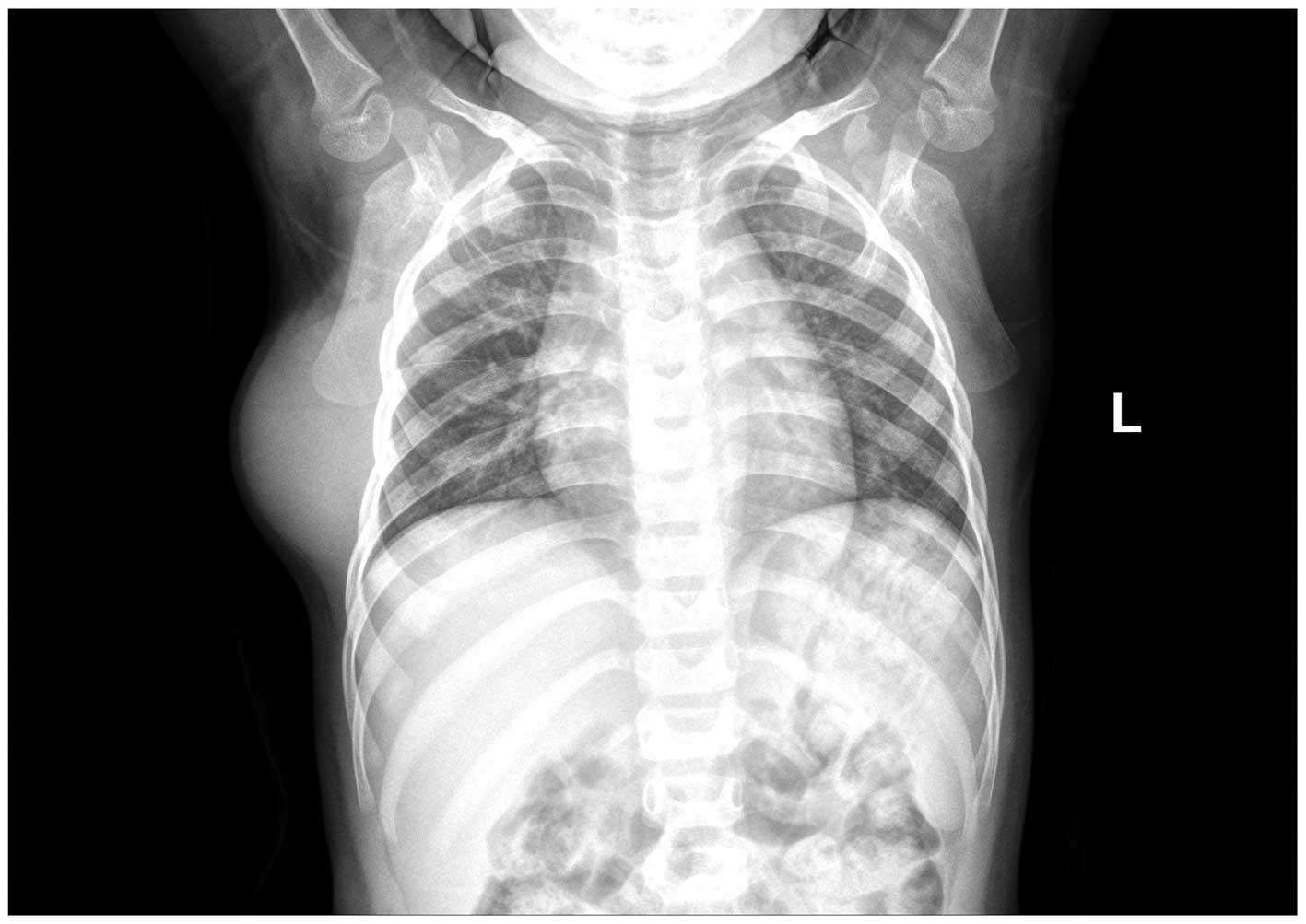
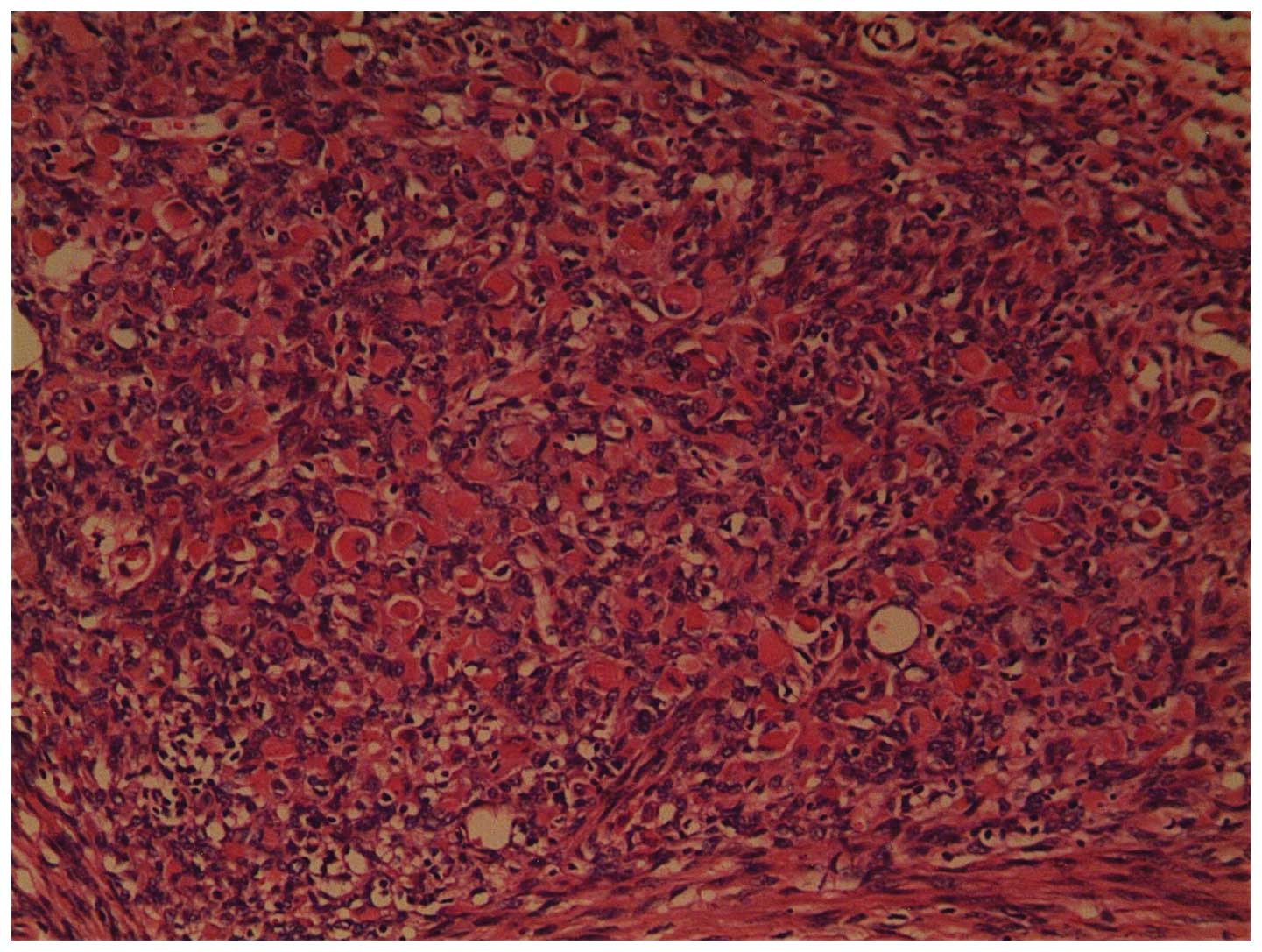
A 26-month-old female was admitted to the Department of Plastic and Reconstructive Surgery at The Children's Hospital of Zhejiang University School of Medicine (Hangzhou, China) in October 2012 for the management of a large neoplasm in the right chest wall. The patient had been born at 38 weeks, weighing 3 kg, following an uncomplicated pregnancy and delivery. The lesion had been present since birth and was ~35×80 mm in size. Over the previous 2 years, the mass had been painless and had slowly increased in size until 1 month prior to admission. No audible bruit, fluctuation or thrill was present, and the skin was normal on examination. Further physical examination was unremarkable, with the exception of a 6-cm soft-tissue mass present in the right chest wall. Laboratory analysis indicated the following results: White blood cell count, 6.96×10⁹ cells/l (normal range, 4.0–12×109 cells/l); hemoglobin count, 113 g/l (normal range, 110–140 g/l); platelet count, 256×109 cells/l (normal range, 100–400×109 cells/l); and fibrinogen level, 2.15 g/l (normal range, 1–5 g/l). Doppler ultrasound (iU Elite; Philips Healthcare, Amsterdam, The Netherlands) identified fluid collection in the subcutaneous tissue and muscle planes of the right chest wall. The tumor was initially suspected to be a lymphatic hemangioma. A posterior-anterior view of the chest was obtained using X-ray, which demonstrated that each lung field was expanded. There was no evidence of a lung mass or infiltrate, and the bilateral apices, bilateral pleural spaces and cardiac contour were all normal. The mediastinum and bilateral hila were also normal. A semicircle shadow with uniform density was observed to be protruding outwards from the soft tissue of the right chest wall. The lesion was ~33×77 mm in size, and no marked sorption or destruction of the ribs were detected (Fig. 1). The patient underwent a wide, local excision of the tumor, but did not undergo any chemotherapy following the surgical procedure. The surgical specimen was fixed with 10% neutral formaldehyde for >24 hour and paraffin embeded. The tissue slices (thickness, 4 µm) were stained with hematoxylin and eosin. Histopathology of the resected tumor identified that the spindle cells were arranged in fascicles with a herringbone pattern, and exhibited pale, eosinophilic cytoplasm and mitoses. A few round rhabdomyoblastic cells with abundant cytoplasmic eosinophilia that were scattered amoung uniform spindle-shaped cells, which were in a fasciculated pattern. (Fig. 2). However, no marked cross striation was observed in the rhabdomyoblastic cells. Immunohistochemical staining demonstrated strong positivity for vimentin, smooth muscle actin and desmin, and negativity for myogenin D1, S-100 and cluster of differentiation 34. According to the histopathological and immunohistochemical evidence the tumor was diagnosed as infantile rhabdomyofibrosarcoma. A computed tomography scan (SOMATOM Emotion 16; Siemens Healthcare, Erlangen, Germany) performed post-surgery did not reveal any signs of recurrence. Despite the aggressive nature of the lesion, there has been no evidence of recurrence or metastasis after 2 years of follow-up. Currently, the patient is alive and well. Written informed consent was obtained from the family of the patient for the publication of the present study.

Figure 1.

Posterior-anterior view of the chest using X-ray. The image shows a semicircle shadow with uniform density. L, left.

Figure 2.

The resected tumor exhibited a few rhabdomyoblastic cells with abundant cytoplasmic eosinophilia, which were scattered within uniform spindle-shaped cells in a fasciculated pattern. Hematoxylin and eosin staining; magnification, ×100.

Discussion

Infantile rhabdomyofibrosarcoma occupies an intermediate position between infantile fibrosarcoma and rhabdomyosarcoma in its clinical presentation, behavior morphology, immunohistochemical characteristics and ultrastructural features. Lundgren et al (3) described the first three cases of infantile rhabdomyofibrosarcoma, which were initially diagnosed as infantile fibrosarcoma. Two of the three patients with metastatic spread succumbed to the disease within 2 years of the primary operation, whereas the third patient is currently alive with a local recurrence. The three tumors deviated from infantile fibrosarcoma due to their clinical, ultrastructural, immunocytochemical and cytogenetic characteristics. An extensive comparative study was performed on these cases along with other cases of infantile fibrosarcoma (3).

Chaudhary et al (6) reviewed the limited number of infantile rhabdomyofibrosarcoma cases that were available in the literature. The median age of patients was 24 months (range, 13–48 months), with a male to female ratio of 5:2 with no specific predilection (6). In the study by Chaudhary et al, the cells were immunohistochemically positive for vimentin, smooth muscle actin and desmin, and negative for myoblobin. The present case demonstrated similarities with these previously reported studies, with the exception of the type of treatment undertaken. Myogenin has been reported to be highly specific and considered the most reliable marker for myogenesis, and Kumar et al (7) has hypothesized that myogenin is 100% specific for rhabdomyosarcoma. In addition, myogenin D1 is positive in the majority of rhabdomyoblastic cells and certain spindle cells (5). By contrast, myogenin and myogenin D1 are not expressed in infantile fibrosarcoma (8). Therefore, if a spindle-cell lesion has a high degree of muscle differentiation cross-striations and nuclear staining for myogenin, the tumor would best diagnosed and classified as infantile rhabdomyofibrosarcoma.

Generally, aggressive multimodality treatment, including surgery and adjuvant chemotherapy, is required for the treatment of rhabdomyofibrosarcoma. However, in the present case, the patient was successfully treated with wide local excision alone, and presented no signs of recurrence after 2 years of follow-up. Although the patient was recommended to undergo adjuvant chemotherapy, her parents initially refused, but eventually agreed to chemotherapy with follow-up. Another case of infantile rhabdomyofibrosarcoma was treated at The Children's Hospital of Zhejiang University School of Medicine, in which an 8-month-old male patient presented with a tumor in the back. The patient underwent surgery with no follow-up chemotherapy. However, the neoplasm recurred at the same site 3 months later. In consequence, the patient underwent a second surgery, with immunohistochemical examination of the mass displaying similar features to the first tumor. The patient underwent one cycle of chemotherapy, which consisted of an intravenous drip of vindesine (3 mg/m2) and ifosfamide (1300 mg/m2) on the 1st day, then etoposide (100 mg/m2) on days 1–3. The patient was followed-up for 3 years and had a good response to treatment (9).

In the present case, early and aggressive local surgery to remove the tumor, in addition to multidisciplinary cooperation, were successful in treating the disease. Close follow-up is highly recommended for a good prognosis in cases of infantile rhabdomyofibrosarcoma. Since the number of cases of infantile rhabdomyofibrosarcoma is extremely limited, additional accumulation of case data and extensive comparative analysis are required.

Acknowledgements

The authors would like to thank Mr. John Evans for reviewing the original manuscript (Zhejiang Ivy International High School, Hangzhou, China).

References

1 

Gupta A, Maddalozzo J, Win Htin T, Shah A and Chou PM: Spindle cell rhabdomyosarcoma of the tongue in an infant: A case report with emphasis on differential diagnosis of childhood spindle cell lesions. Pathol Res Pract. 200:537–543. 2004. View Article : Google Scholar : PubMed/NCBI

2 

Rao SI, Uppin SG, Ratnakar KS, Sundaram C and Senthil RP: Infantile rhabdomyofibrosarcoma: A distinct variant or a missinglink between fibrosarcoma and rhabdomyosarcoma? Indian J Cancer. 43:39–42. 2006. View Article : Google Scholar : PubMed/NCBI

3 

Lundgren L, Angervall L, Stenman G and Kindblom LG: Infantile rhabdomyofibrosarcoma: A high-grade sarcoma distinguishable from infantile fibrosarcoma and rhabdomyosarcoma. Hum Pathol. 24:785–795. 1993. View Article : Google Scholar : PubMed/NCBI

4 

Weiss SW and Goldglum JR: RhabdomyosarcomaSoft Tissue Tumors. Enzinger FM and Weiss SW: 4th. 1st. Mosby Inc.; Maryland Heights, MO: pp. 785–835. 2001

5 

Miki H, Kobayashi S, Kushida Y, Sasaki M, Haba R, Hirakawa E, Ogura K and Ohmori M: A case of infantile rhabdomyofibrosarcoma with immunohistochemical, electronmicroscopical, and genetic analyses. Hum Pathol. 30:1519–1522. 1999. View Article : Google Scholar : PubMed/NCBI

6 

Chaudhary N, Shet T and Borker A: Infantile rhabdomyofibrosarcoma: A potentially underdiagnosed aggressive tumor. Int J Appl Basic Med Res. 3:66–68. 2013. View Article : Google Scholar : PubMed/NCBI

7 

Kumar S, Perlman S, Harris CA, Raffeld M and Tsokos M: Myogenin is a specific marker for rhabdomyosarcomas: An imunohistochemical study in paraffin-embedded tissues. Mod Pathol. 13:988–993. 2000. View Article : Google Scholar : PubMed/NCBI

8 

Tang HF, Wang TL, Gu WZ, Lin L and Li MJ: Infantile rhabdomyofibrosarcoma. Zhonghua Bing Li Xue Za Zhi. 34:607–608. 2005.(In Chinese). PubMed/NCBI

9 

Cessna MH, Zhou H, Perkins SL, Tripp SR, Layfield L, Daines C and Coffin CM: Are myogenin and myo-D1 expression specific for rhabdomyosarcoma? A study of 150 cases with emphasis on spindle cell mimics. Am J Surg Pathol. 25:1150–1157. 2001. View Article : Google Scholar : PubMed/NCBI

Related Articles

  • Abstract
  • View
  • Download
  • Twitter
Copy and paste a formatted citation
Spandidos Publications style
Pan T, Chen K, Jiang RS and Zhao ZY: Misdiagnosed infantile rhabdomyofibrosarcoma: A case report. Oncol Lett 12: 2766-2768, 2016.
APA
Pan, T., Chen, K., Jiang, R., & Zhao, Z. (2016). Misdiagnosed infantile rhabdomyofibrosarcoma: A case report. Oncology Letters, 12, 2766-2768. https://doi.org/10.3892/ol.2016.5032
MLA
Pan, T., Chen, K., Jiang, R., Zhao, Z."Misdiagnosed infantile rhabdomyofibrosarcoma: A case report". Oncology Letters 12.4 (2016): 2766-2768.
Chicago
Pan, T., Chen, K., Jiang, R., Zhao, Z."Misdiagnosed infantile rhabdomyofibrosarcoma: A case report". Oncology Letters 12, no. 4 (2016): 2766-2768. https://doi.org/10.3892/ol.2016.5032
Copy and paste a formatted citation
x
Spandidos Publications style
Pan T, Chen K, Jiang RS and Zhao ZY: Misdiagnosed infantile rhabdomyofibrosarcoma: A case report. Oncol Lett 12: 2766-2768, 2016.
APA
Pan, T., Chen, K., Jiang, R., & Zhao, Z. (2016). Misdiagnosed infantile rhabdomyofibrosarcoma: A case report. Oncology Letters, 12, 2766-2768. https://doi.org/10.3892/ol.2016.5032
MLA
Pan, T., Chen, K., Jiang, R., Zhao, Z."Misdiagnosed infantile rhabdomyofibrosarcoma: A case report". Oncology Letters 12.4 (2016): 2766-2768.
Chicago
Pan, T., Chen, K., Jiang, R., Zhao, Z."Misdiagnosed infantile rhabdomyofibrosarcoma: A case report". Oncology Letters 12, no. 4 (2016): 2766-2768. https://doi.org/10.3892/ol.2016.5032
Follow us
  • Twitter
  • LinkedIn
  • Facebook
About
  • Spandidos Publications
  • Careers
  • Cookie Policy
  • Privacy Policy
How can we help?
  • Help
  • Live Chat
  • Contact
  • Email to our Support Team