Spandidos Publications Logo
  • About
    • About Spandidos
    • Aims and Scopes
    • Abstracting and Indexing
    • Editorial Policies
    • Reprints and Permissions
    • Job Opportunities
    • Terms and Conditions
    • Contact
  • Journals
    • All Journals
    • Oncology Letters
      • Oncology Letters
      • Information for Authors
      • Editorial Policies
      • Editorial Board
      • Aims and Scope
      • Abstracting and Indexing
      • Bibliographic Information
      • Archive
    • International Journal of Oncology
      • International Journal of Oncology
      • Information for Authors
      • Editorial Policies
      • Editorial Board
      • Aims and Scope
      • Abstracting and Indexing
      • Bibliographic Information
      • Archive
    • Molecular and Clinical Oncology
      • Molecular and Clinical Oncology
      • Information for Authors
      • Editorial Policies
      • Editorial Board
      • Aims and Scope
      • Abstracting and Indexing
      • Bibliographic Information
      • Archive
    • Experimental and Therapeutic Medicine
      • Experimental and Therapeutic Medicine
      • Information for Authors
      • Editorial Policies
      • Editorial Board
      • Aims and Scope
      • Abstracting and Indexing
      • Bibliographic Information
      • Archive
    • International Journal of Molecular Medicine
      • International Journal of Molecular Medicine
      • Information for Authors
      • Editorial Policies
      • Editorial Board
      • Aims and Scope
      • Abstracting and Indexing
      • Bibliographic Information
      • Archive
    • Biomedical Reports
      • Biomedical Reports
      • Information for Authors
      • Editorial Policies
      • Editorial Board
      • Aims and Scope
      • Abstracting and Indexing
      • Bibliographic Information
      • Archive
    • Oncology Reports
      • Oncology Reports
      • Information for Authors
      • Editorial Policies
      • Editorial Board
      • Aims and Scope
      • Abstracting and Indexing
      • Bibliographic Information
      • Archive
    • Molecular Medicine Reports
      • Molecular Medicine Reports
      • Information for Authors
      • Editorial Policies
      • Editorial Board
      • Aims and Scope
      • Abstracting and Indexing
      • Bibliographic Information
      • Archive
    • World Academy of Sciences Journal
      • World Academy of Sciences Journal
      • Information for Authors
      • Editorial Policies
      • Editorial Board
      • Aims and Scope
      • Abstracting and Indexing
      • Bibliographic Information
      • Archive
    • International Journal of Functional Nutrition
      • International Journal of Functional Nutrition
      • Information for Authors
      • Editorial Policies
      • Editorial Board
      • Aims and Scope
      • Abstracting and Indexing
      • Bibliographic Information
      • Archive
    • International Journal of Epigenetics
      • International Journal of Epigenetics
      • Information for Authors
      • Editorial Policies
      • Editorial Board
      • Aims and Scope
      • Abstracting and Indexing
      • Bibliographic Information
      • Archive
    • Medicine International
      • Medicine International
      • Information for Authors
      • Editorial Policies
      • Editorial Board
      • Aims and Scope
      • Abstracting and Indexing
      • Bibliographic Information
      • Archive
  • Articles
  • Information
    • Information for Authors
    • Information for Reviewers
    • Information for Librarians
    • Information for Advertisers
    • Conferences
  • Language Editing
Spandidos Publications Logo
  • About
    • About Spandidos
    • Aims and Scopes
    • Abstracting and Indexing
    • Editorial Policies
    • Reprints and Permissions
    • Job Opportunities
    • Terms and Conditions
    • Contact
  • Journals
    • All Journals
    • Biomedical Reports
      • Information for Authors
      • Editorial Policies
      • Editorial Board
      • Aims and Scope
      • Abstracting and Indexing
      • Bibliographic Information
      • Archive
    • Experimental and Therapeutic Medicine
      • Information for Authors
      • Editorial Policies
      • Editorial Board
      • Aims and Scope
      • Abstracting and Indexing
      • Bibliographic Information
      • Archive
    • International Journal of Epigenetics
      • Information for Authors
      • Editorial Policies
      • Editorial Board
      • Aims and Scope
      • Abstracting and Indexing
      • Bibliographic Information
      • Archive
    • International Journal of Functional Nutrition
      • Information for Authors
      • Editorial Policies
      • Editorial Board
      • Aims and Scope
      • Abstracting and Indexing
      • Bibliographic Information
      • Archive
    • International Journal of Molecular Medicine
      • Information for Authors
      • Editorial Policies
      • Editorial Board
      • Aims and Scope
      • Abstracting and Indexing
      • Bibliographic Information
      • Archive
    • International Journal of Oncology
      • Information for Authors
      • Editorial Policies
      • Editorial Board
      • Aims and Scope
      • Abstracting and Indexing
      • Bibliographic Information
      • Archive
    • Medicine International
      • Information for Authors
      • Editorial Policies
      • Editorial Board
      • Aims and Scope
      • Abstracting and Indexing
      • Bibliographic Information
      • Archive
    • Molecular and Clinical Oncology
      • Information for Authors
      • Editorial Policies
      • Editorial Board
      • Aims and Scope
      • Abstracting and Indexing
      • Bibliographic Information
      • Archive
    • Molecular Medicine Reports
      • Information for Authors
      • Editorial Policies
      • Editorial Board
      • Aims and Scope
      • Abstracting and Indexing
      • Bibliographic Information
      • Archive
    • Oncology Letters
      • Information for Authors
      • Editorial Policies
      • Editorial Board
      • Aims and Scope
      • Abstracting and Indexing
      • Bibliographic Information
      • Archive
    • Oncology Reports
      • Information for Authors
      • Editorial Policies
      • Editorial Board
      • Aims and Scope
      • Abstracting and Indexing
      • Bibliographic Information
      • Archive
    • World Academy of Sciences Journal
      • Information for Authors
      • Editorial Policies
      • Editorial Board
      • Aims and Scope
      • Abstracting and Indexing
      • Bibliographic Information
      • Archive
  • Articles
  • Information
    • For Authors
    • For Reviewers
    • For Librarians
    • For Advertisers
    • Conferences
  • Language Editing
Login Register Submit
  • This site uses cookies
  • You can change your cookie settings at any time by following the instructions in our Cookie Policy. To find out more, you may read our Privacy Policy.

    I agree
Search articles by DOI, keyword, author or affiliation
Search
Advanced Search
presentation
Oncology Letters
Join Editorial Board Propose a Special Issue
Print ISSN: 1792-1074 Online ISSN: 1792-1082
Journal Cover
March-2023 Volume 25 Issue 3

Full Size Image

Sign up for eToc alerts
Recommend to Library

Journals

International Journal of Molecular Medicine

International Journal of Molecular Medicine

International Journal of Molecular Medicine is an international journal devoted to molecular mechanisms of human disease.

International Journal of Oncology

International Journal of Oncology

International Journal of Oncology is an international journal devoted to oncology research and cancer treatment.

Molecular Medicine Reports

Molecular Medicine Reports

Covers molecular medicine topics such as pharmacology, pathology, genetics, neuroscience, infectious diseases, molecular cardiology, and molecular surgery.

Oncology Reports

Oncology Reports

Oncology Reports is an international journal devoted to fundamental and applied research in Oncology.

Experimental and Therapeutic Medicine

Experimental and Therapeutic Medicine

Experimental and Therapeutic Medicine is an international journal devoted to laboratory and clinical medicine.

Oncology Letters

Oncology Letters

Oncology Letters is an international journal devoted to Experimental and Clinical Oncology.

Biomedical Reports

Biomedical Reports

Explores a wide range of biological and medical fields, including pharmacology, genetics, microbiology, neuroscience, and molecular cardiology.

Molecular and Clinical Oncology

Molecular and Clinical Oncology

International journal addressing all aspects of oncology research, from tumorigenesis and oncogenes to chemotherapy and metastasis.

World Academy of Sciences Journal

World Academy of Sciences Journal

Multidisciplinary open-access journal spanning biochemistry, genetics, neuroscience, environmental health, and synthetic biology.

International Journal of Functional Nutrition

International Journal of Functional Nutrition

Open-access journal combining biochemistry, pharmacology, immunology, and genetics to advance health through functional nutrition.

International Journal of Epigenetics

International Journal of Epigenetics

Publishes open-access research on using epigenetics to advance understanding and treatment of human disease.

Medicine International

Medicine International

An International Open Access Journal Devoted to General Medicine.

Journal Cover
March-2023 Volume 25 Issue 3

Full Size Image

Sign up for eToc alerts
Recommend to Library

  • Article
  • Citations
    • Cite This Article
    • Download Citation
    • Create Citation Alert
    • Remove Citation Alert
    • Cited By
  • Similar Articles
    • Related Articles (in Spandidos Publications)
    • Similar Articles (Google Scholar)
    • Similar Articles (PubMed)
  • Download PDF
  • Download XML
  • View XML
Case Report

An extremely rare case of interdigitating dendritic cell sarcoma of the parotid gland with a 40‑month disease‑free survival time after only surgery: A case report

  • Authors:
    • Akihisa Tanaka
    • Hirokazu Uemura
    • Minami Matsuoka
    • Maiko Takeda
    • Tadashi Kitahara
  • View Affiliations / Copyright

    Affiliations: Department of Otolaryngology‑Head and Neck Surgery, Nara Medical University, Kashihara, Nara 634‑8522, Japan, Department of Diagnostic Pathology, Nara Medical University, Kashihara, Nara 634‑8522, Japan
  • Article Number: 130
    |
    Published online on: February 13, 2023
       https://doi.org/10.3892/ol.2023.13716
  • Expand metrics +
Metrics: Total Views: 0 (Spandidos Publications: | PMC Statistics: )
Metrics: Total PDF Downloads: 0 (Spandidos Publications: | PMC Statistics: )
Cited By (CrossRef): 0 citations Loading Articles...

This article is mentioned in:


Abstract

Interdigitating dendritic cell sarcoma (IDCS) is an extremely rare neoplasm arising from dendritic cells and is mainly located in the lymph nodes. To the best of our knowledge, no treatment strategy has yet been established for IDCS, despite its aggressive clinical features. The present study presents the case of a patient with IDCS who experienced a 40‑month disease‑free survival time after surgery alone. The patient, a 29‑year‑old woman, presented with a painful right subaural swelling. Diagnostic MRI and 18F‑fludeoxyglucose positron emission tomography/computed tomography revealed a right parotid gland tumour and ipsilateral cervical lymph node. The patient underwent surgical resection, and histological examination of the resected tissue specimens confirmed IDCS diagnosis. To the best of our knowledge, this is only the fifth report of an IDCS located in the parotid gland, with the longest follow‑up period among cases of IDCS reported in this region. The positive outcome of this patient suggests that surgical resection may be an effective treatment option for local IDCS. Nonetheless, further studies are required to establish a definitive diagnosis and treatment strategy for IDCS.

Introduction

Interdigitating dendritic cell sarcoma (IDCS) is an extremely rare neoplasm arising from dendritic cells, which can be subclassified as interdigitating dendritic, follicular dendritic, Langerhans, or fibroblastic cells (1,2). The median age at diagnosis is 58 years old with a wide range of 2–88 years old, and the male to female ratio of patients is 1.65:1 (1). Despite its aggressive clinical features, with a disease-specific mortality rate of 36.4% as well as the median overall and progression-free survival times being 12 and 6 months, respectively, no definitive treatment exists for IDCS due to its low incidence rate (1). Most IDCS tumours arise in the cervical or axillary lymph nodes, and reports of IDCS in the extranodal region are scarce (1,3,4). Cervical lymphadenopathy is typically observed and is rarely accompanied by systemic symptoms, such as fatigue, fever, or weight loss. Either surgical resection or radiotherapy are recommended for the treatment of localised IDCS, whereas chemotherapy is the preferred option in disseminated IDCS. In some cases, patients are treated with surgery with or without chemotherapy and/or radiotherapy. ABVD (doxorubicin, bleomycin vinblastine, and dacarbazine), CHOP (cyclophosphamide, doxorubicin, cisplatin, and etoposide), ICE (ifosfamide, cisplatin, and etoposide) or DHAP (dexamethasone, cisplatin, and high dose cytarabine) are usually administered as chemotherapy regimens (5). In the present study, the case report of a patient diagnosed with IDCS located in the parotid gland who reached a 40-month disease-free survival time following surgical resection is reported.

Case report

Patient background

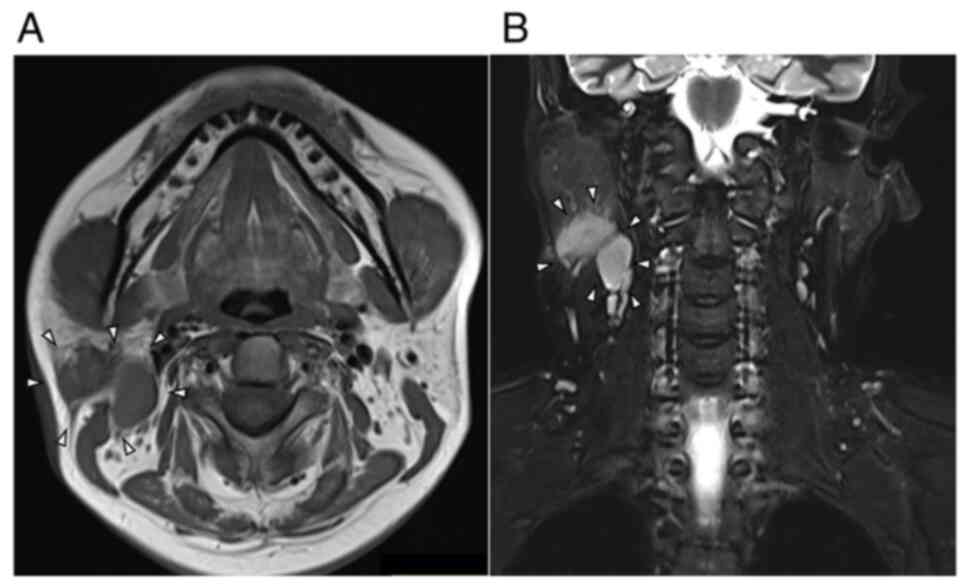
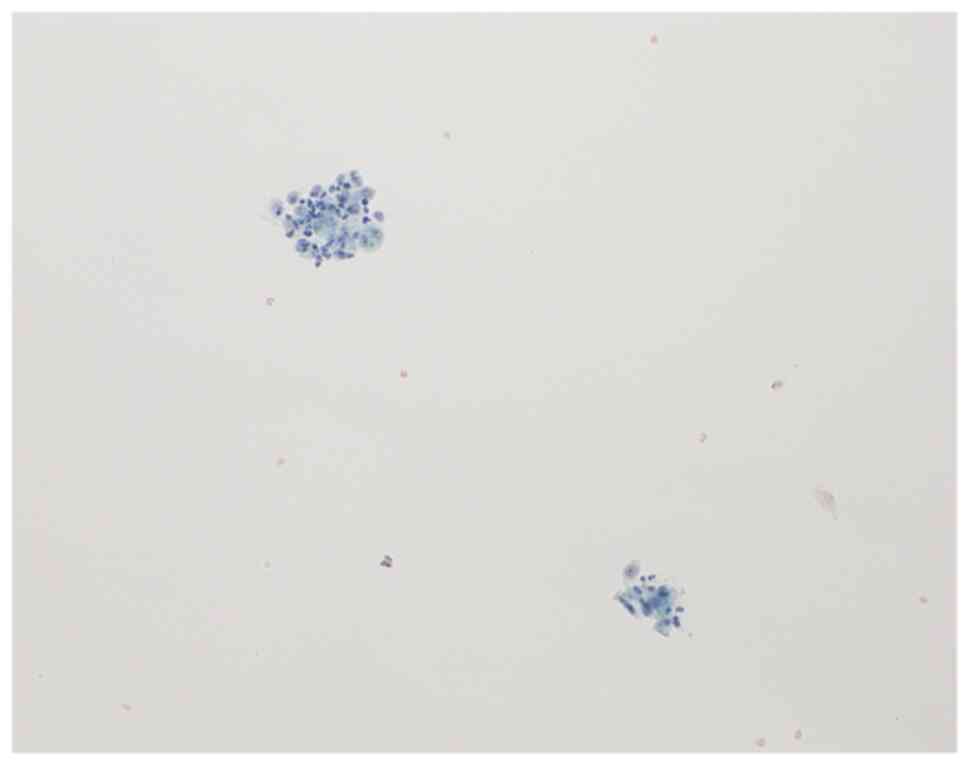
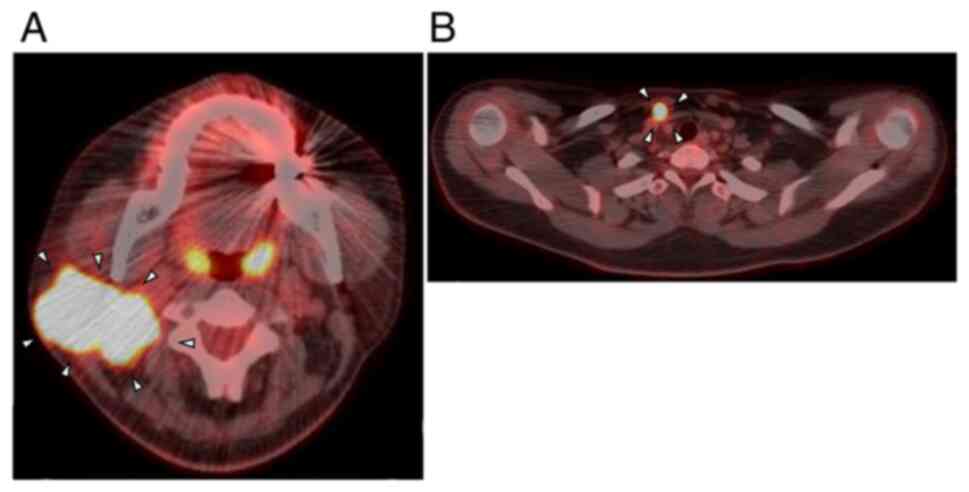
A 29-year-old woman presented to Nara Medical University Hospital (Kashihara, Nara) in April, 2019, with a 2-month history of painful right subaural swelling that was refractory to antibiotics. A hard mass was palpated at the same location. The patient had no facial nerve palsy, trismus, or noteworthy medical history of any disease except type 2 diabetes. MRI showed a right parotid gland tumour (Fig. 1), which was suspected to be a malignant neoplasia, as determined using fine needle aspiration cytology. Cytology indicated the presence of polygonal, oval, and spindle cells with enlarged nuclei, whereas mucous and squamous cells were not detected; thus, cytology alone was insufficient to make a definitive diagnosis (Fig. 2). Subsequently, a biopsy of the tumour was performed and the histological findings, following immunohistochemical staining, revealed histiocytic lesions positive for CD68 and S100 and negative for CD1a and Langerin. By contrast, no epithelial cells were detected. These results suggested sarcoma, histiocytosis, or malignant lymphoma (not carcinoma) as differential diagnoses. 18F-fludeoxyglucose (FDG) positron emission tomography/computed tomography (PET/CT) revealed a parotid gland tumour with a high uptake of FDG, as well as an ipsilateral lower cervical lymph node, and no evidence of distant metastasis (Fig. 3). Furthermore, while the patient waited for a final pathological diagnosis, the parotid gland tumour grew rapidly (~10 mm over 4 weeks, as determined by CT), accompanied with pain. Since a final diagnosis had not been achieved, an appropriate chemotherapy regimen could not be selected, and chemotherapy could therefore not be performed. Similarly, radiotherapy was not performed as its effectiveness could not be confirmed owing to a lack of final diagnosis. The patient consented to undergo a right partial parotidectomy and lymphadenectomy to treat and alleviate the symptoms and to assist in a more accurate diagnosis after consultation with haematologists.

Figure 1.

MRI showing a tumour in the right parotid gland. (A) T1-weighted MRI. (B) Short TI inversion recovery MRI. Arrowheads indicate the tumour.

Figure 2.

Cytological examination of the specimen was investigated using papanicolaou staining (original magnification ×60). Polygonal, oval, and spindle cells with enlarged nuclei were detected.

Figure 3.

FDG positron emission tomography/computed tomography shows a high uptake of FDG. (A) Tumour in the right parotid, SUV maximum is 21. Arrowheads indicate the tumour. (B) Lymph node in the right lower cervical region, SUV maximum is 13.9. Arrowheads indicate the lymph node. FDG, 18F-fludeoxyglucose; SUV, standardised uptake value.

Surgery

Firstly, a lymphadenectomy of the right lower cervical region was performed. The lymph node was resected with peripheral tissue owing to the partial invasion of the peripheral fascia and strap muscles. Secondly, a right partial parotidectomy was performed. Separate incisions were made during the two surgeries. After the main branch of the facial nerve was identified, it was traced back to the periphery. It was then determined that the parotid gland tumour had invaded the peripheral tissue. Intraoperative frozen diagnosis was performed to identify the surgical margin. The right parotid tumour was removed en bloc with the peripheral tissue. The great auricular, accessory, and hypoglossal nerves were preserved.

Pathology

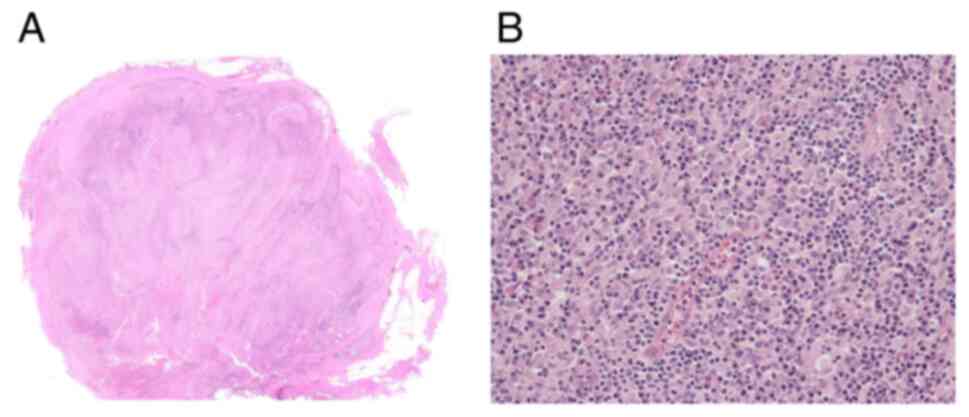
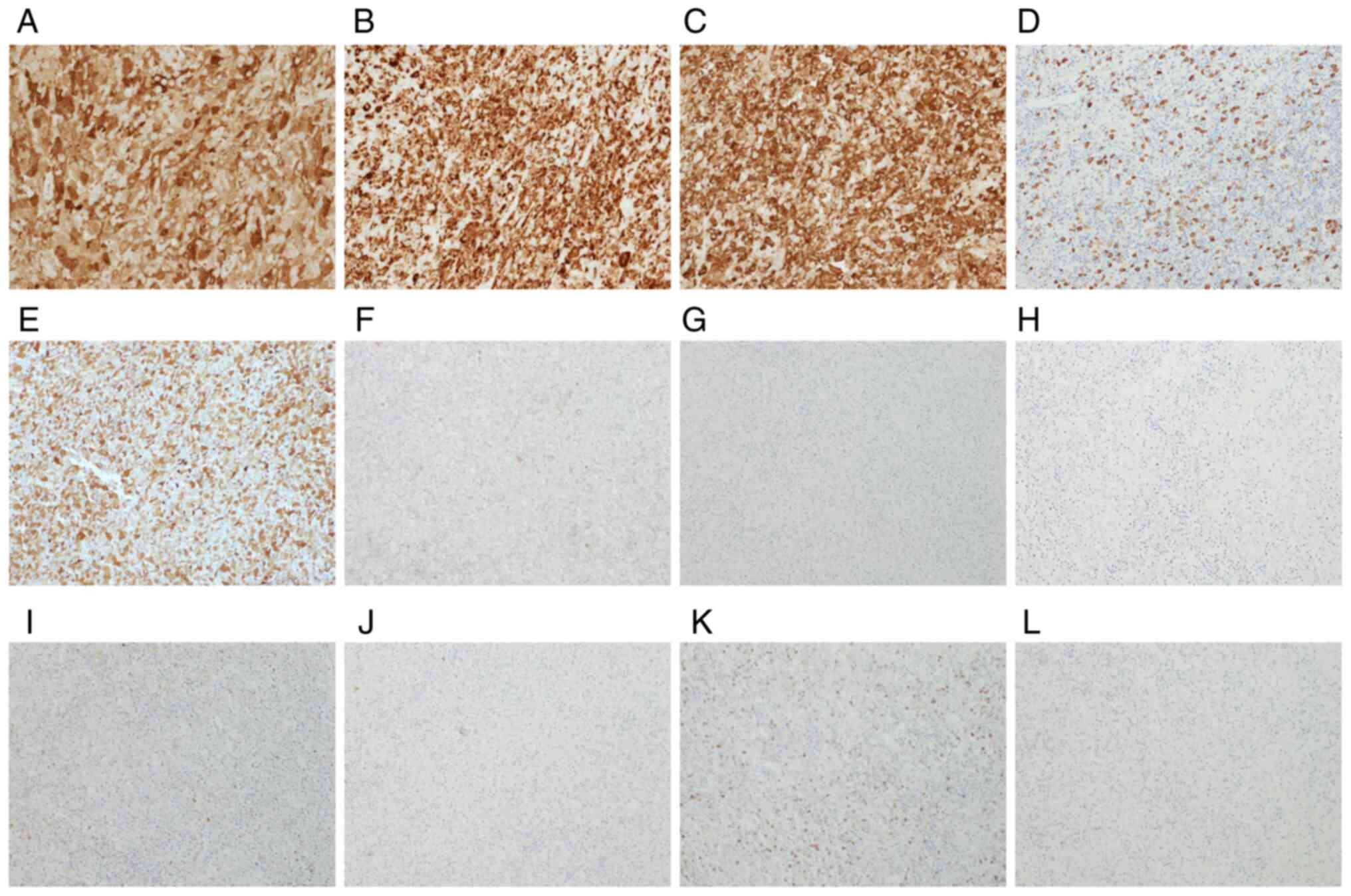
Histological examination of the surgically resected specimen from the right parotid gland (45×42×35 mm) revealed a histiocytic tumour with proliferating atypical spindle cells. These spindle cells had an abundant and slightly eosinophilic cytoplasm and moderately to highly atypical nuclei that were interspersed among small lymphocytes and plasma cells (Fig. 4). The tumour cells were irregularly invasive to the peripheral fat and muscular tissues. Multinucleated and tumour cells with emperipolesis were also observed but no necrosis was detected. Immunohistochemical analysis showed that the tumour was positive for S100 (diffuse and strong), CD68, CD163, CD209, and fascin, whereas it was negative for CD1a, Langerin, HMB45, epithelial membrane antigen, EBER1 in situ hybridization, CD21, CD23, CD43, CD56, CD123, myeloperoxidase, BRAF V600E, CAM5.2, and AE1/AE3 (Fig. 5). The histology of the right lower cervical lymph node was similar to that of the parotid gland tumour. Based on these results, the patient was diagnosed with IDCS.

Figure 4.

Histological examination of the specimen investigated using haematoxylin and eosin staining. (A) Original magnification, ×40. (B) Original magnification, ×400. Histiocytic lesion is observed with eosinophilic cytoplasm and atypical nuclei. Lymphocytes and plasma cells are scattered.

Figure 5.

Histological examination of the specimen was investigated using immunohistochemical staining (original magnification, ×400). (A) S100 was diffusely and strongly expressed. (B) CD68 was expressed. (C) CD163 was expressed. (D) CD209 was expressed. (E) Fascin was expressed. (F) CD1a was not expressed. (G) Langerin was not expressed. (H) HMB45 was not expressed. (I) CD21 was not expressed. (J) CD23 was not expressed. (K) Myeloperoxidase was not expressed. (L) CAM5.2 was not expressed.

Outcome and follow-up

Facial nerve palsy was not observed after the surgery, and there were no notable adverse events. During the follow-up period, the patient did not receive additional therapy; however, the patient was evaluated using investigations such as CT, ultrasound scan, or PET/CT. The health condition of the patient remained stable without evidence of recurrence for 40 months after surgery.

Discussion

IDCS is an extremely rare and aggressive neoplasm that mainly affects the cervical lymph nodes, with IDCS in extranodal lesions rarely being reported (1,3,4). To the best of our knowledge, the present study is only the fifth report of an IDCS located in the parotid gland, and it represents the longest follow-up period among IDCS cases (6–9). Although surgery, chemotherapy, radiotherapy, or a combination thereof has been used to treat IDCS, there is currently no established treatment strategy for these cases (1,3,4,10). Moreover, the lack of specific disease markers makes diagnosing IDCS challenging and thus, the median time to a final diagnosis is 12.5 weeks (1). In the present case report, the final diagnosis was reached after 16 weeks. Unfortunately, the patient needed to start treatment while waiting for a final diagnosis owing to rapid tumour growth accompanied with painful symptoms. Due to the lack of a final diagnosis, the effectiveness of chemotherapy and radiotherapy was unknown; therefore, surgery was adopted. Neck dissection was avoided since the first biopsy results indicated no carcinoma. Resection of the parotid tumour was performed, and the ipsilateral lower cervical lymph node was resected to make a final diagnosis.

Since there are no specific disease markers for IDCS, diagnosis relies on the exclusion of other diseases, such as melanoma, other dendritic cell-related neoplasias, metastases of other malignant neoplasias, and histiocytic sarcoma (HS) (2,11). In the evaluated specimen, the cytoplasm was mainly eosinophilic with an indistinct border, and the nuclei were irregular, moderately to highly atypical, and pleomorphic. Although these histological findings established the IDCS diagnosis, HS was not ruled out. Expression of S100, CD68, CD163, CD209, and fascin was observed using immunohistochemical analysis. Although expression of these markers is distinctive of IDCS and HS, the extent of S100 (diffuse and strong) and CD209 expression (CD209 has not been reported in HS) confirmed the diagnosis of IDCS (1,2). Other diseases, including melanoma and other dendritic cell-related neoplasias, were ruled out based on histological findings and negative immunohistochemical staining results (2). Moreover, bone marrow aspiration biopsy may also help to exclude tumour invasion and other hematopoietic diseases, although this was not performed in the present case report.

The patient in the present study was fairly young (29 years old) compared with those in the 4 other reported cases of IDCS in the parotid gland, all of whom were >50 years of age (3). A young age may indicate a poor prognosis, based on the results of a previous study (12); however, owing to the limited evidence from the small number of cases of parotid gland IDCS previously reported, this hypothesis may not be correct. A previous review suggested that surgical resection may improve survival rate, although there is no general consensus on treatment strategy (1). In the present case report, surgery was performed based on intraoperative frozen diagnosis, which was used to identify the surgical margin. Complete surgical tumour resection is expected to be an effective method to control IDCS without relapse, if the tumour is localised and resectable. Close follow-up with some imaging studies after surgery is also required. Additionally, several examinations, such as bone marrow aspiration biopsy, may be necessary when the patient's condition worsens, as PET/CT is not always sensitive for hematopoietic tumours. Moreover, genetic sequencing of tumour tissue may provide an explanation for the present patient's long disease-free survival time as well as add valuable information to the diagnosis, since numerous sarcomas have fusion gene mutations; this was not conducted in the present study, as the patient did not give permission for the analysis. To date, only a few previous reports describe the association between gene mutation and IDCS (13).

IDCS undergoes diverse clinical courses and its aetiology remains unknown (3,4). Until sufficient clinical information is available, patients with IDCS will continue to undergo treatment without an established strategy. Moreover, it is difficult to define a treatment strategy if the health condition of the patient worsens due to a delayed final diagnosis. In the present case report, the patient achieved a long-term survival time of 40 months (at the last follow-up) after surgical resection even though postoperative adjuvant therapy was not performed, according to the choice of the patient.

In conclusion, the case of a patient with IDCS located in the parotid gland with a 40-month disease-free survival time after surgical resection was described in the present study. IDCS management is characterised by challenges in diagnosis and a lack of a standardised treatment protocol. The present case report suggests that surgical resection may be an effective treatment option for local IDCS, supporting long-term disease-free survival time. Further studies are required to establish a definitive diagnosis and treatment strategy for IDCS.

Acknowledgements

Not applicable.

Funding

Funding: No funding was received.

Availability of data and materials

The datasets used and/or analysed during the current are available from the corresponding author on reasonable request.

Authors' contributions

AT, HU, MM, MT and TK contributed to the study's conception and design. Material preparation, data collection and analysis were performed by AT, HU and MM. The first draft of the manuscript was written by AT, and all authors commented on previous versions of the manuscript. AT and MM confirm the authenticity of all the raw data. All authors read and approved the final version of the manuscript.

Ethics approval and consent to participate

The study design was approved by The Ethics Committee of The Nara Medical University Hospital (Kashihara, Japan; proposal no. 3298), and the study was conducted in accordance with the guidelines of the Declaration of Helsinki.

Patient consent for publication

Written informed consent was obtained from the patient for the publication of this case report.

Competing interests

The authors declare that they have no competing interests.

Glossary

Abbreviations

Abbreviations:

IDCS

interdigitating dendritic cell sarcoma

FDG

18F-fludeoxyglucose

PET/CT

positron emission tomography/ computed tomography

HS

histiocytic sarcoma

References

1 

Muhammed A, Ahmed ARH, Maysa H, Mohamed AES, Abd-ElLateef AA and Elnakib E: New insights inside the interdigitating dendritic cell sarcoma-pooled analysis and review of literature. Ann Hematol. 98:2641–2651. 2019. View Article : Google Scholar : PubMed/NCBI

2 

Facchetti F, Pileri SA, Lorenzi L, Tabanelli V, Rimsza L, Pittaluga S, Dirnhofer S, Copie-Bergman C, de Leval L, Rosenwald A, et al: Histiocytic and dendritic cell neoplasms: What have we learnt by studying 67 cases. Virchows Arch. 471:467–489. 2017. View Article : Google Scholar : PubMed/NCBI

3 

Lupato V, Romeo S, Franchi A, Mantovani M, Dei Tos AP, Tirelli G, Da Mosto MC and Boscolo-Rizzo P: Head and neck extranodal interdigitating dendritic cell sarcoma: Case report and review of the literature. Head Neck Pathol. 10:145–151. 2016. View Article : Google Scholar : PubMed/NCBI

4 

Xue T, Jiang XN, Wang WG, Zhou XY and Li XQ: Interdigitating dendritic cell sarcoma: Clinicopathologic study of 8 cases with review of the literature. Ann Diagn Pathol. 34:155–160. 2018. View Article : Google Scholar : PubMed/NCBI

5 

Diego CR, Luis MJS and Samir D: Interdigitating dendritic cell sarcoma. Atlas Genet Cytogenet Oncol Haematol. 23:317–319. 2019.PubMed/NCBI

6 

Sharma M, Ahsan F, Ah-See KW, McKean ME, Kain R and Chapman AD: Interdigitating dendritic cell sarcoma of the parotid gland. J Laryngol Otol. 120:244–246. 2006. View Article : Google Scholar : PubMed/NCBI

7 

Efune G, Sumer BD, Sarode VR, Wang HY and Myers LL: Interdigitating dendritic cell sarcoma of the parotid gland: Case report and literature review. Am J Otolaryngol. 30:264–268. 2009. View Article : Google Scholar : PubMed/NCBI

8 

Barwell N, Howatson R, Jackson R, Johnson A, Jarrett RF and Cook G: Interdigitating dendritic cell sarcoma of salivary gland associated lymphoid tissue not associated with HHV-8 or EBV infection. J Clin Pathol. 57:87–89. 2004. View Article : Google Scholar : PubMed/NCBI

9 

Park YH, Kim SI, Choi SJ, Lim JH, Yi HG, Lee MH and Kim CS: A case of disseminated extranodal interdigitating dendritic cell sarcoma arising from parotid gland. Kosin Med J. 30:163–169. 2015. View Article : Google Scholar

10 

Olnes MJ, Nicol T, Duncan M, Bohlman M and Erlich R: Interdigitating dendritic cell sarcoma: A rare malignancy responsive to ABVD chemotherapy. Leuk Lymphoma. 43:817–821. 2002. View Article : Google Scholar : PubMed/NCBI

11 

Johnson RL, Boisot S, Ball ED and Wang HY: A case of interdigitating dendritic cell sarcoma/histiocytic sarcoma-a diagnostic pitfall. Int J Clin Exp Pathol. 7:378–385. 2013.PubMed/NCBI

12 

Saygin C, Uzunaslan D, Ozguroglu M, Senocak M and Tuzuner N: Dendritic cell sarcoma: A pooled analysis including 462 cases with presentation of our case series. Crit Rev Oncol Hematol. 88:253–271. 2013. View Article : Google Scholar : PubMed/NCBI

13 

Wang HY, Li S, Woodford RL, Mills SE and Cousar JB: BCL2 chromosomal translocation is not a general feature of the interdigitating dendritic cell sarcoma. Diagn Mol Pathol. 19:169–171. 2010. View Article : Google Scholar : PubMed/NCBI

Related Articles

  • Abstract
  • View
  • Download
  • Twitter
Copy and paste a formatted citation
Spandidos Publications style
Tanaka A, Uemura H, Matsuoka M, Takeda M and Kitahara T: An extremely rare case of interdigitating dendritic cell sarcoma of the parotid gland with a 40‑month disease‑free survival time after only surgery: A case report. Oncol Lett 25: 130, 2023.
APA
Tanaka, A., Uemura, H., Matsuoka, M., Takeda, M., & Kitahara, T. (2023). An extremely rare case of interdigitating dendritic cell sarcoma of the parotid gland with a 40‑month disease‑free survival time after only surgery: A case report. Oncology Letters, 25, 130. https://doi.org/10.3892/ol.2023.13716
MLA
Tanaka, A., Uemura, H., Matsuoka, M., Takeda, M., Kitahara, T."An extremely rare case of interdigitating dendritic cell sarcoma of the parotid gland with a 40‑month disease‑free survival time after only surgery: A case report". Oncology Letters 25.3 (2023): 130.
Chicago
Tanaka, A., Uemura, H., Matsuoka, M., Takeda, M., Kitahara, T."An extremely rare case of interdigitating dendritic cell sarcoma of the parotid gland with a 40‑month disease‑free survival time after only surgery: A case report". Oncology Letters 25, no. 3 (2023): 130. https://doi.org/10.3892/ol.2023.13716
Copy and paste a formatted citation
x
Spandidos Publications style
Tanaka A, Uemura H, Matsuoka M, Takeda M and Kitahara T: An extremely rare case of interdigitating dendritic cell sarcoma of the parotid gland with a 40‑month disease‑free survival time after only surgery: A case report. Oncol Lett 25: 130, 2023.
APA
Tanaka, A., Uemura, H., Matsuoka, M., Takeda, M., & Kitahara, T. (2023). An extremely rare case of interdigitating dendritic cell sarcoma of the parotid gland with a 40‑month disease‑free survival time after only surgery: A case report. Oncology Letters, 25, 130. https://doi.org/10.3892/ol.2023.13716
MLA
Tanaka, A., Uemura, H., Matsuoka, M., Takeda, M., Kitahara, T."An extremely rare case of interdigitating dendritic cell sarcoma of the parotid gland with a 40‑month disease‑free survival time after only surgery: A case report". Oncology Letters 25.3 (2023): 130.
Chicago
Tanaka, A., Uemura, H., Matsuoka, M., Takeda, M., Kitahara, T."An extremely rare case of interdigitating dendritic cell sarcoma of the parotid gland with a 40‑month disease‑free survival time after only surgery: A case report". Oncology Letters 25, no. 3 (2023): 130. https://doi.org/10.3892/ol.2023.13716
Follow us
  • Twitter
  • LinkedIn
  • Facebook
About
  • Spandidos Publications
  • Careers
  • Cookie Policy
  • Privacy Policy
How can we help?
  • Help
  • Live Chat
  • Contact
  • Email to our Support Team