Introduction
Gastric cancer is currently one of the most common
types of malignancy and a primary cause of death worldwide
(1). To the best of our knowledge,
however, there are no particularly effective therapeutic approaches
for progressive or metastatic gastric cancer. Therefore, it is
essential to determine the molecular mechanisms of apoptosis and
proliferation of gastric cancer cells, as well as to explore novel
prognostic markers. F-box/WD repeat domain-containing 7 (FBXW7) is
a component of the E3 ubiquitin ligase complex, which serves a role
as a tumor suppressor by regulating the action of tumor proteins
such as p53 and exerts key effects on tumor cell motility, invasion
and metastasis (2). Li et al
(3) found that expression of Fbxw7
in cancer tissue is decreased, and Fbxw7 inhibits the progression
of cancer by inducing cell apoptosis and growth arrest. In
addition, after the overexpression or knockout of Fbxw7, the
migration and invasion of gastric cancer decreased or increased
respectively, while after the inhibition or overexpression of
Fbxw7, the expression of various kinds of epithelial-mesenchymal
transition (EMT) markers, such as E-cadherin, N-cadherin and
vimentin, changed. The study also found that Fbxw7 inhibits EMT by
downregulating Snail 1 and ZEB 1, which is the upstream
transcription factor promoting this process.
Ma et al (4)
showed that FBXW7 expression is downregulated in esophageal cancer
and may promote proliferation, cell cycle transition and inhibition
of apoptosis in esophageal cancer cells by increasing expression of
c-Myc and Cyclin D1. Lu et al (5) found that FBXW7 expression is elevated
in normal endometrial. The tumor suppressor function of FBXW7 is
regulated by multiple regulators, mutations, splicing and upstream
cellular signaling pathways, such as cyclin E, c-myc and Notch
signaling pathways (6,7).
Certain studies have found that FBXW7 expression is
downregulated in various types of human cancer, such as breast,
colorectal, prostate and pancreatic cancer (2,8).
Therefore, a meta-analysis and bioinformatics analysis were
performed to elucidate the association between FBXW7 expression and
clinicopathological factors in gastric cancer.
Materials and methods
Study search and screening
criteria
Literature search was performed on August 10, 2022
using PubMed (pubmed.ncbi.nlm.nih.gov/), SinoMed (sinomed.ac.cn/),
Wanfang (https://www.wanfangdata.com.cn/) and CNKI (https://kns.cnki.net/). Search terms were as follows:
FBXW7 and (stomach or gastric) and (cancer or carcinoma or tumor or
adenocarcinoma). Study inclusion criteria were as follows: i)
Patients with gastric cancer; ii) immunohistochemical detection of
FBXW7 expression and iii) patients did not receive radiotherapy or
chemotherapy before surgery. Exclusion criteria were as follows: i)
Abstracts, case reports, reviews and conference proceedings; ii)
small sample size (n<50); iii) duplicate publications or data
and iv) studies containing only western blot, reverse
transcription-quantitative (RT-q)PCR, cDNA microarray or
transcriptome sequencing for FBXW7 expression. Meta-analysis was
performed following the PRISMA checklist (9).
Data extraction and quality
assessment
Information from all eligible publications was
extracted by two reviewers (JS and YB), including author, year of
publication, country, antibody company, number of cases and
controls, cancer risk. The quality of studies was determined
according to the Newcastle-Ottawa Scale (10) based on methodology, including sample
selection, comparability and determination of outcomes. No
disagreement was found between the two reviewers. Publication bias
was assessed using funnel plots. The funnel plot was assessed using
Begg's and Egger's tests.
Bioinformatics analysis
FBXW7 gene expression levels were analyzed using
Oncomine (oncomine.org), a cancer microarray database and web-based
data mining platform for genome-wide expression analysis of novel
findings. The prognostic significance of FBXW7 mRNA expression was
analyzed using Kaplan-Meier plots (kmplot.com/). FBXW7 expression
levels were divided into high and low expression groups according
to the best cut-off values provided on Kaplan-Meier plotted line
graphs. The expression of FBXW7 mRNA in gastric cancer and normal
gastric mucosal tissue was analyzed using The Cancer Genome Atlas
(TCGA) and Genotype Tissue Expression data from the Gene Expression
Profiling Interactive Analysis (GEPIA) website
(gepia.cancer-pku.cn/). The expression of FBXW7 mRNA was analyzed
by performing TCGA numbering analysis on UALCAN
(ualcan.path.uab.edu/). Based on the Human Protein Atlas (HPA)
database (proteinatlas.org/), FBXW7 mRNA and protein levels in
gastric cancer and normal gastric mucosal tissue were analyzed and
compared. Cancer and the normal tissue samples were derived from
the same individuals. Representative immunohistochemical images of
gastric cancer tissue with different FBXW7 protein expression
levels were downloaded from the HPA database). Using the Timer
database (timer.cistrome.org/), the association between immune
cells and survival prognosis in gastric cancer and the association
between gastric cancer and immune cell infiltration and FBXW7 gene
expression were analyzed.
Statistical analysis
Revman (version 5.3;
cochrane.es/Download/Files/revman.htm) was used for data analysis.
Odds ratio and 95% CI were used to estimate FBXW7 expression based
on clinicopathological parameters of patients with gastric cancer.
If heterogeneity was not significant, a fixed-effects model
(Mantel-Haenszel method) was used. Otherwise, a random effects
model (Der Simonian and Laird method) was used. The I2
test was used to quantify the heterogeneity effect. Heterogeneity
was classified as low, moderate, or high degree heterogeneity based
on cut-off values of 25, 50 and 75%, respectively. Publication bias
was assessed using funnel plots, and compliance with the funnel
plots was assessed using Begg's and Egger's test. Meta-analysis was
performed using Revman software 5.3. Two-sided P<0.05 was
considered to indicate a statistically significant difference.
Results
Literature search results
Duplicate studies, animal experiments and reviews
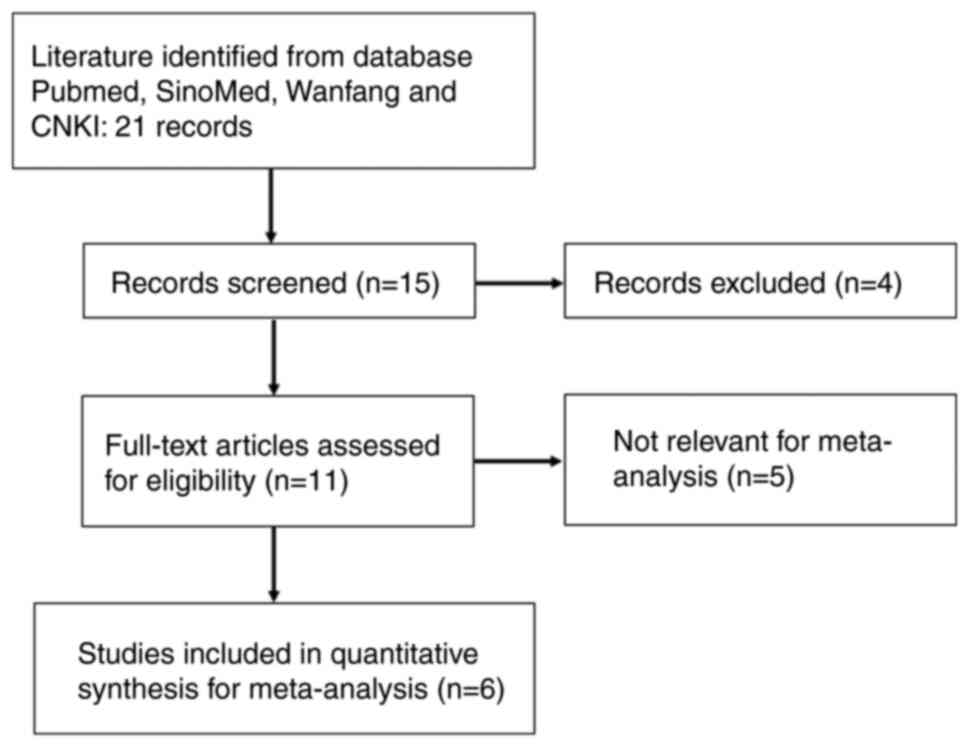
were excluded based on the abstract. Initially, 45 articles were
retrieved, but only six investigated the association between FBXW7
expression and clinicopathological or prognostic indicators of
gastric cancer (Fig. 1). A total of
six articles (11–16) that discussed the clinicopathological
characteristics of FBXW7 expression and gastric cancer, including
results of normal gastric tissue, were identified (Table I). The quality of studies was
determined according to the Newcastle-Ottawa Scale based on
methodology, including sample selection, comparability and
determination of outcomes.
 | Table I.Characteristics of eligible
studies. |
Table I.
Characteristics of eligible
studies.
| First author | Year | Country | Antibody
supplier | Cases | Controls | Regulation in
cancer | NOS score | (Refs.) |
|---|
| Huang et
al | 2015 | China | Stanta | 40 | 40 | Down | 8 | (11) |
| Li et al | 2017 | China | Bioss | 546 | - | - | 8 | (16) |
| Zhang et
al | 2011 | China | Stanta | 60 | 20 | Down | 8 | (12) |
| Huang et
al | 2011 | China | Stanta | 60 | 60 | Down | 8 | (13) |
| Li et al | 2012 | China | Stanta | 75 | 25 | Down | 8 | (14) |
| Calcagno et
al | 2013 | China | Abnova | 33 | - | - | 7 | (15) |
Association between FBXW7 expression
and the clinicopathological characteristics of gastric cancer
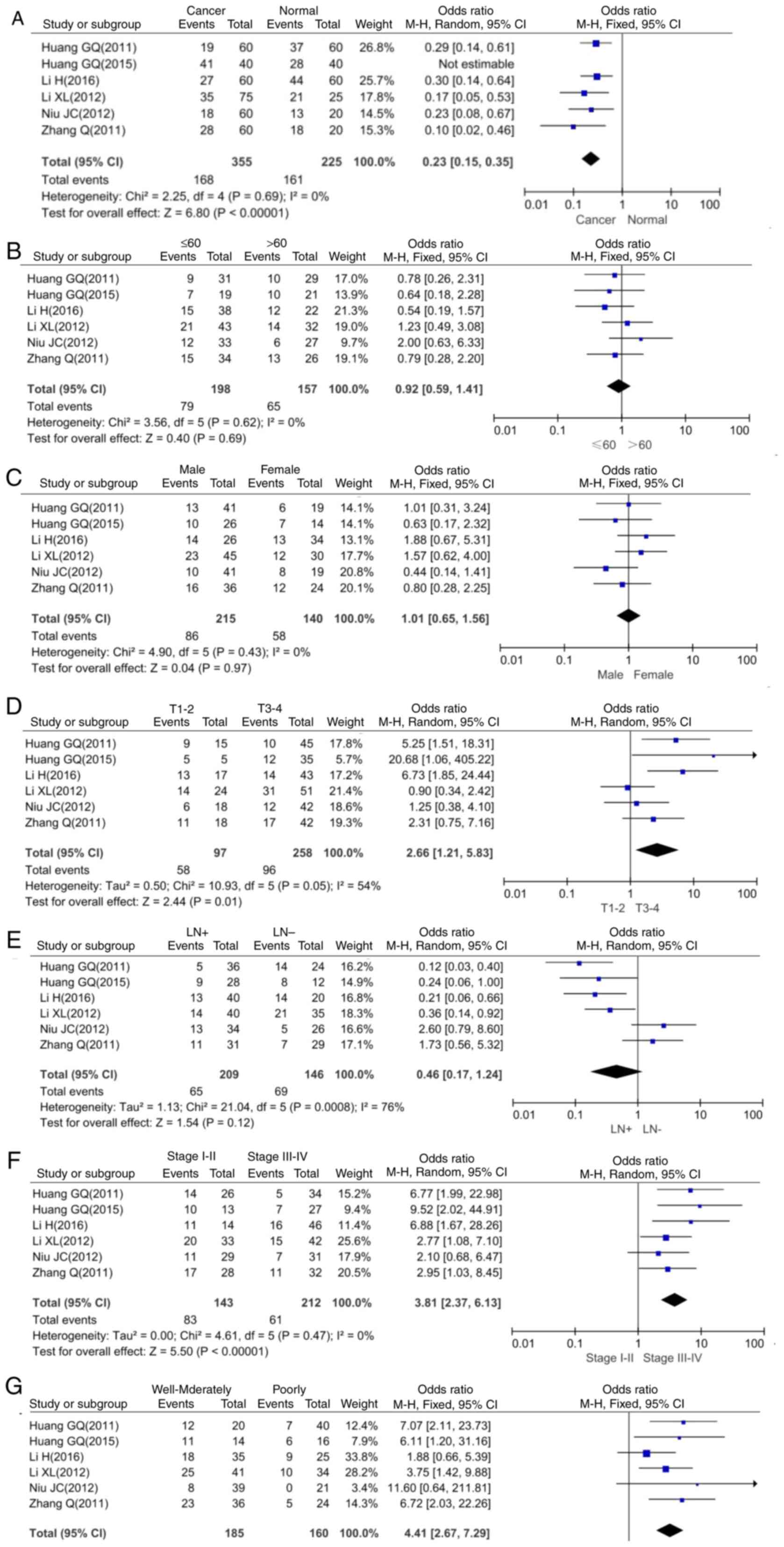
Forest plots of the OR of the association between
FBXW7 expression and clinicopathological parameters of gastric
cancer were constructed. A total of six articles included data on
235 patients with gastric cancer and 145 healthy controls. FBXW7
expression was downregulated in gastric cancer compared with normal
mucosal tissue (Fig. 2A).
Meta-analysis showed that FBXW7 expression was associated with
lymph node metastasis, differentiation, TNM stage, but not
associated with age, sex and depth of invasion (Fig. 2B-G). Articles were excluded if
specific clinicopathological features were missing.
Publication bias
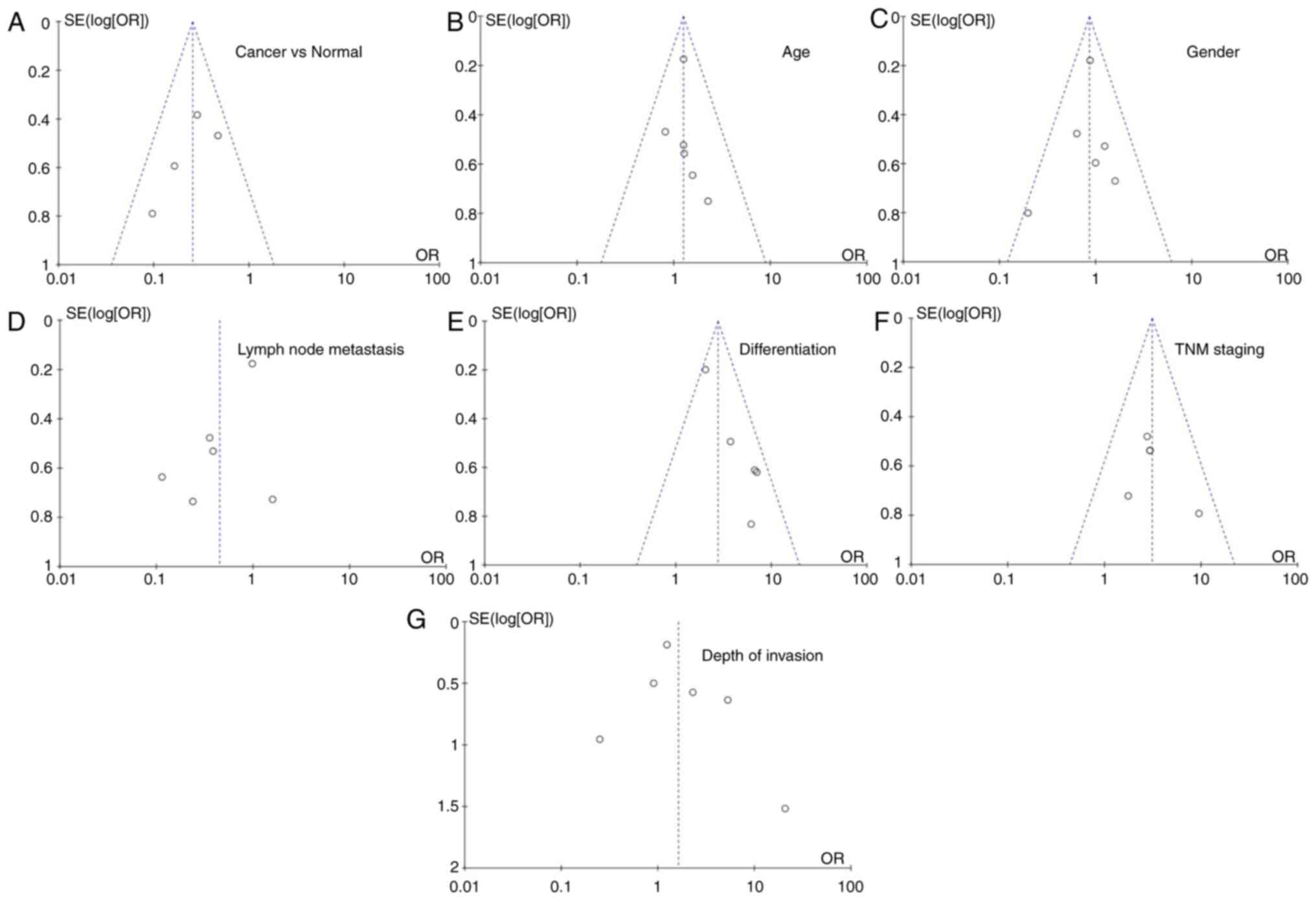
As shown in Fig. 3,
we use funnel graph to test the heterogeneity between studies.
Sensitivity analysis is used to evaluate the impact of a single
study on the summary results by deleting a single study from the
summary analysis each time. The results showed that there was no
obvious publication bias in this meta-analysis.
Bioinformatics analysis results
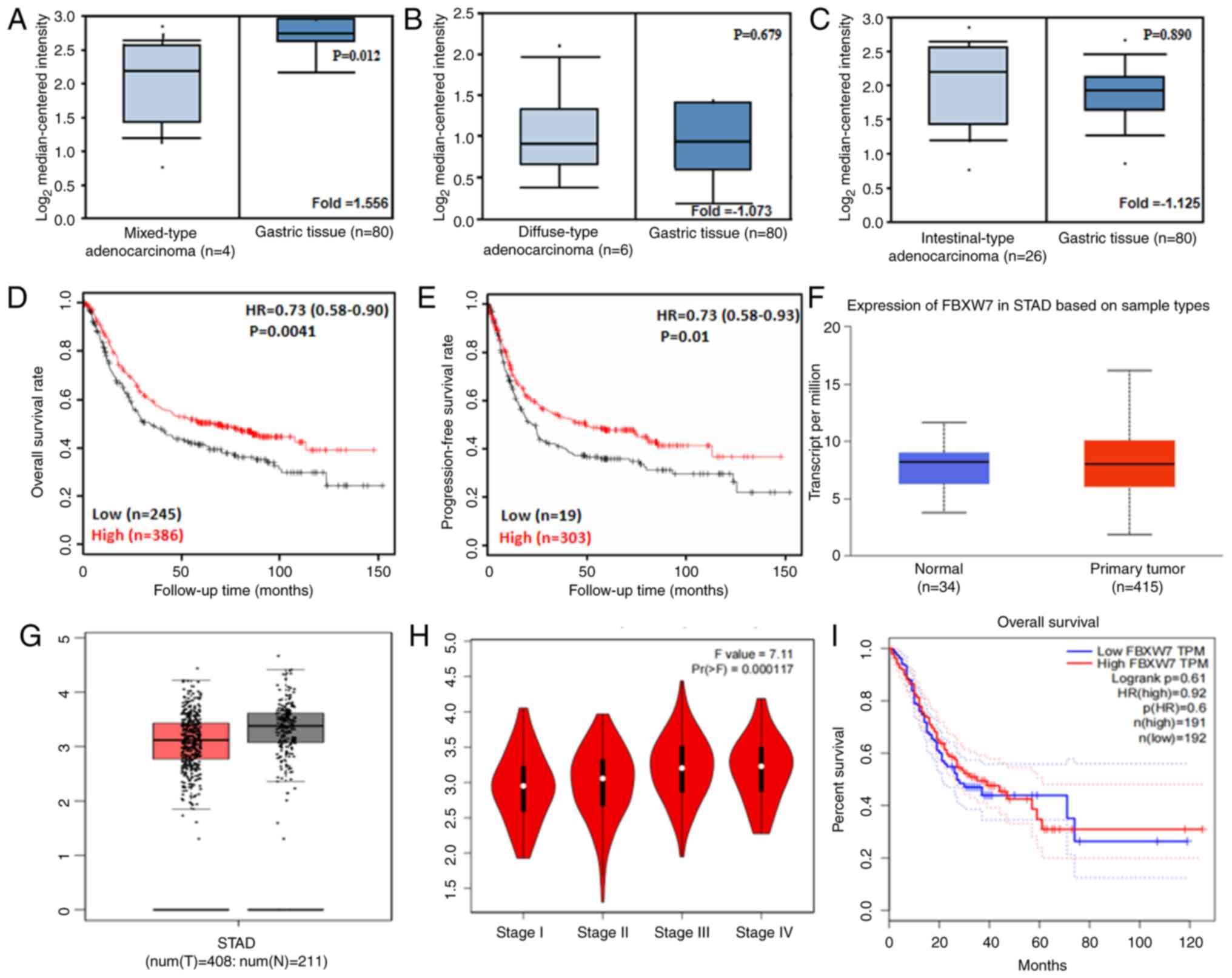
Oncomine dataset showed that FBXW7 mRNA expression
was downregulated in gastric cancer compared with normal gastric
tissue (Fig. 4A-C). Kaplan-Meier
plots (Fig. 4D and E) showed that
downregulated FBXW7 mRNA expression was negatively associated with
the overall and progression-free survival of patients with gastric
cancer. Prognosis of patients with gastric cancer was significantly
associated with patient sex and slightly associated with TNM stage,
treatment, degree of differentiation, Lauren's staging, and HER2
expression (Table II). The UALCAN
database showed that the mRNA expression of FBXW7 was upregulated
in gastric cancer compared with gastric mucosal tissue but the
difference was not significant (Fig.
4F). The GEPIA database showed that mRNA expression of FBXW7
was upregulated in gastric mucosal tissue (Fig. 4G). A significant association between
FBXW7 expression and stage was also found (Fig. 4H) but the effect of FBXW7 expression
on survival time of patients with gastric cancer was not
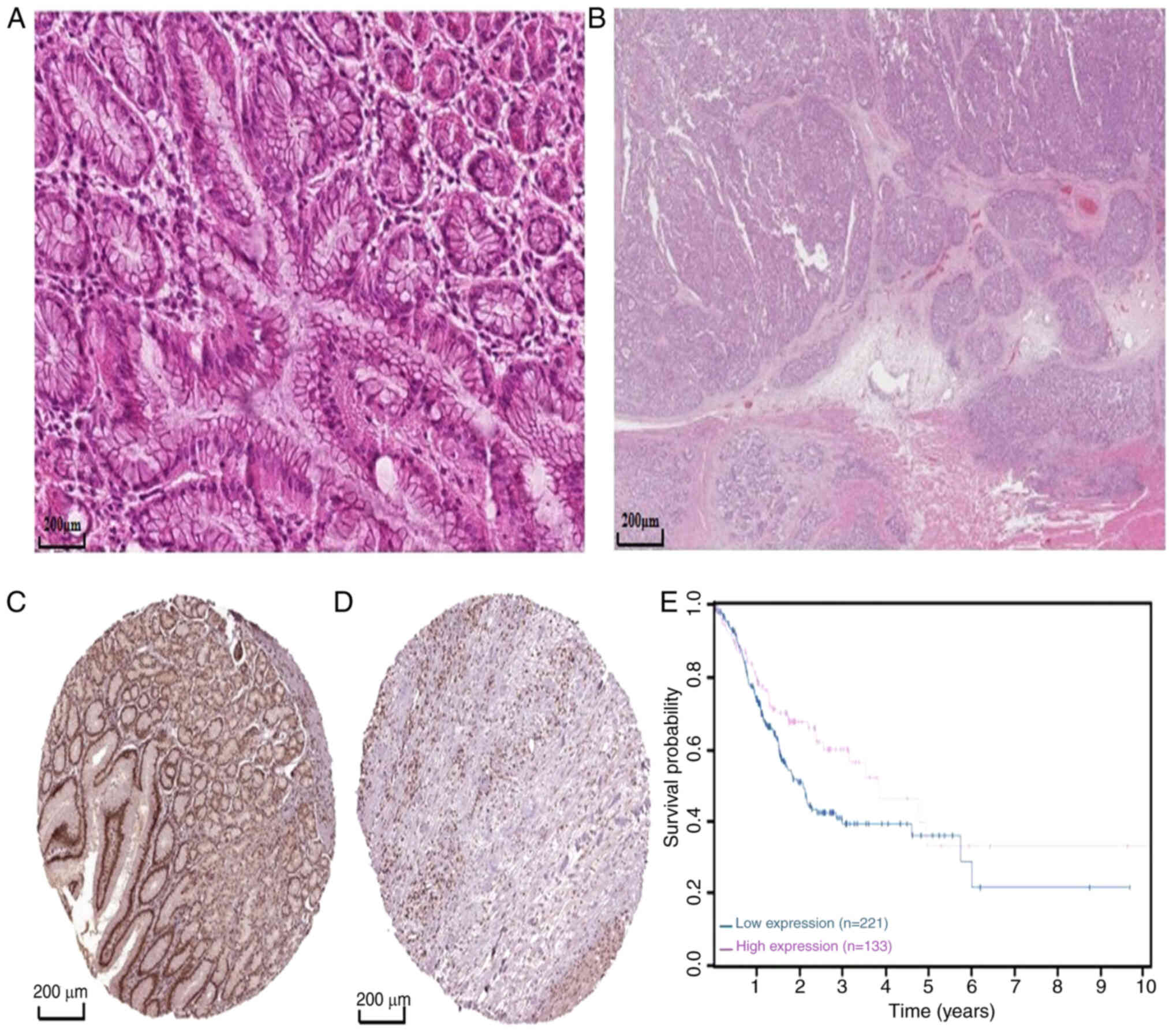
significant (Fig. 4I). Screening
analysis of the HPA database revealed notable difference in
hematoxylin and eosin staining between gastric cancer and normal
gastric mucosal tissue (Fig. 5A and
B) and the expression of FBXW7 in normal gastric
tissue(Fig. 5C) is higher than that
in gastric cancer tissue (Fig. 5D).
Patients with higher FBXW7 expression had a longer survival time
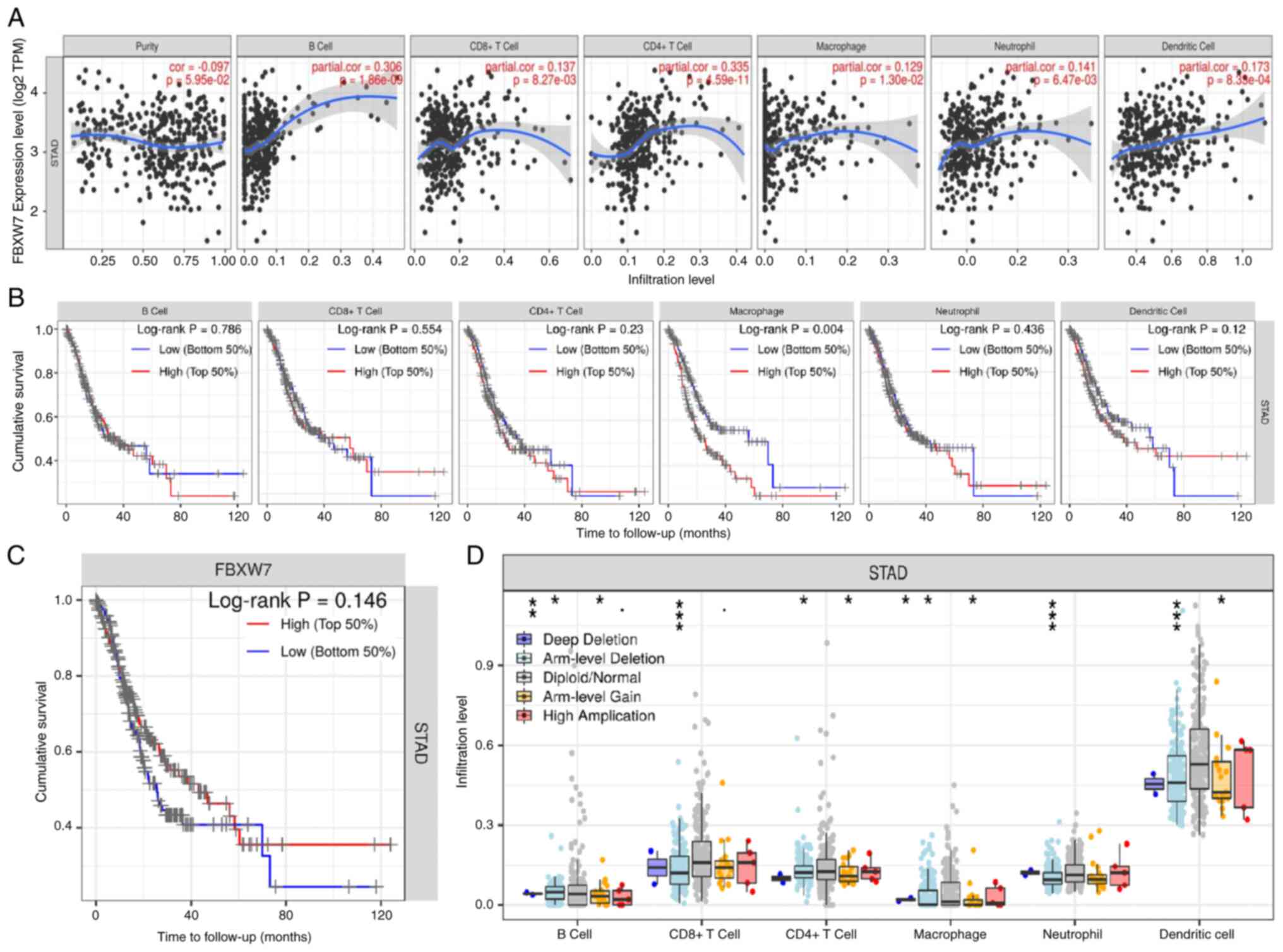
(Fig. 5E). Analysis of the Timer
database showed that FBXW7 was associated with immune cells in
gastric carcinogenesis and development and with the degree of
infiltration of immune cells, including B, CD8+ and CD4+T cells,
macrophages, neutrophils and dendritic cells (Fig. 6A). The survival time of patients
with gastric cancer was prolonged when the degree of macrophage
infiltration was downregulated. However, the survival prognosis of
patients with gastric cancer was not significantly associated with
the degree of infiltration of other immune cells (Fig. 6B). FBXW7 gene expression was also
not significantly associated with prognosis of patients with
gastric cancer (Fig. 6C). The DNA
copy variation data showed that diploid/normal was more common than
deep deletion in B and CD8+ and CD4+T cells, macrophages,
neutrophils and dendritic cells, which were associated with gastric
carcinogenesis and development, arm-level deletion and gain and
high amplication (Fig. 6D).
| Table II.Prognostic significance of F-box/WD
repeat domain-containing 7 mRNA in gastric cancer. |
Table II.
Prognostic significance of F-box/WD
repeat domain-containing 7 mRNA in gastric cancer.
|
| Overall survival | Progression-free
survival |
|---|
|
|
|
|
|---|
| Clinicopathological
feature | Hazard ratio | P-value | Hazard ratio | P-value |
|---|
| Sex |
|
|
|
|
|
Female | 0.660
(0.430–1.020) | 0.059 | 0.660
(0.440–1.010) | 0.052 |
|
Male | 0.640
(0.480–0.860) | 0.003 | 0.710
(0.530–0.950) | 0.020 |
| TNM stage |
|
|
|
|
| 1 | 0.300
(0.090–0.960) | 0.031 |
0.330(0.100–1.060) | 0.049 |
| 2 | 0.840
(0.440–1.240) | 0.590 | 0.550
(0.250–1.190) | 0.120 |
| 3 | 0.550
(0.380–0.800) | 0.001 | 0.620
(0.420–0.890) | 0.010 |
| 4 | 0.630
(0.420–0.940) | 0.022 | 0.750
(0.500–1.130) | 0.170 |
| T stage |
|
|
|
|
| 2 | 1.370
(0.870–2.160) | 0.170 | 1.240
(0.790–1.940) | 0.350 |
| 3 | 0.550
(0.390–0.780) | 0.001 | 0.640
(0.460–0.900) | 0.010 |
| 4 | 0.650
(0.280–1.480) | 0.300 | 0.490
(0.220–1.080) | 0.073 |
| N stage |
|
|
|
|
| 0 | 0.490
(0.210–1.140) | 0.092 | 0.490
(0.210–1.140) | 0.091 |
|
1–3 | 0.620
(0.480–0.810) | <0.001 | 0.650
(0.500–0.830) | 0.001 |
| 1 | 0.680
(0.440–1.040) | 0.075 | 0.640
(0.430–0.940) | 0.024 |
| 2 | 0.340
(0.220–0.540) | <0.001 | 0.430
(0.280–0.660) | <0.001 |
| 3 | 0.680
(0.400–1.150) | 0.150 | 0.690
(0.380–1.250) | 0.210 |
| M stage |
|
|
|
|
| 0 | 0.720
(0.540–0.950) | 0.021 | 0.750
(0.570–0.980) | 0.033 |
| 1 | 0.410
(0.220–0.740) | 0.003 | 0.550
(0.280–1.090) | 0.082 |
| No perforation | 0.750
(0.470–1.200) | 0.230 | 0.720
(0.450–1.130) | 0.150 |
| Treatment |
|
|
|
|
| Surgery
alone | 1.26
(0.92–1.72) | 0.150 | 1.180
(0.860–1.620) | 0.290 |
|
5-FU-based adjuvant | 0.350
(0.100–1.200) | 0.081 | 0.470
(0.190–1.200) | 0.110 |
| Other
adjuvant | 3.230
(1.290–8.120) | 0.008 | 3.560
(1.480–8.530) | 0.002 |
|
Differentiation |
|
|
|
|
|
Well | - | - | - | - |
|
Moderate | 0.690
(0.350–1.330) | 0.260 | 0.730
(0.380–1.380) | 0.320 |
|
Poorly | 0.730
(0.430–1.240) | 0.250 | 0.720
(0.450–1.130) | 0.150 |
| Lauren's
classification |
|
|
|
|
|
Intestinal | 0.500
(0.350–0.720) | <0.001 | 0.610
(0.430–0.860) | 0.005 |
|
Diffuse | 0.780
(0.550–1.110) | 0.170 | 0.780
(0.550–1.110) | 0.170 |
|
Mixed | 4.720
(0.630–38.090) | 0.092 | 2.220
(0.630–7.890) | 0.210 |
| HER2
expression |
|
|
|
|
|
Negative | 0.750
(0.560–0.970) | 0.031 | 0.740
(0.540–1.010) | 0.058 |
|
Positive | 0.680
(0.460–1.000) | 0.049 | 0.620
(0.400–0.960) | 0.031 |
Discussion
Gastric cancer is one of the most common types of
human cancer. Despite improvements in the detection and treatment
of gastric cancer, prognosis is poor (11). FBXW7, which is also known as FBW7,
FBXW6, FBX30, CDC4, and SEL-10, is a member of the SCF protein
family and serves a key role in the degradation of proteins that
regulate the progression of the G1-S cell cycle (17). FBXW7 gene encodes three protein
isoforms, FBXW7 a-, b- and c-types, which are translated from 50
transcribed mRNAs. The mRNAs are transcribed from 50 exons that
have independent and unique promoters and are associated with 10
genes mapped to the 4q31 region. This region is deleted in certain
types of cancer, including glioblastoma, nasopharyngeal carcinoma
and small cell carcinoma of the breast (18). Thus, deletion of FBXW7 in cancer may
affect pathways that govern cell division, differentiation and
apoptosis (19). FBXW7 was mutated
in 84 cell lines of 10 organs, and the mRNA expression of FBXW7 was
found highly suppressed in human glioma cell lines, especially in
type b (19). Bredel et al
(20) showed that FBXW7 is
downregulated in glioma. Gu et al (21) found that FBXW7 serves as a tumor
suppressor by targeting cell cycle initiators in the colon cancer
cell line SCC.
The tumor suppressive function of FBXW7 in gastric
cancer is hypothesized to be achieved through substrates, such as
c-myc, c-jun and Notch. FBXW7 deregulates cyclin E, cytokinesis,
cell proliferation, apoptosis and cell differentiation (15). In addition, mutations of the FBXW7
gene have been shown to be associated with endometrial DNA
aneuploidy variants. Abnormal FBXW7 regulation is a key factor in
mutations of colon adenoma (22).
The FBXW7 locus is a circulating chromosome that is mutated in ~5%
of gastric tumors and FBXW7 is expressed at the mRNA level in
gastric cancer, while abnormal FBXW7 mRNA expression is associated
with lymph node metastasis and gastric cancer stages III–IV
(23). In gastric cancer, the
microRNA-223 is significantly upregulated. The downregulation of
the miR-223 results in the downregulation of FBXW7 at mRNA and
protein levels in 7901 cells (24).
Luciferase activity assay has shown that miR-223 can bind to the
3′-untranslated region of the FBXW7 transcript (24). FBXW7 expression is downregulated in
glioma and is associated with patient survival. A previous study
found that FBXW7 mRNA expression is significantly downregulated in
colorectal cancer compared with normal tissue (25). FBXW7 expression is also associated
with tumor progression and lymph node metastasis; 32% of patients
with early-onset gastric cancer lose FBXW7 expression, which is
significantly associated with the absence of FBXW7 expression
(25). FBXW7 induces apoptosis and
cell cycle arrest of tumor cells partially by inhibiting EMT via
downregulation of the RhoA signaling pathway in gastric cancer
(26).
To determine FBXW7 expression and demonstrate its
clinicopathological significance, the present study analyzed four
studies using NOS scores to ensure high quality. Previous study
have shown that aberrant activation of FBXW7 inhibits tumor growth,
metastasis and dedifferentiated ovarian cancer (27). FBXW7 expression is reported to be
negatively correlated with the poor prognosis of patients with
rectal and pancreatic cancer (28,29).
In the present study, the expression of FBXW7 was downregulated at
both mRNA and protein levels in gastric cancer tissue compared with
normal gastric mucosa, suggesting the involvement of FBXW7
expression in gastric carcinogenesis. FBXW7 expression was
positively associated with differentiation, TNM stage and lymph
node metastasis. This finding indicates that abnormal expression of
FBXW7 at the mRNA level, which indicates its expression at the
protein level, may be used to predict the pathological behavior of
gastric cancer. Meta-analysis was performed following the PRISMA
checklist (9). The present study
integrated previous studies, observed the overall trend of FBXW7
gene expression, validated gene expression from other databases and
finally analyzed the impact of FBXW7 on the prognosis of patients
with gastric cancer.
There were some limitations in the meta-analysis.
First, potential publication bias stems from the fact that
published results were predominantly positive. Second, small sample
sizes may affect the validity of reported results. The patients
included in the study were only from Asia and the United States.
Because different experimental methods may be used, the level of
medical development in different regions may also affect the
results to detect the expression of FBXW7.
FBXW7 serves a complex role in the development of
tumor. Expression of FBXW7 was downregulated in patients with
gastric cancer. FBXW7 expression was positively associated with
differentiation, TNM stage and lymph node metastasis. FBXW7
expression may serve as a marker for prognosis of patients with
cancer, providing novel methods for prevention and treatment.
Acknowledgements
Not applicable.
Funding
Funding: No funding was received.
Availability data and materials
The datasets generated and/or analyzed during the
current study are available in the Kaplan-Meier plotter (http://www.kmplot.com), Oncomine (http://www.oncomine.org), HPA(https://www.proteinatlas.org/), GEPIA(http://gepia.cancer-pku.cn/) and UALCAN(http://ualcan.path.uab.edu/) repository.
Authors' contributions
JS and ZF performed the meta-analysis and wrote the
manuscript. JS and YB analyzed the data. JS and ZF confirm the
authenticity of all the raw data. All authors have read and
approved the final manuscript.
Ethics approval and consent to
participate
Not applicable.
Patient consent for publication
Not applicable.
Competing interests
The authors declare that they have no competing
interests.
References
|
1
|
Monte I, Bottari VE, Buccheri S, Blundo A,
Sirugo L, Leggio S and Licciardi S: Chemotherapy-induced
cardiotoxicity: Subclinical cardiac dysfunction evidence using
speckle tracking echocardiography. J Cardiovasc Echogr. 23:33–38.
2013. View Article : Google Scholar : PubMed/NCBI
|
|
2
|
Cao J, Ge MH and Ling ZQ: Fbxw7 tumor
suppressor: A vital regulator contributes to human tumorigenesis.
Medicine (Baltimore). 95:e24962016. View Article : Google Scholar : PubMed/NCBI
|
|
3
|
Li H, Wang Z, Zhang W, Qian K, Xu W and
Zhang S: Fbxw7 regulates tumor apoptosis, growth arrest and the
epithelial-to-mesenchymal transition in part through the RhoA
signaling pathway in gastric cancer. Cancer Lett. 370:39–55. 2016.
View Article : Google Scholar : PubMed/NCBI
|
|
4
|
Ma X, Cai S, Deng C, Jia Y, Khan S and
Zhao L: Expression of FBXW7 in esophageal cancer tissues and its
effects on cell proliferation and cell cycle. J Shanxi Med Univ.
53:655–662. 2022.(In Chinese).
|
|
5
|
Lu P and Cheng X: Expression and clinical
significance of FBXW7 and fam83d in endometrioid adenocarcinoma. J
Clin Exp Pathol. 38:564–568. 2022.(In Chinese).
|
|
6
|
Zhang L, Chen C, Yu YB, Li Y, Hui S and Li
F: Expression and diagnostic value of Calreticulin, VRK1, FBXW7 in
diffuse large B-cell lymphoma. Chin Lab Diagn. 26:276–280. 2022.(In
Chinese).
|
|
7
|
Liu XY, Cui YN, Li J, Zhang Z and Guo RH:
Effect of FBXW7 gene mutation on the prognosis of immunotherapy in
patients with non-small cell lung cancer. Zhonghua Yi Xue Za Zhi.
102:914–921. 2022.(In Chinese). PubMed/NCBI
|
|
8
|
Xu Y, Sengupta T, Kukreja L and Minella
AC: MicroRNA-223 regulates cyclin E activity by modulating
expression of F-box and WD-40 domain protein 7. J Biol Chem.
285:34439–34446. 2010. View Article : Google Scholar : PubMed/NCBI
|
|
9
|
Moher D, Liberati A, Tetzlaff J, Altman
DG, Antes G, Atkins D, Barbour V, Barrowman N, Berlin JA, Clark J,
et al: Preferred reporting items for systematic reviews and
meta-analyses: The PRISMA statement. Rev Esp Nutr Hum Diet.
18:172–181. 2014.(In Spanish). View Article : Google Scholar
|
|
10
|
Wells GA: The Newcastle-Ottawa Scale (NOS)
for Assessing the Quality of Non-Randomised Studies in
Meta-Analyses. Symposium on Systematic Reviews: Beyond the Basics.
2014.
|
|
11
|
Huang GQ, Li H, Zhang CQ, Wu QF and Sun
JH: Expression and clinical significance of CDC4 and c-Myc in
gastric cancer. Chin J Cancer. 25:72015.(In Chinese).
|
|
12
|
Zhang Q, Wang GJ, Pei YX, Li XF and Ni JF:
Expression and clinical significance of FBXW7 and SRC-3 in gastric
cancer. J Shandong Univ (Med Ed). 49:42011.(In Chinese).
|
|
13
|
Huang GQ, Zhang CQ, Peng XC, Zhang N and
Tang WX: The expression and significance of CDC4 and cyclinE in
gastric cancer. Life Sci Res. 15:339–344. 2011.(In Chinese).
|
|
14
|
Li XL, Wang GJ, Pei YX, Zhang Q and Wang
XF: Expression of F-box/WD-40 domain protein 7 and Cyclin E protein
in gastric cancer tissues. J Zhengzhou Univ (Med Ed). 47:494–496.
2012.(In Chinese).
|
|
15
|
Calcagno DQ, Freitas VM, Leal MF, de Souza
CR, Demachki S, Montenegro R, Assumpção PP, Khayat AS, Smith Mde A,
dos Santos AK and Burbano RR: MYC, FBXW7 and TP53 copy number
variation and expression in gastric cancer. BMC Gastroenterol.
13:1412013. View Article : Google Scholar : PubMed/NCBI
|
|
16
|
Li MR, Zhu CC, Ling TL, Zhang YQ, Xu J,
Zhao EH and Zhao G: FBXW7 expression is associated with prognosis
and chemotherapeutic outcome in Chinese patients with gastric
adenocarcinoma. BMC Gastroenterol. 17:602017. View Article : Google Scholar : PubMed/NCBI
|
|
17
|
Zhou X, Jin W, Jia H, Yan J and Zhang G:
MiR-223 promotes the cisplatin resistance of human gastric cancer
cells via regulating cell cycle by targeting FBXW7. J Exp Clin
Cancer Res. 34:282015. View Article : Google Scholar : PubMed/NCBI
|
|
18
|
Eto K, Iwatsuki M, Watanabe M, Ishimoto T,
Ida S, Imamura Y, Iwagami S, Baba Y, Sakamoto Y, Miyamoto Y, et al:
The sensitivity of gastric cancer to trastuzumab is regulated by
the miR-223/FBXW7 pathway. Int J Cancer. 136:1537–1545. 2015.
View Article : Google Scholar : PubMed/NCBI
|
|
19
|
Sancho R, Gruber R, Gu G and Behrens A:
Loss of Fbw7 reprograms adult pancreatic ductal cells into α, δ,
and β cells. Cell Stem Cell. 15:139–153. 2014. View Article : Google Scholar : PubMed/NCBI
|
|
20
|
Bredel M, Bredel C, Juric D, Harsh GR,
Vogel H, Recht LD and Sikic BI: Functional network analysis reveals
extended gliomagenesis pathway maps and three novel MYC-interacting
genes in human gliomas. Cancer Res. 65:8679–8689. 2005. View Article : Google Scholar : PubMed/NCBI
|
|
21
|
Gu Z, Inomata K, Ishizawa K and Horii A:
The FBXW7 beta-form is suppressed in human glioma cells. Biochem
Biophys Res Commun. 354:992–998. 2007. View Article : Google Scholar : PubMed/NCBI
|
|
22
|
Milne AN, Leguit R, Corver WE, Morsink HM,
Polak M, de Leng WW, Carvalho R and Offerhaus GJA: Loss of
CDC4/FBXW7 in gastric carinoma. Anal Cell Pathol. 32:4037962010.
View Article : Google Scholar
|
|
23
|
Yokobori T, Mimori K, Iwatsuki M, Ishii H,
Onoyama I, Fukagawa T, Kuwano H, Nakayama KI and Mori M:
p53-Altered FBXW7 expression determines poor prognosis in gastric
cancer cases. Cancer Res. 69:3788–3794. 2009. View Article : Google Scholar : PubMed/NCBI
|
|
24
|
Akhoondi S, Sun D, von der Lehr N,
Apostolidou S, Klotz K, Maljukova A, Cepeda D, Fiegl H, Dafou D,
Marth C, et al: FBXW7/hCDC4 is a general tumor suppressor in human
cancer. Cancer Res. 67:9006–9012. 2007. View Article : Google Scholar : PubMed/NCBI
|
|
25
|
Zeng HH, Yang Z, Qiu YB, Bashir S, Li Y
and Xu M: Detection of a novel panel of 24 genes with high
frequencies of mutation in gastric cancer based on next-generation
sequencing. World J Clin Cases. 10:4761–4775. 2022. View Article : Google Scholar : PubMed/NCBI
|
|
26
|
Luo J, Chen J, Li H, Yang Y, Yun H, Yang S
and Mao X: LncRNA UCA1 promotes the invasion and EMT of bladder
cancer cells by regulating the miR-143/HMGB1 pathway. Oncol Lett.
14:5556–5562. 2017.PubMed/NCBI
|
|
27
|
Zhang G, Li S, Lu J, Ge Y, Wang Q, Ma G,
Zhao Q, Wu D, Gong W, Du M, et al: LncRNA MT1JP functions as a
ceRNA in regulating FBXW7 through competitively binding to
miR-92a-3p in gastric cancer. Mol Cancer. 17:872018. View Article : Google Scholar : PubMed/NCBI
|
|
28
|
Hou J, Liu Y, Yan D, Huang P, Wang, Gu H,
Lan C, Geng S and Cui H: MiR-124-3p/ZC3H15 regulates gastric cancer
progression by blocking FBXW7 mediated degradation of c-Myc. Res
Sq. 2020.
|
|
29
|
Deng T, Shen P, Li A, Zhang Z, Yang H,
Deng X, Peng X, Hu Z, Tang Z, Liu J, et al: CCDC65 as a new
potential tumor suppressor induced by metformin inhibits activation
of AKT1 via ubiquitination of ENO1 in gastric cancer. Theranostics.
11:8112–8128. 2021. View Article : Google Scholar : PubMed/NCBI
|