Introduction
Radiofrequency (RF) radiation from wireless devices,
such as mobile and cordless phones, base stations, and so on in the
frequency range 30 kHz to 300 GHz was classified in 2011, as a
‘possible human carcinogen’ Group 2B by the International Agency
for Research on Cancer (IARC), a part of WHO (1,2).
In spite of that evaluation, little or mostly nothing has been done
to inform and protect the population from RF radiation (3,4).
On the contrary, human exposure has increased rapidly in recent
years and will increase substantially with the introduction of the
fifth generation (5G) for wireless communication (5-7).
Of special concern is the involuntary environmental
exposure to RF radiation. This is the situation in most places with
few or no possibilities to avoid exposure. Thus, RF radiation
should by now be regarded as environmental pollution that is hard
to detect using our senses.
Previously, we reported RF radiation levels in
different places in Stockholm in Sweden, such as at the Central
Railway station (8), the Old Town
(9), in an apartment close to
base stations (10) and in the
City (11).
High ambient exposure was found at several places,
and particularly at the Järntorget square in the Old Town, that was
measured in April, 2016 [mean, 24,277.1 µW/m2 (3.03 V/m); median,
19,990.0 µW/m2 (2.75 V/m); ranging from 257.0 µW/m2 (0.31 V/m) to
173,301.8 µW/m2 (8.08 V/m)] (9).
Recently, the US National Toxicology Program (NTP)
released results from their large animal two-year study on cell
phone RF radiation exposure (12,13) that we have discussed in further
detail elsewhere (14). A
statistically significant increased risk was found for brain glioma
and malignant schwannoma in heart nerves, but also in other organs.
There was some evidence of an increased risk of thyroid cancer, and
clear evidence that RF radiation is a multi-site carcinogen
(14). These results are similar
to those found in human epidemiological studies, as reviewed
elsewhere (7,15,16).
In the study by the Ramazzini Institute (RI) in
Italy, rats were exposed from prenatal life until natural death to
a 1.8 GHz GSM far field of 0, 5, 25, 50 V/m with a whole-body
exposure for 19 h/day similar to that from base stations. Increased
incidence of similar tumour types that have been associated in
individuals using wireless phones were found (17). Thus, a statistically significant
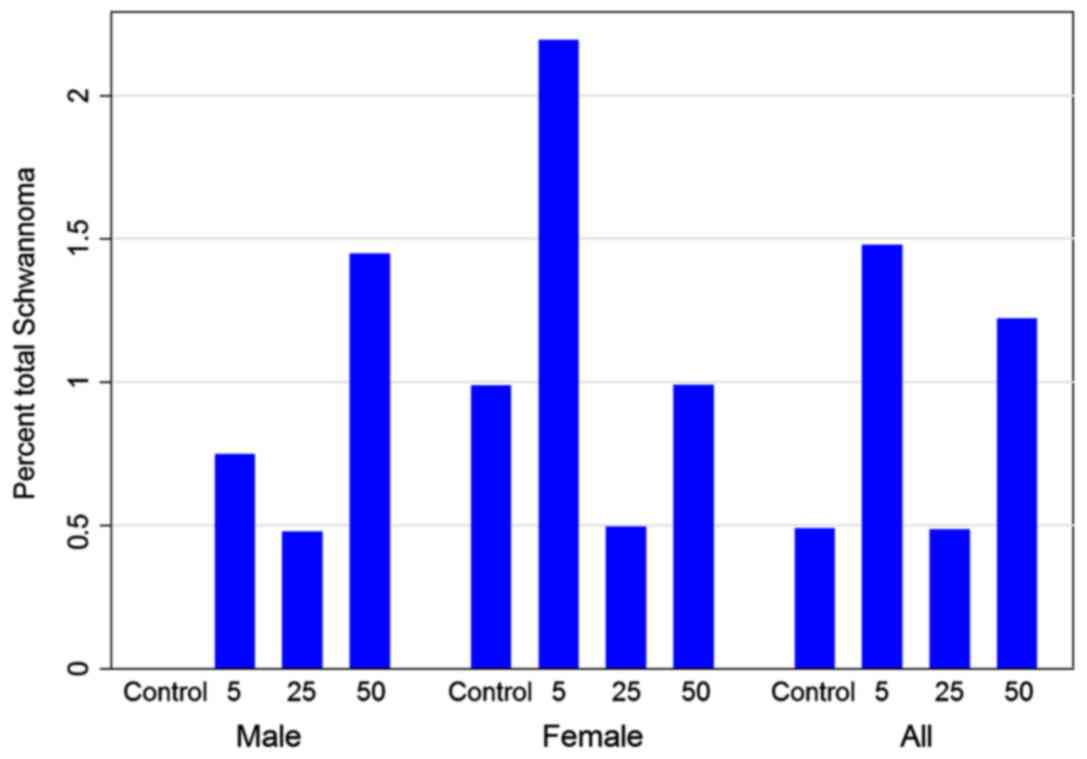
increase in the incidence of malignant schwannoma in the heart was
found in male rats at the highest dose, 50 V/m. An increased
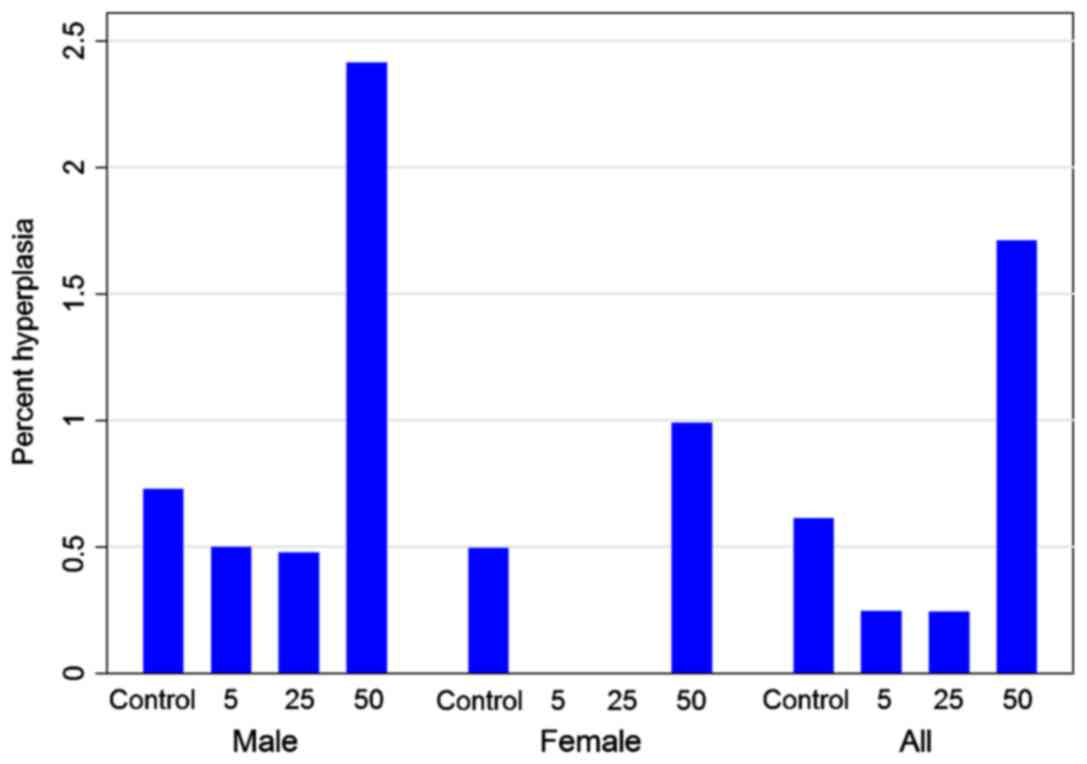
incidence of heart Schwann cell hyperplasia was observed in the
treated male and female rats at the highest dose (50 V/m), but was
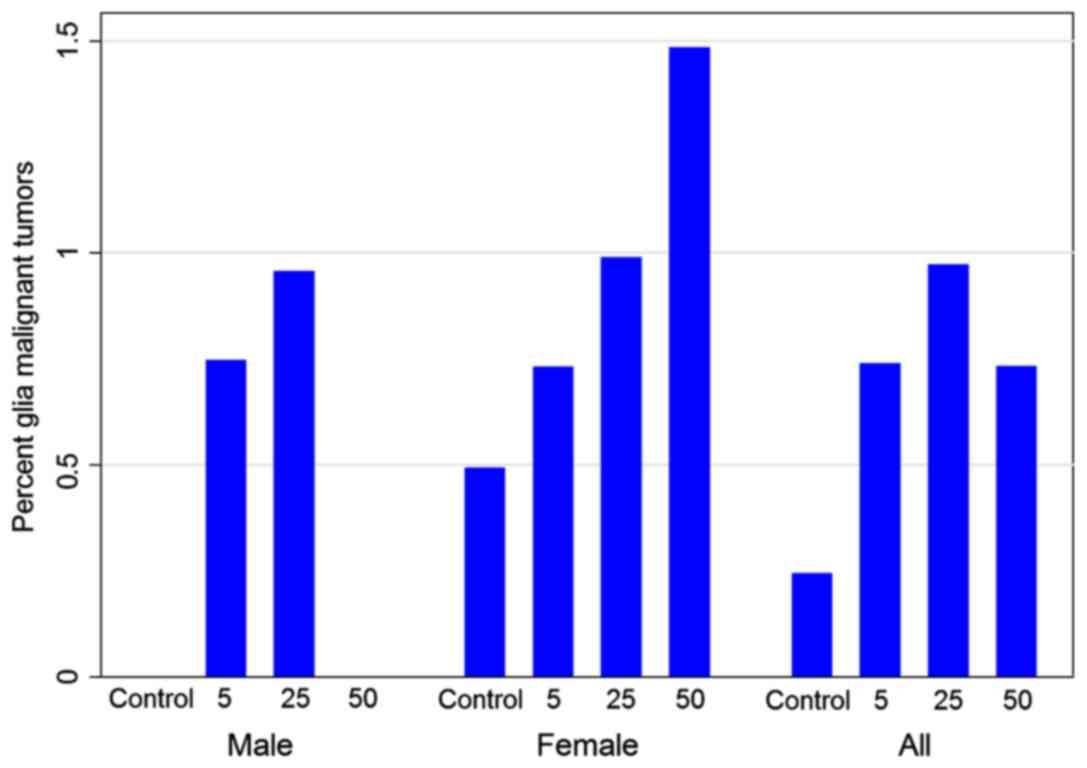
not statistically significant. In treated female rats at the
highest dose (50 V/m), the incidence of malignant glial tumours was
increased, although this was not statistically significant.
The aim of this study was to make additional
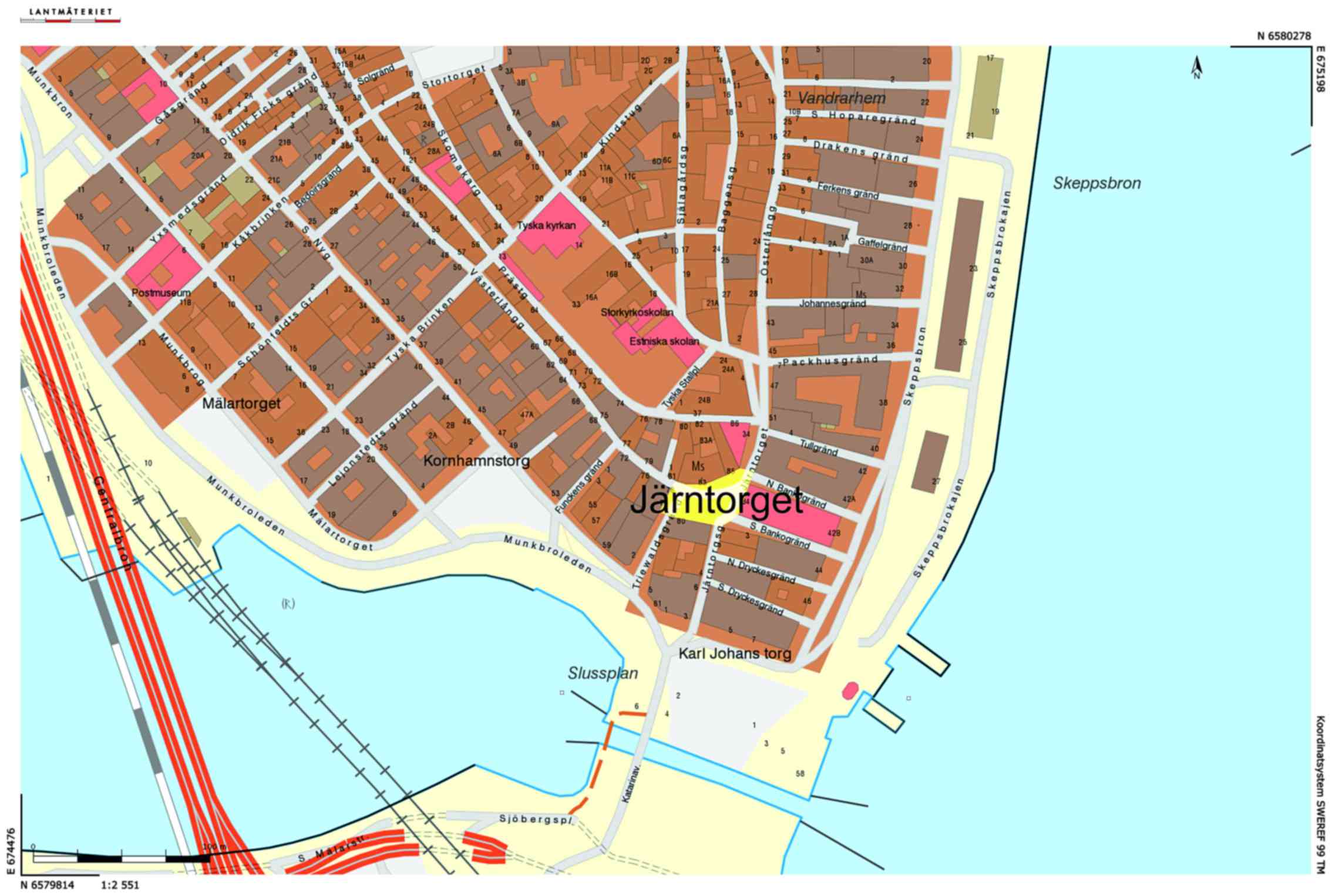
measurements at Järntorget in Stockholm Old city (Fig. 1) and to compare the levels with
the results from the RI study (17). This was a measurement study with
no involvement of test persons. Thus, no ethical permission was
required.
Materials and methods
Study design
Field spatial distribution measurements were
conducted with a radiofrequency broadband analyser. The square was
covered with spot measurements, whereas in each spot the field was
measured with slow circular movements to cover a 1 sqm area at
heights of 0.7-2 m. In order to minimize field perturbation by the
measurer, the meter was held at arm's lengths from the
investigator, with the outward extending probe. The measurements
were conducted in about 0.8-0.9 m from the investigator. On the
whole, 51 spots were measured in the square and the street area
connected to the square.
The radiofrequency broadband analyser make and model
was Wandell & Goltermann EMR300, E-field probe 2244/90. The
characteristics include: A resolution of 0.01 V/m; settling time
typically 1 sec; displaying instantaneous measured value, maximum
value and average value.
The E-field probe used had the following
characteristics: A frequency range 100 kHz to 3 GHz, measurement
range 0.6 to 800 V/m, linearity 0.7 to 3 dB depending on the
amplitude, frequency response ±2.4 dB and isotropy deviation ±1.0
dB. At each spot, the average electric field in Volts per meter
(V/m) was recorded.
An EME Spy 200 exposimeter was also used in this
study. The exposimeter measures 20 predefined frequency bands, as
presented in Table I. They cover
the frequencies of most public RF radiation emitting devices
currently used in Sweden. The exposimeter covers frequencies from
88 to 5,850 MHz. For FM, TV3, TETRA, TV4&5, Wi-Fi 2G and Wi-Fi
5G the lower detection limit is 0.01 V/m (0.27 µW/m2); for all
other bands the lower detection limit is 0.005 V/m (0.066 µW/m2).
For all bands the upper detection limit is 6 V/m (95,544 µW/m2;
9.5544 µW/cm2). The sampling time used in this study was 4 sec
which is the fastest for the given exposimeter.
 | Table I.Predefined measurement frequency bands
of EME Spy 200 Exposimeter Frequency ranges. |
Table I.
Predefined measurement frequency bands
of EME Spy 200 Exposimeter Frequency ranges.
| Frequency band | Frequency MIN
(MHz) | Frequency MAX
(MHz) |
|---|
| FM | 88 | 107 |
| TV3 | 174 | 223 |
| TETRA I | 380 | 400 |
| TETRA II | 410 | 430 |
| TETRA III | 450 | 470 |
| TV4&5 | 470 | 770 |
| LTE 800, 4G
(DLa) | 791 | 821 |
| LTE 800, 4G
(ULb) | 832 | 862 |
| GSM 900 + UMTS 900,
3G (UL) | 880 | 915 |
| GSM 900 + UMTS 900,
3G (DL) | 925 | 960 |
| GSM 1800 (UL) | 1,710 | 1,785 |
| GSM 1800 (DL) | 1,805 | 1,880 |
| DECT | 1,880 | 1,900 |
| UMTS 2100, 3G
(UL) | 1,920 | 1,980 |
| UMTS 2100, 3G
(DL) | 2,110 | 2,170 |
| Wi-Fi, 2 GHz | 2,400 | 2,483.5 |
| LTE 2600, 4G
(UL) | 2,500 | 2,570 |
| LTE 2600, 4G
(DL) | 2,620 | 2,690 |
| WiMax | 3,300 | 3,900 |
| Wi-Fi 5 GHz | 5,150 | 5,850 |
The exposimeter measures different
telecommunications protocols: Frequency modulation (FM) radio
broadcasting; television (TV) broadcasting; TETRA emergency
services (police, rescue, etc.); global system for mobile
communications (GSM) second generation mobile communications;
universal mobile telecommunications systems (UMTS) third generation
mobile communications, 3G; long-term evolution (LTE) fourth
generation mobile communications standard, 4G; digital European
cordless telecommunications (DECT) cordless telephone systems
standard; Wi-Fi wireless local area network protocol; worldwide
interoperability for microwave access (WIMAX) wireless
communication standard for high speed voice, data and internet. The
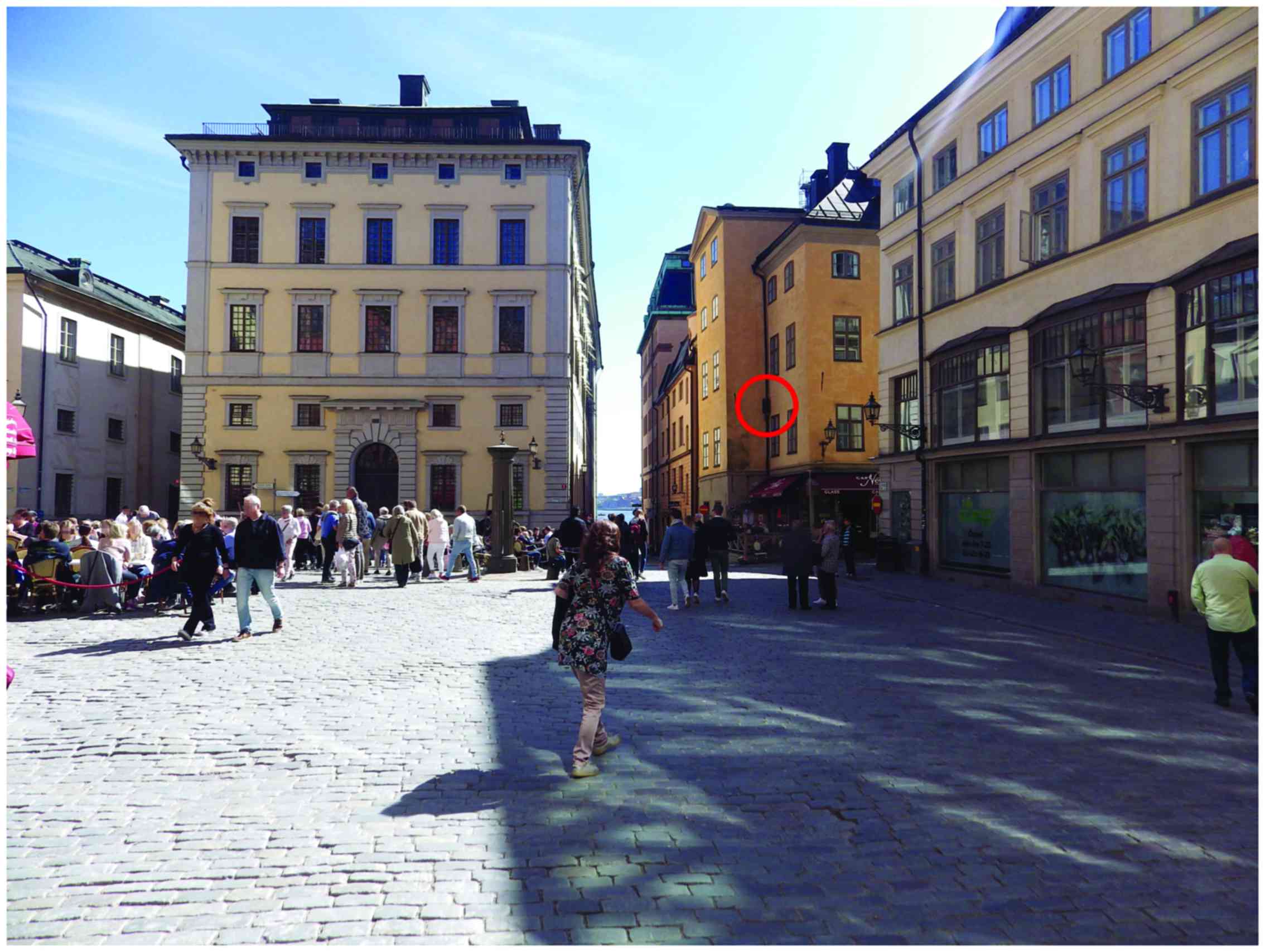
location of the mobile phone base station antenna at the square is
presented in Fig. 2.
Results
Järntorget, Stockholm Old Town
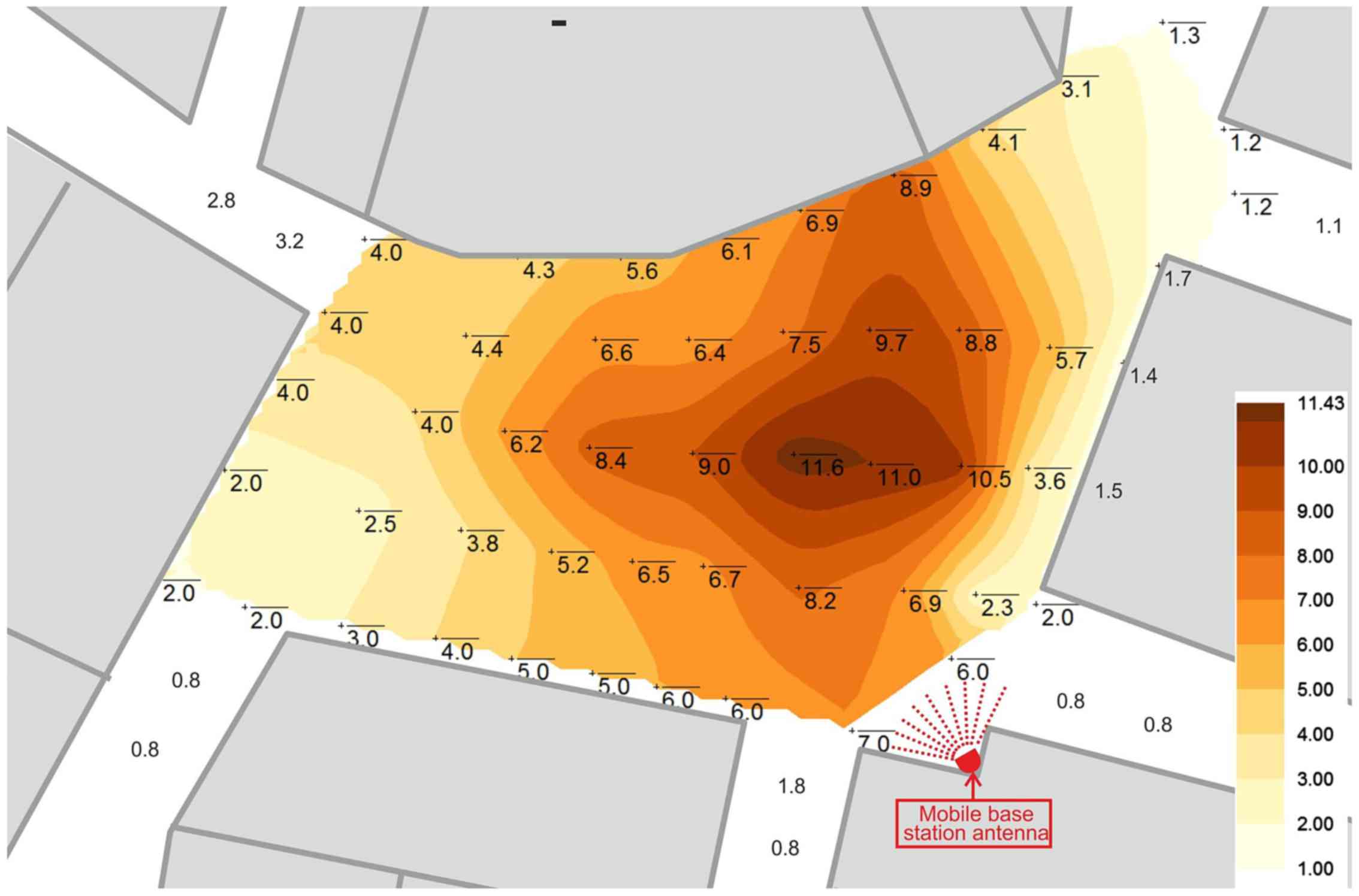
The field spatial distribution measurement conducted
at Järntorget square (Fig. 3)
illustrates the propagation of the microwaves from the mobile phone
base station's several antennas. Based on the radiofrequency
broadband analyser spot measurements, the maximum E-field topped at
11.6 V/m at the centre of the square, where the antenna is focused.
The Järntorget's mean value was 5.2 V/m; median, 5.0 V/m; range,
1.2-11.6 V/m; whereas in the whole square the field level was
nowhere below 2 V/m. When distancing from the square, into the
narrow streets, the field level gradually dropped; note top in
figure scale 11.43 V/m.
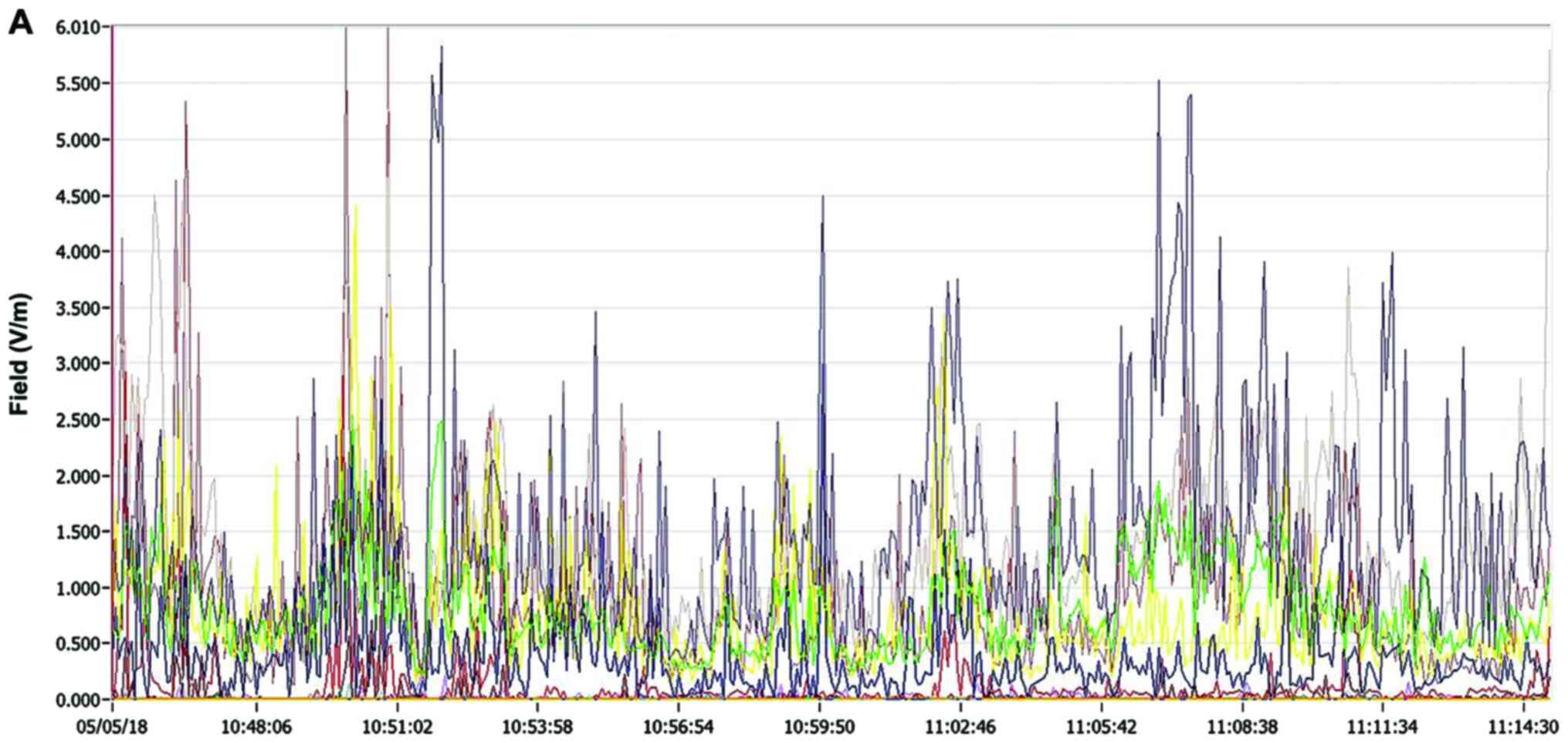
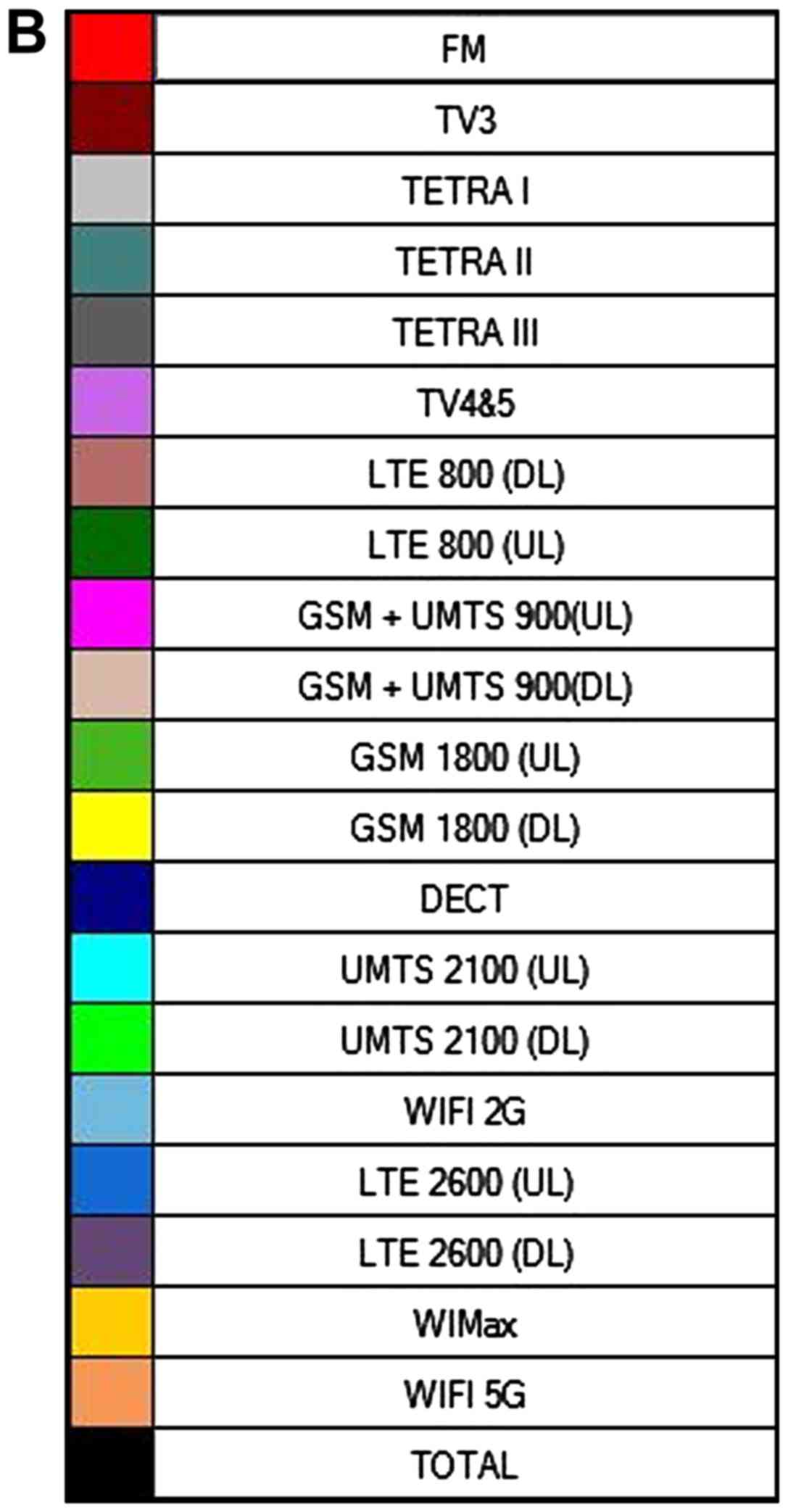
Fig. 4 depicts
different radiofrequency components at Järntorget across different
communication bands. The main contributors to the radiofrequency
exposure, time averaged over half an hour period, were all mobile
telephony bands: LTE 2600 DL 1.7 V/m, GSM+UMTS 900 DL 1.6 V/m, LTE
800 DL 1.2 V/m, UMTS 2100 DL 0.9 V/m.
Discussion
Ramazzini Institute rat study
In this lifespan carcinogenicity study,
Sprague-Dawley rats were exposed to 1.8 GHz GSM environmental
radiation (17). A statistically
significant increase in the incidence of malignant schwannoma in
the heart was found in male rats at the highest dose, 50 V/m,
corresponding to 0.66 mW/cm2 (6,63 W/m2) and whole-body SAR of 0.1
W/Kg (Fig. 5.)
An increased incidence of heart Schwann cell
hyperplasia was observed in the treated male and female rats at the
highest dose (50 V/m), although this was not statistically
significant (Fig. 6). In the
treated female rats at the highest dose (50 V/m) the incidence of
malignant glial tumours was increased, although this was not
statistically significant (Fig.
7). No conclusive evidence on glia cell hyperplasia was found
(Fig. 8).
More prominent effects on health due to lower
compared to higher RF radiation exposure have been observed in
studies, which could indicate a frequency and power-window based
response. This has been shown in studies with RF-radiation exposure
down to peak power output of 1 mW from a GSM mobile phone, where
the blood brain barrier opened and led to leakage into the brain
tissues of large molecules, e.g., albumin and big molecules that
can be toxic to brain tissue (18,19). In the Ramazzini Institute study,
it was shown in Figs. 7 and
8, that 25 V/m yielded a higher
incidence of glial cell hyperplasia and glia cell malignant tumours
in male rats, than exposure to 50 V/m.
In this study we used a broadband meter, Wandell
& Goltermann EMR-300, covering 100 kHz to 3 GHz for measuring
radiofrequency E-field distribution, units in Volts per meter. The
measurement was done at midday on May 5, 2018 and encompassed the
Järntorget square in the Stockholm Old Town. That place was
selected since in our previous study with measurements from 2016,
the Järntorget square had the highest RF radiation levels in the
Old Town (see Table VI and Fig. 11 in that publication) (9).
The new spot measurements carried out in Järntorget
square illustrate very high exposure levels at a popular tourist
destination. The square was crowded with tourists and the local
population either walking or sitting in the open-air cafés. The
exposure levels in the entire square were needlessly high, as
mobile communications services could be provided to subscribers in
the square at orders of magnitude less power as presently used.
This investigation revealed that mobile telephony service providers
create unnecessary high exposure at public places, by using
relatively high output power in base station antennas positioned
close to people. Sufficient service coverage could be provided with
much less radiation levels and carefully selected positions for
base station antennas.
We measured the RF radiation at Järntorget with a
mean of 5.2 V/m, a median of 5.0 V/m and a range of 1.2-11.6 V/m.
Interestingly, the mean and median levels were only one order of
magnitude lower than the radiation in the RI study, 50 V/m, with a
statistically significant increase in the incidence of malignant
schwannoma in the heart in male rats. In the same exposure group,
an increased incidence of glia cell tumours in the brain was found
in female rats. Based on thermal effects, a safety factor of 10 has
been used for workers and additionally one fifth of that level for
individuals with increased vulnerability, such as children, those
with illness and otherwise sensitive individuals yielding a
specific absorption rate (SAR) of 2 W/kg for mobile phones. This
safety factor is based on acute thermal effects on the ape's eye
with 100 W/kg yielding lens clouding [see the study by Lin
(20)]: ‘Clearly, the motivation
was to limit temperature rises inside the eye to prevent formation
of lens opacity-cataracts. Specifically, a safety factor of ten was
applied to reduce the SAR threshold of 100 to 10 W/kg. To provide
for an additional margin of safety for the general public, an extra
factor of five was introduced to arrive at 2 W/kg over 10 g of
contiguous tissue, including the eye’. Using the same logic in
safety factors as for SAR regarding the RI results would yield 2.5
V/m as a safety level. Thus, our results at Järntorget exceed that
RF radiation magnitude.
The literature on cancer risks relating to RF
radiation from base stations is limited. A review on 10 studies up
to 2009 revealed that eight of these studies showed either
neurobehavioral effects or cancer in populations living <500 m
from a base station (21).
A review by Levitt and Lai (22) listed 56 studies. Exposure from
base stations and other antenna arrays revealed changes in animals,
humans and biological material in immunological and reproductive
systems, as well as DNA double-strand breaks, influence on calcium
movement in the heart and increased proliferation rates in human
astrocytoma cancer cells.
The mean distance to base station for registered
address at birth among 1,397 cancer cases aged 0-4 years during
1999-2001 and 5,588 birth controls was similar among the cases and
controls (23). The total
calculated power output within 700 m of the addresses yielded a
statistically significant difference. The study had limited power
to detect an increased cancer risk, since it was performed during a
time period before the massive increase in ambient RF radiation
from base stations, a relatively long distance to the base station
and a short follow-up time.
A study from Brazil included 7,191 cancer deaths
during 1996 to 2006, most of these, 93.5%, within an area of 500 m
from the base stations (24). The
mortality rate decreased outside that area. The largest accumulated
electric field measured was 12.4 V/m and the lowest 0.4 V/m. The
density power varied between 400 µW/m2 to 407,800 µW/m2. Our
measured RF radiation levels at Järntorget were within that
range.
Cancer incidence and mortality data were
investigated after an alleged cancer cluster in West Midlands, UK
following the installation of a mobile phone base station (25). A total of 19 persons had developed
cancer, but did not fulfil criteria for cancer cluster,
standardized mortality rates (SMR) for all cancer excluding
non-melanoma skin cancers was for all persons 1.27, and 95%
confidence interval (CI) =1.06-1.51 during 2001-2003.
Environmental exposure to RF radiation and the risk
of malignant lymphoma was investigated in a case-control study in
Sardinia, Italy (26).
Self-reported distance of the three longest held residential
addresses for 322 cases and 444 controls were analysed for radio-TV
transmitters and base stations. In addition, some measurements of
exposure were done. Residence within 50 meters to a fixed radio-TV
transmitter yielded overall for lymphoma odds ratio (OR) =2.7, and
95% CI =1.5-4.6. For mobile base stations no association was
found.
Long term studies on low exposure to RF radiation on
humans have shown influence on the neurotransmitters adrenaline,
noradrenaline, dopamine and phenylethylamine when a GSM 900 MHz
base station was installed in the village of Rimbach in Germany
(27) and cortisol and thyroid
hormones in people living near base stations (28,29). The chronic dysregulation of
psychobiological stress markers may contribute to health problems
and chronic illnesses.
Genetic damage using comet assay in blood leucocytes
was used in 63 persons residing within 300 m from a base station
and 28 healthy controls (30).
DNA migration length, genetic damage frequency and damage index
were statistically significantly elevated in the sample group
compared to the controls. The power density was statistically
significantly higher for the cases than for the controls. The
linear regression analysis revealed daily mobile phone use,
location of residence and power density as statistically
significant predictors of genetic damage.
DNA damage was also analysed in a study group of 40
persons residing within 80 m of mobile phone base stations compared
with a control group living 300 m or more from base stations
(31). Multiple linear regression
analyses revealed in the exposed group statistically significantly
elevated micronucleus activity and lipid peroxidation and reduced
concentrations of some analysed antioxidants (glutathione, catalase
and superoxide dismutase).
In conclusion, this study demonstrated RF radiation
levels at one square, Järntorget, in Stockholm, Sweden one order of
magnitude lower than those showing an increased incidence of
tumours (schwannoma and glioma) in the RI animal study with
life-long exposure to 1.8 GHz base station environmental radiation.
These results indicate that an increased cancer risk may be the
situation for individuals staying at the square, primarily for
those working in shops and cafés around the square. We have not
measured RF radiation emissions in apartments around the square. It
cannot be excluded that at certain places, the radiation may even
be higher than those now measured, c.f. Hardell et al (10).
Acknowledgements
Not applicable.
Funding
The study was supported by grants from Mr. Brian
Stein, Cancerhjälpen (Stockholm, Sweden) and the Pandora-Foundation
for Independent Research, Berlin, Germany.
Availability of data and materials
The datasets generated and analysed during the
current study are available from the corresponding author on
reasonable request.
Authors' contributions
All authors participated in the conception, design
and writing of the manuscript and have read and approved the final
version. MC constructed all Figures based on the study by Falcioni
et al (17). TK made measurements
of radiofrequency radiation levels.
Ethics approval and consent to
participate
Not applicable.
Patient consent for publication
Not applicable.
Competing interests
The authors declare that they have no competing
interests.
References
|
1
|
Baan R, Grosse Y, Lauby-Secretan B, El
Ghissassi F, Bouvard V, Benbrahim-Tallaa L, Guha N, Islami F,
Galichet L and Straif K; WHO International Agency for Research on
Cancer Monograph Working Group: Carcinogenicity of radiofrequency
electromagnetic fields. Lancet Oncol. 12:624–626. 2011.PubMed/NCBI
|
|
2
|
IARC Monographs on the Evaluation of
Carcinogenic Risks to Humans. In: Non-Ionizing Radiation, Part 2:
Radiofrequency Electromagnetic Fields. Vol 102:Lyon. (France:
International Agency for Research on Cancer 2013). http://monographs.iarc.fr/ENG/Monographs/vol102/mono102.pdfAccessed
October 30. 2018.PubMed/NCBI
|
|
3
|
Starkey SJ: Inaccurate official assessment
of radiofrequency safety by the Advisory Group on Non-ionising
Radiation. Rev Environ Health. 31:493–503. 2016.PubMed/NCBI View Article : Google Scholar
|
|
4
|
Hardell L: World Health Organization,
radiofrequency radiation and health - a hard nut to crack (Review).
Int J Oncol. 51:405–413. 2017.PubMed/NCBI View Article : Google Scholar
|
|
5
|
The 5G appeal: Scientists and doctors warn
of potential serious health effects of 5G. http://www.5gappeal.eu/scientists-and-doctors-warn-of-potential-serious-health-effects-of-5g/.
Accessed October 30. 2018
|
|
6
|
Törnevik C: Impact of EMF limits on 5G
networkr oll-out. ITU Workshop on 5G, EMF & Health, Warsaw,
December 5th 2017. https://www.itu.int/en/ITU-T/Workshops-and-Seminars/20171205/Documents/S3_Christer_Tornevik.pdf.
Accessed October 30. 2018
|
|
7
|
Belpomme D, Hardell L, Belyaev I, Burgio E
and Carpenter DO: Thermal and non-thermal health effects of low
intensity non-ionizing radiation: An international perspective.
Environ Pollut. 242:643–658. 2018.PubMed/NCBI View Article : Google Scholar
|
|
8
|
Hardell L, Koppel T, Carlberg M, Ahonen M
and Hedendahl L: Radiofrequency radiation at Stockholm Central
Railway Station in Sweden and some medical aspects on public
exposure to RF fields. Int J Oncol. 49:1315–1324. 2016.PubMed/NCBI View Article : Google Scholar
|
|
9
|
Hardell L, Carlberg M, Koppel T and
Hedendahl L: High radiofrequency radiation at Stockholm Old Town:
An exposimeter study including the Royal Castle, Supreme Court,
three major squares and the Swedish Parliament. Mol Clin Oncol.
6:462–476. 2017.PubMed/NCBI View Article : Google Scholar
|
|
10
|
Hardell L, Carlberg M and Hedendahl LK:
Radiofrequency radiation from nearby base stations gives high
levels in an apartment in Stockholm, Sweden: A case report. Oncol
Lett. 15:7871–7883. 2018.PubMed/NCBI View Article : Google Scholar
|
|
11
|
Carlberg M, Hedendahl LK, Koppel T and
Hardell L: High ambient radiofrequency radiation in Stockholm city,
Sweden. Oncol Lett (In press). PubMed/NCBI View Article : Google Scholar
|
|
12
|
National Toxicology Program: NTP technical
report on the toxicology and carcinogenesis studies in Hsd:Sprague
Dawley sd rats exposed to whole-body radio frequency radiation at a
frequency (900 MHz) and modulations (GSM and CDMA) used by cell
phonesNTP TR 595, March 26-28, 2018. https://ntp.niehs.nih.gov/ntp/about_ntp/trpanel/2018/march/tr595peerdraft.pdf.
Accessed October 30. 2018.
|
|
13
|
National Toxicology Program: NTP technical
report on the toxicology and carcinogenesis studies in B6C3F1/N
mice exposed to whole-body radio frequency radiation at a frequency
(1,900 MHz) and modulations (GSM and CDMA) used by cell phones. NTP
TR 596, March 26-28, 2018. Available from. https://ntp.niehs.nih.gov/ntp/about_ntp/trpanel/2018/march/tr596peerdraft.pdf.
Accessed October 30. 2018.
|
|
14
|
Hardell L and Carlberg M: Comments on the
US National Toxicology Program technical reports on toxicology and
carcinogenesis study in rats exposed to whole-body radiofrequency
radiation at 900 MHz and in mice exposed to whole-body
radiofrequency radiation at 1,900 MHz. Int J Oncol:. 54:111–127.
2019.PubMed/NCBI View Article : Google Scholar
|
|
15
|
Hardell L, Carlberg M, Söderqvist F and
Mild KH: Pooled analysis of case-control studies on acoustic
neuroma diagnosed 1997-2003 and 2007-2009 and use of mobile and
cordless phones. Int J Oncol. 43:1036–1044. 2013.PubMed/NCBI View Article : Google Scholar
|
|
16
|
Carlberg M and Hardell L: Evaluation of
mobile phone and cordless phone use and glioma risk using the
Bradford Hill viewpoints from 1965 on association or causation.
BioMed Res Int 2017. (9218486)2017.PubMed/NCBI View Article : Google Scholar
|
|
17
|
Falcioni L, Bua L, Tibaldi E, Lauriola M,
De Angelis L, Gnudi F, Mandrioli D, Manservigi M, Manservisi F,
Manzoli I, et al: Report of final results regarding brain and heart
tumors in Sprague-Dawley rats exposed from prenatal life until
natural death to mobile phone radiofrequency field representative
of a 1.8 GHz GSM base station environmental emission. Environ Res.
165:496–503. 2018.PubMed/NCBI View Article : Google Scholar
|
|
18
|
Nittby H, Brun A, Eberhardt J, Malmgren L,
Persson BR and Salford LG: Increased blood-brain barrier
permeability in mammalian brain 7 days after exposure to the
radiation from a GSM-900 mobile phone. Pathophysiology. 16:103–112.
2009.PubMed/NCBI View Article : Google Scholar
|
|
19
|
Eberhardt JL, Persson BR, Brun AE, Salford
LG and Malmgren LO: Blood-brain barrier permeability and nerve cell
damage in rat brain 14 and 28 days after exposure to microwaves
from GSM mobile phones. Electromagn Biol Med. 27:215–229.
2008.PubMed/NCBI View Article : Google Scholar
|
|
20
|
Lin JC: Safety standards for human
exposure to radio frequency radiation and their biological
rationale. IEEE Microw Mag. 4:22–26. 2003.
|
|
21
|
Khurana VG, Hardell L, Everaert J,
Bortkiewicz A, Carlberg M and Ahonen M: Epidemiological evidence
for a health risk from mobile phone base stations. Int J Occup
Environ Health. 16:263–267. 2010.PubMed/NCBI View Article : Google Scholar
|
|
22
|
Levitt BB and Lai H: Biological effects
from exposure to electromagnetic radiation emitted by cell tower
base stations and other antenna arrays. Environ Rev. 18:369–395.
2010. View
Article : Google Scholar
|
|
23
|
Elliott P, Toledano MB, Bennett J, Beale
L, de Hoogh K, Best N and Briggs DJ: Mobile phone base stations and
early childhood cancers: Case-control study. BMJ.
340(c3077)2010.PubMed/NCBI View Article : Google Scholar
|
|
24
|
Dode AC, Leão MM, Tejo FA, Gomes AC, Dode
DC, Dode MC, Moreira CW, Condessa VA, Albinatti C and Caiaffa WT:
Mortality by neoplasia and cellular telephone base stations in the
Belo Horizonte municipality, Minas Gerais state, Brazil. Sci Total
Environ. 409:3649–3665. 2011.PubMed/NCBI View Article : Google Scholar
|
|
25
|
Stewart A, Rao JN, Middleton JD, Pearmain
P and Evans T: Mobile telecommunications and health: Report of an
investigation into an alleged cancer cluster in Sandwell, West
Midlands. Perspect Public Health. 132:299–304. 2012.PubMed/NCBI View Article : Google Scholar
|
|
26
|
Satta G, Mascia N, Serra T, Salis A, Saba
L, Sanna S, Zucca MG, Angelucci E, Gabbas A, Culurgioni F, et al:
Estimates of Environmental Exposure to Radiofrequency
Electromagnetic Fields and Risk of Lymphoma Subtypes. Radiat Res.
189:541–547. 2018.PubMed/NCBI View Article : Google Scholar
|
|
27
|
Buchner K and Eger H: Changes of
clinically important neurotransmitters under the influence of
modulated RF fields-A long-term study under real-life conditions.
Umwelt-Medizin-Gesellschaft. 24:44–57. 2011.(In German).
|
|
28
|
Augner C, Hacker GW, Oberfeld G, Florian
M, Hitzl W, Hutter J and Pauser G: Effects of exposure to GSM
mobile phone base station signals on salivary cortisol,
alpha-amylase, and immunoglobulin A. Biomed Environ Sci.
23:199–207. 2010.PubMed/NCBI View Article : Google Scholar
|
|
29
|
Eskander EF, Estefan SF and Abd-Rabou AA:
How does long term exposure to base stations and mobile phones
affect human hormone profiles? Clin Biochem. 45:157–161.
2012.PubMed/NCBI View Article : Google Scholar
|
|
30
|
Gandhi G, Kaur G and Nisar U: A
cross-sectional case control study on genetic damage in individuals
residing in the vicinity of a mobile phone base station.
Electromagn Biol Med. 34:344–354. 2015.PubMed/NCBI View Article : Google Scholar
|
|
31
|
Zothansiama ZM, Zosangzuali M,
Lalramdinpuii M and Jagetia GC: Impact of radiofrequency radiation
on DNA damage and antioxidants in peripheral blood lymphocytes of
humans residing in the vicinity of mobile phone base stations.
Electromagn Biol Med. 36:295–305. 2017.PubMed/NCBI View Article : Google Scholar
|