Introduction
Double enterostomy or the creation of an artificial
anus is commonly employed in gastrointestinal surgeries,
particularly in cases of trauma or obstruction. While these
procedures are often lifesaving, they disrupt gastrointestinal
continuity, leading to a significant loss in water, electrolytes
and nutrients, and are associated with an increased risk of
developing severe complications or even mortality (1). The mortality rate in this group
remains relatively high, ranging from 5 to 20% (1,2).
The main treatment strategies for patients following
double enterostomy/artificial anus include fluid-electrolyte
management, infection control, nutritional therapy and bowel
anastomosis surgery. While pending the following surgical
procedure, patients are typically provided with parenteral
nutrition to ensure adequate energy intake (1). However, parenteral nutrition is often
costly and is associated with multiple risks, such as infection,
liver dysfunction and more (3).
Therefore, early enteral nutrition is recommended, with benefits
such as protecting the gastrointestinal tract, reducing infections,
maintaining gut immunity and preventing intestinal mucosal atrophy.
Furthermore, due to the complex nature of bowel resection surgery,
a special method is required to keep the continuous flow of the
digestive tract (1).
Chyme reinfusion (CR) is a method that involves the
reinfusion of chyme from the afferent segment into the efferent
segment of the small bowel. This technique helps to re-establish
gastrointestinal continuity and revascularize the distal bowel
segment (4). Additionally, CR
reduces the volume of chyme lost through drainage, alleviates
abdominal distension, improves liver function and enhances
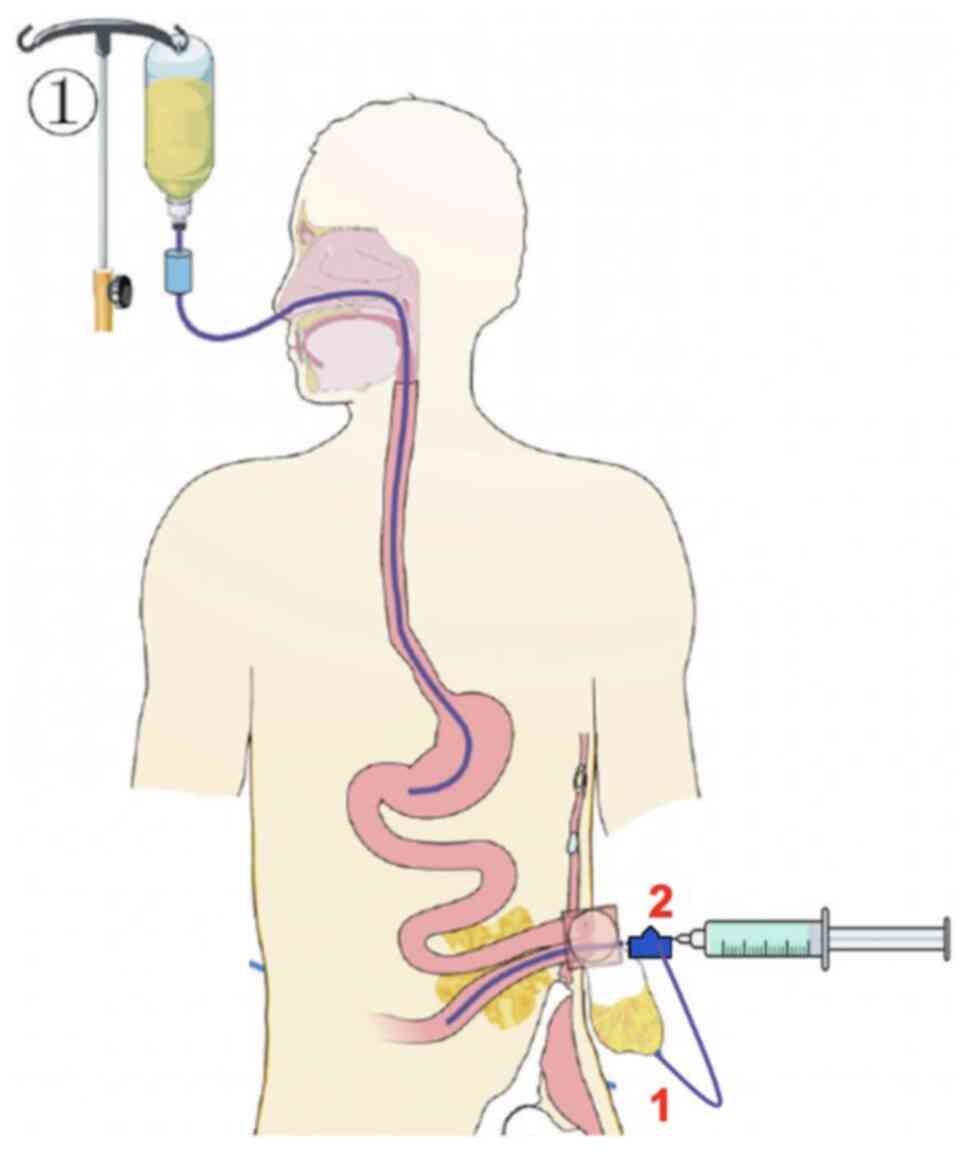
nutritional status (5,6). The general principle of this method
is to use an artificial catheter connecting the two ends of the
drained intestine, with a pump assisting in the infusion of
digestive fluid through this artificial tract (Fig. 1). The application of this method
should be based on the specific condition of each patient,
requiring careful infection control and effective utilization of
chyme. Worldwide, the CR method has been widely used in adults in
numerous countries (7). However,
its application in children remains limited and is less commonly
practiced (7). Similarly, in
Vietnam, the use of CR has begun to be implemented in adults in
some hospitals; however, there are a limited number of reports
available on its application in children.
The aim of the present case report was to highlight
the practical implementation and outcomes of CR in an infant, a
setting where this method has rarely been reported, particularly in
Vietnam. The present study reports the case of a 2-month-old male
infant admitted with a diagnosis of midgut volvulus. The child
underwent surgery for the resection of the necrotic bowel segment
and closing the duodenojejunal stump, a gastrostomy, and to bring
the lower bowel segment out to create an artificial anus. The
infant was nourished using the CR method while awaiting the
following surgical procedure. To the best of our knowledge, the
present case report constitutes one of the first documented cases
in Vietnam, reporting the successful application of CR in an infant
who underwent a temporary double enterostomy and gastrostomy. It
contributes to the limited literature available on the pediatric
use of this method and demonstrates its feasibility in
resource-limited settings. The present case report was prepared in
accordance with the CARE guidelines (8).
Case report
The patient was a 2-month-old male infant (weight, 3
kg) with no known comorbidities and a birth history of full-term
vaginal delivery, an uneventful perinatal period and no prior
hospitalizations. A 2-month-old male infant with a history of
midgut volvulus due to Ladd's bands at 31 days of age at the
Vietnam National Children's Hospital. The infant had undergone two
surgical procedures for intestinal resection. The remaining upper
bowel segment, located near the duodenojejunal junction, was
closed, and a gastrostomy was performed using a Foley catheter. The
distal end of the bowel segment, 70 cm from the ileocecal junction,
was diverted to the abdominal wall (right flank). The distal
segment exhibited multiple areas of necrosis, which were addressed
during surgery by resecting a 5 cm segment of necrotic bowel,
performing an end-to-end anastomosis, and debriding necrotic
tissue, followed by primary repair of the muscle layer.
Post-operatively, the infant was treated in the
intensive care unit. Due to the complexity of the surgery and to
stabilize the remaining 70 cm of the small bowel, the infant was
kept nil by mouth (NPO) and received total parenteral nutrition for
4 weeks. The energy requirements through intravenous nutrition
alone were ~70-80 kcal/kg/day. The infant had an average physical
condition, but did not exhibit any gain weight over the period of 4
weeks. Additionally, tests evaluating the nutritional status of the
infant did not reveal any deficiencies in micronutrients.
The infant was indicated for a surgical procedure to
perform an intestinal anastomosis. However, due to significant
necrotic damage to the remaining small bowel, the child required
time for recovery. It was deemed that prolonged parenteral
nutrition may not ensure adequate energy supply and could lead to
various complications. Furthermore, enteral feeding was challenging
due to the very short remaining bowel segment near the
duodenojejunal junction. The infant was prescribed treatment with
the digestive fluid reinfusion method (CR). In Vietnam, this is a
novel approach, and there is a lack of systematic reports on its
application in pediatric patients. Therefore, the treatment process
faced a number of challenges, particularly concerning the required
equipment and feeding techniques.
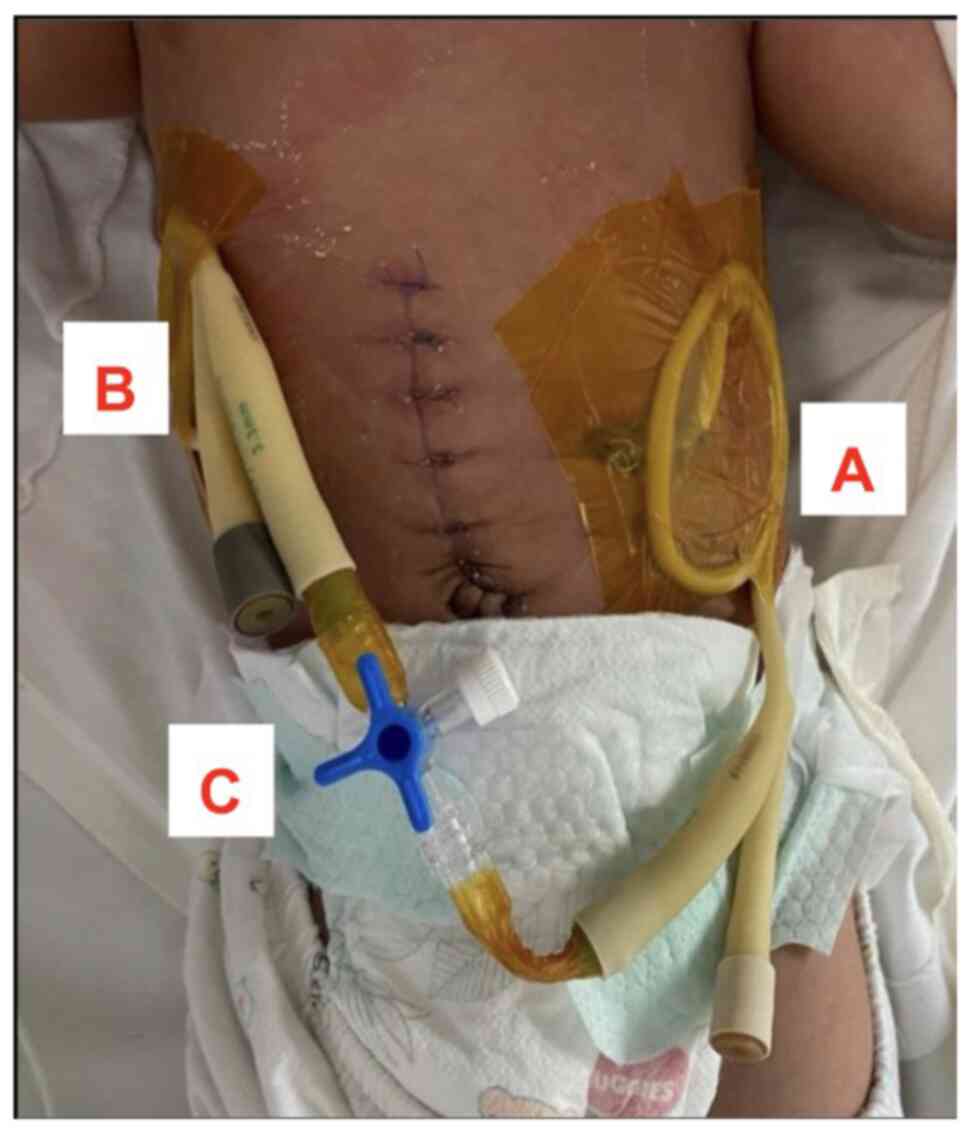
An anastomosis was performed between the Foley
catheter, at the site of the upper gastrostomy and the ileal
drainage below, using a three-way connector. The purpose of this
method is to utilize the chyme from the upper bowel segment and
reinfuse it into the lower bowel segment. Initially, the infant was
fed minimally with fully hydrolyzed milk, 5 ml per meal
(administered drop by drop over a period of 30 min), with meals
spaced 3 h apart. The infant was administered a proton pump
inhibitor (Esomeprazole) at a dose of 2 mg/kg, divided into two
doses per day, to ensure the pH of the gastric fluid (pH >6).
Furthermore, as the digestive fluid contains significant amounts of
bile, its pH remains within a safe range of 6.0-6.5. The volume of
chyme will flow through the three-way connector and gradually move
into the lower bowel segment. The method of CR used in the patient
is illustrated in Fig. 2.
Following 4 weeks of reinfusion feeding, the infant
was fed orally with milk using the spoon-feeding method, gradually
increasing to 60 ml per meal, equivalent to ~500-600 ml per day.
The energy provided via the oral route accounted for ~80% of the
total energy requirements of the infant. This helped improve the
physical condition of the infant, it reduced the reliance on
parenteral nutrition and contributed to the recovery of
gastrointestinal function. Specifically, following 3 weeks of
reinfusion feeding, the infant gained 500 g in weight. The status
of the infant was adequate, and the lower bowel segment was
sufficiently stable to proceed with the ensuing surgery.
Currently, the infant has successfully undergone the
bowel anastomosis. Following surgery, the infant was started on
early enteral feeding, with a gradual reduction in parenteral
nutrition needs, and was discharged after 2 weeks following bowel
closure. Enteral nutrition almost fully met the hydration,
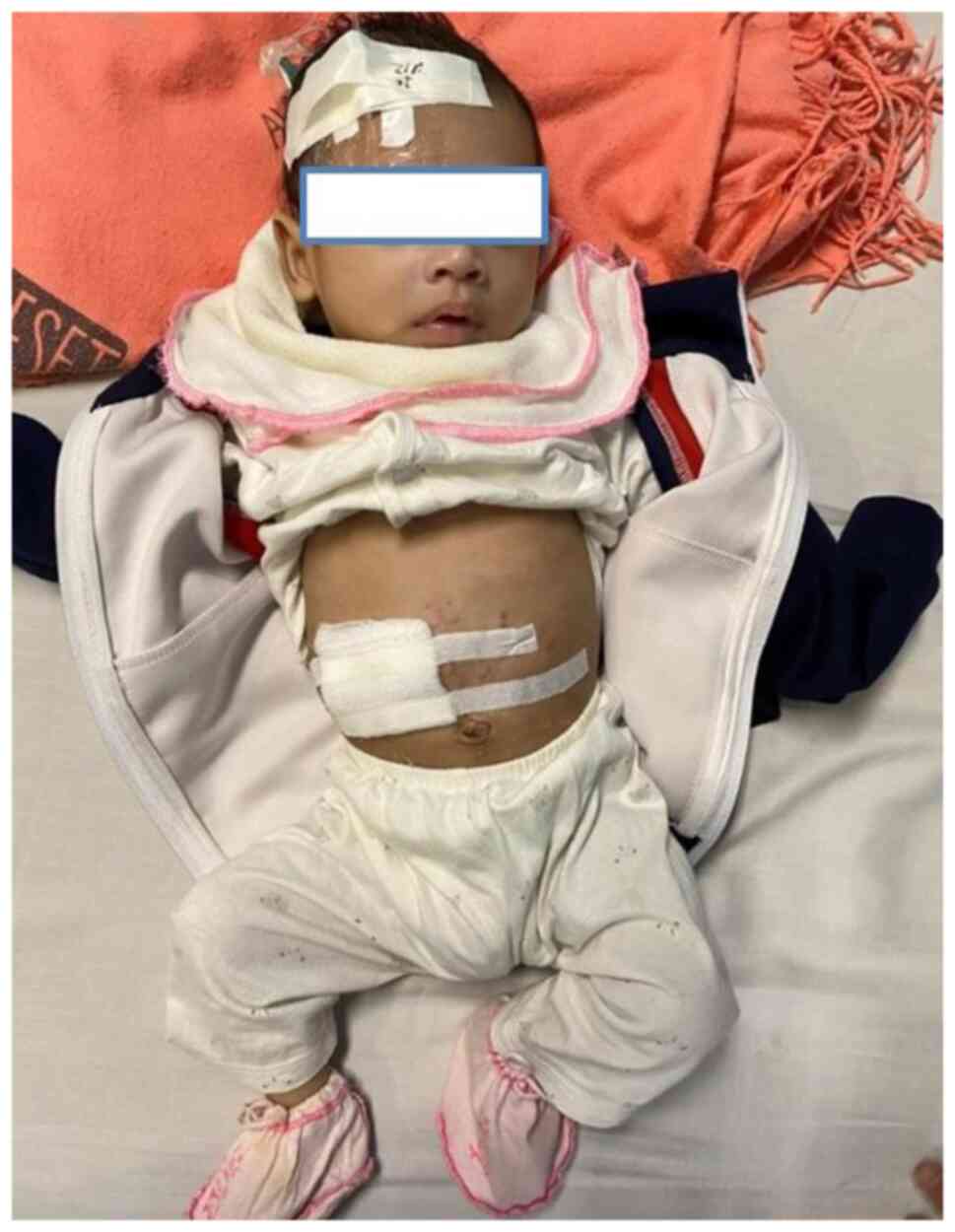
nutrient, and energy requirements of the infant. An image of the
patient upon discharge is presented in Fig. 3.
In summary, the present study reports the case of a
2-month-old male infant who was admitted with vomiting, abdominal
distension and signs of bowel obstruction. A physical examination
revealed signs of peritonitis. The infant was diagnosed with midgut
volvulus secondary to Ladd's bands. He underwent emergency
laparotomy with the resection of necrotic bowel, formation of
gastrostomy and temporary double enterostomy. Following CR and
combined parenteral support, the patient exhibited weight gain, an
improved nutritional status, and successfully underwent bowel
reconstruction after 4 weeks.
Discussion
In pediatric patients with bowel drainage or
artificial anus, malnutrition and complications are the leading
causes of mortality. Definitive surgery is recommended to be
delayed for at least 3 months after the last surgery. Therefore,
nutritional support to prepare the patient for the next surgery is
crucial (9). Parenteral nutrition
is considered the standard method for treating patients with bowel
drainage or an artificial anus (1).
Enteral nutrition provides superior benefits and
should be implemented early after surgery if the condition of the
patient permits. In addition to reducing complications caused by
prolonged parenteral nutrition, enteral nutrition has been shown to
be effective in improving intestinal barrier function and reducing
inflammatory responses. However, enteral nutrition is also
associated with the risk of dehydration and electrolyte imbalance
due to increased fluid loss through the artificial anus. As a
result, the method of CR has been proposed as a way to establish
early enteral nutrition and revascularize the bowel segment in
cases of continuous gastrointestinal loss (4,7). CR
not only provides the benefits of enteral nutrition, but also helps
minimize fluid and electrolyte loss. There have been several
reports of successful outcomes using this method (4-6).
CR helps reduce dehydration, electrolyte imbalance,
digestive enzyme loss and bile fluid loss by utilizing fluid from
the upper gastrointestinal tract. As a result, it reduces
dependence on parenteral nutrition and the complications associated
with it. This method also improves liver function by enhancing the
enterohepatic circulation, improves the function of the remaining
intestinal segment by increasing intestinal perfusion, facilitates
later bowel closure surgery, reduces the incidence of anastomotic
leak and stricture after bowel closure surgery and ultimately
significantly reduces treatment costs (10).
There are two main methods of CR commonly reported
in the literature. The first method involves manually collecting
chyme from the upper bowel segment and infusing it into the lower
bowel segment using a syringe or infusion bag, either manually or
with an electric syringe pump. The second method involves the uses
of a closed-loop reinfusion system that allows uninterrupted flow
between the two anastomosed segments by employing a continuous
suction system to remove digestive fluid from the proximal end and
pump it into the distal end according to the normal peristalsis of
the digestive tract (1,2). Currently, in Vietnam, there is no
closed-loop system for this method; thus, the patient described
herein had the digestive fluid drained from the stomach into the
distal end via a Foley catheter three-way connector. This method
has the advantage of ensuring the proper and continuous flow of
digestive fluids, is more convenient, aesthetically pleasing and
reduces potential complications associated with CR, such as
infection, bleeding or intestinal perforation. No reports in the
literature have been found regarding CR using this method, at least
to the best of our knowledge.
In the present case report, the reinfused chyme
primarily consisted of gastric fluid and duodenal secretions,
including bile. The pH was maintained between 6.0 and 6.5 using
proton pump inhibitors to prevent mucosal irritation. The initial
chyme volume reinfused was 5-10 ml per session, gradually
increasing as tolerated. The composition and pH of chyme play an
essential role in maintaining gut mucosal integrity and enzymatic
activity. Future studies are required however, to better define
optimal volume and composition in pediatric populations.
While CR has been more commonly studied in adults,
particularly in patients with enterocutaneous fistulas or short
bowel syndrome, its application in pediatrics remains limited. For
example, the studies by Teubner et al (6) and Picot et al (10) in adults demonstrated significant
reductions in parenteral nutrition dependence and improvements in
liver function. In comparison, the present case report of a
2-month-old infant highlights the potential for similar clinical
benefits, albeit with careful volume control and monitoring due to
the smaller intestinal capacity in neonates and infants.
After almost 1 month of successful CR using this
method, the child in the present study was able to consume large
amounts of milk orally, ~500-600 ml per day, without vomiting. The
peristalsis of the lower intestine was functioning well, and the
need for parenteral nutrition was significantly reduced. The
physical condition of the child was good, with adequate weight
gain; thus the child was deemed suitable for intestinal anastomosis
surgery and enabling an early discharge.
Despite its benefits, CR in pediatric patients
presents several challenges, including limited availability of
pediatric-specific reinfusion devices, technical difficulty in
maintaining catheter patency, risk of infection and the lack of
standardized protocols tailored to infants.
In conclusion, the present case report highlights
that CR is a practical, safe, and effective method for early
enteral nutrition in infants with temporary enterostomies. It
reduces dependence on parenteral nutrition and facilitates timely
bowel reconstruction. Pediatric surgeons and intensivists should
consider this method as part of nutritional management in similar
cases.
Acknowledgements
Not applicable.
Funding
Funding: No funding was received.
Availability of data and materials
The data generated in the present study may be
requested from the corresponding author.
Authors' contributions
All authors (HTTN, NTTD, DQL, ATT, DTT, ATN, HNV and
LTN) contributed to the conception and design of the study. The
collection of the patient's data was performed by NTTD, DQL, ATT,
DTT and ATN. The first draft of the manuscript was written by HTTN
and HNV, and all authors commented on previous versions of the
manuscript. HTTN, NTTD and DQL were involved in the treatment of
the patient. HTTN and DTT confirm the authenticity of all the raw
data. All authors have read and approved the final version of the
manuscript.
Ethics approval and consent to
participate
The parents of the child were explained about the
purpose of the study and were required to sign the consent forms.
Written informed consent was obtained from the parents for the
children participation in the present study.
Patient consent for publication
Written informed consent was obtained from the
parents of the child for the publication of the present case report
and any accompanying images.
Competing interests
The authors declare that they have no competing
interests.
References
|
1
|
Pflug A, Utiyama E, Fontes B, Faro M and
Rasslan S: Continuous reinfusion of succus entericus associated
with fistuloclysis in the management of a complex jejunal fistula
on the abdominal wall. Int J Surg Case Rep. 4:716–718.
2013.PubMed/NCBI View Article : Google Scholar
|
|
2
|
Draus JM, Huss SA, Harty NJ, Cheadle WG
and Larson GM: Enterocutaneous fistula: Are treatments improving?
Surgery. 140:570–578. 2006.PubMed/NCBI View Article : Google Scholar
|
|
3
|
Cavicchi M, Beau P, Crenn P, Degott C and
Messing B: Prevalence of liver disease and contributing factors in
patients receiving home parenteral nutrition for permanent
intestinal failure. Ann Intern Med. 132:525–532. 2000.PubMed/NCBI View Article : Google Scholar
|
|
4
|
Niu DG, Yang F, Tian WL, Zhao YZ, Li C,
Ding LA, Fang HC and Huang Q: A technique to establish
fistuloclysis for high-output jejunocutaneous fistula through
percutaneous enterostomy: A case report. Medicine (Baltimore).
98(e14653)2019.PubMed/NCBI View Article : Google Scholar
|
|
5
|
Wu Y, Ren J, Wang G, Zhou B, Ding C, Gu G,
Chen J, Liu S and Li J: Fistuloclysis improves liver function and
nutritional status in patients with high-output upper enteric
fistula. Gastroenterol Res Pract. 2014(941514)2014.PubMed/NCBI View Article : Google Scholar
|
|
6
|
Teubner A, Morrison K, Ravishankar HR,
Anderson ID, Scott NA and Carlson GL: Fistuloclysis can
successfully replace parenteral feeding in the nutritional support
of patients with enterocutaneous fistula. Br J Surg. 91:625–631.
2004.PubMed/NCBI View
Article : Google Scholar
|
|
7
|
Liu C, Bhat S, Bissett I and O'Grady G: A
review of chyme reinfusion: New tech solutions for age old
problems. J R Soc NZ. 54:161–176. 2022.PubMed/NCBI View Article : Google Scholar
|
|
8
|
CARE Case Report Guidelines: What are the
CARE guidelines?. https://www.care-statement.org/.
|
|
9
|
Lloyd DA, Gabe SM and Windsor AC:
Nutrition and management of enterocutaneous fistula. Br J Surg.
93:1045–1055. 2006.PubMed/NCBI View
Article : Google Scholar
|
|
10
|
Picot D, Layec S, Dussaulx L, Trivin F and
Thibault R: Chyme reinfusion in patients with intestinal failure
due to temporary double enterostomy: A 15-year prospective cohort
in a referral centre. Clin Nutr. 36:593–600. 2017.PubMed/NCBI View Article : Google Scholar
|