Spandidos Publications Logo
  • About
    • About Spandidos
    • Aims and Scopes
    • Abstracting and Indexing
    • Editorial Policies
    • Reprints and Permissions
    • Job Opportunities
    • Terms and Conditions
    • Contact
  • Journals
    • All Journals
    • Oncology Letters
      • Oncology Letters
      • Information for Authors
      • Editorial Policies
      • Editorial Board
      • Aims and Scope
      • Abstracting and Indexing
      • Bibliographic Information
      • Archive
    • International Journal of Oncology
      • International Journal of Oncology
      • Information for Authors
      • Editorial Policies
      • Editorial Board
      • Aims and Scope
      • Abstracting and Indexing
      • Bibliographic Information
      • Archive
    • Molecular and Clinical Oncology
      • Molecular and Clinical Oncology
      • Information for Authors
      • Editorial Policies
      • Editorial Board
      • Aims and Scope
      • Abstracting and Indexing
      • Bibliographic Information
      • Archive
    • Experimental and Therapeutic Medicine
      • Experimental and Therapeutic Medicine
      • Information for Authors
      • Editorial Policies
      • Editorial Board
      • Aims and Scope
      • Abstracting and Indexing
      • Bibliographic Information
      • Archive
    • International Journal of Molecular Medicine
      • International Journal of Molecular Medicine
      • Information for Authors
      • Editorial Policies
      • Editorial Board
      • Aims and Scope
      • Abstracting and Indexing
      • Bibliographic Information
      • Archive
    • Biomedical Reports
      • Biomedical Reports
      • Information for Authors
      • Editorial Policies
      • Editorial Board
      • Aims and Scope
      • Abstracting and Indexing
      • Bibliographic Information
      • Archive
    • Oncology Reports
      • Oncology Reports
      • Information for Authors
      • Editorial Policies
      • Editorial Board
      • Aims and Scope
      • Abstracting and Indexing
      • Bibliographic Information
      • Archive
    • Molecular Medicine Reports
      • Molecular Medicine Reports
      • Information for Authors
      • Editorial Policies
      • Editorial Board
      • Aims and Scope
      • Abstracting and Indexing
      • Bibliographic Information
      • Archive
    • World Academy of Sciences Journal
      • World Academy of Sciences Journal
      • Information for Authors
      • Editorial Policies
      • Editorial Board
      • Aims and Scope
      • Abstracting and Indexing
      • Bibliographic Information
      • Archive
    • International Journal of Functional Nutrition
      • International Journal of Functional Nutrition
      • Information for Authors
      • Editorial Policies
      • Editorial Board
      • Aims and Scope
      • Abstracting and Indexing
      • Bibliographic Information
      • Archive
    • International Journal of Epigenetics
      • International Journal of Epigenetics
      • Information for Authors
      • Editorial Policies
      • Editorial Board
      • Aims and Scope
      • Abstracting and Indexing
      • Bibliographic Information
      • Archive
    • Medicine International
      • Medicine International
      • Information for Authors
      • Editorial Policies
      • Editorial Board
      • Aims and Scope
      • Abstracting and Indexing
      • Bibliographic Information
      • Archive
  • Articles
  • Information
    • Information for Authors
    • Information for Reviewers
    • Information for Librarians
    • Information for Advertisers
    • Conferences
  • Language Editing
Spandidos Publications Logo
  • About
    • About Spandidos
    • Aims and Scopes
    • Abstracting and Indexing
    • Editorial Policies
    • Reprints and Permissions
    • Job Opportunities
    • Terms and Conditions
    • Contact
  • Journals
    • All Journals
    • Biomedical Reports
      • Information for Authors
      • Editorial Policies
      • Editorial Board
      • Aims and Scope
      • Abstracting and Indexing
      • Bibliographic Information
      • Archive
    • Experimental and Therapeutic Medicine
      • Information for Authors
      • Editorial Policies
      • Editorial Board
      • Aims and Scope
      • Abstracting and Indexing
      • Bibliographic Information
      • Archive
    • International Journal of Epigenetics
      • Information for Authors
      • Editorial Policies
      • Editorial Board
      • Aims and Scope
      • Abstracting and Indexing
      • Bibliographic Information
      • Archive
    • International Journal of Functional Nutrition
      • Information for Authors
      • Editorial Policies
      • Editorial Board
      • Aims and Scope
      • Abstracting and Indexing
      • Bibliographic Information
      • Archive
    • International Journal of Molecular Medicine
      • Information for Authors
      • Editorial Policies
      • Editorial Board
      • Aims and Scope
      • Abstracting and Indexing
      • Bibliographic Information
      • Archive
    • International Journal of Oncology
      • Information for Authors
      • Editorial Policies
      • Editorial Board
      • Aims and Scope
      • Abstracting and Indexing
      • Bibliographic Information
      • Archive
    • Medicine International
      • Information for Authors
      • Editorial Policies
      • Editorial Board
      • Aims and Scope
      • Abstracting and Indexing
      • Bibliographic Information
      • Archive
    • Molecular and Clinical Oncology
      • Information for Authors
      • Editorial Policies
      • Editorial Board
      • Aims and Scope
      • Abstracting and Indexing
      • Bibliographic Information
      • Archive
    • Molecular Medicine Reports
      • Information for Authors
      • Editorial Policies
      • Editorial Board
      • Aims and Scope
      • Abstracting and Indexing
      • Bibliographic Information
      • Archive
    • Oncology Letters
      • Information for Authors
      • Editorial Policies
      • Editorial Board
      • Aims and Scope
      • Abstracting and Indexing
      • Bibliographic Information
      • Archive
    • Oncology Reports
      • Information for Authors
      • Editorial Policies
      • Editorial Board
      • Aims and Scope
      • Abstracting and Indexing
      • Bibliographic Information
      • Archive
    • World Academy of Sciences Journal
      • Information for Authors
      • Editorial Policies
      • Editorial Board
      • Aims and Scope
      • Abstracting and Indexing
      • Bibliographic Information
      • Archive
  • Articles
  • Information
    • For Authors
    • For Reviewers
    • For Librarians
    • For Advertisers
    • Conferences
  • Language Editing
Login Register Submit
  • This site uses cookies
  • You can change your cookie settings at any time by following the instructions in our Cookie Policy. To find out more, you may read our Privacy Policy.

    I agree
Search articles by DOI, keyword, author or affiliation
Search
Advanced Search
presentation
World Academy of Sciences Journal
Join Editorial Board Propose a Special Issue
Print ISSN: 2632-2900 Online ISSN: 2632-2919
Journal Cover
January-February 2026 Volume 8 Issue 1

Full Size Image

Sign up for eToc alerts
Recommend to Library

Journals

International Journal of Molecular Medicine

International Journal of Molecular Medicine

International Journal of Molecular Medicine is an international journal devoted to molecular mechanisms of human disease.

International Journal of Oncology

International Journal of Oncology

International Journal of Oncology is an international journal devoted to oncology research and cancer treatment.

Molecular Medicine Reports

Molecular Medicine Reports

Covers molecular medicine topics such as pharmacology, pathology, genetics, neuroscience, infectious diseases, molecular cardiology, and molecular surgery.

Oncology Reports

Oncology Reports

Oncology Reports is an international journal devoted to fundamental and applied research in Oncology.

Experimental and Therapeutic Medicine

Experimental and Therapeutic Medicine

Experimental and Therapeutic Medicine is an international journal devoted to laboratory and clinical medicine.

Oncology Letters

Oncology Letters

Oncology Letters is an international journal devoted to Experimental and Clinical Oncology.

Biomedical Reports

Biomedical Reports

Explores a wide range of biological and medical fields, including pharmacology, genetics, microbiology, neuroscience, and molecular cardiology.

Molecular and Clinical Oncology

Molecular and Clinical Oncology

International journal addressing all aspects of oncology research, from tumorigenesis and oncogenes to chemotherapy and metastasis.

World Academy of Sciences Journal

World Academy of Sciences Journal

Multidisciplinary open-access journal spanning biochemistry, genetics, neuroscience, environmental health, and synthetic biology.

International Journal of Functional Nutrition

International Journal of Functional Nutrition

Open-access journal combining biochemistry, pharmacology, immunology, and genetics to advance health through functional nutrition.

International Journal of Epigenetics

International Journal of Epigenetics

Publishes open-access research on using epigenetics to advance understanding and treatment of human disease.

Medicine International

Medicine International

An International Open Access Journal Devoted to General Medicine.

Journal Cover
January-February 2026 Volume 8 Issue 1

Full Size Image

Sign up for eToc alerts
Recommend to Library

  • Article
  • Citations
    • Cite This Article
    • Download Citation
    • Create Citation Alert
    • Remove Citation Alert
    • Cited By
  • Similar Articles
    • Related Articles (in Spandidos Publications)
    • Similar Articles (Google Scholar)
    • Similar Articles (PubMed)
  • Download PDF
  • Download XML
  • View XML
Review Open Access

Pathophysiological insights and diagnostic challenges associated with blueberry muffin baby (Review)

  • Authors:
    • Julia Windi Gunadi
    • Frecillia Regina
    • Franky Saputra Supriady
    • Adrian Suhendra
    • Harijadi Pramono
    • Shirley Tanuwireja
  • View Affiliations / Copyright

    Affiliations: Department of Physiology, Faculty of Medicine, Universitas Kristen Maranatha, Bandung, West Java 40164, Indonesia, Department of Pediatrics, Faculty of Medicine, Universitas Kristen Maranatha, Bandung, West Java 40164, Indonesia, Department of Clinical Pathology, Faculty of Medicine, Universitas Kristen Maranatha, Bandung, West Java 40164, Indonesia, Department of Parasitology, Faculty of Medicine, Universitas Kristen Maranatha, Bandung, Bandung, West Java 40164, Indonesia
    Copyright: © Gunadi et al. This is an open access article distributed under the terms of Creative Commons Attribution License [CC BY 4.0].
  • Article Number: 2
    |
    Published online on: November 20, 2025
       https://doi.org/10.3892/wasj.2025.417
  • Expand metrics +
Metrics: Total Views: 0 (Spandidos Publications: | PMC Statistics: )
Metrics: Total PDF Downloads: 0 (Spandidos Publications: | PMC Statistics: )
Cited By (CrossRef): 0 citations Loading Articles...

This article is mentioned in:


Abstract

Blueberry muffin baby (BMB) is a clinical manifestation characterized by bluish‑purple macules, papules, or nodules resulting from dermal extramedullary hematopoiesis (EMH) or malignant infiltration. The present review discusses this condition by presenting data from 32 case reports, including 7 cases of infectious etiology (TORCH and other infections, such as COVID‑19), 20 cases of neoplastic origin congenital leukemia (acute myeloid leukemia and aAcute lymphoblastic leukemia), neuroblastoma, rhabdomyosarcoma, Langerhans cell histiocytosis and juvenile xanthogranuloma, and 5 cases of hematological disorders (severe anemia, hemolytic diseases, Gaucher disease, hemophagocytic lymphohistiocytosis and εγδβ‑thalassemia). The present review focuses on the pathophysiology and diagnostic approaches for each etiology, suggesting the role of histopathological and immunohistochemistry markers in differentiating reactive EMH from malignant processes. Early recognition and precise diagnosis are crucial for appropriate management, ranging from supportive care to targeted therapy in malignant conditions. The present review underscores the importance of integrating clinical evaluation, histopathological findings and molecular analysis to optimize the outcomes of neonates with BMB.

1. Introduction

‘Blueberry muffin baby’ (BMB) is a term used for an infant with multiple widespread purplish papules or nodules on the skin; it is thus named as the lesions resemble blueberries on a muffin (1). These skin lesions are caused by dermal extramedullary hematopoiesis (EMH), indicating the abnormal production of blood cells outside the bone marrow in the skin (2). The term originated during the 1960s rubella epidemic (3). BMB is critical as it is a sign of severe neonatal systemic diseases (4). The TORCH group of congenital infections (toxoplasma, other agents, rubella, cytomegalovirus and herpes viruses) remains the most frequent cause (1,3,4). Infected newborns exhibit persistent fetal dermal EMH, which should resolve by mid-gestation (1,3). Thus, a ‘blueberry muffin’ rash indicates continued fetal hematopoiesis as a compensatory response to an underlying pathology (5). Beyond infections, other etiologies such as hemolytic disorders or neoplasms, such as ganglioneuroblastoma may cause a similar appearance (6-8). As congenital infections may cause deafness, neurological injury, malformations, or death, the prompt recognition of BMB should trigger early diagnostic evaluation (4,9-11).

BMB is not merely cosmetic, but a visible marker of altered fetal hematopoiesis (2). In a healthy fetus, hematopoietic stem cells (HSCs) migrate during fetal life: Blood formation shifts from the yolk sac to the liver to the bone marrow by late gestation (12,13). In the event that this process is disrupted, for example, by inflammation secondary to infection or the bone marrow injury, the fetus or neonate will utilize alternative sites to produce blood cells (2,3). Therefore, studying BMB from a pathophysiological perspective can shed light on how specific processes disrupt fetal hematopoiesis.

Despite its clinical rarity, BMB remains an overlooked diagnostic entity in neonatology (4). It requires immediate and complete evaluation as it may be the first and sometimes the only visible manifestation of critical systemic disease. The present review synthesizes and discusses data from case reports published over the past decade to describe the evolving etiologic spectrum, diagnostic evaluation and outcomes of blueberry muffin rash. With this background, BMB is re-interpreted as an active and physiologically critical indicator of fetal adaptation of the hematologic system, providing a unique window into neonatal and intrauterine pathophysiology.

2. Etiologies of BMB

Based on the literature analyzed in the present review, the etiologies of BMB can be broadly categorized into three groups, as follows: Infectious, neoplastic and hematologic causes, as presented in Table I. A total of 32 representative case reports published between 2015 and 2025 were reviewed and selected for the completeness of diagnostic and outcome data. These included 7 cases of infectious etiology (mainly TORCH and emerging viral infections), 20 neoplastic cases (including congenital leukemia, neuroblastoma and histiocytic disorders) and 5 cases of hematological disorders (such as severe anemia, hemophagocytic lymphohistiocytosis and thalassemia) (Table I) (1,3,8,14-42).

Table I

Reported cases of blueberry muffin baby associated with infectious, neoplastic and hematological disorders.

Table I

Reported cases of blueberry muffin baby associated with infectious, neoplastic and hematological disorders.

First author, year of publicationCountryDiagnosisAge and sexClinical presentationDiagnostic workupOutcomeMother and the delivery process(Refs.)
Infectious disorders        
Pollak-Christian, 2016CanadaCongenital CMV infection following maternal GBSNewborn, maleScattered blue lesions over the face, trunk, and extremities, afebrile, pallor, and jaundice, hepatosplenomegaly, became tachypnoeic with desaturation at 8 hPCR for CMV DNA-positive in urine and blood, LFT ↑, head USG: echogenicity ↑ of the thalamostriate vessels and tiny punctate areas of calcification not related to the vesselsTreated with ganciclovir, discharged on day 15. At 2 years, he had neurodevelopmental impairment (sensorineural deafness, poor language development, and gross motor delay (started walking at 2 years of age).32 years, gravida 2, para 1 mother, at 1st semester: hospitalization due to GBS, complete resolution after 5 doses of IVIG(14)
Makadia, 2016IndiaCongenital rubella syndrome/Gregg syndromeNewborn, femaleMultiple violaceous rash, non-blanching, maculopapules on face, trunk, extremities, palms, soles (0.5-1 cm), cataracts, microcephaly, cardiomegaly, respiratory distress, bilateral pitting periorbital edemaRubella IgG and IgM- positive, IgG HSV 1 and 2-positive, leukocytosis, neutropenia, lymphocytosis, thrombocytopenia, CRP-positive, PT/APTT ↑Died due to cardiorespiratory failure24 years old mother, nonconsanguineous marriage, 2nd gravida, full term, low birth weight, respiratory distress at delivery, not immunized to MMR, healthy 3.5-year-old sibling(15)
Mack, 2017CanadaSymptomatic CMV infectionNewborn, femaleExtensive petechiae, hepatosplenomegaly, jaundiceIgG and IGM CMV-positive, bilateral subependymal cysts and ventricles dilatation, thrombocytopenia, conjugated hyperbilirubinemia, coagulopathy, progressive cholestasisAt 12 months, normal neurological development with sensorineural hearing loss (right side); at 4 years diagnosed mild ataxia with MRI revealed regressive cerebral abnormalities, but no evidence of relationship with CMV38 years old, healthy mother, uncomplicated pregnancy until 26 weeks, recurrent CMV infections, spontaneous delivery, 40th week and 1 day gestation, respiratory distress which disappeared after 10 min, 3,140 g(16)
Spydell, 2018USACongenital neurosyphilis and the prozone phenomenonNewborn, maleGeneralized skin desquamation, 2 blisters on the right forearm (3 mm), and blueberry muffin rash on the trunk, hepatosplenomegaly, respiratory distress and hypoxia (admitted to NICU)Hypoglycemia, sepsis, respiratory acidosis, moderate pulmonary hypertension with moderate PDA, PT, LFT, and creatinine ↑, anemic, thrombocytopenic, AVM in the liver with ascites; metaphysis irregularity with metaphyseal bands in extremities; IgG and IgM Treponema pallidum-positiveDischarged on the 38th day, at 2 months age, the infant showed >4x decrease of the RPR test titer (from 1:128 to 1:32)Mother admitted for preterm labor, intact membranes, 5 months pregnant, non-routine prenatal care, prenatal lab for Hep B, VDRL, rubella, HIV-(17)
Shah, 2019IndiaCMV hepatitis9 months old, male, immunization history adequateMultiple dusky blue, non-blanching, papules and nodules on forehead, trunk, and right cubital fossa, jaundice, hepatosplenomegalyAnemia, thrombocytopenia, direct hyperbilirubinemia, LFT ↑, IgM and IgG CMV-positive; skin biopsy: dermal erythropoiesis foci, nucleated and non-nucleated erythrocyte precursors aggregationNot reportedUncomplicated pregnancy, full term, IUGR, maternal serology for HIV, Hepatitis B, and TORCH- negative(3)
Farhadi, 2022IranBlueberry muffin baby with CMV hepatitisPreterm newborn, maleDisseminated red- violaceous anular macules (2-5 mm), respiratory distress, hepatosplenomegaly, PDA, IUGRCMV IgM-positive, IgG higher in the newborn than the mother, PCR saliva and urine CMV-positive, thrombocytopenia, transaminases ↑, direct hyperbilirubinemia, and coagulopathy; cerebral USG: periventricular hyper- echogenicity, normal hearing testTreated with ganciclovir, skin lesions faded after 4 weeks, discharged at 50 days1st semester: TORCH- negative(18)
Caudrelier, 2022CanadaCovid-19 infection 4 weeks before deliveryNewborn, female30 violaceous petechial, 2 mm macules scattered on the back's lower half bilaterally, and two larger purpuric papules.Skin biopsy confirmed extramedullary hematopoiesis, platelet, toxoplasmosis-negative, IgG rubella-positive, and cytomegalovirus PCR in the urine-negativeResolution in 2 daysThe mother was 25 years old, healthy, primiparous, uneventful pregnancy, normal prenatal serologies and fetal USG, levothyroxine-treated hypothyroidism was well controlled.(19)
Neoplastic disorders        
Piersigilli, 2016ItalyCongenital alveolar rhabdomyosarcoma associated with Beckwith- Wiedemann syndromeNewborn, femaleRed nodules and vesicular lesions on cheeks, arms, abdomen, and limbs; exophthalmos, macroglossia, a mass in the right cheek, omphaloceleVZV, Herpes, CMV, rubella-negative; culture of blood, urine, and skin lesions-negative, LFT normal, skin biopsy: dark staining cells, IHC: myoglobin-positive, genetic: complete LOM/ICR2, with normal methylation of H19, diffuse metastasesDied at 26 days due of multiple organ failureUncomplicated pregnancy, TORCH-negative, 37 weeks, 3,950 g(20)
Schmitt, 2017USACutaneous LCH (self-healing)Newborn, maleScattered purple papules (2-6 mm diameter), firm, non- tender, non-blanching, on the face, scalp, trunk, back, diaper region, and arms and legs (including the palms and soles), no systemic involvementInfectious workup-negative, CBC and peripheral blood smear normal; skin biopsy: histiocytes with kidney- shaped nuclei; IHC: S100, CD1a, and Langerin- positive, BRAF mutation- negativeResolved spontaneously at 32 days, after 11 months no evidence of cutaneous or systemic LCHHealthy mother, uncomplicated pregnancy, spontaneous delivery(21)
Darby, 2017USAAML with cutaneous myeloid sarcoma3 weeks old, male1 week before, there were dark-purple papules on the forehead, spread to the abdomen and inguinal regions. In 1 week, it spread to the extremities, abdomen and headMild anemia, USG revealed mineralizing vasculopathy, skin biopsy revealed blue cells infiltrated the dermis and subcutaneous tissue, the tumor cells were myeloperoxidase and CD43-positive, bone marrow showed 43% of myeloid blastsComplete remission after the 2nd cycle of chemotherapy. After 4 cycles, he remained in complete remission, achieving all developmental milestones.Mother gravida 3 para 3, normal pregnancy and delivery(22)
Gauchan, 2017NepalCongenital ganglioneuroblastomaNewborn, maleDiffuse bluish nodules, respiratory distress, difficulty in feeding, peripheral cyanosis, tachypnea, bilateral crackles, tachycardia, no murmurChest imaging: Bilateral fluffy opacities, multiple masses in interventricular septum and left ventricular wall, liver and kidney simple cyst, heart and lungs metastatic lesions, TORCH-negative, Urine VMA and bone marrow normal, FNAC: Several clusters and singly scattered ganglion cellsDied at home on day 13Mother aged 22 years primipara, born from parents who are not blood relatives, without antenatal checkups, 2,200 g, good APGAR(23)
Mudambi, 2018USAJuvenile xanthogranuloma4 weeks old, maleBlueberry muffin rash at face and body, jaundice, hepatosplenomegaly, no clear facial dysmorphism, upper and lower extremities were cachecticThrombocytopenia, hepatitis, coagulopathy, cholestasis, hypoalbuminemia, hyperammonemia, hepatosplenomegaly, diffuse cholestasis, evidence of HLH and leukemia-negative, TORCH-negative, skin biopsy: CD68, factor XIIIa, CD163-positive, Touton cells-positiveRash improved after several chemotherapy cycles, but eventually died after a cardiac arrest27-year-old Ethiopian mother, non- consanguineous, 33 weeks, spontaneous delivery, mild transient tachypnea at delivery(24)
Debord, 2018FranceAcute leukemia with monocytic differentiationNewborn, maleNodular purple cutaneous lesions on the back, legs and faceLeukocytosis, BM exhibited increased monocytes, tumor cells expressing myeloperoxidase, CD4, CD14, CD15, CD33, CD36, and CD65, LP showed meningeal involvement. After 7 weeks, lymphadenopathy, anemia, monocytosis, neutropenia, and myeloid blasts appeared.Remission after one chemotherapy cycle, remained in remission at 10 months of follow-up (25)
Cano Bará, 2018ColombiaCongenital self- healing reticulohistiocytosis (CSHRH)/Hashimoto- PritzkerNewborn, maleMultiple violaceous macular, papular and nodular lesions in face and limbs, no other abnormalitiesTORCH-negative, Skin biopsy: dense inflammatory infiltrate of mature histiocytes with secondary cleft, uniform nuclei, eosinophilic cytoplasm in dermis. IHC revealed CD1a and S100-positiveLesion resolution on face in 9 days, complete resolution in 1 month, no recurrence in 3 month-follow-upNo prenatal care, 37 weeks, 3,400 g, spontaneous delivery(26)
Bagri, 2019IndiaCongenital B-cell acute lymphoblastic leukemia (ALL) with rubella infectionNewborn, femalePurpuric spots, ecchymotic patches, diffuse blueberry muffin rash (1-3 cm), depressed neonatal reflex, hepatosplenomegaly, and respiratory distressIgM and IgG for Rubella were positive, flow cytometry suggested B-cell ALL (60% circulating blasts, expressed CD19, CD20, CD79a, HLA DR, and CD34)Died at day 3 because of suspected intracranial hemorrhage27 years old, lower segment cesarean section, full term, 3 kg, consanguineous marriage, uncomplicated pregnancy(27)
Calderón- Castrat, 2019PeruNeonatal leukemia cutis (cutaneous B-cell leukemia)3 weeks old, femaleMultiple, firm, tender, non-blanching, red-to- violaceous nodules at the trunk, extremities, palms, soles; hepatosplenomegaly, irritabilityDiffuse dermal and periadnexal infiltration of leukemic, CD43, CD68, CD79, and CD99-positive with high proliferative index; flow cytometry showed B-lineage lymphoblasts in Bm and CSF.Not reported-(28)
Höck, 2019; case 1AustriaJuvenile xanthogranulomaNewborn, maleMultiple magenta to purple maculopapules on the trunk, face, and extremities (0.5-1 cm), hepatosplenomegaly and lymphadenopathy- negativeCBC, biochemical normal, TORCH-negative, skin biopsy revealed JXG, no systemic involvementResolved spontaneously in 10 months, no relapse in 3 yearsHealthy, non- consanguineous, Caucasian parents, 2nd child, 37+6th gestational week, uncomplicated pregnancy, 3210 g, good APGAR score(29)
Höck, 2019; case 2AustriaJuvenile xanthogranuloma3 months, femaleSubcutaneous swelling on the left temple, 2 cm, no sign of inflammation; 3 pinhead livid subcutaneous lesions on the trunk and lower extremities; a left-sided rib hump at Th6-Th10; 4 weeks recurrent fever, weight loss, oral candidiasisAnemia, inflammatory markers ↑, widespread soft tissue and intraosseous lesions, causing spinal cord compression. Initially suspected to have LCH or Ewing/PNET neoplasia, the final diagnosis was xanthosiderohistiocytosis.Partial remission at 3 years, after 1 year maintenance chemotherapyMother was 29 years old, 2nd child, 39+4 weeks of gestation, uncomplicated pregnancy, 3,510 g, good APGAR score(29)
Hansel, 2019ItalyCongenital self- healing langerhans cell histiocytosis/ Hashimoto-Prizker diseaseNewborn, maleNumerous (1-5 mm) non-blanching blue- purple, dark-red papulonodular lesions on face, scalp, trunk, limbsSkin biopsy: Histiocyte infiltration to dermal with multinucleated giant cells, IHC CD1a, Langerin, S-100, CD68-positive, no signs of systemic involvementsResolved spontaneously in 12 weeks with some atrophic scars, no relapse in 12 monthsFull term, spontaneously born, uncomplicated pregnancy(30)
Schlegel, 2020HungaryNeonatal acute lymphoblastic leukemia3 day old, maleMultiple violaceous, non-blanching maculopapules on the face, upper back, and right shoulder (several mm)Leukocytosis, no leukemic blasts, no neonatal sepsis, parvovirus-B19-PCR (blood) and CMV-PCR (urine)- negative; skin biopsy on 7th day: leukemic blasts, CD19- positive, CD45low, CD22low CD79a-positiveResolved spontaneously on a few days, but recurrent at 13th days, then disseminated to the entire skin. Remained Minimal Residual Disease- after 15 months after transplantation41 weeks of gestation, uncomplicated pregnancy, 4,390 g, good APGAR score(31)
Cyr, 2020CanadaCutaneous LCH (self-healing)1 day old, male20 cutaneous lesions (brown macules to purple-blue-black necrotic and hemorrhagic-crusted papulonodules), largest lesion on midline back and shoulderSkin biopsy: extensive epidermal ulceration, eosinophil infiltrates, CD1a-positive Langerhans cells with vesicular nuclei, permanent grooves, ample eosinophilic cytoplasm in dermis and subcutaneous tissue. CD1a, CD163, S100, and Cyclin-D1-positiveResolved spontaneously at 18 months of age1st semester: presumed viral gastroenteritis, 2nd semester: 3 times URTI, 3rd semester: 2-day history of diarrhea and nausea 2 weeks before partus(32)
Esmaeili, 2021; case 1USASaphiro xanthogranuloma/ multifocal cutaneous JXG, probable neurofibromatosis8 months old, femaleAt 4 months prior, diagnosed with leukemia cutis for multiple pink- violaceous-tan papulonodules on scalp, upper back, and trunk. At the time of examination, yellow- orange papules were found in scalp, forehead, temples, and blue papules on the back. multiple café-au-lait macules (CALMs)Histopathology: epithelioid proliferation and mid-to-deep dermis spindle cells between collagen fibers, infiltrating the subcutaneous fat; elongated nuclei with indentation, finely dispersed chromatin, inconspicuous nucleoli, and eosinophilic cytoplasm (foamy cytoplasm); CD68-positiveNot reported-(33)
Esmaeili, 2021; case 2USAXanthogranuloma in the setting of Noonan syndromeNewborn, femaleMultiple small, firm, red-blue nodules on the trunk and lower extremities consistentDense epithelioid and spindled cells in the dermis, infiltrating the subcutis, poorly defined cytoplasmic membranes, ovoid, curved or angular nuclei with stippled chromatin, and a mild amount of clear to pale pink cytoplasm; rare typical mitotic figures, foamy cytoplasm, several eosinophils, no multinucleate; CD68 and factor XIIIa-positiveNot reported-(33)
Fortuny, 2021USALangerhans Cell Histiocytosis (LCH)Newborn, femaleBluish colored maculopapules on the trunk, extremities, face, palms, and soles; deep pink macules with erosions especially on the face and trunk; bilateral cataractsLeukopenia, thrombocytopenia, Serum IgM and rubella PCR from nasopharyngeal swab-negative, skin biopsy revealed extramedullary hematopoiesis from LCH, BRAF mutationDied from multiorgan failureA 40-year-old woman (gravida 6 para 3) with complicated preterm premature rupture of membranes and gestational diabetes, non-immune to rubella(34)
Thalji, 2022PalestineCongenital Cutaneous LCH (self-healing)/ Hashimoto-Prizker disease4 days, maleViolaceous papules on the face, neck, limbs (2-4 mm), palpable, smooth surface, no systemic symptoms, growth normalCBC, serum biochemistry, coagulation, LFT, IgG CMV high but PCR-negative, HVA and VMA-negative; Skin biopsy: infiltration of medium cells on dermis-hypodermis, eosinophilic cytoplasm, irregular nuclei, CD1a, Langerin, S100, and CD68- positive; abdominal USG and skeletal survey normalResolved spontaneously at 2 months, no extracutaneous manifestations at 2 months21-year-old mother, primigravida, uncomplicated pregnancy, spontaneous delivery(35)
Kaleta, 2022PolandCongenital AML (FAB M4)Newborn, malePurplish papulonodules (up to 1 cm) on scalp, face, trunk, limbsWBC ↓, PT ↑, hyperglycemia, CRP ↑, TORCH-negative, Normal USG, Oval optic nerve shield with peripheral pallor, opacities in chest imaging, skin biopsy revealed dense infiltrate of blast cells, CD15, MPO, CD34, CD56, CD4, CD31, CD71, CD68-positive, Ki-67 proliferative index was 60%Relapsed, died at 12 months3,320 g, good APGAR score, AB blood type with RhD-positive, 39-week, vaginal delivery, mother healthy, 33 years old, with UTI at early stages of pregnancy(1)
Clark, 2023USADisseminated Juvenile Xanthogranuloma (JXG) with a Novel MYH9-FLT3 FusionNewborn, maleMultiple petechiae, non-blanching purple nodules and macules (1 mm to 2 cm in diameter) on the face, torso, and extremities, hepatosplenomegaly.Low platelet count and direct hyperbilirubinemia, qualitative CMV blood PCR-positive, suspect cerebellum hemorrhages, right distal thigh biopsy revealed disseminated JXG, IHC for factor XIIIa, CD163, and CD68 stains were positive, but CD1a was negative. A novel MYH9-FLT3 fusion was also identifiedStarted fading at 6 months, followed until 18 months (normal neurodevelopme- ntal milestones)Mother 26 years old, gravida 3 para 3, uncomplicated pregnancy, borderline rubella titer(36)
Koster, 2023The NetherlandsCongenital self healing indeterminate cell histiocytosis/ Hashimoto-Prizker diseaseNewborn, maleDiffuse purple papulonodules, non-blanching (1-4 mm), hepatosplenomegaly-No laboratory abnormalities, skin biopsy revealed histiocyte-like cells infiltrated the dermis, oval nuclei with nuclear grooves, eosinophilic cytoplasm, IHC: CD68 and CD1a-positive, S100-positive, Langerin-negative; MAP2K1- positiveCutaneous lesions resolved completely on 18 days, no recurrence or systemic involvement for 3 yearsNeonate was born at 39 weeks and 4 days gestation age, good APGAR score, pre-labor rupture of membranes and a mother with group B streptococcal infection(37)
Teixeira, 2024PortugalCongenital AML-M5 with hyperleukocytosisNewborn, malePurple nodules (0.5 cm), non-blanching on the face, trunk, abdomen, and limbsAnemia, hyperleukocytosis, direct antiglobulin-positive, peripheral blood: immature granulocytes, ALT and LDH ↑, CRP-negative, no infections, X-ray and USG within normal limit; skin biopsy: infiltration of blast cells, bone marrow: monocytic blastComplete remission at 9 months from leukemiaMother 33 years old, uncomplicated pregnancy, Kell isoimmunization, 2nd child, no sign of infections except for Streptococcus B test, good APGAR score, 3,045 g, spontaneous delivery(8)
Hematological disorders        
Karmegaraj, 2015IndiaTransient dermal EMH (anemia-related)5 h after birth, femaleBluish-red macules/ papules, firm, non- blanhing (0.5-1 cm) all over the body; microcephaly, symmetrical IUGR, palpable orbital swelling, jaundice, hepatosplenomegalySevere anemia, leukocytosis with lymphocytosis, thrombocytopenia, conjugated hyperbilirubinemia, disseminated intravascular coagulation. Peripheral smear: blast cells-negative, IgM and IgG for CMV-positiveThe child diedMother with a history of fever for 1 week without rash at 2nd trimester(38)
Carolis, 2016ItalyNeonatal blueberry muffin syndrome caused by fetal hypoxia secondary to maternal severe anemia with erythroblastosisAt birth, maleRed-violaceous, non- blanching macular rash at head, neck, and trunk, perinatal acute asphyxia progressed to multiple organ postasphyxial syndromeTORCH and other infections results were not compatible with recent infection, Rh-positive, Coombs-negative; USG showed oligohydramnios; histopathological examination of the placenta showed chronic hypoxia (terminal villous hypotrophy, infarctual areas, intervillous fibrinoid deposition)Complete resolution at day 724th gestation week: massive vaginal bleeding-> severe anemia; anterolateral cervical myoma(39)
Carr, 2016USAType 2 Gaucher disease with collodion membrane and blueberry muffin lesionsAt birth, femaleCollodion membrane, ectropion, eclabium, elbows and knees contractures, diffuse jaundice and bluehued macules of the skin; respiratory distress on 2nd day, seizures on 4th day, no improvement after 3 weeksHb decreased from 15.7 to 8.3 g/dl, hyperbilirubinemia, thrombocytopenia, transaminitis, USG revealed worsening ascites and hepatosplenomegaly, infections-negative. Low levels of glucocerebrosidase activity, resulting in GD diseaseDied at 27 daysComplicated pregnancy (breech presentation, IUGR, marijuana use, unspecified STD)(40)
Larson, 2017USANeonatal hemophagocytic lymphohistiocytosis (HLH)6 days old, maleViolaceous papulonodules on the right eyelid, left arm and elbow, right arm, scalp, lower legs; hepatosplenomegalyTORCH-negative, anemia, thrombocytopenia, smear revealed immature granulocytes and blasts- negative; skin biopsy: dermal infilatrate if mononuclear cells, immunoperoxidase stains CD68-positive, hemophagocytosis, NK cell function ↓, perforin 1 mutationPoor, not fully reportedNo family history of chronic skin disease(41)
Puar, 2019USAεγδβ thalassemia6 days old, maleViolaceous maculopapules on face, abdomen, and lower limbs, respiratory distress, hepatosplenomegalyMicrocytic hypochromic anemia, neoplastic and infectious workup-negative, skin biopsy: dermal extramedullary erythropoiesis/ DEE; microarray: 59 kb loss within 11p15.4 contains 3 genes of beta globinResolved spontaneously in a few weeks-(42)

[i] ALT, alanine aminotransferase; AML, acute myeloid leukemia; APTT, activated partial thromboplastin time; APGAR, Appearance Pulse Grimace Activity Respiration; AVM, arteriovenous malformation; BRAF, v-Raf murine sarcoma viral oncogene homolog B; BM, bone marrow; CBC, complete blood count; CD, cluster of differentiation; CMV, cytomegalovirus; CRP, C-reactive protein; CSF, cerebrospinal fluid; CSHRH, congenital self-healing reticulohistiocytosis; DEE, dermal extramedullary erythropoiesis; EMH, extramedullary hematopoiesis; FAB M4, French-American-British classification subtype M4 (acute myelomonocytic leukemia); FNAC, fine-needle aspiration cytology; GBS, Guillain-Barré syndrome; GD, Gaucher disease; Hb, hemoglobin; HLH, hemophagocytic lymphohistiocytosis; HSV, herpes simplex virus; HVA, homovanillic acid; IHC, immunohistochemistry; IgG, immunoglobulin G; IgM, immunoglobulin M; IUGR, intrauterine growth restriction; IVIG, intravenous immunoglobulin; JXG, juvenile xanthogranuloma; LDH, lactate dehydrogenase; LCH, Langerhans cell histiocytosis; LFT, liver function test; LOM/ICR2, loss of methylation at imprinting control region 2; LP, lumbar puncture; MAP2K1, mitogen-activated protein kinase kinase 1; MRI, magnetic resonance imaging; MYH9-FLT3, myosin 9-fms-related tyrosine kinase 3 fusion; NK, natural killer; PDA, patent ductus arteriosus; PNET, primitive neuroectodermal tumor; PT, prothrombin time; RhD, Rhesus D antigen; STD, sexually transmitted disease; TORCH, toxoplasmosis, other agents, rubella, cytomegalovirus and herpes virus; URTI, upper respiratory tract infection; USG, ultrasonography; UTI, urinary tract infection; VMA, vanillylmandelic acid; VZV, varicella-zoster virus; WBC, white blood cell.

The following sections discuss each etiological group in detail, highlighting their distinct pathophysiological mechanisms, clinical presentations and diagnostic implications, while underscoring how diverse disease processes converge into the shared clinical sign of dermal EMH.

3. Infectious etiologies of BMB

Infections (particularly congenital infections) are a well-established cause of BMB (1). Inflammatory signals (e.g. interleukins and interferons) from maternal inflammation can prompt HSCs and progenitors to exit quiescence and produce waves of myeloid cells in situ (43). Under conditions of acute inflammation, interferon-driven STAT1 signaling, G-CSF and other cytokines have been shown to enhance emergency hematopoiesis, causing bone marrow progenitors to mobilize into the bloodstream (44,45). In brief, severe infection can ‘recruit’ blood-forming activity to the skin, resulting in the visible blueberry muffin rash of dermal hematopoiesis (45,46). With infection control and the reduction of inflammatory stimuli, these cutaneous hematopoietic foci typically resolve.

The main infectious triggers are cytomegalovirus (CMV), rubella and toxoplasmosis, the core TORCH agents (1). These infections disrupt fetal hematopoiesis via viral invasion, chronic inflammation and the immune response (2,45). Of note, ~5% of congenital CMV infections cause a blueberry muffin rash from fetal EMH (3). In CMV, viral replication impairs marrow hematopoiesis, causing compensatory dermal EMH (45). Documented cases demonstrate CMV PCR-positive neonates with multiple violaceous papules and petechiae; diagnosis rests on PCR and serology (IgM/IgG) with the histological demonstration of erythroid, myeloid and megakaryocytic lineages (14,16).

Active maternal CMV infection during pregnancy can cross the placenta, with an ~30% risk of transmission in primary and <2% in recurrent cases (47). In the case described by Pollak-Christian and Lee (14), the BMB rash of the infant coexisted with severe CMV-induced thrombocytopenia and brain calcifications. Thus, a case of Guillain-Barré syndrome (GBS) in pregnancy may reflect an underlying CMV infection (triggering the neuropathy) and portend congenital transmission (47). Clinically, this suggests that obstetricians should consider maternal CMV serology (IgM and IgG avidity) in any pregnant patient with GBS, and if positive, implement intensified fetal surveillance (serial ultrasounds, possibly amniotic fluid PCR) and consider antiviral or immunoglobulin therapy to reduce fetal risk (14,47).

The case reports case by Shah et al (3) and Farhadi (18), documented CMV hepatitis with BMB lesions. The children presented with dusky blue papules and hepatosplenomegaly confirmed by positive CMV serology and elevated liver enzymes (3,18). As the fetal liver is a major hematopoietic site, CMV-induced hepatic injury redirected hematopoiesis to the skin, producing dermal erythroblasts and myeloid precursors (2). Notably, as the neonatal infection is treated or the immune system of the infant clears the pathogen, the inflammatory drive for EMH subsides and the skin lesions usually regress (2). BMB lesions caused by infection are often transient, fading over a few weeks to months as the underlying infection resolves and the bone marrow resumes normal function (3,14,16,18).

In the study by Makadia et al (15), congenital rubella/Gregg syndrome was identified in a newborn with characteristic BMB lesions The diagnosis was one of severe congenital rubella syndrome (CRS), confirmed by serological testing (rubella IgM and IgG) and widespread systemic involvement such as cataracts, cardiomegaly, and respiratory distress, which led to cardiorespiratory arrest. When rubella infection occurs during the first 16 weeks of pregnancy, the risk of developing severe congenital defects is significantly increased (15). This period is crucial for fetal organogenesis, and rubella virus disrupts normal development, leading to a constellation of anomalies known as CRS (48). The risk of fetal infection is significantly higher if maternal infection occurs during the first trimester, often resulting in intrauterine growth restriction (IUGR), hepatosplenomegaly and blueberry muffin rash due to dermal EMH (48,49).

Other TORCH agents, such as toxoplasmosis, herpesvirus and syphilis have all been associated with BMB lesions (1). For example, congenital syphilis can cause a diffuse petechial or ‘copper penny’ rash that in some cases includes purpuric dermal hematopoietic nodules (22). In the case report by Spydell (17), a newborn male presented with congenital neurosyphilis accompanied by the prozone phenomenon (an interference phenomenon where high antibody titers hinder agglutination), which complicated initial serological testing. The infant presented with violaceous papules and generalized desquamation due to congenital syphilis. Laboratory findings indicated systemic involvement, and penicillin therapy led to gradual improvement of both systemic symptoms and skin lesions. That case underscores the importance of considering neurosyphilis in the differential diagnosis of BMB, particularly when standard serological tests appear inconclusive (17).

Emerging infectious diseases have expanded the differential diagnoses of BMB. For instance, the SARS-CoV-2 virus (COVID-19) has been reported to cause a blueberry muffin presentation in neonates. A previous case report described the case of a full-term newborn with disseminated blue-red macules and papules on the back at birth; skin biopsy confirmed EMH, and the mother of the infant had COVID-19 in late pregnancy (19). That case highlights that acute infections, such as COVID-19 can drive hematopoietic stem/progenitor cells to peripheral sites (19). They often coincide with other signs of congenital infection (hepatosplenomegaly, jaundice and growth restriction); however, in some instances, the skin findings are the first clue (‘critical primary sign’) of an underlying infection (1).

4. Neoplastic etiologies of BMB

Malignant etiologies of BMB include congenital leukemias [acute myeloid leukemia (AML) or acute lymphoblastic leukemia (ALL)] (1,8,22,25,27,28,31), metastatic neuroblastoma (23), Langerhans cell histiocytosis (LCH) (34) and rhabdomyosarcoma (RMS) (20). Benign proliferative histiocytoses etiologies, such as congenital self-healing LCH (Hashimoto-Pritzker disease) (21,26,30,32,35,37) and juvenile xanthogranuloma (JXG) (24,29,33,36), also appear as BMB. In all cases, the lesions reflect dermal tumor or histiocyte infiltrates. Distinguishing features between benign and malignant causes include the immune profile of the infiltrate, presence of systemic disease and natural history (e.g. spontaneous regression vs. progression).

Neonatal leukemia (AML or ALL) can present as BMB when blasts infiltrate the skin (‘leukemia cutis’) (28). The rash is typically generalized, consisting of non-blanching violaceous nodules or papules, which may appear on the back, trunk, extremities, face, palm and soles (1,8,22,25,27,28,31). Systemic findings include anemia, thrombocytopenia, organomegaly and very high white blood cell counts. Skin biopsy reveals diffuse dermal infiltration by immature hematopoietic cells. In AML, these blasts are myeloperoxidase-positive and express myeloid markers (e.g. CD15, CD33 and CD34) (1,25); in ALL, they express lymphoid markers (CD3, CD10, CD19, CD22, CD79a or T-cell markers) with negative myeloid markers. ALL presenting as BMB has similarly required intensive ALL-BFM chemotherapy and even stem cell transplantation (31). Overall, malignant leukemia in neonates carries a high risk, but may respond to therapy. Diffuse purple nodules with hyperleukocytosis, usually within first days of life, accompanied by hepatosplenomegaly, are common in BMB with suspected leukemia. Diagnostic clues lie on dermal sheets of leukemic blasts; MPO+, CD15+, CD34+, CD43+ and CD68+ in AML (50); CD10/CD19/CD22+ (B-ALL) or CD3/CD79a+ (T-ALL) in ALL (51).

Metastatic neuroblastoma or ganglioneuroblastoma in a neonate can manifest as BMB (23). In the case report by Gauchan et al (23), a newborn male was diagnosed with congenital ganglioneuroblastoma, a rare neural crest tumor that can present as BMB lesions due to dermal metastasis. The infant had diffuse bluish nodules with respiratory distress and cyanosis. Imaging revealed pulmonary opacities and cardiac masses on echocardiography, with a CT scan confirming metastases to the heart and lungs and cysts in the liver and kidneys (23). Despite negative TORCH findings, fine-needle aspiration cytology demonstrated ganglion cell clusters consistent with ganglioneuroblastoma. The infant succumbed to complications on day 13 of life (23). Early detection and intervention are critical, as this tumor can present aggressively in the neonatal period. Clinical clues are widespread blue nodules in a neonate, often with abdominal mass or calcifications, accompanied by elevated urine VMA point to neuroblastoma. Histopathology/immunohistochemistry may reveal neuroblasts/ganglion cells with salt-and-pepper chromatin; MYC/TERT/ATRX+ (52).

LCH is a clonal proliferation of Langerhans-type dendritic cells. Cutaneous LCH in neonates can mimic BMB in two ways: Congenital self-healing reticulohistiocytosis (CSHRH; Hashimoto-Pritzker disease) (21,26,30,32,35,37) or multisystem LCH with malignant potential (34). This CSHRH variant presents at birth with multiple red-brown papules or nodules that resolve spontaneously within weeks to months without systemic involvement. A biopsy reveals Langerhans cells with reniform nuclei. Immunohistochemically, the cells are CD1a+, langerin (CD207) + and S100+, as with other LCH, confirming the diagnosis; electron microscopy may reveal Birbeck granules (21,26,30,32,35,37). No therapy is required, and the prognosis is excellent. By contrast, neonatal LCH may present as a multisystem disease involving bone, liver or lungs. While skin lesions can resemble the benign form, systemic LCH may be fatal, as reported by Fortuny et al (34).

JXG is a benign non-Langerhans cell histiocytosis of childhood (53). When multiple at birth, it can appear as a BMB. Infants may have numerous firm yellow-orange papules or nodules; the lesions may be deep and purpuric-appearing (24,29,33,36) A recent case report described a newborn with diffuse 1-20 mm red-purple maculopapular to nodules and hepatosplenomegaly (36). Laboratory workup was notable for thrombocytopenia and cholestatic jaundice from liver involvement. Diagnosis is achieved via biopsy, where histopathological analysis reveals sheets of vacuolated histiocytes and Touton giant cells (36).

The immunophenotype of JXG is distinct from LCH: these cells are strongly CD68+ and factor XIIIa+ (dermal dendritic cell markers) or CD163+ (33). They are negative for Langerhans markers: CD1a-, langerin- and usually S100-. For example, a previously reported case of neonatal JXG exhibited these markers and even a novel MYH9-FLT3 fusion gene, but no marrow involvement (36). The treatment of isolated skin JXG is usually unnecessary, as lesions often regress spontaneously over months to years. In disseminated JXG (with organ involvement), management is supportive (e.g. transfusions) and sometimes chemotherapy for organ disease. In a previously reported case supportive care led to the gradual resolution of lesions and normal development (36).

Although very rare in neonates, congenital RMS (particularly the alveolar subtype) can cause BMB lesions. Affected infants have multiple subcutaneous nodules or vesicular lesions on cheeks, arms, abdomen and limbs at birth. In the case report by Piersigilli et al (20), a newborn female was diagnosed with congenital alveolar RMS associated with Beckwith-Wiedemann syndrome (BWS). The infant had multiple red nodules and vesicular lesions at birth, resembling a blueberry muffin rash. Features of BWS (macroglossia, exophthalmos and a cheek mass) were present (20). A skin biopsy revealed myoglobin-positive cells, confirming alveolar RMS. Genetic analysis demonstrated the loss of methylation at ICR2, consistent with BWS-associated tumorigenesis. Despite aggressive intervention, the infant succumbed to multiple organ failure at 26 days of life (20). That case highlights that congenital RMS, although rare, can manifest with cutaneous metastases mimicking BMB lesions, particularly in the context of syndromic conditions such as BWS, where abnormal growth regulation predisposes to embryonal tumors.

5. Hematological etiologies of BMB

In the case report by Karmegaraj et al (38), a female infant presented with bluish-red macules and papules spread across her body at merely 5 h after birth, along with microcephaly, symmetrical IUGR, jaundice, palpable orbital swelling and hepatosplenomegaly. Investigations revealed severe anemia, thrombocytopenia and coagulopathy, with CMV IgM and IgG positivity, but no active infection. The blueberry muffin lesions represented transient dermal EMH due to chronic fetal anemia and hypoxia (38). Despite extensive supportive care, the infant passed away due to complications related to severe anemia and coagulopathy. The authors of that case report emphasized the importance of distinguishing dermal EMH from chloroma or leukemia cutis, as the former is more commonly linked to neuroblastoma or anemia-related EMH rather than hematologic malignancies (38).

De Carolis et al (39) reported the case of a male newborn with a diffuse non-blanching maculopapular rash at birth, in the setting of severe maternal anemia and chronic fetal hypoxia. The infant had marked erythroblastosis: Circulating nucleated red cells were elevated and a brain ultrasound revealed ischemic lesions, indicating profound intrauterine hypoxemia. No infection was found. The rash resolved over a few days, consistent with transient EMH. Chronic fetal hypoxia from maternal iron deficiency anemia induced excessive erythropoietin release, causing premature erythroid precursor migration to extramedullary sites (skin, liver, spleen) and resulting in the blueberry muffin appearance (39).

Carr et al (40) described the case of a neonate born with a collodion membrane and violaceous macules later identified as dermal EMH. The infant was diagnosed with type II Gaucher disease (acute neuronopathic form) due to markedly reduced glucocerebrosidase activity. Lipid accumulation within macrophages caused hepatosplenomegaly, marrow infiltration and a rapid decline in hemoglobin levels (15.7 to 8.3 g/dl) with thrombocytopenia and coagulopathy (40). Severe anemia and marrow failure triggered compensatory dermal EMH, producing the blueberry muffin appearance typical of perinatal-lethal Gaucher disease. In summary, Gaucher storage infiltrated the marrow and impaired hematopoiesis, forcing the body to produce blood cells extramedullarily (including in dermal capillaries) and resulting in the blueberry muffin rash (40).

Larson et al (41) reported the case of an infant (6 days old) presenting with multiple blue-purple papules and hepatosplenomegaly, ultimately diagnosed as familial hemophagocytic lymphohistiocytosis (FHL type 2, PRF1 mutation). Hemophagocytic lymphohistiocytosis (HLH) is a hyperinflammatory syndrome in which activated macrophages indiscriminately phagocytose blood cells. A hallmark of HLH is severe cytopenia (including anemia) and organomegaly from the cytokine storm. In the case reported by Larson et al (41), uncontrolled hemophagocytosis and cytokine release caused critical anemia and marrow stress. In HLH, marrow insufficiency and macrophage-mediated red cell destruction cause anemia and hypoxia, leading to compensatory dermal EMH that manifests as blueberry muffin lesions. A skin biopsy in that case revealed CD68+ histiocytes and hemophagocytosis alongside erythroid precursors, reflecting this mechanism (41).

Puar et al (42) described the case of a newborn with diffuse violaceous macules and severe anemia who was found to have εγδβ-thalassemia. This rare deletional thalassemia eliminates all non-embryonic globin genes, effectively abolishing fetal and adult hemoglobin. The result is profound fetal anemia with hydrops in utero. In such cases, the embryo is under extreme hypoxic stress, leading to maximal erythropoietin drive. In that reported case, the skin lesions of the infant were biopsied and exhibited dense extramedullary erythropoiesis in the dermis. In brief, the genetic thalassemia caused in utero anemia so severe that compensatory hematopoiesis occurred in peripheral sites (including skin) beyond birth. This explains the transient blueberry muffin rash: The cutaneous nodules were foci of dermal erythropoiesis filling in for the failing marrow (42).

In each reported case, the underlying hematologic disorder, whether inherited or acquired, led to anemia or marrow failure that reactivated fetal hematopoietic programs in the skin. Chronic hemolysis (hereditary spherocytosis) or marrow infiltration (Gaucher disease, εγδβ-thalassemia and HLH) produced tissue hypoxia and elevated erythropoietin levels, while maternal-fetal hypoxemia (maternal anemia) directly induced fetal erythroblastosis. In all instances, the compensatory overproduction of blood cells ‘spilled’ into the dermis, creating the characteristic blueberry muffin lesions as previously reported (38-42).

6. Pathophysiological insights and diagnostic framework of BMB

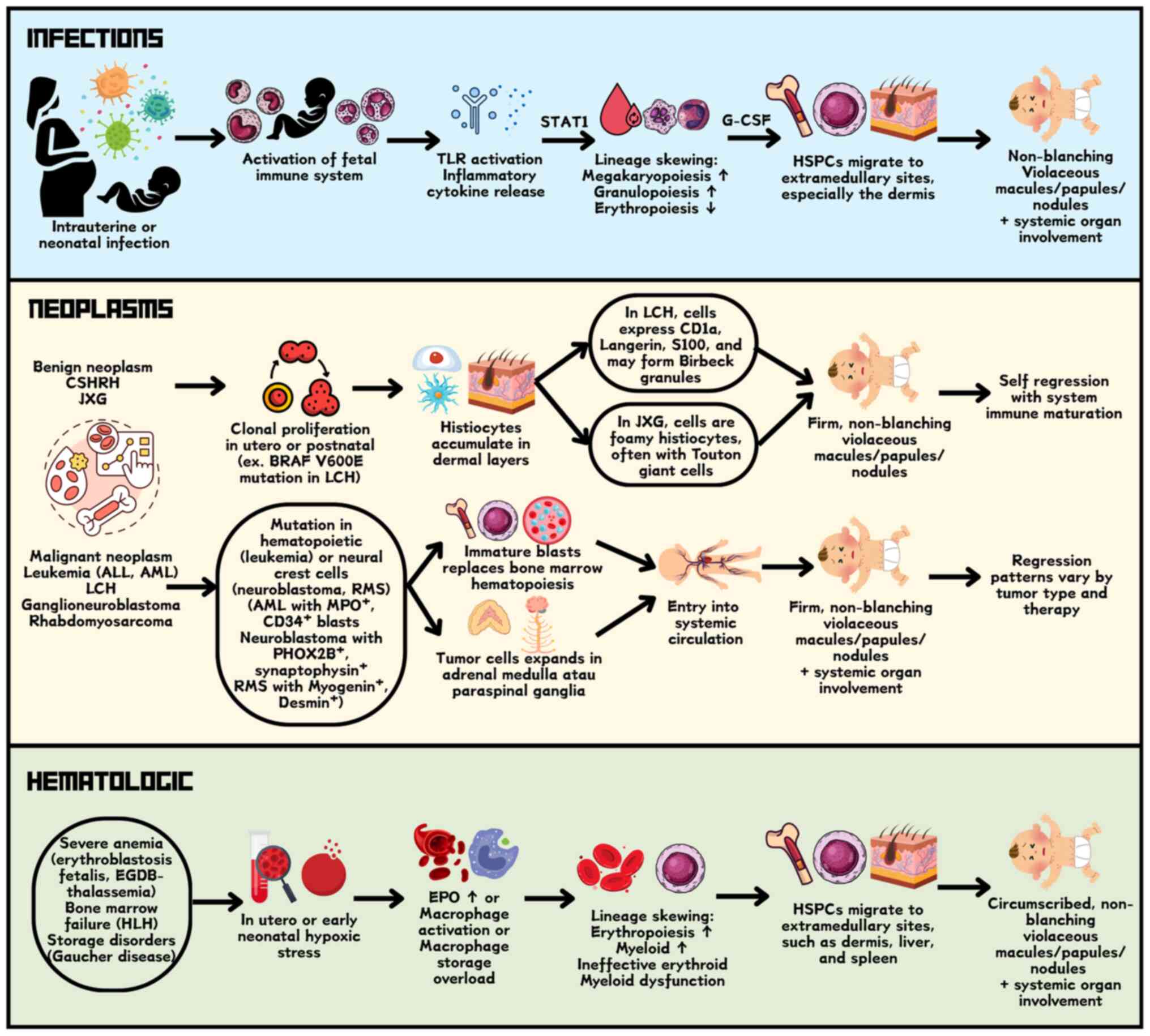
The schematic diagram depicted in Fig. 1 illustrates the distinct, yet converging pathophysiological pathways through which infections, neoplastic processes and hematological disorders result in the characteristic skin lesions of BMB. In infectious etiologies, such as TORCH infections or perinatal COVID-19, fetal inflammatory responses activate the innate immune system and trigger emergency hematopoiesis. The cytokine-driven mobilization of HSPCs leads to EMH, including in the dermis, where myeloid precursors differentiate in situ. In neoplastic conditions, malignant or clonal cells either infiltrate the dermis via the bloodstream or expand locally, disrupting skin architecture and forming firm violaceous nodules. In hematologic disorders like erythroblastosis fetalis or congenital anemia, chronic hypoxia and ineffective erythropoiesis stimulate erythropoietin release, causing compensatory EMH that includes dermal erythroid proliferation. Although the initiating stimuli differ, all three mechanisms result in the deposition or proliferation of hematopoietic or tumor cells in the skin, producing the non-blanching papulonodular lesions that clinically define BMB.

Conceptual schematic of blueberry
muffin baby integrating infectious, neoplastic, and hematologic
etiologies through pathophysiological perspectives. TLR, Toll-like
receptor; HSPCs, hematopoietic stem and progenitor cells; CSHRH,
congenital self-healing reticulohistiocytosis; JXG, juvenile
xanthogranuloma; ALL, acute lymphoblastic leukemia; AML, acute
myeloid leukemia; LCH, Langerhans cell histiocytosis; RMS,
rhabdomyosarcoma; HLH, hemophagocytic lymphohistiocytosis.

Figure 1

Conceptual schematic of blueberry muffin baby integrating infectious, neoplastic, and hematologic etiologies through pathophysiological perspectives. TLR, Toll-like receptor; HSPCs, hematopoietic stem and progenitor cells; CSHRH, congenital self-healing reticulohistiocytosis; JXG, juvenile xanthogranuloma; ALL, acute lymphoblastic leukemia; AML, acute myeloid leukemia; LCH, Langerhans cell histiocytosis; RMS, rhabdomyosarcoma; HLH, hemophagocytic lymphohistiocytosis.

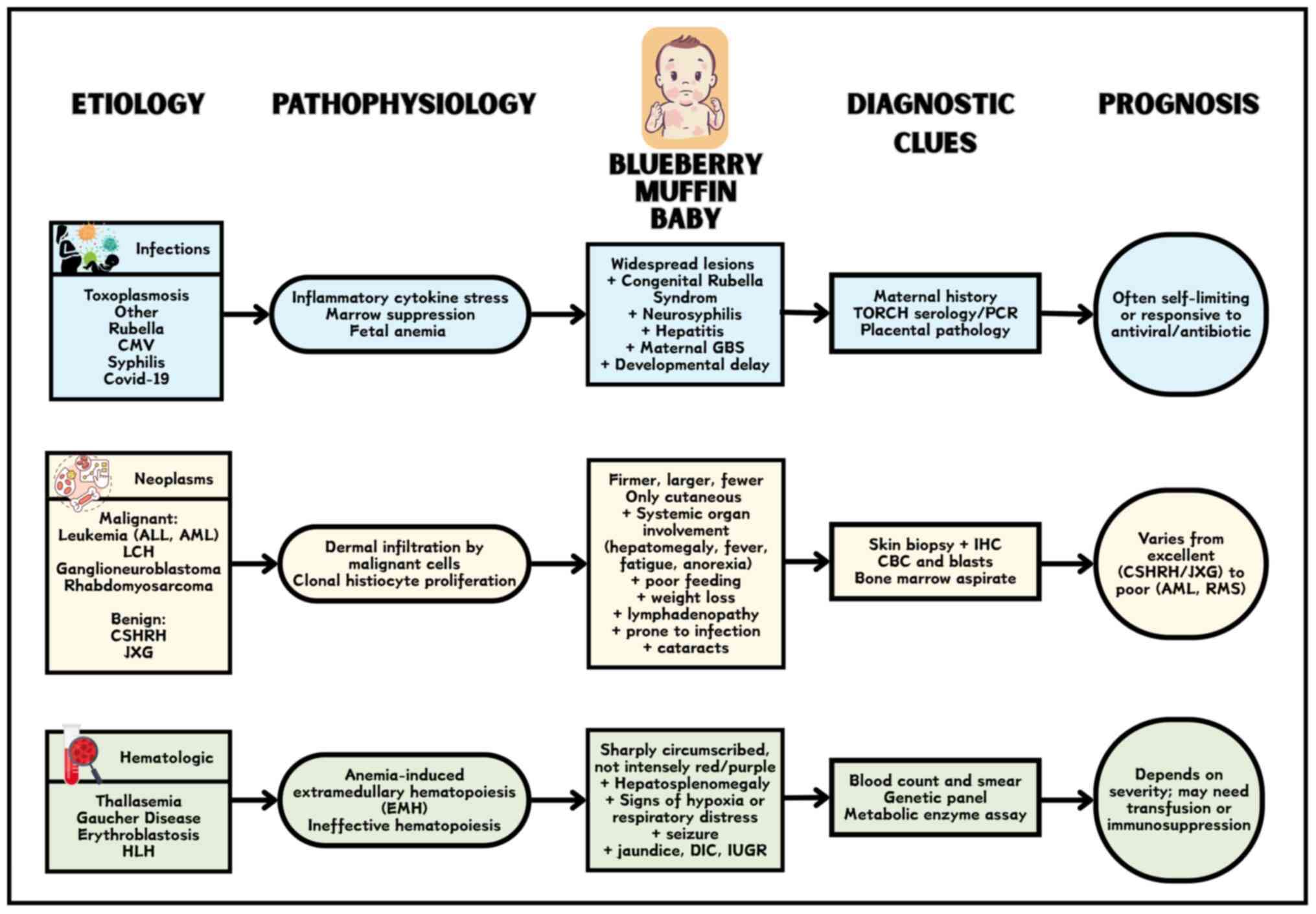
The present review also presents a conceptual diagnostic framework to understand BMB based on its three primary etiologies: Infections, neoplasms, and hematologic disorders, as illustrated in Fig. 2. Each etiology leads to distinct, yet overlapping pathophysiological mechanisms, such as viral-induced marrow suppression and fetal anemia (infections), malignant dermal infiltration (neoplasms) and anemia-driven EMH (hematological conditions). These mechanisms converge into a shared clinical presentation of violaceous to bluish skin lesions at birth, known as blueberry muffin lesions, which may involve direct tumor infiltration or dermal hematopoiesis. From a diagnostic standpoint, each etiology requires a tailored workup, including TORCH serology or PCR for infections, immunohistochemistry (e.g., CD34, MPO, CD1a and Factor XIIIa) and biopsy for neoplasms, and blood counts with genetic or metabolic studies for hematologic causes. Finally, the prognosis and management approach vary significantly: Infectious cases may resolve with treatment, benign neoplasms such as JXG and self-healing LCH often regress spontaneously, while malignant neoplasms and severe hematologic disorders require aggressive systemic therapy and are associated with a guarded prognosis.

Conceptual diagnostic framework of
blueberry muffin baby. CMV, cytomegalovirus; CSHRH, congenital
self-healing reticulohistiocytosis; JXG, juvenile xanthogranuloma;
ALL, acute lymphoblastic leukemia; AML, acute myeloid leukemia;
LCH, Langerhans cell histiocytosis; RMS, rhabdomyosarcoma; HLH,
hemophagocytic lymphohistiocytosis.

Figure 2

Conceptual diagnostic framework of blueberry muffin baby. CMV, cytomegalovirus; CSHRH, congenital self-healing reticulohistiocytosis; JXG, juvenile xanthogranuloma; ALL, acute lymphoblastic leukemia; AML, acute myeloid leukemia; LCH, Langerhans cell histiocytosis; RMS, rhabdomyosarcoma; HLH, hemophagocytic lymphohistiocytosis.

7. Conclusion

BMB is characterized by blue-purple maculopapules and nodules secondary to dermal EMH or tumor cell infiltration. While most often related to congenital infections, it can also occur due to neoplastic processes such as congenital leukemia, neuroblastoma, RMS, LCH and JXG. These conditions are marked by infiltration of the skin by malignant or proliferating cells, which can be detected using special immunohistochemistry markers. Hematological conditions such as severe anemia, hemolytic diseases, Gaucher disease, HLH and thalassemia also present with BMB due to hypoxia-induced EMH. Early identification of the underlying cause is crucial, as management ranges from supportive care to intensive chemotherapy depending on the cause. Genetic testing may be indicated in syndromic cases to establish treatment and prognosis.

Acknowledgements

Not applicable.

Funding

Funding: No funding was received.

Availability of data and materials

Not applicable.

Authors' contributions

JWG conceptualized and supervised the study, contributed to the physiological interpretation, and finalized the submitted version. FR and FS contributed to clinical and pediatric perspectives, data interpretation, and manuscript drafting. AS contributed to the clinical pathology aspects, data validation and reference organization. HP provided conceptual input and critical review from a physiological standpoint. ST contributed to the parasitological and diagnostic discussions and reviewed the final draft for accuracy. All authors read and approved the final manuscript. Data authentication is not applicable.

Ethics approval and consent to participate

Not applicable.

Patient consent for publication

Not applicable.

Competing interests

The authors declare that they have no competing interests.

References

1 

Kaleta K, Kłosowicz A, Juśko N and Kapiñska-Mrowiecka M: Blueberry muffin baby syndrome. A critical primary sign of systemic disease. Postepy Dermatol Alergol. 39:418–420. 2022.PubMed/NCBI View Article : Google Scholar

2 

Khalil S, Ariel Gru A and Saavedra AP: Cutaneous extramedullary haematopoiesis: Implications in human disease and treatment. Exp Dermatol. 28:1201–1209. 2019.PubMed/NCBI View Article : Google Scholar

3 

Shah VH, Rambhia KD, Mukhi JI and Singh RP: Blueberry muffin baby with cytomegalovirus hepatitis. Indian Dermatol Online J. 10:327–329. 2019.PubMed/NCBI View Article : Google Scholar

4 

Alzanbagi SM, Babonji M, Alradha A and Mohamedsalih AA: Diagnostic and prognostic significance of blueberry muffin rash in neonates. J Healthcare Sci. 4:650–657. 2024.

5 

Koklu E, Kurtoglu S, Akcakus M, Koklu S, Gunes T and Kose M: Blueberry muffin syndrome owing to congenital rubella: Case report. Ann Trop Paediatr. 26:149–151. 2006.PubMed/NCBI View Article : Google Scholar

6 

Montero-Vilchez T, Navarro-Pelayo I, Sanchez-Díaz M, Ortega-Acosta MJ, Arias-Santiago S and Tercedor-Sanchez J: Blueberry muffin baby secondary to ganglioneuroblastoma. Pediatr Dermatol. 40:537–539. 2023.PubMed/NCBI View Article : Google Scholar

7 

Yahyaoui H, Azami MA, El Mrimar N, Raissi A, Slitine NEI, Bennaoui F, Ameur MA, Maoulainine FMR and Chakour M: Neonatal leukemia and blueberry muffin baby syndrome: About a case of trisomy 21. Ann Biol Clin (Paris). 81:96–100. 2023.PubMed/NCBI View Article : Google Scholar : (In French).

8 

Teixeira B, Losa A, Meireles A, Lachado A, Couto Guerra I, Machado S, Branco L, Paulino P, Lau C, Oliva-Teles N, et al: Blueberry muffin syndrome and hyperleukocytosis in a newborn: A diagnostic challenge. Cureus. 16(e52869)2024.PubMed/NCBI View Article : Google Scholar

9 

Pradesh A, Chilakala SP, P AR, Ramalakshmi K and Chaduvula SB: Study of TORCH infections and its impact on newborn babies and infants: A retrospective study in a tertiary care hospital in Visakhapatnam, Andhra Pradesh, India. Int J Res Med Sci. 8:4417–4421. 2020.

10 

Salomè S, Corrado FR, Mazzarelli LL, Maruotti GM, Capasso L, Blazquez-Gamero D and Raimondi F: Congenital cytomegalovirus infection: The state of the art and future perspectives. Front Pediatr. 11(1276912)2023.PubMed/NCBI View Article : Google Scholar

11 

Wang Y, Li S, Ma N, Zhang Q, Wang H, Cui J and Wang S: The association of ToRCH infection and congenital malformations: A prospective study in China. Eur J Obstet Gynecol Reprod Biol. 240:336–340. 2019.PubMed/NCBI View Article : Google Scholar

12 

Lewis K, Yoshimoto M and Takebe T: Fetal liver hematopoiesis: From development to delivery. Stem Cell Res Ther. 12(139)2021.PubMed/NCBI View Article : Google Scholar

13 

Ciriza J, Thompson H, Petrosian R, Manilay J and Garcia-Ojeda M: The migration of hematopoietic progenitors from the fetal liver to the fetal bone marrow: Lessons learned and possible clinical applications. Exp Hematol. 41:411–423. 2013.PubMed/NCBI View Article : Google Scholar

14 

Pollak-Christian E and Lee KS: Importance of diagnostic work-up of Guillain-Barré syndrome in pregnancy. BMJ Case Rep. 2016(bcr2016216826)2016.PubMed/NCBI View Article : Google Scholar

15 

Makadia S, Shah H, Patel B and Bhuptani N: Gregg syndrome: With blueberry muffin rash and congenital cataract. Indian J Paediat Dermatol. 17:229–231. 2016.

16 

Mack I, Burckhardt MA, Heininger U, Prüfer F, Schulzke S and Wellmann S: Symptomatic congenital cytomegalovirus infection in children of seropositive women. Front Pediatr. 5(134)2017.PubMed/NCBI View Article : Google Scholar

17 

Spydell LE: Congenital syphilis and the prozone phenomenon: A case study. Adv Neonatal Care. 18:446–450. 2018.PubMed/NCBI View Article : Google Scholar

18 

Farhadi R: Congenital infection with cytomegalovirus presented as blueberry muffin syndrome in a preterm newborn: A case report. Austin J Dermatol. 9(1102)2022.

19 

Caudrelier N, Cyr P, Kokta V and McCuaig C: Extramedullary hematopoiesis secondary to COVID-19: A first case report in a newborn. SAGE Open Med Case Rep. 10(2050313X221117643)2022.PubMed/NCBI View Article : Google Scholar

20 

Piersigilli F, Auriti C, Mondì V, Francalanci P, Salvatori G and Danhaive O: Decreased CDKN1C expression in congenital alveolar rhabdomyosarcoma associated with Beckwith-wiedemann syndrome. Indian J Pediatr. 83:1476–1478. 2016.PubMed/NCBI View Article : Google Scholar

21 

Schmitt AR, Wetter DA, Camilleri MJ, Khan SP and Tollefson MM: Langerhans cell histiocytosis presenting as a blueberry muffin rash. Lancet. 390(155)2017.PubMed/NCBI View Article : Google Scholar

22 

Darby JB, Valentine G, Hillier K, Hunt R, Healy CM, Smith V and Allen-Rhoades W: A 3-Week-Old With an Isolated ‘Blueberry Muffin’ Rash. Pediatrics. 140(e20162598)2017.PubMed/NCBI View Article : Google Scholar

23 

Gauchan E, Sharma P, Ghartimagar D and Ghosh A: Ganglioneuroblastoma in a newborn with multiple metastases: A case report. J Med Case Rep. 11(239)2017.PubMed/NCBI View Article : Google Scholar

24 

Mudambi K and Berquist W: ‘Blueberry Muffin’ Rash and Neonatal Cholestatic Liver Failure. Dig Dis Sci. 63:1747–1750. 2018.PubMed/NCBI View Article : Google Scholar

25 

Debord C, Grain A, Theisen O, Boutault R, Rialland F and Eveillard M: A blueberry muffin rash at birth. Br J Haematol. 182(168)2018.PubMed/NCBI View Article : Google Scholar

26 

Cano Bará S, Vargas-Navia N and Rueda Plata R: Case of congenital Self-healing reticulohistiocytosis expanding the spectrum of blueberry muffin baby. Am J Dermatopathol. 40:136–138. 2018.PubMed/NCBI View Article : Google Scholar

27 

Bagri DR, Yadav KS, Sharma R and Gulati S: Congenital B-cell acute lymphoblastic leukemia with congenital rubella infection. Indian Pediatr. 56:67–68. 2019.PubMed/NCBI

28 

Calderón-Castrat X, Pomar R, Lipa-Chancolla RM, Apagüeño C, Castro R and Ballona R: Dermoscopic findings in neonatal leukemia cutis. Pediatr Dermatol. 36:988–989. 2019.PubMed/NCBI View Article : Google Scholar

29 

Höck M, Zelger B, Schweigmann G, Brunner B, Zelger B, Kropshofer G and Kiechl-Kohlendorfer U: The various clinical spectra of juvenile xanthogranuloma: Imaging for two case reports and review of the literature. BMC Pediatr. 19(128)2019.PubMed/NCBI View Article : Google Scholar

30 

Hansel K, Tramontana M, Troiani S, de Benedictis D, Bianchi L, Cucchia R, Simonetti S and Stingeni L: Congenital0 Self-Healing Langerhans Cell Histiocytosis: A rare presentation of blueberry muffin baby ‘Spectrum’. Dermatopathology (Basel). 6:37–40. 2019.PubMed/NCBI View Article : Google Scholar

31 

Schlegel S, Hamm H, Reichel A, Kneitz H, Ernestus K, Andres O, Wiegering VG, Eyrich M, Wölfl M and Schlegel PG: Neonatal acute lymphoblastic leukemia with t(9;11) translocation presenting as blueberry muffin baby: Successful treatment by ALL-BFM induction therapy, allogeneic stem cell transplantation from an unrelated donor, and PCR-MRD-Guided Post-transplant Follow-Up. Am J Case Rep. 21(e927153)2020.PubMed/NCBI View Article : Google Scholar

32 

Cyr J, Langley A, Demellawy DE and Ramien M: A neonate with Langerhans cell histiocytosis presenting as blueberry muffin rash: Case report and review of the literature. SAGE Open Med Case Rep. 8(2050313X20919616)2020.PubMed/NCBI View Article : Google Scholar

33 

Esmaeili M, Fischer AS, Khurana M, Gru AA, Yan AC and Rubin AI: Shapiro xanthogranuloma: An essential diagnosis for dermatologists and dermatopathologists to recognize to avoid misdiagnosis of a hematopoietic malignancy in infants and neonates. J Cutan Pathol. 48:558–562. 2021.PubMed/NCBI View Article : Google Scholar

34 

Fortuny LR, Cabler SS, Hunstad DA and Yarbrough ML: Blueberry muffin rash, bilateral cataracts, and thrombocytopenia in a neonate. Clin Chem. 67:472–475. 2021.PubMed/NCBI View Article : Google Scholar

35 

Thalji M, Yagmour A, Alameh D, Shatrit H, Inerat M, Bannoura SI, Atawneh A and Abuawaad M: Case report: ‘Congenital cutaneous langerhans cell histiocytosis presenting with blueberry Muffin Rash’. Front Pediatr. 10(1073624)2022.PubMed/NCBI View Article : Google Scholar

36 

Clark EE, Walton M, Chow LML, Boyd JT, Yohannan MD and Arya S: Disseminated juvenile xanthogranuloma with a novel MYH9-FLT3 fusion presenting as a blueberry muffin rash in a neonate. AJP Rep. 13:e5–e10. 2023.PubMed/NCBI View Article : Google Scholar

37 

Koster SBL, Vinke ME, van den Bos C, van Heel WJM, Kranendonk MEG, Natté R and van Tuyll van Serooskerken AM: A case report of a blueberry muffin baby caused by congenital self-healing indeterminate cell histiocytosis. BMC Pediatr. 23(111)2023.PubMed/NCBI View Article : Google Scholar

38 

Karmegaraj B, Vijayakumar S, Ramanathan R and Samikannu R: Extramedullary haematopoiesis resembling a blueberry muffin, in a neonate. BMJ Case Rep. 2015(bcr2014208473)2015.PubMed/NCBI View Article : Google Scholar

39 

De Carolis MP, Salvi S, Bersani I, Lacerenza S, Romagnoli C and De Carolis S: Fetal hypoxia secondary to severe maternal anemia as a causative link between blueberry muffin baby and erythroblastosis : A case report. J Med Case Rep. 10(155)2016.PubMed/NCBI View Article : Google Scholar

40 

Carr PC, Casamiquela KM and Jacks SK: Gaucher disease type 2 presenting with collodion membrane and blueberry muffin lesions. Pediatr Dermatol. 33:e20–e22. 2016.PubMed/NCBI View Article : Google Scholar

41 

Larson KN, Gaitan SR, Stahr BJ and Morrell DS: Hemophagocytic Lymphohistiocytosis in a Newborn Presenting as ‘Blueberry Muffin Baby’. Pediatr Dermatol. 34:e150–e151. 2017.PubMed/NCBI View Article : Google Scholar

42 

Puar N, Newell B and Shao L: Blueberry muffin skin lesions in an infant with epsilon gamma delta beta thalassemia. Pediatr Dev Pathol. 22:599–600. 2019.PubMed/NCBI View Article : Google Scholar

43 

Collins A, Swann J, Proven M, Patel CM, Mitchell CA, Kasbekar M, Dellorusso PV and Passegué E: Maternal inflammation regulates fetal emergency myelopoiesis. Cell. 187:1402–1421.e21. 2024.PubMed/NCBI View Article : Google Scholar

44 

Hu X, He Y, Li S, Jiang Y, Yu R, Wu Y, Fu X, Song Y, Lin C, Shi J, et al: Acute inflammation induces acute megakaryopoiesis with impaired platelet production during fetal hematopoiesis. Development. 152(dev204226)2025.PubMed/NCBI View Article : Google Scholar

45 

Yang X, Chen D, Long H and Zhu B: The mechanisms of pathological extramedullary hematopoiesis in diseases. Cell Mol Life Sci. 77:2723–2738. 2020.PubMed/NCBI View Article : Google Scholar

46 

Mende N and Laurenti E: Hematopoietic stem and progenitor cells outside the bone marrow: Where, when, and why. Exp Hematol. 104:9–16. 2021.PubMed/NCBI View Article : Google Scholar

47 

Aniska WF, Anne-Lotte F, van der K, Laus JMM M, Irene AM and van der A: Guillain-barré syndrome complicating first trimester pregnancy: A case report and review of literature. Obstet Gynaecol Cases Rev. 8:1–8. 2021.

48 

Simons EA, Reef SE, Cooper LZ, Zimmerman L and Thompson KM: Systematic review of the manifestations of congenital rubella syndrome in infants and characterization of Disability-adjusted life years (DALYs). Risk Anal. 36:1332–1356. 2016.PubMed/NCBI View Article : Google Scholar

49 

Putri ND, Karyanti MR, Iskandar ATP, Advani N, Handryastuti S, Mangunatmadja I, Airlangga TJ, Aprianti SC, Rahman MM, Octaviantie PD, et al: Care of children with congenital rubella syndrome (CRS) in Indonesia. J Infect Dev Ctries. 18:1274–1280. 2024.PubMed/NCBI View Article : Google Scholar

50 

Li L, Wang Y, Lian CG, Hu N, Jin H and Liu Y: Clinical and pathological features of myeloid leukemia cutis. An Bras Dermatol. 93:216–221. 2018.PubMed/NCBI View Article : Google Scholar

51 

E S, Jelloul FZ, Nahmod KA, Short N, Leventaki V, Jia F, Xu J, Loghavi S, Wang W, Jabbour LE, et al: Acute lymphoblastic leukaemia with T- and B-lineage defining markers. Pathology. 57:739–745. 2025.PubMed/NCBI View Article : Google Scholar

52 

Shimada H and Ikegaki N: Genetic and histopathological heterogeneity of neuroblastoma and precision therapeutic approaches for extremely unfavorable histology subgroups. Biomolecules. 12(79)2022.PubMed/NCBI View Article : Google Scholar

53 

Thambiraj P, Balasubramanian K and Srinivas BH: Juvenile Xanthogranuloma: A case report and literature review of an underdiagnosed benign entity. Int J Advanced Med Health Res. 11:129–131. 2024.

Related Articles

  • Abstract
  • View
  • Download
Copy and paste a formatted citation
Spandidos Publications style
Gunadi JW, Regina F, Supriady FS, Suhendra A, Pramono H and Tanuwireja S: Pathophysiological insights and diagnostic challenges associated with blueberry muffin baby (Review). World Acad Sci J 8: 2, 2026.
APA
Gunadi, J.W., Regina, F., Supriady, F.S., Suhendra, A., Pramono, H., & Tanuwireja, S. (2026). Pathophysiological insights and diagnostic challenges associated with blueberry muffin baby (Review). World Academy of Sciences Journal, 8, 2. https://doi.org/10.3892/wasj.2025.417
MLA
Gunadi, J. W., Regina, F., Supriady, F. S., Suhendra, A., Pramono, H., Tanuwireja, S."Pathophysiological insights and diagnostic challenges associated with blueberry muffin baby (Review)". World Academy of Sciences Journal 8.1 (2026): 2.
Chicago
Gunadi, J. W., Regina, F., Supriady, F. S., Suhendra, A., Pramono, H., Tanuwireja, S."Pathophysiological insights and diagnostic challenges associated with blueberry muffin baby (Review)". World Academy of Sciences Journal 8, no. 1 (2026): 2. https://doi.org/10.3892/wasj.2025.417
Copy and paste a formatted citation
x
Spandidos Publications style
Gunadi JW, Regina F, Supriady FS, Suhendra A, Pramono H and Tanuwireja S: Pathophysiological insights and diagnostic challenges associated with blueberry muffin baby (Review). World Acad Sci J 8: 2, 2026.
APA
Gunadi, J.W., Regina, F., Supriady, F.S., Suhendra, A., Pramono, H., & Tanuwireja, S. (2026). Pathophysiological insights and diagnostic challenges associated with blueberry muffin baby (Review). World Academy of Sciences Journal, 8, 2. https://doi.org/10.3892/wasj.2025.417
MLA
Gunadi, J. W., Regina, F., Supriady, F. S., Suhendra, A., Pramono, H., Tanuwireja, S."Pathophysiological insights and diagnostic challenges associated with blueberry muffin baby (Review)". World Academy of Sciences Journal 8.1 (2026): 2.
Chicago
Gunadi, J. W., Regina, F., Supriady, F. S., Suhendra, A., Pramono, H., Tanuwireja, S."Pathophysiological insights and diagnostic challenges associated with blueberry muffin baby (Review)". World Academy of Sciences Journal 8, no. 1 (2026): 2. https://doi.org/10.3892/wasj.2025.417
Follow us
  • Twitter
  • LinkedIn
  • Facebook
About
  • Spandidos Publications
  • Careers
  • Cookie Policy
  • Privacy Policy
How can we help?
  • Help
  • Live Chat
  • Contact
  • Email to our Support Team