Introduction
Gestational diabetes mellitus (GDM) is defined as an
abnormal glucose metabolism that initially occurs or is first
recognized during the pregnancy period, and is a relatively common
complication of pregnancy in China (1). In recent years, with the improvement of
medical diagnostic technology and the living standards of the human
population, GDM incidence has increased (2,3).
Patients with GDM are prone to pregnancy-induced hypertension,
polyhydramnios, infections, ketoacidosis and other complications;
if the control of blood glucose levels remains unfavorable for a
prolonged duration of time, it may result in chronic intrauterine
fetal hypoxia, growth abnormalities, malformations, neonatal
hyperbilirubinemia and hypoglycemia respiratory distress syndrome,
amongst others (4,5).
Previous studies have revealed that GDM may increase
fetal growth restriction, fetal distress, preterm delivery and
polyhydramnios during pregnancy, in addition to an increase in the
risk of type 2 diabetes and the incidence of cesarean pain
(6,7). Furthermore, GDM may result in adverse
effects in the offspring, including fetal macrosomia, defects
associated with premature birth, low birth weight, neonatal
respiratory distress syndrome and neonatal jaundice (8). Additional research has revealed that
the aforementioned adverse pregnancy outcomes are associated with
maternal blood glucose levels; thus the effective control of blood
sugar levels in pregnant women has the ability to successfully
reduce adverse pregnancy outcomes (9). Therefore, the primary goal for
successful medical management of GDM is to maintain the
concentration of maternal blood glucose, particularly postprandial
blood glucose levels, within the ideal range (10). It has been hypothesized that the
mechanism of GDM involves an increase in the hormones produced by
the placenta known to resist insulin, which results in a decreased
sensitivity to insulin in pregnant women (11,12).
This consolidates the scientific basis of medical nutrition therapy
for the treatment of GDM (13).
Medical nutrition therapy aims to treat high blood sugar through
scientific dietary adjustments in combination with exercise and
blood glucose level monitoring. The American Diabetes Association
recommends that all patients be evaluated for GDM risk according to
their food intake, metabolic status and lifestyle by a professional
nutritionist, who can develop an individualized medical nutrition
therapy according to the patients height, weight and gestational
age (14). As the primary method for
the treatment of GDM, medical nutrition therapy has gained
increasing clinical attention.
Vitamin D is a fat-soluble steroid hormone. Recent
studies have indicated its involvement in cardiovascular disease,
cancer, autoimmune diseases and diabetes. This is an effect of the
widespread distribution of its receptor, vitamin D receptor (VDR),
which interacts with the active form of vitamin D,
1,25-dihydroxyvitamin D3, in vivo, in addition to
the classic role of VDR in the regulation of calcium and phosphate
metabolism (15). VDR is also
present in islet β cells. As vitamin D affects insulin secretion
and function by acting on the VDR of β cells, it has become a novel
hotspot of diabetes research. Numerous studies have confirmed that
vitamin D is associated with diabetes in patients that are not
pregnant, and further investigation to determine its mechanism of
action has been conducted (16,17).
The present study evaluated the effect of different
doses of vitamin D supplementation on glucose metabolism, lipid
concentrations, inflammation and the oxidative stress levels of
pregnant women with GDM, in order to assess whether vitamin D may
improve the treatment of GDM.
Patients and methods
Participants
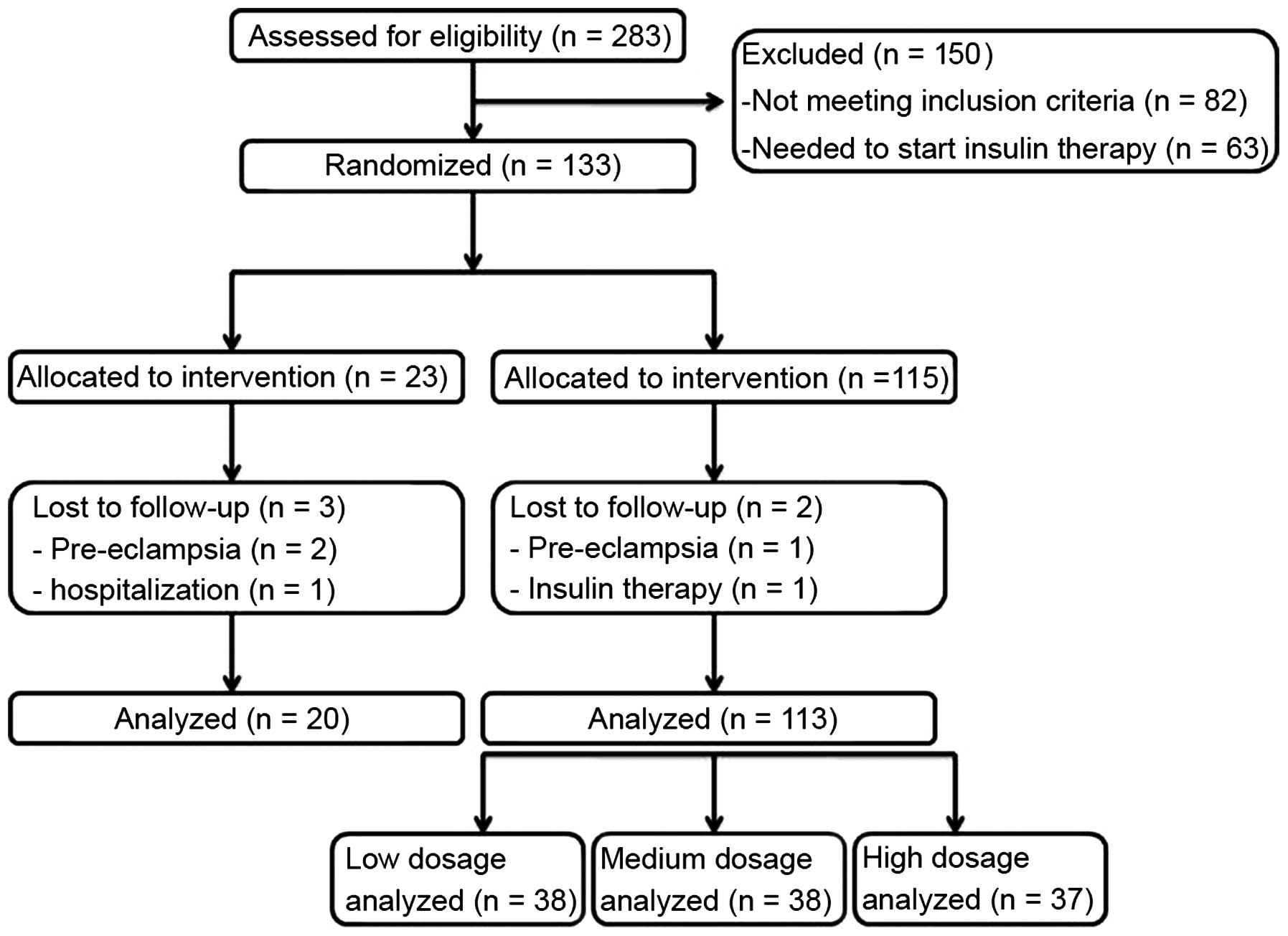
In the present randomized, double-blind, controlled
clinical trial, 283 pregnant women were recruited from the
Obstetrics and Gynecology Hospital of Fudan University (Shanghai,
China), between September 2009 and November 2014 (Fig. 1). The exclusion criteria included
women with: Diabetes or GDM treated with insulin, thyroid or
parathyroid disorders, polycystic ovary disease prior to pregnancy,
a body mass index (BMI) of >30 kg/m2 prior to
pregnancy and women who had received vitamin D supplementation in
the 6 months that preceded the trial. In addition, a GDM diagnosis
of <12 weeks was required for eligibility. To detect a minimum
of 7 ng/ml difference in the mean of vitamin D between groups with
80% power, a standard deviation of 10.5 was assumed, as determined
in previous studies (18,19), and α=0.05 was used. The present study
therefore aimed to recruit 133 patients to allow for a 10% dropout
throughout the duration of the study.
Study design
All patients provided written informed consent for
participation in the present study, which was approved by the
Institutional Ethics Committee [approval no. (2009)21]. During the
initial antenatal visit between 24 and 28 weeks of pregnancy, a
blood sample was obtained to measure fasting blood sugar (FBS),
insulin, 25-hydroxyvitamin D [25(OH)D] and calcium levels. The
patients (n=133) were then randomly divided into four groups
(Fig. 1). Computer-generated random
number lists were produced by an independent researcher. Patients
and researchers were blind to treatment assignment. All dosing was
performed via the oral route. The control group (n=20) received a
placebo (sucrose; one granule/day), the low dosage group (n=38)
received the daily recommended intake of 200 IU vitamin D
(calciferol; Costco Wholesale Corporation, Issaquah, WA, USA)
daily, the medium dosage group (n=38) received 50,000 IU monthly
(2,000 IU daily for 25 days) and the high dosage group (n=37)
received 50,000 IU every 2 weeks (4,000 IU daily for 12.5 days).
Supplementation commenced at 24–28 weeks of pregnancy and continued
until delivery. Patients received a follow-up examination every
month during pregnancy and were evaluated for indications of
adverse effects to vitamin D, including headaches and vomiting. A
blood sample for the measurement of fasting plasma glucose (FPG),
insulin, vitamin D and calcium levels was retrieved from each
participant at the end of pregnancy.
Assessment of variables
Height and prepregnancy weight were obtained from
the records of the patients that existed within the clinic. A
midwife at the maternity clinic performed anthropometric
measurements at the study baseline and 9 weeks subsequent to the
intervention. The height of patients was measured to the nearest
0.1 cm with a nonstretched tape measure (Seca GmbH & Co. KG,
Hamburg, Germany). The body weight of pregnant women was measured
to the nearest 0.1 kg following overnight fasting and wearing
minimal clothing, by the use of a digital scale (Seca GmbH &
Co. KG). BMI was determined as weight (kg) / height
(m2). Venous blood samples were harvested and
immediately centrifuged at 10,000 × g for 15 min (Wuxi Ruijiang
Analysis Instrument Co., Ltd., Wuxi, China) to separate the serum.
Serum samples were then stored at −80°C prior to analysis.
Serum 25(OH)D concentrations were assayed using a
commercial ELISA kit (H191; Jiancheng Bioengineering Institute,
Nanjing, China). Vitamin D sufficiency was defined as >30 ng/ml
25(OH)D, insufficiency as 25(OH)D levels of 20–30 ng/ml and
deficiency as serum 25(OH)D levels of <20 ng/ml. Serum calcium
(C004-2), phosphorus, (C006) magnesium (C005), zinc (E011; all
Jiancheng Bioengineering Institute) and selenium (E-EL-H2065c;
Elabscience Bioengineering Co., Ltd., Wuhan, China) concentrations
were also assayed using commercial ELISA kits. FPG (R057), serum
insulin (H203), insulin resistance (R056) [as determined by
homeostatic model assessment-insulin resistance (HOMA-IR)], total
cholesterol change (F002-1), triglyceride levels (A110-1),
high-sensitivity C-reactive protein (hs-CRP; E024), plasma total
antioxidant capacity (TAC; A015) and glutathione (GSH; A005)
changes were measured with commercial ELISA kits purchased from
Beyotime Institute of Biotechnology (Haimen, China).
Statistical analysis
To ensure the normal distribution of variables, the
Kolmogorov-Smirnov test was applied. All statistical analyses were
performed using SPSS version 17.0 (SPSS, Inc., Chicago, IL, USA).
Data are presented as means ± standard deviation (SD).
Non-parametric tests were employed to compare the groups, and to
compare baseline and endpoint measurements. For comparisons within
groups, the Wilcoxon test was used. P<0.05 was considered to
indicate a statistically significant difference.
Results
General characteristics of pregnant
women with GDM
In the present randomized controlled trial, 37 cases
from the high dosage group, 38 cases from the medium dosage group,
38 cases from the low dosage group and 20 pregnant women from the
control group completed participation (Fig. 1). Table
I displays the general characteristics of the pregnant female
patients with GDM in each of the groups prior to intervention. In
the control group, the mean age ± SD was 29.8±4.7 years, the mean
height ± SD was 160.1±5.1 cm, the mean prepregnancy weight ± SD was
70.5±9.4 kg and the mean prepregnancy BMI ± SD was 27.1±3.6
kg/m2. Prior to intervention, the mean age, height, FBS,
prepregnancy weight and prepregnancy BMI were not significantly
different between the three groups (P>0.05).
 | Table I.General characteristics of patients
with GDM. |
Table I.
General characteristics of patients
with GDM.
| Characteristic | Control (n=20) | Low dosage
(n=38) | Medium dosage
(n=38) | High dosage
(n=37) | P-value |
|---|
| Age, year |
29.8±4.7 |
30.3±5.1 |
29.4±4.9 |
30.1±4.5 | 0.87 |
| Height, cm |
160.1±5.1 |
158±5.7 |
157.8±6.6 |
159.1±5.1 | 0.62 |
| Prepregnancy weight,
kg |
70.5±9.4 |
69.1±8.9 |
69.7±8.8 |
70.1±9.2 | 0.71 |
| Weight at study
baseline, kg |
79.1±10.1 |
79.6±10.6 |
78.2±9.9 |
78.8±12.1 | 0.76 |
| Weight at end of
trial, kg |
81.8±11.8 |
81.1±11.2 |
80.4±12.5 |
80.9±10.3 | 0.87 |
| Prepregnancy BMI,
kg/m2 |
27.1±3.6 |
27.4±4.6 |
26.9±4.1 |
27.2±4.3 | 0.89 |
| BMI at study
baseline, kg/m2 |
31.1±3.9 |
30.6±4.1 |
31.1±
3.9 |
30.6±4.1 | 0.63 |
| BMI at end of
trial, kg/m2 |
32.3±4.3 |
31.1±5.2 |
32.8±3.8 |
31.8±4.4 | 0.87 |
Dietary intakes of pregnant women with
GDM
Dietary intakes of patients with GDM are displayed
in Table II, as determined by ELISA
of serum blood samples. The mean energy, carbohydrate, protein,
dietary fiber, vitamin D, calcium, phosphorus, magnesium, zinc and
selenium levels in the control group were similar to those in each
of the treatment groups (P>0.05).
| Table II.Dietary intakes of pregnant women
with GDM. |
Table II.
Dietary intakes of pregnant women
with GDM.
| Dietary intake | Control (n=20) | Low dosage
(n=38) | Medium dosage
(n=38) | High dosage
(n=37) | P-value |
|---|
| Energy,
kcal/day |
2,411±189 |
2,392±211 |
2,388±198 |
2,396±192 | 0.75 |
| Carbohydrate,
g/day |
329±51 |
338±44 |
333±48 |
335±46 | 0.82 |
| Protein, g/day |
84±17 |
86±16 |
81±19 |
83±18 | 0.36 |
| Dietary fiber,
g/day |
19.5±4.6 |
20.1±4.6 |
19.7±4.4 |
20.7±4.1 | 0.24 |
| Vitamin D,
mg/day |
2.9±0.5 |
2.8±0.9 |
2.9±0.6 |
2.8±0.7 | 0.37 |
| Calcium, g/day |
1.15±0.17 |
1.15±0.14 |
1.15±0.16 |
1.15±0.15 | 0.91 |
| Phosphorus,
g/day |
1.18±0.22 |
1.22±0.12 |
1.20±0.16 |
1.19±0.19 | 0.76 |
| Magnesium,
mg/day |
296±73 |
294±66 |
292±71 |
291±69 | 0.66 |
| Zinc, mg/day |
9.3±2.7 |
9.0±2.4 |
9.1±2.1 |
8.9±2.7 | 0.79 |
| Selenium,
mg/day |
118±31.9 |
116±29.5 |
123±29.1 |
121±28.9 | 0.39 |
High and medium doses of vitamin D
supplementation reduces insulin and HOMA-IR levels in patients with
GDM
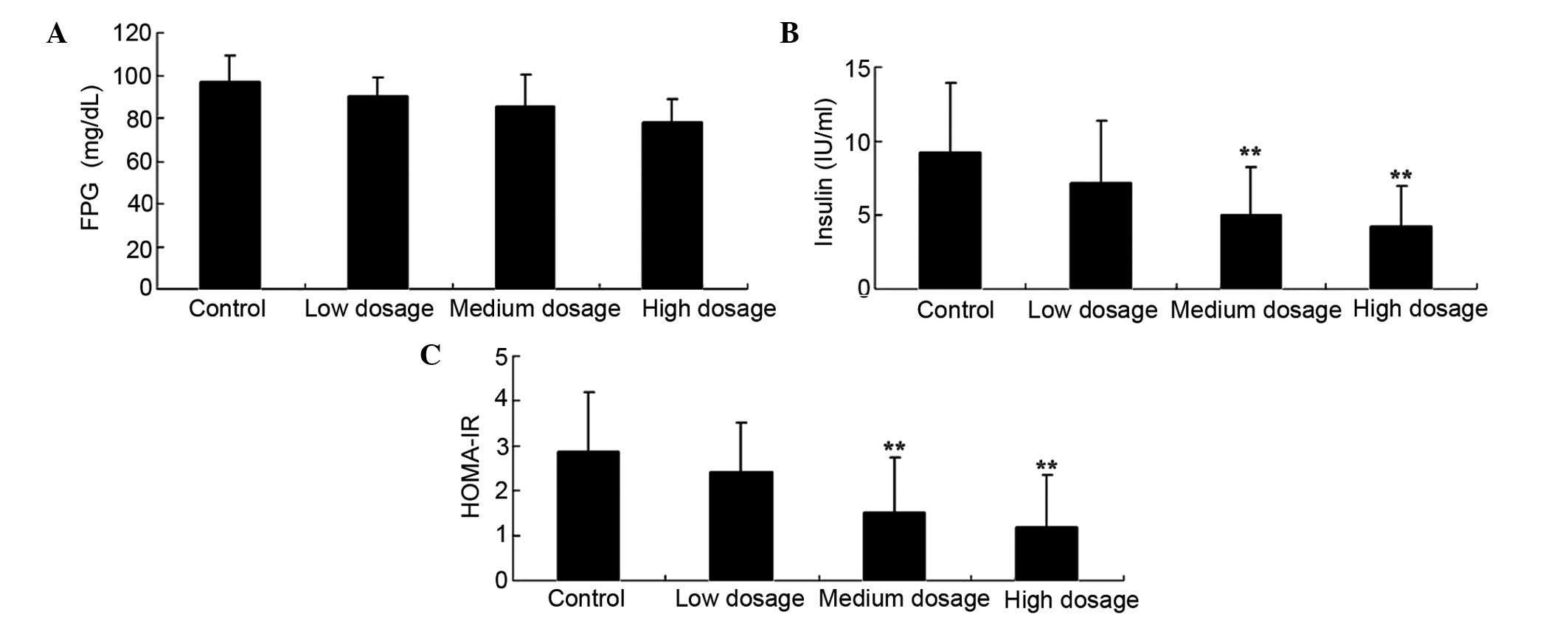
Fig. 2 revealed that
FPG levels were not significantly affected by any of the low,
medium and high vitamin D supplementation groups (96.12, 88.59 and
84.73 mg/dl, respectively), as compared with the control group
(92.49 mg/dl) (Fig. 2A; P>0.05).
Conversely, as compared with the control group, the high and medium
vitamin D supplementation groups effectually reduced insulin
(Fig. 2B; 9.21 vs. 5.01 and 4.2
IU/ml, respectively) and HOMA-IR (Fig.
2C; 2.87 vs. 1.52 and 1.18, respectively) concentration levels
in patients with GDM (P<0.01).
High and medium doses of vitamin D
supplementation decreases total cholesterol in patients with
GDMs
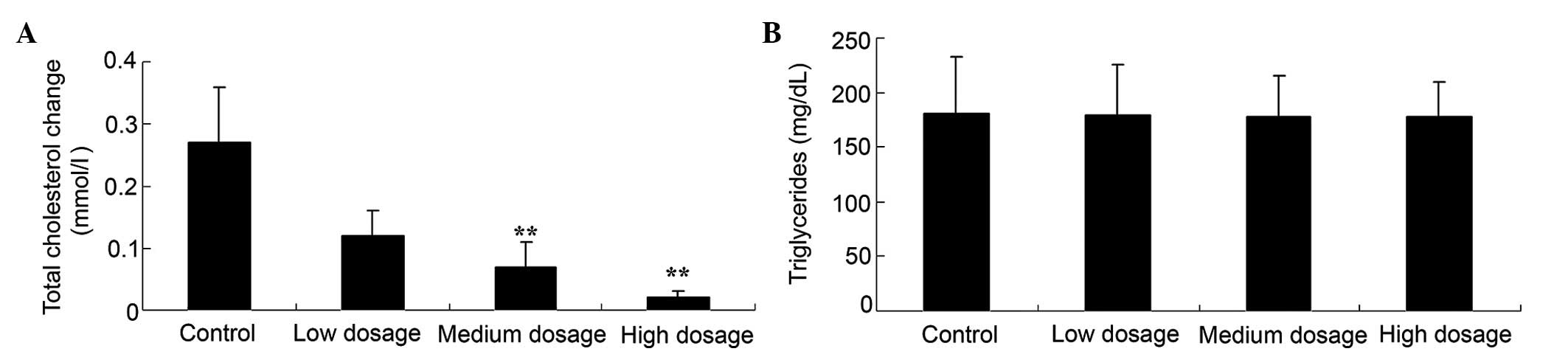
Fig. 3A revealed that
the medium and high vitamin D supplementation groups displayed
significantly decreased total cholesterol change in pregnant women
with GDM, as compared with the control (0.07 and 0.02 vs. 0.27
mmol/l; P<0.01). By contrast, the levels of triglycerides in the
low, medium and high vitamin D dosage groups (179, 178 and 178
mg/dl, respectively) were not significantly different, as compared
with the control group (180 mg/dl) (Fig.
3B; P>0.05).
Vitamin D supplementation does not
reduce inflammation in patients with GDM
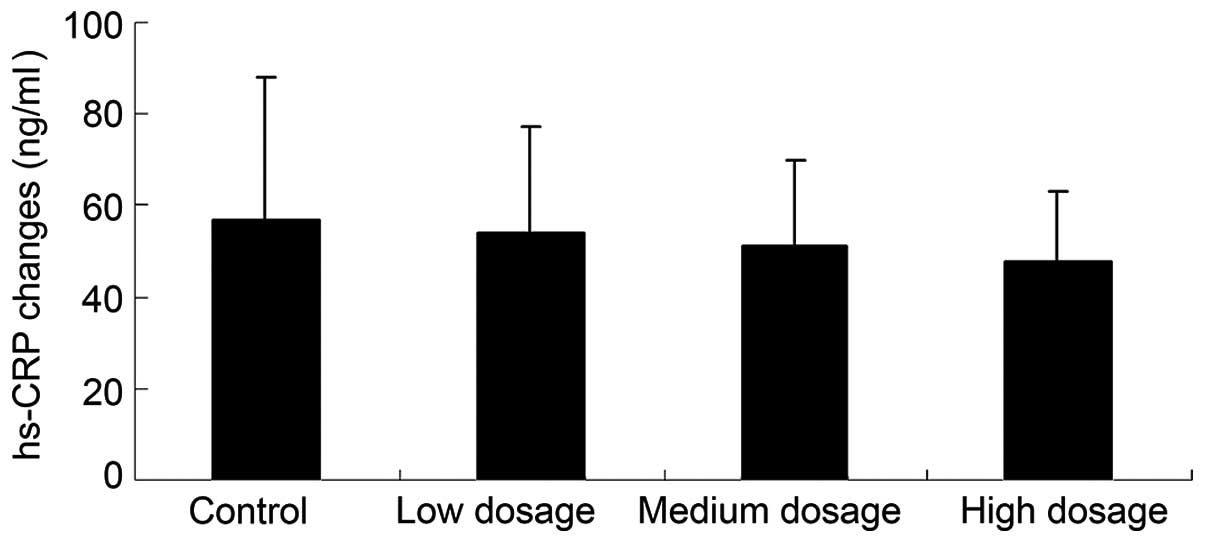
Fig. 4 revealed that
low, medium and high dose vitamin D supplementation (54, 51 and 48
ng/ml, respectively) does not significantly reduce the hs-CRP
levels of patients with GDM, as compared with the control group (57
ng/ml; P>0.05).
Vitamin D supplementation increases
TAC and total GSH in patients with GDM
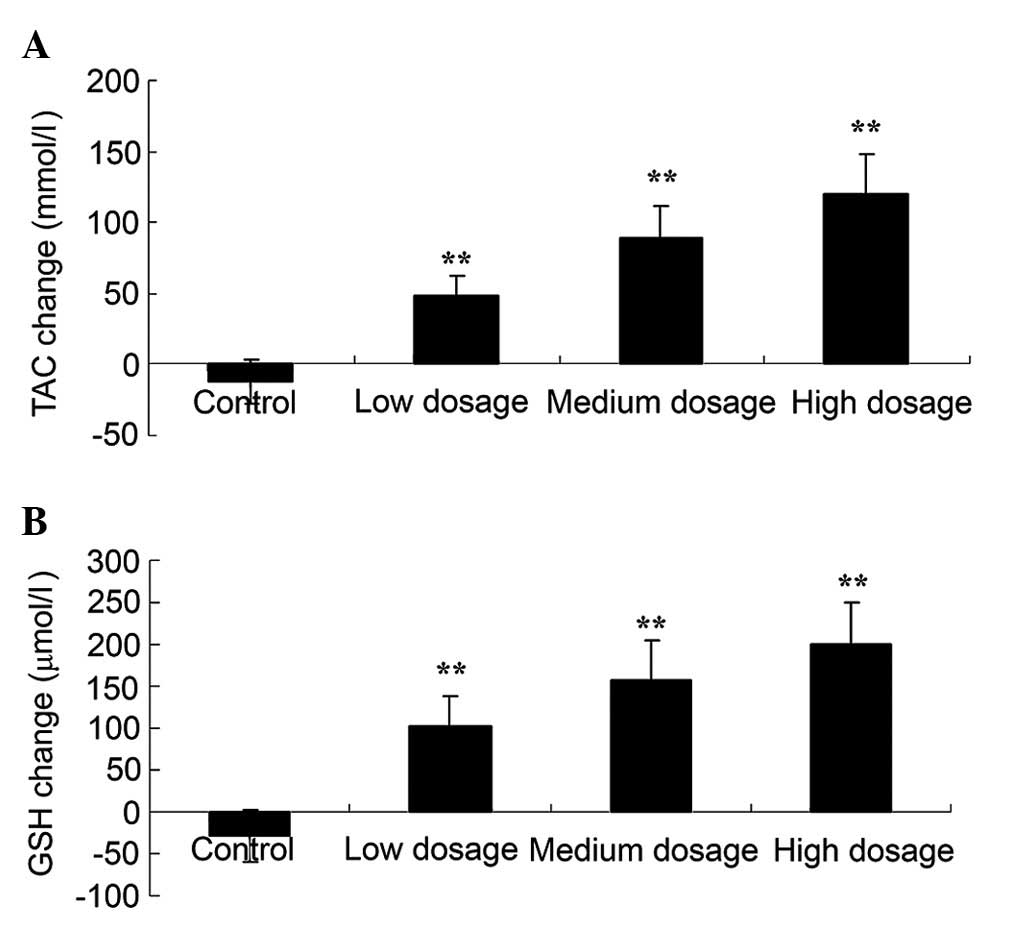
Fig. 5 revealed that
high, medium and low doses of vitamin D supplementation all
significantly increased TAC (120, 89 and 49 mmol/l, respectively;
Fig. 5A) and total GSH (199, 158 and
102 µmol/l, respectively; Fig. 5B)
levels in patients with GDM, as compared with the control groups
(12 mmol/l and −28 µmol/l, respectively; P<0.01).
Discussion
Medical nutrition therapy (MNT) is the foundation of
treating diabetes and is an essential measure for the prevention of
phase and control phase in the natural course of diabetes. In 2002,
the American Diabetes Association (ADA) proposed the evidence-based
diabetes nutrition supply standard and and established a
classification standard for scientific evidence (20). ADA indicated that patients with GDM
who adhered to personalized nutrition therapy from a registered
dietitian were more likely to achieve treatment goals. The
pathophysiological features of GDM are unique and require close
management; if poorly managed, maternal hypoglycemia, ketoacidosis
and high blood sugar, in addition to other complications, may occur
(21). The high blood sugar levels
often observed in patients with GDM can lead to fetal
hyperglycemia, while GDM-induced hyperosmolarity is typically
treated with diuretics, resulting in increased urination;
consequently, sugar levels are high in the amniotic fluid, which in
turn stimulates the secretion of amniotic membrane and may
eventually lead to excessive amniotic fluid (22). Additionally, hyperglycemia stimulates
fetal insulin secretion. Excessive insulin levels may reduce fetus
alveolar surface material, resulting in delayed fetal lung maturity
and therefore increasing the incidence of neonatal respiratory
distress syndrome (23).
Furthermore, hyperinsulinemia persists in the newborn following
birth and removal from the environment of the mother's
hyperglycemia; thus, the newborn is prone to neonatal hypoglycemia
(24). The present study involved a
randomized, double-blind, placebo-controlled clinical trial
conducted on 133 patients with a GDM diagnosis of <12 weeks. The
general characteristics and dietary intakes of patients with GDM in
each group of the trial were similar, which demonstrated that these
patient charcteristics did not differ prior to intervention.
In pregnant women with elevated blood sugar levels,
fetuses may experience fetal hyperglycemia, leading to fetal islet
cell proliferation, increased insulin secretion and promotion of
the synthesis of protein and fat, in addition to the inhibition of
lipolysis, thus leading to the occurrence of fetal macrosomia
(25). GDM insulin resistance and
hyperinsulinemia may cause microvascular disease, resulting in the
thickening of the basement membrane in capillary walls. This also
contributes to the occurrence of maternal hypertensive disorders in
pregnancy (26). In the present
study, patients in the groups receiving high and medium doses of
vitamin D supplementation were observed to display reduced insulin,
HOMA-IR and total cholesterol levels. These results demonstrated
that high-dose vitamin D supplementation significantly improved
insulin resistance in pregnant women with GDM. However, the levels
of FPG and triglycerides exhibited no significant differences in
the groups receiving vitamin D supplementation compared with the
control group. Senti et al reported that vitamin D
supplementation was a potential target for patients with GDM
(27). Yap et al also
revealed that the effect of vitamin D supplementation (5,000 IU per
day) prevented glucose metabolism during pregnancy (28).
Diabetes is a vascular disease, as well as a disease
of hyperglycemia. In addition, diabetes may also be an inflammatory
disease (29). Inflammation, immune
system activation and the corresponding metabolic changes in an
organism are subject to the regulation of the nervous and endocrine
systems, which affect organism function through feedback pathways,
forming complex nerve-endocrine-immune system networks (30). GDM and obesity involve insulin
resistance as a common feature in their disease pathogenesis. A
variety of inflammatory cytokines generated by the activation of
the immune system, including tumor necrosis factor-α, interleukin-6
and CRP, can induce insulin resistance (31). In the present study, hs-CRP levels in
patients with GDM were not affected by high dosage vitamin D
supplementation. Similarly, Asemi et al revealed that
vitamin D supplementation does not affect inflammation in pregnant
women with GDM (17,32).
The oxidative stress imbalance involves excessive
oxidative generation and inadequate levels of antioxidants. It has
been revealed that oxidative stress imbalance is important in the
pathophysiological processes involved in vascular diseases,
including diabetes, hypertension and atherosclerosis (33). An oxidative stress imbalance is also
present in GDM patients and can cause vascular injury and adverse
pregnancy events. Multiple adverse pregnancy outcomes are
associated with GDM, including fetal growth restriction, preterm
birth, hypertensive disorders of pregnancy, stillbirth and
miscarriage, all of which are associated with abnormal placental
circulation (34). The present study
demonstrated that high, medium and low dosages of vitamin D
supplementation resulted in dose-dependent increases in total TAC
and GSH levels in patients with GDM, which suggested that high-dose
vitamin D supplementation provided the greatest anti-oxidation
effects. Asemi et al previously presented data in support of
this, revealing that vitamin D supplementation significantly
increased malondialdehyde and GSH levels (35).
In conclusion, high-dose vitamin D supplementation
(50,000 IU) every 2 weeks significantly decreased levels of insulin
resistance in pregnant women with GDM. However, it did not affect
FPG, triglyceride or inflammation levels. The results of the
present study suggest that high-dose vitamin D supplementation
(50,000 IU every 2 weeks) is recommended for pregnant women with
GDM from the 12th week of pregnancy until delivery.
Acknowledgements
The present study was supported by the Research
Project of Shanghai City (grant no. 14411965600) and The National
Natural Science Fund (grant no. 81471469).
References
|
1
|
Zhao C, Zhang T, Shi Z, Ding H and Ling X:
MicroRNA-518d regulates PPARα protein expression in the placentas
of females with gestational diabetes mellitus. Mol Med Rep.
9:2085–2090. 2014.PubMed/NCBI
|
|
2
|
Asemi Z, Karamali M, Jamilian M,
Foroozanfard F, Bahmani F, Heidarzadeh Z, Benisi-Kohansal S, Surkan
PJ and Esmaillzadeh A6: Magnesium supplementation affects metabolic
status and pregnancy outcomes in gestational diabetes: A
randomized, double-blind, placebo-controlled trial. Am J Clin Nutr.
102:222–229. 2015. View Article : Google Scholar : PubMed/NCBI
|
|
3
|
Asemi Z, Tabassi Z, Samimi M, Fahiminejad
T and Esmaillzadeh A: Favourable effects of the dietary approaches
to stop hypertension diet on glucose tolerance and lipid profiles
in gestational diabetes: A randomised clinical trial. Br J Nutr.
109:2024–2030. 2013. View Article : Google Scholar : PubMed/NCBI
|
|
4
|
Xin G, Du J, Wang YT and Liang TT: Effect
of oxidative stress on heme oxygenase-1 expression in patients with
gestational diabetes mellitus. Exp Ther Med. 7:478–482.
2014.PubMed/NCBI
|
|
5
|
Aittasalo M, Raitanen J, Kinnunen TI,
Ojala K, Kolu P and Luoto R: Is intensive counseling in maternity
care feasible and effective in promoting physical activity among
women at risk for gestational diabetes? Secondary analysis of a
cluster randomized NELLI study in Finland. Int J Behav Nutr Phys
Act. 9:1042012. View Article : Google Scholar : PubMed/NCBI
|
|
6
|
Jao J, Wong M, Van Dyke RB, Geffner M,
Nshom E, Palmer D, Muffih PT, Abrams EJ, Sperling RS and Leroith D:
Gestational diabetes mellitus in HIV-infected and -uninfected
pregnant women in Cameroon. Diabetes Care. 36:e141–142. 2013.
View Article : Google Scholar : PubMed/NCBI
|
|
7
|
Han S, Middleton PF, Bubner TK and
Crowther CA: Women's views on their diagnosis and management for
borderline gestational diabetes mellitus. J Diabetes Res: 209215.
2015. View Article : Google Scholar
|
|
8
|
Korpi-Hyövälti E, Heinonen S, Schwab U,
Laaksonen DE and Niskanen L: Effect of intensive counselling on
physical activity in pregnant women at high risk for gestational
diabetes mellitus. A clinical study in primary care. Prim Care
Diabetes. 6:261–268. 2012. View Article : Google Scholar : PubMed/NCBI
|
|
9
|
Soydinc HE, Davutoglu V, Sak ME, Ercan S,
Evsen MS, Kaya H, Oylumlu M, Buyukaslan H and Sari I: Circadian
variation of blood pressure is impaired in normotensive pregnant
women with gestational diabetes mellitus. Clin Exp Hypertens.
35:128–133. 2013. View Article : Google Scholar : PubMed/NCBI
|
|
10
|
Lohse N, Marseille E and Kahn JG:
Development of a model to assess the cost-effectiveness of
gestational diabetes mellitus screening and lifestyle change for
the prevention of type 2 diabetes mellitus. Int J Gynaecol Obstet.
115(Suppl 1): S20–S25. 2011. View Article : Google Scholar : PubMed/NCBI
|
|
11
|
Wojcik M, Zieleniak A, Zurawska-Klis M,
Cypryk K and Wozniak LA: Increased expression of immune-related
genes in leukocytes of patients with diagnosed gestational diabetes
mellitus (GDM). Exp Biol Med (Maywood). 2015.PubMed/NCBI
|
|
12
|
Nobles C, Marcus BH, Stanek EJ III, Braun
B, Whitcomb BW, Solomon CG, Manson JE, Markenson G and Chasan-Taber
L: Effect of an exercise intervention on gestational diabetes
mellitus: A randomized controlled trial. Obstet Gynecol.
125:1195–1204. 2015. View Article : Google Scholar : PubMed/NCBI
|
|
13
|
Djelti F, Merzouk H, Merzouk SA and Narce
M: In vitro effects of oil's fatty acids on T cell function
in gestational diabetic pregnant women and their newborns. J
Diabetes. 7:512–522. 2015. View Article : Google Scholar : PubMed/NCBI
|
|
14
|
Driscoll KA and Young-Hyman D: Use of
technology when assessing adherence to diabetes self-management
behaviors. Curr Diab Rep. 14:5212014. View Article : Google Scholar : PubMed/NCBI
|
|
15
|
Ji LL, Tong L, Peng JB, Jin XH, Wei D, Xu
BK and Wang ZY: Changes in the expression of the vitamin D receptor
and LVSCC-A1C in the rat hippocampus submitted to single prolonged
stress. Mol Med Rep. 9:1165–1170. 2014.PubMed/NCBI
|
|
16
|
Burris HH and Camargo CA Jr: Time for
large randomised trials of vitamin D for women with gestational
diabetes mellitus to improve perinatal health outcomes.
Diabetologia. 57:1746–1748. 2014. View Article : Google Scholar : PubMed/NCBI
|
|
17
|
Asemi Z, Hashemi T, Karamali M, Samimi M
and Esmaillzadeh A: Effects of vitamin D supplementation on glucose
metabolism, lipid concentrations, inflammation, and oxidative
stress in gestational diabetes: A double-blind randomized
controlled clinical trial. Am J Clin Nutr. 98:1425–1432. 2013.
View Article : Google Scholar : PubMed/NCBI
|
|
18
|
Mozaffari-Khosravi H,
Hosseinzadeh-Shamsi-Anar M, Salami MA, Hadinedoushan H and Mozayan
MR: Effects of a single post-partum injection of a high dose of
vitamin D on glucose tolerance and insulin resistance in mothers
with first-time gestational diabetes mellitus. Diabet Med.
29:36–42. 2012. View Article : Google Scholar : PubMed/NCBI
|
|
19
|
Hossain N, Kanani FH, Ramzan S, Kausar R,
Ayaz S, Khanani R and Pal L: Obstetric and neonatal outcomes of
maternal vitamin D supplementation: Results of an open-label,
randomized controlled trial of antenatal vitamin D supplementation
in Pakistani women. J Clin Endocrinol Metab. 99:2448–2455. 2014.
View Article : Google Scholar : PubMed/NCBI
|
|
20
|
Koloverou E, Panagiotakos DB, Pitsavos C,
Chrysohoou C, Georgousopoulou EN, Laskaris A and Stefanadis C:
ATTICA Study group: The evaluation of inflammatory and oxidative
stress biomarkers on coffee-diabetes association: results from the
10-year follow-up of the ATTICA Study (2002–2012). Eur J Clin Nutr.
69:1220–1225. 2015. View Article : Google Scholar : PubMed/NCBI
|
|
21
|
Docherty LE, Kabwama S, Lehmann A, Hawke
E, Harrison L, Flanagan SE, Ellard S, Hattersley AT, Shield JP,
Ennis S, et al: Clinical presentation of 6q24 transient neonatal
diabetes mellitus (6q24 TNDM) and genotype-phenotype correlation in
an international cohort of patients. Diabetologia. 56:758–762.
2013. View Article : Google Scholar : PubMed/NCBI
|
|
22
|
Xie BG, Jin S and Zhu WJ: Expression of
toll-like receptor 4 in maternal monocytes of patients with
gestational diabetes mellitus. Exp Ther Med. 7:236–240.
2014.PubMed/NCBI
|
|
23
|
Livingston EG, Herbert WN, Hage ML,
Chapman JF and Stubbs TM: Use of the TDx-FLM assay in evaluating
fetal lung maturity in an insulin-dependent diabetic population.
The Diabetes and Fetal Maturity Study Group. Obstet Gynecol.
86:826–829. 1995. View Article : Google Scholar : PubMed/NCBI
|
|
24
|
Yilmaz Ö, Küçük M, Kebapçilar L, Altindag
T, Yüksel A, Yuvanç HO, Dal T and Savran Y: Macrophage
migration-inhibitory factor is elevated in pregnant women with
gestational diabetes mellitus. Gynecol Endocrinol. 28:76–79. 2012.
View Article : Google Scholar : PubMed/NCBI
|
|
25
|
Savvidou MD, Akolekar R, Samaha RB,
Masconi AP and Nicolaides KH: Maternal serum 25-hydroxyvitamin D
levels at 11(+0) −13(+6) weeks in pregnant women with diabetes
mellitus and in those with macrosomic neonates. BJOG. 118:951–955.
2011. View Article : Google Scholar : PubMed/NCBI
|
|
26
|
Goker Tasdemir U, Tasdemir N, Kilic S,
Abali R, Celik C and Gulerman HC: Alterations of ionized and total
magnesium levels in pregnant women with gestational diabetes
mellitus. Gynecol Obstet Invest. 79:19–24. 2015. View Article : Google Scholar : PubMed/NCBI
|
|
27
|
Senti J, Thiele DK and Anderson CM:
Maternal vitamin D status as a critical determinant in gestational
diabetes. J Obstet Gynecol Neonatal Nurs. 41:328–338. 2012.
View Article : Google Scholar : PubMed/NCBI
|
|
28
|
Yap C, Cheung NW, Gunton JE, Athayde N,
Munns CF, Duke A and McLean M: Vitamin D supplementation and the
effects on glucose metabolism during pregnancy: A randomized
controlled trial. Diabetes Care. 37:1837–1844. 2014. View Article : Google Scholar : PubMed/NCBI
|
|
29
|
Taha H, Arya A, Paydar M, Looi CY, Wong
WF, Vasudeva Murthy CR, Noordin MI, Ali HM, Mustafa AM and Hadi AH:
Upregulation of insulin secretion and downregulation of
pro-inflammatory cytokines, oxidative stress and hyperglycemia in
STZ-nicotinamide-induced type 2 diabetic rats by Pseuduvaria
monticola bark extract. Food Chem Toxicol. 66:295–306. 2014.
View Article : Google Scholar : PubMed/NCBI
|
|
30
|
Yu J, Zhou Y, Gui J, Li AZ, Su XL and Feng
L: Assessment of the number and function of macrophages in the
placenta of gestational diabetes mellitus patients. J Huazhong Univ
Sci Technolog Med Sci. 33:725–729. 2013. View Article : Google Scholar : PubMed/NCBI
|
|
31
|
Derbent AU, Simavli SA, Kaygusuz I, Gumus
II, Yılmaz S, Yildirim M and Uysal S: Serum hepcidin is associated
with parameters of glucose metabolism in women with gestational
diabetes mellitus. J Matern Fetal Neonatal Med. 26:1112–1115. 2013.
View Article : Google Scholar : PubMed/NCBI
|
|
32
|
Asemi Z, Karamali M and Esmaillzadeh A:
Effects of calcium-vitamin D co-supplementation on glycaemic
control, inflammation and oxidative stress in gestational diabetes:
A randomised placebo-controlled trial. Diabetologia. 57:1798–1806.
2014. View Article : Google Scholar : PubMed/NCBI
|
|
33
|
Vural M, Camuzcuoglu H, Toy H, Cece H,
Aydin H, Eren MA, Kocyigit A and Aksoy N: Evaluation of the future
atherosclerotic heart disease with oxidative stress and carotid
artery intima media thickness in gestational diabetes mellitus.
Endocr Res. 37:145–153. 2012. View Article : Google Scholar : PubMed/NCBI
|
|
34
|
López-Tinoco C, Roca M, García-Valero A,
Murri M, Tinahones FJ, Segundo C, Bartha JL and Aguilar-Diosdado M:
Oxidative stress and antioxidant status in patients with late-onset
gestational diabetes mellitus. Acta Diabetol. 50:201–208. 2013.
View Article : Google Scholar : PubMed/NCBI
|
|
35
|
Asemi Z, Samimi M, Tabassi Z, Shakeri H
and Esmaillzadeh A: Vitamin D supplementation affects serum
high-sensitivity C-reactive protein, insulin resistance, and
biomarkers of oxidative stress in pregnant women. J Nutr.
143:1432–1438. 2013. View Article : Google Scholar : PubMed/NCBI
|