Spandidos Publications Logo
  • About
    • About Spandidos
    • Aims and Scopes
    • Abstracting and Indexing
    • Editorial Policies
    • Reprints and Permissions
    • Job Opportunities
    • Terms and Conditions
    • Contact
  • Journals
    • All Journals
    • Oncology Letters
      • Oncology Letters
      • Information for Authors
      • Editorial Policies
      • Editorial Board
      • Aims and Scope
      • Abstracting and Indexing
      • Bibliographic Information
      • Archive
    • International Journal of Oncology
      • International Journal of Oncology
      • Information for Authors
      • Editorial Policies
      • Editorial Board
      • Aims and Scope
      • Abstracting and Indexing
      • Bibliographic Information
      • Archive
    • Molecular and Clinical Oncology
      • Molecular and Clinical Oncology
      • Information for Authors
      • Editorial Policies
      • Editorial Board
      • Aims and Scope
      • Abstracting and Indexing
      • Bibliographic Information
      • Archive
    • Experimental and Therapeutic Medicine
      • Experimental and Therapeutic Medicine
      • Information for Authors
      • Editorial Policies
      • Editorial Board
      • Aims and Scope
      • Abstracting and Indexing
      • Bibliographic Information
      • Archive
    • International Journal of Molecular Medicine
      • International Journal of Molecular Medicine
      • Information for Authors
      • Editorial Policies
      • Editorial Board
      • Aims and Scope
      • Abstracting and Indexing
      • Bibliographic Information
      • Archive
    • Biomedical Reports
      • Biomedical Reports
      • Information for Authors
      • Editorial Policies
      • Editorial Board
      • Aims and Scope
      • Abstracting and Indexing
      • Bibliographic Information
      • Archive
    • Oncology Reports
      • Oncology Reports
      • Information for Authors
      • Editorial Policies
      • Editorial Board
      • Aims and Scope
      • Abstracting and Indexing
      • Bibliographic Information
      • Archive
    • Molecular Medicine Reports
      • Molecular Medicine Reports
      • Information for Authors
      • Editorial Policies
      • Editorial Board
      • Aims and Scope
      • Abstracting and Indexing
      • Bibliographic Information
      • Archive
    • World Academy of Sciences Journal
      • World Academy of Sciences Journal
      • Information for Authors
      • Editorial Policies
      • Editorial Board
      • Aims and Scope
      • Abstracting and Indexing
      • Bibliographic Information
      • Archive
    • International Journal of Functional Nutrition
      • International Journal of Functional Nutrition
      • Information for Authors
      • Editorial Policies
      • Editorial Board
      • Aims and Scope
      • Abstracting and Indexing
      • Bibliographic Information
      • Archive
    • International Journal of Epigenetics
      • International Journal of Epigenetics
      • Information for Authors
      • Editorial Policies
      • Editorial Board
      • Aims and Scope
      • Abstracting and Indexing
      • Bibliographic Information
      • Archive
    • Medicine International
      • Medicine International
      • Information for Authors
      • Editorial Policies
      • Editorial Board
      • Aims and Scope
      • Abstracting and Indexing
      • Bibliographic Information
      • Archive
  • Articles
  • Information
    • Information for Authors
    • Information for Reviewers
    • Information for Librarians
    • Information for Advertisers
    • Conferences
  • Language Editing
Spandidos Publications Logo
  • About
    • About Spandidos
    • Aims and Scopes
    • Abstracting and Indexing
    • Editorial Policies
    • Reprints and Permissions
    • Job Opportunities
    • Terms and Conditions
    • Contact
  • Journals
    • All Journals
    • Biomedical Reports
      • Information for Authors
      • Editorial Policies
      • Editorial Board
      • Aims and Scope
      • Abstracting and Indexing
      • Bibliographic Information
      • Archive
    • Experimental and Therapeutic Medicine
      • Information for Authors
      • Editorial Policies
      • Editorial Board
      • Aims and Scope
      • Abstracting and Indexing
      • Bibliographic Information
      • Archive
    • International Journal of Epigenetics
      • Information for Authors
      • Editorial Policies
      • Editorial Board
      • Aims and Scope
      • Abstracting and Indexing
      • Bibliographic Information
      • Archive
    • International Journal of Functional Nutrition
      • Information for Authors
      • Editorial Policies
      • Editorial Board
      • Aims and Scope
      • Abstracting and Indexing
      • Bibliographic Information
      • Archive
    • International Journal of Molecular Medicine
      • Information for Authors
      • Editorial Policies
      • Editorial Board
      • Aims and Scope
      • Abstracting and Indexing
      • Bibliographic Information
      • Archive
    • International Journal of Oncology
      • Information for Authors
      • Editorial Policies
      • Editorial Board
      • Aims and Scope
      • Abstracting and Indexing
      • Bibliographic Information
      • Archive
    • Medicine International
      • Information for Authors
      • Editorial Policies
      • Editorial Board
      • Aims and Scope
      • Abstracting and Indexing
      • Bibliographic Information
      • Archive
    • Molecular and Clinical Oncology
      • Information for Authors
      • Editorial Policies
      • Editorial Board
      • Aims and Scope
      • Abstracting and Indexing
      • Bibliographic Information
      • Archive
    • Molecular Medicine Reports
      • Information for Authors
      • Editorial Policies
      • Editorial Board
      • Aims and Scope
      • Abstracting and Indexing
      • Bibliographic Information
      • Archive
    • Oncology Letters
      • Information for Authors
      • Editorial Policies
      • Editorial Board
      • Aims and Scope
      • Abstracting and Indexing
      • Bibliographic Information
      • Archive
    • Oncology Reports
      • Information for Authors
      • Editorial Policies
      • Editorial Board
      • Aims and Scope
      • Abstracting and Indexing
      • Bibliographic Information
      • Archive
    • World Academy of Sciences Journal
      • Information for Authors
      • Editorial Policies
      • Editorial Board
      • Aims and Scope
      • Abstracting and Indexing
      • Bibliographic Information
      • Archive
  • Articles
  • Information
    • For Authors
    • For Reviewers
    • For Librarians
    • For Advertisers
    • Conferences
  • Language Editing
Login Register Submit
  • This site uses cookies
  • You can change your cookie settings at any time by following the instructions in our Cookie Policy. To find out more, you may read our Privacy Policy.

    I agree
Search articles by DOI, keyword, author or affiliation
Search
Advanced Search
presentation
Experimental and Therapeutic Medicine
Join Editorial Board Propose a Special Issue
Print ISSN: 1792-0981 Online ISSN: 1792-1015
Journal Cover
February 2013 Volume 5 Issue 2

Full Size Image

Sign up for eToc alerts
Recommend to Library

Journals

International Journal of Molecular Medicine

International Journal of Molecular Medicine

International Journal of Molecular Medicine is an international journal devoted to molecular mechanisms of human disease.

International Journal of Oncology

International Journal of Oncology

International Journal of Oncology is an international journal devoted to oncology research and cancer treatment.

Molecular Medicine Reports

Molecular Medicine Reports

Covers molecular medicine topics such as pharmacology, pathology, genetics, neuroscience, infectious diseases, molecular cardiology, and molecular surgery.

Oncology Reports

Oncology Reports

Oncology Reports is an international journal devoted to fundamental and applied research in Oncology.

Experimental and Therapeutic Medicine

Experimental and Therapeutic Medicine

Experimental and Therapeutic Medicine is an international journal devoted to laboratory and clinical medicine.

Oncology Letters

Oncology Letters

Oncology Letters is an international journal devoted to Experimental and Clinical Oncology.

Biomedical Reports

Biomedical Reports

Explores a wide range of biological and medical fields, including pharmacology, genetics, microbiology, neuroscience, and molecular cardiology.

Molecular and Clinical Oncology

Molecular and Clinical Oncology

International journal addressing all aspects of oncology research, from tumorigenesis and oncogenes to chemotherapy and metastasis.

World Academy of Sciences Journal

World Academy of Sciences Journal

Multidisciplinary open-access journal spanning biochemistry, genetics, neuroscience, environmental health, and synthetic biology.

International Journal of Functional Nutrition

International Journal of Functional Nutrition

Open-access journal combining biochemistry, pharmacology, immunology, and genetics to advance health through functional nutrition.

International Journal of Epigenetics

International Journal of Epigenetics

Publishes open-access research on using epigenetics to advance understanding and treatment of human disease.

Medicine International

Medicine International

An International Open Access Journal Devoted to General Medicine.

Journal Cover
February 2013 Volume 5 Issue 2

Full Size Image

Sign up for eToc alerts
Recommend to Library

  • Article
  • Citations
    • Cite This Article
    • Download Citation
    • Create Citation Alert
    • Remove Citation Alert
    • Cited By
  • Similar Articles
    • Related Articles (in Spandidos Publications)
    • Similar Articles (Google Scholar)
    • Similar Articles (PubMed)
  • Download PDF
  • Download XML
  • View XML
Case Report

Strontium-89 therapy for the treatment of huge osseous metastases in prostate carcinoma: A case report

  • Authors:
    • Wenjie Zhang
    • Weiwei Zhao
    • Zhiyun Jia
    • Houfu Deng
  • View Affiliations / Copyright

    Affiliations: Department of Nuclear Medicine, West China Hospital of Sichuan University, Chengdu, Sichuan 610041, P.R. China
  • Pages: 608-610
    |
    Published online on: November 12, 2012
       https://doi.org/10.3892/etm.2012.807
  • Expand metrics +
Metrics: Total Views: 0 (Spandidos Publications: | PMC Statistics: )
Metrics: Total PDF Downloads: 0 (Spandidos Publications: | PMC Statistics: )
Cited By (CrossRef): 0 citations Loading Articles...

This article is mentioned in:


Abstract

Prostate cancer is a growing public health problem. The palliation of pain in patients with painful bone metastases is of primary importance in the clinical management of advanced cancer. Internal therapy with radionuclides, which concentrate at sites of increased bone turnover, is used to control pain and improve quality of life as an alternative to conventional therapies. In the present study, we report the case of a 52-year‑old male who had been diagnosed with prostate cancer. The patient presented with severe pain in multiple areas, but particularly in the right hip. A whole-body bone scan revealed that the right hip, ilium and ischium were covered with huge metastatic lesions. Treatment with radionuclide strontium-89 chloride (89Sr) resulted in a partial response which was confirmed by the successful relief of pain and other imaging modalities. No significant change in the leukocyte or thrombocyte levels was observed. The results of the present study indicate that systemic radionuclide therapy using 89Sr is an effective, well-tolerated and safe palliative treatment in patients with huge osseous metastases in prostate carcinoma.

Introduction

Prostate cancer is the most common malignancy and the second leading cause of cancer-associated mortality in males (1). Bone metastasis of prostate cancer is frequent and generally manifold and osteoblastic (2). One of the major complications associated with bone involvement is severe pain, which restricts mobility and sleep, greatly reducing performance status and compromising the patient's quality of life. Conventional approaches, including external beam radiotherapy or systemic chemotherapy, are the mainstay of treatment in advanced cancers (3). However, the identification of a successful treatment for patients with huge osseous metastases is difficult. Radiopharmaceuticals are now available for the palliation of metastatic bone pain (4,5). As a pure β-emitter, strontium-89 chloride (89Sr) has similar biological properties to calcium, which has a natural affinity for metabolically active bone. It localizes in skeletal tissue primarily at sites of increased osteoblastic activity (6). In most cases, 89Sr is used for the palliation of painful osseous metastases. The nuclide also shows great potential in the therapy for osseous metastases of prostate carcinoma (7–9). The present study describes the use of 89Sr therapy in a patient with huge osseous metastases from prostate carcinoma where a partial response to treatment was obtained.

Case report

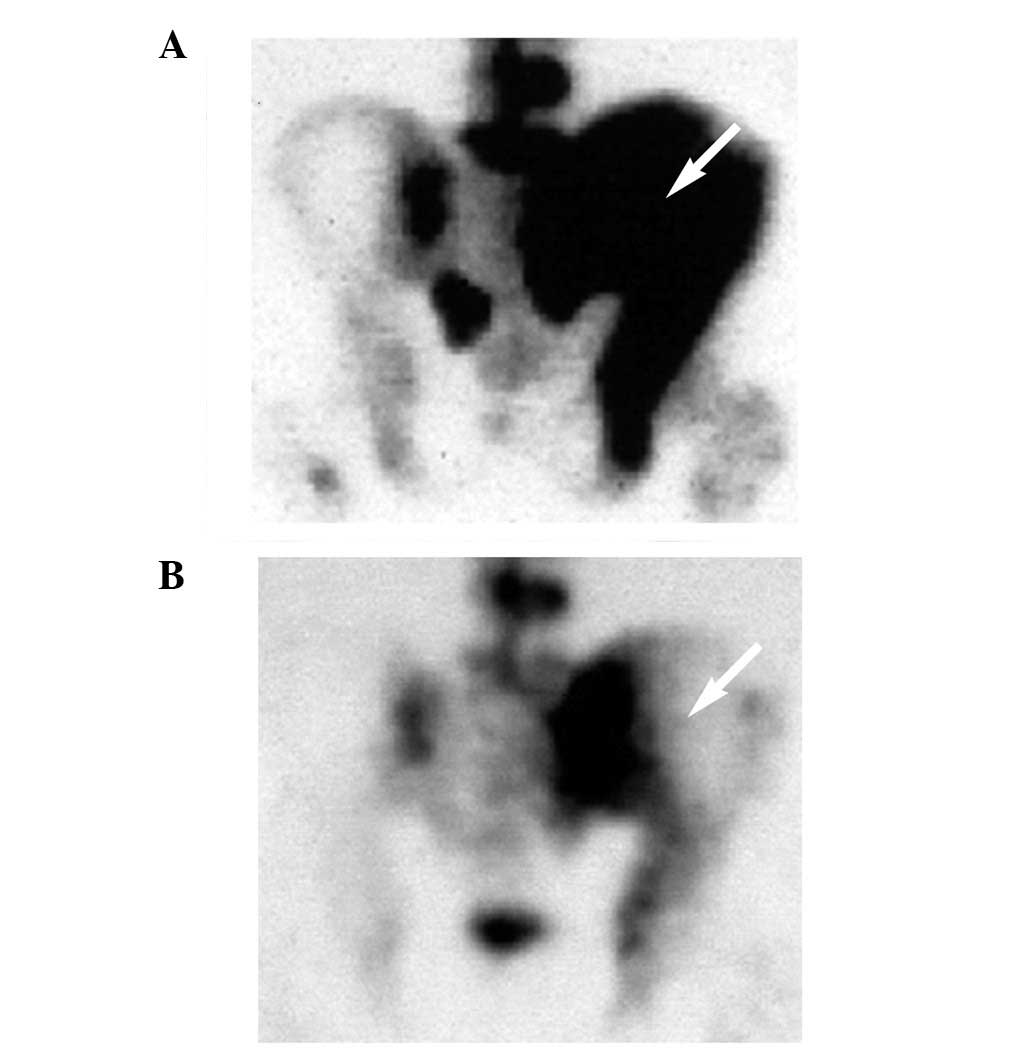
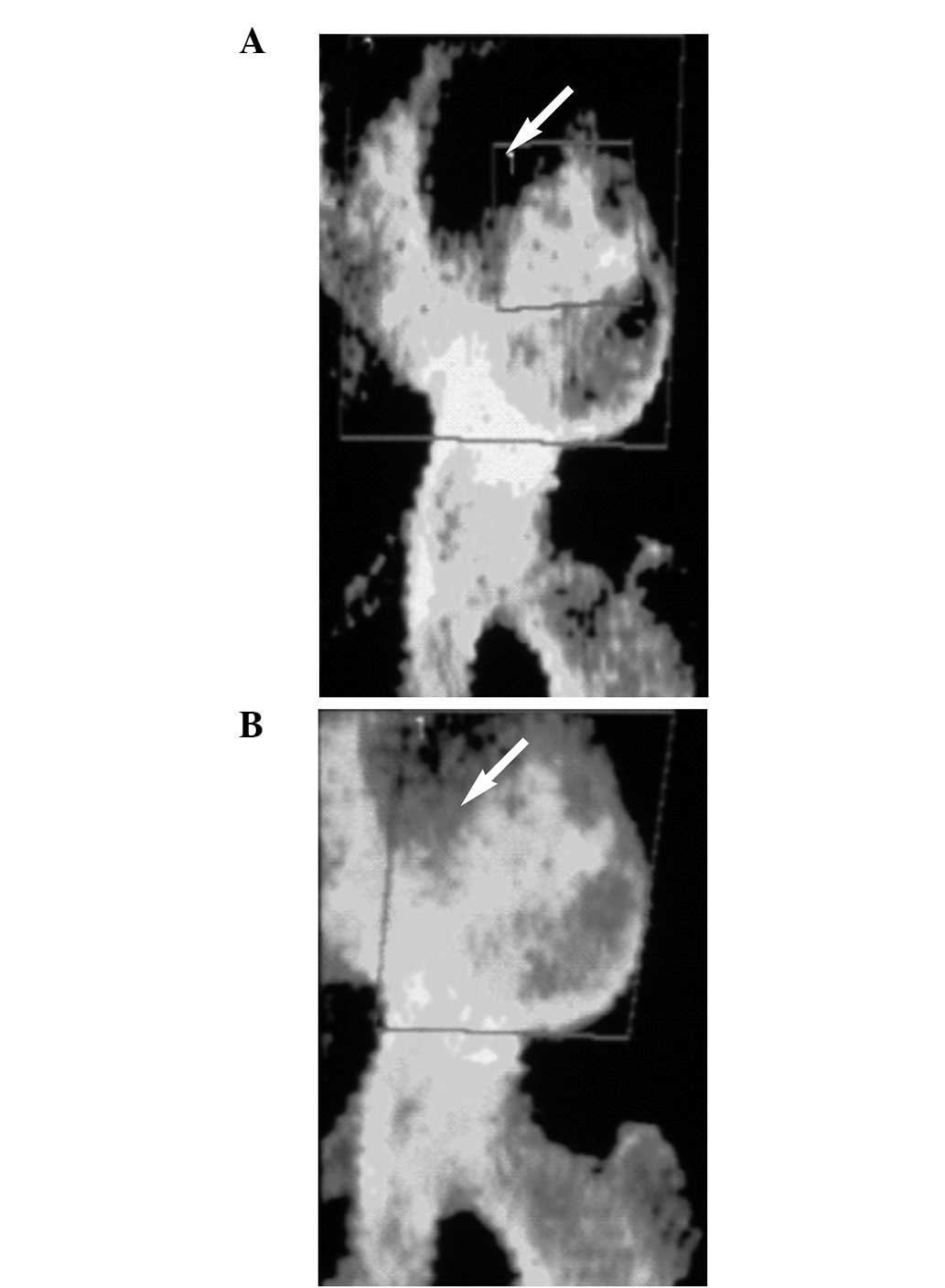
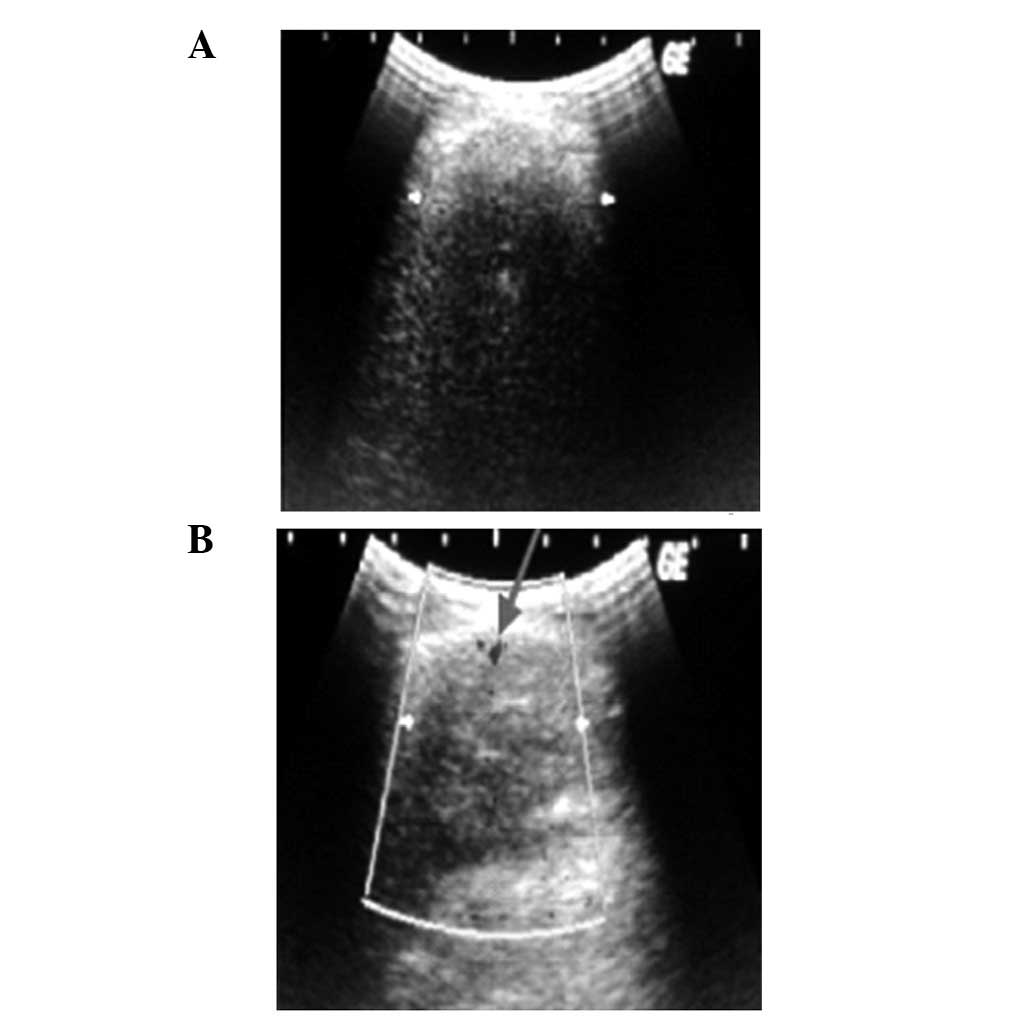
A 52-year-old male had previously been diagnosed with prostate cancer and had been castrated (treated by orchiectomy). Following surgery, he had not been treated with external beam radiotherapy or chemotherapy. The patient presented with severe pain at multiple sites, particularly in the right hip. In the preceding six months, he had been bedridden due to a limitation of movement. A 99mTc-methylene diphosphonate (99mTc-MDP) bone scan showed multiple areas of abnormal uptake, including L5, S1, the sacroiliac joints, the fourth sacral vertebra and particularly the right hip, ilium and ischium which were covered with huge metastatic lesions (Fig. 1A). These corresponded with the lytic metastases that were evident on the baseline radiography (Fig. 2A). The patient's quality of life was noticeably improved following eight consecutive treatments of 89Sr over 3 years (each dose 4 mCi, total dose 32 mCi or 1184 MBq). An improvement in mobility was demonstrated, as evidenced by the fact that he was now able to ride a bicycle. A comparison between 99mTc-MDP bone images taken prior to (Fig. 1A) and post-treatment (Fig. 1B) showed that the lesions on the left side of the fourth sacral vertebra had almost disappeared and that the range of the pelvic lesions on the right side was significantly reduced. The iliac spine was clearly visible and levels of prostate-specific antigen (PSA) had decreased by ∼69%. An X-ray revealed that the lesions were in a quiescent state. Evidence of a new osteosclerotic response at these lytic lesions was also identified (Fig. 2B). In summary, the extent of the lesions had been significantly reduced. The bone mineral density (BMD), bone mineral content (BMC) and total score (Tscore) value of the lesions prior to (Fig. 3A) and post-treatment (Fig. 3B) were as follows: BMD, 0.704 and 0.897 g/cm2; BMC, 13.02 and 81.78 g; and Tscore, −2.15 (62%) and −1.14 (80%), respectively. In comparison with the ultrasonic imaging results recorded prior to treatment (Fig. 4A), the results of ultrasonography post-treatment (Fig. 4B) showed that the previous lesions had become brightly echogenic and that there was angiogenesis throughout the bone. Prior to 89Sr therapy, the patient's white blood cell (WBC) and platelet counts were 5.8 and 109x109/l, respectively. Following the last 89Sr therapy, his WBC and platelet counts were 5.8 and 108x109/l, respectively. In this case, a reduction in leukocyte and thrombocyte levels was not observed.

Figure 1.

99mTc-MDP bone scan obtained (A) prior to treatment showed prominent accumulation of the isotope in the right hip, ilium and ischium, and (B) post-treatment, the extent of the original lesions was markedly reduced. Arrows indicate the huge osseous metastatic lesion of the left ilium. 99mTc-MDP, 99mTc-methylene diphosphonate.

Figure 2.

X-ray (A) prior to treatment showed marked lytic lesions corresponding with the baseline 99mTc-MDP bone scan and (B) post-treatment, a new osteosclerotic response at these lytic lesions was observed. Arrows indicate the huge osseous metastatic lesion of the left ilium. 99mTc-MDP, 99mTcmethylene diphosphonate.

Figure 3.

Comparison of BMD images of the left hip and ilium (A) prior to and (B) post-treatment indicated that the original lesions had been repaired and that the BMD value had increased. Arrows indicate the huge osseous metastatic lesion of the left ilium. BMD, bone mineral density.

Figure 4.

Comparison of ultrasonic images (A) prior to and (B) post-treatment showed that the original lesions had become brightly echogenic and that there was angiogenesis throughout the bone. The arrow indicates angiogenesis throughout the bone

The data showed that the patient had a partial response (PR) to the treatment; not only had the patient's analgesic requirements decreased by ∼75%, but his Karnofsky Performance Score (KPS) had also risen by 30%. The patient exhibited a substantial palliative response to 89Sr therapy. More meaningfully, the patient had survived for 4 years with few serious side-effects. The study was approved by the ethics committee of West China Hospital of Sichuan University, Chengdu, China. Written informed consent was obtained from the patient

Discussion

Bone metastases are a severe problem in oncology, as they are usually associated with pain (10). For the majority of patients, external beam radiotherapy provides excellent palliation for localized metastatic bone pain. However, when it comes to huge osseous metastases, particularly on the spine and pelvis, its therapeutic effect is far from ideal (11,12). Chemotherapy for huge metastases has not yet been shown to confer any survival benefit, although its role in the palliation of osseous metastases is indisputable. The limitation of chemotherapy for huge metastases is that the dose that may be directed to the huge bone metastasized sites is low, and increasing the dose or using multi-drug combination therapy may induce a greater antitumor response that is less effective. The non-metastatic survival and overall survival rates are not favorable, mainly due to multi-drug resistance (13,14).

Systemic radionuclide therapy is an optimal choice for the management of intractable metastatic bone pain. 89Sr is a bone-seeking radiopharmaceutical used for internal radiation therapy, with characteristics summarized as follows: i) it is able to provide pure β particles (electrons) with a maximum energy of 1.49 MeV, and a mean energy of 0.58 MeV, which have an apparent tumoricidal effect; ii) the mean range of β particles in metastatic lesions is short, ∼2.4 mm, and therefore 89Sr is likely to cause only minor radiation damage to the bone marrow and surrounding tissues; iii) the physical half-life of 89Sr is 50.5 days, so it may provide long-lasting relief (6,8,9,15,16). Following intravenous administration of the usual therapeutic dose of 4 mCi (148 MBq), 89Sr becomes concentrated in bone in proportion to osteoblastic activity (17). The uptake of the radiation is ten times greater in metastatic tumor lesions than in healthy bone. Clinical studies have shown that irradiation with the β-rays emitted from the radionuclide in vivo at the site of the bone tumor, with an absorbed dose of 800 cGy per time, has an effect on pain relief that is comparable to that of high-dose, long cycle radiation therapy (6,18).

Based on the physical and metabolic properties of 89Sr, generally following intravenous administration, a patient's systemic reaction should be mild. In the present study no significant decrease in hematological variables associated with 89Sr administration was observed. Therefore, from the evaluation of the imaging results in the present study and the previously mentioned multi-disciplinary approaches, the conclusion may be made that 89Sr treatment of huge osseous metastases in prostate carcinoma has a curative effect and is also relatively safe.

References

1. 

Heidenreich A, Aus G, Bolla M, et al: EAU guidelines on prostate cancer. Eur Urol. 53:68–80. 2008. View Article : Google Scholar : PubMed/NCBI

2. 

Jacobs SC: Spread of prostatic cancer to bone. Urology. 21:337–344. 1983. View Article : Google Scholar : PubMed/NCBI

3. 

Morris MJ and Scher HI: Clinical approaches to osseous metastases in prostate cancer. Oncologist. 8:161–173. 2003. View Article : Google Scholar : PubMed/NCBI

4. 

Hillegonds DJ, Franklin S, Shelton DK, Vijayakumar S and Vijayakumar V: The management of painful bone metastases with an emphasis on radionuclide therapy. J Natl Med Assoc. 99:785–794. 2007.PubMed/NCBI

5. 

Finlay IG, Mason MD and Shelley M: Radioisotopes for the palliation of metastatic bone cancer: a systematic review. Lancet Oncol. 6:392–400. 2005. View Article : Google Scholar : PubMed/NCBI

6. 

Blake GM, Zivanovic MA, McEwan AJ and Ackery DM: Sr-89 therapy: strontium kinetics in disseminated carcinoma of the prostate. Eur J Nucl Med. 12:447–454. 1986. View Article : Google Scholar : PubMed/NCBI

7. 

Giammarile F, Mognetti T and Resche I: Bone pain palliation with strontium-89 in cancer patients with bone metastases. Q J Nucl Med. 45:78–83. 2001.PubMed/NCBI

8. 

Robinson RG: Strontium-89-precursor targeted therapy for pain relief of blastic metastatic disease. Cancer. 72(Suppl S11): 3433–3435. 1993. View Article : Google Scholar : PubMed/NCBI

9. 

Dearnaley DP, Bayly RJ, A'Hern RP, Gadd J, Zivanovic MM and Lewington VJ: Palliation of bone metastases in prostate cancer. Hemibody irradiation or strontium-89? Clin Oncol (R Coll Radiol). 4:101–107. 1992. View Article : Google Scholar : PubMed/NCBI

10. 

Mercadante S and Fulfaro F: Management of painful bone metastases. Curr Opin Oncol. 19:308–314. 2007. View Article : Google Scholar

11. 

McQuay HJ, Collins SL, Carroll D and Moore RA: Radiotherapy for the palliation of painful bone metastases (Review). Cochrane Database Syst Rev. CD0017932000.

12. 

Di Lorenzo G, Autorino R, Ciardiello F, et al: External beam radiotherapy in bone metastatic prostate cancer: impact on patients' pain relief and quality of life. Oncol Rep. 10:399–404. 2003.

13. 

Polascik TJ: Bisphosphonates in oncology: evidence for the prevention of skeletal events in patients with bone metastases. Drug Des Devel Ther. 3:27–40. 2009.PubMed/NCBI

14. 

Major P: Optimal management of metastatic bone disease. Eur J Oncol Nurs. 11(Suppl 2): S32–S37. 2007. View Article : Google Scholar

15. 

Nightengale B, Brune M, Blizzard SP, Ashley-Johnson M and Slan S: Strontium chloride Sr 89 for treating pain from metastatic bone disease. Am J Health Syst Pharm. 52:2189–2195. 1995.PubMed/NCBI

16. 

Bauman G, Charette M, Reid R and Sathya J: Radiopharmaceuticals for the palliation of painful bone metastasis-a systemic review. Radiother Oncol. 75:258–270. 2005. View Article : Google Scholar : PubMed/NCBI

17. 

Li WB, Höllriegl V, Roth P and Oeh U: Influence of human biokinetics of strontium on internal ingestion dose of 90Sr and absorbed dose of 89Sr to organs and metastases. Radiat Environ Biophys. 47:225–239. 2008. View Article : Google Scholar : PubMed/NCBI

18. 

Ben-Josef E, Maughan RL, Vasan S and Porter AT: A direct measurement of strontium-89 activity in bone metastases. Nucl Med Commun. 16:452–456. 1995. View Article : Google Scholar : PubMed/NCBI

Related Articles

  • Abstract
  • View
  • Download
  • Twitter
Copy and paste a formatted citation
Spandidos Publications style
Zhang W, Zhao W, Jia Z and Deng H: Strontium-89 therapy for the treatment of huge osseous metastases in prostate carcinoma: A case report. Exp Ther Med 5: 608-610, 2013.
APA
Zhang, W., Zhao, W., Jia, Z., & Deng, H. (2013). Strontium-89 therapy for the treatment of huge osseous metastases in prostate carcinoma: A case report. Experimental and Therapeutic Medicine, 5, 608-610. https://doi.org/10.3892/etm.2012.807
MLA
Zhang, W., Zhao, W., Jia, Z., Deng, H."Strontium-89 therapy for the treatment of huge osseous metastases in prostate carcinoma: A case report". Experimental and Therapeutic Medicine 5.2 (2013): 608-610.
Chicago
Zhang, W., Zhao, W., Jia, Z., Deng, H."Strontium-89 therapy for the treatment of huge osseous metastases in prostate carcinoma: A case report". Experimental and Therapeutic Medicine 5, no. 2 (2013): 608-610. https://doi.org/10.3892/etm.2012.807
Copy and paste a formatted citation
x
Spandidos Publications style
Zhang W, Zhao W, Jia Z and Deng H: Strontium-89 therapy for the treatment of huge osseous metastases in prostate carcinoma: A case report. Exp Ther Med 5: 608-610, 2013.
APA
Zhang, W., Zhao, W., Jia, Z., & Deng, H. (2013). Strontium-89 therapy for the treatment of huge osseous metastases in prostate carcinoma: A case report. Experimental and Therapeutic Medicine, 5, 608-610. https://doi.org/10.3892/etm.2012.807
MLA
Zhang, W., Zhao, W., Jia, Z., Deng, H."Strontium-89 therapy for the treatment of huge osseous metastases in prostate carcinoma: A case report". Experimental and Therapeutic Medicine 5.2 (2013): 608-610.
Chicago
Zhang, W., Zhao, W., Jia, Z., Deng, H."Strontium-89 therapy for the treatment of huge osseous metastases in prostate carcinoma: A case report". Experimental and Therapeutic Medicine 5, no. 2 (2013): 608-610. https://doi.org/10.3892/etm.2012.807
Follow us
  • Twitter
  • LinkedIn
  • Facebook
About
  • Spandidos Publications
  • Careers
  • Cookie Policy
  • Privacy Policy
How can we help?
  • Help
  • Live Chat
  • Contact
  • Email to our Support Team