Spandidos Publications Logo
  • About
    • About Spandidos
    • Aims and Scopes
    • Abstracting and Indexing
    • Editorial Policies
    • Reprints and Permissions
    • Job Opportunities
    • Terms and Conditions
    • Contact
  • Journals
    • All Journals
    • Oncology Letters
      • Oncology Letters
      • Information for Authors
      • Editorial Policies
      • Editorial Board
      • Aims and Scope
      • Abstracting and Indexing
      • Bibliographic Information
      • Archive
    • International Journal of Oncology
      • International Journal of Oncology
      • Information for Authors
      • Editorial Policies
      • Editorial Board
      • Aims and Scope
      • Abstracting and Indexing
      • Bibliographic Information
      • Archive
    • Molecular and Clinical Oncology
      • Molecular and Clinical Oncology
      • Information for Authors
      • Editorial Policies
      • Editorial Board
      • Aims and Scope
      • Abstracting and Indexing
      • Bibliographic Information
      • Archive
    • Experimental and Therapeutic Medicine
      • Experimental and Therapeutic Medicine
      • Information for Authors
      • Editorial Policies
      • Editorial Board
      • Aims and Scope
      • Abstracting and Indexing
      • Bibliographic Information
      • Archive
    • International Journal of Molecular Medicine
      • International Journal of Molecular Medicine
      • Information for Authors
      • Editorial Policies
      • Editorial Board
      • Aims and Scope
      • Abstracting and Indexing
      • Bibliographic Information
      • Archive
    • Biomedical Reports
      • Biomedical Reports
      • Information for Authors
      • Editorial Policies
      • Editorial Board
      • Aims and Scope
      • Abstracting and Indexing
      • Bibliographic Information
      • Archive
    • Oncology Reports
      • Oncology Reports
      • Information for Authors
      • Editorial Policies
      • Editorial Board
      • Aims and Scope
      • Abstracting and Indexing
      • Bibliographic Information
      • Archive
    • Molecular Medicine Reports
      • Molecular Medicine Reports
      • Information for Authors
      • Editorial Policies
      • Editorial Board
      • Aims and Scope
      • Abstracting and Indexing
      • Bibliographic Information
      • Archive
    • World Academy of Sciences Journal
      • World Academy of Sciences Journal
      • Information for Authors
      • Editorial Policies
      • Editorial Board
      • Aims and Scope
      • Abstracting and Indexing
      • Bibliographic Information
      • Archive
    • International Journal of Functional Nutrition
      • International Journal of Functional Nutrition
      • Information for Authors
      • Editorial Policies
      • Editorial Board
      • Aims and Scope
      • Abstracting and Indexing
      • Bibliographic Information
      • Archive
    • International Journal of Epigenetics
      • International Journal of Epigenetics
      • Information for Authors
      • Editorial Policies
      • Editorial Board
      • Aims and Scope
      • Abstracting and Indexing
      • Bibliographic Information
      • Archive
    • Medicine International
      • Medicine International
      • Information for Authors
      • Editorial Policies
      • Editorial Board
      • Aims and Scope
      • Abstracting and Indexing
      • Bibliographic Information
      • Archive
  • Articles
  • Information
    • Information for Authors
    • Information for Reviewers
    • Information for Librarians
    • Information for Advertisers
    • Conferences
  • Language Editing
Spandidos Publications Logo
  • About
    • About Spandidos
    • Aims and Scopes
    • Abstracting and Indexing
    • Editorial Policies
    • Reprints and Permissions
    • Job Opportunities
    • Terms and Conditions
    • Contact
  • Journals
    • All Journals
    • Biomedical Reports
      • Information for Authors
      • Editorial Policies
      • Editorial Board
      • Aims and Scope
      • Abstracting and Indexing
      • Bibliographic Information
      • Archive
    • Experimental and Therapeutic Medicine
      • Information for Authors
      • Editorial Policies
      • Editorial Board
      • Aims and Scope
      • Abstracting and Indexing
      • Bibliographic Information
      • Archive
    • International Journal of Epigenetics
      • Information for Authors
      • Editorial Policies
      • Editorial Board
      • Aims and Scope
      • Abstracting and Indexing
      • Bibliographic Information
      • Archive
    • International Journal of Functional Nutrition
      • Information for Authors
      • Editorial Policies
      • Editorial Board
      • Aims and Scope
      • Abstracting and Indexing
      • Bibliographic Information
      • Archive
    • International Journal of Molecular Medicine
      • Information for Authors
      • Editorial Policies
      • Editorial Board
      • Aims and Scope
      • Abstracting and Indexing
      • Bibliographic Information
      • Archive
    • International Journal of Oncology
      • Information for Authors
      • Editorial Policies
      • Editorial Board
      • Aims and Scope
      • Abstracting and Indexing
      • Bibliographic Information
      • Archive
    • Medicine International
      • Information for Authors
      • Editorial Policies
      • Editorial Board
      • Aims and Scope
      • Abstracting and Indexing
      • Bibliographic Information
      • Archive
    • Molecular and Clinical Oncology
      • Information for Authors
      • Editorial Policies
      • Editorial Board
      • Aims and Scope
      • Abstracting and Indexing
      • Bibliographic Information
      • Archive
    • Molecular Medicine Reports
      • Information for Authors
      • Editorial Policies
      • Editorial Board
      • Aims and Scope
      • Abstracting and Indexing
      • Bibliographic Information
      • Archive
    • Oncology Letters
      • Information for Authors
      • Editorial Policies
      • Editorial Board
      • Aims and Scope
      • Abstracting and Indexing
      • Bibliographic Information
      • Archive
    • Oncology Reports
      • Information for Authors
      • Editorial Policies
      • Editorial Board
      • Aims and Scope
      • Abstracting and Indexing
      • Bibliographic Information
      • Archive
    • World Academy of Sciences Journal
      • Information for Authors
      • Editorial Policies
      • Editorial Board
      • Aims and Scope
      • Abstracting and Indexing
      • Bibliographic Information
      • Archive
  • Articles
  • Information
    • For Authors
    • For Reviewers
    • For Librarians
    • For Advertisers
    • Conferences
  • Language Editing
Login Register Submit
  • This site uses cookies
  • You can change your cookie settings at any time by following the instructions in our Cookie Policy. To find out more, you may read our Privacy Policy.

    I agree
Search articles by DOI, keyword, author or affiliation
Search
Advanced Search
presentation
Molecular and Clinical Oncology
Join Editorial Board Propose a Special Issue
Print ISSN: 2049-9450 Online ISSN: 2049-9469
Journal Cover
March-2015 Volume 3 Issue 2

Full Size Image

Sign up for eToc alerts
Recommend to Library

Journals

International Journal of Molecular Medicine

International Journal of Molecular Medicine

International Journal of Molecular Medicine is an international journal devoted to molecular mechanisms of human disease.

International Journal of Oncology

International Journal of Oncology

International Journal of Oncology is an international journal devoted to oncology research and cancer treatment.

Molecular Medicine Reports

Molecular Medicine Reports

Covers molecular medicine topics such as pharmacology, pathology, genetics, neuroscience, infectious diseases, molecular cardiology, and molecular surgery.

Oncology Reports

Oncology Reports

Oncology Reports is an international journal devoted to fundamental and applied research in Oncology.

Experimental and Therapeutic Medicine

Experimental and Therapeutic Medicine

Experimental and Therapeutic Medicine is an international journal devoted to laboratory and clinical medicine.

Oncology Letters

Oncology Letters

Oncology Letters is an international journal devoted to Experimental and Clinical Oncology.

Biomedical Reports

Biomedical Reports

Explores a wide range of biological and medical fields, including pharmacology, genetics, microbiology, neuroscience, and molecular cardiology.

Molecular and Clinical Oncology

Molecular and Clinical Oncology

International journal addressing all aspects of oncology research, from tumorigenesis and oncogenes to chemotherapy and metastasis.

World Academy of Sciences Journal

World Academy of Sciences Journal

Multidisciplinary open-access journal spanning biochemistry, genetics, neuroscience, environmental health, and synthetic biology.

International Journal of Functional Nutrition

International Journal of Functional Nutrition

Open-access journal combining biochemistry, pharmacology, immunology, and genetics to advance health through functional nutrition.

International Journal of Epigenetics

International Journal of Epigenetics

Publishes open-access research on using epigenetics to advance understanding and treatment of human disease.

Medicine International

Medicine International

An International Open Access Journal Devoted to General Medicine.

Journal Cover
March-2015 Volume 3 Issue 2

Full Size Image

Sign up for eToc alerts
Recommend to Library

  • Article
  • Citations
    • Cite This Article
    • Download Citation
    • Create Citation Alert
    • Remove Citation Alert
    • Cited By
  • Similar Articles
    • Related Articles (in Spandidos Publications)
    • Similar Articles (Google Scholar)
    • Similar Articles (PubMed)
  • Download PDF
  • Download XML
  • View XML
Article

Targeted treatment with pazopanib in metastatic soft tissue sarcoma: Nearly complete response in two cases

  • Authors:
    • Ali Murat Sedef
    • Fatih Köse
    • Özlem Doğan
    • Tarkan Ergün
    • Ahmet Sezer
    • Hüseyin Mertsoylu
    • Sadık Muallaoğlu
    • Ayberk Beşen
    • Özgur Özyılkan
  • View Affiliations / Copyright

    Affiliations: Department of Medical Oncology, Baskent University Adana Hospital, Yuregır, Adana, Turkey, Department of Internal Medicine, Baskent University Adana Hospital, Yuregır, Adana, Turkey, Department of Radiology, Baskent University Adana Hospital, Yuregır, Adana, Turkey
  • Pages: 400-402
    |
    Published online on: November 13, 2014
       https://doi.org/10.3892/mco.2014.456
  • Expand metrics +
Metrics: Total Views: 0 (Spandidos Publications: | PMC Statistics: )
Metrics: Total PDF Downloads: 0 (Spandidos Publications: | PMC Statistics: )
Cited By (CrossRef): 0 citations Loading Articles...

This article is mentioned in:


Abstract

Soft tissue sarcomas (STS) are a group of rare mesenchymal cancers that include approximately 50 histological types and account for 1% of all adult cancers. The standard curative treatment option for localized disease is surgical resection and, if a surgically removed tumor exhibits high‑risk characteristics, adjuvant chemotherapy and radiotherapy may be administered. Sarcoma presenting at an advanced stage has a dismal prognosis and survival has not markedly improved over the last 20 years. The standard first-line treatment for advanced sts, other than gastrointestinal stromal tumors, is cytotoxic chemotherapy. Therapies targeting pro‑angiogenic factors have been a focus of drug development for STS over the last few years. Pazopanib, a multitargeted tyrosine kinase inhibitor, is a novel treatment option for patients with metastatic sts in the second‑line setting. This is a presentation of 2 case reports of patients with metastatic sts who responded well to treatment with pazopanib.

Introduction

Soft tissue sarcomas (STS) are a heterogeneous group of rare tumors that arise from mesenchymal cells at various body sites (1, 2). The malignant precursor cell(s) may differentiate along one or several lineages, such as muscle, adipose, fibrous, cartilage, nerve or vascular tissue. STS has >50 distinct histological subtypes, with leiomyosarcoma, liposarcoma, synovial sarcoma, undifferentiated pleomorphic sarcoma and malignant peripheral nerve sheath tumors being among the most common (3). STS occurs accounts for ∼1% of malignancies in adults and 2% of the overall cancer mortality (4, 5). Approximately half of the patients diagnosed with STS present with advanced/metastatic cancer and eventually succumb to their disease (1, 6). The median overall survival for advanced-stage disease was reported to range between 11 and 18 months (7, 8).

For advanced-stage STS, judicious use of cytotoxic therapy provides meaningful palliation and may prolong survival. The selection of systemic therapy may be individualized based upon several factors, including tumor histology, health status and preferences of the patients (2, 8, 9). The European Society for Medical Oncology and the National Comprehensive Cancer Network treatment guidelines recommend anthracycline-based chemotherapy, primarily with doxorubicin, either as monotherapy or in combination with ifosfamide, as first-line treatment for the most advanced STS subtypes (9, 10). Pazopanib is a novel treatment modality and has been approved by the Food and Drug Administration and the European Medicines Agency as second-line treatment after a phase III trial of this drug reported a statistically significant increase in progression-free survival. Of note, only 6% of the patients exhibit a tumor response and in the majority of the cases, stable disease may be achieved. There remains the question of whether this drug may be used in highly symptomatic cases, as in some cases response rate may be a more important goal than survival benefit. In this study, we present 2 case reports of patients with STS who achieved a nearly complete radiological response to pazopanib.

Case 1

A 25-year-old female patient presented with a soft tissue mass at the level of right knee that had developed 3 years prior. The patient's past history was negative for systemic diseases and the laboratory evaluation was normal. We used positron emission tomography (PET)- computed tomography (CT) for initial staging and to exclude systemic metastases. The PET-CT showed a hypermetabolic lesion close to the right knee joint, filling the popliteal area, sized 110×82×160 mm (maximum standard uptake value, 10.7) (Fig. 1). The histopathological evaluation was compatible with a malignant mesenchymal tumor, namely a synovial sarcoma. The patient was treated with systemic neoadjuvant chemotherapy, followed by surgical resection in August, 2010. The patient also received adjuvant radiotherapy.

Figure 1.

Case 1: Positron emission tomography-computed tomography showing a primary hypermetabolic lesion, sized 110×82×160 mm (maximum standard uptake value, 10.7), fil ling the entire popliteal fossa.

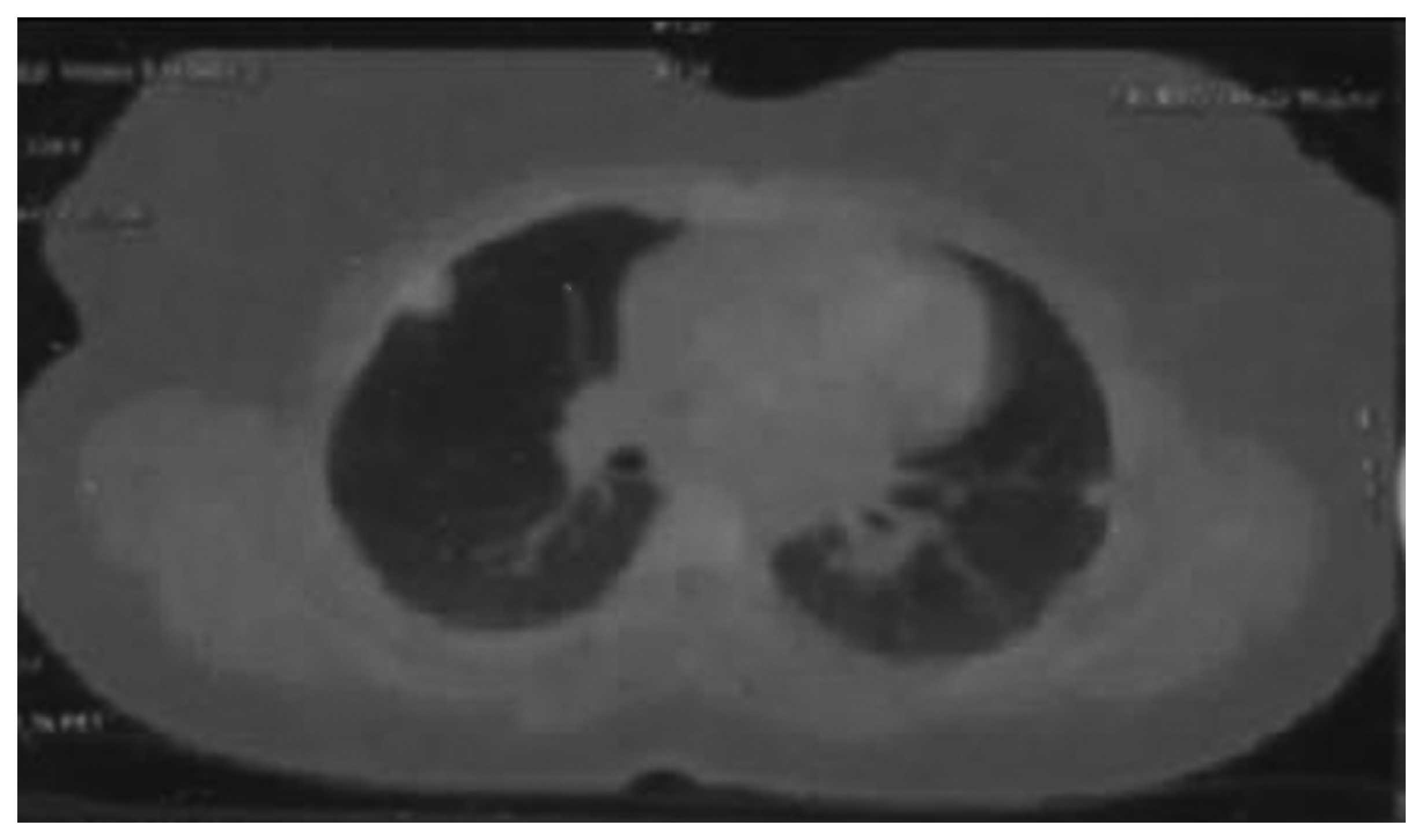
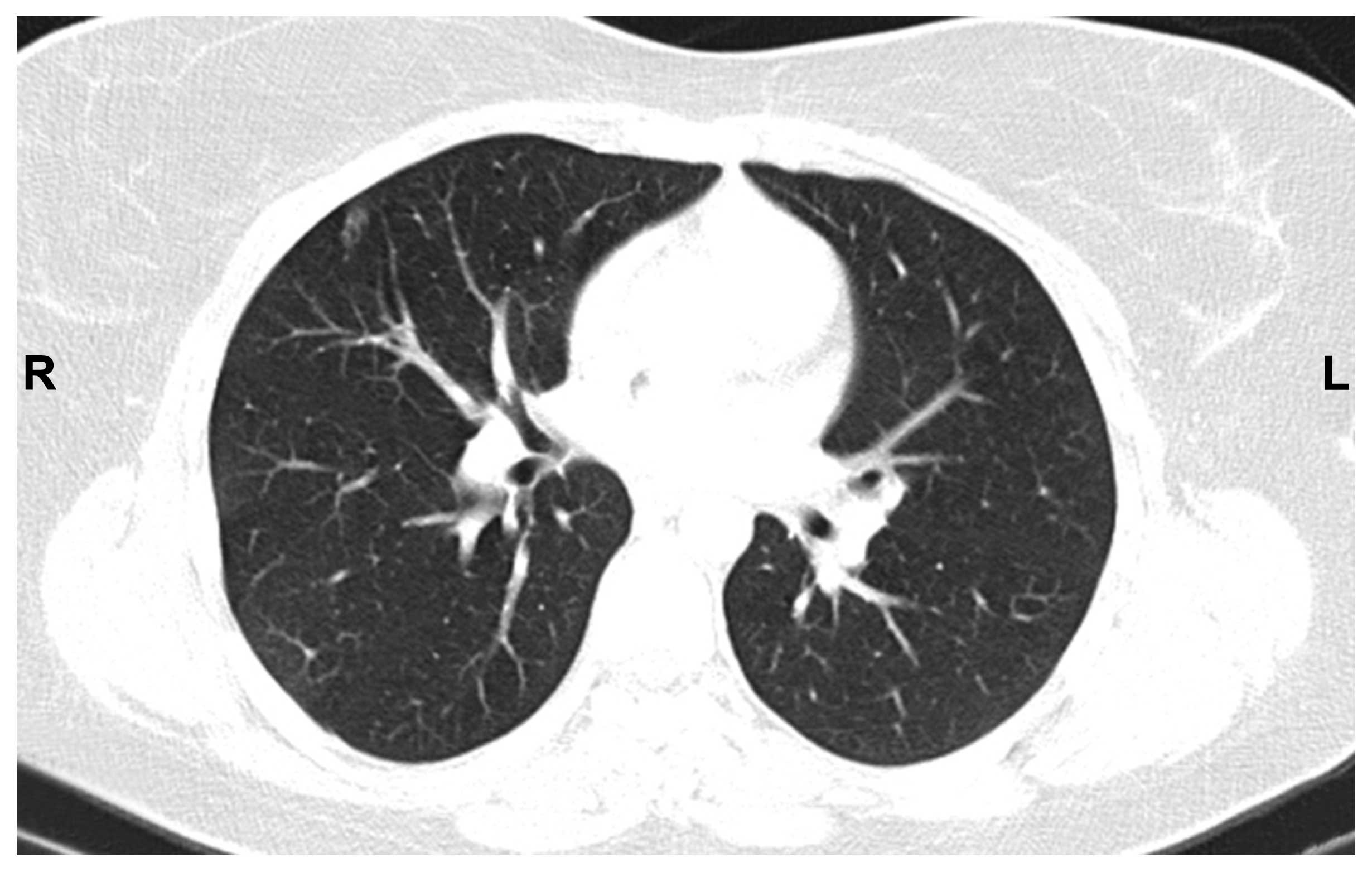
In September, 2012, the patient presented with dyspnea and her detailed evaluation with PET-CT revealed lung metastases, accompanied by right iliac chain and right inguinal lymphadenopathy (Fig. 2). The patient received treatment with a gemcitabine-docetaxel combination regimen, but the disease progressed. Subsequently, pazopanib (800 mg/day) was initiated in January, 2013. The radiological evaluation in July, 2013 was compatible with nearly complete response (Figs. 3).

Figure 2.

Case 1: Positron emission tomography-computed tomography revealed multiple hypermetabolic nodular lesions compatible with lung metastases.

Figure 3.

Case 1: Computed tomography evaluation following treatment with pazopanib revealed a good partial response.

Case 2

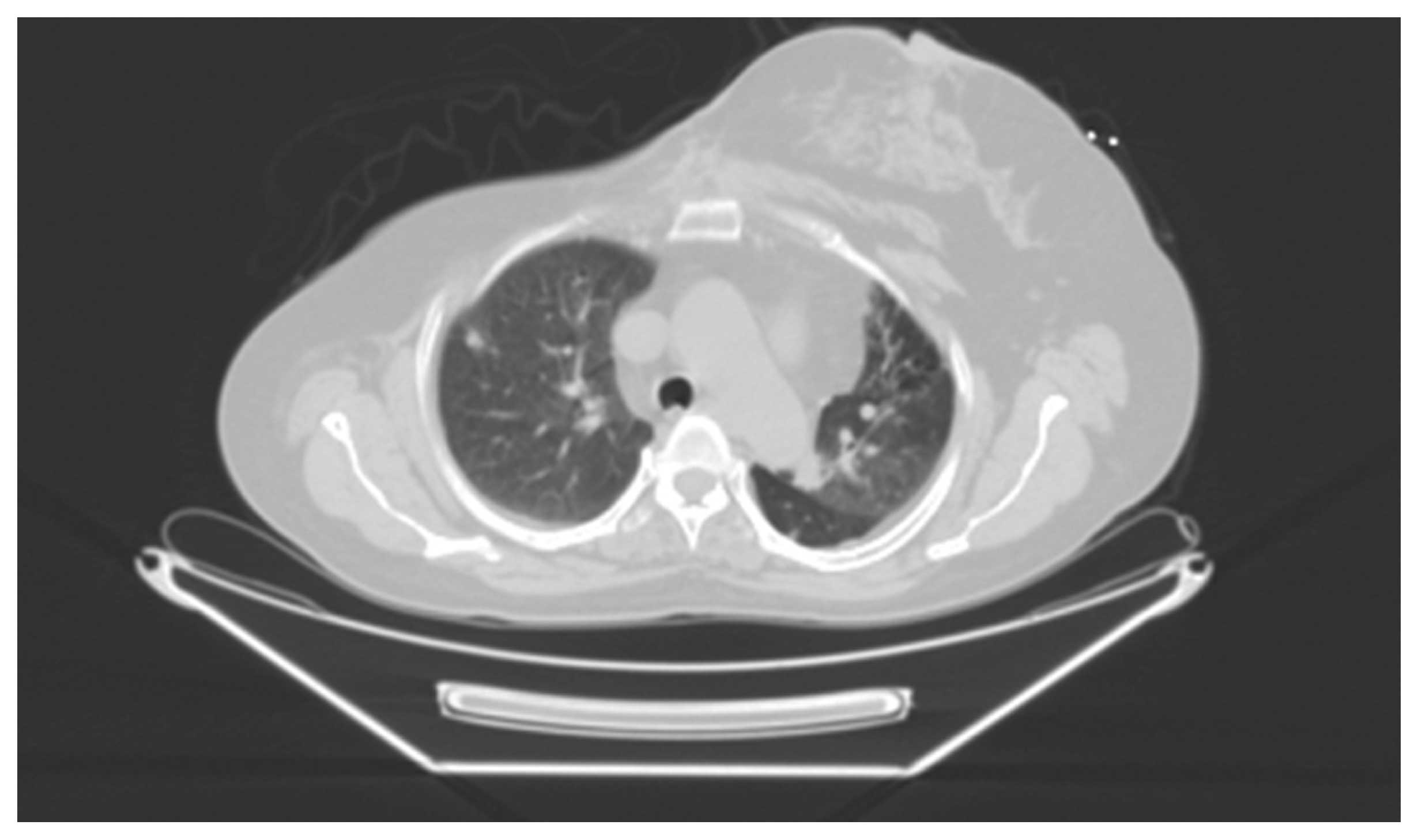
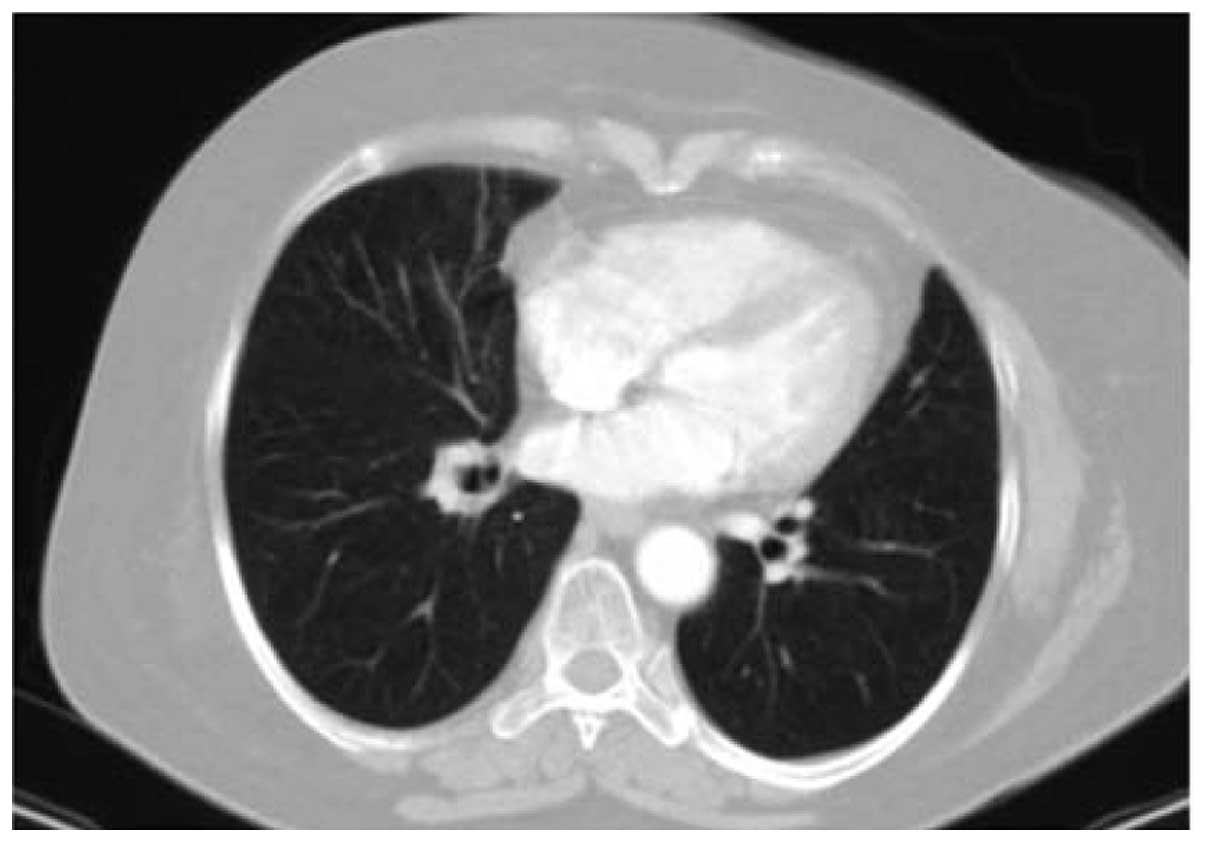
A 50-year-old female patient presented with a right breast mass in July, 2010. The preoperative biopsy was compatible with the diagnosis of primary breast leiomyosarcoma and a right mastectomy was performed. The patient was treated with 6 courses of doxorubicin-based adjuvant chemotherapy. During surveillance, the patient presented with progressive dyspnea in September, 2012 and the PET-CT scan revealed lytic bone lesions and hypermetabolic metastatic lung nodules (Fig. 4). At the second-line setting, the patient was treated with docetaxel-gemcitabine and the progression-free survival with this regimen was 6 months; the maximal response, as evaluated by PET-CT, was stable disease. The patient received palliative radiotherapy to the bone metastases in March, 2013. The radiological evaluation following radiotherapy showed progression of the lung metastases. Subsequently, pazopanib (800 mg/day) was initiated in May, 2013. The radiological evaluation in July, 2013 was compatible with nearly complete response (Fig. 5).

Figure 4.

Case 2: Computed tomography evaluation demonstra ting hypermetabolic osteolytic bone lesions and multiple metastatic lung nodules.

Figure 5.

Case 2: Thoracic computed tomography imaging for response evaluation was compatible with good partial response or nearly complete radiological response.

Discussion

Metastatic STS is an incurable disease and very little improvement regarding the treatment of advanced STS has been achieved over the last 2 decades, excluding imatinib treatment for gastrointestinal stromal tumors (GIST). Pazopanib, which is a synthetic indazolpyrimidine, is a multitargeted tyrosine kinase inhibitor, exhibiting activity against the vascular endothelial growth factor receptors 1, 2 and 3, and the platelet-derived growth factor receptor (11). Single-agent pazopanib was found to be effective against various STS subtypes in a phase II clinical trial (12). Subsequently, a registration phase III study (PALETTE trial) was designed to compare pazopanib (800 mg daily) vs. placebo in 369 patients with a variety of histological subtypes, excluding liposarcomas or GIST, in the second-line setting (13). There was a statistically significant increase in PFS in the pazopanib group (4.6 vs. 1.6 months) and the survival benefit was consistent across all histological subtypes (14). However, although pazopanib significantly increased PFS in that study, the objective response rate was quite low and the best overall response was partial response in 6% of the pazopanib group. When evaluating pazopanib in the light of those trials, we may not recommend pazopanib for patients in need of fast symptomatic relief. However, when we used pazopanib in our first 2 cases as third-line treatment, a nearly complete response was achieved. On analyzing the demographic, clinical and histopathological characteristics of these 2 cases, including drug-related side effects, we were unable to identify a common point that may help explain why these 2 patients exhibited such a strong response to pazopanib.

In conclusion, we reported 2 cases that exhibited an unexpected, nearly complete response to anti-angiogenic treatment, with the aim to raise the question of whether we can define a specific group of patients who respond well to treatment with pazopanib.

References

1 

Clark MA, Fisher C, Judson I and Thomas JM: Soft-tissue sarcomas in adults. N Engl J Med. 353:701–711. 2005. View Article : Google Scholar : PubMed/NCBI

2 

Casali PG and Blay JYESMO/CONTICANET/EUROBONET Consensus Panel of Experts: Soft tissue sarcomas: ESMO Clinical Practice Guidelines for diagnosis, treatment and follow-up. Ann Oncol. 21 (Suppl 5):v198–v203. 2010. View Article : Google Scholar : PubMed/NCBI

3 

Cormier JN and Pollock RE: Soft tissue sarcomas. CA Cancer J Clin. 54:94–109. 2004. View Article : Google Scholar : PubMed/NCBI

4 

Jain A, Sajeevan KV, Babu KG and Lakshmaiah KC: Chemotherapy in adult soft tissue sarcoma. Indian J Cancer. 46:274–287. 2009. View Article : Google Scholar : PubMed/NCBI

5 

Weiss SW and Goldblum JR: General considerationsEnzinger and Weiss's Soft Tissue Tumors. Weiss SW and Goldblum JR: 4th. CV Mosby; St. Louis, MO: pp. 1–19. 2001

6 

Schöffski P: Pazopanib in the treatment of soft tissue sarcoma. Expert Rev Anticancer Ther. 12:711–723. 2012. View Article : Google Scholar : PubMed/NCBI

7 

Italiano A, Mathoulin-Pelissier S, Cesne AL, Terrier P, Bonvalot S, Collin F, Michels JJ, Blay JY, Coindre JM and Bui B: Trends in survival for patients with metastatic soft-tissue sarcoma. Cancer. 117:1049–1054. 2011. View Article : Google Scholar : PubMed/NCBI

8 

Grimer R, Judson I, Peake D and Seddon B: Guidelines for the management of soft tissue sarcomas. Sarcoma. 2010:5061822010. View Article : Google Scholar : PubMed/NCBI

9 

Spira AI and Ettinger DS: The use of chemotherapy in soft-tissue sarcomas. Oncologist. 7:348–359. 2002. View Article : Google Scholar : PubMed/NCBI

10 

NCCN, . NCCN Clinical Practice Guidelines in Oncology: Soft Tissue Sarcoma, Volume V.1. 2011. National Comprehensive Cancer Network; 2011

11 

Schutz FA, Choueiri TK and Sternberg CN: Pazopanib: clinical development of a potent anti-angiogenic drug. Crit Rev Oncol Hematol. 77:163–171. 2011. View Article : Google Scholar : PubMed/NCBI

12 

Sleijfer S, Ray-Coquard I, Papai Z, et al: Pazopanib, a multikinase angiogenesis inhibitor, in patients with relapsed or refractory advanced soft tissue sarcoma: a phase II study from the European organisation for research and treatment of cancer-soft tissue and bone sarcoma group (EORTC study 62043). J Clin Oncol. 27:31262009. View Article : Google Scholar : PubMed/NCBI

13 

Van der Graaf WT, Blay JY, Chawla SP, et al: Pazopanib for metastatic soft-tissue sarcoma (PALETTE): a randomised, double-blind, placebo-controlled phase 3 trial. Lancet. 379:1879–1886. 2012. View Article : Google Scholar : PubMed/NCBI

14 

Van Der Graaf W, Blay JY, Chawla SP, et al: PALETTE: Final overall survival (OS) data and predictive factors for OS of EORTC 62072/GSK VEG110727, a randomized, double-blind phase III trial of pazopanib versus placebo in advanced soft tissue sarcoma (STS) patients. J Clin Oncol. 30:abs. 100092012.

Related Articles

  • Abstract
  • View
  • Download
  • Twitter
Copy and paste a formatted citation
Spandidos Publications style
Sedef AM, Köse F, Doğan Ö, Ergün T, Sezer A, Mertsoylu H, Muallaoğlu S, Beşen A and Özyılkan Ö: Targeted treatment with pazopanib in metastatic soft tissue sarcoma: Nearly complete response in two cases. Mol Clin Oncol 3: 400-402, 2015.
APA
Sedef, A.M., Köse, F., Doğan, Ö., Ergün, T., Sezer, A., Mertsoylu, H. ... Özyılkan, Ö. (2015). Targeted treatment with pazopanib in metastatic soft tissue sarcoma: Nearly complete response in two cases. Molecular and Clinical Oncology, 3, 400-402. https://doi.org/10.3892/mco.2014.456
MLA
Sedef, A. M., Köse, F., Doğan, Ö., Ergün, T., Sezer, A., Mertsoylu, H., Muallaoğlu, S., Beşen, A., Özyılkan, Ö."Targeted treatment with pazopanib in metastatic soft tissue sarcoma: Nearly complete response in two cases". Molecular and Clinical Oncology 3.2 (2015): 400-402.
Chicago
Sedef, A. M., Köse, F., Doğan, Ö., Ergün, T., Sezer, A., Mertsoylu, H., Muallaoğlu, S., Beşen, A., Özyılkan, Ö."Targeted treatment with pazopanib in metastatic soft tissue sarcoma: Nearly complete response in two cases". Molecular and Clinical Oncology 3, no. 2 (2015): 400-402. https://doi.org/10.3892/mco.2014.456
Copy and paste a formatted citation
x
Spandidos Publications style
Sedef AM, Köse F, Doğan Ö, Ergün T, Sezer A, Mertsoylu H, Muallaoğlu S, Beşen A and Özyılkan Ö: Targeted treatment with pazopanib in metastatic soft tissue sarcoma: Nearly complete response in two cases. Mol Clin Oncol 3: 400-402, 2015.
APA
Sedef, A.M., Köse, F., Doğan, Ö., Ergün, T., Sezer, A., Mertsoylu, H. ... Özyılkan, Ö. (2015). Targeted treatment with pazopanib in metastatic soft tissue sarcoma: Nearly complete response in two cases. Molecular and Clinical Oncology, 3, 400-402. https://doi.org/10.3892/mco.2014.456
MLA
Sedef, A. M., Köse, F., Doğan, Ö., Ergün, T., Sezer, A., Mertsoylu, H., Muallaoğlu, S., Beşen, A., Özyılkan, Ö."Targeted treatment with pazopanib in metastatic soft tissue sarcoma: Nearly complete response in two cases". Molecular and Clinical Oncology 3.2 (2015): 400-402.
Chicago
Sedef, A. M., Köse, F., Doğan, Ö., Ergün, T., Sezer, A., Mertsoylu, H., Muallaoğlu, S., Beşen, A., Özyılkan, Ö."Targeted treatment with pazopanib in metastatic soft tissue sarcoma: Nearly complete response in two cases". Molecular and Clinical Oncology 3, no. 2 (2015): 400-402. https://doi.org/10.3892/mco.2014.456
Follow us
  • Twitter
  • LinkedIn
  • Facebook
About
  • Spandidos Publications
  • Careers
  • Cookie Policy
  • Privacy Policy
How can we help?
  • Help
  • Live Chat
  • Contact
  • Email to our Support Team