Spandidos Publications Logo
  • About
    • About Spandidos
    • Aims and Scopes
    • Abstracting and Indexing
    • Editorial Policies
    • Reprints and Permissions
    • Job Opportunities
    • Terms and Conditions
    • Contact
  • Journals
    • All Journals
    • Oncology Letters
      • Oncology Letters
      • Information for Authors
      • Editorial Policies
      • Editorial Board
      • Aims and Scope
      • Abstracting and Indexing
      • Bibliographic Information
      • Archive
    • International Journal of Oncology
      • International Journal of Oncology
      • Information for Authors
      • Editorial Policies
      • Editorial Board
      • Aims and Scope
      • Abstracting and Indexing
      • Bibliographic Information
      • Archive
    • Molecular and Clinical Oncology
      • Molecular and Clinical Oncology
      • Information for Authors
      • Editorial Policies
      • Editorial Board
      • Aims and Scope
      • Abstracting and Indexing
      • Bibliographic Information
      • Archive
    • Experimental and Therapeutic Medicine
      • Experimental and Therapeutic Medicine
      • Information for Authors
      • Editorial Policies
      • Editorial Board
      • Aims and Scope
      • Abstracting and Indexing
      • Bibliographic Information
      • Archive
    • International Journal of Molecular Medicine
      • International Journal of Molecular Medicine
      • Information for Authors
      • Editorial Policies
      • Editorial Board
      • Aims and Scope
      • Abstracting and Indexing
      • Bibliographic Information
      • Archive
    • Biomedical Reports
      • Biomedical Reports
      • Information for Authors
      • Editorial Policies
      • Editorial Board
      • Aims and Scope
      • Abstracting and Indexing
      • Bibliographic Information
      • Archive
    • Oncology Reports
      • Oncology Reports
      • Information for Authors
      • Editorial Policies
      • Editorial Board
      • Aims and Scope
      • Abstracting and Indexing
      • Bibliographic Information
      • Archive
    • Molecular Medicine Reports
      • Molecular Medicine Reports
      • Information for Authors
      • Editorial Policies
      • Editorial Board
      • Aims and Scope
      • Abstracting and Indexing
      • Bibliographic Information
      • Archive
    • World Academy of Sciences Journal
      • World Academy of Sciences Journal
      • Information for Authors
      • Editorial Policies
      • Editorial Board
      • Aims and Scope
      • Abstracting and Indexing
      • Bibliographic Information
      • Archive
    • International Journal of Functional Nutrition
      • International Journal of Functional Nutrition
      • Information for Authors
      • Editorial Policies
      • Editorial Board
      • Aims and Scope
      • Abstracting and Indexing
      • Bibliographic Information
      • Archive
    • International Journal of Epigenetics
      • International Journal of Epigenetics
      • Information for Authors
      • Editorial Policies
      • Editorial Board
      • Aims and Scope
      • Abstracting and Indexing
      • Bibliographic Information
      • Archive
    • Medicine International
      • Medicine International
      • Information for Authors
      • Editorial Policies
      • Editorial Board
      • Aims and Scope
      • Abstracting and Indexing
      • Bibliographic Information
      • Archive
  • Articles
  • Information
    • Information for Authors
    • Information for Reviewers
    • Information for Librarians
    • Information for Advertisers
    • Conferences
  • Language Editing
Spandidos Publications Logo
  • About
    • About Spandidos
    • Aims and Scopes
    • Abstracting and Indexing
    • Editorial Policies
    • Reprints and Permissions
    • Job Opportunities
    • Terms and Conditions
    • Contact
  • Journals
    • All Journals
    • Biomedical Reports
      • Information for Authors
      • Editorial Policies
      • Editorial Board
      • Aims and Scope
      • Abstracting and Indexing
      • Bibliographic Information
      • Archive
    • Experimental and Therapeutic Medicine
      • Information for Authors
      • Editorial Policies
      • Editorial Board
      • Aims and Scope
      • Abstracting and Indexing
      • Bibliographic Information
      • Archive
    • International Journal of Epigenetics
      • Information for Authors
      • Editorial Policies
      • Editorial Board
      • Aims and Scope
      • Abstracting and Indexing
      • Bibliographic Information
      • Archive
    • International Journal of Functional Nutrition
      • Information for Authors
      • Editorial Policies
      • Editorial Board
      • Aims and Scope
      • Abstracting and Indexing
      • Bibliographic Information
      • Archive
    • International Journal of Molecular Medicine
      • Information for Authors
      • Editorial Policies
      • Editorial Board
      • Aims and Scope
      • Abstracting and Indexing
      • Bibliographic Information
      • Archive
    • International Journal of Oncology
      • Information for Authors
      • Editorial Policies
      • Editorial Board
      • Aims and Scope
      • Abstracting and Indexing
      • Bibliographic Information
      • Archive
    • Medicine International
      • Information for Authors
      • Editorial Policies
      • Editorial Board
      • Aims and Scope
      • Abstracting and Indexing
      • Bibliographic Information
      • Archive
    • Molecular and Clinical Oncology
      • Information for Authors
      • Editorial Policies
      • Editorial Board
      • Aims and Scope
      • Abstracting and Indexing
      • Bibliographic Information
      • Archive
    • Molecular Medicine Reports
      • Information for Authors
      • Editorial Policies
      • Editorial Board
      • Aims and Scope
      • Abstracting and Indexing
      • Bibliographic Information
      • Archive
    • Oncology Letters
      • Information for Authors
      • Editorial Policies
      • Editorial Board
      • Aims and Scope
      • Abstracting and Indexing
      • Bibliographic Information
      • Archive
    • Oncology Reports
      • Information for Authors
      • Editorial Policies
      • Editorial Board
      • Aims and Scope
      • Abstracting and Indexing
      • Bibliographic Information
      • Archive
    • World Academy of Sciences Journal
      • Information for Authors
      • Editorial Policies
      • Editorial Board
      • Aims and Scope
      • Abstracting and Indexing
      • Bibliographic Information
      • Archive
  • Articles
  • Information
    • For Authors
    • For Reviewers
    • For Librarians
    • For Advertisers
    • Conferences
  • Language Editing
Login Register Submit
  • This site uses cookies
  • You can change your cookie settings at any time by following the instructions in our Cookie Policy. To find out more, you may read our Privacy Policy.

    I agree
Search articles by DOI, keyword, author or affiliation
Search
Advanced Search
presentation
Molecular and Clinical Oncology
Join Editorial Board Propose a Special Issue
Print ISSN: 2049-9450 Online ISSN: 2049-9469
Journal Cover
May-2016 Volume 4 Issue 5

Full Size Image

Sign up for eToc alerts
Recommend to Library

Journals

International Journal of Molecular Medicine

International Journal of Molecular Medicine

International Journal of Molecular Medicine is an international journal devoted to molecular mechanisms of human disease.

International Journal of Oncology

International Journal of Oncology

International Journal of Oncology is an international journal devoted to oncology research and cancer treatment.

Molecular Medicine Reports

Molecular Medicine Reports

Covers molecular medicine topics such as pharmacology, pathology, genetics, neuroscience, infectious diseases, molecular cardiology, and molecular surgery.

Oncology Reports

Oncology Reports

Oncology Reports is an international journal devoted to fundamental and applied research in Oncology.

Experimental and Therapeutic Medicine

Experimental and Therapeutic Medicine

Experimental and Therapeutic Medicine is an international journal devoted to laboratory and clinical medicine.

Oncology Letters

Oncology Letters

Oncology Letters is an international journal devoted to Experimental and Clinical Oncology.

Biomedical Reports

Biomedical Reports

Explores a wide range of biological and medical fields, including pharmacology, genetics, microbiology, neuroscience, and molecular cardiology.

Molecular and Clinical Oncology

Molecular and Clinical Oncology

International journal addressing all aspects of oncology research, from tumorigenesis and oncogenes to chemotherapy and metastasis.

World Academy of Sciences Journal

World Academy of Sciences Journal

Multidisciplinary open-access journal spanning biochemistry, genetics, neuroscience, environmental health, and synthetic biology.

International Journal of Functional Nutrition

International Journal of Functional Nutrition

Open-access journal combining biochemistry, pharmacology, immunology, and genetics to advance health through functional nutrition.

International Journal of Epigenetics

International Journal of Epigenetics

Publishes open-access research on using epigenetics to advance understanding and treatment of human disease.

Medicine International

Medicine International

An International Open Access Journal Devoted to General Medicine.

Journal Cover
May-2016 Volume 4 Issue 5

Full Size Image

Sign up for eToc alerts
Recommend to Library

  • Article
  • Citations
    • Cite This Article
    • Download Citation
    • Create Citation Alert
    • Remove Citation Alert
    • Cited By
  • Similar Articles
    • Related Articles (in Spandidos Publications)
    • Similar Articles (Google Scholar)
    • Similar Articles (PubMed)
  • Download PDF
  • Download XML
  • View XML
Case Report Open Access

Primary combined small and squamous cell carcinoma of the hypopharynx: A case report

  • Authors:
    • Kiyoshi Misawa
    • Hideya Kawasaki
    • Shiori Endo
    • Daiki Mochizuki
    • Kotaro Morita
    • Yuichi Hashimoto
    • Yuki Misawa
    • Hirotoshi Kikuchi
    • Takeharu Kanazawa
    • Toshihide Iwashita
    • Hiroyuki Mineta
  • View Affiliations / Copyright

    Affiliations: Department of Otolaryngology/Head and Neck Surgery, Hamamatsu University School of Medicine, Hamamatsu, Shizuoka 431‑3192, Japan, Department of Regenerative and Infectious Pathology, Hamamatsu University School of Medicine, Hamamatsu, Shizuoka 431‑3192, Japan, Second Department of Surgery, Hamamatsu University School of Medicine, Hamamatsu, Shizuoka 431‑3192, Japan, Department of Otolaryngology/Head and Neck Surgery, Jichi Medical University, Shimotsuke, Tochigi 329‑0498, Japan
    Copyright: © Misawa et al. This is an open access article distributed under the terms of Creative Commons Attribution License.
  • Pages: 709-714
    |
    Published online on: February 22, 2016
       https://doi.org/10.3892/mco.2016.788
  • Expand metrics +
Metrics: Total Views: 0 (Spandidos Publications: | PMC Statistics: )
Metrics: Total PDF Downloads: 0 (Spandidos Publications: | PMC Statistics: )
Cited By (CrossRef): 0 citations Loading Articles...

This article is mentioned in:


Abstract

We herein report a very rare case of combined small‑cell carcinoma (SmCC) of the hypopharynx, with a squamous cell carcinoma (SqCC) element. A 74‑year‑old man presented with a 3‑month history of throat pain and hoarseness. On hypopharyngoscopy, a tumor was identified in the right anterior wall of the piriform sinus and, following examination of a biopsy sample, the lesion was diagnosed as SqCC. total laryngectomy with bilateral neck dissection was performed and the malignancy was diagnosed as combined SmCC. One month after surgery, concomitant chemoradiotherapy with cisplatin and etoposide was administered. Immunohistochemically, the SmCC element was positive for CD56 and Ki‑67 (50.2%), whereas the SqCC element was positive for cytokeratin 34βE12 and Ki‑67 (47.5%). Furthermore, the SmCC element was positive for KIT and platelet‑derived growth factor α (PDGFRα), while the SqCC element was positive for epidermal growth factor receptor (EGFR) and PDGFRα. By genetic analysis, a silent mutation in the PDGFRα gene was recognized. The expression of KIT, PDGFRα and EGFR in this case provided evidence that combined SmCC may be a candidate for molecular‑targeted therapy, although further investigations are required.

Introduction

Primary malignant tumors of the hypopharynx are predominantly squamous cell carcinomas (SqCCs), as primary small-cell carcinoma (SmCC) of the hypopharynx is rare. Combined primary SmCC and SqCC of the hypopharynx, referred to as composite tumor of the hypopharynx, is even more rare, with only 3 cases previously reported (1–3). Therefore, there is little information available on the optimal management of these patients. We herein report a the case of a patient with primary combined SmCC with an SqCC element and investigate the expression of specific proteins for molecular-targeted therapy.

Case report

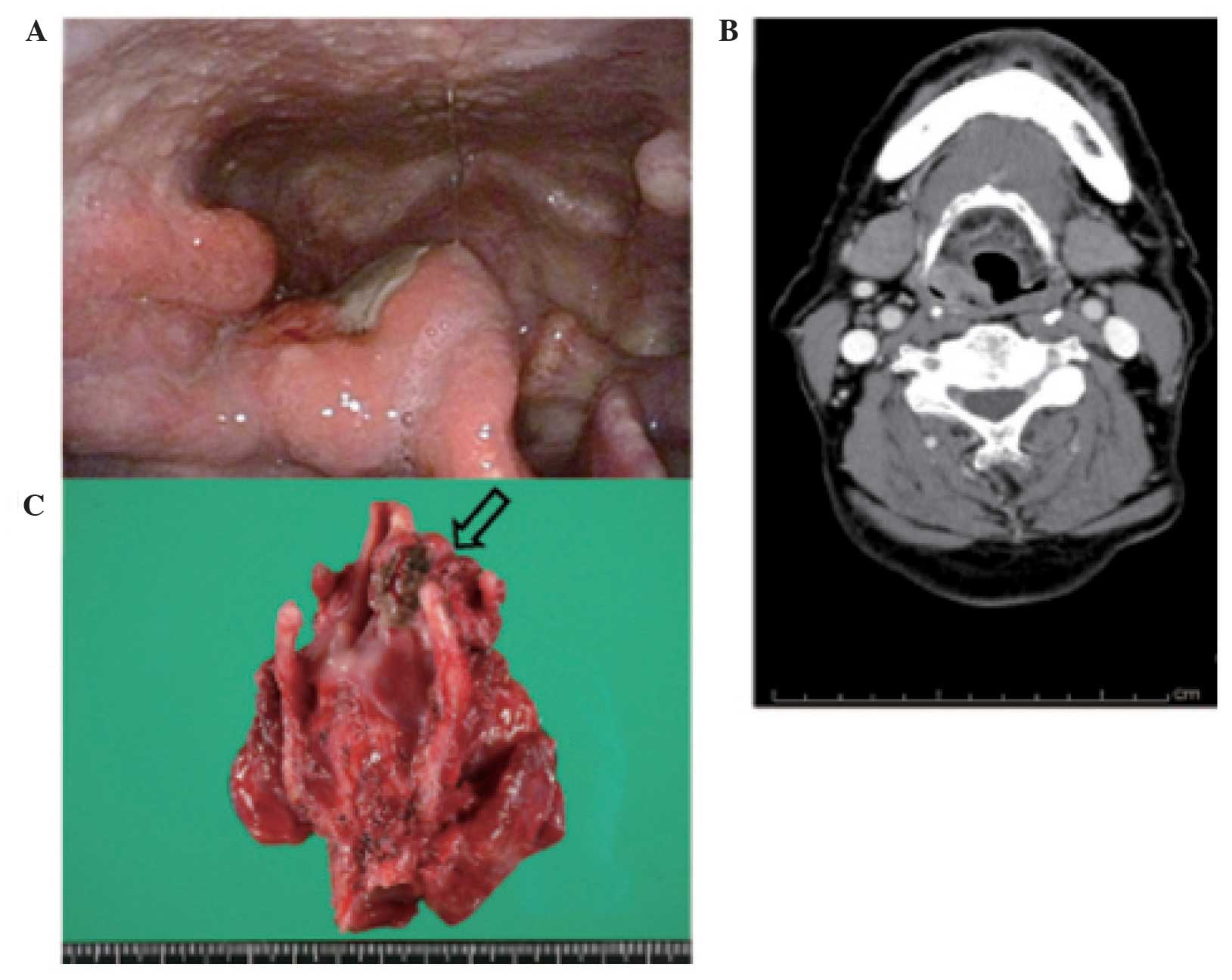
A 74-year-old man, with a ~50-year history of excessive alcohol consumption and smoking, presented with a 3-month history of throat pain and hoarseness. There was no history of weight loss, dysphagia, or dyspnea. On hypopharyngoscopy, a tumor was identified in the right anterior wall of the piriform sinus (Fig. 1A). A pathologist analyzed the biopsy sample and diagnosed the lesion as SqCC, as no SmCC component was identified in the biopsy specimen. The right vocal cord was not fixed. A contrast computed tomography (CT) scan of the neck revealed a heterogeneously enhanced tumor sized 25×17×38 mm extending through the right piriform sinus (Fig. 1B). Moreover, fluorodeoxyglucose positron emission tomography (FDG-PET) revealed high-level accumulation in the primary tumor, with a maximum standardized uptake value of 14.6. There was no evidence of cervical lymph node metastasis, primary lung tumor, or distant metastasis. The patient was diagnosed with hypopharyngeal cancer classified as T2N0M0, according to the 2009 Union for International Cancer Control staging system (4). We performed a tracheostomy, total laryngectomy, right hemithyroidectomy and bilateral lateral neck dissection (level II–IV). The macroscopic surgical specimen is presented in Fig. 1C. The specimen consisted of the resected larynx and right piriform sinus tumor. A 25×20-mm deeply ulcerated tumor was found in the right piriform sinus. Microscopically, two components were identified in the lesion, namely a poorly differentiated SqCC and an SmCC containing chromatin-rich nuclei with scanty cytoplasm (Fig. 2A). Pathologically, multiple metastatic cervical lymph nodes were identifed bilaterally (right side, levels II and III; and left side, level III). Although the surgical margin was narrow, it was negative for cancer cells.

Figure 1.

(A) Hypopharyngeal fiberscopic image. An ulcerated tumor was identified in the right piriform sinus. (B) Contrast computed tomography scan of the neck prior to treatment. An enhanced tumor was identified in the right piriform sinus. (C) Macroscopic surgical specimen. A deeply ulcerated tumor is seen in the right piriform sinus (arrow).

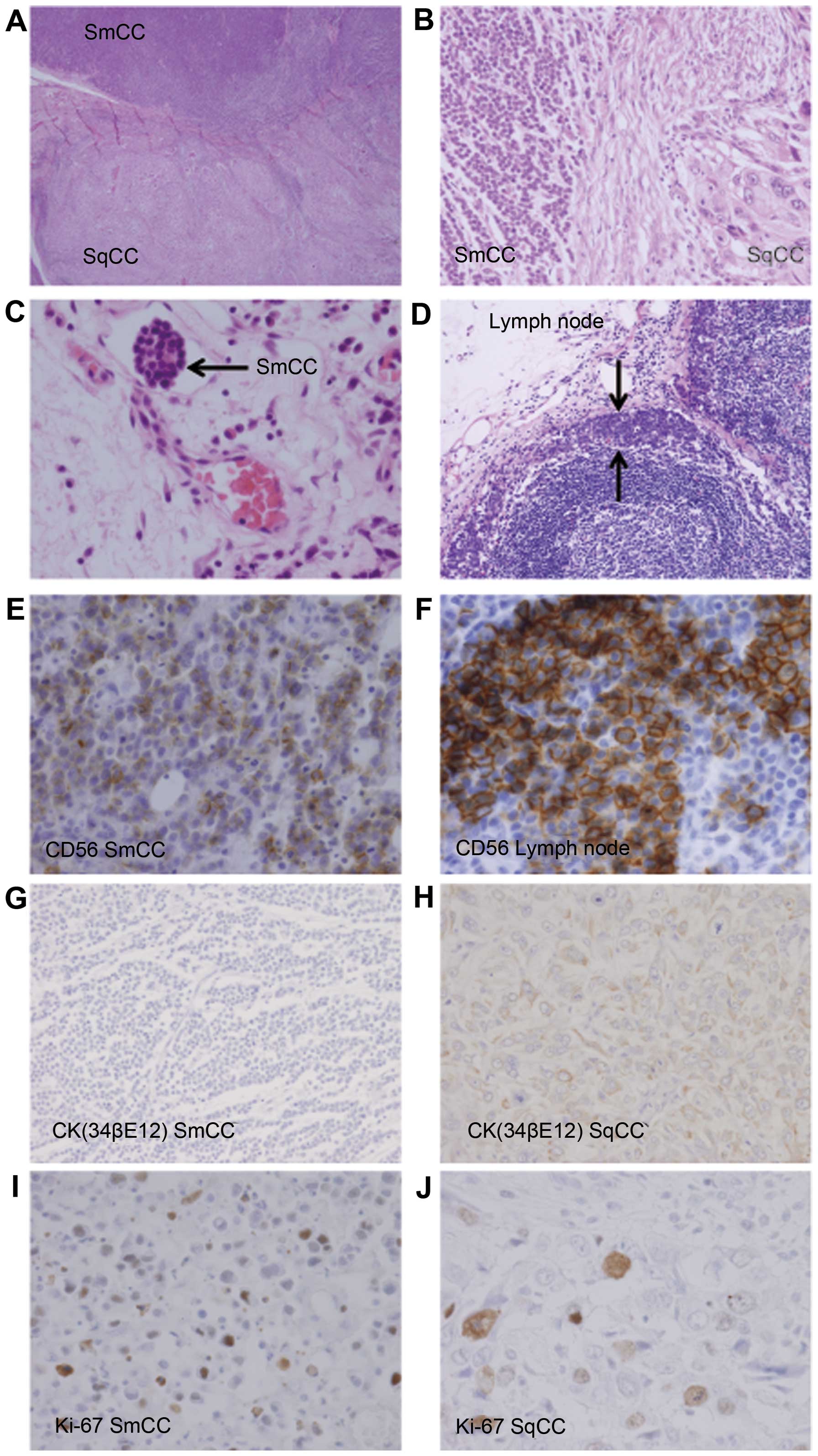
Figure 2.

Microscopic images of the surgical specimen. (A) Hematoxylin and eosin staining. This tumor consisted of a combination of small-cell carcinoma (SmCC) and squamous cell carcinoma (SqCC). (B) Collision phase showing invasive SqCC in gradual transition with adjacent SmCC. (C) SmCC component (arrow) infiltrating a lymphatic vessel. (D) Metastatic lymph nodes mainly involved the SmCC component (arrows). (E) CD56 was expressed in the SmCC component. (F) The SmCC component of the neck lymph node was positive for CD56. (G) The SmCC component was negative for cytokeratin (CK) 34βE12. (H) The SqCC component was positive for CK 34βE12. (I) Staining of the SmCC component revealed a high Ki-67 labeling index of 50.2%. (J) The Ki-67 labeling index was 47.5% in the SqCC component.

Concomitant chemoradiotherapy (cisplatin + etoposide with 45 Gy) was administered postoperatively. However, after the first course, adjuvant chemotherapy was discontinued due to prolonged bone marrow suppression, although the therapy was effective. However, despite treatment, distant metastases in the thoracic vertebrae (T5, 9 and 10) were confirmed by CT 6 months later. The patient's condition started to deteriorate and he succumbed to the disease 7 months after the initial treatment.

Pathology

On gross examination of the laryngectomy specimen, a mass involving the right piriform sinus was palpable. The tumor extended superiorly to involve the right supraglottis and exhibited variable gross morphology, ranging from ulcerated, to nodular, to plaque-like growth. The tumor infiltrated 1.3 cm in depth, but did not involve the thyroid cartilage, vocal cord, or trachea. Microscopic sections from the larynx revealed a combined tumor, composed predominantly of SmCC localized in the upper side and SqCC localized in the lower side (Figs. 1 and 2A). We observed 2 components in the lesion: A poorly differentiated SqCC and a small-sized SmCC with finely granular, hyperchromatic nuclei, inconspicuous nucleoli and scanty cytoplasm. There was a transitional area between the SmCC and SqCC (Fig. 2A and B). The metastatic potential of the lesion was further supported by the SmCC component found to infiltrate lymphatic vessels (Fig. 2C). The metastatic lymph nodes primarily involved the SmCC component (Fig. 2D).

Immunohistochemically, the SmCC strongly expressed CD56 (Fig. 2E) and cytokeratin (CK) AE1/AE3. Diffuse CD56 positivity in the SmCC component in the cervical lymph nodes supported the histological diagnosis (Fig. 2F). The SmCC component was also negative for CK 34βE12 (Fig. 2G), p63, synaptophysin, chromogranin A and CD45. The SqCC component was negative for neuroendocrine markers, including CD56, synaptophysin and chromogranin A, although it was positive for CK 34βE12 (Fig. 2H). Immunoreactivity to Ki-67 was seen in the nuclei of tumor cells. In the SmCC component, the Ki-67 labeling index was 50.2%, while that in the SqCC component was 47.5% (Fig. 2I and J).

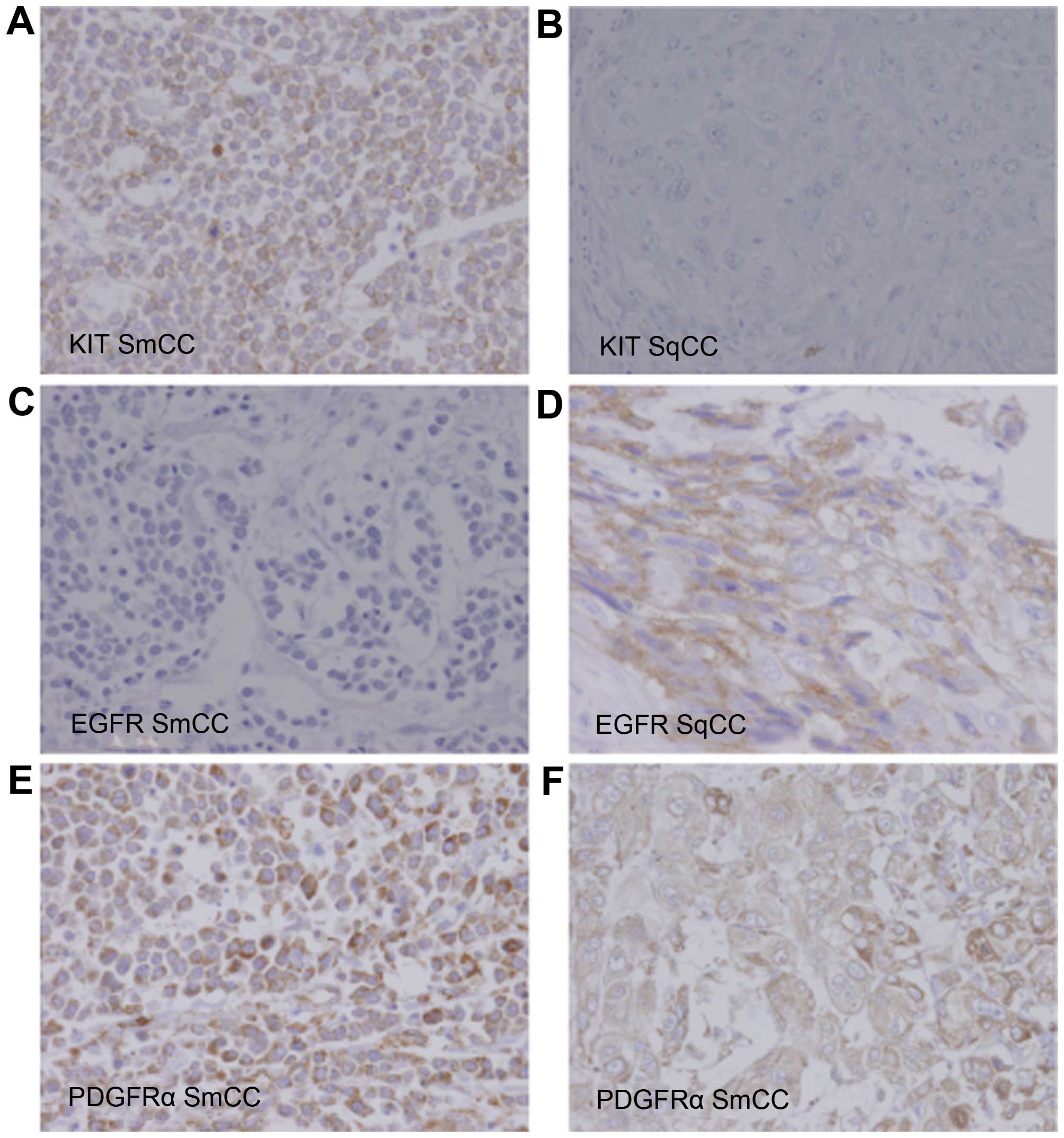
To predict the prognosis of this patient, we evaluated the expression of epidermal growth factor receptor (EGFR). Furthermore, to evaluate the possibility of using molecular-targeted therapy for combined SmCC and SqCC, the expression of proteins such as platelet-derived growth factor receptor α (PDGFRα), vascular endothelial growth factor receptor 2 (VEGFR2) and KIT was examined. On immunohistochemical analysis, the SmCC element was strongly positive for KIT and PDGFRα; however, EGFR and VEGFR2 were not expressed (Fig. 3A, C and E). The SqCC element was mildly positive for PDGFRα and EGFR; however, KIT and VEGFR2 were not expressed (Fig. 3B, D and F).

Figure 3.

(A) KIT was expressed in the small-cell carcinoma (SmCC) component, but (B) not in the squamous cell carcinoma (SqCC) component. (C) The SmCC component was negative for epidermal growth factor receptor (EGFR), but (D) the SqCC component was positive for EGFR. (E and F) Immunostaining demonstrated that both components were positive for platelet-derived growth factor receptor α (PDGFRα).

DNA extraction, genetic analysis and human papillomavirus (HPV) polymerase chain reaction

DNA was isolated from the SmCC element in specimens obtained during surgery. Genomic DNA was extracted from frozen tumor specimens using the QIAamp DNA Mini Kit (Qiagen, Hilden, Germany), according to the manufacturer's protocol.

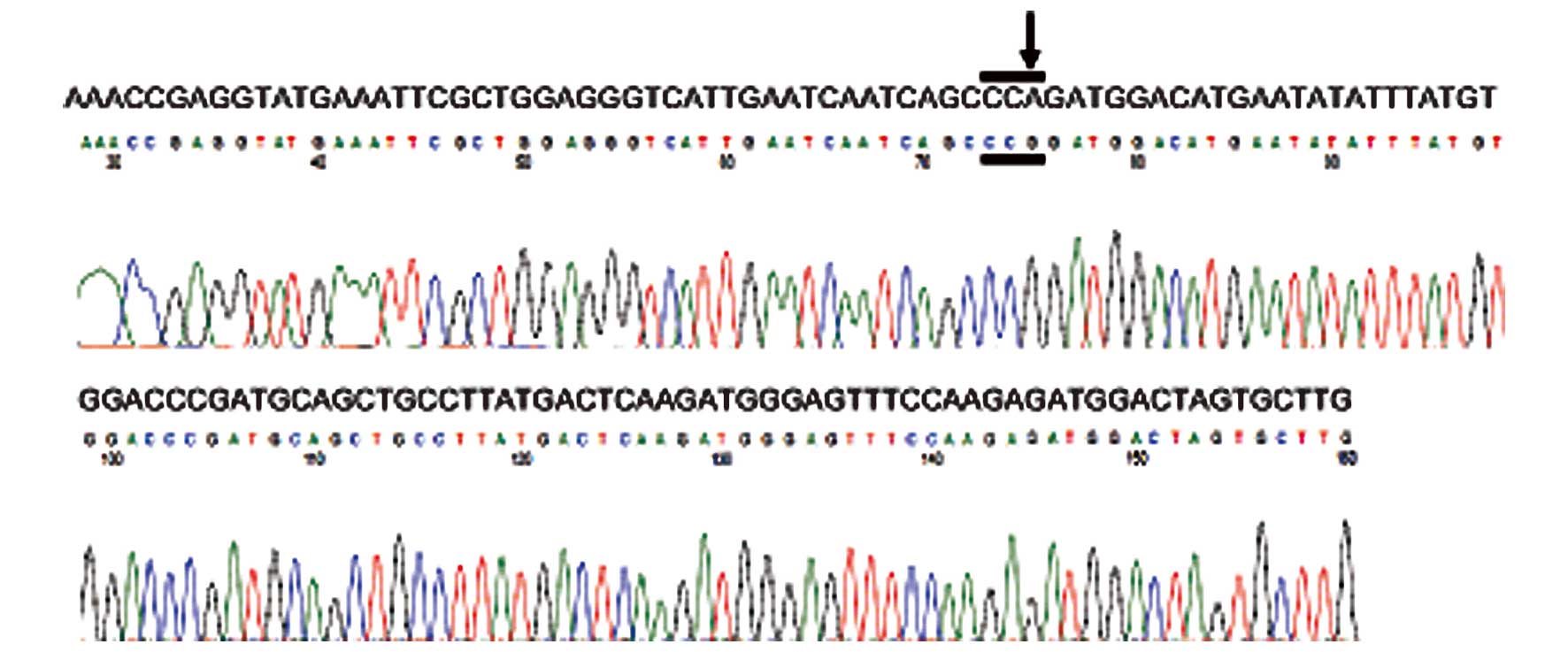
A molecular genetic analysis of KIT (exons 9, 11, 13 and 17) and PDGFRα (exons 12, 14 and 18) was performed using the polymerase chain reaction (PCR) direct sequencing method, as previously reported (5–8). PCR products were extracted and subjected to a computed automatic DNA sequencing (ABI PRISM 3100 Genetic Analyzer; Applied Biosystems, Carlsbad, CA, USA). This case exhibited a silent mutation in exon 12 of PDGFRα (Fig. 4); we observed an A→G change in codon 567 (CCA→CCG). Analysis of exon 12 of PDGFRα from other normal tonsillar tissues revealed a similar A→G change at the 1849 nucleotide position. Comparison of this sequence variation with the single-nucleotide polymorphism (SNP) database revealed the presence of a known SNP at codon 567 of PDGFRα (9).

Figure 4.

Electropherogram with relative sequence for the small-cell carcinoma elements of exon 12 of the platelet-derived growth factor receptor α gene.

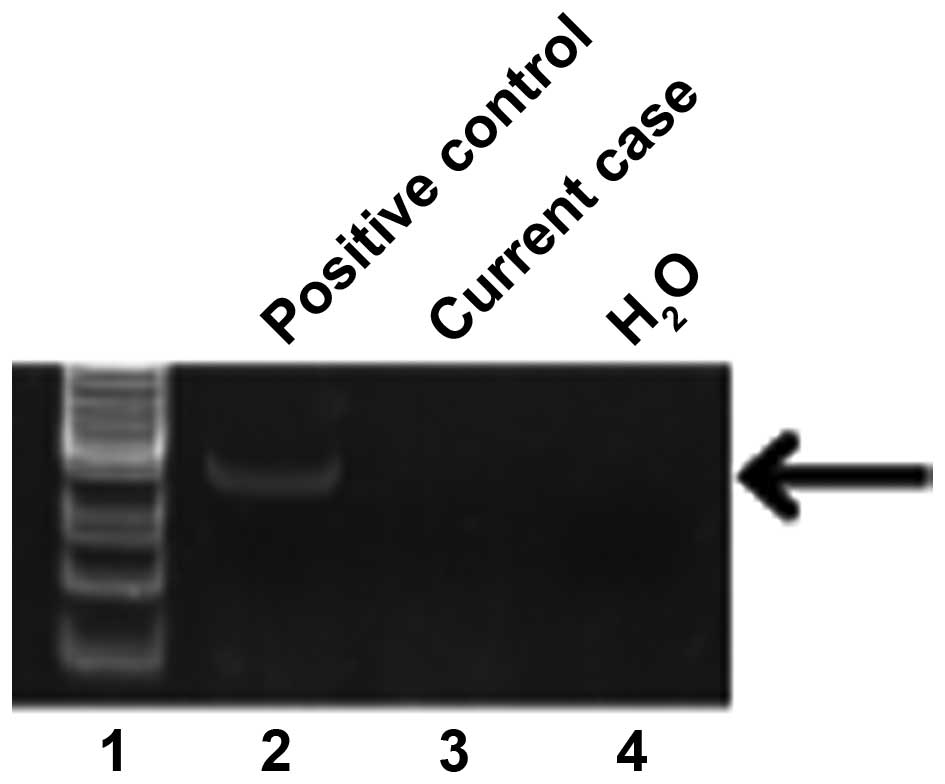
The HPV status was determined using the HPV Typing Set (Takara Bio., Tokyo, Japan), a PCR primer set specifically designed to identify HPV genotypes 16, 18, 31, 33, 35, 52 and 58 in genomic DNA. The PCR HPV Typing Set method was used according to the manufacturer's protocol. The PCR products were separated by electrophoresis through a 9% polyacrylamide gel and stained with ethidium bromide. Our case was negative and not considered as a high-risk HPV status (Fig. 5).

Figure 5.

Electrophoresis of human papillomavirus (HPV) status. The band in lane 3 represents negative reactivity for HPV in this case, whereas lanes 2 and 4 correspond to the controls, which were the HPV-positive cell line UMSCC-47 (a gift from Dr TE Carey) and H2O, respectively. The DNA size marker is located on lane 1.

Discussion

In the head and neck, SmCC most commonly arises in the larynx, but has also been reported in the sinonasal tract and salivary glands (10,11). Combined SmCC of the larynx has only been reported in 17 cases in the literature to date. The majority of these patients were men and in the 6th-7th decade of life. Moreover, the majority of the patients succumbed to the disease within 2 years of diagnosis, even with adjuvant radiation and chemotherapy (12–14). Despite the rarity of these tumors, the clinical behavior of combined SmCC of the larynx appears to be similar to that of the hypopharynx. Metastasis from a primary lung SmCC must be carefully distinguished from a primary hypopharyngeal or laryngeal SmCC by imaging studies of the lung (15). In this case, FDG-PET revealed high-level accumulation in the hypopharynx, without evidence of a lung tumor or distant metastasis. A chest contrast CT scan confirmed the absence of a primary lung tumor.

According to the World Health Organization classification of head and neck tumors in 2005, neuroendocrine carcinomas may be classified as typical carcinoid, atypical carcinoid, and SmCC (16). Neuroendocrine types of SmCC associated with an SqCC component are referred to as combined carcinomas. They are unusual, representing <10% of all neuroendocrine types (17). Neuroendocrine neoplasms of the hypopharynx and larynx constitute a morphologicaly heterogeneous group of tumors, with considerable differences in clinical behavior and very different treatment strategies (12). Combined SmCC of the hypopharynx is extremely rare and is often difficult to pathologically diagnose prior to surgical treatment. Moreover, the prognosis is very poor due to early metastasis, without established treatment regimen (3). Of the 4 reported cases of combined SmCC of the hypopharynx, including our case, 3 succumbed to the disease within 1 year (Table I). Multi-modality therapy should be performed for combined SmCC of the head and neck region. Therefore, new therapeutic strategies are required to improve the survival rate. The present case reports new findings: Positive expression of KIT and PDGFRα in the SmCC element and positive expression of EGFR and PDGFRα in the SqCC element. Furthermore, to the best of our knowledge, the present study is the first to report a KIT and PDGFRα mutation analysis in combined hypopharyngeal SmCC. KIT and PDGFRα, both mapped to chromosome 4q12, have structural similarities with other PDGFR family members. A majority of gastrointestinal stromal tumors (GISTs) display a gain-of-function mutation in the KIT proto-oncogene that encodes the KIT protein. The majority of mutations occur in KIT exon 11, but mutations may also be found in exon 9 and rarely in exons 13 and 17. The PDGFRα gene is also very similar to the KIT gene, and PDGFRα mutations have been found in exons 12, 14 and 18. Terada et al (18) reported KIT protein expression in 100% and PDGFRα expression in 65% of small-cell lung carcinoma cases; however, there were no genetic mutations of KIT and PDGFRα in small-cell lung carcinoma (18). In a previously reported case of esophageal combined SmCC, KIT and PDGFRα were expressed in the SmCC component, but not in the SqCC component (5). It was found that SmCC of the lung and extrapulmonary organs expressed KIT and PDGFRα, but there were no mutations in these genes within the hot spots of GISTs. These findings are almost completely in accord with those of our case study.

Table I.

Summary of cases of combined SmCC in the hypopharynx.

Table I.

Summary of cases of combined SmCC in the hypopharynx.

AuthorsAge (years)GenderSmoking history (years)SiteInitial therapyHistological phenotypeMetastatic histological phenotypeRecurrence after initial therapySalvage therapyFollow-up interval (months)Prognosis(Refs.)
Ferlito et al57M40RPsTLP+RND, RT+SmCC (many LNs) combined (2LNs)DM (bone)None3.5DOD (DM)(1)
Milis et al49M30RPsTLP+ND+thyroid lobectomy, RT+SqCC (2LNs) SmCC (1LN)NoneNone6NED(2)
Uwa et al73M50LPsTLP+BilND+hemithyroid lobectomy, CRT+SmCC (11LNs)N, DM (lung, liver)Chemo9DOD (N,DM)(3)
Present case74M50RPsTLP+BilND+thyroid lobectomy, CRT+SmCC (many LNs) combined (5LNs)DMNone6DOD (DM) (lung, bone)

[i] M, male; R, right; L, left; Bil, bilateral; Ps, pyriform sinus; TLP, total laryngopharyngectomy; ND, neck dissection; RT, radiation therapy; CRT, chemoradiotherapy; SmCC, small-cell carcinoma; SqCC, squamous cell carcinoma; LNs, lymph nodes; DM, distant metastasis; N, neck lymph node metastasis; Mo, months; DOD, died of disease; NED, no evidence of disease.

No biomarker has been yet proven to predict response to targeted therapy in either SmCC or SqCC. Moreover, a predictive biomarker in one cancer type may not be helpful in another cancer type, suggesting that different mechanisms may be involved in combined SmCC. To the best of our knowledge, a molecular-targeted therapy for treating combined SmCC of the hypopharynx and larynx has not yet been reported. Our case is the first to report KIT and PDGFRα expression in combined SmCC in the hypopharynx and larynx; if similar results are obtained from larger series, these data may have management and prognostic implications through the possible use of targeted biological therapy in these tumors. At present, SmCC treatment remains a significant challenge for the oncologists, with several targeted agents under evaluation. However, there is no effective molecular-targeted therapy for SmCC. Evaluating the expression of the KIT and PDGFRα genes within hypopharyngeal SmCC may facilitate the development of novel agents for the molecular-targeted therapy of this tumor. However, further investigations are necessary regarding these proteins expression and clinical application of molecular targeted therapy for hypophageal combined SmCC.

Acknowledgements

The authors would like to thank Ms. Yuko Mohri for her excellent technical support.

References

1 

Ferlito A, Recher G and Caruso G: Primary combined small cell carcinoma of the larynx. Am J Otolaryngol. 6:302–308. 1985. View Article : Google Scholar : PubMed/NCBI

2 

Mills SE, Cooper PH, Garland TA and Johns ME: Small cell undifferentiated carcinoma of the larynx. Report of two patients and review of 13 additional cases. Cancer. 51:116–120. 1983. View Article : Google Scholar : PubMed/NCBI

3 

Uwa N, Terada T, Mohri T, Okazaki K, Tsukamoto Y, Hirota S and Sakagami M: Combined small cell carcinoma of the hypopharynx. Auris Nasus Larynx. 40:106–109. 2013. View Article : Google Scholar : PubMed/NCBI

4 

Sobin LH, Wittekind C and Gospodarowicz M: TNM Classification of Malignant Tumors (7th). Wiley-Blackwell. New York, NY: 2009.

5 

Terada T and Maruo H: Esophageal combined carcinomas: Immunohoistochemical and molecular genetic studies. World J Gastroenterol. 18:1545–1551. 2012. View Article : Google Scholar : PubMed/NCBI

6 

Agaimy A, Wünsch PH, Hofstaedter F, Blaszyk H, Rümmele P, Gaumann A, Dietmaier W and Hartmann A: Minute gastric sclerosing stromal tumors (GIST tumorlets) are common in adults and frequently show c-KIT mutations. Am J Surg Pathol. 31:113–120. 2007. View Article : Google Scholar : PubMed/NCBI

7 

Lasota J and Miettinen M: KIT and PDGFRA mutations in gastrointestinal stromal tumors (GISTs). Semin Diagn Pathol. 23:91–102. 2006. View Article : Google Scholar : PubMed/NCBI

8 

Kikuchi H, Yamashita K, Kawabata T, Yamamoto M, Hiramatsu Y, Kondo K, Baba M, Ohta M, Kamiya K and Tanaka T: Immunohistochemical and genetic features of gastric and metastatic liver gastrointestinal stromal tumors: Sequential analyses. Cancer Sci. 97:127–132. 2006. View Article : Google Scholar : PubMed/NCBI

9 

Kartha RV and Sundram UN: Silent mutations in KIT and PDGFRA and coexpression of receptors with SCF and PDGFA in Merkel cell carcinoma: Implications for tyrosine kinase-based tumorigenesis. Mod Pathol. 21:96–104. 2008.PubMed/NCBI

10 

Renner G: Small cell carcinoma of the head and neck: A review. Semin Oncol. 34:3–14. 2007. View Article : Google Scholar : PubMed/NCBI

11 

Mineta H, Miura K, Takebayashi S, Araki K, Ueda Y, Harada H and Misawa K: Immunohistochemical analysis of small cell carcinoma of the head and neck: A report of four patients and a review of sixteen patients in the literature with ectopic hormone production. Ann Otol Rhinol Laryngol. 110:76–82. 2001. View Article : Google Scholar : PubMed/NCBI

12 

Barbeaux A, Duck L, Weynand B, Desuter G, Hamoir M, Gregoire V, Baurain JF and Machiels JP: Primary combined squamous and small cell carcinoma of the larynx: Report of two cases and discussion of treatment modalities. Eur Arch Otorhinolaryngol. 263:786–790. 2006. View Article : Google Scholar : PubMed/NCBI

13 

Aggarwal G, Jackson L and Sharma S: Primary combined small cell carcinoma of larynx with lateralized histologic components and corresponding side-specific neck nodal metastasis: Report of a unique case and review of literature. Int J Clin Exp Pathol. 4:111–117. 2010.PubMed/NCBI

14 

Jaiswal VR and Hoang MP: Primary combined squamous and small cell carcinoma of the larynx: A case report and review of the literature. Arch Pathol Lab Med. 128:1279–1282. 2004.PubMed/NCBI

15 

Ferlito A, Silver CE, Bradford CR and Rinaldo A: Neuroendocrine neoplasms of the larynx: An overview. Head Neck. 31:1634–1646. 2009. View Article : Google Scholar : PubMed/NCBI

16 

Barnes L, Eveson JW, Reichart P and Sidransky D: Pathology and Genetics. Head and Neck Tumours. World Health Organisation Classification of Tumours. IARC Press. (Lyon). 2005.

17 

Wu BZ, Gao Y and Yi B: Primary neuroendocrine carcinoma in oral cavity: Two case reports and review of the literature. J Oral Maxillofac Surg. 72:633–644. 2014. View Article : Google Scholar : PubMed/NCBI

18 

Terada T: An immunohistochemical and molecular genetic analysis of KIT and PDGFRA in small cell lung carcinoma in Japanese. Int J Clin Exp Pathol. 5:331–338. 2012.PubMed/NCBI

Related Articles

  • Abstract
  • View
  • Download
  • Twitter
Copy and paste a formatted citation
Spandidos Publications style
Misawa K, Kawasaki H, Endo S, Mochizuki D, Morita K, Hashimoto Y, Misawa Y, Kikuchi H, Kanazawa T, Iwashita T, Iwashita T, et al: Primary combined small and squamous cell carcinoma of the hypopharynx: A case report. Mol Clin Oncol 4: 709-714, 2016.
APA
Misawa, K., Kawasaki, H., Endo, S., Mochizuki, D., Morita, K., Hashimoto, Y. ... Mineta, H. (2016). Primary combined small and squamous cell carcinoma of the hypopharynx: A case report. Molecular and Clinical Oncology, 4, 709-714. https://doi.org/10.3892/mco.2016.788
MLA
Misawa, K., Kawasaki, H., Endo, S., Mochizuki, D., Morita, K., Hashimoto, Y., Misawa, Y., Kikuchi, H., Kanazawa, T., Iwashita, T., Mineta, H."Primary combined small and squamous cell carcinoma of the hypopharynx: A case report". Molecular and Clinical Oncology 4.5 (2016): 709-714.
Chicago
Misawa, K., Kawasaki, H., Endo, S., Mochizuki, D., Morita, K., Hashimoto, Y., Misawa, Y., Kikuchi, H., Kanazawa, T., Iwashita, T., Mineta, H."Primary combined small and squamous cell carcinoma of the hypopharynx: A case report". Molecular and Clinical Oncology 4, no. 5 (2016): 709-714. https://doi.org/10.3892/mco.2016.788
Copy and paste a formatted citation
x
Spandidos Publications style
Misawa K, Kawasaki H, Endo S, Mochizuki D, Morita K, Hashimoto Y, Misawa Y, Kikuchi H, Kanazawa T, Iwashita T, Iwashita T, et al: Primary combined small and squamous cell carcinoma of the hypopharynx: A case report. Mol Clin Oncol 4: 709-714, 2016.
APA
Misawa, K., Kawasaki, H., Endo, S., Mochizuki, D., Morita, K., Hashimoto, Y. ... Mineta, H. (2016). Primary combined small and squamous cell carcinoma of the hypopharynx: A case report. Molecular and Clinical Oncology, 4, 709-714. https://doi.org/10.3892/mco.2016.788
MLA
Misawa, K., Kawasaki, H., Endo, S., Mochizuki, D., Morita, K., Hashimoto, Y., Misawa, Y., Kikuchi, H., Kanazawa, T., Iwashita, T., Mineta, H."Primary combined small and squamous cell carcinoma of the hypopharynx: A case report". Molecular and Clinical Oncology 4.5 (2016): 709-714.
Chicago
Misawa, K., Kawasaki, H., Endo, S., Mochizuki, D., Morita, K., Hashimoto, Y., Misawa, Y., Kikuchi, H., Kanazawa, T., Iwashita, T., Mineta, H."Primary combined small and squamous cell carcinoma of the hypopharynx: A case report". Molecular and Clinical Oncology 4, no. 5 (2016): 709-714. https://doi.org/10.3892/mco.2016.788
Follow us
  • Twitter
  • LinkedIn
  • Facebook
About
  • Spandidos Publications
  • Careers
  • Cookie Policy
  • Privacy Policy
How can we help?
  • Help
  • Live Chat
  • Contact
  • Email to our Support Team