Spandidos Publications Logo
  • About
    • About Spandidos
    • Aims and Scopes
    • Abstracting and Indexing
    • Editorial Policies
    • Reprints and Permissions
    • Job Opportunities
    • Terms and Conditions
    • Contact
  • Journals
    • All Journals
    • Oncology Letters
      • Oncology Letters
      • Information for Authors
      • Editorial Policies
      • Editorial Board
      • Aims and Scope
      • Abstracting and Indexing
      • Bibliographic Information
      • Archive
    • International Journal of Oncology
      • International Journal of Oncology
      • Information for Authors
      • Editorial Policies
      • Editorial Board
      • Aims and Scope
      • Abstracting and Indexing
      • Bibliographic Information
      • Archive
    • Molecular and Clinical Oncology
      • Molecular and Clinical Oncology
      • Information for Authors
      • Editorial Policies
      • Editorial Board
      • Aims and Scope
      • Abstracting and Indexing
      • Bibliographic Information
      • Archive
    • Experimental and Therapeutic Medicine
      • Experimental and Therapeutic Medicine
      • Information for Authors
      • Editorial Policies
      • Editorial Board
      • Aims and Scope
      • Abstracting and Indexing
      • Bibliographic Information
      • Archive
    • International Journal of Molecular Medicine
      • International Journal of Molecular Medicine
      • Information for Authors
      • Editorial Policies
      • Editorial Board
      • Aims and Scope
      • Abstracting and Indexing
      • Bibliographic Information
      • Archive
    • Biomedical Reports
      • Biomedical Reports
      • Information for Authors
      • Editorial Policies
      • Editorial Board
      • Aims and Scope
      • Abstracting and Indexing
      • Bibliographic Information
      • Archive
    • Oncology Reports
      • Oncology Reports
      • Information for Authors
      • Editorial Policies
      • Editorial Board
      • Aims and Scope
      • Abstracting and Indexing
      • Bibliographic Information
      • Archive
    • Molecular Medicine Reports
      • Molecular Medicine Reports
      • Information for Authors
      • Editorial Policies
      • Editorial Board
      • Aims and Scope
      • Abstracting and Indexing
      • Bibliographic Information
      • Archive
    • World Academy of Sciences Journal
      • World Academy of Sciences Journal
      • Information for Authors
      • Editorial Policies
      • Editorial Board
      • Aims and Scope
      • Abstracting and Indexing
      • Bibliographic Information
      • Archive
    • International Journal of Functional Nutrition
      • International Journal of Functional Nutrition
      • Information for Authors
      • Editorial Policies
      • Editorial Board
      • Aims and Scope
      • Abstracting and Indexing
      • Bibliographic Information
      • Archive
    • International Journal of Epigenetics
      • International Journal of Epigenetics
      • Information for Authors
      • Editorial Policies
      • Editorial Board
      • Aims and Scope
      • Abstracting and Indexing
      • Bibliographic Information
      • Archive
    • Medicine International
      • Medicine International
      • Information for Authors
      • Editorial Policies
      • Editorial Board
      • Aims and Scope
      • Abstracting and Indexing
      • Bibliographic Information
      • Archive
  • Articles
  • Information
    • Information for Authors
    • Information for Reviewers
    • Information for Librarians
    • Information for Advertisers
    • Conferences
  • Language Editing
Spandidos Publications Logo
  • About
    • About Spandidos
    • Aims and Scopes
    • Abstracting and Indexing
    • Editorial Policies
    • Reprints and Permissions
    • Job Opportunities
    • Terms and Conditions
    • Contact
  • Journals
    • All Journals
    • Biomedical Reports
      • Information for Authors
      • Editorial Policies
      • Editorial Board
      • Aims and Scope
      • Abstracting and Indexing
      • Bibliographic Information
      • Archive
    • Experimental and Therapeutic Medicine
      • Information for Authors
      • Editorial Policies
      • Editorial Board
      • Aims and Scope
      • Abstracting and Indexing
      • Bibliographic Information
      • Archive
    • International Journal of Epigenetics
      • Information for Authors
      • Editorial Policies
      • Editorial Board
      • Aims and Scope
      • Abstracting and Indexing
      • Bibliographic Information
      • Archive
    • International Journal of Functional Nutrition
      • Information for Authors
      • Editorial Policies
      • Editorial Board
      • Aims and Scope
      • Abstracting and Indexing
      • Bibliographic Information
      • Archive
    • International Journal of Molecular Medicine
      • Information for Authors
      • Editorial Policies
      • Editorial Board
      • Aims and Scope
      • Abstracting and Indexing
      • Bibliographic Information
      • Archive
    • International Journal of Oncology
      • Information for Authors
      • Editorial Policies
      • Editorial Board
      • Aims and Scope
      • Abstracting and Indexing
      • Bibliographic Information
      • Archive
    • Medicine International
      • Information for Authors
      • Editorial Policies
      • Editorial Board
      • Aims and Scope
      • Abstracting and Indexing
      • Bibliographic Information
      • Archive
    • Molecular and Clinical Oncology
      • Information for Authors
      • Editorial Policies
      • Editorial Board
      • Aims and Scope
      • Abstracting and Indexing
      • Bibliographic Information
      • Archive
    • Molecular Medicine Reports
      • Information for Authors
      • Editorial Policies
      • Editorial Board
      • Aims and Scope
      • Abstracting and Indexing
      • Bibliographic Information
      • Archive
    • Oncology Letters
      • Information for Authors
      • Editorial Policies
      • Editorial Board
      • Aims and Scope
      • Abstracting and Indexing
      • Bibliographic Information
      • Archive
    • Oncology Reports
      • Information for Authors
      • Editorial Policies
      • Editorial Board
      • Aims and Scope
      • Abstracting and Indexing
      • Bibliographic Information
      • Archive
    • World Academy of Sciences Journal
      • Information for Authors
      • Editorial Policies
      • Editorial Board
      • Aims and Scope
      • Abstracting and Indexing
      • Bibliographic Information
      • Archive
  • Articles
  • Information
    • For Authors
    • For Reviewers
    • For Librarians
    • For Advertisers
    • Conferences
  • Language Editing
Login Register Submit
  • This site uses cookies
  • You can change your cookie settings at any time by following the instructions in our Cookie Policy. To find out more, you may read our Privacy Policy.

    I agree
Search articles by DOI, keyword, author or affiliation
Search
Advanced Search
presentation
Molecular and Clinical Oncology
Join Editorial Board Propose a Special Issue
Print ISSN: 2049-9450 Online ISSN: 2049-9469
Journal Cover
November-2017 Volume 7 Issue 5

Full Size Image

Sign up for eToc alerts
Recommend to Library

Journals

International Journal of Molecular Medicine

International Journal of Molecular Medicine

International Journal of Molecular Medicine is an international journal devoted to molecular mechanisms of human disease.

International Journal of Oncology

International Journal of Oncology

International Journal of Oncology is an international journal devoted to oncology research and cancer treatment.

Molecular Medicine Reports

Molecular Medicine Reports

Covers molecular medicine topics such as pharmacology, pathology, genetics, neuroscience, infectious diseases, molecular cardiology, and molecular surgery.

Oncology Reports

Oncology Reports

Oncology Reports is an international journal devoted to fundamental and applied research in Oncology.

Experimental and Therapeutic Medicine

Experimental and Therapeutic Medicine

Experimental and Therapeutic Medicine is an international journal devoted to laboratory and clinical medicine.

Oncology Letters

Oncology Letters

Oncology Letters is an international journal devoted to Experimental and Clinical Oncology.

Biomedical Reports

Biomedical Reports

Explores a wide range of biological and medical fields, including pharmacology, genetics, microbiology, neuroscience, and molecular cardiology.

Molecular and Clinical Oncology

Molecular and Clinical Oncology

International journal addressing all aspects of oncology research, from tumorigenesis and oncogenes to chemotherapy and metastasis.

World Academy of Sciences Journal

World Academy of Sciences Journal

Multidisciplinary open-access journal spanning biochemistry, genetics, neuroscience, environmental health, and synthetic biology.

International Journal of Functional Nutrition

International Journal of Functional Nutrition

Open-access journal combining biochemistry, pharmacology, immunology, and genetics to advance health through functional nutrition.

International Journal of Epigenetics

International Journal of Epigenetics

Publishes open-access research on using epigenetics to advance understanding and treatment of human disease.

Medicine International

Medicine International

An International Open Access Journal Devoted to General Medicine.

Journal Cover
November-2017 Volume 7 Issue 5

Full Size Image

Sign up for eToc alerts
Recommend to Library

  • Article
  • Citations
    • Cite This Article
    • Download Citation
    • Create Citation Alert
    • Remove Citation Alert
    • Cited By
  • Similar Articles
    • Related Articles (in Spandidos Publications)
    • Similar Articles (Google Scholar)
    • Similar Articles (PubMed)
  • Download PDF
  • Download XML
  • View XML
Case Report

Long-term survival in a patient with metastatic squamous cell lung carcinoma: A case report

  • Authors:
    • Emiddio Barletta
    • Piera Federico
    • Vincenza Tinessa
    • Domenico Germano
    • Lucia Cannella
    • Teresa Pironti
    • Bruno Daniele
  • View Affiliations / Copyright

    Affiliations: Division of Medical Oncology, ‘G. Rummo’ Hospital, I-82100 Benevento, Italy, Department of Radiotherapy, ‘G. Rummo’ Hospital, I-82100 Benevento, Italy
  • Pages: 928-930
    |
    Published online on: September 1, 2017
       https://doi.org/10.3892/mco.2017.1408
  • Expand metrics +
Metrics: Total Views: 0 (Spandidos Publications: | PMC Statistics: )
Metrics: Total PDF Downloads: 0 (Spandidos Publications: | PMC Statistics: )
Cited By (CrossRef): 0 citations Loading Articles...

This article is mentioned in:


Abstract

Non-small-cell lung cancer (NSCLC) is the most common malignancy in industrialized countries, with a 5-year survival rate of only ~15%, as the majority of the patients have advanced-stage disease at diagnosis and the treatment options are limited. Squamous cell carcinoma the second most frequent type of NSCLC and is closely associated with cigarette smoking. We herein present the case of a 72-year-old male smoker, diagnosed with stage IV squamous cell lung carcinoma, with a solitary brain metastasis. After the diagnosis, stereotactic radiotherapy was performed on the brain metastasis. Following radiotherapy, chemotherapy with carboplatin + paclitaxel was initiated. However, after 2 cycles of chemotherapy, disease progression in the lung was observed. Therefore, second-line treatment with pemetrexed was started, which was discontinued after 2 cycles due to further disease progression. Third-line treatment with erlotinib was then administered, with notable benefit, as the patient remains alive after 6 years of treatment with a good performance status. The mutation status of EGFR was unknown.

Introduction

Non-small-cell lung cancer (NSCLC) is the most common malignancy in industrialized countries, in incidence as well as mortality (1,2). The probability of survival at 5 years, considering all-stage disease, remains low, at ~15% Approximately 60–70% of the patients have advanced-stage disease at diagnosis, and the treatment options are limited (3,4). The main cause of NSCLC is cigarette smoking, and the risk is directly proportional to the duration of exposure to smoking and the number of cigarettes smoked (5). Squamous cell carcinoma is the second most common type of NSCLC, and is closely associated with cigarette smoking. From a biological point of view, smoking patients have different characteristics from non-smokers. Non-smokers develop a disease in which genetic abnormalities are more relevant, with tumor cell proliferation largely depending on epidermal growth factor receptor (EGFR). In smokers, however, EGFR is wild-type, whereas a mutation of the K-ras oncogene is very common. We herein present the case of a 72-year-old male smoker, with stage IV (T3N1M1) squamous cell carcinoma of the lung, who was unresponsive to chemotherapy but responsive to tyrosine kinase inhibitor (TKI) treatment.

Case report

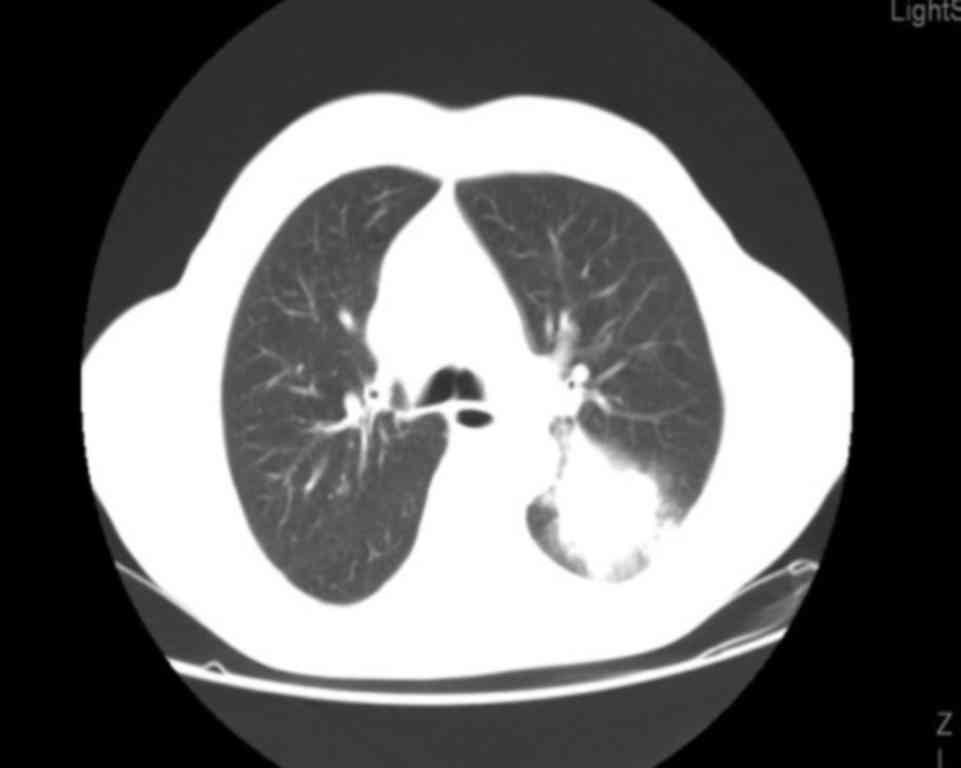
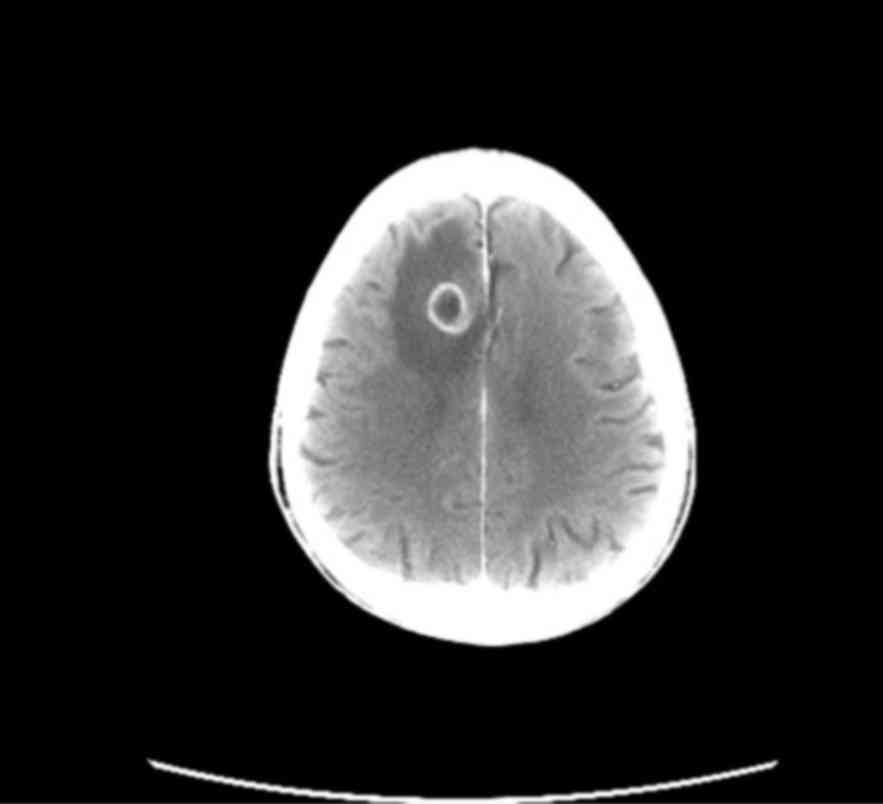
In July 2008, a 72-year-old male patient was diagnosed via CT-guided fine-needle aspiration biopsy with poorly differentiated squamous cell carcinoma of the inferior lobe of the left lung, with a maximum diameter of 53 mm. The patient also presented with ipsilateral hilar lymphadenopathy (Fig. 1) and a 30-mm solitary brain metastasis of the right frontal lobe (Fig. 2). The conclusive diagnosis was stage IV squamous lung cell carcinoma (cT3cN1cM1). In September 2008, stereotactic radiotherapy was performed on the brain metastasis, at a dose of 25 Gy. In October 2008, chemotherapy was initiated, with carboplatin (area under the curve 5) and paclitaxel 175 mg/m2 on day 1, every 21 days.

Figure 1.

Computed tomography scan of the chest prior to erlotinib treatment, showing a 53-mm lesion in the inferior lobe of the left lung.

Figure 2.

Computed tomography scan of the brain prior to erlotinib treatment, showing a 30-mm metastatic lesion in the left frontal lobe.

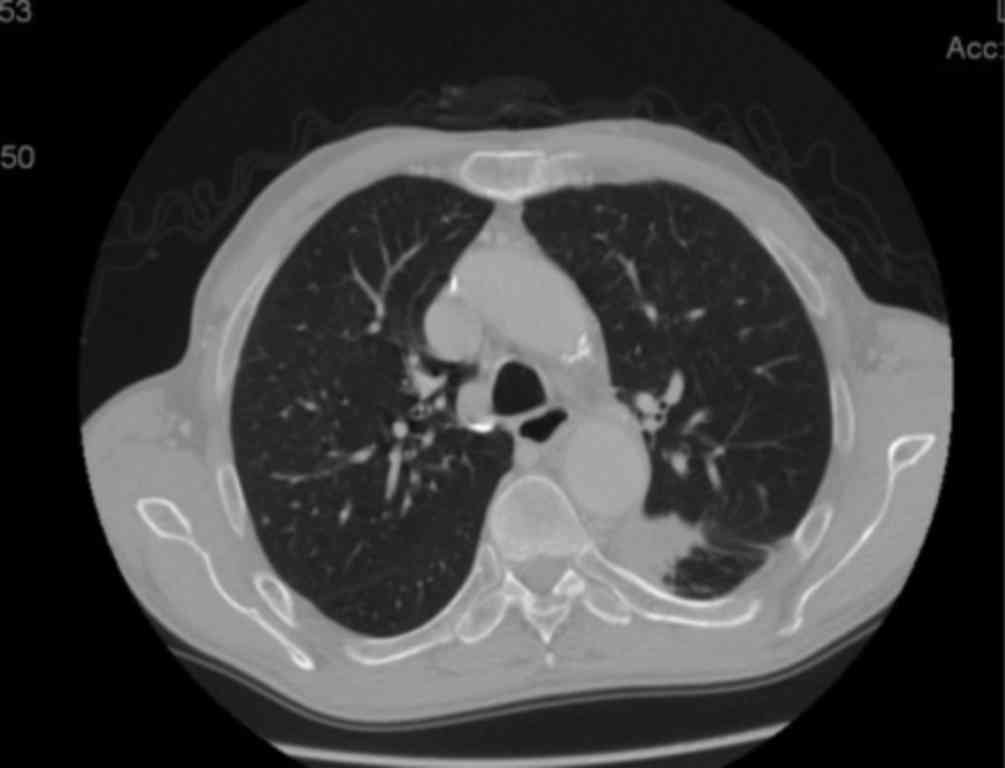
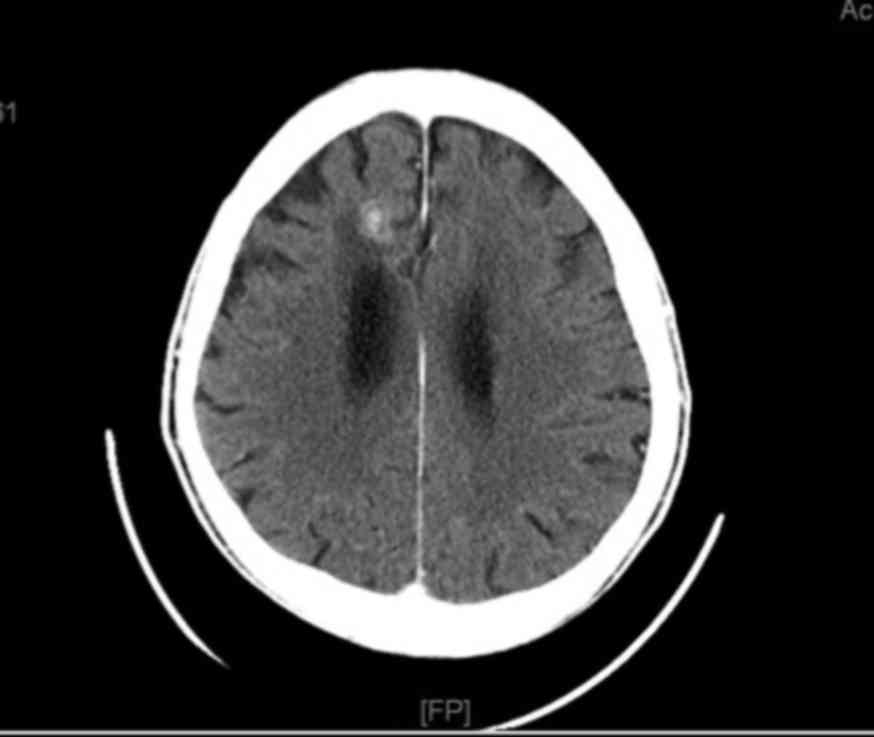
The patient received 2 cycles of chemotherapy, with considerable toxic effects, including National Cancer Institute (NCI) grade 3 peripheral neuropathy, grade 3 leukopenia, and grade 3 asthenia. The treatment was discontinued due to unacceptable levels of toxicity. In December 2008, second-line chemotherapy was initiated, with pemetrexed 500 mg/m2 on day 1, every 21 days. Two cycles were administered prior to treatment discontinuation, due to disease progression (the lung lesion increased to a maximum diameter of 80 mm). In February 2009, third-line treatment with erlotinib 150 mg/day was initiated. After 2 weeks of treatment, a grade 3 skin rash developed. The treatment was discontinued for 10 days, during which time the rash was managed with sulfosalicylate-based moisturizing ointments and creams, and oral minocycline at a dose of 100 mg/day (improvement of skin rash to grade 1). The skin rash regressed to grade 1–2 and erlotinib is readministered at a reduced dose of 100 mg/day. During the first 3 months of treatment, the patient suffered repeated exacerbations of the skin rash, reaching grade 3 in intensity, leading to periods of erlotinib discontinuation for 2 weeks. Three months later (May 2009), a whole-body computed tomography (CT) scan revealed a reduction in the size of the lung lesion from 80 to 42 mm, with stability of the brain metastasis and no new disease locations, which was classed as a partial response according to the Response Evaluation Criteria In Solid Tumors (https://ctep.cancer.gov/protocoldevelopment/docs/recist_guideline.pdf). The patient continued treatment with erlotinib 100 mg/day, undergoing a whole-body CT scan every 3 months. The predominant toxic effect was skin rash, which varied between grade 1 and 2 over the years. For a total of 78 months (February 2009-September 2015), the patient was treated with erlotinib 100 mg/day and was planned to receive this treatment unless disease progression occurred. At the last whole-body CT scan, the size of the lung lesion had been reduced to 32 mm (Fig. 3) and the brain metastasis had been reduced to 20 mm (Fig. 4). The patient maintained an Eastern Cooperative Oncology Group performance status of 1 and a good quality of life. It should be noted that, in the present case, the EGFR mutation status was unknown, as an examination was never performed due to insufficient cytological material. In October 2015 the patient died from causes unrelated to cancer (road traffic accident).

Figure 3.

Computed tomography scan of the chest after 6 years of treatment with erlotinib, showing a significant reduction in the size of the lung primary.

Figure 4.

Computed tomography scan of the brain after 6 years of treatment with erlotinib, showing a significant reduction in the size of the brain metastasis.

The patient provided informed consent to the publication of the case details and associated images.

Discussion

Squamous cell carcinoma of the lung, which comprises 25% of all NSCLC cases, is closely associated with cigarette smoking. The probability of finding activating mutations (codons 19–21 of the EGFR gene) in squamous cell carcinoma is relatively low (<3 vs. 15% in adenocarcinomas). The presence of EGFR mutations is a predictor of response to TKI treatment (gefitinib and erlotinib). Erlotinib is a TKI of EGFR and is currently approved for the treatment of metastatic NSCLC after failure of at least one prior chemotherapy regimen, as maintenance therapy in patients with stable disease after 4 cycles of standard first line platinum-based chemotherapy, and as a first-line treatment in the presence of activating EGFR mutations. The indication for second- and third-line treatment is based on data from the BR.21 (6) study, which compared erlotinib vs. best supportive care in an unselected population, showing an increase in overall survival (OS) with erlotinib (6.7 vs. 4.7 months).

The factors predictive of response to erlotinib are as follows: Adenocarcinoma histology, female gender, non-smoker status and Asian ethnicity. These factors were not found to be predictive of survival, however, as nearly all patients benefit from treatment with this drug, including smokers (6), although it should be remembered that cigarette smoking reduces exposure to erlotinib by 50–60%. Another predictive factor investigated is the intensity of the rash: In exploratory analyses conducted in the BR.21 (6), SATURN (7), TITAN (8) and EURTAC (9) studies, it was observed that a higher grade of rash is associated with greater benefit in terms of progression-free survival (PFS) or OS. This assertion, however, required further confirmation by prospective studies designed ad hoc. In tumours characterized by the presence of mutations in codons 19–21 of the tyrosine kinase domain of EGFR (10), EGFR TKIs are associated with a high rate of objective response, PFS and OS (11). Erlotinib, in particular, has two positive phase III trials in this setting, one on Chinese and one on Caucasian patients (9,12). The clinical case under consideration is characterized by the fact that the patient did not have the clinical characteristics considered predictive of response to the drug, as he was male, a smoker and had squamous cell carcinoma histology. Our patient was ‘refractory’ to chemotherapy, as he exhibited rapid progression of the disease; however, the selection of erlotinib as second line treatment has resulted in an excellent response in the lung and a reduction of the brain lesion after 3 months of treatment (13). The effectiveness of the drug was accompanied in the first 3 months by an intense skin rash located on the face, in the upper lip and periorbital region, which, however, subsided after 2–3 weeks and stabilized at grade 1. Skin rash is a frequent adverse event with erlotinib; it is, however, manageable by dose reduction and topical application of moisturizing creams, or administration of antibiotics in the case of bacterial superinfection. Correctly informing and monitoring the patient is a crucial element of therapy with erlotinib.

The results of the clinical case under consideration are encouraging, not only in terms of the objective response, but also in terms of quality of life and survival. The patient remained alive 72 months after initiation of treatment with erlotinib, and maintained a PS ECOG of 1. Although his EGFR mutation status was unknown, it is hypothesized to be positive, associated with other biomolecular factors predictive of positive response. The PFS with erlotinib in the EURTAC (9), SLCG (14), CALGB30406 (15) and OPTIMAL (12) studies ranges from 9.7 to 15.7 months. In the present case, at 72 months of therapy with erlotinib, there has been no evidence of disease progression. Our patient, while not having factors predicting response to TKIs (adenocarcinoma, non-smoker, female, Asian) exhibited a atypical, excellent response and long-term survival. In conclusion, it may be stated that the survival data reported in the clinical case examined herein are surprising and go beyond the current statistics.

References

1 

Jemal A, Bray E, Center M, Ferlay J, Ward E and Forman D: Global cancer statistics. CA Cancer J Clin. 61:69–90. 2011. View Article : Google Scholar : PubMed/NCBI

2 

Sant M, Allemani C, Santaquilani M, Knijn A, Marchesi F and Capocaccia R: EUROCARE Working Group. EUROCARE-4: Survival of cancer patients diagnosed in 1995–1999. Results and commentary. Eur J Cancer. 45:931–91. 2009. View Article : Google Scholar : PubMed/NCBI

3 

Spiro SG and Silvestri GA: Oive hundred years of lung cancer. Am J Respir Crit Care Med. 172:523–529. 2005. View Article : Google Scholar : PubMed/NCBI

4 

Youlden DR, Cramb SM and Baade PD: The International epidemiology of lung cancer: Geographical distribution and secural trends. J Thorac Oncol. 3:818–831. 2008. View Article : Google Scholar

5 

Alberg AJ and Samet JM: Epidemiology of lung cancer. Chest. 123 (1 Suppl):S21–S49. 2003. View Article : Google Scholar

6 

Shepherd FA, Pereira Rodrigues J, Ciuleanu T, Tan EH, Hirsh V, Thongprasert S, Campos D, Maoleekoonpiroj S, Smylie M, Martins R, et al: Erlotinib in previously treated non-small-cell lung cancer. N Engl J Med. 353:123–132. 2005. View Article : Google Scholar : PubMed/NCBI

7 

Neal JW: The SATURN trial: The value of maintenance erlotinib in patients with non-small-cell lung cancer. Future Oncol. 6:1827–1832. 2010. View Article : Google Scholar : PubMed/NCBI

8 

Ciuleanu T, Stelmakh L, Cicenas S, Miliauskas S, Grigorescu AC, Hillenbach C, Johannsdottir HK, Klughammer B and Gonzalez EE: Efficacy and safety of erlotinib versus chemotherapy in second-line treatment of patients with advanced, non-small-cell lung cancer with poor prognosis (TITAN): A randomized multicentre, open-label, phase 3 study. Lancet Oncol. 13:300–308. 2012. View Article : Google Scholar : PubMed/NCBI

9 

Rosell R, Carcereny E, Gervais R, Vergnenegre A, Massuti B, Felip E, Palmero R, Garcia-Gomez R, Pallares C, Sanchez JM, et al: Erlotinib versus standard chemotherapy as first-line treatment for patients with advanced EGFR mutation-positive non-small-cell lung cancer (EURTAC): A multicentre, open-label, randomized phase 3 study. Lancet Oncol. 13:239–246. 2012. View Article : Google Scholar : PubMed/NCBI

10 

Johnson BE and Jänne PA: Epidermal growth factor receptor mutations in patients with non-small cell lung cancer. Cancer Res. 65:7525–7529. 2005. View Article : Google Scholar : PubMed/NCBI

11 

Jackman DM, Yeap BY, Sequist LV, Lindeman N, Holmes AJ, Joshi VA, Bell DW, Huberman MS, Halmos B, Rabin MS, et al: Exon 19 deletion mutations of epidermal growth factor receptor are associated with prolonged survival in non-small cell lung cancer patients treated with gefitinib or erlotinib. Clin Cancer Res. 12:3908–3914. 2006. View Article : Google Scholar : PubMed/NCBI

12 

Zhou C, Wu YL, Chen G, Feng J, Liu XQ, Wang C, Zhang S, Wang J, Zhou S, Ren S, et al: Erlotinib versus chemotherapy as first-line treatment for patients with advanced EGFR mutation-positive non small-cell lung cancer (OPTIMAL, CTONG-0802): A multicentre, open label, randomised, phase 3 study. Lancet Oncol. 12:735–742. 2011. View Article : Google Scholar : PubMed/NCBI

13 

Popat S, Hughes S, Papadopoulos P, Wilkins A, Moore S, Priest K, Meehan L, Norton A and O'Brien M: Recurrent responses to non-small cell lung cancer brain metastases with erlotinib. Lung Cancer. 56:135–137. 2007. View Article : Google Scholar : PubMed/NCBI

14 

Grace Li: TLCR is endorsed by the Spanish Lung Cancer Group (SLCG): New horizons for strong academic collaboration in lung cancer. J Thorac Dis. Dec 5;E217–E218. 2013.PubMed/NCBI

15 

Rosell R, Carcereny E, Gervais R, Vergnenegre A, Massuti B, Felip E, Palmero R, Garcia-Gomez R, Pallares C, Sanchez JM, et al: Erlotinib versus standard chemotherapy as first-line treatment for patients with advanced EGFR mutation-positive non-small-cell lung cancer (EURTAC): A multicentre, open-label, randomized phase 3 study. Lancet Oncol. 13:239–246. 2012. View Article : Google Scholar : PubMed/NCBI

Related Articles

  • Abstract
  • View
  • Download
  • Twitter
Copy and paste a formatted citation
Spandidos Publications style
Barletta E, Federico P, Tinessa V, Germano D, Cannella L, Pironti T and Daniele B: Long-term survival in a patient with metastatic squamous cell lung carcinoma: A case report. Mol Clin Oncol 7: 928-930, 2017.
APA
Barletta, E., Federico, P., Tinessa, V., Germano, D., Cannella, L., Pironti, T., & Daniele, B. (2017). Long-term survival in a patient with metastatic squamous cell lung carcinoma: A case report. Molecular and Clinical Oncology, 7, 928-930. https://doi.org/10.3892/mco.2017.1408
MLA
Barletta, E., Federico, P., Tinessa, V., Germano, D., Cannella, L., Pironti, T., Daniele, B."Long-term survival in a patient with metastatic squamous cell lung carcinoma: A case report". Molecular and Clinical Oncology 7.5 (2017): 928-930.
Chicago
Barletta, E., Federico, P., Tinessa, V., Germano, D., Cannella, L., Pironti, T., Daniele, B."Long-term survival in a patient with metastatic squamous cell lung carcinoma: A case report". Molecular and Clinical Oncology 7, no. 5 (2017): 928-930. https://doi.org/10.3892/mco.2017.1408
Copy and paste a formatted citation
x
Spandidos Publications style
Barletta E, Federico P, Tinessa V, Germano D, Cannella L, Pironti T and Daniele B: Long-term survival in a patient with metastatic squamous cell lung carcinoma: A case report. Mol Clin Oncol 7: 928-930, 2017.
APA
Barletta, E., Federico, P., Tinessa, V., Germano, D., Cannella, L., Pironti, T., & Daniele, B. (2017). Long-term survival in a patient with metastatic squamous cell lung carcinoma: A case report. Molecular and Clinical Oncology, 7, 928-930. https://doi.org/10.3892/mco.2017.1408
MLA
Barletta, E., Federico, P., Tinessa, V., Germano, D., Cannella, L., Pironti, T., Daniele, B."Long-term survival in a patient with metastatic squamous cell lung carcinoma: A case report". Molecular and Clinical Oncology 7.5 (2017): 928-930.
Chicago
Barletta, E., Federico, P., Tinessa, V., Germano, D., Cannella, L., Pironti, T., Daniele, B."Long-term survival in a patient with metastatic squamous cell lung carcinoma: A case report". Molecular and Clinical Oncology 7, no. 5 (2017): 928-930. https://doi.org/10.3892/mco.2017.1408
Follow us
  • Twitter
  • LinkedIn
  • Facebook
About
  • Spandidos Publications
  • Careers
  • Cookie Policy
  • Privacy Policy
How can we help?
  • Help
  • Live Chat
  • Contact
  • Email to our Support Team