Introduction
Retinoblastoma (RB) is a malignant tumor derived
from photoreceptor precursor cells (1). RB is frequently reported in children
of <3 years old, and is the most common intraocular malignant
tumor in infants and young children; however, it is rarely observed
in adults (1,2). Familial RB is inherited via the
transmission of mutations in Rb1, a tumor suppressor gene located
at 13q14 (3).
Lidocaine, a derivative of cocaine, is a local
anesthetic and anti-arrhythmic drug (4). Lidocaine is used in clinical settings
for local skin and mucosal anesthesia, and regional nerve block,
with anti-inflammatory and anti-bacterial effects (5,6).
Increasing evidence has suggested that certain anesthetics have
effects on tumor metastasis and recurrence (7,8);
however, the effects of lidocaine on RB remain unknown.
MicroRNAs (miRNAs/miRs) are small noncoding RNAs
(20–22 nucleotides in length); miRNAs have been associated with
various types of cancer (9–12).
miRNAs suppress the expression of genes by binding to the
3′-untranslated region (3′-UTR) of target mRNAs (13–15).
It was recently reported that miR-520g was downregulated in
esophageal cancer (16).
Additionally, the miR-520 family is reported to have tumor
suppressor roles in various human tumors, including breast
(16) and renal and hepatocellular
carcinoma (17,18). Previous studies have reported that
miR-520a-3p was associated with the occurrence and development of
numerous tumor types, such as colorectal and non-small cell lung
cancer (19,20). Therefore, the expression of
miR-520a-3p may have clinical value.
Abnormal expression of human epidermal growth factor
receptor (EGFR) has been reported in various solid tumors (21,22).
EGFR may regulate the proliferation and apoptosis of tumor cells,
and has been identified as a therapeutic target in numerous human
cancers (23,24). Lidocaine has been reported to
inhibit the proliferation of human tongue cancer cells by
inhibiting the activity of EGFR (25). Additionally, lidocaine promoted the
apoptosis of colorectal cancer cells (26). Furthermore, miR-520a-3p inhibited
the proliferation and promoted the apoptosis of colorectal cancer
cells by targeting EGFR (27).
Therefore, the study investigated the effects of lidocaine on the
expression of miR-520a-3p and EGFR, and the proliferation and
apoptosis of RB cells.
Materials and methods
Clinical specimens
A total of 30 RB and adjacent normal tissues were
collected from 30 patients with RB (age range 0–7 years; 12 females
and 18 males) at the First People's Hospital of Kunshan Affiliated
with Jiangsu University (Suzhou, China) from May 2015 to May 2017.
All of the 30 RB patients received enucleation or enucleation with
chemotherapy and with or without radiotherapy. The present study
was approved by the Ethical Committee of the First People's
Hospital of Kunshan Affiliated with Jiangsu University, and
informed consent was obtained from all patients.
Cell culture and transfection
The RB cell lines, Y79, WERI-RB1, SO-RB50 and
SO-RB70, and retinal pigment epithelial cell line, ARPE-19, were
purchased from the Shanghai Institute of Life Sciences at the
Chinese Academy of Sciences (Shanghai, China). Y79, WERI-RB1,
SO-RB50 and SO-RB70 cells were cultured in RPMI-1640 medium (Gibco;
Thermo Fisher Scientific, Inc., Waltham, MA, USA) supplemented with
10% fetal bovine serum (FBS; Gibco; Thermo Fisher Scientific,
Inc.). The ARPE-19 cells were cultured in Dulbecco's modified
Eagle's medium (DMEM; Gibco; Thermo Fisher Scientific, Inc.)
supplemented with 10% FBS. All cells were incubated in a humidified
incubator at 37°C with 5% CO2.
Y79 cells were treated with (50, 100, 500 or 1,000
µM) lidocaine (MedChem Express, MCE, USA) at 37°C for 12, 24, or 48
h respectively. Cells without any treatment were used as the
control group.
Y79 cells were seeded into 6-well plates 1 day
before transfection and incubated at 37°C with 5% CO2.
When the cell confluence reached 60–70%, the Y79 cells were
transfected with 100 nM miR-520a-3p inhibitor (inhibitor) (cat. no.
miR20002834-1-5; Guangzhou RiboBio Co., Ltd., Guangzhou, China),
100 nM miR-520a-3p mimic (mimic) (cat. no. miR10002834-1-5;
Guangzhou RiboBio Co., Ltd.) or 100 nM miR-520a-3p scramble
[negative control (NC; cat. no. miRB160401025525-2-1; Guangzhou
RiboBio Co., Ltd.) using Lipofectamine® 2000 reagent
(Invitrogen; Thermo Fisher Scientific, Inc.)] for 24 h according to
the manufacturer's protocols. Then, 24 h after cell transfection,
subsequent experiments were performed.
Cell Counting Kit-8 (CCK-8) assay
A CCK-8 assay was performed to determine the
viability of Y79 cells. Logarithmic phase Y79 cells were plated in
96-well plates (1×10⁴ cells/well) and treated with (50,
100, 500 or 1,000 µM) lidocaine, then the cells were incubated in
an 37°C, 5% CO2 incubator for 12, 24, or 48 h
respectively. Subsequently, 10 µl CCK-8 reagent (Dojindo Molecular
Technologies, Inc., Kumamoto, Japan) was added to every well and
cells were incubated at 37°C with 5% CO2 for a further 2
h. To determine cell proliferation, a microplate reader was used to
detect the absorbance at 450 nm.
Flow cytometry assay
Y79 cells were collected in the logarithmic growth
phase and inoculated into 6-well plates at 1×10⁵
cells/well. Y79 cells were then treated with 500 or 1,000 µM
lidocaine at 37°C for 24 or 48 h (or Y79 cells were transfected
with/without miR-520a-3p inhibitor or NC at 37°C for 24 h, and the
cells were then treated with/without 500 µM lidocaine at 37°C for
24 h). Subsequently, an Annexin V-fluorescein isothiocyanate
(FITC)/propidium iodide (PI) apoptosis detection kit (cat. no.
70-AP101-100; MultiSciences Biotech, Co., Ltd., Hangzhou, China)
was used to determine the number of apoptotic cells, according to
the manufacturer's protocols. Collected cells were stained with 0.5
ml of binding buffer plus Annexin V-FITC and PI at room temperature
for 15 min in the dark. A flow cytometer (BD Biosciences, Franklin
Lakes, NJ, USA) was then used to analyze the apoptosis of cells.
The number of cells undergoing early and late apoptosis were
determined using WinMDI soft-ware (version 2.5; Purdue University
Cytometry Laboratories; www.cyto.purdue.edu/flowcyt/software/Catalog.htm) and
the apoptosis rate was presented.
Dual-luciferase reporter assay
TargetScan 7.2 (http://www.targetscan.org/vert_72/) was used to
predict the potential targets of miR-520a-3p, and the binding sites
between miR-520a-3p and EGFR were observed. To investigate the
association between miR-520a-3p and EGFR, luciferase reporter
plasmids was generated containing the 3′-UTR sequence of EGFR.
Wild-type (WT) and mutant (MUT) 3′-untranslated regions (UTRs) of
EGFR were amplified by PCR using DreamTaq DNA Polymerase (Thermo
Fisher Scientific, Inc.) and then cloned into the psiCHECK-2
reporter (cat no. C8011; Promega Corporation, Madison, WI, USA).
Y79 cells were co-transfected with mimic or NC and the mutant
(MUT-EGFR) or wild-type (WT-EGFR) 3′-UTR of EGFR and 25 ng pRL-TK
(expressing Renilla luciferase as the internal control;
Promega Corporation) using Lipofectamine® 2000 reagent
for 48 h. Luciferase activity was determined 48 h after cell
transfection using the Dual-Luciferase Assay system (Promega
Corporation,) on a luminometer (Mithras LB940; Berthold
Technologies USA, LLC, Oak Ridge, TN, USA) according to the
manufacturer's protocols and normalized to Renilla
luciferase activity. Experiments were repeated in triplicate.
Reverse transcription-quantitative
polymerase chain reaction (RT-qPCR)
Total RNA from tissues and cells was collected using
TRIzol® reagent (Thermo Fisher Scientific, Inc.) and
reverse transcribed into cDNA using PrimeScript RT reagent kit
(Takara Bio, Inc.) according to the manufacturer's protocols. qPCR
was performed using the cDNA the SYBR RT-PCR kit (Takara Bio,
Inc.). The thermocycling conditions were as follows: 95°C for 5
min, followed by 38 cycles of denaturation at 95°C for 15 sec and
annealing/elongation at 60°C for 30 sec. Primer sequences were: U6,
forward 5′-GCTTCGGCAGCACATATACTAAAAT-3′; reverse
5′-CGCTTCACGAATTTGCGTGTCAT-3′; GAPDH, forward
5′-CTTTGGTATCGTGGAAGGACTC-3′; reverse 5′-GTAGAGGCAGGGATGATGTTCT-3′;
miR-520a-3p, forward 5′-ACACTCCAGCTGGGAAAGTGCTTCCC-3′; reverse
5′-CTCAACTGGTGTCGTGGA-3′; EGFR, forward 5′-CGGGACATAGTCAGCAGTG-3′;
reverse 5′-GCTGGGCACAGATGATTTTG-3′.
The 2−ΔΔCq method (28) was used to determine the relative
gene expression normalized to GAPDH (for mRNA) or U6 (for
miR-520a-3p). Experiments were repeated three times.
Western blot assay
Protein expression was determined via western
blotting. Proteins from cells or tissues were obtained using a
modified radioimmunoprecipitation assay buffer (Auragene
Bioscience, Changsha, China) with 1 mM phenylmethane sulfonyl
fluoride for 20 min. A BCA protein quantitative kit (Thermo Fisher
Scientific, Inc.) was used to analyze protein concentration. Equal
quantities of lysate samples (25 µg/lane) were separated via 10%
SDS-PAGE and transferred to 0.45 mm polyvinylidene difluoride
membranes. The membranes were blocked with 5% skimmed milk at room
temperature for 1.5 h and then incubated with primary antibodies:
EGFR (cat. no. 4267; 1:1,000; Cell Signaling Technology, Inc.,
Danvers, MA, USA) and β-actin (cat. no. 4970; 1:1,000; Cell
Signaling Technology, Inc.) at 4°C overnight. Following three
washes with PBS-Tween-20, the membranes were subsequently incubated
with the anti-rabbit immunoglobulin G horseradish
peroxidase-conjugated secondary antibody (cat no. 7074; anti-rabbit
IgG, HRP-linked antibody; 1:5,000; Cell Signaling Technology, Inc.)
at room temperature for 2 h. Finally, SignalFire™ enhanced
chemiluminescence reagent (cat. no. 6883; Cell Signaling
Technology, Inc.) was used to visualize the protein bands. β-actin
was used as the internal control.
Tumor xenograft experiment
All animals experiments were performed following the
Recommended Guidelines for the Care and Use of Laboratory Animals
issued by Chinese Council on Animal Research (29). The present study was approved by
Animal Ethics Committee of the First People's Hospital of Kunshan
Affiliated with Jiangsu University. A total of 50 specific
pathogen-free male mice (5–6 weeks of age, 20–25 g) were purchased
from the Model Animal Research Centre (Nanjing, China). The
environment was maintained at a constant temperature (22–25°C) with
40–50% humidity and 12 h dark/light cycle conditions. All mice had
access to food and water ad libitum. Single cell suspensions
of Y79 cells were prepared in sterile PBS. Non-transfected tumor
cells (2×10⁶), or cells transfected with 100 nM
inhibitor or 100 nM NC for 24 h were injected subcutaneously into
the flanks of nude mice. Mice were then administrated with
lidocaine (1.5 mg/kg) (30) via
tail vein injection, or an equal volume of sterile PBS as control
treatment. Tumor growth was monitored twice per week and the volume
of tumors were calculated using the following formula:
Volume=(length × width2)/2. Additionally, analytical
balances were used to determine the weight of tumors. Then, 18 days
after tumor inoculation, RB and adjacent tissues from mice were
collected for RT-qPCR/western blot analyses. The tumor experiments
were ended when tumor diameter <20 mm.
Statistical analysis
All experiments were repeated three times. Data are
presented as the mean ± standard deviation. Differences between
groups were analyzed using unpaired or paired Student's t-tests or
one-way analyses of variance followed by a Tukey's test. Data were
analyzed using GraphPad Prism 6 software (GraphPad Software, Inc.,
La Jolla, CA, USA). P<0.05 was considered to indicate a
statistically significant difference.
Results
Effects of lidocaine on the
proliferation and apoptosis of RB cells
To investigate the anti-tumor properties of
lidocaine, a CCK-8 assay was performed using the human RB cell
line, Y79. Y79 cells were treated with various concentrations of
lidocaine (50, 100, 500 and 1,000 µM) (26,27)
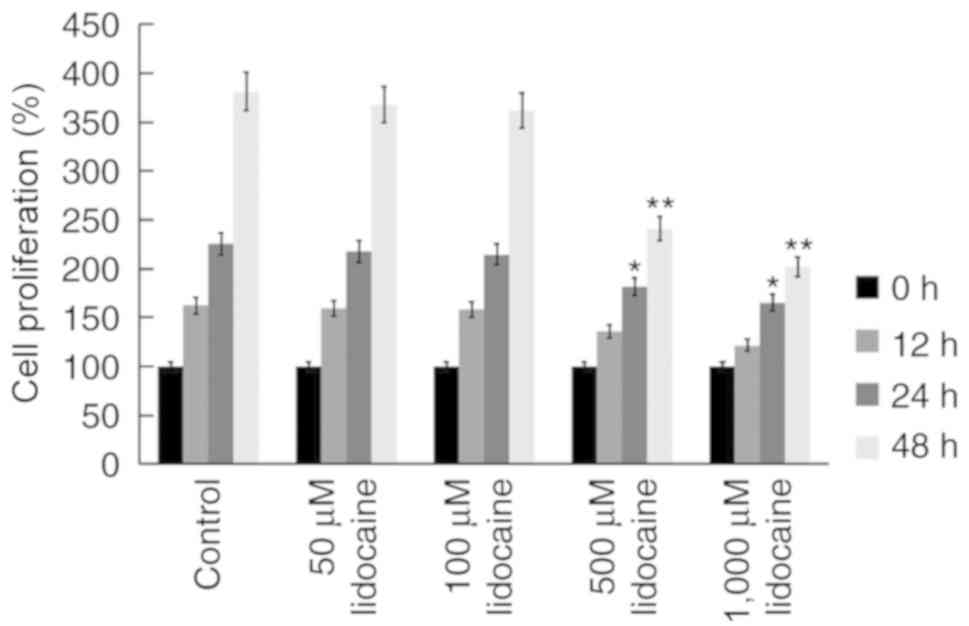
for 12, 24 and 48 h, and the viability of cells was determined. It
was revealed that lidocaine (500 and 1,000 µM) significantly
reduced the proliferation of Y79 cells at 24 and 48 h (Fig. 1). To further investigate whether
lidocaine inhibited the proliferation of Y79 cells via the
induction of apoptosis, flow cytometry was conducted. It was
demonstrated that lidocaine (500 and 1,000 µM) increased the rate
of the apoptosis of Y79 cells at 24 and 48 h (Fig. 2).
Effects of lidocaine on the expression
of miR-520a-3p
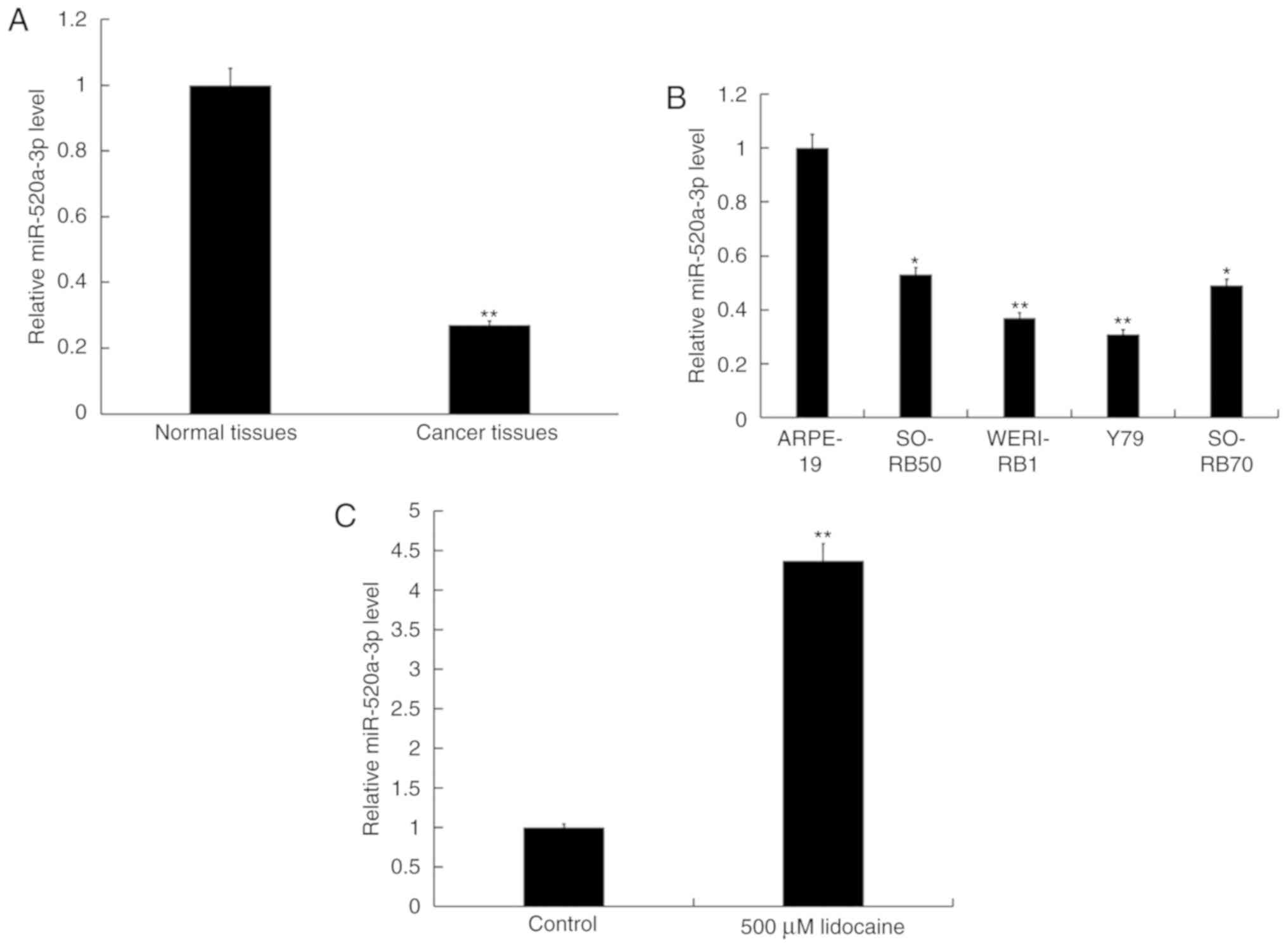
To determine the role of miR-520a-3p in RB, RT-qPCR
analysis was performed to determine the relative expression of
miR-520a-3p in 30 RB and adjacent normal tissues, plus Y79,
WERI-RB1, SO-RB50 and SO-RB70 RB cells, and ARPE-19 retinal pigment
epithelial cells. It was demonstrated that miR-520a-3p was
significantly downregulated in RB tissues and cell lines compared
with normal tissues and cells; expression was most notably
decreased in Y79 cells (Fig. 3A and
B). As lidocaine significantly induced the apoptosis of Y79
cells, Y79 cells were selected for further analysis. Y79 cells were
treated with 500 µM lidocaine for 24 h, and RT-qPCR analysis was
performed to determine the expression levels of miR-520a-3p. It was
observed that lidocaine significantly upregulated the expression of
miR-520a-3p in Y79 cells compared with the control (Fig. 3C).
EGFR is a direct target gene of
miR-520a-3p
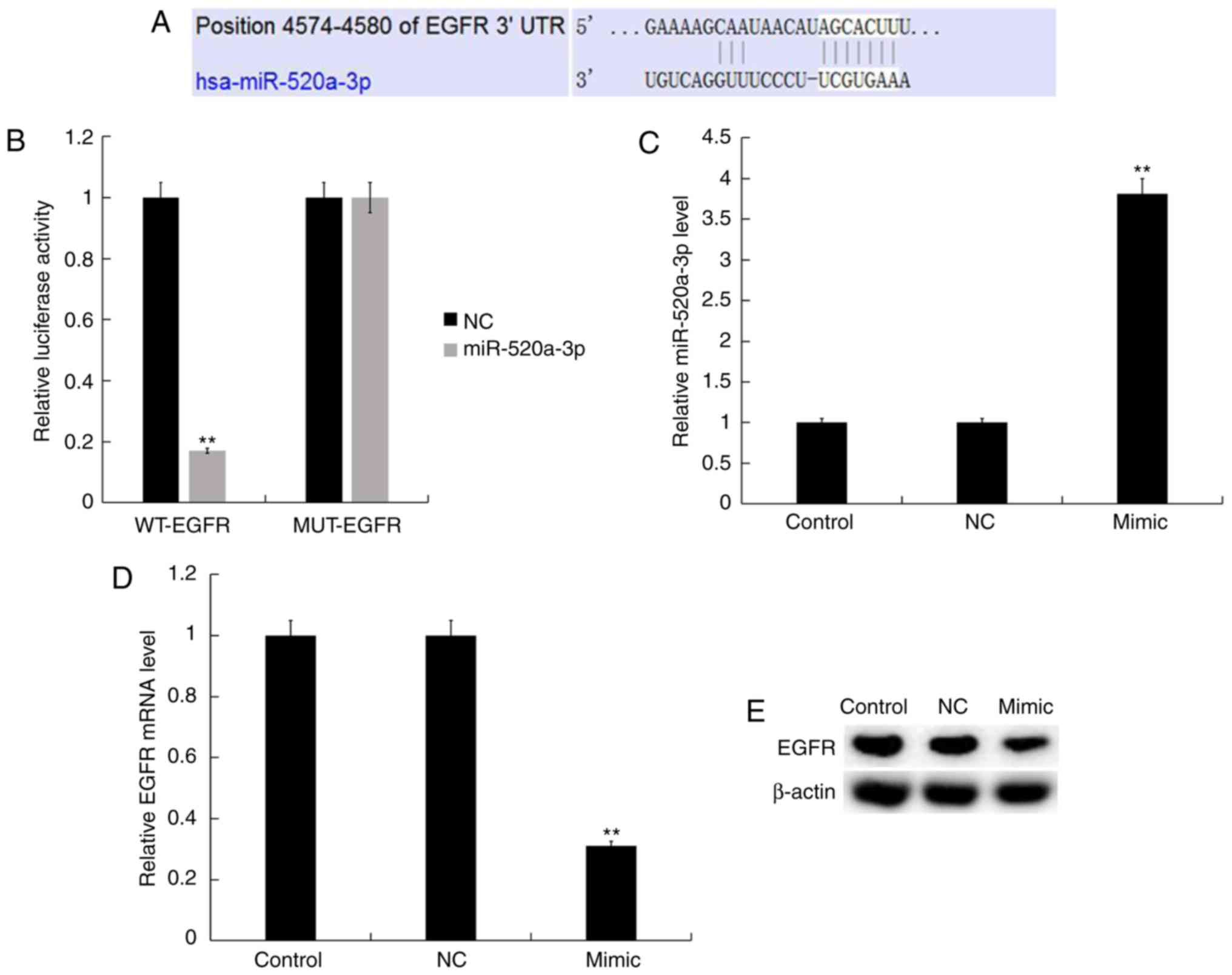
TargetScan was used to identify functional targets
of miR-520a-3p. Targets can results revealed that the 3′-UTR of
EGFR contained a putative site that was partially complementary to
miR-520a-3p (Fig. 4A). Luciferase
reporter plasmids containing the WT-EGFR or MUT-EGFR were
generated; a luciferase reporter assay demonstrated that mimic
significantly reduced the luciferase activity of cells transfected
with the WT-EGFR plasmid only, compared with the control (Fig. 4B). Y79 cells were transfected with
NC or mimic, and the transfection efficiency was determined after
48 h. RT-qPCR and western blot analysis revealed that transfection
with mimic significantly increased the expression of miR-520a-3p
(Fig. 4C) and downregulated the
expression of EGFR at the mRNA and protein levels compared with the
control (Fig. 4D and E).
Effects of lidocaine on EGFR
expression
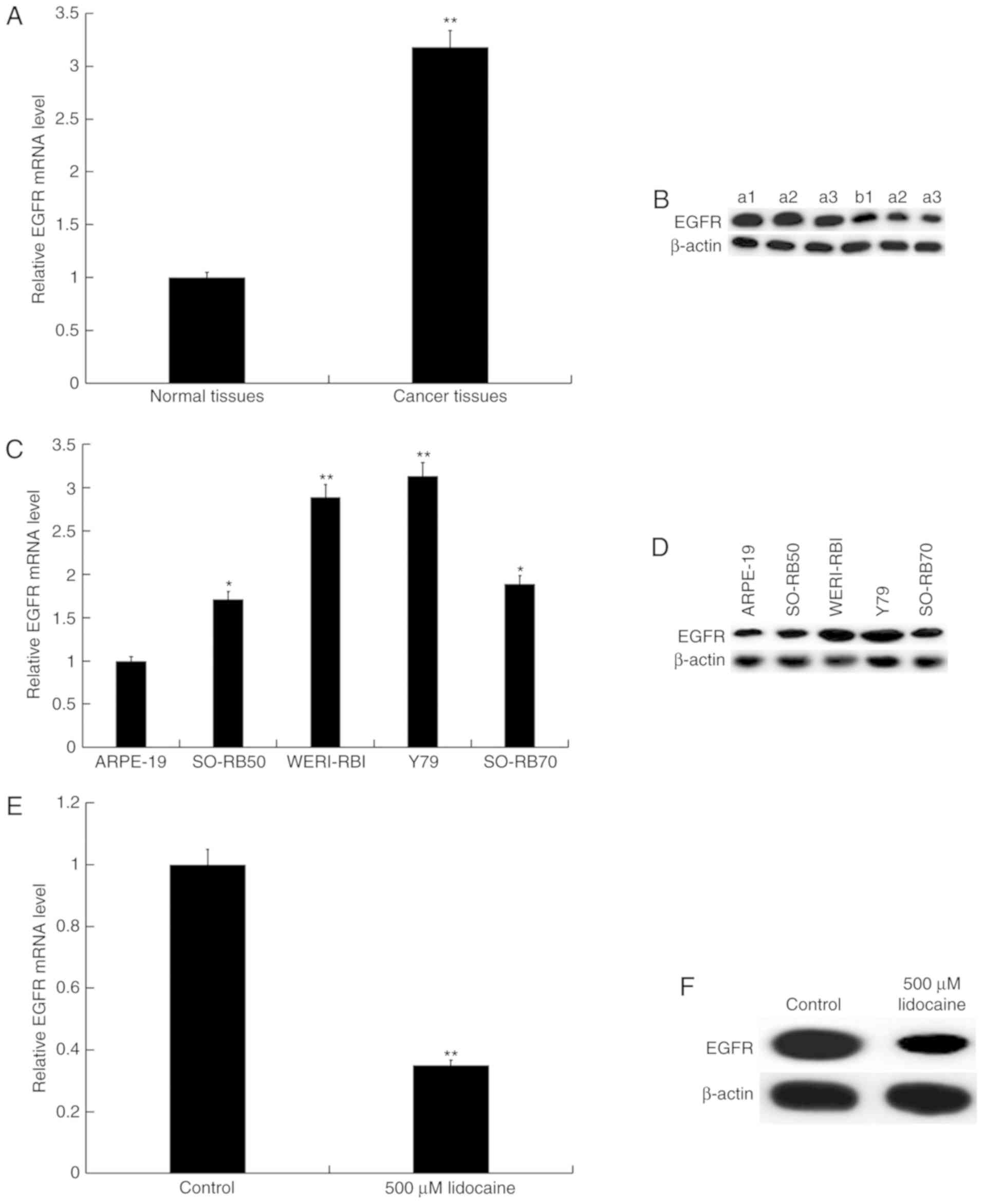
RT-qPCR and western blot analyses were conducted to
investigate the expression of EGFR in RB tissues and cell lines. It
was demonstrated that EGFR expression was significantly upregulated
in RB tissues and cells compared with normal controls (Fig. 5A-D). Y79 cells were treated with
500 µM lidocaine for 24 h; it was revealed that lidocaine
significantly suppressed the expression of EGFR in Y79 cells
compared with the control (Fig. 5E and
F).
Effects of lidocaine on RB cells are
mediated via upregulation of miR-520a-3p
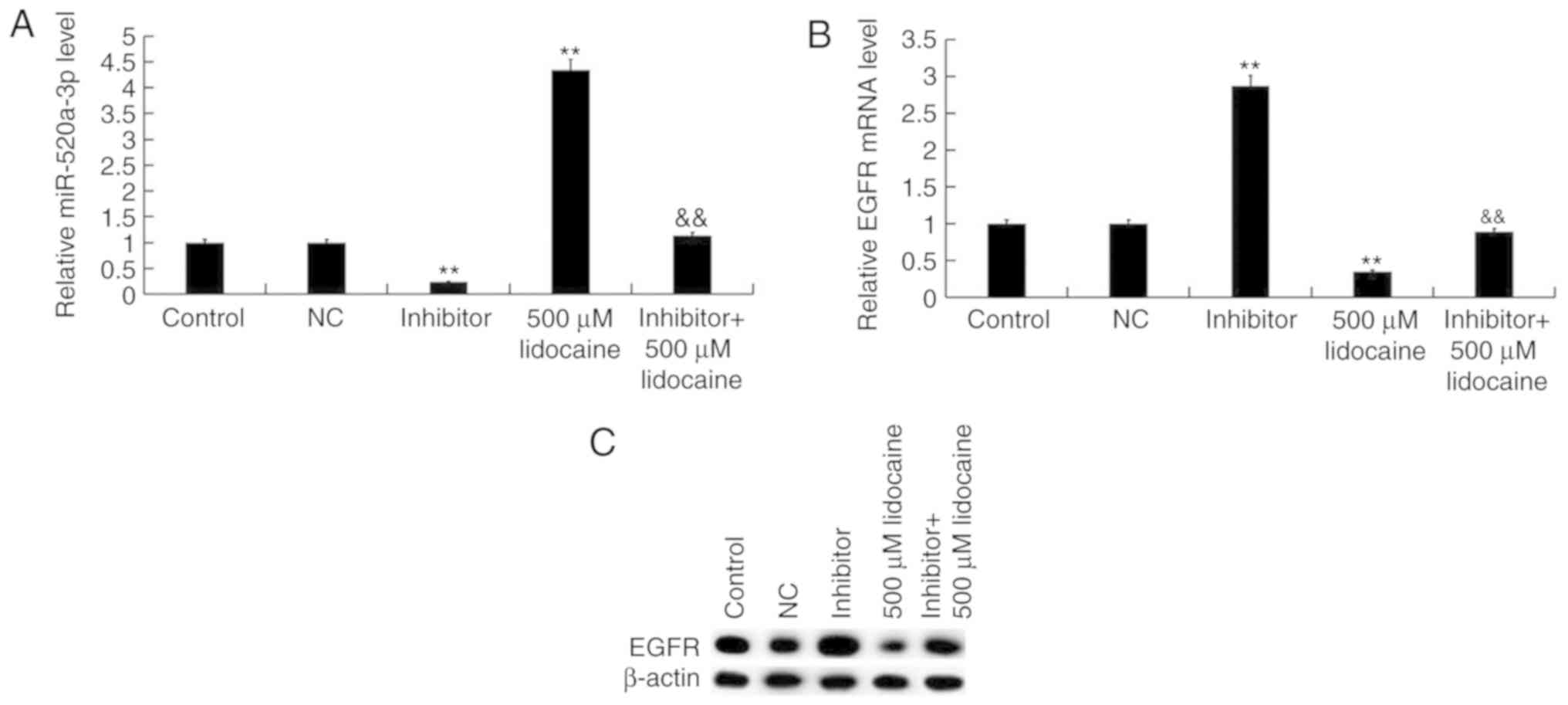
Y79 cells were transfected with NC or inhibitor for
24 h to investigate the association between lidocaine and
miR-520-3p. The cells were then treated with lidocaine or control
for 24 h. It was revealed that inhibitor significantly suppressed
the expression of miR-520a-3p and increased the levels of EGFR
compared with the control (Fig.
6). Furthermore, compared with lidocaine treatment alone, the
expression levels of miR-520a-3p were significantly decreased
following treatment with lidocaine plus transfection with
inhibitor, whereas those of EGFR were upregulated.
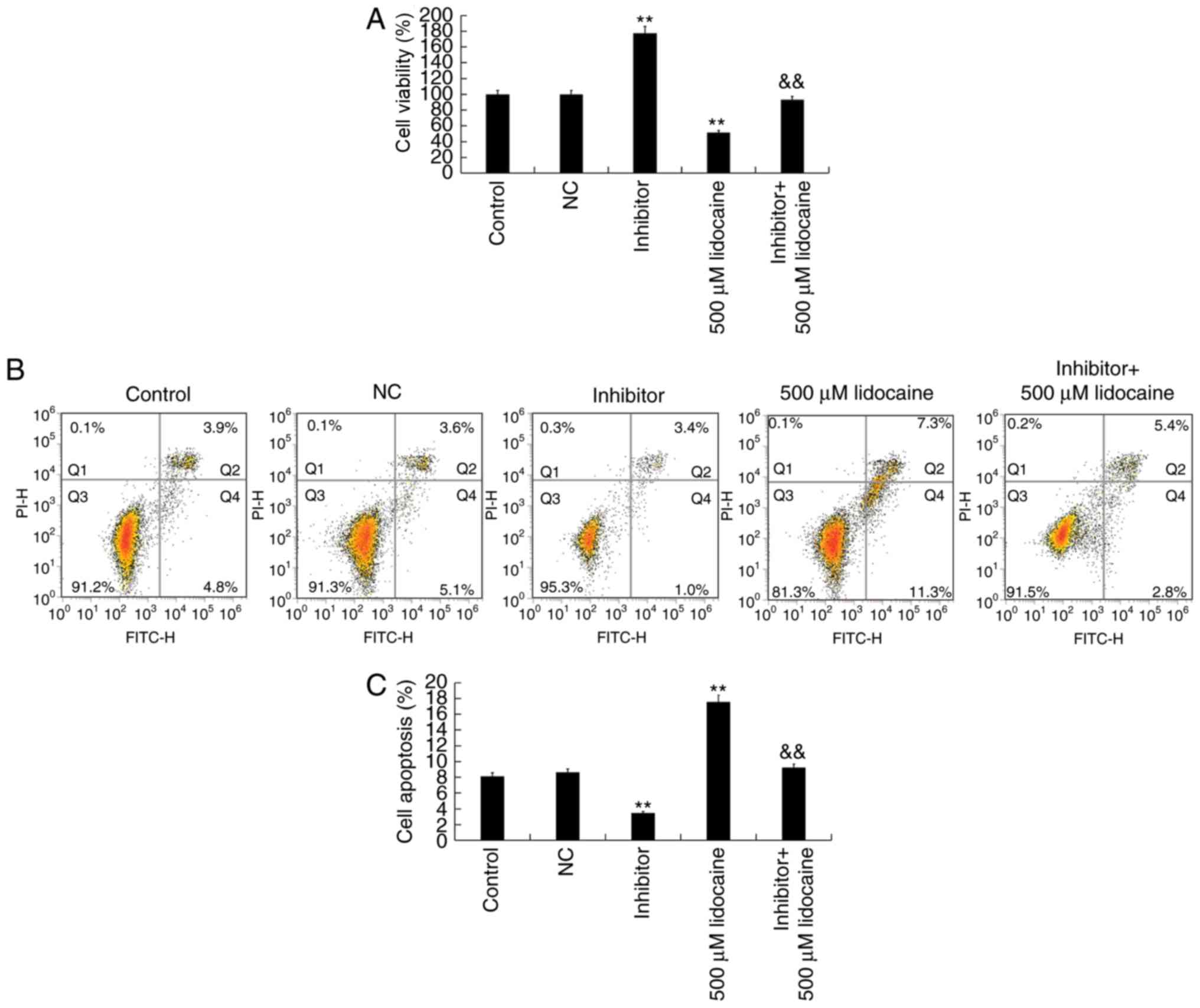
CCK-8 and flow cytometry assays were conducted to
investigate the viability and apoptosis of cells following
transfection with inhibitor and/or treatment with 500 µM lidocaine.
Compared with the control group, inhibitor significantly promoted
the proliferation and inhibited the apoptosis of Y79 cells.
Additionally, compared with lidocaine treatment alone, combining
transfection with inhibitor and lidocaine treatment significantly
increased Y79 cell proliferation and reduced cell apoptosis
(Fig. 7). The results indicated
that the effects of lidocaine on the proliferation and apoptosis of
Y79 cells were mediated by upregulating miR-520a-3p.
Effects of lidocaine on the volume,
weight and expression of miR-520a-3p/EGFR in vivo
To investigate the effects of lidocaine, miR-520a-3p
and EGFR on tumor growth in mice, Y79 cells transfected with
miR-520a-3p inhibitor or NC were injected subcutaneously into mice.
First, the level of miR-520a-3p and EGFR in RB model mice and the
normal control mice was detected, and RB tissues from the RB model
mice (Cancer tissues) and the normal control mice (Normal tissues)
were collected. RT-qPCR and western blot analyses revealed that
miR-520a-3p expression was significantly downregulated in RB tumor
tissues from mice compared with normal tissues (Fig. 8A), whereas EGFR expression was
upregulated (Fig. 8B and C). It
was observed that transfection with inhibitor suppressed the
expression of miR-520a-3p in tumor tissues and promoted the
expression of EGFR compared with the control, whereas treatment
with lidocaine induced opposing effects (Fig. 8D-F). Furthermore, compared with
lidocaine treatment alone, transfection of Y79 cells with
miR-520a-3p inhibitor significantly downregulated the expression of
miR-520a-3p and upregulated the expression of EGFR in the resulting
tumor tissues following treatment with lidocaine. These in
vivo results were consistent with the findings of the in
vitro experiments. Finally, the volume and weight of tumors
were analyzed. It was demonstrated that transfection with inhibitor
significantly increased tumor volume and weight compared with the
control, whereas lidocaine treatment induced opposing effects
(Fig. 8G and H). Furthermore,
combining inhibitor transfection and lidocaine treatment
significantly increased the volume and weight of tumors compared
with lidocaine treatment alone.
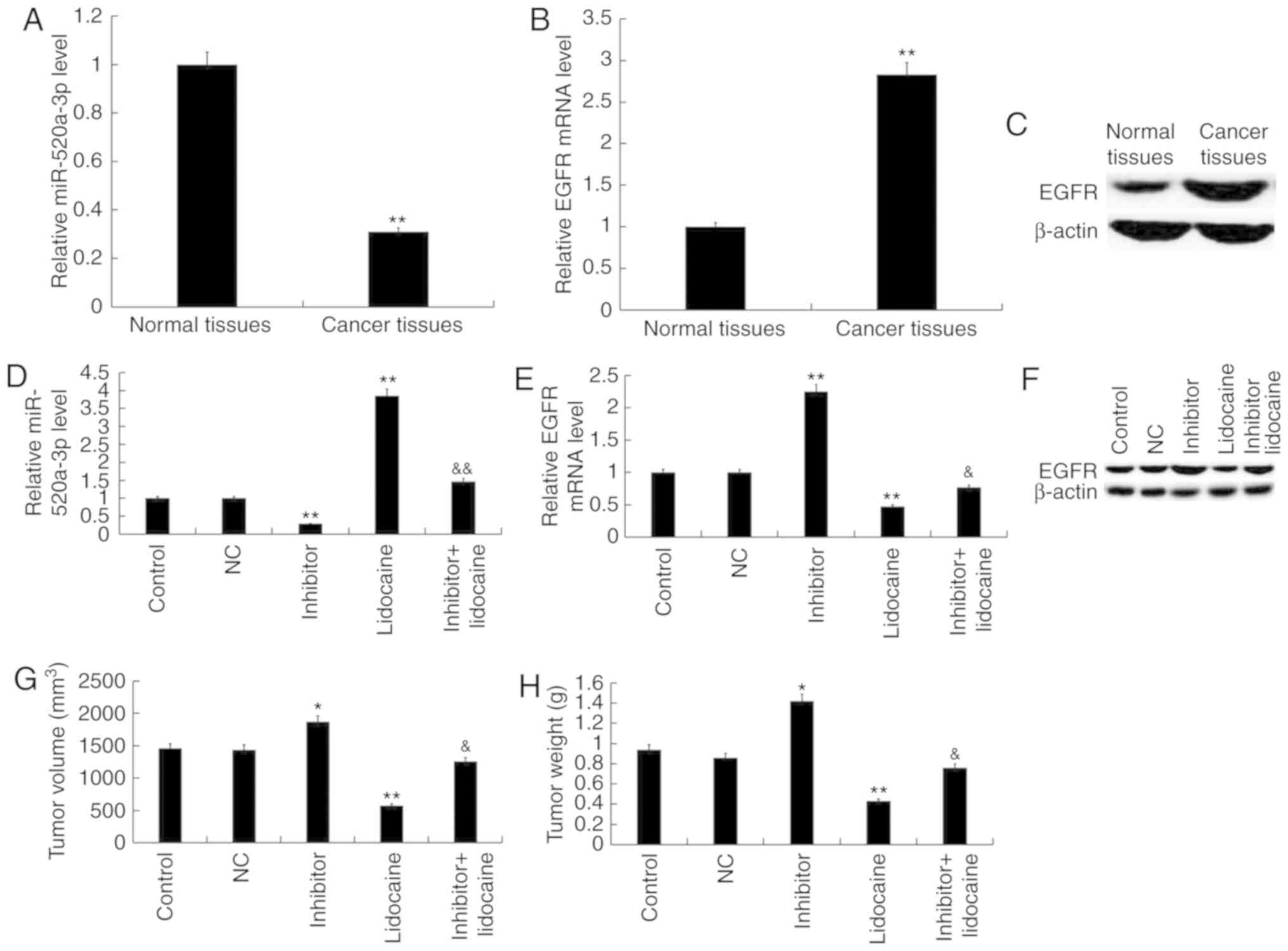 | Figure 8.Lidocaine reduces the volume and
weight of RB tumors in vivo via upregulation of miR-520a-3p.
First, the level of miR-520a-3p and EGFR in RB model mice and
normal control mice was detected, and RB tissues from the RB model
mice (Cancer tissues) and the normal control mice (Normal tissues)
were collected. Expression of (A) miR-520a-3p, and (B) EGFR mRNA
and (C) protein in RB and adjacent tissues of mice. **P<0.01 vs.
normal tissues. Tumor xenografts were implanted in mice via
subcutaneous injection of 2×10⁶ Y79 cells suspended in
100 µl serum-free RPMI-1640 medium on the sides of the posterior
flank of nude mice. At 18 days after tumor inoculation, mice were
subsequently treated with lidocaine (1.5 mg/kg) via tail vein
injection. Y79 cells were transfected with NC or inhibitor prior to
subcutaneous injection. Expression of (D) miR-520a-3p, and (E) EGFR
mRNA and (F) protein in tumor tissues 18 days after tumor
inoculation. (G) Tumor volume and (H) weight in the various groups.
Data are presented as the mean ± standard deviation of three
independent experiments performed in triplicate. *P<0.05,
**P<0.01 vs. control; &P<0.05,
&&P<0.01 vs. lidocaine. RB, retinoblastoma;
miR-520a-3p, microRNA-520a-3p; EGFR, epidermal growth factor
receptor; inhibitor, miR-520a-3p inhibitor; NC, negative
control. |
Discussion
The abnormal expression of various miRNAs has been
associated with the onset and development of cancer (31–34).
miRNAs may serve oncogenic or tumor suppressor roles in the
development of tumors (35,36);
previous studies have reported that whether an miRNA is an oncogene
or a tumor suppressor is dependent upon the type of cancer
(35,36).
The abnormal expression of members of the miR-520
family has been reported in a variety of tumors and transcripts of
the miR-520 family are regarded as important regulators of
oncogenes (16). The miR-520
family was downregulated in colon cancer (19). Additionally, previous studies
reported that miR-520d-3p was identified as a tumor suppressor gene
in ovarian cancer (37) and
gastric cancer (38). A recent
study demonstrated that miR-520g suppresses the proliferation and
promotes the apoptosis of esophageal squamous cell carcinoma cells
by targeting cysteine rich C-terminal 1 (15). Lidocaine is an amide local
anesthetic that promotes the apoptosis of colorectal cancer cells
(26,27). In a previous study, lidocaine
suppressed the proliferation of human tongue cancer cells by
reducing the activity of EGFR (25). It has been reported that EGFR is a
target of miR-520a-3p, and miR-520a-3p inhibits the proliferation
and induces the apoptosis of colorectal cancer cells by targeting
EGFR (19). The aim of the present
study was to investigate whether miR-520a-3p inhibits the
proliferation of RB cells by targeting EGFR.
Previous studies demonstrated that anesthetics such
as morphine or propofol affected the malignancy of solid tumors
(39,40). Lidocaine has been hypothesized to
inhibit the invasive ability of tumor cells at concentrations used
during surgical procedures (41).
In the present study, it was revealed that lidocaine suppressed the
proliferation and promoted the apoptosis of RB in vitro. The
findings indicated that lidocaine promoted the expression of
miR-520a-3p. miR-520a-3p is a potential tumor suppressor that has
been associated with human cancers such as non-small cell lung
cancer (42). Li et al
(43) revealed that miR-520a-3p
suppressed the development of breast cancer by targeting cyclin D1
and cluster of differentiation 44. Zhang et al (19) revealed that miR-520a-3p reduced
cell migration, promoted cell apoptosis and arrested the cell cycle
of colorectal cancer cells at the G0/G1
phase, and decreased tumor growth in xenograft mice, potentially by
targeting EGFR.
In the present study, it was observed that lidocaine
inhibited the proliferation and promoted the apoptosis of Y79 cells
by upregulating miR-520a-3p. Furthermore, it was revealed that EGFR
was highly expressed in RB cells and tissues; lidocaine treatment
downregulated EGFR expression at the mRNA and protein levels. Tumor
xenograft experiments demonstrated that lidocaine suppressed the
growth of RB xenograft tumors in vivo. These effects were
eliminated following transfection of RB cells with inhibitor,
indicating that the effects of lidocaine were mediated via
regulation of miR-520a-3p. Conversely, the effects of lidocaine
injection directly into tumor tissue were not investigated,
presenting a potential limitation of the present study.
In conclusion, the findings of the present study
indicated that lidocaine suppresses the development of RB in
vitro and in vivo by upregulating miR-520a-3p, with EGFR
the potential downstream target. Therefore, lidocaine may serve as
a potential therapeutic agent, whereas the miR-520a-3p/EGFR axis
may be a novel target in the treatment of RB.
Acknowledgements
Not applicable.
Funding
The present study was supported by the Medical
Research Foundation by Kunshan Technology Bureau (grant no.
KSZ1306).
Availability of data and materials
The datasets used and/or analyzed during the current
study are available from the corresponding author on reasonable
request.
Authors' contributions
WX participated in the acquisition of data, reviewed
the literature and wrote the manuscript. LW participated in the
acquisition, analysis and interpretation of data and reviewed the
literature. DY and XM participated in the acquisition of data and
provided critical revision of article. XZ conceived and designed
the study, and wrote the manuscript. All authors read and approved
the final manuscript.
Ethics approval and consent to
participate
The present study was approved by the Ethical
Committee of the First People's Hospital of Kunshan Affiliated with
Jiangsu University, and informed consent was obtained from all
patients. Animal experiments were performed in accordance with the
Recommended Guidelines for the Care and Use of Laboratory Animals
issued by Chinese Council on Animal Research (29). The present study was approved by
the Animal Ethics Committee of the First People's Hospital of
Kunshan Affiliated with Jiangsu University.
Patient consent for publication
Not applicable.
Competing interests
The authors declare that they have no competing
interests.
References
|
1
|
Ortiz MV and Dunkel IJ: Retinoblastoma. J
Child Neurol. 31:227–236. 2016. View Article : Google Scholar : PubMed/NCBI
|
|
2
|
Rao R and Honavar SG: Retinoblastoma.
Indian J Pediatr. 84:937–944. 2017. View Article : Google Scholar : PubMed/NCBI
|
|
3
|
Chen BJ, Mariño-Enríquez A, Fletcher CD
and Hornick JL: Loss of retinoblastoma protein expression in
spindle cell/pleomorphic lipomas and cytogenetically related
tumors: An immunohistochemical study with diagnostic implications.
Am J Surg Pathol. 36:1119–1128. 2012. View Article : Google Scholar : PubMed/NCBI
|
|
4
|
Tetzlaff JE: The pharmacology of local
anesthetics. Anesthesiol Clin North Am. 18:217–233. 2000.
View Article : Google Scholar : PubMed/NCBI
|
|
5
|
Caracas HC, Maciel JV, Martins PM, de
Souza MM and Maia LC: The use of lidocaine as an anti-inflammatory
substance: A systematic review. J Dent. 37:93–97. 2009. View Article : Google Scholar : PubMed/NCBI
|
|
6
|
Adler DMT, Damborg P and Verwilghen DR:
The antimicrobial activity of bupivacaine, lidocaine and
mepivacaine against equine pathogens: An investigation of 40
bacterial isolates. Vet J. 223:27–31. 2017. View Article : Google Scholar : PubMed/NCBI
|
|
7
|
Gao X, Yang H, Wu M, Shi K, Zhou C, Peng J
and Yang Q: Targeting delivery of lidocaine and cisplatin by
nanogel enhances chemotherapy and alleviates metastasis. ACS Appl
Mater Interfaces. 10:25228–25240. 2018. View Article : Google Scholar : PubMed/NCBI
|
|
8
|
Johnson MZ, Crowley PD, Foley AG, Xue C,
Connolly C, Gallagher HC and Buggy DJ: Effect of perioperative
lidocaine on metastasis after sevoflurane or ketamine-xylazine
anaesthesia for breast tumour resection in a murine model. Br J
Anaesth. 121:76–85. 2018. View Article : Google Scholar : PubMed/NCBI
|
|
9
|
Calin GA and Croce CM: MicroRNA-cancer
connection: The beginning of a new tale. Cancer Res. 66:7390–7394.
2006. View Article : Google Scholar : PubMed/NCBI
|
|
10
|
Esquela-Kerscher A and Slack FJ:
Oncomirs-microRNAs with a role in cancer. Nat Rev Cancer.
6:259–269. 2006. View
Article : Google Scholar : PubMed/NCBI
|
|
11
|
McManus MT: MicroRNAs and cancer. Semin
Cancer Biol. 13:253–258. 2003. View Article : Google Scholar : PubMed/NCBI
|
|
12
|
Ro S, Park C, Young D, Sanders KM and Yan
W: Tissue-dependent paired expression of miRNAs. Nucleic Acids Res.
35:5944–5953. 2007. View Article : Google Scholar : PubMed/NCBI
|
|
13
|
Mallory AC and Vaucheret H: MicroRNAs:
Something important between the genes. Curr Opin Plant Biol.
7:120–125. 2004. View Article : Google Scholar : PubMed/NCBI
|
|
14
|
Garzon R, Calin GA and Croce CM: MicroRNAs
in cancer. Annu Rev Med. 60:167–179. 2009. View Article : Google Scholar : PubMed/NCBI
|
|
15
|
Wu N, Song Y, Pang L and Chen Z: CRCT1
regulated by microRNA-520 g inhibits proliferation and induces
apoptosis in esophageal squamous cell cancer. Tumor Biol.
37:8271–8279. 2016. View Article : Google Scholar
|
|
16
|
Keklikoglou I, Koerner C, Schmidt C, Zhang
JD, Heckmann D, Shavinskaya A, Allgayer H, Gückel B, Fehm T,
Schneeweiss A, et al: MicroRNA-520/373 family functions as a tumor
suppressor in estrogen receptor negative breast cancer by targeting
NF-κB and TGF-β signaling pathways. Oncogene. 31:4150–4163. 2012.
View Article : Google Scholar : PubMed/NCBI
|
|
17
|
Ding M, Lu X, Wang C, Zhao Q, Ge J, Xia Q,
Wang J, Zen K, Zhang CY and Zhang C: The E2F1-miR-520/372/373-SPOP
axis modulates progression of renal carcinoma. Cancer Res.
78:6771–6784. 2018. View Article : Google Scholar : PubMed/NCBI
|
|
18
|
Park YY, Kim SB, Han HD, Sohn BH, Kim JH,
Liang J, Lu Y, Rodriguez-Aguayo C, Lopez-Berestein G, Mills GB, et
al: Tat-activating regulatory DNA-binding protein regulates
glycolysis in hepatocellular carcinoma by regulating the platelet
isoform of phosphofructokinase through microRNA 520. Hepatology.
58:182–191. 2013. View Article : Google Scholar : PubMed/NCBI
|
|
19
|
Zhang R, Liu R, Liu C, Niu Y, Zhang J, Guo
B, Zhang CY, Li J, Yang J and Chen X: A novel role for MiR-520a-3p
in regulating EGFR expression in colorectal cancer. Cell Physiol
Biochem. 42:1559–1574. 2017. View Article : Google Scholar : PubMed/NCBI
|
|
20
|
Liu Y, Miao L, Ni R, Zhang H, Li L, Wang
X, Li X and Wang J: microRNA-520a-3p inhibits proliferation and
cancer stem cell phenotype by targeting HOXD8 in non-small cell
lung cancer. Oncol Rep. 36:3529–3535. 2016. View Article : Google Scholar : PubMed/NCBI
|
|
21
|
Chen A, Xu J and Johnson AC: Curcumin
inhibits human colon cancer cell growth by suppressing gene
expression of epidermal growth factor receptor through reducing the
activity of the transcription factor Egr-1. Oncogene. 25:278–287.
2006. View Article : Google Scholar : PubMed/NCBI
|
|
22
|
Cîrstea AE, Stepan AE, Zăvoi RE and
Simionescu CE: EGFR Immunoexpression in malignant serous and
mucinous ovarian tumors. Curr Health Sci J. 44:129–134.
2018.PubMed/NCBI
|
|
23
|
Jia Y, Li X, Jiang T, Zhao S, Zhao C,
Zhang L, Liu X, Shi J, Qiao M, Luo J, et al: EGFR-targeted therapy
alters the tumor microenvironment in EGFR-driven lung tumors:
Implications for combination therapies. Int J Cancer. Feb
5–2019.doi: 10.1002/ijc.32191 (Epub ahead of print). View Article : Google Scholar
|
|
24
|
Wang P, Liu X, Shao Y, Wang H, Liang C,
Han B and Ma Z: MicroRNA-107-5p suppresses non-small cell lung
cancer by directly targeting oncogene epidermal growth factor
receptor. Oncotarget. 8:57012–57023. 2017.PubMed/NCBI
|
|
25
|
Sakaguchi M, Kuroda Y and Hirose M: The
antiproliferative effect of lidocaine on human tongue cancer cells
with inhibition of the activity of epidermal growth factor
receptor. Anesth Analg. 102:1103–1107. 2006. View Article : Google Scholar : PubMed/NCBI
|
|
26
|
Bundscherer AC, Malsy M, Bitzinger DI,
Wiese CH, Gruber MA and Graf BM: Effects of lidocaine on HT-29 and
SW480 colon cancer cells in vitro. Anticancer Res. 37:1941–1945.
2017. View Article : Google Scholar : PubMed/NCBI
|
|
27
|
Qu X, Yang L, Shi Q, Wang X, Wang D and Wu
G: Lidocaine inhibits proliferation and induces apoptosis in
colorectal cancer cells by upregulating mir-520a-3p and targeting
EGFR. Pathol Res Pract. 214:1974–1979. 2018. View Article : Google Scholar : PubMed/NCBI
|
|
28
|
Livak KJ and Schmittgen TD: Analysis of
relative gene expression data using real-time quantitative PCR and
the 2(-Delta Delta C(T)) method. Methods. 25:402–408. 2001.
View Article : Google Scholar : PubMed/NCBI
|
|
29
|
Bayne K: Revised guide for the care and
use of laboratory animals available. American physiological
society. Physiologist. 39:199, 208–211. 1996.
|
|
30
|
Freeman J, Crowley PD, Foley AG, Gallagher
HC, Iwasaki M, Ma D and Buggy DJ: Effect of perioperative lidocaine
and cisplatin on metastasis in a murine model of breast cancer
surgery. Anticancer Res. 38:5599–5606. 2018. View Article : Google Scholar : PubMed/NCBI
|
|
31
|
Zhang Y, Zhu X, Zhu X, Wu Y, Liu Y, Yao B
and Huang Z: MiR-613 suppresses retinoblastoma cell proliferation,
invasion, and tumor formation by targeting E2F5. Tumour Biol.
39:10104283176916742017.PubMed/NCBI
|
|
32
|
Di LG and Croce CM: miRNA profiling of
cancer. Curr Opin Genet Dev. 23:3–11. 2013. View Article : Google Scholar : PubMed/NCBI
|
|
33
|
Wei W, Yang Y, Cai J, Cui K, Li RX, Wang
H, Shang X and Wei D: MiR-30a-5p Suppresses tumor metastasis of
human colorectal cancer by targeting ITGB3. Cell Physiol Biochem.
39:1165–1176. 2016. View Article : Google Scholar : PubMed/NCBI
|
|
34
|
Liu X, Xie T, Mao X, Xue L, Chu X and Chen
L: MicroRNA-149 increases the sensitivity of colorectal cancer
cells to 5-fluorouracil by targeting forkhead box transcription
factor FOXM1. Cell Physiol Biochem. 39:617–629. 2016. View Article : Google Scholar : PubMed/NCBI
|
|
35
|
Zhou L, Xu Z, Ren X, Chen K and Xin S:
MicroRNA-124 (MiR-124) inhibits cell proliferation, metastasis and
invasion in colorectal cancer by downregulating Rho-associated
protein kinase 1(ROCK1). Cell Physiol Biochem. 38:1785–1795. 2016.
View Article : Google Scholar : PubMed/NCBI
|
|
36
|
Li HT, Zhang H, Chen Y, Liu XF and Qian J:
MiR-423-3p enhances cell growth through inhibition of p21Cip1/Waf1
in colorectal cancer. Cell Physiol Biochem. 37:1044–1054. 2015.
View Article : Google Scholar : PubMed/NCBI
|
|
37
|
Nishimura M, Jung EJ, Shah MY, Lu C,
Spizzo R, Shimizu M, Han HD, Ivan C, Rossi S, Zhang X, et al:
Therapeutic synergy between microRNA and siRNA in ovarian cancer
treatment. Cancer Discov. 3:1302–1315. 2013. View Article : Google Scholar : PubMed/NCBI
|
|
38
|
Li R, Yuan W, Mei W, Yang K and Chen Z:
MicroRNA 520d-3p inhibits gastric cancer cell proliferation,
migration, and invasion by downregulating EphA2 expression. Mol
Cell Biochem. 396:295–305. 2014. View Article : Google Scholar : PubMed/NCBI
|
|
39
|
Gach K, Wyrębska A, Fichna J and Janecka
A: The role of morphine in regulation of cancer cell growth. Naunyn
Schmiedebergs Arch Pharmacol. 384:221–230. 2011. View Article : Google Scholar : PubMed/NCBI
|
|
40
|
Xu YB, Du QH, Zhang MY, Yun P and He CY:
Propofol suppresses proliferation, invasion and angiogenesis by
down-regulating ERK-VEGF/MMP-9 signaling in Eca-109 esophageal
squamous cell carcinoma cells. Eur Rev Med Pharmacol Sci.
17:2486–2494. 2013.PubMed/NCBI
|
|
41
|
Chang YC, Liu CL, Chen MJ, Hsu YW, Chen
SN, Lin CH, Chen CM, Yang FM and Hu MC: Local anesthetics induce
apoptosis in human breast tumor cells. Anesth Analg. 118:116–124.
2014. View Article : Google Scholar : PubMed/NCBI
|
|
42
|
Yu J, Tan Q, Deng B, Fang C, Qi D and Wang
R: The microRNA-520a-3p inhibits proliferation, apoptosis and
metastasis by targeting MAP3K2 in non-small cell lung cancer. Am J
Cancer Res. 5:802–811. 2015.PubMed/NCBI
|
|
43
|
Li J, Wei J, Mei Z, Yin Y, Li Y, Lu M and
Jin S: Suppressing role of miR-520a-3p in breast cancer through
CCND1 and CD44. Am J Transl Res. 9:146–154. 2017.PubMed/NCBI
|