Spandidos Publications Logo
  • About
    • About Spandidos
    • Aims and Scopes
    • Abstracting and Indexing
    • Editorial Policies
    • Reprints and Permissions
    • Job Opportunities
    • Terms and Conditions
    • Contact
  • Journals
    • All Journals
    • Oncology Letters
      • Oncology Letters
      • Information for Authors
      • Editorial Policies
      • Editorial Board
      • Aims and Scope
      • Abstracting and Indexing
      • Bibliographic Information
      • Archive
    • International Journal of Oncology
      • International Journal of Oncology
      • Information for Authors
      • Editorial Policies
      • Editorial Board
      • Aims and Scope
      • Abstracting and Indexing
      • Bibliographic Information
      • Archive
    • Molecular and Clinical Oncology
      • Molecular and Clinical Oncology
      • Information for Authors
      • Editorial Policies
      • Editorial Board
      • Aims and Scope
      • Abstracting and Indexing
      • Bibliographic Information
      • Archive
    • Experimental and Therapeutic Medicine
      • Experimental and Therapeutic Medicine
      • Information for Authors
      • Editorial Policies
      • Editorial Board
      • Aims and Scope
      • Abstracting and Indexing
      • Bibliographic Information
      • Archive
    • International Journal of Molecular Medicine
      • International Journal of Molecular Medicine
      • Information for Authors
      • Editorial Policies
      • Editorial Board
      • Aims and Scope
      • Abstracting and Indexing
      • Bibliographic Information
      • Archive
    • Biomedical Reports
      • Biomedical Reports
      • Information for Authors
      • Editorial Policies
      • Editorial Board
      • Aims and Scope
      • Abstracting and Indexing
      • Bibliographic Information
      • Archive
    • Oncology Reports
      • Oncology Reports
      • Information for Authors
      • Editorial Policies
      • Editorial Board
      • Aims and Scope
      • Abstracting and Indexing
      • Bibliographic Information
      • Archive
    • Molecular Medicine Reports
      • Molecular Medicine Reports
      • Information for Authors
      • Editorial Policies
      • Editorial Board
      • Aims and Scope
      • Abstracting and Indexing
      • Bibliographic Information
      • Archive
    • World Academy of Sciences Journal
      • World Academy of Sciences Journal
      • Information for Authors
      • Editorial Policies
      • Editorial Board
      • Aims and Scope
      • Abstracting and Indexing
      • Bibliographic Information
      • Archive
    • International Journal of Functional Nutrition
      • International Journal of Functional Nutrition
      • Information for Authors
      • Editorial Policies
      • Editorial Board
      • Aims and Scope
      • Abstracting and Indexing
      • Bibliographic Information
      • Archive
    • International Journal of Epigenetics
      • International Journal of Epigenetics
      • Information for Authors
      • Editorial Policies
      • Editorial Board
      • Aims and Scope
      • Abstracting and Indexing
      • Bibliographic Information
      • Archive
    • Medicine International
      • Medicine International
      • Information for Authors
      • Editorial Policies
      • Editorial Board
      • Aims and Scope
      • Abstracting and Indexing
      • Bibliographic Information
      • Archive
  • Articles
  • Information
    • Information for Authors
    • Information for Reviewers
    • Information for Librarians
    • Information for Advertisers
    • Conferences
  • Language Editing
Spandidos Publications Logo
  • About
    • About Spandidos
    • Aims and Scopes
    • Abstracting and Indexing
    • Editorial Policies
    • Reprints and Permissions
    • Job Opportunities
    • Terms and Conditions
    • Contact
  • Journals
    • All Journals
    • Biomedical Reports
      • Information for Authors
      • Editorial Policies
      • Editorial Board
      • Aims and Scope
      • Abstracting and Indexing
      • Bibliographic Information
      • Archive
    • Experimental and Therapeutic Medicine
      • Information for Authors
      • Editorial Policies
      • Editorial Board
      • Aims and Scope
      • Abstracting and Indexing
      • Bibliographic Information
      • Archive
    • International Journal of Epigenetics
      • Information for Authors
      • Editorial Policies
      • Editorial Board
      • Aims and Scope
      • Abstracting and Indexing
      • Bibliographic Information
      • Archive
    • International Journal of Functional Nutrition
      • Information for Authors
      • Editorial Policies
      • Editorial Board
      • Aims and Scope
      • Abstracting and Indexing
      • Bibliographic Information
      • Archive
    • International Journal of Molecular Medicine
      • Information for Authors
      • Editorial Policies
      • Editorial Board
      • Aims and Scope
      • Abstracting and Indexing
      • Bibliographic Information
      • Archive
    • International Journal of Oncology
      • Information for Authors
      • Editorial Policies
      • Editorial Board
      • Aims and Scope
      • Abstracting and Indexing
      • Bibliographic Information
      • Archive
    • Medicine International
      • Information for Authors
      • Editorial Policies
      • Editorial Board
      • Aims and Scope
      • Abstracting and Indexing
      • Bibliographic Information
      • Archive
    • Molecular and Clinical Oncology
      • Information for Authors
      • Editorial Policies
      • Editorial Board
      • Aims and Scope
      • Abstracting and Indexing
      • Bibliographic Information
      • Archive
    • Molecular Medicine Reports
      • Information for Authors
      • Editorial Policies
      • Editorial Board
      • Aims and Scope
      • Abstracting and Indexing
      • Bibliographic Information
      • Archive
    • Oncology Letters
      • Information for Authors
      • Editorial Policies
      • Editorial Board
      • Aims and Scope
      • Abstracting and Indexing
      • Bibliographic Information
      • Archive
    • Oncology Reports
      • Information for Authors
      • Editorial Policies
      • Editorial Board
      • Aims and Scope
      • Abstracting and Indexing
      • Bibliographic Information
      • Archive
    • World Academy of Sciences Journal
      • Information for Authors
      • Editorial Policies
      • Editorial Board
      • Aims and Scope
      • Abstracting and Indexing
      • Bibliographic Information
      • Archive
  • Articles
  • Information
    • For Authors
    • For Reviewers
    • For Librarians
    • For Advertisers
    • Conferences
  • Language Editing
Login Register Submit
  • This site uses cookies
  • You can change your cookie settings at any time by following the instructions in our Cookie Policy. To find out more, you may read our Privacy Policy.

    I agree
Search articles by DOI, keyword, author or affiliation
Search
Advanced Search
presentation
Oncology Letters
Join Editorial Board Propose a Special Issue
Print ISSN: 1792-1074 Online ISSN: 1792-1082
Journal Cover
September-2016 Volume 12 Issue 3

Full Size Image

Sign up for eToc alerts
Recommend to Library

Journals

International Journal of Molecular Medicine

International Journal of Molecular Medicine

International Journal of Molecular Medicine is an international journal devoted to molecular mechanisms of human disease.

International Journal of Oncology

International Journal of Oncology

International Journal of Oncology is an international journal devoted to oncology research and cancer treatment.

Molecular Medicine Reports

Molecular Medicine Reports

Covers molecular medicine topics such as pharmacology, pathology, genetics, neuroscience, infectious diseases, molecular cardiology, and molecular surgery.

Oncology Reports

Oncology Reports

Oncology Reports is an international journal devoted to fundamental and applied research in Oncology.

Experimental and Therapeutic Medicine

Experimental and Therapeutic Medicine

Experimental and Therapeutic Medicine is an international journal devoted to laboratory and clinical medicine.

Oncology Letters

Oncology Letters

Oncology Letters is an international journal devoted to Experimental and Clinical Oncology.

Biomedical Reports

Biomedical Reports

Explores a wide range of biological and medical fields, including pharmacology, genetics, microbiology, neuroscience, and molecular cardiology.

Molecular and Clinical Oncology

Molecular and Clinical Oncology

International journal addressing all aspects of oncology research, from tumorigenesis and oncogenes to chemotherapy and metastasis.

World Academy of Sciences Journal

World Academy of Sciences Journal

Multidisciplinary open-access journal spanning biochemistry, genetics, neuroscience, environmental health, and synthetic biology.

International Journal of Functional Nutrition

International Journal of Functional Nutrition

Open-access journal combining biochemistry, pharmacology, immunology, and genetics to advance health through functional nutrition.

International Journal of Epigenetics

International Journal of Epigenetics

Publishes open-access research on using epigenetics to advance understanding and treatment of human disease.

Medicine International

Medicine International

An International Open Access Journal Devoted to General Medicine.

Journal Cover
September-2016 Volume 12 Issue 3

Full Size Image

Sign up for eToc alerts
Recommend to Library

  • Article
  • Citations
    • Cite This Article
    • Download Citation
    • Create Citation Alert
    • Remove Citation Alert
    • Cited By
  • Similar Articles
    • Related Articles (in Spandidos Publications)
    • Similar Articles (Google Scholar)
    • Similar Articles (PubMed)
  • Download PDF
  • Download XML
  • View XML
Article

Antiproliferative/cytotoxic effects of molecular iodine, povidone-iodine and Lugol's solution in different human carcinoma cell lines

  • Authors:
    • Harald Rösner
    • Wolfgang Möller
    • Sabine Groebner
    • Pompilio Torremante
  • View Affiliations / Copyright

    Affiliations: Institute of Zoology, University of Hohenheim, D‑70593 Stuttgart, Germany, Synlab Medical Services, MCZ Synlab Leinfelden, D-70771 Leinfelden, Germany, Practice for Gynaecology and Obstetrics, D-88416 Ochsenhausen, Germany
  • Pages: 2159-2162
    |
    Published online on: July 5, 2016
       https://doi.org/10.3892/ol.2016.4811
  • Expand metrics +
Metrics: Total Views: 0 (Spandidos Publications: | PMC Statistics: )
Metrics: Total PDF Downloads: 0 (Spandidos Publications: | PMC Statistics: )
Cited By (CrossRef): 0 citations Loading Articles...

This article is mentioned in:


Abstract

Clinical trials have revealed that molecular iodine (I2) has beneficial effects in fibrocystic breast disease and in cyclic mastalgia. Likewise, povidone-iodine (PVP-I), which is widely used in clinical practice as an antiseptic agent following tumour surgery, has been demonstrated to have cytotoxic effects on colon cancer and ascites tumour cells. Our previous study indicated that the growth of breast cancer and seven other human malignant cell lines was variably diminished by I2 and iodolactones. With the intention of developing an iodine‑based anticancer therapy, the present investigations extended these studies by comparing the cytotoxic capacities of I2, potassium iodide (KJ), PVP‑I and Lugol's solution on various human carcinoma cell lines. Upon staining the cell nuclei with Hoechst 33342, the cell densities were determined microscopically. While KJ alone did not affect cell proliferation, it enhanced the antiproliferative activity of I2. In addition, PVP‑I significantly inhibited the proliferation of human MCF‑7 breast carcinoma, IPC melanoma, and A549 and H1299 lung carcinoma cells in a concentration corresponding to 20 µM I2. Likewise, Lugol's solution in concentrations corresponding to 20‑80 µM I2 were observed to reduce the growth of MCF‑7 cells. Experiments with fresh human blood samples revealed that the antiproliferative activity of PVP‑I and I2 is preserved in blood plasma to a high degree. These findings suggest that PVP‑I, Lugol's solution, and a combination of iodide and I2 may be potent agents for use in the development of antitumour strategies.

Introduction

In animal models, consumption of a molecular iodine (I2) diet has been demonstrated to prevent N-methyl-N-nitrosourea and dimethylbenz(a)anthracene induction of breast tumours (1,2) and to reduce breast hyperplasia and perilobular/ductal fibrosis (3). Similarly, clinical trials have revealed that I2 has beneficial effects in fibrocystic breast disease (4) and in cyclic mastalgia (5), suggesting that iodine therapy may diminish breast disease, including breast cancer progression (6,7). Povidone-iodine (PVP-I) is widely used in clinical practice as an antiseptic agent following tumour surgery. PVP-I has been demonstrated to induce the death of epithelial HeLa cells and to reduce oral mucosal tissue in rats (8). Further data supporting a potent anticancer effect of I2 and of iodolactones has been established via cell culture investigations, which have revealed a significant decrease in cell growth in human breast cancer cell lines (9,10).

In a previous study, we showed that, in addition to breast carcinoma cells, the proliferation of seven other human malignant cell lines (neuroblastoma, glioma, melanoma, and lung, colon and pancreas carcinomas) was variably diminished by I2 and iodolactones (11). With the intention of developing an iodine-based anticancer therapy, the present study extended this research by comparing the antiproliferative/cytotoxic capability of I2, potassium iodide (KJ), combined KJ + I2, PVP-I and Lugol's solution on various human carcinoma cell lines. The data suggest that PVP-I and the combination of iodide and I2 may be potential tools to directly interfere with tumour cell growth.

Materials and methods

Materials

The following human cell lines were used in the present study: MCF-7 (breast carcinoma); HS-24, H1299 and A549 (lung carcinoma); Capan-2 and PaTu 8902 (pancreatic carcinoma), these cells lines were provided by Dr. Margarete Fischer of The Bosch Institute of Clinical Pharmacology, Stuttgart, Germany, and the IPC-298 (melanoma) cell line, provided by the Institute for Radiobiology, SanAk, Munich, Germany). The fluorescent dye Hoechst 33342 was obtained from Calbiochem (Merck Millipore, Darmstadt, Germany). Gibco Ham's F12 medium, fetal calf serum (FCS), streptomycin and penicillin were purchased from Thermo Fisher Scientific, Inc. (Carlsbad, CA, USA). I2, KJ and Lugol's solution were obtained from Merck Millipore, and PVP-I was obtained from Mundipharma International, Ltd. (Cambridge, UK).

Cell culture

The cells were seeded at a low density (200,000 cells per well) and cultured in Ham's F12, completed with 10% FCS and 1% penicillin/streptomycin. After 5 h, the following iodine compounds were added (final concentrations are given separately): i) KJ (100 µM), or I2 (20 µM), or combined KJ/I2 (100 µM/20 µM, respectively) from freshly prepared stocks dissolved in sterile water (for KJ) or pure ethanol (for I2); ii) PVP-I corresponding to 20–80 µM I2; iii) Lugol's solution corresponding to 20–80 µM I2 and 60–240 µM KJ. The cells were then cultured for a further 6 days. In separate experiments, fresh sodium-heparin human blood (taken from one of the authors in MCZ Synlab, Leinfelden) was incubated with PVP-I (0.5, 1 or 2 mM I2) or Lugol's solution (2 mM I2) or I2 (2 mM) for 30 min and then centrifuged (1,200 rpm, 12 min). Each supernatant (blood plasma; 200 µl) was diluted with 1,800 ml cell culture medium. MCF-7 cells were cultured with these plasma-containing medium samples for 6 days, as above.

Staining and counting of cells

In order to determine the total cell densities, cell cultures were washed twice with fresh medium in order to remove detached dead cells, stained with Hoechst 33342 (1:5,000 in phosphate-buffered saline) for 10 min, and washed again. From each cell culture well, digital images of 26 different areas of 1.5 mm2 were captured, and the densities of stained nuclei were determined using ImageJ software (11). The results were calculated as relative values (%) compared to untreated cells (100%).

Statistical analysis

All experiments were performed in duplicate and repeated (n=4–6). Results are presented as the means ± standard deviations. In all cases, statistical significance comparing experimental values with corresponding controls was estimated by means of student t-test (for details see figure legends).

Results

Antiproliferative/cytotoxic effects of I2, KJ and the combination of the two in different carcinoma cell lines

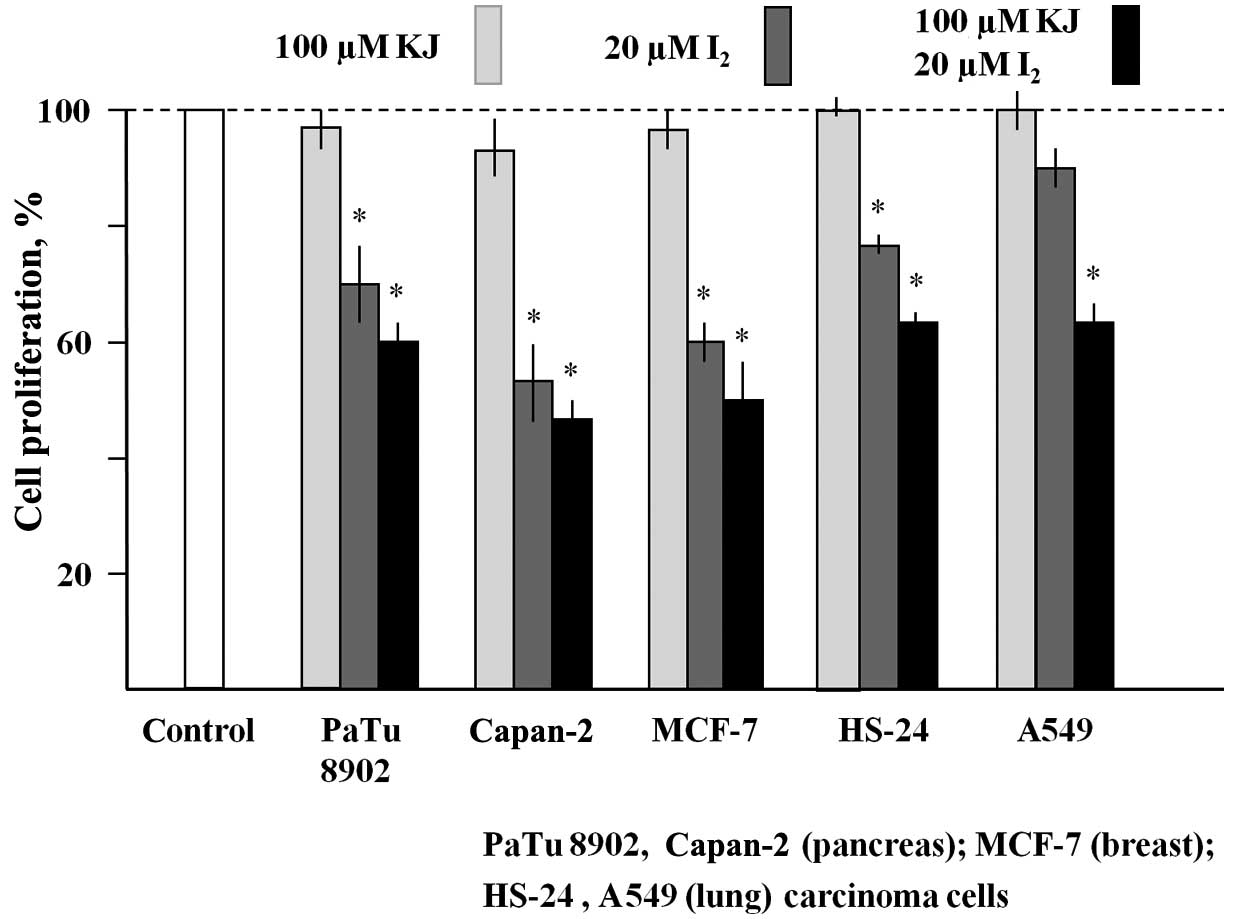
Various human carcinoma cell lines (PaTu 8902, Capan-2, MCF-7, HS-24 and A549) were cultured in the presence of 100 µM KJ or 20 µM I2, or a combination of the two (KJ + I2) for 6 days (Fig. 1). While KJ had no antiproliferative effect, the presence of I2 inhibited the cell growth of all cell lines tested. The antiproliferative activity was pronounced in the pancreas carcinoma line Capan-2 and the breast carcinoma line MCF-7 (reduction of cell densities by 55% and 50%, respectively, compared with untreated cells). Fig. 1 also shows that, in all cell lines, the inhibitory effect of 20 µM I2 was enhanced in the presence of 100 µM KJ.

Figure 1.

Effects of I2, KJ, and the combination of the two on the proliferation of human carcinoma cells. KJ had no effect, whereas I2 reduced cell proliferation by ≤55% in Capan-2 and 50% in MCF-7 cells. This effect was, to a certain degree, enhanced in the presence of KJ. Results are presented as the means ± standard deviations; n=4–6; *P<0.05 (t-test; treated samples vs. controls). I2, molecular iodine; KJ potassium iodide.

Antiproliferative/cytotoxic effects of PVP-I and Lugol's solution on MCF-7, IPC, A549 and H1299 cells

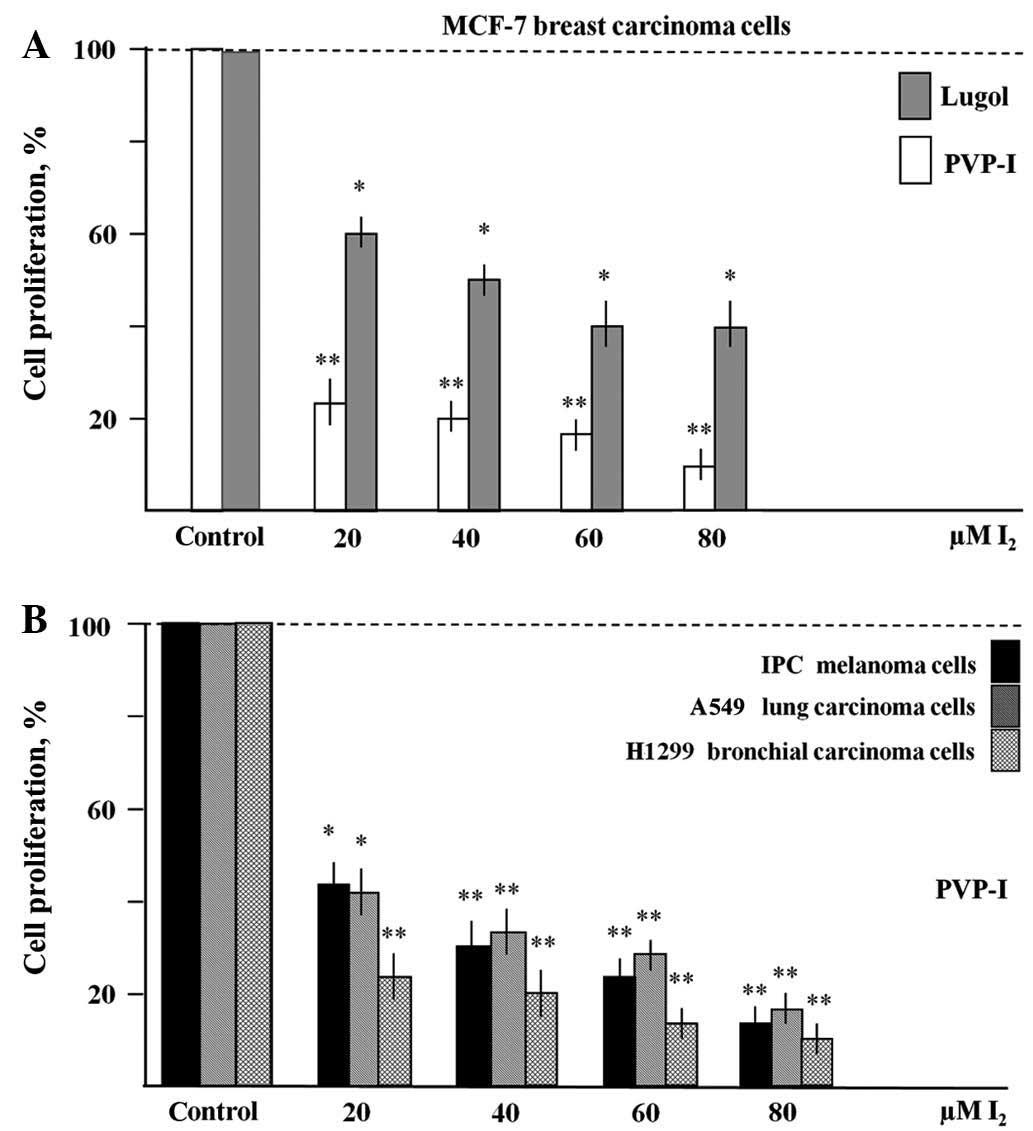
MCF-7 breast carcinoma, IPC melanoma, A549 lung carcinoma and H1299 bronchial carcinoma cells were cultured in the presence of the iodine compounds for 6 days and analysed as described. Fig. 2A shows that treatment with PVP-I (20–80 µM I2) resulted in a significant reduction (by 75–85%) of total MCF-7 cell numbers when compared to untreated controls within 6 days. Similarly, Lugol's solution (20–80 µM I2 and 60–240 µM KJ) inhibited the growth of MCF-7 cells by 40–60%. Fig. 2B shows comparable antiproliferative effects of PVP-I in IPC melanoma, A549 and H1299 cells (reduction of cell densities by 60–90%). In all experiments shown in Fig. 2, the inhibitory effects of the iodine compounds were clearly dose-dependent and significant.

Figure 2.

Antiproliferative effects of PVP-I and Lugol's solution. (A) PVP-I significantly inhibited the growth of MCF-7 breast carcinoma cells in a dose-dependent manner. Lugol's solution was markedly less effective. (B) The proliferation of IPC melanoma, A549 lung and H1299 bronchial carcinoma cells was significantly reduced, dose-dependently, in the presence of PVP-I. Results are presented as the means ± standard deviations; n=4–6; *P<0.05 and **P<0.01 (t-test; treated samples vs. controls). PVP-I, povidone-iodine.

Effects of iodine-containing (PVP-I, Lugol's solution, I2) human blood samples on the proliferation of MCF-7 cells

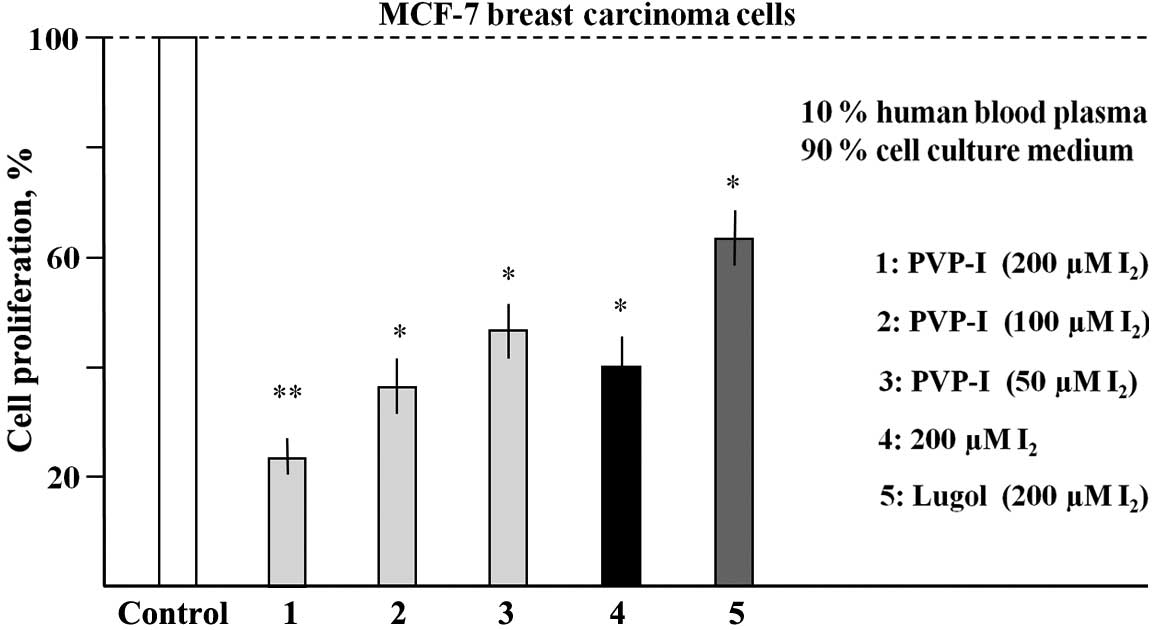
Fresh heparinised human blood was incubated with PVP-I, Lugol's solution or with I2 for 30 min and centrifuged to obtain blood plasma supernatants. MCF-7 cells were cultured in medium containing 10% of the plasma supernatants for 6 days. In Fig. 3, for each of these different samples a final concentration of I2 is given, which would be expected if there were no loss of I2 by blood cell binding or by other components removed by centrifugation.

Figure 3.

Antiproliferative activity of PVP-I is maintained in human blood. MCF-7 cells were cultured in medium containing 10% human blood plasma. The presence of PVP-I in the blood plasma led to a dose-dependent reduction in cell proliferation ≤70%. I2 (molecular) was less and Lugol's solution even less effective compared with PVP-I (200µM I2). Results are presented as the means ± standard deviations; n=4; *P<0.05 and **P<0.01 (t-test; treated samples vs. controls). PVP-I, povidone-iodine; I2, molecular iodine.

As shown in Fig. 3, PVP-I treatment resulted in a dose-dependent inhibition of proliferation of MCF-7 cells. At calculated (maximal) final concentrations of 200, 100 and 50 µM I2, the reductions in proliferation were 71.6, 63.1 and 56.5%, respectively. A calculated (maximal) concentration of 200 µM molecular iodine led to a growth inhibition of 69.5%. Lugol's solution, however, exhibited a markedly less effective inhibition (26.3%) in this type of experiment. These data clearly indicate that I2 (PVP-I or molecular iodine) in human blood retains its antiproliferative/cytotoxic activity to a significant degree.

Discussion

In accordance with our previous results (11), the present data strongly confirm I2 as a potent inhibitor of carcinoma growth. KJ was found to have no effect, but at high concentrations enhances the antiproliferative/cytotoxic effect of molecular iodine. Although the mechanisms of action were not analysed here, it is most likely that mitochondrial-mediated apoptosis pathways are involved as previously described for I2 and iodolactones (6,9–13).

The present results also revealed a highly significant dose-dependent antiproliferative/cytotoxic effect of PVP-I in cell cultures of MCF-7 breast carcinoma, IPC melanoma, A549 lung carcinoma and H1299 bronchial carcinoma cells. At a concentration corresponding to 20 µM I2, within 6 days the growth of MCF-7, IPC melanoma, A549 and H1299 cells was reduced by 76, 57, 59 and 77%, respectively. This is consistent with previous data demonstrating cytotoxic activity of PVP-I on CT26 colon cancer and H-22 ascites cells in vitro and in vivo (14). In the present study, Lugol's solution was also revealed to reduce the growth of MCF-7 cells (40% at a concentration corresponding to 20 µM I2 and 60 µM KJ).

However, with respect to a therapeutic application, further knowledge concerning the resorption, systemic distribution, organ-specific uptake and metabolism of iodine compounds is necessary. A number of reports have indicated that I2 exerts antineoplastic effects in thyroid, mammary and prostate glands, all of which were shown to take up I2, whereas iodide supplementation had no effect (2,15,16). This is in line with the observation that I2 treatment of patients with benign breast disease led to a bilateral reduction in breast size and a remission of disease symptoms, which was not observed when iodide was administered (17). Other authors have proposed that iodine, if ingested as I2 at concentrations higher than 3 mg per day, acts as an antioxidant and prevents lipoperoxidation in various organs, including the brain (18). In a recent study, Delgado et al (19) supplemented Sprague-Dawley rats with I2 and KJ in drinking water. They found that iodine ingestion and intestinal uptake was similar for both forms of iodine compounds. Following systemic distribution, iodide was preferentially taken up and retained by the thyroid, lactating mammary gland and breast milk, whereas pituitary, ovary and virgin mammary gland were found to take up both iodine compounds, but preferentially I2. Taken together, it appears that I2 is taken up, distributed systemically and preserved in blood for tissue absorption. This is in agreement with the data obtained in the present study with fresh human blood, indicating that the antiproliferative activity of PVP-I, I2 and also, to a certain degree, Lugol's solution, is preserved in fresh human blood.

As PVP-I is already widely used in clinical practice as an antiseptic and flushing agent following tumour surgery, and PVP has even been used intravenously as a plasma expander in emergency medicine, the present data strongly suggest that PVP-I and possibly also Lugol's solution or I2 may be potent agents for the development of potential antitumour strategies in humans, either by systemic or local stereotactic application.

Acknowledgements

The authors would like to thank Dr Heiko van der Kuip, (Dr Margarete Fischer-Bosch Institute of Clinical Pharmacology, Stuttgart, Germany) for providing human carcinoma cell lines, and Dr John M. Lindquist (Surgeon and General Practitioner and native speaker) for language correction and proofreading.

References

1 

Funahashi H, Imai F, Tanaka Y, Tobinaga J, Wada M, Morita T, Yamada F, Tsukamura K, Oiwa M, Kikumori T, et al: Suppressive effect of iodine on DMBA-induced breast tumour growth in the rat. J Surg Oncol. 61:209–213. 1996. View Article : Google Scholar : PubMed/NCBI

2 

García-Solís P, Alfaro Y, Anguiano B, Delgado G, Guzman RC, Nandi S, Díaz-Muñoz M, Vázquez-Martínez O and Aceves C: Inhibition of N-methyl-N-nitrosourea-induced mammary carcinogenesis by molecular iodine (I2) but not by iodide (I-) treatment evidence that I2 prevents cancer promotion. Mol Cell Endocrinol. 236:49–57. 2005. View Article : Google Scholar : PubMed/NCBI

3 

Eskin BA, Grotowski CE, Conolly CP and Ghent WR: Different tissue responses for iodine and iodide in rat thyroid and mammary glands. Biol Trace Elem Res. 49:9–19. 1995. View Article : Google Scholar : PubMed/NCBI

4 

Ghent WR, Eskin BA, Low DA and Hill LP: Iodine replacement in fibrocystic disease of the breast. Can J Surg. 36:453–460. 2004.

5 

Kessler JH: The effect of supraphysiologic levels of iodine on patients with cyclic mastalgia. Breast J. 10:328–336. 2004. View Article : Google Scholar : PubMed/NCBI

6 

Aceves C, Anguiana B and Delgado G: Is iodine a gatekeeper of the integrity of the mammary gland? J Mammary Gland Biol Neoplasia. 10:189–196. 2005. View Article : Google Scholar : PubMed/NCBI

7 

Torremante P: Mastopathie, breast cancer and iodolactone. Dtsch Med Wochenschr. 129:641–645. 2004.(In German). View Article : Google Scholar : PubMed/NCBI

8 

Sato S, Miyake M, Hazama A and Omori K: Povidone-iodine- induced cell deathin cultured human epithelial Hela cells and rat oral mucosa tissue. Drug Chem Toxicol. 37:269–275. 2014. View Article : Google Scholar

9 

Arroyo-Helguera O, Anguiano B, Delgado G and Aceves C: Uptake and antiproliferative effect of molecular iodine in the MCF-7 breast cancer cell line. Endocr Relat Cancer. 13:1147–1158. 2006. View Article : Google Scholar : PubMed/NCBI

10 

Shrivastava A, Tiwari M, Sinha RA, Kumar A, Balapure AK, Bajpai VK, Sharma R, Mitra K, Tandon A and Godbole MM: Molecular iodine induces caspase-independent apoptosis in human breast carcinoma cells involving mitochondria-mediated pathway. J Biol Chem. 28:19762–19771. 2006. View Article : Google Scholar

11 

Rösner H, Torremante P, Möller W and Gärtner R: Antiproliferative/cytotoxic activity of molecular iodine and iodolactones in various human carcinoma cell lines. No interfering with EGF-signaling, but evidence for apoptosis. Exp Clin Endocrinol Diabetes. 118:410–419. 2010. View Article : Google Scholar : PubMed/NCBI

12 

Nava-Villalba M, Nuñez-Anita RE, Bontempo A and Aceves C: Activation of peroxisome proliferator-activated receptor gamma is crucial for the antitumor effect of 6-iodolactone. Mol Cancer. 14:1682015. View Article : Google Scholar : PubMed/NCBI

13 

Arroyo-Helguera O, Rojas E, et al: Signaling pathways involved in the antiproliferative effect of molecular iodine in normal and tumoral breast cells: Evidence that 6-iodolactone mediates apoptotic effects. Endocr Relat Cancer. 15:1003–1011. 2008. View Article : Google Scholar : PubMed/NCBI

14 

Sun P, Zhao J, Luo ZC, Zhang P, Chen P, Zhang XL, Luo S, Yang DB, Tan J, Zhou Y, et al: Diluted povidone-iodine inhibits tumour growth through apoptosis-induction and suppression of SOD activity. Oncol Rep. 27:383–388. 2012.PubMed/NCBI

15 

Ghent WR, Eskin BA, Low DA and Hill LP: Iodine replacement in fibrocystic disease of the breast. Cancer J Surg. 36:453–460. 1993.

16 

Aceves C, Anguiano B and Delgado G: The extrathyronine actions of iodine as antioxidant, apoptotic, and differentiation factor in various tissues. Thyroid. 23:938–946. 2013. View Article : Google Scholar : PubMed/NCBI

17 

Kessler JH: The effect of supraphysiological levels of iodine on patients with cyclic mastalgia. Breast J. 10:328–336. 2004. View Article : Google Scholar : PubMed/NCBI

18 

Winkler R, Griebenow S and Wonisch W: Effect of iodide on total antioxidant status of human serum. Cell Biochem Funct. 18:143–146. 2000. View Article : Google Scholar : PubMed/NCBI

19 

Delgado G, Muñoz-Torres C, Orozco-Esquivel T, Anguiano B and Aceves C: Total iodine quantification in fluids and tissues from iodine- or iodide-supplemented rats by ion chromatography following microwave-assisted digestion. Thyroid. 25:352–360. 2015. View Article : Google Scholar : PubMed/NCBI

Related Articles

  • Abstract
  • View
  • Download
  • Twitter
Copy and paste a formatted citation
Spandidos Publications style
Rösner H, Möller W, Groebner S and Torremante P: Antiproliferative/cytotoxic effects of molecular iodine, povidone-iodine and Lugol's solution in different human carcinoma cell lines. Oncol Lett 12: 2159-2162, 2016.
APA
Rösner, H., Möller, W., Groebner, S., & Torremante, P. (2016). Antiproliferative/cytotoxic effects of molecular iodine, povidone-iodine and Lugol's solution in different human carcinoma cell lines. Oncology Letters, 12, 2159-2162. https://doi.org/10.3892/ol.2016.4811
MLA
Rösner, H., Möller, W., Groebner, S., Torremante, P."Antiproliferative/cytotoxic effects of molecular iodine, povidone-iodine and Lugol's solution in different human carcinoma cell lines". Oncology Letters 12.3 (2016): 2159-2162.
Chicago
Rösner, H., Möller, W., Groebner, S., Torremante, P."Antiproliferative/cytotoxic effects of molecular iodine, povidone-iodine and Lugol's solution in different human carcinoma cell lines". Oncology Letters 12, no. 3 (2016): 2159-2162. https://doi.org/10.3892/ol.2016.4811
Copy and paste a formatted citation
x
Spandidos Publications style
Rösner H, Möller W, Groebner S and Torremante P: Antiproliferative/cytotoxic effects of molecular iodine, povidone-iodine and Lugol's solution in different human carcinoma cell lines. Oncol Lett 12: 2159-2162, 2016.
APA
Rösner, H., Möller, W., Groebner, S., & Torremante, P. (2016). Antiproliferative/cytotoxic effects of molecular iodine, povidone-iodine and Lugol's solution in different human carcinoma cell lines. Oncology Letters, 12, 2159-2162. https://doi.org/10.3892/ol.2016.4811
MLA
Rösner, H., Möller, W., Groebner, S., Torremante, P."Antiproliferative/cytotoxic effects of molecular iodine, povidone-iodine and Lugol's solution in different human carcinoma cell lines". Oncology Letters 12.3 (2016): 2159-2162.
Chicago
Rösner, H., Möller, W., Groebner, S., Torremante, P."Antiproliferative/cytotoxic effects of molecular iodine, povidone-iodine and Lugol's solution in different human carcinoma cell lines". Oncology Letters 12, no. 3 (2016): 2159-2162. https://doi.org/10.3892/ol.2016.4811
Follow us
  • Twitter
  • LinkedIn
  • Facebook
About
  • Spandidos Publications
  • Careers
  • Cookie Policy
  • Privacy Policy
How can we help?
  • Help
  • Live Chat
  • Contact
  • Email to our Support Team