Spandidos Publications Logo
  • About
    • About Spandidos
    • Aims and Scopes
    • Abstracting and Indexing
    • Editorial Policies
    • Reprints and Permissions
    • Job Opportunities
    • Terms and Conditions
    • Contact
  • Journals
    • All Journals
    • Oncology Letters
      • Oncology Letters
      • Information for Authors
      • Editorial Policies
      • Editorial Board
      • Aims and Scope
      • Abstracting and Indexing
      • Bibliographic Information
      • Archive
    • International Journal of Oncology
      • International Journal of Oncology
      • Information for Authors
      • Editorial Policies
      • Editorial Board
      • Aims and Scope
      • Abstracting and Indexing
      • Bibliographic Information
      • Archive
    • Molecular and Clinical Oncology
      • Molecular and Clinical Oncology
      • Information for Authors
      • Editorial Policies
      • Editorial Board
      • Aims and Scope
      • Abstracting and Indexing
      • Bibliographic Information
      • Archive
    • Experimental and Therapeutic Medicine
      • Experimental and Therapeutic Medicine
      • Information for Authors
      • Editorial Policies
      • Editorial Board
      • Aims and Scope
      • Abstracting and Indexing
      • Bibliographic Information
      • Archive
    • International Journal of Molecular Medicine
      • International Journal of Molecular Medicine
      • Information for Authors
      • Editorial Policies
      • Editorial Board
      • Aims and Scope
      • Abstracting and Indexing
      • Bibliographic Information
      • Archive
    • Biomedical Reports
      • Biomedical Reports
      • Information for Authors
      • Editorial Policies
      • Editorial Board
      • Aims and Scope
      • Abstracting and Indexing
      • Bibliographic Information
      • Archive
    • Oncology Reports
      • Oncology Reports
      • Information for Authors
      • Editorial Policies
      • Editorial Board
      • Aims and Scope
      • Abstracting and Indexing
      • Bibliographic Information
      • Archive
    • Molecular Medicine Reports
      • Molecular Medicine Reports
      • Information for Authors
      • Editorial Policies
      • Editorial Board
      • Aims and Scope
      • Abstracting and Indexing
      • Bibliographic Information
      • Archive
    • World Academy of Sciences Journal
      • World Academy of Sciences Journal
      • Information for Authors
      • Editorial Policies
      • Editorial Board
      • Aims and Scope
      • Abstracting and Indexing
      • Bibliographic Information
      • Archive
    • International Journal of Functional Nutrition
      • International Journal of Functional Nutrition
      • Information for Authors
      • Editorial Policies
      • Editorial Board
      • Aims and Scope
      • Abstracting and Indexing
      • Bibliographic Information
      • Archive
    • International Journal of Epigenetics
      • International Journal of Epigenetics
      • Information for Authors
      • Editorial Policies
      • Editorial Board
      • Aims and Scope
      • Abstracting and Indexing
      • Bibliographic Information
      • Archive
    • Medicine International
      • Medicine International
      • Information for Authors
      • Editorial Policies
      • Editorial Board
      • Aims and Scope
      • Abstracting and Indexing
      • Bibliographic Information
      • Archive
  • Articles
  • Information
    • Information for Authors
    • Information for Reviewers
    • Information for Librarians
    • Information for Advertisers
    • Conferences
  • Language Editing
Spandidos Publications Logo
  • About
    • About Spandidos
    • Aims and Scopes
    • Abstracting and Indexing
    • Editorial Policies
    • Reprints and Permissions
    • Job Opportunities
    • Terms and Conditions
    • Contact
  • Journals
    • All Journals
    • Biomedical Reports
      • Information for Authors
      • Editorial Policies
      • Editorial Board
      • Aims and Scope
      • Abstracting and Indexing
      • Bibliographic Information
      • Archive
    • Experimental and Therapeutic Medicine
      • Information for Authors
      • Editorial Policies
      • Editorial Board
      • Aims and Scope
      • Abstracting and Indexing
      • Bibliographic Information
      • Archive
    • International Journal of Epigenetics
      • Information for Authors
      • Editorial Policies
      • Editorial Board
      • Aims and Scope
      • Abstracting and Indexing
      • Bibliographic Information
      • Archive
    • International Journal of Functional Nutrition
      • Information for Authors
      • Editorial Policies
      • Editorial Board
      • Aims and Scope
      • Abstracting and Indexing
      • Bibliographic Information
      • Archive
    • International Journal of Molecular Medicine
      • Information for Authors
      • Editorial Policies
      • Editorial Board
      • Aims and Scope
      • Abstracting and Indexing
      • Bibliographic Information
      • Archive
    • International Journal of Oncology
      • Information for Authors
      • Editorial Policies
      • Editorial Board
      • Aims and Scope
      • Abstracting and Indexing
      • Bibliographic Information
      • Archive
    • Medicine International
      • Information for Authors
      • Editorial Policies
      • Editorial Board
      • Aims and Scope
      • Abstracting and Indexing
      • Bibliographic Information
      • Archive
    • Molecular and Clinical Oncology
      • Information for Authors
      • Editorial Policies
      • Editorial Board
      • Aims and Scope
      • Abstracting and Indexing
      • Bibliographic Information
      • Archive
    • Molecular Medicine Reports
      • Information for Authors
      • Editorial Policies
      • Editorial Board
      • Aims and Scope
      • Abstracting and Indexing
      • Bibliographic Information
      • Archive
    • Oncology Letters
      • Information for Authors
      • Editorial Policies
      • Editorial Board
      • Aims and Scope
      • Abstracting and Indexing
      • Bibliographic Information
      • Archive
    • Oncology Reports
      • Information for Authors
      • Editorial Policies
      • Editorial Board
      • Aims and Scope
      • Abstracting and Indexing
      • Bibliographic Information
      • Archive
    • World Academy of Sciences Journal
      • Information for Authors
      • Editorial Policies
      • Editorial Board
      • Aims and Scope
      • Abstracting and Indexing
      • Bibliographic Information
      • Archive
  • Articles
  • Information
    • For Authors
    • For Reviewers
    • For Librarians
    • For Advertisers
    • Conferences
  • Language Editing
Login Register Submit
  • This site uses cookies
  • You can change your cookie settings at any time by following the instructions in our Cookie Policy. To find out more, you may read our Privacy Policy.

    I agree
Search articles by DOI, keyword, author or affiliation
Search
Advanced Search
presentation
Biomedical Reports
Join Editorial Board Propose a Special Issue
Print ISSN: 2049-9434 Online ISSN: 2049-9442
Journal Cover
March-2015 Volume 3 Issue 2

Full Size Image

Sign up for eToc alerts
Recommend to Library

Journals

International Journal of Molecular Medicine

International Journal of Molecular Medicine

International Journal of Molecular Medicine is an international journal devoted to molecular mechanisms of human disease.

International Journal of Oncology

International Journal of Oncology

International Journal of Oncology is an international journal devoted to oncology research and cancer treatment.

Molecular Medicine Reports

Molecular Medicine Reports

Covers molecular medicine topics such as pharmacology, pathology, genetics, neuroscience, infectious diseases, molecular cardiology, and molecular surgery.

Oncology Reports

Oncology Reports

Oncology Reports is an international journal devoted to fundamental and applied research in Oncology.

Experimental and Therapeutic Medicine

Experimental and Therapeutic Medicine

Experimental and Therapeutic Medicine is an international journal devoted to laboratory and clinical medicine.

Oncology Letters

Oncology Letters

Oncology Letters is an international journal devoted to Experimental and Clinical Oncology.

Biomedical Reports

Biomedical Reports

Explores a wide range of biological and medical fields, including pharmacology, genetics, microbiology, neuroscience, and molecular cardiology.

Molecular and Clinical Oncology

Molecular and Clinical Oncology

International journal addressing all aspects of oncology research, from tumorigenesis and oncogenes to chemotherapy and metastasis.

World Academy of Sciences Journal

World Academy of Sciences Journal

Multidisciplinary open-access journal spanning biochemistry, genetics, neuroscience, environmental health, and synthetic biology.

International Journal of Functional Nutrition

International Journal of Functional Nutrition

Open-access journal combining biochemistry, pharmacology, immunology, and genetics to advance health through functional nutrition.

International Journal of Epigenetics

International Journal of Epigenetics

Publishes open-access research on using epigenetics to advance understanding and treatment of human disease.

Medicine International

Medicine International

An International Open Access Journal Devoted to General Medicine.

Journal Cover
March-2015 Volume 3 Issue 2

Full Size Image

Sign up for eToc alerts
Recommend to Library

  • Article
  • Citations
    • Cite This Article
    • Download Citation
    • Create Citation Alert
    • Remove Citation Alert
    • Cited By
  • Similar Articles
    • Related Articles (in Spandidos Publications)
    • Similar Articles (Google Scholar)
    • Similar Articles (PubMed)
  • Download PDF
  • Download XML
  • View XML
Article

Demethylation of the hTERT promoter in normal human gastric mucosal epithelial cells following N-methyl-N'-nitro-N-nitrosoguanidine exposure

  • Authors:
    • Yong‑Bo Cheng
    • Dian‑Chun Fang
    • Ping Yao
    • Li‑Ping Guo
    • Xiao‑Yan Ning
    • Lei Wang
  • View Affiliations / Copyright

    Affiliations: Department of Gastroenterology, The First Affiliated Hospital of Xinjiang Medical University, Urumqi, Xinjiang 830054, P.R. China, Department of Gastroenterology, Southwest Hospital, Third Military Medical University, Chongqing 400038, P.R. China
  • Pages: 176-178
    |
    Published online on: December 9, 2014
       https://doi.org/10.3892/br.2014.398
  • Expand metrics +
Metrics: Total Views: 0 (Spandidos Publications: | PMC Statistics: )
Metrics: Total PDF Downloads: 0 (Spandidos Publications: | PMC Statistics: )
Cited By (CrossRef): 0 citations Loading Articles...

This article is mentioned in:


Abstract

N‑methyl‑N'‑nitro‑N‑nitrosoguanidine (MNNG) is an alkylating agent that can induce gastric carcinoma. As a well‑known human carcinogen, MNNG has been universally recognized as a methylating agent and is believed to act through methylation mechanism. In the present study, the epigenetic status of the human telomerase reverse transcriptase (hTERT) promoter was investigated in MNNG‑treated normal human gastric mucosal epithelial cells. After 4 h exposure to MNNG at different concentrations, 6.8 and 68 µM, bisulfite sequencing polymerase chain reaction showed that five methylated cytosines outside the CpG dinucleotides in the 290‑bp fragment from the hTERT promoter were demethylated and all the methylated cytosines in CpG dinucleotides remained intact. Furthermore, the epigenetic status of the target region following MNNG exposure was extremely similar to those of the BGC‑823, SGC‑7901 and MKN‑28 lines; the three cell lines from human gastric adenocarcinoma. The result indicates that MNNG‑induced demethylation in cytosines outside the CpG dinucleotides may be an early molecular lesion with the potential for impacting malignant transformation and a possible underlying carcinogenic mechanism of MNNG. Thus, it may provide another insight into the mechanisms of MNNG carcinogenesis.

Introduction

N-methyl-N'-nitro-N-nitrosoguanidine (MNNG) is a well-known alkylating agent that can induce gastric carcinoma (1, 2). As a carcinogenic chemical, the mechanism of carcinogenesis induced by MNNG is not well understood. Previous studies have focused on the methylation aspect (1, 3, 4) and presently, MNNG has been recognized as a methylating agent universally (5, 6).

Thus far, MNNG-induced DNA epigenetic changes have been mostly reported in rats (1, 2, 4–6), no relevant studies in humans found. Therefore, to improve the insight into the mechanism of human gastric carcinogenesis induced by MNNG, the epigenetic status of the human telomerase reverse transcriptase (hTERT) promoter, the rate-limiting subunit of telomerase whose activity is considered to be an early step in gastric carcinogenesis (7–9), was investigated in normal human gastric mucosal epithelial cells (nhGMECs) following MNNG exposure.

Materials and methods

Chemical

MNNG was purchased from Tokyo Chemical Industry Co., Ltd., (Tokyo, Japan) dissolved in redistilled water at 25˚C and formulated with a concentration of 0.1%. Subsequently, the MNNG-containing water was confected into 6.8 and 68 µM in Dulbecco's modified Eagle's medium (DMEM) - F12 medium (Gibco-BRL, Life Technologies, Carlsbad, CA, USA). The MNNG was freshly prepared for the experiment.

Cell culture

Following the approval by the The Third Military Medical University and the affiliated Southwest Hospital Ethical Committees and informed consent from the patient, nhGMECs were isolated from the specimen obtained by routine surgery with our previously developed method (10). The patient that provided the gastric sample was aged 42 years and underwent surgery for a gastric ulcer complicating perforation. The possibility of gastric cancer was excluded by postoperative pathology. BGC-823, SGC-7901 and MKN-28 cell lines were maintained in the laboratory and routinely cultured. All the cells were grown in DMEM - F12 medium supplemented with 10% fetal bovine serum (FBS) and without any antibiotics.

MNNG-treated cells

nhGMECs were cultured primarily for 48 h. The supernatant was discarded and the cells were washed three times in warmed phosphate-buffered saline (PBS). Exposure for 4 h to MNNG at different concentrations of 6.8 and 68 µM was carried out. The cells were cultured in DMEM-F12 medium without MNNG and FBS as a negative control. Following treatment, the cells were washed five times with warmed PBS to remove any residual MNNG and reincubated in fresh DMEM-F12 medium supplemented with FBS. At intervals of 48 h (≤ 100 h post-isolation), the cells were harvested and studies were performed as described below.

hTERT promoter methylation assay

DNA were isolated from nhGMECs that were treated with and without MNNG, BGC-823, SGC-7901 and MKN-28 cells using E.Z.N.A.® SQ DNA kit (Omega Bio-Tek Inc., Norcross, GA, USA). The hTERT promoter methylation status was assessed with bisulfite sequencing polymerase chain reaction (PCR) using the EZ DNA methylation kit (Zymo Research, Irvine, CA, USA) as follows: Genomic DNA was modified by sodium bisulfite. A segment of 290 basepairs (bp) of the hTERT promoter (GeneBank accession no. AF097365) was amplified by PCR with primers: Forward, 5′-TTTGAGAATTTGTAAAGAGAAATG-3′ and reverse, 5′-AATATAAAAACCCTAAAAACAAATAC-3′; under 32 cycles of 94˚C for 50 sec, 53˚C for 50 sec and 72˚C for 1 min, followed by 8 min at 72˚C. Sequencing of all the PCR products following cloning was performed by Sangon, Shanghai, China using the ABI Prism 3730 sequenator. All the sequence comparisons were carried out with the DNA Star software (DNASTAR Inc., Madison, WI, USA).

Results

MNNG treatment and the methylation status

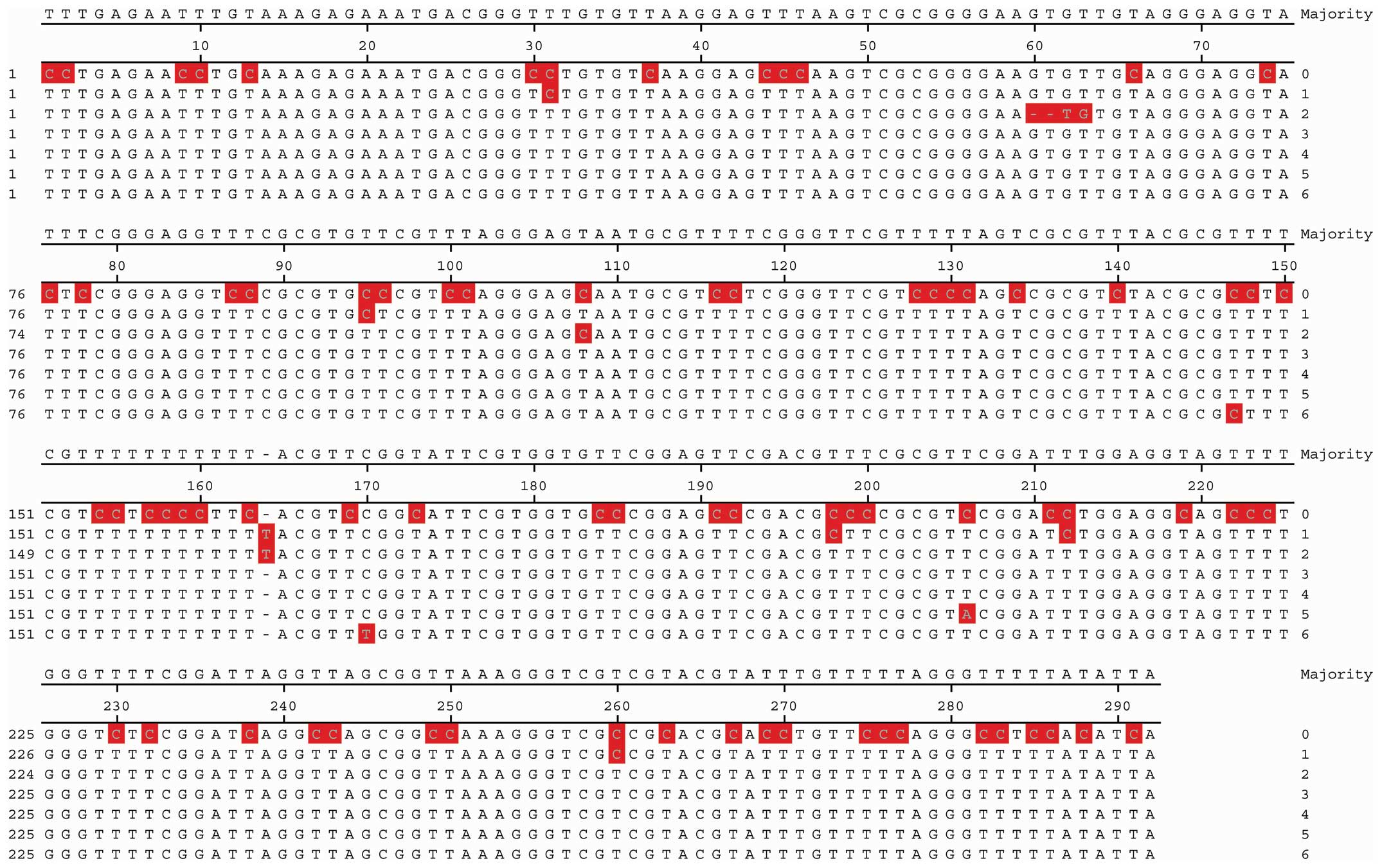
The nhGMECs were dissociated and cultured. DNA were isolated from nhGMECs that were treated with and without MNNG, BGC-823, SGC-7901 and MKN-28 cells. Bisulfite treatment of genomic DNA can cause unmethylated cytosines to be completely converted into uracil, which are detected as thymine following PCR amplification, whereas methylated cytosines remain unchanged. The six sequences of the bisulfite-treated DNA were compared to those published in GenBank respectively. All 5′-CpG-3′ dinucleotides were found to be methylated, with only five cytosines at positions 31, 95, 198, 212 and 260 outside the CpG dinucleotides methylated in the 290-bp fragment from the hTERT promoter region of the nhGMECs. Following 6.8 and 68 µM MNNG exposure, all the methylated 5′-CpG-3′ dinucleotides remained intact, the five cytosines were all demethylated and the methylation status of the target region was extremely similar to those of the BGC-823, SGC-7901 and MKN-28 lines (Fig. 1). The demethylated cytosines were at position 31, 95, 198, 212 and 260, which corresponded respectively to the −716, −652, −550, −536 and −488 positions, relative to the ATG translation initiation site (GeneBank accession no. AF097365).

Figure 1.

DNA sequencing result of the promoter region of human telomerase reverse transcriptase following bisulfite treatment. 0, Fragment in GenBank accession no. AF098956 sequence; 1, normal human gastric mucosal epithelial cells (nhGMECs) without N-methyl-N'-nitro-N-nitrosoguanidine (MNNG) treatment; 2, nhGMECs treated with 6.8 µM MNNG; 3, nhGMECs treated with 68 µM MNNG; 4, BGC-823 cells; 5, SGC-7901 cells; 6, MKN-28 cells. Sequenator, ABI Prism 3730.

Discussion

Primary cultured nhGMECs have a clear similarity with their corresponding cells in vivo and are taken as the ideal tool for gastric pathological studies. The methylation status of the hTERT promoter plays a role in hTERT expression and subsequent telomerase activation. The process may be an early step in gastric carcinogenesis (9). The aim of the present study, using nhGMECs, was to elucidate the mechanism of human gastric carcinogenesis induced by MNNG from the point of the epigenetic state of the hTERT promoter. As a carcinogenic agent, MNNG has been reported to produce DNA methylation and is usually recognized as a methylating agent (1, 4–6). The present study observed that the epigenetic change of MNNG-treated nhGMECs was in agreement with those in previous studies. By contrast, it showed a selective demethylation in the 290-bp fragment from the hTERT promoter region. Furthermore, the demethylation of cytosine occured at position cytosine outside the CpG dinucleotides, and the methylated cytosine in the CpG dinucleotides remained intact. Notably, such epigenetic status of the target region following MNNG exposure was extremely similar to those of BGC-823, SGC-7901 and MKN-28 lines; the three cell lines from human gastric adenocarcinoma. This experiment could not be repeated due to the limited gastric specimens from similar patients. Therefore, the mechanism of human gastric carcinogenesis induced by MNNG may be correlated with demethylation in the hTERT promoter region or another undetected region. Previous studies on the mechanism of carcinogenesis have focused on more methylation and less demethylation. In neoplasia, demethylation of the genome as a whole occurs in vivo (11). Additionally, increasing the incidence of cancer during aging is accompanied by decreasing DNA methylation (12, 13), although there is controversy regarding this (8). From another perspective, the promoter of the hTERT gene becomes methylated during the development of some but not all tumors (14). All these indicate a possible role for demethylation in carcinogenesis. The epigenetic state of cytosine outside the CpG dinucleotides may be involved in the carcinogenesis. By computational prediction it has been estimated that 29,000 CpG-rich regions are distributed in the human genome (15); therefore, the majority of studies on gene methylation focused on cytosine in the CpG dinucleotides and revealed that the CpG islands within gene promoters generally become methylated during human carcinogenesis. As cytosine in the CpG dinucleotides, cytosine outside the CpG dinucleotides are also distributed in the promoter and first exon of genes and contain putative binding motifs, such as myeloid-specific zinc finger protein 2 (16, 17). Their epigenetic state may also affect the binding of transcription factors (16) and possibly result in carcinogenesis. Therefore, the epigenetic status of cytosine outside the CpG dinucleotides requires further study.

In the present study, to prevent interference MNNG was dissolved in redistilled water and not dimethylsulphoxide and was freshly prepared for the experiment. nhGMECs were all primary, not passage cells (8, 12) and were cultured in DMEM-F12 medium without any antibiotics. In general, alkylating agents, such as MNNG, produce increased G → A, not C → T, transition mutations. All five C → T outside the CpG dinucleotides are not considered to result from the mutagenic effect of MNNG (5).

In conclusion, a selective demethylation in the hTERT promoter in nhGMECs was observed following exposure to different MNNG doses in vitro. Demethylation in cytosine outside the CpG dinucleotides may be an early molecular lesion with the potential for impacting malignant transformation and a possible underlying carcinogenic mechanism of MNNG. Thus, it may provide another insight into the mechanisms of MNNG carcinogenesis.

Acknowledgements

The present study was supported by The National Natural Science Foundation of China (grant no. 30270609).

References

1 

Gombar CT and Magee PN: DNA-methylation by nitrosocimetidine and N-methyl-N′-nitro-N-nitrosoguanidine in the intact rat. Chem Biol Interact. 40:149–157. 1982. View Article : Google Scholar : PubMed/NCBI

2 

Manikandan P, Murugan RS, Priyadarsini RV, Vinothini G and Nagini S: Eugenol induces apoptosis and inhibits invasion and angiogenesis in a rat model of gastric carcinogenesis induced by MNNG. Life Sci. 86:936–941. 2010. View Article : Google Scholar : PubMed/NCBI

3 

Haerlin R, Sussmuth R and Lingens F: Mechanism of mutagenesis by N-methyl-N′-nitro-N-nitrosoguanidine (MNNG) v. methylation of DNA by N-trideuteriomethyl-N′-nitro-N-nitrosoguanidine (D3-MNNG). FEBS Lett. 9:175–176. 1970. View Article : Google Scholar : PubMed/NCBI

4 

Bhalla A, Sachdeva G and Bamezai R: T-cell receptor-gamma rearrangement and c-myb methylation in MNNG exposed Bloom syndrome B-lymphoblastoid cells. Cancer Lett. 126:1–6. 1998. View Article : Google Scholar : PubMed/NCBI

5 

Schroering AG and Williams KJ: Rapid induction of chromatin-associated DNA mismatch repair proteins after MNNG treatment. DNA Repair (Amst). 7:951–969. 2008. View Article : Google Scholar : PubMed/NCBI

6 

Tomicic MT, Christmann M, Fabian K and Kaina B: Apaf-1 deficient mouse fibroblasts are resistant to MNNG and MMS-induced apoptotic death without attenuation of Bcl-2 decline. Toxicol Appl Pharmacol. 207 (Suppl 2):117–122. 2005. View Article : Google Scholar : PubMed/NCBI

7 

Sabah M, Cummins R, Leader M and Kay E: Expression of human telomerase reverse transcriptase in gastrointestinal stromal tumors occurs preferentially in malignant neoplasms. Hum Pathol. 35:1231–1235. 2004. View Article : Google Scholar : PubMed/NCBI

8 

Neumeister P, Albanese C, Balent B, Greally J and Pestell RG: Senescence and epigenetic dysregulation in cancer. Int J Biochem Cell Biol. 34:1475–1490. 2002. View Article : Google Scholar : PubMed/NCBI

9 

Gulmann C, Lantuejoul S, Grace A, Leader M, Patchett S and Kay E: Telomerase activity in proximal and distal gastric neoplastic and preneoplastic lesions using immunohistochemical detection of hTERT. Dig Liver Dis. 37:439–445. 2005. View Article : Google Scholar : PubMed/NCBI

10 

Cheng YB, Fang DC, Guo LP, Wang ZQ, Luo YH and Zhou JC: A convenient primary culture of human gastric epithelial cells. Chin J Gastroenterol. 12:31–35. 2007.

11 

Issa JP: Aging, DNA methylation and cancer. Crit Rev Oncol Hematol. 32:31–43. 1999. View Article : Google Scholar : PubMed/NCBI

12 

Suzuki T, Fujii M and Ayusawa D: Demethylation of classical satellite 2 and 3 DNA with chromosomal instability in senescent human fibroblasts. Exp Gerontol. 37:1005–1014. 2002. View Article : Google Scholar : PubMed/NCBI

13 

Liu L, Lai S, Andrews LG and Tollefsbol TO: Genetic and epigenetic modulation of telomerase activity in development and disease. Gene. 340:1–10. 2004. View Article : Google Scholar : PubMed/NCBI

14 

Devereux TR, Horikawa I, Anna CH, Annab LA, Afshari CA and Barrett JC: DNA methylation analysis of the promoter region of the human telomerase reverse transcriptase (hTERT) gene. Cancer Res. 59:6087–6090. 1999.PubMed/NCBI

15 

Santourlidis S, Wernet P, Ghanjati F, Graffmann N, Springer J, Kriegs C, Zhao X, Brands J, Arauzo-Bravo MJ, Neves R, et al: Unrestricted somatic stem cells (USSC) from human umbilical cord blood display uncommitted epigenetic signatures of the major stem cell pluripotency genes. Stem Cell Res. 6:60–69. 2011. View Article : Google Scholar : PubMed/NCBI

16 

Poole JC, Andrews LG and Tollefsbol TO: Activity, function, and gene regulation of the catalytic subunit of telomerase (hTERT). Gene. 269:1–12. 2001. View Article : Google Scholar : PubMed/NCBI

17 

Fujimoto K, Kyo S, Takakura M, Kanaya T, Kitagawa Y, Itoh H, Takahashi M and Inoue M: Identification and characterization of negative regulatory elements of the human telomerase catalytic subunit (hTERT) gene promoter: possible role of MZF-2 in transcriptional repression of hTERT. Nucleic Acids Res. 28:2557–2562. 2000. View Article : Google Scholar : PubMed/NCBI

Related Articles

  • Abstract
  • View
  • Download
  • Twitter
Copy and paste a formatted citation
Spandidos Publications style
Cheng YB, Fang DC, Yao P, Guo LP, Ning XY and Wang L: Demethylation of the hTERT promoter in normal human gastric mucosal epithelial cells following N-methyl-N'-nitro-N-nitrosoguanidine exposure. Biomed Rep 3: 176-178, 2015.
APA
Cheng, Y., Fang, D., Yao, P., Guo, L., Ning, X., & Wang, L. (2015). Demethylation of the hTERT promoter in normal human gastric mucosal epithelial cells following N-methyl-N'-nitro-N-nitrosoguanidine exposure. Biomedical Reports, 3, 176-178. https://doi.org/10.3892/br.2014.398
MLA
Cheng, Y., Fang, D., Yao, P., Guo, L., Ning, X., Wang, L."Demethylation of the hTERT promoter in normal human gastric mucosal epithelial cells following N-methyl-N'-nitro-N-nitrosoguanidine exposure". Biomedical Reports 3.2 (2015): 176-178.
Chicago
Cheng, Y., Fang, D., Yao, P., Guo, L., Ning, X., Wang, L."Demethylation of the hTERT promoter in normal human gastric mucosal epithelial cells following N-methyl-N'-nitro-N-nitrosoguanidine exposure". Biomedical Reports 3, no. 2 (2015): 176-178. https://doi.org/10.3892/br.2014.398
Copy and paste a formatted citation
x
Spandidos Publications style
Cheng YB, Fang DC, Yao P, Guo LP, Ning XY and Wang L: Demethylation of the hTERT promoter in normal human gastric mucosal epithelial cells following N-methyl-N'-nitro-N-nitrosoguanidine exposure. Biomed Rep 3: 176-178, 2015.
APA
Cheng, Y., Fang, D., Yao, P., Guo, L., Ning, X., & Wang, L. (2015). Demethylation of the hTERT promoter in normal human gastric mucosal epithelial cells following N-methyl-N'-nitro-N-nitrosoguanidine exposure. Biomedical Reports, 3, 176-178. https://doi.org/10.3892/br.2014.398
MLA
Cheng, Y., Fang, D., Yao, P., Guo, L., Ning, X., Wang, L."Demethylation of the hTERT promoter in normal human gastric mucosal epithelial cells following N-methyl-N'-nitro-N-nitrosoguanidine exposure". Biomedical Reports 3.2 (2015): 176-178.
Chicago
Cheng, Y., Fang, D., Yao, P., Guo, L., Ning, X., Wang, L."Demethylation of the hTERT promoter in normal human gastric mucosal epithelial cells following N-methyl-N'-nitro-N-nitrosoguanidine exposure". Biomedical Reports 3, no. 2 (2015): 176-178. https://doi.org/10.3892/br.2014.398
Follow us
  • Twitter
  • LinkedIn
  • Facebook
About
  • Spandidos Publications
  • Careers
  • Cookie Policy
  • Privacy Policy
How can we help?
  • Help
  • Live Chat
  • Contact
  • Email to our Support Team