Spandidos Publications Logo
  • About
    • About Spandidos
    • Aims and Scopes
    • Abstracting and Indexing
    • Editorial Policies
    • Reprints and Permissions
    • Job Opportunities
    • Terms and Conditions
    • Contact
  • Journals
    • All Journals
    • Oncology Letters
      • Oncology Letters
      • Information for Authors
      • Editorial Policies
      • Editorial Board
      • Aims and Scope
      • Abstracting and Indexing
      • Bibliographic Information
      • Archive
    • International Journal of Oncology
      • International Journal of Oncology
      • Information for Authors
      • Editorial Policies
      • Editorial Board
      • Aims and Scope
      • Abstracting and Indexing
      • Bibliographic Information
      • Archive
    • Molecular and Clinical Oncology
      • Molecular and Clinical Oncology
      • Information for Authors
      • Editorial Policies
      • Editorial Board
      • Aims and Scope
      • Abstracting and Indexing
      • Bibliographic Information
      • Archive
    • Experimental and Therapeutic Medicine
      • Experimental and Therapeutic Medicine
      • Information for Authors
      • Editorial Policies
      • Editorial Board
      • Aims and Scope
      • Abstracting and Indexing
      • Bibliographic Information
      • Archive
    • International Journal of Molecular Medicine
      • International Journal of Molecular Medicine
      • Information for Authors
      • Editorial Policies
      • Editorial Board
      • Aims and Scope
      • Abstracting and Indexing
      • Bibliographic Information
      • Archive
    • Biomedical Reports
      • Biomedical Reports
      • Information for Authors
      • Editorial Policies
      • Editorial Board
      • Aims and Scope
      • Abstracting and Indexing
      • Bibliographic Information
      • Archive
    • Oncology Reports
      • Oncology Reports
      • Information for Authors
      • Editorial Policies
      • Editorial Board
      • Aims and Scope
      • Abstracting and Indexing
      • Bibliographic Information
      • Archive
    • Molecular Medicine Reports
      • Molecular Medicine Reports
      • Information for Authors
      • Editorial Policies
      • Editorial Board
      • Aims and Scope
      • Abstracting and Indexing
      • Bibliographic Information
      • Archive
    • World Academy of Sciences Journal
      • World Academy of Sciences Journal
      • Information for Authors
      • Editorial Policies
      • Editorial Board
      • Aims and Scope
      • Abstracting and Indexing
      • Bibliographic Information
      • Archive
    • International Journal of Functional Nutrition
      • International Journal of Functional Nutrition
      • Information for Authors
      • Editorial Policies
      • Editorial Board
      • Aims and Scope
      • Abstracting and Indexing
      • Bibliographic Information
      • Archive
    • International Journal of Epigenetics
      • International Journal of Epigenetics
      • Information for Authors
      • Editorial Policies
      • Editorial Board
      • Aims and Scope
      • Abstracting and Indexing
      • Bibliographic Information
      • Archive
    • Medicine International
      • Medicine International
      • Information for Authors
      • Editorial Policies
      • Editorial Board
      • Aims and Scope
      • Abstracting and Indexing
      • Bibliographic Information
      • Archive
  • Articles
  • Information
    • Information for Authors
    • Information for Reviewers
    • Information for Librarians
    • Information for Advertisers
    • Conferences
  • Language Editing
Spandidos Publications Logo
  • About
    • About Spandidos
    • Aims and Scopes
    • Abstracting and Indexing
    • Editorial Policies
    • Reprints and Permissions
    • Job Opportunities
    • Terms and Conditions
    • Contact
  • Journals
    • All Journals
    • Biomedical Reports
      • Information for Authors
      • Editorial Policies
      • Editorial Board
      • Aims and Scope
      • Abstracting and Indexing
      • Bibliographic Information
      • Archive
    • Experimental and Therapeutic Medicine
      • Information for Authors
      • Editorial Policies
      • Editorial Board
      • Aims and Scope
      • Abstracting and Indexing
      • Bibliographic Information
      • Archive
    • International Journal of Epigenetics
      • Information for Authors
      • Editorial Policies
      • Editorial Board
      • Aims and Scope
      • Abstracting and Indexing
      • Bibliographic Information
      • Archive
    • International Journal of Functional Nutrition
      • Information for Authors
      • Editorial Policies
      • Editorial Board
      • Aims and Scope
      • Abstracting and Indexing
      • Bibliographic Information
      • Archive
    • International Journal of Molecular Medicine
      • Information for Authors
      • Editorial Policies
      • Editorial Board
      • Aims and Scope
      • Abstracting and Indexing
      • Bibliographic Information
      • Archive
    • International Journal of Oncology
      • Information for Authors
      • Editorial Policies
      • Editorial Board
      • Aims and Scope
      • Abstracting and Indexing
      • Bibliographic Information
      • Archive
    • Medicine International
      • Information for Authors
      • Editorial Policies
      • Editorial Board
      • Aims and Scope
      • Abstracting and Indexing
      • Bibliographic Information
      • Archive
    • Molecular and Clinical Oncology
      • Information for Authors
      • Editorial Policies
      • Editorial Board
      • Aims and Scope
      • Abstracting and Indexing
      • Bibliographic Information
      • Archive
    • Molecular Medicine Reports
      • Information for Authors
      • Editorial Policies
      • Editorial Board
      • Aims and Scope
      • Abstracting and Indexing
      • Bibliographic Information
      • Archive
    • Oncology Letters
      • Information for Authors
      • Editorial Policies
      • Editorial Board
      • Aims and Scope
      • Abstracting and Indexing
      • Bibliographic Information
      • Archive
    • Oncology Reports
      • Information for Authors
      • Editorial Policies
      • Editorial Board
      • Aims and Scope
      • Abstracting and Indexing
      • Bibliographic Information
      • Archive
    • World Academy of Sciences Journal
      • Information for Authors
      • Editorial Policies
      • Editorial Board
      • Aims and Scope
      • Abstracting and Indexing
      • Bibliographic Information
      • Archive
  • Articles
  • Information
    • For Authors
    • For Reviewers
    • For Librarians
    • For Advertisers
    • Conferences
  • Language Editing
Login Register Submit
  • This site uses cookies
  • You can change your cookie settings at any time by following the instructions in our Cookie Policy. To find out more, you may read our Privacy Policy.

    I agree
Search articles by DOI, keyword, author or affiliation
Search
Advanced Search
presentation
Biomedical Reports
Join Editorial Board Propose a Special Issue
Print ISSN: 2049-9434 Online ISSN: 2049-9442
Journal Cover
January-2017 Volume 6 Issue 1

Full Size Image

Sign up for eToc alerts
Recommend to Library

Journals

International Journal of Molecular Medicine

International Journal of Molecular Medicine

International Journal of Molecular Medicine is an international journal devoted to molecular mechanisms of human disease.

International Journal of Oncology

International Journal of Oncology

International Journal of Oncology is an international journal devoted to oncology research and cancer treatment.

Molecular Medicine Reports

Molecular Medicine Reports

Covers molecular medicine topics such as pharmacology, pathology, genetics, neuroscience, infectious diseases, molecular cardiology, and molecular surgery.

Oncology Reports

Oncology Reports

Oncology Reports is an international journal devoted to fundamental and applied research in Oncology.

Experimental and Therapeutic Medicine

Experimental and Therapeutic Medicine

Experimental and Therapeutic Medicine is an international journal devoted to laboratory and clinical medicine.

Oncology Letters

Oncology Letters

Oncology Letters is an international journal devoted to Experimental and Clinical Oncology.

Biomedical Reports

Biomedical Reports

Explores a wide range of biological and medical fields, including pharmacology, genetics, microbiology, neuroscience, and molecular cardiology.

Molecular and Clinical Oncology

Molecular and Clinical Oncology

International journal addressing all aspects of oncology research, from tumorigenesis and oncogenes to chemotherapy and metastasis.

World Academy of Sciences Journal

World Academy of Sciences Journal

Multidisciplinary open-access journal spanning biochemistry, genetics, neuroscience, environmental health, and synthetic biology.

International Journal of Functional Nutrition

International Journal of Functional Nutrition

Open-access journal combining biochemistry, pharmacology, immunology, and genetics to advance health through functional nutrition.

International Journal of Epigenetics

International Journal of Epigenetics

Publishes open-access research on using epigenetics to advance understanding and treatment of human disease.

Medicine International

Medicine International

An International Open Access Journal Devoted to General Medicine.

Journal Cover
January-2017 Volume 6 Issue 1

Full Size Image

Sign up for eToc alerts
Recommend to Library

  • Article
  • Citations
    • Cite This Article
    • Download Citation
    • Create Citation Alert
    • Remove Citation Alert
    • Cited By
  • Similar Articles
    • Related Articles (in Spandidos Publications)
    • Similar Articles (Google Scholar)
    • Similar Articles (PubMed)
  • Download PDF
  • Download XML
  • View XML
Article

Gaseous nitric oxide for the local treatment of bacterial keratitis in mice

  • Authors:
    • Mona Deichelbohrer
    • Ming‑Feng Wu
    • Berthold Seitz
    • Stefan Wagenpfeil
    • Carola Meier
    • Markus Bischoff
    • Thomas Tschernig
  • View Affiliations / Copyright

    Affiliations: Institute of Anatomy and Cell Biology, Saarland University Faculty of Medicine, Homburg, D‑66424 Saar, Germany, Department of Ophthalmology, Saarland University Medical Center, Homburg, D‑66424 Saar, Germany, Institute for Medical Biometry, Epidemiology and Medical Informatics, Saarland University, Homburg, D‑66424 Saar, Germany, Institute of Medical Microbiology and Hygiene, Saarland University Faculty of Medicine, Homburg, D‑66424 Saar, Germany
  • Pages: 75-78
    |
    Published online on: November 30, 2016
       https://doi.org/10.3892/br.2016.821
  • Expand metrics +
Metrics: Total Views: 0 (Spandidos Publications: | PMC Statistics: )
Metrics: Total PDF Downloads: 0 (Spandidos Publications: | PMC Statistics: )
Cited By (CrossRef): 0 citations Loading Articles...

This article is mentioned in:


Abstract

The successful treatment of severe bacterial keratitis continues to be a challenge in animals and humans. In the present study the aim was to assess gaseous therapy using gaseous nitric oxide (gNO) in a murine model of Pseudomonas aeruginosa keratitis. The cornea of anesthetized mice was mechanically scratched and covered with a bacterial suspension of P. aeruginosa. One day later, the infected eyes were exposed to 200 ppm NO for 30 min. Three to seven days later the mice were sacrificed and the bulbi were obtained and processed for light microscopy. The read out parameter was the maximal corneal thickness and the severity of the hypopyon. The therapy with NO did not result in either a reduction of inflammation concerning the maximal corneal thickness or the severity of the hypopyon. The bacterial load was not investigated due to technical limitations. Thus, exposure to gNO did not reduce the local inflammation in P. aeruginosa induced murine keratitis at the investigated time‑points. This does not exclude effects of NO on the bacterial load, and in experimental and human keratitis.

Introduction

Bacterial keratitis is a major cause of blindness worldwide with a high incidence (1). This is due to low hygiene standards and water quality with a greater risk of infection in poor countries. In addition, the widespread use of contact lenses and associated complications in wealthier countries contributes to severe keratitis (2,3). Staphylococcus aureus and Pseudomonas aeruginosa are two predominant gram-positive and gram-negative bacterial strains responsible for causing this disease (1,4,5). The resistance of bacteria to antibiotics is reducing the efficacy of bacterial keratitis treatment. Therefore, research into the development of novel therapeutic approaches is essential. In this regard photodynamic inactivation has been in experimental and clinical use throughout the last decade (6–8). Research on cystic fibrosis established an antimicrobial effect of gaseous nitric oxide (gNO) in infections with P. aeruginosa using a rat model (9). Furthermore, a study in white rabbits demonstrated that a treatment using 200 ppm gNO significantly reduced the bacterial load in wounds of the dorsal skin surface (10). Thus, in view of the possibility of a surface treatment for keratitis, this therapeutic strategy demonstrated a feasible approach.

The aim of the current study was to evaluate gNO application as a potential treatment of experimental keratitis in vivo for the first time. However, this series of experiments did not serve as proof of the anti-inflammatory effect of gNO.

Materials and methods

Animals and anaesthesia

Young (age, 9–10.5 weeks) female C57BL/6 mice [n=19; standard housing conditions (3–5 animals per cage) with 12-h light/dark cycle, minimum 70% humidity and chow/water were provided ad libitum; Janvier Labs, Saint-Berthevin Cedex, France] were used in the present study. All animal care and experimental procedures were approved by the local governmental animal care committee (permit no. 58/2013) and were conducted in accordance with European legislation on the protection of animals (Directive 2010/63/EU) and National Institutes of Health (NIH) guidelines on the care and use of laboratory animals (NIH publication no. 85–23 Rev. 1985). Animals were anesthetized via i.p. injection of ketamine (75 mg kg-1 body weight; Pharmacia GmbH, Erlangen, Germany) and xylazine (15 mg kg-1 body weight; Rompun, Bayer, Leverkusen, Germany).

Infection and treatment

Three scratches (length, 2 mm) were made in the centre of the cornea using a 27-gauge syringe, subsequently 5 µl of the inoculum was pipetted onto the cornea [according to (4)]. Carprofen (Rimadyl®; Zoetis Schweiz GmbH, Zürich, Switzerland) was injected during anaesthesia. For the inoculum, the multi drug resistant P. aeruginosa strain 54 (clinical isolate, collected in 2009 at the Institute of Medical Microbiology and Hygiene, Saarland University Medical Center, Homburg, Germany. The resistance profile of PA54 was determined using the automated VITEK 2 system (BioMérieux GmbH, Nürtingen, Germany) was cultured on blood agar plates (Trypticase Soy Agar II, 5% Sheep Blood; BD GmbH, Heidelberg, Germany) for 24 h, and suspended in 10 ml 2% Luria Bertani (LB) broth (LB Broth; Difco, Saint Egrève, France) for an overnight culture (37°C). The overnight culture (100 µl) was diluted in 10 ml 2% LB for another 3 h of culturing (37°C) and finally the suspension was adjusted using a photometer to an optical density of 10 at a wavelength of 600 nm and then used for inoculation. Only one eye from each animal was infected, with certain non-infected eyes analyzed to serve as controls. Eyes were either not infected or infected, and the infected eyes were either treated or not treated (uninfected/untreated, n=6 eyes; infected/treated, n=11 eyes; infected/untreated, n=8 eyes).

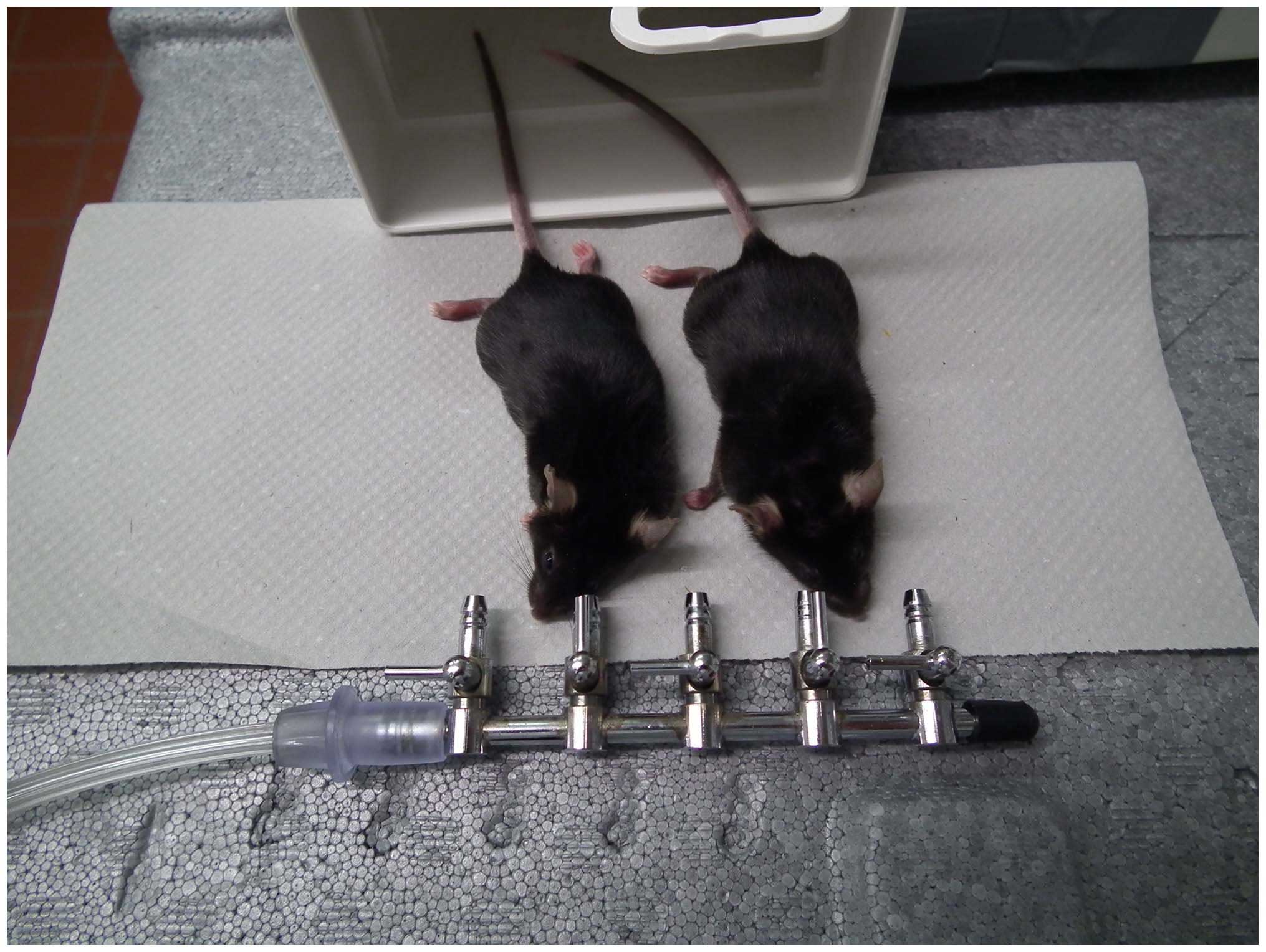
Twenty-four hours post infection the animals were treated under deep anesthesia as described above. For NO treatment, the infected eyes were exposed to gas (Praxair Deutschland GmbH, Düsseldorf, Deutschland) consisting of nitrogen and NO (200 ppm) for 30 min under anesthesia. A gNO stream with a velocity of 5 m/sec was directed to each eye using a nozzle. This nozzle was placed at a distance of 1 cm from the eye (Fig. 1). Three days after the infection (in two cases, 7 days after the infection to assess whether treatment required >3 days to develop an effect) the animals were sacrificed by cervical dislocation.

Figure 1.

Application of gaseous nitric oxide was performed as a gas flow directed at the infected eye of the mice.

Histology and evaluation

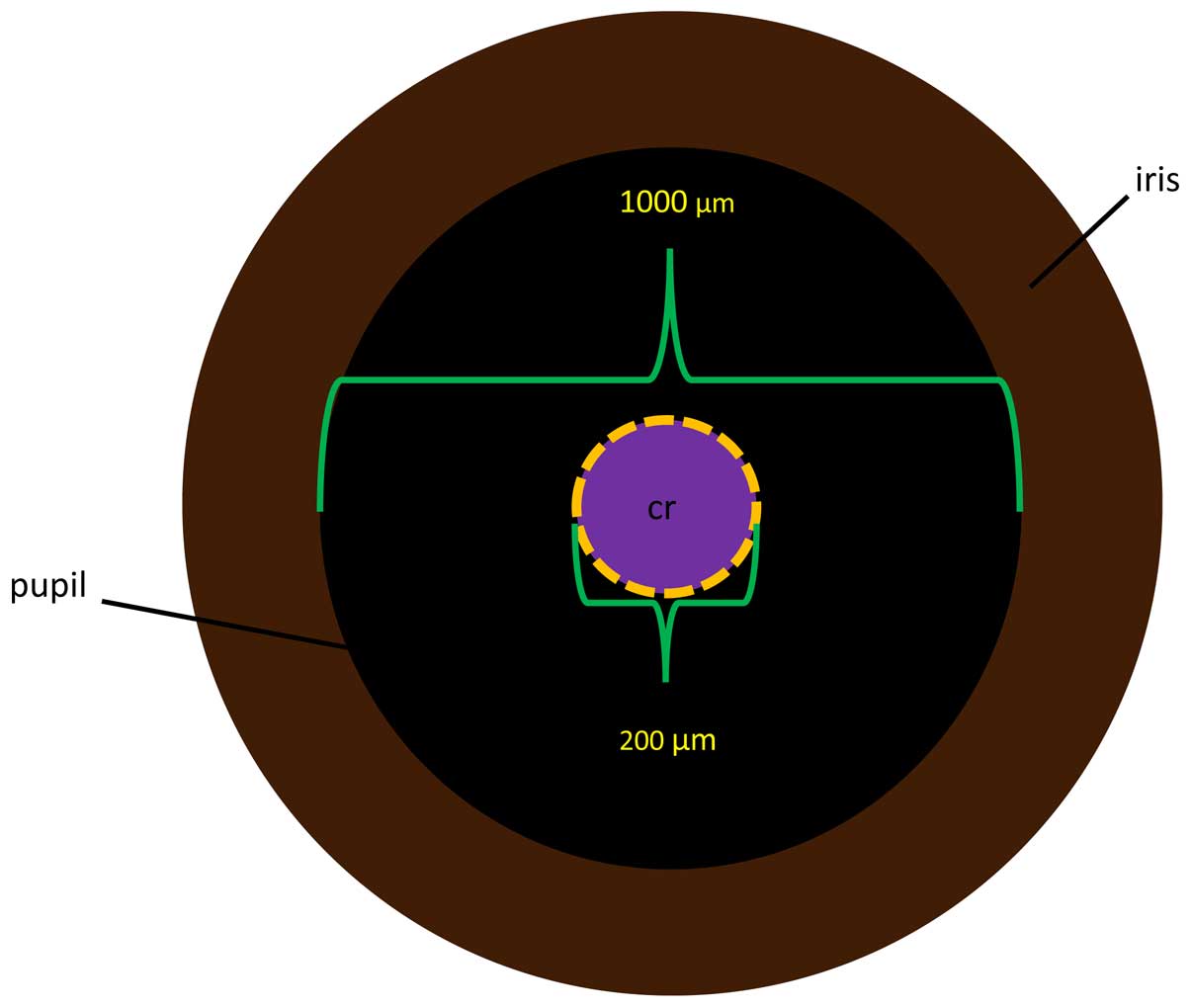
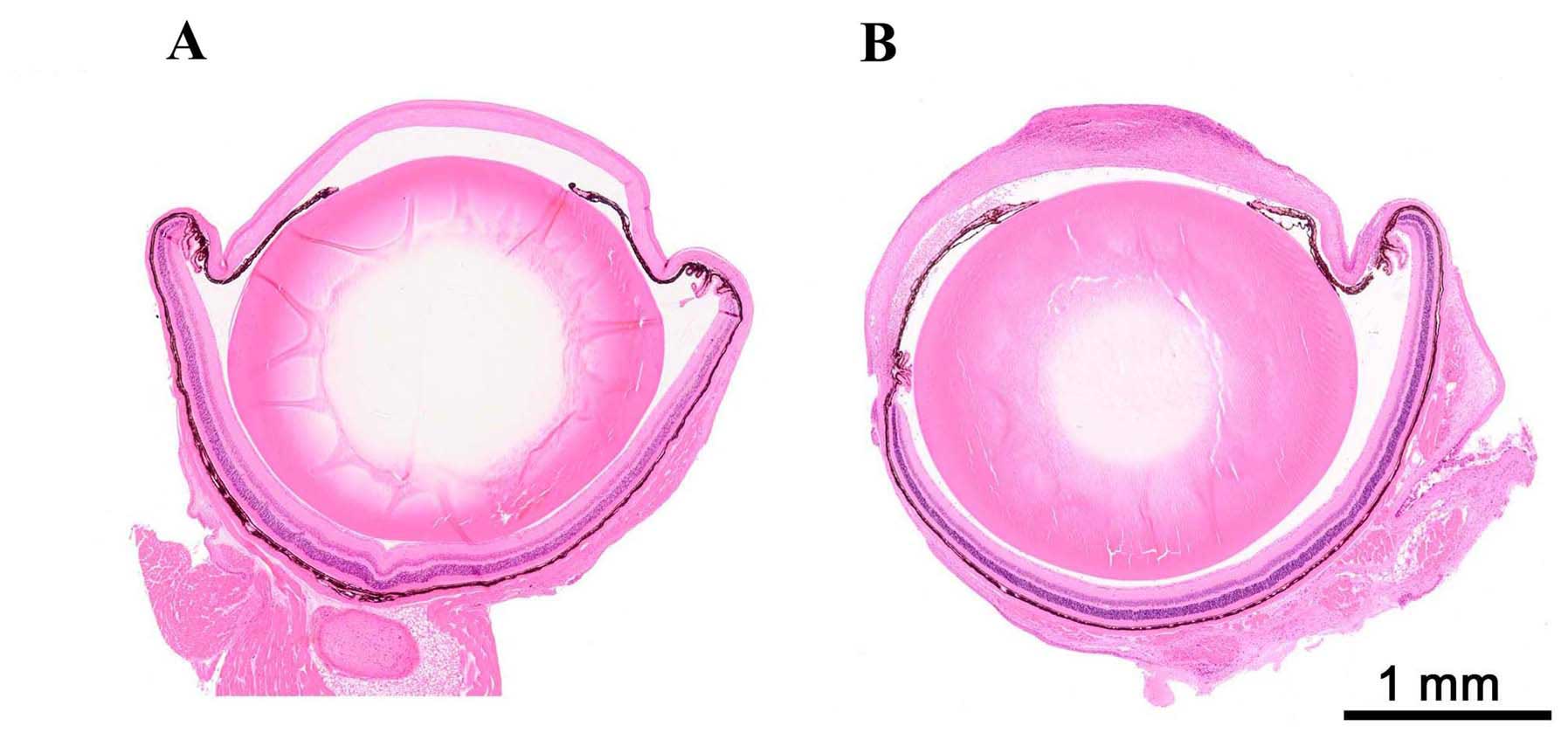
Their eyes were enucleated, histologically processed, and stained with hematoxylin and eosin. From each eye, five subsequent sections (thickness, 5 µm, with a distance of 50 µm from each other) from the center of the cornea (middle of the pupil) were obtained for evaluation (Fig. 2). The maximum corneal thickness was measured (CellSens Standard 1.8.1; Olympus Deutschland GmbH, Hamburg, Germany) and the mean value was taken. The severity of hypopyon was evaluated with a self-defined score, from 0 to 3 (0, no hypopyon; 1, mild hypopyon; 2, moderate hypopyon; 3, severe/massive hypopyon; Fig. 3).

Figure 2.

Schematic for obtaining the histological sections. The diameter of the pupil was ~1,000 µm. The sections were obtained from the CR of the cornea, which had a diameter of ~200 µm. CR, centre region.

Figure 3.

Examples for the severity of hypopyon, stained with hematoxylin and eosin. Score (A) 0 and (B) 1.

Statistical analysis

Statistical analysis was performed using GraphPad Prism 5 (GraphPad Software, Inc., La Jolla, CA, USA). The Mann-Whitney U test or the χ2 test were used for inferential statistics. Mean values and standard errors of the mean (SEM) were calculated and two-sided P<0.05 was considered to indicate a statistically significant difference.

Results

Maximum corneal thickness as an indication of corneal inflammation

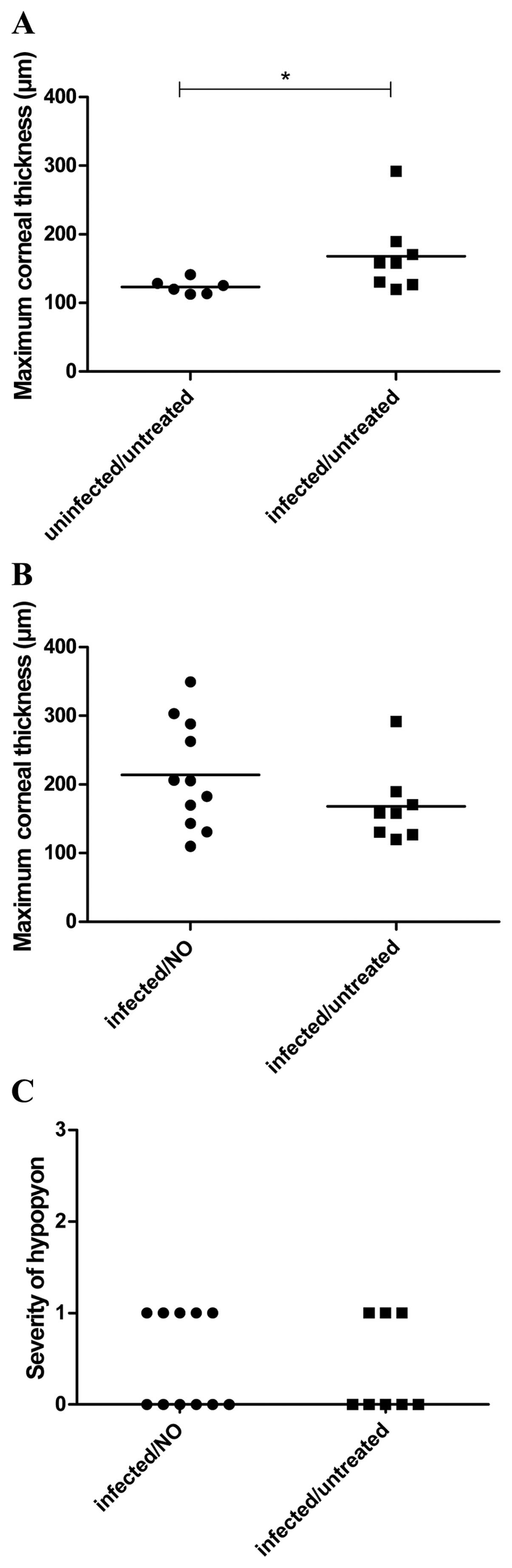
Concerning the maximum corneal thickness, the experiments resulted in mean values of 124±4µm (mean ± SEM) for uninfected/untreated, 168±20 µm (mean ± SEM) for infected/untreated and 214±23 µm (mean ± SEM) for infected/treated animals (Fig. 4A and B). The infection led to a significant increase in the maximum corneal thickness. A significant influence of the gNO treatment was not identified for maximum corneal thickness.

Figure 4.

(A and B) Comparison between maximum corneal thickness in the different groups (infected/treated eyes, n=11; infected/untreated eyes, n=8; uninfected/untreated eyes, n=6). The bars represent mean values. *P<0.05. (C) Comparison of the severity of hypopyon in NO-treated and untreated infected mice. Each point or square presents the mean value of one mouse. NO, nitric oxide.

Occurrence and severity of hypopyon

Similarly, a significant influence of the gNO treatment was not identified with regard to the severity of hypopyon (Fig. 4C).

Discussion

Treatment with gNO is a novel and innovative approach as no resistance has yet been identified for this bactericidal mechanism. This initial in vivo study did not indicate an anti-inflammatory effect using gNO. In a previous study regarding bacterial pneumonia that was induced by P. aeruginosa, no influence of NO treatment was observed on the inflammation parameters, which was consistent with the present results (9). By contrast, the authors identified a marked reduction in the bacterial load of pseudomonades. The present study hypothesized that i) bacteria were killed and ii) corneal inflammation was reduced following gNO treatment. It might be a similar situation in our keratitis model as in the pneumonia model described in the study by Miller et al (9) where inflammation was not reduced in contrast to the bacterial load. The bacterial load was not determined in the present study, as bacterial load can only be determined in the whole globes, but not separately within the cornea alone, due to the small structure of the murine cornea. However, the hypothesis remains that gNO application kills bacteria within the cornea, but alternative experimental approaches are required. Another aspect of the study was the technical administration of gNO treatment. This treatment strategy was established specifically for the current study. The gas application could be improved in future to ensure that a constant gNO concentration is applied to the surface of the cornea, for example, using an eye chamber, although this may be difficult due to the size of the mouse eye.

In conclusion, the aim of the current study was to evaluate gNO application as a treatment for experimental keratitis; this is the first study, to the best of our knowledge, to attempt to treat keratitis using this method. No anti-inflammatory effects were observed; however, this method should be investigated further to evaluate the bactericidal effects in vivo.

Acknowledgements

The authors would like to thank Ms. Ann Soether for language editing and Ms. Tina Wiesen-Philipps for help with the manuscript.

References

1 

Ong HS and Corbett MC: Corneal infections in the 21st century. Postgrad Med J. 91:565–571. 2015. View Article : Google Scholar : PubMed/NCBI

2 

Lorenzo-Morales J, Khan NA and Walochnik J: An update on Acanthamoeba keratitis: Diagnosis, pathogenesis and treatment. Parasite. 22:102015. View Article : Google Scholar : PubMed/NCBI

3 

Young G, Young AG and Lakkis C: Review of complications associated with contact lenses from unregulated sources of supply. Eye Contact Lens. 40:58–64. 2014. View Article : Google Scholar : PubMed/NCBI

4 

Girgis DO, Sloop GD, Reed JM and O'Callaghan RJ: Susceptibility of aged mice to Staphylococcus aureus keratitis. Curr Eye Res. 29:269–275. 2004. View Article : Google Scholar : PubMed/NCBI

5 

Marquart ME: Animal models of bacterial keratitis. J Biomed Biotechnol. 2011:6806422011. View Article : Google Scholar : PubMed/NCBI

6 

Makdoumi K, Mortensen J, Sorkhabi O, Malmvall BE and Crafoord S: UVA-riboflavin photochemical therapy of bacterial keratitis: A pilot study. Graefes Arch Clin Exp Ophthalmol. 250:95–102. 2012. View Article : Google Scholar : PubMed/NCBI

7 

Stachon T, Wang J, Song X, Langenbucher A, Seitz B and Szentmáry N: Impact of crosslinking/riboflavin-UVA-photodynamic inactivation on viability, apoptosis and activation of human keratocytes in vitro. J Biomed Res. 29:321–325. 2015. View Article : Google Scholar : PubMed/NCBI

8 

Wu MF, Stachon T, Wang J, Song X, Colanesi S, Seitz B, Wagenpfeil S, Langenbucher A and Szentmáry N: Effect of keratocyte supernatant on epithelial cell migration and proliferation after corneal crosslinking (CXL). Curr Eye Res. 41:466–473. 2016. View Article : Google Scholar : PubMed/NCBI

9 

Miller CC, Hergott CA, Rohan M, Arsenault-Mehta K, Döring G and Mehta S: Inhaled nitric oxide decreases the bacterial load in a rat model of Pseudomonas aeruginosa pneumonia. J Cyst Fibros. 12:817–820. 2013. View Article : Google Scholar : PubMed/NCBI

10 

Ghaffari A, Jalili R, Ghaffari M, Miller C and Ghahary A: Efficacy of gaseous nitric oxide in the treatment of skin and soft tissue infections. Wound Repair Regen. 15:368–377. 2007. View Article : Google Scholar : PubMed/NCBI

Related Articles

  • Abstract
  • View
  • Download
  • Twitter
Copy and paste a formatted citation
Spandidos Publications style
Deichelbohrer M, Wu MF, Seitz B, Wagenpfeil S, Meier C, Bischoff M and Tschernig T: Gaseous nitric oxide for the local treatment of bacterial keratitis in mice. Biomed Rep 6: 75-78, 2017.
APA
Deichelbohrer, M., Wu, M., Seitz, B., Wagenpfeil, S., Meier, C., Bischoff, M., & Tschernig, T. (2017). Gaseous nitric oxide for the local treatment of bacterial keratitis in mice. Biomedical Reports, 6, 75-78. https://doi.org/10.3892/br.2016.821
MLA
Deichelbohrer, M., Wu, M., Seitz, B., Wagenpfeil, S., Meier, C., Bischoff, M., Tschernig, T."Gaseous nitric oxide for the local treatment of bacterial keratitis in mice". Biomedical Reports 6.1 (2017): 75-78.
Chicago
Deichelbohrer, M., Wu, M., Seitz, B., Wagenpfeil, S., Meier, C., Bischoff, M., Tschernig, T."Gaseous nitric oxide for the local treatment of bacterial keratitis in mice". Biomedical Reports 6, no. 1 (2017): 75-78. https://doi.org/10.3892/br.2016.821
Copy and paste a formatted citation
x
Spandidos Publications style
Deichelbohrer M, Wu MF, Seitz B, Wagenpfeil S, Meier C, Bischoff M and Tschernig T: Gaseous nitric oxide for the local treatment of bacterial keratitis in mice. Biomed Rep 6: 75-78, 2017.
APA
Deichelbohrer, M., Wu, M., Seitz, B., Wagenpfeil, S., Meier, C., Bischoff, M., & Tschernig, T. (2017). Gaseous nitric oxide for the local treatment of bacterial keratitis in mice. Biomedical Reports, 6, 75-78. https://doi.org/10.3892/br.2016.821
MLA
Deichelbohrer, M., Wu, M., Seitz, B., Wagenpfeil, S., Meier, C., Bischoff, M., Tschernig, T."Gaseous nitric oxide for the local treatment of bacterial keratitis in mice". Biomedical Reports 6.1 (2017): 75-78.
Chicago
Deichelbohrer, M., Wu, M., Seitz, B., Wagenpfeil, S., Meier, C., Bischoff, M., Tschernig, T."Gaseous nitric oxide for the local treatment of bacterial keratitis in mice". Biomedical Reports 6, no. 1 (2017): 75-78. https://doi.org/10.3892/br.2016.821
Follow us
  • Twitter
  • LinkedIn
  • Facebook
About
  • Spandidos Publications
  • Careers
  • Cookie Policy
  • Privacy Policy
How can we help?
  • Help
  • Live Chat
  • Contact
  • Email to our Support Team