Spandidos Publications Logo
  • About
    • About Spandidos
    • Aims and Scopes
    • Abstracting and Indexing
    • Editorial Policies
    • Reprints and Permissions
    • Job Opportunities
    • Terms and Conditions
    • Contact
  • Journals
    • All Journals
    • Oncology Letters
      • Oncology Letters
      • Information for Authors
      • Editorial Policies
      • Editorial Board
      • Aims and Scope
      • Abstracting and Indexing
      • Bibliographic Information
      • Archive
    • International Journal of Oncology
      • International Journal of Oncology
      • Information for Authors
      • Editorial Policies
      • Editorial Board
      • Aims and Scope
      • Abstracting and Indexing
      • Bibliographic Information
      • Archive
    • Molecular and Clinical Oncology
      • Molecular and Clinical Oncology
      • Information for Authors
      • Editorial Policies
      • Editorial Board
      • Aims and Scope
      • Abstracting and Indexing
      • Bibliographic Information
      • Archive
    • Experimental and Therapeutic Medicine
      • Experimental and Therapeutic Medicine
      • Information for Authors
      • Editorial Policies
      • Editorial Board
      • Aims and Scope
      • Abstracting and Indexing
      • Bibliographic Information
      • Archive
    • International Journal of Molecular Medicine
      • International Journal of Molecular Medicine
      • Information for Authors
      • Editorial Policies
      • Editorial Board
      • Aims and Scope
      • Abstracting and Indexing
      • Bibliographic Information
      • Archive
    • Biomedical Reports
      • Biomedical Reports
      • Information for Authors
      • Editorial Policies
      • Editorial Board
      • Aims and Scope
      • Abstracting and Indexing
      • Bibliographic Information
      • Archive
    • Oncology Reports
      • Oncology Reports
      • Information for Authors
      • Editorial Policies
      • Editorial Board
      • Aims and Scope
      • Abstracting and Indexing
      • Bibliographic Information
      • Archive
    • Molecular Medicine Reports
      • Molecular Medicine Reports
      • Information for Authors
      • Editorial Policies
      • Editorial Board
      • Aims and Scope
      • Abstracting and Indexing
      • Bibliographic Information
      • Archive
    • World Academy of Sciences Journal
      • World Academy of Sciences Journal
      • Information for Authors
      • Editorial Policies
      • Editorial Board
      • Aims and Scope
      • Abstracting and Indexing
      • Bibliographic Information
      • Archive
    • International Journal of Functional Nutrition
      • International Journal of Functional Nutrition
      • Information for Authors
      • Editorial Policies
      • Editorial Board
      • Aims and Scope
      • Abstracting and Indexing
      • Bibliographic Information
      • Archive
    • International Journal of Epigenetics
      • International Journal of Epigenetics
      • Information for Authors
      • Editorial Policies
      • Editorial Board
      • Aims and Scope
      • Abstracting and Indexing
      • Bibliographic Information
      • Archive
    • Medicine International
      • Medicine International
      • Information for Authors
      • Editorial Policies
      • Editorial Board
      • Aims and Scope
      • Abstracting and Indexing
      • Bibliographic Information
      • Archive
  • Articles
  • Information
    • Information for Authors
    • Information for Reviewers
    • Information for Librarians
    • Information for Advertisers
    • Conferences
  • Language Editing
Spandidos Publications Logo
  • About
    • About Spandidos
    • Aims and Scopes
    • Abstracting and Indexing
    • Editorial Policies
    • Reprints and Permissions
    • Job Opportunities
    • Terms and Conditions
    • Contact
  • Journals
    • All Journals
    • Biomedical Reports
      • Information for Authors
      • Editorial Policies
      • Editorial Board
      • Aims and Scope
      • Abstracting and Indexing
      • Bibliographic Information
      • Archive
    • Experimental and Therapeutic Medicine
      • Information for Authors
      • Editorial Policies
      • Editorial Board
      • Aims and Scope
      • Abstracting and Indexing
      • Bibliographic Information
      • Archive
    • International Journal of Epigenetics
      • Information for Authors
      • Editorial Policies
      • Editorial Board
      • Aims and Scope
      • Abstracting and Indexing
      • Bibliographic Information
      • Archive
    • International Journal of Functional Nutrition
      • Information for Authors
      • Editorial Policies
      • Editorial Board
      • Aims and Scope
      • Abstracting and Indexing
      • Bibliographic Information
      • Archive
    • International Journal of Molecular Medicine
      • Information for Authors
      • Editorial Policies
      • Editorial Board
      • Aims and Scope
      • Abstracting and Indexing
      • Bibliographic Information
      • Archive
    • International Journal of Oncology
      • Information for Authors
      • Editorial Policies
      • Editorial Board
      • Aims and Scope
      • Abstracting and Indexing
      • Bibliographic Information
      • Archive
    • Medicine International
      • Information for Authors
      • Editorial Policies
      • Editorial Board
      • Aims and Scope
      • Abstracting and Indexing
      • Bibliographic Information
      • Archive
    • Molecular and Clinical Oncology
      • Information for Authors
      • Editorial Policies
      • Editorial Board
      • Aims and Scope
      • Abstracting and Indexing
      • Bibliographic Information
      • Archive
    • Molecular Medicine Reports
      • Information for Authors
      • Editorial Policies
      • Editorial Board
      • Aims and Scope
      • Abstracting and Indexing
      • Bibliographic Information
      • Archive
    • Oncology Letters
      • Information for Authors
      • Editorial Policies
      • Editorial Board
      • Aims and Scope
      • Abstracting and Indexing
      • Bibliographic Information
      • Archive
    • Oncology Reports
      • Information for Authors
      • Editorial Policies
      • Editorial Board
      • Aims and Scope
      • Abstracting and Indexing
      • Bibliographic Information
      • Archive
    • World Academy of Sciences Journal
      • Information for Authors
      • Editorial Policies
      • Editorial Board
      • Aims and Scope
      • Abstracting and Indexing
      • Bibliographic Information
      • Archive
  • Articles
  • Information
    • For Authors
    • For Reviewers
    • For Librarians
    • For Advertisers
    • Conferences
  • Language Editing
Login Register Submit
  • This site uses cookies
  • You can change your cookie settings at any time by following the instructions in our Cookie Policy. To find out more, you may read our Privacy Policy.

    I agree
Search articles by DOI, keyword, author or affiliation
Search
Advanced Search
presentation
Biomedical Reports
Join Editorial Board Propose a Special Issue
Print ISSN: 2049-9434 Online ISSN: 2049-9442
Journal Cover
December-2020 Volume 13 Issue 6

Full Size Image

Sign up for eToc alerts
Recommend to Library

Journals

International Journal of Molecular Medicine

International Journal of Molecular Medicine

International Journal of Molecular Medicine is an international journal devoted to molecular mechanisms of human disease.

International Journal of Oncology

International Journal of Oncology

International Journal of Oncology is an international journal devoted to oncology research and cancer treatment.

Molecular Medicine Reports

Molecular Medicine Reports

Covers molecular medicine topics such as pharmacology, pathology, genetics, neuroscience, infectious diseases, molecular cardiology, and molecular surgery.

Oncology Reports

Oncology Reports

Oncology Reports is an international journal devoted to fundamental and applied research in Oncology.

Experimental and Therapeutic Medicine

Experimental and Therapeutic Medicine

Experimental and Therapeutic Medicine is an international journal devoted to laboratory and clinical medicine.

Oncology Letters

Oncology Letters

Oncology Letters is an international journal devoted to Experimental and Clinical Oncology.

Biomedical Reports

Biomedical Reports

Explores a wide range of biological and medical fields, including pharmacology, genetics, microbiology, neuroscience, and molecular cardiology.

Molecular and Clinical Oncology

Molecular and Clinical Oncology

International journal addressing all aspects of oncology research, from tumorigenesis and oncogenes to chemotherapy and metastasis.

World Academy of Sciences Journal

World Academy of Sciences Journal

Multidisciplinary open-access journal spanning biochemistry, genetics, neuroscience, environmental health, and synthetic biology.

International Journal of Functional Nutrition

International Journal of Functional Nutrition

Open-access journal combining biochemistry, pharmacology, immunology, and genetics to advance health through functional nutrition.

International Journal of Epigenetics

International Journal of Epigenetics

Publishes open-access research on using epigenetics to advance understanding and treatment of human disease.

Medicine International

Medicine International

An International Open Access Journal Devoted to General Medicine.

Journal Cover
December-2020 Volume 13 Issue 6

Full Size Image

Sign up for eToc alerts
Recommend to Library

  • Article
  • Citations
    • Cite This Article
    • Download Citation
    • Create Citation Alert
    • Remove Citation Alert
    • Cited By
  • Similar Articles
    • Related Articles (in Spandidos Publications)
    • Similar Articles (Google Scholar)
    • Similar Articles (PubMed)
  • Download PDF
  • Download XML
  • View XML
Article

Cases of abdominal wall endometriosis distinguished from soft tissue tumors: A report of three cases

  • Authors:
    • Tomohito Hagi
    • Tomoki Nakamura
    • Takahiro Hasegawa
    • Kunihiro Asanuma
    • Akihiro Sudo
  • View Affiliations / Copyright

    Affiliations: Department of Orthopaedic Surgery, Mie University Graduate School of Medicine, Tsu-city, Mie 5148507, Japan
  • Article Number: 64
    |
    Published online on: October 20, 2020
       https://doi.org/10.3892/br.2020.1371
  • Expand metrics +
Metrics: Total Views: 0 (Spandidos Publications: | PMC Statistics: )
Metrics: Total PDF Downloads: 0 (Spandidos Publications: | PMC Statistics: )
Cited By (CrossRef): 0 citations Loading Articles...

This article is mentioned in:


Abstract

Endometriosis is an estrogen‑dependent inflammatory disease characterized by the presence of endometrium‑like tissue in sites outside the uterine cavity. It affects 6‑10% of women of reproductive age. Concerning abdominal wall endometriosis, it is particularly rare with a reported incidence of 0.03‑3.5%. Abdominal wall endometriosis may be misdiagnosed as soft tissue tumors. Patients are often referred to an orthopedic department, although this is not familiar to orthopedic surgeons. In the present report, we describe three women with abdominal painful mass who had previously undergone Caesarean section. The masses were associated with their menstrual cycle and existed proximal to the Caesarean section surgical scar. Pelvic magnetic resonance imaging revealed isointense or hyperintense to muscle on both T1‑ and T2‑weighted images. All patients were suspected of suffering from abdominal wall endometriosis, and were treated with complete surgical resection and developed no recurrence. The pathological findings confirmed endometrial gland and endometrial stroma features. Clinical symptoms and medical history play an important role in the diagnosis of abdominal wall endometriosis in addition to radiological examinations.

Introduction

Endometriosis is a benign tumor, classically defined as the presence of endometrial tissues at sites outside the uterine cavity. Endometriosis affects 6-10% of women of reproductive age (1). The most common symptoms of endometriosis include dysmenorrhea, dyspareunia, chronic pelvic pain, and infertility (2). Abdominal wall endometriosis arises in the location above the peritoneum or in scar tissues. Abdominal wall endometriosis is rare, with a reported incidence of 0.03-3.5% (3). Although Caesarean section surgical scars are the most common sites of abdominal wall endometriosis, it has also been reported in laparoscopic trocar tracts or at episiotomy incision sites (4). It is often misdiagnosed as a hernia, hematoma, abscess, or lipoma because of its rarity (5-7). The high rate of misdiagnosis causes unnecessary procedures with increased emotional and physical distress among these patients (8). It is not uncommon to refer patients to an orthopedic department since physicians suspect that a mass may be an abdominal wall tumor, but this is not familiar to orthopedic surgeons. Herein, we describe three cases of abdominal wall endometriosis. Written informed consent for the present report was obtained from all patients. Institutional review board approval was waived because of the nature of this study.

Case reports

Case 1

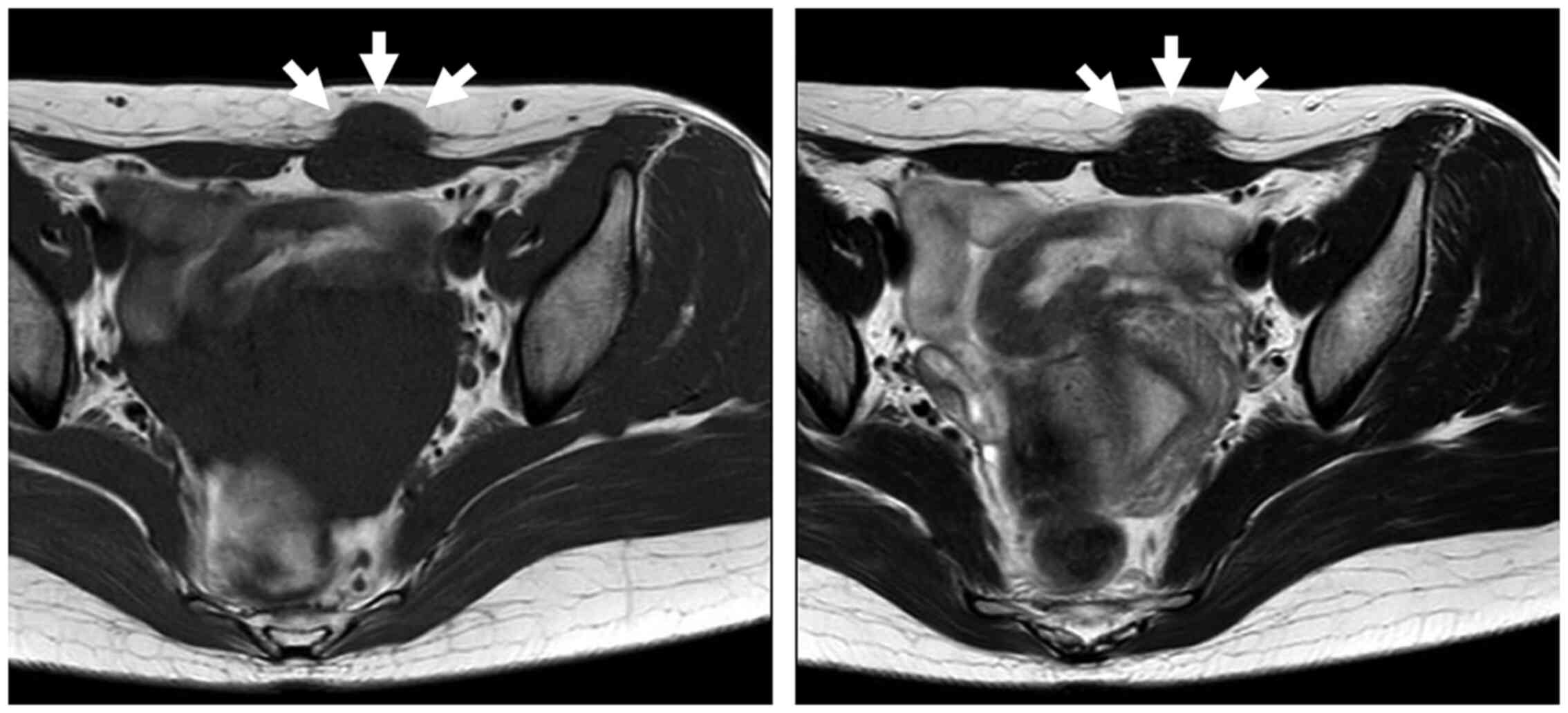
A 44-year-old healthy woman developed a lower abdominal painful mass 3 years prior. She mentioned that the mass was associated with her menstrual cycle. She had undergone Caesarean section 6 years before the initial presentation. At the clinical examination, a painful, elastic, hard, round mass approximately 30 mm in diameter was observed above her Caesarean section surgical scar. Pelvic magnetic resonance imaging (MRI) revealed a 25-mm mass in the subcutaneous abdominal wall. The mass showed isointensity compared to the muscle on both T1- and T2-weighted images (Fig. 1). We suspected abdominal wall endometriosis because of the patient's medical history, clinical symptoms, and radiological examination findings. We planned to resect the tumor to confirm the diagnosis. The pathological findings confirmed endometrial gland and endometrial stroma features; the final diagnosis was endometriosis. Adequate surgical margins were acquired at a distance of 10 mm. At the 3-year follow-up, there was no recurrence, and she did not experience pain.

Figure 1

Unenhanced axial T1-weighted MRI (left), T2-weighted MRI (right) showing nodule isointensity to muscle on both T1- and T2-weighted MRI in the subcutaneous abdominal wall. MRI, magnetic resonance imaging (arrow).

Case 2

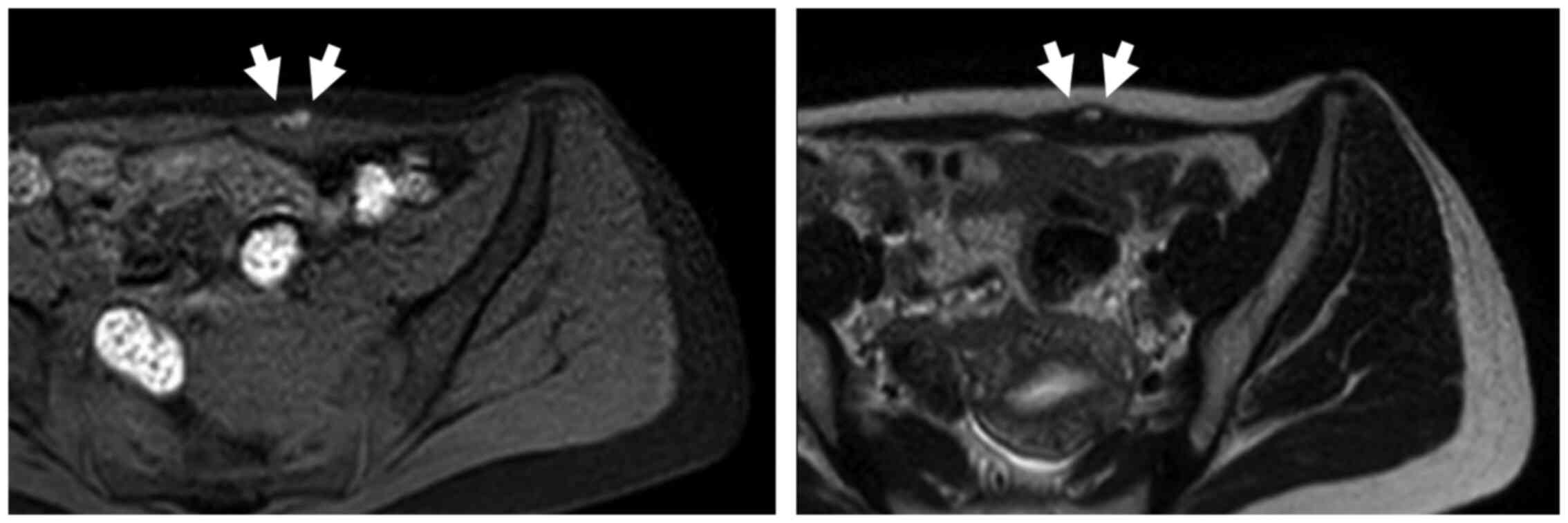
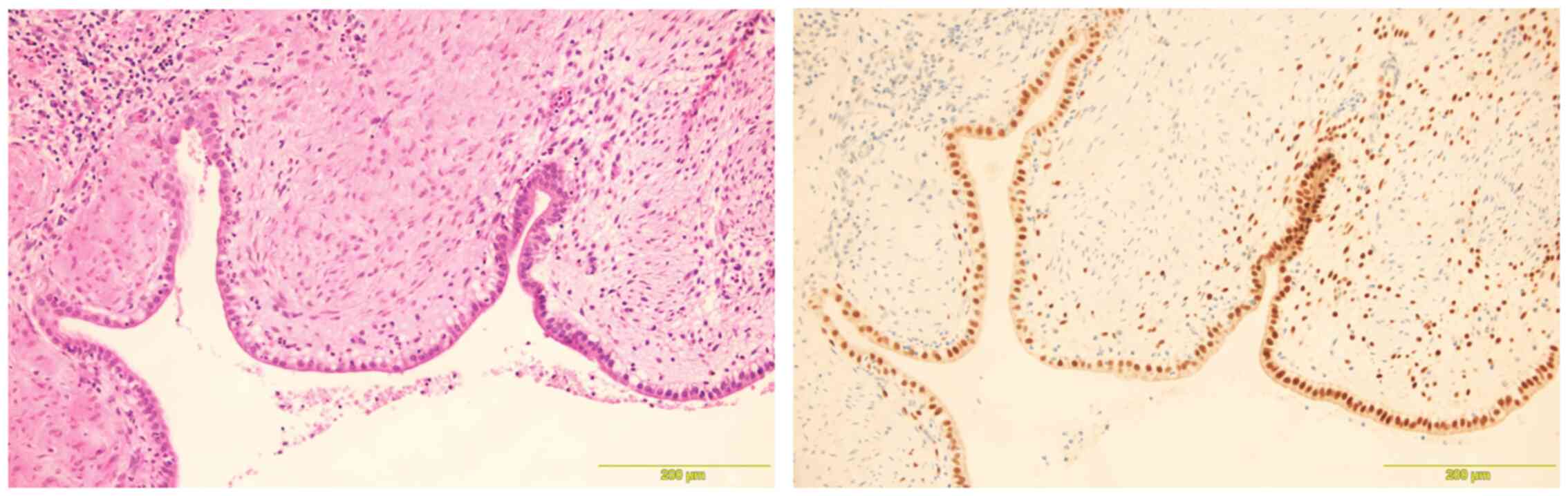
A 37-year-old woman developed a lower abdominal painful mass 3 years prior. She mentioned that the mass was associated with her menstrual cycle. She had undergone Caesarean section twice: 5 and 7 years before the initial presentation. At the clinical examination, a painful, elastic, hard, round mass approximately 20 mm in diameter was detected 20 mm proximal to the Caesarean section surgical scar. Pelvic MRI revealed a 15-mm mass in the subcutaneous abdominal wall. The mass showed hyperintensity compared to the muscle on both T1- and T2-weighted images (Fig. 2). As we suspected abdominal wall endometriosis, tumor resection was performed. Estrogen receptors tested positive on immunohistochemical analysis (Fig. 3). At the 1-year follow-up, there was no recurrence, and she did not experience pain.

Figure 2

Unenhanced axial T1-weighted MRI (left), T2-weighted MRI (right) showing nodule hyperintensity to muscle on both T1- and T2-weighted MRI in the subcutaneous abdominal wall. MRI, magnetic resonance imaging (arrow).

Figure 3

Histological analysis of the lesion with hematoxylin and eosin staining showing both endometrial gland and endometrial stroma features (left), and estrogen receptor positivity on immunohistochemical staining (right).

Case 3

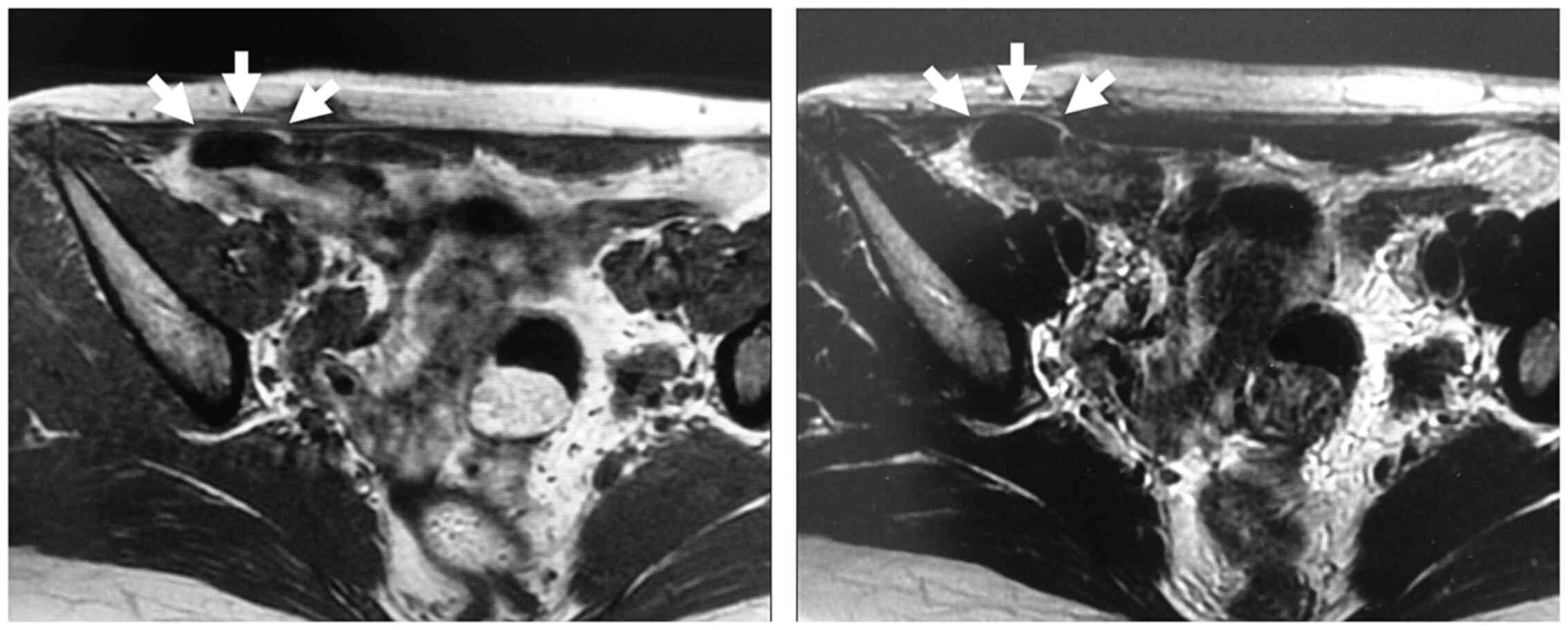
A 26-year-old woman developed a lower abdominal painful mass 6 months prior. She had undergone Caesarean section twice: 1 and 5 years before the initial presentation. At the clinical examination, a painful, elastic, hard, round mass approximately 30 mm in diameter was detected 5 mm to the right of her Caesarean section surgical scar. Pelvic MRI revealed a 20-mm mass in the subcutaneous abdominal wall. The mass showed isointensity compared to the muscle on both T1- and T2-weighted images (Fig. 4). As we suspected abdominal wall endometriosis, tumor resection was performed. At the 1-year follow-up, there was no recurrence, and she did not experience pain.

Figure 4

Unenhanced axial T1-weighted MRI (left), T2-weighted MRI (right) showing nodule isointensity to muscle on both T1- and T2-weighted MRI in the subcutaneous abdominal wall. MRI, magnetic resonance imaging (arrow).

Discussion

The most evident clinical manifestation of endometriosis is a painful subcutaneous mass with cyclic pain associated with menses (9). The cyclical nature of the complaint is present in 40-73% of cases (7,8,10). The symptoms are often associated with a history of development of a palpable mass within or adjacent to a surgical scar. The incidence of endometriosis after a Caesarean section has been estimated to be 0.26% in a 25-year interval (3). Another paper published by Singh et al reported a similar incidence, i.e., 0.2% in a 10-year interval (11). The average duration between Caesarean section surgery and the onset of symptoms is 3.7-4.5 years (12). The incidence of endometriosis after a Caesarean section shows a significantly high relative risk of 3.3 compared to that of endometriosis associated with scars concerning other surgical procedures, such as laparoscopic trocar or episiotomy (3). This high risk can be explained by the higher exposure of endometrial cells to the subcutaneous tissue during the procedure. Some studies have demonstrated the use of oral contraceptives, gonadotropin-releasing hormone analogs, danazol, and progesterone, which are approved for treating pelvic endometriosis (13). However, complete surgical excision of endometriotic lesions is required to avoid recurrence. The recurrence rate with inadequate resection has been reported as 4.5-9.1% (8). In the present cases, adequate surgical margins were acquired and there were no recurrences.

The pathogenesis of endometriosis is explained mainly by the metaplasia theory, embryonic rest theory, or transport theory. The metaplasia theory suggests that primitive mesenchymal cells undergo specialized differentiation of metaplasia to form endometrial implants (11). The embryonic rest theory hypothesizes that Müllerian remnants can differentiate into endometrial tissue, which may cause symptoms (12). The transport theory, specifically the implantation theory, suggests that endometrial cells escape through an incision made in the uterus during the surgical procedure and are implanted within the abdominal wall (14). In our study, all patients were young women of reproductive age, had a history of prior Caesarean section, and harbored an abdominal mass in or adjacent to their Caesarian surgical scars. These findings suggest a surgically induced iatrogenic implantation etiology.

The use of MRI, computed tomography, ultrasonography, and fine-needle aspiration in clinical practice for the diagnosis of abdominal wall endometriosis is well reported (15,16). Although these diagnostic techniques can adequately depict abdominal wall lesions, these imaging modalities cannot provide a definitive preoperative diagnosis. Concerning MRI, typical ovarian endometriosis shows hyperintensity on T1-weighted images and hypointensity on T2-weighted images. On the other hand, in the abdominal wall, endometriosis may be isointense or mildly hyperintense to muscle on both T1- and T2-weighted images. In some cases, there may be cystic areas of hemorrhage within abdominal wall endometriosis that appear homogeneously hyperintense on T1-weighted images (13,17). Among the present cases, two patients showed hyperintensity to the muscle on both T1- and T2-weighted images, and one patient showed isointensity on both T1- and T2-weighted images. Therefore, hematoma, suture granuloma, or desmoid may be considered among the differential diagnoses of abdominal wall endometriosis. The reported accurate preoperative diagnosis rate varies between 20 and 50% (6,10). We decided to perform wide resection in all cases since function could be preserved. A possible explanation of diagnostic failure is that the diagnoses are almost always confirmed by physicians who are not very familiar with this entity. Therefore, we must obtain the needed patient medical histories and perform physical examinations. Finally, we can be led to suspect abdominal wall endometriosis based on several findings including medical history, typical symptoms, and radiological examinations.

Acknowledgements

Not applicable.

Funding

No funding was received.

Availability of data and materials

Additional information concerning the three case reports is available from the corresponding author upon reasonable request.

Authors' contributions

TN conceived the study, treated the patients, collected the data and wrote the manuscript. THag collected, analyzed and interpreted the clinical data. THas and KA performed the surgery, analyzed and interpreted the clinical data. AS analyzed and interpreted the clinical data and reviewed the manuscript. All authors read and approved the manuscript and agree to be accountable for all aspects of the research in ensuring that the accuracy or integrity of any part of the work are appropriately investigated and resolved.

Ethics approval and consent to participate

Written informed consent for the present report was obtained from all patients. Institutional review board approval was waived because of the nature of this study.

Patient consent for publication

Written informed consent was obtained from the patients for the publication of the case details and associated images.

Competing interests

The authors declare that they have no competing interests.

Authors' information

Tomohito Hagi: ORCID: 0000-0002-2937-3447.

References

1 

Burney RO and Giudice LC: Pathogenesis and pathophysiology of endometriosis. Fertil Steril. 98:511–519. 2012.PubMed/NCBI View Article : Google Scholar

2 

Cozzolino M, Magnolfi S, Corioni S, Moncini D and Mattei A: Abdominal wall endometriosis on the right port site after laparoscopy: Case report and literature review. Ochsner J. 15:262–264. 2015.PubMed/NCBI

3 

Nominato NS, Prates LF, Lauar I, Morais J, Maia L and Geber S: Caesarean section greatly increases risk of scar endometriosis. Eur J Obstet Gynecol Reprod Biol. 152:83–85. 2010.PubMed/NCBI View Article : Google Scholar

4 

Gidwaney R, Badler RL, Yam BL, Hines JJ, Alexeeva V, Donovan V and Katz DS: Endometriosis of abdominal and pelvic wall scars: Multimodality imaging findings, pathologic correlation, and radiologic mimics. Radiographics. 32:2031–2043. 2012.PubMed/NCBI View Article : Google Scholar

5 

Tazaki T, Oue N, Ichikawa T, Tsumura H, Hino H, Yamaoka H, Kanehiro T and Yasui W: A case of endometriosis of the appendix. Hiroshima J Med Sci. 59:39–42. 2010.PubMed/NCBI

6 

Horton JD, Dezee KJ, Ahnfeldt EP and Wagner M: Abdominal wall endometriosis: A surgeon's perspective and review of 445 cases. Am J Surg. 196:207–212. 2008.PubMed/NCBI View Article : Google Scholar

7 

Ozel L, Sagiroglu J, Unal A, Unal E, Gunes P, Baskent E, Aka N, Titiz MI and Tufekci EC: Abdominal wall endometriosis in the cesarean section surgical scar: A potential diagnostic pitfall. J Obstet Gynaecol Res. 38:526–530. 2012.PubMed/NCBI View Article : Google Scholar

8 

Khan Z, Zanfagnin V, El-Nashar SA, Famuyide AO, Daftary GS and Hopkins MR: Risk factors, clinical presentation, and outcomes for abdominal wall endometriosis. J Minim Invasive Gynecol. 24:478–484. 2017.PubMed/NCBI View Article : Google Scholar

9 

Woodward PJ, Sohaey R and Mezzetti TP Jr: Endometriosis: Radiologic-pathologic correlation. Radiographics. 21:193–216. 2001.PubMed/NCBI View Article : Google Scholar

10 

Bektaş H, Bilsel Y, Sari YS, Ersöz F, Koc O, Deniz M, Boran B and Huq GE: Abdominal wall endometrioma; a 10-year experience and brief review of the literature. J Surg Res. 164:e77–e81. 2010.PubMed/NCBI View Article : Google Scholar

11 

Singh KK, Lessells AM, Adeam DJ, Jordan C, Miles WF, Macintyre IM and Greig JD: Presentation of endometriosis to general surgeons: A 10-year experience. Br J Surg. 82:1349–1351. 1995.PubMed/NCBI View Article : Google Scholar

12 

Agarwal N and Subramanian A: Endometriosis-morphology, clinical presentations and molecular pathology. J Lab Physicians. 2:1–9. 2010.PubMed/NCBI View Article : Google Scholar

13 

Hensen JH, Van Breda Vriesman AC and Puylaert JB: Abdominal wall endometriosis: Clinical presentation and imaging features with emphasis on sonography. AJR Am J Roentgenol. 186:616–620. 2006.PubMed/NCBI View Article : Google Scholar

14 

Blanco RG, Parithivel VS, Shah AK, Gumbs MA, Schein M and Gerst PH: Abdominal wall endometriomas. Am J Surg. 185:596–598. 2003.PubMed/NCBI View Article : Google Scholar

15 

Francica G: Reliable clinical and sonographic findings in the diagnosis of abdominal wall endometriosis near cesarean section scar. World J Radiol. 4:135–140. 2012.PubMed/NCBI View Article : Google Scholar

16 

Stein L, Elsayes KM and Wagner-Bartak N: Subcutaneous abdominal wall masses: Radiological reasoning. AJR Am J Roentgenol. 198:W146–W151. 2012.PubMed/NCBI View Article : Google Scholar

17 

Busard MP, Mijatovie V, van Kuijk C, Hompes PG and van Waesberghe JH: Appearance of abdominal wall endometriosis on MR imaging. Eur Radiol. 20:1267–1276. 2010.PubMed/NCBI View Article : Google Scholar

Related Articles

  • Abstract
  • View
  • Download
  • Twitter
Copy and paste a formatted citation
Spandidos Publications style
Hagi T, Nakamura T, Hasegawa T, Asanuma K and Sudo A: Cases of abdominal wall endometriosis distinguished from soft tissue tumors: A report of three cases. Biomed Rep 13: 64, 2020.
APA
Hagi, T., Nakamura, T., Hasegawa, T., Asanuma, K., & Sudo, A. (2020). Cases of abdominal wall endometriosis distinguished from soft tissue tumors: A report of three cases. Biomedical Reports, 13, 64. https://doi.org/10.3892/br.2020.1371
MLA
Hagi, T., Nakamura, T., Hasegawa, T., Asanuma, K., Sudo, A."Cases of abdominal wall endometriosis distinguished from soft tissue tumors: A report of three cases". Biomedical Reports 13.6 (2020): 64.
Chicago
Hagi, T., Nakamura, T., Hasegawa, T., Asanuma, K., Sudo, A."Cases of abdominal wall endometriosis distinguished from soft tissue tumors: A report of three cases". Biomedical Reports 13, no. 6 (2020): 64. https://doi.org/10.3892/br.2020.1371
Copy and paste a formatted citation
x
Spandidos Publications style
Hagi T, Nakamura T, Hasegawa T, Asanuma K and Sudo A: Cases of abdominal wall endometriosis distinguished from soft tissue tumors: A report of three cases. Biomed Rep 13: 64, 2020.
APA
Hagi, T., Nakamura, T., Hasegawa, T., Asanuma, K., & Sudo, A. (2020). Cases of abdominal wall endometriosis distinguished from soft tissue tumors: A report of three cases. Biomedical Reports, 13, 64. https://doi.org/10.3892/br.2020.1371
MLA
Hagi, T., Nakamura, T., Hasegawa, T., Asanuma, K., Sudo, A."Cases of abdominal wall endometriosis distinguished from soft tissue tumors: A report of three cases". Biomedical Reports 13.6 (2020): 64.
Chicago
Hagi, T., Nakamura, T., Hasegawa, T., Asanuma, K., Sudo, A."Cases of abdominal wall endometriosis distinguished from soft tissue tumors: A report of three cases". Biomedical Reports 13, no. 6 (2020): 64. https://doi.org/10.3892/br.2020.1371
Follow us
  • Twitter
  • LinkedIn
  • Facebook
About
  • Spandidos Publications
  • Careers
  • Cookie Policy
  • Privacy Policy
How can we help?
  • Help
  • Live Chat
  • Contact
  • Email to our Support Team