Spandidos Publications Logo
  • About
    • About Spandidos
    • Aims and Scopes
    • Abstracting and Indexing
    • Editorial Policies
    • Reprints and Permissions
    • Job Opportunities
    • Terms and Conditions
    • Contact
  • Journals
    • All Journals
    • Oncology Letters
      • Oncology Letters
      • Information for Authors
      • Editorial Policies
      • Editorial Board
      • Aims and Scope
      • Abstracting and Indexing
      • Bibliographic Information
      • Archive
    • International Journal of Oncology
      • International Journal of Oncology
      • Information for Authors
      • Editorial Policies
      • Editorial Board
      • Aims and Scope
      • Abstracting and Indexing
      • Bibliographic Information
      • Archive
    • Molecular and Clinical Oncology
      • Molecular and Clinical Oncology
      • Information for Authors
      • Editorial Policies
      • Editorial Board
      • Aims and Scope
      • Abstracting and Indexing
      • Bibliographic Information
      • Archive
    • Experimental and Therapeutic Medicine
      • Experimental and Therapeutic Medicine
      • Information for Authors
      • Editorial Policies
      • Editorial Board
      • Aims and Scope
      • Abstracting and Indexing
      • Bibliographic Information
      • Archive
    • International Journal of Molecular Medicine
      • International Journal of Molecular Medicine
      • Information for Authors
      • Editorial Policies
      • Editorial Board
      • Aims and Scope
      • Abstracting and Indexing
      • Bibliographic Information
      • Archive
    • Biomedical Reports
      • Biomedical Reports
      • Information for Authors
      • Editorial Policies
      • Editorial Board
      • Aims and Scope
      • Abstracting and Indexing
      • Bibliographic Information
      • Archive
    • Oncology Reports
      • Oncology Reports
      • Information for Authors
      • Editorial Policies
      • Editorial Board
      • Aims and Scope
      • Abstracting and Indexing
      • Bibliographic Information
      • Archive
    • Molecular Medicine Reports
      • Molecular Medicine Reports
      • Information for Authors
      • Editorial Policies
      • Editorial Board
      • Aims and Scope
      • Abstracting and Indexing
      • Bibliographic Information
      • Archive
    • World Academy of Sciences Journal
      • World Academy of Sciences Journal
      • Information for Authors
      • Editorial Policies
      • Editorial Board
      • Aims and Scope
      • Abstracting and Indexing
      • Bibliographic Information
      • Archive
    • International Journal of Functional Nutrition
      • International Journal of Functional Nutrition
      • Information for Authors
      • Editorial Policies
      • Editorial Board
      • Aims and Scope
      • Abstracting and Indexing
      • Bibliographic Information
      • Archive
    • International Journal of Epigenetics
      • International Journal of Epigenetics
      • Information for Authors
      • Editorial Policies
      • Editorial Board
      • Aims and Scope
      • Abstracting and Indexing
      • Bibliographic Information
      • Archive
    • Medicine International
      • Medicine International
      • Information for Authors
      • Editorial Policies
      • Editorial Board
      • Aims and Scope
      • Abstracting and Indexing
      • Bibliographic Information
      • Archive
  • Articles
  • Information
    • Information for Authors
    • Information for Reviewers
    • Information for Librarians
    • Information for Advertisers
    • Conferences
  • Language Editing
Spandidos Publications Logo
  • About
    • About Spandidos
    • Aims and Scopes
    • Abstracting and Indexing
    • Editorial Policies
    • Reprints and Permissions
    • Job Opportunities
    • Terms and Conditions
    • Contact
  • Journals
    • All Journals
    • Biomedical Reports
      • Information for Authors
      • Editorial Policies
      • Editorial Board
      • Aims and Scope
      • Abstracting and Indexing
      • Bibliographic Information
      • Archive
    • Experimental and Therapeutic Medicine
      • Information for Authors
      • Editorial Policies
      • Editorial Board
      • Aims and Scope
      • Abstracting and Indexing
      • Bibliographic Information
      • Archive
    • International Journal of Epigenetics
      • Information for Authors
      • Editorial Policies
      • Editorial Board
      • Aims and Scope
      • Abstracting and Indexing
      • Bibliographic Information
      • Archive
    • International Journal of Functional Nutrition
      • Information for Authors
      • Editorial Policies
      • Editorial Board
      • Aims and Scope
      • Abstracting and Indexing
      • Bibliographic Information
      • Archive
    • International Journal of Molecular Medicine
      • Information for Authors
      • Editorial Policies
      • Editorial Board
      • Aims and Scope
      • Abstracting and Indexing
      • Bibliographic Information
      • Archive
    • International Journal of Oncology
      • Information for Authors
      • Editorial Policies
      • Editorial Board
      • Aims and Scope
      • Abstracting and Indexing
      • Bibliographic Information
      • Archive
    • Medicine International
      • Information for Authors
      • Editorial Policies
      • Editorial Board
      • Aims and Scope
      • Abstracting and Indexing
      • Bibliographic Information
      • Archive
    • Molecular and Clinical Oncology
      • Information for Authors
      • Editorial Policies
      • Editorial Board
      • Aims and Scope
      • Abstracting and Indexing
      • Bibliographic Information
      • Archive
    • Molecular Medicine Reports
      • Information for Authors
      • Editorial Policies
      • Editorial Board
      • Aims and Scope
      • Abstracting and Indexing
      • Bibliographic Information
      • Archive
    • Oncology Letters
      • Information for Authors
      • Editorial Policies
      • Editorial Board
      • Aims and Scope
      • Abstracting and Indexing
      • Bibliographic Information
      • Archive
    • Oncology Reports
      • Information for Authors
      • Editorial Policies
      • Editorial Board
      • Aims and Scope
      • Abstracting and Indexing
      • Bibliographic Information
      • Archive
    • World Academy of Sciences Journal
      • Information for Authors
      • Editorial Policies
      • Editorial Board
      • Aims and Scope
      • Abstracting and Indexing
      • Bibliographic Information
      • Archive
  • Articles
  • Information
    • For Authors
    • For Reviewers
    • For Librarians
    • For Advertisers
    • Conferences
  • Language Editing
Login Register Submit
  • This site uses cookies
  • You can change your cookie settings at any time by following the instructions in our Cookie Policy. To find out more, you may read our Privacy Policy.

    I agree
Search articles by DOI, keyword, author or affiliation
Search
Advanced Search
presentation
Biomedical Reports
Join Editorial Board Propose a Special Issue
Print ISSN: 2049-9434 Online ISSN: 2049-9442
Journal Cover
February-2024 Volume 20 Issue 2

Full Size Image

Sign up for eToc alerts
Recommend to Library

Journals

International Journal of Molecular Medicine

International Journal of Molecular Medicine

International Journal of Molecular Medicine is an international journal devoted to molecular mechanisms of human disease.

International Journal of Oncology

International Journal of Oncology

International Journal of Oncology is an international journal devoted to oncology research and cancer treatment.

Molecular Medicine Reports

Molecular Medicine Reports

Covers molecular medicine topics such as pharmacology, pathology, genetics, neuroscience, infectious diseases, molecular cardiology, and molecular surgery.

Oncology Reports

Oncology Reports

Oncology Reports is an international journal devoted to fundamental and applied research in Oncology.

Experimental and Therapeutic Medicine

Experimental and Therapeutic Medicine

Experimental and Therapeutic Medicine is an international journal devoted to laboratory and clinical medicine.

Oncology Letters

Oncology Letters

Oncology Letters is an international journal devoted to Experimental and Clinical Oncology.

Biomedical Reports

Biomedical Reports

Explores a wide range of biological and medical fields, including pharmacology, genetics, microbiology, neuroscience, and molecular cardiology.

Molecular and Clinical Oncology

Molecular and Clinical Oncology

International journal addressing all aspects of oncology research, from tumorigenesis and oncogenes to chemotherapy and metastasis.

World Academy of Sciences Journal

World Academy of Sciences Journal

Multidisciplinary open-access journal spanning biochemistry, genetics, neuroscience, environmental health, and synthetic biology.

International Journal of Functional Nutrition

International Journal of Functional Nutrition

Open-access journal combining biochemistry, pharmacology, immunology, and genetics to advance health through functional nutrition.

International Journal of Epigenetics

International Journal of Epigenetics

Publishes open-access research on using epigenetics to advance understanding and treatment of human disease.

Medicine International

Medicine International

An International Open Access Journal Devoted to General Medicine.

Journal Cover
February-2024 Volume 20 Issue 2

Full Size Image

Sign up for eToc alerts
Recommend to Library

  • Article
  • Citations
    • Cite This Article
    • Download Citation
    • Create Citation Alert
    • Remove Citation Alert
    • Cited By
  • Similar Articles
    • Related Articles (in Spandidos Publications)
    • Similar Articles (Google Scholar)
    • Similar Articles (PubMed)
  • Download PDF
  • Download XML
  • View XML
Article Open Access

Molecular mechanism of honeysuckle + forsythia in treatment of acute lung injury based on network pharmacology

  • Authors:
    • Xin Wen
    • Min Cheng
    • Zhongxing Song
    • Jinhang Hu
    • Xuhu Liang
    • Wuying Lang
    • Mengqi Yang
    • Ruina Zhou
    • Yunjing Hao
  • View Affiliations / Copyright

    Affiliations: Shaanxi University of Chinese Medicine, Co‑construction Collaborative Innovation Center for Chinese Medicine Resources Industrialization by Shaanxi and Education Ministry, State Key Laboratory of Research and Development of Characteristic Qin Medicine Resources (Cultivation), Xianyang, Shaanxi 712046, P.R. China, Shaanxi University of Chinese Medicine, Co‑construction Collaborative Innovation Center for Chinese Medicine Resources Industrialization by Shaanxi and Education Ministry, State Key Laboratory of Research and Development of Characteristic Qin Medicine Resources (Cultivation), Xianyang, Shaanxi 712046, P.R. China, Shangluo University, College of Biomedical and Food Engineering, Shangluo, Shaanxi 726000, P.R. China, Shangluo University, College of Biomedical and Food Engineering, Shangluo, Shaanxi 726000, P.R. China, Northwest University, College of Life Sciences, Xian, Shaanxi 710075, P.R. China
    Copyright: © Wen et al. This is an open access article distributed under the terms of Creative Commons Attribution License.
  • Article Number: 32
    |
    Published online on: January 3, 2024
       https://doi.org/10.3892/br.2024.1720
  • Expand metrics +
Metrics: Total Views: 0 (Spandidos Publications: | PMC Statistics: )
Metrics: Total PDF Downloads: 0 (Spandidos Publications: | PMC Statistics: )
Cited By (CrossRef): 0 citations Loading Articles...

This article is mentioned in:


Abstract

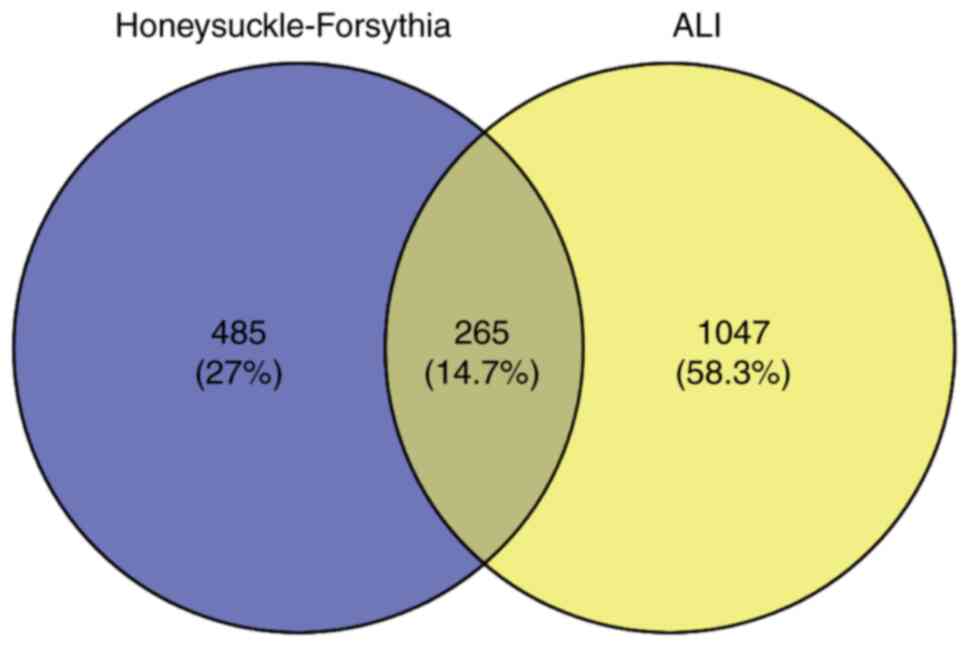
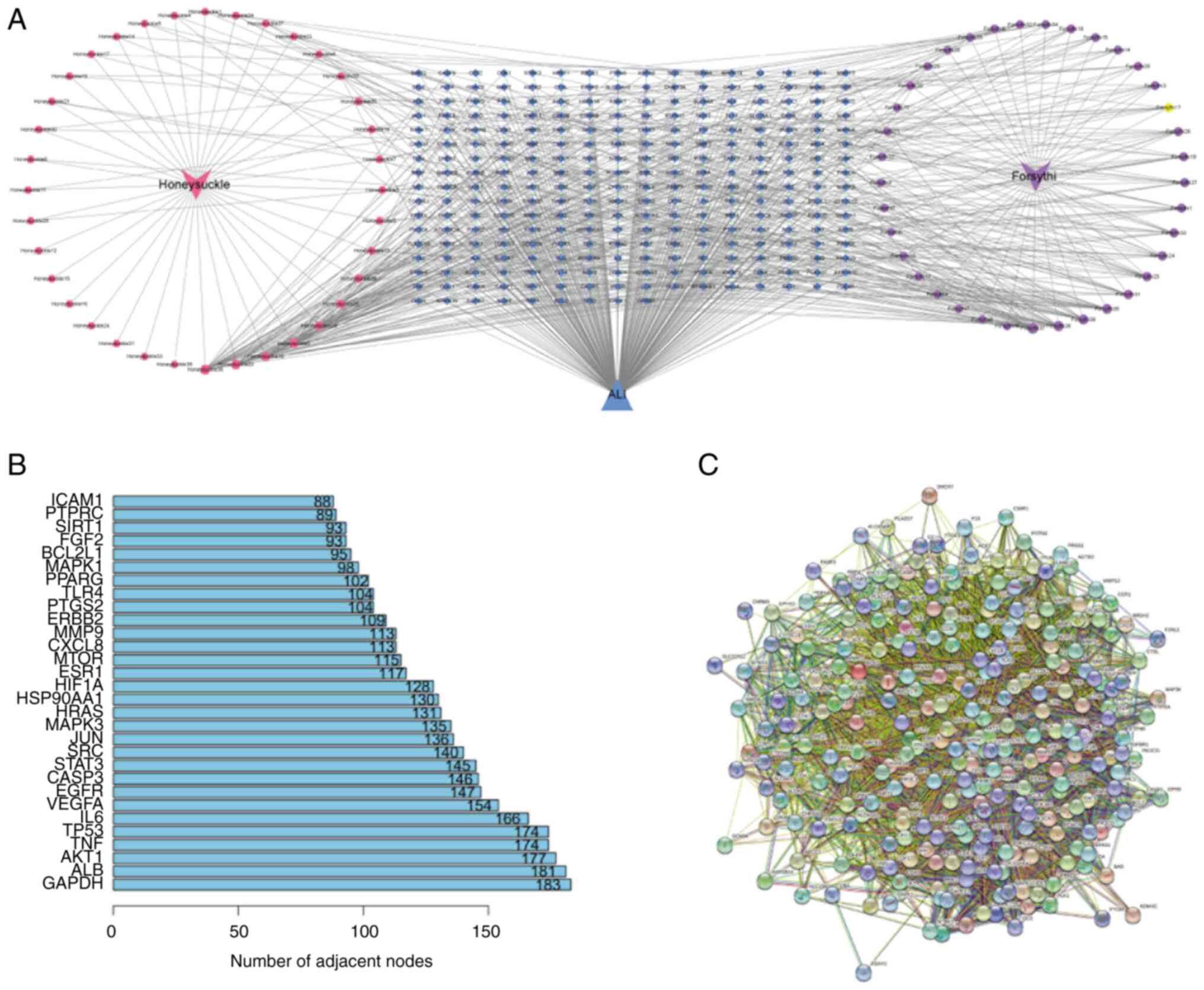
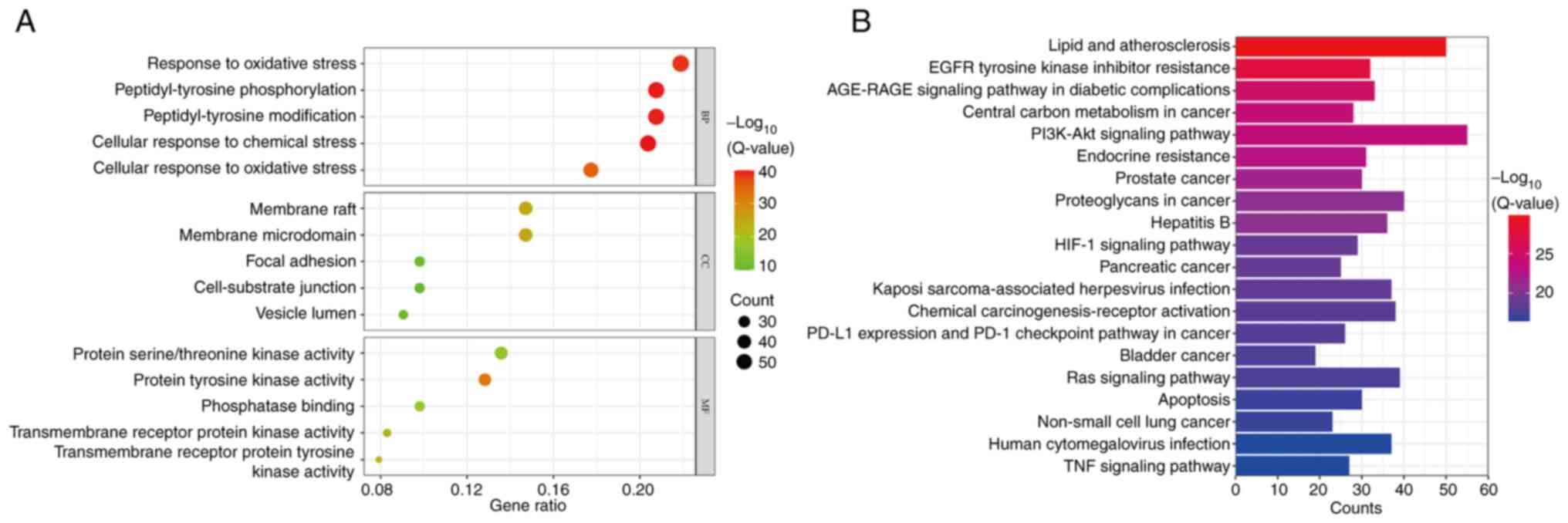
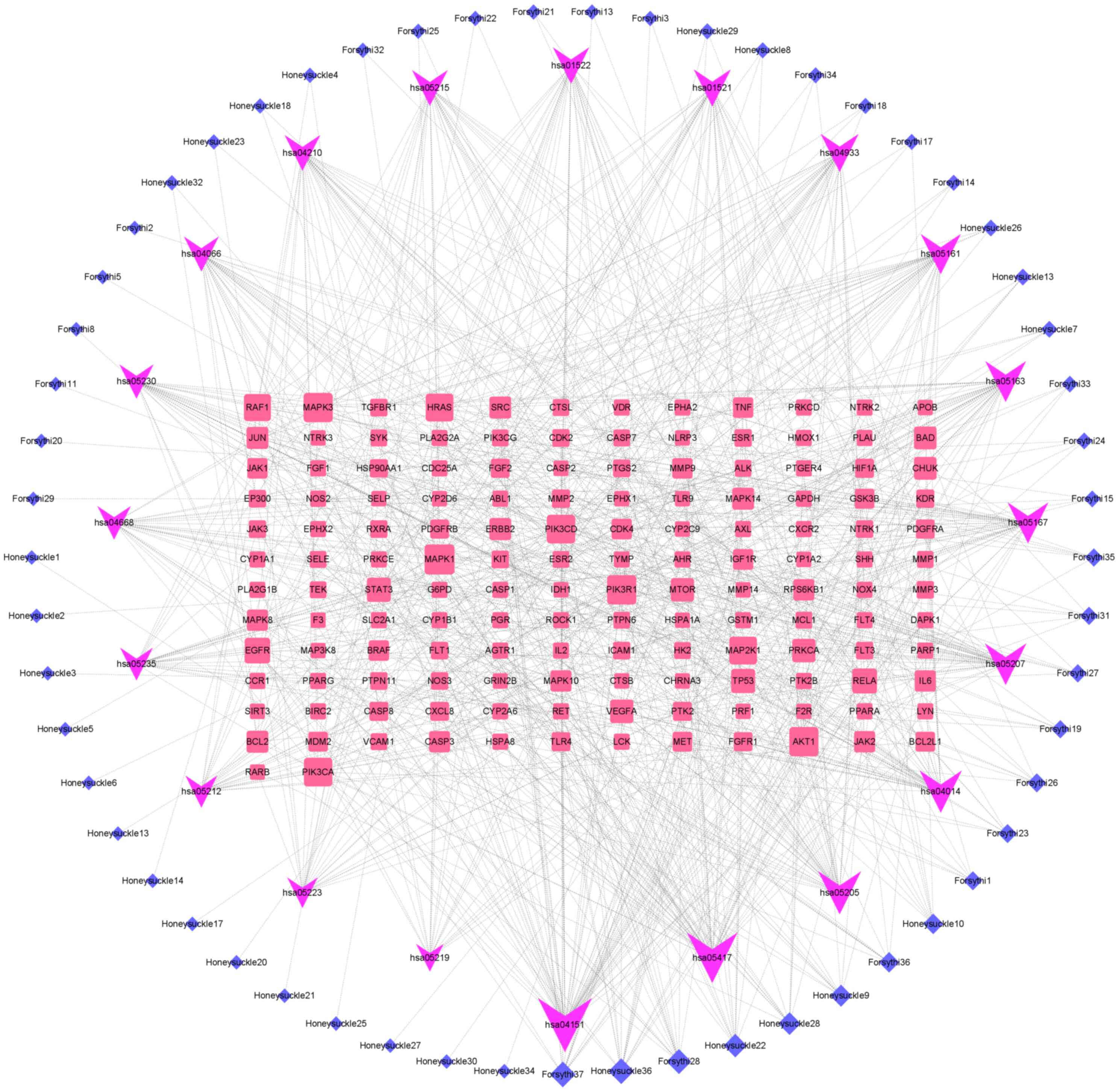
The pathogenesis of acute lung injury (ALI) is complex and it is a common critical illness in clinical practice, seriously threatening the lives of critically ill patients, for which no specific molecular marker exists and there is a lack of effective methods for the treatment of ALI. The present study aimed to investigate the mechanism of action of honeysuckle and forsythia in treatment of acute lung injury (ALI) based on network pharmacology and in vitro modeling. The active ingredients and targets of honeysuckle and forsythia were predicted using traditional Chinese medicine systems pharmacology, PubChem and Swiss Target Prediction databases, and the Cytoscape 3.7.2 software was used to construct a drug‑component‑potential target network. The potential targets were imported into the Search tool for recurring instances of neighboring genes) database to obtain protein‑protein interactions and subjected to Gene Ontology and Kyoto Encyclopedia of Genes and Targets analysis using Database for Annotation, Visualization, and Integrated Discovery. AutoDock Vina 1.1.2 software was used for docking between key active ingredients and the target proteins to analyze the binding ability of the active ingredients to the primary targets in honeysuckle and forsythia. A total of 64 male BALB/c mice were randomly divided into control, model, positive drug (Lianhua‑Qingwen capsule), honeysuckle, forsythia, honeysuckle + forsythia high‑, medium‑ and low‑dose groups. Lipopolysaccharide (LPS) was used to induced an ALI model. The lung tissues of the mice were stained with hematoxylin‑eosin and the serum levels of malondialdehyde (MDA) and the activities of superoxide dismutase (SOD) and glutathione peroxidase (GSH‑Px) were measured 4 h after the LPS administration. Reverse transcription‑quantitative PCR and western blotting were used to detect NF‑κB mRNA and protein expression, respectively. Active ingredients of honeysuckle and forsythia acted on 265 common targets in ALI, which regulated NF‑κB, tumor necrosis factor‑α (TNF‑α) and PI3K‑AKT signaling pathway, HIF‑1 signalling pathway to slow the inflammatory response in treatment of ALI. In the positive drug group, honeysuckle, forsythia group, honeysuckle + forsythia high‑, medium‑ and low‑dose groups, lung tissue damage were significantly decrease compared with the model group, and inflammatory cell infiltration was reduced. Compared with the model group, honeysuckle + forsythia groups experienced decreased damage caused by the LPS and inflammation in the lung tissues and significantly decreased TNF‑α and NF‑κB and MDA concentration and significantly increased the SOD and GSH‑Px activities. The mechanism of the effect of honeysuckle and forsythia on ALI may be mediated by inhibition of TNF‑α and NF‑κB expression and the activation of antioxidant mechanisms to decrease production of pro‑inflammatory cytokines in lung tissue, thus treating ALI.
View Figures

Figure 1

Figure 2

Figure 3

Figure 4

Figure 5

Figure 6

Figure 7

Figure 8

View References

1 

Shen Tao-Ye, Guo Jian-Hao and Wang Xiao-Juan: Research progress in the treatment of acute lung injury. Chin Mod Applied Pharm. 38:366–370. 2021.

2 

Messer MP, Kellermann P, Weber SJ, Hohmann C, Denk S, Klohs B, Schultze A, Braumüller S, Huber-Lang MS and Perl M: Silencing of fas, fas associated via death domain, or caspase 3 differentially affects lung inflammation, apoptosis, and development of trauma-induced septic acute lung injury. Shock. 39:19–27. 2013.PubMed/NCBI View Article : Google Scholar

3 

Jia Xuemei and Yang Guangfu: Research progress on pathogenesis of acute lung injury/acute respiratory distress syndrome. Chin Pract Med. 6(242)2011.

4 

Yuan Wei, Yang Hui, Xie Yong, et al: Effect of Forsythiaside A on regulatory T cells in mice with systemic endotoxemia. Chin Patent Med. 36:1584–1588. 2014.

5 

Bakowitz M, Bruns B and McCunn M: Acute lung injury and the acute respiratory distress syndrome in the injured patient. Scand J Trauma Resusc Emerg Med. 20(54)2012.PubMed/NCBI View Article : Google Scholar

6 

Bellani G, Laffey JG, Pham T, Fan E, Brochard L, Esteban A, Gattinoni L, van Haren F, Larsson A, McAuley DF, et al: Epidemiology, patterns of care, and mortality for patients with acute respiratory distress syndrome in intensive care units in 50 countries. JAMA. 315:788–800. 2016.PubMed/NCBI View Article : Google Scholar

7 

Ma Xiaolong, Chen Yueru and Shen Feiyan: Research progress on therapeutic effect and mechanism of traditional Chinese medicine in acute lung injury. CJMAP. 39:269–276. 2022.

8 

Xue Bingquan, Zhu Yanhui and Yu Haiyan: Study on the mechanism of Fructus Forsythiae in the treatmen to facute lung injury basedon UPLC-Q-TOF-MS/MS and network pharmacology. Chin J Hosp Pharm. 42:2208–2215. 2022.

9 

Yang R, Lu Y, Hao H, Zhang MD, Xuan J and Zhang YQ: Research progress on the chemical constituents and pharmacological activities of iridoid glycosides in Lonicera japonica. Zhongguo Zhong Yao Za Zhi. 46:2746–2752. 2021.PubMed/NCBI View Article : Google Scholar : (In Chinese).

10 

Xiao Xie Mengzhou and Gan Long: Determination of chlorogenic acid and total flavonoids in Lonicera japonica thunb and Lonicera japonica thunb. Chin Herb Med. 50:210–216. 2019.

11 

Ji Hua, Wang Lin and Zhang Haixin: Forsythia the Taoist traditional Chinese medicine in Hebei province. Mod Rural Sci Technol. 2021(125)2021.

12 

Gong L, Wang C, Zhou H, Ma C, Zhang Y, Peng C and Li Y: A review of pharmacological and pharmacokinetic properties of Forsythiaside A. Pharmacol Res. 169(105690)2021.PubMed/NCBI View Article : Google Scholar

13 

Yang HX, Liu QP, Zhou YX, Chen YY, An P, Xing YZ, Zhang L, Jia M and Zhang H: Forsythiasides: A review of the pharmacological effects. Front Cardiovasc Med. 9(971491)2022.PubMed/NCBI View Article : Google Scholar

14 

Ding Z, Zhong R, Yang Y, Xia T, Wang W, Wang Y, Xing N, Luo Y, Li S, Shang L and Shu Z: Systems pharmacology reveals the mechanism of activity of Ge-Gen-Qin-Lian decoction against LPS-induced acute lung injury: A novel strategy for exploring active components and effective mechanism of TCM formulae. Pharmacol Res. 156(104759)2020.PubMed/NCBI View Article : Google Scholar

15 

Ding Z, Zhong R, Xia T, Yang Y, Xing N, Wang W, Wang Y, Yang B, Sun X and Shu Z: Advances in research into the mechanisms of Chinese Materia Medica against acute lung injury. Biomed Pharmacother. 122(109706)2020.PubMed/NCBI View Article : Google Scholar

16 

Liang C, Hui N, Liu Y, Qiao G, Li J, Tian L, Ju X, Jia M, Liu H, Cao W, et al: Insights into forsythia honeysuckle (Lianhuaqingwen) capsules: A Chinese herbal medicine repurposed for COVID-19 pandemic. Phytomed Plus. 1(100027)2021.PubMed/NCBI View Article : Google Scholar

17 

Zhang H, Xu L, Song J, Zhang A, Zhang X, Li Q, Qu X and Wang P: Establishment of quality evaluation method for Yinqiao powder: A herbal formula against COVID-19 in China. J Anal Methods Chem. 2022(1748324)2022.PubMed/NCBI View Article : Google Scholar

18 

Ding X, Lin Z and Wang D: Research progress on constituents and pharmacological actions of Lonicerae Japonicae Flos, Forsythiae Fructus and their combination. Shandong science. 32:36–41. 2019.

19 

Huang H: [The inheritance and development of Shang han lun (Treatise on cold pathogenic diseases) in the perspective of Wu Jutong's Wen bing tiao bian (Treatise on differentiation and treatment of seasonal warm diseases)]. Zhonghua Yi Shi Za Zhi. 32:36–38. 2002.PubMed/NCBI(In Chinese).

20 

Kong Yurong, Li Yan, Chen Yifan, et al: Analysing Wu Jutong's experience of using honeysuckle-forsythia from the theory of disposition and flavour matching. Modern Chinese Medicine Clinic. 29(52-54-67)2022.

21 

Li Y, Cai W, Weng X, Li Q, Wang Y, Chen Y, Zhang W, Yang Q, Guo Y, Zhu X and Wang H: Lonicerae Japonicae Flos and Lonicerae Flos: A systematic pharmacology review. Evid Based Complement Alternat Med. 2015(905063)2015.PubMed/NCBI View Article : Google Scholar

22 

Chen Y, Zhang C, Wang N and Feng Y: Deciphering suppressive effects of Lianhua Qingwen Capsule on COVID-19 and synergistic effects of its major botanical drug pairs. Chin J Nat Med. 21:383–400. 2023.PubMed/NCBI View Article : Google Scholar

23 

Xu H, Huang L and Xu Y: [Simultaneous determination of five effective components in Qingrejiedu oral liquid using high performance liquid chromatography-mass spectrometry]. Se Pu. 26:599–602. 2008.PubMed/NCBI(In Chinese).

24 

Li R, Zhu Y, Yu M, Liu T, Zhao Y and Yu Z: Study on the mechanism of anti-acute lung injury of Shuanghuanglian oral liquid based on identification of transitional components in blood and network pharmacology. J Chromatogr B Analyt Technol Biomed Life Sci. 1212(123498)2022.PubMed/NCBI View Article : Google Scholar

25 

Lin L: [Application of differential derivative spectrophotometry to the determination of total chlorogenic acid in Lonicera japonica Thunb. and yinqiao jiedu pian]. Zhongguo Zhong Yao Za Zhi. 16:282–284 and 318. 1991.PubMed/NCBI(In Chinese).

26 

Ye J, Li L and Hu Z: Exploring the molecular mechanism of action of Yinchen Wuling powder for the treatment of hyperlipidemia, using network pharmacology, molecular docking, and molecular dynamics simulation. Biomed Res Int. 2021(9965906)2021.PubMed/NCBI View Article : Google Scholar

27 

National Research Council (US) Committee for the Update of the Guide for the Care and Use of Laboratory Animals: Guide for the Care and Use of Laboratory Animals. 8th edition. National Academies Press (US), Washington (DC), 2011.

28 

Xu X, Zhang W, Huang C, Li Y, Yu H, Wang Y, Duan J and Ling Y: A novel chemometric method for the prediction of human oral bioavailability. Int J Mol Sci. 13:6964–6982. 2012.PubMed/NCBI View Article : Google Scholar

29 

Ru J, Li P, Wang J, Zhou W, Li B, Huang C, Li P, Guo Z, Tao W, Yang Y, et al: TCMSP: A database of systems pharmacology for drug discovery from herbal medicines. J Cheminform. 6(13)2014.PubMed/NCBI View Article : Google Scholar

30 

Kim S, Chen J, Cheng T, Gindulyte A, He J, He S, Li Q, Shoemaker BA, Thiessen PA, Yu B, et al: PubChem in 2021: New data content and improved web interfaces. Nucleic Acids Res. 49:D1388–D1395. 2021.PubMed/NCBI View Article : Google Scholar

31 

Chen X, Ji ZL and Chen YZ: TTD: Therapeutic target database. Nucleic Acids Res. 30:412–415. 2002.PubMed/NCBI View Article : Google Scholar

32 

Doncheva NT, Morris JH, Gorodkin J and Jensen LJ: Cytoscape StringApp: Network analysis and visualization of proteomics data. J Proteome Res. 18:623–632. 2019.PubMed/NCBI View Article : Google Scholar

33 

Tang Y, Li M, Wang J, Pan Y and Wu FX: CytoNCA: A cytoscape plugin for centrality analysis and evaluation of protein interaction networks. Biosystems. 127:67–72. 2015.PubMed/NCBI View Article : Google Scholar

34 

Huang JH, Huang XH, Chen ZY, Zheng QS and Sun RY: Dose conversion among different animals and healthy volunteers in pharmacological study. Chinese Clinical Pharmacology and Therapeutics. 9:1069–1072. 2004.(In Chinese).

35 

Zhou L, Yang H, Ai Y, Xie Y and Fu Y: Protective effect of Forsythiaside A on acute lung injury induced by lipopolysaccharide in mice. Xi Bao Yu Fen Zi Mian Yi Xue Za Zhi. 30:151–154. 2014.PubMed/NCBI(In Chinese).

36 

Arocho A, Chen B, Ladanyi M and Pan Q: Validation of the 2-deltadeltaCt calculation as an alternate method of data analysis for quantitative PCR of BCR-ABL P210 transcripts. Diagn Mol Pathol. 15:56–61. 2006.PubMed/NCBI View Article : Google Scholar

37 

Wang Z, Yu T, Hou Y, Zhou W, Ding Y and Nie H: Nie H: Mesenchymal stem cell therapy for ALI/ARDS: Therapeutic potential and challenges. Curr Pharm Des. 28:2234–2240. 2022.PubMed/NCBI View Article : Google Scholar

38 

Nova Z, Skovierova H and Calkovska A: Alveolar-Capillary membrane-related pulmonary cells as a target in endotoxin-induced acute lung injury. Int J Mol Sci. 20(831)2019.PubMed/NCBI View Article : Google Scholar

39 

Geng Q, Liu B, Zhao PC, Xiong YB, Li L, Yi JF and Lyu C: Molecular mechanism of Fagopyri Dibotryis Rhizoma in treatment of acute lung injury based on network pharmacology and in vitro experiments. Zhongguo Zhong Yao Za Zhi. 46:4816–4823. 2021.PubMed/NCBI View Article : Google Scholar : (In Chinese).

40 

Wu J, Zhang F, Li Z, Jin W and Shi Y: Integration strategy of network pharmacology in Traditional Chinese Medicine: A narrative review. J Tradit Chin Med. 42:479–486. 2022.PubMed/NCBI View Article : Google Scholar

41 

D'Alessio FR: Mouse models of acute lung injury and ARDS. Methods Mol Biol. 1809:341–350. 2018.PubMed/NCBI View Article : Google Scholar

42 

Huang CY, Deng JS, Huang WC, Jiang WP and Huang GJ: Attenuation of lipopolysaccharide-induced acute lung injury by hispolon in mice, through regulating the TLR4/PI3K/Akt/mTOR and Keap1/Nrf2/HO-1 pathways, and suppressing oxidative stress-mediated er stress-induced apoptosis and autophagy. Nutrients. 12(1742)2020.PubMed/NCBI View Article : Google Scholar

43 

Li WW, Wang TY, Cao B, Liu B, Rong YM, Wang JJ, Wei F, Wei LQ, Chen H and Liu YX: Synergistic protection of matrine and lycopene against lipopolysaccharide-inducedacute lung injury in mice. Mol Med Rep. 20:455–462. 2019.PubMed/NCBI View Article : Google Scholar

44 

Wang J, Luo L, Zhao X, Xue X, Liao L, Deng Y, Zhou M, Peng C and Li Y: Forsythiae Fructuse extracts alleviates LPS-induced acute lung injury in mice by regulating PPAR-γ/RXR-α in lungs and colons. J Ethnopharmacol: 293:115322,2022. doi: 10.1016/j.jep.2022.115322.

45 

Liu C, Xiao K and Xie L: Progress in preclinical studies of macrophage autophagy in the regulation of ALI/ARDS. Front Immunol. 13(922702)2022.PubMed/NCBI View Article : Google Scholar

46 

Li Q, Yin J, Ran QS, Yang Q, Liu L, Zhao Z, Li YJ, Chen Y, Sun LD, Wang YJ, et al: [Efficacy and mechanism of Lianhua Qingwen Capsules(LHQW) on chemotaxis of macrophages in acute lung injury (ALI) animal model]. Zhongguo Zhong Yao Za Zhi. 44:2317–2323. 2019.PubMed/NCBI View Article : Google Scholar : (In Chinese).

47 

Wang Y, Yuan Y, Wang W, He Y, Zhong H, Zhou X, Chen Y, Cai XJ and Liu LQ: Mechanisms underlying the therapeutic effects of Qingfeiyin in treating acute lung injury based on GEO datasets, network pharmacology and molecular docking. Comput Biol Med. 145(105454)2022.PubMed/NCBI View Article : Google Scholar

48 

Liu Jiao and Li Mingchun: The relationship between PI3K/ATK pathway and EGFR tyrosine-kinase inhibitor resistance. Chinese Journal of Pharmacology. 29:1648–1650. 2013.

49 

Liu B, Yu H, Baiyun R, Lu J, Li S, Bing Q, Zhang X and Zhang Z: Protective effects of dietary luteolin against mercuric chloride-induced lung injury in mice: Involvement of AKT/Nrf2 and NF-κB pathways. Food Chem Toxicol. 113:296–302. 2018.PubMed/NCBI View Article : Google Scholar

50 

Zhan Q, Ma X and He Z: PEAR1 suppresses the proliferation of pulmonary microvascular endothelial cells via PI3K/AKT pathway in ALI model. Microvasc Res. 128(103941)2020.PubMed/NCBI View Article : Google Scholar

51 

Lai WY, Wang JW, Huang BT, Lin EP and Yang PC: A novel TNF-α-targeting aptamer for TNF-α-mediated acute lung injury and acute liver failure. Theranostics. 9:1741–1751. 2019.PubMed/NCBI View Article : Google Scholar

52 

Yang Z, Zhang XR, Zhao Q, Wang SL, Xiong LL, Zhang P, Yuan B, Zhang ZB, Fan SY, Wang TH and Zhang YH: Knockdown of TNF-α alleviates acute lung injury in rats with intestinal ischemia and reperfusion injury by upregulating IL-10 expression. Int J Mol Med. 42:926–934. 2018.PubMed/NCBI View Article : Google Scholar

53 

Peng LY, Yuan M, Song K, Yu JL, Li JH, Huang JN, Yi PF, Fu BD and Shen HQ: Baicalin alleviated APEC-induced acute lung injury in chicken by inhibiting NF-κB pathway activation. Int Immunopharmacol. 72:467–472. 2019.PubMed/NCBI View Article : Google Scholar

54 

Millar MW, Fazal F and Rahman A: Therapeutic targeting of NF-κB in acute lung injury: A double-edged sword. Cells. 11(3317)2022.PubMed/NCBI View Article : Google Scholar

55 

Zhang JB, Jin HL, Feng XY, Feng SL, Zhu WT, Nan HM and Yuan ZW: The combination of Lonicerae Japonicae Flos and Forsythiae Fructus herb-pair alleviated inflammation in liver fibrosis. Front Pharmacol. 13(984611)2022.PubMed/NCBI View Article : Google Scholar

56 

Shen F, Zou LS, Wen HM, Cui XB, Yu S, Zhu HX, Li C, Tian G and Shao JG: Qualitative evaluation of Forsythia suspensa by HPLC-PDA fingerprint combined with UFLC-QTOF-MS qualitative identification. Zhongguo Zhong Yao Za Zhi. 44:4495–4603. 2019.PubMed/NCBI View Article : Google Scholar : (In Chinese).

57 

Landelle C, Nocquet Boyer V, Abbas M, Genevois E, Abidi N, Naimo S, Raulais R, Bouchoud L, Boroli F, Terrisse H, et al: Impact of a multifaceted prevention program on ventilator-associated pneumonia including selective oropharyngeal decontamination. Intensive Care Med. 44:1777–1786. 2018.PubMed/NCBI View Article : Google Scholar

58 

Yang B, Meng QY, Chen H, Gao YL, Shen J, Mu YY and Xia YB: Clinical effect of acupuncture combined with traditional Chinese medicine in treatment of oligozoospermia/asthenozoospermia: A meta-analysis. Zhen Ci Yan Jiu. 45:243–250. 2020.PubMed/NCBI View Article : Google Scholar : (In Chinese).

59 

Gaweł S, Wardas M, Niedworok E and Wardas P: Malondialdehyde (MDA) as a lipid peroxidation marker. Wiad Lek. 57:453–455. 2004.PubMed/NCBI(In Polish).

60 

Miao L and St Clair DK: Regulation of superoxide dismutase genes: Implications in disease. Free Radic Biol Med. 47:344–356. 2009.PubMed/NCBI View Article : Google Scholar

61 

Yang L, Bi L, Jin L, Wang Y, Li Y, Li Z, He W, Cui H, Miao J and Wang L: Geniposide ameliorates liver fibrosis through reducing oxidative stress and inflammatory respose, inhibiting apoptosis and modulating overall metabolism. Front Pharmacol. 12(772635)2021.PubMed/NCBI View Article : Google Scholar

62 

Xu W, Wang M, Cui G, Li L, Jiao D, Yao B, Xu K, Chen Y, Long M, Yang S and He J: Astaxanthin protects OTA-Induced lung injury in mice through the Nrf2/NF-κB pathway. Toxins (BaseL). 11(540)2019.PubMed/NCBI View Article : Google Scholar

63 

Zhu S, Wei X, Yang X, Huang Z, Chang Z, Xie F, Yang Q, Ding C, Xiang W, Yang H, et al: Plasma lipoprotein-associated phospholipase A2 and superoxide dismutase are independent predicators of cognitive impairment in cerebral small vessel disease patients: Diagnosis and assessment. Aging Dis. 10:834–846. 2019.PubMed/NCBI View Article : Google Scholar

64 

Mauad T, Duarte-Neto AN, da Silva LFF, de Oliveira EP, de Brito JM, do Nascimento ECT, de Almeida Monteiro RA, Ferreira JC, de Carvalho CRR, do Nascimento Saldiva PH and Dolhnikoff M: Tracking the time course of pathological patterns of lung injury in severe COVID-19. Respir Res. 22(32)2021.PubMed/NCBI View Article : Google Scholar

65 

Tang J, Xu L, Zeng Y and Gong F: Effect of gut microbiota on LPS-induced acute lung injury by regulating the TLR4/NF-kB signaling pathway. Int Immunopharmacol: 91:107272,2021. doi: 10.1016/j.intimp.2020.107272.

Related Articles

  • Abstract
  • View
  • Download
  • Twitter
Copy and paste a formatted citation
Spandidos Publications style
Wen X, Cheng M, Song Z, Hu J, Liang X, Lang W, Yang M, Zhou R and Hao Y: Molecular mechanism of honeysuckle + forsythia in treatment of acute lung injury based on network pharmacology. Biomed Rep 20: 32, 2024.
APA
Wen, X., Cheng, M., Song, Z., Hu, J., Liang, X., Lang, W. ... Hao, Y. (2024). Molecular mechanism of honeysuckle + forsythia in treatment of acute lung injury based on network pharmacology. Biomedical Reports, 20, 32. https://doi.org/10.3892/br.2024.1720
MLA
Wen, X., Cheng, M., Song, Z., Hu, J., Liang, X., Lang, W., Yang, M., Zhou, R., Hao, Y."Molecular mechanism of honeysuckle + forsythia in treatment of acute lung injury based on network pharmacology". Biomedical Reports 20.2 (2024): 32.
Chicago
Wen, X., Cheng, M., Song, Z., Hu, J., Liang, X., Lang, W., Yang, M., Zhou, R., Hao, Y."Molecular mechanism of honeysuckle + forsythia in treatment of acute lung injury based on network pharmacology". Biomedical Reports 20, no. 2 (2024): 32. https://doi.org/10.3892/br.2024.1720
Copy and paste a formatted citation
x
Spandidos Publications style
Wen X, Cheng M, Song Z, Hu J, Liang X, Lang W, Yang M, Zhou R and Hao Y: Molecular mechanism of honeysuckle + forsythia in treatment of acute lung injury based on network pharmacology. Biomed Rep 20: 32, 2024.
APA
Wen, X., Cheng, M., Song, Z., Hu, J., Liang, X., Lang, W. ... Hao, Y. (2024). Molecular mechanism of honeysuckle + forsythia in treatment of acute lung injury based on network pharmacology. Biomedical Reports, 20, 32. https://doi.org/10.3892/br.2024.1720
MLA
Wen, X., Cheng, M., Song, Z., Hu, J., Liang, X., Lang, W., Yang, M., Zhou, R., Hao, Y."Molecular mechanism of honeysuckle + forsythia in treatment of acute lung injury based on network pharmacology". Biomedical Reports 20.2 (2024): 32.
Chicago
Wen, X., Cheng, M., Song, Z., Hu, J., Liang, X., Lang, W., Yang, M., Zhou, R., Hao, Y."Molecular mechanism of honeysuckle + forsythia in treatment of acute lung injury based on network pharmacology". Biomedical Reports 20, no. 2 (2024): 32. https://doi.org/10.3892/br.2024.1720
Follow us
  • Twitter
  • LinkedIn
  • Facebook
About
  • Spandidos Publications
  • Careers
  • Cookie Policy
  • Privacy Policy
How can we help?
  • Help
  • Live Chat
  • Contact
  • Email to our Support Team