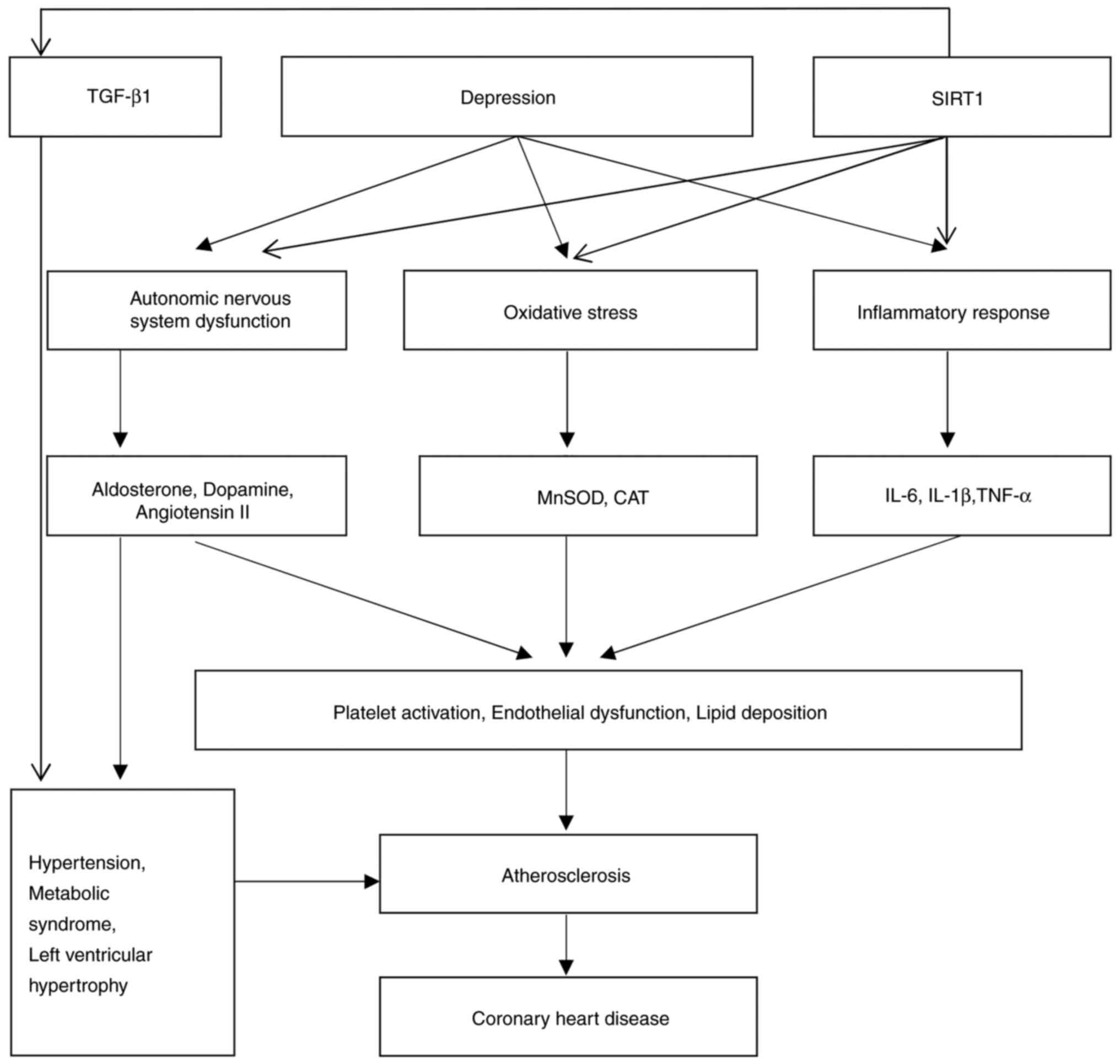
|
1
|
Goldston K and Baillie AJ: Depression and
coronary heart disease: A review of the epidemiological evidence,
explanatory mechanisms and management approaches. Clin Psychol Rev.
28:288–306. 2008.PubMed/NCBI View Article : Google Scholar
|
|
2
|
Pearce M, Garcia L, Abbas A, Strain T,
Schuch FB, Golubic R, Kelly P, Khan S, Utukuri M, Laird Y, et al:
Association between physical activity and risk of depression: A
systematic review and meta-analysis. JAMA Psychiatry. 79:550–559.
2022.PubMed/NCBI View Article : Google Scholar
|
|
3
|
Li R and Odell J: Environmental, genetic
factors and depression. J Stud Res. 12:1–5. 2023.
|
|
4
|
Scott KM, de Jonge P, Stein DJ and Kessler
RC: Mental Disorders Around the World: Facts and Figures from the
WHO World Mental Health Surveys. Scott KM, de Jonge P, Stein DJ and
Kessler RC (eds). Cambridge University Press, 2018.
|
|
5
|
Moffitt TE, Caspi A, Taylor A, Kokaua J,
Milne BJ, Polanczyk G and Poulton R: How common are common mental
disorders? Evidence that lifetime prevalence rates are doubled by
prospective versus retrospective ascertainment. Psychol Med.
40:899–909. 2010.PubMed/NCBI View Article : Google Scholar
|
|
6
|
Roth GA, Johnson C, Abajobir A, Abd-Allah
F, Abera SF, Abyu G, Ahmed M, Aksut B, Alam T, Alam K, et al:
Global, regional, and national burden of cardiovascular diseases
for 10 causes, 1990 to 2015. J Am Coll Cardiol. 70:1–25.
2017.PubMed/NCBI View Article : Google Scholar
|
|
7
|
Mensah GA, Fuster V, Murray CJL and Roth
GA: Global Burden of Cardiovascular Diseases and Risks
Collaborators. Global burden of cardiovascular diseases and risks,
1990-2022. J Am Coll Cardiol. 82:2350–2473. 2023.PubMed/NCBI View Article : Google Scholar
|
|
8
|
World Health Organization: Cardiovascular
diseases (CVDs). Available from: https://www.who.int/news-room/fact-sheets/detail/cardiovascular-diseases-(cvds).
|
|
9
|
Virani SS, Alonso A, Benjamin EJ,
Bittencourt MS, Callaway CW, Carson AP, Chamberlain AM, Chang AR,
Cheng S, Delling FN, et al: Heart disease and stroke
statistics-2020 update: A report from the American Heart
Association. Circulation. 141:E139–E596. 2020.PubMed/NCBI View Article : Google Scholar
|
|
10
|
Heidenreich PA, Trogdon JG, Khavjou OA,
Butler J, Dracup K, Ezekowitz MD, Finkelstein EA, Hong Y, Johnston
SC, Khera A, et al: Forecasting the future of cardiovascular
disease in the United States: A policy statement from the American
Heart Association. Circulation. 123:933–944. 2011.PubMed/NCBI View Article : Google Scholar
|
|
11
|
Li A, Rosella LC, Kurdyak P and Wodchis
WP: Depression as a risk factor for physical illness and
multimorbidity in a cohort with no prior comorbidity. Can J
Psychiatry. 66:726–736. 2021.PubMed/NCBI View Article : Google Scholar
|
|
12
|
Herrman H, Patel V, Kieling C, Berk M,
Buchweitz C, Cuijpers P, Furukawa TA, Kessler RC, Kohrt BA, Maj M,
et al: Time for united action on depression: A lancet-world
psychiatric association commission. Lancet. 399:957–1022.
2022.PubMed/NCBI View Article : Google Scholar
|
|
13
|
Penninx BW, Milaneschi Y, Lamers F and
Vogelzangs N: Understanding the somatic consequences of depression:
Biological mechanisms and the role of depression symptom profile.
BMC Med. 11(129)2013.PubMed/NCBI View Article : Google Scholar
|
|
14
|
Dantzer R, O'Connor JC, Freund GG, Johnson
RW and Kelley KW: From inflammation to sickness and depression:
When the immune system subjugates the brain. Nat Rev Neurosci.
9:46–56. 2008.PubMed/NCBI View Article : Google Scholar
|
|
15
|
Sichko S, Bui TQ, Vinograd M, Shields GS,
Saha K, Devkota S, Olvera-Alvarez HA, Carroll JE, Cole SW, Irwin MR
and Slavich GM: Psychobiology of stress and adolescent depression
(PSY SAD) study: Protocol overview for an fMRI-based multi-method
investigation. Brain Behav Immun Health. 17(100334)2021.PubMed/NCBI View Article : Google Scholar
|
|
16
|
Bansal Y and Kuhad A: Mitochondrial
dysfunction in depression. Curr Neuropharmacol. 14:610–618.
2016.PubMed/NCBI View Article : Google Scholar
|
|
17
|
Tan C, Yan Q, Ma Y, Fang J and Yang Y:
Recognizing the role of the vagus nerve in depression from
microbiota-gut brain axis. Front Neurol. 13(1015175)2022.PubMed/NCBI View Article : Google Scholar
|
|
18
|
Yuan M, Yang B, Rothschild G, Mann JJ,
Sanford LD, Tang X, Huang C, Wang C and Zhang W: Epigenetic
regulation in major depression and other stress-related disorders:
Molecular mechanisms, clinical relevance and therapeutic potential.
Signal Transduct Target Ther. 8(309)2023.PubMed/NCBI View Article : Google Scholar
|
|
19
|
Shen R, Zhao N, Wang J, Guo P, Shen S, Liu
D and Zou T: Association between level of depression and coronary
heart disease, stroke risk and all-cause and cardiovascular
mortality: Data from the 2005-2018 National health and nutrition
examination survey. Front Cardiovasc Med. 9(954563)2022.PubMed/NCBI View Article : Google Scholar
|
|
20
|
Cao H, Zhao H and Shen L: Depression
increased risk of coronary heart disease: A meta-analysis of
prospective cohort studies. Front Cardiovasc Med.
9(913888)2022.PubMed/NCBI View Article : Google Scholar
|
|
21
|
Xu L, Zhai X, Shi D and Zhang Y:
Depression and coronary heart disease: Mechanisms, interventions,
and treatments. Front Psychiatry. 15(1328048)2024.PubMed/NCBI View Article : Google Scholar
|
|
22
|
Harshfield EL, Pennells L, Schwartz JE,
Willeit P, Kaptoge S, Bell S, Shaffer JA, Bolton T, Spackman S,
Wassertheil-Smoller S, et al: Association between depressive
symptoms and incident cardiovascular diseases. JAMA. 324:2396–2405.
2020.PubMed/NCBI View Article : Google Scholar
|
|
23
|
Zhang Y, Cui G and Wang Y, Gong Y and Wang
Y: SIRT1 activation alleviates brain microvascular endothelial
dysfunction in peroxisomal disorders. Int J Mol Med. 44:995–1005.
2019.PubMed/NCBI View Article : Google Scholar
|
|
24
|
Jha MK, Qamar A, Vaduganathan M, Charney
DS and Murrough JW: Screening and management of depression in
patients with cardiovascular disease. J Am Coll Cardiol.
73:1827–1845. 2019.PubMed/NCBI View Article : Google Scholar
|
|
25
|
Lu G, Li J, Zhang H, Zhao X, Yan LJ and
Yang X: Role and possible mechanisms of Sirt1 in depression. Oxid
Med Cell Longev. 2018(8596903)2018.PubMed/NCBI View Article : Google Scholar
|
|
26
|
Chan SH, Hung CH, Shih JY, Chu PM, Cheng
YH, Lin HC and Tsai KL: SIRT1 inhibition causes oxidative stress
and inflammation in patients with coronary artery disease. Redox
Biol. 13:301–309. 2017.PubMed/NCBI View Article : Google Scholar
|
|
27
|
Singh V and Ubaid S: Role of silent
information regulator 1 (SIRT1) in regulating oxidative stress and
inflammation. Inflammation. 43:1589–1598. 2020.PubMed/NCBI View Article : Google Scholar
|
|
28
|
Campagna R, Mazzanti L, Pompei V, Alia S,
Vignini A and Emanuelli M: The multifaceted role of endothelial
Sirt1 in vascular aging: An update. Cells. 13(1469)2024.PubMed/NCBI View Article : Google Scholar
|
|
29
|
Mao Y and Jiang P: The crisscross between
p53 and metabolism in cancer. Acta Biochim Biophys Sin (Shanghai).
55:914–922. 2023.PubMed/NCBI View Article : Google Scholar
|
|
30
|
Mijit M, Caracciolo V, Melillo A,
Amicarelli F and Giordano A: Role of p53 in the regulation of
cellular senescence. Biomolecules. 10(420)2020.PubMed/NCBI View Article : Google Scholar
|
|
31
|
Yi J and Luo J: SIRT1 and p53, effect on
cancer, senescence and beyond. Biochim Biophys Acta Proteins
Proteom. 1804:1684–1689. 2010.PubMed/NCBI View Article : Google Scholar
|
|
32
|
Sullivan A and Lu X: ASPP: A new family of
oncogenes and tumour suppressor genes. Br J Cancer. 96:196–200.
2007.PubMed/NCBI View Article : Google Scholar
|
|
33
|
Brockmueller A, Buhrmann C, Shayan P and
Shakibaei M: Resveratrol induces apoptosis by modulating the
reciprocal crosstalk between p53 and Sirt-1 in the CRC tumor
microenvironment. Front Immunol. 14(1225530)2023.PubMed/NCBI View Article : Google Scholar
|
|
34
|
Sivakumar KK, Stanley JA, Behlen JC, Wuri
L, Dutta S, Wu J, Arosh JA and Banu SK: Inhibition of Sirtuin-1
hyperacetylates p53 and abrogates Sirtuin-1-p53 interaction in
Cr(VI)-induced apoptosis in the ovary. Reprod Toxicol. 109:121–134.
2022.PubMed/NCBI View Article : Google Scholar
|
|
35
|
Dilmac S, Kuscu N, Caner A, Yildirim S,
Yoldas B, Farooqi AA and Tanriover G: SIRT1/FOXO signaling pathway
in breast cancer progression and metastasis. Int J Mol Sci.
23(10227)2022.PubMed/NCBI View Article : Google Scholar
|
|
36
|
Mizani S, Keshavarz A, Vazifeh Shiran N,
Bashash D and Allahbakhshian Farsani M: Expression changes of SIRT1
and FOXO3a significantly correlate with oxidative stress resistance
genes in AML patients. Indian J Hematol Blood Transfus. 39:392–401.
2023.PubMed/NCBI View Article : Google Scholar
|
|
37
|
Chen L, Li S, Zhu J, You A, Huang X, Yi X
and Xue M: Mangiferin prevents myocardial infarction-induced
apoptosis and heart failure in mice by activating the Sirt1/FoxO3a
pathway. J Cell Mol Med. 25:2944–2955. 2021.PubMed/NCBI View Article : Google Scholar
|
|
38
|
Zhao X, Liu Y, Zhu G, Liang Y, Liu B, Wu
Y, Han M, Sun W, Han Y, Chen G and Jiang J: SIRT1 downregulation
mediated Manganese-induced neuronal apoptosis through activation of
FOXO3a-Bim/PUMA axis. Sci Total Environ. 646:1047–1055.
2019.PubMed/NCBI View Article : Google Scholar
|
|
39
|
Alves-Fernandes DK and Jasiulionis MG: The
role of SIRT1 on DNA damage response and epigenetic alterations in
cancer. Int J Mol Sci. 20(3153)2019.PubMed/NCBI View Article : Google Scholar
|
|
40
|
Qi F, Jiang X, Tong T, Chang H and Li RX:
MiR-204 inhibits inflammation and cell apoptosis in retinopathy
rats with diabetic retinopathy by regulating Bcl-2 and SIRT1
expressions. Eur Rev Med Pharmacol Sci. 24:6486–6493.
2020.PubMed/NCBI View Article : Google Scholar
|
|
41
|
Wu QJ, Zhang TN, Chen HH, Yu XF, Lv JL,
Liu YY, Liu YS, Zheng G, Zhao JQ, Wei YF, et al: The sirtuin family
in health and disease. Signal Transduct Target Ther.
7(402)2022.PubMed/NCBI View Article : Google Scholar
|
|
42
|
Chen G, Zhang B, Xu H, Sun Y, Shi Y, Luo
Y, Jia H and Wang F: Suppression of Sirt1 sensitizes lung cancer
cells to WEE1 inhibitor MK-1775-induced DNA damage and apoptosis.
Oncogene. 36:6863–6872. 2017.PubMed/NCBI View Article : Google Scholar
|
|
43
|
Wang C, Chen L, Hou X, Li Z, Kabra N, Ma
Y, Nemoto S, Finkel T, Gu W, Cress WD and Chen J: Interactions
between E2F1 and SirT1 regulate apoptotic response to DNA damage.
Nat Cell Biol. 8:1025–1031. 2006.PubMed/NCBI View Article : Google Scholar
|
|
44
|
Imperatore F, Maurizio J, Vargas Aguilar
S, Busch CJ, Favret J, Kowenz-Leutz E, Cathou W, Gentek R, Perrin
P, Leutz A, et al: SIRT1 regulates macrophage self-renewal. EMBO J.
36:2353–2372. 2017.PubMed/NCBI View Article : Google Scholar
|
|
45
|
Yang S, Moon S, Hur SC and Jeong SM: Fatty
acid oxidation regulates cellular senescence by modulating the
autophagy-SIRT1 axis. BMB Rep. 56:651–656. 2023.PubMed/NCBI View Article : Google Scholar
|
|
46
|
Liu S, Yao S, Yang H, Liu S and Wang Y:
Autophagy: Regulator of cell death. Cell Death Dis.
14(648)2023.PubMed/NCBI View Article : Google Scholar
|
|
47
|
Guo H, Ding H, Tang X, Liang M, Li S,
Zhang J and Cao J: Quercetin induces pro-apoptotic autophagy via
SIRT1/AMPK signaling pathway in human lung cancer cell lines A549
and H1299 in vitro. Thorac Cancer. 12:1415–1422. 2021.PubMed/NCBI View Article : Google Scholar
|
|
48
|
Abate M, Festa A, Falco M, Lombardi A,
Luce A, Grimaldi A, Zappavigna S, Sperlongano P, Irace C, Caraglia
M and Misso G: Mitochondria as playmakers of apoptosis, autophagy
and senescence. Semin Cell Dev Biol. 98:139–153. 2020.PubMed/NCBI View Article : Google Scholar
|
|
49
|
Ding X, Zhu C, Wang W, Li M, Ma C and Gao
B: SIRT1 is a regulator of autophagy: Implications for the
progression and treatment of myocardial ischemia-reperfusion.
Pharmacol Res. 199(106957)2024.PubMed/NCBI View Article : Google Scholar
|
|
50
|
Jiang Y, Botchway BOA, Hu Z and Fang M:
Overexpression of SIRT1 inhibits corticosterone-induced autophagy.
Neuroscience. 411:11–22. 2019.PubMed/NCBI View Article : Google Scholar
|
|
51
|
Chung S, Yao H, Caito S, Hwang JW,
Arunachalam G and Rahman I: Regulation of SIRT1 in cellular
functions: Role of polyphenols. Arch Biochem Biophys. 501:79–90.
2010.PubMed/NCBI View Article : Google Scholar
|
|
52
|
Korbecki J, Bobiński R and Dutka M:
Self-regulation of the inflammatory response by peroxisome
proliferator-activated receptors. Inflamm Res. 68:443–458.
2019.PubMed/NCBI View Article : Google Scholar
|
|
53
|
Tian Y, Ma J, Wang W, Zhang L, Xu J, Wang
K and Li D: Resveratrol supplement inhibited the NF-κB inflammation
pathway through activating AMPKα-SIRT1 pathway in mice with fatty
liver. Mol Cell Biochem. 422:75–84. 2016.PubMed/NCBI View Article : Google Scholar
|
|
54
|
Sun HJ, Xiong SP, Cao X, Cao L, Zhu MY, Wu
ZY and Bian JS: Polysulfide-mediated sulfhydration of SIRT1
prevents diabetic nephropathy by suppressing phosphorylation and
acetylation of p65 NF-κB and STAT3. Redox Biol.
38(101813)2021.PubMed/NCBI View Article : Google Scholar
|
|
55
|
Murphy CE, Lawther AJ, Webster MJ, Asai M,
Kondo Y, Matsumoto M, Walker AK and Weickert CS: Nuclear factor
kappa B activation appears weaker in schizophrenia patients with
high brain cytokines than in non-schizophrenic controls with high
brain cytokines. J Neuroinflammation. 17(215)2020.PubMed/NCBI View Article : Google Scholar
|
|
56
|
Liu T, Zhang L, Joo D and Sun SC: NF-κB
signaling in inflammation. Signal Transduct Target Ther.
2(17023)2017.PubMed/NCBI View Article : Google Scholar
|
|
57
|
Kauppinen A, Suuronen T, Ojala J,
Kaarniranta K and Salminen A: Antagonistic crosstalk between NF-κB
and SIRT1 in the regulation of inflammation and metabolic
disorders. Cell Signal. 25:1939–1948. 2013.PubMed/NCBI View Article : Google Scholar
|
|
58
|
Jalgaonkar MP, Parmar UM, Kulkarni YA and
Oza MJ: SIRT1-FOXOs activity regulates diabetic complications.
Pharmacol Res. 175(106014)2022.PubMed/NCBI View Article : Google Scholar
|
|
59
|
Jia D, Ping W, Wang M, Wang D, Zhang L and
Cao Y: SIRT1 mediates the inflammatory response of macrophages and
regulates the TIMP3/ADAM17 pathway in atherosclerosis. Exp Cell
Res. 442(114253)2024.PubMed/NCBI View Article : Google Scholar
|
|
60
|
Chen H, Deng J, Gao H, Song Y, Zhang Y,
Sun J and Zhai J: Involvement of the SIRT1-NLRP3 pathway in the
inflammatory response. Cell Commun Signal. 21(185)2023.PubMed/NCBI View Article : Google Scholar
|
|
61
|
Hardeland R: Aging, melatonin, and the
pro-and anti-inflammatory networks. Int J Mol Sci.
20(1223)2019.PubMed/NCBI View Article : Google Scholar
|
|
62
|
Rovira-Llopis S, Apostolova N, Bañuls C,
Muntané J, Rocha M and Victor VM: Mitochondria, the NLRP3
inflammasome, and sirtuins in type 2 diabetes: New therapeutic
targets. Antioxid Redox Signal. 29:749–791. 2018.PubMed/NCBI View Article : Google Scholar
|
|
63
|
Zhang Y, Zhang H, Li S, Huang K, Jiang L
and Wang Y: Metformin alleviates LPS-induced acute lung injury by
regulating the SIRT1/NF-κB/NLRP3 pathway and inhibiting endothelial
cell pyroptosis. Front Pharmacol. 13(801337)2022.PubMed/NCBI View Article : Google Scholar
|
|
64
|
Luo XY, Qu SL, Tang ZH, Zhang Y, Liu MH,
Peng J, Tang H, Yu KL, Zhang C, Ren Z and Jiang ZS: SIRT1 in
cardiovascular aging. Clin Chim Acta. 437:106–114. 2014.PubMed/NCBI View Article : Google Scholar
|
|
65
|
Das A, Huang GX, Bonkowski MS, Longchamp
A, Li C, Schultz MB, Kim LJ, Osborne B, Joshi S, Lu Y, et al:
Impairment of an endothelial NAD+-H2S signaling network is a
reversible cause of vascular aging. Cell. 173:74–89.e20.
2018.PubMed/NCBI View Article : Google Scholar
|
|
66
|
Zhu YJ, Huang J, Chen R, Zhang Y, He X,
Duan WX, Zou YL, Sun MM, Sun HL, Cheng SM, et al: Autophagy
dysfunction contributes to NLRP1 inflammasome-linked
depressive-like behaviors in mice. J Neuroinflammation.
21(6)2024.PubMed/NCBI View Article : Google Scholar
|
|
67
|
Strothers HS III: Depression in the
primary care setting. Ethn Dis. 12:S28–S30. 2002.PubMed/NCBI
|
|
68
|
Schmauβ M: Depression and Parkinson's
disease. Fortschr Neurol Psychiatr. 90:145–146. 2022.PubMed/NCBI View Article : Google Scholar : (In German).
|
|
69
|
El-Battrawy I, Behnes M and Akin I:
Depression and incident cardiovascular disease. JAMA.
325:1679–1680. 2021.PubMed/NCBI View Article : Google Scholar
|
|
70
|
Taqueti VR and Di Carli MF: Coronary
microvascular disease pathogenic mechanisms and therapeutic
options: JACC state-of-the-art review. J Am Coll Cardiol.
72:2625–2641. 2018.PubMed/NCBI View Article : Google Scholar
|
|
71
|
Halaris A: Inflammation-associated
co-morbidity between depression and cardiovascular disease. Curr
Top Behav Neurosci. 31:45–70. 2017.PubMed/NCBI View Article : Google Scholar
|
|
72
|
Hackett RA and Steptoe A: Psychosocial
factors in diabetes and cardiovascular risk. Curr Cardiol Rep.
18(95)2016.PubMed/NCBI View Article : Google Scholar
|
|
73
|
Lawrence S and Scofield RH: Post traumatic
stress disorder associated hypothalamic-pituitary-adrenal axis
dysregulation and physical illness. Brain Behav Immun Health.
41(100849)2024.PubMed/NCBI View Article : Google Scholar
|
|
74
|
Wirtz PH and von Känel R: Psychological
stress, inflammation, and coronary heart disease. Curr Cardiol Rep.
19(111)2017.PubMed/NCBI View Article : Google Scholar
|
|
75
|
Tonhajzerova I, Sekaninova N, Bona Olexova
L and Visnovcova Z: Novel insight into neuroimmune regulatory
mechanisms and biomarkers linking major depression and vascular
diseases: The dilemma continues. Int J Mol Sci.
21(2317)2020.PubMed/NCBI View Article : Google Scholar
|
|
76
|
Ramachandruni S, Handberg E and Sheps DS:
Acute and chronic psychological stress in coronary disease. Curr
Opin Cardiol. 19:494–499. 2004.PubMed/NCBI View Article : Google Scholar
|
|
77
|
Gianaros PJ, Hariri AR, Sheu LK, Muldoon
MF, Sutton-Tyrrell K and Manuck SB: Preclinical atherosclerosis
covaries with individual differences in reactivity and functional
connectivity of the amygdala. Biol Psychiatry. 65:943–950.
2009.PubMed/NCBI View Article : Google Scholar
|
|
78
|
Levin A: Amygdala activity may predict
future cardiovascular events. Psychiatr News. 52:1. 2017.
|
|
79
|
Pizzi C, Manzoli L, Mancini S, Bedetti G,
Fontana F and Costa GM: Autonomic nervous system, inflammation and
preclinical carotid atherosclerosis in depressed subjects with
coronary risk factors. Atherosclerosis. 212:292–298.
2010.PubMed/NCBI View Article : Google Scholar
|
|
80
|
Pan Y, Chen Y, Wu S, Ying P, Zhang Z, Tan
X and Zhu J: Prevalence and management of depressive symptoms in
coronary heart disease patients and relationship with
cardiovascular prognosis: A prospective cohort study. BMC
Psychiatry. 24(644)2024.PubMed/NCBI View Article : Google Scholar
|
|
81
|
Compare A, Proietti R, Germani E and
Janeway D: Anxiety and depression: Risk factors for cardiovascular
disease. In: Stress Proof the Heart: Behavioral Interventions for
Cardiac Patients. Vol 9781441956507. Springer, New York, NY,
pp139-166, 2012.
|
|
82
|
Dickens C: Depression in people with
coronary heart disease: Prognostic significance and mechanisms.
Curr Cardiol Rep. 17(83)2015.PubMed/NCBI View Article : Google Scholar
|
|
83
|
De Martini GA, Grisante DL, Gonçalves ALP,
D'Agostino F, Lopes JL, Santos VB and Lopes CT: Relationships
between depressive symptoms, appetite, and quality of life in heart
failure. West J Nurs Res. 45:416–424. 2023.PubMed/NCBI View Article : Google Scholar
|
|
84
|
Xu Q, Chen C, You R, Ni L, Chen S and Peng
B: Causal association between major depressive disorder and
coronary heart disease: A two-sample bidirectional mendelian
randomization study. BMC Med Genomics. 16(183)2023.PubMed/NCBI View Article : Google Scholar
|
|
85
|
Meng LB, Zhang YM, Luo Y, Gong T and Liu
DP: Chronic Stress A Potential Suspect Zero of Atherosclerosis: A
Systematic Review. Front Cardiovasc Med: Dec 20, 2021 (Epub ahead
of print) doi: 10.3389/fcvm.2021.738654.
|
|
86
|
Mbiydzenyuy NE and Qulu LA: Stress,
hypothalamic-pituitary-adrenal axis, hypothalamic-pituitary-gonadal
axis, and aggression. Metab Brain Dis. 39:1613–1636.
2024.PubMed/NCBI View Article : Google Scholar
|
|
87
|
Hering D, Seravalle G, Grassi G and
Narkiewicz K: Sympathetic Activity in Hypertension and Heart
Failure. Springer Nature, Heidelberg, pp107-126, 2023.
|
|
88
|
Osimo EF, Baxter LJ, Lewis G, Jones PB and
Khandaker GM: Prevalence of low-grade inflammation in depression: A
systematic review and meta-analysis of CRP levels. Psychol Med.
49:1958–1970. 2019.PubMed/NCBI View Article : Google Scholar
|
|
89
|
Correia AS, Cardoso A and Vale N:
Oxidative stress in depression: The link with the stress response,
neuroinflammation, serotonin, neurogenesis and synaptic plasticity.
Antioxidants (Basel). 12(470)2023.PubMed/NCBI View Article : Google Scholar
|
|
90
|
Chocano-Bedoya PO, Mirzaei F, O'Reilly EJ,
Lucas M, Okereke OI, Hu FB, Rimm EB and Ascherio A: C-reactive
protein, interleukin-6, soluble tumor necrosis factor α receptor 2
and incident clinical depression. J Affect Disord. 163:25–32.
2014.PubMed/NCBI View Article : Google Scholar
|
|
91
|
Li G, Zhang L and Liu M: Meta-analysis on
inflammation and autonomic nervous system of coronary heart disease
combined with depression. BMJ Open. 14(e079980)2024.PubMed/NCBI View Article : Google Scholar
|
|
92
|
Higashi Y: Roles of oxidative stress and
inflammation in vascular endothelial dysfunction-related disease.
Antioxidants (Basel). 11(1958)2022.PubMed/NCBI View Article : Google Scholar
|
|
93
|
Gao F, Zhao Y, Zhang B, Xiao C, Sun Z, Gao
Y and Dou X: Orientin alleviates ox-LDL-induced oxidative stress,
inflammation and apoptosis in human vascular endothelial cells by
regulating Sestrin 1 (SESN1)-mediated autophagy. J Mol Histol.
55:109–120. 2024.PubMed/NCBI View Article : Google Scholar
|
|
94
|
Kwong ASF, López-López JA, Hammerton G,
Manley D, Timpson NJ, Leckie G and Pearson RM: Genetic and
environmental risk factors associated with trajectories of
depression symptoms from adolescence to young adulthood. JAMA Netw
Open. 2(e196587)2019.PubMed/NCBI View Article : Google Scholar
|
|
95
|
Lei Y, Wang J, Wang D, Li C, Liu B, Fang
X, You J, Guo M and Lu XY: SIRT1 in forebrain excitatory neurons
produces sexually dimorphic effects on depression-related behaviors
and modulates neuronal excitability and synaptic transmission in
the medial prefrontal cortex. Mol Psychiatry. 25:1094–1111.
2020.PubMed/NCBI View Article : Google Scholar
|
|
96
|
Abe-Higuchi N, Uchida S, Yamagata H,
Higuchi F, Hobara T, Hara K, Kobayashi A and Watanabe Y:
Hippocampal Sirtuin 1 signaling mediates depression-like behavior.
Biol Psychiatry. 80:815–826. 2016.PubMed/NCBI View Article : Google Scholar
|
|
97
|
Singh P, Hanson PS and Morris CM: SIRT1
ameliorates oxidative stress induced neural cell death and is
down-regulated in Parkinson's disease. BMC Neurosci.
18(46)2017.PubMed/NCBI View Article : Google Scholar
|
|
98
|
Qiu X, Lu P, Zeng X, Jin S and Chen X:
Study on the mechanism for SIRT1 during the process of exercise
improving depression. Brain Sci. 13(719)2023.PubMed/NCBI View Article : Google Scholar
|
|
99
|
Wang R, Wu Y, Liu R, Liu M, Li Q, Ba Y and
Huang H: Deciphering therapeutic options for neurodegenerative
diseases: insights from SIRT1. J Mol Med (Berl). 100:537–553.
2022.PubMed/NCBI View Article : Google Scholar
|
|
100
|
Zhang Y, Anoopkumar-Dukie S and Davey AK:
Sirt1 and sirt2 modulators: Potential anti-inflammatory treatment
for depression? Biomolecules. 11(353)2021.PubMed/NCBI View Article : Google Scholar
|
|
101
|
Dang R, Wang M, Li X, Wang H, Liu L, Wu Q,
Zhao J, Ji P, Zhong L, Licinio J and Xie P: Edaravone ameliorates
depressive and anxiety-like behaviors via Sirt1/Nrf2/HO-1/Gpx4
pathway. J Neuroinflammation. 19(41)2022.PubMed/NCBI View Article : Google Scholar
|
|
102
|
Ma Z, Feng D, Rui W and Wang Z: Baicalin
attenuates chronic unpredictable mild stress-induced hippocampal
neuronal apoptosis through regulating SIRT1/PARP1 signaling
pathway. Behav Brain Res. 441(114299)2023.PubMed/NCBI View Article : Google Scholar
|
|
103
|
Geng M, Shao Q, Fu J, Gu J, Feng L, Zhao
L, Liu C, Mu J, Zhang X, Zhao M, et al: Down-regulation of MKP-1 in
hippocampus protects against stress-induced depression-like
behaviors and neuroinflammation. Transl Psychiatry.
14(130)2024.PubMed/NCBI View Article : Google Scholar
|
|
104
|
Tartt AN, Mariani MB, Hen R, Mann JJ and
Boldrini M: Dysregulation of adult hippocampal neuroplasticity in
major depression: Pathogenesis and therapeutic implications. Mol
Psychiatry. 27:2689–2699. 2022.PubMed/NCBI View Article : Google Scholar
|
|
105
|
Zhang K, Wang F, Zhai M, He M, Hu Y, Feng
L, Li Y, Yang J and Wu C: Hyperactive neuronal autophagy depletes
BDNF and impairs adult hippocampal neurogenesis in a
corticosterone-induced mouse model of depression. Theranostics.
13:1059–1075. 2023.PubMed/NCBI View Article : Google Scholar
|
|
106
|
Saharan S, Jhaveri DJ and Bartlett PF:
SIRT1 regulates the neurogenic potential of neural precursors in
the adult subventricular zone and hippocampus. J Neurosci Res.
91:642–659. 2013.PubMed/NCBI View Article : Google Scholar
|
|
107
|
Shen J, Hao C, Yuan S, Chen W, Tong T,
Chen Y, Shahzad Aslam M, Yan S, Li J, Zeng J, et al: Acupuncture
alleviates CUMS-induced depression-like behaviors of rats by
regulating oxidative stress, neuroinflammation and ferroptosis.
Brain Res. 1826(148715)2024.PubMed/NCBI View Article : Google Scholar
|
|
108
|
Li C, Wang F, Miao P, Yan L, Liu S, Wang
X, Jin Z and Gu Z: miR-138 increases depressive-like behaviors by
targeting SIRT1 in hippocampus. Neuropsychiatr Dis Treat.
16:949–957. 2020.PubMed/NCBI View Article : Google Scholar
|
|
109
|
Wu X, Zhang Y, Wang J, Qin L, Li Y, He Q,
Zhang T, Wang Y, Song L, Ji L, et al: Role of SIRT1-mediated
synaptic plasticity and neurogenesis: Sex-differences in
antidepressant-like efficacy of catalpol. Phytomedicine.
135(156120)2024.PubMed/NCBI View Article : Google Scholar
|
|
110
|
Michán S, Li Y, Chou MM, Parrella E, Ge H,
Long JM, Allard JS, Lewis K, Miller M, Xu W, et al: SIRT1 is
essential for normal cognitive function and synaptic plasticity. J
Neurosci. 30:9695–9707. 2010.PubMed/NCBI View Article : Google Scholar
|
|
111
|
Guo H, Deji C, Peng H, Zhang J, Chen Y,
Zhang Y and Wang Y: The role of SIRT1 in the basolateral amygdala
in depression-like behaviors in mice. Genes Brain Behav.
20(e12765)2021.PubMed/NCBI View Article : Google Scholar
|
|
112
|
Erickson KI, Miller DL and Roecklein KA:
The aging hippocampus: Interactions between exercise, depression,
and BDNF. Neuroscientist. 18:82–97. 2012.PubMed/NCBI View Article : Google Scholar
|
|
113
|
Ye S, Fang L, Xie S, Hu Y, Chen S, Amin N,
Fang M and Hu Z: Resveratrol alleviates postpartum depression-like
behavior by activating autophagy via SIRT1 and inhibiting AKT/mTOR
pathway. Behav Brain Res. 438(114208)2023.PubMed/NCBI View Article : Google Scholar
|
|
114
|
Wang J, Li J, Cao N, Li Z, Han J and Li L:
Resveratrol, an activator of SIRT1, induces protective autophagy in
non-small-cell lung cancer via inhibiting Akt/mTOR and activating
p38-MAPK. Onco Targets Ther. 11:7777–7786. 2018.PubMed/NCBI View Article : Google Scholar
|
|
115
|
Tabassum S, Misrani A, Huang HX, Zhang ZY,
Li QW and Long C: Resveratrol attenuates chronic unpredictable mild
stress-induced alterations in the SIRT1/PGC1α/SIRT3 pathway and
associated mitochondrial dysfunction in mice. Mol Neurobiol.
60:5102–5116. 2023.PubMed/NCBI View Article : Google Scholar
|
|
116
|
Shen J, Xu L, Qu C, Sun H and Zhang J:
Resveratrol prevents cognitive deficits induced by chronic
unpredictable mild stress: Sirt1/miR-134 signalling pathway
regulates CREB/BDNF expression in hippocampus in vivo and in vitro.
Behav Brain Res. 349:1–7. 2018.PubMed/NCBI View Article : Google Scholar
|
|
117
|
Takahashi K, Kurokawa K, Hong L, Miyagawa
K, Mochida-Saito A, Takeda H and Tsuji M: Hippocampal and gut AMPK
activation attenuates enterocolitis-like symptoms and co-occurring
depressive-like behavior in ulcerative colitis model mice:
Involvement of brain-gut autophagy. Exp Neurol.
373(114671)2024.PubMed/NCBI View Article : Google Scholar
|
|
118
|
Kim HD, Wei J, Call T, Call T, Ma X,
Quintus NT, Summers AJ, Carotenuto S, Johnson R, Nguyen A, et al:
SIRT1 coordinates transcriptional regulation of neural activity and
modulates depression-like behaviors in the nucleus accumbens. Biol
Psychiatry. 96:495–505. 2024.PubMed/NCBI View Article : Google Scholar
|
|
119
|
Kim HD, Hesterman J, Call T, Magazu S,
Keeley E, Armenta K, Kronman H, Neve RL, Nestler EJ and Ferguson D:
SIRT1 mediates depression-like behaviors in the nucleus accumbens.
J Neurosci. 36:8441–8452. 2016.PubMed/NCBI View Article : Google Scholar
|
|
120
|
Nowacka-Chmielewska M, Grabowska K,
Grabowski M, Meybohm P, Burek M and Małecki A: Running from stress:
Neurobiological mechanisms of exercise-induced stress resilience.
Int J Mol Sci. 23(13348)2022.PubMed/NCBI View Article : Google Scholar
|
|
121
|
Yamamoto M and Takahashi Y: The essential
role of sirt1 in hypothalamic-pituitary axis. Front Endocrinol
(Lausanne). 9(605)2018.PubMed/NCBI View Article : Google Scholar
|
|
122
|
Yu X, Hu Y, Huang W, Ye N, Yan Q, Ni W and
Jiang X: Role of AMPK/SIRT1-SIRT3 signaling pathway in affective
disorders in unpredictable chronic mild stress mice.
Neuropharmacology. 165(107925)2020.PubMed/NCBI View Article : Google Scholar
|
|
123
|
Takaba R, Ibi D, Watanabe K, Hayakawa K,
Nakasai G and Hiramatsu M: Role of sirtuin1 in impairments of
emotion-related behaviors in mice with chronic mild unpredictable
stress during adolescence. Physiol Behav.
257(113971)2022.PubMed/NCBI View Article : Google Scholar
|
|
124
|
Cordner ZA, Marshall-Thomas I, Boersma GJ,
Lee RS, Potash JB and Tamashiro KLK: Fluoxetine and environmental
enrichment similarly reverse chronic social stress-related
depression- and anxiety-like behavior, but have differential
effects on amygdala gene expression. Neurobiol Stress.
15(100392)2021.PubMed/NCBI View Article : Google Scholar
|
|
125
|
Ma B, Guo B, Chen Z and Li Y: SIRT1
regulates hypoxia-induced oxidative stress in cardiomyocytes via
PI3K/MTOR signaling. Cell Mol Biol (Noisy-le-grand). 68:48–53.
2022.PubMed/NCBI View Article : Google Scholar
|
|
126
|
Opstad TB, Papotti B, Åkra S, Hansen CH,
Braathen B, Tønnessen T, Solheim S and Seljeflot I: Sirtuin1, not
NAMPT, possesses anti-inflammatory effects in epicardial,
pericardial and subcutaneous adipose tissue in patients with CHD. J
Transl Med. 21(644)2023.PubMed/NCBI View Article : Google Scholar
|
|
127
|
Kida Y and Goligorsky MS: Sirtuins, cell
senescence, and vascular aging. Can J Cardiol. 32:634–641.
2016.PubMed/NCBI View Article : Google Scholar
|
|
128
|
Winnik S, Auwerx J, Sinclair DA and Matter
CM: Protective effects of sirtuins in cardiovascular diseases: From
bench to bedside. Eur Heart J. 36:3404–3412. 2015.PubMed/NCBI View Article : Google Scholar
|
|
129
|
Stein S, Schäfer N, Breitenstein A, Besler
C, Winnik S, Lohmann C, Heinrich K, Brokopp CE, Handschin C,
Landmesser U, et al: SIRT1 reduces endothelial activation without
affecting vascular function in ApoE-/-mice. Aging (Albany NY).
2:353–360. 2010.PubMed/NCBI View Article : Google Scholar
|
|
130
|
Gorenne I, Kumar S, Gray K, Figg N, Yu H,
Mercer J and Bennett M: Vascular smooth muscle cell sirtuin 1
protects against DNA damage and inhibits atherosclerosis.
Circulation. 127:386–396. 2013.PubMed/NCBI View Article : Google Scholar
|
|
131
|
Yang H, Zhang W, Pan H, Feldser HG, Lainez
E, Miller C, Leung S, Zhong Z, Zhao H, Sweitzer S, et al: SIRT1
activators suppress inflammatory responses through promotion of p65
deacetylation and inhibition of NF-κB activity. PLoS One.
7(e46364)2012.PubMed/NCBI View Article : Google Scholar
|
|
132
|
Zhu Y, Xian X, Wang Z, Bi Y, Chen Q, Han
X, Tang D and Chen R: Research progress on the relationship between
atherosclerosis and inflammation. Biomolecules.
8(80)2018.PubMed/NCBI View Article : Google Scholar
|
|
133
|
Kitada M, Ogura Y and Koya D: The
protective role of Sirt1 in vascular tissue: Its relationship to
vascular aging and atherosclerosis. Aging (Albany NY). 8:2290–2307.
2016.PubMed/NCBI View Article : Google Scholar
|
|
134
|
Guarente L: Franklin H. Epstein Lecture:
Sirtuins, aging, and medicine. N Engl J Med. 364:2235–2244.
2011.PubMed/NCBI View Article : Google Scholar
|
|
135
|
Houtkooper RH, Pirinen E and Auwerx J:
Sirtuins as regulators of metabolism and healthspan. Nat Rev Mol
Cell Biol. 13:225–238. 2012.PubMed/NCBI View Article : Google Scholar
|
|
136
|
Yang X, Wei J, He Y, Jing T, Li Y, Xiao Y,
Wang B, Wang W, Zhang J and Lin R: SIRT1 inhibition promotes
atherosclerosis through impaired autophagy. Oncotarget.
8:51447–51461. 2017.PubMed/NCBI View Article : Google Scholar
|
|
137
|
Wang SJ, Zhao XH, Chen W, Bo N, Wang XJ,
Chi ZF and Wu W: Sirtuin 1 activation enhances the
PGC-1α/mitochondrial antioxidant system pathway in status
epilepticus. Mol Med Rep. 11:521–526. 2015.PubMed/NCBI View Article : Google Scholar
|
|
138
|
Dong YT, Cao K, Xiang J, Qi XL, Xiao Y, Yu
WF, He Y, Hong W and Guan ZZ: Resveratrol attenuates the disruption
of lipid metabolism observed in amyloid precursor
protein/presenilin 1 mouse brains and cultured primary neurons
exposed to Aβ. Neuroscience. 521:134–147. 2023.PubMed/NCBI View Article : Google Scholar
|
|
139
|
Zeng HT, Fu YC, Yu W, Lin JM, Zhou L, Liu
L and Wang W: SIRT1 prevents atherosclerosis via liver-X-receptor
and NF-κB signaling in a U937 cell model. Mol Med Rep. 8:23–28.
2013.PubMed/NCBI View Article : Google Scholar
|
|
140
|
Li L, Zhang HN, Chen HZ, Gao P, Zhu LH, Li
HL, Lv X, Zhang QJ, Zhang R, Wang Z, et al: SIRT1 acts as a
modulator of neointima formation following vascular injury in mice.
Circ Res. 108:1180–1189. 2011.PubMed/NCBI View Article : Google Scholar
|
|
141
|
Xu W, Deng YY, Yang L, Zhao S, Liu J, Zhao
Z, Wang L, Maharjan P, Gao S, Tian Y, et al: Metformin ameliorates
the proinflammatory state in patients with carotid artery
atherosclerosis through sirtuin 1 induction. Transl Res.
166:451–458. 2015.PubMed/NCBI View Article : Google Scholar
|
|
142
|
Chen YX, Zhang M, Cai Y, Zhao Q and Dai W:
The Sirt1 activator SRT1720 attenuates angiotensin II-induced
atherosclerosis in apoE-/-mice through inhibiting vascular
inflammatory response. Biochem Biophys Res Commun. 465:732–738.
2015.PubMed/NCBI View Article : Google Scholar
|
|
143
|
Nasiri M, Rauf M, Kamfiroozie H,
Zibaeenezhad MJ and Jamali Z: SIRT1 gene polymorphisms associated
with decreased risk of atherosclerotic coronary artery disease.
Gene. 672:16–20. 2018.PubMed/NCBI View Article : Google Scholar
|
|
144
|
Chen Y, He T, Zhang Z and Zhang J:
Activation of SIRT1 by resveratrol alleviates pressure
overload-induced cardiac hypertrophy via suppression of TGF-β1
signaling. Pharmacology. 106:667–681. 2021.PubMed/NCBI View Article : Google Scholar
|
|
145
|
Zhang MJ, Zhou Y, Chen L, Wang X, Long CY,
Pi Y, Gao CY, Li JC and Zhang LL: SIRT1 improves VSMC functions in
atherosclerosis. Prog Biophys Mol Biol. 121:11–15. 2016.PubMed/NCBI View Article : Google Scholar
|
|
146
|
Qiang L, Lin HV, Kim-Muller JY, Welch CL,
Gu W and Accili D: Proatherogenic abnormalities of lipid metabolism
in SirT1 transgenic mice are mediated through Creb deacetylation.
Cell Metab. 14:758–767. 2011.PubMed/NCBI View Article : Google Scholar
|
|
147
|
Liu YP, Wen R, Liu CF, Zhang TN and Yang
N: Cellular and molecular biology of sirtuins in cardiovascular
disease. Biomed Pharmacother. 164(114931)2023.PubMed/NCBI View Article : Google Scholar
|
|
148
|
Liang F, Kume S and Koya D: SIRT1 and
insulin resistance. Nat Rev Endocrinol. 5:367–373. 2009.PubMed/NCBI View Article : Google Scholar
|
|
149
|
Gong H, Liu J, Xue Z, Wang W, Li C, Xu F,
Du Y and Lyu X: SIRT3 attenuates coronary atherosclerosis in
diabetic patients by regulating endothelial cell function. J Clin
Lab Anal. 36(e24586)2022.PubMed/NCBI View Article : Google Scholar
|
|
150
|
Yu H, Gan D, Luo Z, Yang Q, An D, Zhang H,
Hu Y, Ma Z, Zeng Q, Xu D and Ren H: α-Ketoglutarate improves
cardiac insufficiency through NAD+-SIRT1 signaling-mediated
mitophagy and ferroptosis in pressure overload-induced mice. Mol
Med. 30(15)2024.PubMed/NCBI View Article : Google Scholar
|
|
151
|
Rodriguez-Miguelez P and Pollock JS:
Adverse childhood events and cardiovascular diseases: The potential
role of Sirt1. Am J Physiol Heart Circ Physiol. 321:H577–H579.
2021.PubMed/NCBI View Article : Google Scholar
|
|
152
|
Lo Iacono L, Visco-Comandini F, Valzania
A, Viscomi MT, Coviello M, Giampà A, Roscini L, Bisicchia E,
Siracusano A, Troisi A, et al: Adversity in childhood and
depression: Linked through SIRT1. Transl Psychiatry.
5(e629)2015.PubMed/NCBI View Article : Google Scholar
|
|
153
|
Vicario A and Cerezo GH: The heart and
brain connection: Contribution of cardiovascular disease to
vascular depression-A narrative review. Heart and Mind. 7:126–131.
2023.
|
|
154
|
Piantella S, Dragano N, Marques M,
McDonald SJ and Wright BJ: Prospective increases in depression
symptoms and markers of inflammation increase coronary heart
disease risk - The Whitehall II cohort study. J Psychosom Res.
151(110657)2021.PubMed/NCBI View Article : Google Scholar
|
|
155
|
Liu RT, Hernandez EM, Trout ZM, Kleiman EM
and Bozzay ML: Depression, social support, and long-term risk for
coronary heart disease in a 13-year longitudinal epidemiological
study. Psychiatry Res. 251:36–40. 2017.PubMed/NCBI View Article : Google Scholar
|
|
156
|
Yu H, Li X, Ning B, Feng L, Ren Y, Li S,
Kang Y, Ma J and Zhao M: SIRT1: A potential therapeutic target for
coronary heart disease combined with anxiety or depression. J Drug
Target: Dec 23, 2024 (Epub ahead of print).
|
|
157
|
Stanley SC, Brooks SD, Butcher JT,
d'Audiffret AC, Frisbee SJ and Frisbee JC: Protective effect of sex
on chronic stress- and depressive behavior-induced vascular
dysfunction in BALB/cJ mice. J Appl Physiol. 117:959–970.
2014.PubMed/NCBI View Article : Google Scholar
|
|
158
|
Hori YS, Kuno A, Hosoda R and Horio Y:
Regulation of FOXOs and p53 by SIRT1 modulators under oxidative
stress. PLoS One. 8(e73875)2013.PubMed/NCBI View Article : Google Scholar
|
|
159
|
Brunet A, Sweeney LB, Sturgill JF, Chua
KF, Greer PL, Lin Y, Tran H, Ross SE, Mostoslavsky R, Cohen HY, et
al: Stress-dependent regulation of FOXO transcription factors by
the SIRT1 deacetylase. Science. 303:2011–2015. 2004.PubMed/NCBI View Article : Google Scholar
|
|
160
|
Hsu CP, Zhai P, Yamamoto T, Maejima Y,
Matsushima S, Hariharan N, Shao D, Takagi H, Oka S and Sadoshima J:
Silent information regulator 1 protects the heart from
ischemia/reperfusion. Circulation. 122:2170–2182. 2010.PubMed/NCBI View Article : Google Scholar
|
|
161
|
Starodubtseva I, Meshkova M and Zuikova A:
Pathogenetic mechanisms of repeated adverse cardiovascular events
development in patients with coronary heart disease: The role of
chronic inflammation. Folia Med (Plovdiv). 65:863–870.
2023.PubMed/NCBI View Article : Google Scholar
|
|
162
|
Kofod J, Elfving B, Nielsen EH, Mors O and
Köhler-Forsberg O: Depression and inflammation: Correlation between
changes in inflammatory markers with antidepressant response and
long-term prognosis. Eur Neuropsychopharmacol. 54:116–125.
2022.PubMed/NCBI View Article : Google Scholar
|
|
163
|
Pfluger PT, Herranz D, Velasco-Miguel S,
Serrano M and Tschöp MH: Sirt1 protects against high-fat
diet-induced metabolic damage. Proc Natl Acad Sci USA.
105:9793–9798. 2008.PubMed/NCBI View Article : Google Scholar
|
|
164
|
Fan J, Guang H, Zhang H, Chen D, Ding L,
Fan X, Xue F, Gan Z, Wang Y, Mao S, et al: SIRT1 mediates apelin-13
in ameliorating chronic normobaric hypoxia-induced anxiety-like
behavior by suppressing NF-κB pathway in mice hippocampus.
Neuroscience. 381:22–34. 2018.PubMed/NCBI View Article : Google Scholar
|
|
165
|
Askin L, Tibilli H, Tanriverdi O and
Turkmen S: The relationship between coronary artery disease and
SIRT1 protein. North Clin Istanb. 7:631–635. 2020.PubMed/NCBI View Article : Google Scholar
|
|
166
|
Sugimoto K, Yamada T, Kitazawa A and
Fukuda Y: Metabolic syndrome and depression: Evidence from a
cross-sectional study of real-world data in Japan. Environ Health
Prev Med. 29(33)2024.PubMed/NCBI View Article : Google Scholar
|
|
167
|
Li X, Zhang S, Blander G, Tse JG, Krieger
M and Guarente L: SIRT1 deacetylates and positively regulates the
nuclear receptor LXR. Mol Cell. 28:91–106. 2007.PubMed/NCBI View Article : Google Scholar
|
|
168
|
Feige JN and Auwerx J: DisSIRTing on LXR
and cholesterol metabolism. Cell Metab. 6:343–345. 2007.PubMed/NCBI View Article : Google Scholar
|
|
169
|
Wang Y, Zhao X, O'Neil A, Turner A, Liu X
and Berk M: Altered cardiac autonomic nervous function in
depression. BMC Psychiatry. 13(187)2013.PubMed/NCBI View Article : Google Scholar
|
|
170
|
Rome D, Sales A, Leeds R, Usseglio J,
Cornelius T, Monk C, Smolderen KG and Moise N: A narrative review
of the association between depression and heart disease among
women: Prevalence, mechanisms of action, and treatment. Curr
Atheroscler Rep. 24:709–720. 2022.PubMed/NCBI View Article : Google Scholar
|
|
171
|
Yan J, Tang X, Zhou ZQ, Zhang J, Zhao Y,
Li S and Luo A: Sirtuins functions in central nervous system cells
under neurological disorders. Front Physiol.
13(886087)2022.PubMed/NCBI View Article : Google Scholar
|
|
172
|
Vinciguerra M, Santini MP, Martinez C,
Pazienza V, Claycomb WC, Giuliani A and Rosenthal N:
mIGF-1/JNK1/SirT1 signaling confers protection against oxidative
stress in the heart. Aging Cell. 11:139–149. 2012.PubMed/NCBI View Article : Google Scholar
|
|
173
|
Wang Y, Zhao R, Wu C, Liang X, He L, Wang
L and Wang X: Activation of the sirtuin silent information
regulator 1 pathway inhibits pathological myocardial remodeling.
Front Pharmacol. 14(1111320)2023.PubMed/NCBI View Article : Google Scholar
|
|
174
|
Shi S, Guan G, Wang J, Hui R, Zhang Y, Cui
Q, Zhao J and Zhu L: Association of depression with hypertensive
left ventricular hypertrophy in age, sex, and education
level-specific differences. J Clin Hypertens (Greenwich).
25:715–724. 2023.PubMed/NCBI View Article : Google Scholar
|
|
175
|
Liu ZH, Zhang Y, Wang X, Fan XF, Zhang Y,
Li X, Gong YS and Han LP: SIRT1 activation attenuates cardiac
fibrosis by endothelial-to-mesenchymal transition. Biomed
Pharmacother. 118(109227)2019.PubMed/NCBI View Article : Google Scholar
|
|
176
|
Piao S, Lee I, Jin SA, Kim S, Nagar H,
Choi SJ, Jeon BH and Kim CS: SIRT1 activation attenuates the
cardiac dysfunction induced by endothelial cell-specific deletion
of CRIF1. Biomedicines. 9(52)2021.PubMed/NCBI View Article : Google Scholar
|
|
177
|
Pintaningrum Y, Humaera NN, Rafiq A and
Tanti A: OR10. Association between heart functional capacity with
depression severity on patient with coronary artery disease. Eur
Heart J. Suppl 23:2021.
|
|
178
|
Wang Y, Li Y, Ding H, Li D, Shen W and
Zhang X: The current state of research on sirtuin-mediated
autophagy in cardiovascular diseases. J Cardiovasc Dev Dis.
10(382)2023.PubMed/NCBI View Article : Google Scholar
|
|
179
|
Luo G, Jian Z, Zhu Y, Zhu Y, Chen B, Ma R,
Tang F and Xiao Y: Sirt1 promotes autophagy and inhibits apoptosis
to protect cardiomyocytes from hypoxic stress. Int J Mol Med.
43:2033–2043. 2019.PubMed/NCBI View Article : Google Scholar
|
|
180
|
Jiang G, Wang Y, Liu Q, Gu T, Liu S, Yin A
and Zhang L: Autophagy: A new mechanism for esketamine as a
depression therapeutic. Neuroscience. 498:214–223. 2022.PubMed/NCBI View Article : Google Scholar
|
|
181
|
Song X, Wei C, Huang H, Cao X, Chen Z,
Chen Y and Wu B: Effects of resveratrol on tolerance to
ischemia/reperfusion injury in aged male mice: Role of autophagy
and apoptosis. Food Sci Nutr. 11:5938–5947. 2023.PubMed/NCBI View Article : Google Scholar
|
|
182
|
Do GM, Kwon EY, Kim HJ, Jeon SM, Ha TY,
Park T and Choi MS: Long-term effects of resveratrol
supplementation on suppression of atherogenic lesion formation and
cholesterol synthesis in apo E-deficient mice. Biochem Biophys Res
Commun. 374:55–59. 2008.PubMed/NCBI View Article : Google Scholar
|
|
183
|
Shukla P, Akotkar L and Aswar U:
Resveratrol attenuates early life stress induced depression in
rats: Behavioural and neurochemical evidence. Neurosci Lett.
820(137606)2024.PubMed/NCBI View Article : Google Scholar
|
|
184
|
Raj P, Thandapilly SJ, Wigle J, Zieroth S
and Netticadan T: A comprehensive analysis of the efficacy of
resveratrol in atherosclerotic cardiovascular disease, myocardial
infarction and heart failure. Molecules. 26(6600)2021.PubMed/NCBI View Article : Google Scholar
|
|
185
|
Gu Z, Chu L and Han Y: Therapeutic effect
of resveratrol on mice with depression. Exp Ther Med. 17:3061–3064.
2019.PubMed/NCBI View Article : Google Scholar
|
|
186
|
Piao S, Kim S, Vu G, Lee M, Kim M, Jeon BH
and Kim CS: SRT1720 alleviates endothelial crif1 deficiency-induced
cardiac function. J Hypertens. 41 (Suppl 3)(e161)2023.
|
|
187
|
Wen S, Xu M, Zhang W, Song R, Zou H, Gu J,
Liu X, Bian J, Liu Z and Yuan Y: Cadmium induces mitochondrial
dysfunction via SIRT1 suppression-mediated oxidative stress in
neuronal cells. Environ Toxicol. 38:743–753. 2023.PubMed/NCBI View Article : Google Scholar
|
|
188
|
Sung JY, Kim SG, Kang YJ, Park SY and Choi
HC: SIRT1-dependent PGC-1α deacetylation by SRT1720 rescues
progression of atherosclerosis by enhancing mitochondrial function.
Biochim Biophys Acta Mol Cell Biol Lipids.
1869(159453)2024.PubMed/NCBI View Article : Google Scholar
|
|
189
|
Wang Q, Wang Y, Liu S, Sha X, Song X, Dai
Y, Zhao M, Cai L, Xu K and Li J: Theranostic nanoplatform to target
macrophages enables the inhibition of atherosclerosis progression
and fluorescence imaging of plaque in
ApoE(-/-) mice. J Nanobiotechnology.
19(222)2021.PubMed/NCBI View Article : Google Scholar
|
|
190
|
Rabelo TK, Zeidán-Chuliá F, Caregnato FF,
Schnorr CE, Gasparotto J, Serafini MR, de Souza Araújo AA,
Quintans-Junior LJ, Moreira JCF and Gelain DP: In vitro
neuroprotective effect of shikimic acid against hydrogen
peroxide-induced oxidative stress. J Mol Neurosci. 56:956–965.
2015.PubMed/NCBI View Article : Google Scholar
|
|
191
|
Agrawal K, Chakraborty P, Dewanjee S,
Arfin S, Das SS, Dey A, Moustafa M, Mishra PC, Jafari SM, Jha NK,
et al: Neuropharmacological interventions of quercetin and its
derivatives in neurological and psychological disorders. Neurosci
Biobehav Rev. 144(104955)2023.PubMed/NCBI View Article : Google Scholar
|
|
192
|
Korzh OM: The application of quercetin in
liposomal form for optimization of metabolic therapy of coronary
artery disease. National Academy of Sciences of Ukraine, pp118-123,
2021.
|
|
193
|
Nazari-Khanamiri F and Ghasemnejad-Berenji
M: Quercetin and heart health: From molecular pathways to clinical
findings. J Food Biochem, 2023.
|
|
194
|
Ge C, Wang S, Wu X and Lei L: Quercetin
mitigates depression-like behavior via the suppression of
neuroinflammation and oxidative damage in corticosterone-induced
mice. J Chem Neuroanat. 132(102313)2023.PubMed/NCBI View Article : Google Scholar
|