Spandidos Publications Logo
  • About
    • About Spandidos
    • Aims and Scopes
    • Abstracting and Indexing
    • Editorial Policies
    • Reprints and Permissions
    • Job Opportunities
    • Terms and Conditions
    • Contact
  • Journals
    • All Journals
    • Oncology Letters
      • Oncology Letters
      • Information for Authors
      • Editorial Policies
      • Editorial Board
      • Aims and Scope
      • Abstracting and Indexing
      • Bibliographic Information
      • Archive
    • International Journal of Oncology
      • International Journal of Oncology
      • Information for Authors
      • Editorial Policies
      • Editorial Board
      • Aims and Scope
      • Abstracting and Indexing
      • Bibliographic Information
      • Archive
    • Molecular and Clinical Oncology
      • Molecular and Clinical Oncology
      • Information for Authors
      • Editorial Policies
      • Editorial Board
      • Aims and Scope
      • Abstracting and Indexing
      • Bibliographic Information
      • Archive
    • Experimental and Therapeutic Medicine
      • Experimental and Therapeutic Medicine
      • Information for Authors
      • Editorial Policies
      • Editorial Board
      • Aims and Scope
      • Abstracting and Indexing
      • Bibliographic Information
      • Archive
    • International Journal of Molecular Medicine
      • International Journal of Molecular Medicine
      • Information for Authors
      • Editorial Policies
      • Editorial Board
      • Aims and Scope
      • Abstracting and Indexing
      • Bibliographic Information
      • Archive
    • Biomedical Reports
      • Biomedical Reports
      • Information for Authors
      • Editorial Policies
      • Editorial Board
      • Aims and Scope
      • Abstracting and Indexing
      • Bibliographic Information
      • Archive
    • Oncology Reports
      • Oncology Reports
      • Information for Authors
      • Editorial Policies
      • Editorial Board
      • Aims and Scope
      • Abstracting and Indexing
      • Bibliographic Information
      • Archive
    • Molecular Medicine Reports
      • Molecular Medicine Reports
      • Information for Authors
      • Editorial Policies
      • Editorial Board
      • Aims and Scope
      • Abstracting and Indexing
      • Bibliographic Information
      • Archive
    • World Academy of Sciences Journal
      • World Academy of Sciences Journal
      • Information for Authors
      • Editorial Policies
      • Editorial Board
      • Aims and Scope
      • Abstracting and Indexing
      • Bibliographic Information
      • Archive
    • International Journal of Functional Nutrition
      • International Journal of Functional Nutrition
      • Information for Authors
      • Editorial Policies
      • Editorial Board
      • Aims and Scope
      • Abstracting and Indexing
      • Bibliographic Information
      • Archive
    • International Journal of Epigenetics
      • International Journal of Epigenetics
      • Information for Authors
      • Editorial Policies
      • Editorial Board
      • Aims and Scope
      • Abstracting and Indexing
      • Bibliographic Information
      • Archive
    • Medicine International
      • Medicine International
      • Information for Authors
      • Editorial Policies
      • Editorial Board
      • Aims and Scope
      • Abstracting and Indexing
      • Bibliographic Information
      • Archive
  • Articles
  • Information
    • Information for Authors
    • Information for Reviewers
    • Information for Librarians
    • Information for Advertisers
    • Conferences
  • Language Editing
Spandidos Publications Logo
  • About
    • About Spandidos
    • Aims and Scopes
    • Abstracting and Indexing
    • Editorial Policies
    • Reprints and Permissions
    • Job Opportunities
    • Terms and Conditions
    • Contact
  • Journals
    • All Journals
    • Biomedical Reports
      • Information for Authors
      • Editorial Policies
      • Editorial Board
      • Aims and Scope
      • Abstracting and Indexing
      • Bibliographic Information
      • Archive
    • Experimental and Therapeutic Medicine
      • Information for Authors
      • Editorial Policies
      • Editorial Board
      • Aims and Scope
      • Abstracting and Indexing
      • Bibliographic Information
      • Archive
    • International Journal of Epigenetics
      • Information for Authors
      • Editorial Policies
      • Editorial Board
      • Aims and Scope
      • Abstracting and Indexing
      • Bibliographic Information
      • Archive
    • International Journal of Functional Nutrition
      • Information for Authors
      • Editorial Policies
      • Editorial Board
      • Aims and Scope
      • Abstracting and Indexing
      • Bibliographic Information
      • Archive
    • International Journal of Molecular Medicine
      • Information for Authors
      • Editorial Policies
      • Editorial Board
      • Aims and Scope
      • Abstracting and Indexing
      • Bibliographic Information
      • Archive
    • International Journal of Oncology
      • Information for Authors
      • Editorial Policies
      • Editorial Board
      • Aims and Scope
      • Abstracting and Indexing
      • Bibliographic Information
      • Archive
    • Medicine International
      • Information for Authors
      • Editorial Policies
      • Editorial Board
      • Aims and Scope
      • Abstracting and Indexing
      • Bibliographic Information
      • Archive
    • Molecular and Clinical Oncology
      • Information for Authors
      • Editorial Policies
      • Editorial Board
      • Aims and Scope
      • Abstracting and Indexing
      • Bibliographic Information
      • Archive
    • Molecular Medicine Reports
      • Information for Authors
      • Editorial Policies
      • Editorial Board
      • Aims and Scope
      • Abstracting and Indexing
      • Bibliographic Information
      • Archive
    • Oncology Letters
      • Information for Authors
      • Editorial Policies
      • Editorial Board
      • Aims and Scope
      • Abstracting and Indexing
      • Bibliographic Information
      • Archive
    • Oncology Reports
      • Information for Authors
      • Editorial Policies
      • Editorial Board
      • Aims and Scope
      • Abstracting and Indexing
      • Bibliographic Information
      • Archive
    • World Academy of Sciences Journal
      • Information for Authors
      • Editorial Policies
      • Editorial Board
      • Aims and Scope
      • Abstracting and Indexing
      • Bibliographic Information
      • Archive
  • Articles
  • Information
    • For Authors
    • For Reviewers
    • For Librarians
    • For Advertisers
    • Conferences
  • Language Editing
Login Register Submit
  • This site uses cookies
  • You can change your cookie settings at any time by following the instructions in our Cookie Policy. To find out more, you may read our Privacy Policy.

    I agree
Search articles by DOI, keyword, author or affiliation
Search
Advanced Search
presentation
Biomedical Reports
Join Editorial Board Propose a Special Issue
Print ISSN: 2049-9434 Online ISSN: 2049-9442
Journal Cover
October-2025 Volume 23 Issue 4

Full Size Image

Sign up for eToc alerts
Recommend to Library

Journals

International Journal of Molecular Medicine

International Journal of Molecular Medicine

International Journal of Molecular Medicine is an international journal devoted to molecular mechanisms of human disease.

International Journal of Oncology

International Journal of Oncology

International Journal of Oncology is an international journal devoted to oncology research and cancer treatment.

Molecular Medicine Reports

Molecular Medicine Reports

Covers molecular medicine topics such as pharmacology, pathology, genetics, neuroscience, infectious diseases, molecular cardiology, and molecular surgery.

Oncology Reports

Oncology Reports

Oncology Reports is an international journal devoted to fundamental and applied research in Oncology.

Experimental and Therapeutic Medicine

Experimental and Therapeutic Medicine

Experimental and Therapeutic Medicine is an international journal devoted to laboratory and clinical medicine.

Oncology Letters

Oncology Letters

Oncology Letters is an international journal devoted to Experimental and Clinical Oncology.

Biomedical Reports

Biomedical Reports

Explores a wide range of biological and medical fields, including pharmacology, genetics, microbiology, neuroscience, and molecular cardiology.

Molecular and Clinical Oncology

Molecular and Clinical Oncology

International journal addressing all aspects of oncology research, from tumorigenesis and oncogenes to chemotherapy and metastasis.

World Academy of Sciences Journal

World Academy of Sciences Journal

Multidisciplinary open-access journal spanning biochemistry, genetics, neuroscience, environmental health, and synthetic biology.

International Journal of Functional Nutrition

International Journal of Functional Nutrition

Open-access journal combining biochemistry, pharmacology, immunology, and genetics to advance health through functional nutrition.

International Journal of Epigenetics

International Journal of Epigenetics

Publishes open-access research on using epigenetics to advance understanding and treatment of human disease.

Medicine International

Medicine International

An International Open Access Journal Devoted to General Medicine.

Journal Cover
October-2025 Volume 23 Issue 4

Full Size Image

Sign up for eToc alerts
Recommend to Library

  • Article
  • Citations
    • Cite This Article
    • Download Citation
    • Create Citation Alert
    • Remove Citation Alert
    • Cited By
  • Similar Articles
    • Related Articles (in Spandidos Publications)
    • Similar Articles (Google Scholar)
    • Similar Articles (PubMed)
  • Download PDF
  • Download XML
  • View XML
Case Report

Aortitis after granulocyte‑colony stimulating factor administration: A case report

  • Authors:
    • Shuichi Fujiwara
    • Hitomi Hara
    • Naomasa Fukase
    • Ryoko Sawada
    • Toshiyuki Takemori
    • Tomohiro Miyamoto
    • Yuta Nakamatsu
    • Ryosuke Kuroda
    • Toshihiro Akisue
  • View Affiliations / Copyright

    Affiliations: Department of Orthopaedic Surgery, Kobe University Graduate School of Medicine, Kobe, Hyogo 650‑0017, Japan
  • Article Number: 161
    |
    Published online on: July 30, 2025
       https://doi.org/10.3892/br.2025.2039
  • Expand metrics +
Metrics: Total Views: 0 (Spandidos Publications: | PMC Statistics: )
Metrics: Total PDF Downloads: 0 (Spandidos Publications: | PMC Statistics: )
Cited By (CrossRef): 0 citations Loading Articles...

This article is mentioned in:


Abstract

Granulocyte‑colony stimulating factor (G‑CSF) is commonly used to reduce neutropenia‑related complications following chemotherapy. It is a glycoprotein that stimulates the production of granulocytes [white blood cells (WBCs) in the bone marrow. In the present study, the case of a 59‑year‑old man is presented who received chemotherapy (eribulin) for liver metastases from sacral chordoma and subsequently developed acute aortitis after the administration of G‑CSF. Grade 3 neutropenia occurred on day eight of the fifth chemotherapy cycle, and pegfilgrastim was administered on day nine. A total of 3 days after pegfilgrastim administration, the patient developed a fever that persisted for 6 days. He visited our hospital on day 18 with abdominal pain and elevated WBC count and C‑reactive protein levels. Febrile neutropenia was suspected, and antibiotics were administered. However, both blood and urinalysis cultures returned negative results, and antibiotics were ineffective. Contrast‑enhanced computed tomography revealed a thickened wall of the brachiocephalic artery and abdominal aorta, consistent with aortitis. After discontinuing the antibiotics, the patient was monitored closely without further treatment. His condition improved within a few days; therefore, it was concluded that aortitis was induced by G‑CSF.

Introduction

The neutrophil-enhancing effect of granulocyte-colony stimulating factor (G-CSF) can directly influence treatment effectiveness by maintaining the dosage and intensity of chemotherapy and avoiding delays in treatment intervals (1). Typical adverse events of G-CSF include fever, back pain, headache, bone pain and muscle aching. More serious adverse events include acute lung injury, acute coronary syndrome, and acute aortitis (2). Aortitis induced by G-CSF treatment typically presents with systemic symptoms including fever and elevated C-reactive protein (CRP) levels. As these symptoms resemble those of an infection, they are often mistaken for an infection associated with chemotherapy-induced febrile neutropenia (FN), which can lead to a delay in appropriate treatment for aortitis. A computed tomography (CT) scan is an essential diagnostic tool for confirming the diagnosis (3).

According to the Japanese Adverse Drug Event Report database (JADER), of 3,409 patients with malignant tumors treated with G-CSF, 16 (0.47%) developed aortitis. The cases included four patients with breast and ovarian cancer, three with malignant lymphoma, two with uterine cancer, and one with esophageal and prostate cancer (4). In the present study, a rare case of aortitis induced by G-CSF administration in a patient undergoing chemotherapy for liver metastases from sacral chordoma is presented.

Case report

A 59-year-old-man was referred to the Kobe University hospital in Kobe City on October 2018 for the treatment of multiple metastatic chordomas of the liver. He had already initiated treatment with carbon ion radiotherapy [70.4 Gy (RBE)/32fr] for sacral chordoma. A total of 22 months after postradiotherapy, multiple metastases appeared in the liver, and the patient received eight cycles of trabectedin (dose: 1.2 mg/m2, 24-h continuous infusion intravenously on day one as palliative chemotherapy for metastases at the previous hospital. As number of metastatic lesions gradually increased despite the administration of initiation chemotherapy, the patient received eribulin (dose: 1.4 mg/m2, intravenously on days one and eight) in our hospital. As there is no established standard treatment for chordoma, the next line of therapy was selected based on treatment strategies for soft tissue sarcomas. The blood tests conducted before the administration of eribulin did not reveal neutropenia, renal or liver dysfunction, which were considered risk factors for FN according to the NCCN guidelines (5).

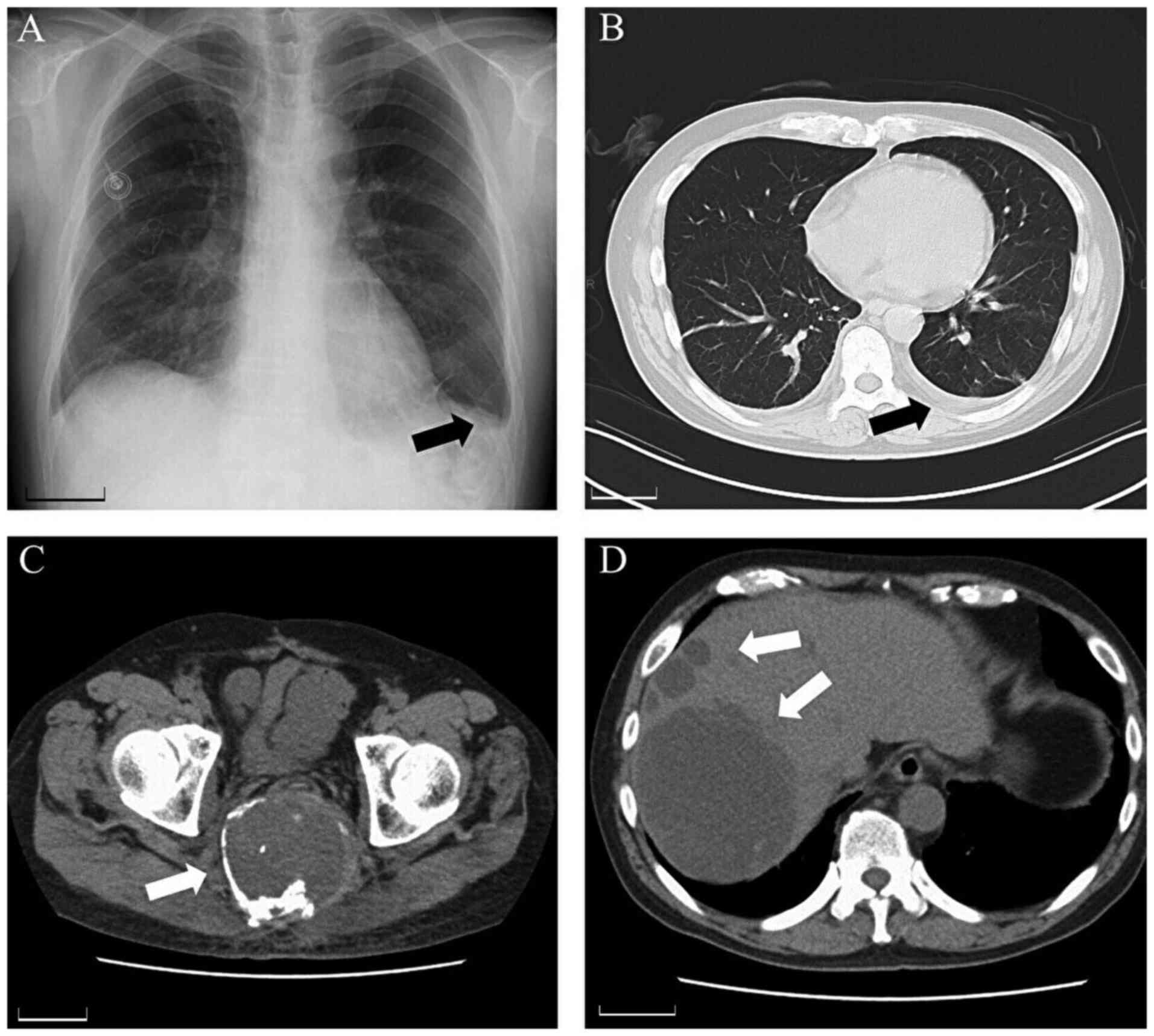
On day eight of the fifth course of eribulin, blood tests showed a white blood cell (WBC) count of 2,400/µl and a neutrophil count of 860/µl, which was classified as grade 3 neutropenia according to the Common Terminology Criteria for Adverse Events Criteria (CTCAE) (6). Pegfilgrastim was administered as G-CSF on day nine to prevent FN. A total of 3 days after G-CSF administration, the patient had a fever (38˚C, grade 1 on CTCAE criteria) (6) at home, which continued for 6 days. The patient complained of a persistent fever and abdominal pain on day 18 (day nine of G-CSF administration) of the fifth cycle. Laboratory tests revealed a high WBC count (14,000/µl), CRP level (17.11 mg/dl) and procalcitonin level (0.65 ng/ml). Blood, urine and sputum cultures were negative. Chest X-ray revealed a blunt left costophrenic angle (Fig. 1A). Thoracic CT showed left pleural effusion with no pneumonia (Fig. 1B). No obvious changes were observed at the primary site (sacral) or metastatic lesion (liver) on abdominal CT (Fig. 1C and D).

Imaging findings on admission. Scale
bars, 5 cm. (A) Chest X-ray revealed a blunt left costophrenic
angle. (B) Thoracic computed tomography showed left pleural
effusion with no signs of pneumonia. (C) No significant progression
was observed at the primary site in the sacrum. (D) No significant
progression was observed at the metastatic sites in the liver.

Figure 1

Imaging findings on admission. Scale bars, 5 cm. (A) Chest X-ray revealed a blunt left costophrenic angle. (B) Thoracic computed tomography showed left pleural effusion with no signs of pneumonia. (C) No significant progression was observed at the primary site in the sacrum. (D) No significant progression was observed at the metastatic sites in the liver.

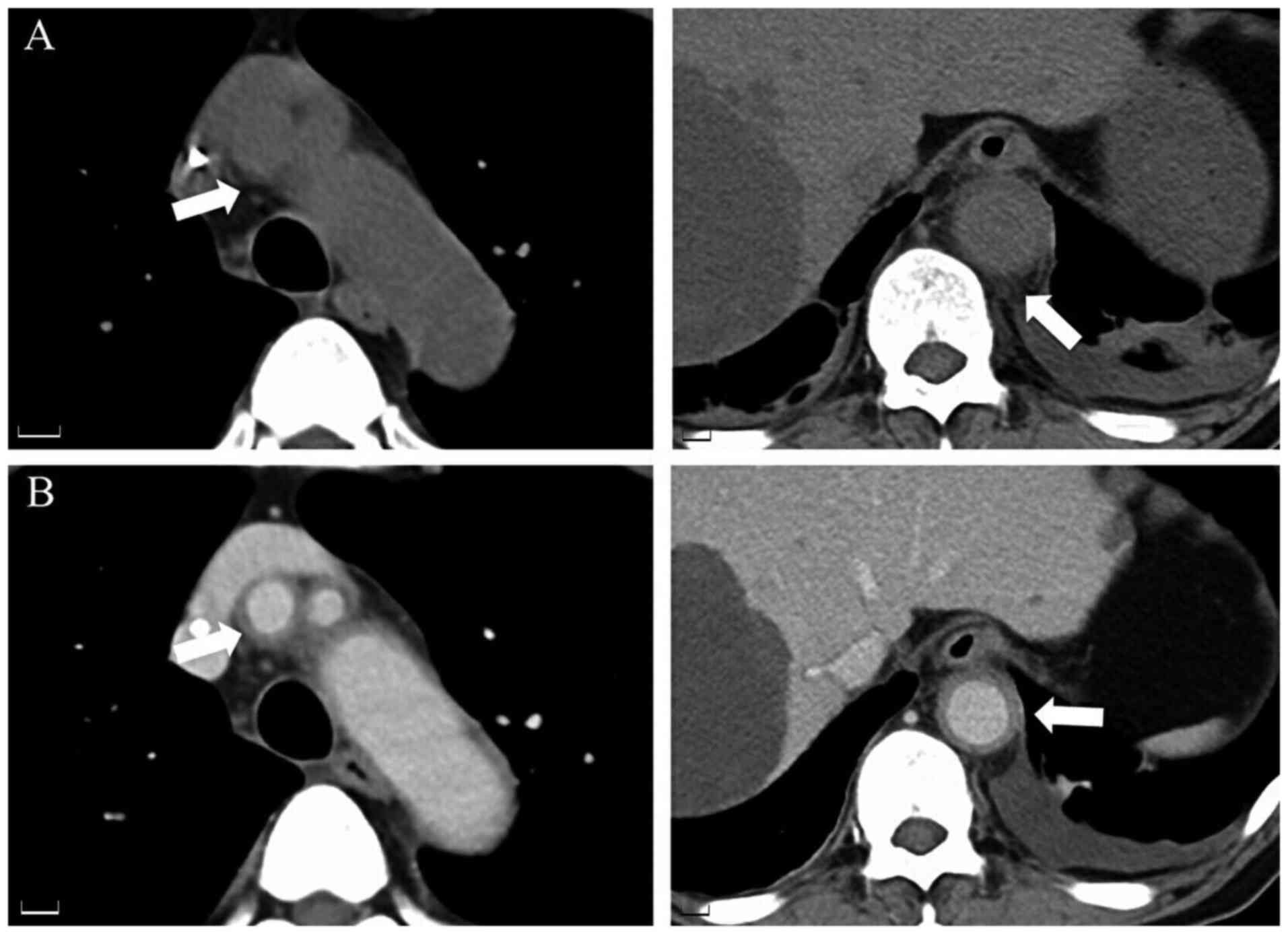
FN was suspected and antibiotic treatment (cefepime, 4 g/day) was initiated on day 19. Neutrophil count before administrating antibiotics was 15,600/µl (83% of WBC counts). However, the patient did not achieve defervescence after six days of antibiotic treatment. Therefore, contrast-enhanced CT was performed, which revealed periaortic soft tissue inflammation (Fig. 2A) and thickened walls of the brachiocephalic artery and abdominal aorta (Fig. 2B). Based on the CT images, G-CSF-induced aortitis was suspected, and antibiotic treatment was discontinued. The patient's general condition improved naturally, with the WBC count and CRP level decreasing to 4,400/µl and 4.08 mg/dl, respectively, on day 29.

CT scan findings. Scale bars, 1 cm.
(A) Non-contrast CT showed periaortic soft tissue inflammation
around the brachiocephalic artery (left) and abdominal aorta
(right). (B) Contrast-enhanced CT showed thickening of the walls of
the brachiocephalic artery (left) and abdominal aorta (right). CT,
computed tomography.

Figure 2

CT scan findings. Scale bars, 1 cm. (A) Non-contrast CT showed periaortic soft tissue inflammation around the brachiocephalic artery (left) and abdominal aorta (right). (B) Contrast-enhanced CT showed thickening of the walls of the brachiocephalic artery (left) and abdominal aorta (right). CT, computed tomography.

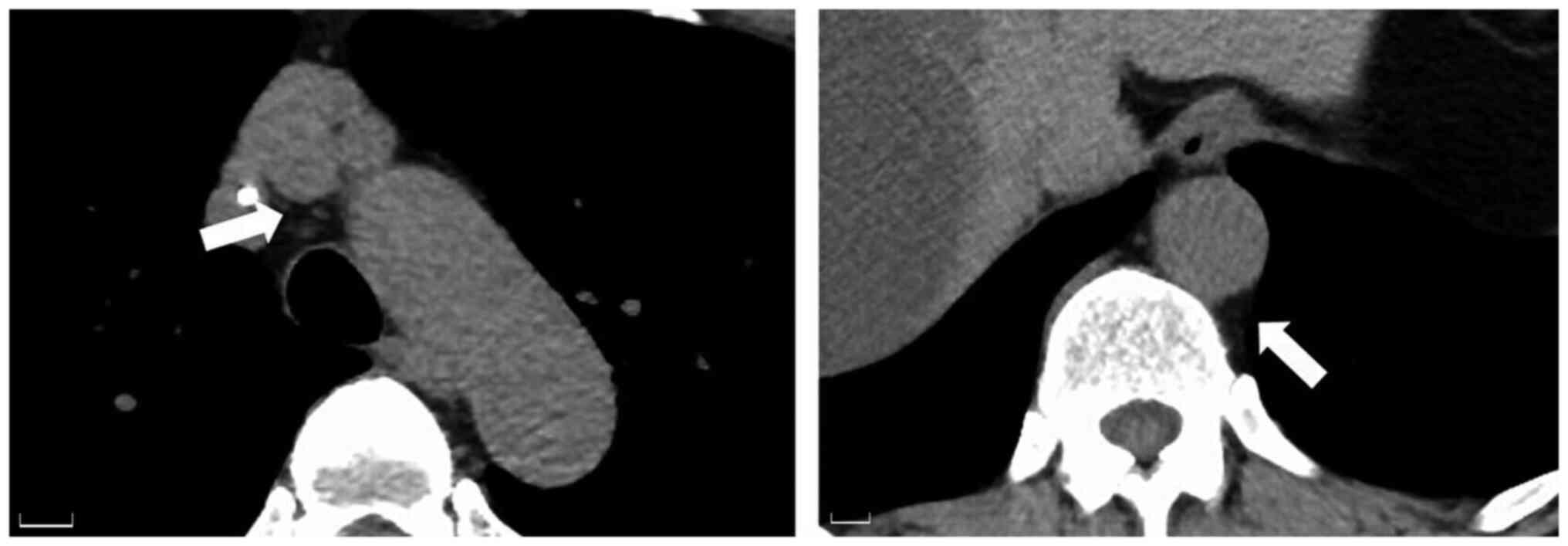
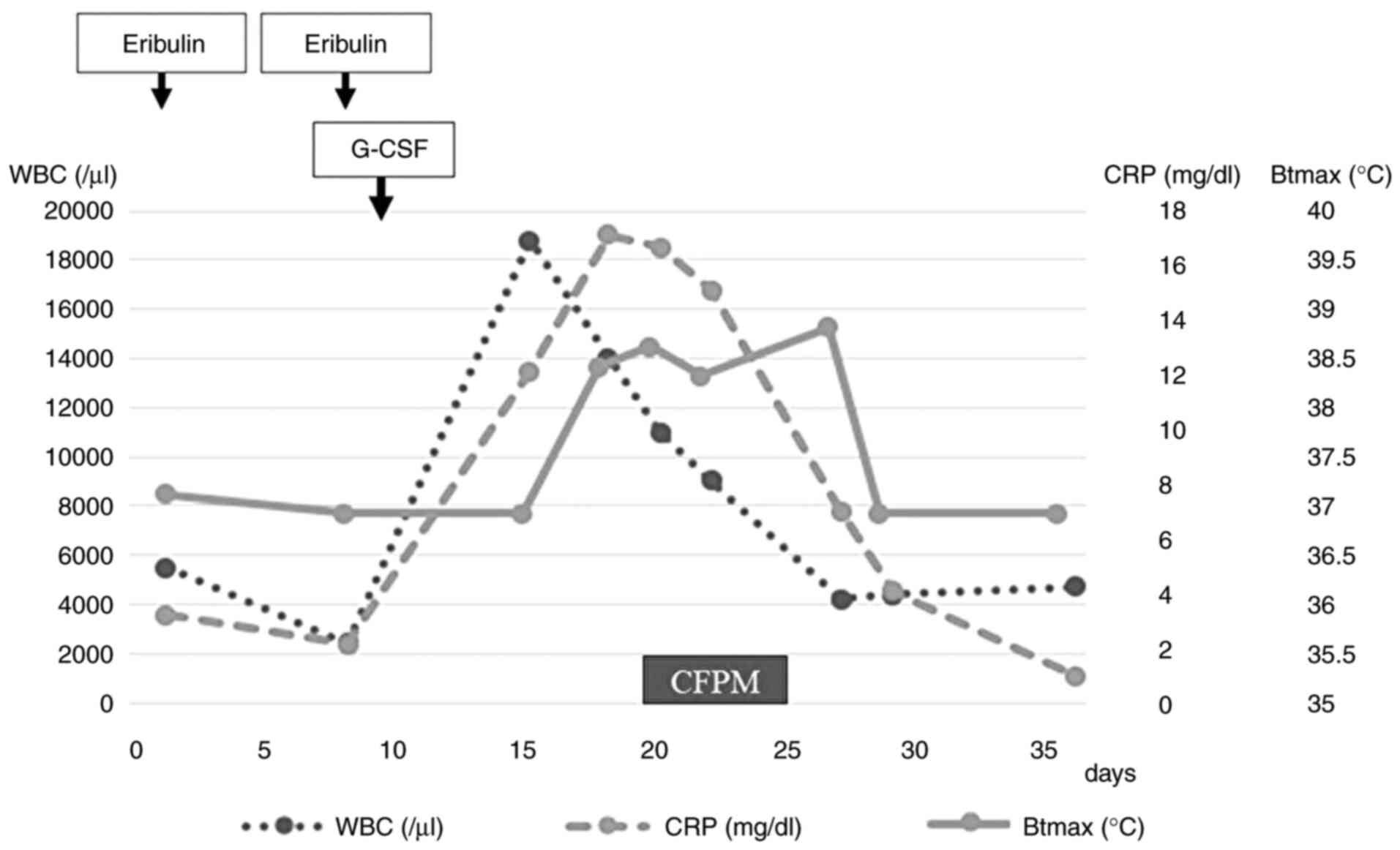
Follow-up CT revealed the disappearance of the periaortic soft tissue inflammation (Fig. 3). Chemotherapy was continued without any further complaints of fever. The clinical course and treatment history of the patients are shown in Fig. 4.

Computed tomography scan findings two
months after granulocyte-colony stimulating factor discontinuation.
Periaortic soft tissue inflammation around the brachiocephalic
artery (left) and abdominal aorta (right) showed improvements.
Scale bars, 1 cm.

Figure 3

Computed tomography scan findings two months after granulocyte-colony stimulating factor discontinuation. Periaortic soft tissue inflammation around the brachiocephalic artery (left) and abdominal aorta (right) showed improvements. Scale bars, 1 cm.

Clinical course of G-CSF-induced
aortitis. WBC and CRP levels and body temperature were elevated
after G-CSF administration. These parameters improved after
discontinuation of antibiotic treatment. G-CSF, granulocyte-colony
stimulating factor; WBC, white blood cell; CRP, C-reactive
protein.

Figure 4

Clinical course of G-CSF-induced aortitis. WBC and CRP levels and body temperature were elevated after G-CSF administration. These parameters improved after discontinuation of antibiotic treatment. G-CSF, granulocyte-colony stimulating factor; WBC, white blood cell; CRP, C-reactive protein.

Discussion

G-CSF attaches to receptors on neutrophil progenitors in the bone marrow, stimulating their differentiation into neutrophils and thereby boosting neutrophil counts in the peripheral blood. It is widely used in chemotherapy to induce myelosuppression (7). Various types of G-CSF agents are available in clinical settings. Filgrastim and lenograstim are short-acting G-CSF agents with biological structures and activities closely resembling those of endogenous human G-CSF (8). Pegfilgrastim, a modified form of G-CSF, has a polyethylene glycol molecule attached to its N-terminus, which extends its biological half-life in peripheral blood (7).

Aortitis may develop as a result of an enhanced pro-inflammatory response and neutrophil-induced tissue damage (9); however, the exact mechanism by which G-CSF administration induces aortitis remains unclear. In a study using the JADER database, Oshima et al (4) reported that G-CSF treatment was linked to a potentially increased risk of aortitis in patients with malignant tumors, and the incidence of aortitis associated with G-CSF was 0.47%. Their report included cases of four patients with breast and ovarian cancer, three with malignant lymphoma, two with uterine cancer, and one with esophageal and prostate cancer; however, no case of patients with chordomas was included in their report.

Regarding the characteristics of G-CSF-induced aortitis, fever was the most common symptom, with additional complaints of back, chest, abdominal and neck pain. The onset of aortitis has been reported within 10 days after the initiation of G-CSF in >50% of the patients (61.2%). CT was used as the diagnostic imaging modality in most cases (89.8%) (10). In our case, the patient got fever 3 days after G-CSF administration and felt abdominal pain 9 days after G-CSF administration, which was similar to the aforementioned study (10). Regarding the utility of contrast-enhanced CT, Takamatsu et al (11) reported that contrast-enhanced CT enables differentiation between G-CSF-induced aortitis and intramural hematoma based on their distinguishing imaging features (11). With respect to the differential diagnosis, Takayasu arteritis, giant cell arteritis and IgG4-related disease were considered to be listed (11). In our case, internist determined that the possibility of autoimmune diseases that cause aortitis was low, therefore no additional tests were performed. The limitation of the present case report is lack of the evaluation of antineutrophil cytoplasmic antibody, rheumatoid factor, and serum levels of IgG4 subclass to rule out these diseases.

The treatment of aortitis associated with G-CSF remains controversial. The first and most common approach for managing aortitis associated with G-CSF is to discontinue G-CSF administration (12). Takahashi et al (13) reported a case successfully treated with intravenous administration of steroids. In a systematic literature review on the treatment of aortic arteritis, Hoshina and Takei (10) reported that steroids were administered to 29 patients (59.2%), whereas 19 patients (38.8%) healed without the use of steroids (10). In the present case, the patient became afebrile and showed improvement in inflammatory markers in blood tests 20 days after G-CSF administration without steroid treatment. Steroid administration may need to be considered in more severe cases or in cases where aortitis persists even after discontinuation of G-CSF (14).

The acceptability of re-administering G-CSF to patients with a history of G-CSF-induced aortitis remains controversial. Takamatsu et al (11) reported that among 11 asymptomatic patients with clinically undiagnosed pegfilgrastim-induced aortitis, eight patients received additional pegfilgrastim treatment, and none of them showed recurrence of aortitis on CT. They also stated that the results did not indicate the safety of pegfilgrastim re-administration and that the risk of recurrence after re-administration remained unclear (11).

Although G-CSF-induced aortitis is uncommon, clinicians should exercise caution when treating patients with malignant tumors. If a patient presents with a persistent fever of unknown origin after receiving G-CSF, G-CSF-induced aortitis should be considered as a potential cause during diagnostic workup. The treatment for G-CSF-induced aortitis has not yet been established. However, the discontinuation of G-CSF and, in some cases, steroid administration should be considered depending on the severity of the condition. Therefore, clinicians should closely monitor the clinical course of patients to guide appropriate treatment.

Acknowledgements

Not applicable.

Funding

Funding: No funding was received.

Availability of data and materials

The data generated in the present study may be requested from the corresponding author.

Authors' contributions

SF and HH designed the experiments and wrote the initial draft of the manuscript. SF and HH confirm the authenticity of all the raw data. SF, HH, NF, RS, TT, TM and YN provided medical care for the patients and collected the data. RK and TA were responsible for the design and interpretation of the study as well as revisions and approval of the final draft of the manuscript. All authors read and approved the final version of the manuscript.

Ethics approval and consent to participate

Not applicable.

Patient consent for publication

The patient was informed that data from the case would be submitted for publication and provided consent for the academic use of clinical information.

Competing interests

The authors declare that they have no competing interests.

References

1 

Lyman GH, Dale DC, Culakova E, Poniewierski MS, Wolff DA, Kuderer NM, Huang M and Crawford J: The impact of the granulocyte colony-stimulating factor on chemotherapy dose intensity and cancer survival: A systematic review and meta-analysis of randomized controlled trials. Ann Oncol. 24:2475–2484. 2013.PubMed/NCBI View Article : Google Scholar

2 

D'Souza A, Jaiyesimi I, Trainor L and Venuturumili P: Granulocyte colony-stimulating factor administration: Adverse events. Transfus Med Rev. 22:280–290. 2008.PubMed/NCBI View Article : Google Scholar

3 

Zhao T and Xu H: Literature review analysis of aortitis induced by granulocyte-colony stimulating factor. Front Pharmacol. 15(1487501)2024.PubMed/NCBI View Article : Google Scholar

4 

Oshima Y, Takahashi S, Tani K and Tojo A: Granulocyte colony-stimulating factor-associated aortitis in the Japanese adverse drug event report database. Cytokine. 119:47–51. 2019.PubMed/NCBI View Article : Google Scholar

5 

National Comprehensive Cancer Network (NCCN): NCCN Clinical Practice Guidelines in Oncology: Hematopoietic Growth Factors. Version 1.2025. NCCN, Plymouth Meeting, PA, 2025. https://www.nccn.org. Accessed May 7, 2025.

6 

National Cancer Institute (NCI): Common Terminol Criteria Adverse Events (ctcae) Version 5.0. NCI, Bethesda, MD, 2017. https://ctep.cancer.gov/protocoldevelopment/electronic_applications/docs/ctcae_v5_quick_reference_5x7.pdf. Accessed March 23, 2025.

7 

Takahashi M, Kondoh C and Takano T: The history of granulocyte-colony stimulating factor. Drug Deliv Syst. 32:134–142. 2017.

8 

Lee SY, Kim EK, Kim JY, Park TK, Choi SH, Im YH, Kim MY, Park YH and Kim DK: The incidence and clinical features of PEGylated filgrastim-induced acute aortitis in patients with breast cancer. Sci Rep. 10(18647)2020.PubMed/NCBI View Article : Google Scholar

9 

Cuchacovich R: Immunopathogenesis of vasculitis. Curr Rheumatol Rep. 4:9–17. 2002.PubMed/NCBI View Article : Google Scholar

10 

Hoshina H and Takei H: Granulocyte-colony stimulating factor-associated aortitis in cancer: A systematic literature review. Cancer Treat Res Commun. 29(100454)2021.PubMed/NCBI View Article : Google Scholar

11 

Takamatsu A, Yoshida K, Toshima F, Kozaka K, Yamamoto N, Sai Y and Gabata T: Single-center analysis of pegfilgrastim-induced aortitis using a drug prescription database and CT findings. Radiology. 305:729–740. 2022.PubMed/NCBI View Article : Google Scholar

12 

Ito M, Amari M, Sato A and Hikichi M: Granulocyte-colony stimulating factor (G-CSF)-induced aortitis: A case report. Cureus. 16(e54845)2024.PubMed/NCBI View Article : Google Scholar

13 

Takahashi T, Yamamoto K, Yamaguchi T, Miura Y and Kizawa R: Granulocyte colony-stimulating factor-associated aortitis. Lancet Oncol. 23(e155)2022.PubMed/NCBI View Article : Google Scholar

14 

Harada M, Motoki H, Sakai T and Kuwahara K: Granulocyte colony stimulating factor-associated aortitis evaluated via multiple imaging modalities including vascular echography: A case report. Eur Heart J Case Rep. 5(ytaa503)2020.PubMed/NCBI View Article : Google Scholar

Related Articles

  • Abstract
  • View
  • Download
  • Twitter
Copy and paste a formatted citation
Spandidos Publications style
Fujiwara S, Hara H, Fukase N, Sawada R, Takemori T, Miyamoto T, Nakamatsu Y, Kuroda R and Akisue T: Aortitis after granulocyte‑colony stimulating factor administration: A case report. Biomed Rep 23: 161, 2025.
APA
Fujiwara, S., Hara, H., Fukase, N., Sawada, R., Takemori, T., Miyamoto, T. ... Akisue, T. (2025). Aortitis after granulocyte‑colony stimulating factor administration: A case report. Biomedical Reports, 23, 161. https://doi.org/10.3892/br.2025.2039
MLA
Fujiwara, S., Hara, H., Fukase, N., Sawada, R., Takemori, T., Miyamoto, T., Nakamatsu, Y., Kuroda, R., Akisue, T."Aortitis after granulocyte‑colony stimulating factor administration: A case report". Biomedical Reports 23.4 (2025): 161.
Chicago
Fujiwara, S., Hara, H., Fukase, N., Sawada, R., Takemori, T., Miyamoto, T., Nakamatsu, Y., Kuroda, R., Akisue, T."Aortitis after granulocyte‑colony stimulating factor administration: A case report". Biomedical Reports 23, no. 4 (2025): 161. https://doi.org/10.3892/br.2025.2039
Copy and paste a formatted citation
x
Spandidos Publications style
Fujiwara S, Hara H, Fukase N, Sawada R, Takemori T, Miyamoto T, Nakamatsu Y, Kuroda R and Akisue T: Aortitis after granulocyte‑colony stimulating factor administration: A case report. Biomed Rep 23: 161, 2025.
APA
Fujiwara, S., Hara, H., Fukase, N., Sawada, R., Takemori, T., Miyamoto, T. ... Akisue, T. (2025). Aortitis after granulocyte‑colony stimulating factor administration: A case report. Biomedical Reports, 23, 161. https://doi.org/10.3892/br.2025.2039
MLA
Fujiwara, S., Hara, H., Fukase, N., Sawada, R., Takemori, T., Miyamoto, T., Nakamatsu, Y., Kuroda, R., Akisue, T."Aortitis after granulocyte‑colony stimulating factor administration: A case report". Biomedical Reports 23.4 (2025): 161.
Chicago
Fujiwara, S., Hara, H., Fukase, N., Sawada, R., Takemori, T., Miyamoto, T., Nakamatsu, Y., Kuroda, R., Akisue, T."Aortitis after granulocyte‑colony stimulating factor administration: A case report". Biomedical Reports 23, no. 4 (2025): 161. https://doi.org/10.3892/br.2025.2039
Follow us
  • Twitter
  • LinkedIn
  • Facebook
About
  • Spandidos Publications
  • Careers
  • Cookie Policy
  • Privacy Policy
How can we help?
  • Help
  • Live Chat
  • Contact
  • Email to our Support Team