Spandidos Publications Logo
  • About
    • About Spandidos
    • Aims and Scopes
    • Abstracting and Indexing
    • Editorial Policies
    • Reprints and Permissions
    • Job Opportunities
    • Terms and Conditions
    • Contact
  • Journals
    • All Journals
    • Oncology Letters
      • Oncology Letters
      • Information for Authors
      • Editorial Policies
      • Editorial Board
      • Aims and Scope
      • Abstracting and Indexing
      • Bibliographic Information
      • Archive
    • International Journal of Oncology
      • International Journal of Oncology
      • Information for Authors
      • Editorial Policies
      • Editorial Board
      • Aims and Scope
      • Abstracting and Indexing
      • Bibliographic Information
      • Archive
    • Molecular and Clinical Oncology
      • Molecular and Clinical Oncology
      • Information for Authors
      • Editorial Policies
      • Editorial Board
      • Aims and Scope
      • Abstracting and Indexing
      • Bibliographic Information
      • Archive
    • Experimental and Therapeutic Medicine
      • Experimental and Therapeutic Medicine
      • Information for Authors
      • Editorial Policies
      • Editorial Board
      • Aims and Scope
      • Abstracting and Indexing
      • Bibliographic Information
      • Archive
    • International Journal of Molecular Medicine
      • International Journal of Molecular Medicine
      • Information for Authors
      • Editorial Policies
      • Editorial Board
      • Aims and Scope
      • Abstracting and Indexing
      • Bibliographic Information
      • Archive
    • Biomedical Reports
      • Biomedical Reports
      • Information for Authors
      • Editorial Policies
      • Editorial Board
      • Aims and Scope
      • Abstracting and Indexing
      • Bibliographic Information
      • Archive
    • Oncology Reports
      • Oncology Reports
      • Information for Authors
      • Editorial Policies
      • Editorial Board
      • Aims and Scope
      • Abstracting and Indexing
      • Bibliographic Information
      • Archive
    • Molecular Medicine Reports
      • Molecular Medicine Reports
      • Information for Authors
      • Editorial Policies
      • Editorial Board
      • Aims and Scope
      • Abstracting and Indexing
      • Bibliographic Information
      • Archive
    • World Academy of Sciences Journal
      • World Academy of Sciences Journal
      • Information for Authors
      • Editorial Policies
      • Editorial Board
      • Aims and Scope
      • Abstracting and Indexing
      • Bibliographic Information
      • Archive
    • International Journal of Functional Nutrition
      • International Journal of Functional Nutrition
      • Information for Authors
      • Editorial Policies
      • Editorial Board
      • Aims and Scope
      • Abstracting and Indexing
      • Bibliographic Information
      • Archive
    • International Journal of Epigenetics
      • International Journal of Epigenetics
      • Information for Authors
      • Editorial Policies
      • Editorial Board
      • Aims and Scope
      • Abstracting and Indexing
      • Bibliographic Information
      • Archive
    • Medicine International
      • Medicine International
      • Information for Authors
      • Editorial Policies
      • Editorial Board
      • Aims and Scope
      • Abstracting and Indexing
      • Bibliographic Information
      • Archive
  • Articles
  • Information
    • Information for Authors
    • Information for Reviewers
    • Information for Librarians
    • Information for Advertisers
    • Conferences
  • Language Editing
Spandidos Publications Logo
  • About
    • About Spandidos
    • Aims and Scopes
    • Abstracting and Indexing
    • Editorial Policies
    • Reprints and Permissions
    • Job Opportunities
    • Terms and Conditions
    • Contact
  • Journals
    • All Journals
    • Biomedical Reports
      • Information for Authors
      • Editorial Policies
      • Editorial Board
      • Aims and Scope
      • Abstracting and Indexing
      • Bibliographic Information
      • Archive
    • Experimental and Therapeutic Medicine
      • Information for Authors
      • Editorial Policies
      • Editorial Board
      • Aims and Scope
      • Abstracting and Indexing
      • Bibliographic Information
      • Archive
    • International Journal of Epigenetics
      • Information for Authors
      • Editorial Policies
      • Editorial Board
      • Aims and Scope
      • Abstracting and Indexing
      • Bibliographic Information
      • Archive
    • International Journal of Functional Nutrition
      • Information for Authors
      • Editorial Policies
      • Editorial Board
      • Aims and Scope
      • Abstracting and Indexing
      • Bibliographic Information
      • Archive
    • International Journal of Molecular Medicine
      • Information for Authors
      • Editorial Policies
      • Editorial Board
      • Aims and Scope
      • Abstracting and Indexing
      • Bibliographic Information
      • Archive
    • International Journal of Oncology
      • Information for Authors
      • Editorial Policies
      • Editorial Board
      • Aims and Scope
      • Abstracting and Indexing
      • Bibliographic Information
      • Archive
    • Medicine International
      • Information for Authors
      • Editorial Policies
      • Editorial Board
      • Aims and Scope
      • Abstracting and Indexing
      • Bibliographic Information
      • Archive
    • Molecular and Clinical Oncology
      • Information for Authors
      • Editorial Policies
      • Editorial Board
      • Aims and Scope
      • Abstracting and Indexing
      • Bibliographic Information
      • Archive
    • Molecular Medicine Reports
      • Information for Authors
      • Editorial Policies
      • Editorial Board
      • Aims and Scope
      • Abstracting and Indexing
      • Bibliographic Information
      • Archive
    • Oncology Letters
      • Information for Authors
      • Editorial Policies
      • Editorial Board
      • Aims and Scope
      • Abstracting and Indexing
      • Bibliographic Information
      • Archive
    • Oncology Reports
      • Information for Authors
      • Editorial Policies
      • Editorial Board
      • Aims and Scope
      • Abstracting and Indexing
      • Bibliographic Information
      • Archive
    • World Academy of Sciences Journal
      • Information for Authors
      • Editorial Policies
      • Editorial Board
      • Aims and Scope
      • Abstracting and Indexing
      • Bibliographic Information
      • Archive
  • Articles
  • Information
    • For Authors
    • For Reviewers
    • For Librarians
    • For Advertisers
    • Conferences
  • Language Editing
Login Register Submit
  • This site uses cookies
  • You can change your cookie settings at any time by following the instructions in our Cookie Policy. To find out more, you may read our Privacy Policy.

    I agree
Search articles by DOI, keyword, author or affiliation
Search
Advanced Search
presentation
Biomedical Reports
Join Editorial Board Propose a Special Issue
Print ISSN: 2049-9434 Online ISSN: 2049-9442
Journal Cover
November-2025 Volume 23 Issue 5

Full Size Image

Sign up for eToc alerts
Recommend to Library

Journals

International Journal of Molecular Medicine

International Journal of Molecular Medicine

International Journal of Molecular Medicine is an international journal devoted to molecular mechanisms of human disease.

International Journal of Oncology

International Journal of Oncology

International Journal of Oncology is an international journal devoted to oncology research and cancer treatment.

Molecular Medicine Reports

Molecular Medicine Reports

Covers molecular medicine topics such as pharmacology, pathology, genetics, neuroscience, infectious diseases, molecular cardiology, and molecular surgery.

Oncology Reports

Oncology Reports

Oncology Reports is an international journal devoted to fundamental and applied research in Oncology.

Experimental and Therapeutic Medicine

Experimental and Therapeutic Medicine

Experimental and Therapeutic Medicine is an international journal devoted to laboratory and clinical medicine.

Oncology Letters

Oncology Letters

Oncology Letters is an international journal devoted to Experimental and Clinical Oncology.

Biomedical Reports

Biomedical Reports

Explores a wide range of biological and medical fields, including pharmacology, genetics, microbiology, neuroscience, and molecular cardiology.

Molecular and Clinical Oncology

Molecular and Clinical Oncology

International journal addressing all aspects of oncology research, from tumorigenesis and oncogenes to chemotherapy and metastasis.

World Academy of Sciences Journal

World Academy of Sciences Journal

Multidisciplinary open-access journal spanning biochemistry, genetics, neuroscience, environmental health, and synthetic biology.

International Journal of Functional Nutrition

International Journal of Functional Nutrition

Open-access journal combining biochemistry, pharmacology, immunology, and genetics to advance health through functional nutrition.

International Journal of Epigenetics

International Journal of Epigenetics

Publishes open-access research on using epigenetics to advance understanding and treatment of human disease.

Medicine International

Medicine International

An International Open Access Journal Devoted to General Medicine.

Journal Cover
November-2025 Volume 23 Issue 5

Full Size Image

Sign up for eToc alerts
Recommend to Library

  • Article
  • Citations
    • Cite This Article
    • Download Citation
    • Create Citation Alert
    • Remove Citation Alert
    • Cited By
  • Similar Articles
    • Related Articles (in Spandidos Publications)
    • Similar Articles (Google Scholar)
    • Similar Articles (PubMed)
  • Download PDF
  • Download XML
  • View XML
Article Open Access

Impact of the ATM/Chk2 pathway and cell cycle phase on radiation‑induced senescence in A549 human lung cancer cells

  • Authors:
    • Kota Sato
    • Hironori Yoshino
    • Yoshiaki Sato
    • Fuki Sasaki
    • Nanami Munakata
    • Eichi Tsuruga
  • View Affiliations / Copyright

    Affiliations: Department of Radiation Science, Hirosaki University Graduate School of Health Sciences, Hirosaki, Aomori 036‑8564, Japan
    Copyright: © Sato et al. This is an open access article distributed under the terms of Creative Commons Attribution License.
  • Article Number: 169
    |
    Published online on: August 26, 2025
       https://doi.org/10.3892/br.2025.2047
  • Expand metrics +
Metrics: Total Views: 0 (Spandidos Publications: | PMC Statistics: )
Metrics: Total PDF Downloads: 0 (Spandidos Publications: | PMC Statistics: )
Cited By (CrossRef): 0 citations Loading Articles...

This article is mentioned in:


Abstract

Cell senescence is a state of stable proliferation arrest characterized by morphological changes and high senescence‑associated β‑galactosidase (SA‑β‑gal) activity. Inducing senescence in cancer cells is beneficial for cancer therapy due to proliferation arrest, however, the mechanisms underlying this process remain insufficiently understood. Therefore, the present study investigated the mechanisms of radiation‑induced cellular senescence in A549 human lung cancer cells, focusing on the DNA damage response and cell cycle regulation. Cellular senescence was estimated by activity of SA‑β‑gal, and cell cycle was analyzed by propidium iodide staining using a flow cytometer. Cell cycle synchronization was performed by the double thymine block method. First, the roles of ataxia telangiectasia mutated (ATM) and ataxia telangiectasia mutated and Rad3‑related (ATR), which are important factors for DNA damages response, in radiation‑induced cellular senescence were investigated. ATM/ATR inhibitors suppressed radiation‑induced G2/M phase arrest and decreased the percentage of senescent cells with high SA‑β‑gal activity, implying that G2/M arrest was associated with radiation‑induced senescence. However, an analysis using inhibitors of checkpoint kinase 1 (Chk1) and Chk2, which function downstream of ATR and ATM, respectively, revealed that the Chk2, but not the Chk1, pathway was involved in radiation‑induced senescence. To enhance radiation‑induced senescence, radiation was combined with olaparib treatment, an inhibitor of DNA single‑strand break repair. Olaparib increased the number of radiation‑induced senescent cells. Additionally, cell cycle synchronization experiments revealed that irradiation of cells in S or G2/M phase resulted in higher senescent cell counts than irradiation in G1 phase. Taken together, the present results demonstrated that the ATM/Chk2 pathway and the DNA content are involved in the radiation‑induced senescence of A549 cells.
View Figures

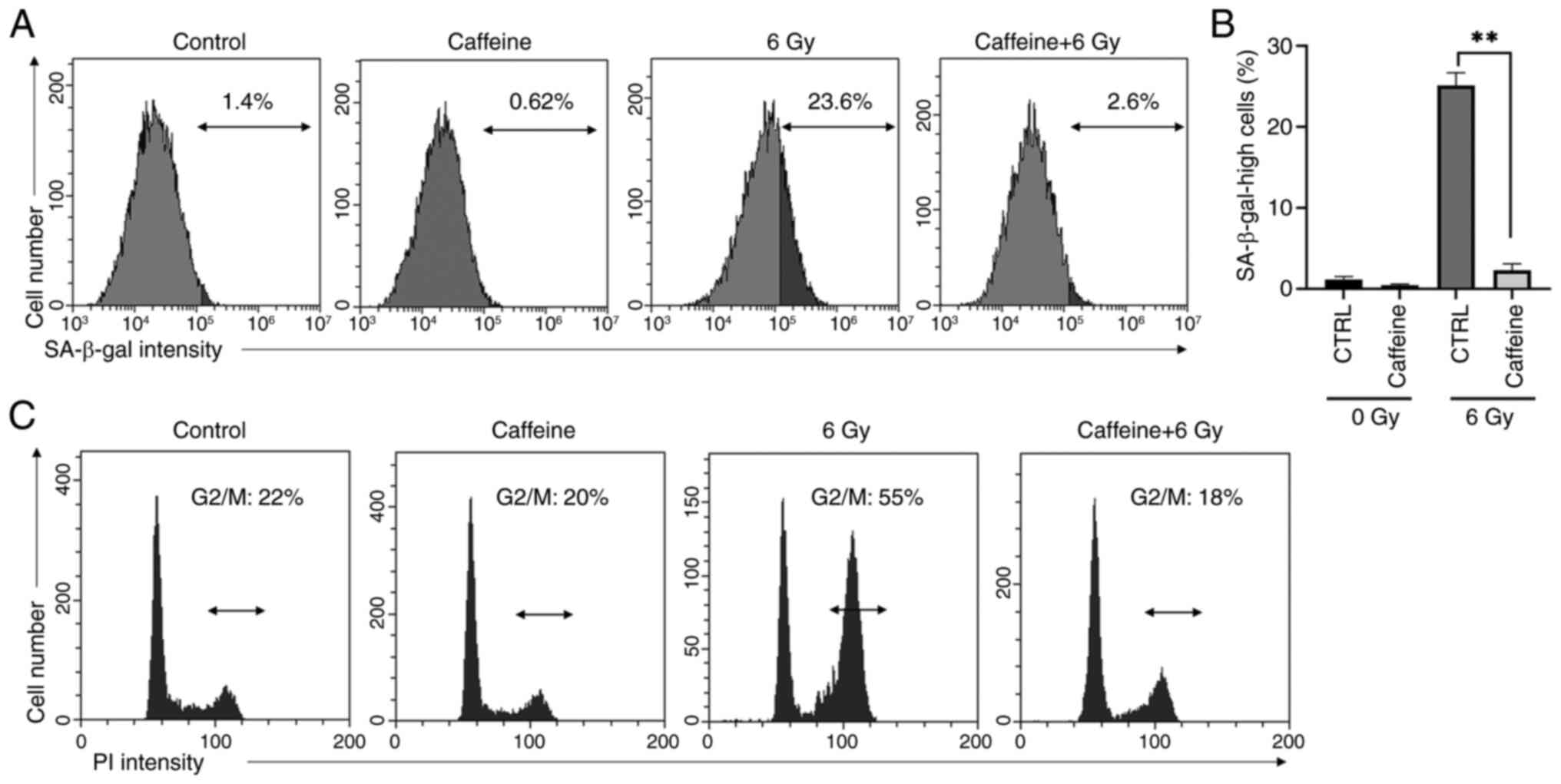
Figure 1

Effect of caffeine on SA-β-gal
activity and cell cycle arrest in irradiated A549 cells. A549 cells
treated with caffeine were irradiated with X-rays. After 48 h,
SA-β-gal activity was analyzed. (A) Representative histogram of
SA-β-gal. (B) Proportion of cells with high SA-β-gal activity. (C)
Representative cell cycle histogram. **P<0.01.
SA-β-gal, senescence-associated β-galactosidase; CTRL, control.

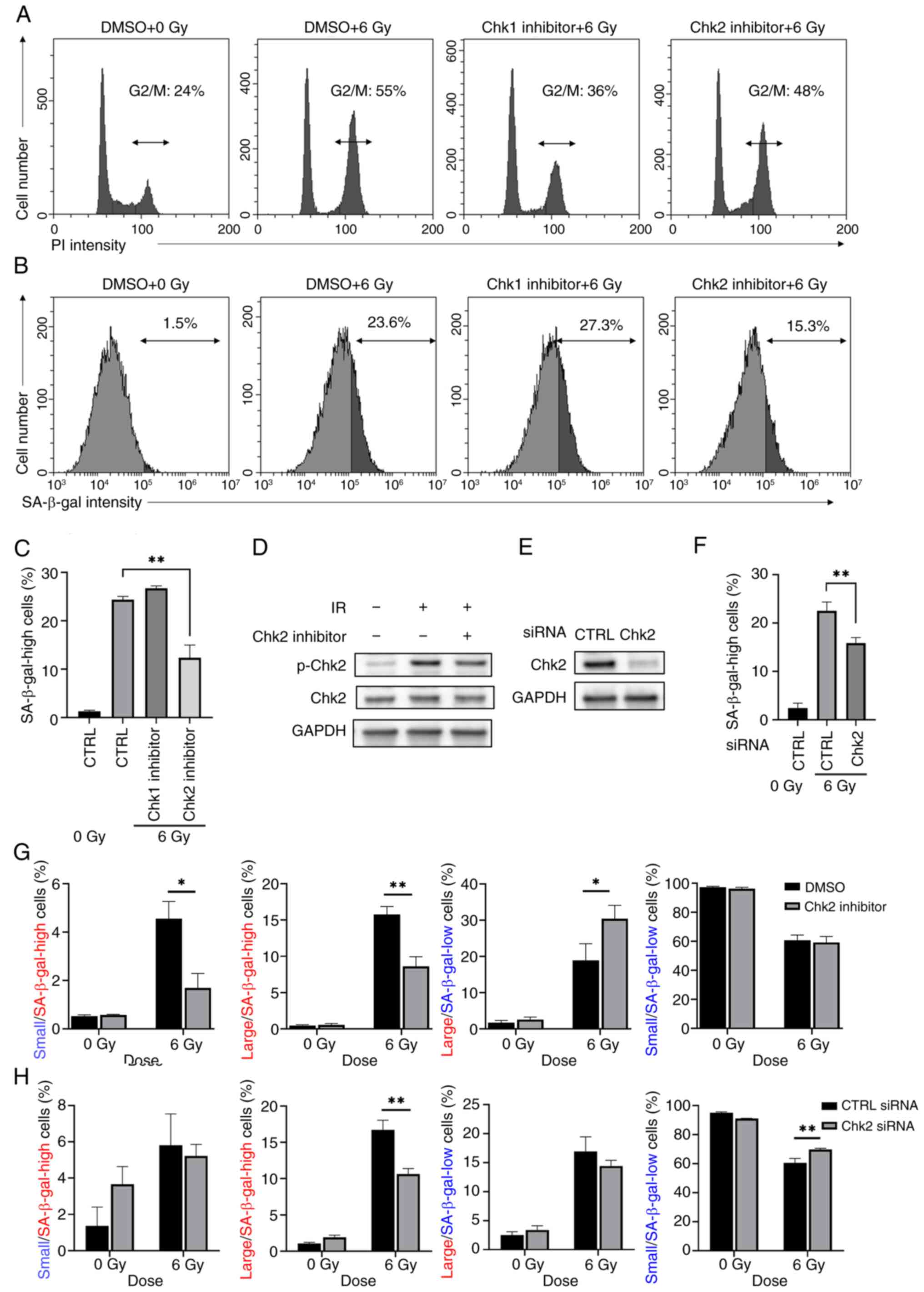
Figure 2

Effect of Chk1 or Chk2 inhibition on
senescence and cell cycle arrest in irradiated A549 cells. (A) A549
cells treated with Chk1 or Chk2 inhibitor were irradiated with
X-rays. After 8 h, cell cycle was analyzed. After 48 h, the cells
were harvested to analyze SA-β-gal activity. (B) Representative
SA-β-gal histogram. (C) Proportion of cells with high SA-β-gal
activity. (D) Cells were harvested for western blotting. (E)
Representative immunoblot of Chk2 of A549 cells transfected with
siRNA targeting Chk2. (F) Chk2-knockdown A549 cells were irradiated
with X-rays. After 48 h, SA-β-gal activity was analyzed. (G) A549
cells treated with a Chk2 inhibitor and (H) Chk2-knockdown cells
were irradiated with X-rays. After 48 h, SA-β-gal activity and FS
were analyzed. *P<0.05, **P<0.01.
SA-β-gal, senescence-associated β-galactosidase; Chk, checkpoint
kinase; CTRL, control; si, small interfering; p-, phosphorylated;
IR, ionizing radiation.

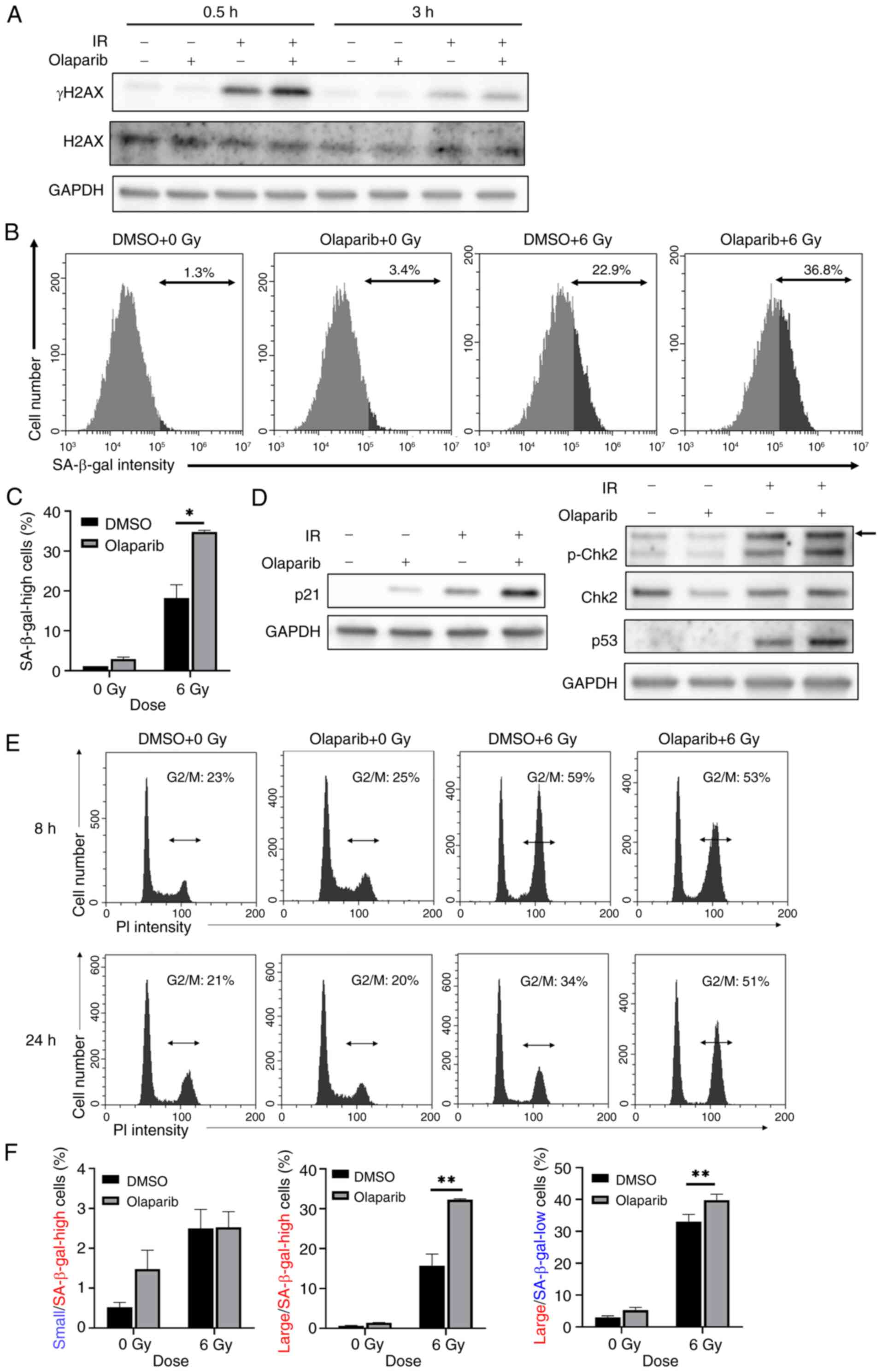
Figure 3

Effect of olaparib on SA-β-gal
activity in A549 cells. (A) A549 cells treated with olaparib were
irradiated with X-rays. After 0.5 and 3 h, γH2AX and H2AX
expression were analyzed. After 4 days, SA-β-gal activity, FS and
protein expression were analyzed. (B) Representative SA-β-gal
histogram. (C) Proportion of cells with high SA-β-gal activity. (D)
Representative immunoblots. Arrow represents non-specific band. (E)
After 8 and 24 h, cell cycle was analyzed. (F) A549 cells treated
with olaparib were irradiated with X-rays. After 4 days, SA-β-gal
activity and FS were analyzed. *P<0.05,
**P<0.01. SA-β-gal, senescence-associated
β-galactosidase; H2AX, H2A histone family member X; Chk, checkpoint
kinase; p-, phosphorylated; IR, ionizing radiation; FS, forward
scatter.

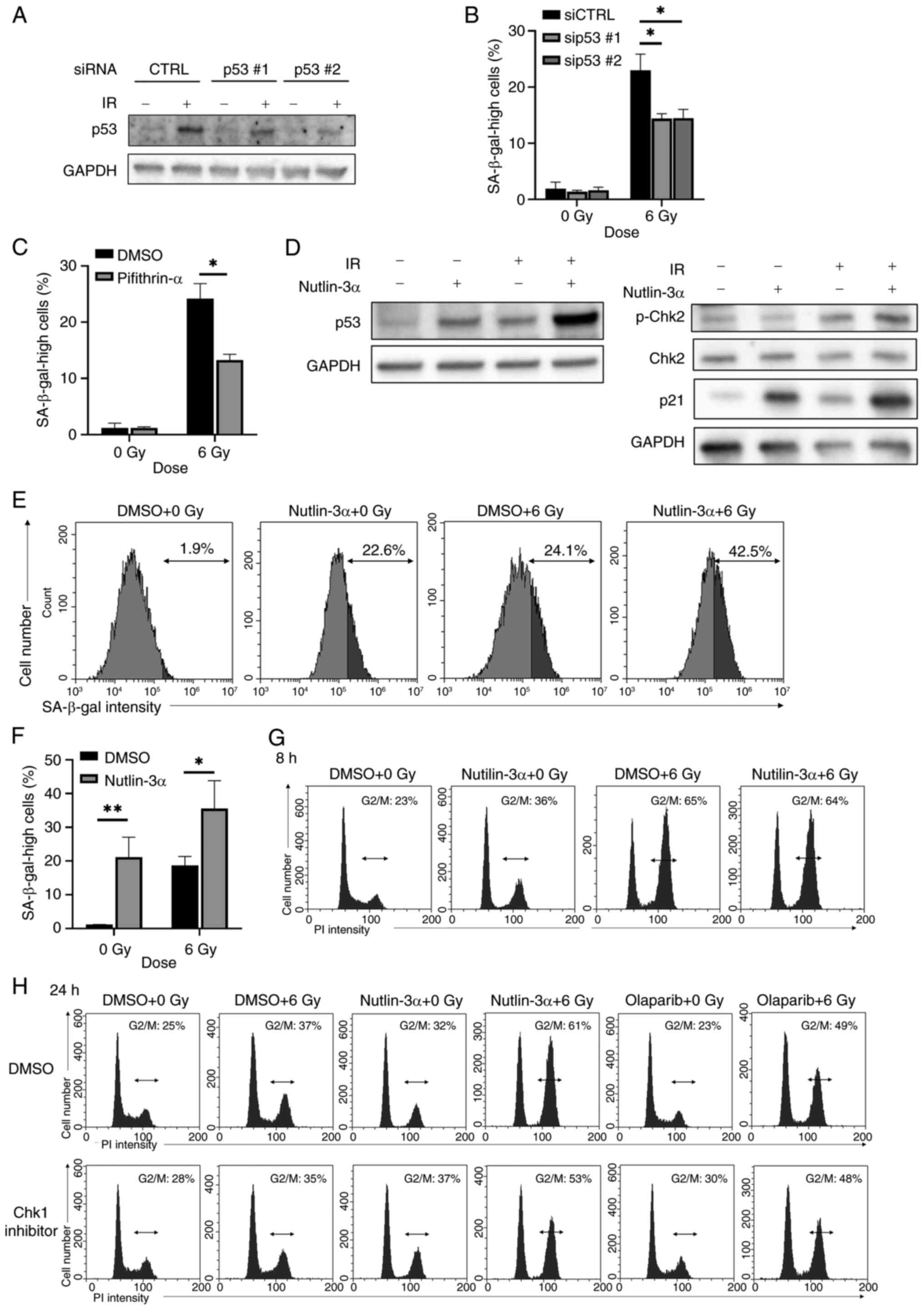
Figure 4

Effect of nutlin-3α on SA-β-gal
activity in irradiated A549 cells. (A) Representative immunoblot of
p53 in A549 cells transfected with siRNA targeting p53. (B)
p53-knockdown A549 cells were irradiated with X-rays. After 48 h,
SA-β-gal activity was analyzed. (C) Pifithrin-α treated cells were
irradiated with X-rays. After 48 h, SA-β-gal activity was analyzed.
(D) A549 cells treated with nutlin-3α were irradiated with X-rays.
After 1 day, the cells were harvested for western blotting. (E)
After 4 days, SA-β-gal activity was analyzed. (F) Proportion of
cells with high SA-β-gal activity. (G) A549 cells treated with
nutlin-3α were irradiated with X-rays. After 8 h, the cell cycle
distribution was analyzed. (H) A549 cells treated with nutlin-3α or
olaparib, in the absence or presence of a Chk1 inhibitor, were
irradiated with X-rays. After 24 h, the cell cycle distribution was
analyzed. P<0.05, **P<0.01. SA-β-gal,
senescence-associated β-galactosidase; Chk, checkpoint kinase; si,
small interfering; CTRL, control; p-, phosphorylated; IR, ionizing
radiation.

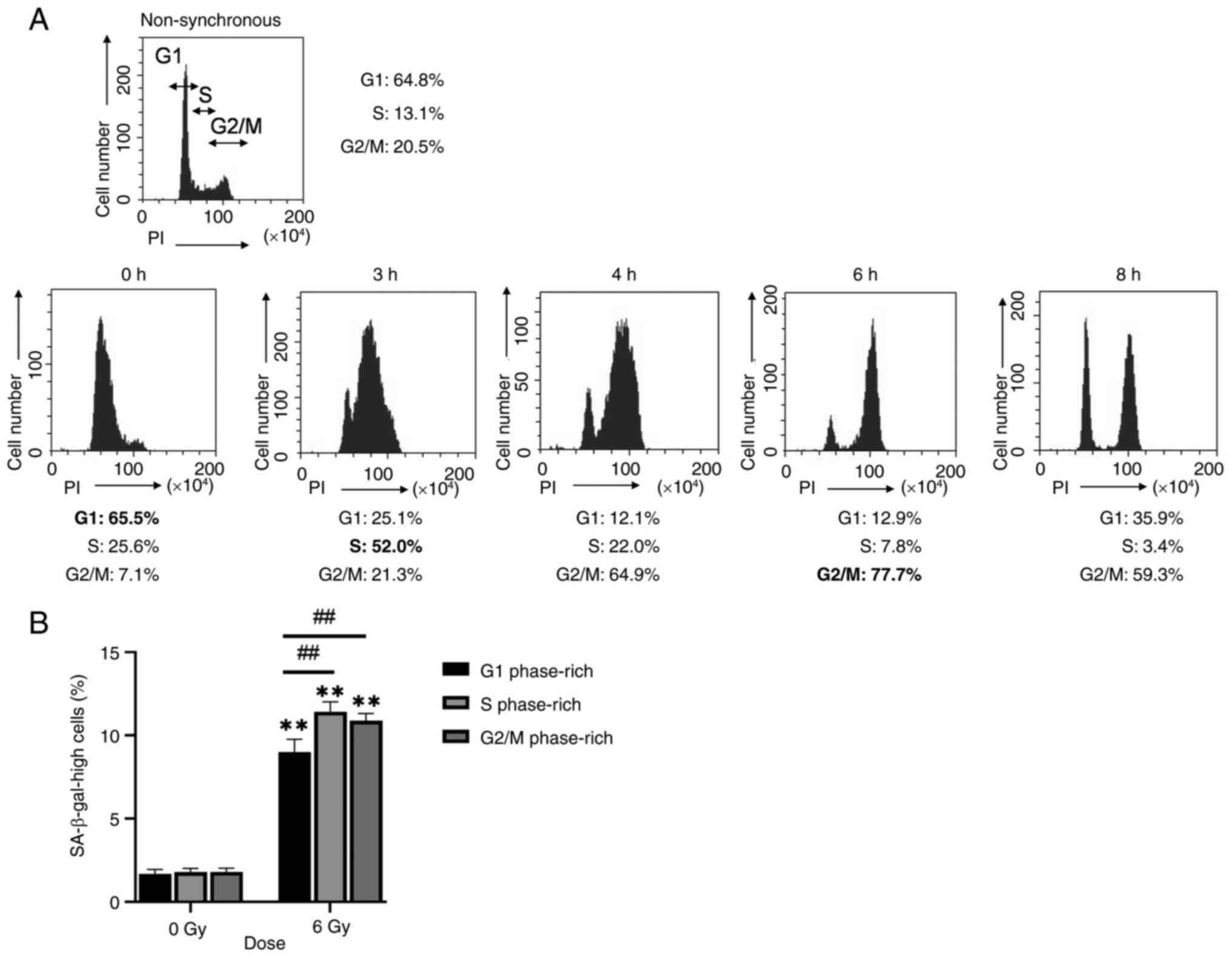
Figure 5

Effect of the cell cycle phase at the
time of irradiation on SA-β-gal activity in A549 cells. (A)
Following synchronization of the cell cycle by the double thymidine
block method, cell cycle analysis was performed at 0, 3, 4, 6 and 8
h. (B) Cells were irradiated with X-rays at 0 (G1 phase-rich), 3 (S
phase-rich) and 6 h (G2/M phase-rich) following cell cycle
synchronization. After 48 h, SA-β-gal activity was analyzed.
**P<0.01 vs. 0 Gy, ##P<0.01. SA-β-gal,
senescence-associated β-galactosidase.
View References

1 

Schaue D and McBride WH: Opportunities and challenges of radiotherapy for treating cancer. Nat Rev Clin Oncol. 12:527–540. 2015.PubMed/NCBI View Article : Google Scholar

2 

Toulany M: Targeting DNA double-strand break repair pathways to improve radiotherapy response. Genes (Basel). 10(25)2019.PubMed/NCBI View Article : Google Scholar

3 

Wilkinson B, Hill MA and Parsons JL: The cellular response to complex DNA damage induced by ionising radiation. Int J Mol Sci. 24(4920)2023.PubMed/NCBI View Article : Google Scholar

4 

Khan MGM and Wang Y: Advances in the current understanding of how low-dose radiation affects the cell cycle. Cells. 11(356)2022.PubMed/NCBI View Article : Google Scholar

5 

Balagurumoorthy P, Adelstein SJ and Kassis AI: Novel method for quantifying radiation-induced single-strand-break yields in plasmid DNA highlights 10-fold discrepancy. Anal Biochem. 417:242–246. 2011.PubMed/NCBI View Article : Google Scholar

6 

Weber AM and Ryan AJ: ATM and ATR as therapeutic targets in cancer. Pharmacol Ther. 149:124–138. 2015.PubMed/NCBI View Article : Google Scholar

7 

Li S, Wang L, Wang Y, Zhang C, Hong Z and Han Z: The synthetic lethality of targeting cell cycle checkpoints and PARPs in cancer treatment. J Hematol Oncol. 15(147)2022.PubMed/NCBI View Article : Google Scholar

8 

Rundle S, Bradbury A, Drew Y and Curtin NJ: Targeting the ATR-CHK1 axis in cancer therapy. Cancers (Basel). 9(41)2017.PubMed/NCBI View Article : Google Scholar

9 

Sia J, Szmyd R, Hau E and Gee HE: Molecular mechanisms of radiation-induced cancer cell death: A primer. Front Cell Dev Biol. 8(41)2020.PubMed/NCBI View Article : Google Scholar

10 

Shimono H, Kaida A, Homma H, Nojima H, Onozato Y, Harada H and Miura M: Fluctuation in radioresponse of HeLa cells during the cell cycle evaluated based on micronucleus frequency. Sci Rep. 10(20873)2020.PubMed/NCBI View Article : Google Scholar

11 

Sikora E, Bielak-Żmijewska A and Mosieniak G: What is and what is not cell senescence. Postepy Biochem. 64:110–118. 2018.PubMed/NCBI View Article : Google Scholar

12 

Ogrodnik M: Cellular aging beyond cellular senescence: Markers of senescence prior to cell cycle arrest in vitro and in vivo. Aging Cell. 20(e13338)2021.PubMed/NCBI View Article : Google Scholar

13 

Birch J and Gil J: Senescence and the SASP: Many therapeutic avenues. Genes Dev. 34:1565–1576. 2020.PubMed/NCBI View Article : Google Scholar

14 

Ewald JA, Desotelle JA, Wilding G and Jarrard DF: Therapy-induced senescence in cancer. J Natl Cancer Inst. 102:1536–1546. 2010.PubMed/NCBI View Article : Google Scholar

15 

Park B, Yee C and Lee KM: The effect of radiation on the immune response to cancers. Int J Mol Sci. 15:927–943. 2014.PubMed/NCBI View Article : Google Scholar

16 

Peng X, Wu Y, Brouwer U, van Vliet T, Wang B, Demaria M, Barazzuol L and Coppes RP: Cellular senescence contributes to radiation-induced hyposalivation by affecting the stem/progenitor cell niche. Cell Death Dis. 11(854)2020.PubMed/NCBI View Article : Google Scholar

17 

Tripathi U, Misra A, Tchkonia T and Kirkland JL: Impact of senescent cell subtypes on tissue dysfunction and repair: Importance and research questions. Mech Ageing Dev. 198(111548)2021.PubMed/NCBI View Article : Google Scholar

18 

Saliev T and Singh PB: Targeting senescence: A review of senolytics and senomorphics in anti-aging interventions. Biomolecules. 15(860)2025.PubMed/NCBI View Article : Google Scholar

19 

Czajkowski K, Herbet M, Murias M and Piątkowska-Chmiel I: Senolytics: Charting a new course or enhancing existing anti-tumor therapies? Cell Oncol (Dordr). 48:351–371. 2025.PubMed/NCBI View Article : Google Scholar

20 

Kim JH, Brown SL and Gordon MN: Radiation-induced senescence: Therapeutic opportunities. Radiat Oncol. 18(10)2023.PubMed/NCBI View Article : Google Scholar

21 

Lérida-Viso A, Estepa-Fernández A, Morellá-Aucejo Á, Lozano-Torres B, Alfonso M, Blandez JF, Bisbal V, Sepúlveda P, García-Fernández A, Orzáez M and Martínez-Máñez R: Pharmacological senolysis reduces doxorubicin-induced cardiotoxicity and improves cardiac function in mice. Pharmacol Res. 183(106356)2022.PubMed/NCBI View Article : Google Scholar

22 

Chang J, Wang Y, Shao L, Laberge RM, Demaria M, Campisi J, Janakiraman K, Sharpless NE, Ding S, Feng W, et al: Clearance of senescent cells by ABT263 rejuvenates aged hematopoietic stem cells in mice. Nat Med. 22:78–83. 2016.PubMed/NCBI View Article : Google Scholar

23 

Sato K, Iwasaki S and Yoshino H: Effects and related mechanisms of the senolytic agent ABT-263 on the survival of irradiated A549 and Ca9-22 cancer cells. Int J Mol Sci. 22(13233)2021.PubMed/NCBI View Article : Google Scholar

24 

Milanovic M, Fan DNY, Belenki D, Däbritz JHM, Zhao Z, Yu Y, Dörr JR, Dimitrova L, Lenze D, Monteiro Barbosa IA, et al: Senescence-associated reprogramming promotes cancer stemness. Nature. 553:96–100. 2018.PubMed/NCBI View Article : Google Scholar

25 

Zhu Y, Tchkonia T, Pirtskhalava T, Gower AC, Ding H, Giorgadze N, Palmer AK, Ikeno Y, Hubbard GB, Lenburg M, et al: The Achilles' heel of senescent cells: From transcriptome to senolytic drugs. Aging Cell. 14:644–658. 2015.PubMed/NCBI View Article : Google Scholar

26 

Guerrero A, Herranz N, Sun B, Wagner V, Gallage S, Guiho R, Wolter K, Pombo J, Irvine EE, Innes AJ, et al: Cardiac glycosides are broad-spectrum senolytics. Nat Metab. 1:1074–1088. 2019.PubMed/NCBI View Article : Google Scholar

27 

Wakasaya T, Yoshino H, Fukushi Y, Yoshizawa A and Kashiwakura I: A liquid crystal-related compound induces cell cycle arrest at the G2/M phase and apoptosis in the A549 human non-small cell lung cancer cell line. Int J Oncol. 42:1205–1211. 2013.PubMed/NCBI View Article : Google Scholar

28 

Yoshino H, Kumai Y and Kashiwakura I: Effects of endoplasmic reticulum stress on apoptosis induction in radioresistant macrophages. Mol Med Rep. 15:2867–2872. 2017.PubMed/NCBI View Article : Google Scholar

29 

Chen G and Deng X: Cell synchronization by double thymidine block. Bio Protoc. 8(e2994)2018.PubMed/NCBI View Article : Google Scholar

30 

Chatterjee N and Walker GC: Mechanisms of DNA damage, repair, and mutagenesis. Environ Mol Mutagen. 58:235–263. 2017.PubMed/NCBI View Article : Google Scholar

31 

Mateo J, Lord CJ, Serra V, Tutt A, Balmaña J, Castroviejo-Bermejo M, Cruz C, Oaknin A, Kaye SB and de Bono JS: A decade of clinical development of PARP inhibitors in perspective. Ann Oncol. 30:1437–1447. 2019.PubMed/NCBI View Article : Google Scholar

32 

Kuo LJ and Yang LX: Gamma-H2AX-a novel biomarker for DNA double-strand breaks. In Vivo. 22:305–309. 2008.PubMed/NCBI

33 

Serrano M, Lin AW, McCurrach ME, Beach D and Lowe SW: Oncogenic ras provokes premature cell senescence associated with accumulation of p53 and p16INK4a. Cell. 88:593–602. 1997.PubMed/NCBI View Article : Google Scholar

34 

Nagasaka M, Hashimoto R, Inoue Y, Ishiuchi K, Matsuno M, Itoh Y, Tokugawa M, Ohoka N, Morishita D, Mizukami H, et al: Anti-tumorigenic activity of chrysin from oroxylum indicum via non-genotoxic p53 activation through the ATM-Chk2 pathway. Molecules. 23(1394)2018.PubMed/NCBI View Article : Google Scholar

35 

Vassilev LT, Vu BT, Graves B, Carvajal D, Podlaski F, Filipovic Z, Kong N, Kammlott U, Lukacs C, Klein C, et al: In vivo activation of the p53 pathway by small-molecule antagonists of MDM2. Science. 303:844–848. 2004.PubMed/NCBI View Article : Google Scholar

36 

Schmitt CA, Wang B and Demaria M: Senescence and cancer-role and therapeutic opportunities. Nat Rev Clin Oncol. 19:619–636. 2022.PubMed/NCBI View Article : Google Scholar

37 

Kong P, Yang X, Zhang Y, Dong H, Liu X, Xu X, Zhang X, Shi Y, Hou M and Song B: Palbociclib enhances migration and invasion of cancer cells via senescence-associated secretory phenotype-related CCL5 in non-small-cell lung cancer. J Oncol. 2022(2260625)2022.PubMed/NCBI View Article : Google Scholar

38 

Nguyen HQ, To NH, Zadigue P, Kerbrat S, De La Taille A, Le Gouvello S and Belkacemi Y: Ionizing radiation-induced cellular senescence promotes tissue fibrosis after radiotherapy. A review. Crit Rev Oncol Hematol. 129:13–26. 2018.PubMed/NCBI View Article : Google Scholar

39 

Lee JY, Reyes NS, Ravishankar S, Zhou M, Krasilnikov M, Ringler C, Pohan G, Wilson C, Ang KKH, Wolters PJ, et al: An in vivo screening platform identifies senolytic compounds that target p16INK4a+ fibroblasts in lung fibrosis. J Clin Invest. 134(e173371)2024.PubMed/NCBI View Article : Google Scholar

40 

Zannini L, Delia D and Buscemi G: CHK2 kinase in the DNA damage response and beyond. J Mol Cell Biol. 6:442–457. 2014.PubMed/NCBI View Article : Google Scholar

41 

Arienti KL, Brunmark A, Axe FU, McClure K, Lee A, Blevitt J, Neff DK, Huang L, Crawford S, Pandit CR, et al: Checkpoint kinase inhibitors: SAR and radioprotective properties of a series of 2-arylbenzimidazoles. J Med Chem. 48:1873–1885. 2005.PubMed/NCBI View Article : Google Scholar

42 

Strzeszewska A, Alster O, Mosieniak G, Ciolko A and Sikora E: Insight into the role of PIKK family members and NF-кB in DNAdamage-induced senescence and senescence-associated secretory phenotype of colon cancer cells. Cell Death Dis. 9(44)2018.PubMed/NCBI View Article : Google Scholar

43 

Zhao J, Zhang L, Lu A, Han Y, Colangelo D, Bukata C, Scibetta A, Yousefzadeh MJ, Li X, Gurkar AU, et al: ATM is a key driver of NF-κB-dependent DNA-damage-induced senescence, stem cell dysfunction and aging. Aging (Albany NY). 12:4688–4710. 2020.PubMed/NCBI View Article : Google Scholar

44 

Kang C, Xu Q, Martin TD, Li MZ, Demaria M, Aron L, Lu T, Yankner BA, Campisi J and Elledge SJ: The DNA damage response induces inflammation and senescence by inhibiting autophagy of GATA4. Science. 349(aaa5612)2015.PubMed/NCBI View Article : Google Scholar

45 

Nayak D, Kumar A, Chakraborty S, Rasool RU, Amin H, Katoch A, Gopinath V, Mahajan V, Zilla MK, Rah B, et al: Inhibition of Twist1-mediated invasion by Chk2 promotes premature senescence in p53-defective cancer cells. Cell Death Differ. 24:1275–1287. 2017.PubMed/NCBI View Article : Google Scholar

46 

Gire V, Roux P, Wynford-Thomas D, Brondello JM and Dulic V: DNA damage checkpoint kinase Chk2 triggers replicative senescence. EMBO J. 23:2554–2563. 2004.PubMed/NCBI View Article : Google Scholar

47 

Nakao M, Tanaka H and Koga T: Cellular senescence variation by metabolic and epigenomic remodeling. Trends Cell Biol. 30:919–922. 2020.PubMed/NCBI View Article : Google Scholar

48 

Bartek J and Lukas J: DNA damage checkpoints: From initiation to recovery or adaptation. Curr Opin Cell Biol. 19:238–245. 2007.PubMed/NCBI View Article : Google Scholar

49 

Stracker TH, Usui T and Petrini JHJ: Taking the time to make important decisions: The checkpoint effector kinases Chk1 and Chk2 and the DNA damage response. DNA Repair (Amst). 8:1047–1054. 2009.PubMed/NCBI View Article : Google Scholar

50 

Kandhaya-Pillai R, Miro-Mur F, Alijotas-Reig J, Tchkonia T, Schwartz S, Kirkland JL and Oshima J: Key elements of cellular senescence involve transcriptional repression of mitotic and DNA repair genes through the p53-p16/RB-E2F-DREAM complex. Aging (Albany NY). 15:4012–4034. 2023.PubMed/NCBI View Article : Google Scholar

51 

Ha L, Ceryak S and Patierno SR: Chromium (VI) activates ataxia telangiectasia mutated (ATM) protein. Requirement of ATM for both apoptosis and recovery from terminal growth arrest. J Biol Chem. 278:17885–17894. 2003.PubMed/NCBI View Article : Google Scholar

52 

Huart C, Fransolet M, Demazy C, Le Calvé B, Lucas S, Michiels C and Wéra AC: Taking advantage of the senescence-promoting effect of olaparib after X-ray and proton irradiation using the senolytic drug, ABT-263. Cancers (Basel). 14(1460)2022.PubMed/NCBI View Article : Google Scholar

53 

Bunz F, Dutriaux A, Lengauer C, Waldman T, Zhou S, Brown JP, Sedivy JM, Kinzler KW and Vogelstein B: Requirement for p53 and p21 to sustain G2 arrest after DNA damage. Science. 282:1497–1501. 1998.PubMed/NCBI View Article : Google Scholar

54 

Kastan MB and Bartek J: Cell-cycle checkpoints and cancer. Nature. 432:316–323. 2004.PubMed/NCBI View Article : Google Scholar

55 

Fennell DA, Porter C, Lester J, Danson S, Blackhall F, Nicolson M, Nixon L, Gardner G, White A, Griffiths G and Casbard A: Olaparib maintenance versus placebo monotherapy in patients with advanced non-small cell lung cancer (PIN): A multicentre, randomised, controlled, phase 2 trial. EClinicalMedicine. 52(101595)2022.PubMed/NCBI View Article : Google Scholar

56 

Woll P, Gaunt P, Danson S, Steele N, Ahmed S, Mulatero C, Shah R, Bhosle J, Hodgkinson E, Watkins B and Billingham L: Olaparib as maintenance treatment in patients with chemosensitive small cell lung cancer (STOMP): A randomised, double-blind, placebo-controlled phase II trial. Lung Cancer. 171:26–33. 2022.PubMed/NCBI View Article : Google Scholar

57 

Senra JM, Telfer BA, Cherry KE, McCrudden CM, Hirst DG, O'Connor MJ, Wedge SR and Stratford IJ: Inhibition of PARP-1 by olaparib (AZD2281) increases the radiosensitivity of a lung tumor xenograft. Mol Cancer Ther. 10:1949–1958. 2011.PubMed/NCBI View Article : Google Scholar

58 

Jiang Y, Verbiest T, Devery AM, Bokobza SM, Weber AM, Leszczynska KB, Hammond EM and Ryan AJ: Hypoxia potentiates the radiation-sensitizing effect of olaparib in human non-small cell lung cancer xenografts by contextual synthetic lethality. Int J Radiat Oncol Biol Phys. 95:772–781. 2016.PubMed/NCBI View Article : Google Scholar

59 

Coppé JP, Desprez PY, Krtolica A and Campisi J: The senescence-associated secretory phenotype: The dark side of tumor suppression. Annu Rev Pathol. 5:99–118. 2010.PubMed/NCBI View Article : Google Scholar

60 

Soto-Gamez A and Demaria M: Therapeutic interventions for aging: The case of cellular senescence. Drug Discov Today. 22:786–795. 2017.PubMed/NCBI View Article : Google Scholar

61 

Hsu CH, Altschuler SJ and Wu LF: Patterns of early p21 dynamics determine proliferation-senescence cell fate after chemotherapy. Cell. 178:361–373.e12. 2019.PubMed/NCBI View Article : Google Scholar

62 

Manila NG, Kaida A and Miura M: Kinetic analysis of radiation-induced cell-cycle alterations in HeLa cells expressing fluorescent ubiquitination-based cell cycle indicator (Fucci). Radiat Environ Med. 5:16–21. 2016.

63 

Humar B, Müller H and Scott RJ: Cell cycle dependent DNA break increase in ataxia telangiectasia lymphoblasts after radiation exposure. Mol Pathol. 54:347–350. 2001.PubMed/NCBI View Article : Google Scholar

Related Articles

  • Abstract
  • View
  • Download
  • Twitter
Copy and paste a formatted citation
Spandidos Publications style
Sato K, Yoshino H, Sato Y, Sasaki F, Munakata N and Tsuruga E: Impact of the ATM/Chk2 pathway and cell cycle phase on radiation‑induced senescence in A549 human lung cancer cells. Biomed Rep 23: 169, 2025.
APA
Sato, K., Yoshino, H., Sato, Y., Sasaki, F., Munakata, N., & Tsuruga, E. (2025). Impact of the ATM/Chk2 pathway and cell cycle phase on radiation‑induced senescence in A549 human lung cancer cells. Biomedical Reports, 23, 169. https://doi.org/10.3892/br.2025.2047
MLA
Sato, K., Yoshino, H., Sato, Y., Sasaki, F., Munakata, N., Tsuruga, E."Impact of the ATM/Chk2 pathway and cell cycle phase on radiation‑induced senescence in A549 human lung cancer cells". Biomedical Reports 23.5 (2025): 169.
Chicago
Sato, K., Yoshino, H., Sato, Y., Sasaki, F., Munakata, N., Tsuruga, E."Impact of the ATM/Chk2 pathway and cell cycle phase on radiation‑induced senescence in A549 human lung cancer cells". Biomedical Reports 23, no. 5 (2025): 169. https://doi.org/10.3892/br.2025.2047
Copy and paste a formatted citation
x
Spandidos Publications style
Sato K, Yoshino H, Sato Y, Sasaki F, Munakata N and Tsuruga E: Impact of the ATM/Chk2 pathway and cell cycle phase on radiation‑induced senescence in A549 human lung cancer cells. Biomed Rep 23: 169, 2025.
APA
Sato, K., Yoshino, H., Sato, Y., Sasaki, F., Munakata, N., & Tsuruga, E. (2025). Impact of the ATM/Chk2 pathway and cell cycle phase on radiation‑induced senescence in A549 human lung cancer cells. Biomedical Reports, 23, 169. https://doi.org/10.3892/br.2025.2047
MLA
Sato, K., Yoshino, H., Sato, Y., Sasaki, F., Munakata, N., Tsuruga, E."Impact of the ATM/Chk2 pathway and cell cycle phase on radiation‑induced senescence in A549 human lung cancer cells". Biomedical Reports 23.5 (2025): 169.
Chicago
Sato, K., Yoshino, H., Sato, Y., Sasaki, F., Munakata, N., Tsuruga, E."Impact of the ATM/Chk2 pathway and cell cycle phase on radiation‑induced senescence in A549 human lung cancer cells". Biomedical Reports 23, no. 5 (2025): 169. https://doi.org/10.3892/br.2025.2047
Follow us
  • Twitter
  • LinkedIn
  • Facebook
About
  • Spandidos Publications
  • Careers
  • Cookie Policy
  • Privacy Policy
How can we help?
  • Help
  • Live Chat
  • Contact
  • Email to our Support Team