Spandidos Publications Logo
  • About
    • About Spandidos
    • Aims and Scopes
    • Abstracting and Indexing
    • Editorial Policies
    • Reprints and Permissions
    • Job Opportunities
    • Terms and Conditions
    • Contact
  • Journals
    • All Journals
    • Oncology Letters
      • Oncology Letters
      • Information for Authors
      • Editorial Policies
      • Editorial Board
      • Aims and Scope
      • Abstracting and Indexing
      • Bibliographic Information
      • Archive
    • International Journal of Oncology
      • International Journal of Oncology
      • Information for Authors
      • Editorial Policies
      • Editorial Board
      • Aims and Scope
      • Abstracting and Indexing
      • Bibliographic Information
      • Archive
    • Molecular and Clinical Oncology
      • Molecular and Clinical Oncology
      • Information for Authors
      • Editorial Policies
      • Editorial Board
      • Aims and Scope
      • Abstracting and Indexing
      • Bibliographic Information
      • Archive
    • Experimental and Therapeutic Medicine
      • Experimental and Therapeutic Medicine
      • Information for Authors
      • Editorial Policies
      • Editorial Board
      • Aims and Scope
      • Abstracting and Indexing
      • Bibliographic Information
      • Archive
    • International Journal of Molecular Medicine
      • International Journal of Molecular Medicine
      • Information for Authors
      • Editorial Policies
      • Editorial Board
      • Aims and Scope
      • Abstracting and Indexing
      • Bibliographic Information
      • Archive
    • Biomedical Reports
      • Biomedical Reports
      • Information for Authors
      • Editorial Policies
      • Editorial Board
      • Aims and Scope
      • Abstracting and Indexing
      • Bibliographic Information
      • Archive
    • Oncology Reports
      • Oncology Reports
      • Information for Authors
      • Editorial Policies
      • Editorial Board
      • Aims and Scope
      • Abstracting and Indexing
      • Bibliographic Information
      • Archive
    • Molecular Medicine Reports
      • Molecular Medicine Reports
      • Information for Authors
      • Editorial Policies
      • Editorial Board
      • Aims and Scope
      • Abstracting and Indexing
      • Bibliographic Information
      • Archive
    • World Academy of Sciences Journal
      • World Academy of Sciences Journal
      • Information for Authors
      • Editorial Policies
      • Editorial Board
      • Aims and Scope
      • Abstracting and Indexing
      • Bibliographic Information
      • Archive
    • International Journal of Functional Nutrition
      • International Journal of Functional Nutrition
      • Information for Authors
      • Editorial Policies
      • Editorial Board
      • Aims and Scope
      • Abstracting and Indexing
      • Bibliographic Information
      • Archive
    • International Journal of Epigenetics
      • International Journal of Epigenetics
      • Information for Authors
      • Editorial Policies
      • Editorial Board
      • Aims and Scope
      • Abstracting and Indexing
      • Bibliographic Information
      • Archive
    • Medicine International
      • Medicine International
      • Information for Authors
      • Editorial Policies
      • Editorial Board
      • Aims and Scope
      • Abstracting and Indexing
      • Bibliographic Information
      • Archive
  • Articles
  • Information
    • Information for Authors
    • Information for Reviewers
    • Information for Librarians
    • Information for Advertisers
    • Conferences
  • Language Editing
Spandidos Publications Logo
  • About
    • About Spandidos
    • Aims and Scopes
    • Abstracting and Indexing
    • Editorial Policies
    • Reprints and Permissions
    • Job Opportunities
    • Terms and Conditions
    • Contact
  • Journals
    • All Journals
    • Biomedical Reports
      • Information for Authors
      • Editorial Policies
      • Editorial Board
      • Aims and Scope
      • Abstracting and Indexing
      • Bibliographic Information
      • Archive
    • Experimental and Therapeutic Medicine
      • Information for Authors
      • Editorial Policies
      • Editorial Board
      • Aims and Scope
      • Abstracting and Indexing
      • Bibliographic Information
      • Archive
    • International Journal of Epigenetics
      • Information for Authors
      • Editorial Policies
      • Editorial Board
      • Aims and Scope
      • Abstracting and Indexing
      • Bibliographic Information
      • Archive
    • International Journal of Functional Nutrition
      • Information for Authors
      • Editorial Policies
      • Editorial Board
      • Aims and Scope
      • Abstracting and Indexing
      • Bibliographic Information
      • Archive
    • International Journal of Molecular Medicine
      • Information for Authors
      • Editorial Policies
      • Editorial Board
      • Aims and Scope
      • Abstracting and Indexing
      • Bibliographic Information
      • Archive
    • International Journal of Oncology
      • Information for Authors
      • Editorial Policies
      • Editorial Board
      • Aims and Scope
      • Abstracting and Indexing
      • Bibliographic Information
      • Archive
    • Medicine International
      • Information for Authors
      • Editorial Policies
      • Editorial Board
      • Aims and Scope
      • Abstracting and Indexing
      • Bibliographic Information
      • Archive
    • Molecular and Clinical Oncology
      • Information for Authors
      • Editorial Policies
      • Editorial Board
      • Aims and Scope
      • Abstracting and Indexing
      • Bibliographic Information
      • Archive
    • Molecular Medicine Reports
      • Information for Authors
      • Editorial Policies
      • Editorial Board
      • Aims and Scope
      • Abstracting and Indexing
      • Bibliographic Information
      • Archive
    • Oncology Letters
      • Information for Authors
      • Editorial Policies
      • Editorial Board
      • Aims and Scope
      • Abstracting and Indexing
      • Bibliographic Information
      • Archive
    • Oncology Reports
      • Information for Authors
      • Editorial Policies
      • Editorial Board
      • Aims and Scope
      • Abstracting and Indexing
      • Bibliographic Information
      • Archive
    • World Academy of Sciences Journal
      • Information for Authors
      • Editorial Policies
      • Editorial Board
      • Aims and Scope
      • Abstracting and Indexing
      • Bibliographic Information
      • Archive
  • Articles
  • Information
    • For Authors
    • For Reviewers
    • For Librarians
    • For Advertisers
    • Conferences
  • Language Editing
Login Register Submit
  • This site uses cookies
  • You can change your cookie settings at any time by following the instructions in our Cookie Policy. To find out more, you may read our Privacy Policy.

    I agree
Search articles by DOI, keyword, author or affiliation
Search
Advanced Search
presentation
Biomedical Reports
Join Editorial Board Propose a Special Issue
Print ISSN: 2049-9434 Online ISSN: 2049-9442
Journal Cover
January-2026 Volume 24 Issue 1

Full Size Image

Sign up for eToc alerts
Recommend to Library

Journals

International Journal of Molecular Medicine

International Journal of Molecular Medicine

International Journal of Molecular Medicine is an international journal devoted to molecular mechanisms of human disease.

International Journal of Oncology

International Journal of Oncology

International Journal of Oncology is an international journal devoted to oncology research and cancer treatment.

Molecular Medicine Reports

Molecular Medicine Reports

Covers molecular medicine topics such as pharmacology, pathology, genetics, neuroscience, infectious diseases, molecular cardiology, and molecular surgery.

Oncology Reports

Oncology Reports

Oncology Reports is an international journal devoted to fundamental and applied research in Oncology.

Experimental and Therapeutic Medicine

Experimental and Therapeutic Medicine

Experimental and Therapeutic Medicine is an international journal devoted to laboratory and clinical medicine.

Oncology Letters

Oncology Letters

Oncology Letters is an international journal devoted to Experimental and Clinical Oncology.

Biomedical Reports

Biomedical Reports

Explores a wide range of biological and medical fields, including pharmacology, genetics, microbiology, neuroscience, and molecular cardiology.

Molecular and Clinical Oncology

Molecular and Clinical Oncology

International journal addressing all aspects of oncology research, from tumorigenesis and oncogenes to chemotherapy and metastasis.

World Academy of Sciences Journal

World Academy of Sciences Journal

Multidisciplinary open-access journal spanning biochemistry, genetics, neuroscience, environmental health, and synthetic biology.

International Journal of Functional Nutrition

International Journal of Functional Nutrition

Open-access journal combining biochemistry, pharmacology, immunology, and genetics to advance health through functional nutrition.

International Journal of Epigenetics

International Journal of Epigenetics

Publishes open-access research on using epigenetics to advance understanding and treatment of human disease.

Medicine International

Medicine International

An International Open Access Journal Devoted to General Medicine.

Journal Cover
January-2026 Volume 24 Issue 1

Full Size Image

Sign up for eToc alerts
Recommend to Library

  • Article
  • Citations
    • Cite This Article
    • Download Citation
    • Create Citation Alert
    • Remove Citation Alert
    • Cited By
  • Similar Articles
    • Related Articles (in Spandidos Publications)
    • Similar Articles (Google Scholar)
    • Similar Articles (PubMed)
  • Download PDF
  • Download XML
  • View XML

  • Supplementary Files
    • Supplementary_Data1.pdf
    • Supplementary_Data2.pdf
    • Supplementary_Data3.xlsx
Article Open Access

Hesperadin sensitizes gastric cancer cells to cisplatin via NOX1‑dependent oxidative stress

  • Authors:
    • Wanjing Zhu
    • Qiyin Li
    • Zhenglei Ji
    • Di Wu
    • Jingya Chen
    • Yunli Zhao
    • Huazhang Wu
  • View Affiliations / Copyright

    Affiliations: School of Life Science, Anhui Provincial Key Laboratory of Tumor Evolution and Intelligent Diagnosis and Treatment, Bengbu Medical University, Bengbu, Anhui 233030, P.R. China, School of Public Health, Bengbu Medical University, Bengbu, Anhui 233030, P.R. China
    Copyright: © Zhu et al. This is an open access article distributed under the terms of Creative Commons Attribution License.
  • Article Number: 3
    |
    Published online on: October 27, 2025
       https://doi.org/10.3892/br.2025.2076
  • Expand metrics +
Metrics: Total Views: 0 (Spandidos Publications: | PMC Statistics: )
Metrics: Total PDF Downloads: 0 (Spandidos Publications: | PMC Statistics: )
Cited By (CrossRef): 0 citations Loading Articles...

This article is mentioned in:


Abstract

The therapeutic efficacy of cisplatin in gastric cancer (GC) is frequently constrained by chemoresistance and systemic toxicity. Targeted small molecules hold promise for providing synergistic effects that enhance treatment outcomes. GC cell viability was assessed via a Cell Counting Kit‑8 (CCK‑8) assay. Apoptosis, intracellular reactive oxygen species (ROS) levels, and the mitochondrial membrane potential were evaluated via flow cytometry and JC‑1 staining. Transcriptomic analysis [RNA‑sequencing (RNA‑Seq)] was subsequently conducted to identify differentially regulated pathways, followed by validation via reverse transcription‑quantitative PCR and western blotting. DNA damage was measured by γ‑H2AX immunofluorescence, and clonogenic survival was examined. The NOX1‑specific inhibitor ML171 was used to verify its mechanistic involvement. Hesperadin markedly suppressed GC cell proliferation in a dose‑dependent manner and induced mitochondrial apoptosis by regulating the Bcl‑2/Bax ratio and activating caspase pathways. RNA‑Seq analysis revealed significant upregulation of NOX1 and activation of oxidative stress‑associated pathways following Hesperadin treatment. Cotreatment with Hesperadin and cisplatin markedly reduced the IC50 of cisplatin, increased ROS accumulation, aggravated DNA damage, and potentiated apoptotic cell death. Notably, ML171 attenuated ROS generation and apoptotic effects, confirming the occurrence of a NOX1‑dependent mechanism. In conclusion, Hesperadin enhances the sensitivity of GC cells to cisplatin by inducing NOX1‑mediated oxidative stress and promoting mitochondrial dysfunction‑driven apoptosis, underscoring its potential as an effective combinatorial therapeutic strategy for GC treatment.
View Figures

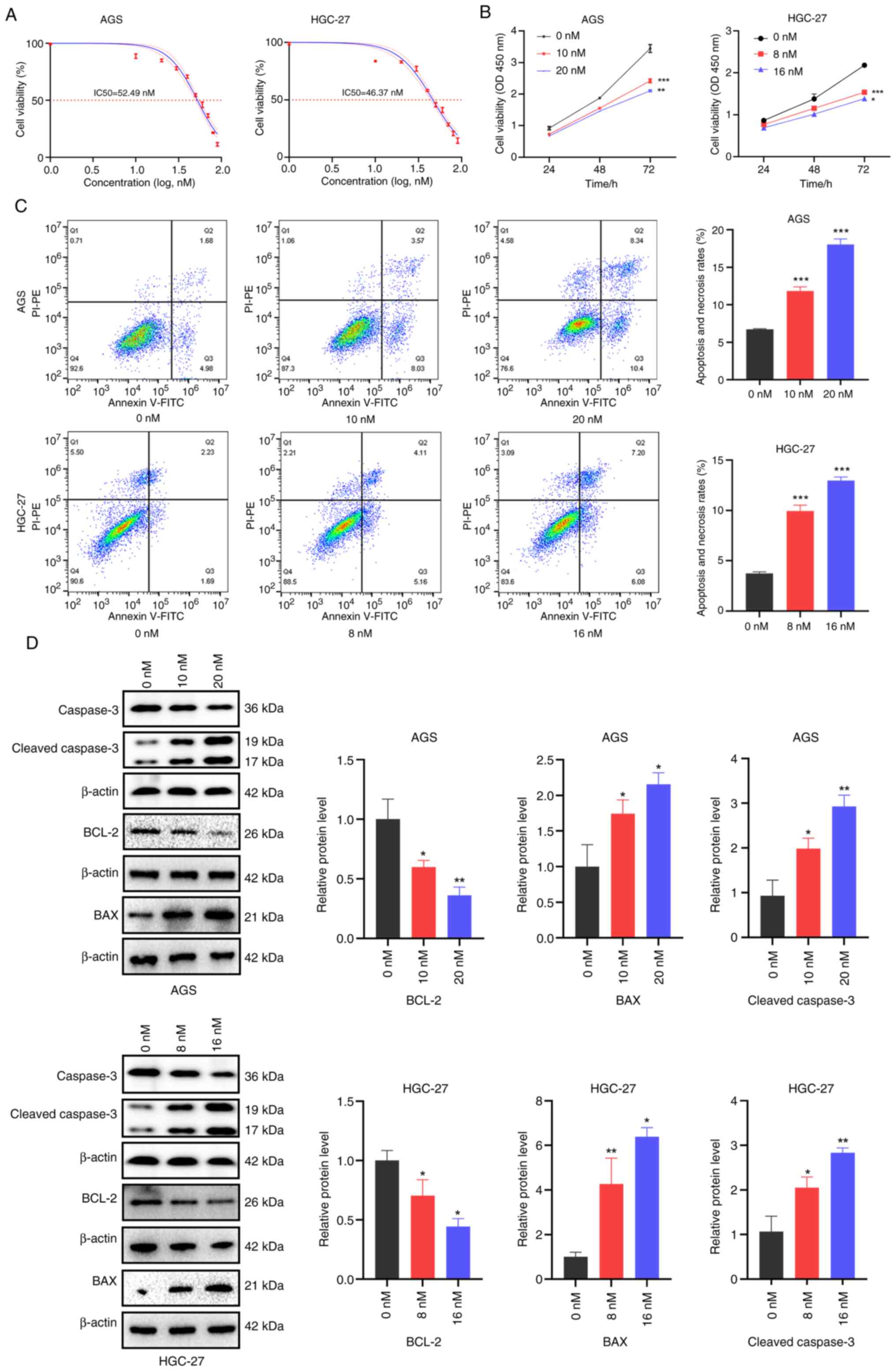
Figure 1

Hesperadin inhibits proliferation and
induces death in gastric cancer cells. (A) After the cells were
treated with graded concentrations of hesperadin (0, 10, 20, 30,
40, 50, 60, 70, 80 and 90 nM) for 48 h, cell viability was assessed
via the CCK-8 assay, and the IC50 was calculated. (B) A
CCK-8 assay was used to evaluate the viability of AGS and HGC-27
cells following 24, 48 and 72 h of Hesperadin treatment. (C) Flow
cytometric analysis was conducted to assess cell mortality after 48
h of Hesperadin treatment. (D) The expression levels of the
apoptosis-related proteins BCL-2, BAX and cleaved caspase-3 were
analyzed via western blotting. β-ACTIN was used as a loading
control. Compared with the control group, the high-concentration
group was compared with the low-concentration group;
*P<0.05, **P<0.01 and
***P<0.001. CCK-8, Cell Counting Kit.

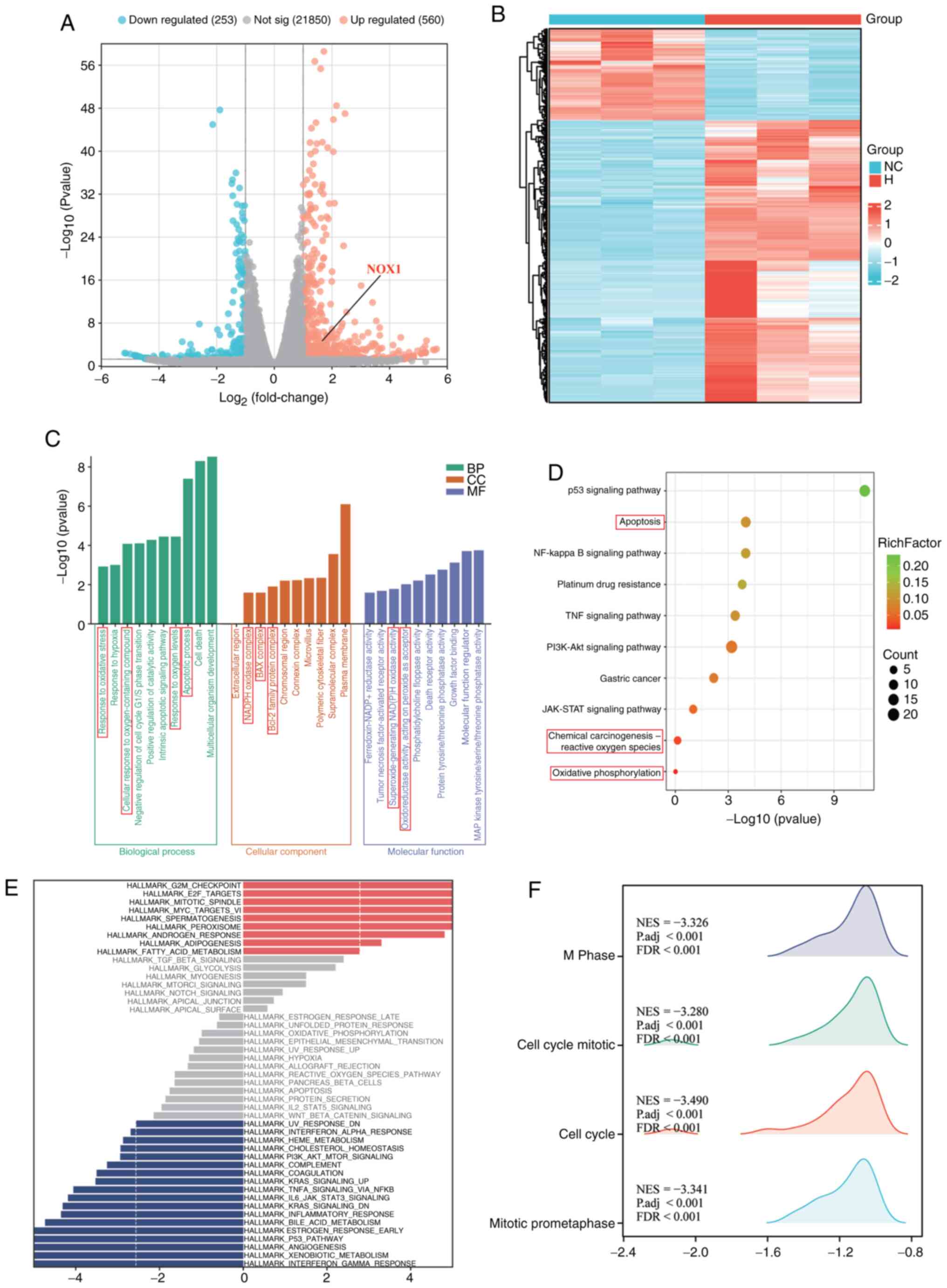
Figure 2

Transcriptomic analysis of
Hesperadin-induced model cell lines. (A) Volcano plot showing the
DEGs. (B) Heatmap illustration of significant DEGs. (C) Gene
Ontology enrichment analysis of DEGs. (D) Kyoto Encyclopedia of
Genes and Genomes pathway enrichment analysis of DEGs. (E) GSEA of
DEGs. (F) GSVA enrichment analysis. DEGs, differentially expressed
genes; GSEA, gene set enrichment analysis; GSVA, gene set variation
analysis; FDR, false discovery rate.

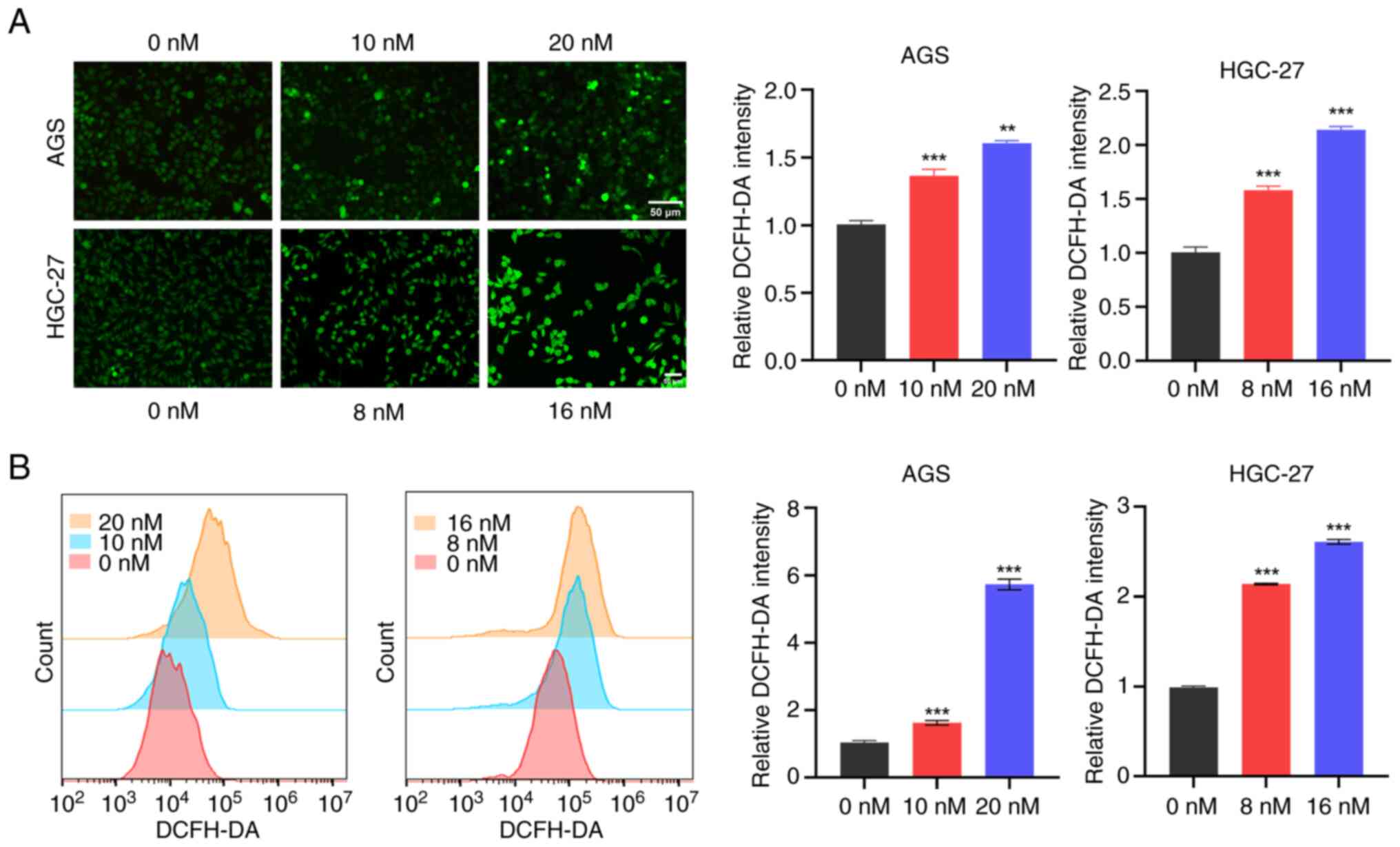
Figure 3

Hesperadin induces cell death in GC
cells by activating oxidative stress via ROS generation. (A)
DCFH-DA fluorescence staining was utilized to measure the
production of ROS in GC cells following Hesperadin treatment (green
fluorescence indicates ROS; scale bar, 50 µm). (B) Flow cytometry
was used to quantify the ROS levels (shown as the mean DCF
fluorescence intensity) in the groups treated with Hesperadin.
Compared with the control group, the high-concentration group was
compared with the low-concentration group; **P<0.01
and ***P<0.001. GC, gastric cancer; ROS, reactive
oxygen species.

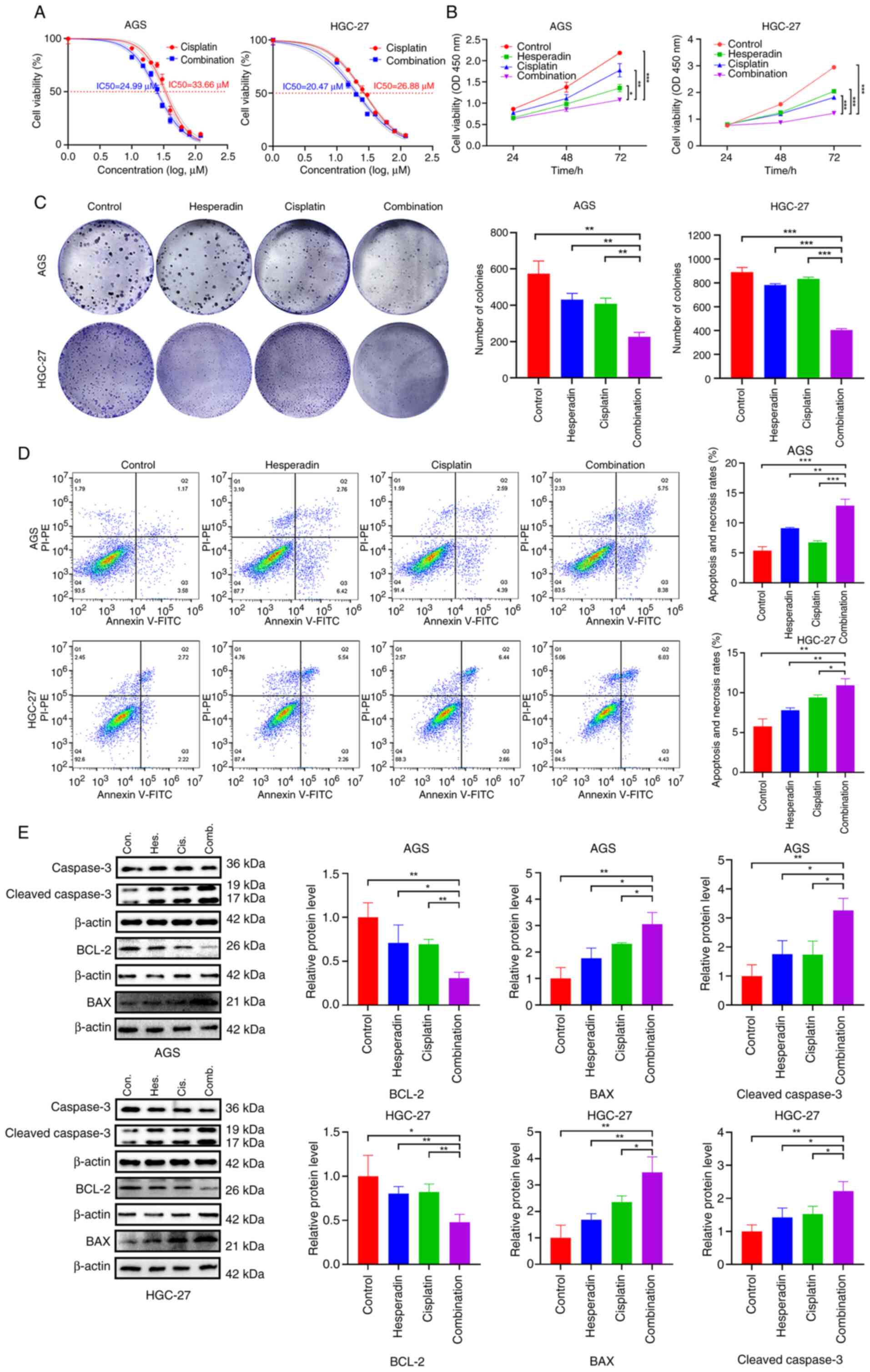
Figure 4

Hesperadin enhances the sensitivity
of gastric cancer cells to cisplatin. (A) Changes in the
IC50 of cisplatin in AGS and HGC-27 cells after 48 h of
cotreatment with Hesperadin (10 nM) and various concentrations of
cisplatin (0, 10, 15, 20, 25, 30, 40, 60, 80, or 120 nM). (B) Cell
Counting Kit-8 assay for cell viability after 24, 48 and 72 h of
cotreatment with Hesperadin and cisplatin. (C) Colony formation
assay to assess the ability of cells to form colonies after 10 days
of cotreatment. (D) Flow cytometric analysis showing cell mortality
after cotreatment with Hesperadin and cisplatin. (E) Western blot
analysis was used to evaluate the expression of apoptosis-related
proteins (BCL-2, BAX and cleaved caspase-3). β-ACTIN was used as a
loading control. Hesperadin concentrations were 20 nM for AGS cells
and 16 nM for HGC-27 cells, whereas cisplatin concentrations were
10 µM for AGS cells and 8 µM for HGC-27 cells. Compared with all
the other groups (Control, Hes. alone, Cis. alone);
*P<0.05, **P<0.01 and
***P<0.001. Con., Control; Hes., Hesperadin; Cis.,
Cisplatin; Comb., Combination.

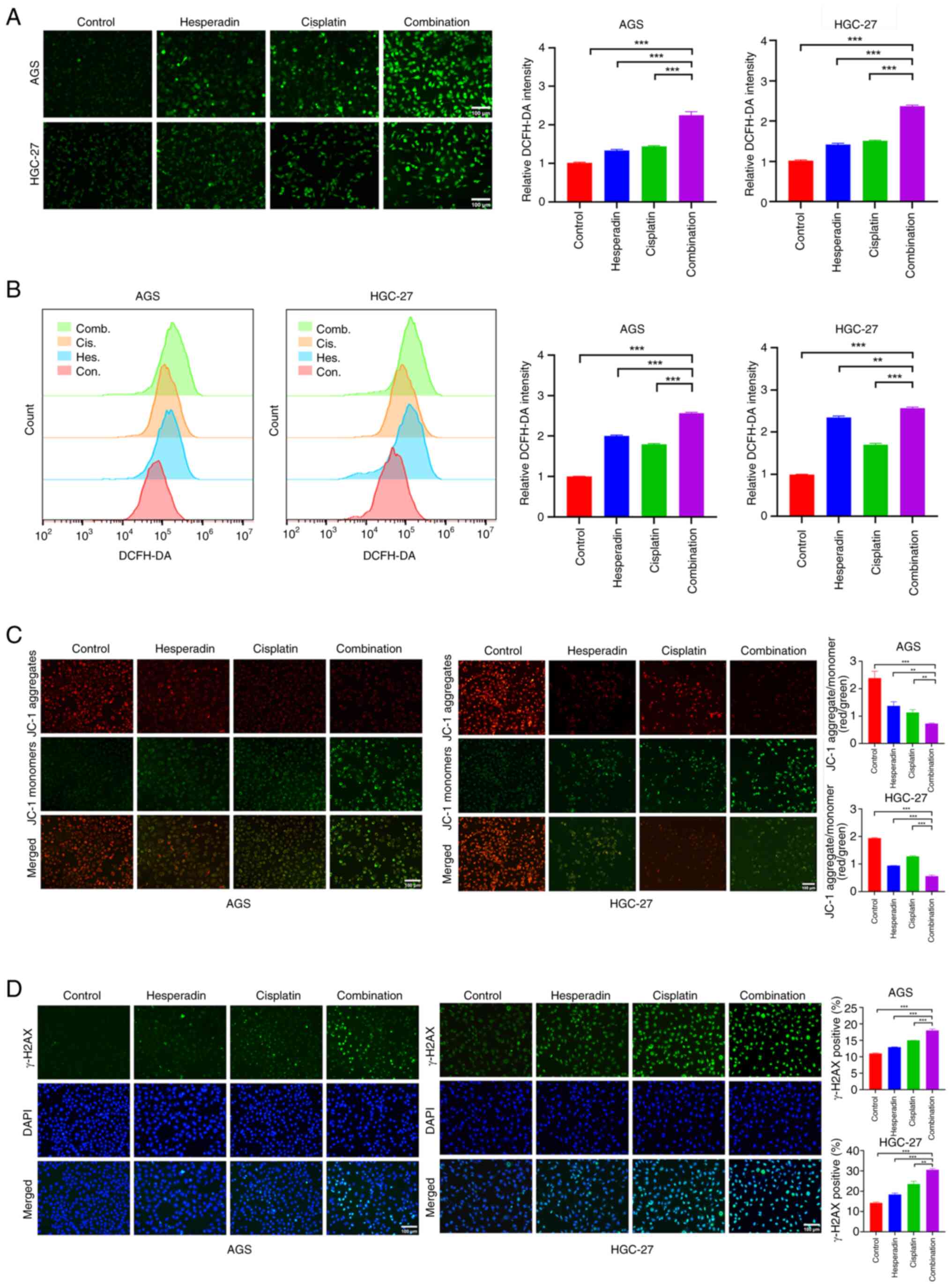
Figure 5

Hesperadin increases the sensitivity
of gastric cancer cells to cisplatin via oxidative stress. (A)
DCFH-DA fluorescence staining (green fluorescence represents ROS)
showing changes in ROS levels following treatment with Hesperadin
and cisplatin. (B) Quantification of ROS levels by flow cytometry.
(C) JC-1 fluorescence staining was used to detect changes in the
MMP. (D) γ-H2AX fluorescence staining was used to measure the level
of DNA damage (blue: nuclei; green: γ-H2AX); (scale bar, 100 µm).
Compared with all the other groups (Control, Hes. alone, Cis.
alone); **P<0.01 and ***P<0.001. ROS,
reactive oxygen species.

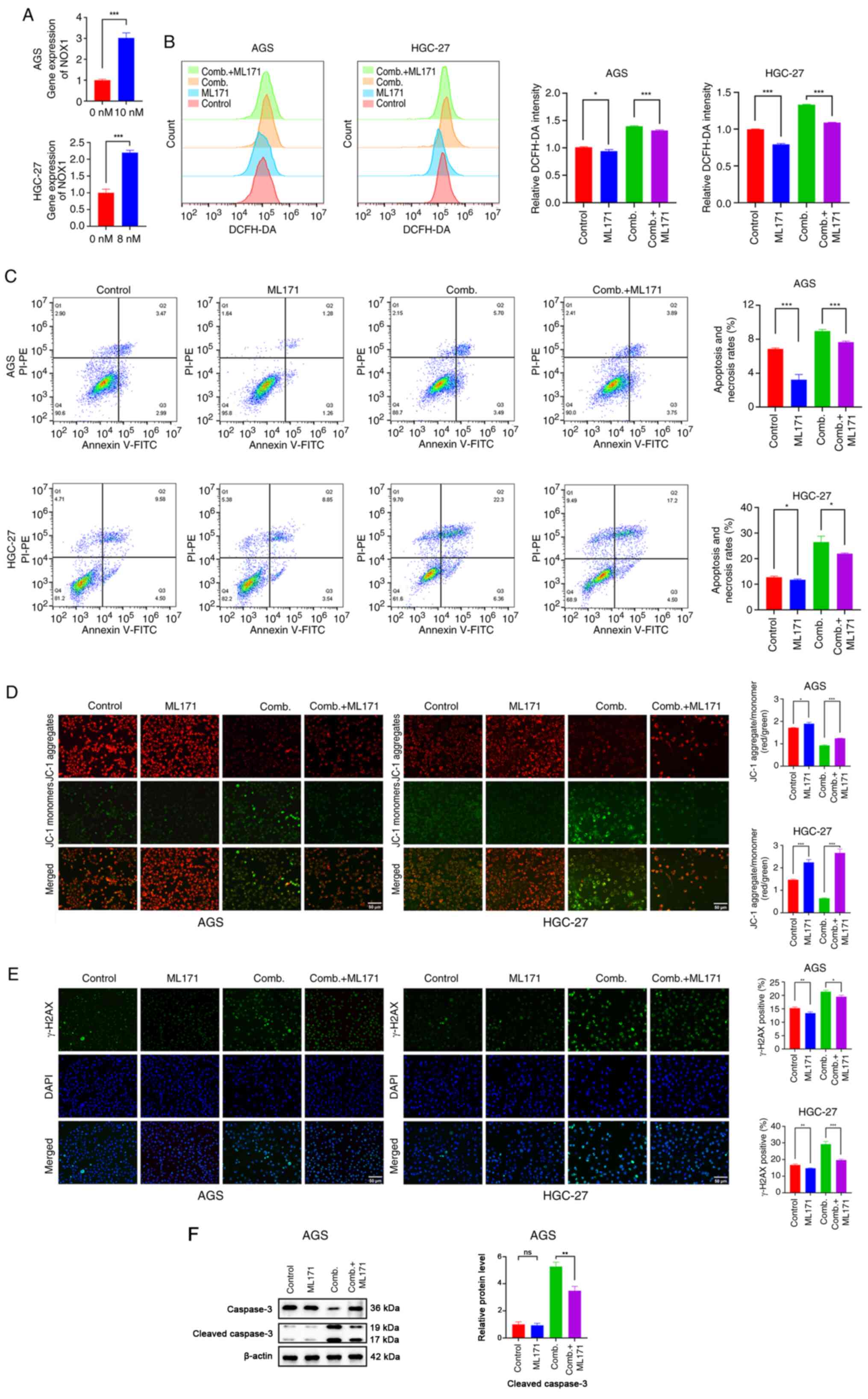
Figure 6

Hesperadin enhances the sensitivity
of GC cells to cisplatin by activating NOX1-induced oxidative
stress. (A) The mRNA expression level of NOX1 in GC cells after
Hesperadin treatment, as determined by reverse
transcription-quantitative PCR. (B-E) GC cells were pre-treated
with or without the NOX1 inhibitor ML171 (0.2 µM) for 2 h, followed
by combination treatment (Hesperadin + Cisplatin). The effects on
(B) reactive oxygen species generation, (C) cell death, (D) MMP and
(E) DNA damage were assessed using flow cytometry and
immunofluorescence analysis (scale bar, 50 µm). (F) Western blot
analysis of Cleaved Caspase-3 levels in AGS cells from the
experiment shown in C. The blot confirms the induction of apoptosis
by the combination treatment at the molecular level, corroborating
the flow cytometry data. β-ACTIN was used as a loading control.
Comb. + ML171 vs. Comb; *P<0.05,
**P<0.01 and ***P<0.001. GC, gastric
cancer; ns, not significant (P≥0.05).

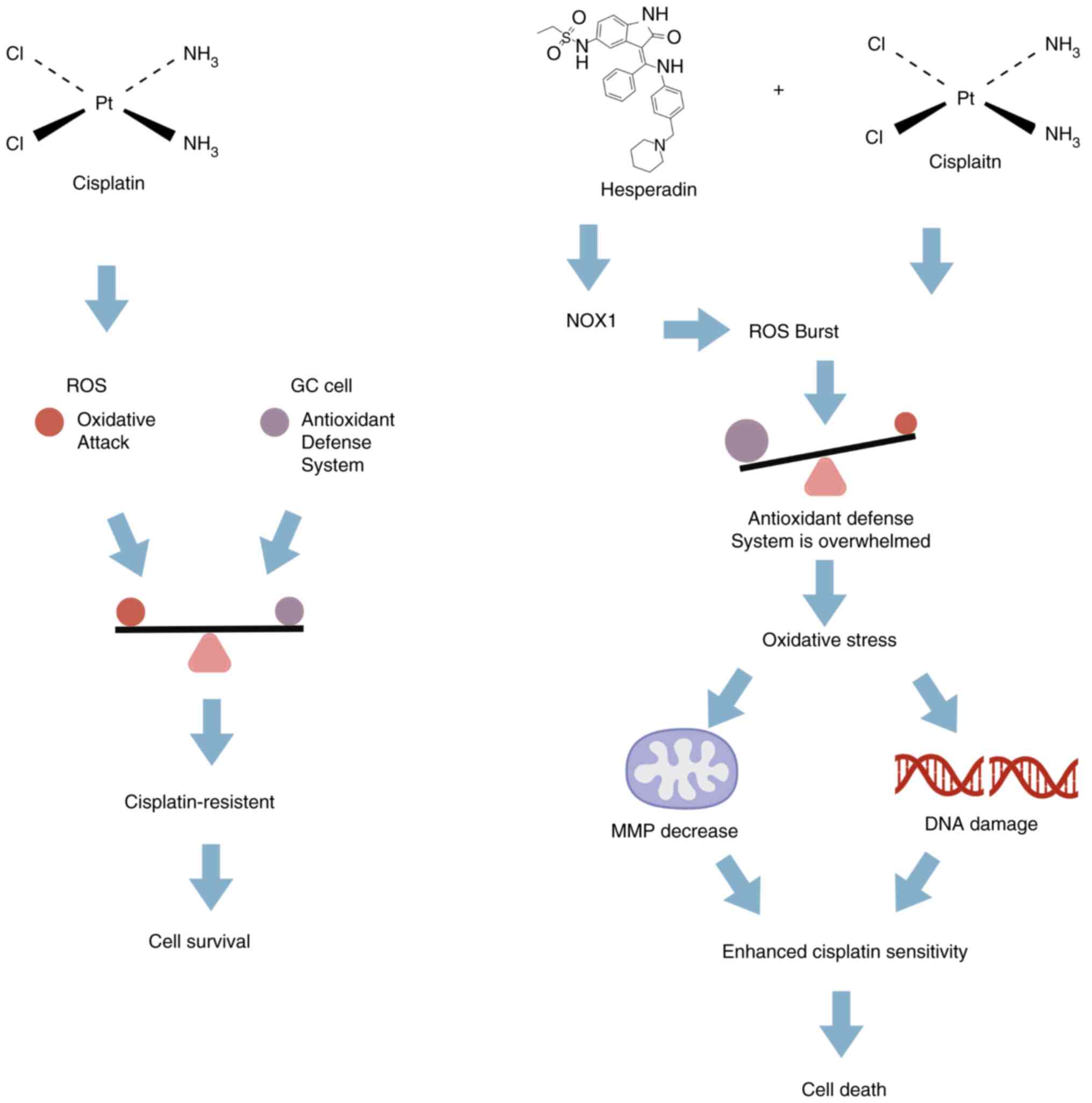
Figure 7

Schematic diagram demonstrating how
hesperadin potentiates the chemosensitivity to cisplatin in GC
cells via NOX1-mediated oxidative stress. The image was created
with BioGDP.com (33). GC, gastric cancer; ROS, reactive
oxygen species.
View References

1 

Bray F, Laversanne M, Sung H, Ferlay J, Siegel RL, Soerjomataram I and Jemal A: Global cancer statistics 2022: GLOBOCAN estimates of incidence and mortality worldwide for 36 cancers in 185 countries. CA Cancer J Clin. 74:229–263. 2024.PubMed/NCBI View Article : Google Scholar

2 

Digklia A and Wagner AD: Advanced gastric cancer: Current treatment landscape and future perspectives. World J Gastroenterol. 22:2403–2414. 2016.PubMed/NCBI View Article : Google Scholar

3 

Lei ZN, Teng QX, Tian Q, Chen W, Xie Y, Wu K, Zeng Q, Zeng L, Pan Y, Chen ZS and He Y: Signaling pathways and therapeutic interventions in gastric cancer. Signal Transduct Target Ther. 7(358)2022.PubMed/NCBI View Article : Google Scholar

4 

Huang R and Zhou PK: DNA damage repair: Historical perspectives, mechanistic pathways and clinical translation for targeted cancer therapy. Signal Transduct Target Ther. 6(254)2021.PubMed/NCBI View Article : Google Scholar

5 

Peña Q, Wang A, Zaremba O, Shi Y, Scheeren HW, Metselaar JM, Kiessling F, Pallares RM, Wuttke S and Lammers T: Metallodrugs in cancer nanomedicine. Chem Soc Rev. 51:2544–2582. 2022.PubMed/NCBI View Article : Google Scholar

6 

Ruhlmann CH, Iversen TZ, Okera M, Muhic A, Kristensen G, Feyer P, Hansen O and Herrstedt J: Multinational study exploring patients' perceptions of side-effects induced by chemo-radiotherapy. Radiother Oncol. 117:333–337. 2015.PubMed/NCBI View Article : Google Scholar

7 

Shahid M, Subhan F, Ahmad N and Sewell RDE: The flavonoid 6-methoxyflavone allays cisplatin-induced neuropathic allodynia and hypoalgesia. Biomed Pharmacother. 95:1725–1733. 2017.PubMed/NCBI View Article : Google Scholar

8 

Yu C, Dong H, Wang Q, Bai J, Li YN, Zhao JJ and Li JZ: Danshensu attenuates cisplatin-induced nephrotoxicity through activation of Nrf2 pathway and inhibition of NF-κB. Biomed Pharmacother. 142(111995)2021.PubMed/NCBI View Article : Google Scholar

9 

Wang H, Zhang Z, Wei X and Dai R: Small-molecule inhibitor of Bcl-2 (TW-37) suppresses growth and enhances cisplatin-induced apoptosis in ovarian cancer cells. J Ovarian Res. 8(3)2015.PubMed/NCBI View Article : Google Scholar

10 

Shi S, Bai X, Ji Q, Wan H, An H, Kang X and Guo S: Molecular mechanism of ion channel protein TMEM16A regulated by natural product of narirutin for lung cancer adjuvant treatment. Int J Biol Macromol. 223:1145–1157. 2022.PubMed/NCBI View Article : Google Scholar

11 

Bai X, Liu Y, Cao Y, Ma Z, Chen Y and Guo S: Exploring the potential of cryptochlorogenic acid as a dietary adjuvant for multi-target combined lung cancer treatment. Phytomedicine. 132(155907)2024.PubMed/NCBI View Article : Google Scholar

12 

Morahan BJ, Abrie C, Al-Hasani K, Batty MB, Corey V, Cowell AN, Niemand J, Winzeler EA, Birkholtz LM, Doerig C and Garcia-Bustos JF: Human Aurora kinase inhibitor hesperadin reveals epistatic interaction between Plasmodium falciparum PfArk1 and PfNek1 kinases. Commun Biol. 3(701)2020.PubMed/NCBI View Article : Google Scholar

13 

Wu X, Wu J, Hu W, Wang Q, Liu H, Chu Z, Lv K and Xu Y: MST4 kinase inhibitor Hesperadin attenuates autophagy and behavioral disorder via the MST4/AKT pathway in intracerebral hemorrhage mice. Behav Neurol. 2020(2476861)2020.PubMed/NCBI View Article : Google Scholar

14 

Chhajer R, Bhattacharyya A and Ali N: Cell death in Leishmania donovani promastigotes in response to Mammalian Aurora kinase B inhibitor-Hesperadin. Biomed Pharmacother. 177(116960)2024.PubMed/NCBI View Article : Google Scholar

15 

Zhang J, Liang R, Wang K, Zhang W, Zhang M, Jin L, Xie P, Zheng W, Shang H, Hu Q, et al: Novel CaMKII-δ inhibitor Hesperadin exerts dual functions to ameliorate cardiac ischemia/reperfusion injury and inhibit tumor growth. Circulation. 145:1154–1168. 2022.PubMed/NCBI View Article : Google Scholar

16 

Zhang Y, Wu J, Fu Y, Yu R, Su H, Zheng Q, Wu H, Zhou S, Wang K, Zhao J, et al: Hesperadin suppresses pancreatic cancer through ATF4/GADD45A axis at nanomolar concentrations. Oncogene. 41:3394–3408. 2022.PubMed/NCBI View Article : Google Scholar

17 

Livak KJ and Schmittgen TD: Analysis of relative gene expression data using real-time quantitative PCR and the 2(-Delta Delta C(T)) method. Methods. 25:402–408. 2001.PubMed/NCBI View Article : Google Scholar

18 

Carneiro BA and El-Deiry WS: Targeting apoptosis in cancer therapy. Nat Rev Clin Oncol. 17:395–417. 2020.PubMed/NCBI View Article : Google Scholar

19 

Li J, Jia YC, Ding YX, Bai J, Cao F and Li F: The crosstalk between ferroptosis and mitochondrial dynamic regulatory networks. Int J Biol Sci. 19:2756–2771. 2023.PubMed/NCBI View Article : Google Scholar

20 

To TL, Cuadros AM, Shah H, Hung WHW, Li Y, Kim SH, Rubin DHF, Boe RH, Rath S, Eaton JK, et al: A compendium of genetic modifiers of mitochondrial dysfunction reveals intra-organelle buffering. Cell. 179:1222–1238.e17. 2019.PubMed/NCBI View Article : Google Scholar

21 

Wagner AD, Syn NL, Moehler M, Grothe W, Yong WP, Tai BC, Ho J and Unverzagt S: Chemotherapy for advanced gastric cancer. Cochrane Database Syst Rev. 8(CD004064)2017.PubMed/NCBI View Article : Google Scholar

22 

Al-Batran SE, Homann N, Pauligk C, Goetze TO, Meiler J, Kasper S, Kopp HG, Mayer F, Haag GM, Luley K, et al: Perioperative chemotherapy with fluorouracil plus leucovorin, oxaliplatin, and docetaxel versus fluorouracil or capecitabine plus cisplatin and epirubicin for locally advanced, resectable gastric or gastro-oesophageal junction adenocarcinoma (FLOT4): A randomised, phase 2/3 trial. Lancet. 393:1948–1957. 2019.PubMed/NCBI View Article : Google Scholar

23 

Hauf S, Cole RW, LaTerra S, Zimmer C, Schnapp G, Walter R, Heckel A, van Meel J, Rieder CL and Peters JM: The small molecule Hesperadin reveals a role for Aurora B in correcting kinetochore-microtubule attachment and in maintaining the spindle assembly checkpoint. J Cell Biol. 161:281–294. 2003.PubMed/NCBI View Article : Google Scholar

24 

Ladygina NG, Latsis RV and Yen T: Effect of the pharmacological agent hesperadin on breast and prostate tumor cultured cells. Biomed Khim. 51:170–176. 2005.PubMed/NCBI(In Russian).

25 

Hu Y, Zhang J, Musharrafieh R, Hau R, Ma C and Wang J: Chemical genomics approach leads to the identification of Hesperadin, an Aurora B kinase inhibitor, as a broad-spectrum influenza antiviral. Int J Mol Sci. 18(1929)2017.PubMed/NCBI View Article : Google Scholar

26 

Kim HJ, Lee JH, Kim SJ, Oh GS, Moon HD, Kwon KB, Park C, Park BH, Lee HK, Chung SY, et al: Roles of NADPH oxidases in cisplatin-induced reactive oxygen species generation and ototoxicity. J Neurosci. 30:3933–3946. 2010.PubMed/NCBI View Article : Google Scholar

27 

Chen TM, Huang CM, Setiawan SA, Hsieh MS, Sheen CC and Yeh CT: KDM5D histone demethylase identifies platinum-tolerant head and neck cancer cells vulnerable to mitotic catastrophe. Int J Mol Sci. 24(5310)2023.PubMed/NCBI View Article : Google Scholar

28 

Han X, Zhang JJ, Han ZQ, Zhang HB and Wang ZA: Let-7b attenuates cisplatin resistance and tumor growth in gastric cancer by targeting AURKB. Cancer Gene Ther. 25:300–308. 2018.PubMed/NCBI View Article : Google Scholar

29 

Erickson JR, Joiner ML, Guan X, Kutschke W, Yang J, Oddis CV, Bartlett RK, Lowe JS, O'Donnell SE, Aykin-Burns N, et al: A dynamic pathway for calcium-independent activation of CaMKII by methionine oxidation. Cell. 133:462–474. 2008.PubMed/NCBI View Article : Google Scholar

30 

Anderson ME, Brown JH and Bers DM: CaMKII in myocardial hypertrophy and heart failure. J Mol Cell Cardiol. 51:468–473. 2011.PubMed/NCBI View Article : Google Scholar

31 

Zhang Z, Zhao X, Gao M, Xu L, Qi Y, Wang J and Yin L: Dioscin alleviates myocardial infarction injury via regulating BMP4/NOX1-mediated oxidative stress and inflammation. Phytomedicine. 103(154222)2022.PubMed/NCBI View Article : Google Scholar

32 

Drummond GR, Selemidis S, Griendling KK and Sobey CG: Combating oxidative stress in vascular disease: NADPH oxidases as therapeutic targets. Nat Rev Drug Discov. 10:453–471. 2011.PubMed/NCBI View Article : Google Scholar

33 

Jiang S, Li H, Zhang L, Mu W, Zhang Y, Chen T, Wu J, Tang H, Zheng S, Liu Y, et al: Generic diagramming platform (GDP): A comprehensive database of high-quality biomedical graphics. Nucleic Acids Res. 53 (D1):D1670–D1676. 2025.PubMed/NCBI View Article : Google Scholar

Related Articles

  • Abstract
  • View
  • Download
  • Twitter
Copy and paste a formatted citation
Spandidos Publications style
Zhu W, Li Q, Ji Z, Wu D, Chen J, Zhao Y and Wu H: Hesperadin sensitizes gastric cancer cells to cisplatin via NOX1‑dependent oxidative stress. Biomed Rep 24: 3, 2026.
APA
Zhu, W., Li, Q., Ji, Z., Wu, D., Chen, J., Zhao, Y., & Wu, H. (2026). Hesperadin sensitizes gastric cancer cells to cisplatin via NOX1‑dependent oxidative stress. Biomedical Reports, 24, 3. https://doi.org/10.3892/br.2025.2076
MLA
Zhu, W., Li, Q., Ji, Z., Wu, D., Chen, J., Zhao, Y., Wu, H."Hesperadin sensitizes gastric cancer cells to cisplatin via NOX1‑dependent oxidative stress". Biomedical Reports 24.1 (2026): 3.
Chicago
Zhu, W., Li, Q., Ji, Z., Wu, D., Chen, J., Zhao, Y., Wu, H."Hesperadin sensitizes gastric cancer cells to cisplatin via NOX1‑dependent oxidative stress". Biomedical Reports 24, no. 1 (2026): 3. https://doi.org/10.3892/br.2025.2076
Copy and paste a formatted citation
x
Spandidos Publications style
Zhu W, Li Q, Ji Z, Wu D, Chen J, Zhao Y and Wu H: Hesperadin sensitizes gastric cancer cells to cisplatin via NOX1‑dependent oxidative stress. Biomed Rep 24: 3, 2026.
APA
Zhu, W., Li, Q., Ji, Z., Wu, D., Chen, J., Zhao, Y., & Wu, H. (2026). Hesperadin sensitizes gastric cancer cells to cisplatin via NOX1‑dependent oxidative stress. Biomedical Reports, 24, 3. https://doi.org/10.3892/br.2025.2076
MLA
Zhu, W., Li, Q., Ji, Z., Wu, D., Chen, J., Zhao, Y., Wu, H."Hesperadin sensitizes gastric cancer cells to cisplatin via NOX1‑dependent oxidative stress". Biomedical Reports 24.1 (2026): 3.
Chicago
Zhu, W., Li, Q., Ji, Z., Wu, D., Chen, J., Zhao, Y., Wu, H."Hesperadin sensitizes gastric cancer cells to cisplatin via NOX1‑dependent oxidative stress". Biomedical Reports 24, no. 1 (2026): 3. https://doi.org/10.3892/br.2025.2076
Follow us
  • Twitter
  • LinkedIn
  • Facebook
About
  • Spandidos Publications
  • Careers
  • Cookie Policy
  • Privacy Policy
How can we help?
  • Help
  • Live Chat
  • Contact
  • Email to our Support Team