Spandidos Publications Logo
  • About
    • About Spandidos
    • Aims and Scopes
    • Abstracting and Indexing
    • Editorial Policies
    • Reprints and Permissions
    • Job Opportunities
    • Terms and Conditions
    • Contact
  • Journals
    • All Journals
    • Oncology Letters
      • Oncology Letters
      • Information for Authors
      • Editorial Policies
      • Editorial Board
      • Aims and Scope
      • Abstracting and Indexing
      • Bibliographic Information
      • Archive
    • International Journal of Oncology
      • International Journal of Oncology
      • Information for Authors
      • Editorial Policies
      • Editorial Board
      • Aims and Scope
      • Abstracting and Indexing
      • Bibliographic Information
      • Archive
    • Molecular and Clinical Oncology
      • Molecular and Clinical Oncology
      • Information for Authors
      • Editorial Policies
      • Editorial Board
      • Aims and Scope
      • Abstracting and Indexing
      • Bibliographic Information
      • Archive
    • Experimental and Therapeutic Medicine
      • Experimental and Therapeutic Medicine
      • Information for Authors
      • Editorial Policies
      • Editorial Board
      • Aims and Scope
      • Abstracting and Indexing
      • Bibliographic Information
      • Archive
    • International Journal of Molecular Medicine
      • International Journal of Molecular Medicine
      • Information for Authors
      • Editorial Policies
      • Editorial Board
      • Aims and Scope
      • Abstracting and Indexing
      • Bibliographic Information
      • Archive
    • Biomedical Reports
      • Biomedical Reports
      • Information for Authors
      • Editorial Policies
      • Editorial Board
      • Aims and Scope
      • Abstracting and Indexing
      • Bibliographic Information
      • Archive
    • Oncology Reports
      • Oncology Reports
      • Information for Authors
      • Editorial Policies
      • Editorial Board
      • Aims and Scope
      • Abstracting and Indexing
      • Bibliographic Information
      • Archive
    • Molecular Medicine Reports
      • Molecular Medicine Reports
      • Information for Authors
      • Editorial Policies
      • Editorial Board
      • Aims and Scope
      • Abstracting and Indexing
      • Bibliographic Information
      • Archive
    • World Academy of Sciences Journal
      • World Academy of Sciences Journal
      • Information for Authors
      • Editorial Policies
      • Editorial Board
      • Aims and Scope
      • Abstracting and Indexing
      • Bibliographic Information
      • Archive
    • International Journal of Functional Nutrition
      • International Journal of Functional Nutrition
      • Information for Authors
      • Editorial Policies
      • Editorial Board
      • Aims and Scope
      • Abstracting and Indexing
      • Bibliographic Information
      • Archive
    • International Journal of Epigenetics
      • International Journal of Epigenetics
      • Information for Authors
      • Editorial Policies
      • Editorial Board
      • Aims and Scope
      • Abstracting and Indexing
      • Bibliographic Information
      • Archive
    • Medicine International
      • Medicine International
      • Information for Authors
      • Editorial Policies
      • Editorial Board
      • Aims and Scope
      • Abstracting and Indexing
      • Bibliographic Information
      • Archive
  • Articles
  • Information
    • Information for Authors
    • Information for Reviewers
    • Information for Librarians
    • Information for Advertisers
    • Conferences
  • Language Editing
Spandidos Publications Logo
  • About
    • About Spandidos
    • Aims and Scopes
    • Abstracting and Indexing
    • Editorial Policies
    • Reprints and Permissions
    • Job Opportunities
    • Terms and Conditions
    • Contact
  • Journals
    • All Journals
    • Biomedical Reports
      • Information for Authors
      • Editorial Policies
      • Editorial Board
      • Aims and Scope
      • Abstracting and Indexing
      • Bibliographic Information
      • Archive
    • Experimental and Therapeutic Medicine
      • Information for Authors
      • Editorial Policies
      • Editorial Board
      • Aims and Scope
      • Abstracting and Indexing
      • Bibliographic Information
      • Archive
    • International Journal of Epigenetics
      • Information for Authors
      • Editorial Policies
      • Editorial Board
      • Aims and Scope
      • Abstracting and Indexing
      • Bibliographic Information
      • Archive
    • International Journal of Functional Nutrition
      • Information for Authors
      • Editorial Policies
      • Editorial Board
      • Aims and Scope
      • Abstracting and Indexing
      • Bibliographic Information
      • Archive
    • International Journal of Molecular Medicine
      • Information for Authors
      • Editorial Policies
      • Editorial Board
      • Aims and Scope
      • Abstracting and Indexing
      • Bibliographic Information
      • Archive
    • International Journal of Oncology
      • Information for Authors
      • Editorial Policies
      • Editorial Board
      • Aims and Scope
      • Abstracting and Indexing
      • Bibliographic Information
      • Archive
    • Medicine International
      • Information for Authors
      • Editorial Policies
      • Editorial Board
      • Aims and Scope
      • Abstracting and Indexing
      • Bibliographic Information
      • Archive
    • Molecular and Clinical Oncology
      • Information for Authors
      • Editorial Policies
      • Editorial Board
      • Aims and Scope
      • Abstracting and Indexing
      • Bibliographic Information
      • Archive
    • Molecular Medicine Reports
      • Information for Authors
      • Editorial Policies
      • Editorial Board
      • Aims and Scope
      • Abstracting and Indexing
      • Bibliographic Information
      • Archive
    • Oncology Letters
      • Information for Authors
      • Editorial Policies
      • Editorial Board
      • Aims and Scope
      • Abstracting and Indexing
      • Bibliographic Information
      • Archive
    • Oncology Reports
      • Information for Authors
      • Editorial Policies
      • Editorial Board
      • Aims and Scope
      • Abstracting and Indexing
      • Bibliographic Information
      • Archive
    • World Academy of Sciences Journal
      • Information for Authors
      • Editorial Policies
      • Editorial Board
      • Aims and Scope
      • Abstracting and Indexing
      • Bibliographic Information
      • Archive
  • Articles
  • Information
    • For Authors
    • For Reviewers
    • For Librarians
    • For Advertisers
    • Conferences
  • Language Editing
Login Register Submit
  • This site uses cookies
  • You can change your cookie settings at any time by following the instructions in our Cookie Policy. To find out more, you may read our Privacy Policy.

    I agree
Search articles by DOI, keyword, author or affiliation
Search
Advanced Search
presentation
Biomedical Reports
Join Editorial Board Propose a Special Issue
Print ISSN: 2049-9434 Online ISSN: 2049-9442
Journal Cover
May-2026 Volume 24 Issue 5

Full Size Image

Sign up for eToc alerts
Recommend to Library

Journals

International Journal of Molecular Medicine

International Journal of Molecular Medicine

International Journal of Molecular Medicine is an international journal devoted to molecular mechanisms of human disease.

International Journal of Oncology

International Journal of Oncology

International Journal of Oncology is an international journal devoted to oncology research and cancer treatment.

Molecular Medicine Reports

Molecular Medicine Reports

Covers molecular medicine topics such as pharmacology, pathology, genetics, neuroscience, infectious diseases, molecular cardiology, and molecular surgery.

Oncology Reports

Oncology Reports

Oncology Reports is an international journal devoted to fundamental and applied research in Oncology.

Experimental and Therapeutic Medicine

Experimental and Therapeutic Medicine

Experimental and Therapeutic Medicine is an international journal devoted to laboratory and clinical medicine.

Oncology Letters

Oncology Letters

Oncology Letters is an international journal devoted to Experimental and Clinical Oncology.

Biomedical Reports

Biomedical Reports

Explores a wide range of biological and medical fields, including pharmacology, genetics, microbiology, neuroscience, and molecular cardiology.

Molecular and Clinical Oncology

Molecular and Clinical Oncology

International journal addressing all aspects of oncology research, from tumorigenesis and oncogenes to chemotherapy and metastasis.

World Academy of Sciences Journal

World Academy of Sciences Journal

Multidisciplinary open-access journal spanning biochemistry, genetics, neuroscience, environmental health, and synthetic biology.

International Journal of Functional Nutrition

International Journal of Functional Nutrition

Open-access journal combining biochemistry, pharmacology, immunology, and genetics to advance health through functional nutrition.

International Journal of Epigenetics

International Journal of Epigenetics

Publishes open-access research on using epigenetics to advance understanding and treatment of human disease.

Medicine International

Medicine International

An International Open Access Journal Devoted to General Medicine.

Journal Cover
May-2026 Volume 24 Issue 5

Full Size Image

Sign up for eToc alerts
Recommend to Library

  • Article
  • Citations
    • Cite This Article
    • Download Citation
    • Create Citation Alert
    • Remove Citation Alert
    • Cited By
  • Similar Articles
    • Related Articles (in Spandidos Publications)
    • Similar Articles (Google Scholar)
    • Similar Articles (PubMed)
  • Download PDF
  • Download XML
  • View XML
Review Open Access

Research progress in the role and mechanism of GALNT3 in human diseases (Review)

  • Authors:
    • Linhong Su
    • Yongxiu Lin
    • Xiaoxia Hu
    • Zhen Liu
  • View Affiliations / Copyright

    Affiliations: Medical Genetics and Prenatal Diagnosis Center, The People's Hospital of Guangxi Zhuang Autonomous Region, Guangxi Academy of Medical Sciences, Nanning, Guangxi 530021, P.R. China, Department of Gynecology, The People's Hospital of Guangxi Zhuang Autonomous Region, Guangxi Academy of Medical Sciences, Nanning, Guangxi 530021, P.R. China
    Copyright: © Su et al. This is an open access article distributed under the terms of Creative Commons Attribution License.
  • Article Number: 64
    |
    Published online on: March 26, 2026
       https://doi.org/10.3892/br.2026.2137
  • Expand metrics +
Metrics: Total Views: 0 (Spandidos Publications: | PMC Statistics: )
Metrics: Total PDF Downloads: 0 (Spandidos Publications: | PMC Statistics: )
Cited By (CrossRef): 0 citations Loading Articles...

This article is mentioned in:


Abstract

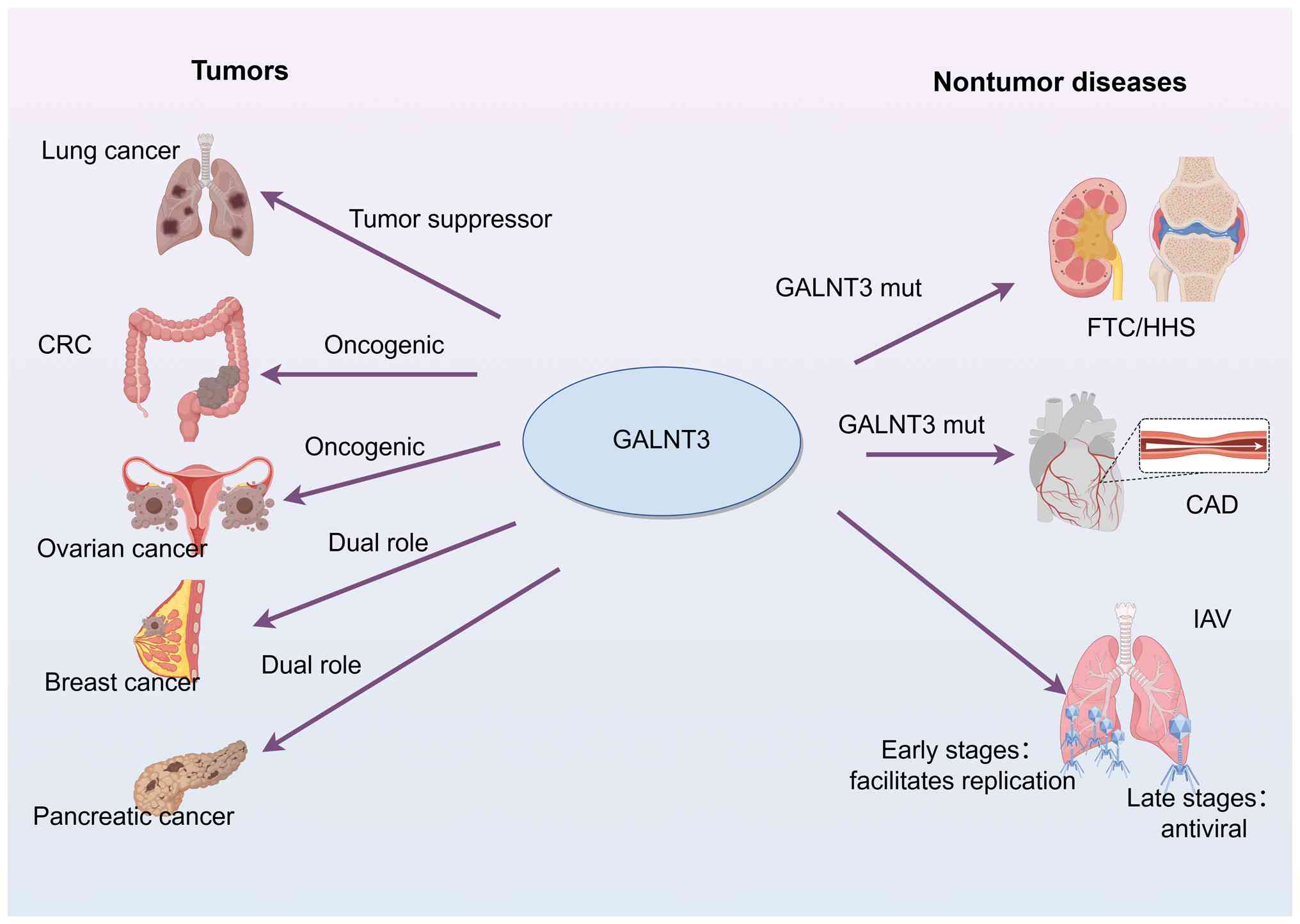
Protein glycosylation is a crucial post‑translational modification. Polypeptide N‑acetylgalactosaminyltransferase 3 (GALNT3) is a glycosyltransferase that plays an essential role in various human diseases by modifying proteins, including fibroblast growth factor 23 and mucins. In non‑tumor conditions, mutations in GALNT3 result in hyperphosphatemia in familial tumoral calcinosis, and its dysregulation has been linked to coronary artery disease. Notably, GALNT3 plays a seemingly opposing role in influenza A virus infection by potentially aiding early viral replication, and later exerting antiviral effects. In cancer, the functions of GALNT3 vary by context: it acts as a tumor suppressor in lung cancer but promotes tumor progression in colorectal and ovarian cancer. GALNT3 plays a context‑dependent, dual role by exerting both tumor‑suppressive and tumor‑promoting functions in specific subtypes of pancreatic and breast cancers. This duality is influenced by the tissue environment, substrate specificity, and regulatory networks. Therefore, GALNT3 is emerging as a promising biomarker and therapeutic target across different pathological conditions owing to its pivotal role in disease processes.
View Figures

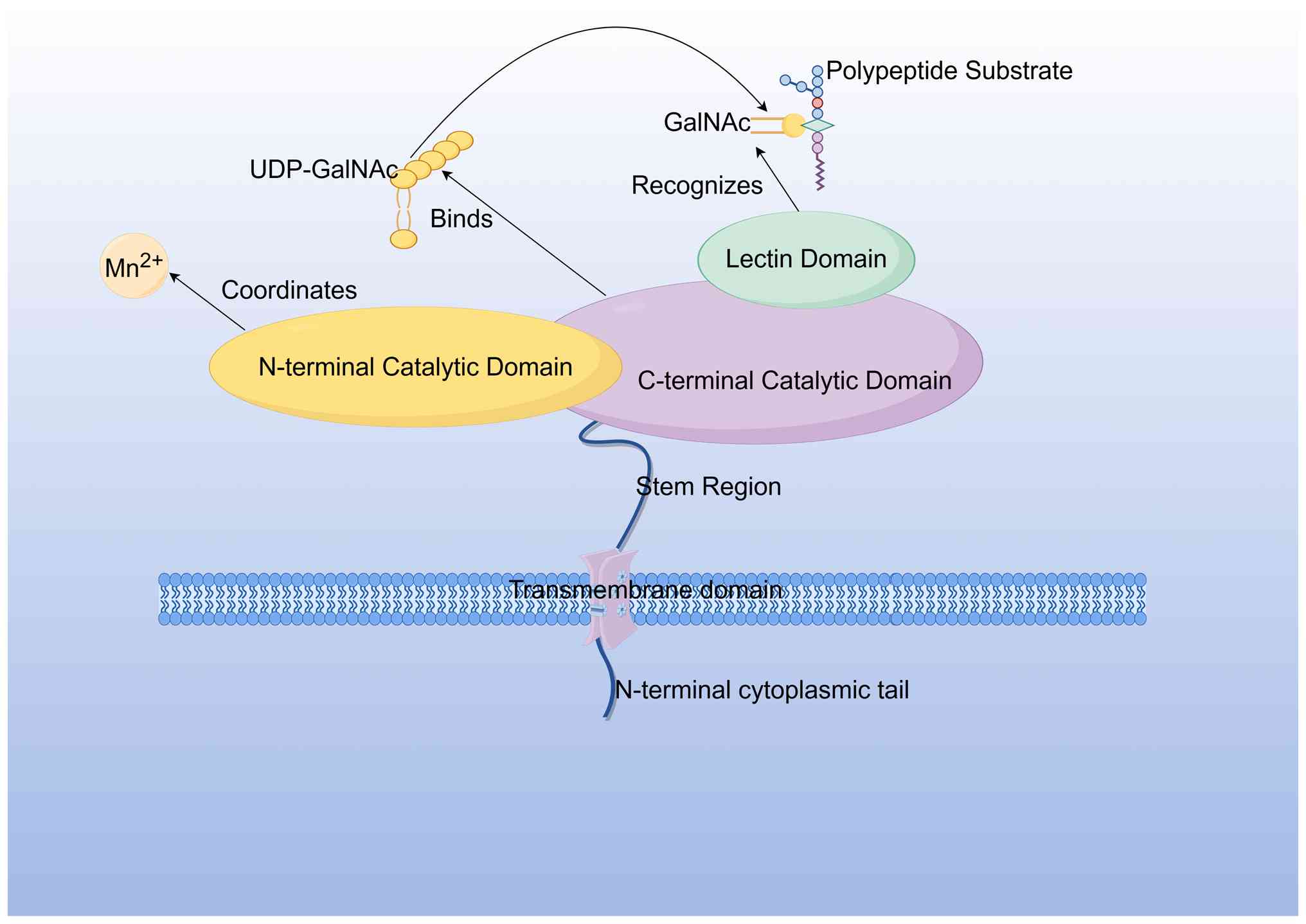
Figure 1

Schematic depiction of GALNT3 protein
structure and functional domains. The structure, based on the
AlphaFold-predicted model (AF-Q14435-F1), displays the spatial
arrangement of the main domains of GALNT3. The catalytic domain
includes an N-terminal region (GT1 motif, which binds
Mn²+) and a C-terminal region (Gal/GalNAc-T motif, which
binds UDP-GalNAc and performs the catalytic transfer). The lectin
domain guides a ‘stepping’ mechanism by recognizing the newly added
GalNAc sugar, allowing the enzyme to achieve processive
glycosylation on the same substrate. GALNT3, polypeptide
N-acetylgalactosaminyltransferase 3; UDP-GalNAc, uridine
diphosphate N-acetylgalactosamine. The figure was generated using
FigDraw (https://www.figdraw.com).

Figure 2

Schematic overview of the
transcriptional and epigenetic regulation of GALNT3. [Arrows denote
regulatory effects: Red for positive (activation) and green for
negative (inhibition)]. GALNT3, polypeptide
N-acetylgalactosaminyltransferase 3; miR-, microRNA; ELAVL1,
embryonic lethal abnormal vision-like 1; Runx2, runt-related
transcription factor 2; Pi, extracellular posphate; Egr1, early
growth response 1; Etv5, ETS variant transcription factor 5;
MAP3K4, mitogen-activated protein kinase kinase kinase 4; HDAC6,
histone deacetylase histone deacetylase 6; H2BK5ac, histone H2B at
lysine 5 acetylation. The figure was generated using FigDraw
(https://www.figdraw.com).

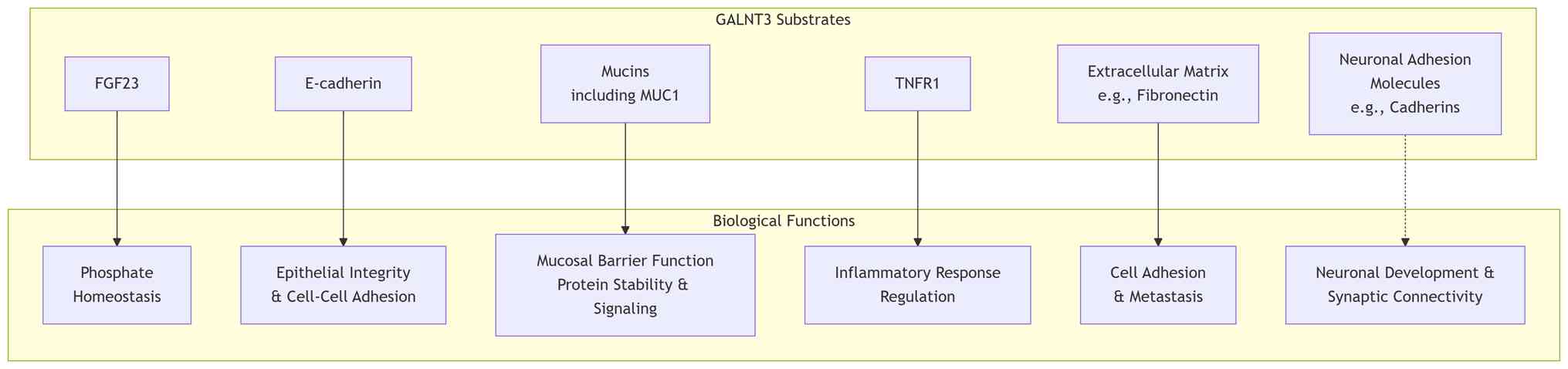
Figure 3

Depiction of a unifying framework of
GALNT3 molecular functions (dashed line proposes a potential link
between GALNT3 and neural development/function). GALNT3,
polypeptide N-acetylgalactosaminyltransferase 3; FGF23, fibroblast
growth factor 23; MUC1, mucin 1; TNFR1, tumor necrosis factor
receptor 1. The figure was generated using FigDraw (https://www.figdraw.com).

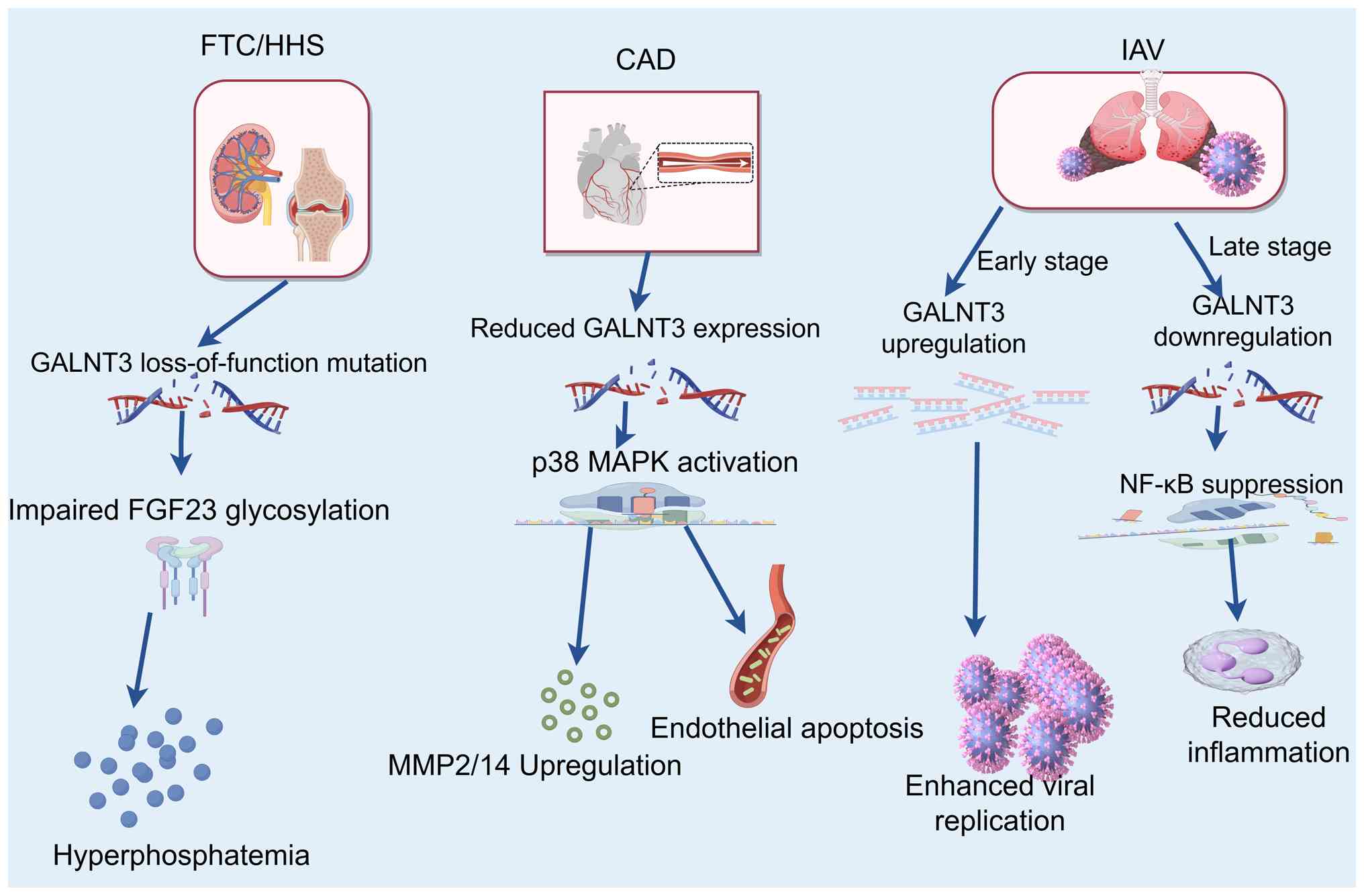
Figure 4

Pathophysiological roles of GALNT3 in
non-tumor diseases. GALNT3, polypeptide
N-acetylgalactosaminyltransferase 3; FTC/HSS, familial tumoral
calcinosis/hyperostosis-hyperphosphatemia syndrome; CAD, coronary
artery disease; IAV, influenza A virus; FGF23, fibroblast growth
factor 23; MAPK, mitogen-activated protein kinase; MMP, matrix
metalloproteinase. The figure was generated using FigDraw
(https://www.figdraw.com).

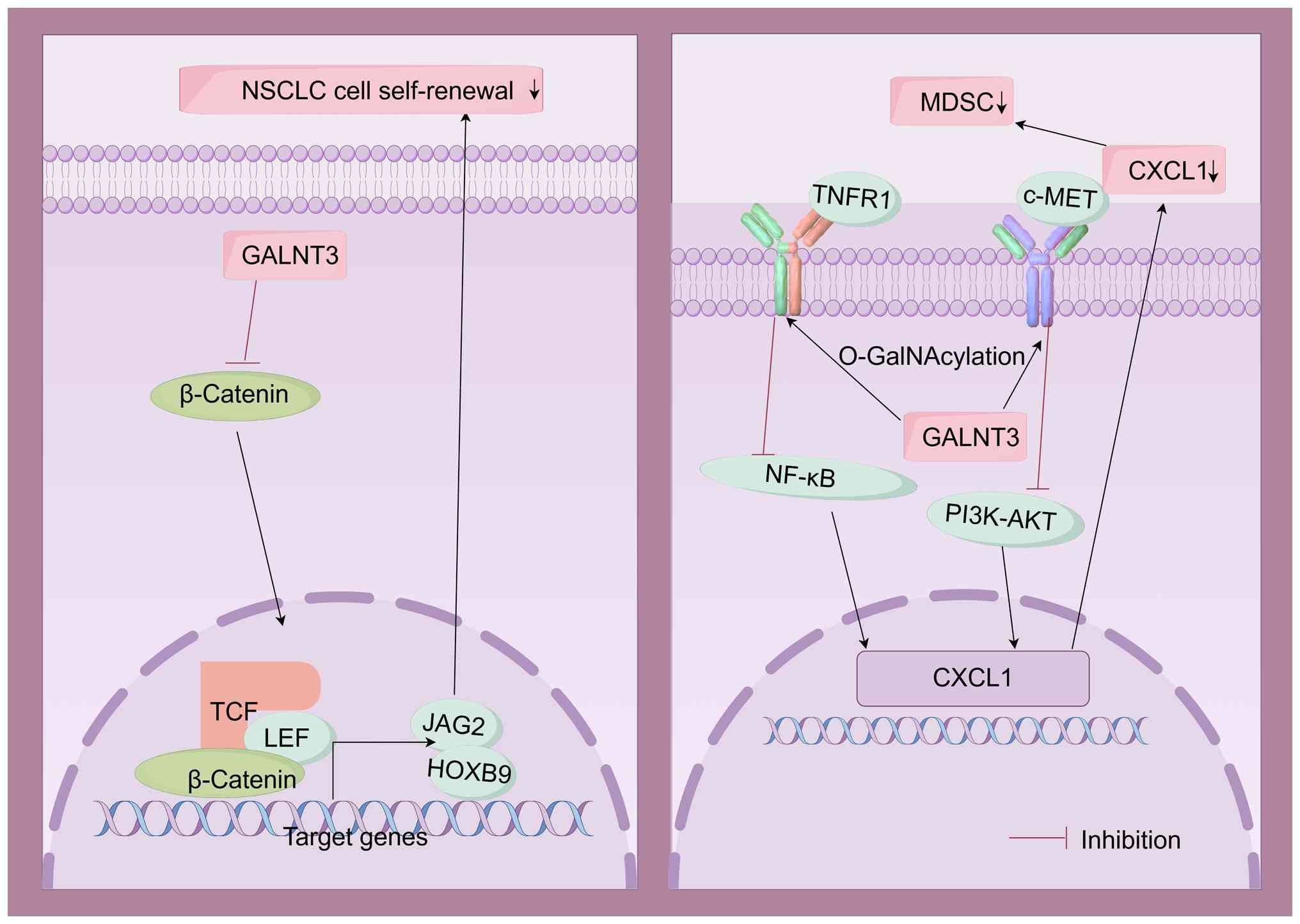
Figure 5

Mechanism supporting the
tumor-suppressive role of GALNT3 in lung cancer. GALNT3,
polypeptide N-acetylgalactosaminyltransferase 3; NSCLC, non-small
cell lung cancer; TCF, T-cell factor; LEF, lymphoid
enhancer-binding factor; HOXB9, homeobox B9; JAG2, jagged canonical
notch ligand 2; MDSC, myeloid-derived suppressor cell; TNFR1, tumor
necrosis factor receptor 1; CXCL1, C-X-C motif chemokine ligand 1.
The figure was generated using FigDraw (https://www.figdraw.com).

Figure 6

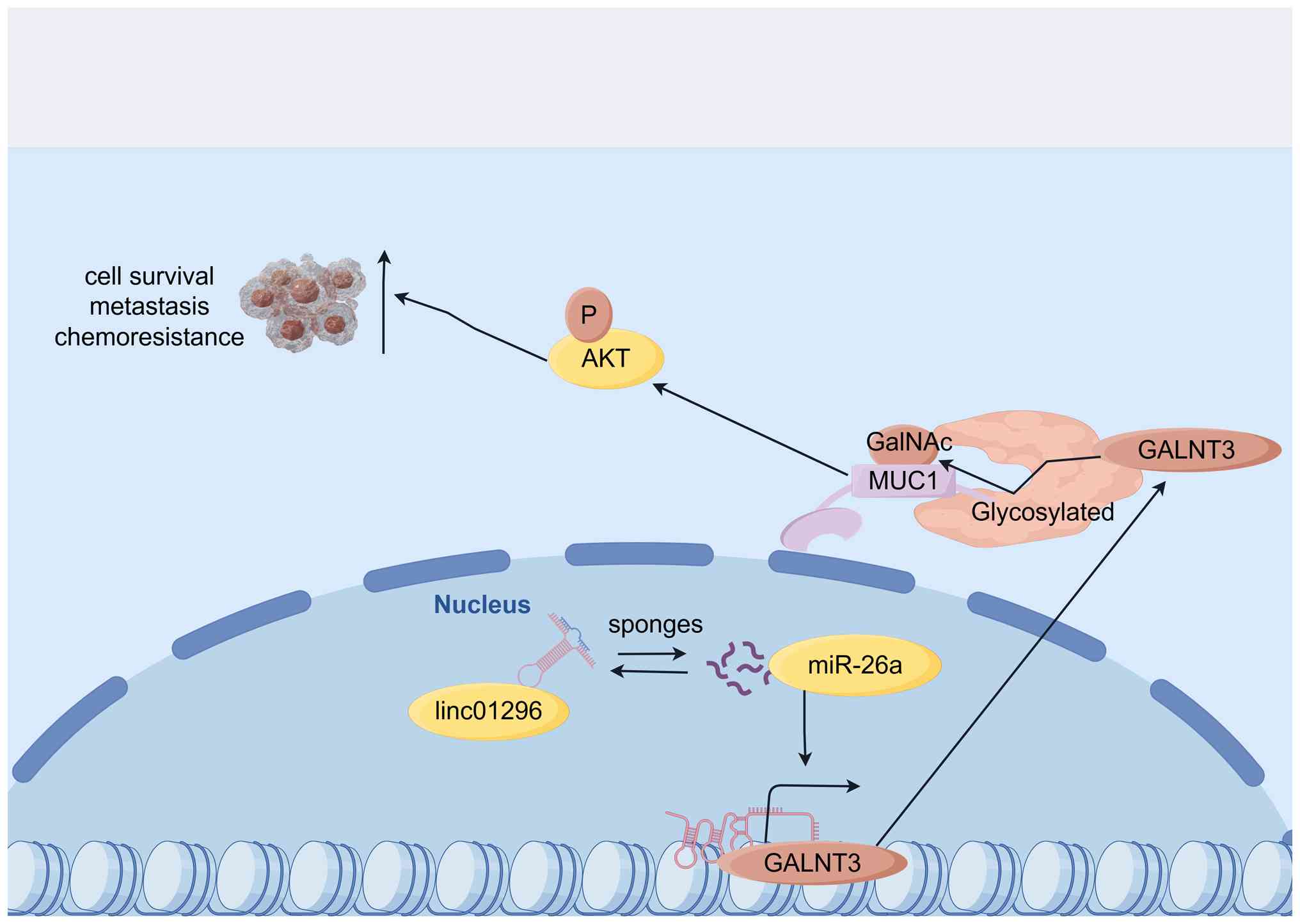
GALNT3 promotes colorectal cancer
progression and chemoresistance via MUC1 glycosylation and PI3K/AKT
activation. GALNT3, polypeptide N-acetylgalactosaminyltransferase
3; MUC1, mucin 1; GalNAc, N-acetylgalactosamine; miR-, microRNA.
The figure was generated using FigDraw (https://www.figdraw.com).

Figure 7

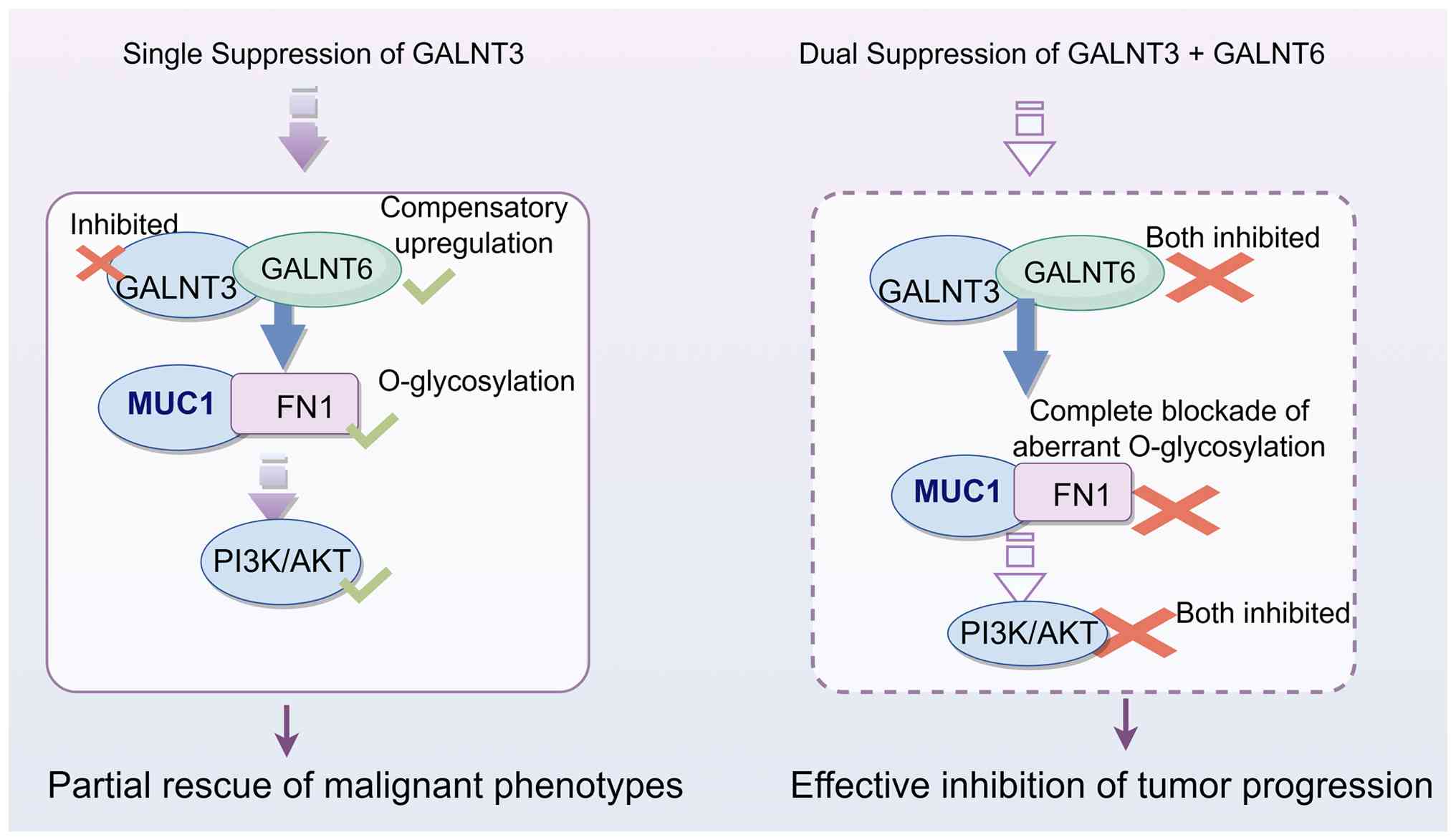
Functional redundancy between GALNT3
and GALNT6 in ovarian cancer and the rationale for combinatorial
targeting. GALNT3, polypeptide N-acetylgalactosaminyltransferase 3;
GALNT6, polypeptide N-acetylgalactosaminyltransferase 6; MUC1,
mucin 1; FN1, fibronectin. The figure was generated using FigDraw
(https://www.figdraw.com).

Figure 8

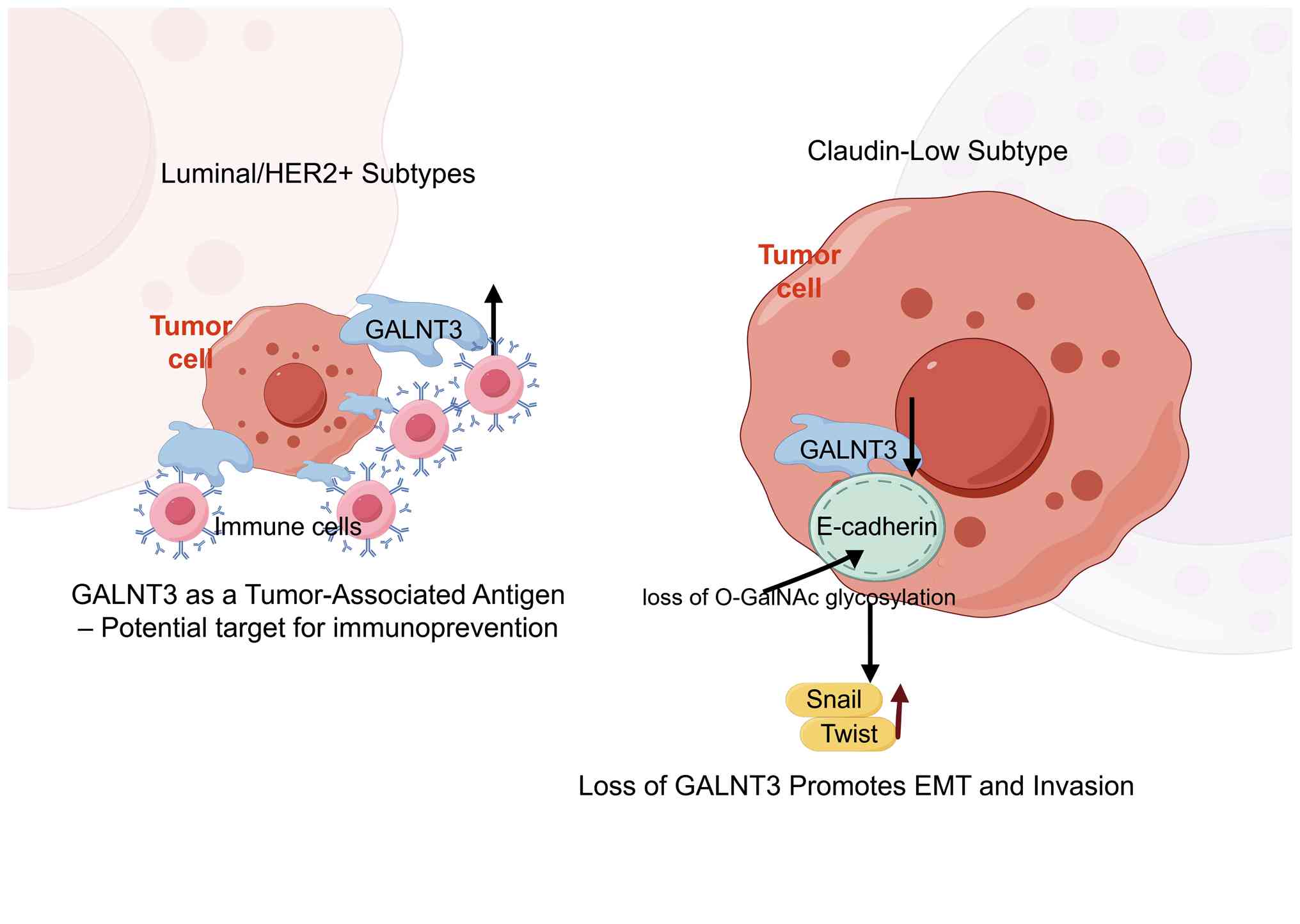
Context-dependent dual roles of
GALNT3 in breast cancer subtypes. GALNT3, polypeptide
N-acetylgalactosaminyltransferase 3; O-GalNAc, O-linked
N-acetylgalactosamine; EMT, epithelial-mesenchymal transition. The
figure was generated using FigDraw (https://www.figdraw.com).

Figure 9

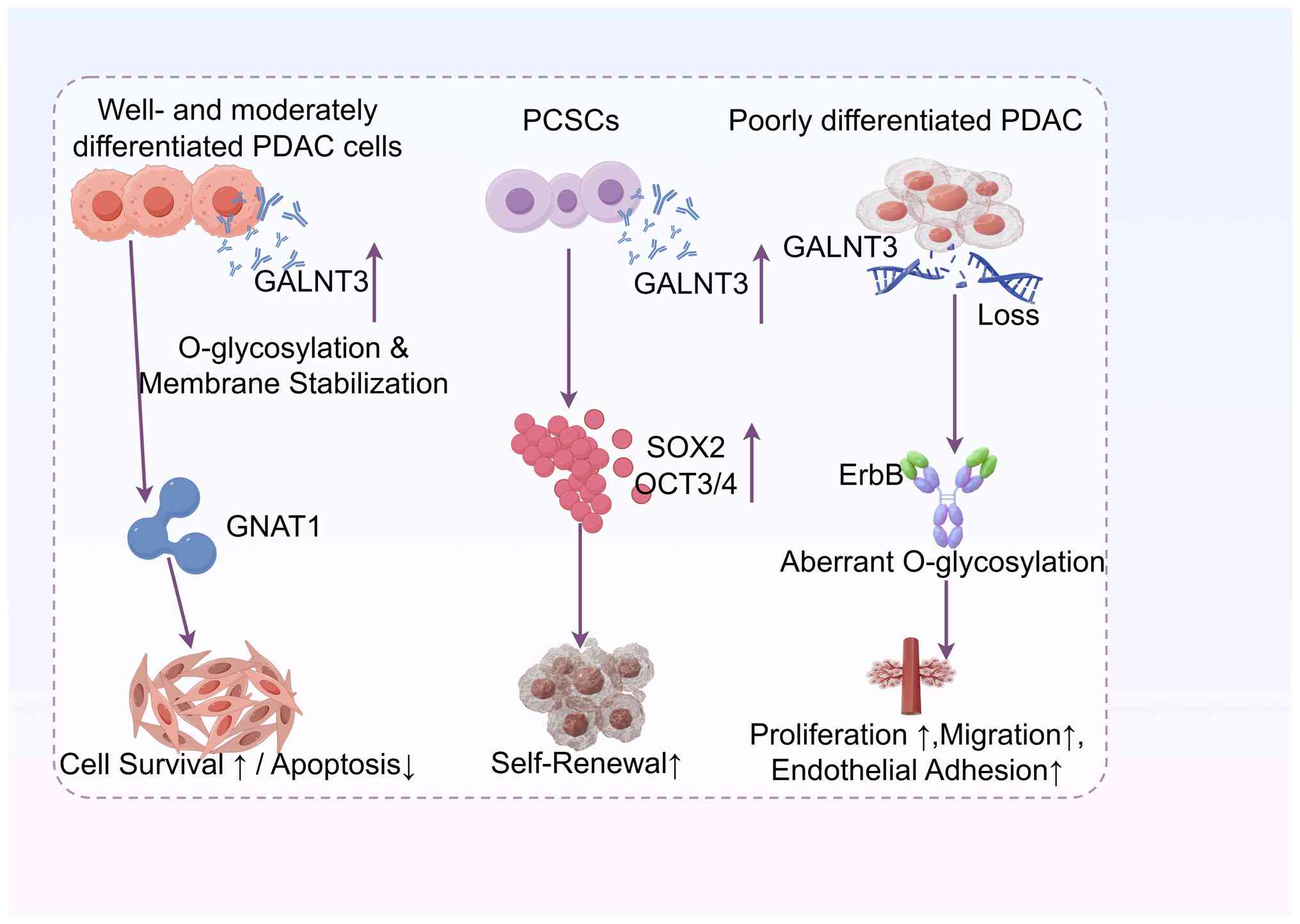
Context-dependent dual roles of
GALNT3 in PDAC. GALNT3, polypeptide
N-acetylgalactosaminyltransferase 3; PDAC, pancreatic ductal
adenocarcinoma; PCSCs, pancreatic cancer stem cells; GNAT1, guanine
nucleotide-binding protein G(t) subunit α1. The figure was
generated using FigDraw (https://www.figdraw.com).

Figure 10

Summary of the roles of GALNT3 across
human diseases. GALNT3, polypeptide
N-acetylgalactosaminyltransferase 3; CRC, colorectal cancer;
FTC/HSS, familial tumoral calcinosis/hyperostosis-hyperphosphatemia
syndrome; CAD, coronary artery disease; IAV, influenza A virus. The
figure was generated using FigDraw (https://www.figdraw.com).
View References

1 

Tran LS, Chia J, Le Guezennec X, Tham KM, Nguyen AT, Sandrin V, Chen WC, Leng TT, Sechachalam S, Leong KP and Bard FA: ER O-glycosylation in synovial fibroblasts drives cartilage degradation. Nat Commun. 16(2535)2025.PubMed/NCBI View Article : Google Scholar

2 

Mereiter S, Balmaña M, Campos D, Gomes J and Reis CA: Glycosylation in the era of cancer-targeted therapy: Where are we heading? Cancer Cell. 36:6–16. 2019.PubMed/NCBI View Article : Google Scholar

3 

RodrÍguez E, Schetters STT and van Kooyk Y: The tumour glyco-code as a novel immune checkpoint for immunotherapy. Nat Rev Immunol. 18:204–211. 2018.PubMed/NCBI View Article : Google Scholar

4 

Kato K, Jeanneau C, Tarp MA, Benet-Pagès A, Lorenz-Depiereux B, Bennett EP, Mandel U, Strom TM and Clausen H: Polypeptide GalNAc-transferase T3 and familial tumoral calcinosis. Secretion of fibroblast growth factor 23 requires O-glycosylation. J Biol Chem. 281:18370–18377. 2006.PubMed/NCBI View Article : Google Scholar

5 

Miao C, Sun R, Ji D, Wu M, Fu Q, Mei L and Wu Z: Mechanism of the GALNT family proteins in regulating tumorigenesis and development of lung cancer (Review). Mol Clin Oncol. 22(37)2025.PubMed/NCBI View Article : Google Scholar

6 

Kato K, Hansen L and Clausen H: Polypeptide N-acetylgalactosaminyltransferase-associated phenotypes in mammals. Molecules. 26(2204)2021.PubMed/NCBI View Article : Google Scholar

7 

Bennett EP, Weghuis DO, Merkx G, van Kessel AG, Eiberg H and Clausen H: Genomic organization and chromosomal localization of three members of the UDP-N-acetylgalactosamine: Polypeptide N-acetylgalactosaminyltransferase family. Glycobiology. 8:547–555. 1998.PubMed/NCBI View Article : Google Scholar

8 

Fang Y, Chung SSW, Xu L, Xue C, Liu X, Jiang D, Li R, Korogi Y, Yuan K, Saqi A, et al: RUNX2 promotes fibrosis via an alveolar-to-pathological fibroblast transition. Nature. 640:221–230. 2025.PubMed/NCBI View Article : Google Scholar

9 

Huang Z, Liu B, Li X, Jin C, Hu Q, Zhao Z, Sun Y and Wang Q: RUNX2 enhances bladder cancer progression by promoting glutamine metabolism. Neoplasia. 60(101120)2025.PubMed/NCBI View Article : Google Scholar

10 

Huang J, Jia R and Guo J: RUNX2 isoform II protects cancer cells from ferroptosis and apoptosis by promoting PRDX2 expression in oral squamous cell carcinoma. Elife. 13(RP99122)2025.PubMed/NCBI View Article : Google Scholar

11 

Jiang Q, Qin X, Moriishi T, Fukuyama R, Katsumata S, Matsuzaki H, Komori H, Matsuo Y, Sakane C, Ito K, et al: Runx2 regulates Galnt3 and Fgf23 expressions and Galnt3 decelerates osteoid mineralization by stabilizing Fgf23. Int J Mol Sci. 25(2275)2024.PubMed/NCBI View Article : Google Scholar

12 

Takashi Y and Fukumoto S: Phosphate-sensing. Adv Exp Med Biol. 1362:27–35. 2022.PubMed/NCBI View Article : Google Scholar

13 

Takashi Y, Kosako H, Sawatsubashi S, Kinoshita Y, Ito N, Tsoumpra MK, Nangaku M, Abe M, Matsuhisa M, Kato S, et al: Activation of unliganded FGF receptor by extracellular phosphate potentiates proteolytic protection of FGF23 by its O-glycosylation. Proc Natl Acad Sci USA. 116:11418–11427. 2019.PubMed/NCBI View Article : Google Scholar

14 

Raghu D, Mobley RJ, Shendy NAM, Perry CH and Abell AN: GALNT3 maintains the epithelial state in trophoblast stem cells. Cell Rep. 26:3684–3697.e7. 2019.PubMed/NCBI View Article : Google Scholar

15 

Cheng D, Chu F, Liang F, Zhang N, Wang J and Yue W: Downregulation of circ-RAPGEF5 inhibits colorectal cancer progression by reducing the expression of polypeptide N-acetylgalactosaminyltransferase 3 GALNT3). Environ Toxicol. 39:4249–4260. 2024.PubMed/NCBI View Article : Google Scholar

16 

Mao W, Zhang L, Wang Y, Sun S, Wu J, Sun J, Zou X, Chen M and Zhang G: Cisplatin induces acute kidney injury by downregulating miR-30e-5p that targets Galnt3 to activate the AMPK signaling pathway. Environ Toxicol. 39:1567–1580. 2024.PubMed/NCBI View Article : Google Scholar

17 

Xu Z, Jin H, Duan X, Liu H, Zhao X, Fan S, Wang Y and Yao T: LncRNA PSMA3-AS1 promotes cell proliferation, migration, and invasion in ovarian cancer by activating the PI3K/Akt pathway via the miR-378a-3p/GALNT3 axis. Environ Toxicol. 36:2562–2577. 2021.PubMed/NCBI View Article : Google Scholar

18 

Lixin S, Wei S, Haibin S, Qingfu L and Tiemin P: miR-885-5p inhibits proliferation and metastasis by targeting IGF2BP1 and GALNT3 in human intrahepatic cholangiocarcinoma. Mol Carcinog. 59:1371–1381. 2020.PubMed/NCBI View Article : Google Scholar

19 

Liu B, Pan S, Xiao Y, Liu Q, Xu J and Jia L: LINC01296/miR-26a/GALNT3 axis contributes to colorectal cancer progression by regulating O-glycosylated MUC1 via PI3K/AKT pathway. J Exp Clin Cancer Res. 37(316)2018.PubMed/NCBI View Article : Google Scholar

20 

Nakamura S, Horie M, Daidoji T, Honda T, Yasugi M, Kuno A, Komori T, Okuzaki D, Narimatsu H, Nakaya T and Tomonaga K: Influenza A virus-induced expression of a GalNAc transferase, GALNT3, via micrornas is required for enhanced viral replication. J Virol. 90:1788–1801. 2015.PubMed/NCBI View Article : Google Scholar

21 

Shu G, Lu X, Pan Y, Cen J, Huang K, Zhou M, Lu J, Dong J, Han H, Chen W, et al: Exosomal circSPIRE1 mediates glycosylation of E-cadherin to suppress metastasis of renal cell carcinoma. Oncogene. 42:1802–1820. 2023.PubMed/NCBI View Article : Google Scholar

22 

de Las Rivas M, Paul Daniel EJ, Narimatsu Y, Compañón I, Kato K, Hermosilla P, Thureau A, Ceballos-Laita L, Coelho H, Bernadó P, et al: Molecular basis for fibroblast growth factor 23 O-glycosylation by GalNAc-T3. Nat Chem Biol. 16:351–360. 2020.PubMed/NCBI View Article : Google Scholar

23 

Ichikawa S, Sorenson AH, Austin AM, Mackenzie DS, Fritz TA, Moh A, Hui SL and Econs MJ: Ablation of the Galnt3 gene leads to low-circulating intact fibroblast growth factor 23 (Fgf23) concentrations and hyperphosphatemia despite increased Fgf23 expression. Endocrinology. 150:2543–2550. 2009.PubMed/NCBI View Article : Google Scholar

24 

Peluso G, Tian E, Abusleme L, Munemasa T, Mukaibo T and Ten Hagen KG: Loss of the disease-associated glycosyltransferase Galnt3 alters Muc10 glycosylation and the composition of the oral microbiome. J Biol Chem. 295:1411–1425. 2020.PubMed/NCBI View Article : Google Scholar

25 

Yoshida CA, Kawane T, Moriishi T, Purushothaman A, Miyazaki T, Komori H, Mori M, Qin X, Hashimoto A, Sugahara K, et al: Overexpression of Galnt3 in chondrocytes resulted in dwarfism due to the increase of mucin-type O-glycans and reduction of glycosaminoglycans. J Biol Chem. 289:26584–26596. 2014.PubMed/NCBI View Article : Google Scholar

26 

Sheta R, Bachvarova M, Macdonald E, Gobeil S, Vanderhyden B and Bachvarov D: The polypeptide GALNT6 displays redundant functions upon suppression of its closest homolog GALNT3 in mediating aberrant O-glycosylation, associated with ovarian cancer progression. Int J Mol Sci. 20(2264)2019.PubMed/NCBI View Article : Google Scholar

27 

Wang YK, Li SJ, Zhou LL, Li D and Guo LW: GALNT3 protects against vascular calcification by reducing oxidative stress and apoptosis of smooth muscle cells. Eur J Pharmacol. 939(175447)2023.PubMed/NCBI View Article : Google Scholar

28 

Noel M, Zürcher YM, Tulin EKC and Cummings RD: The importance of N- and O-glycosylation of brain cell surface glycoproteins. Glycobiology. 35(cwaf054)2025.PubMed/NCBI View Article : Google Scholar

29 

Gok F, Chefetz I, Indelman M, Kocaoglu M and Sprecher E: Newly discovered mutations in the GALNT3 gene causing autosomal recessive hyperostosis-hyperphosphatemia syndrome. Acta Orthop. 80:131–134. 2009.PubMed/NCBI View Article : Google Scholar

30 

Yancovitch A, Hershkovitz D, Indelman M, Galloway P, Whiteford M, Sprecher E and Kılıç E: Novel mutations in GALNT3 causing hyperphosphatemic familial tumoral calcinosis. J Bone Miner Metab. 29:621–625. 2011.PubMed/NCBI View Article : Google Scholar

31 

Navarro-González JF, Mora-Fernández C, Diaz-Tocados JM, Bozic M, Bermúdez-López M, Martín M and Valdivielso JM: Serum phosphate levels modify the impact of FGF23 levels on hemoglobin in chronic kidney disease. Nutrients. 14(4842)2022.PubMed/NCBI View Article : Google Scholar

32 

Ichikawa S, Gray AK, Padgett LR, Allen MR, Clinkenbeard EL, Sarpa NM, White KE and Econs MJ: Genetic rescue of glycosylation-deficient Fgf23 in the Galnt3 knockout mouse. Endocrinology. 155:3891–3898. 2014.PubMed/NCBI View Article : Google Scholar

33 

Ichikawa S, Baujat G, Seyahi A, Garoufali AG, Imel EA, Padgett LR, Austin AM, Sorenson AH, Pejin Z, Topouchian V, et al: Clinical variability of familial tumoral calcinosis caused by novel GALNT3 mutations. Am J Med Genet A. 152A:896–903. 2010.PubMed/NCBI View Article : Google Scholar

34 

Ramnitz MS, Gafni RI and Collins MT: Hyperphosphatemic familial tumoral calcinosis. In: GeneReviews®. Adam MP, Bick S, Mirzaa GM, Pagon RA, Wallace SE and Amemiya A (eds). University of Washington, Seattle, WA, 1993.

35 

Guo L, Li D, Li M, Li L and Huang Y: Variant in GALNT3 gene linked with reduced coronary artery disease risk in Chinese population. DNA Cell Biol. 36:529–534. 2017.PubMed/NCBI View Article : Google Scholar

36 

Guo L, Wang L, Li H, Yang X, Yang B, Li M, Huang J and Gu D: Down regulation of GALNT3 contributes to endothelial cell injury via activation of p38 MAPK signaling pathway. Atherosclerosis. 245:94–100. 2016.PubMed/NCBI View Article : Google Scholar

37 

Wang B, Zhang Y, Jiang W, Zhu L, Li K, Zhou K, Dai D, Chang S and Fang M: GALNT3 inhibits NF-κB signaling during influenza A virus infection. Biochem Biophys Res Commun. 503:2872–2877. 2018.PubMed/NCBI View Article : Google Scholar

38 

Park MS, Yang AY, Lee JE, Kim SK, Roe JS, Park MS, Oh MJ, An HJ and Kim MY: GALNT3 suppresses lung cancer by inhibiting myeloid-derived suppressor cell infiltration and angiogenesis in a TNFR and c-MET pathway-dependent manner. Cancer Lett. 521:294–307. 2021.PubMed/NCBI View Article : Google Scholar

39 

Dosaka-Akita H, Kinoshita I, Yamazaki K, Izumi H, Itoh T, Katoh H, Nishimura M, Matsuo K, Yamada Y and Kohno K: N-acetylgalactosaminyl transferase-3 is a potential new marker for non-small cell lung cancers. Br J Cancer. 87:751–755. 2002.PubMed/NCBI View Article : Google Scholar

40 

Gu C, Oyama T, Osaki T, Li J, Takenoyama M, Izumi H, Sugio K, Kohno K and Yasumoto K: Low expression of polypeptide GalNAc N-acetylgalactosaminyl transferase-3 in lung adenocarcinoma: Impact on poor prognosis and early recurrence. Br J Cancer. 90:436–442. 2004.PubMed/NCBI View Article : Google Scholar

41 

Zhao S, Guo T, Li J, Uramoto H, Guan H, Deng W and Gu C: Expression and prognostic value of GalNAc-T3 in patients with completely resected small (≤2 cm) peripheral lung adenocarcinoma after IASLC/ATS/ERS classification. Onco Targets Ther. 8:3143–3152. 2015.PubMed/NCBI View Article : Google Scholar

42 

Cavallo F, Astolfi A, Iezzi M, Cordero F, Lollini PL, Forni G and Calogero R: An integrated approach of immunogenomics and bioinformatics to identify new tumor associated antigens (TAA) for mammary cancer immunological prevention. BMC Bioinformatics. 6 (Suppl 4)(S7)2005.PubMed/NCBI View Article : Google Scholar

43 

Taniuchi K, Cerny RL, Tanouchi A, Kohno K, Kotani N, Honke K, Saibara T and Hollingsworth MA: Overexpression of GalNAc-transferase GalNAc-T3 promotes pancreatic cancer cell growth. Oncogene. 30:4843–4854. 2011.PubMed/NCBI View Article : Google Scholar

44 

Chugh S, Meza J, Sheinin YM, Ponnusamy MP and Batra SK: Loss of N-acetylgalactosaminyltransferase 3 in poorly differentiated pancreatic cancer: Augmented aggressiveness and aberrant ErbB family glycosylation. Br J Cancer. 114:1376–1386. 2016.PubMed/NCBI View Article : Google Scholar

45 

Barkeer S, Chugh S, Karmakar S, Kaushik G, Rauth S, Rachagani S, Batra SK and Ponnusamy MP: Novel role of O-glycosyltransferases GALNT3 and B3GNT3 in the self-renewal of pancreatic cancer stem cells. BMC Cancer. 18(1157)2018.PubMed/NCBI View Article : Google Scholar

46 

Ungefroren H and Marquardt JU: Dynamic allostery: A novel mechanism regulating autocrine and paracrine TGF-β signalling. Signal Transduct Target Ther. 10(3)2025.PubMed/NCBI View Article : Google Scholar

47 

Wang J, Zhang L, Li R, Yang R, Yang F, Yu F and Zhang J: Gambogic acid restores wild-type-like p53 functions to induce ferroptosis in mutant p53 cancer cells. Biochem Pharmacol. 243(117533)2026.PubMed/NCBI View Article : Google Scholar

48 

David CJ and Massagué J: Contextual determinants of TGFβ action in development, immunity and cancer. Nat Rev Mol Cell Biol. 19:419–435. 2018.PubMed/NCBI View Article : Google Scholar

49 

Okano M, Oshi M, Mukhopadhyay S, Qi Q, Yan L, Endo I, Ohtake T and Takabe K: Octogenarians' breast cancer is associated with an unfavorable tumor immune microenvironment and worse disease-free survival. Cancers (Basel). 13(2933)2021.PubMed/NCBI View Article : Google Scholar

50 

Palmer MJ, Mahajan VS, Trajman LC, Irvine DJ, Lauffenburger DA and Chen J: Interleukin-7 receptor signaling network: An integrated systems perspective. Cell Mol Immunol. 5:79–89. 2008.PubMed/NCBI View Article : Google Scholar

51 

Mayer BJ, Blinov ML and Loew LM: Molecular machines or pleiomorphic ensembles: Signaling complexes revisited. J Biol. 8(81)2009.PubMed/NCBI View Article : Google Scholar

52 

Sanz-Martinez I, Pereira S, Merino P, Corzana F and Hurtado-Guerrero R: Molecular recognition of GalNAc in mucin-type O-glycosylation. Acc Chem Res. 56:548–560. 2023.PubMed/NCBI View Article : Google Scholar

53 

Sonawane AR, Platig J, Fagny M, Chen CY, Paulson JN, Lopes-Ramos CM, DeMeo DL, Quackenbush J, Glass K and Kuijjer ML: Understanding tissue-specific gene regulation. Cell Rep. 21:1077–1088. 2017.PubMed/NCBI View Article : Google Scholar

54 

Verma D, Siddharth S, Yende AS, Wu Q and Sharma D: LUCAT1-mediated competing endogenous RNA (ceRNA) network in triple-negative breast cancer. Cells. 13(1918)2024.PubMed/NCBI View Article : Google Scholar

55 

Qin L, Liu Y, Li M, Pu X and Guo Y: The landscape of miRNA-related ceRNA networks for marking different renal cell carcinoma subtypes. Brief Bioinform. 21:73–84. 2020.PubMed/NCBI View Article : Google Scholar

56 

Li X, Peng C, Liu H, Dong M, Li S, Liang W, Li X and Bai J: Constructing methylation-driven ceRNA networks unveil tumor heterogeneity and predict patient prognosis. Hum Mol Genet. 34:251–264. 2025.PubMed/NCBI View Article : Google Scholar

57 

Sørensen DM, Büll C, Madsen TD, Lira-Navarrete E, Clausen TM, Clark AE, Garretson AF, Karlsson R, Pijnenborg JFA, Yin X, et al: Identification of global inhibitors of cellular glycosylation. Nat Commun. 14(948)2023.PubMed/NCBI View Article : Google Scholar

58 

Davis ME, Zuckerman JE, Choi CH, Seligson D, Tolcher A, Alabi CA, Yen Y, Heidel JD and Ribas A: Evidence of RNAi in humans from systemically administered siRNA via targeted nanoparticles. Nature. 464:1067–1070. 2010.PubMed/NCBI View Article : Google Scholar

59 

Dalpke A and Helm M: RNA mediated Toll-like receptor stimulation in health and disease. RNA Biol. 9:828–842. 2012.PubMed/NCBI View Article : Google Scholar

60 

Heard A, Landmann JH, Hansen AR, Papadopolou A, Hsu YS, Selli ME, Warrington JM, Lattin J, Chang J, Ha H, et al: Antigen glycosylation regulates efficacy of CAR T cells targeting CD19. Nat Commun. 13(3367)2022.PubMed/NCBI View Article : Google Scholar

61 

Li J, Sun H, Li W, Zhao N, Guo Z, Chen J and Yu J: Protein post-translational modifications in CAR-T cells: Novel strategies to amplify antitumor efficacy via epigenetic and metabolic circuitry. Crit Rev Oncol Hematol. 216(104968)2025.PubMed/NCBI View Article : Google Scholar

Related Articles

  • Abstract
  • View
  • Download
  • Twitter
Copy and paste a formatted citation
Spandidos Publications style
Su L, Lin Y, Hu X and Liu Z: Research progress in the role and mechanism of GALNT3 in human diseases (Review). Biomed Rep 24: 64, 2026.
APA
Su, L., Lin, Y., Hu, X., & Liu, Z. (2026). Research progress in the role and mechanism of GALNT3 in human diseases (Review). Biomedical Reports, 24, 64. https://doi.org/10.3892/br.2026.2137
MLA
Su, L., Lin, Y., Hu, X., Liu, Z."Research progress in the role and mechanism of GALNT3 in human diseases (Review)". Biomedical Reports 24.5 (2026): 64.
Chicago
Su, L., Lin, Y., Hu, X., Liu, Z."Research progress in the role and mechanism of GALNT3 in human diseases (Review)". Biomedical Reports 24, no. 5 (2026): 64. https://doi.org/10.3892/br.2026.2137
Copy and paste a formatted citation
x
Spandidos Publications style
Su L, Lin Y, Hu X and Liu Z: Research progress in the role and mechanism of GALNT3 in human diseases (Review). Biomed Rep 24: 64, 2026.
APA
Su, L., Lin, Y., Hu, X., & Liu, Z. (2026). Research progress in the role and mechanism of GALNT3 in human diseases (Review). Biomedical Reports, 24, 64. https://doi.org/10.3892/br.2026.2137
MLA
Su, L., Lin, Y., Hu, X., Liu, Z."Research progress in the role and mechanism of GALNT3 in human diseases (Review)". Biomedical Reports 24.5 (2026): 64.
Chicago
Su, L., Lin, Y., Hu, X., Liu, Z."Research progress in the role and mechanism of GALNT3 in human diseases (Review)". Biomedical Reports 24, no. 5 (2026): 64. https://doi.org/10.3892/br.2026.2137
Follow us
  • Twitter
  • LinkedIn
  • Facebook
About
  • Spandidos Publications
  • Careers
  • Cookie Policy
  • Privacy Policy
How can we help?
  • Help
  • Live Chat
  • Contact
  • Email to our Support Team