Introduction
Natural products have long been used in traditional
medicine based on empirical knowledge (1). Researchers have made efforts to
provide scientific evidence supporting the use of traditional
medicine (2). Critical steps in
drug discovery include toxicity and pharmacological studies
(3). In preclinical study, these
two assessments are typically performed in animal models (3). Toxicological evaluations and
pharmacological assessments aim to establish safety profiles and
drug candidate effectiveness, respectively (4).
Stroke is a major cause of morbidity and mortality
worldwide, with ischemic stroke accounting for 62.4% of stroke
cases globally in 2019(5). The
number of patients with stroke is predicted to increase, and the
number of people with stroke risk factors, such as hypertension,
obesity and diabetes mellitus, is also expected to grow (6). Pharmacological treatments for ischemic
stroke are associated with severe side effects, including
intracranial hemorrhage (7).
Therefore, the development of novel therapies for ischemic stroke
is needed.
Widely used natural sources known for their
health-promoting properties include gotu kola (Centella
asiatica; CA), moringa (Moringa oleifera; MO), turmeric
(Curcuma longa; CL), black pepper (Piper nigrum; PN)
and snakehead fish (Channa striata; CS) (8-12).
Numerous studies have examined the therapeutic potential of these
natural resources for ischemic stroke in rodent models (10,13-17).
Ethanolic extracts from CA decrease infarct size and prevent
neuronal damage and motor dysfunction in rats with stroke (13). Studies on ischemic stroke in mouse
models have shown that MO leaf ethanolic extract decreases cerebral
infarct volume and oxidative stress (14,15).
Curcumin, derived from CL, decreases reactive oxygen species (ROS)
in the basilar artery wall, thereby delaying the onset of stroke
(10). PN contains piperine, which
shows neuroprotective effects in an ischemic stroke rat model
(16). Moreover, CS has been
reported to induce cerebral angiogenesis in a rat model of ischemic
stroke (17).
Many studies have used zebrafish as a model to
determine the toxicological and pharmacological effects of natural
products (18,19). The zebrafish model offers several
advantages, including low cost, ease of maintenance, genetic
similarity to humans and the ability to observe living organisms,
which can be used for screening new drugs. Finally, the present
study aimed to explore the toxicity and pharmacological potency of
aqueous extracts from the aerial parts of CA, MO leaves, CL
rhizomes, PN seeds and CS fillets for ischemic stroke and to
highlight the advantages of using zebrafish in drug discovery,
particularly for studies using natural extracts.
Materials and methods
Materials
Ponatinib (Pon; lot no. #13771), aspirin (lot no.
#323026) and edaravone (Eda; lot no. #35508) were purchased from
MedChemExpress. O-dianisidine (lot no. #SHBP1768) was obtained from
Sigma-Aldrich (Merck KGaA). Water extracts of the aerial parts of
CA (lot no. #24ENLC02), MO leaves (lot no. #24DDLC01), CL rhizomes
(lot no. #24DQLC03), PN seeds (lot no. #24DTLC01) and CS fillets
(lot no. #24BWLC01) were purchased from PT. Sari Alam Sukabumi,
which complies with good manufacturing processes for producing
extracts. Stock solutions of the drugs were dissolved in either
100% dimethyl sulfoxide (DMSO) or 0.9% sodium chloride. Stock
solutions of extracts were prepared in either deionized water or 1%
DMSO. All stock solutions were diluted with E3 medium
(Sigma-Aldrich; Merck KGaA) before each experiment.
Chemical profile analysis
High-resolution mass spectrometry (MS) analysis was
performed using a Waters ACQUITY UPLC® H-Class system
combined with an Xevo G2-S QT of MS (Waters Corporation). The
analysis used a C18 column (1.8 µm, 2.1x100 mm; ACQUITY
UPLC® HSS, Waters Corporation) maintained at 50˚C, while
the room temperature was maintained at 25˚C. Liquid chromatography
was performed using a step gradient with a mobile phase consisting
of water containing 5 mM ammonium formate (A) and acetonitrile
containing 0.05% formic acid (B), at a flow rate of 0.2 ml/min over
a 23-min run time. The injection volume was 5 µl and samples were
prefiltered using a 0.2-µm syringe filter. Electrospray ionization
in the positive mode was used for MS, scanning a mass range of
50-1,200 m/z. The source temperature was 100˚C and the desolvation
temperature was maintained at 325˚C. The cone gas flow rate was 0
l/h, while the desolvation gas flow rate was 794 l/h. A collision
energy gradient of 4-60 eV was applied. Data acquisition, analysis
and instrument control were performed using MassLynx software
v4.1(20).
Zebrafish care and maintenance
Adult wild-type zebrafish (54 male and 36 female;
age, 4-5 months, 0.4-0.6 g) were purchased from a local breeder
from Bogor, Indonesia. The zebrafish species (Danio rerio)
was confirmed at the Museum Zoology, School of Life Sciences and
Technology, Institut Teknologi Bandung, Bandung, Indonesia
(specimen no. 3939/IT1.C11.2/TU/2024). Before the experiment, adult
zebrafish were acclimatized for ≥14 days. The zebrafish were
maintained under standard laboratory conditions, including a
temperature of 26-28˚C, 14/10-h light/dark cycle, continuous water
filtration and aeration, pH maintained at 6.9±0.2 and conductivity
within a standard range (21). They
were fed three times daily with commercial pellets. Any dead
animals were removed immediately to maintain water quality. The
fish were handled carefully to minimize stress. Animal health and
behavior were monitored at least twice daily. Observations included
swimming behavior (hypoactivity and erratic movement), feeding
response, morphological abnormality and signs of distress (surface
gasping and loss of righting reflex). In total, nine adult
zebrafish that exhibited severe distress or abnormal behavior were
promptly separated and closely monitored throughout the
experimental period.
Zebrafish eggs were obtained from breeding adult
fish in a 6:4 male: female ratio. The fertilized eggs were
collected and transferred to E3 medium. For thrombosis analysis, 10
h after embryo collection, 3% propylthiouracil (PTU; v/v) was added
to inhibit melanin formation in the zebrafish embryos. The
experimental procedures were conducted over 4 days for the toxicity
study and 5 days for the anti-ischemic stroke study, including
breeding, treatment exposure and endpoint assessment. At the end of
the experiments, euthanasia of zebrafish larvae was performed using
0.4% tricaine solution. Death was confirmed based on established
criteria for zebrafish, including absence of opercular (gill)
movement, lack of heartbeat (observed under stereomicroscope) and
no response to gentle tactile stimulation (22). To ensure accuracy, observations were
conducted for ≥5 min before confirming mortality. All procedures
were approved by the Animal Research Ethics Committee at the
Institut Teknologi Bandung (Bandung, Indonesia; approval nos.
KEP/I/2024/II/H211223ND/TAAZ for the toxicity test and
KEP/I/2024/VI/H110624NM/ANSZ for the anti-ischemic stroke
test).
Toxicity test
The fish embryo acute toxicity test, based on the
Organization for Economic Co-operation and Development protocol no.
236, was conducted to evaluate toxicity (23). E3 medium and 4 µg/ml
3,4-dichloroaniline solution were used as negative and positive
controls, respectively. Toxicity testing was performed on zebrafish
embryos <6 h post-fertilization (hpf). The embryos were placed
in a 24-well plate, with one embryo/well. Subsequently, the embryos
were incubated with CA (156.28-5,000.00 µg/ml), MO (31.25-1,000.00
µg/ml), CL (156.28-5,000.00 µg/ml), PN (31.25-1,000.00 µg/ml) and
CS (31.25-1,000.00 µg/ml) for 24-96 h at room temperature.
Observations of embryonic abnormality, including embryo
coagulation, imperfect somite formation and tail bud release and
absence of heartbeat, were carried out every 24 h (24). The 10% (LC10) and 50%
lethal concentration (LC50) were calculated by probit
analysis using a Microsoft Excel 2021-based template (25). The experiments were performed in
triplicate.
Ischemic stroke induction in zebrafish
larvae
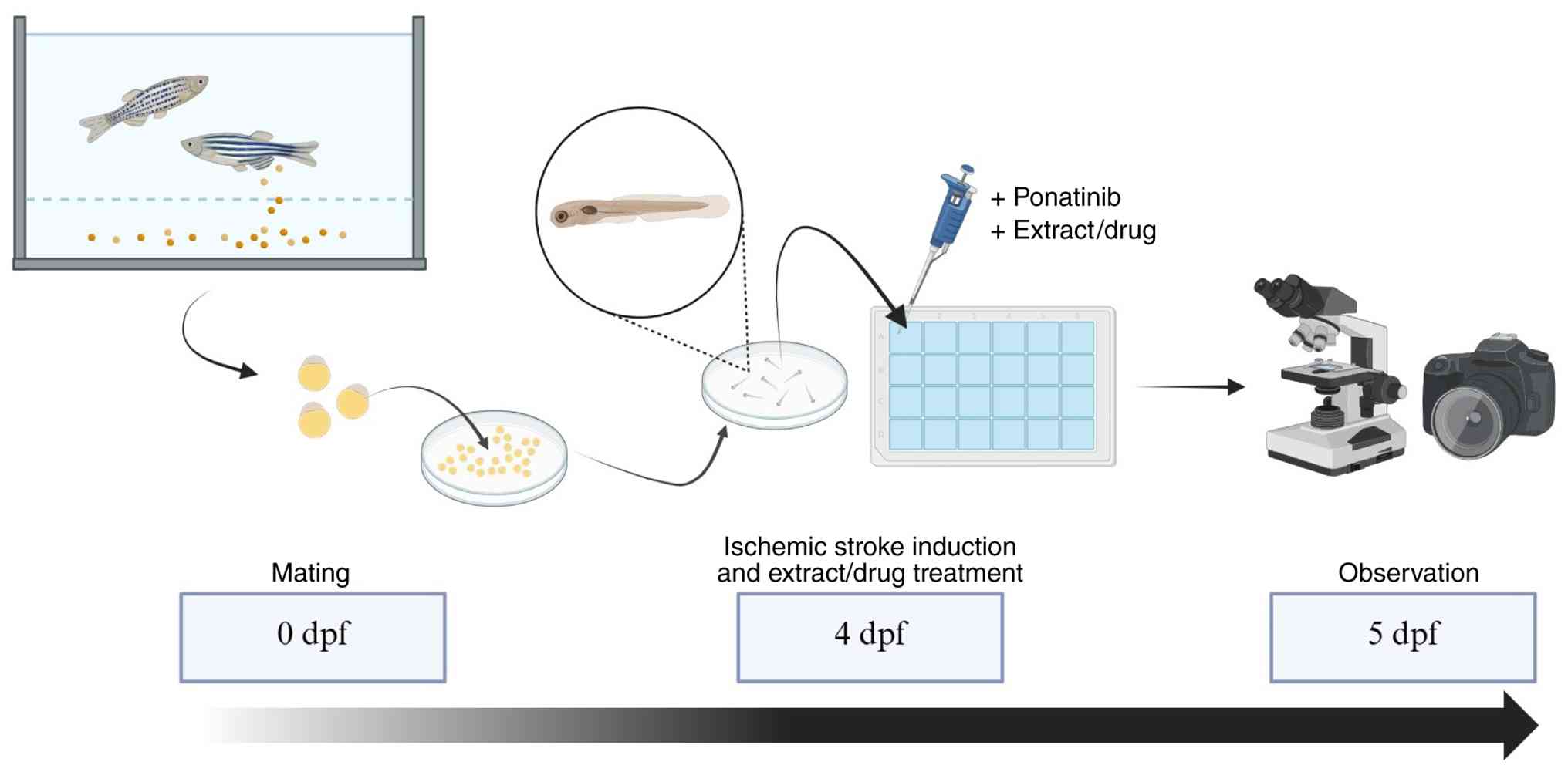
Fig. 1 presents a
schematic diagram of the experimental design. The method for
producing ischemic stroke in zebrafish larvae was adapted from a
previous study (19). Zebrafish
larvae at 4 days post fertilization (dpf) were placed into 24-well
plates, with each well containing 5 larvae. Larvae were incubated
for 24 h (room temperature) in a mixture of 3 µg/ml Pon solution
and sample solutions (¼ LC10, ½ LC10 and
LC10 of each extract) or reference drug solutions (12.5
µg/ml Asp and Eda). Larvae incubated in E3 or E3 + PTU were used as
the control group.
Analysis of the area of
thrombosis
Following ischemic stroke induction, the larvae were
euthanized with 0.4% tricaine solution, and whole larvae were
stained in room temperature with 5.85 mmol/l o-dianisidine
solution, sodium acetate buffer (0.1 M, pH 4.5), deionized water
and 30% (v/v) hydrogen peroxide (20:5:20:1) for 15 min in the dark.
Larvae were washed three times with 100% DMSO and mounted on glass
slides with low-melting point agarose. The zebrafish larvae were
observed under a light microscope. The area of cerebral thrombosis
was characterized by a dark brown color and was quantified using
ImageJ software (version 1.54g) (26).
Analysis of locomotion
Following induction, zebrafish larvae were placed in
a Petri dish containing 3 ml incubation medium and recorded
individually. Zebrafish larvae were subjected to light/dark
stimulation, comprising a 1 min light period followed by a 1 min
dark period. Larval locomotion was recorded for 3 min using a
camera. If the larvae did not exhibit movement at the beginning of
the recording period, tactile stimulation by touching the head or
tail was performed to trigger movement (27). The video recordings were analyzed
with AnimalTA software v3.2.2(28).
Locomotor parameters used to assess the anti-ischemic stroke effect
included total distance traveled, average swimming speed and
swimming path (29).
Statistical analysis
Data were analyzed with GraphPad Prism 8.0
(Dotmatics) and are presented as the mean ± SEM of ≥3 independent
experimental repeats. Data were analyzed by one-way ANOVA or
Kruskal-Wallis test followed by Dunnett's test. P<0.05 was
considered to indicate a statistically significant difference.
Results
Chemical compound profiling
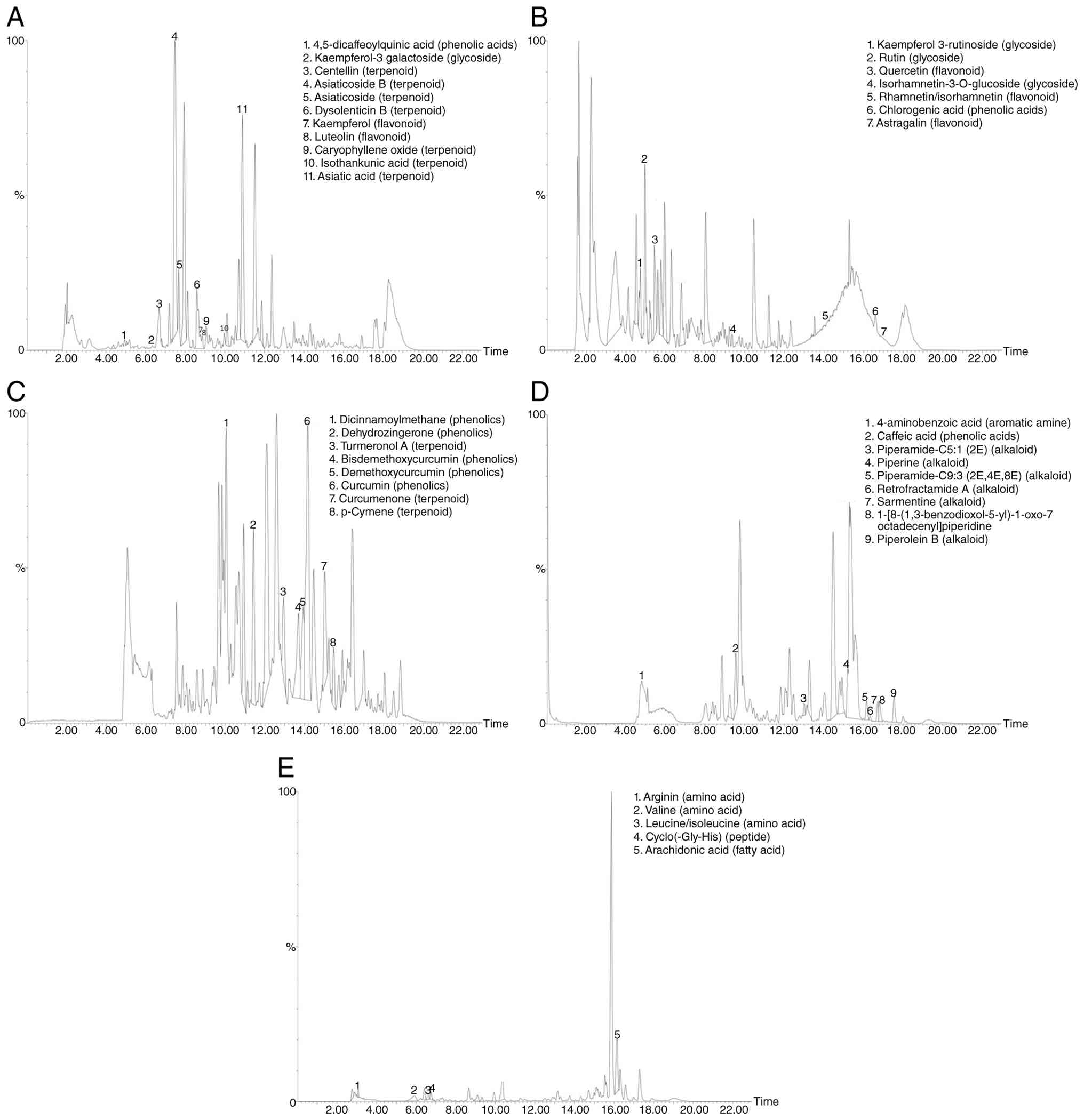
Fig. 2 shows the
chromatogram and predicted metabolites of CA, MO, CL, PN and CS. CA
comprised various metabolites classified into alkaloid, phenolic
and terpenoid groups. MO contained chemical components belonging to
the phenolic, flavonoid and glycoside classes. Additionally,
phenolic and terpenoid groups were detected in CL. PN exhibited
compounds classified into alkaloid and phenolic classes. Amino
acids, fatty acids and peptides were detected in CS.
Effect of the extracts on larval
survival
To evaluate the toxicity of the extracts on
zebrafish embryonic development, survival rate was measured 24-96
hpf following exposure. No surviving embryos were found at 72 hpf
following exposure to 5,000 µg/ml CA or CL, 2,500 µg/ml CL or 1,000
µg/ml CS (Fig. 3). PN at 1,000
µg/ml exhibited a strong lethal effect, with all embryos dying by
24 hpf. Additionally, more than half of the embryos remained viable
at 96 hpf following exposure to ≤1,250 µg/ml CA, ≤500 µg/ml MO,
≤1,250 µg/ml CL and ≤250 µg/ml PN and CS. Compared with the
control, embryos exposed to 156.25-625 µg/ml CA, 31.25-250 µg/ml
MO, 156.25-625 µg/ml CL and 31.25-125 µg/ml PN and CS did not show
a significant difference in survival rate. These results indicate
that lower extract concentrations were associated with higher
embryo survival.
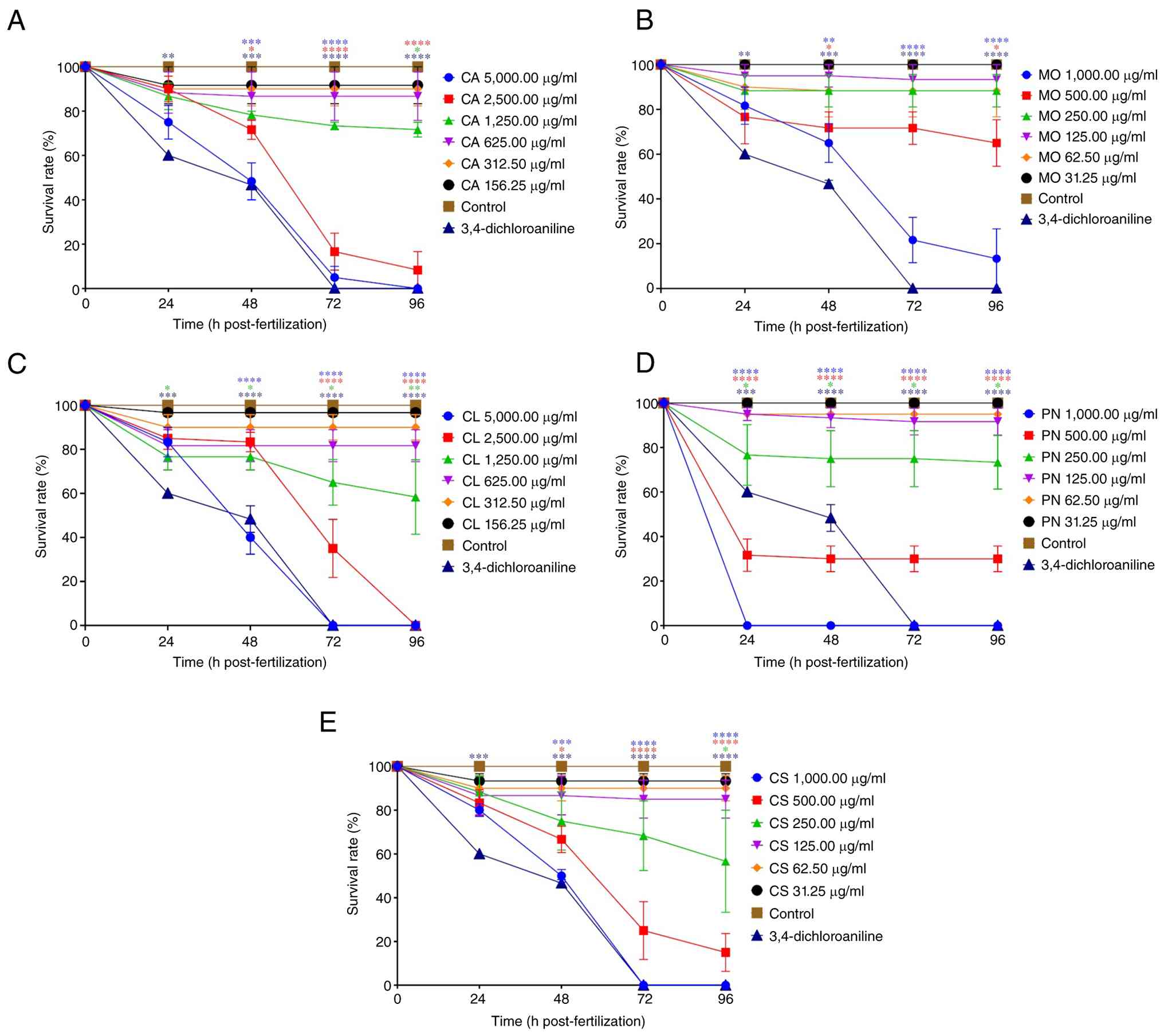 | Figure 3Effects of analyzed extracts on the
survival rate of zebrafish embryos. Effect of (A) CA, (B) MO, (C)
CL, (D) PN and (E) CS extracts on survival rate of zebrafish
embryos. *P<0.05, **P<0.01,
***P<0.001, ****P<0.0001 vs. control.
CA, Centella asiatica; MO, Moringa oleifera; CL,
Curcuma longa; PN, Piper nigrum; CS, Channa
striata. |
Effect of the extracts on embryo
hatching
Hatching rate was determined by quantifying the
number of embryos that emerged from the chorion between 24 and 96
hpf. Embryos showed no evidence of hatching at 24 h, with a
significant increase observed at 48 h, particularly following
exposure to lower concentrations of extracts (Fig. 4). Control embryos (incubated in E3)
hatched normally at 48 hpf. Exposure to 5,000 µg/ml CA, 1,000 µg/ml
MO, 1,250-5,000 µg/ml CL and 1,000 µg/ml PN and 1,000 µg/ml CS
resulted in delayed hatching of all embryos. Conversely, more than
half of the embryos completed hatching by 96 hpf when exposed to
≤625 µg/ml CA, ≤500 µg/ml MO, ≤312.5 µg/ml CL, ≤125 µg/ml PN and
≤250 µg/ml CS. Lower extract concentrations, such as 156.25-625
µg/ml CA, 31.25-250 µg/ml MO, 156.25 µg/ml CL and 31.25-125 µg/ml
PN and CS, did not induce any effect on the hatching rate compared
with the control group. These findings suggest that embryos exposed
to lower extract concentrations exhibited greater hatching
success.
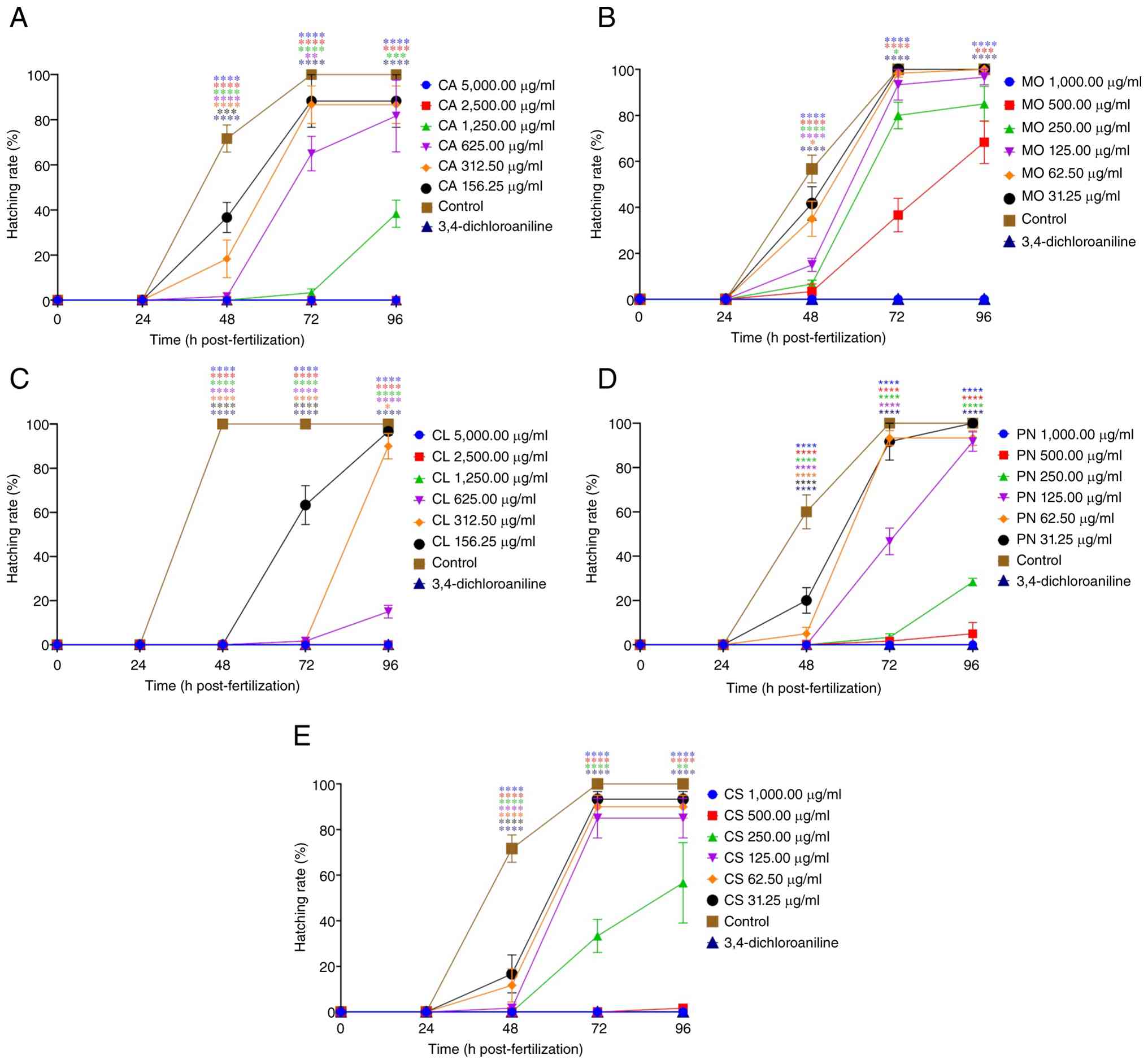 | Figure 4Effects of extracts on the hatching
rate of zebrafish embryos. Embryos were incubated in (A) CA, (B)
MO, (C) CL, (D) PN and (E) CS. *P<0.05,
**P<0.01, ***P<0.001,
****P<0.0001 vs. control. CA, Centella
asiatica; MO, Moringa oleifera; CL, Curcuma
longa; PN, Piper nigrum; CS, Channa striata. |
Effect of the extracts on
morphological abnormality
To assess the toxic effects of extracts,
morphological alterations in embryonic development were observed
every 24 h (Figs. S1, S2, S3,
S4 and S5). After 24 h extract exposure, high
concentrations of the extracts (≥2,500 µg/ml for CA and CL, and
1,000 µg/ml for MO, PN and CS) caused delayed gastrulation, absence
of somites and coagulation. At lower concentrations, exposure to
certain extracts caused pericardial edema (72 and 96 hpf following
exposure to 625 µg/ml CA and CL, respectively), yolk sac edema (96
hpf following exposure to 1,250 µg/ml CA or 500 µg/ml MO or CS) and
spine malformation (48 and 72 hpf following exposure to 312.5 µg/ml
CA and 125 µg/ml PN, respectively). Additionally, delayed embryonic
development was observed, including the lack of eye bud development
(24 hpf after exposure to 1,250 µg/ml CA, 500 µg/ml MO and 125
µg/ml CS and 72 hpf after exposure to 2,500 µg/ml CA) and reduced
body size (96 hpf after exposure to 2,500 µg/ml CA, 500 µg/ml MO
and 625 µg/ml CL). By contrast, embryos exposed to lower extract
concentrations (156.25 µg/ml CA, 31.25 µg/ml MO, 156.25-312.5 µg/ml
CL and 31.25-62.5 µg/ml PN and CS) exhibited normal developmental
progression.
Lethal concentration of the extracts
on zebrafish embryos
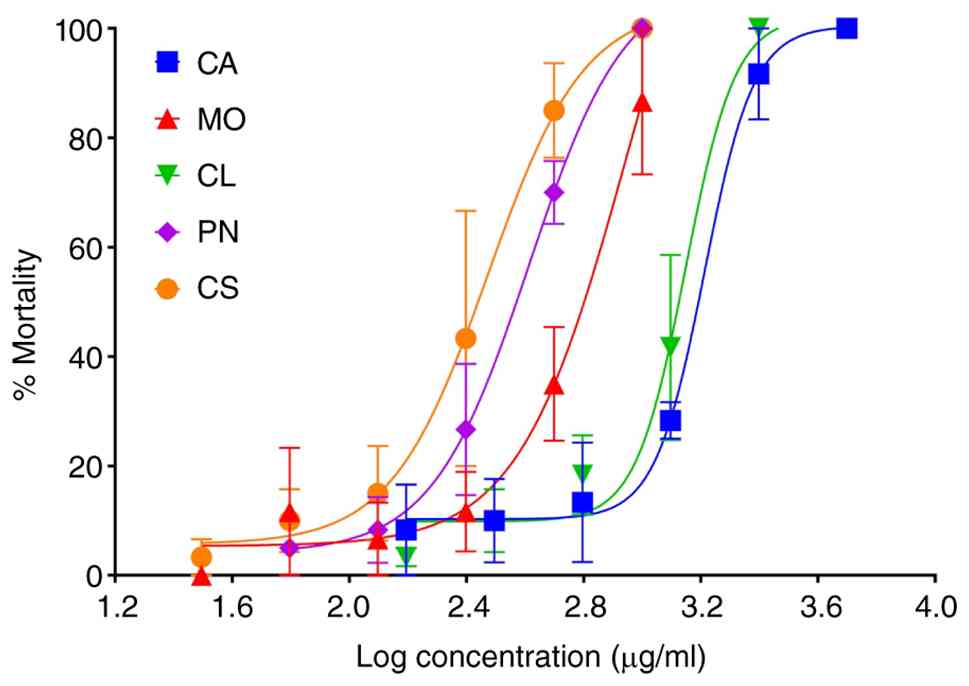
To evaluate the mortality effects of the extracts on
embryos, lethal concentrations were calculated using probit
analysis (Fig. 5; Table I). The mortality effect order was as
follows: CS > PN > MO > CL > CA. Based on the Globally
Harmonized System of Classification and Labeling of Chemicals, all
extracts were classified as non-toxic based on their
LC50 values (LC50>100 µg/ml) (30). Therefore, these extracts were used
at concentrations corresponding to ¼ LC10, ½
LC10, and LC10 for subsequent experiments in
the zebrafish ischemic stroke model (Table I).
 | Table ILC of extracts. |
Table I
LC of extracts.
| Extract | ¼ LC10,
µg/mla | ½ LC10,
µg/mla | LC10,
µg/mla | LC50,
µg/ml |
|---|
| CA | 57.25 | 114.50 | 229.00 | 1285.00 |
| MO | 18.75 | 37.50 | 75.00 | 547.52 |
| CL | 68.75 | 137.50 | 275.00 | 1187.89 |
| PN | 26.25 | 52.50 | 105.00 | 374.08 |
| CS | 14.50 | 29.00 | 58.00 | 240.14 |
Effect of the extracts in decreasing
the area of thrombosis
The anti-ischemic stroke effects of the extracts
were evaluated by measuring cerebral thrombosis. Following 24 h
incubation with Pon, the zebrafish larvae exhibited an increased
area of cerebral thrombosis compared with the control group
(Fig. 6). By contrast, 114.50 and
229.00 µg/ml CA, 75.00 µg/ml MO, 275.00 µg/ml CL and 14.50-58.00
µg/ml CS demonstrated significant anti-brain thrombosis activity.
The effects of CA, MO and CL were dose-dependent, with lower
extract concentrations resulting in larger cerebral thrombosis
areas than higher concentrations. These three extracts decreased
the thrombosis area by 1.85-2.51-fold compared with the Pon group.
Conversely, none of the PN concentrations significantly decreased
the area of cerebral thrombosis. CS showed a comparable
anti-thrombosis effect between concentrations. Moreover, CS
resulted in a 1.4-3.2-fold decrease in cerebral thrombosis area
relative to the Pon group, with the most pronounced decrease at 29
µg/ml CS, suggesting potent anti-thrombotic activity.
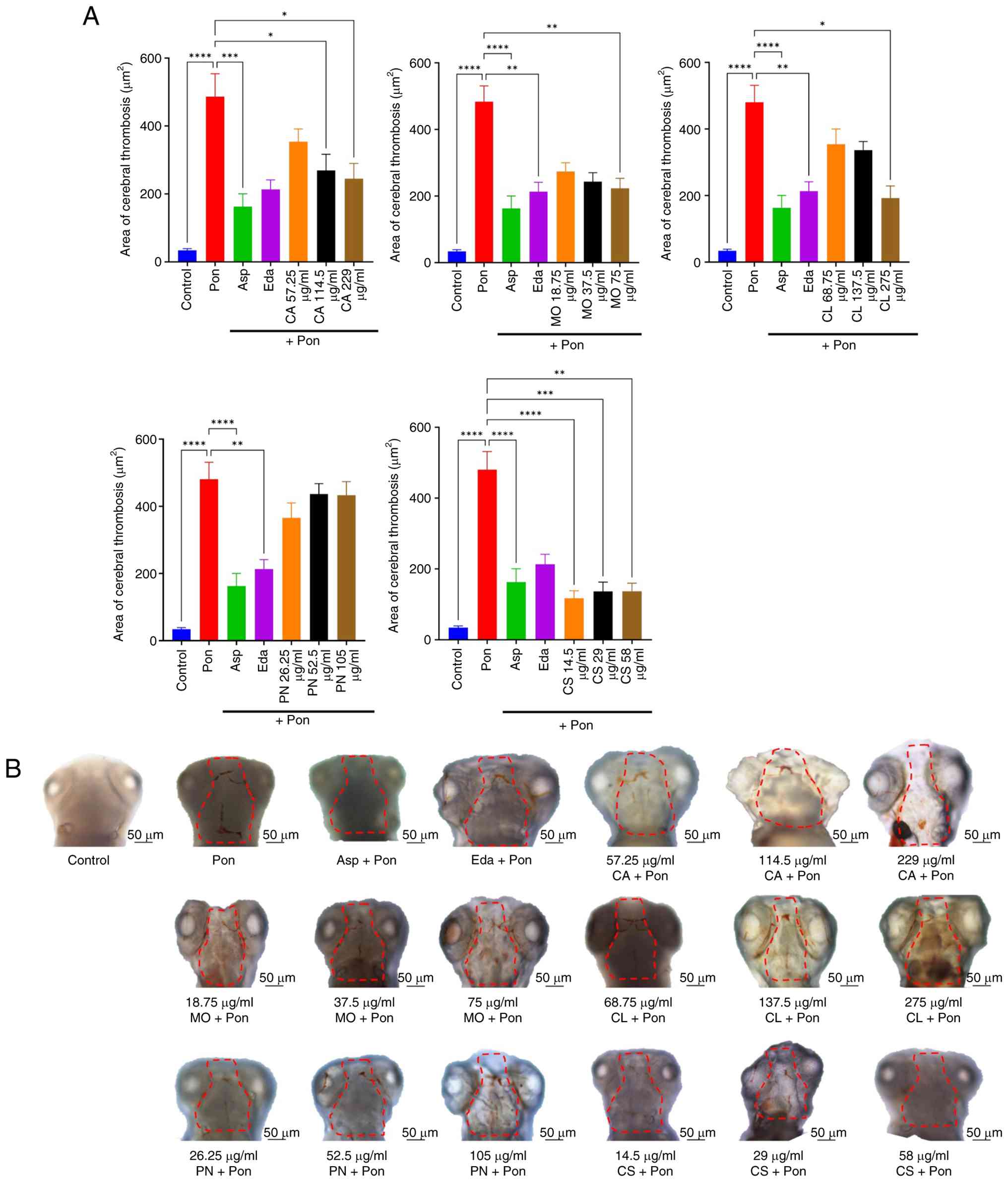 | Figure 6Effects of analyzed extracts on the
area of cerebral thrombosis of zebrafish larvae. (A) Area of
cerebral thrombosis and (B) representative images of the zebrafish
larvae (5 days post-fertilization). Area inside the dashed lines
indicates the observed area. Scale bar, 50 µm.
*P<0.05, **P<0.01,
***P<0.001, ****P<0.0001. CA,
Centella asiatica; MO, Moringa oleifera; CL,
Curcuma longa; PN, Piper nigrum; CS, Channa
striata; Asp, 12.5 µg/ml aspirin; Eda, 12.5 µg/ml edaravone;
Pon, 3 µg/ml ponatinib. |
Effect of the extracts on improving
locomotor function
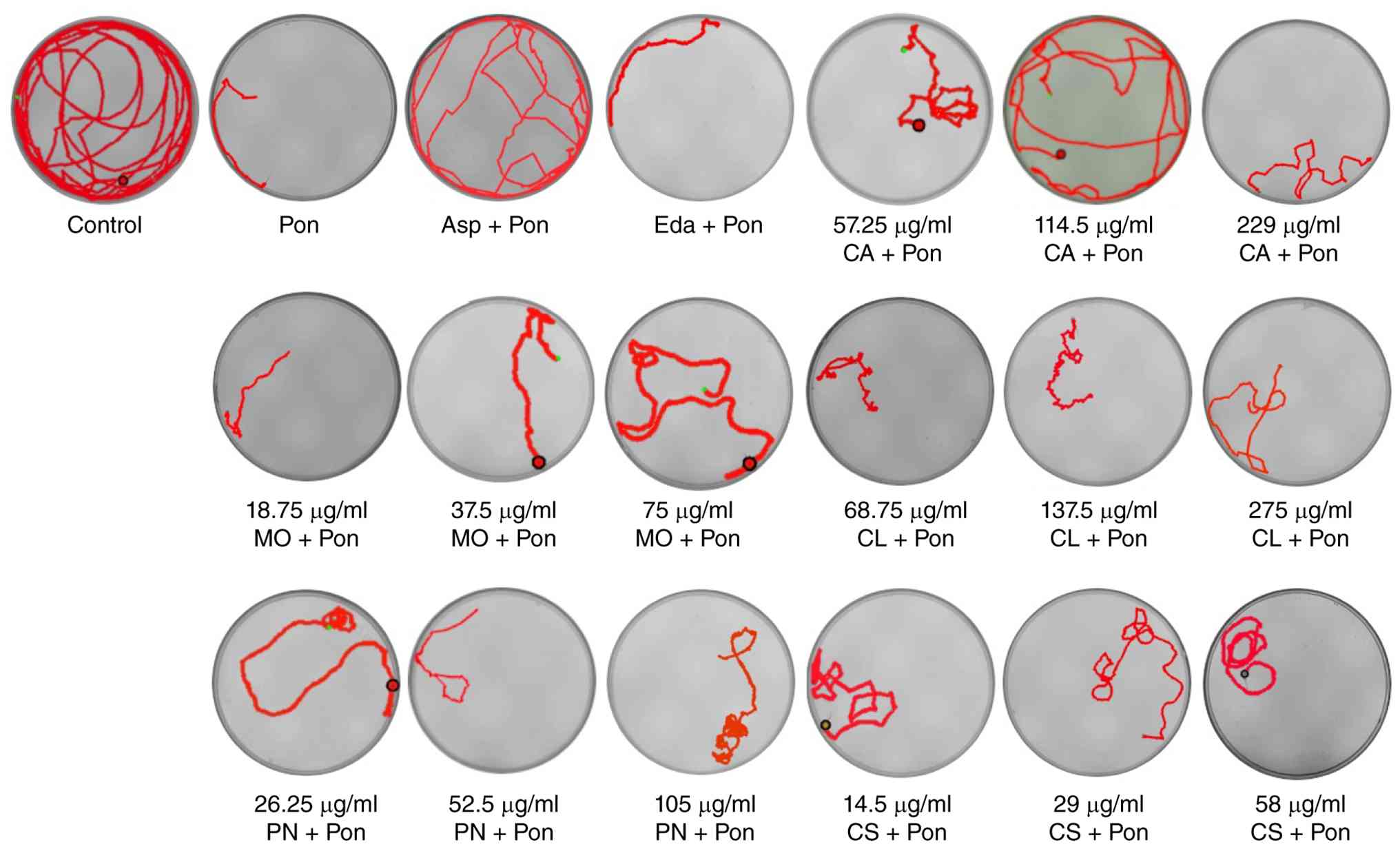
Locomotor function in zebrafish larvae following
extract treatment was assessed based on the average swimming speed,
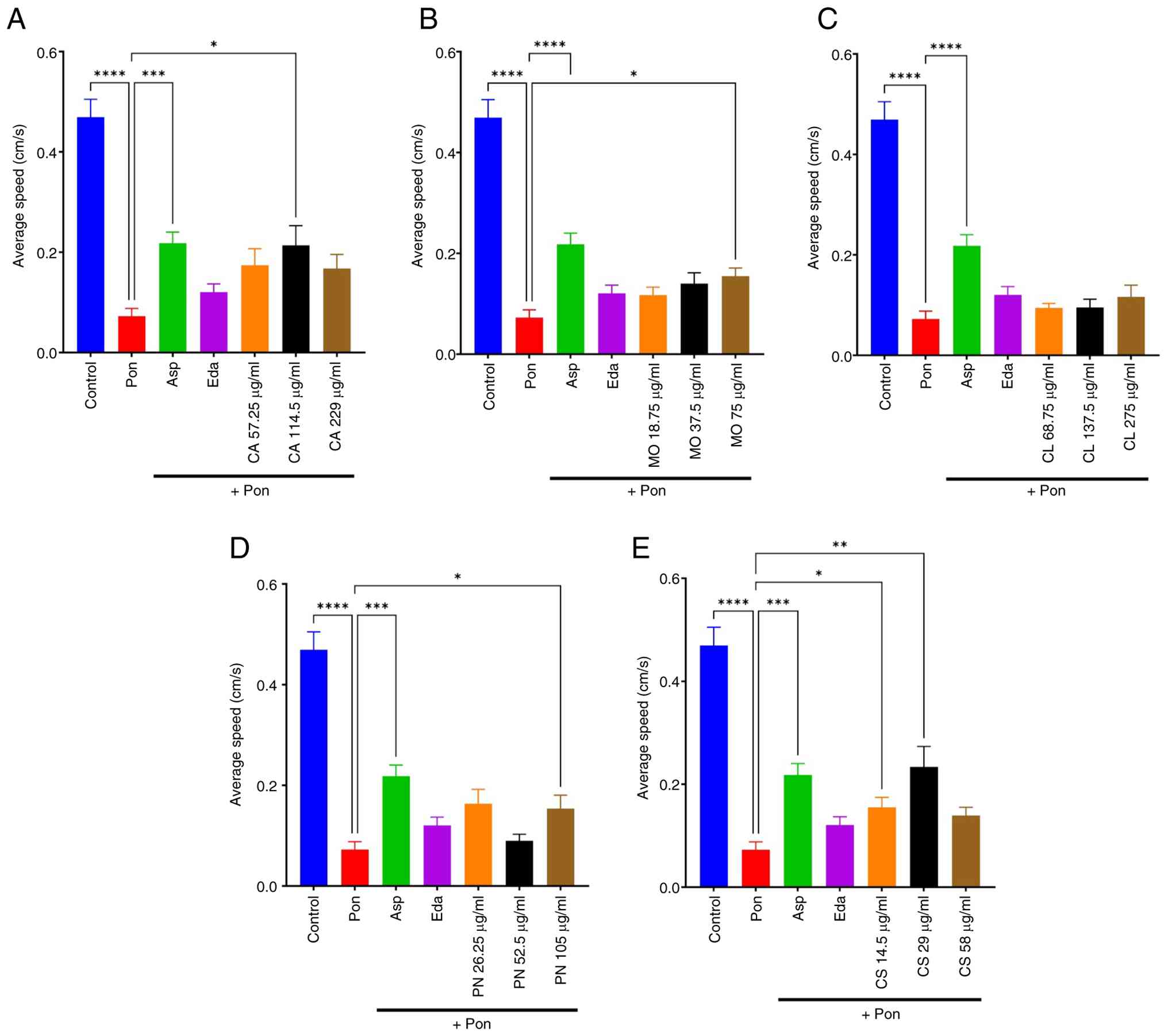
total distance traveled and swimming trajectory. After Pon
induction, notable locomotor impairment was observed compared with
the control group in larvae treated with 114.5 µg/ml CA, 75 µg/ml
MO, 26.25 and 105 µg/ml PN and 14.5 and 29 µg/ml CS (Figs. 7, 8
and 9). CL had no effect on the
restoration of locomotor damage in an ischemic environment. CA and
CS at their highest concentrations demonstrated a reduced effect
compared with lower concentrations. Conversely, a moderate PN
concentration (52.5 µg/ml) showed a weaker effect than both low
(26.25 µg/ml) and high (105 µg/ml) concentrations. These findings
indicated that each extract exerts its effect at a specific optimal
dose.
 | Figure 7Effects of extracts on the total
distance traveled of zebrafish larvae. Total distance traveled by
zebrafish larvae (5 days post-fertilization) exposed to Pon and (A)
CA, (B) MO, (C) CL, (D) PN and (E) CS extracts.
*P<0.05, **P<0.01,
***P<0.001, ****P<0.0001. CA,
Centella asiatica; MO, Moringa oleifera; CL,
Curcuma longa; PN, Piper nigrum; CS, Channa
striata; Asp, 12.5 µg/ml aspirin; Eda, 12.5 µg/ml edaravone;
Pon, 3 µg/ml ponatinib. |
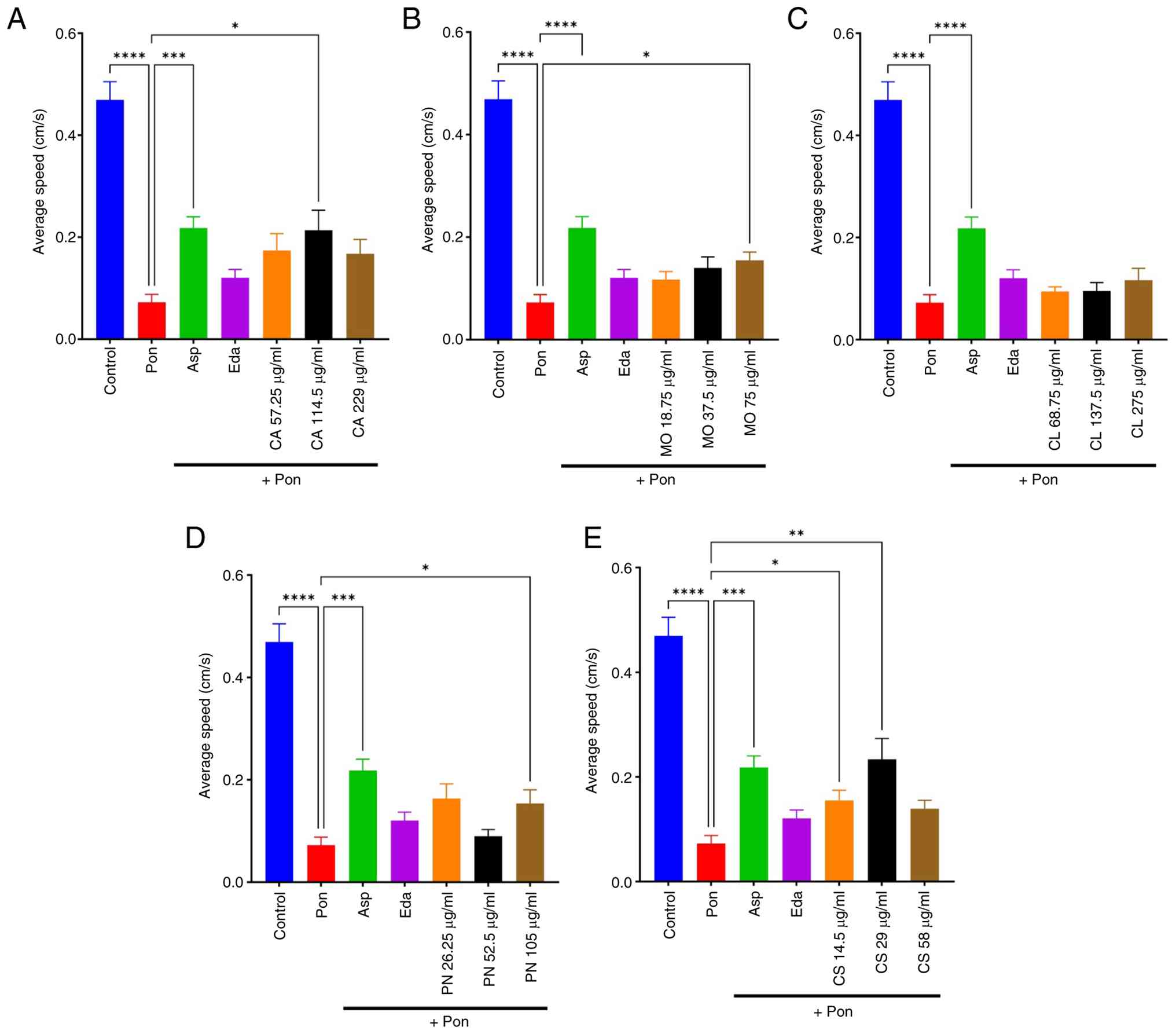 | Figure 8Effect of extracts on the average
speed of zebrafish larvae. Average speed of zebrafish larvae (5
days post-fertilization) exposed to Pon and (A) CA, (B) MO, (C) CL,
(D) PN and (E) CS extracts. *P<0.05,
**P<0.01, ***P<0.001,
****P<0.0001. CA, Centella asiatica; MO,
Moringa oleifera; CL, Curcuma longa; PN, Piper
nigrum; CS, Channa striata; Asp, 12.5 µg/ml aspirin;
Eda, 12.5 µg/ml edaravone; Pon, 3 µg/ml ponatinib. |
MO was the only extract that showed a dose-dependent
effect. Furthermore, among all tested concentrations, CS at 29
µg/ml demonstrated the greatest effect, increasing the average
speed and total distance traveled by ~3.22 and 2.97-fold,
respectively, compared with the Pon group. This indicates its high
potency in restoring locomotor damage following ischemia.
Discussion
In this study, we examined the toxicity and
anti-ischemic stroke activity of CA, MO, CL, PN and CS in the
zebrafish models. The chemical compounds of the extracts (Fig. 2) were also analyzed using
UPLC-Q-TOF-MS, and they were reported to be consistent with other
studies (31-36).
Survival and hatching rates of zebrafish embryos exposed to CA, MO,
CL, PN and CS were time- and concentration-dependent, with longer
exposure times and higher concentrations leading to decreased
embryo survival and hatchability. The extracts contained compounds
that may induce embryonic death, such as asiatic acid and
kaempferol in CA, rutin and quercetin in MO, curcumin in CL,
piperine in PN and arginine in CS (37-41).
Since zebrafish embryonic stages are sensitive to external stimuli,
elevated levels of compounds present in higher extract
concentrations may create a toxic environment, leading to disrupted
organogenesis and embryo mortality (42-44).
Extended exposure to high concentrations of the
present extracts can impair or damage the chorion, decreasing its
ability to protect the embryo, consequently leading to delayed
hatching or embryo coagulation. The decreased hatching rate caused
by exposure to CA, MO, CL and PN extracts has also been reported
previously (40,45-47).
Furthermore, bioactive compounds within the extracts may interact
with components on the chorion surface, resulting in delayed
hatching. For example, piperine in PN interacts with the hatching
enzyme 1a (He1a), which serves a key role in regulating chorion
hardening during the hatching process (40).
Moreover, the present extracts induced sublethal
toxicity. In a normal embryo, the eye bud is clearly visible at 24
hpf and fully developed at 48 hpf (48). By contrast, lack of an eye bud
formation was observed following exposure to low and high
concentrations of CA, MO and CS at 24-72 hpf. Spinal malformations
were observed at 72 and 96 hpf in hatched embryos exposed to MO,
CL, PN and CS, whereas growth inhibition was detected at 96 hpf
following exposure to CA, MO and CL. These results are likely
attributable to the ability of extract constituents to interact
with key cell proteins that regulate development and physiological
metabolism, following their accumulation on the chorion surface and
penetration into embryos via chorion pores (40). However, low extract concentrations
(156.25 µg/ml CA, 31.25 µg/ml MO, 156.25-312.5 µg/ml CL and
31.25-62.5 µg/ml PN and CS) did not induce morphological
deformities in zebrafish embryos.
In the present study, yolk sac edema was observed at
96 hpf after exposure to 1,250 µg/ml CA and 500 µg/ml MO and CS. In
normal development, the yolk sac provides key nutrients to the
developing embryo and decreases in size by 96 hpf (49). A swollen yolk indicates abnormal
nutritional absorption (44). This
may result from impaired osmoregulation and toxin accumulation in
the yolk sac caused by the extracts (50). The abnormal organ development
reported in the present study is consistent with other studies
(40,41,46).
Table II shows the
LC50 values of the analyzed extracts from published
studies (40,45,51-58).
Currently, research on the toxic effects of these extracts,
particularly PN and CS, in zebrafish models remains limited.
Previous studies on PN in zebrafish used essential oils or piperine
as test samples (59,60). Moreover, there are currently no
published studies on the toxic effects of CS in the zebrafish
models. The majority of toxicity studies on CA, PN, CL, PN, and CS
using varied solvents have been conducted in rodent models, and all
studies have reported the extracts to be considerably safe
(9,61-64).
| Table IILC50 values of extracts
from previous studies. |
Table II
LC50 values of extracts
from previous studies.
| A, Centella
asiatica leaves |
|---|
| Solvent | Toxicity study
protocol | LC50,
µg/ml | (Refs.) |
|---|
| 70% ethanol | OECD Test No.
203 | 1,250.00 | (51) |
| 96% ethanol | OECD Test No.
236 | 808.81 | (52) |
| Ethyl acetate | OECD Test No.
236 | 26.61 | (52) |
| Methanol | OECD Test No.
236 | 39.56 | (53) |
| B, Moringa
oleifera leaves |
| 70% ethanol | OECD Test No.
203 | 1,231.00 | (54) |
| 80% ethanol | OECD Test No.
236 | 30.04 | (55) |
| 80% methanol | OECD Test No.
236 | 163.87 | (55) |
| 80% ethanol | Modified OECD Test
No. 236 | 445.10 | (65) |
| C, Curcuma
longa rhizomes |
| 80% methanol | OECD Test No.
236 | 56.68 | (45) |
| Hexane | Modified OECD Test
No. 236 | 5.00 | (57) |
| Ethyl acetate | Modified OECD Test
No. 236 | 12.00 | (57) |
| Ethanol | Modified OECD Test
No. 236 | 14.00 | (57) |
| Methanol | Modified OECD Test
No. 236 | 7.00 | (57) |
| Water | Modified OECD Test
No. 236 | >1,000.00 | (57) |
| Ethanol | Modified OECD Test
No. 236 | 72.00 | (58) |
| D, Piper
nigrum seeds |
| Water | Modified OECD Test
No. 236 | 35.60 | (40) |
Previous studies (Table
II) have demonstrated toxic effects comparable to those in the
present study (LC50>100 µg/ml). Conversely, several
studies have reported conflicting results (40,45,52,53,55,57,58),
potentially due to differences in extraction methods and toxicity
testing protocols, limiting the relevance of direct comparisons
with other studies. Unlike most published studies that have
employed ethanolic extracts (51,54,55,57,58,65),
the present study used water as the extraction solvent. Water
extracts typically exhibit lower toxicity and greater compatibility
with in vivo models (57,66,67).
They are also environmentally friendly and inexpensive, which is
suitable for large-scale production (68). Extraction with organic solvents
results in higher toxic effects than those of water extracts
(57). Patel et al (40) adopted a modified fish embryo acute
toxicity test based, which prolongs the exposure time up to 120 h.
This longer duration of extract exposure produces a lower
LC50, indicating a higher toxic effect (65).
Ischemic stroke-induced brain injury results from a
decrease in cerebral blood flow, typically due to the presence of a
thrombus or embolus within the cerebral vasculature (7). In the present study, Pon was used to
create an ischemic stroke model in zebrafish larvae. This chemical
compound has been widely used in other studies to mimic ischemic
stroke in zebrafish larvae (21,29,69).
The method is easy to perform and time-saving; thus, it is used in
drug screening (69). Pon
administration in the present study was performed on zebrafish
larvae at 4 dpf, when blood vessels and the swim bladder have
developed, supporting its use in anti-thrombotic and locomotion
tests (19,27).
In the present study, the anti-thrombosis effect of
the extracts was demonstrated by a decrease in the cerebral
thrombosis area. This effect may be useful for anti-thrombotic
treatment. Thrombolytic therapy is key in treating acute ischemic
stroke as it may restore blood flow and decrease the infarct area
and brain damage. Among the extracts, CS showed the strongest
anti-thrombotic effect. Nasution et al (17) reported that CS extract induces
angiogenesis in a rat model of ischemic stroke by enhancing the
expression levels of vascular endothelial growth factor, nitric
oxide (NO) and vascular endothelial growth factor receptor 2.
Moreover, cyclo(-Gly-His), a peptide in CS, exhibits
anti-thrombotic effects by reducing thrombin activity, decreasing
fibrin formation and inhibiting platelet aggregation (70).
CA, MO and CL also significantly decreased the
cerebral thrombosis area. Asiaticoside in CA decreases the levels
of endothelin-1, intercellular adhesion molecule 1, vascular cell
adhesion molecule 1 and E-selectin and increases NO and cyclic
guanosine monophosphate production under hypoxic conditions
(71). This supports blood vessel
vasodilation and hinders platelet adhesion and aggregation,
inhibiting thrombus formation (71). MO contains numerous bioactive
compounds, such as quercetin, kaempferol and rutin. Some studies
have shown that quercetin and kaempferol suppress thrombin activity
and tissue factor activity and prevent clot production by fibrin,
as well as platelet adhesion and aggregation (72,73). A
study in a rat model demonstrated that rutin has anti-thrombotic
effects via delayed platelet aggregation time (74). Additionally, the curcumin in CL
inhibits platelet adhesion in the cerebral vascular endothelium
through endothelial regulation (75).
In humans, ischemic stroke leads to oxidative stress
and neuronal inflammation, causing neuronal damage in the brain.
Paresis is one of its primary clinical manifestations (76). In the zebrafish model, the impaired
swimming ability of the larvae represents the motor disorder caused
by the ischemic insult. The present study showed that all extracts
except CL improved locomotor function in Pon-induced larvae.
Despite the anti-thrombotic activity of CL (275 µg/ml), it failed
to inhibit locomotor damage. Conversely, studies on CL bioactive
compounds, such as curcumin and hexahydrocurcumin, via
intraperitoneal injection in a rat model have showed restoration of
the motor impairment caused by brain ischemia (77-80).
This discrepancy suggests that the route of drug administration
serves a key role, as the neuroactive compounds in CL administered
via bath immersion in the present study may have low
bioavailability, decreasing their pharmacological efficacy.
Ciubotaru et al (70)
reported that, following immersion exposure, the concentration of
curcumin in the zebrafish brain is lower than that of its
derivative, mitocurcumin.
Additionally, the locomotor improvement following
CA, MO, PN and CS treatments may be associated with their
neuroprotective components. Asiaticoside in CA decreases apoptosis
and improves neurological function in transient middle cerebral
occlusion in rats (81). Quercetin,
rutin and kaempferol, present in MO, decrease ROS production and
the levels of cytokines and proinflammatory mediators, protecting
against neurodegeneration and inhibiting neuronal cell death
(82-84).
Moreover, flavonoids and polyphenols in ME decrease oxidative
stress in the brain due to ischemia (85). Piperin, a bioactive compound in PN,
improves neurological function, postural reflex and balance in rats
following cerebral ischemia (16).
Valine, leucine and isoleucine in CS increase mitochondrial
biogenesis and stimulate the activity of antioxidant enzymes,
including superoxide dismutase and glutathione peroxidase, thereby
protecting neurons from ischemia-induced damage (86). Alleviation of oxidative stress
promotes improved muscle physiology, leading to enhanced swimming
ability in zebrafish larvae (87).
The severity of motoric impairment is associated
with the extent of the cerebral thrombosis area (88). This supports the hypothesis that
anti-thrombotic agents may decrease motor deficits in cerebral
ischemia. In the present study, a contradictory result was
observed: 26.25 µg/ml PN did not significantly decrease the area of
cerebral thrombosis but improved locomotor dysfunction. These
findings suggested that, at certain concentrations, the extract may
exert a greater effect on locomotor recovery than on
thrombosis-associated outcomes.
In conclusion, the present study demonstrated the
safety and therapeutic potential of CA, MO, CL, PN and CS for
ischemic stroke treatment. Among the tested extracts, CS exhibited
the most promising potential as an anti-ischemic stroke agent, as
it effectively decreased the cerebral thrombosis area and improved
locomotor function following ischemia. The present study was
limited to organism-level observations. Further research is needed
to elucidate the cell and molecular mechanisms by which each
extract contributes to recovery from ischemic brain injury. The
anti-ischemic effects of the extracts examined in the present
zebrafish model are consistent with findings reported in rat models
(14,17,89).
The zebrafish model may serve as a tool for screening novel
pharmacological agents for the treatment of ischemic stroke.
Supplementary Material
Zebrafish embryo and larvae
development treated with Centella asiatica at 24, 48, 72 and
96 hpf. Images were captured using a stereo microscope at 40X
(unhatched embryo) and 25X (for hatched embryo) magnification. DG,
delayed gastrulation; LEB, lack of eye bud; TM, tail malformation;
C, coagulation; NDT, non-detachment of the tail; PE, pericardial
edema; YSE, yolk sac edema; ND, notochord deformation; N,
normal.
Zebrafish embryo and larvae
development treated with Moringa oleifera at 24, 48, 72 and
96 hpf. Images were captured using a stereo microscope at 40X
(unhatched embryo) and 25X (for hatched embryo) magnification. DG,
delayed gastrulation; LEB, lack of eye bud; C, coagulation; NDT,
non-detachment of the tail; PE, pericardial edema; YSE, yolk sac
edema; SM, spine malformation; N, normal.
Zebrafish embryo and larvae
development treated with Curcuma longa at 24, 48, 72 and 96
hpf. Images were captured using a stereo microscope at 40X
(unhatched embryo) and 25X (for hatched embryo) magnification. DG,
delayed gastrulation; LS, lack of somite; LEB, lack of eye bud; C,
coagulation; NDT, non-detachment of the tail; PE, pericardial
edema; YSE, yolk sac edema; SM, spine malformation; N, normal.
Zebrafish embryo and larvae
development treated with Piper nigrum at 24, 48, 72 and 96
hpf. Images were captured using a stereo microscope at 40X
(unhatched embryo) and 25X (for hatched embryo) magnification. DG,
delayed gastrulation; LS, lack of somite; C, coagulation; NDT,
non-detachment of the tail; PE, pericardial edema; YSE, yolk sac
edema; SM, spine malformation; TM, tail malformation; HM, head
malformation; N, normal.
Zebrafish embryo and larvae
development treated with Channa striata at 24, 48, 72 and 96
hpf. Images were captured using a stereo microscope at 40X
(unhatched embryo) and 25X (for hatched embryo) magnification. DG,
delayed gastrulation; LEB, lack of eye bud; C, coagulation; NDT,
non-detachment of the tail; PE, pericardial edema; YSE, yolk sac
edema; SM, spine malformation; N, normal.
Acknowledgements
Not applicable.
Funding
Funding: The present study was supported by the Riset Unggulan
ITB 2024 Program from Institut Teknologi Bandung (grant no.
959/IT1.B07.1/TA.00/2024).
Availability of data and materials
The data generated in this are available upon
reasonable request from the corresponding author.
Authors' contributions
NMDMWN, IW, KA and IKA conceived the study. NMDMWN,
IW and HW designed the study. NMDMWN, AM and RAI analyzed and
interpreted the data. IW and IKA confirm the authenticity of all
the raw data. NMDMWN wrote the manuscript. HW, IW, KA and IKA
supervised the study and revised the manuscript. All authors have
read and approved the final manuscript.
Ethics approval and consent to
participate
All procedures in this study were approved by the
Animal Research Ethics Committee-Institut Teknologi Bandung,
Bandung, Indonesia (approval no. KEP/I/2024/II/H211223ND/TAAZ for
the toxicity test and KEP/I/2024/VI/H110624NM/ANSZ for the
anti-ischemic stroke test).
Patient consent for publication
Not applicable.
Competing interests
The authors declare that they have no competing
interests.
Use of artificial intelligence tools
During the preparation of this work, AI tools were
used to improve the manuscript's readability and language. The
authors revised and edited the content produced by the AI tools as
necessary, and they take full responsibility for the final content
of the manuscript.
References
|
1
|
Dong X, Zhang T, Zhang C, Shang W, Zhang Y
and Zhang X: Traditional Chinese herbal medicines for the treatment
of ischemic stroke in China. Ageing Res Rev.
110(102803)2025.PubMed/NCBI View Article : Google Scholar
|
|
2
|
Chang D, Liu J and Bhuyan DJ:
Strengthening the scientific base of traditional medicine through
international collaboration and partnerships. J Ayurveda Integr
Med. 14(100747)2023.PubMed/NCBI View Article : Google Scholar
|
|
3
|
Singh N, Vayer P, Tanwar S, Poyet JL,
Tsaioun K and Villoutreix BO: Drug discovery and development:
Introduction to the general public and patient groups. Front Drug
Discov. 3(1201419)2023.
|
|
4
|
Daniali M and Abdollahi M: Animal and
computational models in toxicology and pharmacology. In:
Encyclopedia of Toxicology. Wexler P (ed). 4th edition. Vol 1.
Elsevier, Amsterdam, pp489-494, 2024. https://doi.org/10.1016/B978-0-12-824315-2.00038-5.
|
|
5
|
GBD 2019 Stroke Collaborators. Global,
regional, and national burden of stroke and its risk factors,
1990-2019: A systematic analysis for the global burden of disease
study 2019. Lancet Neurol. 20:795–820. 2021.PubMed/NCBI View Article : Google Scholar
|
|
6
|
GBD 2019 Indonesia Subnational
Collaborators. The state of health in Indonesia's provinces,
1990-2019: A systematic analysis for the global burden of disease
study 2019. Lancet Glob Heal. 10:e1632–e1645. 2022.PubMed/NCBI View Article : Google Scholar
|
|
7
|
Zhu T, Wang L, Wang L and Wan Q:
Therapeutic targets of neuroprotection and neurorestoration in
ischemic stroke: Applications for natural compounds from medicinal
herbs. Biomed Pharmacother. 148(112719)2022.PubMed/NCBI View Article : Google Scholar
|
|
8
|
Razali NNM, Ng CT and Fong LY:
Cardiovascular protective effects of Centella asiatica and
its triterpenes: A review. Planta Med. 85:1203–1215.
2019.PubMed/NCBI View Article : Google Scholar
|
|
9
|
Louisa M, Patintingan CGH and Wardhani
BWK: Moringa oleifera Lam. in cardiometabolic disorders: A
systematic review of recent studies and possible mechanism of
actions. Front Pharmacol. 13(792794)2022.PubMed/NCBI View Article : Google Scholar
|
|
10
|
Vafaeipour Z, Razavi BM and Hosseinzadeh
H: Effects of turmeric (Curcuma longa) and its constituent
(curcumin) on the metabolic syndrome: An updated review. J Integr
Med. 20:193–203. 2022.PubMed/NCBI View Article : Google Scholar
|
|
11
|
Balakrishnan R, Azam S, Kim IS and Choi
DK: Neuroprotective effects of black pepper and its bioactive
compounds in age-related neurological disorders. Aging Dis.
14:750–777. 2023.PubMed/NCBI View Article : Google Scholar
|
|
12
|
Haniffa MAK, Jeya Sheela PA, Kavitha K and
Jais AMM: Salutary value of haruan, the striped snakehead Channa
striatus-a review. Asian Pac J Trop Biomed. 4 (Suppl 1):S8–S15.
2014.PubMed/NCBI View Article : Google Scholar
|
|
13
|
Tabassum R, Vaibhav K, Shrivastava P, Khan
A, Ejaz Ahmed M, Javed H and Islam F, Ahmad S, Saeed Siddiqui M,
Safhi MM and Islam F: Centella asiatica attenuates the
neurobehavioral, neurochemical and histological changes in
transient focal middle cerebral artery occlusion rats. Neurol Sci.
34:925–933. 2013.PubMed/NCBI View Article : Google Scholar
|
|
14
|
Kirisattayakul W, Wattanathorn J, Tong-Un
T, Muchimapura S, Wannanon P and Jittiwat J: Cerebroprotective
effect of Moringa oleifera against focal ischemic stroke
induced by middle cerebral artery occlusion. Oxid Med Cell Longev.
2013(951415)2013.PubMed/NCBI View Article : Google Scholar
|
|
15
|
Cuschieri A, Camilleri E and Blundell R:
Cerebroprotective effects of Moringa oleifera derivatives
extracts against MCAO ischemic stroke: A systematic review and
meta-analysis. Heliyon. 9(e16622)2023.PubMed/NCBI View Article : Google Scholar
|
|
16
|
Zhang Y, Yang M, Yuan Q, He Q, Ping H,
Yang J, Zhang Y, Fu X and Liu J: Piperine ameliorates ischemic
stroke-induced brain injury in rats by regulating the PI3K/AKT/mTOR
pathway. J Ethnopharmacol. 295(115309)2022.PubMed/NCBI View Article : Google Scholar
|
|
17
|
Nasution I, Sjahrir H, Ilyas S and Ichwan
M: Snakehead fish extract as an enhancer of vascular endothelial
growth factor and nitric oxide levels in cerebral angiogenesis: An
insight of stroke therapy. Med Glas (Zenica). 17:420–424.
2020.PubMed/NCBI View Article : Google Scholar
|
|
18
|
Wang W, Gao X, Liu L, Guo S, Duan JA and
Xiao P: Zebrafish as a vertebrate model for high-throughput drug
toxicity screening: Mechanisms, novel techniques, and future
perspectives. J Pharm Anal. 15(101195)2025.PubMed/NCBI View Article : Google Scholar
|
|
19
|
Nayaka NMDMW, Adnyana IK, Anggadiredja K
and Wibowo I: Drug screening for ischemic stroke using larvae and
adult zebrafish model: A review. Lab Anim Res.
2024(1)2025.PubMed/NCBI View Article : Google Scholar
|
|
20
|
Žideková N, Kertys M, Mokrý J, Antolová D,
Šimeková K and Rosoľanka R: A high-throughput LC-MS/MS method for
simultaneous analysis of albendazole, albendazole sulfoxide and
albendazole sulfone in human plasma. J Chromatogr B.
1264(124741)2025.PubMed/NCBI View Article : Google Scholar
|
|
21
|
Lin S, Liu X, Sun A, Liang H, Li Z, Ye S,
Ma H, Fan W, Shen C, Jin M and He Q: Qilong capsule alleviates
ponatinib-induced ischemic stroke in a zebrafish model by
regulating coagulation, inflammation and apoptosis. J
Ethnopharmacol. 314(116397)2023.PubMed/NCBI View Article : Google Scholar
|
|
22
|
Matthews M and Varga ZM: Anesthesia and
euthanasia in zebrafish. ILAR J. 53:192–204. 2012.PubMed/NCBI View Article : Google Scholar
|
|
23
|
OECD: Test No. 236: Fish embryo acute
toxicity (FET) test. OECD Guidel Test Chem Sect 2, 2025.
|
|
24
|
Zavitri NG, Syahbaniati AP, Primastuti RK,
Putri RM, Damayanti S and Wibowo I: Toxicity evaluation of zinc
oxide nanoparticles green synthesized using papaya extract in
zebrafish. Biomed Rep. 19(96)2023.PubMed/NCBI View Article : Google Scholar
|
|
25
|
Finney D: Probit analysis: A statistical
treatment of the sigmoid response curve. 2nd edition. Cambridge
University Press, Cambridge, 1952.
|
|
26
|
Zhao D, Chen X, Wang R, Pang H, Wang J and
Liu L: Determining the chemical profile of Caragana jubata
(Pall.) Poir. by UPLC-QTOF-MS analysis and evaluating its
anti-ischemic stroke effects. J Ethnopharmacol.
309(116275)2023.PubMed/NCBI View Article : Google Scholar
|
|
27
|
Basnet RM, Zizioli D, Taweedet S, Finazzi
D and Memo M: Zebrafish larvae as a behavioral model in
neuropharmacology. Biomedicines. 7(23)2019.PubMed/NCBI View Article : Google Scholar
|
|
28
|
Chiara V and Kim SY: AnimalTA: A highly
flexible and easy-to-use program for tracking and analysing animal
movement in different environments. Methods Ecol Evol.
14:1699–1707. 2023.
|
|
29
|
Wang Y, Wu H, Sheng H, Wang Y, Li X, Wang
Y and Zhao L: Discovery of anti-stroke active substances in Guhong
injection based on multi-phenotypic screening of zebrafish. Biomed
Pharmacother. 155(113744)2022.PubMed/NCBI View Article : Google Scholar
|
|
30
|
Zhou L, Fan D, Yin W, Gu W, Wang Z, Liu J,
Xu Y, Shi L, Liu M and Ji G: Comparison of seven in silico tools
for evaluating of daphnia and fish acute toxicity: Case study on
Chinese Priority Controlled Chemicals and new chemicals. BMC
Bioinformatics. 22(151)2021.PubMed/NCBI View Article : Google Scholar
|
|
31
|
Wright KM, Magana AA, Laethem RM, Moseley
CL, Banks TT, Maier CS, Stevens JF, Quinn JF and Soumyanath A:
Centella asiatica water extract shows low potential for
cytochrome p450-mediated drug interactions. Drug Metab Dispos.
48:1053–1063. 2020.PubMed/NCBI View Article : Google Scholar
|
|
32
|
Wang J, Du Y, Jiang L, Li J, Yu B, Ren C,
Yan T, Jia Y and He B: LC-MS/MS-based chemical profiling of water
extracts of Moringa oleifera leaves and pharmacokinetics of
their major constituents in rat plasma. Food Chem X.
23(101585)2024.PubMed/NCBI View Article : Google Scholar
|
|
33
|
Akullo JO, Kiage-Mokua BN, Nakimbugwe D,
Ng'ang'a J and Kinyuru J: Potential sources of natural antioxidants
and antimicrobials: Comparative analysis of turmeric (Curcuma
longa) extracts from different solvent extraction systems. J
Food Chem Nanotechnol. 8:138–146. 2022.
|
|
34
|
Okoye OI, Ezegbe AG, Nwauzoije EJ and
Anoshirike CO: Nutrient and phytochemical compositions of aqueous
extracts of black pepper (Piper guineense) seed, turmeric
(Curcuma longa) and ginger (Zingiber officinale)
rhizome. J Home Econ Res. 30:107–117. 2023.
|
|
35
|
Mustafa A, Sujuti H, Permatasari N and
Aris Widodo M: Determination of nutrient contents and amino acid
composition of Pasuruan Channa striata extract. IEESE Int J
Sci Technol. 2:1–11. 2013.
|
|
36
|
Winnie SY, Syazwan AM, Badrul Y and Saiful
Z: Physico-chemical and biological activity of Malaysian channa
striatus water extract on human foetal lung cell (IMR-90). Front
Bioeng Biotechnol. Conference Abstract: 6th Malaysian Tissue
Engineering and Regenerative Medicine Scientific Meeting (6th
MTERMS) 2016 and 2nd Malaysian Stem Cell Meeting, 2016 doi:
10.3389/conf.FBIOE.2016.02.00009.
|
|
37
|
Capiotti KM, Fazenda L, Nazario LR,
Menezes FP, Kist LW, Bogo MR, Da Silva RS, Wyse AT and Bonan CD:
Arginine exposure alters ectonucleotidase activities and morphology
of zebrafish larvae (Danio rerio). Int J Dev Neurosci.
31:75–81. 2013.PubMed/NCBI View Article : Google Scholar
|
|
38
|
Chen YH, Yang ZS, Wen CC, Chang YS, Wang
BC, Hsiao CA and Shih TL: Evaluation of the structure-activity
relationship of flavonoids as antioxidants and toxicants of
zebrafish larvae. Food Chem. 134:717–724. 2012.PubMed/NCBI View Article : Google Scholar
|
|
39
|
Wu JY, Lin CY, Lin TW, Ken CF and Wen YD:
Curcumin affects development of zebrafish embryo. Biol Pharm Bull.
30:1336–1339. 2007.PubMed/NCBI View Article : Google Scholar
|
|
40
|
Patel P, Panda PK, Kumari P, Singh PK,
Nandi A, Mallick MA, Das B, Suar M and Verma SK: Selective in vivo
molecular and cellular biocompatibility of black peppercorns by
piperine-protein intrinsic atomic interaction with elicited
oxidative stress and apoptosis in zebrafish eleuthero embryos.
Ecotoxicol Environ Saf. 192(110321)2020.PubMed/NCBI View Article : Google Scholar
|
|
41
|
Wang G, Xiao Q, Wu W, Wu Y, Wei Y, Jing Y
and Gong Z: Assessment of toxicity and absorption of the novel AA
derivative AA-Pme in SGC7901 cancer cells in vitro and in zebrafish
in vivo. Med Sci Monit. 24(5412)2018.PubMed/NCBI View Article : Google Scholar
|
|
42
|
Veeren B, Ghaddar B, Bringart M, Khazaal
S, Gonthier MP, Meilhac O, Diotel N and Bascands JL: Phenolic
profile of herbal infusion and polyphenol-rich extract from leaves
of the medicinal plant Antirhea borbonica: Toxicity assay
determination in zebrafish embryos and larvae. Molecules.
25(4482)2020.PubMed/NCBI View Article : Google Scholar
|
|
43
|
Borges KS, Virote BDCR, Cavalcanti VP,
Aazza S, Bertolucci SKV, Murgas LDS and Resende LV: Leaf and fruit
extracts of Solanum betaceum Cav.: Antioxidant potential and
embryotoxicity using a zebrafish model. Toxicol Rep.
14(102016)2025.PubMed/NCBI View Article : Google Scholar
|
|
44
|
Chahardehi AM, Arsad H and Lim V:
Zebrafish as a successful animal model for screening toxicity of
medicinal plants. Plants. 9(1345)2020.PubMed/NCBI View Article : Google Scholar
|
|
45
|
Alafiatayo AA, Lai KS, Syahida A, Mahmood
M and Shaharuddin NA: Phytochemical evaluation, embryotoxicity, and
teratogenic effects of Curcuma longa extract on zebrafish
(Danio rerio). Evid Based Complement Alternat Med.
2019(3807207)2019.PubMed/NCBI View Article : Google Scholar
|
|
46
|
David CRS, Angeles A, Angoluan RC, Santos
JPE, David ES and Dulay RMR: Moringa oleifera (Malunggay)
water extracts exhibit embryo-toxic andTeratogenic activity in
zebrafish (Danio rerio) embryo model. Der Pharm Lett.
8:163–168. 2016.
|
|
47
|
Hayati F, Chabib L, Fauzi IS, Awaluddin R,
Sumayya Faizah WS, Mohd Nasir MH and Nipun TS: Effects of pegagan
(Centella asiatica L.) ethanolic extract SNEDDS
(self-nanoemulsifying drug delivery systems) on the development of
zebrafish (Danio rerio) embryos. J Pharm Bioallied Sci.
12:457–461. 2020.PubMed/NCBI View Article : Google Scholar
|
|
48
|
von Hellfeld R, Brotzmann K, Baumann L,
Strecker R and Braunbeck T: Adverse effects in the fish embryo
acute toxicity (FET) test: A catalogue of unspecific morphological
changes versus more specific effects in zebrafish (Danio
rerio) embryos. Environ Sci Eur. 32:1–18. 2020.
|
|
49
|
Sant KE and Timme-Laragy AR: Zebrafish as
a model for toxicological perturbation of yolk and nutrition in the
early embryo. Curr Environ Heal Rep. 5(125)2018.PubMed/NCBI View Article : Google Scholar
|
|
50
|
Park H, Lee JY, Park S, Song G and Lim W:
Developmental toxicity and angiogenic defects of etoxazole exposed
zebrafish (Danio rerio) larvae. Aquat Toxicol.
217(105324)2019.PubMed/NCBI View Article : Google Scholar
|
|
51
|
Zakaria F, Ibrahim WNW, Ismail IS, Ahmad
H, Manshoor N, Ismail N, Zainal Z and Shaari K: LCMS/MS metabolite
profiling and analysis of acute toxicity effect of the ethanolic
extract of Centella asiatica on zebrafish model. Pertanika J
Sci Technol. 27:985–1003. 2019.
|
|
52
|
Hayati F, Toga Nugraha A, Faizah WS, Sari
MI and Nurkhasanah L: The toxicity of pegagan (Centella
asiatica (L.) Urb) fractions on zebrafish embryo. J Eng Sci
Technol. 11–20. 2021.
|
|
53
|
Maulaya I, Hayati F and Awaluddin R:
Toxicity of activated-charcoal purified Centella asiatica
(L.) Urb. methanolic extract on zebrafish embryos. Indones J Med
Heal. 16:180–190. 2025.
|
|
54
|
Rosdy MS, Rofiee MS, Samsulrizal N, Salleh
MZ and Teh LK: Understanding the effects of Moringa oleifera
in chronic unpredictable stressed zebrafish using metabolomics
analysis. J Ethnopharmacol. 278(114290)2021.PubMed/NCBI View Article : Google Scholar
|
|
55
|
Mohamad Shariff NFS, Singgampalam T, Ng CH
and Kue CS: Antioxidant activity and zebrafish teratogenicity of
hydroalcoholic Moringa oleifera L. leaf extracts. Br Food J.
122:3129–3137. 2020.
|
|
56
|
Zahid INA, Sarchio SNE, Daud NL, Shamsi S
and Ismail EN: Toxicity assessment of ethanolic Moringa
oleifera leaf extract (MOLE) using zebrafish (Danio
rerio) model. Pertanika J Trop Agric Sci. 48:911–928. 2025.
|
|
57
|
Roy N, Sarkar R, Arfin Naher Eva M, Ahmmed
SS, Adhikary U and Ghosh AK: Evaluation of solvent-dependent yield
and toxicity of selected spices using brine shrimp and zebrafish
bioassays: Implications for aquaculture applications. Adv Biomark
Sci Technol. 8:292–304. 2026.
|
|
58
|
Yesudhason BV, Selvan Christyraj JRS,
Ganesan M, Subbiahanadar Chelladurai K, Venkatachalam S, Ramalingam
A, Benedict J, Paulraj VD and Selvan Christyraj JD: Developmental
stages of zebrafish (Danio rerio) embryos and toxicological
studies using foldscope microscope. Cell Biol Int. 44:1968–1980.
2020.PubMed/NCBI View Article : Google Scholar
|
|
59
|
Francis R, Parthasarathy S, Aly SH,
Kalyanaraman R, Boominathan V, Tharumasivam SV, El-Shazly M,
Murugan BM and Gnanadesigan M: Development of novel piperine-loaded
mesoporous silica nanoparticles: Enhanced drug delivery and
comprehensive in vivo safety analysis. Chem Biodivers.
22(e202401901)2025.PubMed/NCBI View Article : Google Scholar
|
|
60
|
Silva RPF, de Andrade ALC, da Silva AA, da
Silva MLSC, da Silva Gomes S, de Albuquerque YML and Cadena PG:
Impact of levodopa and black pepper essential oil in a zebrafish
model of rotenone-induced parkinson disease. Arch Curr Res Int.
25:235–252. 2025.
|
|
61
|
Deshpande PO, Mohan V and Thakurdesai P:
Preclinical safety assessment of standardized extract of
Centella asiatica (L.) urban leaves. Toxicol Int.
22(10)2015.PubMed/NCBI View Article : Google Scholar
|
|
62
|
John OC, Kalu AN, Christopher OO and
Amarachi OC: Phytochemical composition and toxicological profiling
of Curcuma longa (turmeric) root extract in rats. Int J
Biochem Res Rev. 33:1–12. 2024.
|
|
63
|
Sasongko H, Pradana YCC, Kurnia AD,
Solihah DPZ, Al Izzah A, Chilyatuzzulva S, Isnarko TOV, Farida Y
and Sutarno : Acute and subchronic oral toxicities study of
Channa striata. Indones J Pharm. 33(641)2022.
|
|
64
|
Chunlaratthanaphorn S, Lertprasertsuke N,
Srisawat U, Thuppia A, Ngamjariyawat A, Suwanlikhid N and Jaijoy K:
Acute and subchronic toxicity study of the water extract from dried
fruits of Piper nigrum L. in rats. Songklanakarin J Sci
Technol. 29:109–124. 2007.
|
|
65
|
Zahid INA, Sarchio SNE, Daud NL, Shamsi S
and Ismail EN: Toxicity assessment of ethanolic Moringa
oleifera leaf extract (MOLE) using zebrafish (Danio
rerio) model. Pertanika J Trop Agric Sci. 48(911)2025.
|
|
66
|
Yuliani T, Dewijanti ID, Priyoatmojo D,
Sukirno Dista R, Angelina M and Dewi RT: Comparison of acute oral
toxicity of water, ethanol and alkaloid extract of Kratom
(Mitragyna speciosa). AIP Conf Proc. 3323(020016)2025.
|
|
67
|
Jin Y, Hu D, Chen Q, Shi C, Ye J, Dai Z
and Lu Y: Water-based green and sustainable extraction protocols
for value-added compounds from natural resources. Curr Opin Green
Sustain Chem. 40(100757)2023.
|
|
68
|
Plaskova A and Mlcek J: New insights of
the application of water or ethanol-water plant extract rich in
active compounds in food. Front Nutr. 10(1118761)2023.PubMed/NCBI View Article : Google Scholar
|
|
69
|
Zhu XY, Xia B, Ye T, Dai MZ, Yang H, Li CQ
and Li P: Ponatinib-induced ischemic stroke in larval zebrafish for
drug screening. Eur J Pharmacol. 889(173292)2020.PubMed/NCBI View Article : Google Scholar
|
|
70
|
Ciubotaru AD, Leferman CE, Ignat BE,
Knieling A, Salaru DL, Turliuc DM, Foia LG, Dima L, Minea B, Hritcu
LD, et al: Anti-epileptic activity of mitocurcumin in a
zebrafish-pentylenetetrazole (PTZ) epilepsy model. Pharmaceuticals.
17(1611)2024.PubMed/NCBI View Article : Google Scholar
|
|
71
|
Wang X, Cai X, Wang W, Jin Y, Chen M,
Huang X, Zhu X and Wang L: Effect of asiaticoside on endothelial
cells inhypoxia-induced pulmonary hypertension. Mol Med Rep.
17:2893–2900. 2018.PubMed/NCBI View Article : Google Scholar
|
|
72
|
Choi JH, Park SE, Kim SJ and Kim S:
Kaempferol inhibits thrombosis and platelet activation. Biochimie.
115:177–186. 2015.PubMed/NCBI View Article : Google Scholar
|
|
73
|
Choi JH, Kim KJ and Kim S: Comparative
effect of quercetin and quercetin-3-O-β-d-glucoside on fibrin
polymers, blood clots, and in rodent models. J Biochem Mol Toxicol.
30:548–558. 2016.PubMed/NCBI View Article : Google Scholar
|
|
74
|
Choi SS, Park HR and Lee KA: A comparative
study of rutin and rutin glycoside: Antioxidant activity,
anti-inflammatory effect, effect on platelet aggregation and blood
coagulation. Antioxidants. 10(1696)2021.PubMed/NCBI View Article : Google Scholar
|
|
75
|
Hussain Y, Abdullah Khan F, Alsharif KF,
Alzahrani KJ, Saso L and Khan H: Regulatory effects of curcumin on
platelets: An update and future directions. Biomedicines.
10(3180)2022.PubMed/NCBI View Article : Google Scholar
|
|
76
|
Huang XY, Liao OP, Jiang SY, Tao JM, Li Y,
Lu XY, Li YY, Wang C, Li J and Ma XP: Three-dimensional kinematic
analysis can improve the efficacy of acupoint selection for
post-stroke patients with upper limb spastic paresis: A randomized
controlled trial. J Integr Med. 23:15–24. 2025.PubMed/NCBI View Article : Google Scholar
|
|
77
|
Ran Y, Su W, Gao F, Ding Z, Yang S, Ye L,
Chen X, Tian G, Xi J and Liu Z: Curcumin ameliorates white matter
injury after ischemic stroke by inhibiting microglia/macrophage
pyroptosis through NF-κ B suppression and NLRP3 inflammasome
inhibition. Oxid Med Cell Longev. 2021(1552127)2021.PubMed/NCBI View Article : Google Scholar
|
|
78
|
Chen Y, Zhang L, Yang Z and Yu J: Curcumin
inhibits cerebral ischaemia-reperfusion injury and cell apoptosis
in rats through the ERK-CHOP-caspase-11 pathway. Pharm Biol.
60:854–861. 2022.PubMed/NCBI View Article : Google Scholar
|
|
79
|
Li W, Suwanwela NC and Patumraj S:
Curcumin prevents reperfusion injury following ischemic stroke in
rats via inhibition of NF-κB, ICAM-1, MMP-9 and caspase-3
expression. Mol Med Rep. 16:4710–4720. 2017.PubMed/NCBI View Article : Google Scholar
|
|
80
|
Wicha P, Tocharus J, Janyou A, Jittiwat J,
Chaichompoo W, Suksamrarn A and Tocharus C: Hexahydrocurcumin
alleviated blood-brain barrier dysfunction in cerebral
ischemia/reperfusion rats. Pharmacol Rep. 72:659–671.
2020.PubMed/NCBI View Article : Google Scholar
|
|
81
|
Zhang C, Chen S, Zhang Z, Xu H, Zhang W,
Xu D, Lin B and Mei Y: Asiaticoside alleviates cerebral
ischemia-reperfusion injury via NOD2/mitogen-activated protein
kinase (MAPK)/nuclear factor kappa B (NF-κB) signaling pathway. Med
Sci Monit. 26(e920325)2020.PubMed/NCBI View Article : Google Scholar
|
|
82
|
Fideles SOM, de Cássia Ortiz A, Buchaim
DV, de Souza Bastos Mazuqueli Pereira E, Parreira MJBM, de Oliveira
Rossi J, da Cunha MR, de Souza AT, Soares WC and Buchaim RL:
Influence of the neuroprotective properties of quercetin on
regeneration and functional recovery of the nervous system.
Antioxidants (Basel). 12(149)2023.PubMed/NCBI View Article : Google Scholar
|
|
83
|
Jin S, Zhang L and Wang L: Kaempferol, a
potential neuroprotective agent in neurodegenerative diseases: From
chemistry to medicine. Biomed Pharmacother.
165(115215)2023.PubMed/NCBI View Article : Google Scholar
|
|
84
|
Bardestani A, Ebrahimpour S and Esmaeili A
and Esmaeili A: Quercetin attenuates neurotoxicity induced by iron
oxide nanoparticles. J Nanobiotechnology. 19(327)2021.PubMed/NCBI View Article : Google Scholar
|
|
85
|
Chiș A, Noubissi PA, Pop OL, Mureșan CI,
Fokam Tagne MA, Kamgang R, Fodor A, Sitar-Tăut AV, Cozma A, Orășan
OH, et al: Bioactive compounds in Moringa oleifera:
Mechanisms of action, focus on their anti-inflammatory properties.
Plants (Basel). 13(20)2023.PubMed/NCBI View Article : Google Scholar
|
|
86
|
Ragni M, Fenaroli F, Ruocco C, Segala A,
D'Antona G, Nisoli E and Valerio A: A balanced formula of essential
amino acids promotes brain mitochondrial biogenesis and protects
neurons from ischemic insult. Front Neurosci.
17(1197208)2023.PubMed/NCBI View Article : Google Scholar
|
|
87
|
Duranti G, Maldini M, Crognale D, Horner
K, Dimauro I, Sabatini S and Ceci R: Moringa oleifera leaf
extract upregulates Nrf2/HO-1 expression and ameliorates redox
status in C2C12 skeletal muscle cells. Molecules.
26(5041)2021.PubMed/NCBI View Article : Google Scholar
|
|
88
|
Yu X and Li YV: Zebrafish as an
alternative model for hypoxic-ischemic brain damage. Int J Physiol
Pathophysiol Pharmacol. 3:88–96. 2011.PubMed/NCBI
|
|
89
|
Farhana KM, Malueka RG, Wibowo S and Gofir
A: Effectiveness of Gotu kola extract 750 mg and 1000 mg compared
with folic acid 3 mg in improving vascular cognitive impairment
after stroke. Evid Based Complement Alternat Med.
2016(2795915)2016.PubMed/NCBI View Article : Google Scholar
|