Spandidos Publications Logo
  • About
    • About Spandidos
    • Aims and Scopes
    • Abstracting and Indexing
    • Editorial Policies
    • Reprints and Permissions
    • Job Opportunities
    • Terms and Conditions
    • Contact
  • Journals
    • All Journals
    • Oncology Letters
      • Oncology Letters
      • Information for Authors
      • Editorial Policies
      • Editorial Board
      • Aims and Scope
      • Abstracting and Indexing
      • Bibliographic Information
      • Archive
    • International Journal of Oncology
      • International Journal of Oncology
      • Information for Authors
      • Editorial Policies
      • Editorial Board
      • Aims and Scope
      • Abstracting and Indexing
      • Bibliographic Information
      • Archive
    • Molecular and Clinical Oncology
      • Molecular and Clinical Oncology
      • Information for Authors
      • Editorial Policies
      • Editorial Board
      • Aims and Scope
      • Abstracting and Indexing
      • Bibliographic Information
      • Archive
    • Experimental and Therapeutic Medicine
      • Experimental and Therapeutic Medicine
      • Information for Authors
      • Editorial Policies
      • Editorial Board
      • Aims and Scope
      • Abstracting and Indexing
      • Bibliographic Information
      • Archive
    • International Journal of Molecular Medicine
      • International Journal of Molecular Medicine
      • Information for Authors
      • Editorial Policies
      • Editorial Board
      • Aims and Scope
      • Abstracting and Indexing
      • Bibliographic Information
      • Archive
    • Biomedical Reports
      • Biomedical Reports
      • Information for Authors
      • Editorial Policies
      • Editorial Board
      • Aims and Scope
      • Abstracting and Indexing
      • Bibliographic Information
      • Archive
    • Oncology Reports
      • Oncology Reports
      • Information for Authors
      • Editorial Policies
      • Editorial Board
      • Aims and Scope
      • Abstracting and Indexing
      • Bibliographic Information
      • Archive
    • Molecular Medicine Reports
      • Molecular Medicine Reports
      • Information for Authors
      • Editorial Policies
      • Editorial Board
      • Aims and Scope
      • Abstracting and Indexing
      • Bibliographic Information
      • Archive
    • World Academy of Sciences Journal
      • World Academy of Sciences Journal
      • Information for Authors
      • Editorial Policies
      • Editorial Board
      • Aims and Scope
      • Abstracting and Indexing
      • Bibliographic Information
      • Archive
    • International Journal of Functional Nutrition
      • International Journal of Functional Nutrition
      • Information for Authors
      • Editorial Policies
      • Editorial Board
      • Aims and Scope
      • Abstracting and Indexing
      • Bibliographic Information
      • Archive
    • International Journal of Epigenetics
      • International Journal of Epigenetics
      • Information for Authors
      • Editorial Policies
      • Editorial Board
      • Aims and Scope
      • Abstracting and Indexing
      • Bibliographic Information
      • Archive
    • Medicine International
      • Medicine International
      • Information for Authors
      • Editorial Policies
      • Editorial Board
      • Aims and Scope
      • Abstracting and Indexing
      • Bibliographic Information
      • Archive
  • Articles
  • Information
    • Information for Authors
    • Information for Reviewers
    • Information for Librarians
    • Information for Advertisers
    • Conferences
  • Language Editing
Spandidos Publications Logo
  • About
    • About Spandidos
    • Aims and Scopes
    • Abstracting and Indexing
    • Editorial Policies
    • Reprints and Permissions
    • Job Opportunities
    • Terms and Conditions
    • Contact
  • Journals
    • All Journals
    • Biomedical Reports
      • Information for Authors
      • Editorial Policies
      • Editorial Board
      • Aims and Scope
      • Abstracting and Indexing
      • Bibliographic Information
      • Archive
    • Experimental and Therapeutic Medicine
      • Information for Authors
      • Editorial Policies
      • Editorial Board
      • Aims and Scope
      • Abstracting and Indexing
      • Bibliographic Information
      • Archive
    • International Journal of Epigenetics
      • Information for Authors
      • Editorial Policies
      • Editorial Board
      • Aims and Scope
      • Abstracting and Indexing
      • Bibliographic Information
      • Archive
    • International Journal of Functional Nutrition
      • Information for Authors
      • Editorial Policies
      • Editorial Board
      • Aims and Scope
      • Abstracting and Indexing
      • Bibliographic Information
      • Archive
    • International Journal of Molecular Medicine
      • Information for Authors
      • Editorial Policies
      • Editorial Board
      • Aims and Scope
      • Abstracting and Indexing
      • Bibliographic Information
      • Archive
    • International Journal of Oncology
      • Information for Authors
      • Editorial Policies
      • Editorial Board
      • Aims and Scope
      • Abstracting and Indexing
      • Bibliographic Information
      • Archive
    • Medicine International
      • Information for Authors
      • Editorial Policies
      • Editorial Board
      • Aims and Scope
      • Abstracting and Indexing
      • Bibliographic Information
      • Archive
    • Molecular and Clinical Oncology
      • Information for Authors
      • Editorial Policies
      • Editorial Board
      • Aims and Scope
      • Abstracting and Indexing
      • Bibliographic Information
      • Archive
    • Molecular Medicine Reports
      • Information for Authors
      • Editorial Policies
      • Editorial Board
      • Aims and Scope
      • Abstracting and Indexing
      • Bibliographic Information
      • Archive
    • Oncology Letters
      • Information for Authors
      • Editorial Policies
      • Editorial Board
      • Aims and Scope
      • Abstracting and Indexing
      • Bibliographic Information
      • Archive
    • Oncology Reports
      • Information for Authors
      • Editorial Policies
      • Editorial Board
      • Aims and Scope
      • Abstracting and Indexing
      • Bibliographic Information
      • Archive
    • World Academy of Sciences Journal
      • Information for Authors
      • Editorial Policies
      • Editorial Board
      • Aims and Scope
      • Abstracting and Indexing
      • Bibliographic Information
      • Archive
  • Articles
  • Information
    • For Authors
    • For Reviewers
    • For Librarians
    • For Advertisers
    • Conferences
  • Language Editing
Login Register Submit
  • This site uses cookies
  • You can change your cookie settings at any time by following the instructions in our Cookie Policy. To find out more, you may read our Privacy Policy.

    I agree
Search articles by DOI, keyword, author or affiliation
Search
Advanced Search
presentation
Experimental and Therapeutic Medicine
Join Editorial Board Propose a Special Issue
Print ISSN: 1792-0981 Online ISSN: 1792-1015
Journal Cover
September-October 2011 Volume 2 Issue 5

Full Size Image

Sign up for eToc alerts
Recommend to Library

Journals

International Journal of Molecular Medicine

International Journal of Molecular Medicine

International Journal of Molecular Medicine is an international journal devoted to molecular mechanisms of human disease.

International Journal of Oncology

International Journal of Oncology

International Journal of Oncology is an international journal devoted to oncology research and cancer treatment.

Molecular Medicine Reports

Molecular Medicine Reports

Covers molecular medicine topics such as pharmacology, pathology, genetics, neuroscience, infectious diseases, molecular cardiology, and molecular surgery.

Oncology Reports

Oncology Reports

Oncology Reports is an international journal devoted to fundamental and applied research in Oncology.

Experimental and Therapeutic Medicine

Experimental and Therapeutic Medicine

Experimental and Therapeutic Medicine is an international journal devoted to laboratory and clinical medicine.

Oncology Letters

Oncology Letters

Oncology Letters is an international journal devoted to Experimental and Clinical Oncology.

Biomedical Reports

Biomedical Reports

Explores a wide range of biological and medical fields, including pharmacology, genetics, microbiology, neuroscience, and molecular cardiology.

Molecular and Clinical Oncology

Molecular and Clinical Oncology

International journal addressing all aspects of oncology research, from tumorigenesis and oncogenes to chemotherapy and metastasis.

World Academy of Sciences Journal

World Academy of Sciences Journal

Multidisciplinary open-access journal spanning biochemistry, genetics, neuroscience, environmental health, and synthetic biology.

International Journal of Functional Nutrition

International Journal of Functional Nutrition

Open-access journal combining biochemistry, pharmacology, immunology, and genetics to advance health through functional nutrition.

International Journal of Epigenetics

International Journal of Epigenetics

Publishes open-access research on using epigenetics to advance understanding and treatment of human disease.

Medicine International

Medicine International

An International Open Access Journal Devoted to General Medicine.

Journal Cover
September-October 2011 Volume 2 Issue 5

Full Size Image

Sign up for eToc alerts
Recommend to Library

  • Article
  • Citations
    • Cite This Article
    • Download Citation
    • Create Citation Alert
    • Remove Citation Alert
    • Cited By
  • Similar Articles
    • Related Articles (in Spandidos Publications)
    • Similar Articles (Google Scholar)
    • Similar Articles (PubMed)
  • Download PDF
  • Download XML
  • View XML
Article

Oxidative stress markers may not be early markers of doxorubicin-induced cardiotoxicity in rabbits

  • Authors:
    • Renchun Lai
    • Yuhui Long
    • Qiuli Li
    • Xu Zhang
    • Tiehua Rong
  • View Affiliations / Copyright

    Affiliations: State Key Laboratory of Oncology in South China, Guangzhou, P.R. China
  • Pages: 947-950
    |
    Published online on: June 30, 2011
       https://doi.org/10.3892/etm.2011.306
  • Expand metrics +
Metrics: Total Views: 0 (Spandidos Publications: | PMC Statistics: )
Metrics: Total PDF Downloads: 0 (Spandidos Publications: | PMC Statistics: )
Cited By (CrossRef): 0 citations Loading Articles...

This article is mentioned in:


Abstract

This study was performed to determine whether oxidative stress markers may be early markers of doxorubicin-induced cardiotoxicity. Forty-four male rabbits were randomly divided into four doxorubicin groups and one control group (8 rabbits). The control group received saline, and rabbits in the doxorubicin groups received 2 mg/kg doxorubicin weekly for 1 (group 1, 8 rabbits), 2 (group 2, 8 rabbits), 4 (group 3, 9 rabbits) or 8 (group 4, 11 rabbits) weeks. Echocardiography was performed to measure left ventricular ejection fraction, fractional shortening and the E/A ratio. Cardiotoxicity scores were determined by light microscopy using Billingham's method and by electron microscopy. Serum glutathione peroxidase (GPx) and superoxide dismutase (SOD) concentrations were quantified by a rabbit-specific enzyme-linked immunosorbent assay (ELISA). The Billingham cardiomyopathy scores for the rabbits in groups 3 or 4 were significantly higher (p<0.05) compared to the scores for the control group or groups 1 and 2. Myocardial injury was demonstrable by electron microscopy in groups 2, 3 and 4 (p<0.05). Serum GPx concentrations decreased only in group 4 compared to the control group (p<0.05). No changes were measured in serum SOD concentration. The results indicate that oxidative stress markers may not be early markers of doxorubicin-induced cardiotoxicity.

Introduction

Anthracycline antibiotics, such as doxorubicin, are potent antitumor agents used in a wide spectrum of malignancies (1,2). However, the use of anthracyclines is limited by the risk of developing life-threatening congestive heart failure (3,4). The early detection of anthracycline-induced cardiotoxicity is crucial for the prevention of heart failure.

Although myocardial biopsy is the ‘gold standard’ for evaluating anthracycline-induced cardiotoxicity, the invasiveness of this procedure excludes it from routine clinical use (5). Recently, many studies concerning early biochemical markers for detecting doxorubicin-induced cardiotoxicity have been performed (6,7).

The major hypothesis regarding the pathophysiology of anthracycline-induced cardiotoxicity is that cardiac damage is caused by oxidative stress through the generation of reactive oxygen species (ROS) (8,9). The reduction of several NADPH-dependent microsomal enzymes by doxorubicin results in ROS generation. Mitochondria are a primary target of doxorubicin-induced cardiotoxicity mediated by the induction of ROS. This increase in ROS leads to several damaging events in the mitochondrion that drastically diminish mitochondrial function. The enzymatic antioxidant system consists of superoxide dismutase (SOD) and glutathione peroxidase (GPx), which inactivate ROS. These enzymes indirectly reflect ROS activity. Few studies have been carried out on oxidative stress markers for the early detection of doxorubicin-induced cardiotoxicity (10,11). Thus, the aim of the present study was to evaluate whether oxidative stress markers may be early markers of doxorubicin-induced cardiotoxicity.

Materials and methods

Model of doxorubicin-induced cardiomyopathy

Forty-four male rabbits used in this study were maintained in an air-conditioned room, fed with commercial standard chow and allowed free access to tap water ad libitum in the Laboratory Animal Center of Sun Yat-Sen University. All experimental procedures were approved by the Center for Drug Evaluation and Research Institutional Animal Care and Use Committee and were in compliance with the Guidelines for the Use and Care of Laboratory Animals. Rabbits were randomly divided into one control group (8 rabbits) and four doxorubicin groups. The rabbits in the control group received weekly intravenous injections of saline comparable to the volume of doxorubicin received by rabbits in the doxorubicin groups. Rabbits in the doxorubicin groups received intravenous injections of 2 mg/ kg doxorubicin (Shenzhen Main Luck Pharmaceuticals, Inc., Shenzhen, China) via an ear marginal vein at weekly intervals for 1 (group 1, 8 rabbits), 2 (group 2, 8 rabbits), 4 (group 3, 9 rabbits) or 8 (group 4, 11 rabbits) weeks. Animals were observed daily and weighed weekly throughout the duration of the study.

Pathological evaluation of the heart

Two weeks after the designated number of doses had been given, the rabbits were euthanized with 3% pentobarbital sodium administered into a marginal ear vein. As soon as ethically possible, the chest cavity was opened and the left ventricle harvested and processed as described below, according to a previously reported protocol (12). Animals that died spontaneously during the study were not included in the data analysis.

One portion of the harvested left ventricle was fixed in phosphate-buffered 10% formalin, embedded in paraffin and sectioned at a thickness of 5 μm. Sections were stained with H&E. The frequency and severity of doxorubicin-induced myocardial lesions were assessed semi-quantitatively by light microscopy.

Cardiac samples from 4 rabbits in each group were processed for electron microscopy. In these rabbits, a portion of the left ventricle was rapidly (within 1 min) cut into 1-mm3 pieces, fixed with 2.5% glutaraldehyde and stored at 4°C. These portions were embedded in glycol methacrylate resin, sectioned at a thickness of 1 μm and stained with alkaline toluidine blue for electron microscope analysis. Changes were graded based on the number of myocytes showing myofibrillar loss and cytoplasmic vacuolization [score of 0–3 according to Billingham (13)] in the toluidine blue-stained sections.

Serum GPx and SOD concentrations

To monitor serum GPx and SOD concentrations, blood samples were collected before dosing and 2 weeks after the administration of 1, 2, 4 or 8 weekly doses of doxorubicin. Blood samples were collected from the marginal artery of either ear. Blood samples were centrifuged at 2,000 rpm for 10 min at 4°C, and the sera was frozen at −80°C until assayed. The blood samples from the rabbits that died were excluded from the analysis. Serum GPx and SOD concentrations were assayed using a rabbit NT-proBNP specific enzyme-linked immunosorbent (ELISA) assay.

Statistical analysis

Data were reported as the means ± standard deviation (SD). One-way analysis of variance (ANOVA) was used to determine significant differences in the rabbits’ weight. The Mann-Whitney test for non-parametric data was used to determine significant differences in cardiomyopathy scores. The Tukey-Kramer multiple comparisons test was used to assess significant differences in GPx or SOD concentrations among the groups. A p-value <0.05 was considered statistically significant.

Results

General toxicity

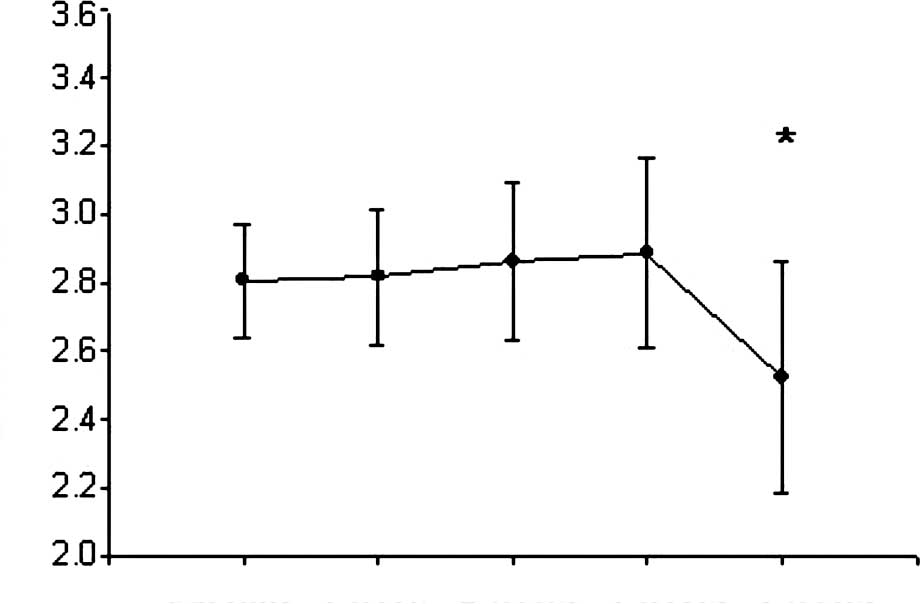
Four doxorubicin-treated rabbits died during the 9-week experimental period (1 after a cumulative dose of 8 mg/kg, and 3 after a cumulative dose of 16 mg/kg). No arterial blood samples for GPx and SOD analysis were available from these animals, and they were excluded from the study. Thus, a total of 8 rabbits were analyzed in group 3, and 8 rabbits in group 4. Compared to the control group, the rabbits in group 4 experienced a loss in body weight (p<0.05, Fig. 1).

Figure 1.

Changes in rabbit mean weight during doxorubicin-induced cardiotoxicity. Data are presented as the means ± SD. *p<0.05 vs. the control group.

Myocardial pathology

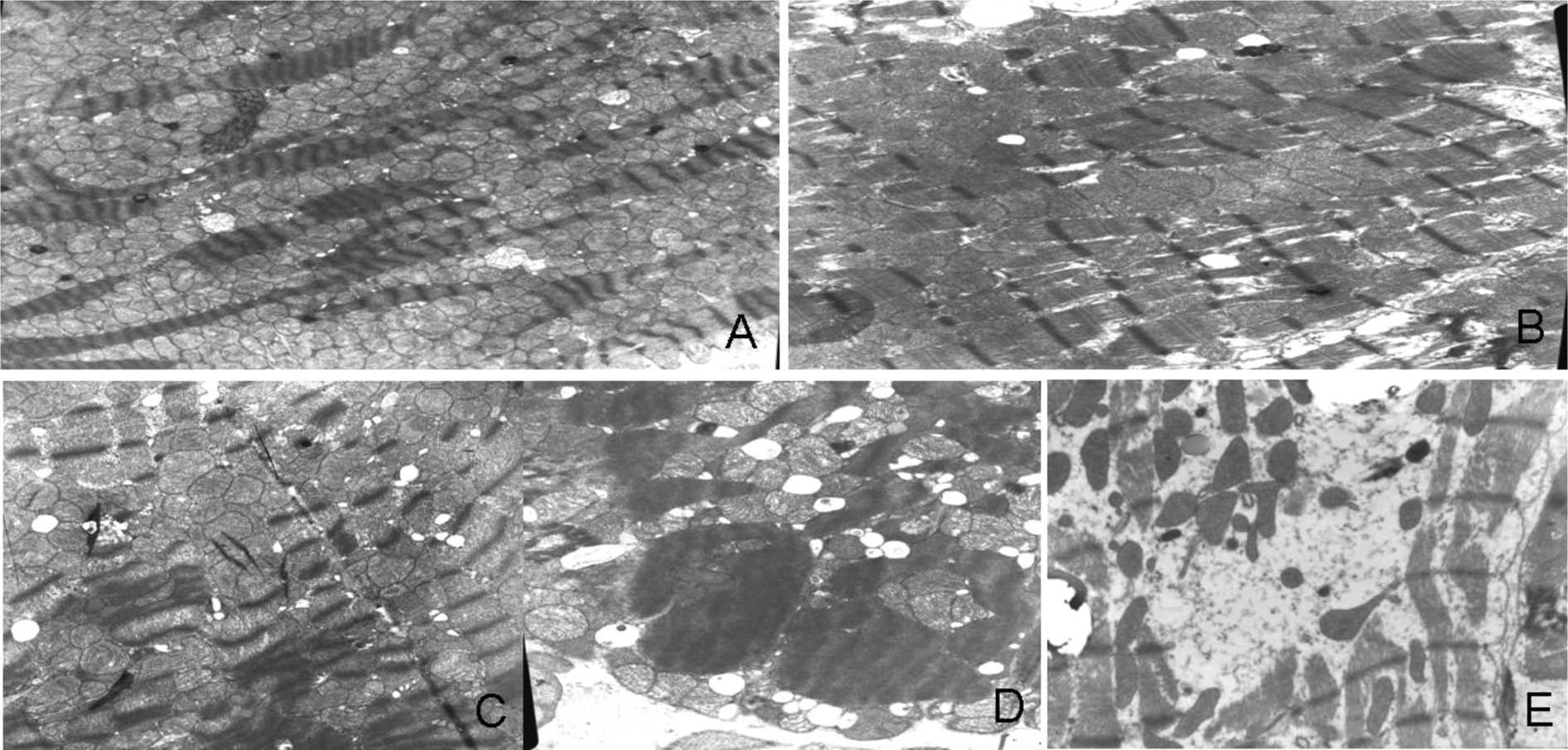
Doxorubicin caused myocardial damage that was visible by light microscopy as cytoplasmic vacuolization and loss of myofibrils at all dose levels. Both changes were frequently noted in the same cell, and the frequency of affected cells increased as lesions became more severe. Data on the incidence and severity of these lesions at the various cumulative doses of doxorubicin are summarized in Table I. Electron microscopy revealed three types of myocardial damage: sarcoplasmic vacuolization, mitochondrial swelling and disruption, and myofibrillar lysis. Mitochondrial swelling and myofibrillar lysis occurred in groups 2, 3 and 4. As the cumulative dose of doxorubicin increased, the mitochondrial disruption and lysis of myofibrils also became more serious (Fig. 2).

Figure 2.

Changes in the heart as assessed with electron microscopy. (A) Normal mitochondria and myofibrils in the control group; x4,500. (B) Mitochondria and myofibrils in rabbits receiving a cumulative doxorubicin dosage of 2 mg/kg; x4,500. (C) Early stage degeneration in cardiac muscle cells in rabbits receiving a cumulative doxorubicin dosage of 4 mg/kg; x4,500. The sample shows partial myofibril lysis with hydropic distension of the sarcoplasmic reticulum and T-tubules, as well as swollen and disrupted mitochondria. (D) Extensive myofibril lysis and disrupted mitochondria in rabbits receiving a cumulative doxorubicin dosage of 8 mg/kg; x4,500. (E) Myofibril lysis and disrupted mitochondria in rabbits receiving a cumulative doxorubicin dosage of 16 mg/kg; x9,600.

Table I.

Cardiomyopathy scores.

Table I.

Cardiomyopathy scores.

No. of animalsCardiomyopathy score
011.522.53.0
Control group8800000
Group 18710000
Group 28431000
Group 3a8014300
Group 4a,b8000125

{ label (or @symbol) needed for fn[@id='tfn1-etm-02-05-0947'] } Cardiomyopathy scores were based on the percentage of myocytes showing cytoplasmic vacuolization and/or myofibrillar loss, and graded from 0 to 3 as follows: 0, no damaged cells; 1, <5%; 1.5, 5–15%; 2.0, 16–25%; 2.5, 26–35%; and 3, >35% damaged cells.

a Cardiomyopathy scores significantly higher (p<0.05) than those in the control group and groups 1 and 2 (Mann-Whitney test).

b Cardiotoxicity scores significantly higher (p<0.05) than those in the control group and groups 1, 2 and 3 (Mann-Whitney test).

Serum GPx concentration

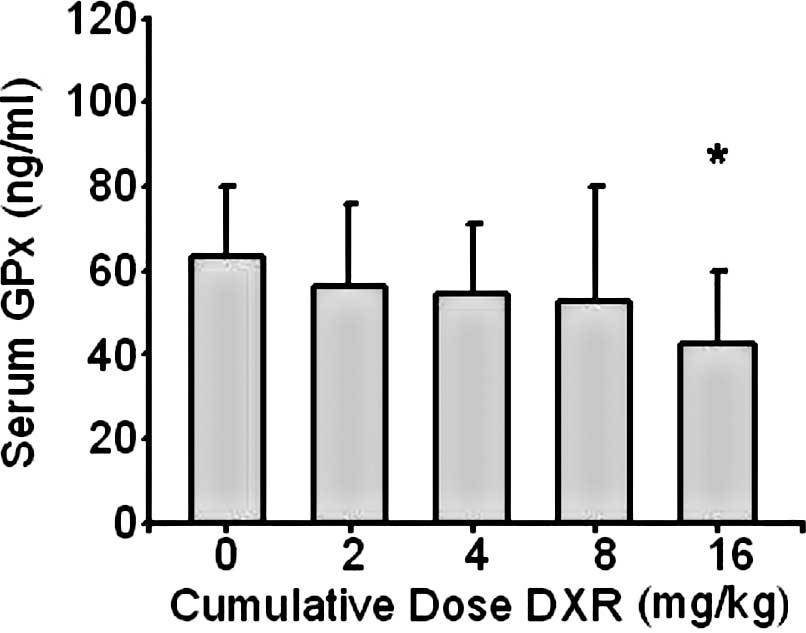
The mean serum GPx concentration in the control group was 63±17 ng/ml. Compared to the control group, serum GPx concentrations decreased in group 4 (p<0.05) (Fig. 3).

Figure 3.

Changes in the serum GPx concentration. Data are presented as the means ± SD. *p<0.05 vs. the control group.

Serum SOD concentration

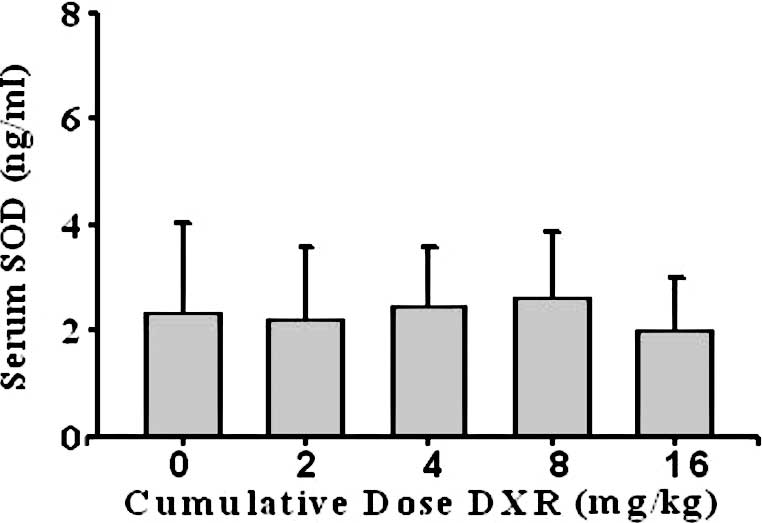
The mean serum SOD concentration in the control group was 2.4±1.7 ng/ml. No significant differences were found between the control group and groups 1, 2, 3 or 4 (p>0.05) (Fig. 4).

Figure 4.

Changes in serum SOD concentrations. Data are presented as the means ± SD.

Discussion

Anthracyclines, particularly doxorubicin and epirubicin, are among the most commonly used cytotoxic drugs because of their potent anticancer activity. However, the use of anthracyclines is limited due to the risk of irreversible congestive heart failure. Due to poor prognosis, the early detection of doxorubicin-induced cardiotoxicity is very important. Pre-clinical anthracycline cardiomyopathy remains disputed. Many studies have shown that mitochondrial swelling or disruption and myofilament lysis is the result of anthracycline-induced cardiotoxicity (14,15), but no definitive electron microscope grading scheme has been developed. In this study, we found that rabbits receiving cumulative doxorubicin dosages of 4 mg/ kg, despite a normal appearance under the light microscope, had mitochondrial swelling or disruption and myofibril lysis visible with electron microscopy.

Several studies support the notion of mitochondria being the main source of doxorubicin-induced ROS. Doxorubicin-induced free radicals would lead to lipid peroxidation and membrane damage (16). Changes in membrane permeability and subsequent cardiomyocyte destruction are the final steps of cell damage. The cardiotoxic effect of doxorubicin-induced cardiotoxicity has been attributed to irreversible damage of mitochondria in heart cells, which express a unique enzyme on the inner membrane that is able to reduce anthracyclines to their semiquinone derivatives. Increased oxidative stress and an antioxidant deficit have been suggested to play a major role in doxorubicin-induced cardiomyopathy and congestive heart failure (17). ROS, mainly superoxide anions, hydrogen peroxide and hydroxyl radical, are too unstable to measure in the serum. The enzymatic antioxidant system consists of SOD and GPx, which indirectly reflect ROS activity. In this study, cardiac injury was demonstrable by electron microscopy at the cumulative dose of 4 mg/kg doxorubicin. However, no changes in serum GPx or SOD concentration were found at the cumulative dose of 4 mg/kg doxorubicin. Mercuro et al (10) found that oxidative stress parameters may play a role as useful markers of early cardiotoxicity, but they did not obtain a myocardial biopsy. This finding may explain the different results to some extent.

Classical long-term models have been applied by several researchers (18). The rabbit model is considered the basis for comparing new anthracyclines and new cardioprotective compounds, generally over periods of 10–18 weeks, with cumulative doses of 20–30 mg/kg. Thus, the classical long-term rabbit model was used for early and rapid evaluation of anthracycline cardiotoxicity. In this study, the rabbits became weak or died after 8 weeks of 2 mg/kg doxorubicin weekly. Thus, the duration was limited to only 8 weeks.

This study had several limitations. First, the mean follow-up period of the different groups was very short, so the possibility that a longer-term study may find greater damage in the higher dose groups and result in higher GPx or SOD concentrations cannot be excluded. Second, the sample size was small. A larger study with a longer follow-up period after high cumulative doses of anthracycline is required to address these issues.

In conclusion, increased cumulative anthracycline doses are not associated with an early and significant increase in oxidative stress. The predictive value of serum GPx and SOD concentrations for the development of cardiomyopathy is not yet known and should be evaluated in a prospective follow-up study.

References

1. 

Torrisi R, Cardillo A, Cancello G, et al: Phase II trial of combination of pegylated liposomal doxorubicin, cisplatin, and infusional 5-fluorouracil (CCF) plus trastuzumab as preoperative treatment for locally advanced and inflammatory breast cancer. Clin Breast Cancer. 10:483–488. 2010. View Article : Google Scholar

2. 

Krischer JP, Epstein S, Cuthbertson DD, Goorin AM, Epstein ML and Lipshultz SE: Clinical cardiotoxicity following anthracycline treatment for childhood cancer: the Pediatric Oncology Group experience. J Clin Oncol. 15:1544–1552. 1997.

3. 

Alvarez JA, Scully RE, Miller TL, Armstrong FD, Constine LS, Friedman DL and Lipshultz SE: Long-term effects of treatments for childhood cancers. Curr Opin Pediatr. 19:23–31. 2007. View Article : Google Scholar : PubMed/NCBI

4. 

Li K, Sung RYZ, Huang WZ, et al: Thrombopoietin protects against in vitro and in vivo cardiotoxicity induced by doxorubicin. Circulation. 113:2211–2220. 2006. View Article : Google Scholar : PubMed/NCBI

5. 

Jemal A, Siegel R, Ward E, Murray T, Xu J, Smigal C and Thun MJ: Cancer statistics, 2006. CA Cancer J Clin. 5:106–130. 2006. View Article : Google Scholar

6. 

Horacek JM, Vasatova M, Ticky M, Pudil R, Jebavy L and Maly J: The use of cardiac biomarkers in detection of cardiotoxicity associated with conventional and high-dose chemotherapy for acute leukemia. Exp Oncol. 32:97–99. 2010.PubMed/NCBI

7. 

Horacek JM, Ticky M, Jebavy L, Pudil R, Ulrychova M and Maly J: Use of multiple biomarkers for evaluation of anthracycline-induced cardiotoxicity in patients with acute myeloid leukemia. Exp Oncol. 30:157–159. 2008.PubMed/NCBI

8. 

Faber M, Coudray C, Hida H, Mousseau M and Favier A: Lipid peroxidation products, and vitamin and trace element status in patients with cancer before and after chemotherapy, including adriamycin. A preliminary study. Biol Trace Elem Res. 47:117–123. 1995. View Article : Google Scholar

9. 

Kaya E, Keskin L, Aydogdu I, Kuku I, Bayraktar N and Erkut MA: Oxidant/antioxidant parameters and their relationship with chemotherapy in Hodgkin’s lymphoma. J Int Med Res. 33:687–692. 2005.PubMed/NCBI

10. 

Mercuro G, Cadeddu C, Piras A, et al: Early epirubicin-induced myocardial dysfunction revealed by serial tissue Doppler echocardiography: correlation with inflammatory and oxidative stress markers. Oncologist. 12:1124–1133. 2007. View Article : Google Scholar

11. 

Horino N, Kobayashi Y and Usui T: Elevation of lipid peroxide in children treated with a combination of chemotherapeutic agents including doxorubicin. Acta Paediatr Scand. 72:549–551. 1983. View Article : Google Scholar : PubMed/NCBI

12. 

Lai RC, Wang XD, Zhang X, Lin WQ and Rong TH: Heart fatty acid-binding protein may not be an early biomarker for anthracycline-induced cardiotoxicity in rabbits. Med Oncol. Feb. 10–2011, (E-pub ahead of print).

13. 

Billingham ME, Mason JW, Bristow MR and Daniels JR: Anthracycline cardiomyopathy monitored by morphologic changes. Cancer Treat Rep. 62:865–872. 1978.PubMed/NCBI

14. 

Wallace KB: Doxorubicin-induced cardiac mitochondrio-nopathy. Pharmacol Toxicol. 93:105–115. 2003. View Article : Google Scholar : PubMed/NCBI

15. 

Berthiaume JM and Wallace KB: Adriamycin-induced oxidative mitochondrial cardiotoxicity. Cell Biol Toxicol. 23:15–25. 2007. View Article : Google Scholar : PubMed/NCBI

16. 

Milei J, Boveris A, Llesuy S, Molina HA, Storino R, Ortega D and Milei SE: Amelioration of adriamycin-induced cardiotoxicity in rabbits by prenylamine and vitamins A and E. Am Heart J. 111:95–102. 1986. View Article : Google Scholar : PubMed/NCBI

17. 

Sun X, Zhou Z and Kang YJ: Attenuation of doxorubicin chronic toxicity in metallothionein-overexpressing transgenic mouse heart. Cancer Res. 61:3382–3387. 2001.PubMed/NCBI

18. 

Van Vleet JF and Ferrans VJ: Clinical and pathologic features of chronic adriamycin toxicosis in rabbits. Am J Vet Res. 41:1462–1469. 1980.PubMed/NCBI

Related Articles

  • Abstract
  • View
  • Download
  • Twitter
Copy and paste a formatted citation
Spandidos Publications style
Lai R, Long Y, Li Q, Zhang X and Rong T: Oxidative stress markers may not be early markers of doxorubicin-induced cardiotoxicity in rabbits. Exp Ther Med 2: 947-950, 2011.
APA
Lai, R., Long, Y., Li, Q., Zhang, X., & Rong, T. (2011). Oxidative stress markers may not be early markers of doxorubicin-induced cardiotoxicity in rabbits. Experimental and Therapeutic Medicine, 2, 947-950. https://doi.org/10.3892/etm.2011.306
MLA
Lai, R., Long, Y., Li, Q., Zhang, X., Rong, T."Oxidative stress markers may not be early markers of doxorubicin-induced cardiotoxicity in rabbits". Experimental and Therapeutic Medicine 2.5 (2011): 947-950.
Chicago
Lai, R., Long, Y., Li, Q., Zhang, X., Rong, T."Oxidative stress markers may not be early markers of doxorubicin-induced cardiotoxicity in rabbits". Experimental and Therapeutic Medicine 2, no. 5 (2011): 947-950. https://doi.org/10.3892/etm.2011.306
Copy and paste a formatted citation
x
Spandidos Publications style
Lai R, Long Y, Li Q, Zhang X and Rong T: Oxidative stress markers may not be early markers of doxorubicin-induced cardiotoxicity in rabbits. Exp Ther Med 2: 947-950, 2011.
APA
Lai, R., Long, Y., Li, Q., Zhang, X., & Rong, T. (2011). Oxidative stress markers may not be early markers of doxorubicin-induced cardiotoxicity in rabbits. Experimental and Therapeutic Medicine, 2, 947-950. https://doi.org/10.3892/etm.2011.306
MLA
Lai, R., Long, Y., Li, Q., Zhang, X., Rong, T."Oxidative stress markers may not be early markers of doxorubicin-induced cardiotoxicity in rabbits". Experimental and Therapeutic Medicine 2.5 (2011): 947-950.
Chicago
Lai, R., Long, Y., Li, Q., Zhang, X., Rong, T."Oxidative stress markers may not be early markers of doxorubicin-induced cardiotoxicity in rabbits". Experimental and Therapeutic Medicine 2, no. 5 (2011): 947-950. https://doi.org/10.3892/etm.2011.306
Follow us
  • Twitter
  • LinkedIn
  • Facebook
About
  • Spandidos Publications
  • Careers
  • Cookie Policy
  • Privacy Policy
How can we help?
  • Help
  • Live Chat
  • Contact
  • Email to our Support Team